I’ve known about Riki-Oh(aka The Story of Ricky) and its supremely over-the-top violence for decades. Whether it was seeing grotesque(ly awesome) moments from the original manga by Takajou Masahiko and Saruwatari Tetsuya, or animated gifs of the most ridiculous scenes from the 1991 Hong Kong movie directed by Lam Nai-Choi, those images stay with a person. When I finally got around to watching that film adaptation, I thought I was ready for what I was about to see. What no one ever told me was just how much Riki-Oh speaks to a nascent prison-industrial complex that has only grown horrifically stronger by 2024.
The opening narration text establishes that Riki-Oh takes place in the future year of 2001, where something horrifying has happened: All government organizations has been privatized, including prisons.
Seeing this made my eyes widen in surprise. When for-profit private prisons plague the United States and treat its inmates in the cruelest ways possible, when Hong Kong itself is having its rights taken away, and when there is actual talk about privatizing state and federal penitentiaries in the US, this movie feels practically prescient. I don’t know how much of this is from the original manga and how much is a quality of the movie, but it’s a hell of an establishing message to put at the beginning.
Then, our hero, Lik-Wong (literally Riki-Oh in Chinese) shows up among the newest batch of convicts. He’s impossibly cool and strong, living with five bullets lodged in his chest and possessing the power to punch people so hard, their body parts explode. To say he’s cut from the same cloth as Kenshiro from Fist of the North Star would be an understatement. But one thing is immediately clear about him: While he is capable of astounding acts of lethality, he would rather there be respect for human dignity, and so tries to show restraint. However, should someone trample on that humanity, Lik-Wong’s willing to give them some consequences for their actions. He believes strongly in peace, but will not preserve a false one in the absence of justice.
And so Lik-Wong gets into many battles and punches holes in his foes and cleaves their limbs off with the power of his qi gong. He is a manga hero brought to life. But the really interesting portrayals come from the other prisoners, both individually and as a whole. Some are brutal and unrepentant criminals who have gotten in with the equally malicious guards for their own selfish benefit. Others are good people only in there due to a corrupt justice system. Those who are victimized by the prison and its warden, including being used as slave labor for illegal drug production, rally behind Lik-Wong and even gain inspiration to fight back thanks to him.
But Lik-Wong, for his part, understands that you can’t hold him up as the standard of what a normal person can do. When his fellow inmates resist orders to bury him alive, our hero tells them to do it anyway. They need to avoid incurring the wrath of the warden and stay alive to resist tomorrow. By the end, the prisoners stage a mass revolt while Lik-Wong fights the superhuman monsters that make up the prison’s strongest fighters. Lik-Wong is singularly exceptional, but even he can’t do it alone.
So we’re left with a movie featuring the most off-the-wall feats of dismemberment and disembowelment as performed by a very colorful cast of characters, and underneath it all are some profound questions. Why do we permit the utter dehumanization of prisoners while allowing prisons to profit off their enslavement? Why do we allow people with such an opportunity for corruption to wield such power over people? Sadly, we have no Riki-Ohs or Lik-Wongs in the real world, but we do have the ability to rally around those who believe in compassionate justice that protects the vulnerable, and to work together to make a difference.
Out of all fan conventions, I consider Otakon the one can’t-miss event. There’s certainly a sentimental component, as I’ve been attending for about 15 years at this point, but I think their approach to the concept of the anime con is vitally important: a celebration of anime fandom that’s not for profit and also gives respect to both the creators of the works and the fans themselves. This year, Otakon 2022 shattered its attendance record with a whopping 40,000+ (roughly 6,000 more than the previous record), and I’m glad to see it thrive after a combination of a risky move to Washington DC saw an attendance drop and the arrival of a global pandemic threatened its very existence.
COVID-19 Measures
Anyone who follows Ogiue Maniax knows that I do not take COVID-19 lightly. I’m a firm believer in the science that says vaccinations provide significant protection against severe disease and death, and that good-quality masks are an important tool for mitigating spread. I’m also not so naive as to think COVID couldn’t possibly be at the convention. So why did I still decide to attend, especially with the Omicron variants being so infectious? There are multiple reasons.
First, above all else, is that Otakon’s COVID-19 policy reassured me that they take the pandemic seriously. Much of the US has been opening up in rather unsafe ways (if they had ever closed down at all), and some other notable conventions had tried to roll back their masking and vaccination policies despite the prevalence of the Omicron variants. However, Otakon maintained that attendees must either be vaccinated or present a negative PCR test result, and that masks are mandatory. A few more things could have been done, like requiring vaccinations and boosters, period, but it’s understandable that some people still can’t get vaccinated for reasons other than hesitancy. In my view, Otakon cared more about people than attendance numbers.
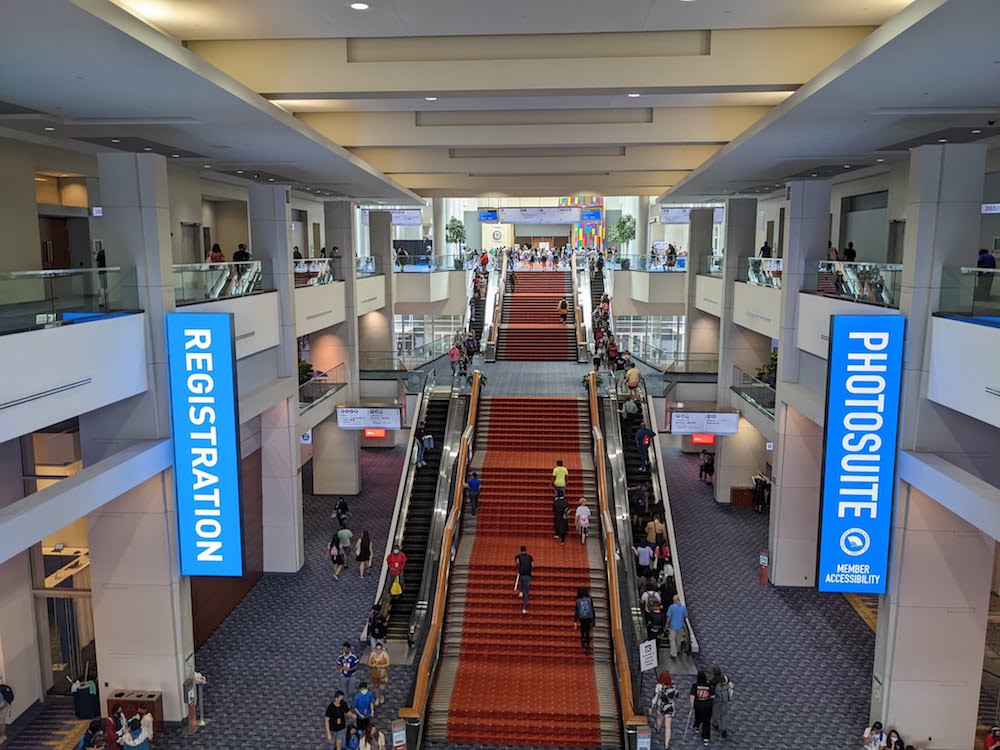
Second, the Walter E. Washington Convention Center is quite spacious and has tall ceilings that can help keep air circulating—it’s being in stagnant air in small, enclosed spaces that is especially high-risk, and I could do what I can to avoid those situations and/or make sure I didn’t take my mask off under any circumstances.
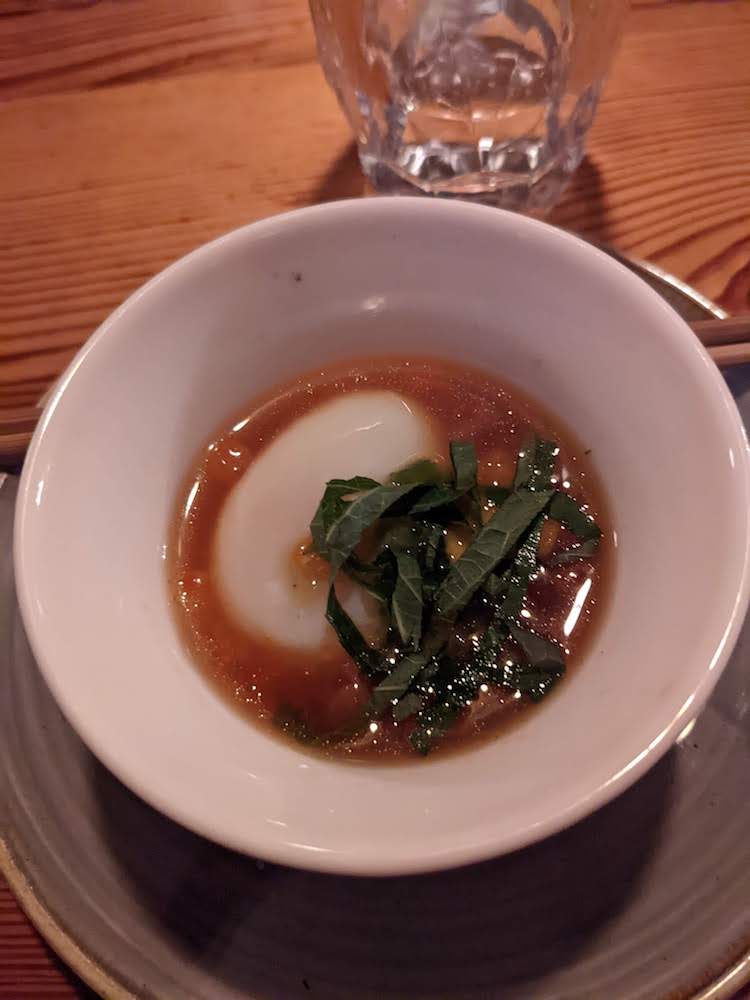
Third, I trusted my own risk management. In situations that are too crowded around me or where the mask usage rate is clearly lacking, I could make the decision to change plans or abandon ship and head back to my hotel. Although it might mean not getting to see something or someone I was looking forward to, it was something I was willing to accept. You can’t do everything at Otakon anyway. I did eat out with friends once, but it was on a Sunday when the majority of attendees had already left DC.
Of course, COVID safety only goes as far as whether people actually follow them. In that regard, I was pleasantly surprised to see that the majority of people wore masks of some kind and wore them over their noses like you’re supposed to. It wasn’t perfect, and there were plenty of ineffective cloth masks still being worn, but I think having the firm requirements come from the con itself might have encouraged attendees to follow their example. I also literally saw security go after someone with no vaccination/COVID-negative wristband in a reassuring sign of vigilance. Score one for mandates.
Issues
That’s not to say the con ran 100% smoothly, however.
I enjoy getting autographs from creators, and Otakon is often good at inviting a variety of interesting guests from Japan. However, ever since the move from Baltimore, the autograph area has been in the same space as the Dealer’s Room, resulting in a less-than-ideal situation. Attendees wanting to get their stuff signed have to deal with the massive crowd trying to get into the Dealer’s Room to shop, and I thought about giving up on more than one occasion because I was worried about being surrounded by people and increasing the chances of infection.
Exacerbating this was the fact that there was a major pedestrian traffic jam in the underground tunnel connecting the Marriott to the convention center on Saturday. Normally, this is the ideal way to get to the con if you’re staying at the hotel (as I was), but the huge delays meant I couldn’t return to my room and retrieve something I hoped to get autographed until it was too late. However, that was fairly small potatoes compared with the fact that those trying to make their way through the tunnel could be stuck in there an hour or even longer. There were also lines snaking out from the Marriot and at the convention center, and on a hot summer day too. It seems like the culprit is a confluence of factors, including the gigantic boost in attendance numbers, some confusion over COVID-19 protocols, and some mechanical failures that meant inaccessible escalators. Whatever the case may be, I hope Otakon is prepared to deal with this next year
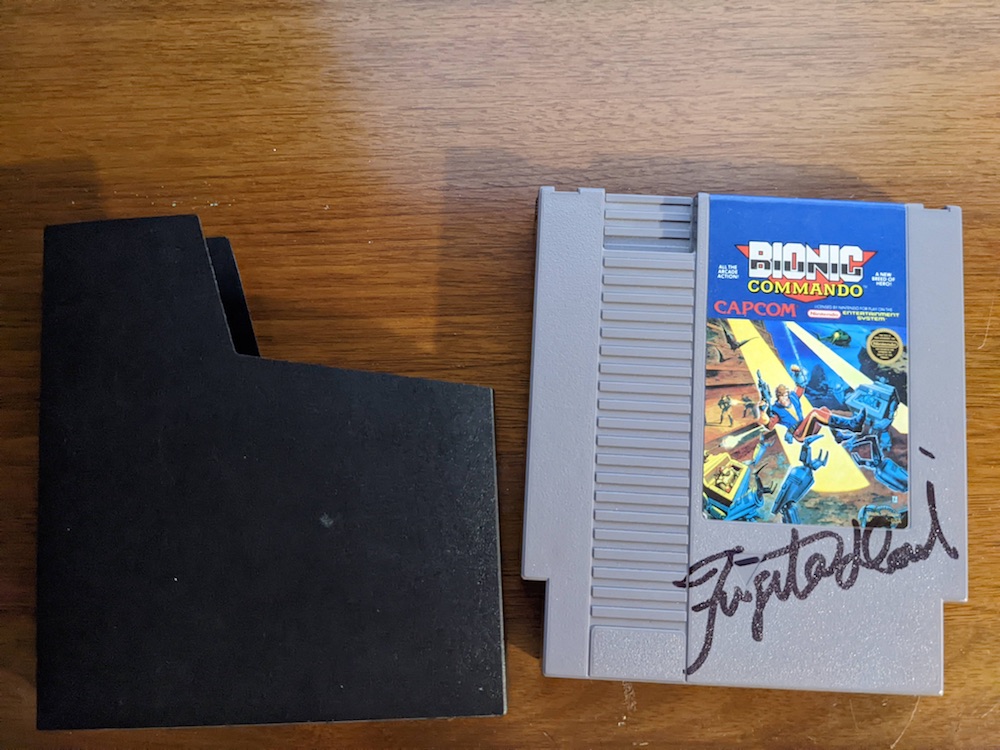
Fortunately, I actually did manage to get a couple of things signed in the end: an old family copy of NES Bionic Commando from back in the 1980s, as well as a special edition of a My Youth Romantic Comedy novel from the author and staff (not pictured).
Interviews
After my hiatus from interviewing last year, I managed to speak with some guests for 2022. Check out the following interviews:
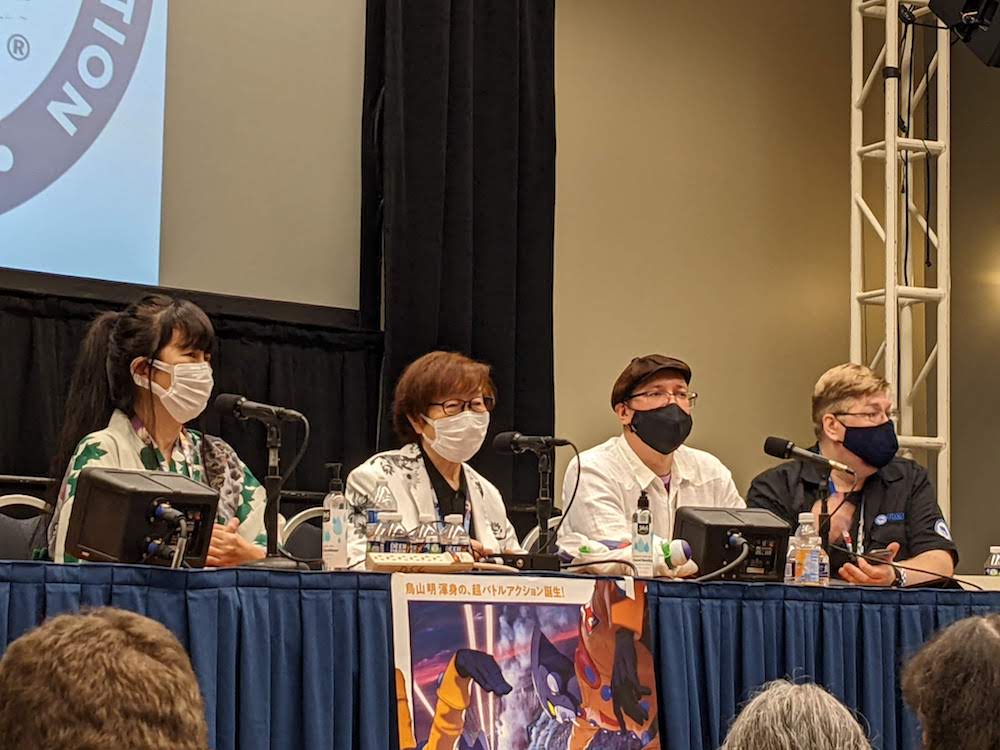
If you ever want to hear from voice actors who love their craft and want to prepare the next generation, it has to be these two industry veterans. Furukawa is famously the voice of Piccolo, Moroboshi Ataru, and Portgas D. Ace. His wife is probably best known as Naru (Molly) from Sailor Moon. Together, this husband-wife voice team provided insight on how they train talents at their school, the ways they introduce emotion to their roles, and how to sound like you’re moving around without actually doing so (because the mic won’t pick everything up). One insightful thing I learned is that COVID-19 has upended the tradition of having everyone in the same room to record a scene (which made for better recordings, in my opinion), though important dialogues might still result in a two-person session.
I actually interviewed them back in 2017, but forgot to ask them about one of my favorite works: Zambot 3, where Furukawa played Shingo. This time, I got the chance to make up for that omission, and Furukawa answered that Tomino had very meticulous instructions and planning for voice actors, and he’d talk with each voice actor one by one. Furukawa said it was a very theatrical experience compared to other roles, though I don’t know if “theatrical” is a euphemism for something else.
Studio Trigger’s Cyberpunk: Edgerunners
While it wasn’t my first choice for aTrigger anime screening, I was still curious to see what they had in store for the first episode of Cyberpunk: Edgerunners. I’ve never played Cyberpunk in any form, but I was glad to see that the studio’s approach emphasized the dystopian qualities of its, well, cyberpunk setting over the “cool factor.” The stark class differences and crushing hand of capitalism make the hero’s anger all the more poignant.
After the screening, the staff showed some of their early character design sketches. The two things that stood out to me were the degree to which they had to revise to match the Cyberpunk video game creator’s vision, as well as the fact that they straight-up said the main girl character (who barely shows up in episode 1) was inspired by Motoko from Ghost in the Shell as they explained the big influence that cyberpunk as a genre had on them as artists.
At the end, they teased the SSSS.Gridman + SSSS.Dynazenon movie, which I’m eagerly awaiting.
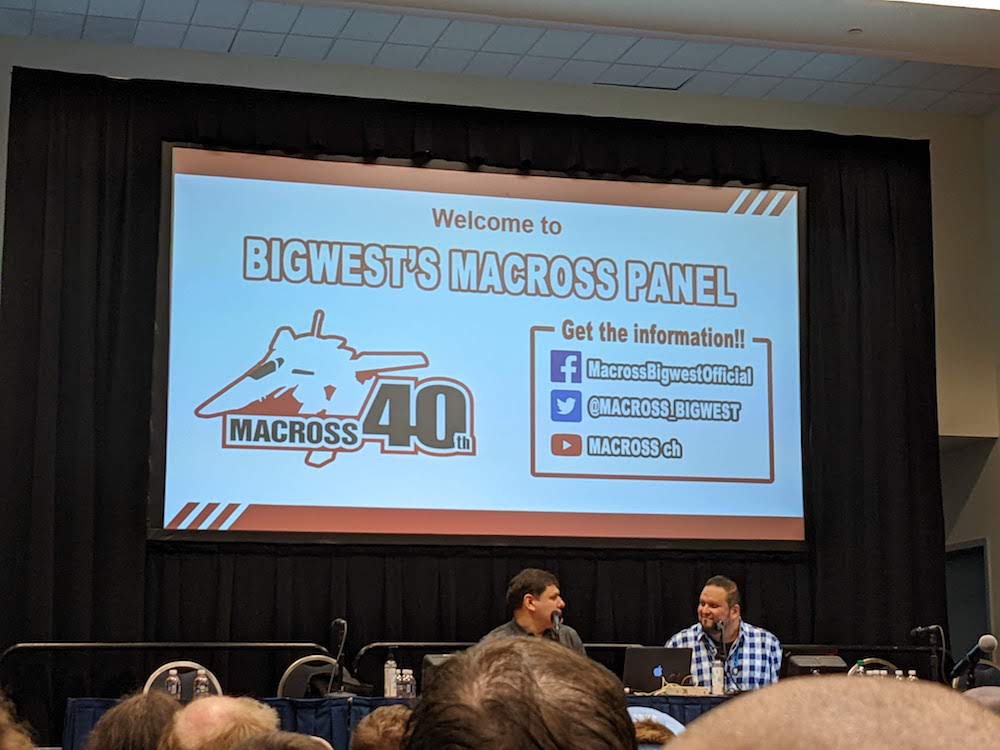
Bigwest’s Macross Panel
When I found out there was going to be an official Macross panel at Otakon, I felt it was my duty to attend. After all, official Macross panels have never really existed in the US prior to 2022, with the closest being whenever Kawamori Shoji is a guest. One of the biggest moments of the panel was when they showed a video of the various Macross anime (narrated by “Maximillian Jenius” Hayami Sho), and a loud cheer erupted around Macross 7. The panelists mentioned that the title would have induced silence not so long ago—a sign of the changing times. Personally, I think that similar to JoJo’s Bizarre Adventure,anime fandom had to catch up to Nekki Basara instead of the other way around.
This panel has since garnered a bit of controversy due to the fact that Otakon announced that there would be something special. To Macross fans, that can mean all sorts of things because of its unusual history when it comes to licensing and the legal issues with Harmony Gold/Robotech. Speculation ran rampant: Could it be Do You Remember Love? A new Macross? Something completely out of left field?
It turned out to be the very first US screening of Macross Frontier Short Film: The Labyrinth of Time, which was originally shown before the Macross Delta Zettai Live film. It was a treat to see and it was downright gorgeous, though not quite the first thing to come to mind as a special surprise.
Discotek Media
If ever there was a US anime company with a catalog made for me, it would be Discotek. Even when they’re not licensing titles off my wishlist, they’re giving others similar dreams. While Machine Robo: Battle Hackers is not everyone’s first choice for long-sought-after anime, their willingness to put out such obscure works is appreciated.
By far, the two big titles announced here are Space Sheriff Gavan and the complete Urusei Yatsura TV series. Neither hit me on that deep level, but the audience went bananas for both. I’m well aware of the significance both shows have to tokusatsu and anime fandom, and I’m looking forward to checking both out.
At a dinner with friends, I learned that Gavan is such a big deal in Malaysia that it’s become a part of the language itself. Using the word “Gaban” there means to describe something as epic or to evoke an image of bravery. I have to wonder how many works of television and film can make similar claims to fame.
My Panels
I’ve done plenty of panels at Otakons past, but this year is the first time I’ve had to do two back-to-back. I had considered asking for one of them to be moved, but the prospect of getting them both out of the way in one fell swoop was appealing as well. Thankfully, the vast majority of the panel rooms were in close proximity to one another this year, making the transition a relative breeze.
The first panel was “Hong Kong in Anime and Manga.” The idea was to explore different ways in which Hong Kong’s people, culture, and environment are portrayed in anime and manga. There was a technical hiccup at the beginning that delayed the start by five minutes, there were no real issues otherwise. I was surprised that there were very few Cantonese speakers in the audience, but that just meant I had underestimated the need to explain the language aspect of Hong Kong, and could adjust on the fly. I also noticed how big a reaction a clip of Cantonese-speaking VTuber Selen Tatsuki received, which gave me an idea of her extensive reach.
I hope people enjoyed the panel. I managed to briefly talk to a couple of folks who enjoyed the panel (including a longtime reader!) before I had to hoof it out of there. I was also informed that I might have made more than a few people interested in checking out G Gundam—mission accomplished.
The second panel was “Mahjong Club: RIICHI! Ten Years Later.” It was the revival of a panel I last presented in 2012 alongside Kawaiikochans creator Dave, adjusted to take into account the many opportunities English-speaking anime fans have to play Japanese mahjong compared to a decade ago. One big adjustment we made was to deemphasize some of the nitty-gritty of the rules and to better convey the excitement and tension of a game of mahjong. For the most part, the audience was new to the panel (but not necessarily new to mahjong), so I hope we were able to give something for everyone who watched us.
There was an issue with text on our slides getting cut off; it’s something we can fix when we do this again in another 10 years (?).
Fan Panels
A History of Isekai
Isekai is the elephant in the room when it comes to modern anime, and a panel about its history could easily strike a shallow cord. Luckily, this one focused primarily on the works leading up to Sword Art Online, mentioning the mecha isekai of the 1980s, the shoujo isekai of the 1990s, and the outsized influence of The Familiar of Zero. It’s debatable whether something like Urashima Tarou can count, though if it does, then it’d be amusing to show the anime Urashiman. Of course, not every title can be mentioned in an hour, even if it means missing out on the fantastic opening to Mashin Hero Wataru.
Digital Anime Fansubs: 2000 to Now
This panel was about the rise of digital subs around the turn of the millennium, and it focused mainly on the changing formats+file sizes, the brand-new frontier of getting anime straight from Japan within days (as opposed to months or even years), as well as the ways that fansubbers tried to establish their identities through practices like fancy karaoke effects. It was probably a fun introduction to this era for people unfamiliar with it, though I wonder if there would be a way to establish a more detailed history. It wouldn’t be easy by any means, due to the fact that this sort of subject isn’t really recorded, but maybe collecting anecdotes from fellow fans (or fansubbers themselves, if possible) could be cool.
A Sophisticatedly Unsophisticated Look at Fanservice
This was a panel by Gerald from the Anime World Order podcast, and I actually saw a fledgling incarnation of it ten years ago at Otakon. It was interesting to see him tackle the topic again, and there were definitely shows I remembered—namely the infamous Manyuu Hikenchou. This time, the panel had a more concrete idea of what it wanted to show, which is fanservice in terms of being things that are gratuitously superfluous. In that regard, the panel did take things to the next level, though I thought it still didn’t quite hit the mark on what would be considered traditionally “fanservice for girls,” which I think is more rooted in context and relationship dynamics than jiggling bits and crotch shots.
Showings
Otakon 1994 AMVs
One of the pleasant surprises this year was that the con decided to screen the original Anime Music Video Contest from the very first Otakon 28 years ago. It was a window into the past, particularly in terms of the shows that were being used (Riding Bean, Bubblegum Crisis, Detonator Orgun, and so on), and it’s even more impressive when you realize that digital video editing was still in its infancy back then.
There was a particular video that was considered “non-competing” that seemed to grossly revel in detailed depictions of violence against women. While I could see the argument against showing it at all, I do think having it available as a sign of what the fandom was like, warts and all, has at least historical merit. I would say I hope this isn’t a thing anymore, but I don’t typically watch AMVs anyway.
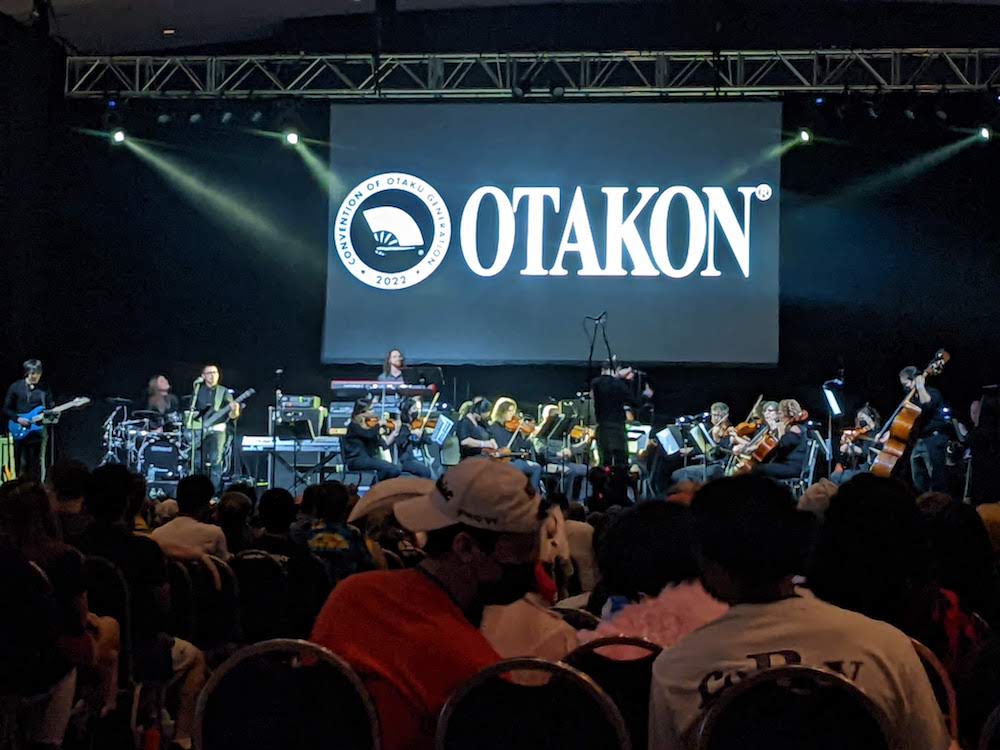
Wada Kaoru and Hayashi Yuki Sunday Concert
Despite the prominence of K-pop at Otakon this year (enough to have Hangul on the front cover of the physical guidebook for the first (?) time!), the only concert I attended was for the music of composers Wada Kaoru (Inuyasha, Yashahime) and Hayashi Yuki (Haikyu!, My Hero Academia). I wasn’t familiar with a good chunk of the songs, but the contrasting styles between the two made for an interesting experience you usually don’t get when the focus is on a single act. The real treat was during the encore, when they played along with the combination orchestra+rock band.
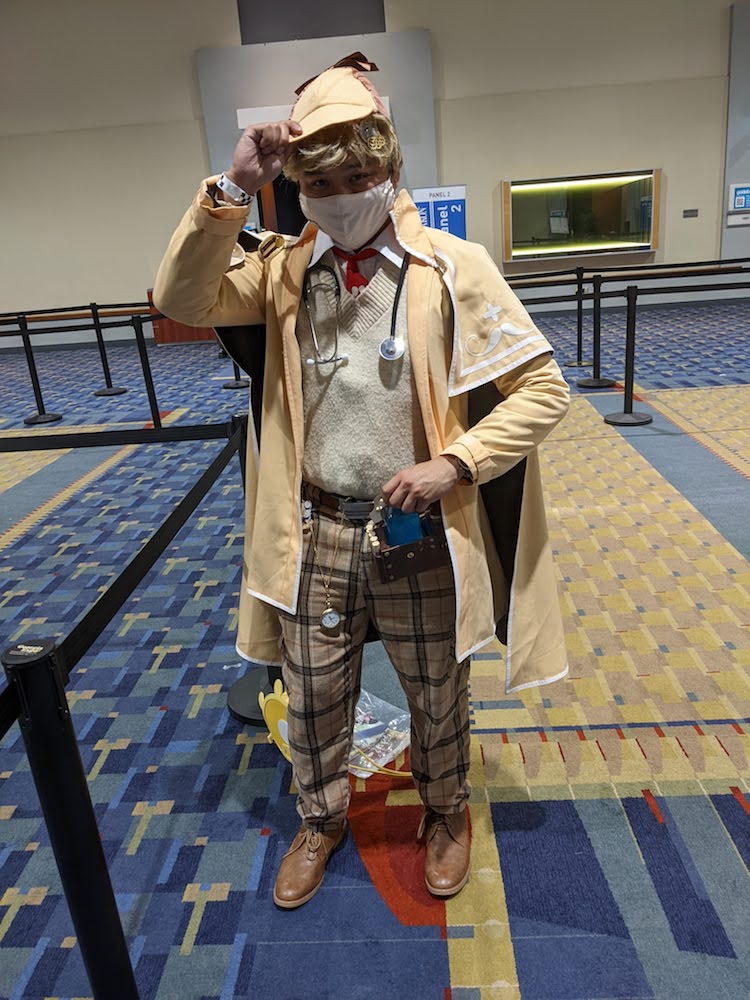
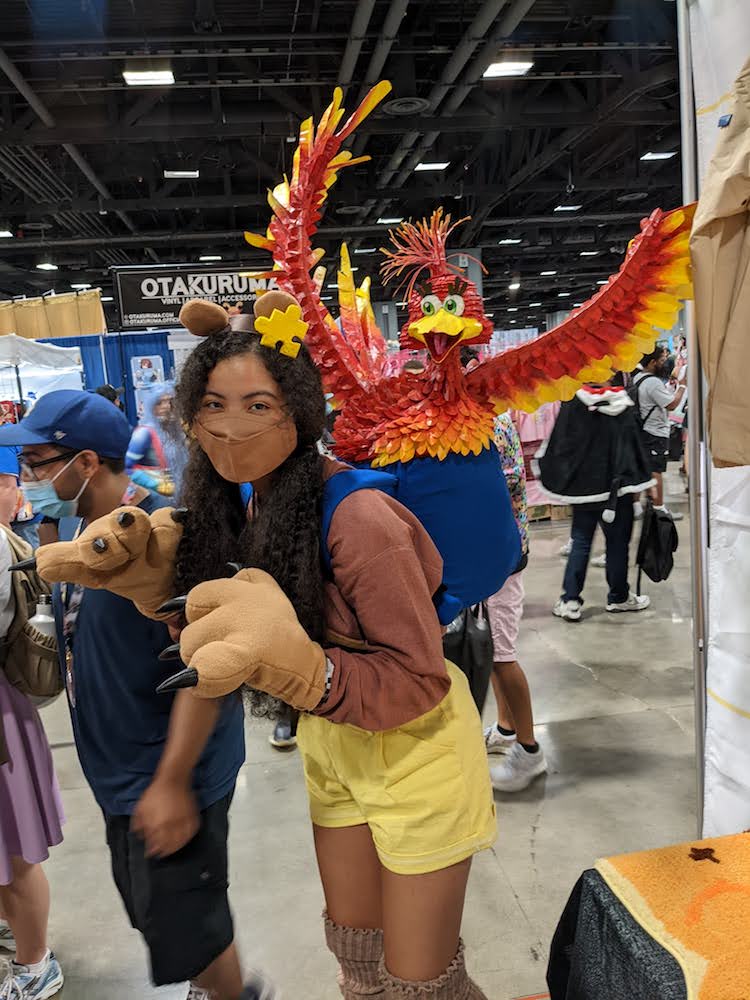
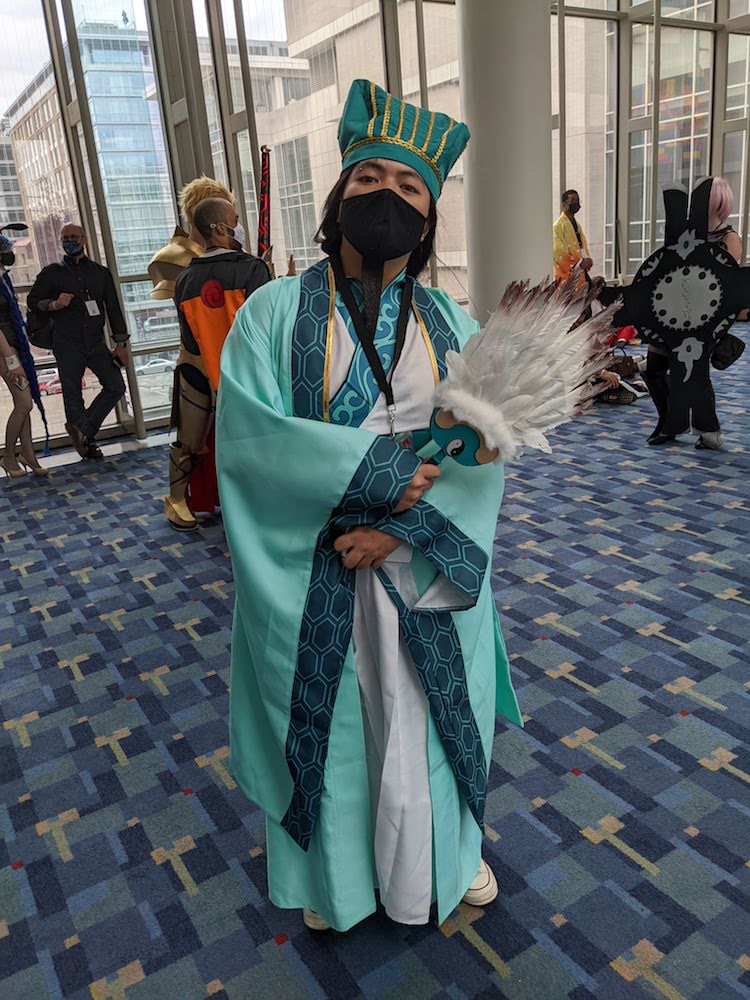
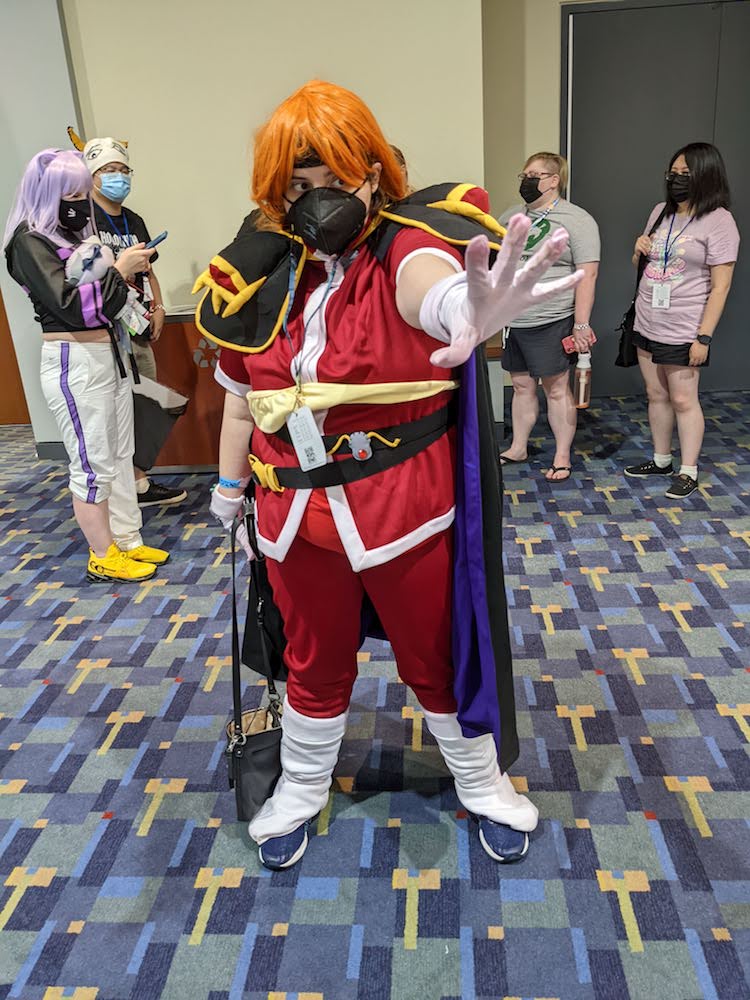
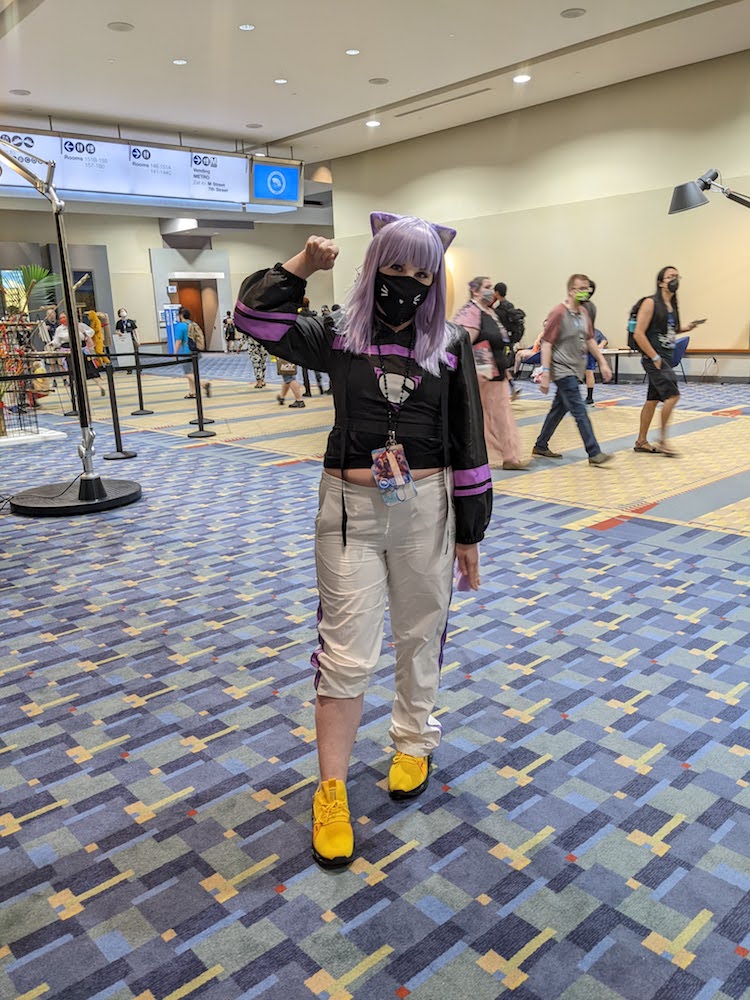
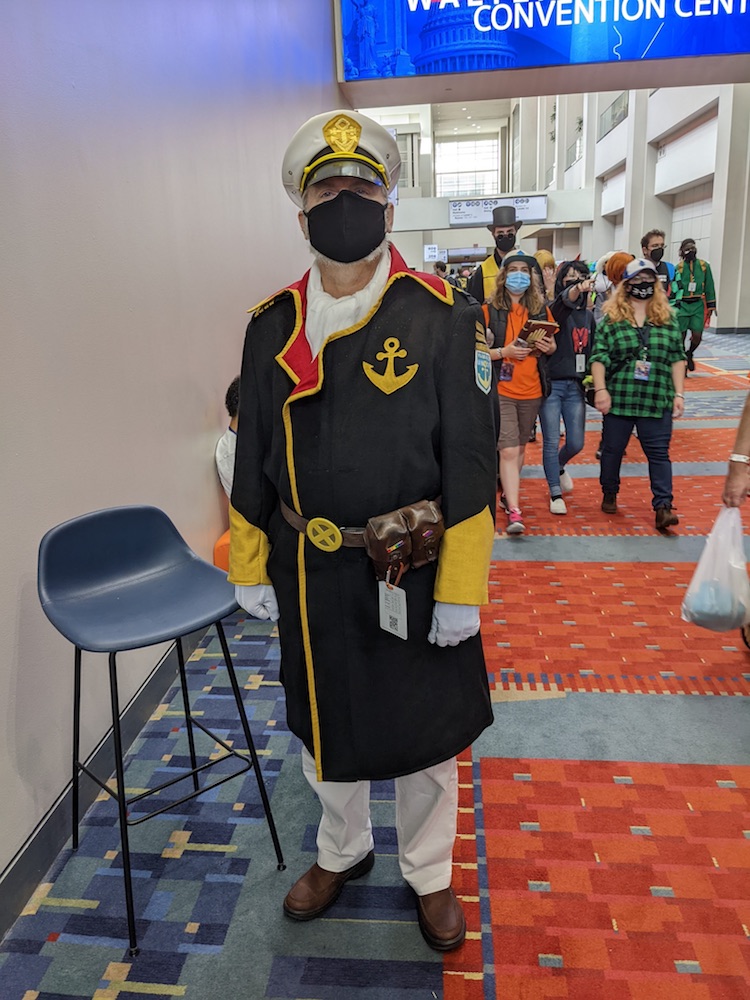
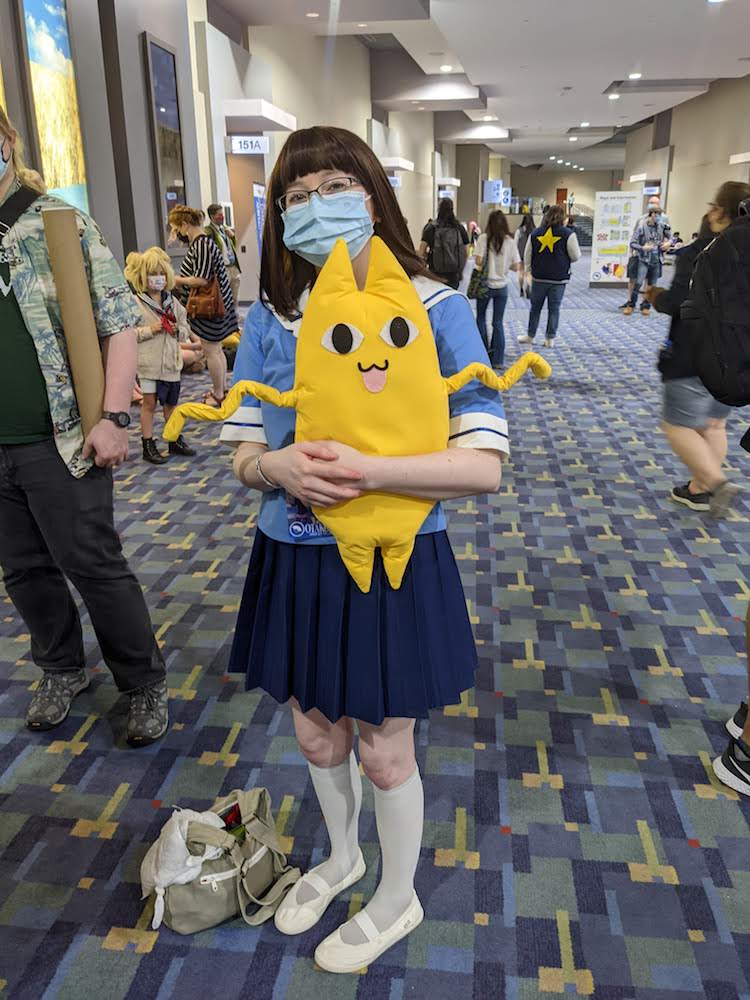
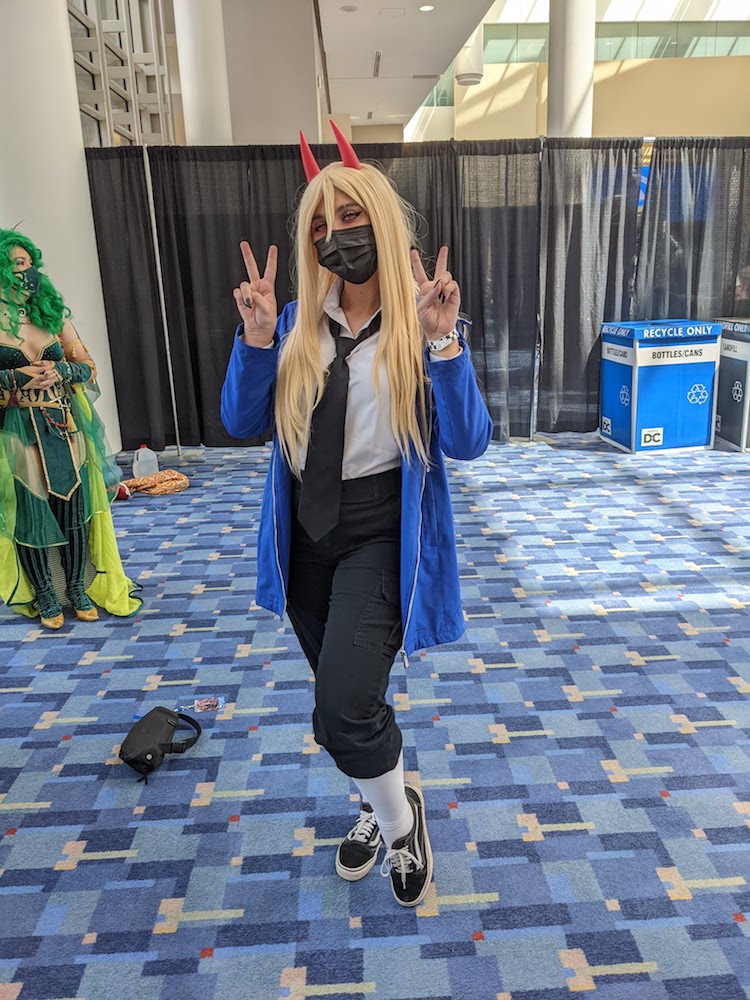
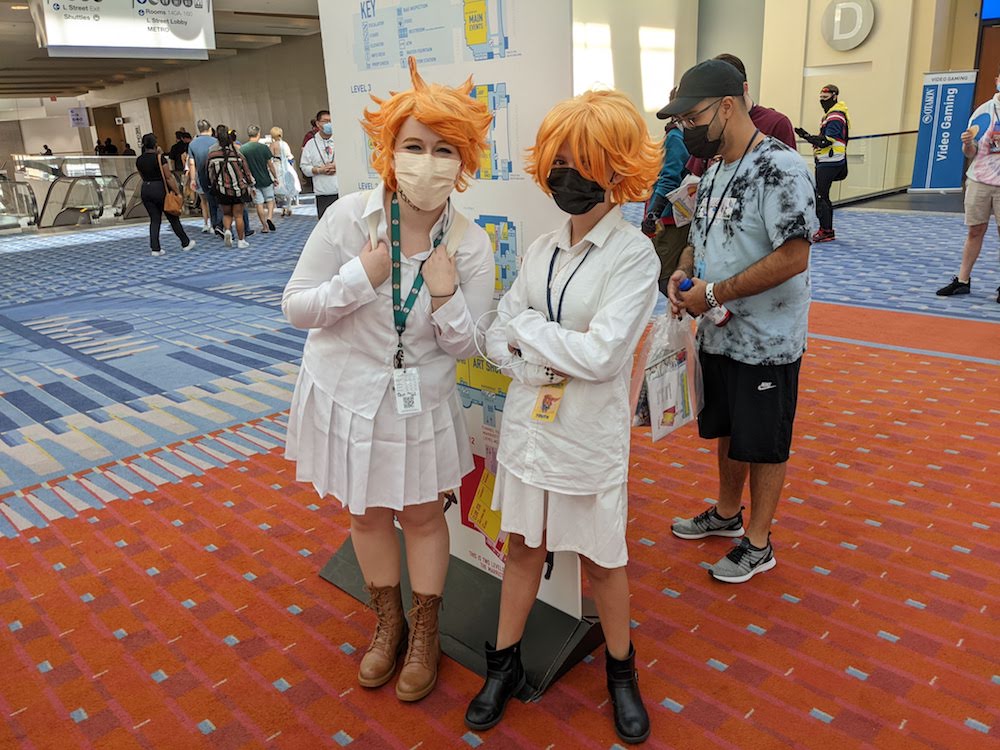
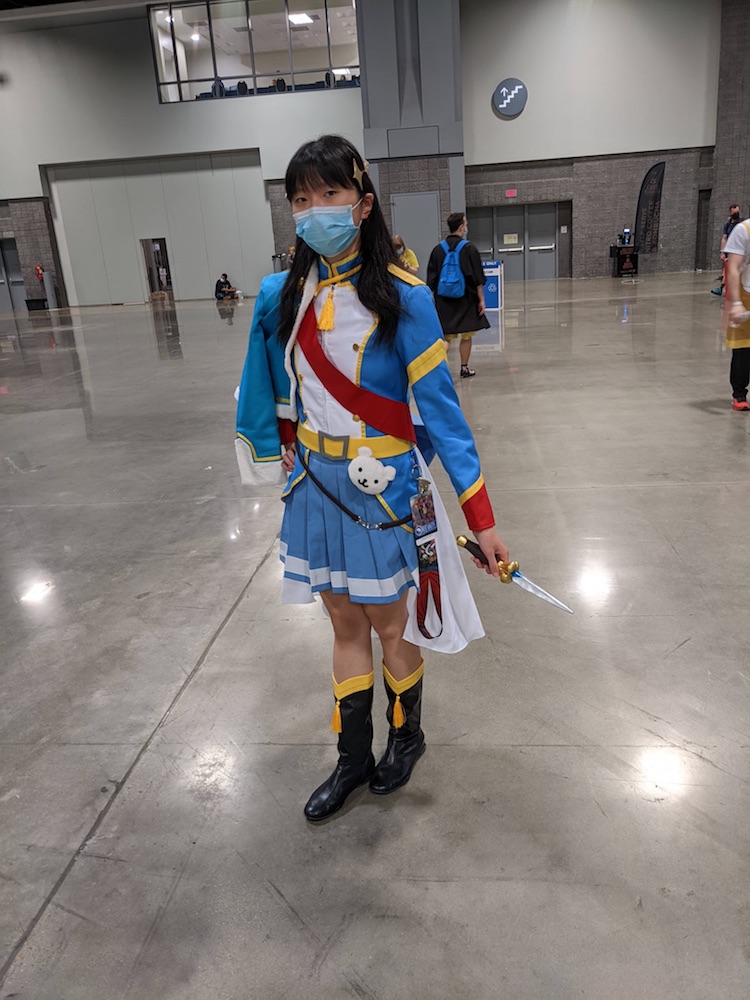
Cosplay
Conclusion
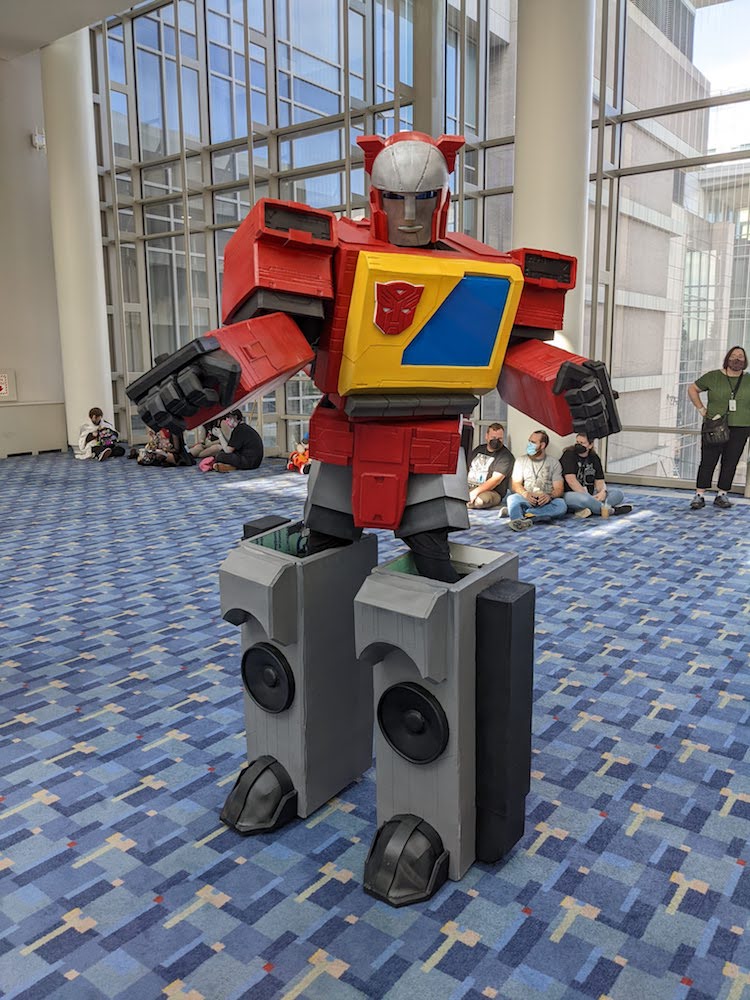
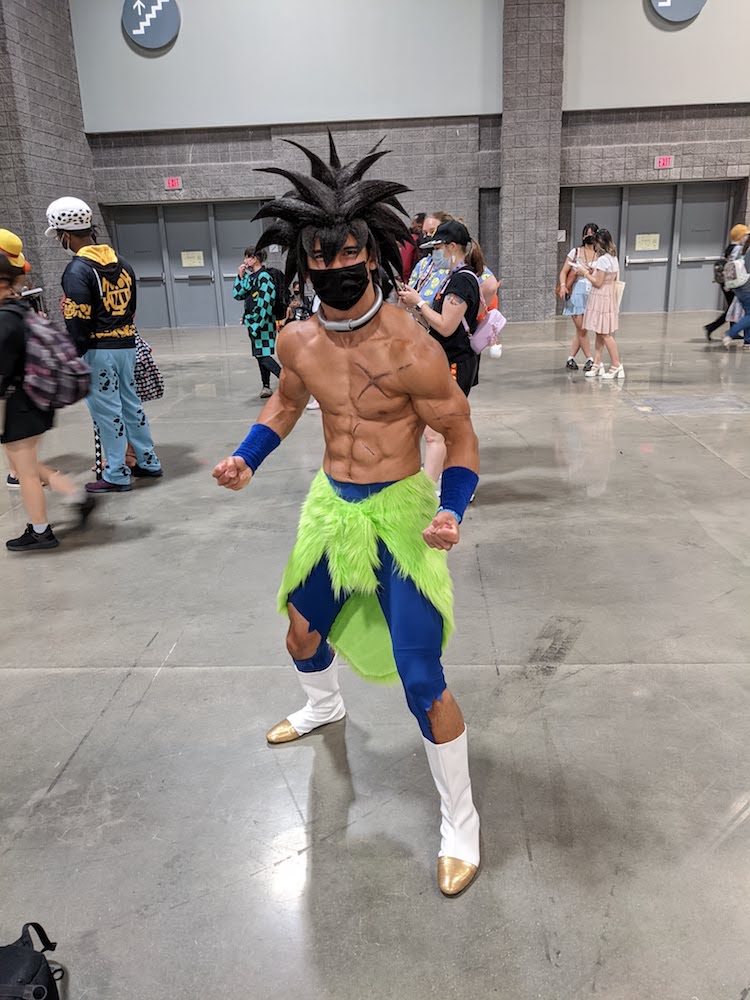
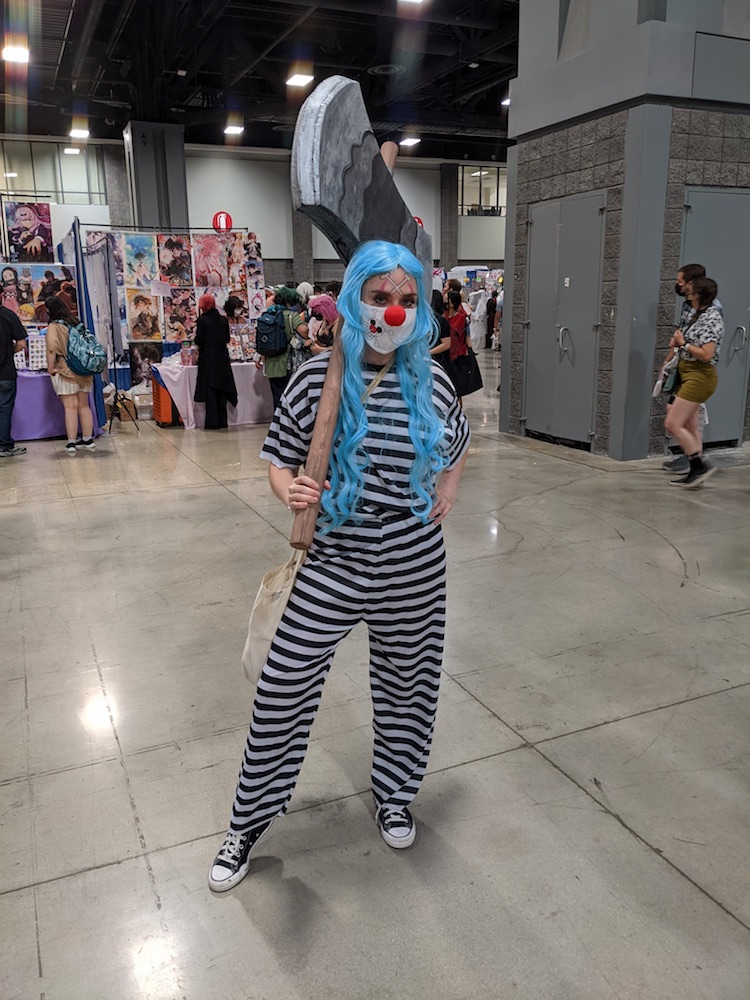
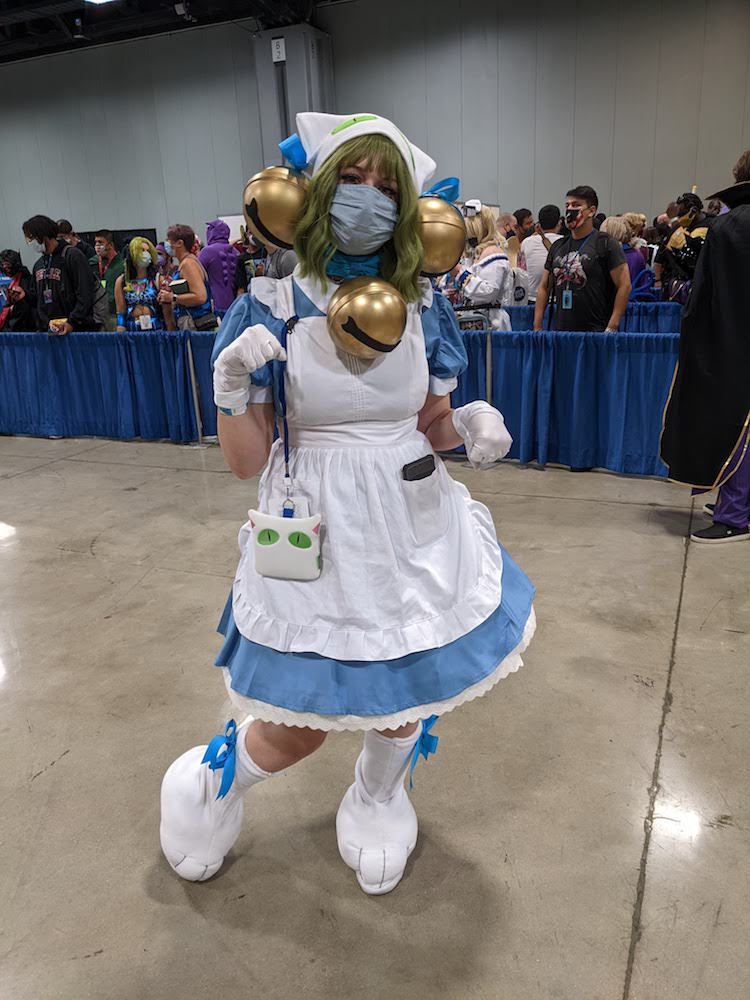
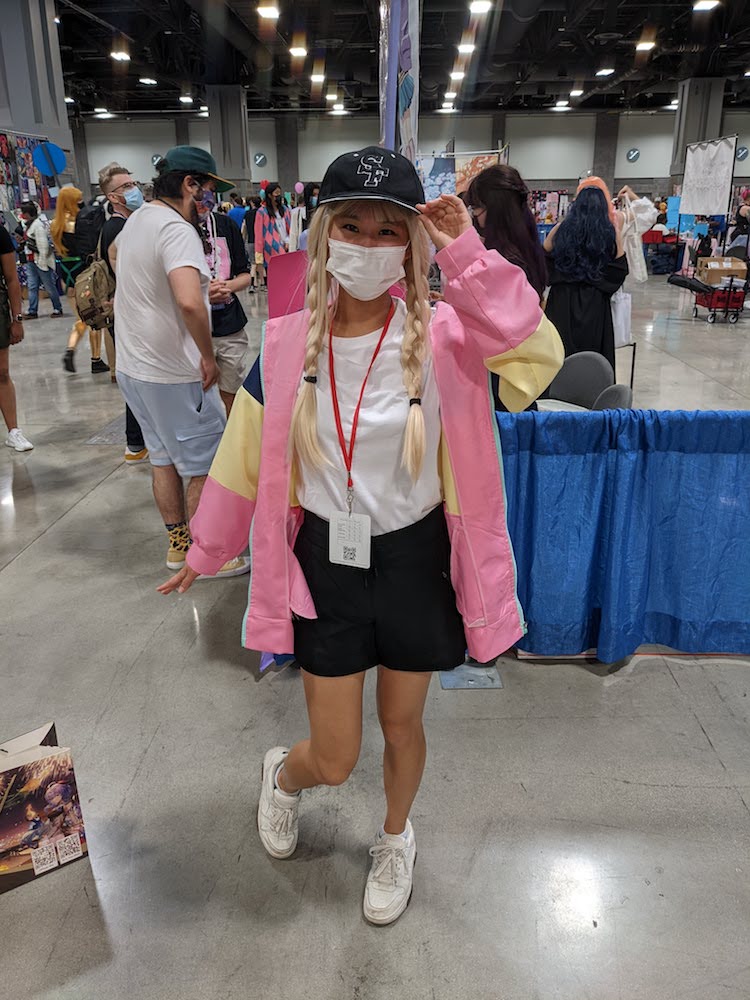
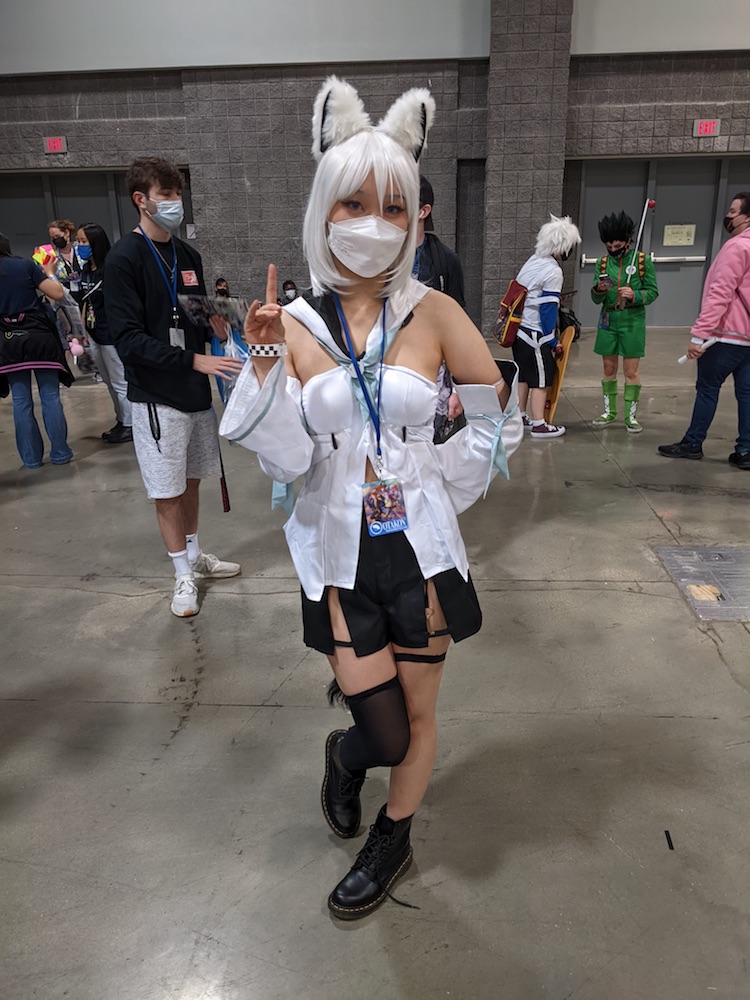
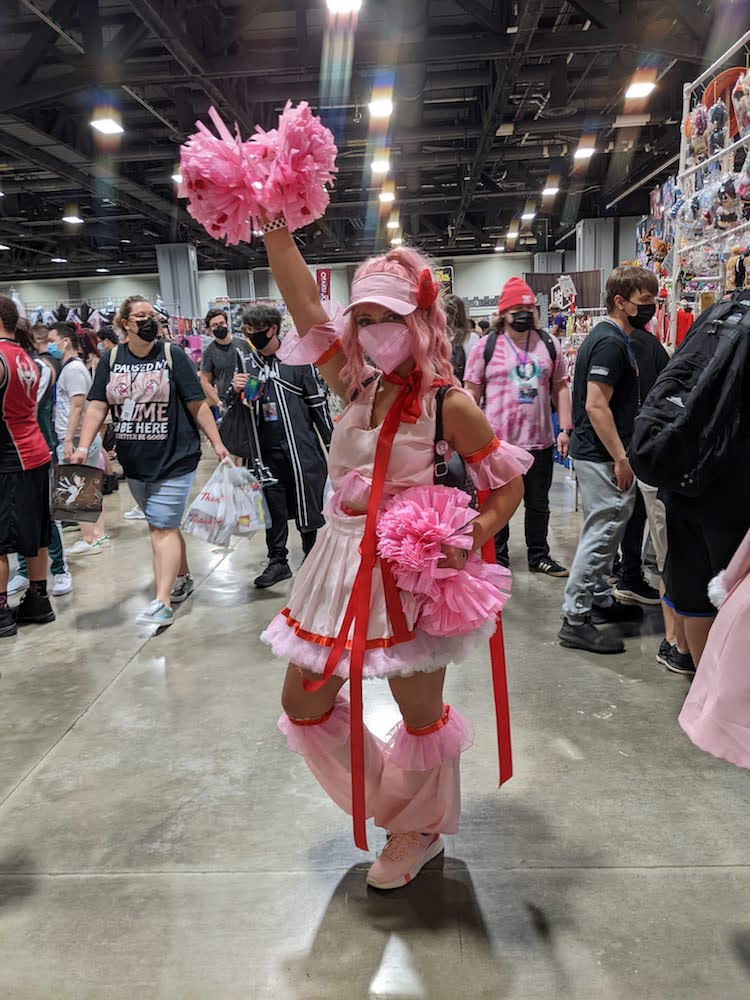
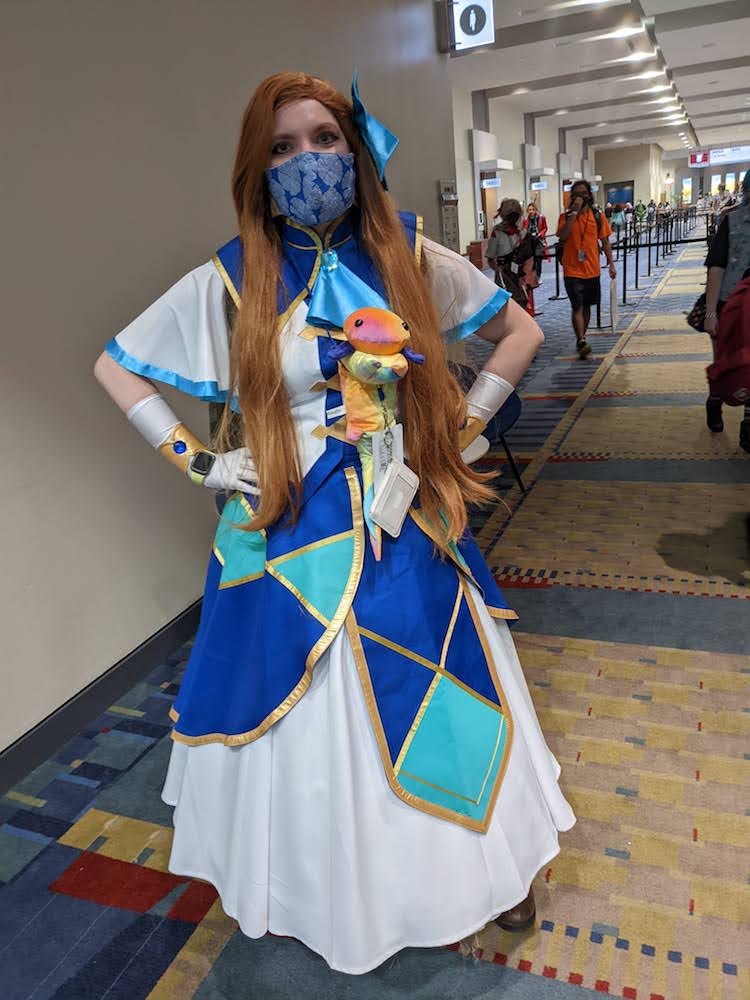
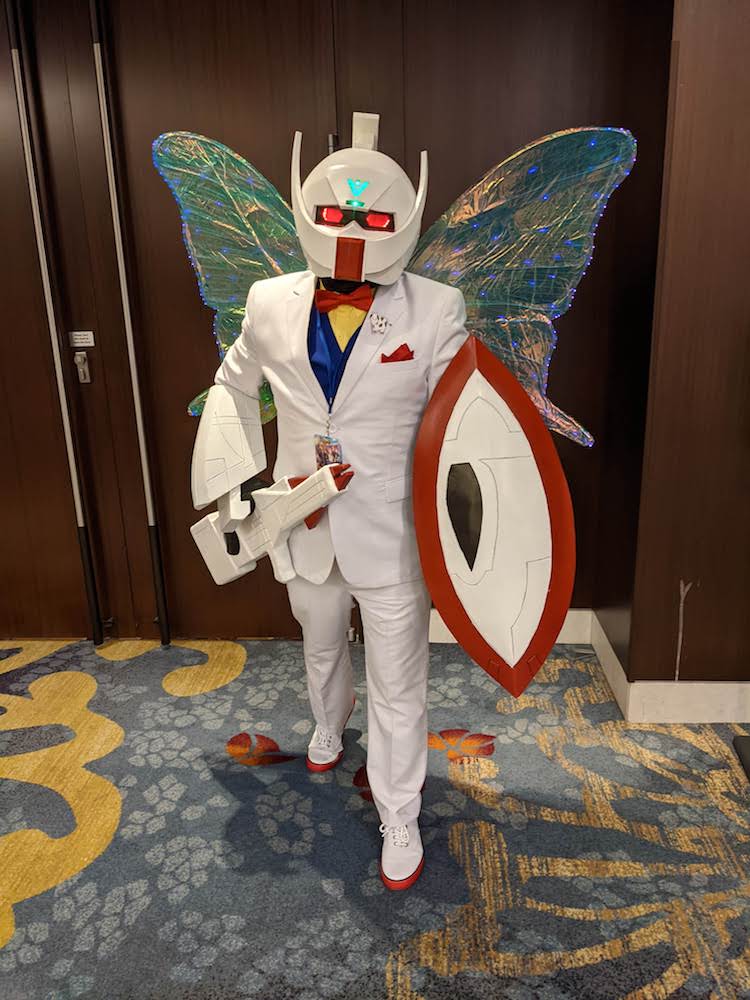
So that was Otakon 2022! It had some hiccups that made me remember that attending a convention is a conscious choice that requires risk assessment, but I definitely had a great time overall. I’ll leave off with a gallery of cosplay photos I took throughout the event. Cheers to another fine year, and I hope all my fellow attendees made it out healthy in the end.
Otakon 2022 is this weekend, July 29–31, and I’ll be heading back to my favorite anime convention of all. This year, I’m running two panels: one by myself, and one with an old partner in crime.
Hong Kong in Anime and Manga
Friday 4:30 PM – 5:30 PM / Panel 2
I was motivated to do this panel because I wanted to celebrate the culture of Hong Kong but also critically investigate how it is used in anime and manga. Those who’ve been to my panels will know that I tend to take a more scholarly (yet still fun) approach, and this is no exception, I hope
Mahjong Club (aka Riichi! Ten Years Later)
Friday 5:45 PM – 6:45 PM / Panel 5
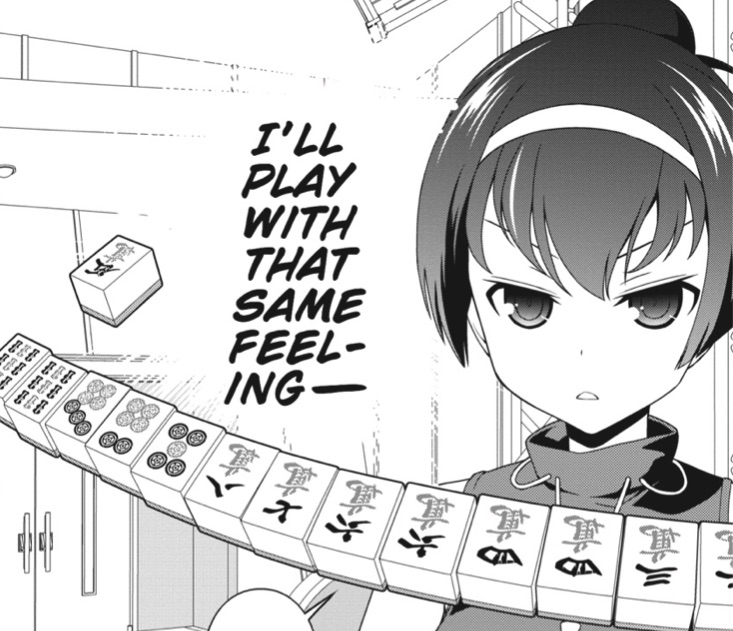
It’s been ten years, the Japanese mahjong panel is back! Once again, it’ll feature myself along with Kawaiikochans creator Dave. There are more riichi mahjong players outside of Japan than ever before, and more easy ways to play too! Whether you’re an experienced hand or someone who only knows mahjong by name, this panel has something for you.
Splatoon 3 was recently announced for 2022, and one question I have about the new sequel is: who will be the new musical mascots, and what will their style of music be? I have a hope/prediction: I believe that Splatoon 3 should have a sound that incorporates Cantonese pop.
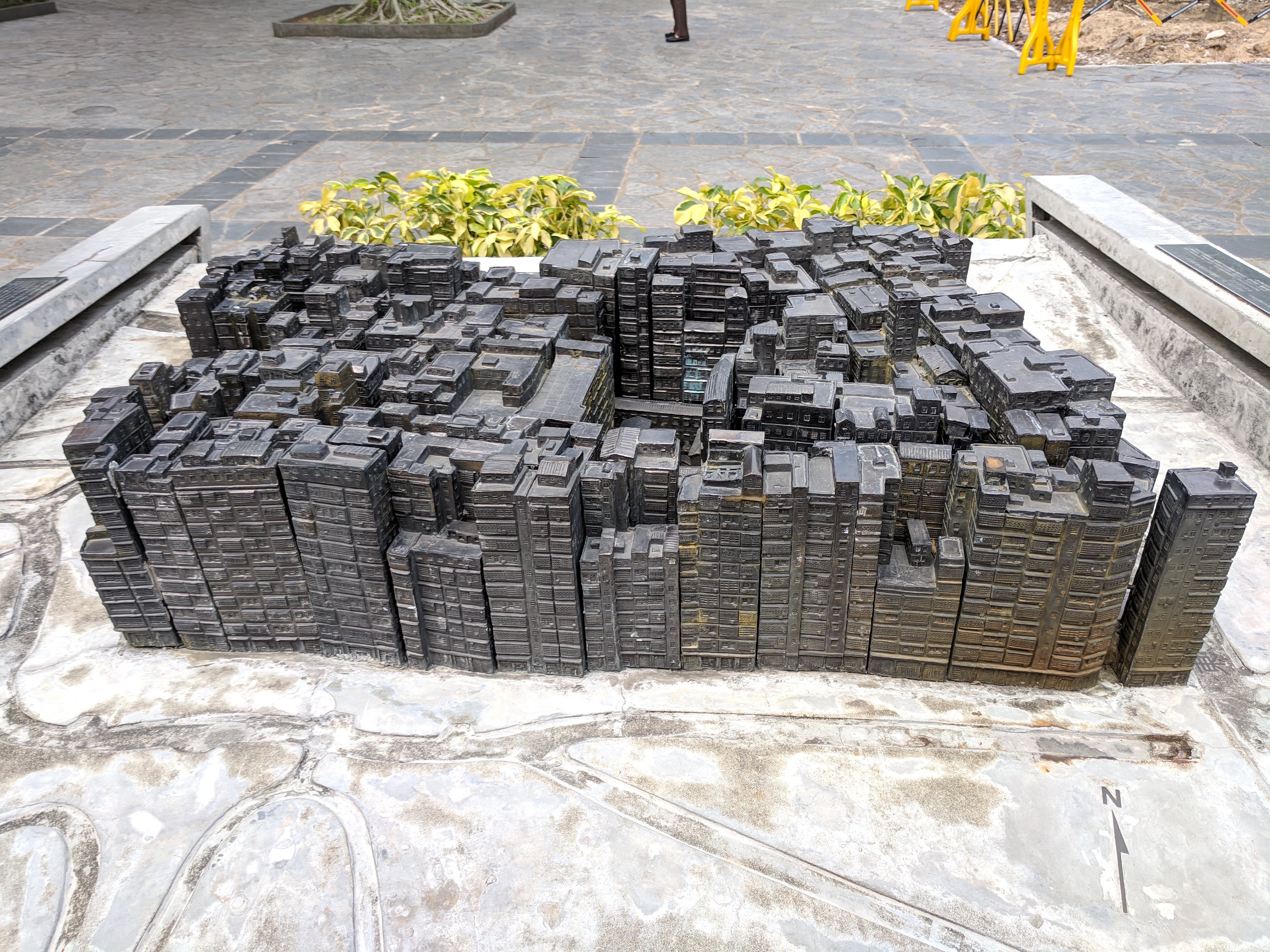
One of the big changes compared to the previous games is the shift away from sleek urban environments and towards what seems to be a more post-apocalyptic one. This can even be seen in the central hubs of all three games. Splatoon’s Inkopolis Plaza is based on the trendy Shibuya area in Tokyo, Splatoon 2’s Inkopolis Square is Times Square in New York City, and now Splatoon 3’s Inksville greatly resembles Hong Kong, particularly the Mong Kok area of Kowloon—the busiest urban center in the world. Given the current controversies going on in the area, I’m actually kind of surprised they went this angle, but the densely packed and awkwardly placed buildings have evoked dystopia in the imaginations of many. It acted as the basis for Ghost in the Shell’s setting, plays a central role in G Gundam, and in terms of the cultural legacy, the lawless nature of the Kowloon Walled City is rather infamous.
A model of Kowloon Walled City located at its former site
The musical mascots of the first two games reflect their urban spaces. The Squid Sisters are patterned after Japanese idols. Off the Hook is a rapper-DJ combo, and NYC is the birthplace of hip hop. Therefore, if Splatoon 3 were to have characters to represent that Kowloon-like setting, few things would fit better than a squid-and-octopus-garbled take on Cantopop. While its star has waned in recent years, Cantopop was once the premier form of Chinese popular music throughout Asia, and Hong Kong was the center of it. And if they wanted to capture both the retro and futuristic aspects of Hong Kong through Splatsville, perhaps they could even take from different eras of the genre.
One potential problem with this approach is that a lot of classic and modern Cantopop songs don’t exactly “feel” like Splatoon, as the genre is primarily known for its love ballads that wouldn’t quite fit the high-pace gameplay. Still, I think there are examples of high-tempo songs that could be inspiration for a soundtrack that captures the spirit of Cantopop and the Kowloon setting without necessarily feeling dated.
“Ji Guang Zhong” by Roman Tam
“Journey to the West” by Dicky Cheung
“Miss Similar” by G.E.M.
Is it a bit of a long-shot to expect Cantonese pop in Splatoon 3? Maybe. I also wouldn’t expect the composers to wholly abandon the sound it’s known for, as the music is one of the best parts of the series. Even so, I think it’d be more than possible to draw influence from one of Asia’s most popular genres of the last 50 years and make something that comes across as unmistakably Splatoon-esque. Most importantly, it would perfectly complement the Mong Kok, Kowloon visual aesthetic that Splatoon 3 is going for.
This blog is a reflection of myself, and my thoughts and feelings on anime and manga both for their own sakes and within the greater context of the world we share. So much has happened within this past week, let alone this past month, that I’m feeling overwhelmed. Between COVID-19 and the protests that have emerged in the United States, Japan, and Hong Kong in response to institutional injustice, I hope that everyone can stay safe as we fight for fundamental changes to transform the world into a place where power and authority are not used as tools of oppression.
Thank you to my Patreon sponsors this month. I appreciate your support, not just those listed below, but everyone who thinks Ogiue Maniax is worth something even in these times.
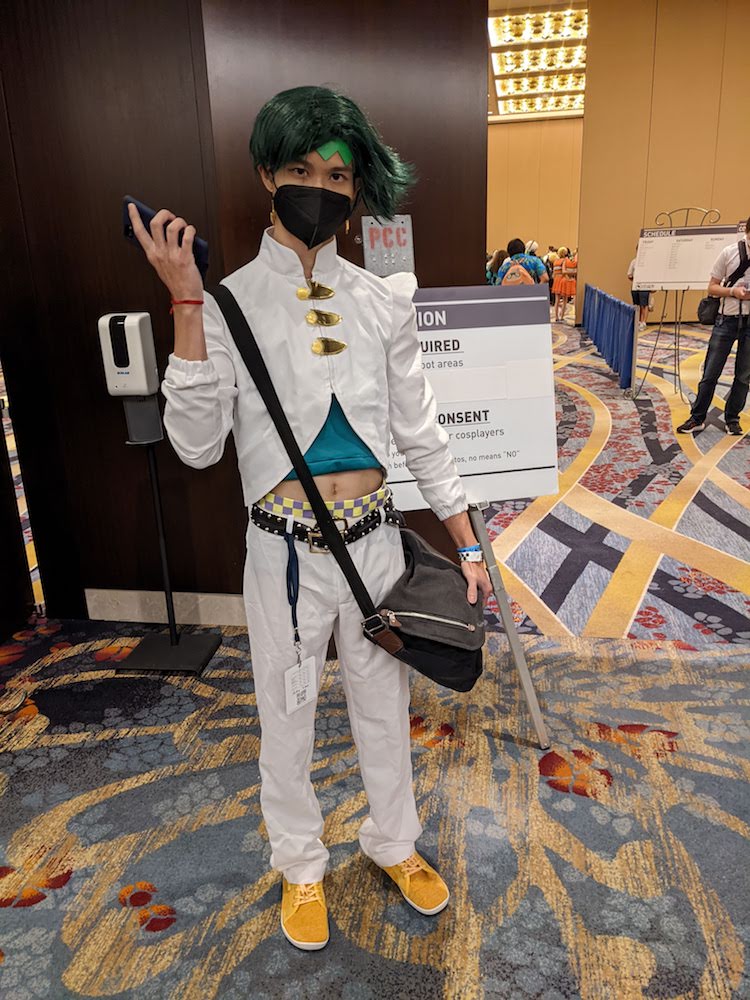
A thought about Steely Dan in JoJo’s Bizarre Adventure turns into an exploration of whiteness in America and its ties to the suburbs that dot the country.
Whether you choose to stay indoors or go out there to fight for justice, please stay safe. I will try to provide things worth reading, whether you want to engage more with the world around us or to stay within the realm of art. Just remember that the border between the two sides are porous and prone to mingling.
Hong Kong has been on my mind a lot as of late. Earlier in the year, I began re-watching Mobile Fighter G Gundam, an anime in which the latter half of the series takes place primarily in the futuristic “Neo-Hong Kong.” A few months earlier, I actually visited Hong Kong for the second time ever—the first time was three decades ago when I could barely remember a thing. Then, in recent weeks, news of Hong Kong has been dominated by the ongoing protests there in response to the Mainland Chinese government. This confluence of events has me wondering about how Hong Kong was traditionally portrayed in media, and imagining the possible Hong Kongs that could have been.
Giant robot fighting tournament aside, the Hong Kong of G Gundam is close to the classic portrayal of the territory in the 1980s and 1990s: tall buildings and a mix of glitz and grime, much like in Bloodsport or the countless works to come out of the famed Hong Kong film industry. One major difference between fiction and reality is that in G Gundam, the Neo-Hong Kong government is the sovereign ruler of all nations—a consequence of winning the previous “Gundam Fight” tournament. It’s extra ironic because G Gundam was made in 1994; that’s a mere three years before Hong Kong was to be returned to China after two hundred years as a British colony. According to a talk by director Imagawa Yasuhiro, the producers of G Gundam were aware of this and didn’t care.
While Neo-Hong Kong being the world’s foremost power is portrayed as a double-edged sword, especially in how the appearance of prosperity hides the damage and decay of the Earth itself, seeing a Hong Kong so powerful contrasts with its relatively declining influence in the real world since 1997. Hong Kong had been a major player on the world stage due to the economic freedoms allowed by its British colony status, and the relationship between China and Hong Kong is meant to be “one country, two systems” in order to maintain the make-up of both, but there has long been a growing fear by residents of Hong Kong that this was never meant to last.
Two areas that point to Hong Kong receding from center stage are the film industry and the pop music industry. Hong Kong’s notoriety in movies is a shadow of its former self, while China increasingly funds and influences major Hollywood productions. Cantonese pop from Hong Kong, which swept Asia in previous decades, had a long lull that it seems to only be recovering from now. This stands out all the more because the prime minister of Neo Hong-Kong in G Gundam is named Wong Yun-Fat (a reference to famed director Chow Yun-Fat), and the fact that G Gundam itself has a full-on Cantopop soundtrack for the second half of the anime.
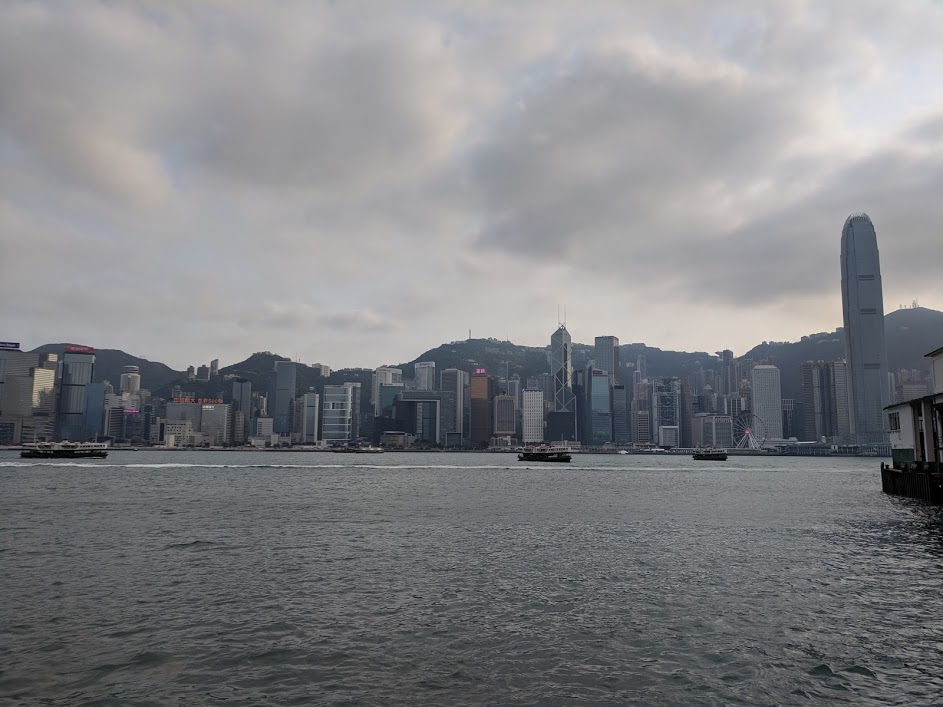
Visiting Hong Kong, I noticed how different each area of the territory is. Hong Kong island feels like it’s somewhere between London and New York’s Chinatown. Kowloon reminds me more of the Asian cities I’ve been to, and is also the namesake of Neo-Hong Kong’s Kowloon Gundam. I didn’t go to the New Territories, but I hear it’s where you live if you want to get away from everything else. Lantau Island, in the New Territories, is actually the site of the final battle in G Gundam. On Sundays, you’ll see countless girls, many in hijabs, occupying the street. That’s because it’s the only day out of the week that the domestic workers of Hong Kong—from Indonesia, the Philippines, and other Asian countries—have off. Hong Kong is a place of amalgams and contrasts that reflect an economy of haves and have-nots, not unlike the world of G Gundam.
Hong Kong is still significant in the world, but China’s economic rise is one of the biggest stories of the last two decades. Because of the mainland’s increasing global influence, it makes me doubtful that we’ll ever see more Neo-Hong Kongs in media, Hong Kongs that dominate the Earth. “Hong Kong as powerhouse” is an interesting narrative, but because it’s competing with the tale that the influential are seeking to weave, it might very well remain in the imagination.





 OGIUE MANIAX