Mori Summer: Ogiue Maniax Status Update for July 2017

AnimeExpo is over, and the all-new Otakon in DC is on the horizon. Meanwhile, EVO 2017 is less than two weeks away. With a new season of anime upon us again, it’s time to get back into the swing of seeing how the new crop holds up.

I’m happy to see that my Patreon supporters are still with me. A special thank you to…

General:

Johnny Trovato

Ko Ransom

Alex

Diogo Prado

Viga

Yoshitake Rika fans:

Elliot Page

Hato Kenjirou fans:

Elizabeth

Yajima Mirei fans:

Machi-Kurada

Unfortunately, I wasn’t able to finish the latest Gattai Girls in June, but I’m getting close! I’m going to make myself get this danged thing out even if it drives me mad. It’s about time I got back around to talking more about giant robots anyway.

Even though a strong season just ended and there are plenty of shows in it that I enjoyed, I’m not sure how many of them I want to write full reviews for. So why not have a poll?

I might end up doing the other ones anyway, but I’d like to see what people would be most keen on.

Here are the monthly blog highlights:

Nerds in the Mist: Katou Megumi and the Role of the Non-Otaku

The “Boring Girlfriend” is anything but. Find out why Megumi is one of the most interesting characters around.

Does the Japanese “Vegeta” Voice Not Translate to English?

This post of mine was the biggest success of the month in terms of views! Read my thoughts on voice acting in Dragon Ball Z!

Magic School Bus Meets Terminator: Cells at Work

I love this manga so much. It’s everything I’ve ever wanted. The human body is a wondrous thing.ß

Patreon-Sponsored

The Fun of Farming Games (Except Farmville)
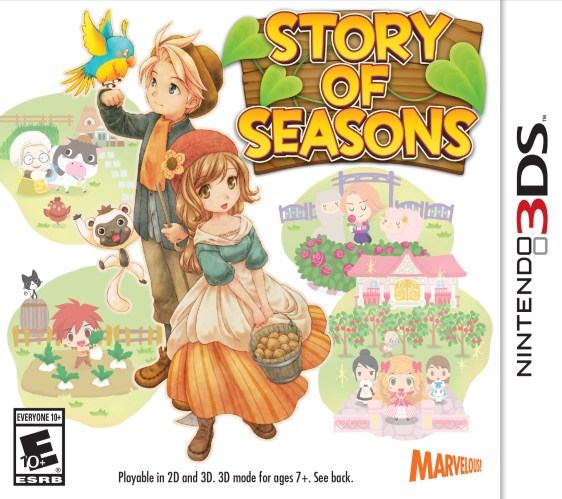
I never really played farming simulators before. Then I tried Story of Seasons. See my thoughts on the genre and where I think the appeal and satisfaction lies.

Closing

I feel strangely inspired to write some new posts after being in a small rut. I hope that what I bring to the table continues to be enjoyable and thought-provoking!

Save

Save

The Fun of Farming Games (Except Farmville)

Until recently, I never played farming-themed video games. The closest I ever came to it was basically growing berries in Pokemon. Ever since I began to play the 2014 Story of Seasons for the 3DS (previously known as Harvest Moon), however, I think I’ve come to understand the appeal of farming simulators, and to whom they hold the greatest attraction.

The first thing I noticed is how much there is to keep track of. You’re quickly told about different plants, traders arriving on certain dates, certain items being more valuable in different seasons, birthdays, all while trying to make sure you’re watering your crops and feeding your livestock. Thankfully, the game is not based on a real clock and therefore does not require you to perform chores based on time in the real world—something that was a pain in some Pokemon entries. What’s more, balancing the crops you eat to survive vs. the crops you sell seems tricky, and makes me wonder how actual farmers find that sweet spot.

Being as successful as possible requires not only intimate knowledge of the game’s farming mechanics, but also diligence and the ability to plan far in advance. In other words, farming as a game is ideal for people who thrive on creating and maintaining a schedule, and excel in efficiency. While the farming setting is fairly laid back and I’m not sure it’s possible to squeeze every last second for all it’s worth, proper planning is the domain of virtual agriculture.

The topic of farming games brings to mind the deadly specter that is the dubious “king” of the genre, Farmville. As once the most notorious of the Facebook social games out there, Farmville has been criticized harshly for basically exploiting its player base by both getting them addicted to the constant need to pay attention to the game, and for bilking them of their money by making the experience one that relies on negative reinforcement. However, I think that this does not necessarily apply to all farming-themed games, and a comparison to Story of Seasons shows the difference between a game where managing the ins and outs of a farm can be a positive and enriching experience, and one that leads down a long, dark path.

In Story of Seasons, as you get better at the game, you are not only able to do more, but there’s a greater sense of efficiency. By playing as best as you can, you spend the least amount of time necessary on a given task. Alternatively, you spend as much time as is enjoyable for you. In Farmville, however, the main function of the gameplay is to be a “time waster,” not just in the sense that it’s something you do in your free time, but that the game keeps its players glued to the screen for as many hours as possible. One rewards you for playing more by allowing you to do more, the other punishes you for not putting in as many hours as everyone else.

The Farmvilles of the world can go to hell, for they show how the fun of a genre can be corrupted, but perhaps they can lead people back to less exploitative examples. I get the charm of farming games as a kind of stress relief by way of meticulous micromanagement. I feel a simple joy in seeing my turnips fully grown and ready to be picked, and thinking about how to best use them is its own interesting strategy. There are elements that I wish were more automated, but even that brings its own strange catharsis. It’s as if stress and relaxation are balanced on a knife’s edge, a feeling I imagine might also come from a real farm.

This post was sponsored by Johnny Trovato. If you’re interested in submitting topics for the blog, or just like my writing and want to support Ogiue Maniax, check out my Patreon.

Every Day Young Life: Ogiue Maniax Status Update for June 2017

This month is AnimeNext! I missed last year’s move to Atlantic City, but I’ll be attending this time around. I have at least one panel I’ll be on at the con, but the schedule’s not up yet so I can’t say when. I’ll be making a post to Ogiue Maniax once the schedule is out.

As for my Patreon sponsors for June 2017…

General:

Johnny Trovato

Ko Ransom

Alex

Diogo Prado

Viga

Yoshitake Rika fans:

Elliot Page

Hato Kenjirou fans:

Elizabeth

Yajima Mirei fans:

Machi-Kurada

One of the personal running jokes of this blog for me is the lack of a new entry for Gattai Girls. I have no real excuses, except that it’s been slow going watching the series I plan on writing about next. I really hope I can get it done in the next month, and might even devote most of my free time to it.

Speaking of shows about female robot pilots, I was recently reminded of Stellvia of the Universe after finding out that opening singer angela is going to be at Anime Expo. Most likely, that’ll be the next next entry whenever I get around to it.

Here are the monthly blog highlights:

Tonight was the Night: The End of VGCW, Video Game Championship Wrestling
Last month, I said farewell to a companion that saw me through some rough times: fake real video game wrestling. While not a wholly original idea, VGCW ended up being something special.

Kiryuin Satsuki and the Curse of Power Girl
Power Girl is forever fated to be a cheesecake heroine but Satsuki from Kill la Kill was able to overcome it. Why?

The Revival (?) of Studio Gonzo
A journey through the (in)famous studio’s ups and downs.

Patreon-Sponsored

Aikatsu Stars Season 2 and Notions of Perfection
Aikatsu Stars! makes a big deal out of Perfect Elza. What could this mean for the series?

Return to Genshiken

Volume 3 – Stimulation Simulation
It’s the true beginning of Saki x Mada. ‘Nuff said?

I might sound like a broken record player, but I can’t believe the next anime season is creeping ever closer. It feels like only yesterday when I was watching out for the spring season.

Save

Save

Aikatsu Stars Season 2 and Notions of Perfection

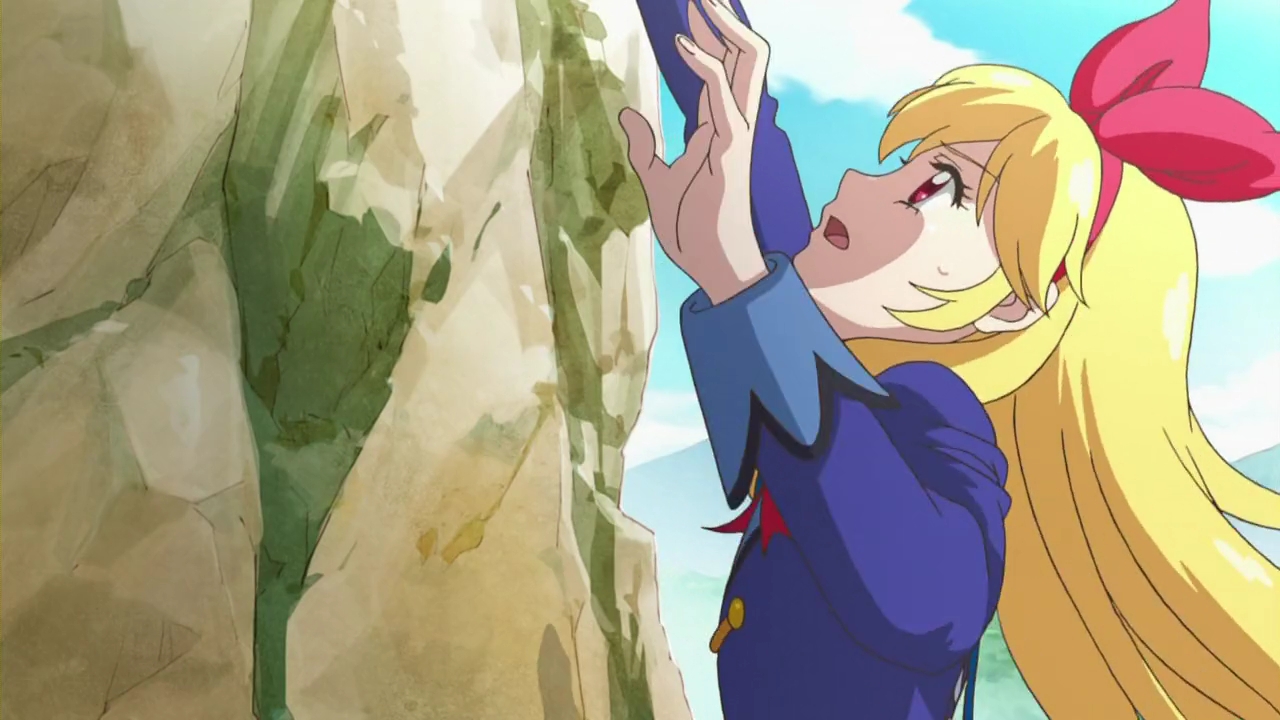
The second season of Aikatsu Stars! begins from an interesting place. After the end of the first season, heroine Nijino Yume becomes a member of S4, the top idol group at her school. In Pokemon terms, this would be equivalent to having Ash start a series as a member of the Elite Four. She’s not just improved, she’s established as one of the best. Given this setup, I find it interesting how Aikatsu Stars! season 2 brings up the difference between “great” and “perfect.”

Confronting heroine Nijino Yume is a new rival idol academy called Venus Ark, which travels around the world on a cruise ship looking to poach idols from other schools. At the head of Venus Ark is Elza Forte, who, much like deceased pro wrestler Curt Hennig is known by one word: Perfect. There’s even a tangible symbol of perfection in the form of wings that appear only when a perfect performance is given, and at the start of the series “Perfect Elza” is the only one who has them.

But what does it mean to be perfect? Does it mean to never lose? Does it mean performing in such a way that it would be the equivalent of a perfect score in the Aikatsu Stars! arcade game? As the primary rival of the season, Elza is there as a goal to aspire towards and overcome, much like Shiratori Hime in season 1. Whether Yume will beat Elza or not is up in the air, but my hope is that Yume challenges the concept of “perfection” as presented by Elza. Perhaps Yume could show that the best possible performance is not necessarily a perfect one, but the one that connects to the audience best even if mistakes are made.

I understand that Aikatsu Stars! is based on a card-based arcade game that has a more concrete idea of what it means to play a “perfect game,” as well as cards that just have better synergy. However, the first Aikatsu! series (back when Ichigo was the main character) went above and beyond those restraints, and season 1 of Aikatsu Stars! really emphasized a balanced mix of product placement and story. I don’t need for the development I’ve described above to happen, and it’s not even the only way for the series to be strong, but I’d like to have a series where the kids watching don’t feel the need to strive for “perfection,” only their best.

This post was sponsored by Johnny Trovato. If you’re interested in submitting topics for the blog, or just like my writing and want to support Ogiue Maniax, check out my Patreon.

Save

Overhead Kiss: Ogiue Maniax Status Update for May 2017

May’s always been my favorite Guilty Gear character. 6p is Life.

While they might not be able to shoot people out of cannons, my Patreon supporters are just as powerful. Thanks to the following!

General:

Johnny Trovato

Ko Ransom

Alex

Diogo Prado

Viga

Yoshitake Rika fans:

Elliot Page

Hato Kenjirou fans:

Elizabeth

Yajima Mirei fans:

Machi-Kurada

I found April to be a fine time for Ogiue Maniax just because there were so many fine shows coming to an end. Personally, I’ve also been reading a lot of manga I had neglected for a while, and I’m hoping to write my thoughts on them either here or on Apartment 507. Do you have a favorite show thus far? I’d be interested to know.

Starting this month, I’ve decided to change up how I do these posts. Instead of listing almost every post I’ve written over the past month, I’m going to give my three favorites plus any sponsored posts from patrons.

Top 3 Posts

You’ve Finished Kemono Friends! What Next?
This for all you Friends out there who want a little more. Trust me, you won’t be disappointed.

Fight for Survival, Dream for the Future – Mobile Suit Gundam: Iron-Blooded Orphans
I’m a long-time fan of Gundam, but I felt especially impressed by this latest TV series.

Bodies Apart, Souls Together: Your Name
See my take on what might be Shinkai Makoto’s most “complete” movie ever!

Patreon-Sponsored

Yamato vs. 999 and the Makeup of a Journey
This time, I was requested to write about “anime that take you on a journey.” I used that opportunity to analyze what it means for a series to portray a “journey” in the first place.

As always, if you want to not only request a topic for Ogiue Maniax but make me write it as well, you can check out the highest tier on my Patreon.

The month of May will feature the next entry in my Genshiken re-read series, so look out for that! Also, watch out for giant whales.

Save

Save

Yamato vs. 999 and the Makeup of a Journey

By necessity, a journey involves “movement.” However, the act of moving from one place (or dimension or time) to another by itself does not constitute a journey. Characters in Dragon Ball Z travel across the Earth and even to other planets, but the more humble adventures of young Goku in Dragon Ball feel far fitting to be called “journeys.” The more the individual stops carry significance, the more a tale of travel becomes a journey. However, the longer each significant stop is, the less it becomes a journey as well.

The details of how a journey narrative unfolds—and the meanings carried by it—can come from what elements are in the characters’ control, and which ones aren’t. From this perspective, it is interesting to compare two of the greatest “journey anime”: Space Battleship and Galaxy Express 999.


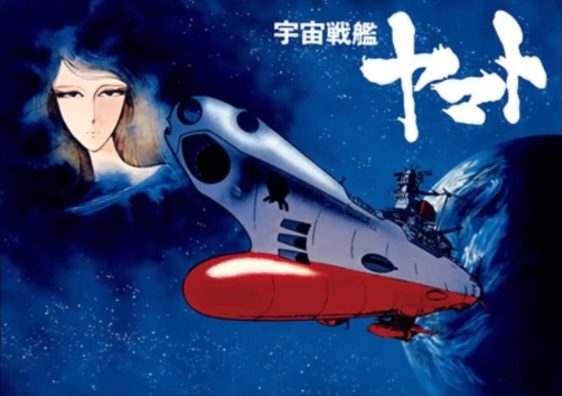
Space Battleship Yamato

Galaxy Express 999

Between these two series, we can see two major archetypes: the journey of necessity, and the journey of discovery. Both series are about reaching a destination and overcoming death (the Yamato flies to obtain a device that can save humanity from radiation, Tetsurou boards the Galaxy Express 999 to obtain an immortal robot body). However, Yamato’s journey is more about what imperils the heroes, while 999 is about discovering new worlds and seeing how life differs from place to place.

As a result, while both series don’t spend long amounts of time in any one location, the reasons for the brevity of their respective planetary locales are substantially different. Because the Yamato is in a race against time, there is a constant sense of urgency. They’re being pursued by the enemy, all while the fate of the human race rests in their hands. How long they stay anywhere depends on how long it takes them to get out.

In contrast, the length of each stop for the 999 is determined by the day cycle of a planet. This provides both narrative variety and something to chew on (e.g. what does it mean to live day to day on a planet where days are only a few hours?), but in terms of the mechanics, it essentially means that the characters’ schedules, the amount of time they spend on each planet, is dictated by the 999.

In Yamato, the characters must pull their vessel along, and the length of stay is their responsibility. In 999, the characters are pulled along, and their responsibility is doing as much as they can within a time frame. These differences transform the similar developments that the protagonists of each anime go through. By the time both Kodai and Tetsurou emerge from their journeys, they are wiser and more mature, but the former reaches adulthood through constant conflict, while the latter achieves the same through experiencing new perspectives.

Between the journey of necessity and the journey of discovery is the journey where discovery is necessary, but when I try to think of examples the first thing that pops into my head is ironically not really an anime that takes its viewers on a journey at all. Instead, what comes to mind is the series Mahoromatic, which is about a former military robot that becomes a maid in order to spend the rest of her short remaining life atoning for her previous role. Much like Yamato, each episode ends with a count of the days Mahoro has left. Despite Mahoromatic mostly revolving around a static home and environment, Mahoro’s desire to discover what it’s like to live as a human as her life winds down conjures up the well-worn cliché that “life is a journey.”

This post was sponsored by Johnny Trovato. If you’re interested in submitting topics for the blog, or just like my writing and want to support Ogiue Maniax, check out my Patreon.

Save

Save

A New Release: Ogiue Maniax Status Update for April 2017

Did you know that Kinomoto Sakura’s birthday is April 1st?
Upon learning this, I realized that major spoilers for Watanuki in XXXHolic were staring me right in the face all along (his name means “April 1st”).

Do any of my Patreon supporters have an April birthday? Whether they do or not, I’m still just as grateful for their support:

General:

Johnny Trovato

Ko Ransom

Alex

Diogo Prado

Viga

Yoshitake Rika fans:

Elliot Page

Hato Kenjirou fans:

Elizabeth

Yajima Mirei fans:

Machi-Kurada

Here are the post highlights for this month:

Part 2 of my Genshiken re-read is up, and it’s amazing to see how many characters come and go in the second volume.

March also saw the end of the New York International Children’s Film Festival. Here are all the Ogiue Maniax reviews from the event:

My Life as a Zucchini

Window Horses

Rudolf the Black Cat

Ancien and the Magic Tablet/Napping Princess

The runaway hit of the last season was definitely Kemono Friends. It was such a big deal I had to write about it twice… sort of.

I also got back on track on my chapter reviews of Kimi xxxru Koto Nakare. The series looks like it got delayed for a little while, but I hope it’s coming back. I really do think it’s an excellent series.

Lastly, it was a close call, but I wrote my thoughts on March Comes in like a Lion. I knew I’d like the show, but I’m even more impressed with how well the show makes its protagonist Rei relatable.

April means the end of the winter anime season and the start of some new shows. That means you’re likely going to see a bunch more reviews for anime that concluded this past season. Early on, I saw quite a few people online expressing their opinions that the winter was something of a disappointment. While this has turned around somewhat, thanks to the rising popularity of shows such as Kobayashi’s Dragon Maid and Kemono Friends, I feel like that idea still persists.

As for new shows, I’m looking forward to Love Rice a show about rice-themed idols. It’s as if Hanayo was allowed to make her own anime.


Save

Save

Making an Ass Out of Me and Me: Ogiue Maniax Status Update for March 2017

mahogirls-sleepingbags

Perhaps I should do a review of March Comes in Like a Lion this month. It’d be the kind of super dumb joke I adore?

You know what else I adore? The support of my Patreon users!

General:

Johnny Trovato

Ko Ransom

Alex

Diogo Prado

Viga

Yoshitake Rika fans:

Elliot Page

Hato Kenjirou fans:

Elizabeth

Yajima Mirei fans:

Machi-Kurada

As I think about all I’ve written on the blog, a thought occurs to me: I might subconsciously assume more knowledge in my readers than I should. This is not an assertion that people who read the blog don’t know enough, but rather that I’ve written about so much over the years that it colors how I write on Ogiue Maniax. Because I avoid trying to repeat myself too much, I feel that I leave too many things unspoken, things that are worth explaining or elaborating upon for readers who are learning of certain elements of anime, manga, and Japanese pop culture for the first time. For this reason, I plan to be more conscious of newer audiences as I write. I’m aware that anime fans nowadays prefer to get their info from YouTube, but I should still make a greater effort to account for people who haven’t been reading my blog for 5+ years, i.e. most people.

Moving on, here are this past month’s blog highlights:

Two series I enjoy concluded recently: Maho Girls Precure and 3D Kanojo. The latter I’m especially fond of, and it’s one of my favorite shoujo manga in recent memory.

I also wrote about the incredible voice acting by Ishida Akira in Showa Genroku Rakugo Shinjuu, as well as the ambiguous morality of Saga of Tanya the Evil.

And i you want to learn about one of the stranger Japanese manga one-shots out there, look no further than Chiyo’s Lips, a title about a relationship based on popping pimples (you might not want to read this over lunch).

March is shaping up to be quite a month, as it’s time for the New York International Children’s Film Festival. I’ll be seeing a whole bunch of movies in the next few weeks, so expect some reviews! I’ll also be writing up my re-read review of Genshiken volume 2.

See you on the lamb side!


Coast to Coast: Saga of Tanya the Evil

tanyatheevil

It’s very tempting to categorize Saga of Tanya the Evil according to its appearances. What else would you do about a series where a Japanese man is reincarnated as a blonde magical little girl in an alternate universe version of Nazi Germany? Is it fetishizing the Third Reich? Is it making an argument for authoritarianism and militarism through the lens of contemporary anime tropes? Questions abound, and yet I find that this anime is very difficult to gauge its moral direction, if there is any at all.

Tanya is a little girl who in another life was a ruthless salaryman dedicated to staying the reliable course that is assumed of his profession. So devoted a company man is he that he fires one of his employees for a minor infraction. Believing in the superiority of a detached, logical mindset, he fails to anticipate that his ex-employee would be so despondent as to push the salaryman in front of a moving train. At that moment, the man receives a message from God but refuses to believe in the existence of a higher power, which prompts God to reincarnate him as Tanya.

As Tanya, she has kept her memories of her previous incarnation, and at only 10 years old joins the imperial military due to her extremely high magical aptitude. Similar to her previous life, she sees the military as the steady course to a comfortable life, but a variety of contrivances both divine and coincidental cause her to consistently put her life (and her beliefs) in peril.

Given this back story, it’s possible to argue conflicting points. For example, the refusal by Tanya to let God control her could be seen as a defiance of fate and religion, but the fact that Tanya is constantly denying the existence of a supreme being despite everything that happens might render it a point in favor of religion. For me, I find that the main point of conflict and confusion when trying to analyze this series is actually the question of whether it’s supporting Tanya’s mindset or criticizing it (or maybe both!).

Tanya’s desire for the most stable track in life, and the calculated way she goes about it, has the appeal of an older science fiction protagonist. Often, she’ll say one thing and think the other, and it’s usually in service of appearing like an upstanding member of society in order to further her own desires. However, the subsequent derails that keep Tanya from that comfortable life might be a criticism of the Bubble Economy mindset that has been the cause of much anguish ever since the Japanese recession began. Where once the path to success was all but assured for many Japanese salarymen, that foundation crumbled underneath them, leading to (among other things) a crisis of masculinity.

Perhaps this is the reason why Tanya is a girl in the first place. While it’s normally assumed that older male anime fans gravitate towards young female characters due to a desire to be with them, there’s also to some extent a desire to be them. The assumed idyllic life of cute girls, and the innocent mindset that is supposed to come with that, holds what I believe to be a particularly strong appeal to those whose lives are slowly ground down by the engine of corporate society. That being said, the fact that Tanya maintains her previous life’s Japanese salaryman/mildly sociopathic mindset seems more confrontational than those kinds of series usually are.

In this respect, the series that I think holds the greatest connection to Saga of Tanya the Evil, it’s actually Strike Witches. In terms of setting, the two are quite similar: alternate versions of World War II Earth where magic and technology come together to give young girls flight and military might. Strike Witches is much more in the vein of the types of series I described in the previous paragraph, because while the story is about war, it’s as if the world is an extension of the characters’ identities as cute girls. With Saga of Tanya the Evil, this concept is taken to its extreme. Tanya is akin to a Strike Witch if that world actually had the image of military machinery beyond lighter aesthetic elements.

This post was sponsored by Johnny Trovato. If you’re interested in submitting topics for the blog, or just like my writing and want to support Ogiue Maniax, check out my Patreon.

Save

I Have a Choco: Ogiue Maniax Status Update for February 2017

February might be Valentine’s Day Month, but how much I’ll actually discuss romance on the blog remains a mystery even to me!

Whatever the situation, I know that if I were in Japan, I’d be giving giri choco to my Patreon sponsors.

General:

Johnny Trovato

Ko Ransom

Alex

Diogo Prado

Viga

Yoshitake Rika fans:

Elliot Page

Hato Kenjirou fans:

Elizabeth

Yajima Mirei fans:

Machi-Kurada

Given that this will be the tenth year of Ogiue Maniax, I decided last November to do a Genshiken series 1 re-read. I’ve started with Volume 1, and you should expect to see them come out every other month. (I would have said bi-monthly but that phrase can also mean “twice a month,” so…) I’ve already felt like I’m stepping back into a different world, so I’m looking forward to the next article too.

Speaking of Genshiken, I also wrote a little post comparing Kasukabe Saki to Love Live‘s Nishikino Maki. The latter’s cooldere attitude reminded me of Madarame’s fantasy version of the former.

Perhaps the most important post I’ve written this month is on the subject of butts in anime. In it, I detail increasing presence of large rears in Japanese animation, and put forth my own hypothesis on why this has occurred. The seeds of this post have been germinating in my head for a very long time, even before Ogiue Maniax ever began. If you want to see more content like this, let me know. I just hope it doesn’t take me another 10 years to write one!\

I was also sad to see the end of Soredemo Machi ga Mawatteiru aka And Yet the Town Moves. It’s a very unique series in a lot of ways, and I look forward to seeing what the artist does next.

On the video game side, I’ve written a couple of posts thinking about what how players view competitive games, and what they can potentially do to both bring in a bigger audience and keep them from running away in fear.

As for this month’s Patreon-sponsored post, I looked at the subject of babies in anime and manga. My rating of babies is based on how much they make their parents suffer, I guess. If you have a subject you really, really want me to write about, it’s just a one-time $30 pledge.

If you’re wondering why I have it at that price, it’s just because I don’t necessarily want the blog to consist primarily of requests as opposed to my own ideas. That being said, I am considering maybe offering a poll with three or four topics that can be voted on with Patreon pledges. Is this an idea readers would be on board for?

Overall, I think this was a pretty solid month. I don’t have a wholly solid idea of what’s going to come next, but it might be a bit less review-heavy compared to this one.