Let’s Talk Evangelion in Shinkalion Z

Shinkalion Z 500 Type EVA, a robot that's a combination of Shinkalion and EVA-01 from Evangelion

It’s incredibly strange to go from the finality of the fourth Rebuild of Evangelion movie to seeing Shinji and Gendo characters show up in Shinkansen Henkei Robo Shinkalion Z, the fun-filled sequel anime about kids piloting bullet-train robots. What’s even more bizarre is that there’s a kind of thematic resonance between the two. The portrayals of the Eva characters in 3.0+1.01: Thrice Upon a Time and their Shinkalion Z appearances actually feel like they fit together.

Possibly due to its transportation and tourism connections, Shinkalion is famous for its unexpected pop culture cameos. A version of Hatsune Miku is a recurring character in the original Shinkalion. The franchise also makes multiple explicit references to city pop legend Yamashita Tatsuro, has Godzilla in a feature film, and showcases a Hello Kitty Shinkalion. It even just had a tiny Maetel from Galaxy Express 999 show up. Evangelion is just one of many pop culture icons to appear, but the sheer tonal difference between it and Shinkalion makes its presence all the more jarring on paper.

Ikari Shinji turning to face the viewer/the Shinkalion pilot Arata Shin.

Shinkalion already had a crossover with Evangelion in the first series, but whereas the main character back then (Hayasugi Hayato) visited Tokyo-3, here we have Shinji showing up in the world of Shinkalion. What really stands out about Shinji here is how gentle and reassuring he is in this world. The Shinji we see greeting the new protagonist, Arata Shin, has a calming presence that feels closest to the version of him we see towards the end of 3.0+1.01, as if parallel Shinjis arrived at the same place, only one had to go through some of the most dire trauma possible. The next closest would be the Shinji often found in Super Robot Wars after the positive influence of hotblooded pilots has rubbed off on him.

Not only does Shinji come across as a mature ment figure to Shin with the aura of a mentor, but he specifically mentions that he’s met a Shinkalion E5 pilot before. In other words, not only does the series acknowledge the previous Evangelion cameos within the world of the story, but we’re also likely seeing a Shinji who’s a little older. In a previous episode, it’s revealed that Shinkalion Z takes place in the world of the original Shinkalion after its climactic final battle, and reuniting with a Shinji with memories of what has come before actually creates a kind of anticipation for Hayato to return at some point.

Gendo sitting on a train platform bench next to some Shinkalion Z characters. The background is red and eerie, and Gendo's signature glasses are reflecting light.

As for Gendo (featured in the image at the beginning), he’s mostly played for laughs in terms of how incongruous he is with the relatively lighthearted world of Shinkalion. He says all the things you expect (“Shin, get in the Shinkalion”), but delivers it all with such a straight deadpan that it veers straight into parody territory. At the same time, his presence and demeanor feel reminiscent of a key scene in 3.0+1.01 involving trains, which makes the aforementioned resonance between that film and Shinkalion Z all the more noticeable. 

Ultimately, both Shinji and Gendo seem to be in better places in Shinkalion Z. While there’s nothing concretely saying so, I like to believe that the Shinji and Gendo of Shinkalion are better people because they have robots that are also trains—the kind of thing both father and son would probably enjoy, given their personalities and histories. 

Rei from Evangelion points at something, encouraging Asuka to take a look. Both are in their school uniforms.

Episodes are up on the official Youtube only until the following Monday EST, so anyone who wants to check out Shinji and the Shinkalion Z 500 Type EVA should do so as soon as they can. Unlike the last series, this episode actually has “Cruel Angel’s Thesis” for the streaming version.

It’s a Secret to Everybody: Giant Gorg

Tagami Yuu, a young boy in an explorer outfit and a beret, looks back at Giant Gorg, a large blue robot, in the background

In many ways, 1984’s Giant Gorg feels like an “anti–giant robot” anime. Sure, it has Yasuhiko “Yaz” Yoshikazu (one of the chief visionaries of Mobile Suit Gundam) as both director and character. And it’s indeed about a boy and his mecha guardian in the middle of a conflict that stands to change the entire world. But where most giant robot series before and after would aim for some combination of bombast, gritty science fictional realism, and/or gripping human melodrama, Giant Gorg often comes across as more concerned with atmosphere and conveying a sense of place in the world.

Giant Gorg follows 13-year-old Tagami Yuu, a Japanese boy who travels to New York City following clues about the death of his father. This takes him on a whirlwind adventure, all the way to the mysterious New Austral Island, where he learns about a mysterious organization named GAIL that seeks to discover the island’s secrets. There, he encounters a massive robot—Gorg—that seems to obey his every command. With a group of allies by his side, as well as the might of Gorg, Yuu works with the natives to push back GAIL, but he may have an even closer connection to the truths of New Austral Island than he realizes.

I enjoyed Giant Gorg for its moody feel, its excellent artwork and animation, and the fact that it feels more like you’re jumping into a specific time and place in world events. On the other hand, I would not call it “riveting.” While I had the ability to watch many episodes in one sitting, I rarely would watch more than two or three because the anime doesn’t really set itself up to compel viewers to keep going. Events that finish a given episode in Giant Gorg feel like the half-way point for an episode of Mobile Suit Gundam. Whereas the latter might leave you off with tears and shouting, the former more often hits the ending credits with the reveal of a hidden cave or something. 

Because of this, Giant Gorg feels unabashedly Yaz. Whether it’s a manga set in the dawn before the Russo-Japanese War or his retelling of the Gundam story in Gundam: The Origin, Yaz tends to focus on giving his stories the same feel as a fascinating but dense historical text. This makes it all the easier to see what he and Gundam director Tomino Yoshiyuki each brought to that franchise—Yaz’s attention to detail and physical realism contrasts with Tomino’s chaotic energy and far-reaching visions. It’s like Yaz is a master baker who can produce incredibly well-made cakes, but never quite got the hang of how to do amazing icing. Giant Gorg, in turn, can feel both like a distillation of one man’s style and half an anime.

As a final note, I want to end off by recounting a sort of “personal history of Giant Gorg”:

I was studying abroad in Japan in 2005 when I saw a commercial for the upcoming DVD release of Giant Gorg. I had heard of the series before, but was mostly struck by how fantastic the robot itself looked. It’s an aesthetic that stayed with me for a long time.

Ten years later, I found myself sitting near the front of the Sunrise anime studio panel at New York Comic Con 2015, alongside my friend Patz. The presenter was going through a list of Sunrise series available in the US, when Giant Gorg came on-screen. The series had been licensed for US release just months before, and as mecha nerds, both Patz and I began shouting with excitement. We were sitting close enough to the presenter that she noticed and, with a surprised look on her face, asked, “Really?” The two of us responded by shouting, “GOOORG!” in unison. We were just excited for the opportunity to own such an obscure and gorgeous piece of anime and mecha history. While Giant Gorg won’t go down as one of my all-time favorites, its flavor is unmistakable and appreciated.

PS: There’s an antagonistic group in the show called the Cougar Connection led by Lady Lynx. The jokes are silly and obvious, but I can’t help chuckling every time it comes up.

Standing in a Whirl of Confusion—Gundam Reconguista in G Part II: Bellri’s Fierce Charge

The G-Self in combat

Gundam Reconguista in G compilation films Part I and Part II are currently available on the official Gundam Youtube channel. Having previously seen the first film at Anime NYC 2019, I wondered if the smart changes that made Part I significantly better than the TV series would also carry into the sequel. I’m happy to say this is indeed the case.

Gundam Reconguista in G Part II: Bellri’s Fierce Charge continues where Part I: Go! Core Fighter left off. In this era of the classic Gundam‘s Universal Century timeline, the massive space wars of the past are ancient history and the nations of the Earth are managed by a central mediating body known as the Capital Tower, home to a space elevator that receives energy batteries from space and distributes them across the world. Bellri Zenam is the son of Capital Tower’s leader, but after the Tower’s defense force, the Capital Guard, starts to be supplanted by the more militaristic Capital Army, Bellri gets caught up in the middle of a new conflict. As the pilot of the mysterious G-Self, he ends up traveling with what is ostensibly a pirate crew as he tries to figure out his place in the world.

Bellri in tears while in combat

This film continues the trend of being far more understandable compared with its source material, though that’s not to say it’s easy to follow—merely easier. Director Tomino Yoshiyuki’s style can be famously obtuse and bombastic, and that’s the case here as well. However, Bellri’s Fierce Charge establishes the characters more solidly and allows them to act as a focal point for the story. So while the complex and sparsely explained politics of the G-Reco setting can still be a recipe for confusion, viewers can anchor themselves to the emotions of those characters who are often equally confused. If there’s anything viewers might get mixed up on that the characters take for granted, it’s the distinction between the Capital Guard and the Capital Army, which reflects an ongoing debate over the role of the Japan Self Defense Force and Japan’s constitutional anti-war stance.

This is especially the case with Bellri himself, who in the TV series could sometimes unintentionally come across as carefree at best and a sociopath at worst. Here, what should have been a major turning point in his life in the original version gets a proper amount of attention, and you can see the degree to which there is a clash between Bellri’s ideals, his frustration at adults for making the world a worse place, and the decisions he feels forced to make.

Barara Peor next to a wall

Other characters shine as well. Whether it’s Captain Mask, Aida Surugan, or even Bellri’s mom, the strong portrayals of their personalities—facilitated by great animation—give Part II an extra oomph that keeps it memorable and shows the complexity of their world. Yoshida Ken’ichi’s character designs are always excellent, with side character Barara Peor (above) being an especially strong design.

I think the Gundam Reconguista in G movies are well on their way to becoming the definitive version. The new edits and footage take what were excellent but obtuse ideas and criticisms about humanity’s current relationship with war, and convey these ideas much more solidly and emotionally. I would have watched the entirety of the tetralogy already, but now I’m really looking forward to seeing the end again.

One final note: The main theme of Bellri’s Fierce Charge is by the famous Japanese group Dreams Come True, arguably better known internationally as the composers of the first two Sonic the Hedgehog games. The theme, shown above, can be found on their official channel.

Speedwagon from JoJo's Bizarre Adventure shouting "Gaaaaah! Even Shakespeare is afraid!" in reference to lyrics from the Dreams Come True song, G.

The Fight Against Oneself: Mobile Suit Gundam Hathaway

In my earliest days of online Gundam fandom back in the late 1990s, the vast amount of information available was like a treasure trove of juicy morsels about what was out there. Among them was mention of a certain novel—“Did you know there’s a sequel to Char’s Counterattack? It’s called Hathaway’s Flash, and it stars Hathaway Noah [sic], who pilots something called the Xi Gundam!”

Though I don’t recall ever asking questions out loud, chief among them were: “Would I ever get to experience this story myself?” and “Why the hell would they make a sequel about Hathaway?” 

Now, in 2021, we have Gundam Hathaway, a film (presumably the first of a series) that adapts the novel into animation. Story-wise, it follows Hathaway Noa, now in his 20s and a decade-and-change removed from the events of Char’s Counterattack. Leaders of the Earth Federation have been under attack by a mysterious terrorist named Mafty Navue Erin, and Hathaway’s own history leads to him being in the epicenter of this situation. 

The action is impressive and the character animation is gorgeous, though the lack of 2D animation for the robot fights is kind of disappointing even if the 3DCG looks good overall. When the Xi Gundam shows up, you get a real sense of the sheer size of the thing. Compared to even the oversized Nu Gundam and Sazabi from Char’s Counterattack, the long distance from cockpit door to seat sells how much things have scaled up. 

But the story of Hathaway, and his internal struggle, is where this first film shines most.

I don’t know how the young me back in 1998 would have reacted to the characters and narrative of Gundam Hathaway, but I think it would have been quite different. A couple years ago, I watched a theatrical screening of Char’s Counterattack, and coming at it as an adult instead of a teen gave me a whole new perspective. The young side characters, Hathaway and the Newtype prodigy Quess Paraya, weren’t irritating fools but simply kids who are failed by adults at every turn.

In this light, an adult Hathaway makes for a compelling protagonist. While he’s portrayed as being far more skilled in combat both in and out of mobile suits compared to his child self, he never comes across as inherently exceptional the way previous main characters like Amuro Ray and Kamille Bidan were. What you have in Hathaway is a child traumatized by war, and who’s trying to prevent his past mistakes from reoccurring as an adult, but who doesn’t necessarily know what the right answer is. Within him are the dueling philosophies of Amuro and Char, clashing and contradicting. He wants to be the everyman and the charismatic leader, the hero who saves the people from both corruption at the top and themselves. 

Nowhere is this clearer than his interactions with the female lead, Gigi Andalusia. She’s an eccentric empath who’s probably a Newtype or something similar, Hathaway sees the late Quess in her, and while she can be a thorn in his side, Gigi’s exactly the kind of person Hathaway fights for. If he can prevent more tragic deaths like Quess’s from happening, he’ll do whatever it takes.

I’m looking forward to seeing where Hathaway’s decisions take him, though I know this is Gundam and the chances of tragedy are markedly high—especially because the original novels were written by the original series director Tomino Yoshiyuki during one of his more fiery periods. Whatever the result, Hathaway Noa is a worthy Gundam protagonist.

Play Therapy: SSSS.Dynazenon

The first thing to know about SSSS.Dynazenon is that you don’t need to have watched any of the prequels to get into SSSS.Dynazenon. Sure, its name implies a connection to 2018’s SSSS.Gridman, which is itself a sequel of sorts to the 1993 live-action Gridman the Hyper Agent. Even so, SSSS.Dynazenon is an insightful anime that stands on its own merits. 

The story of SSSS.Dynazenon follows a teenage boy named Asanaka Yomogi. After encountering an eccentric guy named Gauma claiming to be a kaiju user, his city is attacked by actual kaiju. Gauma is able to call upon a giant robot named Dynazenon, and Yomogi (as well as a few others) end up becoming Gauma’s copilots. With a different part of Dynazenon in each of their hands in the form of toys, they battle a group known as the Kaiju Eugenicists, who have the ability to control kaiju by bending them to their will. 

One question to ask when looking at many tokusatsu and mecha series is how much the characters’ primary motivations tie into the larger overarching plot and setting. In Gundam, for example, the connection is usually extremely strong—protagonists like Amuro Ray are thrust into the middle of long and painful wars whose physical and mental scars are the primary driving force of these narratives. Evangelion takes a different approach, forefronting the existing psychologies of its characters and using its science fictional setting as a means to explore their traumas. With respect to that dynamic, SSSS.Dynazenon falls a little more towards the Eva side, but goes its own direction.

SSSS.Dynazenon has a grounded feel that highlights both its characters’ personal histories and how their current circumstances as impromptu heroes impacts their views.  As Yomogi and the others battle, they’re forced to confront their own unique fears and values. Yomogi is trying to cope with his parents’ divorce and his mom’s new boyfriend. Minami Yume, one of Yomogi’s classmates, is emotionally distant ever since the mysterious death of her sister. Yamanaka Koyomi is a NEET in his 30s who constantly regrets not making certain decisions in his life (particularly a romantic one) that could have brought him down a different path. Koyomi’s younger cousin, Asukagawa Chise, refuses to attend school. Gauma searches for his past, explaining to the others that he’s actually thousands of years old.

While it can seem as if the fantastical elements are just a flimsy backdrop to the human drama at play, that’s not the case. Rather, one of the key strengths of SSSS.Dynazenon is the way that feeling both the added responsibility and thrill of fighting kaiju reshapes or reinforces their priorities and core beliefs. The fact that they carry around their respective vehicles like toys before growing them to giant size also makes me feel that there’s a link between the childish notion of “playing with toys” as a way to engage with the world and connect with others. In that respect, the antagonists of SSSS.Dynazenon, the Kaiju Eugenicists, seem to also have their own hang-ups but engage with them in less healthy ways.

SSSS.Dynazenon is also different enough from its predecessors that those who didn’t enjoy Gridman the Hyper Agent or SSSS.Gridman might resonate with this series. In particular, its characters are portrayed in a more subdued manner than SSSS.Gridman, where the central female characters, Rikka and Akane, cast a long shadow and often stole the spotlight through their sensual portrayals and powerful yuri energy.

Though I say that knowing the prequels is unnecessary to gain something from SSSS.Dynazenon, that doesn’t mean it’s pointless to have been a fan. Using my personal experience as an example, I came to the series cognizant of the fact that “Dyna” and “Zenon” are references to support robots from the original Gridman due to having watched Superhuman Samurai Syber-Squad (the Power Rangers-esque adaptation of Gridman the Hyper Agent), and later found myself excited over some mid-series character arrivals that call back to SSSS.Gridman. The key is that while the series does reward those with prior knowledge, it doesn’t punish those who are new and unfamiliar. 

SSSS.Dynazenon hints at ties to the prior series in everything from the title of the show to the character Gauma himself. However, unlike with SSSS.Gridman, the mystery of what exactly is going on is less of a core element and more an added bonus for existing fans of either one or both previous series. The core story—one of friendship and growth—remains.

Super Robot Wars 30 Thoughts, or “I MUST GET THIS GAME”

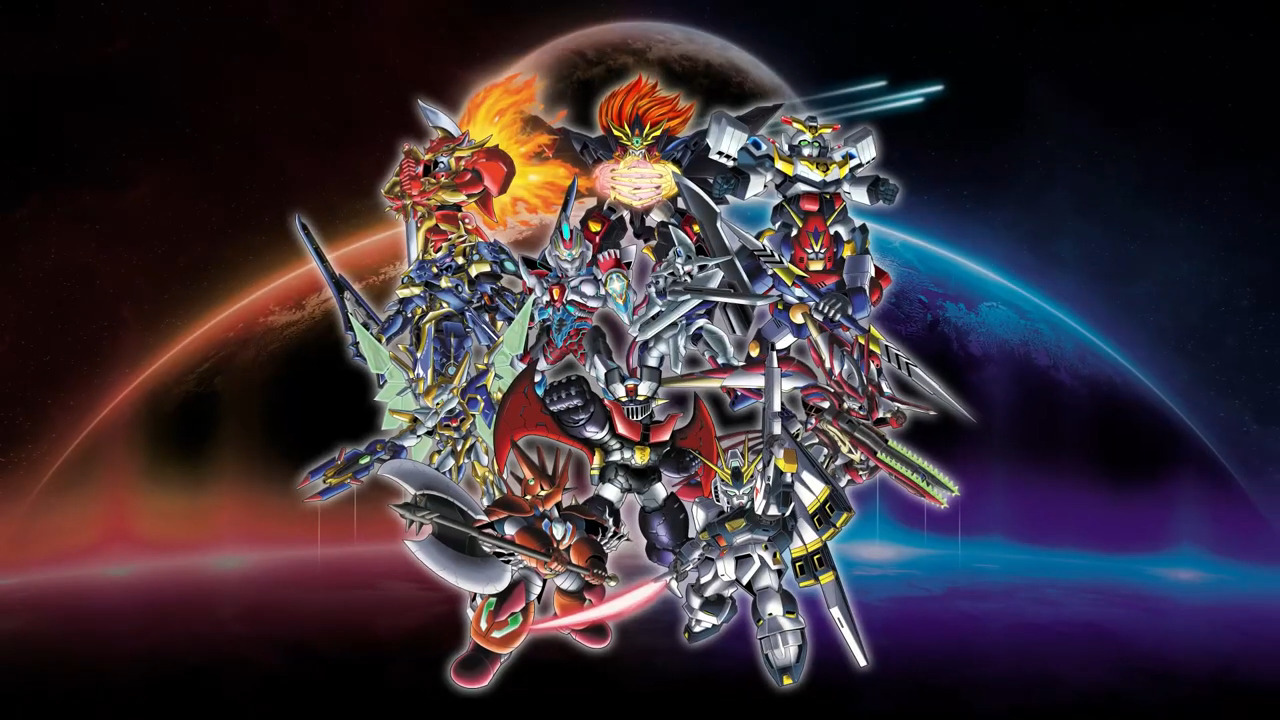
Super Robot Wars 30, the latest full game in the famed crossover video game franchise, has revealed its full lineup.

  • Super Electromagnetic Robot Combattler V
  • Mobile Suit Gundam (mecha only)
  • Mobile Suit Z Gundam
  • Z-MSV (mecha only)
  • Mobile Suit Gundam: Char’s Counterattack
  • M-MSV (mecha only)
  • Mobile Suit V Gundam
  • Mobile Suit Gundam NT
  • Heavy Metal L-Gaim
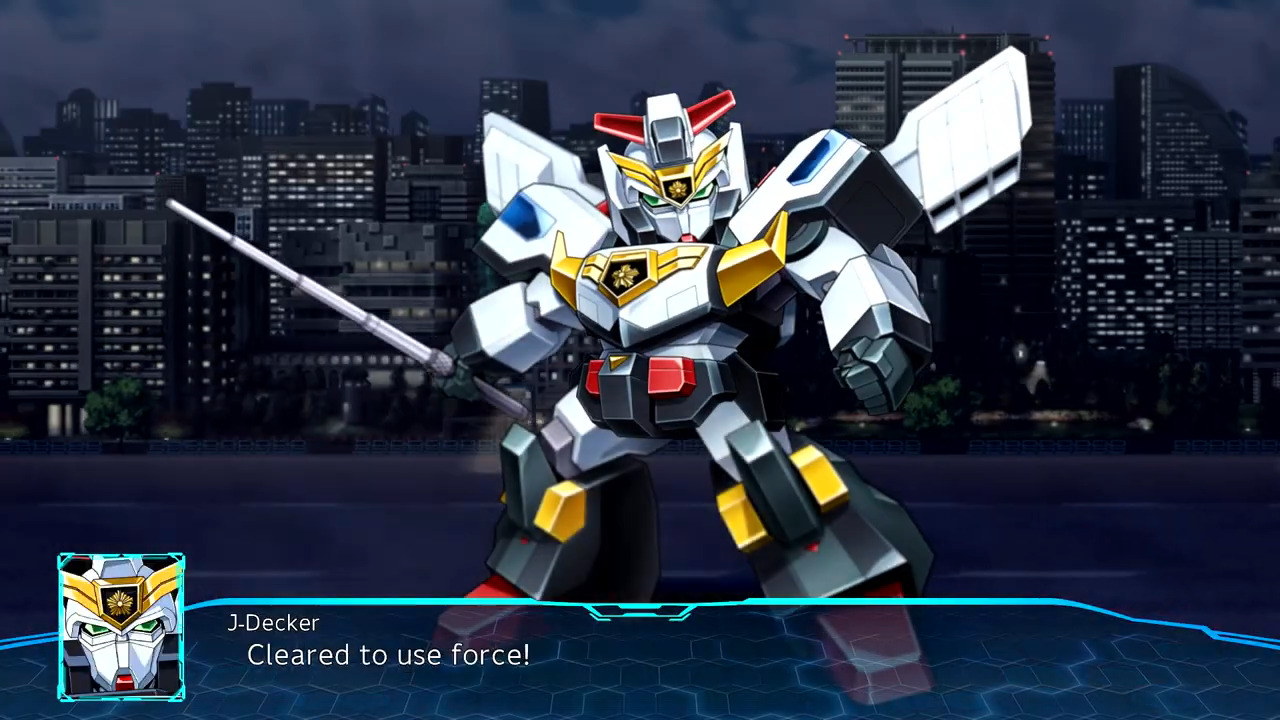
  • The Brave Police J-Decker (New)
  • The King of Braves Gaogaigar Final (mecha only)
  • The King of Kings: Gaogaigar vs. Betterman (New)
  • Code Geass: Lelouch of the Re;surrection
  • Code Geass: Lelouch of the Rebellion III – Glorification (New) (mecha only)
  • Shin Getter Robo Armageddon
  • Mazinger Z: Infinity
  • Mazinkaiser Infinitism (New) (mecha only)
  • Magic Knight Rayearth
  • Gun x Sword
  • Majestic Prince
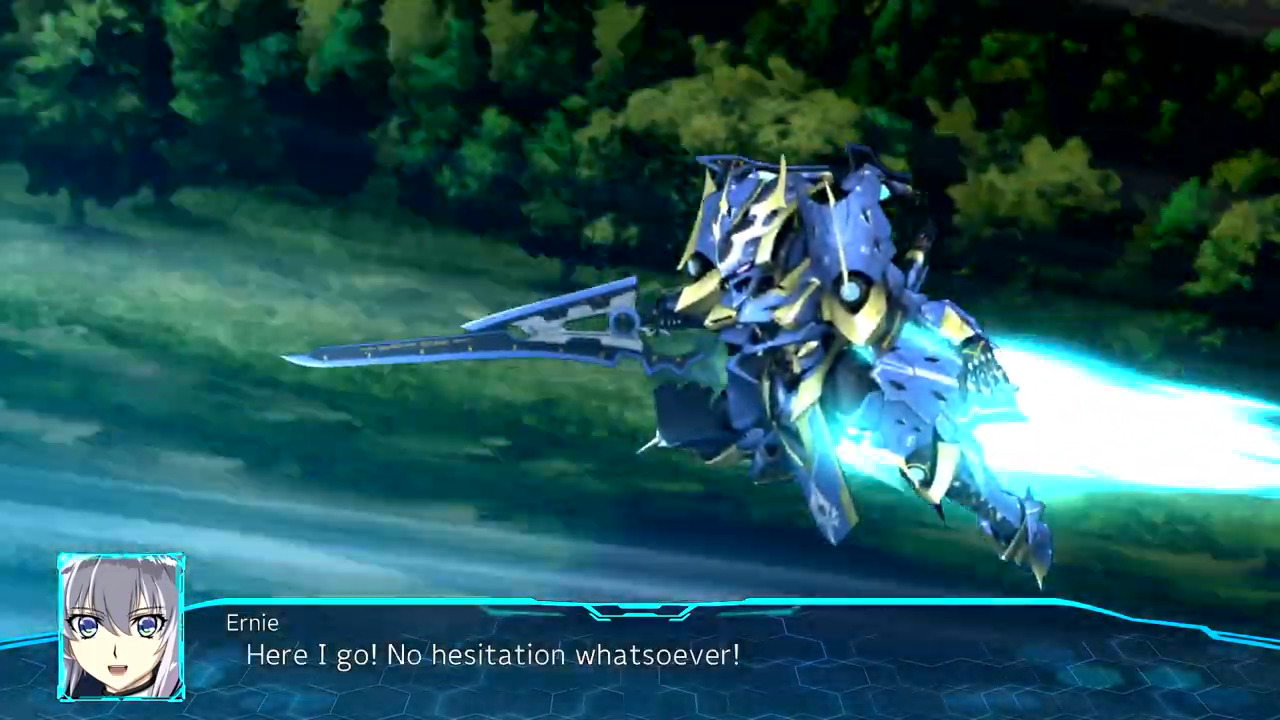
  • Knight’s & Magic (New)
  • SSSS.GRIDMAN (New)

There are some welcome surprises among the returning veterans such as L-Gaim, but the real shockers are in the newest series.

Hell and Heaven!!!

The entry that sent a bolt of lightning through me is Hakai-oh: Gaogaigar vs. Betterman, which is the novel-only sequel to Gaogaigar Final that continues and concludes the story that began all the way back in 1997. I’ve been following the story, even having reviewed the first and second novels, but I wonder if fans might be better off not reading the spoilers in them so that they can experience this amazing sequel through the lens of SRW first. This’ll be the first time that Gaogaigo and its allies will be animated, and already it looks incredible. I await the SRW rendition of Gaogaigo’s Hell and Heaven with great anticipation, I hope we get to see and use a certain massive Betterman, and I’m guessing we’ll get the new opening and ending (that currently exist only in audio form) as BGM.

I also want to compliment the English localization team because I think “Hakai-oh” is such a difficult term to translate. Literally, it means “World-Conquering King,” and I think King of Kings captures that feeling nice and succinctly.

Burning Heart to Heart

Speaking of Braves, I honestly didn’t think J-Decker would ever make it in. Out of the entire franchise, I think J-Decker is one of the genuinely best shows, and I’m very happy to see Deckard, Shadowmaru, and the boys get their due. My dream is that there are some combination attacks involving Shadowmaru and Volfogg, but I’ll be content even without that. And If you want to know more of my thoughts on J-Decker as an anime, I appeared on an old podcast review.

Toku Time

Arguably the biggest appearance from out of left field is SSSS.Gridman. While it’ll fit nicely within SRW, the fact that it has its origins as an anime sequel to a tokusatsu series means there are just a lot of odd quirks to consider. In particular, Gridman is basically an Ultraman, and the closest we’ve had to mecha in SRW that move similar to Gridman are the EVAs from Evangelion—a show that is itself inspired by Ultraman. Given how this series ends, I also have to wonder how it’ll fit into the Super Robot Wars 30’s story, but what always comes first is making things look awesome.

X-TREME RADICAL Mazinkaiser 

As far as I can tell, Mazinkaiser Infinitism appears to have its origins as just an action figure of Mazinkaiser with a Mazinger Z: Infinity aesthetic. What’s funny about this version of Kaiser is that while the Mazinger Z in the Infinity film is a nice retro-modern update to a timeless design, even this Infinitism version of Mazinkaiser feels like it’s perpetually stuck in the 1990s—a Rob Liefeldian super robot that screams hypermasculinity. That was the case for its debut appearance (in a Super Robot Wars game!), the Mazinkaiser OVAs, Mazinkaiser SKL, and now this.

…And the Rest

I haven’t seen the recent Code Geass film, but I have fond memories of the near–train wreck that was Code Geass R2. I don’t know if there’s much for me to say here. As for Knight’s & Magic, I don’t know anything about it other than that it’s a mecha-themed isekai light novel. While it’s not the first SRW series with an isekai light novel origin (that honor goes to Aura Battler Dunbine), it’s still the first to be from a modern, post–Sword Art Online light novel. For that reason, I’m rather curious as to how it’ll be, and I might even be tempted to watch the anime.

See You in October

You damn well better believe I’m reviewing this game. 

Back Arrow Never Asks for Too Much

In today’s media landscape, it can feel like everything is about having an obsessive audience. Mobile games incentivize you to try to get every ultra rare and keep following a neverending story. Superhero movies, like their comic counterparts, want you to watch every single sequel and spin-off leading to the next mega film. Manga and anime want you to look into every character’s backstory and all the convoluted history that connects them together. These aren’t necessarily bad things, but they can be exhausting.

Under these circumstances, the anime Back Arrow is like a breath of fresh air because it doesn’t expect your total time and attention. Every episode, I would be entertained and intrigued; I might even have speculated what would happen next. But in a time when my mental space is being bombarded by world-changing events on the regular on top of all the aforementioned fan-forward storytelling, I like having an anime that’s just trying to be a sandwich instead of a 10-course meal.

The premise: Lingalind is a world of constant strife, with countries big and small vying for supremacy. Surrounded by a divine Wall that cannot be crossed, mysterious drop pods called rakuho fall from the sky and provide mysterious armbands known as Bind Warpers. These devices allow people to manifest their convictions and form giant robots called Briheights, and are the primary weapon of war. One day, a group from the tiny village of Edger finds a rather unusual rakuho containing a man with no memory—other than the seemingly insane notion that he comes from beyond the Wall. This man, who comes to take the name Back Arrow, is not only able to manifest a Briheight without having any conviction of his own, but is also able to defeat other Briheights without killing them, which was thought to be impossible. 

Back Arrow is like a cross between Gun x Sword, Star Driver, and Code Geass (even sharing the same director in this last case), only a whole lot less subtle. And given what those three series are like, this means watching Back Arrow is like getting hit over the head by two ham fists. The two major world powers are the Republic of Rekka, a hyper-exaggerated Dynastic China with Three Kingdoms elements, and the Supremacy of Lutoh, essentially pre-Revolution France with a seedy underbelly. Back Arrow and the residents of Edger Village all look like poorly dressed cowboys. But somehow, the anime ends up being really entertaining with endearing characters, lots of twists and turns, and some pretty solid action scenes—all without being bogged down or burdened with an excess of unrealistic ambition.

That’s not to say Back Arrow phones it in. The series’ narrative developments aren’t that surprising, but it’s never boring. In many ways, Back Arrow reminds me of really good pro wrestling. It’s ridiculous if you step back, but it’s easy to suspend disbelief thanks to the charisma of its presentation. Moreover, predictability isn’t a four-letter word, and in fact can be the foundation of some of the best stories because they have satisfying payoffs. 

Courage and Experience: “Hakai-oh – Gaogaigar vs. Betterman Part 2” Novel Review

WARNING: SPOILERS FOR THE FIRST GAOGAIGAR VS. BETTERMAN NOVEL

The Hakai-oh – Gaogaigar vs. Betterman web novel series has been a blessing for giant robot fans. Taking place in the Gaogaigar universe ten years after the cliffhanger ending of the Gaogaigar FINAL OVAs, it tells the story of how the world has changed since the Gutsy Galaxy Guard got trapped in another universe, and the new challenges those on Earth must face. A now twenty-year-old Amami Mamoru has gone from plucky kid companion to a seasoned robot pilot in his own right, working alongside his fellow alien adoptee Kaidou Ikumi to control Gaogaigo, a successor to the King of Braves in the fight against the forces that threaten the world. The series is being collected into print novels, and that’s the way in which I’ve been reading it.

The end of Part 1 saw the triumphant return of Shishioh Guy, the original pilot of Gaogaigar. However, his comeback was not without cos,t as the robot lion Galeon nobly sacrificed itself to free Guy from the clutches of their mysterious god-like adversary, Hakai-oh (“World-Conquering King.”) The second novel, Part 2, picks up directly from that point with a new challenge: a reunion with some old and familiar faces, not as allies but as enemies. Guy and Mamoru must fight across the world, respectively as the Mobile Corps Commanders of the Gutsy Galaxy Guard (GGG Green) and the Gutsy Global Guard (GGG Blue).

Genuine Care for Lore and Characterization Alike

When I read Gaogaigar vs. Betterman, I’m always struck by how much attention is paid to its own history and lore. While it can sometimes get a little too into the weeds, the general feeling that comes across is real affection and respect on the part of the creators for the universe they’ve created, as well as the fans who have embraced these stories. From the way fights play out to moments of character introspection, everything and everyone is portrayed with a robust three-dimensionality that rewards readers who remember both Gaogaigar and Betterman

For example, we’re reminded that Neuronoids (the robots of Betterman) are powered by artificial brains based on neurological patterns of actual species. This novel answers the question of what brain is in Gaogaigo: a dolphin from the Gaogaigar video game who was turned into a G-Stone cyborg like Guy, and who ultimately had to pass when the “Invisible Burst” that compromised electronics before the successful establishment of the Global Wall made it impossible to maintain the dolphin’s cybernetics. During a fight, it’s revealed that Gai-go is actually extremely strong in underwater combat—a product of being based on a marine creature.

There’s also a side story at the end of the novel that takes in the space between Part 1 and Part 2, where Guy and Mamoru visit a transit museum to see the original Liner Gao, the bullet train that becomes the shoulders of the original Gaogaigar. As they converse, the topic of the Replicant Mamoru from Gaogaigar FINAL comes up. While Repli-Mamoru ended up being merely a clone of the real Mamoru, Guy still carries a lot of guilt over killing him—especially because Guy hasn’t aged and still remembers that trauma as if it were mere weeks ago. It would have been all too easy to forget that part of the OVAs, especially because of the grandiosity of its later battles, but both the author (former Gaogaigar staff Takeda Yuuicihirou) and supervisor (the original director, Yonetani Yoshitomo) put in that extra mile. 

As a funny little moment during this side story, Guy is less astounded by the giant “Global Wall” defense system that allows wireless communications to work after a previous disaster than he is by Mamoru’s smartphone. When he last left, beepers (like Mamoru’s special GGG version) were still the norm, and to see the progression of human technology (as opposed to G-Stone technology derived from Galeon) puts a smile on Guy’s face.

Spotlight on Betterman 

Because Gaogaigar is the bigger franchise between the two marquee titles, it gets the (robot) lion’s share of the attention overall. However, Part 2 does devote more pages to the Betterman side of things than previously—while the first novel’s Betterman-focused pages are mainly about the Somniums (the titular “Bettermen”) and the question of whether they would help defend the Earth, this novel explores the original main characters, Aono Keita and Sai Hinoki, in greater detail. In particular, Keita was a relatively minimal factor in Part 1, but here, his romantic relationship with Hinoki is front and center for a significant portion of the book. Keita’s portrayal is interesting because of how humble his situation is. Rather than staying in space with Hinoki (who has since become highly educated and is a science officer for GGG Blue), Keita is without a college degree and works at an electronics store, where his otaku knowledge makes him an ideal employee. But Keita also works hard with the dream of providing a home that Hinoki can come back to, especially because Hinoki tragically lost her family as a young child.

The color insert at the beginning of the novel also has colored design images of Keita and Hinoki courtesy of the original character designer, Kimura Takahiro. As a huge fan of Kimura’s art (and his work creating Hinoki), it’s a welcome addition.

Intense(ly Clever) Battles and the Value of Experience

The real meat and potatoes of Part 2 are the many fights that take place throughout. Because they’re a pretty major surprise and make up such a huge portion of the story, I’m going to put an extra SPOILER WARNING here.


While there’s a bit of fighting between Guy and Betterman Lamia that makes the Gaogaigar vs. Betterman title technically true, the main thrust of conflict in Part 2 comes in the form of the old Gutsy Galaxy Guard members who have now been taken over by the “Triple Zero” energy that comes from Hakai-oh. Now greatly powered up and known as the “Hakai Servants,” Brave Robots and human GGG agents alike now fight against the Earth with the goal of bringing “divine providence” to the universe. 

The first character who shows up to oppose the heroes is actually Hakai Mic Sounders, and I will say that “Evil Mic Sounders” is indeed quite a trip. Still using his characteristic mix of English and Japanese, it’s easy to not take a line like “SORRY, but I have to destroy you” seriously—that is, until you’re reminded of how powerful Mic truly is. With the ability to produce sound waves that can break down anything (if given the right information), Mic Sounders is capable of rendering even the toughest armors useless. The only reason they win is because a Betterman who can control sound herself is able to provide a counterbalance.

That battle introduces the recurring idea in the fights against the infected Brave Robots: GGG is a great asset when on the side of humanity, but beyond dangerous when its powers are turned against Earth. Goldymarg’s signature toughness (enough to withstand the power of the Goldion Hammer when in Marg Hand form) makes him able to withstand just about anything, and it takes a “Goldion Double Hammer” weapon wielded by Guy in Gaofighgar to even begin to even the odds. Tenryujin and Big Volfogg make for similarly intimidating opponents with their own unique strengths, Volfogg’s role as guardian of a young Mamoru in the past providing an extra layer of stakes in that particular fight. But it’s also not just the robots who are a threat—the human members have also become Hakai Servants, and the tactical prowess of Commander Taiga and the genius hacking skills of Entouji provide extra hurdles for GGG Green and GGG Blue. 

Another recurring theme throughout these fights, however, is that the time dilation difference between the old GGG members and the current ones means that Mamoru and the others have ten years of their own experience under their belts. There’s a moment at the beginning of the novel where Mamoru says that he’s willing to relinquish the role of GGG Mobile Corps Commander to Guy, only for Guy to reject his offer and to praise Mamoru for having clearly been through many tough trials of his own, and at this point actually has fought with GGG for longer than he has. He further explains that he was originally just the right man for the moment, having been an astronaut transformed into a G-Stone cyborg to save his life, and wasn’t a born fighter himself.

And so we see that sentiment play out. In the fight against Tenryujin, her younger “sister” Seiryujin, the latter targets Tenryujin’s knees—a seemingly odd move, until one remembers that the individual robots that compromise the “Ryu” series all turn upside down to combine, meaning their chests (and thus their Hakai-infected AI boxes) are located in the legs. When dealing with Entouji’s computer virus, GGG Blue member Inubouzaki Minoru takes center stage. Originally a jealous rival of Entouji’s who became a Zonder in the TV series, and later returned as an ally when the Gutsy Geoid Guard became the Gutsy Galaxy Guard, Inubouzaki shows the progress he’s made the past decade not only in terms of improved skills but also being more at peace with himself and his past.

Just as everything seems to be going Earth’s way, however, the next Hakai Nobility appear: Goryujin and Genryujin (who both have access to THE POWER), as well as Soldat J and King J-Der. The preview of the next (and last!) volume hints at what’s to come with the key to victory: something called “Goldion Armor.”

To the End

The web novel version of Hakai-oh – Gaogaigar vs. Betterman has concluded, and the concluding print release is supposed to be out this summer. While I could jump in and start reading it online now, I think I’m going to wait once more. If I could wait close to 15 years before, I can withstand a few months. 

In the meantime, I’ve also been reading the manga adaptation of this series, which provides some of the visual flair that’s inevitably missing from the prose version. I can only hope that we might see an actual anime come out of this someday.

Business as Usual: The Unchallengeable Trider G7

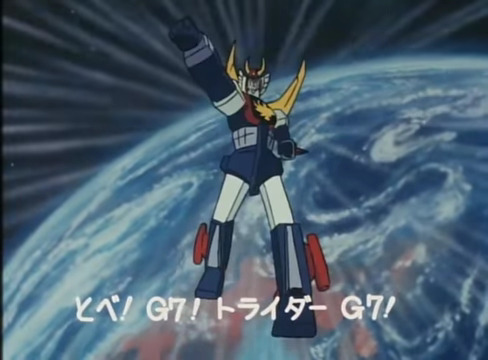
1979’s Mobile Suit Gundam is a milestone in anime history, a show whose evergreen influence as the ancestor of the “real robot” genre has continued across four decades. But like so many innovative and revolutionary works, it’s not as if Gundam changed everything overnight. Nowhere is this clearer than with Gundam’s immediate Sunrise robot anime successor—1980’s The Unchallengeable Trider G7, a series so straightforwardly kid-oriented that it feels like the anime’s goal was to try to turn back the hands of time.

Trider G7 (sometimes written as Tryder G7) is the story of Takeo Watta, an elementary school boy who also happens to be the president of his own business, Takeo General Company. Having inherited it and a powerful giant robot called Trider G7 from his deceased father, Watta has to juggle being a kid who attends school just like everyone else, keeping his company in the green, and defending the Earth from the Robot Empire of Planet Gabarl.

Titled in Japanese as Muteki Robo Trider G7, the anime is considered a part of the Muteki trilogy along with Muteki Choujin Zambot 3 and Muteki Koujin Daitarn 3. But while Daitarn 3 could get extremely serious at times, and Zambot 3 was consistently brutal, Trider G7 steers clear of that mood, instead presenting itself as a lighthearted fantasy for a young boy audience. Nothing sums this up better than Trider G7’s launch sequence, which involves having the robot emerge from the local playground (of which its head is a centerpiece) while a loudspeaker announcement kindly requests everyone clear the area. Unlike its fellow Muteki anime, Trider G7 is not directed by Tomino Yoshiyuki, instead being under Sasaki Katsutoshi. This likely helps the “not-traumatizing” aspect.

Unlike many series I write final reviews for, I did not watch all 50 episodes of Trider G7. Instead, I used the 10 episodes temporarily uploaded by the Bandai Spirits channel on Youtube as a kind of “essential episodes” list, supplementing it with some reading. (Side note: that project in the link provided never got off the ground). While this does compromise my ability to gauge the complete series from beginning to end, I still think it gave me a good idea overall. My verdict: Trider G7 is a pretty mediocre anime, and it feels intentionally so.

I’m not someone who disparages children’s shows or episodic ones, as I believe both have important places in anime. Some of my favorite works are “incident-of-the-week” and aimed primarily at kids, but what I love to see is when they try to really bring something to challenge their audience while still being fairly conventional. Trider G7 only ever seems to hint at greater potential without ever reaching it. 

The series acknowledges that Watta is still a kid, and that the burden of being a company president is not easy for someone so young, but it’s mostly played for laughs. The Gabarl Empire is run by a super-AI called Mother Computer Sigma, and one of the recurring flaws of the enemy Mega-Robots is their reliance on pre-programmed data in battle, unlike Watta’s human intuition and experience. This is touched upon somewhat often, notably in an episode where we learn that Trider G7 itself was built by the Robot Empire’s top scientist who had defected due to the soulless nature of his designs, but it doesn’t go beyond “rah, rah, human spirit.” It also doesn’t have a whole lot of style points, given that the robot itself is nowhere near as cool as Zambot, Daitarn, or the Gundam; the animation isn’t even off-the-wall enough to make up for a bland design like with Gold Lightan. Trider G7 does have a female character whose popularity is fairly enduring, an attractive OL named Sunabara Ikue (who also provides the aforementioned loudspeaker warning), but that seems to speak more to her status as an early crush for young boys rather than anything related to the anime’s quality. 

I do want to give some praise to the opening and ending themes because of how silly and creative they are. The opening has the amazing line, “Do we fight to protect our company funds? NO! We fight to protect peace on Earth!” The ending, in turn, has lyrics that basically sound like a speech delivered to all employees working at a company, with lines like “The future fate of our company is about 1) guts and 2) effort.” Amazing.
The legacy of The Unchallengeable Trider G7 is mainly in nostalgia through things like Soul of Chogokin toys and appearance in Super Robot Wars, where the aesthetic can be updated just enough that it can give adults some sense of what it’d be like to enjoy the series as a child. This is probably for the best, as it’s where Trider G7 shows its strongest self: as a kind of cool, kind of cheesy return to a more innocent era of kids’ giant robot anime.

A Beam Rifle in Precure?! Z Gundam’s Iconic Sound Effect

Mobile Suit Z Gundam is a classic anime series, a successful sequel and a template for other 80s robot anime. One aspect of it that really sticks in my mind but is less talked about is the sound design. In particular, the sound of beam rifles in Z Gundam is rather iconic, as it’s noticeably different compared to every Gundam anime before and after.

I basically never hear that distinct Z Gundam beam rifle sound anywhere else (that’s not just featuring the Z Gundam itself), with one big exception: the fighting magical girl franchise Precure.

I can’t recall exactly when I first heard the use of the Z Gundam beam rifle sound in Precure—I think it might have been in Kira Kira Precure a la Mode—but ever since then, I can’t help noticing it. In Episode 32 of Healin’ Good Precure, the monster of the week makes pretty much that exact sound when firing a blast of energy (see 17:43 in the link).

It’s so strange to me. Of all the places for the beam rifle to show up, why Precure? There’s no studio connection (as Gundam is from Sunrise and Precure is from Toei Animation), so they’re not necessarily working from the same stock library. You won’t even find the sound in other mecha series—though maybe hearing it in a giant robot anime would bring up too many comparisons? I wonder if the sheer genre distance between the two allows Precure to use the SFX? Or could there be some Gundam fans in charge of sound production at Toei who like to incorporate the beam rifle into episodes. For that matter, I think I’ve even heard the classic Newtype flash on occasion while watching Precure.

More broadly, this all makes me want to know why the Z Gundam beam rifle sound just never really went anywhere beyond that one series. Personally, I think it has a great tone that sounds like a powerful yet precise weapon. Perhaps it was too iconic for its own good, but I guess for now, it’ll live on in the battles of modern anime’s most prominent transforming heroines.