I’ve been mulling over something lately: Is it safe to define a genre or trope preference in fiction as a case where you’re more accepting of less-than-stellar results? Much like supporting a local sports team through thick and thin, is being a genre fan about enjoying even the mediocre?
I’m ready to admit that the analogy falls apart under close scrutiny for a whole host of reasons. There’s no clear metric for winning vs. losing with something subjective like fiction. Supporting a player or a team, something made up of real people, is very different from being into a particular fiction genre—a more fitting comparison might be a favorite animation studio or book imprint.
But when I think about a genre I enjoy—giant robot anime for instance—there’s something about my appreciation that feels like it goes well beyond considerations of quality. When Good Smile Company announced a ton of new model kits for their Moderoid line, the sheer variety and obscurity of the line stood out to me. Some of the excitement came from the representation of series I consider personal favorites: Godannar!!, Reideen, Granbelm, Rayearth, The BIg O, and more. But it also came from seeing new or relatively obscure things get the spotlight, like Daitei-oh (the Eldoran series that never officially got an anime), Zeorymer, Promare, and iDOLM@STER: Xenoglossia. Not all of these series are genre-defining heavy hitters, but that they exist as merchandise fills me with warmth.
In contrast, I’ve watched a good amount of idol anime at this point, but I still don’t see myself as a fan of the genre. I appreciate the titles that stand out, though.
Perhaps, however, supporting your local fiction genre also comes with being able to recognize that you have a bias towards the tropes and expectations that come with it, because sometimes having a truly disappointing instance stings extra hard. But I also wonder if, like how you have sports fans of consistent winners and those of perennial underdogs, there’s a difference between the fans of a genre that’s seeing the limelight and one whose star has faded a bit—or, for that matter, a genre that may have once been big versus one that has never really ascended in the first place.
This month’s tweet highlights for Kio Shimoku are a little different: I’m doing them in chronological order rather than grouping them by subject. Tell me what you think!
January is also the month that Hashikko Ensemble ended. Check out my review!
Kio talks about what a big personal step it was for him to start a Twitter, and that he’s gradually learning how to use it. He thought he had to do it at some point, and thinks it was good timing in more than one sense.
Kio draws Kousei as a tiger man to celebrate the Year of the Tiger. B, the “I love Jin” superfan for the Hashikko Ensemble character asks if Kousei’s always been that buff (while also stating how Kousei’s cat-like qualities make the image work), to which Kio says he added a bit of fantasy to the drawing.
(Just as a warning, that Jin fan’s Twitter account is very NSFW. Their love of the character is serious business—as the Ogiue Maniax, I should know.)
Kio mentions finishing the manuscript for the final chapter of Hashikko Ensemble. When the Jin fan asks if the series got canceled, Kio says “more or less.” Elaborating a bit, he says he got the call to start wrapping it up in summer of 2020, but was given the opportunity to go past the School Festival arc and end on eight volumes total. For reference, the original Genshiken was nine.
Feeling some nostalgia from when he got this at Wonder Festival. A fan shows a similar arm from a model kit of theirs, and Kio replies that he was never able to get that one (the Mighty Beta).
Kio got a new scarf, and decided to draw what it looks like with Madarame as the model. He saw it being called an ascot scarf, but found that it didn’t match his Google searches. “New York scarf” seems to fit the bill better.
In light of the death of famed baseball manga artist Mizushima Shinji (Dokaben), Kio reminisces about growing up with Mizushima’s manga. In his home, there would always be assorted volumes of Dokaben around, and he would read them voraciously. In his estimation, a lot of baseball know-how for kids his generation came from reading Mizushima manga, and he especially enjoyed the series Dai Koshien. Kio offers a prayer at the end.
Kio wanted to reference an old chapter of Spotted Flower for his manuscript, and opened his old file, only to remember that he did it in the program Comic Studio. He’s switched over to Clip Studio Paint now, and seeing Comic Studio start up took him by surprise. He also notes that Asaka-sensei had a different hairstyle in this earlier chapter.
B the Jin fan has a question for Kio, asking how Kio managed to get a music note generator version of Sukima Switch’s “Kanade” because it doesn’t seem to be for sale. Kio responds that he uses a program called Score Maker Zero by KAWAI, which can also sing using a synthesized voice. Kio can’t read sheet music, so it’s very helpful for him.
Kio says that he generated these notes for “Kanade” himself, and asks if B lives nearby. B thanks him and doesn’t say anything about location, but he does mention going to the high school that Hashimoto Technical High School is based on. Kio is impressed.
As Kio was rearranging his desk in his room, his pet tortoise awoke (after barely moving during these winter months), and then stepped out of its box, ate some food, went outside, and then peed and pooped.
Kio made a Hashikko Ensemble Youtube channel, and uploaded a video of his tone generator version of “Kanade” by Sukima Switch for two male voices. It’s supposed to evoke the image of Akira and Jin singing together.
Kio made a Hashikko Ensemble Youtube channel, and uploaded a video of his tone generator version of “Kanade” by Sukima Switch for two male voices. It’s supposed to evoke the image of Akira and Jin singing together.
Some old NEO-GEO games from his college days that he found in a cardboard box. They include a bunch of Fatal Fury games, Samurai Sho-down, and even Far East of Eden.
WARNING: SPOILERS FOR THE FIRST AND SECONDGAOGAIGAR VS. BETTERMAN NOVELS
Hakai-oh: Gaogaigar vs. Betterman Part 3 brings the story of the Gaogaigar universe to a close, and what a journey it’s been. 24 years after the original TV series, we finally know the fates of all our brave heroes, and the tension and excitement never let up through this massive third volume. It truly does feel like the end of a long journey.
(Seriously, this thing is a monster compared to the first two.)
King of Kings
To start, since the release of Part 2, something major has happened to Gaogaigar vs. Betterman: It’s gotten an official name! The novels didn’t get licensed; rather, it became one of the titles in Super Robot Wars 30, where it was announced in English as King of Kings: Gaogaigar vs. Betterman. The term “Hakai-oh” is quite tricky to translate without sounding awkward and retaining enough of the meaning of the Japanese, and I find this to be an incredibly good compromise that also makes sure to pair well with the classic King of Braves Gaogaigar English title. It also gets translated as Conqueror-King in dialogue. Note that I call it Hakai-oh in the title mainly for consistency with my previous reviews, but I like these translations enough to use them for this review.
Gaogaigar vs. Betterman being in SRW30 also means that’s how most English speakers are likely experiencing the story, but there are a number of notable differences. So this review (as well as the previous two) might be worth checking out just to see how this plotline was originally handled.
The Story
Part 3starts off with some of the Gutsy Galaxy Guard restored to their normal selves, with many dangerous and notable exceptions remaining. These “Conqueror’s Thralls” (previously translated as Hakai Servants) are still under the powerful influence of Triple Zero, which Mamoru, Guy, and the rest now understand to be not only the source of The Power, but the energy produced from a dying universe during a Big Crunch. The Thralls seek to bring everything to “provenance”—a reset to oblivion—leading to some fierce and emotionally difficult battles. Meanwhile, the Somniums still act according to their own beliefs, but their mysterious ties to humanity are tested, and their true motives are revealed. Mamoru and Ikumi’s Gaogaigo, Guy’s Gaofighgar, and more must be braver than ever before if they want to free their friends and ultimately fight against the Conqueror-King Genesisc Gaogaigar. But as they discover in their struggle, courage might just be the antidote to Triple Zero.
A Universe Unto Itself
I’m being something of a broken record at this point, but more than ever, the way in which the novel draws upon the entirety of Gaogaigar lore is still one of my favorite aspects. There’s enough explanation so that those who don’t have a degree in Braveology can still follow along, and it never feels overly reliant on nostalgia or old ideas.
How does Mikoto being part-Zonuda affect her as a Thrall? What does Guy’s evoluder biology say about his potential future? How does the time dilation that impacted the old GGG affect their relationships with their friends and family back on Earth? The Somniums can fuse with each other to form Betterman Cataphract, but how far can they take it? All those questions are asked and answered while never losing sight of the main story, the fight against the King of Kings.
Even the climax towards the end of the novel is a huge nod to the final episode of the original TV series, one that feels like a progression rather than a retread, and builds upon an overall satisfying experience.
The Best Battles Ever?
If there’s one thing that Gaogaigar is known for, it’s amazing fights. Even in pure prose without the benefit of animation, this still applies. I’m even tempted to call these particular fights the best the franchise has ever seen, and it’s largely because of how each one feels unique from the others, the way the stakes keep building up, and the desperate solutions that they need to find. How can they compete with Commander Taiga, whose stalwart leadership provided the backbone of GGG? The Goldion Crusher was their ace in the hole in the conflict with the 11 Planetary Masters of Sol in Gaogaigar FINAL, so what hope do they have when faced with a Silverion Crusherwielded by a terrifyingly powered-up Conqueror King J-Der?
In each case, there’s the exciting push and pull so characteristic of Gaogaigar battles, but there’s also the sense that the characters are doing all they can to strategize, persevere, and fight. There’s a moment in one of the later battles where they creatively utilize the technology that allowed Gaogaigar to upgrade its Protect Shade and Broken Magnum into the Protect Wall and Broken Phantom, and Guy’s uncle Liger contemplates how, unlike most everything else they use, this was a purely human invention by Guy’s father, Leo. In Liger’s view, the Wall Ring and Phantom Ring are representative of humanity building upon and contributing to the boon of alien technology they received from Galeon so long ago—a fusion of Earth and Green-Planet science, not unlike Gaogaigo. It’s a beautiful moment.
And perhaps most importantly, the final volume answers whether “vs.” means “team up” in the Dynamic Pro tradition, or “confrontation” in the more conventional sense. The answer is a creative one.
Romance
While there are many couples and would-be couples in the Gaogaigar universe, it’s never been the focus in any real way. Here, though, the topic takes center stage in what feels like a pay-off. Whether it’s Mamoru and Hana as childhood sweethearts, the forged-in-combat bond of Soldat J and Renais, the central romance of Guy and Mikoto, or the more down-to-Earth and relationship of Keita and Hinoki, everything pretty much comes to a head here. All of them are entertaining to read, and I’m especially fond of how J’s versions of care and compassion tie into his warrior ethos—nothing like handing your girl your finishing move so she can wield it herself.
Issues
One criticism I have is that the series is 100% heteronormative in its romances. I’m not saying that they needed to reveal that Ikumi or some other character was gay or anything, and I understand that all of the above relationships are basically tying up loose ends from Gaogaigar and Betterman, but it’s still nevertheless something missing that could show that time has truly moved forward. I don’t think this omission makes Gaogaigar vs. Betterman bad or unenjoyable, but I find it’s worth pointing out.
I also think that the Betterman parts are significantly more confusing than the Gaogaigar sections. This might be because that series is less fresh in my mind, but one big difference is that most of the Gaogaigar-side characters come from the TV series and OVA. In contrast, while the human side of Betterman sees a large number of returning faces, the Somniums (the titular Bettermen) are for the most part new characters, and so it feels like there’s less to latch onto.
The last thing I’ll mention here is that the series has kind of a complex relationship with its portrayal of characters with disabilities. There’s great emphasis on how the scientific and technological efforts made have given those with disabilities the opportunity to lead lives they might not have been able to otherwise, and that what fuels this is largely love and compassion. At the same time, you have characters like Guy who, even in his previous cyborg form, comes across more as a “supercrip.” I’m not an expert in this subject, so I’d be interested in hearing others’ takes on this matter.
Favorite Touches
This is where the SPOILERS abound, so I’m putting a WARNING right here.
I’ve already touched on a number of things that stick out in my mind, but I want to elaborate a bit more on them here. It’s mostly the battles.
The aesthetic of the Silverion Crusher is nothing short of magnificent, with the Crusher resembling a giant flaming King J-Der head like it’s the most terrifying dullahan ever. The battle against it also has many moving parts that feel necessary because of what an overwhelming adversary it is. Gaogaigar fans know the sheer destructive force that is the Goldion Crusher, and the way they have to basically attack the units that spread out to create the hammerhead in order to prevent it from fully deploying, or else it’s game over. The way the fight comes down to Guy and Ikumi battling J and Renais in order to purify them also has a feeling somewhat akin to the final battle in Gurren-Lagann.
The struggle against Conqueror-King Genesic is chock full of astounding elements, such as the fact that the fight is led by Gaogaigar (Guy), Gaogaigo (Mamoru and Ikumi), and Gaofighgar (now controlled by Renais) working together to take it on, with King J-Der and Kakuseijin V2 for support. In other words, it’s triple Gaogaigar vs. Genesic. As they fight, they manage to break apart Genesic’s Final Fusion, but then have to fight the separated but individually sentient Genesic Gao MAchines all at once, resulting in an additional challenge.
You may be wondering how it’s possible that vanilla Gaogaigar is part of this fight, but its core is actually the original Galeon pulled from the past by the Somniums. What’s more this Gaogaigar ends up combining with Betterman Cataphract to form Musou Gaogaigar, or Dream Armor Gaogaigar. The narration mentions that you could alternately call this Gaogaigar’s “Great Gattai,” making a reference to other Brave series combinations like Great Exkaiser and Great Might Gaine.
Then, in that same struggle, we see the aforementioned use of Phantom Ring technology. More specifically, it’s actually about turning the “Global Wall” that helped restore electronic communications back to the Earth and switching it to a “Phantom Mode.” The very fact that the Global Wall was sitting there as a pseudo-Chekhov’s gun filled me with a kind of fiery joy—it had already played a role, but here was a second and even bigger one that feels both out of nowhere and logically consistent. That’s actually kind of this whole novel series in a nutshell.
In a similar vein, King J-Der ends up combining with Earth’s technology to form the amazing-sounding Dimension Ten-TImes Pliers, which is King J-Der with Dimension Pliers for fingers. I want to see this in an actual animation so badly.
And during the climax, when it’s time to form Final Gaogaigar for the last battle, it’s not just Guy fusing with Genesic Galeon, but all the Genesic Gao Machines having fusions with other characters. It’s a lot like the finale of the TV series, where the Brave Robots have their AIs installed into the regular Gao Machines because they’ve been disabled by Mikoto-as-Zonuda. Goldion Armor and the Goldion Finger attack (essentially a giant hand consisting of Goldion Hammers for fingers) is amazing, but the thematic full-circle from the fully fused Final Gaogaigar stands out even more.
After all the fighting, we’re treated to an epilogue and an extra story. In them, we see how Mamoru and Hana have a child named Tsubasa (gender unknown), but also that Guy and Mikoto will accompany Galeon and the J-Ark crew to explore the universe. In other words, Guy is going back to his original dream of being an astronaut, and I think it’s such a beautiful way to end his story.
The “FINAL” Word
I love that these novels exist. While I wish this could have been animated from the start and given the treatment it truly deserves, the story told in these pages soars in ways that make me smile and have pride in being a Gaogaigar fan. If Gaogaigar vs. Betterman is a love letter, then it’s one that turns a romance into a marriage, and embodies everything great about the universe of its characters and heroes. In the afterword, both the original director who supervised these novels, Yonetani Yoshitomo, and the series author (who actually wrote for the TV anime way back), Takeda Yuichiro, approached these novels with the sense that they would cap off the story of Gaogaigar as a whole. I would never be against a sequel, but the fact that we the fans even got a conclusion is more than I could have hoped for, let alone having it end so well.
In recent years, the Super Robot Wars franchise has been looking hard at international fans, and that has been reflected in part by the mecha that show up in it. In interviews for Super Robot Wars T and Super Robot Wars 30, the game’s director mentions that titles like Gun x Sword and J-Decker were, in part, nods to fans outside Japan. It reminds me of how different Japanese giant robot series became the spark of inspiration in different parts of the world, as well as how I once had my own half-formed idea for an American-fandom-centric SRW. Together, all of this makes me want to entertain the notion of a truly international SRW that puts the entire spotlight on those anime and manga that introduced countries to mecha and maintain that enthusiasm.
Shows like Golion, Grendizer, Transformers, Groizer X, etc. Furthermore, I’d like to see the roster be even broader than that. In that respect, limiting it to things that can connect to anime might even be too narrow. Ideally, a game like this would include Robot Taekwon V and The Iron Giant.
One question that arose as I engaged in this thought exercise is whether series that were heavily localized should come in their original Japanese forms or their adaptations. Should Golion and Dairugger be two separate titles, or should they be joined under the Voltron banner? Then it hit me that Super Robot Wars is all about modifying plot details to make crossovers work. Thus, you could split the difference between the Japanese and the American versions, and just find a way to make Golion and Dairugger connected within the new storyline.
There are giant robot fandoms around the world with their own idiosyncrasies, and I’m actually a bit sad that I don’t know them all. I wish I was an experienced polyglot so I could explore these communities and memories in greater depth. I think the real reason I’d love to see an international SRW is because I want something that celebrates these histories.
Every month, I collect highlights from Genshiken author, Kio Shimoku’s, tweets. This month’s provide some interesting insight into Kio’s work history beyond the manga he’s known for!
Kio quotes a tweet about a special one-shot manga in Monthly Afternoon by Samura Hiroaki (Blade of the Immortal, Wave, Listen to Me!) about the life of the renowned second chief editor of Afternoon, Yuri Kouichi—a man who, prior to Afternoon, was responsible for bringing hits like Akira and Ghost in the Shell to publication. In the manga, Samura mentions his interactions with the famous manga artist Takano Fumiko, and Kio says in his quote tweet that he once worked as an assistant for Takano. He only did screentones for her, but she smiled and said to him, “I don’t care whether you’re a rookie who’s yet to debut—you did a good job.” The moment stuck with Kio.
3 out of 4 of the CDs for his 2010 doujinshi work seems to not be working. While he has the original 350-page paper manuscript somewhere (for a Star Wars parody called Sister Wars Episode I), he doesn’t know where it is. A fan mentions wanting to buy it, but Kio’s not sure what format he should sell it in. He also feels a desire to make Episode II. He’s had plenty of ideas for it, but he feels like he’s been forgetting them lately, so he probably needs to get it done sooner than later.
(Kio mentioned Sister Wars in his interview with the Vtuber Luis Cammy. You can read my summary of that interview here.)
Oguro Yuuichirou, the chief editor at Anime Style, gives high praise to Hashikko Ensemble and its characters, story, and visual presentation of music. Kio tweets being happy about it, to which Oguro re-expresses how genuinely good he thinks the manga is. Kio gives a thank you.
December featured an online extra for Spotted Flower that focuses on the editor character Endou. Kio responds to fan feedback, including from a fellow Ogiue lover and Twitter mutual of mine!
Kio is done with the last rough drawing, whose expression he changed around four times. A fan (who’s a huge Jin from Hashikko Ensemble fan) asks which character it is, to which Kio responds “the ostensible protagonist, Fujiyoshi,” and then reacts to the fan’s Jin profile picture.
He took some kind of online quiz, I think, and the result it gave him was that he lives life on “hard mode.” Kio responds with “What the?” The test also apparently says that someone like him wants a life where they love and are loved. He thinks this might be fitting for a manga artist.
Kio retweets Kotobuki Tsukasa (character designer for Saber Marionette J, Gundam: The Origin) talking about turning 50, and realizes he himself turns 50 next year.
Next month is going to be the end of Hashikko Ensemble, so I suspect there is going to be lots of reminiscing on Kio’s timeline. Here’s hoping!
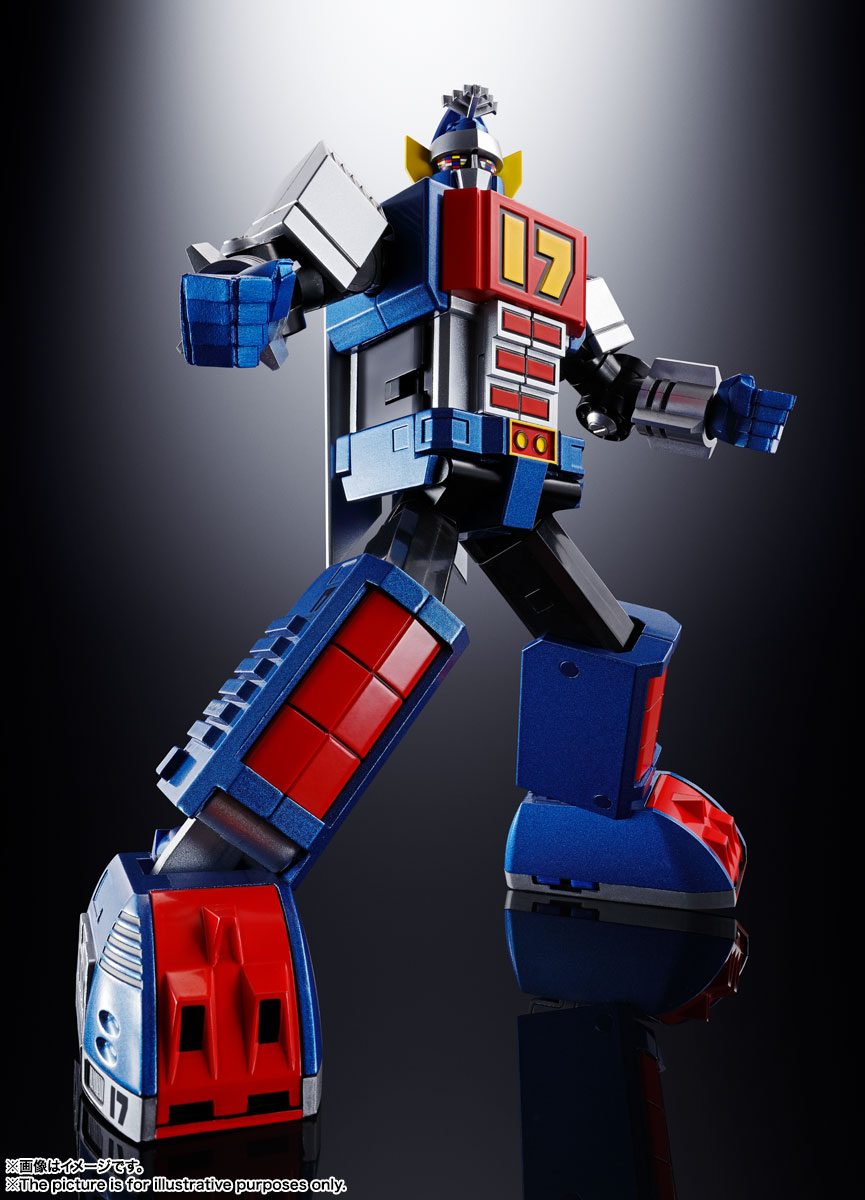
The latest Soul of Chogokin figure was announced last month, and it’s Daitetsujin 17 (pronounced “One-Seven”) from the 1970s tokusatsu series by the same name. It was created by the very father of tokusatsu, Ishinomori Shotaro, and features the classic “little kid remote-controlling” giant robot motif that began with Tetsujin 28. Prior to its release, I never watched any Daitetsujin 17, but I decided to check out the first episode, and what I noticed is that the promo images for the SoC version really capture how the toy is designed with a kind of live-action clunkiness seen in the original program itself.
There’s no doubt that this is highly intentional, as the Soul of Chogokin line is famous for trying to get as close to “show-accurate” as possible. Japanese toy reviewer wotafa stated in his look at the POSE+ METAL Gaogaigar that one of the big things differentiating it from the earlier SoC release was that the latter is more faithful to the anime, while the former looks like “Gaogaigar came back from studying abroad in America.” But in contrast to the myriad anime-derived Soul of Chogokin figures, adapting tokusatsu giant robots like Daitetsujin 17 seems to present another sort of challenge.
Whereas the anime robots have to reconcile the contradictions between the (mostly) two-dimensional drawings with the three-dimensional realities of the toys themselves, a different conflict is in play. Tokusatsu shows typically have their mecha appear in two different ways: as a model for transforming and such, and as a costume for a suit actor to fight in. A figure whose goal is to bring the source material to life has to balance these two dominating visuals, and from what I can tell, Daitetsujin 17 looks like it succeeds on that front.
But Daitetsujin 17 is not the only live-action robot to get the SoC treatment, and so I started looking at past instances to see if that characteristic tokusatsu-ness is still present. What I found is that, while not as strongly flavored as Daitetsujin 17, that feel is still present to varying degrees.
The recently released Daileon from Juspion comes from a different era than Daitetsujin 17, but the premium it places on poseability goes to show just how important it is to capture that “guy-in-a-suit” element of the show. Comparing the 3DCG trailer they released to the live-action footage, you can see how much emphasis was put on making sure Daileon could strike all its signature poses, as if to say the very acting of posing defines the feel of Juspion as a whole:
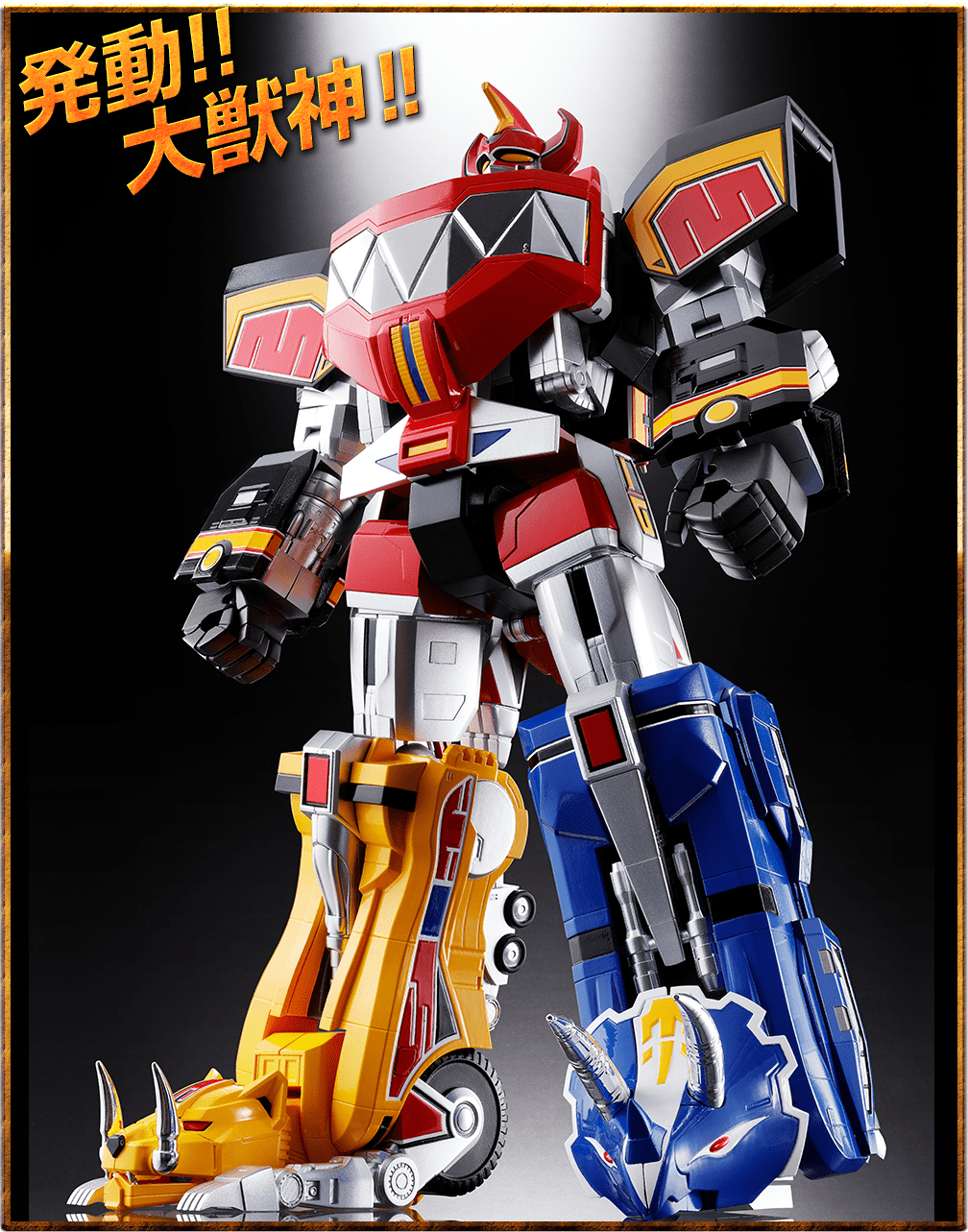
A more popular SoC figure, at least among English-speaking countries, is the Megazord (or Daizyujin) from Mighty Morphin’ Power Rangers. This one looks more like it emphasizes a cool, stocky appearance that’s a bit removed from how the Megazord usually looks in motion.
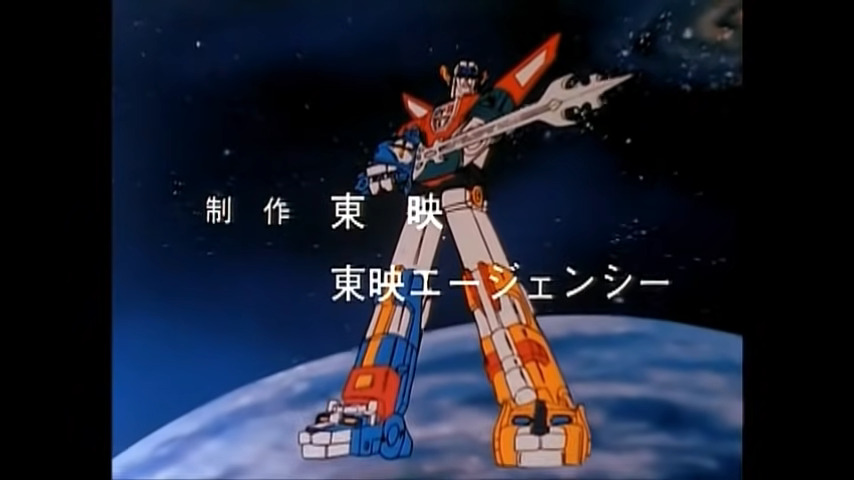
However, when compared to a similar figure released around the same time—Voltron (aka Golion)—the contrast in proportions between the two really drive home how the Megazord was made with different considerations in mind. It’s notable that the SoC Voltron has lankier proportions than its original toy from the 1980s to be more in line with its iconic pose from the anime’s opening.
This trend continues all the way back, whether it’s Leopardon from Toei’s Spider-Man, Battle Fever Robo from Battle Fever J, or King Joe from Ultra Seven.
The Daitetsujin 17 figure seems to most greatly embody the concept of tokusatsu-faithfulness, and I think that speaks to how far the Soul of Chogokin line has come. Every year, it seems to get more and more impressive, and I have to wonder what they’ll tackle next. Although the Daitetsujin 17 and many of the tokusatsu-based figures aren’t my priority, I find I can appreciate the lengths they’ll go to making the biggest nostalgia bombs possible.
Kio promoting Hashikko Ensemble Chapter 46. He doesn’t like how Kurotaki Maki is cut off here, so he retweeted his old drawing of her as a bunny girl. Kio also remarks how he’s noticed that all the girls are pretty stacked (with one exception).
Kio saw the anime film Sing a Bit of Harmony. As the creator of a manga about singing, he noticed the realism with which the main character of the film, Aya, breathes while performing.
Kio drunk-reviewing the latest chapter of Five Star Stories. He doesn’t remember lines or story details, but it made an impression on him—particularly the character Auxo’s expressions.
There are official water-based Gundam model kit paints now, and Kio comments that he’s had cases of the paint going all over the place using water-based acrylics. It was still fun, though. He’s painted a Juaggu and a Z’Gok that way.
Kio finally managed to store a ton of manga in boxes. At least some of the boxes are from 20 years ago, and there are about 25 boxes with 30 books each.
Kio drinks the Japanese energy drink Lipovitan D Super to start working on a new manga manuscript. He also decided to take an outdoor bath because it’s not that cold outside, and finds it’s actually good for work.
Kio has much respect for ero manga artists because of how much they have to master: poses, anatomy, camera angles, etc. Apparently, one thing people say is “If you want to get good at drawing, do porn.” But Kio also respects those porn artists who aren’t trying to make a career and just want to draw horny things. He actually drew some in middle school, but he stopped because he was afraid of his family finding out.
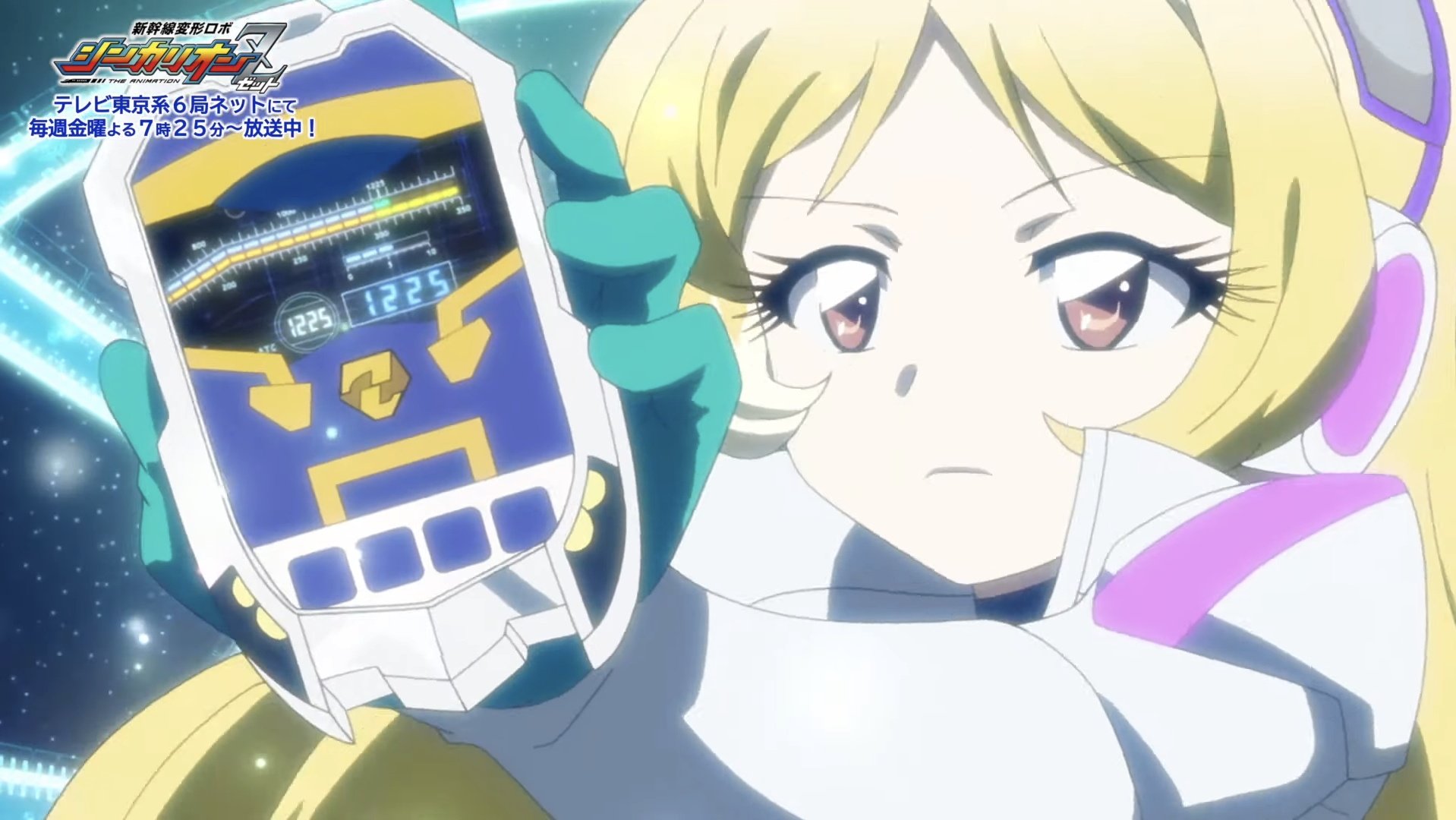
I don’t necessarily feel obligated to write about every crossover character in the Shinkalion franchise, but when she’s a rendition of one of my favorite heroines from one of my most beloved anime, I just have to say something.
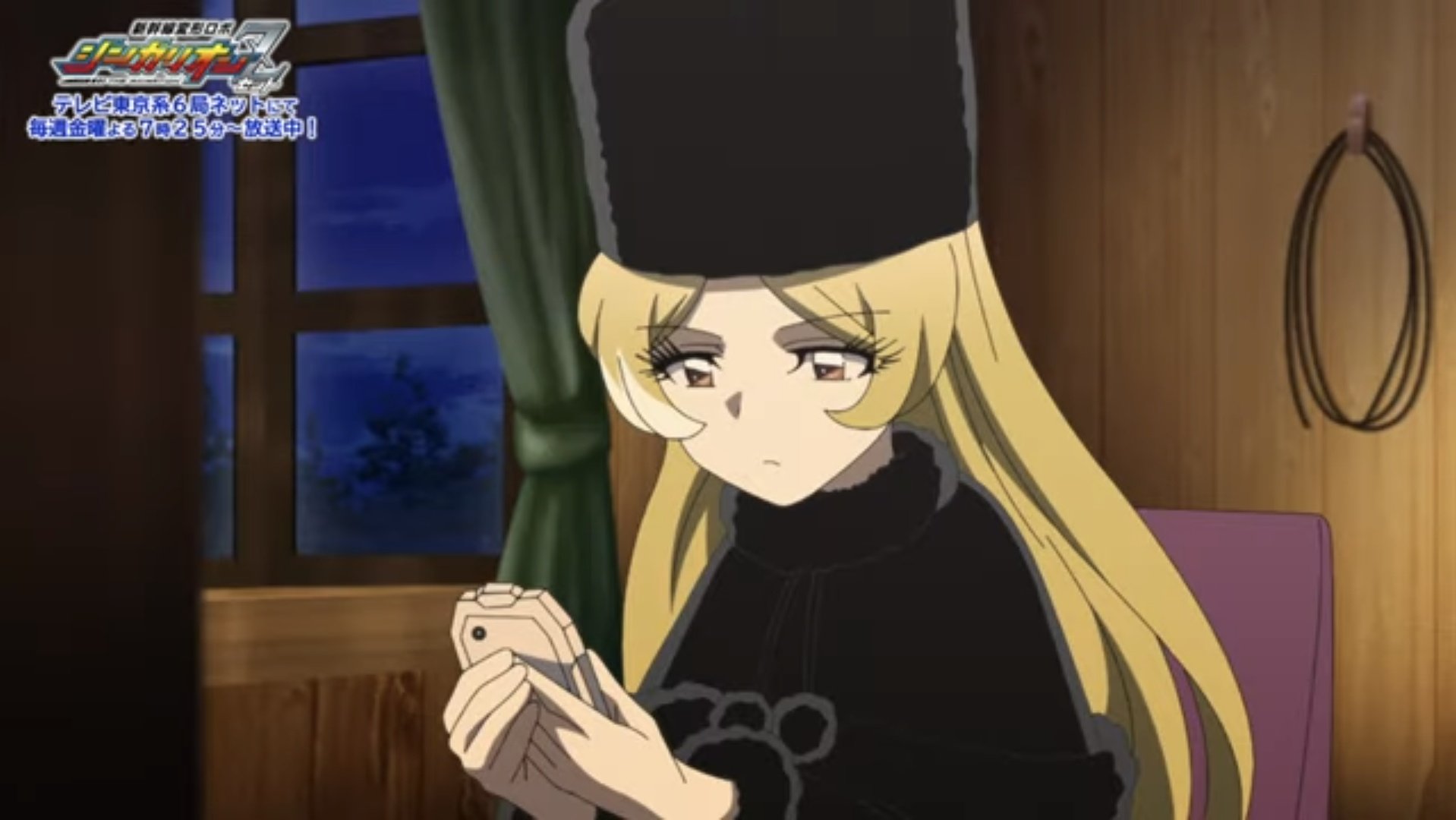
Shinkansen Henkei Robo Shinkalion Z has continued the propensity for surprising cameos by introducing a new character based on the mysterious Maetel from Galaxy Express 999. Given that she comes from a manga that prominently features a space vehicle shaped like an old steam locomotive, Maetel is arguably a more sensible guest character than Shinji from Evangelion or Hatsune Miku. However, the fact that she turns out to be a Shinkalion pilot feels like an even bigger (but still welcome) twist.
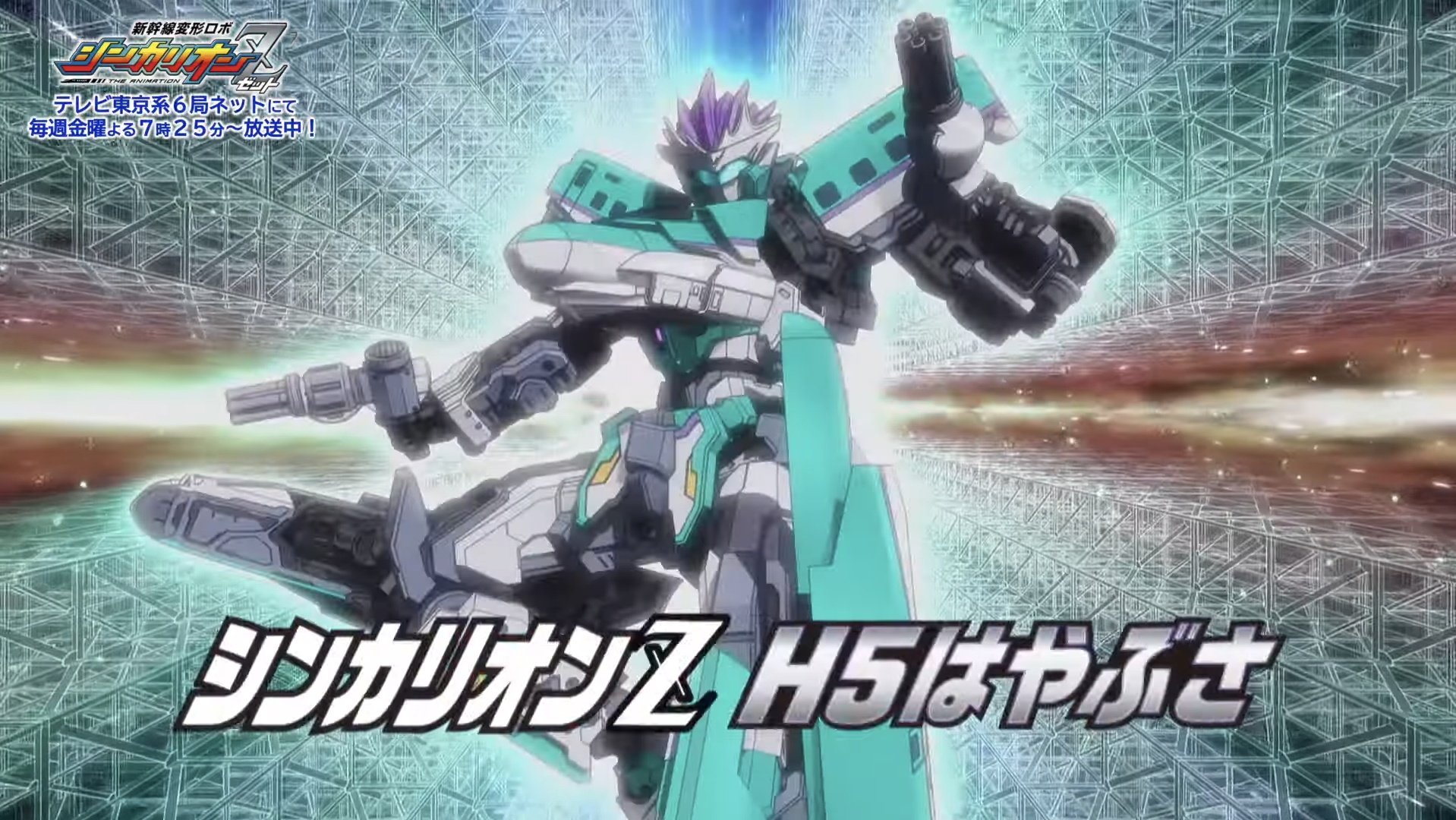
Maetel, in this case, is not the charming and motherly figure who gives an orphan boy a train pass to go on a never-ending journey to the stars. Rather, she’s an 11-year-old from Hokkaido who has trouble talking in person but likes listening to ham radio and 70s enka. In the story of Shinkalion Z, she learns about Shinkalions through a broadcast by a confused and forlorn antagonist from the first series, and discovers the existence of the Shinkansen Ultra Evolution Institute that commands the Shinkalions. Key to this is someone who’s clearly the commander of the Institute from the first series, thinly disguised. Having made a handful of appearances since Episode 20, she reveals her own Shinkalion in Episode 28: The Shinkalion Z H5 Hayabusa.
It’s pretty much impossible for Shinkalion Z to have kept any of Maetel’s original backstory, so I understand why they went a very different route. Her Shinkalion is also the spiritual successor of Hatsune Miku’s, the latter of whom has a connection to Hokkaido through the annual Snow Miku festival—but I’m not sure if there’s any such relationship this time Somewhat like Miku (who uses a different kanji for Hatsu-ne in this anime), her name is slightly off in Shinkalion Z: Her full name, Tsukino Maetel (“Maetel of the Moon”), is a sideways reference to Hoshino Tetsurou (“Tetsurou of the Stars”), the main character of Galaxy Express 999.
While the aesthetic of Shinkalion is quite different from Galaxy Express 999, I hope they can incorporate the latter somehow. The gimmick of Shinkalion Z is that the bullet-train robots can combine with other trains for upgrades—could the H5 Hayabusa get some steam-locomotive arms?
Shinkalion Z episodes are typically only available for free on YouTube for a week or two, so that’s why I’m posting this now. In a rare moment, Episodes 21 through 27 are available until the 30th of November, so if you want to see more of Tsukino Maetel, now’s your chance.
Getter Robo Arc is one of the most unusual Getter Robo anime ever, doing what none of its predecessors even bothered to try: Be a generally faithful adaptation of the manga. This choice is all the more unusual because 1) the manga never finished, and 2) watching any (or even all) of the previous Getter Robo anime only prepares you to a certain degree. But Getter Robo Arc has different priorities than many anime, including its predecessors, and that’s to be a letter of love and gratitude to the original creator of Getter Robo, the late Ishikawa Ken.
Getter Robo Arc is the story of Nagare Takuma, son of the original head pilot of Getter Robo, Nagare Ryouma. Having experienced tragedy and now filled with a desire for revenge, he travels to the Saotome Research Institute (the home of Getter Robo) to get some answers. However, heading the Institute is his father’s old co-pilot, Jin Hayato, and the old scientist recognizes in Takuma the same fiery spirit as Ryouma. Hayato draws Takuma into piloting the mighty Getter Robo Arc against a mysterious force from beyond the cosmos bent on wiping out humanity known as the Andromeda Stellaration, and joining him are Takuma’s friend Yamagishi Baku, a psychically gifted monk whose older brother also has ties to Getter Robo, and Shou Kamui, a half-dinosaur descended from the first Getter Robo’s enemies. As they battle, their struggle takes them to the core truths of what the mysterious “Getter Energy” is.
It’s difficult to exaggerate how varied the Getter Robo anime prior to Arc have been. Sometimes they’re approximate counterparts to manga versions with the edges shaved off a little, like with Getter Robo, Getter Robo G, and Getter Robo Go. Sometimes they’re heavily reimagined sequels and reboots that play with elements of the franchise like Lego blocks, as is the case with Shin Getter Robo Armageddon, Shin Getter Robo vs. Neo Getter Robo, and New Getter Robo. So while Getter Robo Arc is supposed to be the last manga entry and the direct sequel to every manga version before it, watching literally every anime that has come out before will give you a rough preparation for what’s going on, but there will inevitably be a lot of blank spaces to fill out in terms of understanding. Someone coming in with this as their very first Getter Robo anime may feel lost for at least two or three episodes.
Yet, even with this confusing aspect of the series and animation that comes across in the best of times as desperately trying to make the best of limited talent and resources, I really enjoyed the ride that Getter Robo provides. Even if Takuma, Kamui, and Baku can never stay on-model from scene to scene, the anime conveys their intensity in spades. Though the story feels like a rickety minecart, the franchise’s general emphasis on the positives and negatives of limitless human potential ring loudly here in a way that shows the original manga’s undeniable influence on works like Tengen Toppa Gurren-Lagann. And while the battles aren’t quite as gorgeous as the ones found in the 2000s OVAs like Armageddon, they’re still impressive and exciting.
I didn’t go into this show knowing what I’m about to mention, but I think it can be important for fans to know an important SPOILER about the Arc manga:
It never finished.
Similar to Miura Kentaro’s recent passing and Berserk, Getter Robo Arc and Getter Robo as a whole are in a state of limbo because of Ishikawa’s death in 2006. While the question of whether Berserk will continue is still unknown, the anime version of Arc barely adds anything extra to the cliffhanger that greets viewers by the end. I can’t say I’m entirely satisfied with that approach, as I think it wouldn’t have been a terrible idea to at least try—the manga’s still there, after all. But much like with Miura and Berserk, it might not have felt appropriate to take a generally faithful manga adaptation to a conclusion not envisioned by an author like Ishikawa, who clearly had an entire universe of Getter in his mind.
Overall, Getter Robo Arc comes across as crude and inconsistent in execution, yet filled with love and passion. In a way, it perfectly encapsulates the Getter spirit. It does make me wonder if we’ll ever see more Getter Robo anime, but I think that’s, in a way, an inevitability.
Sakura Wars is in Super Robot Wars 30. That means, for the second time in history, a Sega giant robot video game series is debuting in Super Robot Wars as a newcomer—16 years after Virtual On broke new ground in Super Robot Wars Alpha 3. I find this to be an important moment in SRW history, and not only because Sakura Wars has been long anticipated by fans. The other big factor is that Sakura Wars is the first new series to come in as DLC, and the concept of continued hype via shocking entries reminds me a lot of one of my other favorite game franchises: Super Smash Bros.
Super Robot Wars as a whole predates Super Smash Bros. by almost a decade, but they’re built from a similar concept in terms of promotion: Show all the varying franchises that are in each game, and have players freak out over the fact that what was thought to be impossible is, in fact, real. Even on Youtube, Super Robot Wars 30 has been getting the reaction videos common to Smash, albeit on a smaller scale. But SRW has long done it in one giant cannon fire, releasing one massive preview video, as opposed to the drip-drop approach that Smash has utilized since the Brawl website days. While there are only two batches of DLC for Super Robot Wars 30, I like the idea that there are still surprises on the table after we thought things were done. I don’t necessarily feel this way about DLC in general, and the difference is that SRW and Smash alike are generally already filled to the gills with content.
It’s also funny to think about how the series that go into SRW are collectively older than what shows up in Smash. The oldest mecha manga dates all the way back to the 1960s (namely Tetsujin 28), while the Duck Hunt light shooter game (before video games even really existed) came out in 1968. While Nintendo and video games in general are bigger business these days, one could argue that the resources that make up Super Robot Wars are bigger and more legacy-defining in their own way.
Super Robot Wars 30 comes out in a couple of weeks, and I already have my Ultimate Edition pre-order. Unlike previous games, this one is officially available in English in an easy-to-obtain way via Steam, which is where I’ve purchased it. I’ll be eager to try out the Sakura Wars units, and everything else the game has to offer. Most importantly, we’re gonna get some sweet-ass Sakura Wars music.
It might be about time for me to work on another Gattai Girls post too…









 OGIUE MANIAX