
To end off my Love Live! Character Spotlight series, I’ve written an article about my favorite school idol, Koizumi Hanayo.
May the rice be with you.

To end off my Love Live! Character Spotlight series, I’ve written an article about my favorite school idol, Koizumi Hanayo.
May the rice be with you.
Defensive styles get a bad rap in many arenas of competition. Whether it’s Floyd Mayweather in boxing, Jigglypuff in Super Smash Bros. Melee, or turtle play in Starcraft, a strong focus on defense can draw the ire of both players and spectators. Whether or not the defense is the product of immense skill seems to matter little except for the most hardcore or well-informed. Defense is viewed as passive, and passive is viewed as lacking in “hype.”
It’s not surprising that many people share this belief. The impact of aggressive play carries a kind of emotionally visceral thrill that the mental excitement of defensive play can’t quite fulfill, and participants (both in the game and in the audience) are frequently looking for entertainment and gratification. There’s nothing wrong with this mindset, and it’s a bit presumptuous to decry people for liking what they like (as tempting as it is to do so), but I have to wonder if anything can ever be done about this mindset such that a significant number can enjoy or appreciate defensive play.
Esports historian, writer, and commentator Duncan “Thorin” Shields has argued that people’s uses of the terms “aggression” and “passivity” are too simplistic, and that this limits their ability to discuss play styles in games. In fighting game terms, this would be the false idea that aggression can only come in the form of rushdown, constant in-your-face attacking, when there are a whole range of possibilities. I think Thorin makes an excellent point, but that still requires people to take that extra step. They have to search out information, to think more deeply about the games they play and watch, and this is perhaps more than what can be expected of an audience (though perhaps that onus should be placed on players who are critical of defensive styles).
Not that I think people like Thorin should stop what they’re doing, or that it’s pointless. They provide a valuable piece of the puzzle towards increasing people’s appreciation of competitive play, but perhaps there should be an additional step in between, something that can reach people even when their minds are not fully geared towards learning.
One possibility comes in the form of commentators often found at these events. Perhaps there needs to be a more active push by commentators in general to emphasize the positives of defensive play, and to encourage that more mental (rather than emotional) look at games and sports. One potential problem with this is that it doesn’t apply when commentators aren’t around, and that it still might not convince people’s hearts where it arguably matters most.
Is it a hopeless cause to get people who thrive on “hype” to not sneer at “overly” defensive play? Is there a future where this can happen?
—
If you liked this post, consider becoming a sponsor of Ogiue Maniax through Patreon. You can get rewards for higher pledges, including a chance to request topics for the blog.
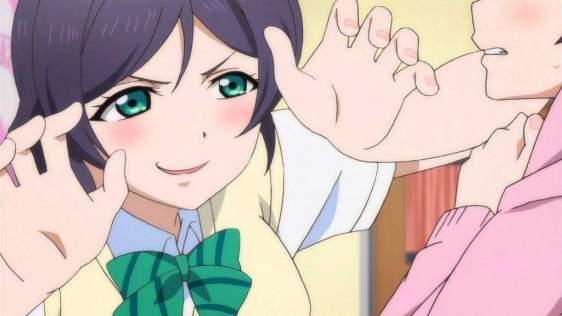
Nozomi makes number 8 in my Love Live! Character Spotlight series at Apartment 507. I hope you enjoy her kansai-ben and attitude as much as I do.
Now only one remains…

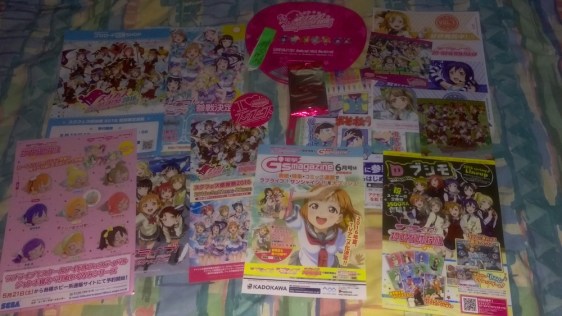
I recently attended “Love Live! Sukufesu Kanshasai 2016″ in Japan, and I managed to get an extra bag of freebies. Now, I want to give it away to my readers.
All you have to do is show why your favorite Love Live! character and why they’re your favorite. Write an essay, take a photo, draw fanart, make videos, I’m leaving it up to you to express your love! They don’t even have to be a main character; moms and alpacas are valid too! And no, picking Hanayo won’t give you a higher chance either. I want to see and feel your passion, not just agree with my tastes.
Submissions can be emailed to ogimaniax at gmail dot com, and are due by July 9, 2016 11:59pm EST.
However, as thanks for being my patrons (and many of you have been with me since the beginning), I am prioritizing my Patreon supporters. If you’re one of my patrons, you will have a much higher chance of winning the prize; however, it’s not impossible to get it otherwise.
I want to emphasize that this is not an attempt to get more Patreon supporters. I merely want to thank my patrons for supporting me. If you’ve been thinking about joining the Ogiue Maniax Patreon for other reasons (perhaps you enjoy my writing), then by all means go ahead. Also, pledging more does not give you a higher chance of winning. You can be pledging at 1 cent or 1 million dollars and you would have the same chance as every other patron.
By the way, one of the items in the swag bag is an unopened card from the Love Live! Card Game. I’ve already opened mine, and it’s a Maki card. I know a lot of people are Maki fans, so if you want that one instead just tell me and I can switch them no problem.
Good luck, and may the Loveliest, Liveliest fan win!
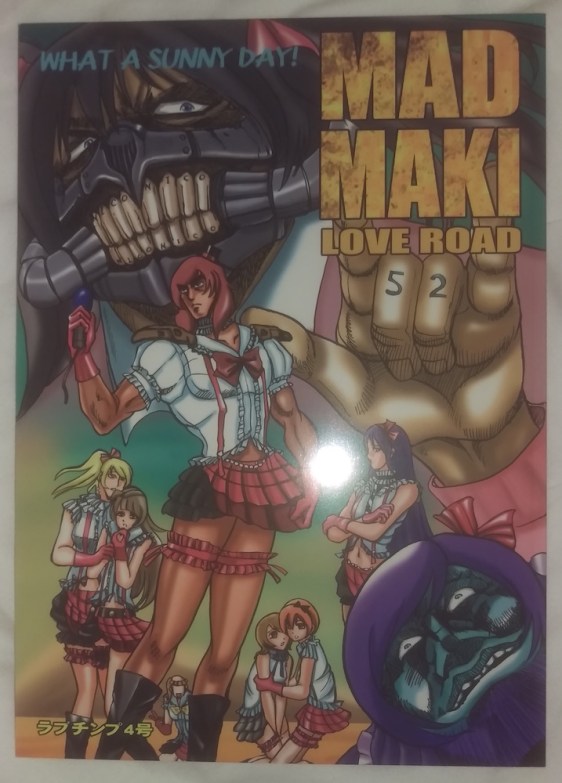
In my most recent trip to Japan, I attended two different Love Live! events in one day. The first was “Bokura no Love Live! 12,” a doujin event. The second was “Love Live! Sukufesu Kanshasai 2016″ (School Idol Festival Thanksgiving 2016) in Ikebukuro, an official event held in celebration of the School Idol Festival game. The contrast between an event that revels in fan expression and one that presents everything in an official capacity is interesting to me, because I think it shows both the strengths and weaknesses of each approach to fandom.

Though I had the opportunity to take a look at both, a question occurred to me as I was traveling from one to the other: if I could only go to one, which one would I choose? I took this from the perspective of a Koizumi Hanayo fan. At the doujin event, I could buy Hanayo-dedicated fan comics from people I knew were fans of Hanayo as much as I am (if not more!). I found a bunch of amazing comics and parody works, and I even got a couple of amazing tote bags that might be my favorite purchases of my entire Japan trip. There’s sort of an interesting magic to buying things in person that get lose with just ordering online, and it’s enhanced when you know the person behind the table put their heart and soul into it. Overall, it was one of the best highlights of my trip to Japan.

However, doujinshi are, of course, not official portrayals of the characters. This is in many ways the advantage of fanart, fanfiction, etc., but what’s also clear is that the fan material feeds off of the official presentation. Much for the art at “Bokura no Love Live! 12” was clearly inspired by the images found in magazines, the mobile game, and everywhere else. There is a kind of power to official merchandise because it presents the characters at their best, but it’s also limiting because they can’t stray too far off from what is deemed “okay.”

For example, the shirts being sold at “Thanksgiving 2016” were all prints of existing art that could be found in lots of places, while the merchandise sold at “Bokura no Love Live! 12” felt a little more unique because they weren’t officially sanctioned images slapped onto clothing. That’s not to say official Love Live! merchandise has to look blunt and straightforward (I actually also got a swank Love Live! polo shirt just the day before these events), but they seem to lean in that direction.
Another instance of the difference between events has to do with yuri and pairings. Love Live! encourages yuri to a certain degree, but has to keep it implicit because it’s supposed to appeal to all sorts of people (and indeed I saw everything from little girls to businessmen at Thanksgiving 2016). A doujin event, on the other hand, can go as explicit as possible in more ways than one, and can even merge the innocent with the racy and have them all exist in one place. Characters can be drawn to fit the whims of the artists to a greater degree with the doujinshi, but they necessarily must feed off the source material at least to a certain extent. Nico/Maki doujinshi can go the distance, but the dynamic between them is rendered through the anime, the game, and other canon resources.
Official events also have resources on their side. One of the highlights of “Sukufesu Kanshasai 2016” was a live School Idol Festival game where nine different people played simultaneously, each one commanding one of the buttons by stepping on them. The cards being used where all nine of the μ’s girls, but with special outfits for the event, and they were surrounded in a mall by throngs of fans dancing and singing along. A doujin event really couldn’t pull that off to the same capacity, nor could they be the place to get official Love Live! Final μ’s Concert shirts, which were a popular item at both events that granted legitimacy to the wearer’s fandom.
The division between official and unofficial events can be rather gray because of how the two feed into each other. The output of fans, albeit more often in the form of monetary purchases, informs the official companies responsible for Love Live! just what the fans are into. The fans, as mentioned, take inspiration from the official material, and convert it, thus spreading the joy of Love Live! further.
It’s hard to choose between the two when both have so much merit, but ultimately I think I would have gone for the doujin event just so I could have that experience of walking around and buying fan-made works. It’s sort of the difference between attending fan panels and official panels at conventions. The official panels are where you can meet the creators, but many times they’re curated and micromanaged heavily, whereas doujinshi and fan panels can stray from the “company line” so to speak. This makes them, in my opinion, overall more interesting, but I’m well aware that all of the Hanayo rice memes required the source material to emphasize it in the most amusing ways.
The last thing I’d like to talk about is actually a little card found in the bag of freebies from Thanksgiving 2016 which is a drawing of some of the School Idol Festival-original girls. Unlike The iDOLM@STER, there is a clear stratification between the main girls (be they μ’s or their successors, the new group Aqours), who are considered “Rare Cards,” as opposed to the “Normal Card” girls that are basically fodder for the former. Here, even at this official event was a small token of appreciation for the lesser idols, and a part of me wishes that someone, be they official creators or doujinshi creators, would take the next step and flesh them out. The result would be different on either side, but both would provide value in their own ways.

PS: I mentioned a freebie bag for “Love Live! Sukufesu Kanshasai 2016,” and I happen to have an extra one. I’ll be holding a contest soon to determine the winner, so stay tuned!
—
If you liked this post, consider becoming a sponsor of Ogiue Maniax through Patreon. You can get rewards for higher pledges, including a chance to request topics for the blog.

For my seventh Love Live! Character Spotlight series I’ve written about its central heroine, Kousaka Honoka.
That means there are only two more left: Toujou Nozomi, and of course Koizumi Hanayo.

In this one, I compare Honoka to John Cena, which I think is pretty appropriate.

Fighting game anime do not have the best reputation. While we’re not at the absolute depths of the 90s and such wonderful stinkers as Tekken and Battle Arena Toshinden, most of the time the individual stories you experience by playing each character one at a time in fighting games are all mashed together into a paste. The result is that characters do not even have enough screen time to properly showcase their already flimsy narratives, and what carries a fighting game anime to any kind of success is enough flair for the characters’ personalities to shine through in their limited actions.
BlazBlue: Alter Memory is not the worst anime in this respect. Based on the popular BlazBlue fighting game series, the fighters themselves are designed to be as bombastic as possible, and while the story is convoluted to no end it seems very intentional. The narrative and presentation of BlazBlue: Alter Memory revels in its anime aesthetic to the point that it ironically suffers from not being as beautiful in the animation department as its source material because they can’t be as meticulous compared with the intricate sprite animations used in the games. I have to admit that I’ve barely played the games, but from what I can read the anime successfully captures the fact that the story involves alternate timelines, powers that are ridiculously vague in their function, and a seemingly endless stream of little sisters.

Ragna the Bloodedge is our white-haired, Sugita Tomokazu-voiced protagonist with a beefy sword. His little sister Saya was killed in the past, and he swears revenge against the man who did it. However, he keeps coming across girls that appear similar or even identical to Saya. There’s military police officer Noel Vermillion, who is arguably the series’ secondary heroine. There are robots that come possibly from the future (or something?) who have her face. Even one of the main villains turns out to have connections to Ragna’s little sister. I had a passing idea of the narrative of BlazBlue before watching, that time travel was involved, and that it is basically the Guilty Gear series with the anime dial cranked up to 13, but I didn’t realize that the story is basically Super Kyon (from Suzumiya Haruhi) and his deluge of imoutos.
When people use the term “anime fighter,” they’re referring to games like BlazBlue, and while it’s often associated with certain game mechanics such as air dashing and elaborate combos, the aesthetic is also important. BlazBlue, and by extension Alter Memory, takes all of the popular little trends in hardcore anime of the past seven years or so and throws them together to make something gloriously confusing. You have Catgirls and actual cats. There’s a 12-year-old looking vampire girl who’s a fan favorite. Yandere are seemingly everywhere. Angst and ninjas and flourishes of power are presented in such obtuse yet highly cinematic ways that Bleach creator Kubo Tite would blush. The sheer importance of little sisters in BlazBlue is not surprising, then, given just how increasingly prominent they have been in anime, manga, and light novels.
I think if there’s any major flaw of BlazBlue: Alter Memory, it’s from the fact that it’s an anime in the first place. This doesn’t seem like the kind of story you’re meant to experience by just watching. Rather, I think it’s supposed to kind of wash over you as you back in the aesthetic environment of the world and its dynamic characters. Maybe I should play the games more.
You can watch BlazBlue: Alter Memory on Hulu.
—
This post was sponsored by Johnny Trovato. If you’re interested in submitting topics for the blog, or just like my writing and want to sponsor Ogiue Maniax, check out my Patreon.
One of the most common pieces of advice when it comes to the internet is simply, “don’t read the comments.” Whether it’s arguments about Justin Bieber on YouTube music videos or angry and insensitive comments on an article about a sensitive topic, comment sections can become minefields. It makes sense that we’re advised to ignore comment sections. However, while that’s generally sound advice, I think that it’s a mistake to believe that comment sections do not matter at all, especially in our current environment where social connections (both strong and weak) are made through online media.
Nowhere is this more relevant than with sites that utilize live chat feeds, such as Nico Nico Douga and Twitch. The difference between watching a game on Twitch with and without chat is basically the difference between watching alone or watching with a crowd. For those who want to share in the excitement of something as it happens (like a virtual crowd at a pro wrestling event), it becomes a vital part of the spectator experience. At that point, it’s not just about wanting to see comments or not, it’s about being a part of a collective bonding.
If you want to know how important the live chat is to Twitch, you only need to look at one of their more recent developments: saved chat logs for VODs. In the past, if you wanted to see what the chat was like for a previously recorded stream, your only hope was that someone captured it with the chat in progress. Now, anyone can step in a week or a month after a broadcast and see what people were saying at the time, and in many ways it enriches the experience. Imagine watching an old football game or something and having the crowd muted out. It certainly wouldn’t be the same, and while I understand that by not watching it live the experience changes anyway, there’s now a middle point.
This brings me to what I really wanted to talk about: the degree to which Twitch chat can become an unwelcoming place, and the potential harm it can cause. For me, personally, I experience this when I watch a Smash 4 tournament, and the chat is inundated with comments about how boring the game is, and how people can’t wait for Melee. It doesn’t matter how interesting the actual game being played is, people are ready to criticize and diminish its value. I think Smash 4 is awesome, and to some extent the trolls are just being trolls, but it results in an inhospitable environment that can turn away people who potentially have interest in a game. Perhaps they see huge portions of the chat calling the game a snooze fest, and think, “If this many people are saying that, maybe it is boring after all.” Or perhaps they just don’t want to deal with all of the nonsense and would prefer to watch another game with a chat that isn’t secretly hoping for the clown from Showtime at the Apollo to drag away what’s currently on.
That’s only a “your game vs. my game” scenario, though. Consider the tendency for Twitch chats to explode with comments whenever a girl appears on stream. I understand, lots of guys are horny, and by connecting to Twitch through one’s own personal devices, be they computers, mobile phones, or whatever, there’s a sense that what you’re seeing is merely an extension of your private space. Talking with your friends about how that girl was incredibly hot isn’t a bad thing, but stream and chat become this nebulous space where private and public intersect, and it’s not surprising that women would choose to hide their identities in chat, or prefer not to participate in the zoo that is Twitch chat (though that zoo can be fun and positive too).
In fact, I think comments online in general are a kind of extension of private space into public territories that can be both welcome and unwelcome. In a way, this blog is doing the same thing, as is Twitter, Facebook, and wherever else people are placing a part of themselves into their words. Social media and the internet as it exists today is not a separate entity from the real world. Ignoring elements of “IRL” space can be done too, but it usually comes with the awareness that it is cutting you off from a certain experience and resonance with others. Doing the same online might be necessary at times, but we shouldn’t act like the solution is to just encourage everyone to turn their eyes away from the problems that exist. The problems themselves need to be addressed too.
—
If you liked this post, consider becoming a sponsor of Ogiue Maniax through Patreon. You can get rewards for higher pledges, including a chance to request topics for the blog.

As we get closer to the premiere of Love Live! Sunshine!! I’ve been trying to get my analyses of the original μ’s girls out for you to check out. This time, I’ve written about Ayase Eli and the way the series utilizes her “Russian-Ness.”
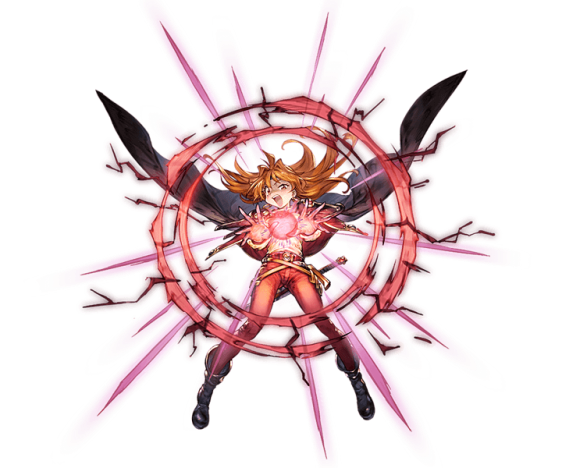
Granblue Fantasy is a Japanese mobile game that’s got tons of fans, and it’s so popular that it ends up crossing over with other franchises. Check out this small list of series that make guest appearances. As someone who got into anime in the 90s, I’m especially fond of the Slayers cameos.
 OGIUE MANIAX