New (Old) Japanese Genshiken Re-Release!

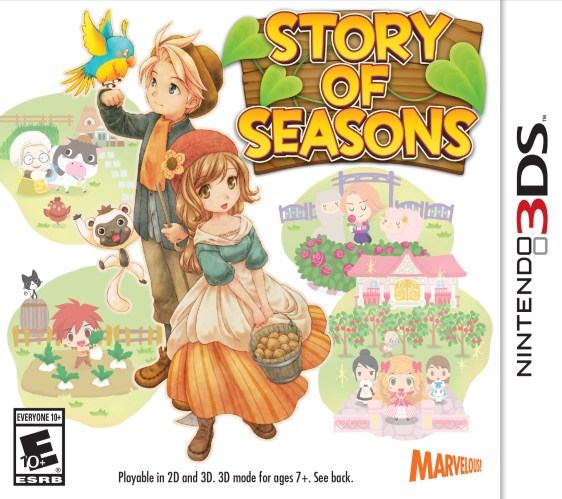
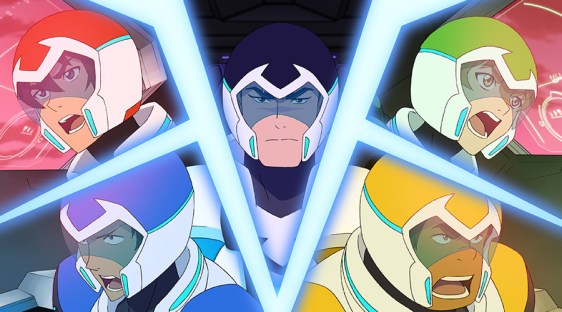
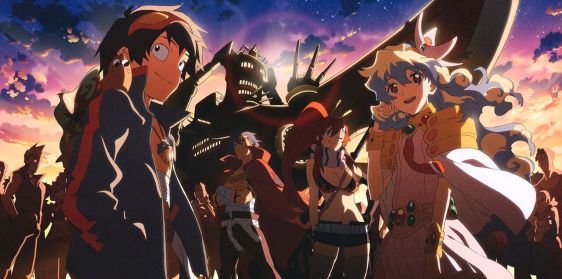
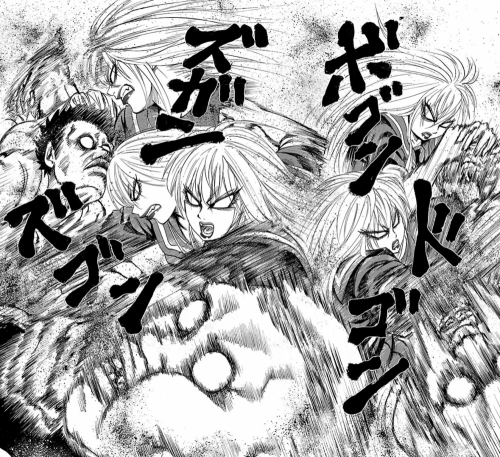
The first Genshiken manga is getting a new edition in Japan. Called Genshiken “Shinsouban” (“New Edition”), this new version will be five omnibus-sized volumes in total (as opposed to nine volumes in the original release), and will be printed on larger, A5-size paper. The volumes will also feature brand new covers, as seen above.

The first volume goes on sale May 23rd. As to whether or not I’ll be getting it, the answer is “probably.” I am a sucker for new covers, and the only thing preventing me from owning the anime version five times over was cost. It’ll also hinge on whether or not there are any store-exclusives like with the Genshiken Nidaime releases. No word yet on what, if any, special image cards will be included.

Overhead Kiss: Ogiue Maniax Status Update for May 2017

May’s always been my favorite Guilty Gear character. 6p is Life.

While they might not be able to shoot people out of cannons, my Patreon supporters are just as powerful. Thanks to the following!

General:

Johnny Trovato

Ko Ransom

Alex

Diogo Prado

Viga

Yoshitake Rika fans:

Elliot Page

Hato Kenjirou fans:

Elizabeth

Yajima Mirei fans:

Machi-Kurada

I found April to be a fine time for Ogiue Maniax just because there were so many fine shows coming to an end. Personally, I’ve also been reading a lot of manga I had neglected for a while, and I’m hoping to write my thoughts on them either here or on Apartment 507. Do you have a favorite show thus far? I’d be interested to know.

Starting this month, I’ve decided to change up how I do these posts. Instead of listing almost every post I’ve written over the past month, I’m going to give my three favorites plus any sponsored posts from patrons.

Top 3 Posts

You’ve Finished Kemono Friends! What Next?
This for all you Friends out there who want a little more. Trust me, you won’t be disappointed.

Fight for Survival, Dream for the Future – Mobile Suit Gundam: Iron-Blooded Orphans
I’m a long-time fan of Gundam, but I felt especially impressed by this latest TV series.

Bodies Apart, Souls Together: Your Name
See my take on what might be Shinkai Makoto’s most “complete” movie ever!

Patreon-Sponsored

Yamato vs. 999 and the Makeup of a Journey
This time, I was requested to write about “anime that take you on a journey.” I used that opportunity to analyze what it means for a series to portray a “journey” in the first place.

As always, if you want to not only request a topic for Ogiue Maniax but make me write it as well, you can check out the highest tier on my Patreon.

The month of May will feature the next entry in my Genshiken re-read series, so look out for that! Also, watch out for giant whales.

Save

Save

The Revival (?) of Studio Gonzo

Kaleido Star: One of Gonzo’s Best

One of the persistent problems in TV anime production is the tendency for shows to start off strong and end disappointingly. Frequent culprits include inconclusive or unsatisfying endings, visible decline in animation quality as a series reaches its conclusion, or a lack of clear direction after a certain point (usually midway). Once upon a time, there was one studio particularly emblematic of this trend, and its name was Gonzo. To my surprise, Gonzo appeared in the news in 2016 because of its purchase by Japanese ad agency Asatsu-DK.

The path for Gonzo back to stability and relative prominence is an interesting one, and while I don’t have the inner details of just how Gonzo accomplished this, I want to discuss from my own fan perspective the ups and downs of Gonzo over the past 15+ years.

Back in the early 2000s, Gonzo shows would hit the ground running. Series such as Kiddy Grade, Vandread, and Last Exile, were full of attractive and memorable characters, and their action scenes were rife with flash and pizazz. Gonzo had two main strengths. First, was the quality of their animation. Second, was that their shows often looked visually “cutting edge.” Just as the turn of the 21st century carried with it the last vestiges of the 20th century hope for a world of flying cars and such, so too did Gonzo shows have a futuristic feel. In my own view, no studio embodied the essence of the period’s anime more than Gonzo, especially when factoring in their prominence on American store shelves, and their work on Afro Samurai.

Unfortunately, they would often start to meander around the halfway mark before barely sputtering towards the finish line. It was such a common problem for their works that terms such as “Gonzo ending” and “Gonzo show” were used among fans to describe such troubled productions. Even the Gonzo shows that people praised, especially science fiction/fantasy action works like Bokurano and Strike Witches, were often only considered good enough in that their positives would outweigh the notorious Gonzo negatives. Only a couple of shows, Gankutsuou: The Count of Monte Cristo, and Kaleido Star (about an aspiring circus acrobat) ended up with none of the common problems plaguing Gonzo. With the rest, it was often said among online fans that sticking with a Gonzo show came at your own peril. Fool me once…

A quick glance at their releases shows just what was fundamentally wrong with Gonzo: they bit off more than they could possibly chew. For years, multiple shows of theirs came out practically every season, and each time they all but repeated the same mistake of starting strong and ending weak. Just about every series clearly went over both time and monetary budgets for the sake of style. Perhaps the lowest point of Gonzo’s existence came in 2009, when Gonzo began animating the yuri mahjong series Saki. About two-thirds of the way through, they could no longer keep up production, and they were replaced by a studio called Picture Magic. From there, they began to fade into obscurity, working only on smaller projects usually at the behest of other companies.

However, this might have well been what saved them from the brink. Gonzo’s problem was that they were always good at micro elements such as action scenes, but faltered with macro elements like overall story and pacing. But when they could serve the role of just helping others with action, they could shine. Notably, when the Street Fighter IV expansion Super Street Fighter IV came out in 2010, they replaced the more artsy and avant garde Studio 4ºC as the provider of 2D-animated cut scenes for the famous fighting game series. Studio 4ºC has many strengths, mostly in terms of its creativity and willingness to push the boundaries of abstraction in animated works, but conventional portrayal of fight scenes was not in their wheelhouse and it showed. For Gonzo, on the other hand, it was a perfect fit.

Since then, they’ve come back to directly producing works, such as Last Exile: Fam the Silver Wing in 2011 and the Bayonetta anime in 2013. When you look at Gonzo’s output now, it’s clear that their approach has changed. Where once they tried to cram six or seven shows into a single year, now it’s generally one or two. If they’re working on more shows, it’s usually in conjunction with other studios, such as with Thermae Romae in 2012. For better or worse, they’re not even as focused on action, as their recent works tend to be more comedic, most notably the recent 2015 show Seiyu‘s Life. All the while, they still assist other studios. Perhaps what Gonzo needed was experience, going from the wild abandon of their proverbial youth to something much more reserved.

In some ways, I miss aspects of the old Gonzo. In particular, I was fond of how they often strove to be ahead of their time, even if it didn’t bear any fruit and also tanked their earnings in the process. Back when Strike Witches first aired, obtaining anime was very different. There was no Crunchyroll for legal streaming. DVDs were much more expensive than blu-rays are today. Torrents dominated, but even sharing over IRC and DC++ still happened to a small degree. In this environment, Gonzo said that they would distribute Strike Witches, episode by episode, DRM-free, and at a fairly decent video quality.

Gonzo tried to legitimize online anime viewing at a time when it was seen as impractical or even impossible, and were among the first to jump on board with the revamped Crunchyroll—a site that had gone from piracy central to forging legitimate relationships with Japan. But if it’s the difference between going out in a blaze of glory and charred bills or keeping their heads above water and slowly paddling along, then I think it’s better for Gonzo’s sake that they’ve changed. Maybe once they find themselves on terra firma, they can unleash the passion of their youth once again.

Yamato vs. 999 and the Makeup of a Journey

By necessity, a journey involves “movement.” However, the act of moving from one place (or dimension or time) to another by itself does not constitute a journey. Characters in Dragon Ball Z travel across the Earth and even to other planets, but the more humble adventures of young Goku in Dragon Ball feel far fitting to be called “journeys.” The more the individual stops carry significance, the more a tale of travel becomes a journey. However, the longer each significant stop is, the less it becomes a journey as well.

The details of how a journey narrative unfolds—and the meanings carried by it—can come from what elements are in the characters’ control, and which ones aren’t. From this perspective, it is interesting to compare two of the greatest “journey anime”: Space Battleship and Galaxy Express 999.


Space Battleship Yamato

Galaxy Express 999

Between these two series, we can see two major archetypes: the journey of necessity, and the journey of discovery. Both series are about reaching a destination and overcoming death (the Yamato flies to obtain a device that can save humanity from radiation, Tetsurou boards the Galaxy Express 999 to obtain an immortal robot body). However, Yamato’s journey is more about what imperils the heroes, while 999 is about discovering new worlds and seeing how life differs from place to place.

As a result, while both series don’t spend long amounts of time in any one location, the reasons for the brevity of their respective planetary locales are substantially different. Because the Yamato is in a race against time, there is a constant sense of urgency. They’re being pursued by the enemy, all while the fate of the human race rests in their hands. How long they stay anywhere depends on how long it takes them to get out.

In contrast, the length of each stop for the 999 is determined by the day cycle of a planet. This provides both narrative variety and something to chew on (e.g. what does it mean to live day to day on a planet where days are only a few hours?), but in terms of the mechanics, it essentially means that the characters’ schedules, the amount of time they spend on each planet, is dictated by the 999.

In Yamato, the characters must pull their vessel along, and the length of stay is their responsibility. In 999, the characters are pulled along, and their responsibility is doing as much as they can within a time frame. These differences transform the similar developments that the protagonists of each anime go through. By the time both Kodai and Tetsurou emerge from their journeys, they are wiser and more mature, but the former reaches adulthood through constant conflict, while the latter achieves the same through experiencing new perspectives.

Between the journey of necessity and the journey of discovery is the journey where discovery is necessary, but when I try to think of examples the first thing that pops into my head is ironically not really an anime that takes its viewers on a journey at all. Instead, what comes to mind is the series Mahoromatic, which is about a former military robot that becomes a maid in order to spend the rest of her short remaining life atoning for her previous role. Much like Yamato, each episode ends with a count of the days Mahoro has left. Despite Mahoromatic mostly revolving around a static home and environment, Mahoro’s desire to discover what it’s like to live as a human as her life winds down conjures up the well-worn cliché that “life is a journey.”

This post was sponsored by Johnny Trovato. If you’re interested in submitting topics for the blog, or just like my writing and want to support Ogiue Maniax, check out my Patreon.

Save

Save

The Glory of NEETS, and the Creation of an Archetype

How did being a NEET become an endearing quality in fictional characters?

NEET is a term first created in the UK and imported to Japan. Standing for “Not in Employment, Education, or Training,” it’s another way of saying you’re unemployed and probably mooching off of your parents, and most likely somewhere in your 20s to 30s (or beyond). The United States has a similar stereotype in the basement dweller, but whatever the phrasing, it would normally be rather unusual to have such characters be figures of admiration, desire, and more. And yet, this is exactly what we’ve seen out of Japanese media. The geek girls of Princess Jellyfish admit to not having jobs and relying on their folks, but readers connect with them rather than shunning them. Futaba Anzu, one of the characters in THE iDOLM@STER: Cinderella Girls, is not technically a NEET (she has the job of being an idol), but embodies the spirit, being a lazy lay-about whose shirt features the classic slogan of the NEET: “If I work, I lose.”

futabaanzu

People don’t necessarily cheer for the forthright and responsible (some would say boring) characters in fiction, but there’s something in particular about embracing the NEET that seems strange on the surface to me, as it’s not exactly an admirable quality in normal contexts. At the same time, there’s a rebellious element, and many have argued that Japan’s economy, rather than the NEETS themselves, are to blame. But the rebellion feels a bit…pathetic, even if possibly admirable.That’s not so much in the sense that NEETS are losers, but it calls to mind the image of an inept geek try their hardest to go camping, only to get lost and fall in a hole. In the end, they’re safe because they can just go back to their home, but within their specific circumstances they’ve tried, even if they end up looking like fools in the process. There’s a tinge of failure, or perhaps fear of failure, and maybe that’s why people connect to them.

One possibility is that a lot of people are or have experienced being NEETS, and it’s probably no coincidence that a character like Anzu would be popular from a mobile game revolving around management of idols. After all, idols are a kind of illusion that fans willingly fall into, and I wouldn’t be surprised if being a NEET inspires the desire to break away from the real world, justified or not. However, one thing that is made clear from Princess Jellyfish and Futaba Anzu is that, at least when it comes to fictional portrayals of NEETS, what defines them first and foremost is passion for something, but most especially passion for the impractical.

princessjellyfish-neet

Anyone who’s watched anime or read manga for a long time has noticed a kind of reverence for the teenage years, and one factor behind that is the idea that it’s the time in your life when you can truly devote yourself to a task regardless of its practicality. As mentioned by Bamboo on The Anime Now Podcast’s review of Love Live! The School Idol Movie, the difference between an “idol” and a “school idol” in the world of Love Live is that even if you can’t succeed as the former, you can become a beloved school idol through hard work and passion for your beliefs. It’s a safe space away from the realities of a harsh industry. NEET characters, whether they’re older (Princess Jellyfish) or not (Futaba Anzu), appear as if they want to extend this mindset into their later years, fighting against a society that tells them to grow up.

Given the ways in which middle school and high school are framed within Japanese media, it’s maybe no wonder that this happened. It’s supposed to be the prime of your life, the time when your soul burns brightest, and then you’re supposed to quietly file it away or adjust it to how the real world works. Even if it’s arguably socially irresponsible to do that, I think it’s understandable, and maybe this is where NEET characters really draw their power from. They’re characters who hold onto their dreams, but tinged with the colors of reality that contextualize them in ways that don’t turn their impractical aspirations into a pure fantasy.

If you liked this post, consider becoming a sponsor of Ogiue Maniax through Patreon. You can get rewards for higher pledges, including a chance to request topics for the blog.

Save

Save

Let Them Eat Cake: ACCA: 13-Territory Inspection Dept.

  Anime based on the manga of Ono Natsume tend to carry a very subdued mood. In contrast to the racy elegance of Ristorante Paradiso or the eerie hum of House of Five Leaves, ACCA: 13-Territory Inspection Dept. feels colorful and energetic while also carrying Ono’s characteristic stylishness.

Living in the kingdom of Dowa, an island nation consisting of 13 districts formerly at war with each other, Jean Otus works for ACCA, an organization underneath the king meant to keep the peace and mitigate corruption. Although daily life for Jean is fairly uneventful, he finds himself slowly learning about a potential conspiracy that might just undo Dowa’s peace.

ACCA is a very sleek, yet indulgent and fun show. Its characters feel like they’re cut from rare and valuable gems, with their colorful hair, fashionable clothes, and sharp silhouettes, further enhanced by the political intrigue that permeates their actions. But for every dramatic and tense moment, there are just as many emphasizing the relaxed and at times goofy attitudes of much of its cast. Seriousness and frivolity dance back and forth, with neither feeling trivialized or unwelcome.

One of the major positives of ACCA is its loving portrayal of food, particularly snacks and sweets. Throughout the series, baked goods are featured in both the background and foreground, acting variably as treats for the viewer to jealously eye, a way to highlight the differences between different regions of the island, and even as symbols of friendships that advance the narrative forward. Cakes, donuts, and even giant strawberries are among the many delectable items whose portrayals keep ACCA consistently fun and refreshing.

Aside from the food, what impresses me most about ACCA is that the series is quite unpredictable without feeling like it’s trying to constantly swerve the audience. Even Jean himself feels like a mystery at the beginning of the series, and the gradual reveal of his personality and goals is actually immensely satisfying. Motivations are kept close to each of the characters’ chests, but just enough information is given from episode to episode to keep igniting imaginations.

Of all the eclectic characters in this series, my favorite is Mauve, the director-general of ACCA who tasks Jean with trying to get to the bottom of coup d’etat rumors. Mauve’s stoic beauty and intelligence carry a kind of alluring yet intimidating air of mystery, and Jean’s own crush on her feels that much more relatable as a result.

In a way, ACCA feels like eating the world’s best strawberry shortcake. It’s smart and complex, yet also light and comforting. Its atmosphere is unique even among Ono’s works, making ACCA a success on nearly all levels.


[APT507] How Love Live! Sunshine!!’s Least Popular Character Rocketed to #1

I wrote a bit about the change in fan opinion over Love Live! Sunshine!! character Matsuura Kanan over at Apartment 507. I know she became one of my favorite characters by the time I finished the anime, but did you find your impressions changing as well?

Bodies Aparts, Souls Together: Your Name

An emotionally complex tale of humanity’s connection to both itself and the environment, Your Name marks Shinkai Makoto’s transformation from critically acclaimed director into social phenomenon. Breaking the box office record for animated films in Japan previously held by Miyazaki’s Spirited Away, Your Name is a kind of culmination of Shinkai’s films, carrying many of its predecessors’ ideas and themes (lush background environments, adolescence, time and space) while also gearing them towards a more mainstream audience.

Your Name follows two teenagers who, one day, discover that they’ve been switching bodies without memory of doing so. Part-time waiter Taki is a resident of Tokyo, while shrine daughter Mitsuha lives in the small, rural town of Itomori. As they continue to get a very personal look at each others’ lives, the two find themselves growing closer despite being physically located on opposite sides of Japan.

Shinkai’s previous long film, Children who Chase Lost Voices from Deep Below, can be described as an attempt to make something more mainstream, even Miyazaki-esque. However, the film’s emphasis on atmosphere and scenery could not quite support the plodding narrative, leaving Children a significantly flawed work. Your Name, in contrast, ucceeds in tapping into the mainstream not only because of its thematic responses to the events of 3.11, but because he keeps the characters much more front and center compared to his previous works. In most Shinkai films, the backgrounds—especially the clouds—are so brimming with life that the environment becomes a kind of character in itself. With Your Name, however, the backgrounds are regressed just enough that Taki and Mitsuha stand at the forefront, while maintaining their signature luster or its aesthetic and narrative impact. Notably, the film does an excellent job of showing off both the cosmopolitan energy of Tokyo and the splendorous beauty of Itomori.

A few thematic concepts persist throughout the entirety of Your Name. One is “twilight,” written in Japanese in various ways but invariably consisting of the kanji for “who” and “he.” Twilight is viewed as a convergence point. Another is “threads.” According to Mitsuha’s grandmother, when their family weaves, they are copying the behavior of the gods. People can be viewed as threads that are woven, tangle up, break apart, and come together again. Mitsuha is known for the ornately tied ribbon adorning her hair, while Taki’s inability to replicate Mitsuha’s skill acts as one of the visual markers for their body switch. Multiple scenes of train stations in Tokyo draw parallels to threads, as they gather up on tracks, allow people to transfer, and then head out in separate directions. Dragons and their divine place in Japanese folklore also play a prominent role. Taki’s name means “waterfall,” which is associated with dragons, while the comet Tiamat that figures heavily in the narrative also alludes to the mythical creature.

Your Name deftly juggles a variety of elements without feeling overly complex. Its story tugs at the heart but also inspires, rendering it an unforgettable film. It may very well become the defining film of an entire generation.

The Fujoshi Files 168: Kankiri

Name: Kankiri (かんきり)
Alias: Kan-san (かんさん)
Relationship Status: Dating
Origin: Happy Fujoshi: Otaku no Onee-san

Kankiri is a university student who tries her hardest to hide her identity as a female otaku. However, it turns out to be futile as almost everyone she meets either is an otaku themselves or is familiar enough with otaku and fujoshi to recognize the signs of one.

She first got into BL because of the anime Mashin Eiyuuden Wataru. Prior to that, she started becoming an otaku in elementary school, and by middle school discovered that she has a thing for age gaps. Kankiri is also critical of impossible shirts on women in anime and manga, comparing them to pants that cling to a man’s erection at all times.

Fujoshi Level:
Kankiri believes couplings and reverse couplings are fine, which puts her at odds with other fujoshi.

Save

Harem the Origin – Kizumonogatari Part III: Reiketsu

Monogatari protagonist Araragi Koyomi is a flawed and immature yet ultimately heroic figure. A teenager influenced heavily by his hormones, Araragi is nevertheless more interested in helping the weak and not succumbing to his loins. The Kizumonogatari prequel films tell the story of Araragi’s first foray into becoming a horny savior, with Kizumonogatari Part III: Reiketsu, completing the trilogy. Reiketsu provides plenty to chew on in terms of Araragi’s relationship to the other characters (both those in the movie and seen elsewhere), particularly the uniqueness of his “harem lead” position.

In the previous two films, Tekketsu and Nekketsu, a sympathetic Araragi agreed to become the undead servant of a dismembered vampire named Kiss-Shot Acerola-Orion Heart-Under-Blade (later known as Shinobu). With his newfound immortal abilities, Araragi retrieved Heart-Under-Blade’s defeated her attackers and restored her limbs. Along the way, he befriended two individuals: the wise, buxom classmate Hanekawa Tsubasa, and the sly occult specialist Oshino Meme. In this third film, Araragi looks forward to regaining his humanity, but upon realizing that he’s restored a powerful 500-year-old vampire and thus a significant threat to humanity, Araragi resolves to put a stop to his own master.

Given the prequel status of Kizumonogatari, there is no mystery as to the outcome of this battle: both survive, though in significantly reduced fashion compared to how they’re depicted in this trilogy. However, just exactly how they reach these states of being is one of the goals of Reiketsu, and the conclusion is a kind of denial of resolution. It’s the sort of chicanery Monogatari is known for, where the wrap-up feels both neat and dirty, and your’e not sure if you’ve had enough or you want more.

For viewers of the various TV series, Shinobu appears to go through a fairly unusual personality change, from a silent background presence to a constant companion for Araragi, residing in his shadow. The final film of the Kizumonogatari trilogy, titled Part III: Reiketsu, provides the answer in full. However, given the timing of this film it (presumably) functions differently compared to its placement in the novel series. Whereas Kizumonogatari the novel introduces the foundation of Shinobu’s personality and its gradual restoration, the Kizumonogatari films act as the missing puzzle piece that finally brings sense to an incomplete anime image.

Shinobu and Araragi’s master-servant relationship (later reversed in the TV anime when she starts to refer to him as the master) essentially positions their relationship as being impossible to replicate by any other girl. They’re bonded by something far beyond love and romance. Unlike many harem scenarios where certain characters have a clear “lead” over the others, Shinobu as the “dependent master” becomes one of many equal female partners for Araragi, alongside his eventual girlfriend Senjougahara, his first (?) friend Hanekawa, and others.

Both Heart-Under-Blade and Hanekawa feature prominently throughout the Kizumonogatari films, but it is in Reiketsu that their differences in terms of their emotional/spiritual connections to Araragi are fully highlighted. In one scene, Araragi claims that he needs to fondle Hanekawa’s breasts in order to steel himself against Heart-Under-Blade’s tremendous bosom, but as much as Araragi tries to embrace the role of the stereotypically aggressive male in Japanese pornography—and as much as Hanekawa is ready for things to escalate—it’s ultimately only an act for him. In contrast, both Heart-Under-Blade and Araragi are more than willing to engage each other physically, albeit in the form of a violent battle instead of something sexual (though the smiles might imply otherwise). One is a very human relationship (albeit filtered through an assumed “right” behavior instead of lived experience) the other built on the supernatural. It’s telling that the most exquisitely animated moments in the entire film are Hanekawa removing her bra and the battle between Araragi and Heart-Under-Blade.

In Owarimonogatari, the latest Monogatari TV anime, Hanekawa is highly suspicious of the character Oshino Ougi. In order to convince Araragi not to go along with her, Hanekawa offers Araragi a chance to fondle her breasts. Araragi agrees to listen to Hanekawa, but when asked about it, responds that his decision to go along with Hanekawa was less about the prospect of feeling her up, and more about the realization that, if Hanekawa was saying this, it meant that she was deathly serious. With Reiketsu, I now understand that this entire scene is a callback to the events of Kizumonogatari.

I’m still not sure if splitting Kizumonogatari into a trilogy was the right idea, as I don’t feel like each film quite stands on its own without assistance. At the same time, I suspect 3+ hours of full-on Nisio Isin + SHAFT would feel a bit too overwhelming. Given that the films are all relatively short, it might be ideal for marathoning.

Save