Recently, I made a tweet that got over 100,000 likes.
This is not a brag. I had nothing to do with its success, seeing as it was someone else’s words—a famous moment in Twitter history that I was simply sharing.
What actually matters is that it gave me a glimpse into what it’s like to actually go viral on social media, and it made me realize something: Popular People Social Media is a significantly different experience from what the rest of us see.
I’m not famous in any real sense, and I’ve used Twitter mostly to toss ideas into the void—not unlike what I do with this blog. Up until now, the number of notifications I got didn’t matter, and more recently, I’ve mostly been using them to keep up with specific accounts: Kio Shimoku and Haachama for example.
If my social media accounts were always the way my Twitter had been when the above tweet started getting serious attention, it would be nigh-unusable—at least in terms of how I prefer to engage with it.
So what I’m saying is, if you get 100k likes on a regular basis, my condolences. It’s possible that you have a social media manager or something, but if you don’t, then I hope you’re mentally in a good place.
Sound! Euphonium 3 concludes a nine-year journey that follows the students of the Kitauji High School Music Club through the drama of high school and band competition. Taken in isolation, this season feels like the end of an era. Factoring in the tragedies that the studio Kyoto Animation has gone through, it’s one of the greatest victories ever.
Euphonium player Oumae Kumiko and her friends are now the seniors, and have thus gone from newbies to leaders. For Kumiko, that’s more than literal; she’s now the president. They’ve seen the club go from recreational to competitive, and they have one more chance to earn what has eluded them the past two years: gold at nationals. But a few challenges lie ahead, like trying to guide the club as its veterans, and figuring out what their respective futures in music (if any) looks like. Kumiko also meets a transfer student named Mayu who’s a euphonium player herself, and she has to think about the degree to which this final year is meant to be her own time in the spotlight or Kitauiji’s.
Can the club hold together and win nationals, or will it fall apart before even making it back?
In preparation for this review, I read through my old posts about Sound! Euphonium. Seeing where Season 3 begins in comparison really highlights the fact that these characters have each gone on their own journeys while part of a greater overall adventure. Kumiko now sees herself as a euphonium player through and through, and her previous ambivalence about music has made way for a different type of ambivalence focused more on what comes next. Trumpeter Kousaka Reina has gone from upstart prodigy to the central pillar of the club, where her unmatched skill, no-nonsense attitude, and unwavering dedication to music positions her as an intimidating yet inspiring upperclassman. Kawashima “Midori” Sapphire has become the gentle but firm mentor to a fellow contrabass player. And Katou Hazuki, who had joined the club on a lark and with no musical experience, can now play the tuba with consistent confidence. They can all display genuine skill with their instruments now, despite how differently they began.
Being the veterans also means new obstacles. One is the fact that the first-years did not go through the fires of change with their teacher, Taki-sensei, and don’t understand why the older members revere him. Another is that Kumiko and the others have managed to rehabilitate the school’s reputation to the point that some students enroll specifically to join the music club, and so many already have entrenched ideas of what to expect. With the main cast as the seniors, they’re now in a place where they are the most mature people in the room.
At the same time, the third year of high school in Japan also traditionally marks the end of immaturity. Kumiko struggles with envisioning her future, which is made all the more difficult by the fact that Reina is ready to dedicate the rest of her life to reaching greater heights in music. The previous club leaders can seem like giants who had it all figured out, so why does it seem so different now? The transition from childhood to adulthood underlies this final season. It feels genuine, and I find myself reminiscing a bit about what it was like.
Five years have passed since I last watched any Sound! Euphonium, so it’s hard for me to directly compare this concluding season with the previous entries. Even so, I think it holds up to my memories of the anime and as a work unto itself. But when you’re aware of the catastrophes that Kyoto Animation faced—namely an arson attack that claimed the lives of over 30 people and injured dozens of others as well, and then COVID-19—Sound! Euphonium 3 is a true triumph for everyone involved. The fact that they had such devastating setbacks and managed to pull off a final season that looks and feels so satisfying really speaks to how great KyoAni is at spreading institutional knowledge and making sure it’s not just the veterans who hoard all the glory. When it comes to both the Kitauji High School Music Club and Kyoto Animation, understanding the importance of passing the torch is paramount.
Demon Slayer: Kimetsu no Yaiba’s Hashira Training Arc has just finished, acting as the prelude to the end. There’s a controversy over its pacing (namely that it streeetches out what is a brief section of the manga despite relatively little source material), but I’d like to put that aside to talk about what I think is the most important moment from the season—one that highlights a core aspect of the main antagonist, Kibutsuji Muzan.
In the final episode of the Hashira Training Arc, Muzan confronts the head of the Demon Slayer Corps, Ubuyashiki Kagaya, who is bedridden and not long for the world. The eternally youthful Muzan mocks Ubuyashiki for his physical deterioration, only for Ubuyashiki to speak about Muzan’s obsession with his own immortality. The demon slayer leader juxtaposes this obsession with the driving animus of the Demon Slayer Corps: though it may consist of mortals, their collective will to defeat the demons lives on. In contrast, the demons rely entirely on Muzan for their continued existence. If he perishes, so too will they.
There lies the inherent opposition between the group structure of demon slayers vs. demons. Muzan has created a system where he alone holds all the cards, going beyond even the most tyrannical despot. And not only does he view his minions as property, he is unwilling to cede any degree of power to them if it is not under his full control. Whereas Ubuyashiki’s followers come to respect him for his compassion and determination, the demons cower in abject fear of Muzan because they are nothing without him. The Demon Slayer Corps legacy carries on, and not simply through childbirth. Instead, it is accomplished primarily through teaching and raising the next generation to be better.
The difference between Ubuyashiki and Muzan comes down to selfishness. It’s the boss who expects everyone to be at their beck and call, the narcissistic parental figure who demands their children listen to them just because, the political leader who passes laws to benefit themselves rather than their citizens. It didn’t have to be the case that toppling Muzan ends the demons, but the man set it up that way, mistakenly believing his weakness to be strength. As we now await the final movie trilogy to conclude Demon Slayer, I’m interested in seeing how this all plays out.
hololive VTuber Takanashi Kiara revealed a new outfit last month: a 1980s aerobics ensemble that ties into one of her songs, the vaporwave retro–themed “Fever Night.” The look has proven to be a very popular design with fans, and I’m no exception. But putting aside personal taste, one thing I find intriguing is that while the costume successfully evokes the 80s, Kiara’s hips and thighs reflect a much more contemporary beauty standard.
For better or worse, the Western standard for how women (especially white women) were “supposed” to look in the 80s was big breasts, tiny waist, narrow hips, thin legs, and small butt. There’s a reason “Baby Got Back” is written as a rebuttal to a dominant cultural sentiment.
This is even more the case when it comes to the iconic aerobics wear of the period. There’s a famous YouTube upload of an aerobics championship, and it’s a never-ending parade of fit and smiling folks in spandex showing off their slim lower bodies.
These days, however, wide hips and big butts are in. People online use words like “thicc” and “gyatt” with positive connotations, Instagram models swing in this direction, and Kiara to some degree aligns with these current values. Her default design has more prominent hips, and she even got the backside of her 3D model changed to be more shapely and closer to her non-virtual self—an upgrade that has received extra attention in her “Chimera” music video.
The Fever Night outfit, as form-fitting as it is, emphasizes this aspect of Kiara even more. And rather than seeing it as unfaithful to the 1980s, artists have embraced it, often exaggerating her proportions further still. In a way, it makes all the current fanart depict a kind of (not unwelcome) anachronism.
The way that fans have shown their love for Fever Night aerobics Kiara just has me thinking about how beauty standards can change—not only over time, but also across cultures. The 80s “ideal figure” might not be fashionable in 2024, but it could be seen in a different hololive campaign earlier this year: the hololive Production x Cheer Up collab in Taiwan. The promotional art was created by local artist Yanni, and it’s very clear that the girls’ proportions are different from their respective official designs.
In a way, the combination 80s aerobics outfit with current beauty standards—manifested in the form of Takanashi Kiara—really hits home the way nostalgia for an older time doesn’t necessarily mean every aspect of that bygone era is revived at equal levels. We’re seeing a snapshot of a time that is itself looking backwards, and if that is most readily depicted in the form of large thighs in hot pink, so be it.
PS: Today is Kiara’s birthday—stream “Fever Night!”
Things are looking dire in the United States because of the recent Supreme Court decision that grants presidents broad powers with few if any checks. I will admit that I’m very concerned about this, but all I will say is that those who think they’ll be safe from abuse of power are fooling themselves. Independence and freedom don’t just mean “I can do whatever the hell I want, even if others suffer for it.”
I hope that talking about anime will provide some comfort as I think about what to do next.
The summer anime season is officially upon us, and there’s lots of anime being remade and revived right now. The one I’m looking forward to most is Kinnikuman: Perfect Origin Arc, which is based on the 2011 continuation of the original Kinnikuman manga. Based on the promotional materials, I feel like it actually has a chance of getting some real traction with a modern audience. Might Kinnikuman be the next JoJo in the English-speaking market?
I hope so.
Thank you to the following Patreon supporters for the month:
This hololive VTuber has now been published in Hana to Yume magazine!
Kio Shimoku
He has an artbook coming out soon! He talks about this and more in his tweets.
Closing
A lot of hololive birthdays and concerts happened in June, but I think the ones I want to point out most are the Japanese 1st Generation’s 6th anniversary concert (featuring Haachama) and the Gawr Gura 2024 city-pop-themed birthday concert. Not only did La+ show up as a guest, but Gura actually threw in a reference to Legend of the Galactic Heroes!
Kio is going to have an artbook! (I wonder if this is why he’s been posting high-quality images of his old art over the past year or so.) More details here.
He wondered when would be the right time to release the book, and reflects on the fact that it’s been 30 years since he started his manga career.
Kio has a color illustration job deadline coming up, so he’s been plugging away at it little by little. He thinks he can finish in time. That said, he has a lot of other work due the week after. It also means he can’t work on his ero manga.
Terry and Mai from Fatal Fury will be in Street Fighter 6. Kio is surprised at the news. One commenter says they’re looking forward to seeing Sue in SF in 15 years, to which Kio says maybe in 30.
It turns out this drawing from last month is for the cover to the artbook! It’s one of his characters from an older work (I think the Yonensei/Gonensei series?).
Kio bought all of the original Oblivion Battery manga out, only to find out that it doesn’t progress as quickly as the anime. Now, he wishes he stuck with just the anime.
There’s a Yasuhiko Yoshikazu and Koizumi Yuu exhibit titled “Modern Japan and Russia/Soviet.” Kio couldn’t go the previous day but has decided to check it out.
While waiting for a Pre-DLC Elden Ring update to download, Kio works on his ero manga and gets a page done. He’s also wondering how the hell he’s listening to an audio book of Buddha’s Teachings while working on said 18+ comic,
Otomo Katushiro is releasing an album called Akira Remix. The Otomo recent cel exhibition was playing music from it, and Kio remembers going to the exhibition and hearing the music the whole time.
hololive’s La+ Darknesss is now a published manga author! As an anime blogger and a Plusmate, I had to write about it.
Shoujo manga magazine Hana to Yume is celebrating its 50th anniversary. As part of the festivities, they published an interview with La+ in their 14th issue of 2024, wherein the holoX leader talks about a variety of topics related to shoujo manga. On top of that, she also got the chance to script a manga, with art by Chitose Shiki. We’ve seen manga about hololive talents, but never an officially published work by one.
The one-shot work is titled The Knight-themed Streamer Who’s My Oshi Is Actually My Male Glasses-Wearing Coworker!? As is implied, it’s about a girl who discovers that her meek coworker is her favorite online personality. It’s a funny and all too fitting topic for a VTuber to be writing about. La+ in many ways has the tastes of both an old man and a young girl, and it manifests in this cute story.
As for the interview, here are some highlights:
La+ is a voracious reader. She typically reads 40 volumes of manga and other books every month. Even when she has a busy month, she’ll still read about 20.
Despite seeming like someone who would be more into shounen, half of her reading is shoujo manga. She thinks Hana to Yume can appeal to guys and girls alike.
What she’s into can change, but recently, she’s been into more conventional shoujo romances.
Yazawa Ai is how she got into manga—Nana and Paradise Kiss, especially. Yazawa’s work made her want to become a fashion designer, which she has studied. La+ actually still does fashion design. (In her casual outfit reveal stream, she mentioned designing the entire outfit from head to toe. Previously, she had also mentioned that she’d probably be a designer if she hadn’t joined hololive.)
The title that got her reading Hana to Yume was Ouran High School Host Club. Kyouya (who she refers to as “Kyouya-sama”) is what kickstarted her love of glasses. (Generally, La+ describes herself as being into glasses rather than glasses characters.)
After Ouran, the big Hana to Yume titles that drew her in further were Yona of the Dawn and Snow White with the Red Hair.
What she looks for in major female characters differs between shounen and shoujo. In the former, she wants girls who are super-talented and extremely cute. In contrast, she prefers very normal and average shoujo heroines.
Kio Shimoku, author of Genshiken, recently announced that he’s going to be releasing an artbook collecting his work from across his 30-year career! It will also include an interview with him.
The book is titled Kio Shimoku Gashuu: Mata Ashita, Bushitsu de—Kio Shimoku Art Collection: See You Tomorrow in the Clubroom. It’s being released by Fukkan, a Japanese publisher that specializes in niche specialty books and reviving out-of-print titles.
While the book is available for pre-order on other Japanese sites, pre-ordering on Fukkan’s site will get you a set of A4-sized replica illustrations of Kio’s work. And if you do it by July 16 (JST), then you can enter to win an autograph from the man himself!
Unfortunately, Fukkan will only ship domestically, so if you live outside of Japan, you’ll need to use a third party. Just keep in mind that with the pre-order bonus, shipping might be pretty killer!
In a sports anime where relationships on the court are centrally important, the defining team rivalry of Haikyu! is undoubtedly Karasuno vs. Nekoma. In Haikyu!! The Dumpster Battle, it all comes to a head as the two face off in the big inter-high tournament.
While the high-flying Hinata Shoyo is generally the star of the series, this movie feels like one where his friend and longest rival, Nekoma’s setter Kozume Kenma, is the actual main character. A significant amount of time is spent exploring his history and inner world, elaborating on how he started playing volleyball, and what has kept him in the sport despite his dislike of physical exertion. It’s because the film is basically an adaptation of a small chunk of the manga, but I appreciate that its story can be told in a way that really shines the spotlight on Kenma and adds a new perspective on his relationship with Hinata, as well as with Kenma’s own teammates.
The two schools are set up as equal but opposite forces. The Karasuno duo are the high-flying spiker Hinata and the technical setter Kageyama, while Nekoma’s main pair consists of the quietly analytical setter Kenma and the psychology-oriented Kuroo. Whereas Karasuno focuses on heavy aerial offense meant to overwhelm, Nekoma stays primarily grounded and defensive, strategically picking apart opponents. It’s a little on-the-nose, with the whole “ravens vs. cats” imagery, but there’s nothing wrong with that if it’s executed well.
What I especially like about this film is the fact that it’s all about a single match, and the majority of it is spent in competition. It reminds me of theGirls und Panzer films, which also take the time to depict long, drawn-out battles where two sides try to outwit and trap each other. Production I.G. goes out of its way to make the volleyball look amazing, even sometimes making it feel like you’re right there on the court.
Despite obviously being meant for people who have been watching Haikyu!! from the start, I actually think a non-fan could come into this pretty easily. They might assume that Kenma is the protagonist, and might not get all the running gags, but The Dumpster Battle is just a fine piece of sports fiction that just also happens to include lots of handsome dudes.
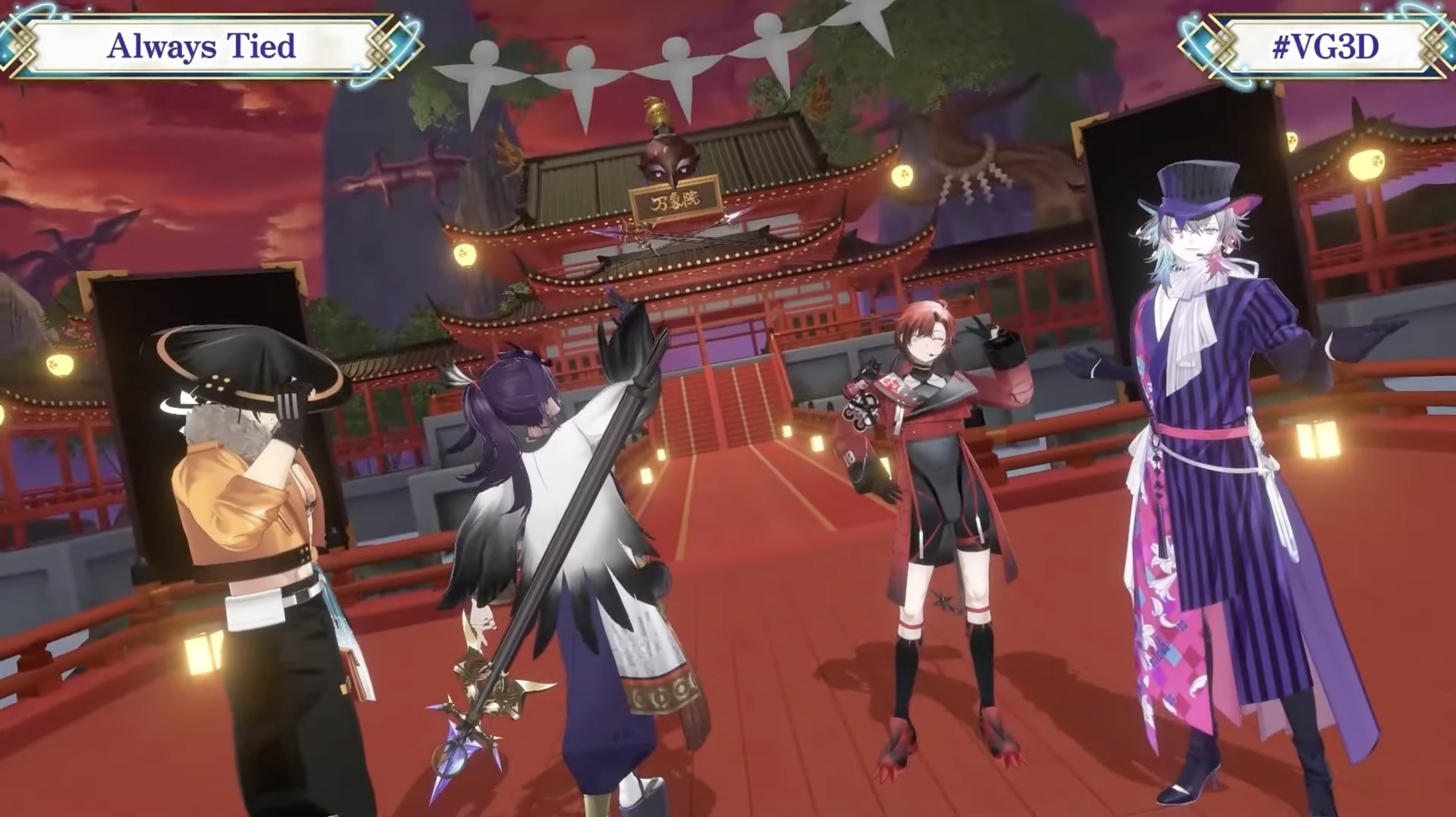
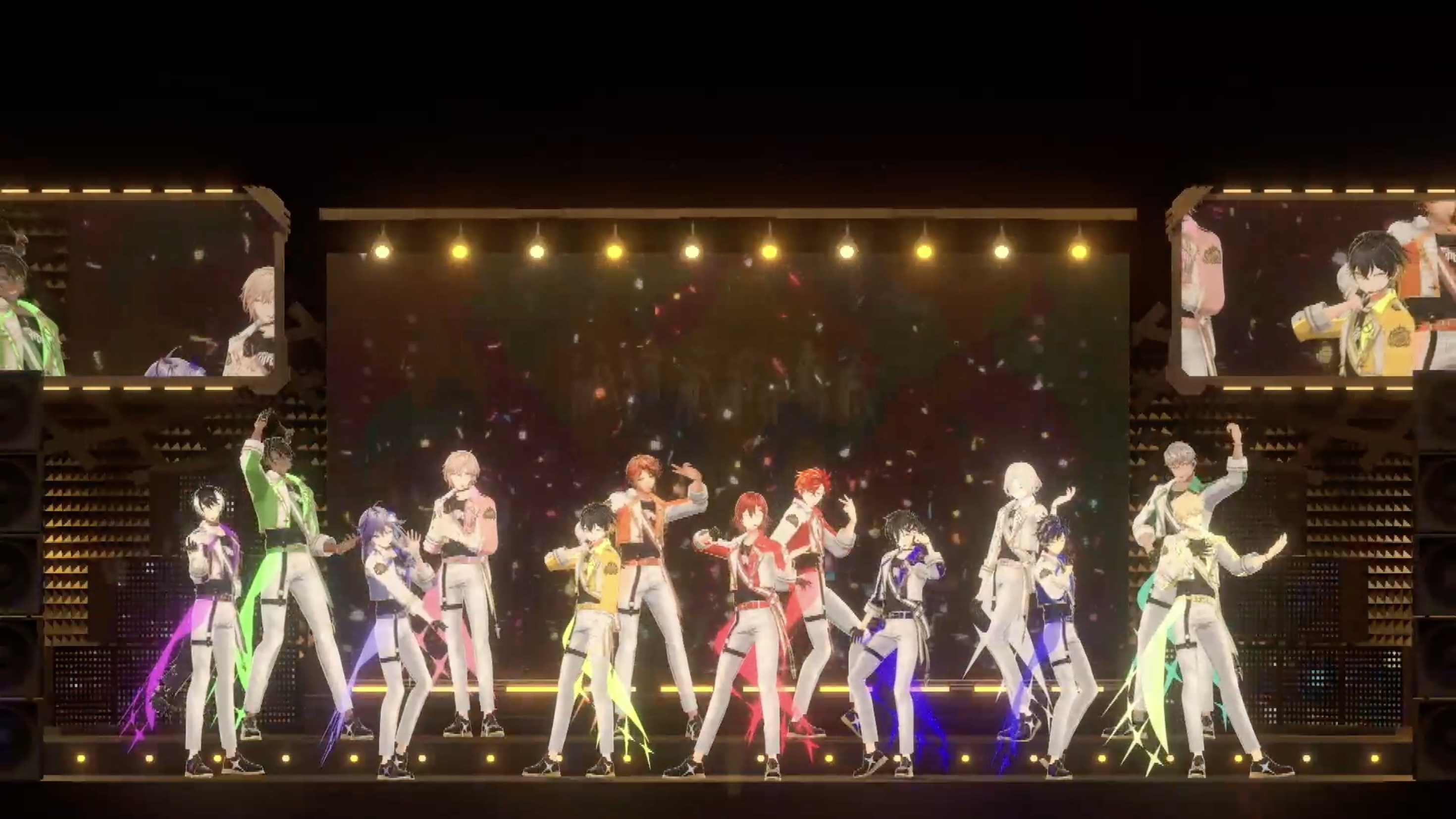
Over the past month, there have been a number of events for Holostars, the men’s side of hololive. While I don’t usually watch them often, I decided to check out both the Tempus Vanguard 3D debuts, as well as the Holostars JP 5th anniversary concert, Movin’ On. While the boys get only a fraction of the attention that the girls do, it’s become clear to me that this discrepancy has little to do with a lack of talent.
Holostars Popularity
I think the massive success of the hololive girls can skew people’s perspectives when it comes to how well the guys are doing. Holostars members have subscriber counts that are sometimes an order of magnitude smaller than their female counterparts, but this is comparing 100 thousand to 1 million—they’re still in the upper echelons of both VTubers and online content creators. I don’t pretend to know what makes anything become enormously popular, but they’ve all garnered sizable fanbases in their own ways. I wonder if the disparity just has to do with how girls are more often willing to watch stuff made for guys, but the reverse doesn’t happen as much.
Tempus Vanguard 3D
3D debuts/showcases are one-time events in the hololive world, and so they naturally attract curious passersby like myself. They also give new insight on figures who were basically only talking heads, with the added benefit that these special streams are built entirely around putting the VTuber’s skills and personality on display. Tempus Vanguard is no exception. Bettel’s buffoonery has extra nuance when you can see him physically clowning around (and getting clowned on). Flayon is surprisingly athletic, which makes him seem even more animated than normal. Hakka’s powerful singing was obvious even in 2D, but getting to see his physical expressions only adds to his performance. Shinri’s willingness to go a bit “out-of-character” for his song selections makes him even more masculine.
Movin’ On
For the Movin’ On concert, I followed Kureiji Ollie’s stream VOD so that she and her watchalong crew could fill in the gaps a little. These events are often culmination points for talents and their fandoms rather than neutral evaluations of their abilities, and I knew that I was lacking the right context in basically all cases. Together with Area 15, Baelz Hakos, and the live audience, I got a somewhat better understanding of the relationship each Holostars member has with their respective followers.
Just like with the hololive girls, though, there are some individuals who can really command the stage. Minase Rio’s singing is beautiful. Roberu carries his jovial charisma from his chatting streams to his performances. Astel Leda has undeniable star power, combining a versatile voice with serious dance skills.
Overall, it’s just good to see everyone in Holostars provide a good time for their fans, be it through thrilling stage performances or as a comforting respite from the world. Maybe someday, we’ll get to see the EN and JP branches together at the annual hololive fes in their own concert (as opposed to a fun karaoke session), or even together with the female talents. Whatever the future holds, I’d like to see them succeed on their own terms.
Movin’ On is still available for a limited time as a VOD costing 6,500 yen.



 OGIUE MANIAX