Translation: “Otaku are Hybridized, Genshiken Nidaime is Painful”

NOTE: This is a translation of a post by noted Japanese blogger Tamagomago, concerning the subject of “otaku” in current society and its portrayal in Genshiken. You can follow him on Twitter @tamagomago and check out his, Tamagomago Gohan.

All of the image links use Tamagomago’s original Amazon referrals.

As a final note, Tamagomago has a particular writing style that involves separating sentences by line, and separating general ideas by larger spaces. In the past I’ve consolidated these things into paragraphs both for readability and because WordPress used to have a hard time with multiple line breaks. This time around, I’ve tried to leave his general style intact.

61Swif41tPL

Genshiken is a manga that I love.

I love it, and that’s precisely why it’s…


Painful.


The current Madarame Harem arc is really quite interesting.

Personally speaking, I read Volume 17 and I’m on the side that thinks, “It has to be Sasahara’s sister, right?”

That’s the sort of fun I’m having with it.


However…

It isn’t about “otaku” anymore.

It’s interesting as a “romantic story about a pathetic guy.”


This isn’t a problem with the storytelling in Genshiken.

It’s because times have changed.

The existence we call “otaku” has ceased to be.

That’s all there is to it.

———————————————————————-

51V4C4lGPvL

Genshiken Volume 1 came out in 2002.

That’s the same year as King Gainer, Ojamajo Doremi Dokkaan!, Sister Princess RePure, Haibane Renmei, She, the Ultimate Weapon, Mahoromatic, Tokyo Mew Mew, Asagiri no Miko, Abenobashi Shopping Arcade, Azumanga Daioh, and RahXephon.

I think that it’s easy to understand the atmosphere at this time.


It was the dawning of a new Internet era. It was a time when 2chan had barely come into prominence.

There was no Nico Nico Douga.


We were just beginning to find freedom from the Eva Shock. We were already free from Miyazaki Tsutomu.

We felt guilty using the word otaku, and it was kind of embarrassing to like anime.

Anime such as Haruhi were yet to debut, and while we could make friends with people who also like anime and manga, we weren’t that open about it.

Those were the times.


Sasahara found in the Society for Modern Visual Culture a place where he could lay bare his otaku self. That was the first step.

Ogiue’s story was about fighting the trauma towards manga she harbored within her heart. That was the second step.


In both cases, the on-looker, the non-otaku, was symbolized by Saki.

———————————————————————-

Now, things have changed completely.

In fact, Genshiken Nidaime has been different from the very beginning.

In the first part of Nidaime, the series depicts the Society for the Study of Modern Visual Culture as a space for a group of BL-loving girls to work together.

Also, it’s the story of Hato, a crossdressing boy troubled by his worries.

Characters like Ogiue and Hato already have their pasts resolved by this part of the story.


In this first part of Nidaime, the state of “otaku” reaches a turning point just as the first chapter in Madarame’s story concludes.

51ATNfxJ64L

In this volume, we see the demise of the image of the ’00s “otaku.”


“Otaku” as a status, “otaku” as a community we depend on, the fun of trying to co-exist as both a member of society and as an “otaku.”

This is where it all ends.


When I say it’s over, I don’t mean, “there are no longer any otaku.”

Rather, the very word “otaku” has become hybridized.


That’s why Madarame, as an old-type otaku, has lost his place.

———————————————————————-

Madarame is actually a ’90s-type otaku.

Sasahara is a ’00s-type.

What’s different, you ask? It’s that the period between ’95 and ’96 is the dividing line before more and more people could be considered anime viewers and not otaku.

Sasahara gives the impression that “Otaku are out there, huh…”

Madarame is among the group of otaku who had to seek out others like themselves.

In an era without online networks, fans used analog means to get together and have fun.

It wasn’t a match over a network, but rather two people getting together to play.

———————————————————————-

For Madarame, he no longer needs to identify himself as “otaku.”

He certainly doesn’t look quite so sour anymore.


To put it boldly, everyone has become Kousaka.

Kousaka, unlike the other members of Genshiken, does not look like an otaku at first glance.

This is not something to be depressed or troubled over. Quite the opposite, it’s become totally okay to express your otaku hobbies.

———————————————————————-

I think this is a good thing.

There’s no longer that feeling of suffering and turmoil, like what Ogiue experienced.

There’s no longer that feeling that you can only ever belong to this specific group of people, like Kuga-pii.

Actually, Kugapii is in a nice place, working as a company employee.


There also isn’t anyone in Saki’s position.

In fact, I think that, even if Saki were perhaps in the club now, she wouldn’t have to pull everyone along like she used to.

After all, there’s no one left like Madarame, who would hem and haw. Everyone would just say, “Okay, okay,” in response to Saki and that would be the end of it.

You can think of that final kick Saki-chan gives Madarame as the demise of the “’90s otaku.”


Let’s talk about Sasahara’s little sister, who has dived straight into the thick of things.

The cabaret club story was interesting, wasn’t it?

That’s the feeling I’m talking about.

51JocGkSxsLTheory on the Adaptive Hybridization of Otaku subculture and Yankii Fast Food/Scenery

This book also came out recently. It’s really interesting so you should check it out.

I think the combination of otaku and subculture is easy to understand.

But they’ve also put yankii in there.

These yankii treat being a yankii nonchalantly, and even if they come into contact with otaku or subculture, it doesn’t bother them.

Here, I think you have the basis for the back and forth between the younger Sasahara and Madarame.

———————————————————————-

At this point, it’s unnecessary to identity oneself as “otaku,” nor is there a need to move and hide in secrecy. The fence between men and women has come loose.


Is it still necessary to depict “otaku?”


Works about otaku have been increasing.

However, everyone essentially looks cheerful, don’t they? They certainly don’t appear to be all that gloomy.

I think that Kirino in Oreimo has times when she looks gloomy, downright sour even (“Erotic games aren’t just popular shlock anymore, they’re deep!!)

Comparing her appearance and actions, however, she possesses the spirit of a retro otaku.

How is the “maid café” genre doing in manga? They don’t really touch Akihabara culture anymore, so there’s no way to tell.

Characters who go to Comic Market have become a part of normal manga.

61l2t4xc-FL

I totally love this manga.

There’s a lack of refinement in all directions. That said, there’s a cute underclassman (I won’t allow this! Take a good look!!).

There’s a lack of refinement, but take a look at their fashion. They’re plenty cheerful.


51KaNULe6VL

This comes across more as fantasy, but Denki-Gai no Honya-san also has pure, proper otaku.

However, rather than being about otaku, I think that this work is actually more a story of “positive self-affirmation.”

It’s okay to read erotic manga! It’s okay to enjoy BL!

Along those lines, it even says, “It’s okay for you to fall in love!”

———————————————————————-

Genshiken is also similar to these manga. It’s a 2010s otaku… wait, the word otaku no longer exists. It’s changed direction to become a communication manga about a group of people who share a hobby.

The girls who appear in the story are, to put it differently, “reality.”

In terms of their fantastic elements, they would probably be ranked as:


Hato > Sue > Angela > Sasahara’s sister


The more to the right you go, the closer you get to reality.

In a way, Hato is a boy who acts out the role of the “ideal girl” (it’s not a gender identity disorder), so naturally I’m comfortable including him in this.

Angela is a little more likely to exist in Japan, even though she can be described as the girl who wants to date “OTAKU.” [Translator’s note: “OTAKU” here was originally written in English]

———————————————————————-

This Genshiken is a romance manga that’s cheerful and filled with happiness.

It’s fun.


It’s fun, but reading it is painful.


My own sense is that of Madarame’s generation, the ‘90s otaku.


It’s come to the point that I’ve said my farewells to that era, and I’m giving my regards to the younger generations.


I no longer build myself up into a kind of character.

———————————————————————-

51+y63MvznL

I have more empathy for this work.

It’s because he’s an adult otaku. More than that, I have a lot of friends who are just like this.

I understand this type, someone who’s no longer doing the otaku thing at full force, but still trudges along that path.

———————————————————————-

Perhaps Genshiken has at least made me into an “old boy,” who goes about saying, “Ah, youth!”

But that’s not quite right, is it?

There’s no gloom. There’s no anguish.

If it had become a completely different, unrelated world, I could say, “Wow! Look how this manga shines! How wonderful!” but that would only be a halfhearted, depressed reaction.

To grow up along with Genshiken wouldn’t in itself make me feel so awful.

“All of you, please move on.”

“You don’t belong here anymore.”

If you look at it that way, it’s painful.

———————————————————————-

However… it’s interesting so I keep reading.

It doesn’t matter that this is Genshiken. Manga is manga.

Yajima, Sue, Hato, all of them are cute. In particular, Yajima has gotten increasingly cute.

Ah, youngins!


Actually, on a personal level I find this girl to be the most amazing one of all.

“This alone makes Genshiken Volume 17 worth it.”

-Gogo Tamagomago of the Dead


Yoshitake is the character I like best in all of Nidaime.

It’s just, here’s a character that really positive, acting as the axis that influences both the suffering Hato and Yajima, all while Yoshitake herself doesn’t move one bit.

This face is the first time we get to see what’s underneath.

Ah.

She’s always cheerful, but doesn’t it seem like there’s something underneath the surface?

No matter what, I can’t take my eyes off of Yoshitake.


Speaking of which, someone (a woman) once said, “Yoshitake’s fashion is really female otaku-esque.”

Somehow, I can understand that at least a little.

Though, it’s more like, Yoshitake is the very image of the female otaku during the time when Nidaime first began.

———————————————————————-

I took a long time to write this.


Right now, I’m not an “otaku” nor am I part of a “subculture.”

I realize I’m now an adult who doesn’t “belong” to anything like that.

I think it’s a joyful thing. I can like what I like and then write about it.


And yet, why is it so painful?

Why do I feel such sadness when I read Genshiken?


It’s probably because the first part of Genshiken is a story of youth coming from the idea of “deviation,” but between Hato’s change of heart and Madarame’s situation being reset, there’s no need to be deviant.

It’s a sentiment I don’t understand, and it’s just not something I have in common with them.

Please give me the courage to continue along in this deviant subculture – Tamagomago Gohan

Even as I become an adult, I don’t feel like one – Tamagomago Gohan

Even re-reading the above articles, I really don’t understand after all.

Even though I understand that I’ve become an adult and moved on.


The depression that comes from Genshiken continues to grow.

It’s simply that I’ve reached a bothersome age.


Is it just that I’m still trying to find myself?

———————————————————————-
51uvEtLeceL

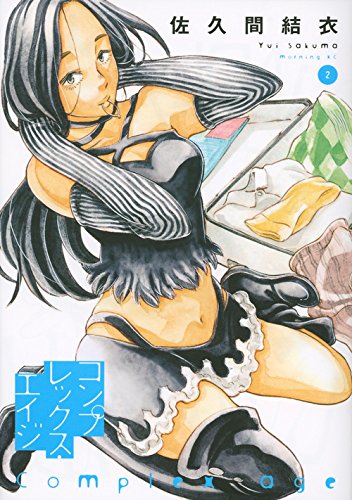
Actually, I feel like this title can give me a hint.

It’s a manga I absolutely cannot ignore.

That’s because, when I read it I feel relieved.

I feel like there’s a hint here.

———————————————————————-

Ah, could it be? Is it because they don’t really talk about their favorite things in Genshiken Volume 17?

They do for a little bit, but their words feel somehow unnatural.

However, I understand that these are “otaku.” They’re otaku who don’t depend on being anything.

———————————————————————-

And yet, I love Genshiken.


The End.

———————————————————————-

Notes:

I had a realization that this is like what happened to rock music.

If you liked this post, consider becoming a sponsor of Ogiue Maniax through Patreon. You can get rewards for higher pledges, including a chance to request topics for the blog.

A Flying Pussyfoot or Two: Genshiken II, Chapter 107

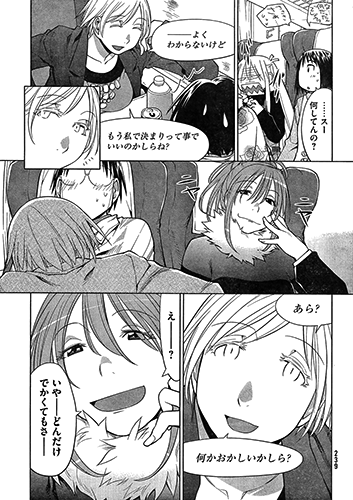
Chapter 107 of Genshiken II mostly takes place on a train. Unlike Baccano!, there is no trail of dead bodies, thanks mostly to Yoshitake.

The crew is traveling to Nikkou, a popular domestic and foreign tourist destination, which happens to be located near Yajima’s hometown. As Kuchiki feels that his spotlight has been stolen by Madarame and the women who love him, Yoshitake placates his (somewhat justified) anger by playing with him various classic school trip games, like UNO UMO, at the same time she tries to encourage Madarame towards a romantic conclusion. Before arriving at Yajima’s place, Yoshitake reveals that she deliberately split off Kuchiki and Madarame into their own hotel room to keep boys and girls separate, except also intentionally failing to mention that Hato is considered one of the girls in this instance.

Genshiken can generally be considered something of an ensemble series, with a rough protagonist in each part. First it was Sasahara, next it was Ogiue, now it might be considered Hato. However, if you were to take just this chapter by itself, and define protagonist in the conventional sense as the character whose actions move the narrative forward, then Yoshitake is clearly the hero in this instance, setting the characters on their paths, or at least trying to do so. That, or she’s like Satan, purveyor of half-truths, hiding her ulterior motives by giving reasons that appeal to her targets’ senses. For Madarame, pushing him towards altruism by bringing closure to his harem woes and preventing any potential fractures in the club hide her simple desire to see her friends end up happy.

Not that I dislike Yoshitake, but rather, as Japanese blogger tamagomago once said, Yoshitake is very good at being the glue that holds a group together. Here she demonstrates that ability to full effect using her silver tongue, managing to set up two different groups that take on different dynamics depending on which guy is placed within them. Madarame surrounded by Angela, Keiko, and Sue is pretty self-explanatory, but as soon as he shifts over to Yoshitake, Yajima, and Hato, it becomes an opportunity to see how Hato and Madarame react to each other. At the same time, Kuchiki being with the other girls lets him somewhat fulfill his harem fantasy, if only in the most bare-bones manner.

Of course, the other characters get their own moments too. While Yoshitake is the one moving things about, it’s the others’ lives that are the concern. Angela makes her appearance after a long while, and in a few moments she gets tied directly into the developments of the previous chapters. Specifically, she has a duel of confidence with Keiko, which references the close call that Madarame had with her, and she gets her breasts fondled by Sue, who is still mad about Madarame’s comment about breast size. Despite being so far away, she still perhaps has a “chance.”

Another character makes her return in Mimasaka, Yajima’s old friend, only this time she has tiny hearts literally emanating from her being. Previously I had considered the possibility that her affection for Yajima might merely be platonic (or at least something like what Sue feels towards Ogiue), but this little detail changes things.  For one, it makes for a complex chain of romance where a girl likes another girl who likes a boy who dresses like a girl who likes a guy who recently had his heart broken and is currently popular with the ladies. We also get to see Yajima’s mother, who clearly resembles her. The chapter mentions something about genetics in terms of appearance, but I do find it interesting that Yajima’s mom is so much more cheerful than her daughter. Obviously their lives and circumstances are different, but it does make me a bit curious what her home life was like.

Ogiue literally took a backseat this chapter, staying out of the storm while on the train. One notable moment is that you can see her internal speech is still Tohoku-ben (Watashi wa zutto Sue to issho nandabeka…).

As for next chapter, the preview mentions that it’ll be centered around the Yajima household. I for one am curious when that Angela-centric chapter will happen. It’s really on a matter of when.

One last thing to mention: a new volume of Genshiken came out in Japan, and once again it comes with different store exclusives. This time, they’re Christmas-themed, and they feature Sue, Hato, and Angela, as well as a group shot.

You Must Be Tripping: Genshiken II, Chapter 106

As Hato and Yajima struggle to make more manga, Kuchiki announces that he’s finally finished his senior thesis and wants to have a club trip in celebration. Though Kuchiki would prefer to travel abroad, the other members can’t afford to do so and they ultimately decide on going to Nikkou, and to stay at Yajima’s parents’ house, which is close to Nikkou. However, the club soon finds out that not only is Madarame coming along but so are some of the girls interested in him—Angela and Keiko. Moreover, Yajima somewhere deep inside sees this as an opportunity to get closer to Hato.

I feel a bit sorry for Kuchiki at this point. Think about it: Genshiken is the closest thing he has to friends, and all of them barely tolerate his existence. They have good reason for treating him that way, of course, but even what’s supposed to be a farewell vacation in celebration of Kuchiki finishing his senior thesis is secretly a “finally Kuchiki will be out of our hairs for good” adventure. On some level, I respect Kio for keeping Kuchiki around all this time, even if he’s rarely present. I feel that with a character this grating, most manga would have jettisoned him for the sake of popularity, but there Kuchiki was, being “that guy” after Haraguchi graduated long ago. It’s as if there’s a need to remind people that being a dork isn’t always endearing, but that the issue comes less from just being socially awkward and more from lacking consideration for others in your words and actions. The only question is, if this manga continues, will someone new and equally irritating eventually take his place?

As for the real meat of the story this month (sorry Kuchiki but you’re a side note even in this chapter), it looks like the feelings of jealousy (?) expressed by Hato towards Yajima and her superior manga-making skills are blossoming into something more. Though, to be accurate, it’s more like Yajima is trying to passively seize this opportunity to get closer to Hato in a way she never could, as an equal (or perhaps even a superior). It wasn’t so long ago that Yoshitake was barely able to get Yajima to admit that she has feelings for Hato, and to see her begin to sort of, kind of make a move is nothing if not impressive. I think the idea being expressed through their interaction is that, for Yajima, being able to see Hato as imperfect boosts her own confidence and thus her ability to see Hato as a “possibility” in her life. This comes across clearly when Yajima gives Hato advice on his manga, saying that it’s only half-done. Yajima has never acted like that around anyone, let alone Hato, the closest being when she acts as the “big sister” (or maybe something more?) to Mimasaka, or when she’s looking to strangle Yoshitake. There’s also something very real about the creator’s blocks that Hato and Yajima are experiencing, as Hato is struggling to get his story out in a cohesive sense while Yajima’s brilliance came from a lot of pent up emotion and a situation that is just difficult to replicate.

One of the main factors in the trip to Nikkou is Madarame and the Girls Who Love Him, which is not only a cruel joke against Kuchiki but also evidence that, despite some traumatic experiences with them, Keiko and Sue’s stories aren’t over yet (Sue isn’t mentioned but I’m sure she’ll be a part of the trip somehow). On top of that, it’s now Angela’s turn to have her chapter, and the fact that the setting is a trendy tourism spot makes me wonder if it’ll be Angela’s flirtation cranked up to 11 (especially if she catches wind of what Keiko attempted), or if she’ll go for a more subdued approach in her (mostly accurate) assessment of how to nab an otaku boyfriend.

As a final, Ogiue-related note, Ohno’s comment on the Karuizawa trip being the start of Sasahara and Ogiue’s romance made me realize that, probably much like Ogiue herself, I had always associated that whole thing with trauma and pain. You can even see Ogiue’s reaction to this when Kuchiki mentions Karuizawa and she’s the only one with a sweatdrop. However, Ohno has a point, and it really is the turning point for Ogiue, her sense of self, and her happiness. Karuizawa is when she managed to finally let it all out, whether in a long and sad drunken rant to the other girls, or to Sasahara as they were walking. It’s kind of amazing that the meaning of such a significant moment in Genshiken, for Ogiue, and by extension for this blog Ogiue Maniax, could still continue to change.


Ask Genshiken Creator Kio Shimoku!

In preparation for the American bluray release of Genshiken: Second Generation (aka Genshiken Second Season, Genshiken Nidaime, Genshiken II), Anime News Network and NISA are accepting questions from fans for an interview with creator Kio Shimoku. Keep in mind that Kio has historically given very few interviews even in Japanese, so this is a very rare opportunity for anyone who’s a fan of Genshiken and the man himself.

I of course will be submitting my own question, and it will most likely be Ogiue-related. Also, I may have bought the Japanese blurays already, but I definitely plan on picking these up as well.

(Thanks to Patz for telling me about this.)

Slaughter of Twenty Faces: Genshiken II, Chapter 105

This month, we have our first ever Madarame and Sue-exclusive chapter. Sue tries to jettison her feelings for Madarame as only Sue can, by handcuffing him to a chair and putting funny masks on him until her perception of Madarame changes and encouraging him to date Hato. At the same time, Madarame, still reeling from his nearly physical encounter with Keiko, is trying to comprehend women’s behavior, which might as well be an ancient and inscrutable language to him. In the end, a poor of choice of words on Madarame’s part, a comment on breast size, may have resolved Sue’s problem for her.

Back in 2010, I wrote a small post on how interesting it is that Sasahara and Madarame essentially “traded preferences” when it came to their real-life vs. anime love interests. Namely, despite Madarame being into the character Renko (who is closer in personality and looks to Ogiue), he was head over heels in love with Kasukabe, who was closer to Sasahara’s favorite character Ritsuko. In Chapter 105, Madarame mentions the fact that, in a harem series, Sue’s type, a young-looking westerner with slender limbs and small proportions, is his favorite kind of character, and I think it’s quite notable that Madarame is only now realizing this himself. The explanation Madarame gives in this chapter is that Keiko and her attempted sexual advance on him has messed with his view of the world and how he approaches the subject of women, and it makes total sense, seeing as how the worlds of 2D and 3D have begun to blur in his head.

This is not to say that his confused behavior is Keiko’s “fault,” however, as Madarame himself sees it, but that the younger Sasahara putting the moves on Madarame has forced him out of the warm and comforting shell of his 2D complex. To Madarame, his former distinction between 2D and 3D is that 2D is where he can channel his desires both emotional and sexual, and 3D, the land of the mysterious creatures known as “actual women,” was so inaccessible to him that the best he could do was fawn over Kasukabe from a distance. When Angela was trying to get in his pants, Madarame likely saw that as so far outside reality that it might as well have been a dream within a dream. Keiko’s actions introduced the word “possible” to his real-world (meaning real women) vocabulary, and so in a way his protective layer of ignorance has been shattered in a manner different from Kasukabe rejecting him. Now, Madarame is conscious of the idea that women might be trying to send signals, but he’s basically a man who has been living in a cave all his life seeing sunlight for the first time. It is probably to his benefit that he becomes aware that women who like him can exist, but for now he’s merely blinded and clawing at open air.

Thus, Madarame tries to “read” Sue, given his limited context. “She’s on my bed! We’re by ourselves!” It’s very possible Madarame could have made a big mistake if not for Sue immobilizing him with those handcuffs, but it’s also understandable in that, when it comes to the opposite sex, he’s more or less a baby who has just learned to crawl, let alone walk. His comment to Sue that, well, Hato doesn’t have any breasts, is born from a brief moment of overconfidence (one might say even hubris) and a relative lack of interpersonal communication skills. Earlier in the chapter, Madarame notices that Sue is not completely flat-chested, and so in stating that Hato “doesn’t have any breasts, huh,” he tries to make a distinction between Hato and Sue. However, Sue has been shown to be sensitive to this subject, so it comes across as more of an insult. And even then, this sort of detail which otaku can elaborate upon extensively, the difference between an AA and an AAA cup or whatever, is not exactly going to win any points when talking to an actual girl.

As for Sue, I find that she’s trying to do what Hato himself had attempted before. Sue asks Madarame to date Hato, much in the same way that Hato was pushing Madarame towards being more assertive with his feelings for Kasukabe, and in both cases they were ways to distance themselves from their own feelings. “If he’s in a relationship, I can get over him!” For that matter, Madarame sort of did the same thing to himself with respect to Kasukabe, and even Yajima, who is not in this chapter, has been shown cheering for Hato x Mada as a way to keep her own attraction to Hato bottled up. With Sue specifically, however, it looks like this is her first ever crush, unlike the others who appear to have some unrequited feelings in the past, and so much like Madarame it is also Ms. Hopkins who is learning to crawl. However, Sue is arguably even more of an otaku than Madarame is, and in that way I can really see the perspective of Sue x Mada supporters. They even have that consistent interaction where Sue will pull out a reference and Madarame will instantly recognize it (this chapter it was Saitou Hajime from Rurouni Kenshin). While there are those who believe this swing and a miss on Madarame’s part is the death of this pairing, much like Keiko x Mada I find that it only opens things up more.

I don’t know if this actually a reference or not, but I find Sue’s “funny mask therapy” to be similar to one of the storylines in Space Brothers. At one point, the younger brother Hibito suffers from panic disorder due to a near-death encounter on the moon, which leaves him unable to wear a spacesuit. The treatment recommended to him is to wear various outfits, from football uniforms to animal mascot costumes, in order to gradually lighten the pressure his mind puts on him when in a spacesuit. Obviously, it doesn’t work the same way seeing as Sue is not the one wearing those ridiculous masks, but a similar effect is desired on her part.

The chapter ends with Hato struggling to draw manga. It might be setup for the next chapter, but what I find interesting is that Hato is having difficulty making his manga more interesting, as opposed to being unable to draw BL. Progress!


The Fujoshi Files 112: Fuji

Name: Fuji ()
Alias: N/A
Relationship Status: N/A
Origin: Genshiken: The Society for the Study of Modern Visual Culture II

Information:
Fuji is a former classmate and fellow art club member of Hato Kenjirou, Konno, and Kaminaga. She still maintains her friendship with Konno, as well as the others to a lesser extent. She is relatively calmer than Konno.

Fujoshi Level:
Little is known, other than that she was a part of the “fujoshi” group in her high school art club.

My Japanese Genshiken Second Season Blurays Have Arrived!

genshiken2daime-blurays-small

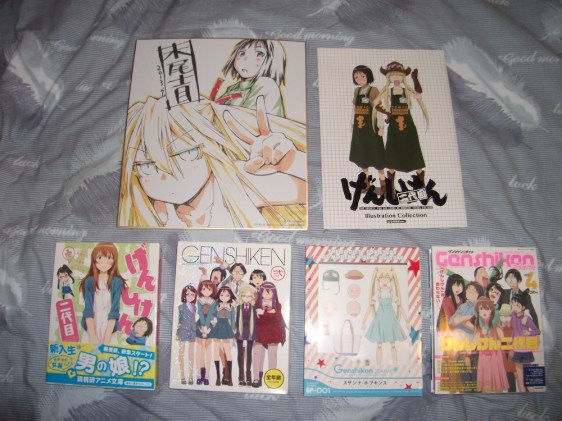
Thanks to the combined efforts of manga translator kransom, ANN Astro Toy reviewer Dave, and especially the very dangerous wah, I finally have in my hands the Japanese Genshiken Nidaime (aka Genshiken Second Season, aka Genshiken II). While it’s been a while since the show came out, I’m still quite happy to add it to my collection. Now I just need to get the English-language release from NIS America, whenever that’s coming out.

Now why would I buy Japanese blurays at exorbitant prices instead of waiting for a more reasonably priced US release? It’s because, at the end of the day, I am the Ogiue Maniax.

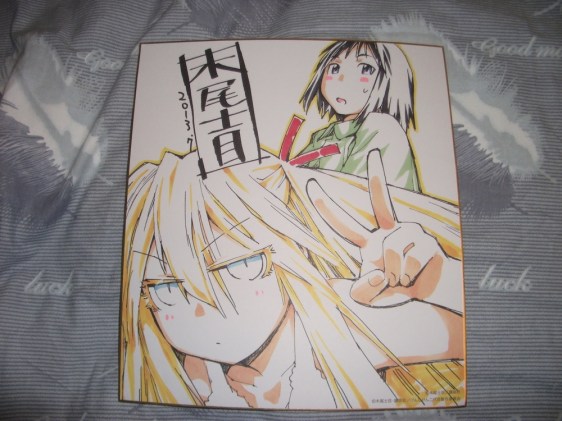
Above the bluray discs themselves you can see both a signboard from Kio Shimoku and an illustration collection. Both of these items are included because I had preordered all four volumes at Toranoana. This was available at multiple anime shops in Japan, and I chose Toranoana because it came with the Ogiue and Sue signboard, as well as an illustration collection with the two on the cover as well. Those of you who have shopped or have tried to shop from Toranoana are probably aware that they only ship within Japan, and it’s thanks to wah’s generosity that I was able to give them a temporary home first, while the other two helped traffic it over. Again, thanks to all of you, next meal’s on me.

genshiken2daime-signboard-small

The Fujoshi Files 111: Kaminaga

Name: Kaminaga (神永)
Alias: N/A
Relationship Status: Engaged
Origin: Genshiken: The Society for the Study of Modern Visual Culture II

Information:
The former de facto leader of her high school art club’s fujoshi contingent, Kaminaga is a skilled artist and consistently “rotten”-minded woman. She shares an unusual relationship with Genshiken member Hato Kenjirou, as she is not only engaged to Hato’s brother Yuuichirou, but Hato now crossdresses in a manner where he becomes nearly the spitting image of Kaminaga. Hailing from Niigata prefecture, her fiancee is extremely “normal” while still being aware of Kaminaga’s fujoshi side. Kaminaga insists that Hato call her “big sister,” and tries to dispense advice albeit from her BL-loving perspective.

Fujoshi Level:
Kaminaga may be the most powerful fujoshi in all of Genshiken. Not only does she pair her fiancee with his own younger brother, but she was able to immediately spot who reacted at “appropriate” levels (Ogiue and Hato) upon hinting at this concept. In addition, she was more than willing to spend an evening drinking with Yuuichirou and his former judo teammates just so she could watch a group of burly men wrestle around.

Hidden Power: Genshiken II, Chapter 104

As Madarame licks his proverbial wounds after his “close encounter” with Keiko, Hato reveals to the Genshiken club members that he’s decided to finally try and draw manga, and non-BL stuff to boot. Frustrated over her own lack of talent compared to Hato, Yajima decides in a moment of frustration to draw her own manga as well. The next day, both of them give their comics over to Yoshitake and Ogiue to read, at which point the unexpected occurs: they love Yajima’s manga much more. While Hato’s artwork is superior as expected, his story is inscrutable. Yajima, on the other hand, although lacking talent in terms of pure draftsmanship, is actually Hato’s better when it comes to the comics format.

For this chapter, I feel that there are two major points of discussion.

The first is that Chapter 104 is all about revealing new facets of characters we should have been more than familiar with at this point, and how this potentially changes their interpersonal dynamics in the process. Yajima up to this point has felt consistently “defeated” by everything around her, from her looks compared to the other members of the current Genshiken, to her poor drawing skills, to even having the little attempts she makes to try and “catch up” backfire. Hato has served to further magnify this inferiority complex, an issue further complicated by her feelings for him. Yajima is a character who survives off of stubbornness and perseverance, but now for the first time, possibly in her entire life, she has “won.” She has displayed a skill that is not easy for most people, outdoing Hato in the process, and perhaps even Ogiue the manga professional. Yajima might finally get the confidence she’s been missing all these years, and it potentially changes her relationship with Hato as well.

There’s also an important lesson for readers in that creating comics is not simply about being able to draw well. As is mentioned in this chapter, having your ideas come across effectively is often considered to be just as if not more important, and there are plenty of manga which succeed not because they look the best, but that their style is conducive to storytelling, or is just plain entertaining even if they might look ugly as sin.

As for Hato, it’s actually quite interesting to see the degree to which Hato is fazed by his lack of success in creating his first manga compared to Yajima. Since the start of the second series, Hato has consistently been shown to be unusually talented in pretty much anything he puts his mind to, be it judo, crossdressing, or even mimicking the drawing style of the girl he looked up to. While he isn’t a perfect being, seeing as Hato has hit obstacles in the past such as his eccentric drawing style when out of girls’ clothing, it’s clear that Hato is in a way unaccustomed to failing when there are no mental blocks in his way. For the first time, he may have to realize his limits, but in the process might become more thankful of the myriad talents he does possess.

There’s a strong likelihood that this new angle leads to collaboration between Hato and Yajima. The last campus festival was all about team efforts to create manga, and seeing as the two potentially complement each other better than the Hato/Ogiue or Yajima/Yoshitake duos, it could lead to great things. Of course, the burning question in all of this is, could this collaboration be the catalyst for something more romantic? Given Madarame and his woes, it’s impossible to predict Genshiken anymore, but there is a precedent of sorts with Sasahara and Ogiue.

Speaking of Ogiue, even she shows another side of herself in this chapter as we get to see her ultimate goal for Genshiken. Having inherited the club from Ohno, she’s been not-so-secretly desiring the end of the club’s reputation as a “Cosplay Research Society,” but only now are the pieces in place to mold Genshiken in her image as a manga-creation club. Though I don’t think Ogiue is any sort of devious mastermind, I do have to wonder if the executive decisions we’ve seen out of her so far—the return of the Genshiken club magazine Mebaetame, encouraging the creation of manga for the campus festival—were all building blocks for this. Overall, I’m honestly surprised at how much this chapter feels like it changes everything, and yet is such a sensible progression of the story as the characters’ emotions are on full display.

That leads me to the second major pojnt of discussion for this chapter: THE FACES.

I’ve talked about the amazing expressions in Genshiken II before, but this chapter blows every previous one out of the water. Just look at these images of Yoshitake with a grin that would make the Joker jealous, and how Hato’s intensity is radiating off the page.


Of course, seeing Yoshitake practically melt into a pile of goo seen above is one thing. After all, Yoshitake has always been a powerful source of hilarious faces. So is seeing Hato’s expression of jealousy over Yajima’s heretofore unknown talent for manga, as it’s not that different from how he usually looks, even if it is kind of unexpected. What’s really remarkable though, at least from my very biased perspective, is the veritable treasure trove of Ogiue faces that this chapter has graced us with. In the past, Ogiue was mainly known for a perpetual expression of deep anger, and even in moments of joy (like the intimate moment she and Sasahara have in the final chapter of the original series) she still tended to stare daggers at people, if unintentionally. One of the big shifts in Nidaime is the fact that her expressions have softened up considerably over time, and in a way it feels as if this chapter is the culmination of that development.

I don’t have any exact statistics on this, but I do trust my memory as an Ogiue fan on the following: do you know when’s the last time we got to see Ogiue literally laugh out loud so hard she couldn’t control herself? The answer is never. I believe it is a first for the character, and it helps to hammer home the point that Yajima’s manga is legitimately funny, and legitimately interesting.

Next chapter looks to be focused on Madarame and Sue. Given the insanity of last month’s chapter I think this “break” from Madarame’s girl troubles is great, but seeing as this chapter was so downright enjoyable, a part of me hopes that it shifts back to the threads that have laid down here as soon as possible, even though I expect great things out of whatever antics Sue has in store.

The Fujoshi Files 110: Konno

Name: Konno (今野)
Alias: Kon (コン)
Relationship Status: Single
Origin: Genshiken: The Society for the Study of Modern Visual Culture II

Information:
A former classmate of Hato Kenjirou, Konno is a fujoshi who discovered that Hato likes yaoi and is inadvertently responsible for spreading the rumor that Hato was gay. A resident of Niigata Prefecture, Konno was a member of the high school art club along with Hato, Kaminaga, and her friend Fuji. Somewhat high-strung, Konno has feelings for Hato but has difficulty making them known, and feels a good amount of guilt over the incident with him in high school.

Fujoshi Level:
Unknown, other than that she always looked forward to Kaminaga’s BL work back in their art club days.