Steady Steps: Hololive 6th fes. Color Rise Harmony

A colorful logo that says "hololive 6th fes Color Rise Harmomy."

hololive 6th fes—the latest edition of the largest VTuber live concert in the world—happened earlier this month, from March 8th to the 9th. Watching it online, I came away feeling that this event was potentially a pivotal moment for hololive and its talents. 

As an agency, hololive has come a very long way. What began as the off-shoot of a small tech start-up of around 10 employees named Cover corp has become a massive corporation of over 500, as well as the first name in VTubing. In other words, a lot has happened, and the performances seemed to reflect the various contrasts that come with this change: the simplicity and instability of the past versus the complexity and stability of the present, the advantages and disadvantages of playing it safe versus taking risks, and looking back to remember the good times but also to show how far they’ve come.

Performances with Extra Meaning

Murasaki Shion in an idol outfit with her arm outstretched.

Related to this sense of history and where it might lead, the biggest story going into 6th fes happened only a few days earlier: Murasaki Shion of hololive Japan’s 2nd generation announced she would be graduating at the end of April, meaning this would be her last fes, and thus one last chance for the fans who gathered there live to show her their appreciation. 

Thus, Shion’s performance became a major focal point for the whole event, where she performed her latest single: “Gomen ne Medicine.” The song’s lyrics talk about trying to create a medicine to heal, that she’s sorry if it ends up doing more harm in the process, and how she’s not able to properly convey her gratitude—a message that hits differently in hindsight. Moreover, she received one of the coveted spots in the concert venue’s new center stage contraption, putting her even more in the spotlight. The result was a highly emotional performance that was both a celebration of Shion’s 6.5 years at hololive and an acknowledgment that this was the beginning of the end.

Kazama Iroha on stage striking a pose with her left arm on her waist and her right arm raised up. Behind her is a video showing the entirety of holoX, including Sakamata Chloe.

Kazama Iroha’s participation was also a big deal. Afflicted with a psychological condition that prevented her from speaking, she managed to find her voice again sooner than her doctor had anticipated, and she’s been gradually streaming again. However, Iroha’s speech has become a bit halting and noticeably different from the boisterous and rapid-fire style she once had, so the question was how this might affect both her singing and potentially her MCing. But she managed to perform her original song “Mahou Shoujo Magical GOZARU” with little trouble, and while there was a few moments of hesitation in her talking, these were only minor hiccups 

Iroha recently mentioned that her appearance at 6th fes almost didn’t happen. Now, she’s taking another hiatus in the hopes of fixing her speech and preventing her current way of speaking from becoming the standard.

The Center Stage

I need to talk about that center stage pod Shion (and others) used before proceeding further. 

hololive fes has gotten increasingly huge over the years, and now the Makuhari Messe convention space appears to be at capacity for how many people can attend the concerts. There also weren’t differently priced tickets, so having a stage on just one end would be unfair to the people sitting all the way in the back. Last year, the solution they came up with was to have three different stages in different spots, so the “front” of the audience changed, depending on the performance.

The seat map for the concert stage.

This year, they went with two stages and a pod in the middle of the space. The two stages were similar to 5th fes’s, but the pod was so unusual that at first, I wasn’t sure what I was looking at. Essentially, it was a three-sided structure that rotated continuously, with a single performer displayed on the screens and additional walls blocking certain angles. I think the idea was that it gave a chance for everyone in the 360 degree space to get a decent view, but because the stream view could only ever see one screen, I couldn’t tell if the other two were showing the performer at different angles (for a kind of pseudo-3D hologram view), but I’ve seen others online say that was the case.

Hoshimachi Suisei in a large pod, surrounded by fans waving blue penlights.

On the one hand, I was a little disappointed that this wasn’t a true 360-degree hologram like I thought it might be when hololive first shared the venue diagram. On the other hand, I appreciate that they tried to improve on 5th fes, even if their answer was a little ridiculous.

The ones who appeared on center stage in addition to Shion were Houshou Marine, Hoshimachi Suisei, Nekomata Okayu, Takane Lui, Sakura Miko, Tokino Sora, Ayunda Risu, Natsuiro Matsuri, and Moona Hoshinova (note that I may have missed some). There is no singular thing they all have in common, but many are pillars of the company, known for their excellent vocals, and/or have recent (or upcoming) solo concerts/album releases.

6th fes Debuts

This year, two generations made their first hololive fes appearances: English’s Advent and DEV_IS’s ReGLOSS. The two are kind of like sister groups, even covering each other’s music. And while neither group has a long history with hololive (around a year and a half for both), their group song choices already seem to reflect slightly different approaches. 

All five members of hololive Advent posing together with their arms outstretched. Shiori is in the center, Nerissa and Bijou are behind her, and FuwaMoco are in front kneeling.

Advent went with their debut number, “Rebellion.” However, compared to their initial recording and even their multiple previous performances for their 3D showcase and the live concert Breaking Dimensions, Advent has improved noticeably. Nerissa Ravencroft and (actual) twin sisters FuwaMoco were already strong singers, but Nerissa’s voice seemed more stable and FuwaMoco’s harmonies sound wonderful as ever. Shiori Novella continued to benefit from switching to a lower register where she has more control (as opposed to the higher notes of the original recording), and Koseki Bijou had more strength in her vocals. It’s the best “Rebellion” has ever sounded.

All of ReGLOSS together on stage in their white idol uniforms. Kanade is in the center with Raden, Hajime, Ao, and RIrika facing her.

ReGLOSS, instead of picking their first song, went with their fourth: “Feelingradation.” To be fair, ReGLOSS just has more music they’ve done as a group compared to Advent (and even most generations in hololive, for that matter), but I still think it was a noticeable decision to not choose “Shunkan Heartbeat.” Much like Advent, however, their progress isn’t an illusion. Todoroki Hajime is still an impeccable dancer (easily top 2 or 3 in hololive) and Otonose Kanade is the heart of the group with her amazing singing, but Hiodoshi Ao, Ichijou Ririka, and Juufuutei Raden all took steps to improve their weaker areas for this performance. Listening to it, I’m reminded how much I love their music; it’s exactly up my alley.

Remember the Big Hits?

Compared to every previous year, I felt that 6th fes emphasized how long hololive has been around. It was like a combination of nostalgia trip, a desire to celebrate personal legacies, and an attempt to capitalize on major successes. For example, this year saw six medley performances—double what was at 5th fes.

Nekomata Okayu singing while Inugami Korone is doing a cartwheel behind her.

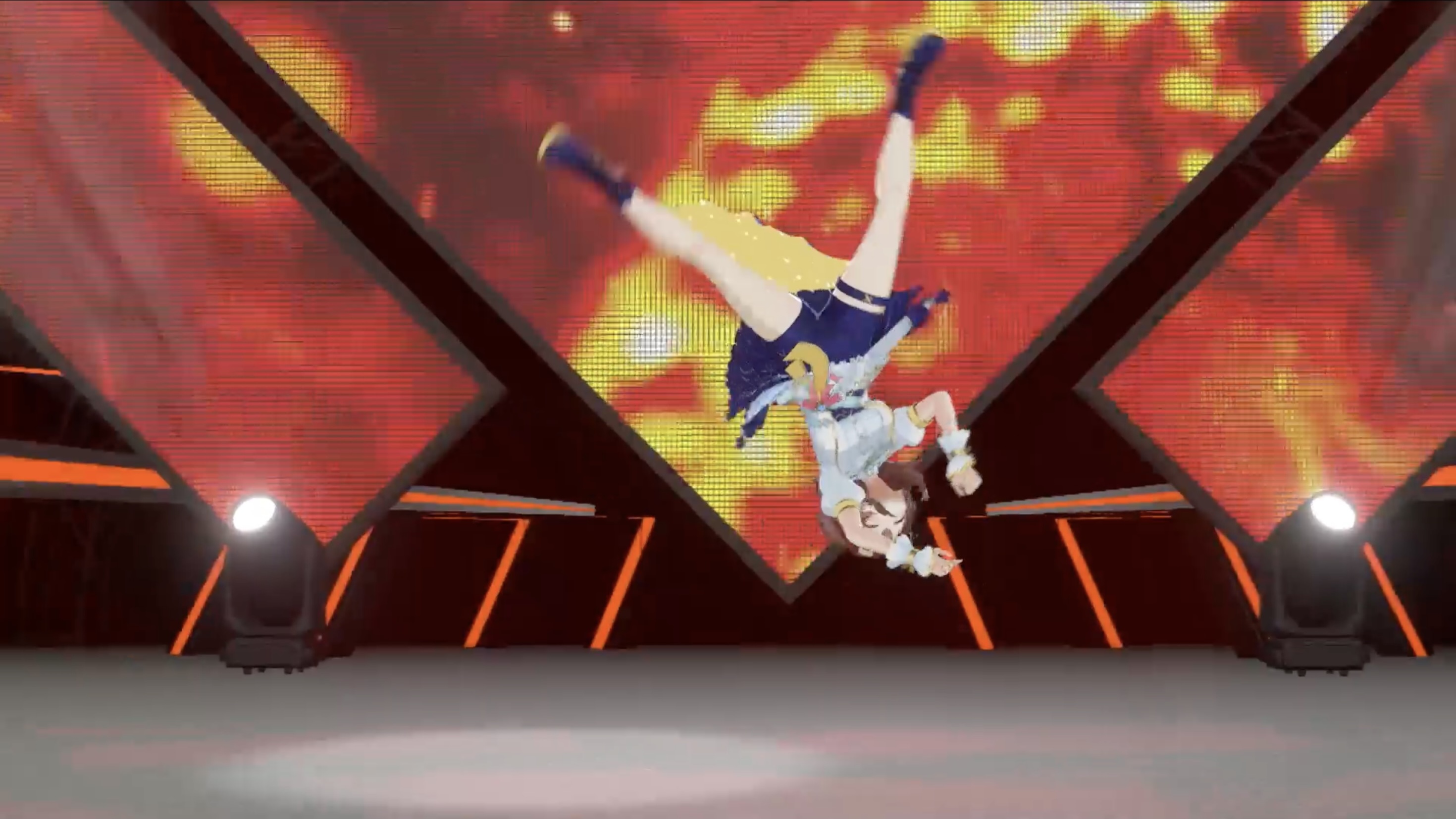
In a concert event that is often about mixing things up, it’s also notable that three of the older and more beloved pairings were featured. Shirogane Noel and Shiranui Flare of JP’s 3rd gen (from 2019) once bought matching rings. Shishiro Botan and Yukihana Lamy of JP’s 5th gen were also a close duo when they first started in 2020. Nekomata Okayu and Inugami Korone have a friendship that actually predates hololive, and their song of choice was “If…” by Da Pump, calling back to one of their most viral karaoke moments from four years ago. As if to show off how much they’ve improved, the two performed the song straight instead of breaking into giggles, Okayu covering the singing parts with her buttery voice and Korone handling the rap portions while busting a move and literally doing cartwheels.

Additionally, this year’s fourth concert was called the Creators’ Stage, and it was promoted as a highlight of notable music makers who have worked with Hololive talents. But in light of previous years, which featured concerts promoting full collaborative albums with groups like deco*27 and Honeyworks, the Creators’ Stage felt more conservative. The most unusual thing was seeing what combination of girls sang together. Moreover, the Creators’ featured three songs from Houshou Marine, and while she is one of their most famous members, it felt like either 1) a case of last-minute substitutions or 2) the company really wanted to get the popular songs in. One song was even performed twice, namely Marine and Kobo Kanaeru’s “III” (which I’ve learned is pronounced “Ai-Ai-Ai” and not “Three”). While repeating songs had the advantage of allowing people to hear these songs without purchasing multiple tickets, I suspect this was not the main motivating factor.

Takane Lui winking while her open eye has a targeting reticule.

I don’t think playing it safe or referencing the past is inherently bad. The medleys can exist because the individual talents have enough songs to make them possible at all. All of it was also still very entertaining, and some of these performances were among my favorites of the weekend. Nevertheless, it came across to me as at least partly an exercise in caution.

The Dancers Grow Ever Stronger

The number of skilled dancers increased and the established ones continued to improve, treating us to some astounding performances.

Hakos Baelz doing a jazz split. Her left leg is stretched out while her right leg is bent.

Hakos Baelz covered Ado’s “Show,” and displayed the intense energy and skill that her fans have come to know and love. While it didn’t have the striking movements of “GEKIRIN” at Breaking Dimensions or the daringness of the interpretive contemporary dance from 5th fes, something about the routine felt like it was specifically designed to accentuate her strongest attributes and to showcase improvements she made in the past year. 

Later during an MC section, Bae revealed that she came up with her choreography for “Show” herself. In a post-event stream, she also mentioned that her zombie-like rise from the floor (a move she learned when she was five!) was something she tried to put into last year’s performance, but the technology they used couldn’t handle it. The girl literally pushed the limits of what was possible with Cover’s motion tracking and helped cause it to improve.

Vestia Zeta making k-pop heart fingers.

The rat wasn’t the only one to put on an amazing dance show. Todoroki Hajime’s smooth confidence showed why she and Bae are seen as the very best. I adore Takanashi Kiara’s “Mirage,” and the adaptations she made to dancing a solo version worked well. Vestia Zeta’s snappy hip and movements are etched into my memory. Aki Rosenthal was originally known as possibly the best dancer early on, looked the best she has in a long time.

Roads Less Traveled

Laplus Darknesss in idol outfit with her arms stretched out to the side.

Usually, La+ Darknesss is a part of that list of dancers, and she did make for a great idol dance trio with Matsuri and Momosuzu Nene. However, for her solo performance this year, the leader of holoX eschewed a complex choreography for a greater focus on singing. As a fan of hers, I find this noteworthy because La+’s voice has struggled some ever since illness forced her to change the way she speaks and even laughs. But here, singing “Tokyo Teddy Bear,” she sounded maybe the best she has outside of a studio recording in a while. And while she didn’t have a fully structured routine, she brought her characteristic energy and impeccable sense of poise when posing.

La+ wasn’t the only one to mess with expectations. Korone usually picks an older obscure song (like the opening to a 1990s horse-racing anime), but this time, she actually went with one of her originals (and threw in a one-handed cartwheel). Matsuri jokingly refers to herself as “the pure one (seiso tantou)” when she’s extremely upfront about her horniness, but her performance of her newest original, “Love Letter,” could easily convince listeners that she’s telling the truth about herself. Ouro Kronii—known for her mature, sardonic personality and her equally mature figure—was perhaps the last person anyone expected to sing “Loli Kami Requiem.”

Ouro Kronii in idol outfit with her hands out doing devil horns as she pantomimes firing beams at the audience.

Other performances saw talents go outside their comfort zones. Nanashi Mumei usually focuses mainly on singing but this time danced a fairly elaborate choreography. Kaela Kovalskia is one of the least “stage”-oriented members of hololive, but her cover of Digimon Adventure’s “Brave Heart” was a real crowd pleaser. In this way, there were definitely places where experimentation contrasted with the reliable approach of the concert as a whole.

“Familiar” Doesn’t Mean Bad

Gawr Gura in an idol outfit posing as half of a large heart.

While not everyone was about taking on wild new challenges, that doesn’t mean the more expected ones were by any means bad or disappointing. In fact, a lot of these “expected” performances were among my favorites. IRyS sang “TwiLight,” which has become my favorite original song of hers, and gave me exactly what I was hoping for. Oozora Subaru hyped up the crowd through her contagious energy. Tokoyami’s deep voice is still a thrill to experience. Airani Iofifteen went for something cute and poppy, and while her two genmates are better known for their singing prowess, Iofi really played into her niche well. Gawr Gura is already known for having a soothing singing voice, but her cover of the sorrow-laden song “Dango Daikazoku” from Clannad left me with emotions welling up.

Akai Haato in an idol outfit pointing downward.

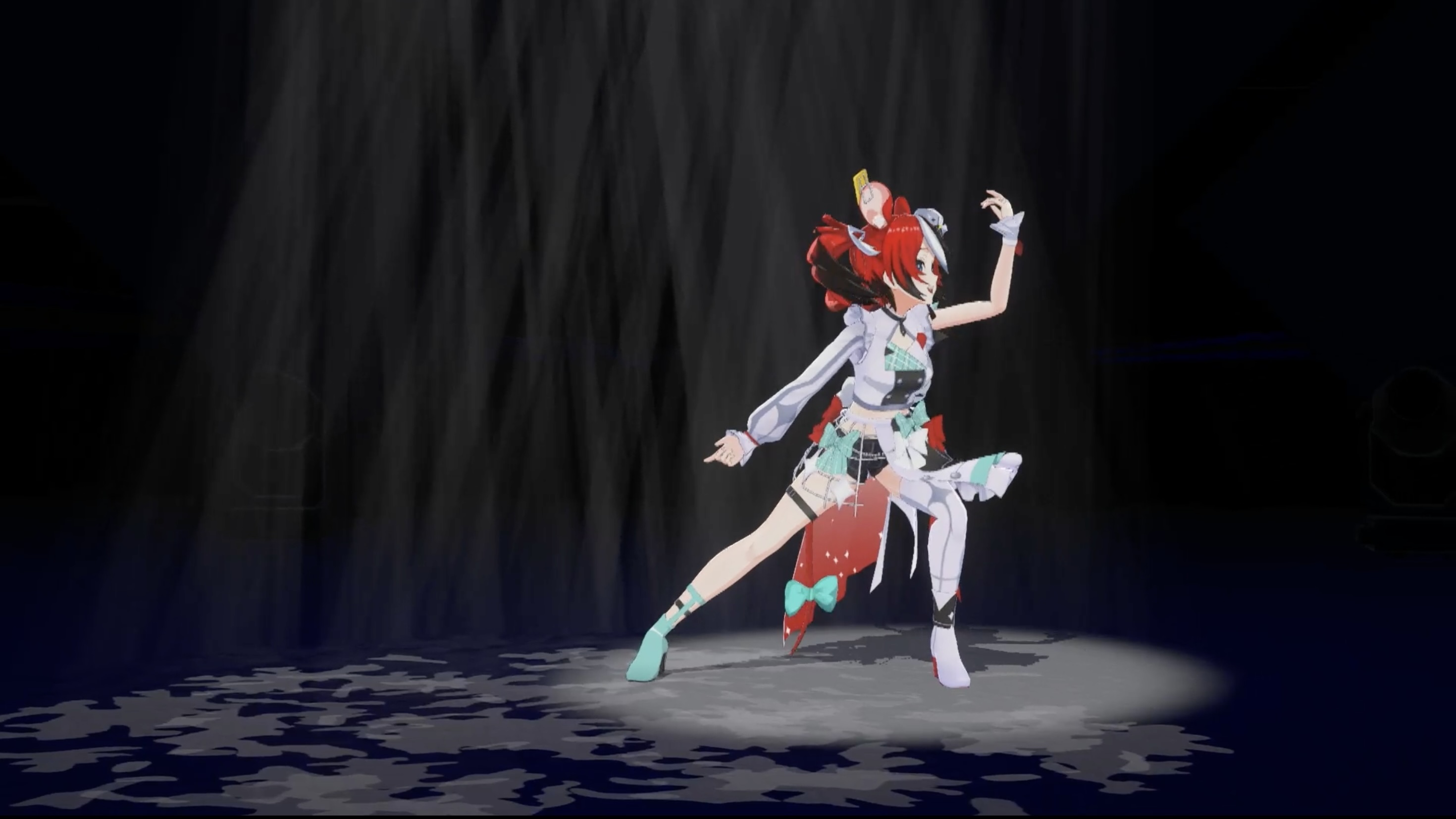
And then there’s Haachama, whose orthodoxy is being unorthodox. She came in with her new metal-influenced song titled “Who2” (a play on futsuu, or “normal”), and she expressed a chaotic fervor reminiscent of her duet with Kureiji Ollie from two years ago. If it weren’t for the impact of her surprise return at 5th fes, this would probably be my favorite showing by her yet. 

The New Idol Uniforms

The last thing I want to talk about is the fact that almost all hololive members at 6th fes received a new outfi (the exception is ReGLOSS, who already have unique idol outfits). It was the first in two years, and unlike at 4th fes, there’s one general template across all regions instead of having specific designs for Japan, Indonesia, and English branches. I think the design both looks good and stands out as unique compared to all the previous idol outfits, and I particularly enjoy the little aspects that individual talents can customize. The only drawback is something that has applied to all the shared outfits: The bodies are often generalized and don’t necessarily capture the look and proportions of their original models. I hope hololive can make that accommodation someday.

Final Thoughts

hololive 6th fes felt like a victory lap that was also a cautious straddling between the old and the new. In last year’s review, I mentioned how the dramatic rise of hololive made the difference between the older fes events and the most recent ones very apparent. Six events in, we’re now firmly on the side of “grand and polished”—perhaps to such an extent that we can’t ignore its sheer weight as the biggest VTuber company in the world. 

When it starts up the engine, hololive has more momentum than anyone else, but it can be hard to change course. At the same time, having a diverse talent pool each with their own strengths means that even if the company as a whole can’t be as nimble, they can still create in-roads to other possibilities. I am fairly optimistic that they can find a decent balance between the two while thinking about the long-term wellbeing of both the company and the people working in it. 

Next year will be Justice and FLOW GLOW’s turns to take the big stage, and I’m excited to see how they shine. I get the sense that both groups are going to excel in 3D performances. 

Above and Beyond: hololive 5th fes. Capture the Moment
Over the past few years, hololive Super Expo & hololive fes (a combination convention and live music event) have cemented themselves as the premiere event of not just hololive, but all of VTubing. This year, “hololive 5th fes. Capture the Moment” bookended an incredible 365 days that saw the debut of two new generations, a swathe of 3D debuts, and other milestones all culminate in a whopping four-concert series.
The big visual change this year was a new triple-stage setup for the live audience. By having three stages (one in front and two on the sides), it gave the chance for different sections of the crowd to have a better view of the action at different times. This didn’t matter much to anyone like myself who was watching via the live stream, but I appreciated the effort on behalf of those attending in person. 

In anticipation for 5th fes, I watched the Blu-rays of the previous years’, as well as videos of other concerts. While this year’s event was indeed bigger than ever before, it also really felt like the latest point in each VTuber’s journey. Seeing the progress of your favorites is a part of the idol experience, but what I find notable in this situation is how hololive encourages the fans to meet the talents “where they are.” Improvement is relative to oneself rather than absolute, and can consist of circuitous and unpredictable paths.

Because there were dozens and dozens of hololive talents involved, I will only be writing about a handful. That said, even if I did not include your favorite, you might be able to find them fitting into one of the categories below.

Debuting on the Big Stage

For the 3rd generation of hololive Indonesia, this was their very first hololive fes, marking a major milestone in their VTubing careers. 

Kobo Kanaeru showcased her versatile singing voice and her boundless energy. Vestia Zeta displayed her sleek dancing but decided to go a cuter route compared to the hip-swaying routines of her 3D debut. Kaela Kovalskia went a simpler and more subdued route that fit her “gamer grind” persona. The range in their personalities was on full display, especially when performing the ID gen 3 group song “Save Our Hearts.”

Making Strides

Some talents, often by their own admission, are not the best singers or dancers. However, it was clear from their performances at 5th fes that they’ve taken steps to get better.

Himemori Luna has been known for her nonexistent stamina, once even needing to literally sit down in the middle of a performance while everyone else continued. At 5th fes, though, Luna was like a new person, showing no signs of severe fatigue. On top of that, her song choice—“Kamippoi na”—was a far cry from the cute and bubbly tunes she typically prefers. The contrast between her famous baby voice and the eerie feel of the number was a pleasant surprise.

Amelia Watson was originally so down on her own singing that one of her YouTube stickers is a bleeding ear. But many karaoke sessions and one original song later, things have changed. At 5th fes, she covered “Sugar Song and Bitter Step” (the ending theme to Blood Blockade Battlefront), and went full-on idol for it, not only showing better vocals but also including dancing a more complex routine compared to previous concerts. Amelia’s karaoke streams are among her most popular because they feel like going out to sing with a friend, and she maintains that feel on the big stage even as she develops.

Pushing the Limits

Progress didn’t just come from those who were lacking ability, but also those who were already highly skilled and took things to the next level. For example, Inugami Korone has gone from a front walkover flip two years ago, to back-to-back cartwheels last year, and now a fully unsupported side flip.

I’ve devoted many words to the mesmerizing performances of La+ Darknesss, and I think 5th fes is her best ever. Her song of choice was her first original, “Aien Jihen,” and its inclusion has a special importance. La+’s first performed it during her 3D debut, and it was when fans realized what a phenomenal dancer she is. However, she used a pre-recorded track due to the difficulty of the choreography (which she came up with herself!). At Waku Waku Dark Nightmare (her Nissin- sponsored solo live), she managed to both sing and dance at the same time, but the audience was all online. This time, La+ was there in front of a crowd of 11,000+—and she killed it.

Additional adjustments to the choreography made her look even more crisp, her voice remained mostly strong throughout, and her overall movement felt more intricate and daring than at 4th fes. In her own words, La+ thought the 5th fes “Aien Jihen” was stronger compared to at Waku Waku Dark Nightmare, and I’m inclined to agree. I’m happy to have seen my favorite hololive song performed so beautifully.

Takanashi Kiara is a similar case. When Myth, the first generation of hololive English, first appeared in official 3D at 3rd fes in 2022, Kiara made a big impression. There was no doubt that she was one of the best dancers in hololive, as she displayed a level of grace and confidence few could match. Then, at 4th fes the following year, an amazing debut performance by Hakos Baelz actually prompted Kiara to declare Bae the best dancer in EN. Over time, other strong dancers have also joined hololive, and it felt like Kiara was getting “powercrept,” so to speak.

Then Kiara went on stage in 5th fes and blew away all prior notions. While singing a brand new song, “Chimera,” she moved in a way I’d never seen from her before. Most (all?) of her prior choreographies have been arranged by an expert dancer named kianna, and Kiara’s “Chimera” looked closer than ever to matching that professional level. It really felt like Kiara was out there to show the world that you can never write her off, and that she was willing to put in the time and effort to prove this point. Watching in the moment, I wondered if Kiara might shine brighter than everyone else this year.

Changing the Conversation

Then Hakos Baelz came in and showed how pointless comparisons could be. By that, I don’t mean that she was inherently or objectively better than Kiara or anyone else, but that she decided to flip the script in a way that rendered such discussions moot.

Ever since her first 3D appearance at 4th fes, Bae has brought a very high level of quality and energy to every performance. Because she has been so consistently great, however, it became a question of how she’d be able to outdance herself this time around. Add in the fact that Bae herself commented on how her plans could potentially result in a flop, and fan speculation was all but inevitable. What feats of dance would she show this time?

To my (and it seems everyone else’s) surprise, Bae went in another direction entirely. Eschewing the high-octane routines she was known for, Bae went for a slow and passionate interpretive dance set to “Uta yo” (aka “Gales of Song”) from the Hosoda Mamoru film Belle. Watching her, I could feel my emotions welling up in response to her sublime choreography, the shock of seeing something so unexpected, and the boldness of Bae’s decision. Moreover, her voice was haunting in a way we rarely hear from her. 

The next day, when she performed again for the hololive x Honeyworks stage, Bae did something more typical for her, and the contrast between those performances makes her sheer ability all the more impressive. Later, Bae also said that 1) she’d never done interpretive dance before this and 2) it takes her only about 2 hours to fully learn a choreography. It all goes to show how ridiculous she really is.

Returning in Style 

In a few cases, certain performances were like reunions. Some of the hololive members have spent time not using YouTube and social media, and their circumstances meant that their presence at 5th fes ended up being reunions of sorts with their fans.

Murasaki Shion has been on hiatus for the past few months, and this was her first public appearance since she went on break. The roar of the crowd felt like a big “welcome back,” and seemed to communicate the idea that her supporters are there for her through thick and thin.  

But while it was already known that Shion would be there, there was actually one talent whose performance came completely out of left field. Last year, Haachama ended up in the hospital not long after 4th fes, and she had to take eight months away from streaming. Because so much time had passed and because there wasn’t much time for her to practice after she did return, Haachama was not scheduled to be at 5th fes. 

Then, without any anticipatory fanfare, Haachama blinked onto the stage. Watching the stream, I could hear the slight delay as general confusion in the crowd transitioned into pure excitement. Haachama  sang “Idol,” the opening to Oshi no Ko—a song whose content fits an unpredictable girl who declares herself to be the “Worldwide Strongest Idol.” At the very end, she transformed one of the lyrics into a shout of “I love you!” as if to show her gratitude to everyone watching.

There was one other reunion of sorts, though it was more like a story going full circle. One of the last songs of the event was “Last Frontier,” performed by Hoshimachi Suisei and AZKi. The two are among the very best singers in the entire company and naturally sounded amazing, but the song also has a special significance: It was originally written by AZKi for Suisei when Suisei was transitioning from hololive’s INNK music label to the main branch, and AZKi was considering retirement. However, both have stayed with hololive, and Suisei even secretly rewrote some of the lyrics to go from being about sending someone off to achieving new goals together. When Suisei then read out a letter to AZKi about their time together, AZKi couldn’t hold back her tears.

Final Thoughts

It’s funny seeing just how massive hololive has gotten. In those earliest blu-rays, it’s clear that this whole project was a much more humble affair. The concerts were just decently large (but not gigantic) crowds of people in front of screens displaying their favorite VTubers, and actively buying into the illusion presented. Now, everything is so slick that it feels like another world. A bit of the intimacy has been lost in the process, but despite that one drawback, I think this change has been good for hololive and VTubing as a whole.

All the different journeys detailed above, combined with the variety of performances, made for an emotional rollercoaster. There were even plenty of fantastic showings that I didn’t touch on, where the stories weren’t as dramatic but were still wonderful to see play out—even ones as simple as “They put on a great show that the audience adored.”

My only worry is that 6th fes in 2025 looks like it’ll have at least 10 new talents to account for, and I can see my free time (and my sleep schedule) slipping away.

Official VODs are currently available until April 17.

The Haachama Experiment

The first Virtual YouTuber to really pull me into Hololive was none other than Akai Haato, aka Haachama. She’s currently on an indefinite break for health reasons, so I wanted to support her even when she’s not streaming by writing about why she’s still an all-time favorite of mine.

As Hololive continues to grow, it pulls in more and more ridiculously creative people. Whether it’s through singing and dancing, language skills, gaming ability, comedic chops, charisma, or more, they prove time and again to be a collection of extremely talented individuals. 

Haachama is not exceptionally strong in most categories—more a Jack of All Trades. However, there are a couple areas where she outshines just about everyone else: experimentation and adaptation.

To VTuber fans, the roller coaster that is the Haachama experience is well known at this point. Originally joining Hololive to play a tsundere high school girl, she began to take on an increasingly unhinged character personality as she spent four years abroad in Australia, including during the height of COVID. Her experimentation during this time with videos and editing was in part her making the best of a bad situation, i.e. notoriously terrible Australian internet, but it nevertheless laid the foundation for much of Haachama’s fame. The Haachama Cooking videos, where she would confidently and genuinely demonstrate some of the biggest culinary crimes, are just one example of the lengths she’s willing to go. 

Fans began to joke that Akai Haato the tsundere  and Haachama the unbridled horror were actually two different personalities, with the latter overpowering the former. They even created fanart about it. But then one day, Haachama began to stream as Haato again, using her old catchphrases that she had long since rejected. This culminated in what’s known as the #Coexist Arc, where Haachama seemed to imply that Haato and Haachama were actually sisters who went through some kind of unspeakable tragedy, and that both personalities now inhabit the same body while battling for supremacy. In practical terms, the result is that she now sometimes streams Haato-style (more mellow and relaxed) and sometimes Haachama-style (manic and intense).

In other words, Haachama took a joke from the fans, added her own spin on it to create a kind of semi-interactive lore, and then parlayed it into a way to expand her repertoire and not get boxed into one way of being. Very few Hololive members or even VTubers in general are willing to take such risks with their branding and image, yet Haachama seems to experiment endlessly with what she can be. 

It’s important to note, though, that Haachama is also fairly shrewd. She has mentioned that the reason she started changing her character was in  order to fill a hole in what Hololive lacked at the time, and her decision was to be a little more “Nijisanji.” The two companies are somewhat defined by their inaugural VTubers—Hololive with Tokino Sora as ideal idol and Nijisanji with the elegantly crass Tsukino Mito—and Haachama as unpredictable idol carries shades of both. This is her adaptability in action.

I previously compared Haachama to the late pro wrestler Brian Pillman because of how his drastic change from white-meat babyface to loose cannon was similar to hers. Since then, it’s clear to me that she’s more of a Matt Hardy—being performers who repeatedly reinvent themselves to either keep up or defy the times. “Haachama the Eldritch entity” is not that far off from the bizarre and imaginative transformation of “Broken” Matt Hardy and the way Matt would play with history and expectations. Neither seem to be satisfied settling into one mode of performance.

I don’t necessarily love everything Haachama does. There are times when she swings big and misses. But even when one stream or project flops, I enjoy seeing Haachama continue to try new things. One prominent example is how she no longer releases Haachama Cooking videos where she eats weird ingredients (like tarantulas) and approaches food with zero practical kitchen skills. Instead, she has moved towards making real progress in actual meal preparation. I miss the absurdity but love her adventurousness.

Haachama pushes boundaries, always seemingly looking for avenues of change. It can be rough for her when things don’t turn out as she intended, but her ability to entertain and renew herself is hard to match. It might make her branding a bit inconsistent, but that plays into her presence all the more. Sometimes, she’s so unpredictable that she does the most predictable thing. I hope that whenever she makes a full recovery, she can come back and still be proud of what she’s accomplished.

Happy birthday, Haachama.

RABBIT!: Ogiue Maniax Status Update for January 2023

Yesterday, I watched the Hololive COUNTDOWN LIVE 2022▷2023. It involved 3D concert performances by a variety of members including two of my faves, the currently COVID-stricken Haachama and the on-hiatus La+ Darknesss. I highly recommend it, especially the crossover sections between the girls of Hololive and the boys of Holostars. This clearly takes some inspiration from Japan’s long-standing end-of-year musical event, Kohaku Uta Gassen, but I’ve never actually watched it.

Looking back, it didn’t hit me how long the past year felt until I saw Kio Shimoku mention that Hashikko Ensemble concluded back in January of 2022. At times, it’s like the days move by all too quickly, and other times, it’s like they slow to a crawl. I can’t tell at this point how much of it is the prolonged funk of the pandemic and how much is just me getting older.

But here we are at the start of 2023 and the Year of the Rabbit, at least if we’re going by the solar calendar. Whenever I think about it, I find myself remembering a certain old flash video from the 2000s. Thankfully, someone uploaded it to Youtube, so I can inflict it on a new generation.

January’s Patreon subscribers are looking good. Thank you, everyone, and here’s to another fine (?) year.

General:

Ko Ransom

Diogo Prado

Alex

Dsy

Naledi Ramphele

Sue Hopkins fans:

Serxeid

Hato Kenjirou fans:

Elizabeth

Yajima Mirei fans:

Machi-Kurada

Blog highlights from December:

Elegy of Fire and Metal: A Tribute to Mizuki Ichiro

Paying respects to one of the greatest singers in all of anime who passed away.

Hololive 3D Concerts and Bringing Different Fans Together

This is partly an analysis of how different fans have different expectations for their VTuber faves, and partly an excuse to post more videos of La+ Darkness’s amazing dancing skills.

Prospera Mercury, She Is a Char

How the mom in Gundam: The Witch from Mercury nails that Char Aznable feel.

And normally, I only pick three highlights, but I must mention that I’ve selected my anime characters of the year.

Kio Shimoku

Kio’s tweets mostly show his model-building progress and his thoughts on the 2022 World Cup.

Apartment 507

Chainsaw Man Anime vs. Manga.

Closing

At the start of the year, I feel myself wondering if I should be doing more both with Ogiue Maniax and outside of it. One thing I’ve thought about is starting a Substack, but I have no idea how I might divide my writing. In my head, there’s no real differentiation between “regular” posts and “premium” ones, and I’d probably have to figure out some way to make it worthwhile. One possibility is to break off the VTuber stuff into its own dedicated area in case it’s becoming too intrusive, but I don’t think it’s that bad currently.

I could also do premium posts on Patreon, but that sort of runs into the same issue. If anyone wants to see that sort of content (or if you even hate the idea), feel free to leave a comment. I think I care less about the money at this point and wonder more about how to promote Ogiue Maniax in 2023. All the old ways seem to be vanishing (and Twitter is constantly on the verge of collapse because of its moronic new boss), and I still haven’t caught up.

Whichever ways things go, though, I hope you’ll keep reading.

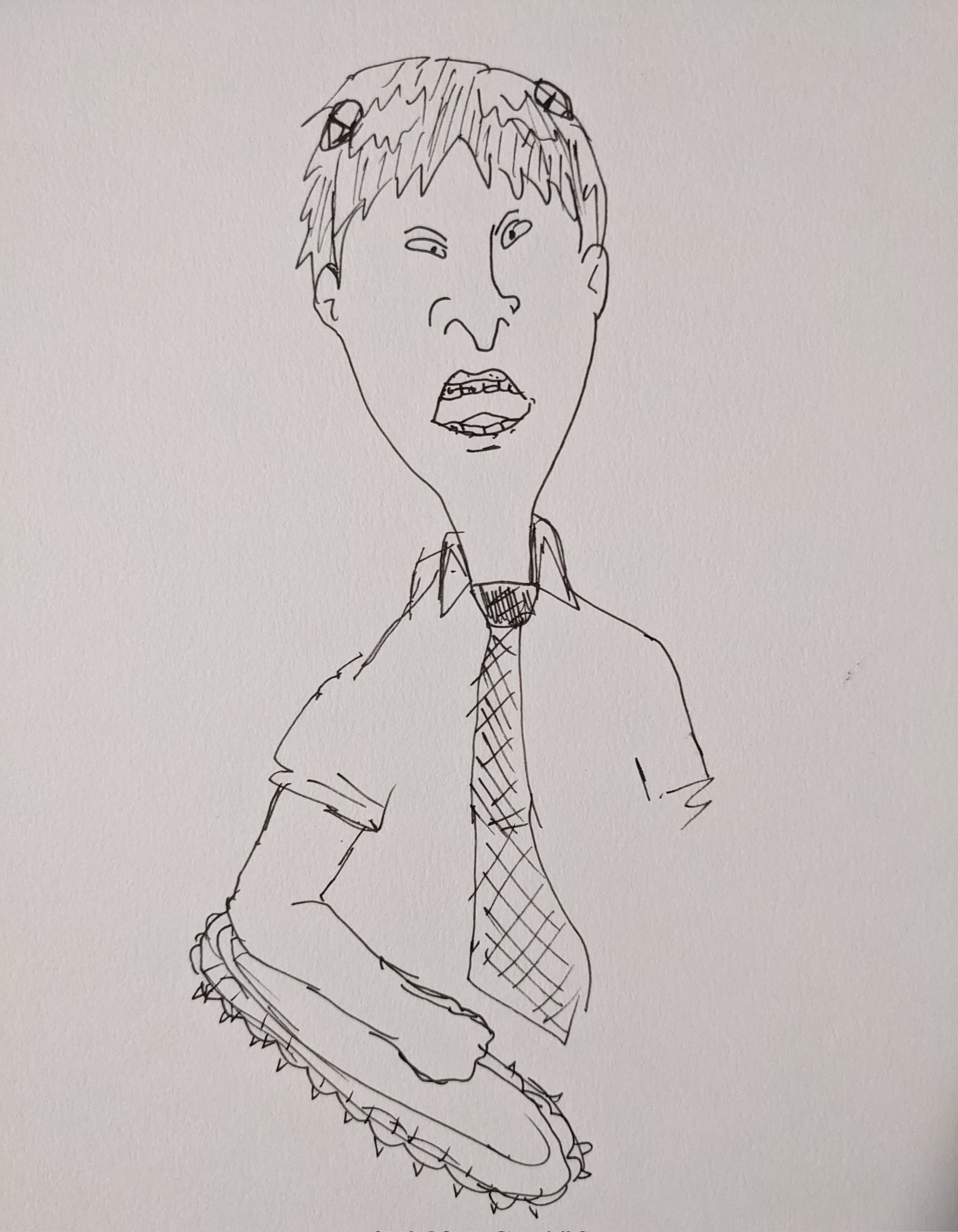
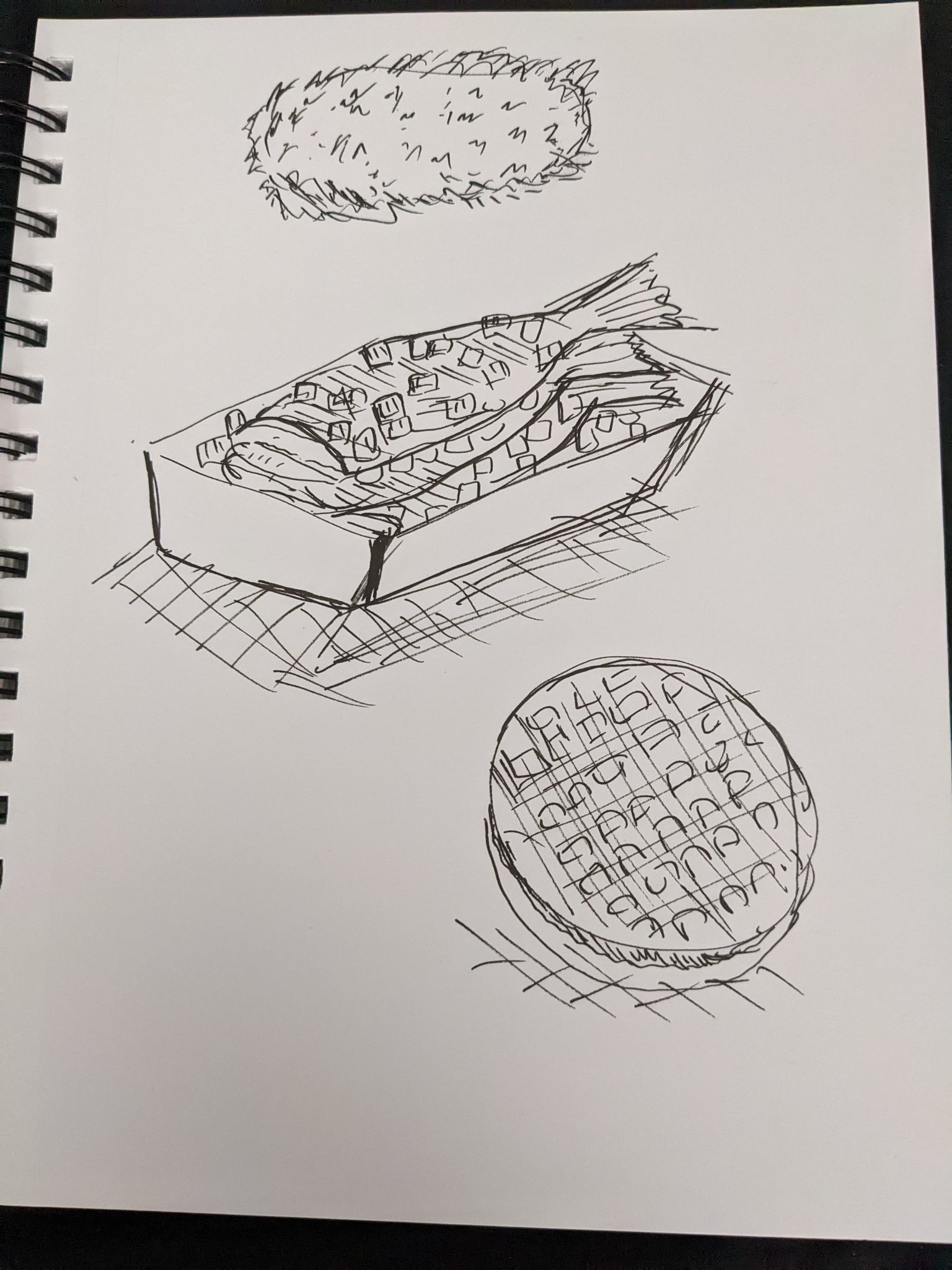
Inktober 2022 Archive: My First Time!

After years of hemming and hawing, I decided to actually do Inktober this past October. The results were, well, results.

Especially with the state of Twitter being extremely abunai, I decided it’d be good to just have a gallery here.

Haachama vs. Brian Pillman: VTubers and Evolving Gimmicks

“What do the virtual youtuber Akai Haato and the late pro wrestler Brian Pillman have in common?”

As I’ve continued to fall down the VTuber rabbit hole, I constantly find similarities to pro wrestling. When VTubers stream, they get immediate feedback from their live chats. They’re not static performers, having to respond to and reciprocate with a chat that’s eager to make their opinions known. “That applies to all livestreamers!” you might be thinking, but the added virtual layer changes the streamer’s relationship with their audience. 

While stream viewers might seek authenticity, the VTubers themselves are not expected to be “real,” and there are no illusions about it. In my eyes, there’s a real resemblance to the concept of wrestler gimmicks—especially in how varied they can be, and how they can be embraced to such different degrees. Some VTubers are like the Undertaker, leaning fully into their outlandish characters. Others are like Kobashi Kenta, a more down-to-Earth approach meant to convey a more personal connection to the audience.

And over time, these gimmicks can undergo changes both great and small as the performers, both VTuber and wrestler, adjust to the audience reactions and refine their craft. One common theme in stories about wrestlers, especially in the old territory days, is the need to figure out what keeps the audience coming back to pay good money while avoiding overstaying your welcome. Similarly, it is fascinating to look back at how VTubers behaved in their introductory videos compared to how they present themselves in more recent material. Rarely is there a VTuber who manages to stay perfectly within the original boundaries set for themselves. 

That brings me back to the question I asked at the beginning, and the answer is this: Both Akai Haato and Brian Pillman began as more conventional performers who found themselves in difficult times, and ended up reinventing their personas into larger-than-life yet authentic-feeling identities that pushed the envelope of what is possible and accepted in their respective fields.

Brian Pillman was once most famously known as Flyin’ Brian Pillman—an astoundingly athletic wrestler who could dazzle audiences with his acrobatic moves. However, after a car crash, Pillman had to drastically alter his style. Instead of emphasizing his now-compromised high-flying moves, he decided to blur the boundaries between the real and the fictional as a “Loose Cannon,”  culminating in an infamous moment where he seemingly tries to shoot “Stone Cold” Steven Austin.

Hololive’s Akai Haato, in turn, first introduced herself to the world as a traditional tsundere character, and was even used as a model of how a conventional idol-esque virtual youtuber should behave. But then the COVID-19 pandemic hit, and the person behind Haato was stuck in Australia for months. Unable to stream the way she normally would have, her conventional tsundere self gave way to the more chaotic and creative “Haachama” persona. From talking about smelling her own feet to cooking a tarantula to split personalities and time-distortion, Haachama has developed an even wider fanbase. She’s currently on hiatus, but fans await her return. 

Given the commonalities between pro wrestling and virtual youtubers, an important question comes to mind: what if there was a virtual youtuber tournament of some kind? Plenty of them will compete with each other in video games, but what if there were promos and smacktalk and the like? What if the PekoMiko War was more than a song and a Minecraft video, and lines were drawn in the sand, with tickets sold for the event?

In conclusion, VTuber pay-per-views are the future.

The Perfect Storm of Virtual Youtubers

As the days go by, I increasingly find myself looking into the world of Virtual Youtubers. I watch the clips and highlights that go around, and I sometimes tune into the live streams of my favorites. I wouldn’t consider myself a devotee of the whole concept, but I’m entertained. I know I’m not alone, as the increasing success of VTubers is a sight to behold—Gawr Gura, one of the first members of the Hololive agency’s push into English-language streaming, hit one million subscribers in just a little over a month and has since surpassed two million.

The more I think about it, however, the more I realize that the success of Virtual Youtubers shouldn’t come as a surprise. They’re in many ways a perfect storm of things that appeal to people on the internet, bringing together different groups who tend towards obsession and converging them onto this amalgam of elements.

The first group is weebs. I generally avoid the term, preferring things like “anime and manga fans,” but I feel that its usage is accurate here—it’s not just about being into the media but being into that strain of Japanese pop culture. With few exceptions, Virtual Youtubers go for that anime aesthetic, recruiting famous artists and character designers to create these avatars. In a sense, they’re anime characters come to life, and that gives them a certain charm and universality that comes with being less realistic in terms of appearance. And while VTubers now exist across the world, they’re firmly rooted in that anime/manga/light novel realm, and expectations derive from the tropes found there. 

The second group is gamers. While streaming has had some presence on the internet for decades now, gaming has become one of its absolute pillars. Between the transformation of Justin.tv into Twitch, the prevalence of esports, the enduring popularity of Youtube channels like Game Grumps, and the rise of speedrunning as a spectator activity, there’s no denying the draw. Live streaming your play session is just an easy and reliable way to connect with potential fans, and while streamers usually need some kind of physical or personal charisma to get things going, the sleek designs of VTubers help bridge that gap.

The third group is idol fans. While it’s like every one of them eventually gets their own original songs, what attracts people to idols is that they feel somehow distant yet accessible, and Virtual Youtubers greatly exaggerate both sides of the fantasy by their very nature. The use of character avatars means there’s no mistaking their visual appearances for being the “real” individuals, but that also means being able to project onto them an idealized version. At the same time, unlike Hatsune Miku, they’re real people interacting from behind the curtain. Depending on what level of performativity vs. seeming authenticity a viewer wants, or popularity vs. obscurity (what’s more exciting than seeing your favorite personality grow from small-time to wild success?) there’s probably a VTuber for them. What’s more, the concept of superchats on YouTube allows fans to get instant gratification by giving money to have their messages read and acknowledged.

The fourth group, and there’s plenty of overlap with the other three, is those who are into celebrities. This is a more vague and generalized group, but it’s the same energy that fuels people to follow the goings-on of their favorite movie stars and singers.

A weeb might love all things anime-adjacent but dismiss Western-style game aesthetics. A fan of first-person shooters might love watching anything and everything related to their favorite games but think anime stuff looks weird as hell. But then a Virtual Youtuber who looks like an anime character come-to-life might play Apex Legends, and so now the weebs get their real-life anime girl and the Western-focused gamers get to connect to her through their favorite game. At the same time, even if she isn’t particularly good at what she’s playing, that gives her a kind of element of relatability that an idol fan might be drawn to. And even if someone isn’t an idol fan, seeing someone suffer through a game has an established history of bringing in eyeballs. The crossover appeal is hard to deny.

Thus, when the VTubers branch into areas other than gaming, they can bring all those different groups together. It’s why they can karaoke Japanese, English, and even German songs, all to praise and fanfare. When they do something completely out of the realm of entertainment, like cook, it doesn’t seem out of the ordinary even if the results can range from bizarre to horrifying. The fact that their fans don’t just come from one place also gives the VTubers the flexibility to try new things and see what sticks. Non-virtual streamers who get popular because of one game can sometimes have a hard time playing others because they might not get the viewer counts they normally would, but what makes people want to see Virtual Youtubers goes beyond specific games or titles. 

I think the concept of the VTuber allows it a certain degree of freedom that flesh-and-blood streamers do not. By virtue of their virtual natures (pun intended), they invite viewers into a kind of alternate reality. From there, the ability to take that anime character identity and apply it to various domains or interests means that even activities that normally might not appeal to a person can suddenly seem interesting. It’s a lot like how manga can make certain topics more appealing to those who are unfamiliar, but with Virtual Youtubers you get both the slice-of-life hobbyism and the gutsy competition at the same time. And unlike in manga, the wins and losses are real—even if everything is ultimately made up and the points don’t matter.