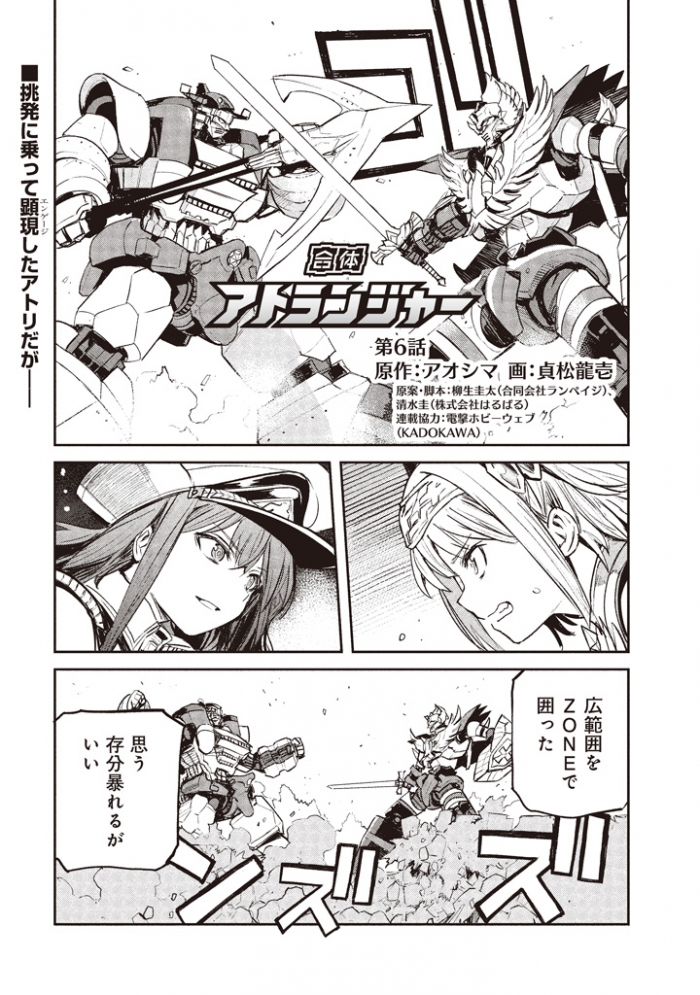
Bang Brave Bang Bravern is like an anime that has traveled through time to reach us in 2024, but it’s not clear whether it came from the past or the future.
The show’s creator, Obari Masami, is near-synonymous with mecha. He’s been involved since the 1980s with works like Dancouga and Gravion, he’s the reason the Brave Pose exists, and they even bring him in to animate giant robot parodies in other genres. So when he announced a new series in the form of Bravern, I wondered what form it would take, especially with him as director and mecha designer.
The answer is: one filled with shocking twists that are as baffling as they are exciting. This is very much intentional, as the initial promo material and even most of the first episode has you believing that Bang Bravern is on the grittier side, with mecha as weapons of war. The first meeting between its central characters, Japanese soldier Ao Isami and American soldier Lewis Smith, seemingly portends a story about true camaraderie on the battlefield.
Then everything goes into Obari Overdrive. A shiny red robot shows up, literally shouting all his special attacks, and a sincere level of camp. This namesake, Bravern, is a heroic sort who draws a lot from the Brave franchise, especially the bonding of kid and robot that is a hallmark of those anime. Only, Isami is a grown man instead of a wide-eyed grade schooler and reacts with a mix of awe and horror. The arrival of Bravern then kicks off a culture clash between the serious original setting and its brightly colored new reality that leaves everyone perplexed and hesitantly hopeful in the face of imminent doom.
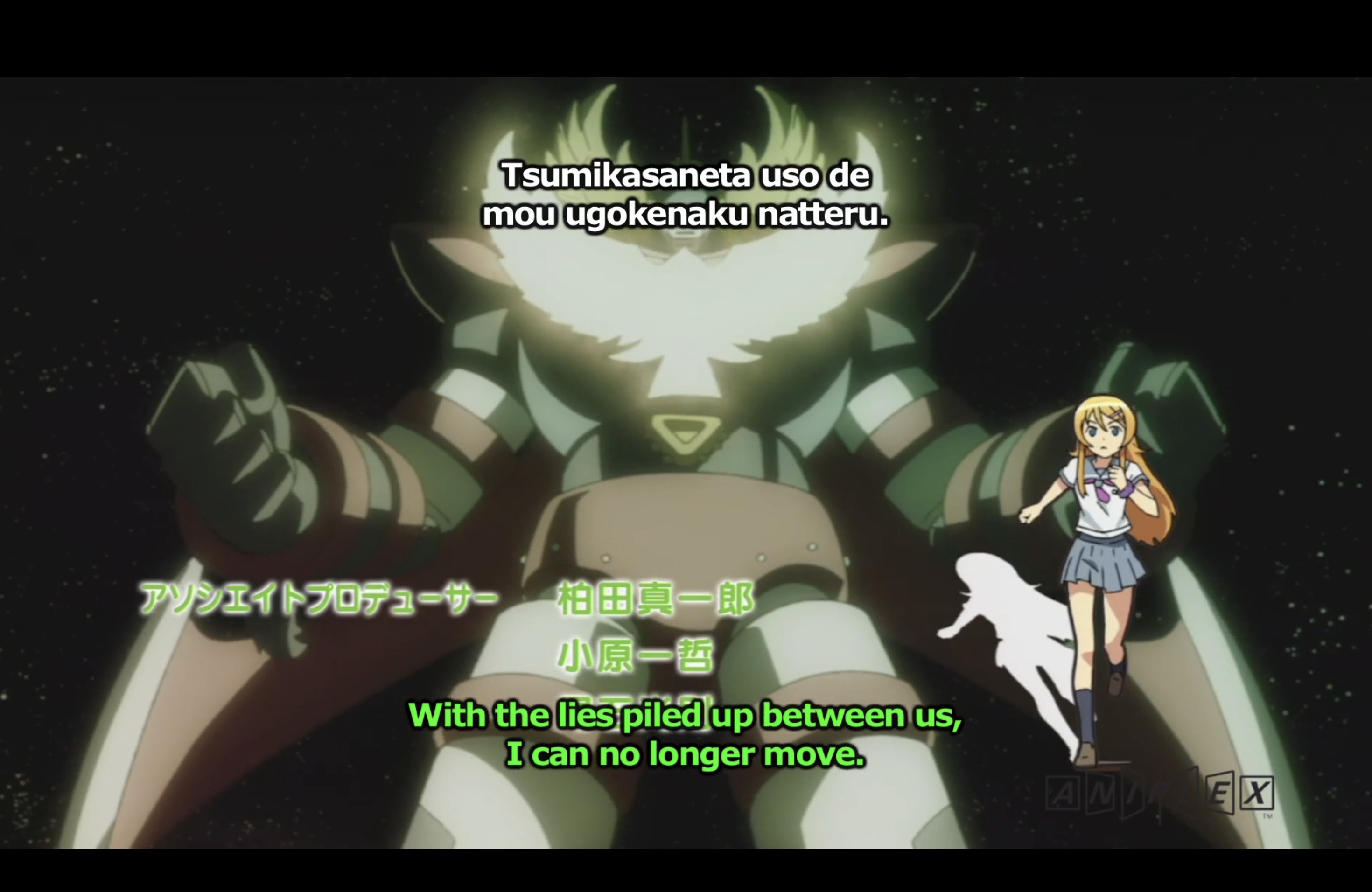
During all this, we’re treated to the opening and then ending themes. The former is a blood-pumping super robot song that draws from the genre’s collective past, with shades of Godannar, Gaogaigar, Daiohja, and even Space Battleship Yamato. The latter features Isami and Smith in the rain, slowly undressing themselves as they sing dramatically like they’re starring in a musical. Together, these two songs encapsulate much of what Bravern is about.
And that’s only the first two episodes!
At least one shocking revelation or pivotal moment hits every episode, in a manner reminiscent of both Gurren-Lagann and Samurai Flamenco. The stakes keep escalating in wonderfully outlandish ways so frequently that Brang Bravern feels like 52 episodes got condensed into 12. The result is a show that leaves little breathing room for major moments, but also appears to act as an acknowledgement that giant robot anime comes from a time when year-long shows were the norm—and that such an era has long since passed.
With its muscular and passionate men in a setting that’s normally about masculine bravado, Bang Bravern might give the impression that it’s queerbaiting. In reality, it’s not really a bait: The show is very gay. At the same time, it feels very different from a lot of other works in that territory. For one thing, the attractive guys are also surrounded by attractive girls and attractive mecha, making it a smorgasbord of hotness all around. And amidst all this cheesecake and beefcake, the story told by Bang Bravern cuts to the heart of living up to childhood ideals.
This isn’t really plot spoilers, but the final episode plays the opening but with added sound effects like explosions and clanking sounds. This is a reference to the fact that many giant robot anime of yesteryear would at some point change their openings to include similar SFX. I think that says a lot about the spirit of Bang Brave Bang Bravern.
Sometimes, you’ll see a wild claim about mecha anime, like “Gurren-Lagann was the first giant robot series to be about characters instead of the robots,” and it inevitably results in a backlash—in this case, the counterargument that all giant robot shows are about characters. Whether the initial statement is made in jest or as a genuinely ignorant take by someone with only surface-level knowledge of mecha, it reflects certain assumptions about what the genre is like.
I got to thinking about the notion that giant robot anime are about characters because it’s both true and an oversimplification. Moreover, the extent to which the giant robots truly “matter,” as in they’re inexorable from the world being portrayed and can’t be substituted with some other form of weaponry, varies tremendously. But regardless of the true “necessity” of either characters or robots, I feel there is more to it than just one side mattering more than the other. Then a thought occurred to me, and I have a kind of nascent “universal theory of giant robot anime”:
Giant robot anime are about characters, but more specifically, the main character reflects some vital or fundamental aspect of the world and story around them. The giant robot, in turn, is reflective of the connection between the hero and that aspect.
If it seems nebulous, that’s because it is. I’m thinking less about trying to justify every mecha anime and more about how the giant robots end up being the avatar through which so many of these protagonists interact with their environment and their histories, and thus reveal more about the anime themselves. There’s also no denying the close ties between giant robots and merchandising, but this also ebbs and flows over the decades.
So let’s start with some of the big ones.
Tetsujin 28is about Shoutarou trying to make a difference in a post-WWII environment by being a boy detective who fights crime. Tetsujin 28 the robot was created to fight the Allies, but is now being used for an alternate purpose: as a guardian of peace instead of a weapon of war.
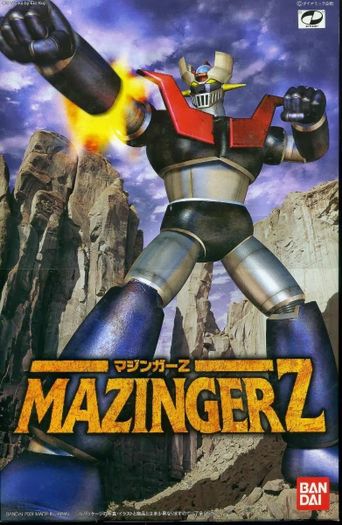
Mazinger Zdraws a direct lineage to this sort of thinking. While the power fantasy and toyetic appeal of the robot itself is undeniable, Kouji is presented with a question about human potential from the very beginning: If you had great power, would you be a god or a devil? The robot Mazinger Z is Kouji’s way of making a difference, and he chooses to use it as a protective guardian.
Mobile Suit Gundam, the first “real robot” anime that emphasized the robots as weapons of war over superhero-like entities, is about its hero Amuro’s repeated exposure to the trauma of war. It’s through the Gundam that he experiences physical and emotional scars alike, and the very fact that his piloting experience molds him into a capable soldier also contributes to the overall “horror of war” message that girders Gundam and its many sequels.
Superdimensional Fortress Macrosshas three main components: romance, music, and robot battles. Here, the titular robot is literally a flying city traveling through space, and it functions as both an urban cosmopolitan center and a massive superweapon. In other words, it is the very space in which all three pieces of Macross take place.
Neon Genesis Evangelioncenters around Shinji and his fear of human connection, be it with his family, his peers, his friends, or anyone else. It is the anime of extreme introspection. Not only is the EVA-01 the means by which he tries (and fails) to find self-worth, but the EVA itself is revealed to house the soul of his dead mother. He is contained in a womb-like structure inside of his giant mom.
Tengen Toppa Gurren-Lagann is about Simon and the limitless potential of humanity to overcome all obstacles slowly but surely—and ultimately whether there should be limits on that power. Gurren-Lagann manifests this through numerous transformations fueled by human spirit that bring on exponential power growth.
The above examples are all heavy hitters, but what I also want to emphasize is that this applies to “lesser” titles as well.
Brave Police J-Deckeris maybe the most on-the-nose example of the relationship between a boy and his giant robot, as the story is about how Yuuta’s friendship with the giant police robot Deckard is what teaches the latter to develop true emotions and a proper sense of justice and humanity.
Shinkon Gattai Godannaris about the relationship between Gou and Anna as husband and wife and how their love affects both their personal and professional lives as co-pilots. Godannar Twin Drive is literally a combination of both robots.
Robotics;Notesfocuses on Kaito and his relationship with Akiho’s giant robot club, and the blurring of augmented reality with actual reality. The creation of the Guntsuku-1 is basically an untenable goal that, through the events of the series, becomes effectively “real” through how Kaito and Akiho view and utilize it.
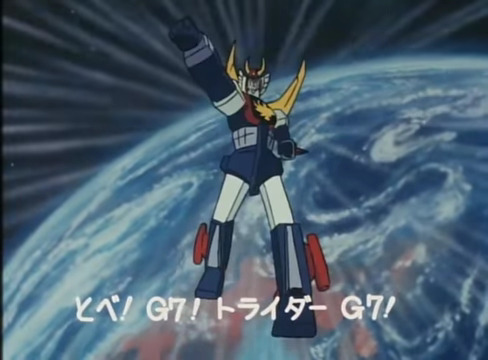
Trider G7is about Watta, who’s both a little kid and the CEO of his own company, utilizing both the image of Japanese corporate culture of the early 1980s and the classic child desire of wanting to do what the adults do. The Trider G7 robot literally flies out of a playground, and has tons of cool and wacky weapons, but the fact that it’s Watta’s robot and the main way he gets his job done means it’s the conduit through which that “grown-up” fantasy takes place.
Shinkansen Henkei Robo Shinkalion the Animationis literally a commercial for bullet train toys that are, in turn, advertising for the Shinkansen trains in Japan. Its main character, Hayato, is basically a Shinkansen fanatic who sees them as not only the coolest things ever but as reflecting a philosophy of unwavering service to the people of Japan. The Shinkalion robots, by extension, portray a more action-packed version of this concept.
Giant robot anime embody many values, from crass commercialism to dreams of being brave and strong, from anti-war sentiments to deep looks inward at the psychological scars of society. The mecha themselves are often not “characters” in and of themselves (with a number of notable exceptions), but they are symbolic of how the protagonists of these stories relate to what they experience. The hurdle for those who think that these anime are “more about robots” is that this particular way of communicating the characters’ stories requires an acceptance of giant robots as a storytelling device.
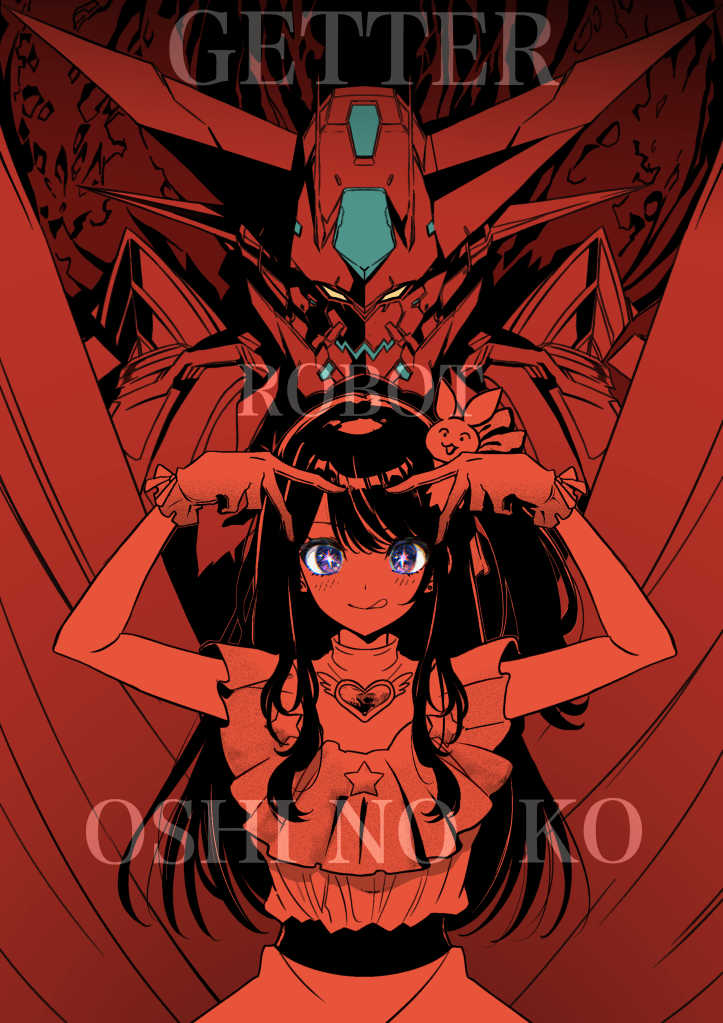
For those who don’t quite get the joke, this is a mashup of the anime opening themes for 2023’s [Oshi no Ko]and 2000’s Shin Getter Robo vs. Neo Getter Robo. The two songs, “IDOL” and “STORM,” share a similar build-up during their respective choruses that makes one transition into the other almost seamlessly, with only a tweek to the tempo being necessary.
As a fan of both (the latter of which I watched during my formative years as an otaku), it makes me happy to see these two shows and their respective theme songs getting love. More than that, it made me think about a few things.
First, I’m actually kind of surprised that so many people have a fondness for Shin vs. Neo. I know Getter Robo is just part of the bedrock of anime and the mecha genre, but I had always assumed Shin vs. Neo was just known in the little corner of the fandom I had occupied. Glad to see people have a sense of nostalgia for it, though that does make me feel old.
Second, if this is how newer anime fans discover Shin vs. Neo, then so be it. I hope they enjoy seeing a shirtless man beat a dinosaur soldier into submission, in addition to all the robot action. At the very least, the fact that this joke incorporates more footage of the anime means it’s able to show itself off better than Fighbird and the aforementioned pigeon meme.
Third, it’s a bittersweet reminder that one of the singers of “STORM,” Mizuki Ichiro, passed away earlier this year. IAs one of the elder statesmen of anime music, he might have very well leaned into this, and we might have legitimately gotten a cover of this. At the very least, Kageyama Hironobu and the rest of JAM Project are all around, and they are definitely game to perform memes (see their cover of “Okkusenman.”)
I think what I ultimately really like about Getter no Ko is that it showcases both series well. Their original content doesn’t get lost in layers of obfuscation, and I hope anime fans are able to experience and appreciate both.
WARNING: SPOILERS FOR THE FIRST AND SECONDGAOGAIGAR VS. BETTERMAN NOVELS
Hakai-oh: Gaogaigar vs. Betterman Part 3 brings the story of the Gaogaigar universe to a close, and what a journey it’s been. 24 years after the original TV series, we finally know the fates of all our brave heroes, and the tension and excitement never let up through this massive third volume. It truly does feel like the end of a long journey.
(Seriously, this thing is a monster compared to the first two.)
King of Kings
To start, since the release of Part 2, something major has happened to Gaogaigar vs. Betterman: It’s gotten an official name! The novels didn’t get licensed; rather, it became one of the titles in Super Robot Wars 30, where it was announced in English as King of Kings: Gaogaigar vs. Betterman. The term “Hakai-oh” is quite tricky to translate without sounding awkward and retaining enough of the meaning of the Japanese, and I find this to be an incredibly good compromise that also makes sure to pair well with the classic King of Braves Gaogaigar English title. It also gets translated as Conqueror-King in dialogue. Note that I call it Hakai-oh in the title mainly for consistency with my previous reviews, but I like these translations enough to use them for this review.
Gaogaigar vs. Betterman being in SRW30 also means that’s how most English speakers are likely experiencing the story, but there are a number of notable differences. So this review (as well as the previous two) might be worth checking out just to see how this plotline was originally handled.
The Story
Part 3starts off with some of the Gutsy Galaxy Guard restored to their normal selves, with many dangerous and notable exceptions remaining. These “Conqueror’s Thralls” (previously translated as Hakai Servants) are still under the powerful influence of Triple Zero, which Mamoru, Guy, and the rest now understand to be not only the source of The Power, but the energy produced from a dying universe during a Big Crunch. The Thralls seek to bring everything to “provenance”—a reset to oblivion—leading to some fierce and emotionally difficult battles. Meanwhile, the Somniums still act according to their own beliefs, but their mysterious ties to humanity are tested, and their true motives are revealed. Mamoru and Ikumi’s Gaogaigo, Guy’s Gaofighgar, and more must be braver than ever before if they want to free their friends and ultimately fight against the Conqueror-King Genesisc Gaogaigar. But as they discover in their struggle, courage might just be the antidote to Triple Zero.
A Universe Unto Itself
I’m being something of a broken record at this point, but more than ever, the way in which the novel draws upon the entirety of Gaogaigar lore is still one of my favorite aspects. There’s enough explanation so that those who don’t have a degree in Braveology can still follow along, and it never feels overly reliant on nostalgia or old ideas.
How does Mikoto being part-Zonuda affect her as a Thrall? What does Guy’s evoluder biology say about his potential future? How does the time dilation that impacted the old GGG affect their relationships with their friends and family back on Earth? The Somniums can fuse with each other to form Betterman Cataphract, but how far can they take it? All those questions are asked and answered while never losing sight of the main story, the fight against the King of Kings.
Even the climax towards the end of the novel is a huge nod to the final episode of the original TV series, one that feels like a progression rather than a retread, and builds upon an overall satisfying experience.
The Best Battles Ever?
If there’s one thing that Gaogaigar is known for, it’s amazing fights. Even in pure prose without the benefit of animation, this still applies. I’m even tempted to call these particular fights the best the franchise has ever seen, and it’s largely because of how each one feels unique from the others, the way the stakes keep building up, and the desperate solutions that they need to find. How can they compete with Commander Taiga, whose stalwart leadership provided the backbone of GGG? The Goldion Crusher was their ace in the hole in the conflict with the 11 Planetary Masters of Sol in Gaogaigar FINAL, so what hope do they have when faced with a Silverion Crusherwielded by a terrifyingly powered-up Conqueror King J-Der?
In each case, there’s the exciting push and pull so characteristic of Gaogaigar battles, but there’s also the sense that the characters are doing all they can to strategize, persevere, and fight. There’s a moment in one of the later battles where they creatively utilize the technology that allowed Gaogaigar to upgrade its Protect Shade and Broken Magnum into the Protect Wall and Broken Phantom, and Guy’s uncle Liger contemplates how, unlike most everything else they use, this was a purely human invention by Guy’s father, Leo. In Liger’s view, the Wall Ring and Phantom Ring are representative of humanity building upon and contributing to the boon of alien technology they received from Galeon so long ago—a fusion of Earth and Green-Planet science, not unlike Gaogaigo. It’s a beautiful moment.
And perhaps most importantly, the final volume answers whether “vs.” means “team up” in the Dynamic Pro tradition, or “confrontation” in the more conventional sense. The answer is a creative one.
Romance
While there are many couples and would-be couples in the Gaogaigar universe, it’s never been the focus in any real way. Here, though, the topic takes center stage in what feels like a pay-off. Whether it’s Mamoru and Hana as childhood sweethearts, the forged-in-combat bond of Soldat J and Renais, the central romance of Guy and Mikoto, or the more down-to-Earth and relationship of Keita and Hinoki, everything pretty much comes to a head here. All of them are entertaining to read, and I’m especially fond of how J’s versions of care and compassion tie into his warrior ethos—nothing like handing your girl your finishing move so she can wield it herself.
Issues
One criticism I have is that the series is 100% heteronormative in its romances. I’m not saying that they needed to reveal that Ikumi or some other character was gay or anything, and I understand that all of the above relationships are basically tying up loose ends from Gaogaigar and Betterman, but it’s still nevertheless something missing that could show that time has truly moved forward. I don’t think this omission makes Gaogaigar vs. Betterman bad or unenjoyable, but I find it’s worth pointing out.
I also think that the Betterman parts are significantly more confusing than the Gaogaigar sections. This might be because that series is less fresh in my mind, but one big difference is that most of the Gaogaigar-side characters come from the TV series and OVA. In contrast, while the human side of Betterman sees a large number of returning faces, the Somniums (the titular Bettermen) are for the most part new characters, and so it feels like there’s less to latch onto.
The last thing I’ll mention here is that the series has kind of a complex relationship with its portrayal of characters with disabilities. There’s great emphasis on how the scientific and technological efforts made have given those with disabilities the opportunity to lead lives they might not have been able to otherwise, and that what fuels this is largely love and compassion. At the same time, you have characters like Guy who, even in his previous cyborg form, comes across more as a “supercrip.” I’m not an expert in this subject, so I’d be interested in hearing others’ takes on this matter.
Favorite Touches
This is where the SPOILERS abound, so I’m putting a WARNING right here.
I’ve already touched on a number of things that stick out in my mind, but I want to elaborate a bit more on them here. It’s mostly the battles.
The aesthetic of the Silverion Crusher is nothing short of magnificent, with the Crusher resembling a giant flaming King J-Der head like it’s the most terrifying dullahan ever. The battle against it also has many moving parts that feel necessary because of what an overwhelming adversary it is. Gaogaigar fans know the sheer destructive force that is the Goldion Crusher, and the way they have to basically attack the units that spread out to create the hammerhead in order to prevent it from fully deploying, or else it’s game over. The way the fight comes down to Guy and Ikumi battling J and Renais in order to purify them also has a feeling somewhat akin to the final battle in Gurren-Lagann.
The struggle against Conqueror-King Genesic is chock full of astounding elements, such as the fact that the fight is led by Gaogaigar (Guy), Gaogaigo (Mamoru and Ikumi), and Gaofighgar (now controlled by Renais) working together to take it on, with King J-Der and Kakuseijin V2 for support. In other words, it’s triple Gaogaigar vs. Genesic. As they fight, they manage to break apart Genesic’s Final Fusion, but then have to fight the separated but individually sentient Genesic Gao MAchines all at once, resulting in an additional challenge.
You may be wondering how it’s possible that vanilla Gaogaigar is part of this fight, but its core is actually the original Galeon pulled from the past by the Somniums. What’s more this Gaogaigar ends up combining with Betterman Cataphract to form Musou Gaogaigar, or Dream Armor Gaogaigar. The narration mentions that you could alternately call this Gaogaigar’s “Great Gattai,” making a reference to other Brave series combinations like Great Exkaiser and Great Might Gaine.
Then, in that same struggle, we see the aforementioned use of Phantom Ring technology. More specifically, it’s actually about turning the “Global Wall” that helped restore electronic communications back to the Earth and switching it to a “Phantom Mode.” The very fact that the Global Wall was sitting there as a pseudo-Chekhov’s gun filled me with a kind of fiery joy—it had already played a role, but here was a second and even bigger one that feels both out of nowhere and logically consistent. That’s actually kind of this whole novel series in a nutshell.
In a similar vein, King J-Der ends up combining with Earth’s technology to form the amazing-sounding Dimension Ten-TImes Pliers, which is King J-Der with Dimension Pliers for fingers. I want to see this in an actual animation so badly.
And during the climax, when it’s time to form Final Gaogaigar for the last battle, it’s not just Guy fusing with Genesic Galeon, but all the Genesic Gao Machines having fusions with other characters. It’s a lot like the finale of the TV series, where the Brave Robots have their AIs installed into the regular Gao Machines because they’ve been disabled by Mikoto-as-Zonuda. Goldion Armor and the Goldion Finger attack (essentially a giant hand consisting of Goldion Hammers for fingers) is amazing, but the thematic full-circle from the fully fused Final Gaogaigar stands out even more.
After all the fighting, we’re treated to an epilogue and an extra story. In them, we see how Mamoru and Hana have a child named Tsubasa (gender unknown), but also that Guy and Mikoto will accompany Galeon and the J-Ark crew to explore the universe. In other words, Guy is going back to his original dream of being an astronaut, and I think it’s such a beautiful way to end his story.
The “FINAL” Word
I love that these novels exist. While I wish this could have been animated from the start and given the treatment it truly deserves, the story told in these pages soars in ways that make me smile and have pride in being a Gaogaigar fan. If Gaogaigar vs. Betterman is a love letter, then it’s one that turns a romance into a marriage, and embodies everything great about the universe of its characters and heroes. In the afterword, both the original director who supervised these novels, Yonetani Yoshitomo, and the series author (who actually wrote for the TV anime way back), Takeda Yuichiro, approached these novels with the sense that they would cap off the story of Gaogaigar as a whole. I would never be against a sequel, but the fact that we the fans even got a conclusion is more than I could have hoped for, let alone having it end so well.
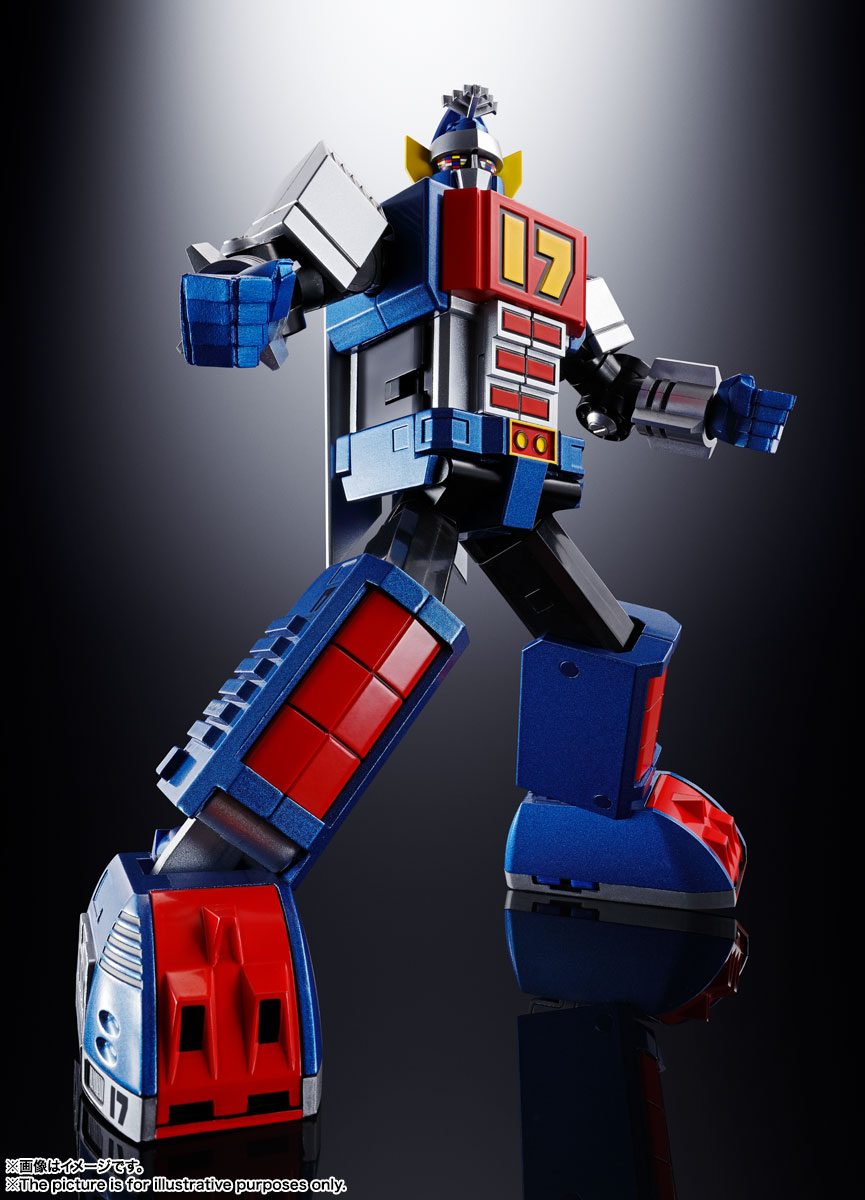
The latest Soul of Chogokin figure was announced last month, and it’s Daitetsujin 17 (pronounced “One-Seven”) from the 1970s tokusatsu series by the same name. It was created by the very father of tokusatsu, Ishinomori Shotaro, and features the classic “little kid remote-controlling” giant robot motif that began with Tetsujin 28. Prior to its release, I never watched any Daitetsujin 17, but I decided to check out the first episode, and what I noticed is that the promo images for the SoC version really capture how the toy is designed with a kind of live-action clunkiness seen in the original program itself.
There’s no doubt that this is highly intentional, as the Soul of Chogokin line is famous for trying to get as close to “show-accurate” as possible. Japanese toy reviewer wotafa stated in his look at the POSE+ METAL Gaogaigar that one of the big things differentiating it from the earlier SoC release was that the latter is more faithful to the anime, while the former looks like “Gaogaigar came back from studying abroad in America.” But in contrast to the myriad anime-derived Soul of Chogokin figures, adapting tokusatsu giant robots like Daitetsujin 17 seems to present another sort of challenge.
Whereas the anime robots have to reconcile the contradictions between the (mostly) two-dimensional drawings with the three-dimensional realities of the toys themselves, a different conflict is in play. Tokusatsu shows typically have their mecha appear in two different ways: as a model for transforming and such, and as a costume for a suit actor to fight in. A figure whose goal is to bring the source material to life has to balance these two dominating visuals, and from what I can tell, Daitetsujin 17 looks like it succeeds on that front.
But Daitetsujin 17 is not the only live-action robot to get the SoC treatment, and so I started looking at past instances to see if that characteristic tokusatsu-ness is still present. What I found is that, while not as strongly flavored as Daitetsujin 17, that feel is still present to varying degrees.
The recently released Daileon from Juspion comes from a different era than Daitetsujin 17, but the premium it places on poseability goes to show just how important it is to capture that “guy-in-a-suit” element of the show. Comparing the 3DCG trailer they released to the live-action footage, you can see how much emphasis was put on making sure Daileon could strike all its signature poses, as if to say the very acting of posing defines the feel of Juspion as a whole:
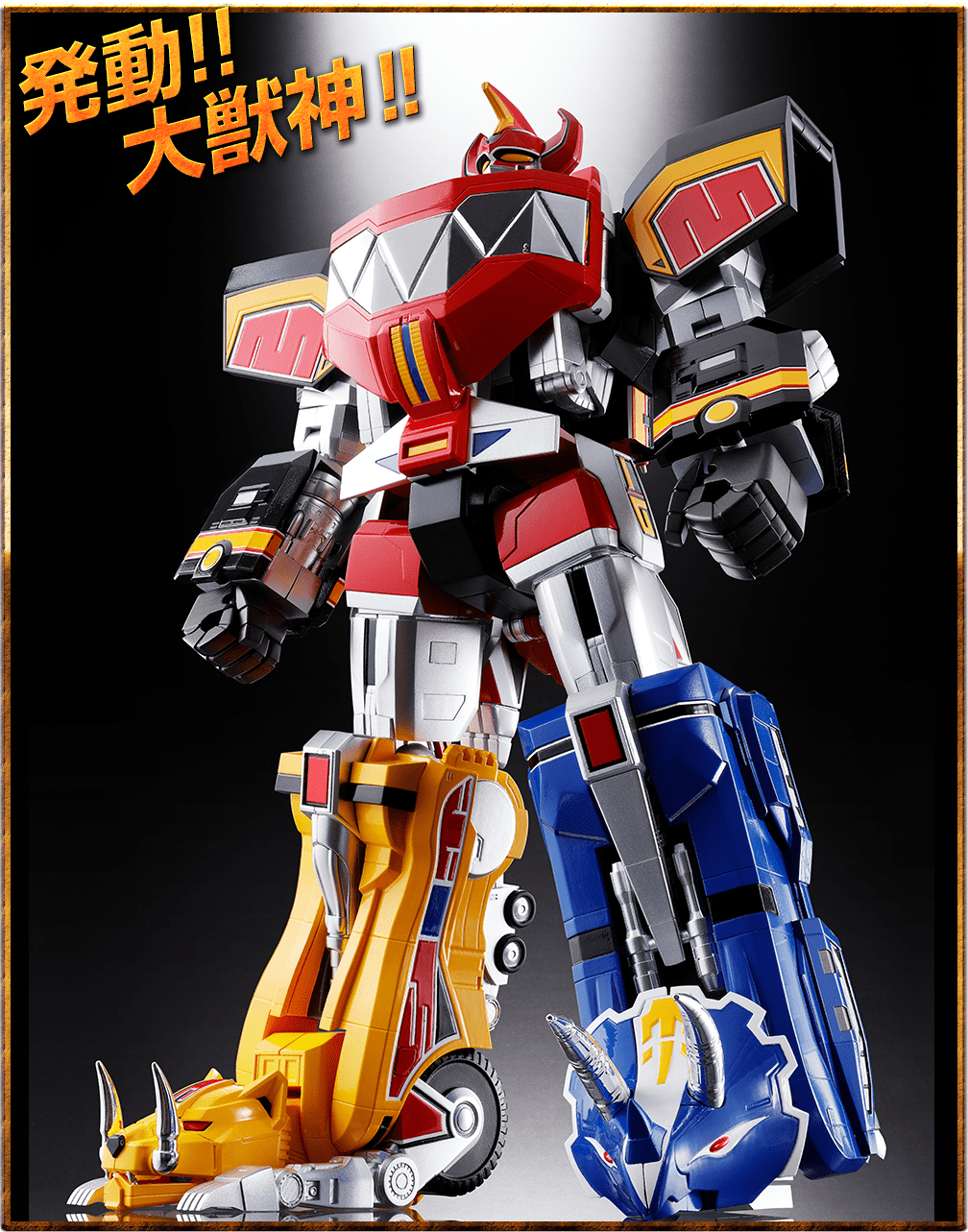
A more popular SoC figure, at least among English-speaking countries, is the Megazord (or Daizyujin) from Mighty Morphin’ Power Rangers. This one looks more like it emphasizes a cool, stocky appearance that’s a bit removed from how the Megazord usually looks in motion.
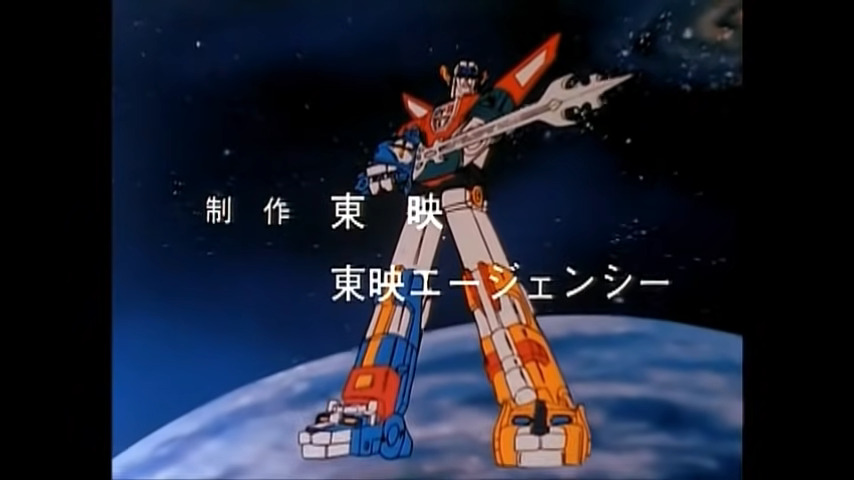
However, when compared to a similar figure released around the same time—Voltron (aka Golion)—the contrast in proportions between the two really drive home how the Megazord was made with different considerations in mind. It’s notable that the SoC Voltron has lankier proportions than its original toy from the 1980s to be more in line with its iconic pose from the anime’s opening.
This trend continues all the way back, whether it’s Leopardon from Toei’s Spider-Man, Battle Fever Robo from Battle Fever J, or King Joe from Ultra Seven.
The Daitetsujin 17 figure seems to most greatly embody the concept of tokusatsu-faithfulness, and I think that speaks to how far the Soul of Chogokin line has come. Every year, it seems to get more and more impressive, and I have to wonder what they’ll tackle next. Although the Daitetsujin 17 and many of the tokusatsu-based figures aren’t my priority, I find I can appreciate the lengths they’ll go to making the biggest nostalgia bombs possible.
WARNING: SPOILERS FOR THE FIRST GAOGAIGAR VS. BETTERMAN NOVEL
The Hakai-oh – Gaogaigar vs. Betterman web novel series has been a blessing for giant robot fans. Taking place in the Gaogaigar universe ten years after the cliffhanger ending of the Gaogaigar FINAL OVAs, it tells the story of how the world has changed since the Gutsy Galaxy Guard got trapped in another universe, and the new challenges those on Earth must face. A now twenty-year-old Amami Mamoru has gone from plucky kid companion to a seasoned robot pilot in his own right, working alongside his fellow alien adoptee Kaidou Ikumi to control Gaogaigo, a successor to the King of Braves in the fight against the forces that threaten the world. The series is being collected into print novels, and that’s the way in which I’ve been reading it.
The end of Part 1 saw the triumphant return of Shishioh Guy, the original pilot of Gaogaigar. However, his comeback was not without cos,t as the robot lion Galeon nobly sacrificed itself to free Guy from the clutches of their mysterious god-like adversary, Hakai-oh (“World-Conquering King.”) The second novel, Part 2, picks up directly from that point with a new challenge: a reunion with some old and familiar faces, not as allies but as enemies. Guy and Mamoru must fight across the world, respectively as the Mobile Corps Commanders of the Gutsy Galaxy Guard (GGG Green) and the Gutsy Global Guard (GGG Blue).
Genuine Care for Lore and Characterization Alike
When I read Gaogaigar vs. Betterman, I’m always struck by how much attention is paid to its own history and lore. While it can sometimes get a little too into the weeds, the general feeling that comes across is real affection and respect on the part of the creators for the universe they’ve created, as well as the fans who have embraced these stories. From the way fights play out to moments of character introspection, everything and everyone is portrayed with a robust three-dimensionality that rewards readers who remember both Gaogaigar and Betterman.
For example, we’re reminded that Neuronoids (the robots of Betterman) are powered by artificial brains based on neurological patterns of actual species. This novel answers the question of what brain is in Gaogaigo: a dolphin from the Gaogaigar video game who was turned into a G-Stone cyborg like Guy, and who ultimately had to pass when the “Invisible Burst” that compromised electronics before the successful establishment of the Global Wall made it impossible to maintain the dolphin’s cybernetics. During a fight, it’s revealed that Gai-go is actually extremely strong in underwater combat—a product of being based on a marine creature.
There’s also a side story at the end of the novel that takes in the space between Part 1 and Part 2, where Guy and Mamoru visit a transit museum to see the original Liner Gao, the bullet train that becomes the shoulders of the original Gaogaigar. As they converse, the topic of the Replicant Mamoru from GaogaigarFINAL comes up. While Repli-Mamoru ended up being merely a clone of the real Mamoru, Guy still carries a lot of guilt over killing him—especially because Guy hasn’t aged and still remembers that trauma as if it were mere weeks ago. It would have been all too easy to forget that part of the OVAs, especially because of the grandiosity of its later battles, but both the author (former Gaogaigar staff Takeda Yuuicihirou) and supervisor (the original director, Yonetani Yoshitomo) put in that extra mile.
As a funny little moment during this side story, Guy is less astounded by the giant “Global Wall” defense system that allows wireless communications to work after a previous disaster than he is by Mamoru’s smartphone. When he last left, beepers (like Mamoru’s special GGG version) were still the norm, and to see the progression of human technology (as opposed to G-Stone technology derived from Galeon) puts a smile on Guy’s face.
Spotlight on Betterman
Because Gaogaigar is the bigger franchise between the two marquee titles, it gets the (robot) lion’s share of the attention overall. However, Part 2 does devote more pages to the Betterman side of things than previously—while the first novel’s Betterman-focusedpages are mainly about the Somniums (the titular “Bettermen”) and the question of whether they would help defend the Earth, this novel explores the original main characters, Aono Keita and Sai Hinoki, in greater detail. In particular, Keita was a relatively minimal factor in Part 1, but here, his romantic relationship with Hinoki is front and center for a significant portion of the book. Keita’s portrayal is interesting because of how humble his situation is. Rather than staying in space with Hinoki (who has since become highly educated and is a science officer for GGG Blue), Keita is without a college degree and works at an electronics store, where his otaku knowledge makes him an ideal employee. But Keita also works hard with the dream of providing a home that Hinoki can come back to, especially because Hinoki tragically lost her family as a young child.
The color insert at the beginning of the novel also has colored design images of Keita and Hinoki courtesy of the original character designer, Kimura Takahiro. As a huge fan of Kimura’s art (and his work creating Hinoki), it’s a welcome addition.
Intense(ly Clever) Battles and the Value of Experience
The real meat and potatoes of Part 2 are the many fights that take place throughout. Because they’re a pretty major surprise and make up such a huge portion of the story, I’m going to put an extra SPOILER WARNING here.
While there’s a bit of fighting between Guy and Betterman Lamia that makes the Gaogaigar vs. Betterman title technically true, the main thrust of conflict in Part 2 comes in the form of the old Gutsy Galaxy Guard members who have now been taken over by the “Triple Zero” energy that comes from Hakai-oh. Now greatly powered up and known as the “Hakai Servants,” Brave Robots and human GGG agents alike now fight against the Earth with the goal of bringing “divine providence” to the universe.
The first character who shows up to oppose the heroes is actually Hakai Mic Sounders, and I will say that “Evil Mic Sounders” is indeed quite a trip. Still using his characteristic mix of English and Japanese, it’s easy to not take a line like “SORRY, but I have to destroy you” seriously—that is, until you’re reminded of how powerful Mic truly is. With the ability to produce sound waves that can break down anything (if given the right information), Mic Sounders is capable of rendering even the toughest armors useless. The only reason they win is because a Betterman who can control sound herself is able to provide a counterbalance.
That battle introduces the recurring idea in the fights against the infected Brave Robots: GGG is a great asset when on the side of humanity, but beyond dangerous when its powers are turned against Earth. Goldymarg’s signature toughness (enough to withstand the power of the Goldion Hammer when in Marg Hand form) makes him able to withstand just about anything, and it takes a “Goldion Double Hammer” weapon wielded by Guy in Gaofighgar to even begin to even the odds. Tenryujin and Big Volfogg make for similarly intimidating opponents with their own unique strengths, Volfogg’s role as guardian of a young Mamoru in the past providing an extra layer of stakes in that particular fight. But it’s also not just the robots who are a threat—the human members have also become Hakai Servants, and the tactical prowess of Commander Taiga and the genius hacking skills of Entouji provide extra hurdles for GGG Green and GGG Blue.
Another recurring theme throughout these fights, however, is that the time dilation difference between the old GGG members and the current ones means that Mamoru and the others have ten years of their own experience under their belts. There’s a moment at the beginning of the novel where Mamoru says that he’s willing to relinquish the role of GGG Mobile Corps Commander to Guy, only for Guy to reject his offer and to praise Mamoru for having clearly been through many tough trials of his own, and at this point actually has fought with GGG for longer than he has. He further explains that he was originally just the right man for the moment, having been an astronaut transformed into a G-Stone cyborg to save his life, and wasn’t a born fighter himself.
And so we see that sentiment play out. In the fight against Tenryujin, her younger “sister” Seiryujin, the latter targets Tenryujin’s knees—a seemingly odd move, until one remembers that the individual robots that compromise the “Ryu” series all turn upside down to combine, meaning their chests (and thus their Hakai-infected AI boxes) are located in the legs. When dealing with Entouji’s computer virus, GGG Blue member Inubouzaki Minoru takes center stage. Originally a jealous rival of Entouji’s who became a Zonder in the TV series, and later returned as an ally when the Gutsy Geoid Guard became the Gutsy Galaxy Guard, Inubouzaki shows the progress he’s made the past decade not only in terms of improved skills but also being more at peace with himself and his past.
Just as everything seems to be going Earth’s way, however, the next Hakai Nobility appear: Goryujin and Genryujin (who both have access to THE POWER), as well as Soldat J and King J-Der. The preview of the next (and last!) volume hints at what’s to come with the key to victory: something called “Goldion Armor.”
To the End
The web novel version of Hakai-oh – Gaogaigar vs. Betterman has concluded, and the concluding print release is supposed to be out this summer. While I could jump in and start reading it online now, I think I’m going to wait once more. If I could wait close to 15 years before, I can withstand a few months.
In the meantime, I’ve also been reading the manga adaptation of this series, which provides some of the visual flair that’s inevitably missing from the prose version. I can only hope that we might see an actual anime come out of this someday.
1979’s Mobile Suit Gundam is a milestone in anime history, a show whose evergreen influence as the ancestor of the “real robot” genre has continued across four decades. But like so many innovative and revolutionary works, it’s not as if Gundam changed everything overnight. Nowhere is this clearer than with Gundam’s immediate Sunrise robot anime successor—1980’s The Unchallengeable Trider G7, a series so straightforwardly kid-oriented that it feels like the anime’s goal was to try to turn back the hands of time.
Trider G7 (sometimes written as Tryder G7) is the story of Takeo Watta, an elementary school boy who also happens to be the president of his own business, Takeo General Company. Having inherited it and a powerful giant robot called Trider G7 from his deceased father, Watta has to juggle being a kid who attends school just like everyone else, keeping his company in the green, and defending the Earth from the Robot Empire of Planet Gabarl.
Titled in Japanese as Muteki Robo Trider G7, the anime is considered a part of the Muteki trilogy along with Muteki Choujin Zambot 3 and Muteki Koujin Daitarn 3. But while Daitarn 3 could get extremely serious at times, and Zambot 3 was consistently brutal, Trider G7 steers clear of that mood, instead presenting itself as a lighthearted fantasy for a young boy audience. Nothing sums this up better than Trider G7’s launch sequence, which involves having the robot emerge from the local playground (of which its head is a centerpiece) while a loudspeaker announcement kindly requests everyone clear the area. Unlike its fellow Muteki anime, Trider G7 is not directed by Tomino Yoshiyuki, instead being under Sasaki Katsutoshi. This likely helps the “not-traumatizing” aspect.
Unlike many series I write final reviews for, I did not watch all 50 episodes of Trider G7. Instead, I used the 10 episodes temporarily uploaded by the Bandai Spirits channel on Youtube as a kind of “essential episodes” list, supplementing it with some reading. (Side note: that project in the link provided never got off the ground). While this does compromise my ability to gauge the complete series from beginning to end, I still think it gave me a good idea overall. My verdict: Trider G7 is a pretty mediocre anime, and it feels intentionally so.
I’m not someone who disparages children’s shows or episodic ones, as I believe both have important places in anime. Some of my favorite works are “incident-of-the-week” and aimed primarily at kids, but what I love to see is when they try to really bring something to challenge their audience while still being fairly conventional. Trider G7 only ever seems to hint at greater potential without ever reaching it.
The series acknowledges that Watta is still a kid, and that the burden of being a company president is not easy for someone so young, but it’s mostly played for laughs. The Gabarl Empire is run by a super-AI called Mother Computer Sigma, and one of the recurring flaws of the enemy Mega-Robots is their reliance on pre-programmed data in battle, unlike Watta’s human intuition and experience. This is touched upon somewhat often, notably in an episode where we learn that Trider G7 itself was built by the Robot Empire’s top scientist who had defected due to the soulless nature of his designs, but it doesn’t go beyond “rah, rah, human spirit.” It also doesn’t have a whole lot of style points, given that the robot itself is nowhere near as cool as Zambot, Daitarn, or the Gundam; the animation isn’t even off-the-wall enough to make up for a bland design like with Gold Lightan. Trider G7 does have a female character whose popularity is fairly enduring, an attractive OL named Sunabara Ikue (who also provides the aforementioned loudspeaker warning), but that seems to speak more to her status as an early crush for young boys rather than anything related to the anime’s quality.
I do want to give some praise to the opening and ending themes because of how silly and creative they are. The opening has the amazing line, “Do we fight to protect our company funds? NO! We fight to protect peace on Earth!” The ending, in turn, has lyrics that basically sound like a speech delivered to all employees working at a company, with lines like “The future fate of our company is about 1) guts and 2) effort.” Amazing. The legacy of The Unchallengeable Trider G7 is mainly in nostalgia through things like Soul of Chogokin toys and appearance in Super Robot Wars, where the aesthetic can be updated just enough that it can give adults some sense of what it’d be like to enjoy the series as a child. This is probably for the best, as it’s where Trider G7 shows its strongest self: as a kind of cool, kind of cheesy return to a more innocent era of kids’ giant robot anime.
Giant robot anime began very squarely in the domain of children. Loud, boldly colored robots appeared on TV (at least, once color TV became common), and the toys based on them came full of fun gimmicks and gizmos. Over time, there was a maturing of the genre in many ways, both in terms of themes presented and the aging of fans, so by the time we got into the 2000s, things changed. Between Pokemon, card games, and more, giant robots have just not been the ticket to big toy sales among kids. Thus, most giant robot anime of the last fifteen years rely more on adult tastes and nostalgia, or at the very least have been aimed at young adults. However, every so often, you’ll see moves to try to reclaim giant robots for kids, and they communicate a reality that mecha alone tend not to capture kids’ hearts in this day and age.
Gundam AGE
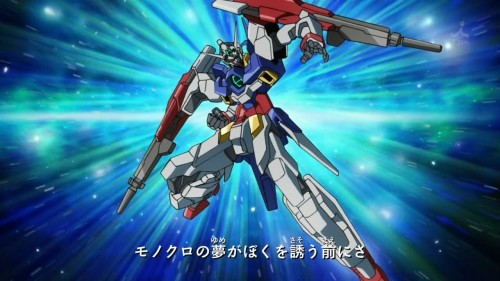
One of the more significant attempts to capture that younger audience was 2011’s Gundam AGE, because of how Gundam is what arguably kicked off the move toward mature audiences all those years ago and because it’s traditionally been such a sales juggernaut. Although keeping the traditional “robots in war” staples, Gundam AGE was a concerted effort to target kids, right down to more toyetic robot and weapon designs. Unfortunately, the series pleased pretty much no one, including me, despite my initially high hopes. The story was a mess, and the model kits failed to attract older and younger customers alike, to the extent that a kitbash of Madoka from Madoka Magica with beefy Gundam arms became more of a sales point than the actual merch. Later Gundam overtures towards kid audiences were more successful via the Gundam Build Fightersand Gundam Build Diversspin-offs, but both treat the mecha as collectible items utilized in virtual environments—closer to the popular style of Japanese kids’ shows.
Chousoku Henkei Gyrozetter
Another instance is 2012’s Chousoku Henkei Gyrozetter, though this one is odd in that what it ultimately tried to promote was not toys or model kits, though some did come out. Rather, like Aikatsu! and Pripara, the bread and butter of Gyrozetter was the card-based arcade game. Ultimately, it was called a major mistake on the part of Square-Enix. Personally, I think the show is very enjoyable, but it’s also arguably better known for its attractive older characters than anything else—so not exactly kid’s stuff.
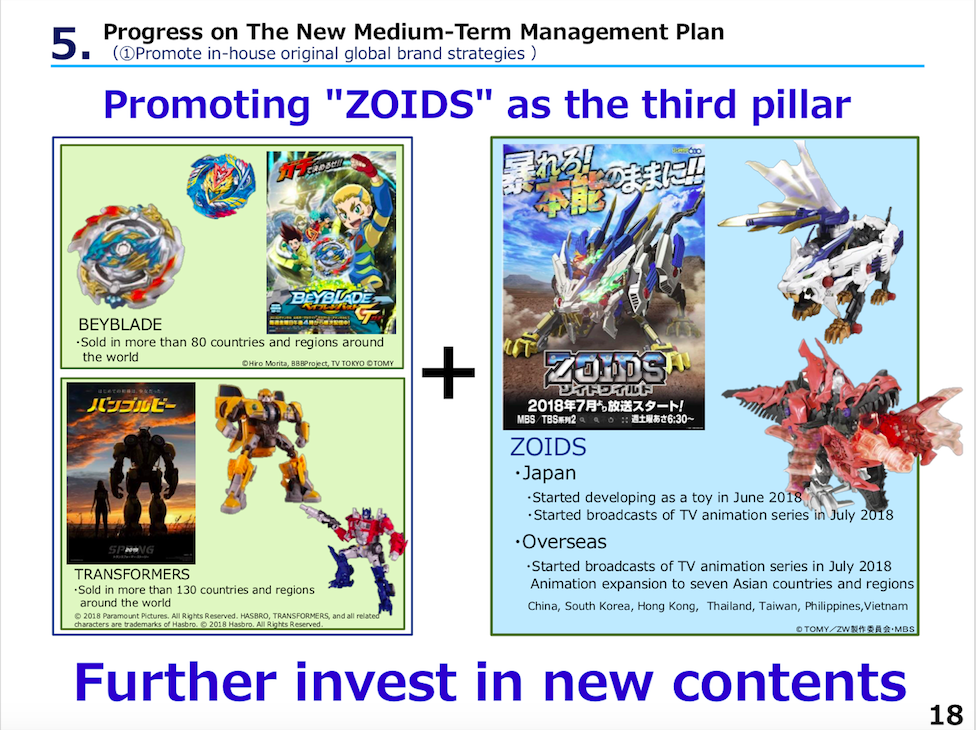
While hitting the mark seems difficult, there is one company that seems intent on making giant robot anime work for kids: toy maker Takara Tomy, the originator of Transformers. In addition to that long-standing international cultural staple (whose success has so many external factors that it’s hard to gauge in terms of success as “anime”), it’s Takara Tomy that keeps taking swings, down to even pushing the ZOIDS franchise as their “third pillar” along with Transformers and Beyblade.
2018’s ZOIDS Wild anime is a continuation of the ZOIDS franchise, which has been receiving animated adaptations since 1999’s ZOIDS: Chaotic Century. Given its longevity, it would be easy to assume that they’re doing something right with their use and portrayal of giant robots, but I think there’s a key factor that keeps ZOIDS relatively popular: the use of animal-shaped robots as opposed to humanoid ones. The more universal appeal of dinosaurs and cool beasts does a lot of the heavy lifting.
Tomica Kizuna Gattai Earth Granner
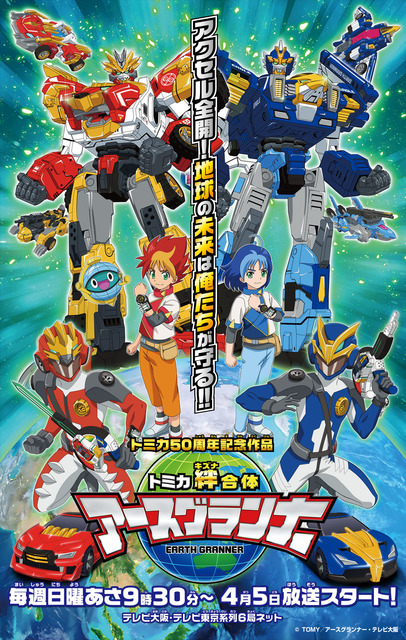
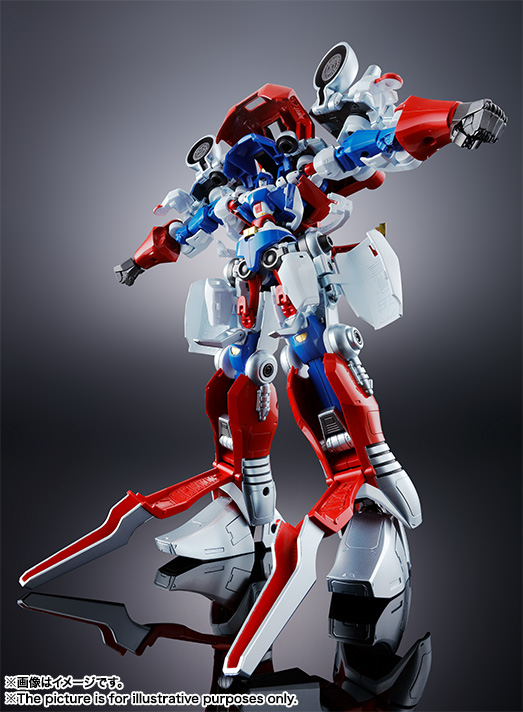
Along this vein, Tomica Hyper Rescue Drive Head (2017) and Tomica Kizuna Gattai Earth Granner (2020) both involve motor vehicles that can transform into robots—and, unlike Gyrozetter, have the many toys to show. The Tomica line is primarily more about cars than mechs, and the toys have enormous success in Asia. Again, the robots are not the main popularity factor, acting instead as an additional flourish to push it over the edge. Transformers, in a sense, combines both ZOIDS and Tomica’s appeals together, while also banking on brand recognition. Moreover, while giant robots are still a staple of tokusatsu, they’re more a secondary component to the color-coded-hero fantasy that defines these live-action series. The previous Tomica tokusatsu series use cars in a similar manner.
Shinkansen Henkei Robo Shinkalion
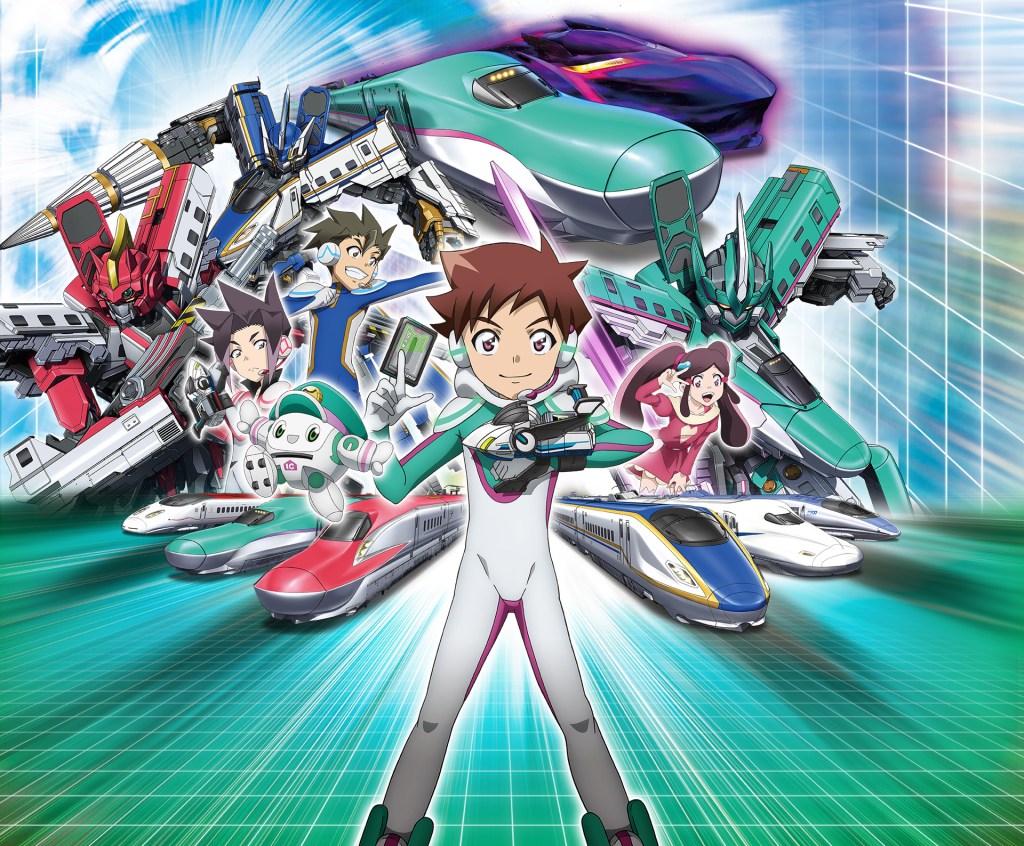
The strangest case might very well be 2018’s Shinkansen Henkei Robo Shinkalion THE ANIMATION is a series about bullet train (“Shinkansen”) robots sponsored by the East Japan Railway Company. Somewhat like Gyrozetter, there’s an unconventional ultimate goal—promoting Japan’s high-speed rail system—but unlike Gyrozetter, the toy and merchandise line is definitely there. In addition, while ZOIDS Wild, Drive Head, and Earth Granner all target boys ages 10-12, I can’t help but notice how aggressively kid-friendly Shinkalion’s aesthetics are, from the character designs to the story. What really makes Shinkalion an oddity, however, is that its success isn’t measured solely in toy sales, but also the degree to which it creates good PR for Japan’s public transportation.
It does sadden me that mecha don’t appear to carry an inherent appeal for kids these days, but I do think that sprinkling in robots can potentially push these franchises into becoming more memorable and enjoyable. Also, I’d like to think that Takara Tomy is laying down a foundation for it to happen in the future, and much like how adults who grew up with super robots in the 1970s grew attached to them, perhaps in a couple of decades we’ll see nostalgia for the Shinkalions and Earth Granners of the world.
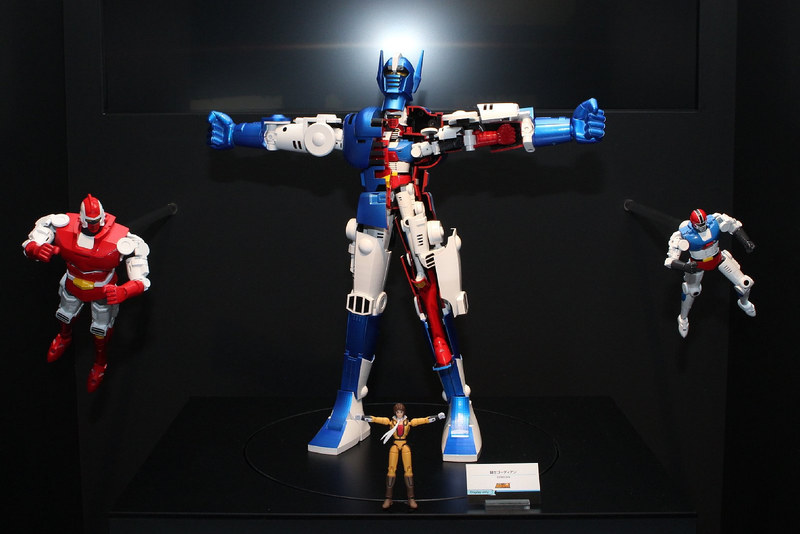
In the world of giant robots, what you see traditionally has not always been what you get. The cool robot that appears in an anime might look significantly different from the toy it’s based on due to the fact that metal and plastic are limited by the physical world in ways drawings are not. The difference between the gimmick-laden early Gundam toys and the more show-faithful model kits that followed is a prime example. This disparity is why the announcement of the Soul of Chogokin Gordian is of particular interest to me, despite me not having much emotional investment.
When it comes to being true to both toy and anime sides, the Soul of Chogokin line of deluxe figures is arguably the best there is, and I have no doubt that they’ll faithfully reproduce the designs from the anime Gordian Warrior. By itself, this would be the story of an obscure 1970s series getting its due in the Soul of Chogokin line, but there’s an extra wrinkle—a child or clone twist, perhaps. There’s actually a robot toy that originally began as a repurposing of the Gordian Warrior line known as Baikanfu (or Vikungfu) from Machine Robo: Revenge of Cronos, and this particular robot was already made into an SoC figure back in 2007. Yet, because the associated anime are so aesthetically different from each other, this practically necessitates two different approaches.
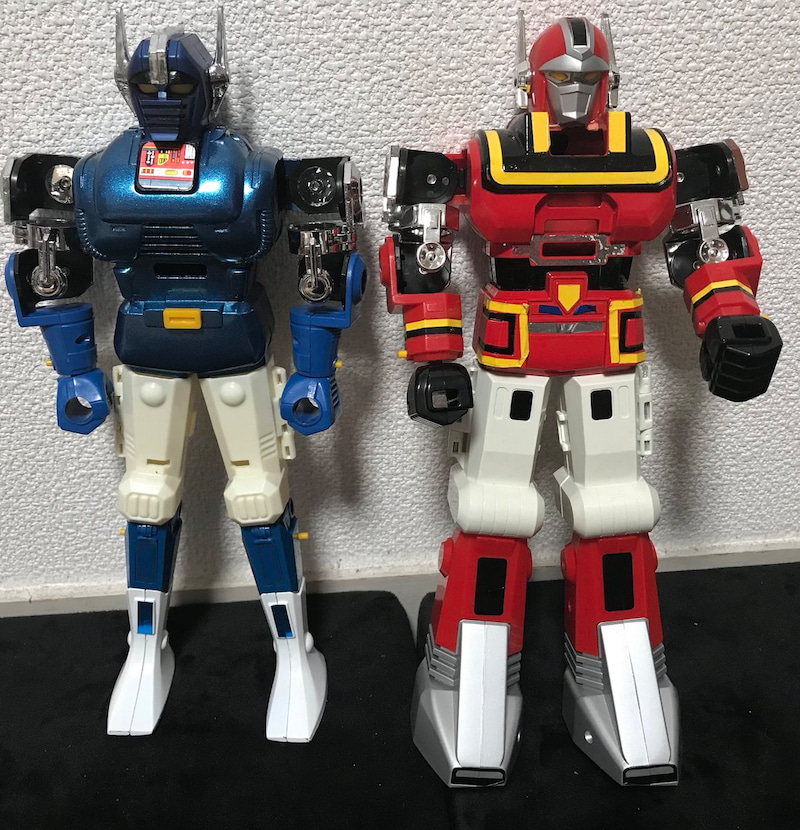
Gordian Warrior has very little presence in the English-speaking world, as its toy came and went as part of the 1980s Godaikin line, and the anime’s only official release (streaming only) was by the now-defunct AnimeSols. Still, one look at the opening is all it takes to understand why the Gordian robots with their Matryoshka doll–like stacking gimmick would be fun and attractive toys. It’s likely why they were revived for Machine Robo: Revenge of Cronos, and when you see the toys from each anime side by side, the connection between the two series is all the more obvious.
But thanks to the magic of art and imagination, these two extremely similar toys end up being portrayed wildly differently on TV. In animation, the three Gordian robots—Protesser, Dellinger, and Garbin—have less exaggeratedly hypermasculine proportions compared to their Revenge of Cronos equivalents, Rom Stohl, Kenryu, and Baikanfu.
Despite Harbin being the biggest robot in Gordian Warrior, its simple blue and white color scheme and its slender body look downright austere compared to Baikanfu. And because the Soul of Chogokin line aims to embrace both the fun of the action figure and the style of the anime, it means getting to see how the same basic toy design ends up interpreted through two different lenses as prestige objects. Where will they differ? Where will they show commonality?
Gordian and Baikanfu are not the only example of designs being reused. One notable example is the Transformer Six Shot, a robot with stuff forms whose toy was repainted and resold as the ninja robot Shadowmaru from Brave Police J-Decker. Like the two stacking robots, Six Shot and Shadowmaru look so different in animation that it’s a surprise to find out their toys are virtually the same.
The Soul of Chogokin Gordian from Gordian Warrior is more than an opportunity for nostalgia, as it’s also a chance to look at how the same line has interpreted it’s design with respect to its spiritual successor in Baikanfu from Machine Robo: Revenge of Cronos. It’s ripe ground for appreciating some smart, nostalgic toy design along with the creative interpretation of toy to anime transitions.
I’ve been playing the heck out of Super Robot Wars T (available via import in English for the Nintendo Switch and PlayStation 4), and as always, I’m into the loving fanfictional goodness that the franchise always entails. When you have all of these different giant robot heroes in the same universe, the interactions are an endless source of amusement and head-nodding affirmation.
Of the many crossover moments little and big, however, there is what I believe to be an unspoken story element that significantly alters the course of one particular series: King of Braves Gaogaigar. This might be mere fan speculation on my part, but I think it also makes total sense.
In the original 1997 Gaogaigar TV series, the main character Shishioh Guy uses an attack called Hell and Heaven to finish off monsters. A little into the series, however, he discovers that using the attack too much does severe damage to his cyborg body, and that overusing it could lead to death. In response to this, his team (known as GGG) creates a new, alternative finisher called the Goldion Hammer, which becomes his default decisive blow through most of the series. It’s only in desperate times when the Goldion Hammer isn’t available that Guy will resort back to Hell and Heaven.
But in Super Robot Wars T, when you meet Guy, the Goldion Hammer is nowhere in sight, despite the story being well past the point in the anime where he was supposed to get the Goldion Hammer. And yet, Guy shows no signs of excessive use of Hell and Heaven. On one level, this is likely a gameplay pacing decision, to keep Gaogaigar from having its strongest attack early on, but I think there’s also an in-story explanation: he simply didn’t have to use it as much in the SRWT universe.
Whereas Gaogaigar and GGG alone fought against EI-01 and the Zonders in the anime, in the game, they occasionally received help from Watta and Tryder G7 (from Muteki Robo Tryder G7), as well as Maito and Mightgaine (from The Brave Express Mightgaine). In other words, in SRWT, Guy had enough assistance in his many battles that, by the time we meet him in-game, he isn’t anywhere near as overburdened as he is in the anime.
It’s considerations like the above which make Super Robot Wars T (and Super Robot Wars in general) such a treat. I’m looking forward to seeing whatever other crazy moments are in store.