Shining in the Sea of Stars: “Hakai-oh – Gaogaigar vs. Betterman Part 3” Novel Review

WARNING: SPOILERS FOR THE FIRST AND SECOND GAOGAIGAR VS. BETTERMAN NOVELS

Hakai-oh: Gaogaigar vs. Betterman Part 3 brings the story of the Gaogaigar universe to a close, and what a journey it’s been. 24 years after the original TV series, we finally know the fates of all our brave heroes, and the tension and excitement never let up through this massive third volume. It truly does feel like the end of a long journey.

(Seriously, this thing is a monster compared to the first two.)

King of Kings

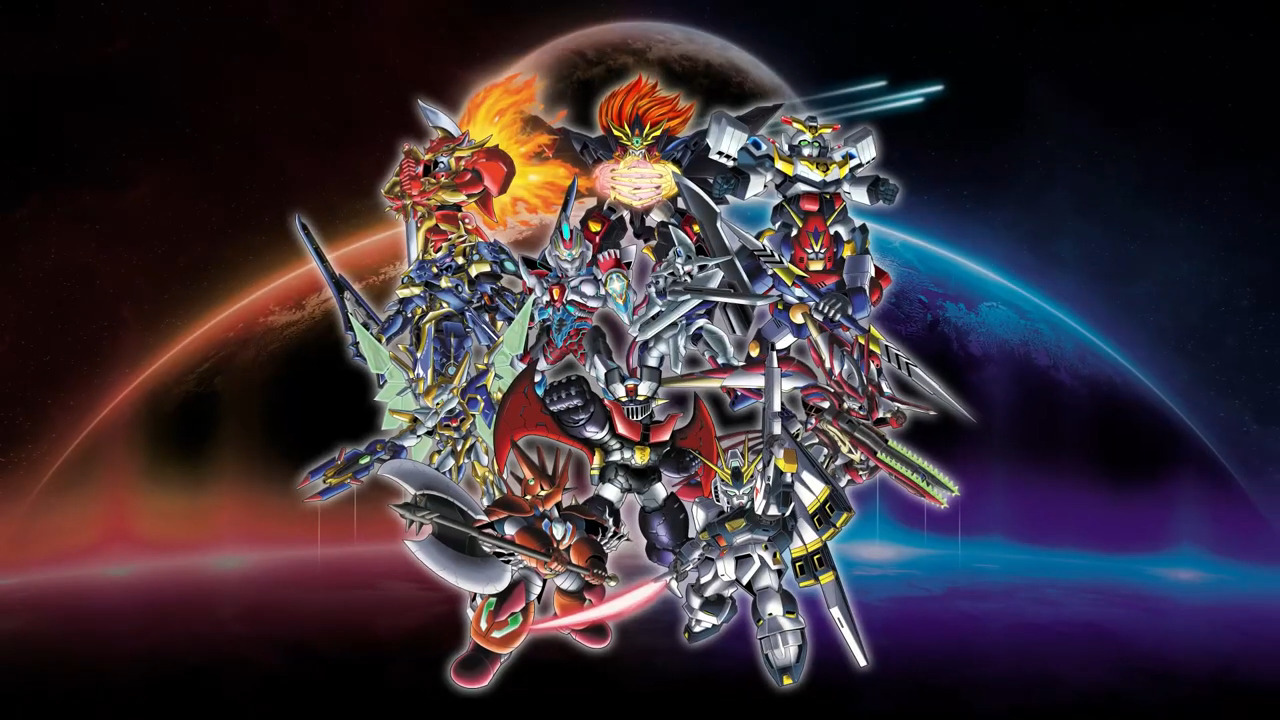
To start, since the release of Part 2, something major has happened to Gaogaigar vs. Betterman: It’s gotten an official name! The novels didn’t get licensed; rather, it became one of the titles in Super Robot Wars 30, where it was announced in English as King of Kings: Gaogaigar vs. Betterman. The term “Hakai-oh” is quite tricky to translate without sounding awkward and retaining enough of the meaning of the Japanese, and I find this to be an incredibly good compromise that also makes sure to pair well with the classic King of Braves Gaogaigar English title. It also gets translated as Conqueror-King in dialogue. Note that I call it Hakai-oh in the title mainly for consistency with my previous reviews, but I like these translations enough to use them for this review.

Gaogaigar vs. Betterman being in SRW30 also means that’s how most English speakers are likely experiencing the story, but there are a number of notable differences. So this review (as well as the previous two) might be worth checking out just to see how this plotline was originally handled.

The Story

Part 3 starts off with some of the Gutsy Galaxy Guard restored to their normal selves, with many dangerous and notable exceptions remaining. These “Conqueror’s Thralls” (previously translated as Hakai Servants) are still under the powerful influence of Triple Zero, which Mamoru, Guy, and the rest now understand to be not only the source of The Power, but the energy produced from a dying universe during a Big Crunch. The Thralls seek to bring everything to “provenance”—a reset to oblivion—leading to some fierce and emotionally difficult battles. Meanwhile, the Somniums still act according to their own beliefs, but their mysterious ties to humanity are tested, and their true motives are revealed. Mamoru and Ikumi’s Gaogaigo, Guy’s Gaofighgar, and more must be braver than ever before if they want to free their friends and ultimately fight against the Conqueror-King Genesisc Gaogaigar. But as they discover in their struggle, courage might just be the antidote to Triple Zero.

A Universe Unto Itself

I’m being something of a broken record at this point, but more than ever, the way in which the novel draws upon the entirety of Gaogaigar lore is still one of my favorite aspects. There’s enough explanation so that those who don’t have a degree in Braveology can still follow along, and it never feels overly reliant on nostalgia or old ideas. 

How does Mikoto being part-Zonuda affect her as a Thrall? What does Guy’s evoluder biology say about his potential future? How does the time dilation that impacted the old GGG affect their relationships with their friends and family back on Earth? The Somniums can fuse with each other to form Betterman Cataphract, but how far can they take it? All those questions are asked and answered while never losing sight of the main story, the fight against the King of Kings.

Even the climax towards the end of the novel is a huge nod to the final episode of the original TV series, one that feels like a progression rather than a retread, and builds upon an overall satisfying experience. 

The Best Battles Ever?

If there’s one thing that Gaogaigar is known for, it’s amazing fights. Even in pure prose without the benefit of animation, this still applies. I’m even tempted to call these particular fights the best the franchise has ever seen, and it’s largely because of how each one feels unique from the others, the way the stakes keep building up, and the desperate solutions that they need to find. How can they compete with Commander Taiga, whose stalwart leadership provided the backbone of GGG? The Goldion Crusher was their ace in the hole in the conflict with the 11 Planetary Masters of Sol in Gaogaigar FINAL, so what hope do they have when faced with a Silverion Crusher wielded by a terrifyingly powered-up Conqueror King J-Der? 

In each case, there’s the exciting push and pull so characteristic of Gaogaigar battles, but there’s also the sense that the characters are doing all they can to strategize, persevere, and fight. There’s a moment in one of the later battles where they creatively utilize the technology that allowed Gaogaigar to upgrade its Protect Shade and Broken Magnum into the Protect Wall and Broken Phantom, and Guy’s uncle Liger contemplates how, unlike most everything else they use, this was a purely human invention by Guy’s father, Leo. In Liger’s view, the Wall Ring and Phantom Ring are representative of humanity building upon and contributing to the boon of alien technology they received from Galeon so long ago—a fusion of Earth and Green-Planet science, not unlike Gaogaigo. It’s a beautiful moment.

And perhaps most importantly, the final volume answers whether “vs.” means “team up” in the Dynamic Pro tradition, or “confrontation” in the more conventional sense. The answer is a creative one.

Romance

While there are many couples and would-be couples in the Gaogaigar universe, it’s never been the focus in any real way. Here, though, the topic takes center stage in what feels like a pay-off. Whether it’s Mamoru and Hana as childhood sweethearts, the forged-in-combat bond of Soldat J and Renais, the central romance of Guy and Mikoto, or the more down-to-Earth and relationship of Keita and Hinoki, everything pretty much comes to a head here. All of them are entertaining to read, and I’m especially fond of how J’s versions of care and compassion tie into his warrior ethos—nothing like handing your girl your finishing move so she can wield it herself.

Issues

One criticism I have is that the series is 100% heteronormative in its romances. I’m not saying that they needed to reveal that Ikumi or some other character was gay or anything, and I understand that all of the above relationships are basically tying up loose ends from Gaogaigar and Betterman, but it’s still nevertheless something missing that could show that time has truly moved forward. I don’t think this omission makes Gaogaigar vs. Betterman bad or unenjoyable, but I find it’s worth pointing out.

I also think that the Betterman parts are significantly more confusing than the Gaogaigar sections. This might be because that series is less fresh in my mind, but one big difference is that most of the Gaogaigar-side characters come from the TV series and OVA. In contrast, while the human side of Betterman sees a large number of returning faces, the Somniums (the titular Bettermen) are for the most part new characters, and so it feels like there’s less to latch onto.

The last thing I’ll mention here is that the series has kind of a complex relationship with its portrayal of characters with disabilities. There’s great emphasis on how the scientific and technological efforts made have given those with disabilities the opportunity to lead lives they might not have been able to otherwise, and that what fuels this is largely love and compassion. At the same time, you have characters like Guy who, even in his previous cyborg form, comes across more as a “supercrip.” I’m not an expert in this subject, so I’d be interested in hearing others’ takes on this matter.

Favorite Touches

This is where the SPOILERS abound, so I’m putting a WARNING right here.

I’ve already touched on a number of things that stick out in my mind, but I want to elaborate a bit more on them here. It’s mostly the battles.

The aesthetic of the Silverion Crusher is nothing short of magnificent, with the Crusher resembling a giant flaming King J-Der head like it’s the most terrifying dullahan ever. The battle against it also has many moving parts that feel necessary because of what an overwhelming adversary it is. Gaogaigar fans know the sheer destructive force that is the Goldion Crusher, and the way they have to basically attack the units that spread out to create the hammerhead in order to prevent it from fully deploying, or else it’s game over. The way the fight comes down to Guy and Ikumi battling J and Renais in order to purify them also has a feeling somewhat akin to the final battle in Gurren-Lagann

The struggle against Conqueror-King Genesic is chock full of astounding elements, such as the fact that the fight is led by Gaogaigar (Guy), Gaogaigo (Mamoru and Ikumi), and Gaofighgar (now controlled by Renais) working together to take it on, with King J-Der and Kakuseijin V2 for support. In other words, it’s triple Gaogaigar vs. Genesic. As they fight, they manage to break apart Genesic’s Final Fusion, but then have to fight the separated but individually sentient Genesic Gao MAchines all at once, resulting in an additional challenge.

You may be wondering how it’s possible that vanilla Gaogaigar is part of this fight, but its core is actually the original Galeon pulled from the past by the Somniums. What’s more this Gaogaigar ends up combining with Betterman Cataphract to form Musou Gaogaigar, or Dream Armor Gaogaigar. The narration mentions that you could alternately call this Gaogaigar’s “Great Gattai,” making a reference to other Brave series combinations like Great Exkaiser and Great Might Gaine. 

Then, in that same struggle, we see the aforementioned use of Phantom Ring technology. More specifically, it’s actually about turning the “Global Wall” that helped restore electronic communications back to the Earth and switching it to a “Phantom Mode.” The very fact that the Global Wall was sitting there as a pseudo-Chekhov’s gun filled me with a kind of fiery joy—it had already played a role, but here was a second and even bigger one that feels both out of nowhere and logically consistent. That’s actually kind of this whole novel series in a nutshell. 


In a similar vein, King J-Der ends up combining with Earth’s technology to form the amazing-sounding Dimension Ten-TImes Pliers, which is King J-Der with Dimension Pliers for fingers. I want to see this in an actual animation so badly.

And during the climax, when it’s time to form Final Gaogaigar for the last battle, it’s not just Guy fusing with Genesic Galeon, but all the Genesic Gao Machines having fusions with other characters. It’s a lot like the finale of the TV series, where the Brave Robots have their AIs installed into the regular Gao Machines because they’ve been disabled by Mikoto-as-Zonuda. Goldion Armor and the Goldion Finger attack (essentially a giant hand consisting of Goldion Hammers for fingers) is amazing, but the thematic full-circle from the fully fused Final Gaogaigar stands out even more.

After all the fighting, we’re treated to an epilogue and an extra story. In them, we see how Mamoru and Hana have a child named Tsubasa (gender unknown), but also that Guy and Mikoto will accompany Galeon and the J-Ark crew to explore the universe. In other words, Guy is going back to his original dream of being an astronaut, and I think it’s such a beautiful way to end his story.

The “FINAL” Word

I love that these novels exist. While I wish this could have been animated from the start and given the treatment it truly deserves, the story told in these pages soars in ways that make me smile and have pride in being a Gaogaigar fan. If Gaogaigar vs. Betterman is a love letter, then it’s one that turns a romance into a marriage, and embodies everything great about the universe of its characters and heroes. In the afterword, both the original director who supervised these novels, Yonetani Yoshitomo, and the series author (who actually wrote for the TV anime way back), Takeda Yuichiro, approached these novels with the sense that they would cap off the story of Gaogaigar as a whole. I would never be against a sequel, but the fact that we the fans even got a conclusion is more than I could have hoped for, let alone having it end so well.


The Ongoing Dream of a Truly International Super Robot Wars

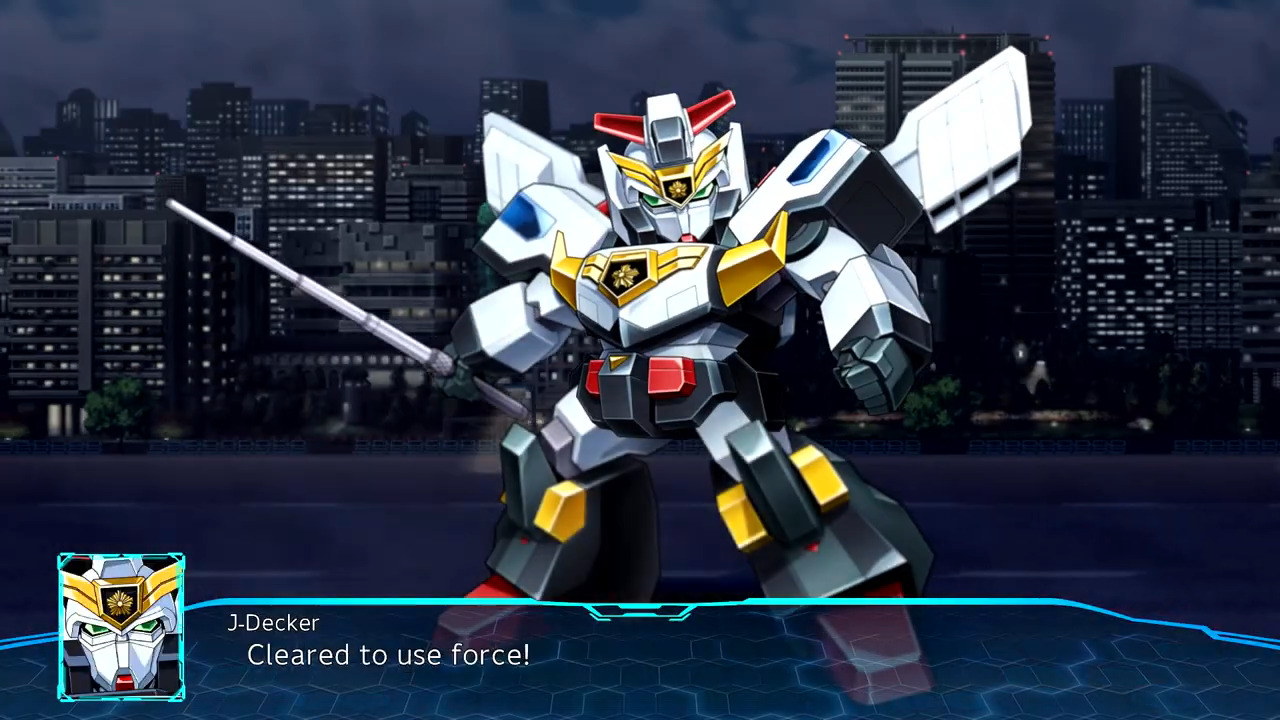
In recent years, the Super Robot Wars franchise has been looking hard at international fans, and that has been reflected in part by the mecha that show up in it. In interviews for Super Robot Wars T and Super Robot Wars 30, the game’s director mentions that titles like Gun x Sword and J-Decker were, in part, nods to fans outside Japan. It reminds me of how different Japanese giant robot series became the spark of inspiration in different parts of the world, as well as how I once had my own half-formed idea for an American-fandom-centric SRW. Together, all of this makes me want to entertain the notion of a truly international SRW that puts the entire spotlight on those anime and manga that introduced countries to mecha and maintain that enthusiasm.

Shows like Golion, Grendizer, Transformers, Groizer X, etc. Furthermore, I’d like to see the roster be even broader than that. In that respect, limiting it to things that can connect to anime might even be too narrow. Ideally, a game like this would include Robot Taekwon V and The Iron Giant.

One question that arose as I engaged in this thought exercise is whether series that were heavily localized should come in their original Japanese forms or their adaptations. Should Golion and Dairugger be two separate titles, or should they be joined under the Voltron banner? Then it hit me that Super Robot Wars is all about modifying plot details to make crossovers work. Thus, you could split the difference between the Japanese and the American versions, and just find a way to make Golion and Dairugger connected within the new storyline.

There are giant robot fandoms around the world with their own idiosyncrasies, and I’m actually a bit sad that I don’t know them all. I wish I was an experienced polyglot so I could explore these communities and memories in greater depth. I think the real reason I’d love to see an international SRW is because I want something that celebrates these histories.

Sakura Wars, Super Robot Wars 30, and the DLC Hype Train

Sakura Wars is in Super Robot Wars 30. That means, for the second time in history, a Sega giant robot video game series is debuting in Super Robot Wars as a newcomer—16 years after Virtual On broke new ground in Super Robot Wars Alpha 3. I find this to be an important moment in SRW history, and not only because Sakura Wars has been long anticipated by fans. The other big factor is that Sakura Wars is the first new series to come in as DLC, and the concept of continued hype via shocking entries reminds me a lot of one of my other favorite game franchises: Super Smash Bros.

Super Robot Wars as a whole predates Super Smash Bros. by almost a decade, but they’re built from a similar concept in terms of promotion: Show all the varying franchises that are in each game, and have players freak out over the fact that what was thought to be impossible is, in fact, real. Even on Youtube, Super Robot Wars 30 has been getting the reaction videos common to Smash, albeit on a smaller scale. But SRW has long done it in one giant cannon fire, releasing one massive preview video, as opposed to the drip-drop approach that Smash has utilized since the Brawl website days. While there are only two batches of DLC for Super Robot Wars 30, I like the idea that there are still surprises on the table after we thought things were done. I don’t necessarily feel this way about DLC in general, and the difference is that SRW and Smash alike are generally already filled to the gills with content.

It’s also funny to think about how the series that go into SRW are collectively older than what shows up in Smash. The oldest mecha manga dates all the way back to the 1960s (namely Tetsujin 28), while the Duck Hunt light shooter game (before video games even really existed) came out in 1968. While Nintendo and video games in general are bigger business these days, one could argue that the resources that make up Super Robot Wars are bigger and more legacy-defining in their own way.

Super Robot Wars 30 comes out in a couple of weeks, and I already have my Ultimate Edition pre-order. Unlike previous games, this one is officially available in English in an easy-to-obtain way via Steam, which is where I’ve purchased it. I’ll be eager to try out the Sakura Wars units, and everything else the game has to offer. Most importantly, we’re gonna get some sweet-ass Sakura Wars music.

It might be about time for me to work on another Gattai Girls post too…

The Anime THEY Don’t Want You to Know About: Makyou Densetsu Acrobunch

For many years, the only impressions I had of the anime Makyou Densetsu Acrobunch were 1) that it has a fantastically beautiful and catchy opening and 2) the vague sense that it’s about a group of adventurers traveling the world in their giant robot. After finally getting the chance to watch the series in full, I find that it simultaneously falls short of and exceeds my expectations.

The premise: Acrobunch follows Rando Tatsuya and his five children on their quest to pursue clues about the legend of “Quaschika,” which is said to be the key to a mysterious treasure. Traveling in their combining giant robot, Acrobunch, they must also contend with the Goblin Society, an ancient underground race that is tens of thousands of years old and seeks the power of Quaschika to take over the surface world and supplant the human race. The characters travel to prominent ancient landmarks/sites (Atlantis, Stonehenge, the Nazca Lines. etc.), get into battles, fall in love, and discover that the secrets they’re after are far beyond what they could have predicted.

Acrobunch is, in a word, inconsistent. From story to animation, the quality swings wildly from meh to marvelous. When you look at the visual presentation, the secondary hero is supposed to be Tatsuya’s youngest son Jun, but he rarely gets plotlines of his own and is often overshadowed by his handsome older brother Hiro. On top of that, he looks anywhere between 10 and 20 years old, depending on who’s drawing him (see also Da Garn). The four Goblin Demon Generals are who the Randos fight the most, and every so often the series reveals a glimpse into their characters, only to hardly build on them further. Examples such as Hiro’s romance/rivalry with the beautiful White General Cera, Black General Groizy’s desire to make Cera his own, or how Blue General Bluzom seems to have a bit of a noble streak all get brought up and then left underexplored. All the storylines involve the search for Quaschika one way or another, but there are definitely some that are more compelling.

Even the robot itself suffers from this, sporting a nice-looking but rather complicated design that results in either Acrobunch looking fantastic (as in the aforementioned opening animated by the endlessly influential Kanada Yoshinori) or terrible (like a Ginguiser reject). That same opening also contributes to the false impression of Hiro’s importance and age. Overall, it’s not even that Acrobunch is too episodic, but just that sometimes there are episodes that hit and sometimes there are ones that miss, regardless of how much each one advances the main story.

Aside from the amazing opening, the main thing about Acrobunch that lingers in the memories of Japanese fans is actually the final episode, and so I think it’s important for me to discuss the big reveal of the series. Stop reading now if you wish to avoid spoilers. 

In episode 24, the characters discover that Quaschika is actually the spirits of a civilization that came from beyond our universe, and who are responsible for starting life as we know it. Whenever a planet’s sentient life-forms get too evil overall, the world and/or universe are destroyed, and the “good souls” are taken by Quaschika to start over again. It sounds like the perfect recipe for a true antagonist that could potentially unite the humans and goblins against a common foe—except that Tatsuya actually enables the world’s destruction and reset to happen! Without blinking an eye, he triggers the transformation, and in the end we see our six heroes and even one of the Goblin Demon Generals spirited off to a new universe as the rest of Earth’s inhabitants are wiped out!

Although it’s a hell of a twist, it doesn’t seem like Tatsuya’s actions are meant to be a kind of villainous reveal. Rather, because Acrobunch’s story takes so much from conspiracy theories, the anime’s curveball finale ends up feeling more like a cousin to the History Channel’s Ancient Aliens mixed with the kind of apocalyptic prophecies you get from cults like Heaven’s Gate or Jonestown. In a sense, Acrobunch is like a cousin to the grimmer works of Tomino Yoshiyuki like Ideon and Zambot 3, but with a further touch of paranoia. The abruptness of it might also be the result of the series getting cut short, and it wasn’t that unusual back then to cap off a canceled anime in the most traumatic way possible, as with Baldios.


Makyou Densetsu Acrobunch doesn’t exactly come out of the gate swinging, but it can be an interesting experience that does enough to build on itself. That doesn’t necessarily prepare viewers for the end of the series that basically explodes everything we knew thus far, but at least it means Acrobunch is hard to forget once you know about it. And as always, there’s that irresistible opening to re-watch over and over.

It’s a Secret to Everybody: Giant Gorg

Tagami Yuu, a young boy in an explorer outfit and a beret, looks back at Giant Gorg, a large blue robot, in the background

In many ways, 1984’s Giant Gorg feels like an “anti–giant robot” anime. Sure, it has Yasuhiko “Yaz” Yoshikazu (one of the chief visionaries of Mobile Suit Gundam) as both director and character. And it’s indeed about a boy and his mecha guardian in the middle of a conflict that stands to change the entire world. But where most giant robot series before and after would aim for some combination of bombast, gritty science fictional realism, and/or gripping human melodrama, Giant Gorg often comes across as more concerned with atmosphere and conveying a sense of place in the world.

Giant Gorg follows 13-year-old Tagami Yuu, a Japanese boy who travels to New York City following clues about the death of his father. This takes him on a whirlwind adventure, all the way to the mysterious New Austral Island, where he learns about a mysterious organization named GAIL that seeks to discover the island’s secrets. There, he encounters a massive robot—Gorg—that seems to obey his every command. With a group of allies by his side, as well as the might of Gorg, Yuu works with the natives to push back GAIL, but he may have an even closer connection to the truths of New Austral Island than he realizes.

I enjoyed Giant Gorg for its moody feel, its excellent artwork and animation, and the fact that it feels more like you’re jumping into a specific time and place in world events. On the other hand, I would not call it “riveting.” While I had the ability to watch many episodes in one sitting, I rarely would watch more than two or three because the anime doesn’t really set itself up to compel viewers to keep going. Events that finish a given episode in Giant Gorg feel like the half-way point for an episode of Mobile Suit Gundam. Whereas the latter might leave you off with tears and shouting, the former more often hits the ending credits with the reveal of a hidden cave or something. 

Because of this, Giant Gorg feels unabashedly Yaz. Whether it’s a manga set in the dawn before the Russo-Japanese War or his retelling of the Gundam story in Gundam: The Origin, Yaz tends to focus on giving his stories the same feel as a fascinating but dense historical text. This makes it all the easier to see what he and Gundam director Tomino Yoshiyuki each brought to that franchise—Yaz’s attention to detail and physical realism contrasts with Tomino’s chaotic energy and far-reaching visions. It’s like Yaz is a master baker who can produce incredibly well-made cakes, but never quite got the hang of how to do amazing icing. Giant Gorg, in turn, can feel both like a distillation of one man’s style and half an anime.

As a final note, I want to end off by recounting a sort of “personal history of Giant Gorg”:

I was studying abroad in Japan in 2005 when I saw a commercial for the upcoming DVD release of Giant Gorg. I had heard of the series before, but was mostly struck by how fantastic the robot itself looked. It’s an aesthetic that stayed with me for a long time.

Ten years later, I found myself sitting near the front of the Sunrise anime studio panel at New York Comic Con 2015, alongside my friend Patz. The presenter was going through a list of Sunrise series available in the US, when Giant Gorg came on-screen. The series had been licensed for US release just months before, and as mecha nerds, both Patz and I began shouting with excitement. We were sitting close enough to the presenter that she noticed and, with a surprised look on her face, asked, “Really?” The two of us responded by shouting, “GOOORG!” in unison. We were just excited for the opportunity to own such an obscure and gorgeous piece of anime and mecha history. While Giant Gorg won’t go down as one of my all-time favorites, its flavor is unmistakable and appreciated.

PS: There’s an antagonistic group in the show called the Cougar Connection led by Lady Lynx. The jokes are silly and obvious, but I can’t help chuckling every time it comes up.

Play Therapy: SSSS.Dynazenon

The first thing to know about SSSS.Dynazenon is that you don’t need to have watched any of the prequels to get into SSSS.Dynazenon. Sure, its name implies a connection to 2018’s SSSS.Gridman, which is itself a sequel of sorts to the 1993 live-action Gridman the Hyper Agent. Even so, SSSS.Dynazenon is an insightful anime that stands on its own merits. 

The story of SSSS.Dynazenon follows a teenage boy named Asanaka Yomogi. After encountering an eccentric guy named Gauma claiming to be a kaiju user, his city is attacked by actual kaiju. Gauma is able to call upon a giant robot named Dynazenon, and Yomogi (as well as a few others) end up becoming Gauma’s copilots. With a different part of Dynazenon in each of their hands in the form of toys, they battle a group known as the Kaiju Eugenicists, who have the ability to control kaiju by bending them to their will. 

One question to ask when looking at many tokusatsu and mecha series is how much the characters’ primary motivations tie into the larger overarching plot and setting. In Gundam, for example, the connection is usually extremely strong—protagonists like Amuro Ray are thrust into the middle of long and painful wars whose physical and mental scars are the primary driving force of these narratives. Evangelion takes a different approach, forefronting the existing psychologies of its characters and using its science fictional setting as a means to explore their traumas. With respect to that dynamic, SSSS.Dynazenon falls a little more towards the Eva side, but goes its own direction.

SSSS.Dynazenon has a grounded feel that highlights both its characters’ personal histories and how their current circumstances as impromptu heroes impacts their views.  As Yomogi and the others battle, they’re forced to confront their own unique fears and values. Yomogi is trying to cope with his parents’ divorce and his mom’s new boyfriend. Minami Yume, one of Yomogi’s classmates, is emotionally distant ever since the mysterious death of her sister. Yamanaka Koyomi is a NEET in his 30s who constantly regrets not making certain decisions in his life (particularly a romantic one) that could have brought him down a different path. Koyomi’s younger cousin, Asukagawa Chise, refuses to attend school. Gauma searches for his past, explaining to the others that he’s actually thousands of years old.

While it can seem as if the fantastical elements are just a flimsy backdrop to the human drama at play, that’s not the case. Rather, one of the key strengths of SSSS.Dynazenon is the way that feeling both the added responsibility and thrill of fighting kaiju reshapes or reinforces their priorities and core beliefs. The fact that they carry around their respective vehicles like toys before growing them to giant size also makes me feel that there’s a link between the childish notion of “playing with toys” as a way to engage with the world and connect with others. In that respect, the antagonists of SSSS.Dynazenon, the Kaiju Eugenicists, seem to also have their own hang-ups but engage with them in less healthy ways.

SSSS.Dynazenon is also different enough from its predecessors that those who didn’t enjoy Gridman the Hyper Agent or SSSS.Gridman might resonate with this series. In particular, its characters are portrayed in a more subdued manner than SSSS.Gridman, where the central female characters, Rikka and Akane, cast a long shadow and often stole the spotlight through their sensual portrayals and powerful yuri energy.

Though I say that knowing the prequels is unnecessary to gain something from SSSS.Dynazenon, that doesn’t mean it’s pointless to have been a fan. Using my personal experience as an example, I came to the series cognizant of the fact that “Dyna” and “Zenon” are references to support robots from the original Gridman due to having watched Superhuman Samurai Syber-Squad (the Power Rangers-esque adaptation of Gridman the Hyper Agent), and later found myself excited over some mid-series character arrivals that call back to SSSS.Gridman. The key is that while the series does reward those with prior knowledge, it doesn’t punish those who are new and unfamiliar. 

SSSS.Dynazenon hints at ties to the prior series in everything from the title of the show to the character Gauma himself. However, unlike with SSSS.Gridman, the mystery of what exactly is going on is less of a core element and more an added bonus for existing fans of either one or both previous series. The core story—one of friendship and growth—remains.

Super Robot Wars 30 Thoughts, or “I MUST GET THIS GAME”

Super Robot Wars 30, the latest full game in the famed crossover video game franchise, has revealed its full lineup.

  • Super Electromagnetic Robot Combattler V
  • Mobile Suit Gundam (mecha only)
  • Mobile Suit Z Gundam
  • Z-MSV (mecha only)
  • Mobile Suit Gundam: Char’s Counterattack
  • M-MSV (mecha only)
  • Mobile Suit V Gundam
  • Mobile Suit Gundam NT
  • Heavy Metal L-Gaim
  • The Brave Police J-Decker (New)
  • The King of Braves Gaogaigar Final (mecha only)
  • The King of Kings: Gaogaigar vs. Betterman (New)
  • Code Geass: Lelouch of the Re;surrection
  • Code Geass: Lelouch of the Rebellion III – Glorification (New) (mecha only)
  • Shin Getter Robo Armageddon
  • Mazinger Z: Infinity
  • Mazinkaiser Infinitism (New) (mecha only)
  • Magic Knight Rayearth
  • Gun x Sword
  • Majestic Prince
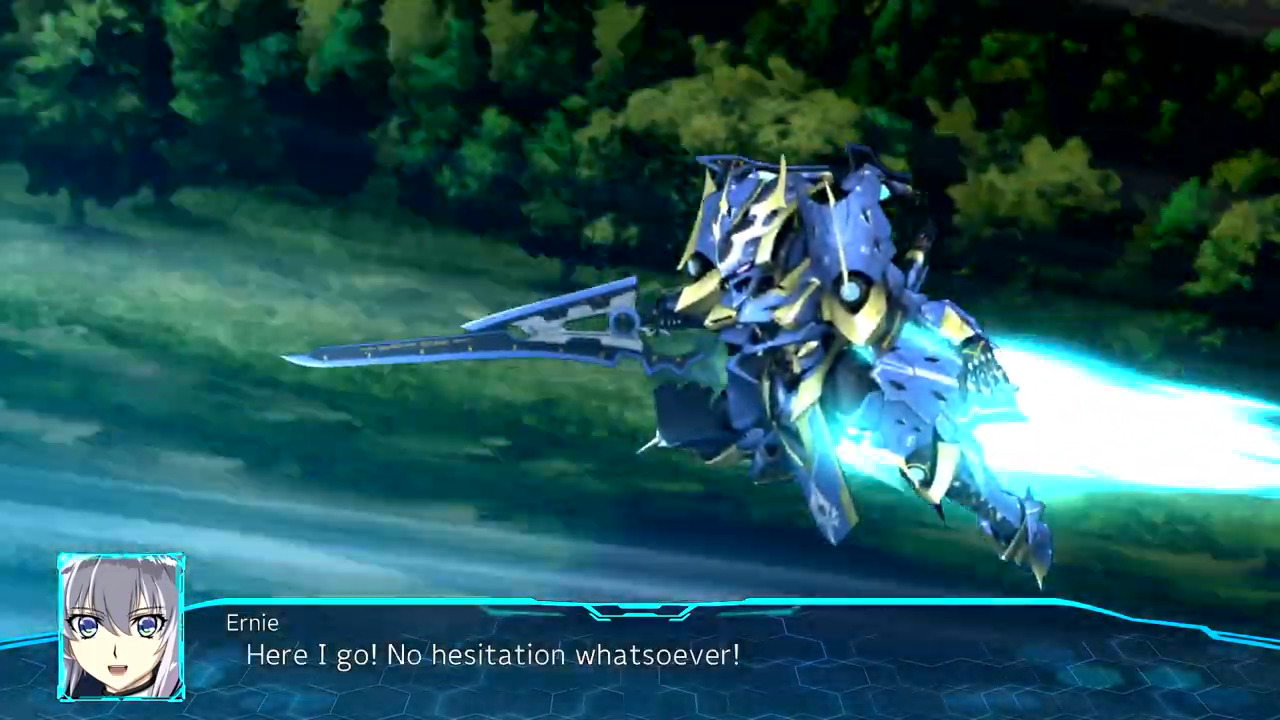
  • Knight’s & Magic (New)
  • SSSS.GRIDMAN (New)

There are some welcome surprises among the returning veterans such as L-Gaim, but the real shockers are in the newest series.

Hell and Heaven!!!

The entry that sent a bolt of lightning through me is Hakai-oh: Gaogaigar vs. Betterman, which is the novel-only sequel to Gaogaigar Final that continues and concludes the story that began all the way back in 1997. I’ve been following the story, even having reviewed the first and second novels, but I wonder if fans might be better off not reading the spoilers in them so that they can experience this amazing sequel through the lens of SRW first. This’ll be the first time that Gaogaigo and its allies will be animated, and already it looks incredible. I await the SRW rendition of Gaogaigo’s Hell and Heaven with great anticipation, I hope we get to see and use a certain massive Betterman, and I’m guessing we’ll get the new opening and ending (that currently exist only in audio form) as BGM.

I also want to compliment the English localization team because I think “Hakai-oh” is such a difficult term to translate. Literally, it means “World-Conquering King,” and I think King of Kings captures that feeling nice and succinctly.

Burning Heart to Heart

Speaking of Braves, I honestly didn’t think J-Decker would ever make it in. Out of the entire franchise, I think J-Decker is one of the genuinely best shows, and I’m very happy to see Deckard, Shadowmaru, and the boys get their due. My dream is that there are some combination attacks involving Shadowmaru and Volfogg, but I’ll be content even without that. And If you want to know more of my thoughts on J-Decker as an anime, I appeared on an old podcast review.

Toku Time

Arguably the biggest appearance from out of left field is SSSS.Gridman. While it’ll fit nicely within SRW, the fact that it has its origins as an anime sequel to a tokusatsu series means there are just a lot of odd quirks to consider. In particular, Gridman is basically an Ultraman, and the closest we’ve had to mecha in SRW that move similar to Gridman are the EVAs from Evangelion—a show that is itself inspired by Ultraman. Given how this series ends, I also have to wonder how it’ll fit into the Super Robot Wars 30’s story, but what always comes first is making things look awesome.

X-TREME RADICAL Mazinkaiser 

As far as I can tell, Mazinkaiser Infinitism appears to have its origins as just an action figure of Mazinkaiser with a Mazinger Z: Infinity aesthetic. What’s funny about this version of Kaiser is that while the Mazinger Z in the Infinity film is a nice retro-modern update to a timeless design, even this Infinitism version of Mazinkaiser feels like it’s perpetually stuck in the 1990s—a Rob Liefeldian super robot that screams hypermasculinity. That was the case for its debut appearance (in a Super Robot Wars game!), the Mazinkaiser OVAs, Mazinkaiser SKL, and now this.

…And the Rest

I haven’t seen the recent Code Geass film, but I have fond memories of the near–train wreck that was Code Geass R2. I don’t know if there’s much for me to say here. As for Knight’s & Magic, I don’t know anything about it other than that it’s a mecha-themed isekai light novel. While it’s not the first SRW series with an isekai light novel origin (that honor goes to Aura Battler Dunbine), it’s still the first to be from a modern, post–Sword Art Online light novel. For that reason, I’m rather curious as to how it’ll be, and I might even be tempted to watch the anime.

See You in October

You damn well better believe I’m reviewing this game. 

Courage and Experience: “Hakai-oh – Gaogaigar vs. Betterman Part 2” Novel Review

WARNING: SPOILERS FOR THE FIRST GAOGAIGAR VS. BETTERMAN NOVEL

The Hakai-oh – Gaogaigar vs. Betterman web novel series has been a blessing for giant robot fans. Taking place in the Gaogaigar universe ten years after the cliffhanger ending of the Gaogaigar FINAL OVAs, it tells the story of how the world has changed since the Gutsy Galaxy Guard got trapped in another universe, and the new challenges those on Earth must face. A now twenty-year-old Amami Mamoru has gone from plucky kid companion to a seasoned robot pilot in his own right, working alongside his fellow alien adoptee Kaidou Ikumi to control Gaogaigo, a successor to the King of Braves in the fight against the forces that threaten the world. The series is being collected into print novels, and that’s the way in which I’ve been reading it.

The end of Part 1 saw the triumphant return of Shishioh Guy, the original pilot of Gaogaigar. However, his comeback was not without cos,t as the robot lion Galeon nobly sacrificed itself to free Guy from the clutches of their mysterious god-like adversary, Hakai-oh (“World-Conquering King.”) The second novel, Part 2, picks up directly from that point with a new challenge: a reunion with some old and familiar faces, not as allies but as enemies. Guy and Mamoru must fight across the world, respectively as the Mobile Corps Commanders of the Gutsy Galaxy Guard (GGG Green) and the Gutsy Global Guard (GGG Blue).

Genuine Care for Lore and Characterization Alike

When I read Gaogaigar vs. Betterman, I’m always struck by how much attention is paid to its own history and lore. While it can sometimes get a little too into the weeds, the general feeling that comes across is real affection and respect on the part of the creators for the universe they’ve created, as well as the fans who have embraced these stories. From the way fights play out to moments of character introspection, everything and everyone is portrayed with a robust three-dimensionality that rewards readers who remember both Gaogaigar and Betterman

For example, we’re reminded that Neuronoids (the robots of Betterman) are powered by artificial brains based on neurological patterns of actual species. This novel answers the question of what brain is in Gaogaigo: a dolphin from the Gaogaigar video game who was turned into a G-Stone cyborg like Guy, and who ultimately had to pass when the “Invisible Burst” that compromised electronics before the successful establishment of the Global Wall made it impossible to maintain the dolphin’s cybernetics. During a fight, it’s revealed that Gai-go is actually extremely strong in underwater combat—a product of being based on a marine creature.

There’s also a side story at the end of the novel that takes in the space between Part 1 and Part 2, where Guy and Mamoru visit a transit museum to see the original Liner Gao, the bullet train that becomes the shoulders of the original Gaogaigar. As they converse, the topic of the Replicant Mamoru from Gaogaigar FINAL comes up. While Repli-Mamoru ended up being merely a clone of the real Mamoru, Guy still carries a lot of guilt over killing him—especially because Guy hasn’t aged and still remembers that trauma as if it were mere weeks ago. It would have been all too easy to forget that part of the OVAs, especially because of the grandiosity of its later battles, but both the author (former Gaogaigar staff Takeda Yuuicihirou) and supervisor (the original director, Yonetani Yoshitomo) put in that extra mile. 

As a funny little moment during this side story, Guy is less astounded by the giant “Global Wall” defense system that allows wireless communications to work after a previous disaster than he is by Mamoru’s smartphone. When he last left, beepers (like Mamoru’s special GGG version) were still the norm, and to see the progression of human technology (as opposed to G-Stone technology derived from Galeon) puts a smile on Guy’s face.

Spotlight on Betterman 

Because Gaogaigar is the bigger franchise between the two marquee titles, it gets the (robot) lion’s share of the attention overall. However, Part 2 does devote more pages to the Betterman side of things than previously—while the first novel’s Betterman-focused pages are mainly about the Somniums (the titular “Bettermen”) and the question of whether they would help defend the Earth, this novel explores the original main characters, Aono Keita and Sai Hinoki, in greater detail. In particular, Keita was a relatively minimal factor in Part 1, but here, his romantic relationship with Hinoki is front and center for a significant portion of the book. Keita’s portrayal is interesting because of how humble his situation is. Rather than staying in space with Hinoki (who has since become highly educated and is a science officer for GGG Blue), Keita is without a college degree and works at an electronics store, where his otaku knowledge makes him an ideal employee. But Keita also works hard with the dream of providing a home that Hinoki can come back to, especially because Hinoki tragically lost her family as a young child.

The color insert at the beginning of the novel also has colored design images of Keita and Hinoki courtesy of the original character designer, Kimura Takahiro. As a huge fan of Kimura’s art (and his work creating Hinoki), it’s a welcome addition.

Intense(ly Clever) Battles and the Value of Experience

The real meat and potatoes of Part 2 are the many fights that take place throughout. Because they’re a pretty major surprise and make up such a huge portion of the story, I’m going to put an extra SPOILER WARNING here.


While there’s a bit of fighting between Guy and Betterman Lamia that makes the Gaogaigar vs. Betterman title technically true, the main thrust of conflict in Part 2 comes in the form of the old Gutsy Galaxy Guard members who have now been taken over by the “Triple Zero” energy that comes from Hakai-oh. Now greatly powered up and known as the “Hakai Servants,” Brave Robots and human GGG agents alike now fight against the Earth with the goal of bringing “divine providence” to the universe. 

The first character who shows up to oppose the heroes is actually Hakai Mic Sounders, and I will say that “Evil Mic Sounders” is indeed quite a trip. Still using his characteristic mix of English and Japanese, it’s easy to not take a line like “SORRY, but I have to destroy you” seriously—that is, until you’re reminded of how powerful Mic truly is. With the ability to produce sound waves that can break down anything (if given the right information), Mic Sounders is capable of rendering even the toughest armors useless. The only reason they win is because a Betterman who can control sound herself is able to provide a counterbalance.

That battle introduces the recurring idea in the fights against the infected Brave Robots: GGG is a great asset when on the side of humanity, but beyond dangerous when its powers are turned against Earth. Goldymarg’s signature toughness (enough to withstand the power of the Goldion Hammer when in Marg Hand form) makes him able to withstand just about anything, and it takes a “Goldion Double Hammer” weapon wielded by Guy in Gaofighgar to even begin to even the odds. Tenryujin and Big Volfogg make for similarly intimidating opponents with their own unique strengths, Volfogg’s role as guardian of a young Mamoru in the past providing an extra layer of stakes in that particular fight. But it’s also not just the robots who are a threat—the human members have also become Hakai Servants, and the tactical prowess of Commander Taiga and the genius hacking skills of Entouji provide extra hurdles for GGG Green and GGG Blue. 

Another recurring theme throughout these fights, however, is that the time dilation difference between the old GGG members and the current ones means that Mamoru and the others have ten years of their own experience under their belts. There’s a moment at the beginning of the novel where Mamoru says that he’s willing to relinquish the role of GGG Mobile Corps Commander to Guy, only for Guy to reject his offer and to praise Mamoru for having clearly been through many tough trials of his own, and at this point actually has fought with GGG for longer than he has. He further explains that he was originally just the right man for the moment, having been an astronaut transformed into a G-Stone cyborg to save his life, and wasn’t a born fighter himself.

And so we see that sentiment play out. In the fight against Tenryujin, her younger “sister” Seiryujin, the latter targets Tenryujin’s knees—a seemingly odd move, until one remembers that the individual robots that compromise the “Ryu” series all turn upside down to combine, meaning their chests (and thus their Hakai-infected AI boxes) are located in the legs. When dealing with Entouji’s computer virus, GGG Blue member Inubouzaki Minoru takes center stage. Originally a jealous rival of Entouji’s who became a Zonder in the TV series, and later returned as an ally when the Gutsy Geoid Guard became the Gutsy Galaxy Guard, Inubouzaki shows the progress he’s made the past decade not only in terms of improved skills but also being more at peace with himself and his past.

Just as everything seems to be going Earth’s way, however, the next Hakai Nobility appear: Goryujin and Genryujin (who both have access to THE POWER), as well as Soldat J and King J-Der. The preview of the next (and last!) volume hints at what’s to come with the key to victory: something called “Goldion Armor.”

To the End

The web novel version of Hakai-oh – Gaogaigar vs. Betterman has concluded, and the concluding print release is supposed to be out this summer. While I could jump in and start reading it online now, I think I’m going to wait once more. If I could wait close to 15 years before, I can withstand a few months. 

In the meantime, I’ve also been reading the manga adaptation of this series, which provides some of the visual flair that’s inevitably missing from the prose version. I can only hope that we might see an actual anime come out of this someday.

Gold Lightan Is Bananas

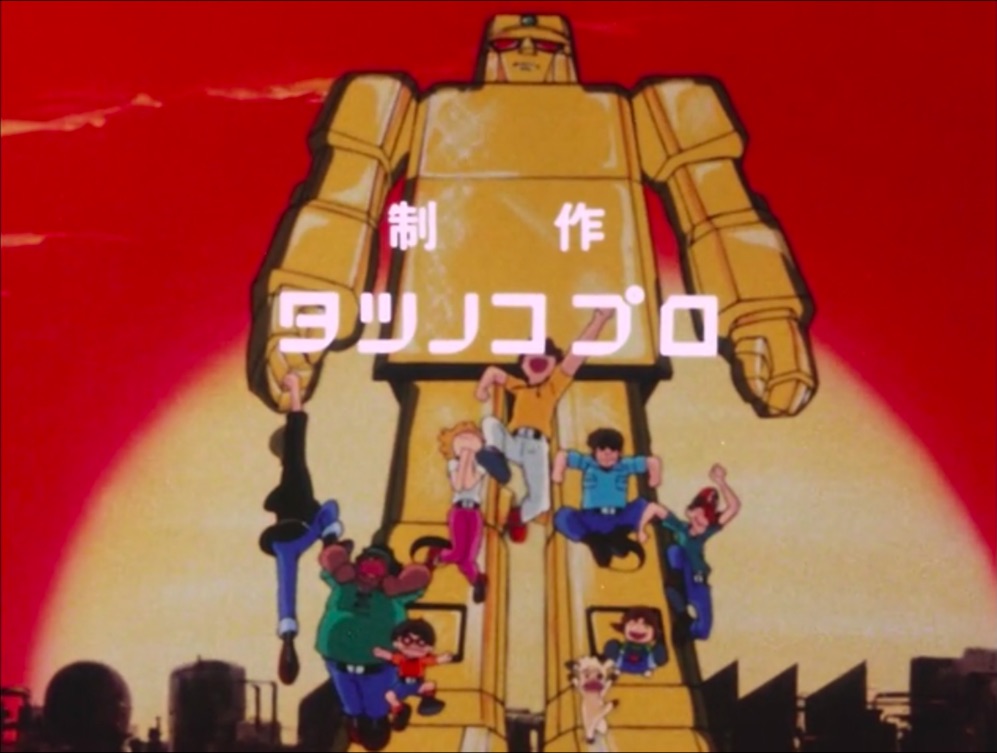
I don’t remember exactly where I first heard of the 1981 anime Golden Warrior Gold Lightan. I think it might have been one of those English-language anime magazines, like Animerica or Newtype USA, where a writer imagined the bizarre board meeting that would allow a sentient Zippo lighter to be the star of a children’s TV show like some tobacco ad gone horribly wrong. But it was during my study abroad in Japan that I had the opportunity to check out the series firsthand, thanks to my college’s extensive anime DVD library. Unwilling to devote my entire time in another country to just watching Gold Lightan of all things, I watched a smattering of episodes just to get an idea of the series a whole: the first few episodes, some from the middle point, and the very end.

Gold Lightan turned out to be far wilder than I had imagined, as it could easily swing from boring “monster of the week” fare to intense melodrama at the drop of a hat. Its backstory alone is ridiculous but played straight: the narrator explains how villains from the “mecha dimension” aim to conquer our third dimension, as if they go in order from 1st, 2nd, 3rd, to “mecha” in the most natural way. The titular robot transforms itself from palm-sized lighter to metallic titan by shouting “RAINBOW ROOOOAAAD!” and emerging from a massive wormhole after being sent through a prism. Despite being just a chunky yellow block with arms and legs, Gold Lightan animates surprisingly well in combat. Intense fight scenes end with a brutal finisher that would make Kano from Mortal Kombat proud—the “Gold Finger Crash” involves thrusting a hand into the enemy robot’s chest to pull its mechanical heart out. The anime concludes with a finale that looks closer to the trauma of a Tomino-directed Gundam.

Against all odds, Gold Lightan is currently licensed and streaming legally in the US thanks to HiDive under the name Golden Lightan. It’s already been almost a year since the announcement, and in this time, I’ve taken to re-visiting the series every so often with the hopes of doing what I hadn’t in Japan: watching the entire series. Now, fifteen years after I first laid eyes on this bizarre anime, I’ve come to the conclusion that Gold Lightan just has an absurd amount of effort put into it by everyone involved. It’s as if the studio behind the series, Tatsunoko Pro, saw the inherently weak premise as an opportunity to just flex on everyone with their animation chops.

But that’s what Tatsunoko has always been known for: a high level of detail when it comes to animating action. Its animators pioneered elaborate explosion effects and particle animations, and the studio as a whole as a history of sleek and stylized works ranging from Speed Racer to Gatchaman to KARAS and on. What’s bizarre to me is how moments of intensely beautiful animation can show up in Gold Lightan at seemingly innocuous moments. In one episode, one of the kid characters powers up his little go-kart for a ride, and just watching the engine roar to life and the exhaust pipes bellow and shift tells me that someone had to have dedicated themselves fully to getting this throwaway go-kart scene juuuust right. 

I think the modern equivalent of Gold Lightan’s attention to quality is when an anime about some free-to-play, wallet-draining mobile game turns out to be one of the big hits of the season. The difference is simply that times have changed, trends have shifted, and these mobile game anime are a mere 13 episodes instead of a whopping 52. I’d recommend Golden Warrior Gold Lightan to those who want to check out the more obscure side of giant robot anime, to those who want a show where effort overcomes a paper-thin concept, and (I’m not kidding) to sakuga fans who just revel in seeing things lovingly animated with skill and grace. It’s a ridiculous and wonderful time.

10 Robots that Deserve to Be Soul of Chogokin Figures (Part 2)

Here’s Part 2 of my list of cool super robots that I think should get that Chogokin Damashii treatment. Check it out, tell me which robos you’d love to see!

By the way, here’s Part 1.