Another famous Japanese singer from anime and tokusatsu passed away recently: Yamada Nobuo, aka NoB, aka lead singer of the band MAKE-UP. He was 61, and had recently been dealing with kidney cancer.
I don’t have quite the childhood connection to NoB that so many others do, but I still wanted to say a few words because I do feel that his music touched my life at different points.
I didn’t grow up with the anime or anything, and I only read the manga a few years ago. However, I was very familiar with most famous song: “Pegasus Fantasy,” the first Saint Seiya anime theme. That opening has long been one of my go-to examples of a near-perfect intro thanks to the energizing and soulful music combined with the action-packed animation. Sometimes, I will just randomly type it into YouTube to watch again. Years later, I would also enjoy his return to the franchise with Saint Seiya Omega, where MAKE-UP sang “Pegasus Fantasy” alongside Shokotan.
Because I didn’t follow his career closely, I also didn’t realize that he was also involved with another show for which I have fond memories. When I was living in Japan in 2005, I enjoyed just being able to catch what was airing on TV, and that included the Super Sentai show Mahou Sentai Magiranger. Watching it became a weekend tradition, though I hadn’t realized that he was responsible for the theme of the character Dark Magic Knight Wolzard.
This has been a sad loss for NoB’s fans, and my condolences go out to them. For me personally, it’s a reminder of the passage of time. But music is immortal in unique ways, and I don’t think I’ll stop playing his songs, whether over my headphones or just in my head.
When it comes to Anno Hideaki’s Shin Japan Heroes Universe movies, the meaning of that first word, Shin,is left ambiguous. Usually, depending on how it’s written in Japanese, shin can either mean “true” (as if whatever iteration we’re seeing is either an entity in its greatest and purest form) or “new” (a reimagining, a version yet unseen). After watching Shin Kamen Rider, it’s increasingly clear to me that it’s meant to be both, and maybe more.
Based primarily on the original 1971 Kamen RIder series, Shin Kamen Rider tells the story of Hongo Takeshi, a man captured by the organization SHOCKER and made into a part-bug living weapon. However, thanks to a sympathetic scientist, he manages to escape and he decides to fight against SHOCKER using his newfound powers and his strong sense of justice.
Seeing as how I’ve never even watched a single full series, I can’t call myself a big Kamen Rider fan or expert by any means. But when Shin Kamen Rider was first announced, I remembered something Anno said in an interview: He thinks the world of the first three episodes of the original Kamen Rider due to their darker nature. I also have seen comments about how Shin Kamen Rider is unusually violent, which lends credence to the notion that this would somehow be different.
Shin Kamen Rider turns out to be even bloodier than I had expected, even with the aforementioned warning. It is brutal and visceral in a way that none of the other Shin movies are. That’s not to say the work is overly gratuitous—but rather, it’s one of many factors that make the story very human and personal. On some level, this is probably just due to the fact that Evangelion, Ultraman, and Godzilla all concern giants, giving an inherently different sense of scale.
But even more than the violence, Shin Kamen Rider feels like it’s trying to be something that the word “fundamental” doesn’t fully describe—as if the work is tapping into the essence of its source material so deeply that it ends up bringing forth a version from within that had not seen the light of day prior to this. What we see is a Kamen Rider if the series had continued on with the energy from those earliest episodes that Anno cherishes so much.
I watched Shin Ultraman not long before this, and there are some noteworthy differences that I think speak a lot to what each franchise embodies. For example, the monsters in ShinUltraman appear to be much more essential—who and what they are doesn’t stray far from the source material. All the monsters in Shin Kamen Rider, on the other hand, are portrayed with much greater liberties in terms of motivations. In contrast, the main human character in Shin Ultraman is a completely different person compared to the original TV series, whereas Shin Kamen Rider still maintains the character of Hongo Takeshi, even if he isn’t 100% the same. Ultraman has more memorable monsters; Kamen Rider has more memorable humans.
To skeptics, Shin Kamen Rider would very likely come across as hokey in a way that no amount of ultra-violence could make it more palatable. However, the portrayals of its characters, from their emotional pain to their sheer awkwardness really grounds the film. I think it’s no coincidence that the costumes for Shin Kamen Rider are actually pretty cheesy—the production could have easily made them sleeker and more modern. Instead, they’re weird and cumbersome, as if the bit of messiness is important. Shin Kamen Rider is, at its core, a work that is both “cool” and “uncool,” and the two sides merge together to reveal something incredibly human.
If you ever talk to fans of episodic, monster-of-the-week shows, a common refrain is that inevitably not all episodes are winners, but that there is also a flipside: Often, some stories are so good and memorable that they elevate the work as a whole. Whether it’s a particularly poignant moment, an interesting monster, a surprising level of maturity, or even a contribution to the greater overarching plot, there are times when that otherwise simple kids show rises to the occasion. Following this thought, a question often arises. What if all the “excess” was cut out, and you were left with all killer, no filler?
Shin Ultraman is a film that embodies such an idea. A kind of homage/return-to-roots/reboot all in one, it tells the tale of the original Ultraman TV series in a modern setting. The premise sees Japan invaded by powerful monsters that necessitates the creation of a specialized task force to fend them off. Just as the monsters start to be too much, however, a mysterious giant warrior (later named Ultraman) arrives to help. What ensues is a look at how humanity interacts with Ultraman and vice versa as greater threats emerge, leading to questions about the essential elements of the people of Earth. The film highlights the essence of this classic tokusatsu hero by compressing an entire TV series into an almost two-hour experience—or at least it comes across that way.
My exposure to the Ultraman franchise is sparse at best. While a young me did wake up early every weekend to watch the English-original Ultraman: Towards the Future, much of what I know is though (sub) cultural osmosis and Ultraman’s proximity to anime and manga. Of particular significance to me is the fact that it’s a huge influence on Evangelion—not only does Eva feature similarly giant light-based heroes with time limits, but the director Anno Hideaki is also responsible for Shin Ultraman as part of a pattern of uniting various Japanese pop culture staples (see Shin Godzilla, Shin Kamen Rider, and indeed Shin Evangelion). In the hands of other creators, I might have greater skepticism, but having Anno at the helm at least piqued my curiosity from the start in a way that has since been rewarded.
The fact that there is no established antagonist might make the film seem strange to those who are used to more conventional feature-length storytelling, but I found myself enjoying the range of foes in Shin Ultraman.The basic progressionis that every adversary presents an escalating challenge, starting with tougher and tougher monsters that pose increasingly dire threats before making way for dangers that seek to exploit the flaws of humankind: fear, greed, mistrust, and so on. Ultraman is also similarly alien to humanity, but contrasts with the invaders as he gravitates towards and cherishes humanity’s positive qualities, e.g. trust, cooperation, and curiosity.
Because I’m not an Ultraman fan, there are many references I simply could not catch on the first viewing. Sure, I know about things like Zetton, the monster that ranks as arguably the most iconic final boss in all of tokusatsu, but not much more than that. But when I did read up, I further realized what a love letter Shin Ultraman is. For example, at the very beginning, a brief history of various monsters are shown, all of which are successfully dealt with by humans. I found this curious because normally the monsters in a work like this are simply too much—that’s why you need Ultraman. It turns out that all of these initial monsters are originally from the predecessor to Ultraman, a TV series named Ultra Q. There, it’s about the people of Earth dealing with phenomena, with no alien giants to help. The fact that Shin Ultraman makes this reference to Ultra Q while also using it to establish both the world of the film and the general competence of the human task force is very clever in hindsight.
Without knowing its source material well, I can tell that Shin Ultraman seeks to both bring out and then distill the very core of Ultraman. In that sense, there are many things that could have been done to make it a “better” or “more cohesive” film, but I also think doing so could very well have blunted the effect of Shin Ultraman as a work that tries to capture the essence of a childhood icon and remind everyone of its inherent relevance. Shin Ultraman is both rooted in nostalgia and timeless in its message: There is light in humanity.
Terada Takanobu is a veteran game producer, and has been involved with the Super Robot Wars franchise since the 1990s. This interview as conducted at Otakon 2023 in Washington, DC.
Hello, it’s great to meet you. I’ve been a long-time fan of the Super Robot Wars series, and I’m very glad that is finally easy for people to play around the world.
My first question: You recently announced that you were becoming a freelancer. How has that change been for you? Have there been any particular advantages or challenges that come with it?
There were lots of interests I wanted to pursue, so I decided to step down from the producer role to become a supervisor, and use that time to do the things I’d like to do.
I want to make toys and plastic models, and original robot animations—ones that are not Super Robot Wars OG.
Do you have any all-time favorite anime or even tokusatsu works?
My favorite super robot is Mazinger Z. As for tokusatsu, Ultraman and also Masked Rider. And more and more.
Original Kamen Rider, or…?
It would have to be the first Masked Rider, fundamentally.
One signature element of SRW is the continued use of very creative 2D attack animations. What are the reasons you have stuck with this style even though so much has changed about video games over time?
In Super Robot Wars DD, we’re doing 2D animations and something between 2D and 3D too, so we’re diversifying.
In SRW DD, the idea behind going for 3D animation is to better capture the original. But more than when I was a producer, I can now better create the content I make compared to before
What has it been like developing mobile games, as well as having multiple games out there? Is it part of a broader strategy?
With regard to the overall strategy of creating mobile games, that lies with the publisher, Bandai Namco, so I can’t really speak to it. However, as for challenges in mobile games specifically, I’d say one that having a deadline every month is a bit challenging. For example, before, if it was for a console, you had three years to get the battle animations and the scenarios and put everything into one package. But now, with the mobile games, you have everything packaged every month.
You started at Banpresto in the 90s. Are there any staff from that era still at [its successor] BBSoft?
There are some.
Do you have any specific series or character units that you thought turned out especially well in terms of their presence in SRW? Or do you think there were any storylines that were executed very well?
It’s a bit difficult, because all of them are a lot of work, and I’m mainly putting effort into making what’s there. It’s a cyclic process of making and releasing and making. More than myself, it’s ultimately the users who decide what’s good.
Are there any titles you are especially proud of being able to obtain for SRW or thought you’d never get for the series?
Space Battle Yamato, aka Star Blazers. As for recently, too many. Hmm…recently, Gridman, Mobile Suit Victory Gundam, and Gun x Sword. In SRW DD, Devilman and Koutetsu Jeeg. What’s it called in English?
Translator: [Steel] Jeeg.
Oh, just that directly.
Ogiue Maniax: There isn’t much of a Jeeg presence in America.
Ah, I see. Oh, and there are two Jeegs now: [Steel] Jeeg and [Steel God] Jeeg.
The impression I have about SRW is that there are the “main” games—Alpha, F, F Final, V, X, T, 30, etc.—and then there are smaller ones that tend to be a little more daring with game mechanics and what series they include. One title I think of is SRW Neo, with Jushin Liger. Is there any truth to the idea that you see the smaller games as more experimental?
Before, yes, there was a difference with the more experimental ones. But now, SRW DD is the only one out, and in there, we try all sorts of things like Jushin Liger and Granzort. SRW DD does embrace the style of SRW, such as the game stages and the scenarios and everything.
I know that you cannot reveal any unannounced information, but has there ever been any consideration to include giant robots from non-Japanese media?
I’m not allowed to say what it was, but there were past attempts. There’s lots I would like to license, but it didn’t work out.
Do you receive feedback from the directors and other staff involved with the titles included in SRW? For example, have you ever had to interact with directors Tomino or Anno?
Yes, there has been some feedback—and actually, there have been some ideas that came from Tomino-san and Anno-san. And actually, I came across some suggestions that Kawamori-san of Macross had earlier. But I had to tell him that’s not something I have control over.
One last question: Over the years, you’ve worked with many voice actors, and unfortunately, some have passed away. Sometimes, they are replaced by new actors, and other times, you re-use existing voice clips. Do you have any say in who gets recast in SRW, or is it outside your control?
If it’s stated by the original source material, I will do as the source material requests. Otherwise, I have the freedom to choose.
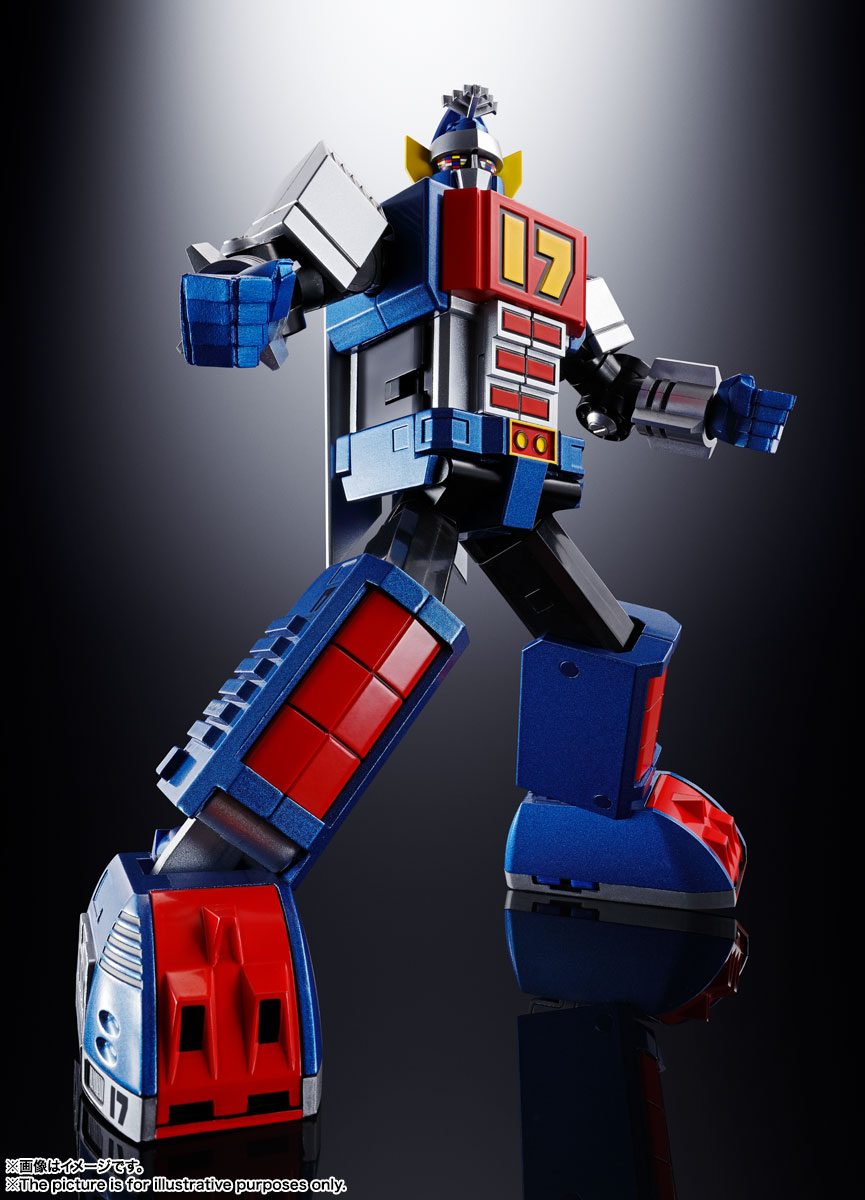
The latest Soul of Chogokin figure was announced last month, and it’s Daitetsujin 17 (pronounced “One-Seven”) from the 1970s tokusatsu series by the same name. It was created by the very father of tokusatsu, Ishinomori Shotaro, and features the classic “little kid remote-controlling” giant robot motif that began with Tetsujin 28. Prior to its release, I never watched any Daitetsujin 17, but I decided to check out the first episode, and what I noticed is that the promo images for the SoC version really capture how the toy is designed with a kind of live-action clunkiness seen in the original program itself.
There’s no doubt that this is highly intentional, as the Soul of Chogokin line is famous for trying to get as close to “show-accurate” as possible. Japanese toy reviewer wotafa stated in his look at the POSE+ METAL Gaogaigar that one of the big things differentiating it from the earlier SoC release was that the latter is more faithful to the anime, while the former looks like “Gaogaigar came back from studying abroad in America.” But in contrast to the myriad anime-derived Soul of Chogokin figures, adapting tokusatsu giant robots like Daitetsujin 17 seems to present another sort of challenge.
Whereas the anime robots have to reconcile the contradictions between the (mostly) two-dimensional drawings with the three-dimensional realities of the toys themselves, a different conflict is in play. Tokusatsu shows typically have their mecha appear in two different ways: as a model for transforming and such, and as a costume for a suit actor to fight in. A figure whose goal is to bring the source material to life has to balance these two dominating visuals, and from what I can tell, Daitetsujin 17 looks like it succeeds on that front.
But Daitetsujin 17 is not the only live-action robot to get the SoC treatment, and so I started looking at past instances to see if that characteristic tokusatsu-ness is still present. What I found is that, while not as strongly flavored as Daitetsujin 17, that feel is still present to varying degrees.
The recently released Daileon from Juspion comes from a different era than Daitetsujin 17, but the premium it places on poseability goes to show just how important it is to capture that “guy-in-a-suit” element of the show. Comparing the 3DCG trailer they released to the live-action footage, you can see how much emphasis was put on making sure Daileon could strike all its signature poses, as if to say the very acting of posing defines the feel of Juspion as a whole:
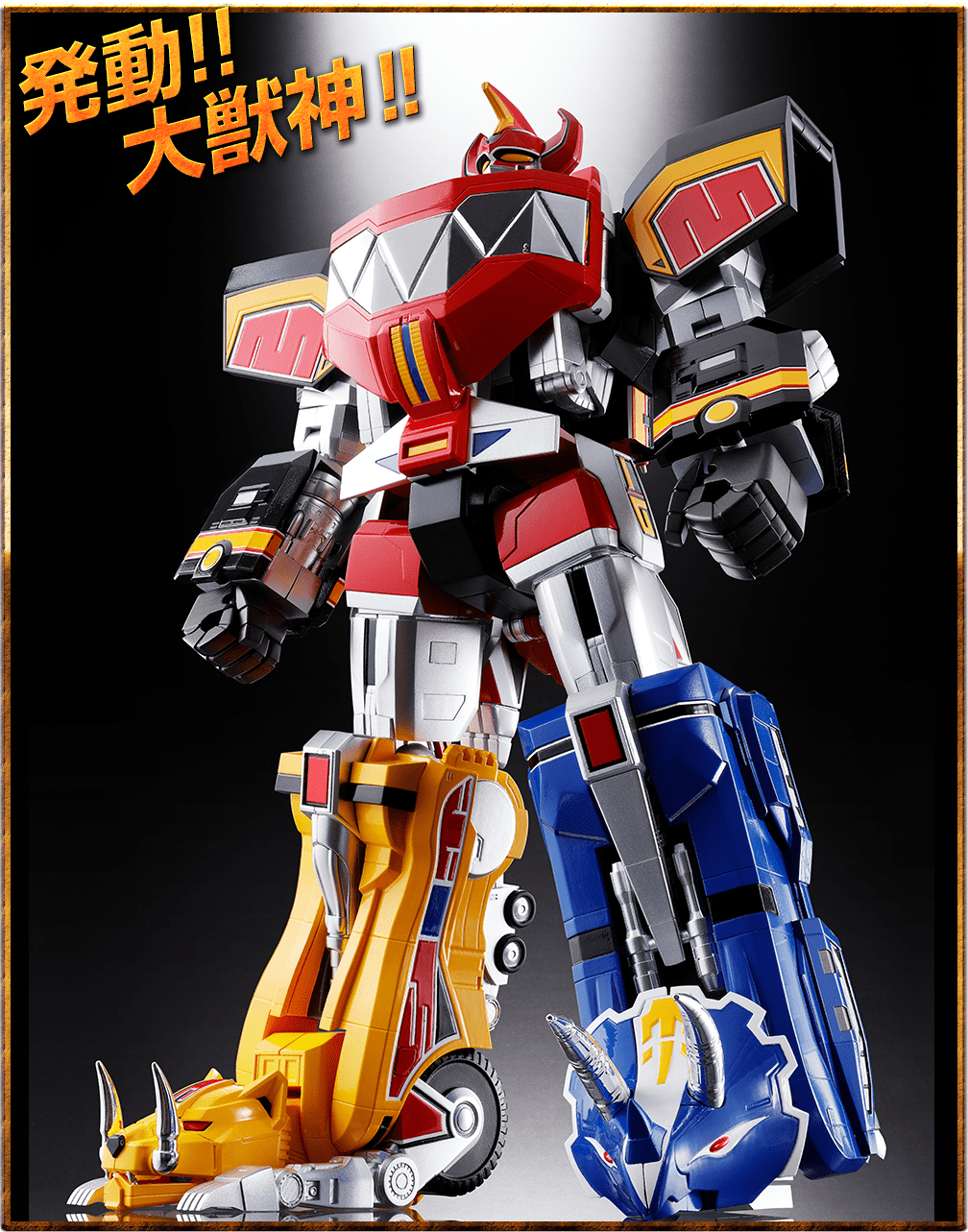
A more popular SoC figure, at least among English-speaking countries, is the Megazord (or Daizyujin) from Mighty Morphin’ Power Rangers. This one looks more like it emphasizes a cool, stocky appearance that’s a bit removed from how the Megazord usually looks in motion.
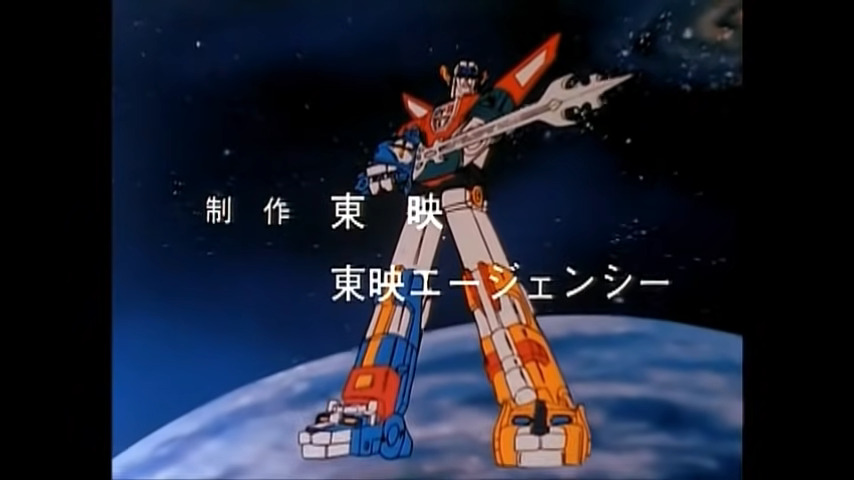
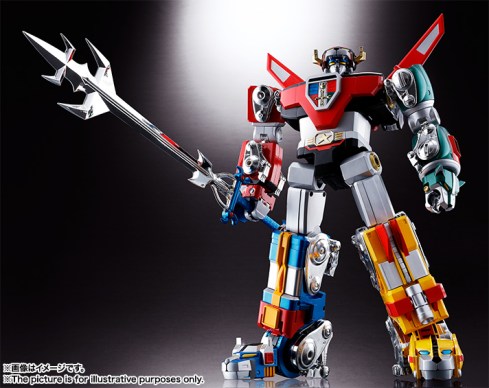
However, when compared to a similar figure released around the same time—Voltron (aka Golion)—the contrast in proportions between the two really drive home how the Megazord was made with different considerations in mind. It’s notable that the SoC Voltron has lankier proportions than its original toy from the 1980s to be more in line with its iconic pose from the anime’s opening.
This trend continues all the way back, whether it’s Leopardon from Toei’s Spider-Man, Battle Fever Robo from Battle Fever J, or King Joe from Ultra Seven.
The Daitetsujin 17 figure seems to most greatly embody the concept of tokusatsu-faithfulness, and I think that speaks to how far the Soul of Chogokin line has come. Every year, it seems to get more and more impressive, and I have to wonder what they’ll tackle next. Although the Daitetsujin 17 and many of the tokusatsu-based figures aren’t my priority, I find I can appreciate the lengths they’ll go to making the biggest nostalgia bombs possible.
The first thing to know about SSSS.Dynazenon is that you don’t need to have watched any of the prequels to get into SSSS.Dynazenon. Sure, its name implies a connection to 2018’s SSSS.Gridman, which is itself a sequel of sorts to the 1993 live-action Gridman the Hyper Agent. Even so, SSSS.Dynazenon is an insightful anime that stands on its own merits.
The story of SSSS.Dynazenon follows a teenage boy named Asanaka Yomogi. After encountering an eccentric guy named Gauma claiming to be a kaiju user, his city is attacked by actual kaiju. Gauma is able to call upon a giant robot named Dynazenon, and Yomogi (as well as a few others) end up becoming Gauma’s copilots. With a different part of Dynazenon in each of their hands in the form of toys, they battle a group known as the Kaiju Eugenicists, who have the ability to control kaiju by bending them to their will.
One question to ask when looking at many tokusatsu and mecha series is how much the characters’ primary motivations tie into the larger overarching plot and setting. In Gundam, for example, the connection is usually extremely strong—protagonists like Amuro Ray are thrust into the middle of long and painful wars whose physical and mental scars are the primary driving force of these narratives. Evangelion takes a different approach, forefronting the existing psychologies of its characters and using its science fictional setting as a means to explore their traumas. With respect to that dynamic, SSSS.Dynazenon falls a little more towards the Eva side, but goes its own direction.
SSSS.Dynazenon has a grounded feel that highlights both its characters’ personal histories and how their current circumstances as impromptu heroes impacts their views. As Yomogi and the others battle, they’re forced to confront their own unique fears and values. Yomogi is trying to cope with his parents’ divorce and his mom’s new boyfriend. Minami Yume, one of Yomogi’s classmates, is emotionally distant ever since the mysterious death of her sister. Yamanaka Koyomi is a NEET in his 30s who constantly regrets not making certain decisions in his life (particularly a romantic one) that could have brought him down a different path. Koyomi’s younger cousin, Asukagawa Chise, refuses to attend school. Gauma searches for his past, explaining to the others that he’s actually thousands of years old.
While it can seem as if the fantastical elements are just a flimsy backdrop to the human drama at play, that’s not the case. Rather, one of the key strengths of SSSS.Dynazenon is the way that feeling both the added responsibility and thrill of fighting kaiju reshapes or reinforces their priorities and core beliefs. The fact that they carry around their respective vehicles like toys before growing them to giant size also makes me feel that there’s a link between the childish notion of “playing with toys” as a way to engage with the world and connect with others. In that respect, the antagonists of SSSS.Dynazenon, the Kaiju Eugenicists, seem to also have their own hang-ups but engage with them in less healthy ways.
SSSS.Dynazenon is also different enough from its predecessors that those who didn’t enjoy Gridman the Hyper Agent or SSSS.Gridman might resonate with this series. In particular, its characters are portrayed in a more subdued manner than SSSS.Gridman, where the central female characters, Rikka and Akane, cast a long shadow and often stole the spotlight through their sensual portrayals and powerful yuri energy.
Though I say that knowing the prequels is unnecessary to gain something from SSSS.Dynazenon, that doesn’t mean it’s pointless to have been a fan. Using my personal experience as an example, I came to the series cognizant of the fact that “Dyna” and “Zenon” are references to support robots from the original Gridman due to having watched Superhuman Samurai Syber-Squad (the Power Rangers-esque adaptation of Gridman the Hyper Agent), and later found myself excited over some mid-series character arrivals that call back to SSSS.Gridman. The key is that while the series does reward those with prior knowledge, it doesn’t punish those who are new and unfamiliar.
SSSS.Dynazenon hints at ties to the prior series in everything from the title of the show to the character Gauma himself. However, unlike with SSSS.Gridman, the mystery of what exactly is going on is less of a core element and more an added bonus for existing fans of either one or both previous series. The core story—one of friendship and growth—remains.
I have watched a lot of anime, but I’m far less experienced with tokusatsu stuff. When Toei launched their official worldwide tokusatsu channel on Youtube a few months ago (despite a major hiccup where they accidentally banned themselves), I originally saw it as a way to legitimately watch more obscure giant robot anime such as Lightspeed Electroid Albegas and Space Emperor God Sigma. However, thanks to the sheer range of shows available—stuff leading back to even the black & white era of television—I thought it was high time I made a more concerted effort to watch tokusatsu and form my own opinions.
What I’ve come to notice is that I enjoy these series a lot more than the adapted tokusatsu works I’ve seen over the years in the US—Power Rangers, VR Troopers, Super-human Samurai Syber Squad, etc.—and I think I know why. When it comes to Japanese tokusatsu, there is a greater degree of earnestness that makes these shows more enjoyable overall. They might not have much of a budget, as shown by their threadbare special effects, but everything feels somehow more sincere.
Sure, the localized shows have their own merits, and there have been memorable storylines over the years that lend at least an air of seriousness and compelling storytelling to their worlds. In Power Rangers alone, there’s the original Green Ranger storyline from Mighty Morphin’ and the bond between Astronema and Ecliptor in Power Rangers in Space that revealed the two as more than just evil villains. However, they feel more like exceptions to the rule—-chances for otherwise very non-serious stories to reveal an edge.
With Japanese tokusatsu on the other hand, even the very first episodes feel like they’re working hard to get viewers emotionally invested. They’re also still ultimately kids’ shows as well, but their presentation is such that they expect the young viewers at home to enjoy drama and tension in their entertainment. When you hear the ending theme to Janperson, even if you don’t know Japanese, there’s a strange yet heartfelt sense of passion. It’s definitely cheesy, but it’s a convincing kind of cheesy. The difference is akin to the kind of pro wrestling that easily makes you suspend your disbelief versus the kind that takes you out of the magic.
Anyway, if anyone has recommendations, I’m all ears. A part of me wants to check out Space Ironmen Kyodainand Akumaizer 3 just because of Konata’s fiery karaoke from Lucky Star, but I’m down to keep exploring.
For this year’s New York Comic Con, I’m doing something a bit different with my coverage. Instead of doing a standard con report, with overviews and opinions on panels, artist alley, etc., I’m going to be writing a series of essays based on things I saw at NYCC 2016. Think of it like extended thought exercises and musings inspired by the con.
–
As someone who loves giant robots, one of the highlights of New York Comic Con 2016 had to be the dual displays of Soul of Chogokin Voltron and Megazord. Created as high-end poseable figures with plenty of metal, show-accurate proportions and transformations, and as much articulation as their designs can allow, when something joins the Soul of Chogokin line it is like a rite of passage. It’s the pinnacle of mecha toys, and any fans of either robot likely already has them on their radars. Seeing them together, however, made me think about their significance to both American fans and the people responsible for the Soul of Chogokin line. These figures represent not only the fulfillment of childhood dreams, but are indicative of the complex interactions between nostalgia and specific cultural contexts.
Although I personally do not view Voltron or Megazord with the kind of near-religious fervor that grips so many other fans (granted Voltron was the show that introduced me to giant robots), I couldn’t help but be impressed by their designs. They’re both large, clearly very hefty, and capture well the particular quirks of both robots, perhaps even to the point that it would be jarring. For example, Voltron can look a little too squat, until you realize that it actually reflects the original design well, and the main reason we see it as being perhaps slightly lankier in proportions is because the iconic images of Voltron tend to be upward perspective shots.
Above each of the displays was a painting of the robot below, with a little information card on the side to provide some extra insight on the artist who provided them, Nonaka Tsuyoshi. Reading these, what caught my attention was that not only was Nonaka responsible for the original Megazord design, but he was also the man responsible for starting the Soul of Chogokin line in the first place! In a way, the birth of the Soul of Chogokin Megazord can be viewed as Nonaka’s homecoming.
There was another detail that I found even more notable. When describing Nonaka’s founding of the Soul of Chogokin line, the card stated that the toys were born out of his desire to celebrate the giant robots of his own youth, such as Mazinger Z. They were what inspired him, and so he in turn has given them the star treatment. Extending this line of thought, one can view Voltron and the Megazord as essentially the “Mazinger Z’s of America.” Many countries are introduced to super robots differently, and in the case of the US these two in particular are deeply woven into the fabric of pop culture. Remember, the original Japanese version of Voltron, King of Beasts Golion, isn’t a particularly notable show. Zyuranger, the show that would become Mighty Morphin’ Power Rangers, is beloved among Super Sentai fans, but is considered one of many good iterations. In the United States, however, these robots are integral to introducing generations of kids to the wide world of mecha. Thus, the Soul of Chogokin line is doing what it was originally meant to, only in another cultural context.
Thinking further about the iconic aspect of Voltron and the Megazord, it’s fascinating just how lasting their presence is relative to the shows they came from. For example, because Voltron has that cool look and that place in American broadcast history, it can be remade again and again, most notably in the surprise hit Voltron: Legendary Defender. What’s even more striking about its presence, however, is that Vehicle Voltron is as absent from pop culture memory as Lion Voltron is enduring. In fact, notice how I’ve only said “Voltron” throughout this essay. I bet that, for many readers, they didn’t even notice that something was odd. There are a number of possible reasons why Lion Voltron is remembered whereas Vehicle Voltron largely is not: Lion Voltron came first, it aired on TV more often, and its colorful characters and overall design are more memorable (mouths for hands and feet!). Whatever the reason, what stands out to me is how fickle and unforgiving mass-nostalgia can be, even if there’s no real “blame” to go around.
Soul of Chogokin Voltron and Megazord are squarely aimed at the US market in a way that I’m not sure previous internationally beloved robots such as Grendizer (for much of Europe) and Voltes V (for the Philippines) previously were. In that respect, I predict this to be the start of a new relationship between Bandai and its potential consumers around the world. Given this potential, I’m rather curious as to what might come next. Perhaps we might someday see Soul of Chogokin representation for a robot that doesn’t even have its origins in Japan.
—
If you liked this post, consider becoming a sponsor of Ogiue Maniax through Patreon. You can get rewards for higher pledges, including a chance to request topics for the blog.
What, you thought I meant something else? Why then you’re as foolish as Professor Monster who thinks he can stop the Invincible Man, the Emissary from Hell SPIDER-MAN.








 OGIUE MANIAX