Stress and Inspiration and Animation: SHIROBAKO

shirobako-aoi

shirobako-director

With a lovable cast of characters, in-depth look into the world of anime production, and numerous references to famous creators and works,  SHIROBAKO has been a darling of the internet anime fandom, particularly among those who consider themselves to be, if not among the most informed anime fans, then at least those who desire to be more informed. While SHIROBAKO is not the first anime to delve closely into its own industry, I believe it is the first full-on 26-episode television series to do so, and this allows it to show multiple facets that are involved when making anime, while also giving them room to breathe and to garner appreciation.

SHIROBAKO centers around Miyamori Aoi, a young animation production assistant at Musashino Animation Productions (aka Musani), a once-renowned anime studio that is trying to rebound and recover its reputation. Back in high school, Aoi and her friends in the school’s anime club created their very own animated short, with the hope of someday working together professionally to create it for real, which has led them each into different areas of the anime industry: 3DCG, voice acting, writing, 2D animation, and of course production. As each of them deal with their own struggles in trying to get closer to their dreams, which include wondering if anime is right for them after all, Aoi and the others learn about what it takes to make an anime, and all of the joy, stress, and sleepless nights that go into it.

P.A. Works, the studio behind SHIROBAKO, has a reputation for producing very specific sorts of works. Whether it’s True Tears, Tari Tari, or Hanasaku Iroha (which I love), many of their shows involve cute high school girls and a lot of emotional drama. It’s a formula that works for some but is like poison to others, and with SHIROBAKO we have a work that successfully toes the line between the two. These aren’t high school girls but rather young professionals, and though many of the women in the anime are purposely designed to be attractive, there’s more than enough focus on anime production that the show hardly feels like a cute girl/melodrama delivery system. In a way, because of how taxing anime production is (as has been revealed in numerous articles and interviews over the years), a bit of melodrama doesn’t seem surprising between people fighting back their tears so that they make an absurd deadline.

A more cynical part of me thinks that the girls are there to an extent to be the gateway to introduce those anime fans obsessed with cute girls to what goes on behind the scenes, and that the series in general is very much designed to promote the anime industry and encourage people to join. It’s also a problem that they don’t really acknowledge the enormous component that is the anime industry’s outsourcing of in-between animation to other countries including Korea, the Philippines, and India. However, there’s no denying that the series is rife with genuine information to learn and appreciate, and that the characters, regardless of their base intent have convincing personalities and stories as to why they’re in the art and business of making anime in the first place.

shirobako-midori

shirobako-misa

For the record, my favorite characters are Imai “Diesel” Midori (one of Aoi’s old club mates who possesses a strong desire to write for anime, a thirst for research, and an ever-enthusiastic personality), Toudou Misa (another club mate who works in 3DCG and has to decide if she wants to play it safe with her career or take a chance), and Sugie Shigeru (the oldest veteran animator at Musani who, while enormously skilled, doesn’t quite fit into the current era because he “can’t draw moe”).

As mentioned at the beginning of this review, SHIROBAKO is rife with references to both real people and real anime. Aoi’s favorite series is Mountain Hedgehog Andes Chucky, based on Mountain Rat Rocky Chuck. One episode centers around the importance of the Idepon films, or Space Runaway Ideon. Numerous posters seen in the background throughout the series include parodies of Casshern, Lunlun the Flower Child, Ghost in the Shell, and much, much more.

shirobako-gachorn

shirobako-musani

As for people, this is probably what gets people to scramble to anime production staff lists the most. The above-mentioned Sugie is based either on MADHouse founder and animator Akio Sugino, legendary animator Mori Yasuji, or some combination of the two. The real identity of Musani president Marukawa Masato is blindingly obvious to anyone who’s been to Otakon in Baltimore and attended a panel by MADHouse and MAPPA founder Maruyama Masao. Evangelion director Anno Hideaki and voice actor Itou Shizuka are among the many, many real industry veterans to appear in slightly altered forms in SHIROBAKO. Combined with the anime parodies it makes for a somewhat addicting game of “figure out the reference” that, unsurprisingly, appeals to a lot of fans who have devoted themselves to learning about anime.

The day after I finished SHIROBAKO I had a thought: often times when it comes to anime or other forms of media that fictionalize a given craft, technology, or profession, people who are deeply involved in those areas can easily nitpick these series in terms of accuracy. While I don’t have firsthand experience in the anime industry (though I’ve done a bit of work as an animation production assistant myself), I almost feel as if SHIROBAKO is defying the “well actually’s” of the world to say something. Who better to talk about creating anime than the people who create anime? Perhaps the answer is those whose voices haven’t been covered. Maybe we’ll next get a series from the perspective of the in-betweeners.

SHIROBAKO is available on Hulu and Crunchyroll.

PS: I recently found out that the Japanese terms for in-betweens and moving images in general are the same: douga, just like what you see in Nico Nico Douga. Nooo, this isn’t confusing at all.

If you liked this post, consider becoming a sponsor of Ogiue Maniax through Patreon. You can get rewards for higher pledges, including a chance to request topics for the blog.

“Jesus is Kind of Like a Buddha, Right?”

This post was sponsored by Johnny Trovato. If you’re interested in submitting topics for the blog, or just like my writing and want to sponsor Ogiue Maniax, check out my Patreon.

It is a somewhat common mistake to assume that Japan as a wholly foreign and alien culture despite events such as the influence of China on its development, the appearance of Commodore Perry, and various interactions with nations such as Portugal and the Netherlands. However, no matter where it comes from, Japan’s own history can be considered unique (and just about any culture or area can say the same), and there are certain implicit and assumed elements that can permeate Japanese culture.

I was asked by Johnny Trovato to address broadly the subject of how theological differences between Japan and countries with more of a Christian history affect how anime and manga are viewed. Truth be told, even though I’ve watched plenty of series which reference religion and spirituality such as Neon Genesis Evangelion, Inari Kon Kon Koi Iroha, and Hermes: Winds of Love (don’t watch that last one), I’m not really an expert on the subject. I originally planned on tackling the subject from a fairly limited perspective, but fortunately I recently discovered a book called Holy Ghosts: The Christian Century in Modern Japanese Fiction by Rebecca Sutter. While it’s not quite on the subject of Japanese religions and beliefs, it did help me to realize an aspect of Japanese culture, media, and literature that I believe sheds a bit of light on how religious beliefs are used in anime and manga.

One of the more major lessons I took away from reading Holy Ghosts is that Japan has historically approached religion in a rather pragmatic way. Shintoist, Buddhist, and Confucian beliefs exist together in Japan, but only as far as they’re convenient. When Portuguese Jesuits arrived in Japan and sought to convert its people, not only did the Japanese sometimes interpret Jesus as a kind of “Buddha” that conformed to their own polytheistic views, but many of the daimyo who converted did so because the Portuguese also sold firearms. Spirituality exists, but it has existed to to serve the people, rather than having people be absolutely beholden to one or more gods. Even the idea of the Emperor as god was a response to the prominence of other religious beliefs being used as tools to control territory.

To take what is probably too big of a leap into the present day, I think we can still see this tendency at work when it comes to the utilization of religious aspects in anime. Evangelion famously features Christian imagery and mythology mainly as a way to provide something fairly exotic to Japanese viewers, while Spirited Away is just as much about encouraging young people to rediscover nature regardless of overt spirituality. This, I believe, is where a good deal of the confusion or dissonance might lie when it comes to how people in the United States and other traditionally Christian cultures interact with anime. Of course, not every person who lives in those countries is necessarily religious, and there has been plenty of media that plays fast and loose with the Bible, from Bruce Almighty to Teen Angel (I still love that show, by the way), but often there’s some kind of counter-play with the assumption that many people know at least the basics of Christianity and that there are plenty who firmly believe in its tenets.

I’m going to use two examples of media, one from the US, and one from Japan. Xena: Warrior Princess was a popular show when it aired. Having begun as a spinoff of Hercules: The Legendary Journey, it at first focused mainly on ancient Greece and the presence of Greek Gods. Eventually though, they decided to branch off and include Christianity in the show. Xena meets both David and Jesus, and any historian would probably tell you that it makes no sense. It didn’t matter in the show itself to a certain degree, but it was directly up against the value of Christianity in the US, and how accurate or (intentionally inaccurate) a work it was factored into how it was perceived.

Now contrast this with Devilman, the story of a teenager who gains the power of a devil so that he can fight other demons. Its creator, Nagai Go, stated that he designed Devilman to resemble a bat, even though that’s not quite the imagery people in countries more familiar with the idea of Satan and Hell would utilize. Eventually Satan himself appears, and he turns out to be a hermaphrodite because Lucifer has been described in some texts as being as such. However, the main value of Lucifer’s dual-gender appearance is visceral shock, and Devilman as a whole didn’t have to take into account how much its readers would be going to church every Sunday. Devilman, if I recall correctly, also mixes in various spiritual beliefs including Japanese ones, and it all effectively works to (on a somewhat pragmatic level) help the story along.

The idea that religion isn’t this overwhelmingly powerful subject in Japanese culture and society isn’t necessarily shared by all who live there, of course, but I think there’s a lot in the old adage that says, in Japan, you have a Shinto birth, a Christian wedding, and a Buddhist funeral. That synthesis of beliefs and the ability to mold them into whatever you want defies the idea of religion as this overwhelming, monolithic thing that cannot ever be altered, and anime and manga are proof of that.

New Mewtwo Voice Actor for Super Smash Bros.

Upon hearing Mewtwo in Super Smash Bros. for Nintendo 3DS & Wii U for the first time, I was convinced that they had brought back the original actor, Ichimura Masachika, from the film Mewtwo Strikes Back. However, it actually turns out to be someone doing an excellent imitation (with the help of a voice filter), and whose acting chops are impressive in their own right. While the new actor Fujiwara Keiji might not have the cred of being an established theater actor like Ichimura is (he’s most famous for playing the titular character in the original Japanese Phantom of the Opera), you might know him for some of the following roles:

Ladd Russo in Baccano!

Nohara Hiroshi in Crayon Shin-chan

Kuzuhara Kinnosuke (Biker Cop) in Durarara!!

Holland Novak in Eureka Seven

Maes Hughes in Full Metal Alchemist (both original and Brotherhood)

Ali-al Saachez in Mobile Suit Gundam 00

Hannes in Attack on Titan

Jake Martinez in Tiger & Bunny

I actually had my suspicions because Mewtwo makes certain sounds in the new Smash Bros. that I don’t recall from Super Smash Bros. Melee, but I chalked it up to my own faulty memory. It’s also a lot more difficult to hear because only the Japanese version has voiced victory quotes. It was the same in Melee, except you could change the language settings there to Japanese, which is how I and a lot of other people learned that Mewtwo had victory quotes in the first place.

Here are videos of the old and new voices for you to compare:

Old (ignore the skins; they’re from a mod)

New

And for fun, here’s a video of Ichimura Masachika as the Phantom of the Opera:

If you liked this post, consider becoming a sponsor of Ogiue Maniax through Patreon. You can get rewards for higher pledges, including a chance to request topics for the blog.


First Impressions for Mewtwo in Super Smash Bros. for Nintendo 3DS & Wii U

It’s been six months since Mewtwo was announced as a downloadable character for Smash 4, but it’s felt more like a lifetime. With the vague arrival date of “Spring 2015” and not a single image beyond a basic character model, information was scarce, and it left Mewtwo fans such as myself starving. Then came the April Nintendo Direct, which not only showed Mewtwo in action and gave an April 28th release date (April 15th for people who registered both games through Club Nintendo), but also revealed the return of Mother 3 hero Lucas as well as a worldwide poll asking who you want in Super Smash Bros. Suffice it to say, it’s been crazy.

(More on the poll in the future. Stay tuned!)

That brings us to today. As one of the many people who bought and registered both the Wii U and Nintendo 3DS versions, I’ve had the privilege of getting early access to Mewtwo, and I’d like to give my impressions. This comes from the perspective  of someone who used the character avidly in Super Smash Bros. Melee (though not so much in a high-level competitive sense), as well as a long-time fan of Mewtwo as a character.

On an aesthetic level, Mewtwo looks so much better than it did in Melee, with body proportions closer to more recent depictions (taller, smaller head, etc.), as well as much more detailed animations. Though all of Mewtwo’s moves are more or less the same as they were back in the Gamecube era, they all have an extra bit of flair that really captures the essence of the character. When Mewtwo does a back throw, it effortlessly lifts the opponent through its telekinesis and, with its eyes closed as if it’s discarded a piece of trash, launches them. The voice, which I know was a bit of a concern for people, is actually just the same as its Melee voice, veteran theater actor Ichimura Masachika. Actually, it’s literally the Melee clips re-used, only that we don’t get the option of changing the game language to Japanese and hearing Mewtwo speak actual lines. I’m not totally against English dubs, but a part of me would have been a bit sad if this had been replaced.

In terms of gameplay, the first thing I want to say is that it actually took me less time to figure out how Mewtwo is supposed to function as a character than it did for me to learn Mega Man, who has been my primary character (the spotlight will now be shared between Blue Bomber and Genetic Pokemon). Once you get a sense of Mewtwo’s attributes, including its attacks, its speed, and its weaknesses, its game plan becomes clear. Mewtwo is a glass cannon, with an overwhelmingly powerful offense contrasted by being one of the lightest characters in the game who’s also one of the largest targets out there.

Especially coming from the perspective of a Mega Man player, Mewtwo’s attacks flow together incredibly well. A lot of its attacks, namely down tilt, up tilt, Side Special (Confusion), and Down Special (Disable) are designed to set opponents up for juggles or follow-ups. There aren’t very many reliable combos from Mewtwo, but a lot of the character is about forcing 50/50 guessing situations that favor you in terms of reward, and you can do things like Confusion -> down tilt, dash attack, forward air, second jump into up air. If you’re not someone who plays and found that a bit confusing, just know that Mega Man by comparison is lucky to get more than 3 hits on an opponent while juggling.

Another feature of Mewtwo’s is that it’s actually much faster on the ground now compared to Melee, and both the range and power of its attacks have been increased. Dash attack in particularly is affected positively by this new-found speed and range, as it’s easy to catch someone landing with it, pop them up in the air, and start a juggle. Mewtwo also now sports some of the most tremendous and reliable kill power in the game. Shadow Ball has more kill power than Samus’s Charge Shot and can be spammed more reliably than Lucario’s Aura Sphere. Up Smash comes out quickly and is absurdly strong, KOing many opponents off the top at about 90%. Forward Smash and Down Smash are slow but powerful, and their weak points can be mitigated through setups such as Confusion and Disable. In particular, if you Disable someone at about 80% and charge a smash attack, they’re almost assuredly going to get taken out.

Mewtwo also eats shields for breakfast, and it’s kind of frightening to see just how effective it is at whittling them down. Many characters have attacks that can either destroy shields or do massive damage to them, but none are quite as reliable and effective as Mewtwo’s Shadow Ball. Its only real weakness is that it takes a while to charge, but once you have it at full power, it has positive effects whether it hits or is blocked, and its erratic trajectory can make it difficult to avoid through dodging. Even if it doesn’t hit anything, Mewtwo can act quickly out of the move allowing follow-ups, and for those characters that love to reflect projectiles, Mewtwo now has a properly-working Confusion that can send it right back for a game of Ocarina of Time-esque volleyball.

Of course, it wouldn’t be Mewtwo without some strong throws, and it sports some of the best around. All of them do significant amounts of damage, somewhere between 9-11%. Back throw is a decent kill move, and up throw is the strongest in its class. With a good amount of rage (in Smash 4, characters become stronger as they take more damage), up throw can KO most opponents between 120-140%. While that might not seem too impressive, and it’s actually weaker when compared to Melee, it’s important to remember that, unlike many other killing throws (which are mostly back throws), Mewtwo’s is reliable at pretty much any point on the stage, instead of requiring you to be closer to one side or the other.

That’s Mewtwo on offense. Mewtwo on defense is another matter, as it is actually one of the lightest characters in the game, even easier to KO than Mr. Game & Watch. Combined with its large frame, it takes attacks easily, and doesn’t have many moves that can keep it from being juggled. Somewhat similar to Mega Man, Mewtwo’s main game plan is to drift towards the edges to avoid follow-ups, and thankfully a combination of excellent air speed, huge jumps, and the best teleport in the game means that it can often escape. However, because Mewtwo is so frail, it sometimes doesn’t matter, as a stiff breeze can send it reeling. In other words, the basic principle of Mewtwo is to deal a crazy amount of damage before the opponent gets the chance to touch you, otherwise you’re probably in trouble. In this way, Mewtwo somewhat resembles Akuma from Street Fighter, another character known for having high damage and low health.

Regardless of how good Mewtwo is as a character in the end, the collective effect of all of this is that Mewtwo feels more representative of the character’s original concept. In the original Pokemon games, Mewtwo is among the strongest in the game, with insanely high offensive stats and relatively good defensive stats. In an effort to promote game balance, the creators of Smash 4 clearly decided to make these aspects more extreme by giving it such terrible defenses, but I think this plays into Mewtwo’s character more than what it had in Melee, which generally amount to having a few decent moves wrapped up in a bunch of terrible qualities. Now, at least those terrible qualities are equally met with terrifying potential on offense. Destroy or be destroyed.

I do find it kind of interesting that the two characters I picked are the ones that are deceptive in terms of size to weight ratios. Mewtwo is very large and extremely light, while Mega Man is much heavier than he looks. It also means that their game plans are also somewhat opposite, as Mewtwo is a very unforgiving character while Mega Man can be afforded more mistakes. Whether they complement each other or succumb to the same issues, only time will tell.

If you liked this post, consider becoming a sponsor of Ogiue Maniax through Patreon. You can get rewards for higher pledges, including a chance to request topics for the blog.

Gundam Build Fighters TRY Fighting References

Gundam Build Fighters Try has made a number of references to fighting styles from other anime, manga, and games, especially towards the end of the series.

In Episode 19, the character Ichinose Junya pulls off a couple of attacks from various fighting styles. This includes a demonstration of boxing, which might look familiar:

This is actually Makunouchi Ippo’s finishing combination from Hajime no Ippo: the Liver Blow, the Gazelle Punch, and the Dempsey Roll.

Next, Junya demonstrates attacks from Ba Ji Quan:

This specific sequence leading into the shoulder tackle is one of Akira’s signature attack strings from the fighting game series Virtua Fighter:

In Episode 20, Kamiki Sekai, one of the central characters of Gundam Build Fighters Try, sends a burst of energy rippling forward by slamming his fist into the ground:

This is a reference to Terry Bogard’s special move, “Power Wave,” which he’s used since the original Fatal Fury and all other games he’s appeared in.

This last one I’m not 100% certain on, but in Episode 23 Junya appears again and confronts Sekai:

I believe it is supposed to be an homage to Fist of the North Star, specifically Souther’s Nanto Hou’ou Ken style:

That’s all I’ve spotted for now. If there are more, then I’ll probably make another post.

If you liked this post, consider becoming a sponsor of Ogiue Maniax through Patreon. You can get rewards for higher pledges, including a chance to request topics for the blog.

The Fujoshi Files 133: Chiemi

Name: Chiemi (ちえみ)
Alias: Mameyoshi (まめ吉)
Relationship Status: Married
Origin: Cyber Yaoi Girl

Information:
A mother of newborn fraternal boy twins, Chiemi is a member of the Ai no Doronuma yaoi fandom known online as Mameyoshi. Though her husband is initially unaware of her hobbies, the extremely graphic auto-completes while typing in Japanese on their family computer eventually reveals the truth. As a result, their interactions turn somewhat antagonistic.

Chiemi loves her sons, though she begrudges the fact that having them means she cannot go to Comic Market for quite a few years.

Fujoshi Level:
Before her sons were born, Chiemi thought up a variety of otaku-themed names. After their birth, she designates one the “seme” and one the “uke,” and also encourages their close “brotherly” bonds.

Yo-Kai Watch: Amano Keita vs. Nathan Adams and the Meanings of Names

youkai

The Yo-Kai Watch video game series has been a smash hit in Japan, even managing to outsell Pokemon. Recently there has been news to start bringing the franchise and its accompanying merchandise to English-speaking audiences, and the main character of Yo-Kai Watch, Amano Keita (pictured above, right), has become Nathan Adams. This leads me to speculate on the specific choice made here, and to think about how it compares to the meaning inherent to the original name.

Video games are no stranger to changing characters’ names to make them more culturally accessible, but a question arises as to whether there is any meaning lost (or even gained) in localization of names. For example, a lot of Pokemon characters names gain become much more explicit in terms of wordplay though in a way that has less to do with the inherent meanings of names and more to do with how they sound or have built up associations through culture and history (Lance the Dragon Master, Brock the Rock Gym Leader).

In the case of Amano Keita (which sounds like a fairly typical Japanese name) in Japanese his name references very specific things, and because the name has official kanji it becomes easier to see what it could mean. Amano Keita is 天野景太, where 天 means “sky/heaven,” and 景 means “scenery/view.” The Ama in Amano is on a basic level associated with the Japanese goddess Amaterasu (EDIT: It also might very well refer to Amanojaku, a demon-like creature in Japanese folklore. Thanks to Zack Davisson for informing me!). Thus, Amano Keita’s name basically means “a view of the heavens,” which I think associates him with spirituality and mythology and thus the titular youkai in Yo-Kai Watch.

What about Nathan Adams? Initially, what can’t be ignored is the fact that “Amano” and “Adams” sound somewhat similar. I have little doubt about that.

In terms of basic meaning, a Google search reveals that both Nathan and Adam are Hebrew in origin (Adam being a little more obvious in that regard), so there might very well be a continued connection to heaven and spirituality through the name as well. At the same time it probably won’t earn the ire of those who don’t wish to associate Judeo-Christian beliefs with the Japanese occult, because even though Nathan means “gift from God,” Nathan Adams is also fairly generic-sounding and few truly associate names like “Christopher” with Christ anymore.

However, I’m not sure if this is the actual reasoning, because as explained above, I don’t know the degree to which a localization would actually pursue the deeper origins of names, especially because they don’t have the benefit of kanji to make things explicit. That said, sometimes names are selected because of how they sound, with different kanji used to transform it into a “real” name, similar to English. For example, the female character in Hurricane Polymar is Nanba Teru, or “Number Telephone.”

There is another way in which the English name can be associated with the spiritual and the occult, which is The Addams Family. This, I think is actually more of a likely origin, and while Yo-Kai Watch isn’t focused on the macabre the way The Addams Family is, there’s still that connection with the afterlife, ghosts, and monsters. As for Keita vs. Nathan, I wonder if Nathan was picked because it sounds close to “nature.”

While it’s difficult to draw firm conclusion, I believe that both names spirits and the occult/celestial, though due to cultural differences their exact meanings don’t exactly draw from quite the same concepts. I get the feeling little of this will actually matter in terms of how the character of “Nathan Adams” is perceived, but it was at least fun to explore the potential connotations of his name.

If you liked this post, consider becoming a sponsor of Ogiue Maniax through Patreon. You can get rewards for higher pledges, including a chance to request topics for the blog.

Romantic Rocket Punches: Satellite Girl and Milk Cow

This film was part of the 2015 New York International Children’s Film Festival

Years ago for a final project in college, I created a comic about a girl who delivers piles of garbage around the world. The concept was intentionally strange, as my goal in creating it was to make the comic feel just earnest enough that readers would question just how serious I was. Upon seeing the Korean animated film Satellite Girl and Milk Cow at the New York International Children’s Film Festival, I found myself having the same experience I intended for my audience, and perhaps because of this I feel a bit of a connection to this film.

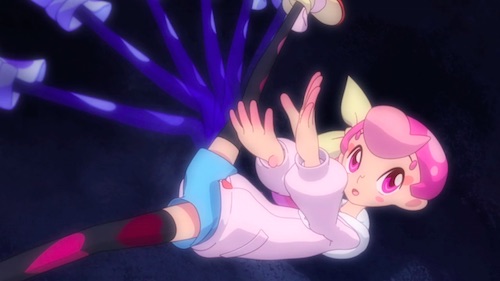
Satellite Girl and Milk Cow follows a dormant Korean satellite Il-ho who comes back to life after hearing the singing of a mediocre musician named Gyeong-cheon. Mysteriously transforming into a human-looking girl in order to find him, it turns out Kyung-chun has had his own change as well: due to heartbreak, he’s become a cow. As the two of them learn about each other, they have to deal with a magician that steals animal livers using a plunger and a a robot demon that devours people who have become animals, all while being helped by a sentient and magic roll of toilet paper named Merlin. How did any of this happen? Was it magic? Technology? The film certainly doesn’t bother to explain much, but that’s also its charm. The story unfolds at a rapid pace filled with both absurd and deadpan humor while always treating its characters’ feelings as just genuine enough that it really leaves an impression. It’s nonsense most of the time, but who said nonsense couldn’t be the source of a whole range of thoughts and feelings?

Visually, the film is very basic yet serviceable, though on more than one occasion it becomes very clear where shortcuts were used in animation. I don’t mean to say that it’s wrong to “cheat” on animation, as on some level it’s so much work to animate something that I expect it to happen, but at times an overuse of motion tweening (when things slide along a little too smoothly) and some awkward stills and camera zooms really stick out in Satellite Girl and Milk Cow. Even so, I find that these small issues don’t really detract from the main bizarre thrust of the film, and the numerous sight gags worked just fine. Not to give away too much, but my favorite gags involve Il-ho’s ability to launch rocket punches, and the considerations she makes in terms of rocket punch storage.

Perhaps the most interesting thing about Satellite Girl and Milk Cow outside of the film itself is the fact that it was the poster movie for the 2015 New York International Children’s Film Festival. Knowing absolutely nothing about the film prior to seeing it other than the promotional poster, I think it lives up to its role as the face of the festival for this year. The kids in the audience seemed to love it (or at least were caught up enough in the oddities of the film to have it keep their attention), and while of the films I saw I liked When Marnie Was There best, Satellite Girl & Milk Cow to me feels like a film that has wide appeal across age groups as long as you’re someone who can get into its unusual groove. It’s the kind of film that’s really difficult to riff on, because every time you think you’re saying something clever, Satellite Girl and Milk Cow will seemingly wink back at you with one eye, while starring at you with utter conviction using the other.

If you liked this post, consider becoming a sponsor of Ogiue Maniax through Patreon. You can get rewards for higher pledges, including a chance to request topics for the blog.

The Fujoshi Files 132: Sakasegawa Rinko

Name: Sakasegawa, Rinko (逆瀬川倫子)
Alias: Ponta (ポン太)
Relationship Status: Divorced
Origin: Cyber Yaoi Girl

Information:
Sakasegawa Rinko is a high-class OL. Often misunderstood by her co-workers as being a very sexually active woman, Rinko actually spends most of her time online browsing yaoi sites. She is one of the many fans of Ai no Doronuma Tanaka Mitsuki meets as she discovers online yaoi fandom.

Rinko has a wealthy ex-husband, who despite his good looks and talents is actually quite desperate and needy. Though Rinko treats him with mild disdain and great pity, her husband basks in this pathetic “interaction.”

Fujoshi Level:
One of the reasons Rinko divorced her husband was because his need for attention was interfering with her time chatting with fellow yaoi fans.

Swish! Swoosh! Basketball Isn’t Just for Guys Anymore: B-Ball Goddess

The digital manga service Manga Box can be something of a game of Russian Roulette in terms of quality. Certain titles, such as Girl and Car on the Beat, I’ve found to be extremely entertaining, while others much less so. Lately, I’ve found one reason to keep coming back, and that’s B-Ball Goddess.

bballgoddess-02

Known in Japanese as Basuke no Megami-sama, this manga follows a girl named Nimi Miyuki, who moves from Tokyo to Shimane Prefecture after a confession goes embarrassingly south. In Shimane, she meets the local basketball ace, Sakomizu Shou, who convinces Miyuki to join the women’s basketball team at their school. Though Miyuki is seemingly without talent, Shou is convinced that she has what it takes.

Manga about basketball is hardly new, and manga about girls playing sports even less so. However, B-Ball Goddess combines a really good understanding of how to portray cute girls with a strong sense of physicality and the excitement of a basketball game, all without resorting to especially gratuitous fanservice (most of the time) or shounen manga-esque displays of basketball super powers. For me, it’s quite telling that, in conversations with writer, comics critic, and long-time basketball fan David Brothers, he found Kuroko’s Basketball to be somewhat unbearable, but B-Ball Goddess to be solid and fun. I’m not sure if that means that all basketball fans would enjoy B-Ball Goddess, but I think that’s about as good an endorsement as it gets, short of an actual NBA player praising it.

bballgoddess-01

One of the more prominent aspects of the manga is the Umpaku dialect found in Shimane and its surrounding regions, of which the most common is Izumo-ben. While Miyuki and most other girls in the series speak using standard Japanese, older characters and Shou herself utilizes the dialect.  Of course, this being a manga that’s translated into English and all, a decision must be made as to whether the English should portray this difference or ignore it entirely. No choice is inherently correct, but I do have to wonder how the translator for B-Ball Goddess decided upon their solution.

As far as I can tell, the Umpaku dialect has been replaced by a thick Irish or possibly Scottish dialect, and while this works okay for the most part, at times Shou is almost impossible to understand. Unlike in the original Japanese where kanji can help readers understand what’s really being said, English has no such luxury in general. Thankfully, for particularly obtuse terms translation notes are usually provided, though it’s not Japanese to English but rather English to English.

You can read the first chapter of B-Ball Goddess online, and the Manga Box app is free on both Android and iOS.

If you liked this post, consider becoming a sponsor of Ogiue Maniax through Patreon. You can get rewards for higher pledges, including a chance to request topics for the blog.