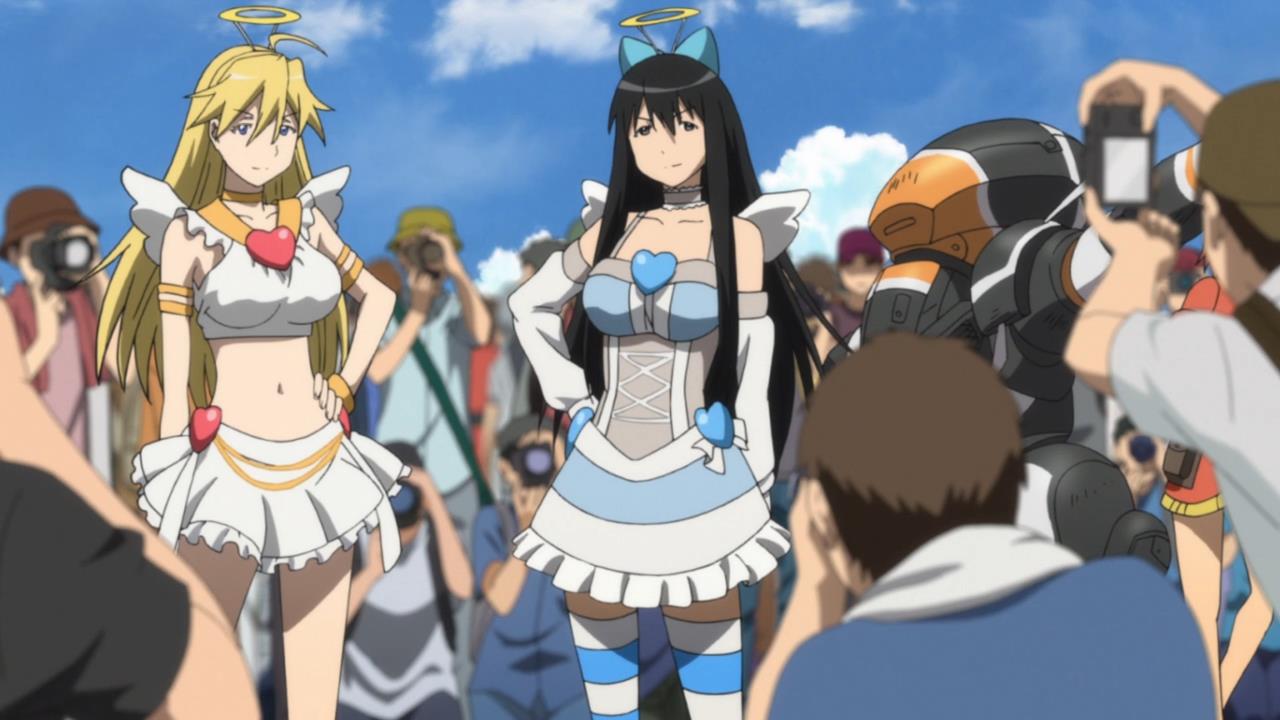
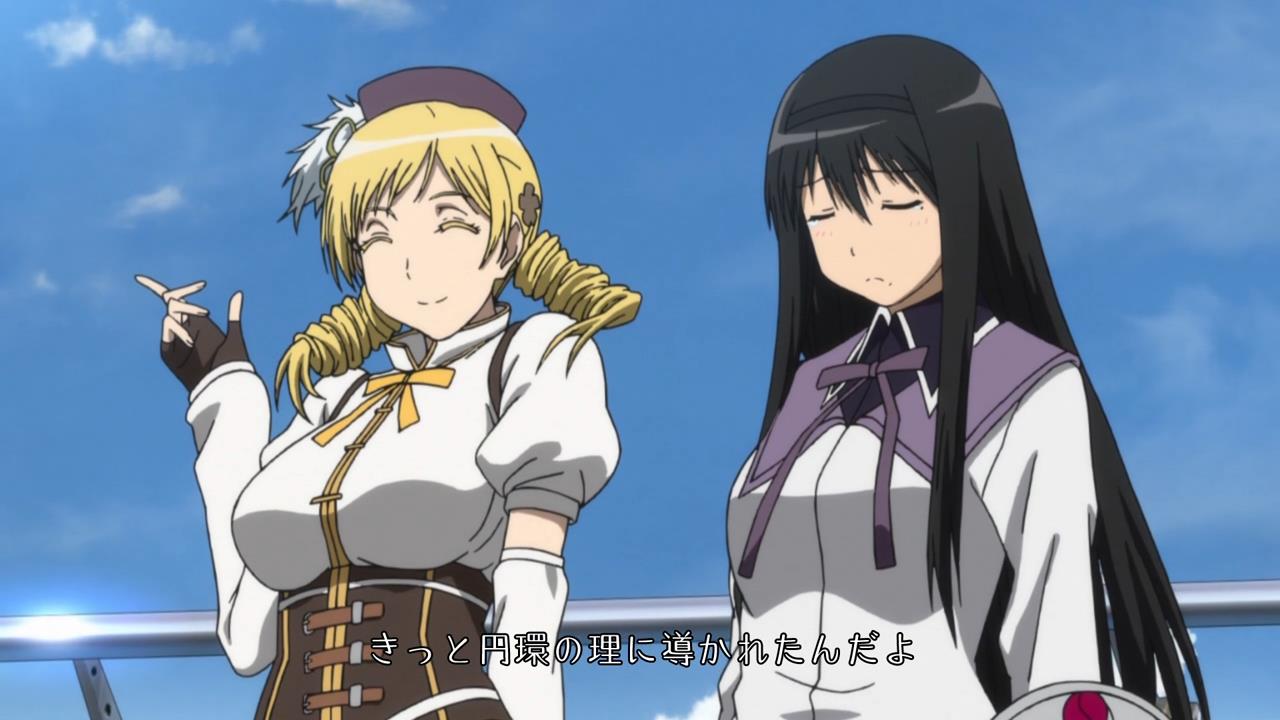
Thoughts on Casual Gaming

I once had a conversation with friends where they expressed bewilderment that people could enjoy casual games. To them, games are about challenges, puzzles, something to figure out in order to overcome or outwit an opponent be they computer-generated or another human being. As a gamer myself it’s something I understand, but I also know how daunting or even draining the “gamer” mindset can be, and I feel the ups and downs of “true gaming” in my experience with online mahjong.

I’ve been playing Japanese-style mahjong for a few years now, and it’s a game I find fascinating for a variety of reasons. In mahjong you have this mixture of skill and luck which creates a dynamic interaction between its players. The game is such that it’s possible to create complex plans and intricate webs of deception to upset your opponents, but the random component means the best-laid plans can go to waste, and adapting to the “unfairness” of the luck elements by knowing when to call it quits becomes part of the strategy. In other words, when playing mahjong your mind has to be sharp and focused, but what happens when you’re not at your best?

This is the problem I run into with mahjong sometimes, and why I feel able to understand the casual game mindset. I love mahjong at this point, but there are times when the day was long and I’m all worn out mentally, and I’m looking for just a way to relieve stress. At times like this, I’ve made the mistake of trying to use online mahjong as a way to relax and I’ve been punished nearly every time. In those instances, I want to treat mahjong like a punching bag, except that in this case the bag punches back. Mahjong is the type of game where trying to win a hand at all costs just makes you vulnerable. In these situations when one’s mental condition isn’t the best, decent opponents can exploit it without even trying because it’s basically the equivalent of running straight at them in the hopes they won’t fire first. Naturally, watching my rank drop as I make this simple mistake over and over again causes more stress instead of less.

It’s not mahjong’s fault, though, that it fails to do what I want it to in those instances, and that’s where casual games come in. They can be your reward for a hard-fought day, as just a way to escape from pressure. The games might be even more random than mahjong, but clicking a lot can basically be the mental equivalent of punching a pillow over and over. This is not to say that casual games can’t have any skill or challenge component (Angry Birds being perhaps the most prominent example, and you can pretty much auto-pilot Tetris), but that it can be tough to feel like life is beating you down and then a video game is too. Sometimes, people might just want to have the comfort of knowing they’ll always win (or at least win eventually), and they might even be willing to put down $5 just for that luxury.

On the Use of Fending Off Sexual Assault as a Way of Defining Strength in Female Characters

In the past I’ve written in an attempt to pinpoint what I find so troubling about some portrayals of “strong” female characters, especially in American superhero and fantasy comics, but despite having expressed various reasons for these impressions as such I still have never felt that the answers I’ve given were entirely adequate. It’s been an on-going process of self-questioning and observation, and the reason I’m making this post is that I’ve come to realize another issue when it comes to the representation of female strength.

It came to me while I was reading the comic Flipside, which features as its main character a sexy and strong female jester named Maytag. Throughout the first volume, Maytag is repeatedly  confronted with a similar sequence of events. Some bad men confront her, threaten her with rape or call her a bitch, and then Maytag turns their expectations upside down and defeats them (for the most part), while still emphasizing her sexuality or making some sexual innuendos.

Keep in mind that Flipside isn’t a particularly egregious example, as it suffers more (at least early on, I haven’t read further) from a lack of experience and characters overly designed as wish fulfillment, nor are anime and manga completely innocent of this. Also, the act of knocking out your would-be rapists can be empowering imagery. Instead, what I realized by seeing this two-step process over and over in such a short span of pages is that the the seeming need for sexual threats to happen in order to establish a female character as strong diminishes a story because strength winds up being defined as the ability to not get sexually assaulted. In these scenarios, the girl can’t be strong in a world which accepts the possibility of strength in a woman as a believable occurrence, only in a world which has to constantly remind her what a girl she is and how as a girl she’s liable to be attacked.

Another problem is what I would label the “straw misogynist,” or characters who are purposely set up to be extremely sexist so that they can be put in their place when the girl fights back. The way straw misogynists are used in situations like the ones I’ve been describing is that by threatening rape or sexual abuse they immediately bring attention to the sexuality of the girl target, creating this mixed message where the thrill is both in that danger but also in the sexual way the girl fights back. As a result, it ends up conveying something along the lines of, “You might not be able to overpower me sexually, but if you could oh boy would you be having fun!” And even a sexual fantasy such as that is not a problem because it’s just fantasy, but if it’s being touted as an example of how female characters can be strong, then there should be no surprise if some readers reject that notion.

This is not to deny the use of dangerous situations for women in stories, nor do I think that stories need to “ignore” gender. Instead, what I want to emphasize is how showing someone is strong is a different experience from showing someone is strong with constant and persistent caveats to that notion.

Giant Robot Protagonists and the Fathers Who Left Them

When I wrote my overview of anime in 1977 for the Golden Ani-Versary project, one thing I did not mention was the fact that all three of the major robot anime of that year featured to some extent a the relationship between a boy and his father. In Zambot 3, Kappei’s father had been away for a long time before he first appears. In Voltes V, the father of three of the pilots is missing, and the story goes from defending the Earth with the robot and base he built to finding out that he had been working on a noble task that requires him to be away from his family. In Danguard A, the hero Takuma becomes a pilot in order to fight the legacy of his father as the greatest traitor to mankind. Now the reason I did not mention this tendency in the article was that, upon further thinking, I realized that the “shadow of the (missing) father,” whether to be supported by it or to overcome it, is so ubiquitous that examples of it are strewn throughout the history of giant robot anime.

Here are some additional examples.

  • Tetsujin 28: The Tetsujin 28, originally a weapon of war invented by Shoutarou’s father, becomes a tool for protecting peace.
  • Toushou Daimos: Kazuya’s father, after having designed and developed the titular robot, is killed during negotiations between humans and the alien Baams.
  • Mobile Suit Gundam: Amuro’s father Tem is a workaholic who barely sees his wife and child, and who has also developed the Gundam. When they meet again, Tem has gone insane due to oxygen deprivation. Char Aznable must also work through his legacy as the son of the great rebel leader Zeon Deikun.
  • Rokushin Gattai Godmars: Takeru’s father secretly built the other five robots in order to protect Takeru.
  • Mobile Suit Z Gundam: Camille, after informing both of his parents that they were cheating on each other the whole time, has to watch both of them get killed one after the other.
  • King of Braves Gaogaigar: Mamoru inherits not just the will of his father but also of his entire race to protect the universe.
  • Psalms of Planets Eureka Seven: Renton must continuously deal with the fact that his father is considered mankind’s greatest hero.

If you factor in the “shadow of the mother,” the list becomes larger as well, including titles such as Reideen the Brave, Panzer World Galient, Eureka Seven AO, Choujin Sentai Barattack, and even overlaps into some titles mentioned above such as Z Gundam and Voltes V. And I won’t even get into grandfathers at this point.

I intentionally excluded one title from the list above that I’m sure many people think of immediately when seeing the combination of giant robots and a strained relationship with a parent, because I wanted to set some perspective before talking about it in detail. Shinji in Neon Genesis Evangelion is sometimes spoken of as nothing more than a teenager with daddy issues. It’s not too far off, and of course the mother plays a role here too due to the fact that his long separation from his father Gendou is the result of his mother’s disappearance, but I think when this aspect of Evangelion is put into relief against the robot shows that have come both before and after it, you can say that it is the common thread which ties him with a lot of the hot-blooded heroes who are often considered his antithesis. The place where Evangelion differs, then, is more the degree to which the shadow of the father, and of the mother, are explored on the internal and psychological level Evangelion is famous for.

I do have some ideas about how this came about, though I also think the reasons may have changed along the way. With a title like Tetsujin 28, which began as a manga in 1954 and the anime in 1960, its back story contains the specter of World War II. The father becomes symbolic of that past, and so the shadow cast was about carrying their legacy or making up for their failure. The 70s marked the rise of the salaryman, and if you look at those 70s titles, they often feature missing fathers who are off either prioritizing their job above all else or working hard for the sake of their families. In this way, it’s not hard to see the relation to someone like the father Kentarou in Voltes V. My thought is that these series addressed a worry of children in this regard in order to assuage their fears about it, criticize the system, or to just point it out as something to relate to.

I haven’t thought through the transition into the 80s and then through the 90s, but Evangelion is often spoken of as the post-Bubble Economy anime, reflecting the reveal that the salaryman system of lifetime employment was not as guaranteed as people originally thought, which speaks to those reassuring images of the hardworking father from those 70s robot anime. It may also be, then, that a show like Eureka Seven reflects the current generation being told that the previous generations were so much better and greater that they wish to rid themselves of that legacy.

Tamako Market, the Never-Ending 12-Episode Anime

Over the course of Tamako Market‘s run I noticed that it had a mixed reception, especially among Kyoto Animation fans. I may be mistaken as to how many people really disliked it, but I’ve seen enough to want to say something about it. As for myself, I had considered it an interesting and welcome step forward for the popular studio, and wondered what could be the source of this difference in opinion. After some conversations with friends, I think I’ve figured it out.

To put it simply, for the most part the girls of Tamako Market do not have, in their presentations, visual designs, or their personalities, the sort of near-tangible qualities that have made people in the past fall in love with Kyoani characters. The girls are comparatively less “moe,” and they certainly aren’t tragic, which leaves the show with a different sort of appeal that may seem alien to fans of Kyoto Animation’s existing body of work. The main character Tamako herself is simply a smart and capable but naive girl who loves mochi and who, to a small degree, reminds me of Madoka from Rinne no Lagrange. Dera the talking bird is as far from “cutesy girl” as one can possibly get, and seems to have been particularly unpopular. The main exception seems to be the carpentry girl Kanna (pictured above, left) whose eccentric personality, to be fair, does kind of steal the show.

(I’m fond of Shiori, the girl on the right, myself).

The best way I can describe Tamako Market‘s appeal is that it’s not so much about showing off an ensemble cast consisting of various characters with easily identifiable quirks like how K-On! is, but about showing the residents of the Usagiyama shopping district as a small community of people. While many of the side characters are never really developed, they don’t really need to be, as they add to the feeling of an oxymoronic slow-paced hustle. Seeing the small developments that occur in the residents’ lives feels not so much like “slice of life,” but like a low key-yet-silly comedy.

Someone asked me what anime out there was similar to Tamako Market. After some thought, I realized the answer: Sazae-san, a popular comedy anime about a Japanese housewife and her family, and which 1969 has continued to run on Japanese TV making it the longest-running anime ever. That’s probably the furthest answer from Haruhi possible, so I think that might say it all about how Tamako Market is different, and why I think it’s the sort of show that could’ve gone on forever.

The Fujoshi Files 69: Hiiragi Kagami

Name: Hiiragi, Kagami (柊かがみ)
Alias: Kagamin (かがみん), Hiiragii (ひーらぎー)
Relationship Status: Single
Origin: Lucky Star

Information:
Hiiragi Kagami is a high school student and the older sibling to her twin sister, Tsukasa. Along with their friends Izumi Konata and Takahara Miyuki, the four spend their days playing games and engaging in idle discussion. Generally confident and assertive, especially compared to Tsukasa, Konata refers to Kagami as a “tsundere,” though Kagami does not exhibit fully tsundere traits as such. Kagami is introduced to BL, as well as the world of doujinshi as a whole, when she assists Konata in a Comic Market run.

While Kagami is not really an otaku, she is an avid reader of light novels and enjoys playing video games, especially those in the fighting game genre, though she can be over-competitive. To Kagami’s chagrin, she is often not in the same class as her sister or their friends, though she does have some good friends in her class, namely Minegishi Ayano and the eccentric Kusakabe Misao.

Fujoshi Level:
Kagami is an absolute beginner to the world of the fujoshi. Teetering on the edge, her first experience involved her barely being able to resist buying a yaoi doujinshi.

Flexibility of Ingredients in Giant Robot Anime

On the recent Anime World Order podcast there was an e-mail from a listener lamenting the lack of “real mecha anime.” The AWO guys (Clarissa was absent) concurred with his view, and said that, while they understand the argument that elements they don’t enjoy in current shows were present in past robot anime, the ratio of ingredients for baking this “cake” has changed for the worse. As one of the people who speaks about elements of current robot shows being able to trace their elements back to previous decades, and who has argued this point before, I agree that the shows of today are different. Different things are emphasized to differing degrees, and the robots are not always used in the same ways as they would in the past. My question in response is simply, what is wrong with this change?

From what I understand, when Anime World Order and their listener say they desire proper mecha shows, what they are actually looking for are shows heavily featuring action, power, and manliness as represented by giant robots. While I too am a fan of cool robots shooting lasers and all sorts of diplays of machismo, and I’m aware that Daryl and Gerald’s tastes are not exactly the same as their listener, the problem is that if you define “proper mecha” as such, then the genre becomes extremely limited.  Who draws the line to say, “this is the correct amount of robot prominence in a mecha show?” You can point to Mobile Suit Gundam and say that it’s a show that has the “right ratio” of elements, but I can point to Mazinger Z and say how actually different it is compared to Gundam in terms of narrative focus and even the ways in which the robots are used, not to mention the differences between Gundam the movies vs. Gundam the TV series. How about Superdimensional Fortress Macross, which (indirectly) takes the Char-Amuro-Lalah love triangle and transforms it into a main draw of that series?

The reason I bring this up is firstly because I want to emphasize how much  that ratio has changed even within the conventional history of robot anime (and I am deliberately avoiding bringing Evangelion into the equation due to its unusual position), but even more importantly because the shows which “get it right” in the current age are the product of adjusting the ratio in favor of a certain perspective on what giant robot anime should be like. Shin Getter Robo vs. Neo Getter Robo is brought up frequently in the podcast as an example of a relatively recent giant robot anime done right (or at least in the spirit of the old stuff), but it does not actually have the same ratio of elements as the robot anime of the past. If anything, it’s somewhere between the tamer Getter Robo anime of the 1970s and the harsher Getter Robo Go manga in terms of action and violence, and to highlight certain elements of each while ignoring others makes not for a show like the old stuff, but one which emphasizes certain desired elements from the previous works. This is hardly a problem as Shin Getter Robo vs. Neo Getter Robo does in fact offer the things that AWO says it does, but it’s also the result of distilling a robot anime into something more focused and specific to the preferences of particular viewers, which is not that different from the objections leveled at the current audience of robot anime.

I understand that this criticism is primarily aimed at Code Geass and other anime like it which put characters front and center in their stories and use robots for flavor. While I could argue that shows like Votoms do the same thing only in a way which emphasizes a masculine ideal, if we assume that current shows simply do not have enough robots, then I have to ask why the thrill of violence and power should be the primary motivation of robot anime? AWO speaks of the sacrifices that robot fans must endure in current mecha shows, but what about the same sacrifices people made in the past to enjoy those old robot shows when the ratio may not have been ideal for them? If people see elements such as romance, attractiveness of characters, drama of war, friendship, or any number of themes in robot anime, then I think it’s fair to say, “You know what, it’s cool that those elements are there, but wouldn’t it be great if there were anime which really brought those things to the forefront for people instead of having them buried beneath layers of action?” Using robots as a means to tell the story at hand, having problems solved by thoughts and intentions instead of by robots as a power metaphor, those sound like great ways to convey a narrative or express an idea. De-emphasizing power in a giant robot anime can and often does lead to interesting things.

Turn A Gundam, which isn’t a “modern” mecha series like Code Geass, but still places both a different level and type of emphasis on its mecha component, results in an overall stronger story because of it. The 2004 remake of Tetsujin 28 is hardly like the old 1960s one, because the theme shifted from “isn’t it cool that this kid has a robot?” to “exploring the post-war condition of Japan and the specters of the war through this robot as a science fictional element.” Yes, the latter theme was part of the original manga and anime to an extent, but by not having to value the proper “ratio,” it was able to do more. Robotics;Notes possesses many of the “flaws” of current robot anime such as an emphasis on high school, a lack of robot action, and a strong dose of drama, but it’s also an anime which emphasizes the thematic purpose attributed to giant robots. It uses the intimacy of a high school setting to show the bonds the characters have with the concept of giant robots, and does so by utilizing the “modern formula” that is supposedly anti-mecha. In all three cases, their amount of straight-up conventional robot fighting is less than expected, but it allows them to serve different purposes.

Gerald spoke of Die Hard and how keeping its constituent elements but not understanding it as a whole does not necessarily make for a proper Die Hard. That might be true, but why are we limiting the scope to just one movie? Action movies can be Commando, but they can also be Highlander or The Dark Knight. If that example is too broad, then let’s look at a franchise like The Fast and the Furious. After four movies about racing cars in deserts or highways and having some vague infiltration plot, Fast Five comes out and changes the formula into what is essentially a heist film. By focusing more on action with purpose and the teamwork element, and being less about the cars themselves, the result is a much more solid and well-rounded film which is still undoubtedly of the action genre.

Or to put it in terms of Daryl’s analogy, yes if you change the proportion of ingredients when baking a cake, you get something different. The thing is, cakes are but one possibility. What we have now are robot pies, robot souffles, robot quiches, robot donuts. You might prefer cake in the end, but all of those are equally valid and can be equally delicious.

Chop Chop Chop, Judo Flip: Genshiken II, Chapter 86

Genshiken II, Chapter 86 looks to possibly be a turning point. We’ve had quite a few of those already though. Also, next month there might be more news about the upcoming anime! It’ll be a long 30 days or so.

Sue visits Hato’s place, using Janglish to ask if he likes Madarame. Hato denies, but is clearly hiding something. After a tussle pitting Hato’s judo training against Sue’s freestyle which ends in a win by submission for the American, Sue discovers Hato’s secret Mada x Hato (in drag) drawings. Hato, who is increasingly confused about his feelings for Madarame (he feels that at this rate he might actually start liking Madarame), decides to just stop crossdressing and go back to being “a normal otaku.” This clearly makes Yajima uncomfortable despite her previous objections to Hato’s crossdressing.

With this chapter, I think I finally understand one of the big overarcing themes of Genshiken II. Yes, there’s the generation gap and the otaku/fujoshi distinction, but even more fundamental to the manga is a concept I’d describe as “the complexities of personal perceptions.”

The foremost example is Hato. He is getting to the point where he likely feels something for Madarame. I want to point out, however, the fact that Hato had no problems showing his “Hato x Mada” art to Sue, declaring that it was just the realm of fiction, but for some reason he also felt it necessary to keep his “Mada x Hato” hidden. I think the distinction between the two pairings is extremely important because it indicates a denial of clear-cut narratives about sexuality in describing otaku.

“What’s fiction is fiction, and what’s real is real” is a clear and concise argument. So is “what you’re attracted to in fiction can influence your real life preferences (and vice versa).” The former argument is used by Hato, while the latter was suggested by Kaminaga. With Hato and his feeling towards Madarame, however, it might actually be the case that his yaoi delusions are separate from his real feelings, but he began developing feelings for Madarame anyway due to their growing friendship, and that this manifests as Hato x Mada vs. Mada x Hato. I wonder if this is the case just because Mada x Hato for some reason apparently has to involve Hato crossdressing, as if to say the idea does not “make sense” to him otherwise.

In anime and manga about (or including) fujoshi, often there is significant time spent explaining how important the orders of pairings are important. “It’s like saying ‘curry on rice.’ No one says ‘rice on curry!’ says a character from the 4-koma series Doroko. This is generally played for laughs while trying to introduce to the reader the “mysterious” mind of the fujoshi, to allow the reader to say, “Oh fujoshi, you’re so lovably wacky.” I think that with Genshiken, Kio is trying to discuss that mindset a little more seriously.

I predict Ogiue is going to start playing a bigger role in this, just because Hato looks like he’s trying to run away from his current situation at all costs. Ogiue is more than familiar with this situation, is aware of how much trying to deny oneself can generate a festering wound of self-loathing, and just how complicated the real/fiction distinction can get. I think, or perhaps I simply hope, that Ogiue will manage to be Hato’s mentor, like how Ohno was there for her. Also, Hato says he’s “going back” to being a normal otaku, but was he ever a normal otaku? He discovered yaoi in junior high, so it’s been with him for a long time, which makes me think that Hato is trying to simply act like how a “normal otaku” is supposed to without truly direct experience, somewhat like how Ogiue sometimes tried to approximate a “non-otaku.”

If the Hato example is a little too crazy, I think Yajima in this chapter also provides an interesting case of personal perception. Clearly the reason why Yajima blushes at the end is because she still associates male Hato with the time she accidentally saw him naked, in addition to just the fact that he’s a guy. She doesn’t react this way so much to Hato in her female guise, which means that the wig and dress is enough to “trick” Yajima psychologically so that the first thing she thinks about is Hato’s clean-shaven personal area. What Yajima thinks of Hato is of course its own puzzle having at its origin her own self-image and her lack of experience interacting with men.

I don’t know if Sue counts towards this as well, but I do find it interesting that Sue’s embarrassment over kissing Madarame has nothing to do with him and everything to do with the fact that Kasukabe saw her doing it. On some level, I feel like I can really understand that distinction. Somewhat like that famous scene in His and Her Circumstances when Miyazawa accidentally runs into Arima while out of her “perfect student” guise,” there are people you feel like you can be a fool around and people you don’t. I also continue to think that it’s kind of brave of Kio to give Sue a larger role, as semi-fluent foreigner is not the easiest thing to pull off without reverting to very basic stereotypes. Sue is many things, but “basic” isn’t one of them.

By the way, there’s something I find really impressive about Sue and Hato’s fight scene, particularly the panel where Hato drags her and sweeps the leg. It captures that one moment so incredibly well, while allowing it to transition into the next set of panels. It actually makes me want to see Kio draw an action series.

To end, I want to ask a simple question: Sue x Hato, what are your thoughts? If this were a more popular series, I’m sure that neck-licking thing would have people talking.

No-Smile Precure: The Transformation of Kenzaki Makoto

Recently,  Dokidoki! Precure revealed all of its main cast and their transformations. In seeing comments about them, I’ve noticed that the transformation for Cure Sword (pictured above), has received somewhat less fanfare compared to the others because it’s not nearly as fanciful as the others. When you look at the Makoto/Cure Sword sequence, it really does lack many of the flourishes of the other Cures, but rather than this being simply a less impressive transformation I do think that the simplicity both in the “camera work” as well as the small amount of details is intentional, as it gives a better sense of Cure Sword’s character.

curerosetta-outfit curesword-armsraised
(All gifs taken from http://lemedy.tumblr.com)

Cure Sword is different from the other Cures in Dokidoki! in that she is a seasoned warrior familiar with being a Precure. Just the fact that she stretches her arms above her head and lets the costume simply form over her is reminiscent of someone just putting on a standard and familiar uniform. When you compare that with Cure Rosetta’s playfulness and spring in her step as she transforms, it becomes especially obvious.

Makoto’s change into Cure Sword is thus rather straightforward. While other girls’ hairstyles bob and flow tremendously, Makoto’s barely does so. And where the other girls move as if they’re dancing while announcing their names, further giving that feeling of excited performance, Cure Sword slashes at the air, giving the impression of a serious fighter.

curediamond-posecuresword-slash

The thing that really differentiates the Cure Sword transformation from the rest of the Dokidoki! team is simply the fact that, unlike the rest of them, she has a glower on her face pretty much the entire time, only changing her expression into a smile during the final team pose. When put side by side with the other Cures, it really makes her stand out, and along with the lack of movement in her tranformation it becomes indicative of her more serious personality.

Makoto is not the first character in Precure to have a stern look on her face as she transforms, as Cure Moonlight’s features a similar expression, and much like Cure Sword, Moonlight’s transformation appears more efficient than the others’ in Heartcatch Precure! There is still a difference, however, and I think the key factor to consider is Makoto’s origin. When you look at the transformations of other characters in Precure, including Dokidoki!, it’s as if they’re undergoing a metamorphosis. Even when you look at the characters who are from other worlds like her, such as Milky Rose, Cure Passion, Cure Beat, and Cure Muse, they take on a new identity by transforming. Makoto, however, is simply returning to her true self. Rather than being a normal girl who becomes a warrior, she is a warrior who disguises herself as a normal girl.

How Robotics;Notes Explores the Meanings of Giant Robots

(Warning: This post contains spoilers.)

There are many interesting aspects about the anime Robotics;Notes, but one thing that’s particularly noteworthy is that it is a show about giant robots. That might not sound so impressive on its own, but it’s actually quite rare for a show to be “about” giant robots. Certainly, there are anime which include giant robots, anime which place giant robots in the spotlight, and giant robot anime which are driven by strong themes, all of which can be strong in their own rights. Where Robotics;Notes differs, however, is that it concerns the very thematic concept of giant robots, particularly what they mean to the people who watch and follow them.

Senomiya Akiho, Robotics Club President

In episode 1, we’re introduced to the Central Tanegashima High School Robotics Club and its president, Senomiya Akiho. An energetic girl, Akiho is an avid fan of giant robot anime, particularly the highly influential and hot-blooded series Gunvarrel. Akiho’s primary goal as Robotics Club president is to complete a 1:1 scale functioning robot replica of Gunvarrel called the Guntsuku-1, a task she inherited from her sister Misaki. Akiho, we are shown, has nowhere near the genius of her sister who designed the blueprints for Guntsuku-1 in the first place, and the enormous task before her sets up a couple of important questions. First, is Robotics;Notes the sort of anime that would, after deliberately pointing out how unfeasible it would be to replicate the design of an in-story fictional robot while also providing examples of “realistic” robots in society, allow Guntsuku-1 to be completed? Second, whether it ends up being finished or not, how prominently will Guntsuku-1 figure into the narrative? More specifically, will it actually somehow fulfill the role of a giant robot even with its various setbacks? These two mysteries work together to create a slow-burning sense of anticipation in Robotics;Notes which center upon the idea of “giant robots,” or more specifically the “giant robots of anime.”


Legendary anime
Gunvarrel

The “high school kids in a club” setting is not new to anime, but because of its increasing prominence in recent years Robotics;Notes initially gives off the impression that it might stay primarily in the microcosm of the clubroom. Even when factoring in the fact that Robotics;Notes is from the same company which created Chaos;Head and Steins;Gate, two series with grander themes than K-On!, there still exists in the early episodes the possibility that the anime would focus on the everyday of the Robotics Club amidst this greater story, or at most show how small their world is by comparison. While the story of the Robotics Club does eventually begin to tie itself into a greater conspiracy and makes it clear that the show is not so limited in scope, even from the beginning Robotics;Notes creates a strong sense of connection between many of the characters and varying conceptions of robots. This in turn helps to establish that deeper thematic level of the meanings of giant robots.

Robotics Club members (left to right): Senomiya Akiho, Daitoku Junna, Koujiro Frau, Yashio Kaito, Hidaka Subaru

Going by just the club members, the male lead and childhood friend of Akiho, Yashio Kaito, is a slacker who primarily experiences giant robots through a fictional Virtual On-esque game called Kill-Ballad, which is itself inspired by Gunvarrel. The hikikomori fujoshi Koujiro Frau, turns out to be not only the creator of Kill-Ballad, but also the daughter of the producer of the original Gunvarrel anime, making Gunvarrel her tie to her missing mother. Hidaka Subaru, who initially refuses to join, is a champion of small-scale robot battle competitions who is forced to compete in secrecy because of his father’s disapproval. Daitoku Junna’s grandfather specializes in robotics, but an accident at a young age left her with a fear of robots. In each of these examples, Robotics;Notes in some way connects the theme of giant robots to other people.

The completed Guntsuku-1

There are two important developments about halfway through the series. First, the Robotics Club manages to complete Guntsuku-1, but it turns out to have accumulated over time so many compromises and shortcuts in its construction that the final product is a cumbersome and ugly-looking machine. Physically speaking, it is no more a robot than a golf cart with a head grafted on. Second, it is revealed that the final episode of Gunvarrel never aired because it was actually brainwashing propaganda (the broadcast of which was was stopped by Frau’s mother), which creates an extremely negative public opinion of Akiho’s beloved anime. Here, Akiho’s reactions to both events emphasizes the role of giant robots in her life, which in turn foregrounds how giant robots as a fictional concept can be interpreted.


The
Gunvarrel conspiracy

In regards to Guntsuku-1 and its lackluster debut, Akiho specifically mentions that they are not abandoning Guntsuku-1. Rather, they are setting it aside so that they can come back to it later, which is indicative of Akiho’s belief in the spirit of the giant robot concept. Even as the Robotics Club moves onto working on a more realistic robot (the Guntsuku-2) for a robotics expo, Akiho not only makes sure not to forget Guntsuku-1, but her influence encourages the other club members to create an augmented reality modification so that people using a technological interface can view Guntsuku-2 as if it actually were Gunvarrel. Similarly, even when the horrible truth of Gunvarrel becomes known and people view it with disdain, Akiho resolves to still love Gunvarrel because she believes that her positive experiences with it trump whatever diabolical authorial intent may have been at the heart of it. At this point, it becomes increasingly clear that what is important to Akiho (and Robotic;Notes) is not the physical component of giant robots as massive titans of power but as symbols and icons of inspiration, existing in the hearts of those who love what it could be, instead of what it was supposed to be.


Akiho’s persistent spirit along with Guntsuku-2

Akiho embodies this “giant robot spirit.” Late in the series, when the conspiracy which underpins the series is in full swing, Akiho falls into a panicked depression, which comes as a shock to Kaito. Throughout the series, Kaito acts like a reluctant accomplice to Akiho’s madness, someone who follows only because he must. In this situation, however, Kai reveals that he was only able to act the role of the slacker because Akiho was there as his beacon of light, with enough motivation to carry the both of them. Kaito always saw in Akiho what Akiho sees in giant robots: something (or someone) who is not the most logical or rational but is an enduring source of motivation.

Guntsuku-1, revived

By the end of the series, the Robotics Club must stop the leader of the conspiracy and prevent the death of millions. In order to do so, they (along with their friends and family) repurpose the Guntsuku-1 using parts of Guntsuku-2, giving it functional modifications that they were simply unable to the first time. Appearance-wise, it’s still more or less the cumbersome hunk of metal it was before, but at this point in the story it’s clear that what makes Guntsuku-1 into a valiant giant robot just like Gunvarrel is not how closely it matches the original design but rather the intent of the people who support it. This includes not just the current Robotics Club and the people they know, but the people who worked on it throughout the years such as Akiho’s sister. As if to reinforce this point, when the antagonists view Guntsuku-1 through the technological interface of their own robot, all they can see is the actual Gunvarrel (via the same augmented reality image used for Guntsuku-2), complete with signature attacks.

The virtual image of Guntsuku-1

In describing Robotics;Notes as an anime about giant robots unlike so many others, this distinction mainly has to do with the fact that Robotics;Notes incorporates into its story how giant robots as cultural artifacts are received and interpreted by the people who engage with them. It is not the only anime to address this on some level, with Martian Successor Nadesico and the 2004 Tetsujin 28 being a couple of examples, but Robotics;Notes does so while putting into question throughout its narrative the very existence of its signature robot. It is not until the conceptual processes for conceiving the effects of “giant robots” are in place that Guntsuku-1 truly takes center stage, which in turn creates a unique and interesting position for Robotics;Notes. If one were to categorize Robotics;Notes, would it be considered a “giant robot anime?” The fact that this can be argued both ways is, rather than being a weakness of Robotics;Notes, one of its greatest strengths.

Dyuhuhu

The Fujoshi Files 68: Hisakawa Ayane

Name: Hisakawa, Ayane (久川綾音)
Alias: N/A
Relationship Status: N/A
Origin: The Manken Club, Like Whirlwind and Surge Waves!!

Information:
Hisakawa Ayane is a 1st-year student and a member of the Manken Club lead by Rinbara Megumi. In addition to an interest in yaoi doujinshi, Hisakawa is also an exhibitionist.

Fujoshi Level:
Hisakawa joined her club president Rinbara in using up the club’s funds to buy yaoi doujinshi.