Pallet Cleanser: The End of Ash Ketchum as Pokemon Protagonist

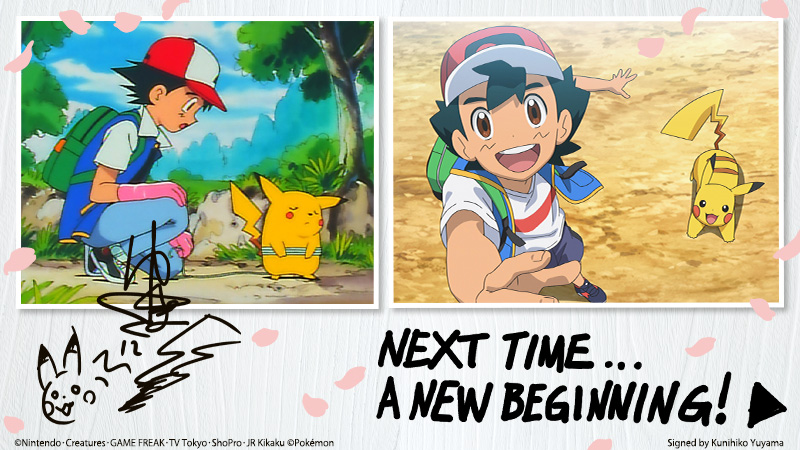
This past week marked one of anime’s biggest departures ever, as Ash Ketchum—aka Satoshi—has ended his 26-year tenure as the main hero of Pokemon. It’s amazing to think about how the character has been such an enduring presence in the lives of millions of people for over two decades, all without being wholly remade and revised. Other heroes in other franchises might arguably have greater legacies, but the fact that it was consistently the same Ash week in and week out makes for one fascinating and continuous chain of history.

It’s been many, many years since I was actively part of the Pokemon fandom. I naturally didn’t know about it when it first came out in Japan, but for all practical purposes I was there from the beginning. I remember getting a little pamphlet about Pokemon in an issue of Nintendo Power, and as I anticipated its arrival, I managed to even catch the sneak peek “Battle Aboard the St. Anne” episode that aired the week before the first episode aired in the US. For maybe five or more years, I would record every episode on VHS, and the times I had to program the VCR, I tried to time breaks in the recording to preserve space so I could fit more on each tape. I’ve long since stopped doing that, or watch Pokemon on a regular basis, but I can never forget those early days.

Ash was never my favorite Pokemon character, and for the fellow fans I interacted with online, it was largely the same. The reason: a lot of the people I talked to I met either through the competitive scene (years before the founding of Smogon) or via a Team Rocket messageboard. In the former case, people were not fans of Ash’s nonsensical battles or inability to understand the type chart despite his successes. In the latter, it’s because a site dedicated to Team Rocket would naturally run ever-so-slightly edgy and prefer older characters. For me, it’s just because he was a pretty decent but generic kids’ anime protagonist—a plain rice ball (or donut, as it were) in a world of more compelling stories. 

But there‘s something special about being that hero for so many people for so long. And while many of his accomplishments were often tied to meta events (e.g. Gary Oak/Shigeru’s Japanese voice actor leaving the show is why they ended up having their big 6v6 clash in the Johto Pokemon League), the sheer amount of things Ash managed to achieve is impressive. A character who could have gone on forever unchanging still leaves behind one hell of a CV. 

A big factor in why there was a sense of progress with Ash was because of the way he would go from one region to the next in accordance with game sequels. While the basic formula of “meet new friends, have adventures, get gym badges” was always present, he never stayed in the same area for long, and he always met new people. And while fans would often remark on the way his skill and knowledge would seemingly go backwards every time he started a new path to a Pokemon League, it’s clear that his inability to retain knowledge is not necessarily a matter of poor character writing or insufficient lore consistency and more a way to keep him level with the new fans who still come to the series even now. Ash is as much a vessel as he is a protagonist, and he could never be a vessel for everyone at the same time.

One thing I always found funny is the fact that some of Ash’s greatest wins and titles came about in “filler arcs,” the seasons that took place between main-game storylines. This is why he’s the Orange League champion, the Frontier Champion, and most recently the winner of the Masters Eight tournament (solidifying him as the strongest trainer in the world). He also won the Galar Pokemon League, but in hindsight, it’s clearly because they knew they were about to start winding down Ash’s story and they wanted to show much he had grown. I remember thinking, all the way back in the late 90s, about how a main-line gold medal would likely someday be the sign that Pokemon was going to conclude. While the anime will continue with new leads, it really is the end of an era. 

Now the perennial 10-year-old gets to go off and do things unseen, and it makes me wonder if we’ll ever see him again. Might Ash make cameo appearances down the road, and will he look different or even possibly…older? It’s a new and unknown world.

Thoughts I Have After Watching “Raven of the Inner Palace”

Raven of the Inner Palace is an intriguing fantasy anime with shades of one of my favorite shows ever, Twelve Kingdoms, but mixed with the vibes of a series like Natsume’s Book of Friends or Mushi-shi. The main heroine, a girl known as the Raven Consort, works in the inner environment of a great palace, using her supernatural abilities to solve mysteries like an occult detective. Its combination of elements and its overall compelling nature make me think about various assorted aspects of the series, each of which I want to briefly expand upon. There’s no real organization to these thoughts. 

Chinese Fantasy vs. European Fantasy

The world of Raven of the Inner Palace is not actually China, but the series takes a lot from Chinese culture and mythology. It’s certainly not alone in this regard (Twelve Kingdoms also falls in this category), but it stands out in my mind because of how much “Ancient China” is an aesthetic (especially in fiction coming out of Asia in general), and how much it parallels/contrasts with the default European look that typifies fantasy series of a certain kind. “China-esque” is a whole artistic motif that is less prominent in the West, but the fact that the Chinese Wuxia BL novels have been such a hit makes me wonder if Raven of the Inner Palace (itself originally a light novel series) might also get increasingly popular.

Girls Often Make for Better Audience Stand-In Characters

In terms of being vehicles for wish fulfillment, Raven of the Inner Palace isn’t an exception. It’s primarily geared towards female readers, with the heroine Liu Shouxue (or Ryuu Juusetsu, depending on if you prefer Chinese or Japanese pronunciation) being a cool and powerful sorcerer who gets involved both professionally and emotionally with a kind and handsome emperor. But even knowing this, Shouxue comes across as a well-conceived and well-written character who is actually enjoyable to witness. 

I think one of the big differences is that the male counterparts in series geared towards guys tend to be either more insufferable or carry qualities that just make them less appealing overall. I can see why the emperor or anyone else would fall for Shouxue, and it helps render her as an individual who can carry her own weight in the narrative. On the other hand, so many light novel protagonists seem to just kind of be there, with a handful of quirks cobbled together into a makeshift personality.

Cool Eunuchs???

In Chinese culture and entertainment, eunuchs are often not portrayed in a favorable light. The very reason Chinese emperors used eunuchs is because their inability to procreate supposedly meant that they could care for the concubines without surreptitiously siring children with them, but they also became major parts of inner-palace politics as a result. Thus, eunuchs are traditionally portrayed as weirdly effeminate and conniving schemers who also smell.

However, Raven of the Inner Palace, eunuchs are some of the most awesome characters around. Unpleasant emasculation is interpreted as bishounen coolness, and I can’t help but think about whether this is the product of Chinese-inspired fantasy being processed through anime and manga aesthetic.

The Last Thing: Chekhov’s Chicken

There’s a chubby bird that lives with Shouxue that is mainly comic relief, but I had a feeling from the start that it’s important in some way. I call it “Chekhov’s Chiken,” and I just wanted to mention this nickname so that others use it as well.

Farewell to One of Anime’s Great Character Designers: RIP Kimura Takahiro

I normally don’t write about the death of anime and manga figures that often, preferring to save it for people I feel have influenced me in major ways. But here we are again with animator and character designer Kimura Takahiro, who passed away on March 5 from amyloidosis. He was 58.

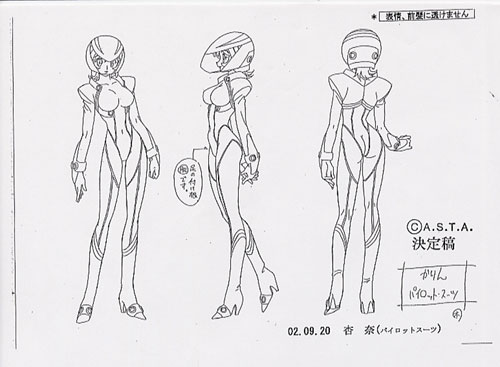
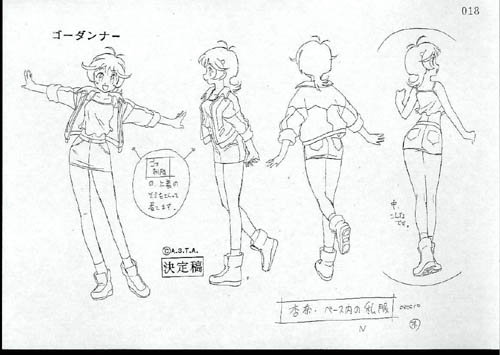
Kimura worked on series like Gaogaigar, Betterman, Godannar!!, Brigadoon: Marin & Melan, Gun x Sword, and Code Geass. As far as character designers go, he is one of my favorite ever. His style is distinct, and he would give his designs a real attractiveness and charisma. Are they drawn pretty horny? Certainly, but somehow that aesthetic feels both very grounded in the 90s but also timeless. His art touched so many of the series I love, and I still consider Aoi Anna from Godannar a Top 10 fave among female characters.

I never got to meet Kimura in person, and I think about this because of the fact that he was a guest at Sakura Con in 2006 and Anime NYC 2019. In both cases, circumstances made it impossible for me to see him, and now I wish I could have figured something out. 

I found out the news of Kimura’s death thanks to a tweet from his wife, the artist RICCA—I guess this is how I learned the guy was married. Also, Kimura apparently loved to search his own name, and RICCA mentions that he’s probably watching from heaven and loving the attention.

And here’s a message from the director of Gaogaigar, Yonetani Yoshitomo, recalling the cosplay wedding party Kimura had back in the day. Apparently, Yonetani and Kimura not only sat next to each other at work, but also lived right next door from each other.

Thank you, Kimura Takahiro. You were one of my heroes.

Rediscovering the Sea of Stars: Ogiue Maniax Status Update for March 2023

The end of last month hit with some tough news as the world learned that Matsumoto Leiji had passed away at the age of 85. I’m still thinking about what an end of an era that is, and I’ve been spending time with his works. In addition to finally watching more Space Battleship Yamato 2202, I decided to revisit my favorite anime of all time, 1979’s Galaxy Express 999. It’s as gorgeous as the day I first saw it.

Thanks to my March Patreon subscribers:

General:

Ko Ransom

Diogo Prado

Alex

Dsy

Naledi Ramphele

Sue Hopkins fans:

Serxeid

Hato Kenjirou fans:

Elizabeth

Yajima Mirei fans:

Machi-Kurada

Blog highlights from February:

I Almost Forgot the Power of Tsundere, or “Ogiue and Me”

Thinking about tsundere in 2023, and the long-term appeal of Ogiue.

Don’t Watch on an Empty Stomach: Delicious Party Precure

Great and inspiring show, but it’ll make you hungry as heck.

New Paths: Pokemon Violet

The most fun Pokemon game in a long time.

Kio Shimoku

Kio posted a ton of awesome Genshiken art this month.

Apartment 507

Hype for the Rokudo no Onna-tachi anime!

Closing

As stated last time, it’s the dawn of the final month for Love Live! School Idol Festival. The queen is dead; long live the queen.

A Personal Look Back at Matsumoto Leiji

The news of Matsumoto Leiji’s death shocked me. While the passing of an 85-year-old shouldn’t be too surprising, it still makes me contemplate so many things. The number of creators who can trace their careers back to those early decades of the postwar manga industry is now vanishingly few. Matsumoto’s influence was monumental, with great works like Galaxy Express 999, Captain Harlock, and Space Battleship Yamato all under his belt. He was also instrumental in so much of what we now call the anime fandom, as his work on Space Battleship Yamato was the catalyst for fandoms in Japan, the United States, and elsewhere.

More than his broader artistic and historical significance, though, I feel Matsumoto’s legacy supporting me, as I might not have gone down my particular path of anime and manga fandom if I had never discovered his works. His messages of humanity and compassion sparked my curiosity, and helped me to look both forward and backwards.

The 1979 Galaxy Express 999 film is, bar none, my favorite anime ever. I reviewed it in the early days of Ogiue Maniax, but as I explained there, my history with it goes back further. I first watched it as part of a local film festival, at a time when my exposure to much older works was more limited. I can’t recall when exactly I saw it relative to other 70s anime, but I still remember to this day the sense of awe I felt coming out of the theater. Maetel remains one of my top 3 favorite female anime characters of all time, a figure whose presence in the story speaks to the beauty and soul of Galaxy Express 999. Nothing has toppled it in my heart even decades later.

An illustration by Matsumoto Leiji found at Comic Store Wonderland in Osaka

After seeing the film, I naturally began to notice more Matsumoto Leiji material, and since then, the worlds of his creations have been part of my world too. I bought a single volume of the Galaxy Express 999 manga in English in high school, and I would read it over and over. I would repeatedly consult Frederik Schodt’s Manga! Manga!, which included not only a biography of him but also a sample of one of his more obscure manga. Among my first figure purchases was a large Maetel, and I remember my excitement over finding the Queen Emeraldas OVAs and discovering Daft Punk through Interstella 5555.

I’ve reviewed Danguard A to celebrate the 50th anniversary of anime on television, sent Harlock to show “the pirate’s way” in Super Robot Wars T, and made lasting bonds thanks to The Galaxy Railways. I’ve also purchased that 1979 Galaxy Express 999 film over and over, whether it was happening upon a used Region 2 DVD at a Bookoff, getting the US DVD to show my support, or upgrading to the blu-ray so I could experience it in better quality than I ever thought possible. Actually, in that regard, the film festival I attended all those years ago showed a VHS version, so it really is like night and day.

An old drawing I made of Ogiue cosplaying as Maetel

In the long run, I think I would have still come to take a broader view of anime and manga. But as I currently am, Matsumoto Leiji’s art contributes no small part to the enthusiast I am today. As he leaves us, I wish his messages about the importance of remembering and cherishing our humanity continue to resonate in the years to come.

The Galaxy Express 999 will take you on a journey, a never-ending journey. A journey to the stars!

Like, Comment, Subvert: Yurei Deco

Yurei Deco is a science fiction anime that takes the idea of social media influence to the extreme. It depicts a world where obsession with “likes” (or rather, “loves”) is so strong that society is built around their importance. This is a series that speaks directly to me, as I’ve long been bothered by the dominance of “likes” as a vital part of social media interaction.

Twitter is currently going through its largest debacle ever as Elon Musk arrogantly makes every wrong decision imaginable. For me, however, there was a different turning point that permanently soured my experience with the platform: the day that Twitter decided to change their stars into hearts. Suddenly, it didn’t mean you were marking something as interesting and worth looking at, but instead that you tacitly approved of it. What little nuance was there has gotten pulverized, and things have never been the same. Yurei Deco takes this problem and portrays a society that is basically a dystopia of social media where socioeconomic status and opportunity are tied to the number of “loves” one accrues. 

One of the things I like about Yurei Deco is how it utilizes its main character, a girl named Berry. At the start of the series, she’s generally accepting of the conventions around her: Berry’s favorite word is “love-y,” which she uses as a positive adjective—it basically means “this is great because it would get a lot of loves.” However, she’s also fairly curious, and her hobby is learning about Phantom Zero, a mysterious figure/phenomenon who appears to steal people’s “loves.” In this way, Berry is indeed a product of her society but also in a position to start subtly defying it. This combination (along with a broken eye implant) inadvertently allows Berry to begin seeing past the augmented reality that is the norm, and into the cracks that have formed as a result of this tacit acceptance. She’s drawn into a world of hackers and other eccentrics who play at the fringes, resulting in a story that’s equal parts mystery and commentary.

In other words, while Berry is eventually surrounded by outsiders, she herself has one foot in each door. Even as she learns more and more truths, she still uses “love-y,” giving her a realistic sense of growth and change. She makes major strides, but she’s not about to change her vocabulary overnight. In this way, Yurei Deco gives me vibes reminiscent of both Dennou Coil (for the integrated cyberspace elements in everyday life) and Deca-Dence (for the measured solutions that arise from the realities of the world and system portrayed. 

The bright and colorful visuals are courtesy of Yuasa Maaaki’s Science Saru studio, and Yurei Deco does a great job of making it feel both inviting and eerily creepy. The idea of a society built around likes on social media is bone-chilling in its own way, and the neon/pastel facade that everything possesses hammers that point home. But while critical of social media, Yurei Deco does not try to argue that it should just be excised from its world, as if to say “this stuff isn’t going anywhere, so we need to figure out a solution that results in outcomes good for society instead of ones that prioritize personal fame.”

I Almost Forgot the Power of Tsundere, or “Ogiue and Me”

It’s been many years since the late-2000s peak of the tsundere archetype, when the girls with prickly personalities all but captivated anime and its fandom. I was no exception to this—while I don’t consider myself a huge tsundere enthusiast, many such characters are included among my favorites. But as their novelty has aged into a well-worn trope, I’ve found myself almost forgetting how potent they can be in terms of the emotional force they exert upon fans. What‘s more, the reminder I needed was to realize how much has changed in my own life.

In certain ways, I’m not who I was 15 years ago. Mentally and emotionally, I’m in a different place, no longer constantly doubting whether my social awkwardness would ever keep me from connecting to others. However, I can recall what that felt like, and the crushing fear that it might never be overcome. And I can also recall the amazement and comfort I felt seeing characters who had similar struggles. This is essentially what led me to becoming so fond of Ogiue Chika from Genshiken and naming this blog after her. Her fight with herself felt so very real, even if it wasn’t exactly what I was going through.

It’s arguable whether Ogiue is a tsundere, but one can think of tsundere as characters who face a similar conflict between what they feel inside and how they wish to express themselves, but also boiled down to a powerful essence. There is a difference between the old-school and new-school tsundere (a distinction that’s quite long in the tooth these days), but either way, it is an easily digestible personal trait that can be eminently relatable. To see a tsundere lash out is to see a character fight within in a clear and distinct fashion.

You might hear someone say “I wish I had a tsundere partner,” and they could mean that they want someone straight out of anime—a crystalization of a fetish. But they might instead mean “I want someone who understands me because they face similar challenges.” It’s in the ability to occupy both spaces that the tsundere is strongest.

I originally did not intend to bring up Ogiue, but the more I thought about it, the more it made sense. Not only does she skirt the kind of tsundere, but she’s also been portrayed as growing out of the inner turmoil she carried when she was first introduced. She is no longer the same person, and it’s reflected in her personality and even her visual design, but I still love the heck out of her character. Even though the severity of anger and awkwardness she carries has waned, the struggle was undeniably there, and its marks are noticeable. The tsundere is powerful because of how succinctly they capture a variety of heavy feelings in a digestible fashion, and it would behoove me to keep that in mind.

Don’t Watch on an Empty Stomach: Delicious Party Precure

As someone who loves to eat (and seeing characters who love to eat), it was all but inevitable that I would enjoy Delicious Party Precure. But my appreciation goes beyond nailing its general food motif, as the series also successfully balances a number of different elements to make a fun and thrilling show. Whether it’s revisiting established tropes of the Precure franchise, reviving old ideas from magical girl anime of years past, or taking steps towards inclusivity, Delicious Party Precure is a pleasure to watch.

Strong Theming and Characters 

Sometimes, Precure series don’t fully commit to theming, which makes for incongruous mishmashes of various marketable elements. This issue largely does not apply to Delicious Party Precure. Its characters, from main heroines to supporting cast, are all about enjoying and cherishing food. Its story is about magical girls fighting food thieves who are literally trying to steal tastiness in the form of food spirits. Every episode watched while hungry is basically torture, as it makes every dish look like the best thing ever. The adorable mascots are food fairies from the CooKingdom, each of whom are based on a particular carb—there’s nothing quite like a chubby little ramen dragon who shouts, “Wontooon!” during transformation sequences.

That said, the series has a sub-theme if wearing makeup that’s carried over from Tropical-Rouge Precure, but it kind of falls flat here. There’s one aspect of Delicious Party that makes it work to some extent (more on that below), but even the show itself emphasizes it less and less over time.

Characterization here isn’t as deep or profound as Heartcatch Precure! or Hugtto! Precure, but it’s still quite good and never drags the show down. The basic idea of them all having different loving relationships with food is simple, yet robust. Their different relationships with food create opportunities for joyful expression, human connection, and personal growth. One missed opportunity is that it doesn’t embrace the international food theme with a more ethnically diverse cast—despite the heroines Cure Precious, Cute Spicy, and Cure Yum Yum representing Japanese, European, and Chinese food respectively, all three are Japanese. 

A Balanced Diet of Old and New

Delicious Party features a few tropes that would be familiar to fans of Precure and its genre progenitors, i.e. magical girls and sentai tokusatsu. There’s an eventual “sixth ranger” (in this case “fourth”). The series also revives the “Tuxedo Mask” along with an extra dash of romance—a relative rarity in Precure. But Delicious Party also pulls them off, integrating them into the overall story without ignoring their histories, making them useless, or having them hog the spotlight. These are known recipes, so to speak, given enough customization to taste pleasantly different.

Another part of the successful balancing act of Delicious Party is that it embraces both its kid appeal and its capacity for more mature messages. The series has some of the best villains ever, and much like Hugtto! Precure, they seem to provide more of a connection for parents and other grown-up viewers. Even with fairly sparse moments of characterization, you get a strong sense of who they are and why they turned to the dark side. Their concerns feel more adult, highlighted by the contrast between the Precures’ youthful enthusiasm and the bad guys’ jaded cynicism.

The team shot at the end of group transformation scenes encapsulates that older-younger dual appeal. Right after a collection of exciting and silly poses mimicking the shape of riceballs, sandwiches, and noodles, it finishes with a basic arms-on-waist stance viewed head on. The switch from dynamic and playful to very direct and straightforward gives what I think is broad appeal. Truly, this is a show for all ages.

Precure Says Trans Rights 

One area in which Delicious Party Precure deserves praise is the steps it takes towards inclusivity. Building off of Kira Kira Precure a la Mode’s romantic tension between two girls and Hugtto! Precure’s (unvoiced but heavily, heavily implied) gay male relationship, this series introduces Rosemary, a CooKingdom “Cook Fighter”/mentor for the Precure who is clearly trans or nonbinary. While the show is never specific, it slso goes out of its way to never gender them, and other characters don’t question Rosemary’s appearance or behavior—not even the villains! There are some hints that Rosemary has struggled with gender identity, and this is the one area where the makeup sub-theme has any legs. 

The heroines all admire Rosemary’s strength, wisdom, beauty, and heart—and in a time when trans people are unjustly labeled as predators, I think this is no small thing. I find it notable that as the author of one of the biggest fantasy series in history continues to descend into trans bigotry, that Precure progresses slowly but surely.

Following Through to the End

While Delicious Party Precure has its fair share of mostly self-contained episodes, the general food emphasis always makes them a pleasant experience. And when they tap into the larger plot being woven over the long term, they help to build towards a satisfying finish. While it doesn’t quite hit the tippity-top of my Precure rankings, I can find very few glaring flaws. It was one of the highlights of watching anime every week, and the overall story is full of mental and emotional goodness—providing a balanced media diet.

Dearest Dad: The Deer King

An imprisoned veteran of an old war tries to rescue a young girl from a plague said to be brought on by a people’s vengeance. Though he was supposed to die himself from his wounds, the man has gained superhuman abilities as if he is one with nature. Now, he raises this child as his own while fighting off those who wish to find and eliminate him. Elsewhere, a doctor must contend with the superstitions that prevent him from learning about the illness. 

The Deer King is truly dad fiction, both figuratively and literally. 

The film is based on a novel by the same name, and it’s a compelling work whose appeal is manifold. The Deer King is a grisly action piece, yet the bond between erstwhile father and daughter feels genuine and heartfelt. The world-building is robust without being convoluted, and the contrast between magic and science is an interesting one. Rather than acting as opposing forces, the story investigates how a desire to learn can separate the harmfully ossified traditions from legitimate generational wisdom. 

In an environment where so much fantasy is basic wish fulfillment, The Deer King stands out. Its characters discover new reasons to live, and learn the power of curiosity, both intellectual and emotional. This is a film that is more than capable of transcending anime fandom, and I hope many more people discover it.

Rise of the Bread Dogs: Hololive, Precure, and Pokémon

There must have been something fermenting in the collective imagination of 2022. Last year gave us not one, not two, but three different forms of media featuring cute dogs combined with bread. And as many minds landed on this same idea of oven-baked canines, they all appeared to be guided by more than merchandising power alone.

Sanallites

The first bread dog of note is an embodiment of the Sanallites, the fanbase for the retired VTuber Tsukumo Sana from Hololive. The reason her fans are portrayed as bread is that Sana herself would express how much she loves bread, even going as far as doing a bread horoscope in an early stream. And because Sana herself is an experienced artist, she used her illustration chops to solidify the design as a whole loaf with an adorable flat face.

Sana’s bread dog comes from a warm and comforting relationship with her fandom—the kind of personal-feeling connection that you could only get from a streamer.

Pam-Pam

The second bread dog is Pam-Pam, a sandwich-themed dog fairy from the magical girl anime Delicious Party Precure. Here, Pam-Pam is the mascot sidekick of the bread-themed Cure Spicy, and contrasted with a rice mascot and a noodle mascot for a trio of staple carbs. This all plays into one of the themes of Delicious Party Precure, which is teaching kids to eat balanced meals and learn to appreciate all types of food. Pam-Pam transforms into a little sandwich with her dog head sticking out, meaning her bread elements come out primarily in battle.

Delicious Party Precure’s bread dog is a way to convey a theme of good nutrition. The decision to design Pam-Pam in this way is the result of trying to prepare children for the future.

Fidough and Dachsbun

The last bread dogs are the new evolutionary line from Pokémon Scarlet and Violet. Fidough, which resembles unbaked bread, evolves into Dachsbun, whose Baked Body ability makes it actually immune to fire attacks. They have more of an active bread motif than Pamu Pamu but retain more dog features than the Sanallites.

These two are actually just a couple of the many new Paldean Pokémon with a food motif—others include hot pepper plants, olives, and more. The Paldea region is based on Spain, which has a rich and diverse food culture, and both bread dogs reflect that aspect.

The Yeast They Can Do

Combining fluffy bread with furry dogs seems like an obvious winner, and these examples are certainly not the first. But to see three big franchises implement the same idea within the same year feels like a tiny miracle. There’s a surprising amount of versatility to be found in the bread dog concept, and should there ever be a true bread-dog boom, I doubt anyone would mind.