
Recently, it’s come to my attention that a translation of Genshiken Chapter 122, aka the “Madarame Harem Arc Conclusion” chapter, has been going around that have some serious inaccuracies as to what is being said by Madarame. This seems to have created a good deal of outrage, with people believing that Madarame and Hato are both claiming that Hato isn’t really attracted to men.
That is completely wrong, and I’m here to correct that mistake.
SPOILER WARNING, of course.
First, here’s pages 130-132 from the serialization, when Madarame is explaining his reason for not dating Hato.
Yoshitake: Rame-senpai, you didn’t deny the possibility of Hato x Mada, so what’s the problem with Hato?
Madarame: Well I wouldn’t call it a problem… Let’s see. If we were together, I get the feeling that he would think about it too much and become a wreck in the process.
Yoshitake: …Aahhh… I think I understand…
Yajima: (That’s exactly what would happen.)
Madarame: Let’s say we started dating and hit it off. Even if that happened, I feel that he would be torment himself, believing there was some other pretext for our relationship.
At some point, he would think, Madarame has to feel reluctant about dating a man, right? Hato would think too much, and suffer for it. It should be simpler than that. “Hey I’m just a fudanshi who loves to crossdress, that’s all. No more, no less.” Wouldn’t that be a much better way to live?
With the above, I think you can see that Madarame is not claiming that Hato isn’t gay or bisexual. Rather, what he’s saying is that he wants Hato to find a relationship where he can feel comfortable being himself.
Now, here’s Hato’s later reaction and conversation with Yajima, on pages 143-145.
Yajima: You look better off than I was expecting.
Hato: I’m just really feeling the fact that it’s all over and done. I said everything I wanted to say, and if that’s the case…
Besides, it was a relief to be rejected. It was just as senpai said. Between my appearance and my love of BL I’m going to run into problems eventually.
I understood that, no matter how much I might like someone, it wouldn’t work out with a guy. Even knowing that, I still fell for senpai. Even now my feelings haven’t changed. I’ll probably go on loving him forever. That’s why I think Madarame senpai will be the first and last man I ever love.
Here, Hato does not deny that he was genuinely attracted to Madarame, nor is he going for the, “I don’t love men but I love you!” What he’s saying is that he thinks his feelings for Madarame are never going away, and that no one will take his place. Is he exaggerating? Maybe? Where he is feeling conflicted is the idea that a relationship can’t work with a guy, but that seems to be for other reasons, perhaps owing to society.
I hope this cleared things up for you Genshiken fans. In the end, Hato still isn’t with Madarame, but I think it’s clear that they both think well of each other.
—
If you liked this post, consider becoming a sponsor of Ogiue Maniax through Patreon. You can get rewards for higher pledges, including a chance to request topics for the blog.


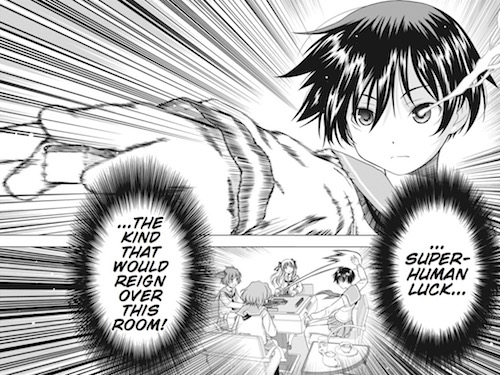
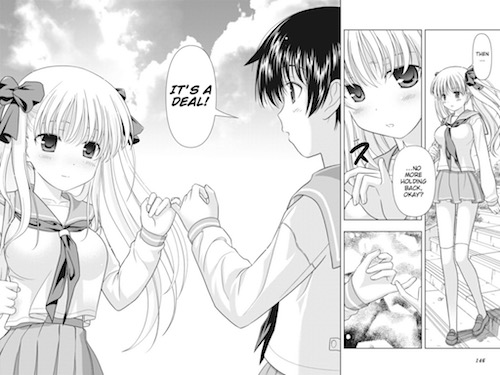 To say that the series did not have any basis in the yuri genre this early would be a baldfaced lie. In fact, the first thing that happens in Saki is Saki remarking on the beauty of her eventual teammate and best friend, buxom digital mahjong warrior Haramura Nodoka. One thing that does fade into the distant background, however, is the sole male club member Kyoushirou, who seems to start the series as a kind of male audience stand-in but eventually becomes all but fused with the background. I think at this point the series was trying to decide whether it would be more of a harem or more of a girls-only world, and it’s come to lean clearly in the direction of the latter.
 Another aspect that’s changed significantly would be the artwork. As creator Kobayashi Ritz’ style has developed, the girls have gotten softer, their features more simplified yet pronounced, and I don’t even mean that only about Dragon Ball Z-esque chest size power creep that has occurred over the years. Some of the girls look very different here than they do in the current chapters of the manga, and both look quite different from the official anime character designs. I personally don’t have a preferred style for the characters.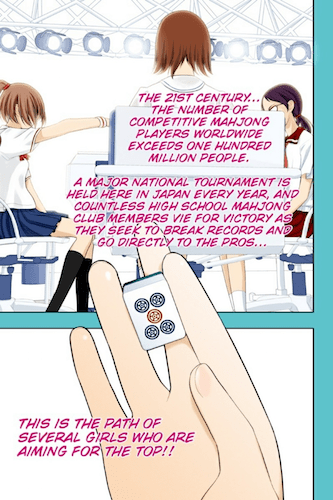


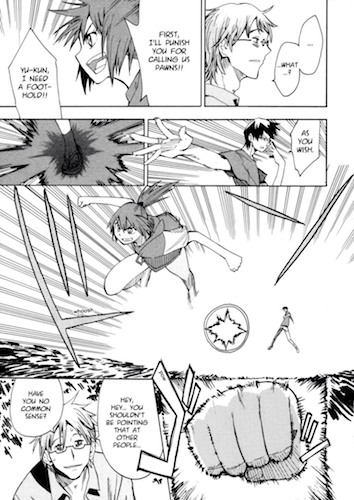
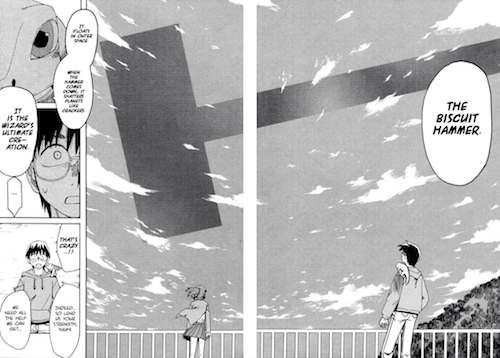 Hoshi no Samidare by Mizukami Satoshi, known in English bizarrely as Lucifer and the Biscuit Hammer (and sometimes The Lucifer and Biscuit Hammer) is an odd manga. Ostensibly a story about a boy who gets mystic powers in order to fight an evil golem-creating wizard, The Lucifer and Biscuit Hammer sports an eccentric cast of characters, an even stranger goal for its main characters, and a convoluted sense of narrative progression that somehow only adds to its appeal.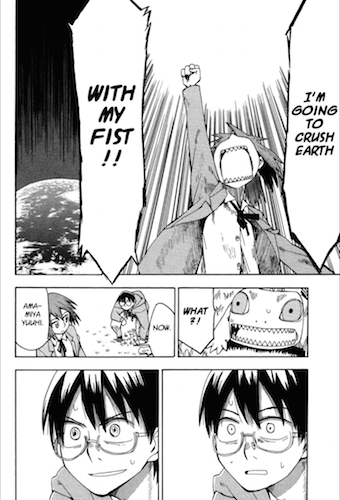

 OGIUE MANIAX