Beyond Expectations: Planet With

Imagine a long-running anime series that finally hits its climax, and winds down with an incredible conclusion. It seems like the perfect place to end the story, satisfying and complete yet somehow making you feel like you’d like to dive back into that world someday.

Now imagine if this anime received a follow-up. You love this series, but feel trepidation. After all, sequels are notorious for often failing to live up to the original, and you want your memory to remain untainted. Still, you give it a chance…and it’s even better than the first one! How is this possible? While you’re reeling from having your faith rewarded, you find out that, once again, this isn’t the end. Another sequel has been announced! And another. And another. Each time, you worry that something might go wrong, but it never does. Before you know it, hundreds of episodes have passed, and you can’t help but feel that the world is a different place.

Except you realize it’s only been twelve episodes. All of those years you swore had passed you by were contained within three months. That feeling is essentially what it’s like to watch Planet With.

Based on a manga by Mizukami Satoshi (Lucifer and the Biscuit Hammer, Spirit Circle), Planet With is rare among anime adaptations because the original author actually specifically created the storyboards for the animated version. While the anime and manga apparently do diverge, there’s a certain level of consistency that can only be achieved through such hands-on involvement. If it wasn’t clear from the opening paragraphs, the value this provides comes across in the final work in spades.

Initially, Planet With feels “unstable.” It’s difficult to establish a foothold as a viewer. What are these bizarre, giant totems flying through the air? Who is this seeming hodgepodge of people declaring that they’re here to defend the Earth? Where did they get their mysterious-looking armors from, and are they science or magic? Who is this kid who’s clearly supposed to be the main character, and why is he living with an overly cheerful maid who translates for an eerie bipedal cat that looks related to Chiyo’s Dad from Azumanga Daioh? Who’s a good guy and who’s a bad guy?

The answers come, with time. As the story moves forward, the scope and the stakes expand exponentially, but Planet With never feels emotionless or distant. There’s something very personal about the series, but rather than fighting with the increasingly grandiose scale, those two sides feed off of each other. It’s a work that feels both impossibly large and unfathomably small, as if it took some of the best parts of Shingu: Secret of the Stellar Wars, Brigadoon, Gurren-Lagann, and (of course) Lucifer and the Biscuit Hammer and mixed them all together.

The most pleasant surprise about Planet With is that while it seems to go to the ends of the universe and back both literally and metaphorically, it never stops being an uplifting piece of science fiction. Somehow, it takes even the wackiest possible moments and contextualizes them into gripping scenes that ignite both heart and mind and asks the two to harmonize. From beginning to end, it can practically feel like a lifetime, and I mean that in the best way possible.


Sticky-Fingered: Hashikko Ensemble, Chapter 8

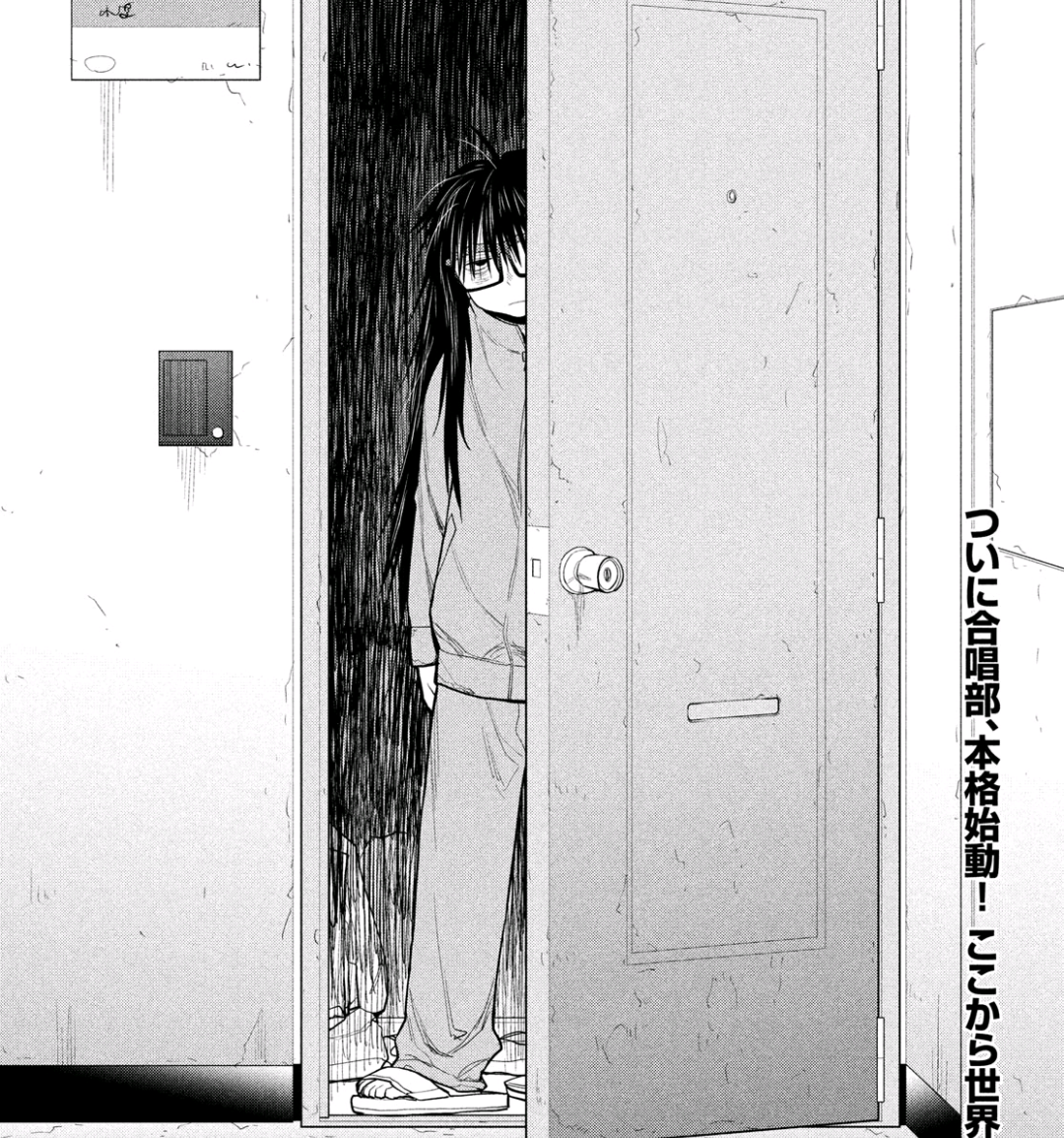
Love is in the air! …Or wait, that feeling might actually be “guilt.” It’s a chance to learn about Koizumi Himari in Hashikko Ensemble!

Summary

Having heard Akira’s deal—if we repair your earphones, you’ll have to join the Chorus Club—Orihara responds with disgust and tries to take a swing. Jin blocks Orihara’s fist, inadvertently breaking his finger (but not seeming terribly bothered by it). Jin wants to fix the earphones regardless of any deal, but he can’t find anyone in class who’s up to the task.

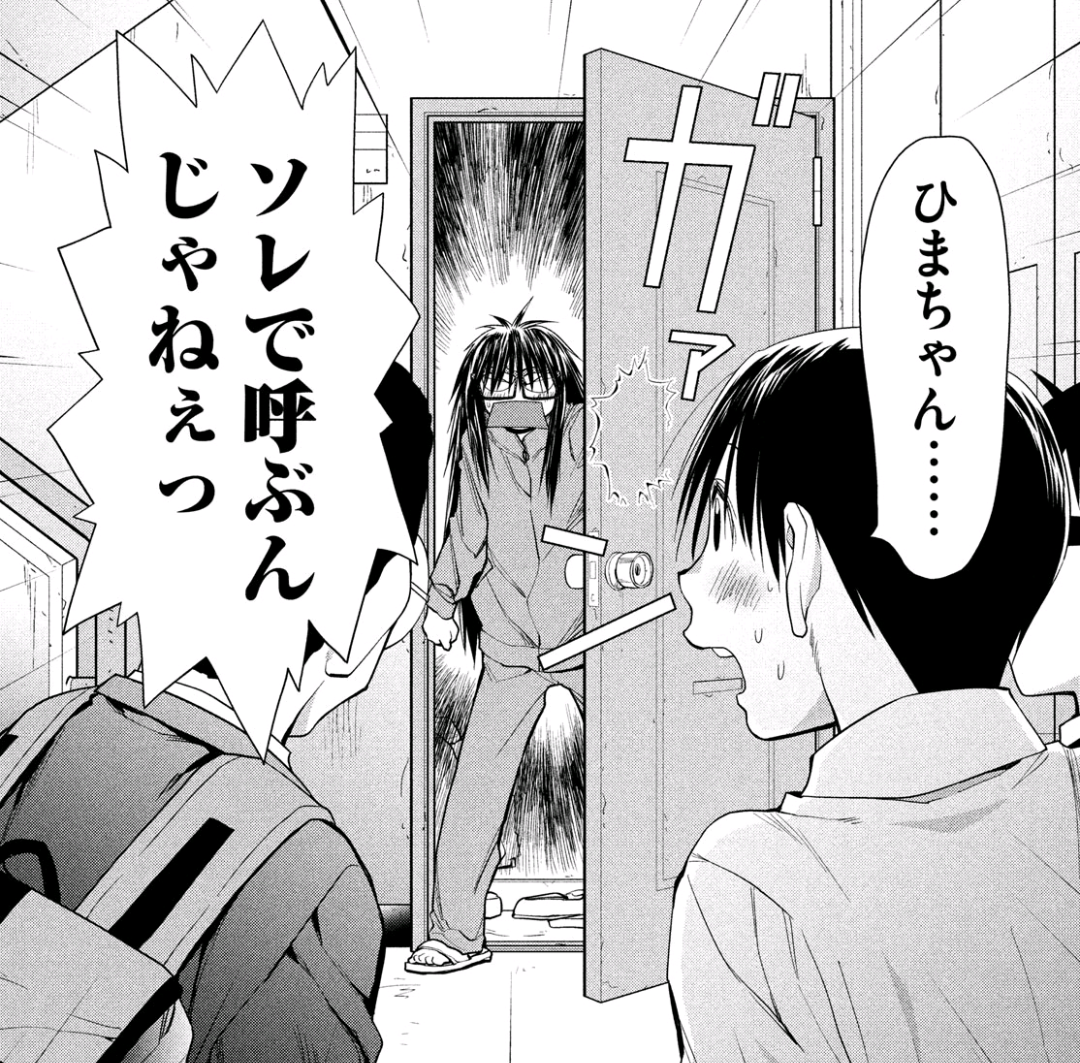
Some days later, however, Himari (Akira’s next-door neighbor) is actually in school for the first time in a while, and she turns out to be (for reasons unknown) a deft hand at soldering. Jin, who’s in the same class as Himari, tries to convince her to help repair the earphones, but she hesitates. After some conversation, mostly revolving around how she hates Akira’s puberty-induced ultra-bass voice, Jin convinces Himari to a deal: if he can show the appeal of Akira’s new voice through song, she’ll help them out.

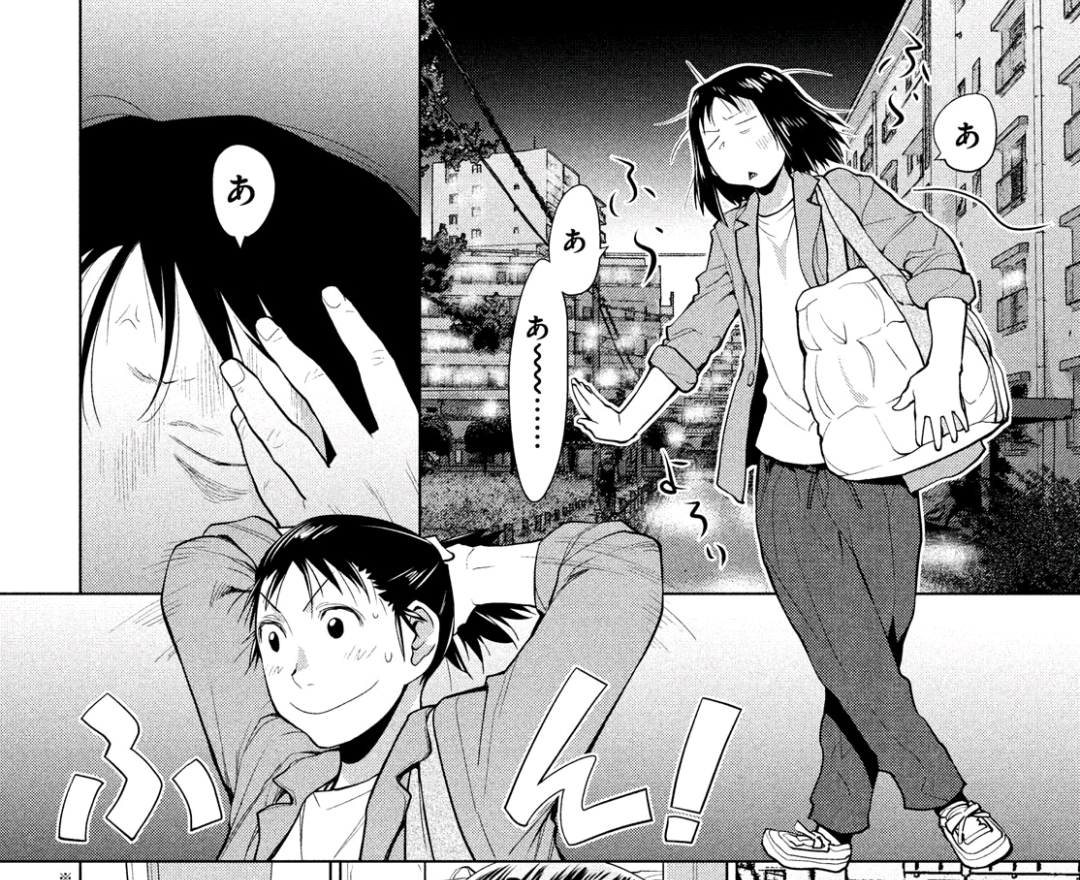
Shinji sees this scenario as many might: a path to romance between Akira and Himari, but Himari’s initial response to Akira and Jin’s duet is to pull out an old picture book from Akira’s collection instead and apologize. Apparently, she stole it when they were young, and it’s the reason she avoided him for so long. In fact, it turns out that Himari’s really, really good at swiping things in general, which she reveals by showing off the resistors she took from class. She agrees to help, all while showing subtle hints that she might not be so unmoved by Akira’s singing after all…

The Himari Show

As the latest character to join the main cast, Himari is a major part of Chapter 8. Frankly, I think she’s fantastic, but awkward, surly girls drawn by Kio Shimoku are my aesthetic. I find that she bounces off all of the other characters quite well, and it makes me look forward to future interactions involving her.

Himari blushes a lot, but it can be hard to tell what exactly it means at any given moment. Because she seems to have a non-stop chip on her shoulder on top of being socially standoffish, her red face seems to shift from displaying embarrassment towards herself, embarrassment towards others, and maybe some feelings for Akira himself. Based on the brief glimpses of her memories, she appears to treasure her childhood with Akira—though she appears at first glance to not be especially different personality-wise back then.

One aspect of her that intrigues me is her proclivity for five-fingered discounts. It’s such an expected personality trait that she’s instantly memorable in my eyes. Also, I get the feeling that her talents in this area are related to her adeptness with a soldering iron. Something she does outside of class might make her a dexterous girl in more ways than one.

Akira’s First “Concert”

While it’s in a stairwell instead of a hall, and the audience is one childhood friend instead of an audience of many, this chapter’s performance is a huge step for Akira. We may not be seeing every single step of Akira’s development, but it’s clear that Jin’s training has been paying off. The pacing of his progress feels right.

Songs

Two previous songs are mentioned this month, specifically because Himari forbade Jin and Akira from singing them: “Believe” and “Kanade.” The song they do pick is1982’s “Tooi Hi no Uta” [Song of a Far-Off Day] by Iwasawa Chihaya. The song is actually based on Johann Pachelbel’s Canon, with Japanese lyrics added.

Final Thoughts

This is more a personal note, but when Himari pulls out the resistors she swiped, I recognized them from a digital engineering class I took back in high school. Their authenticity makes me feel that Kio is putting his best foot forward researching all aspects for Hashikko Ensemble.

Next chapter is going to focus on the school sports festival, and I’m curious to see how this shakes out at a technical high school. How much of mechanics and engineering is brain and how much of it is brawn? Whatever the case may be, it’s implied that something crazy is going to happen.

Aikatsu Friends! Choreography Has Won Me Over

I generally enjoy the AIkatsu! idol anime, but one aspect of it that never really hits me the way I think it’s supposed to is the idol performances at the end of each episode. As I watch Aikatsu Friends!, however, I feel like that’s finally changed for me.

I’m no expert in song and dance choreography, but the impression I get is that Aikatsu Friends is better at integrating those performances into the show itself. To some extent, I think this has to do with the improvements to the 3DCG that have happened to the franchise over time, but I don’t think it’s just about technical progress. Instead, I find that the performances themselves give a far better sense of who each character is, and what makes them tick.

Yuuki Aine

Protagonist Yuuki Aine is new to being an idol, and it shows. She’s not the best singer, and her dance moves are pretty simple, but they highlight her natural authenticity, and the friendliness that is her most outstanding quality.

Minato Mio

Minato Mio, her partner, is known for a kind of perfectionism that isn’t overly obsessive, which is reflected in the subdued music that accompanies her performances, as well as her simple yet graceful movements.

Asuka Mirai

Where it stands out to me most is the fact that Asuka Mirai, one of the top idols in the series, performs differently alone compared to when she’s a part of the duo Love Me Tear. As one half of a whole, she and her partner Kamishiro Karen exude elegance and maturity. When she’s by herself, however, Mirai is all about a kind of wry playfulness—the quality she exhibits when she’s trying to help Aine get comfortable acting for television.

The song and dance routines in Aikatsu Friends! encapsulate what we’ve learned about the character, or what the characters themselves have learned during the episode. Somewhat similar to how a different kind of show might take all the lessons presented during the episode and boil them down to a conclusion by the end, these performances leave a lasting impression about who these individuals are and why they strive to be idols.

This post was sponsored by Johnny Trovato. If you’re interested in submitting topics for the blog, or just like my writing and want to support Ogiue Maniax, check out my Patreon.


Have Beer, Will Travel: The Night is Short, Walk on Girl

The Night is Short, Walk on Girl adapts Japanese novelist Morimi Tomihiko’s work into an animated film where magic, fantasy, and reality blend together seamlessly into a pleasant yet frenetic experience. Directed by Yuasa Masaaki, whose credits include Devilman Crybaby, Ping Pong and The Tatami Galaxy (also based on a Morimi novel), the work fits Yuasa’s strengths to a tee.

The Night is Short, Walk On Girl follows two unnamed characters: a Japanese college girl referred to as “the black-haired girl” (kurokami no otome) and her upperclassman/senpai. The senpai has nursed a crush on the girl for ages, and has engineered a life where he “coincidentally” keeps running into her in the hopes of sparking something more. Unfortunately for him, it has yet to work. The girl, for her part, is more focused on enjoying life at night, which involves a lot of drinking and looking for the next adventure.

The story progresses in various unpredictable directions, touching on the supernatural in ways that make it difficult to tell who’s more bizarre: the humans or the gods. Following the girl’s exploration of the night, her pursuit of the next interesting drink, and the senpai’s continued attempts to get her to notice him feels like being on a winding path whose seeming meandering is actually welcomed rather than shunned. Yuasa’s signature style allows the nebulous mix of the real and fantastic to shine through.

The film was distributed in the US for two nights by GKIDS, and the showing included a recorded interview with Yuasa, where he discusses the on-again, off-again nature of a heavily delayed production. Another notable thing mentioned is that the film takes what is essentially a story told via vignettes over all four seasons and combines them into a single dramatic evening. Thus, the film and the novel provide substantially different experiences, making it more worthwhile to experience both. Fortunately, the novel itself is coming out in English courtesy of Yen Press.

Mecca of Mecha: Otakon 2018

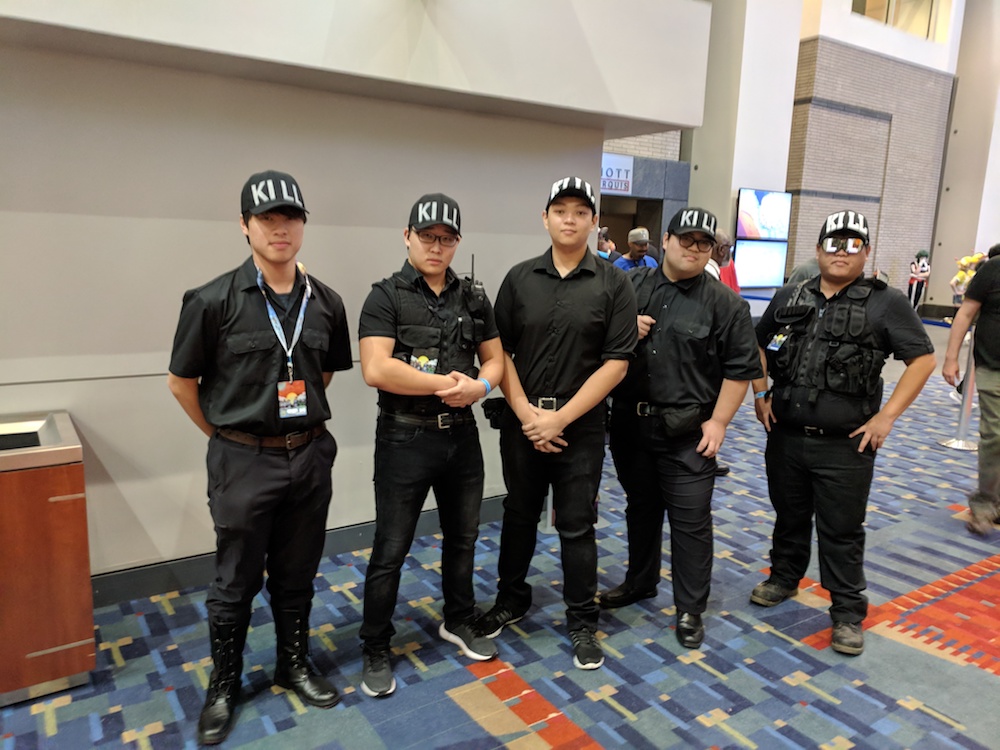
2018 marked the second year of Otakon in Washington, DC, as well as a year that posed some unique challenges. Scheduled for the same weekend as a nearby white nationalist ally, the potential danger cast an uneasy cloud over both a multicultural city and an anime con that typically attracts people from a wide variety of ethnic backgrounds. Fortunately, the rally amounted to nothing more than a fart in the wind, totaling around 30 people and far outnumbered by counter-protesters. What was left was an enjoyable Otakon that accomplished what the convention is meant for: celebrating Japanese culture and the people who make, enjoy, and are inspired by it.
Panels

Where there might have been three to five panels on giant robots in a typical Otakon, this year’s programming was rife with robot content thanks to the theme of Otakon 2018 being “mecha and science fiction.” As a huge fan of all things anime and robotic, this was right up my alley. I made it something of a mission to check out as many panels as I could, whether they were by fans, companies, or special guests.

I was even on a panel myself! “Mecha Fight Club” with Patz, Tom Aznable, Doug, and myself was an hour of debate and discussion on various topics concerning giant robots and giant robot fandom. If you came to our panel, thanks for waking up at 9am on a Saturday. I hope we gave you some food for thought.

Fan Panels

Transformers: The Birds and the Bumblebees

This panel, from the group “Manly Battleships,” looked at the early history of the Transformers. Impressively, it started not at the release of the toys in the US or even the Japanese Diaclone toys from which Transformers took many designs, but with the advent of GI Joe in America and is exporting over to Japan. It was quite an informative panel, and while I thought the “nerd humor” fell flat at times, it was a solid presentation overall.

NoS Anime

I attended two panels from a group called NoS Anime: one a Gundam Wing retrospective, and the other a look at mecha in the 1960s and 70s. Both panels were well researched, and made efforts to explain the social and economic climates of their times. I had only a few criticisms, and even those are more about what I’d prioritize, rather than what I think would make the panels absolutely better.

First, for the Gundam Wing panel, I would have preferred a greater look into the Japanese fandom, as it was mostly a nostalgia panel from the US side. Also, the comments about the first opening theme, “Just Communication,” having odd lyrics seemed off to me, as plenty of robot shows and Gundam anime feature similar music.

Second, for the 60s and 70s panel, I think more explicit mention of Nagahama Tadao and Tomino Yoshiyuki being directors on Reideen before working on the Robot Romance Trilogy and Gundam respectively should have been explicitly emphasized.

Overall, NoS Anime showed they were a deft hand in presenting.

Outsourced Anime

I try to attend at least one Anime World Order panel at conventions because they’re usually quite entertaining. This panel focused on American cartoons which actually had as lot of the animation work done in Japan. One of the major points of their talk was the impressive flourish that Japan would give these shows—and that their best efforts became the most memorable parts of these cartoons for young minds.

Gattai! Giant Robots from 198X

Essentially a 1980s robot anime recommendation panel, the hosts Patz, Tom Aznable, and Hazukari went over why their favorite mecha shows of the era deserve a look. While there was some trouble with keeping on time, and I feel like they didn’t sell certain shows as well as they probably intended, what worked for me is that each of the presenters clearly valued different things and you could get a more balanced view as a result.

Industry/Guest Panels

Kawamori Shoji
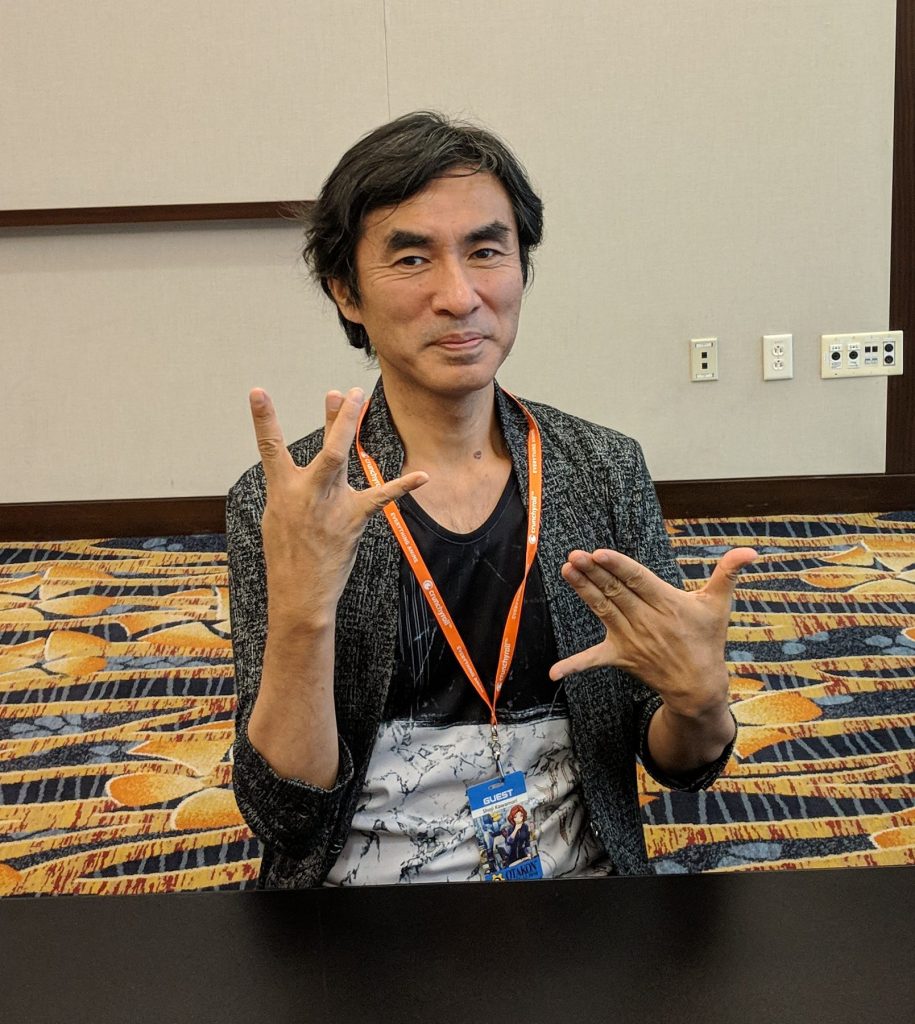
Out of all the guests at Otakon this year, Kawamori was arguably the most significant. Because there’s so much content from him, I’ve spun it off into two separate posts: a recap of his “History of Macross” panel, and my personal interview with him.
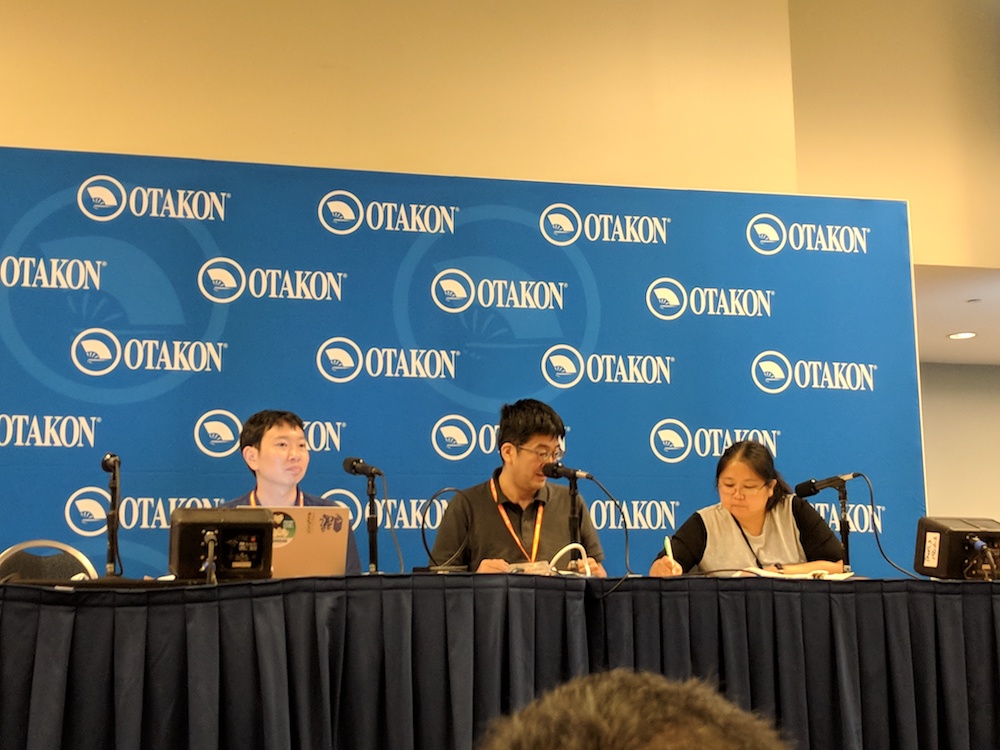
Ebikawa Kanetake

A mecha designer on series such as Full Metal Panic!, Gundam 00, and Gundam Build Fighters, Ebikawa’s panel was fairly restrained, and his answers short. One of the main things I learned is that while fans mostly remember the glamorous parts of being a “mechanical designer,” it also includes more mundane items such as coffee mugs and utensils.

Nagai Tatsuyuki

The director of The Anthem of the Heart, Anohana, Toradora!, Iron-Blooded Orphans, and more went over his history in the anime industry. We learned that he first found an anime production assistant job while unemployed and needing work. It was a position that required driving around to pick up and deliver things, and when he lost his license, it forced him to try his hand at other roles such as storyboarding. This eventually took him on his path to episode director and director.

I had the opportunity to present him a question, so I asked about the reasoning behind the unorthodox romances in Mobile Suit Gundam: Iron-Blooded Orphans, which includes an actual harem. Nagai responded that it was to show that many different forms of love exist in the world, and that he did indeed meet resistance at first from the staff when he told he wanted to put this in. I also told him the true story of my friends and I walking through a blizzard just to see The Anthem of the Heart. By the way, everyone should go see that film.

Another person asked how he feels that Okada Mari (writer on Iron-Blooded OrphansAnohana, and Anthem of the Heart) seems to get all the attention and credit. It felt like a question tinged with bitterness toward Okada, but I might have been mistaken. Nagai answered that he actually liked it because it meant he could sort of hide in secret, perhaps a defense of Okada without getting too aggressive.

One interesting takeaway came when Nagai talked about how he often worked with the same core staff, and that because they’re around the same age, they can talk to each other more candidly when working. Kyoda Tomoki expressed something similar in my interview with him at Otakon 2017, which makes me wonder if studio hierarchy is often a thorn in young creators’ sides in the anime industry.

Discotek Media
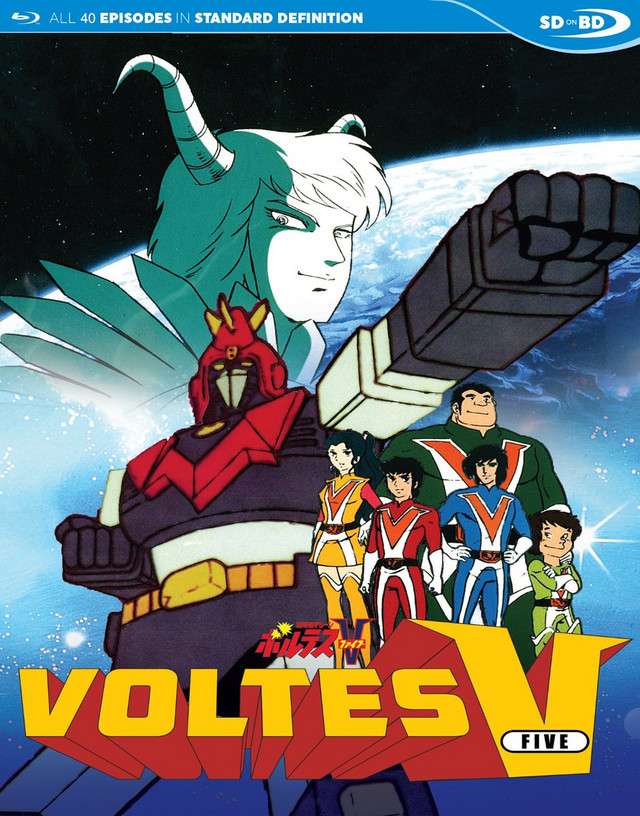
During the weekend, friends and acquaintances informed me of one anime company planning a licensing bonanza: whereas most publishers tend to announce maybe five or six new titles, Discotek was going to reveal new shows totaling in the double digits! I had waffled on going to their panel, but now I had to attend. And as it turns out, for fans like me, their announcements pretty much won Otakon.

  • Area 88
  • Message from Space: Galactic Wars
  • Space Wolf Juspion
  • Space Warrior Baldios TV
  • Voltes V
  • God Mars
  • Psycho Armor Govarian
  • Galaxy Express 999 TV
  • Bobobo-bo Bo-bobo
  • Lupin III: Blood Seal of the Eternal Mermaid
  • Kimagure Orange Road
  • Giant Robo: The Day the Earth Stood Still

To say I am overwhelmed is an understatement. Voltes V is one of the greatest mecha anime ever to not get a proper US release, and is one third of the famed Nagahama Robot Romance Trilogy (which means I hope Discotek is looking at Combattler V and Daimos next). Baldios and God Mars are classic 80s robot action, with the latter actually being a fujoshi favorite of its time. Giant Robo is one of director Imagawa Yasuhiro’s finest works. Psycho Armor Govarian is an obscure Nagai Go robot series animated that is said to be Studio Knack’s best work—faint praise, perhaps, for the studio behind Chargeman Ken. Kimagure Orange Road is one of those 80s classics I’ve always wanted to watch but never did. Galaxy Express 999 holds a special place in my heart, and the additional update on the 999 films getting a Blu-ray box set makes me want to pump my fist in the air and high-five the clouds.

Hiccups and Missteps

Not all was smooth sailing. One of the more significant problems I ran into was subpar management of the autograph line on Friday.

To start off, the autographs section was in the Dealers’ Hall, so that anyone who wanted to get anything signed had to wait on the same massive line as those wishing to make purchases. This in itself would not be so bad, except that there were autograph sessions close to the opening time, and having both aforementioned groups plus those waiting for the nearby Artist Alley to open meant that the line size inevitably became a fire hazard. This issue was compounded with the fact that telling people to go away and come back later never works because it punishes those who decide to follow the rules, and rewards those who skirt/defy them. This would become a recurring theme with the autograph area.

Upon getting in line for the actual autographs, I ran into another problem. The way the area was set up, the idea was that a small group at the front of the line would break off and go into a section where all the guests were waiting. From there, attendees would get their autographs, and then the next group would have their turn. In practice, however, only the first group ever got the chance to get autographs and the rest of the line was stuck waiting the entire time, with not even a single person having an opportunity to move from that second line. In other words, even accounting for the fact that not everyone who wants an autograph is going to get one, many people were denied autographs when they shouldn’t have been.

In my eyes, the underlying issue was that the volunteers in charge of the main autograph area did not communicate properly with the volunteers managing the line, and so the former never seemed to realize there were additional attendees waiting in the first place. Those who went first, or had guests with smaller lines, could easily ping pong between all the guests, while those who (again) followed the rules and waited patiently were done a disservice. My hope is that this changes for next year, including finding a better place for autographs. While Otakon in Baltimore had its own issues with signings, this never happened as far as I can remember.

Another non-autograph-related problem was that at one point on Saturday, the tunnel between the Marriott and the convention center was closed off, forcing everyone to go in through the convention center’s main entrance in the sweltering, 90+ degree heat. This was apparently another miscommunication, but the fact that the weather played a role was a concern.

Con Food
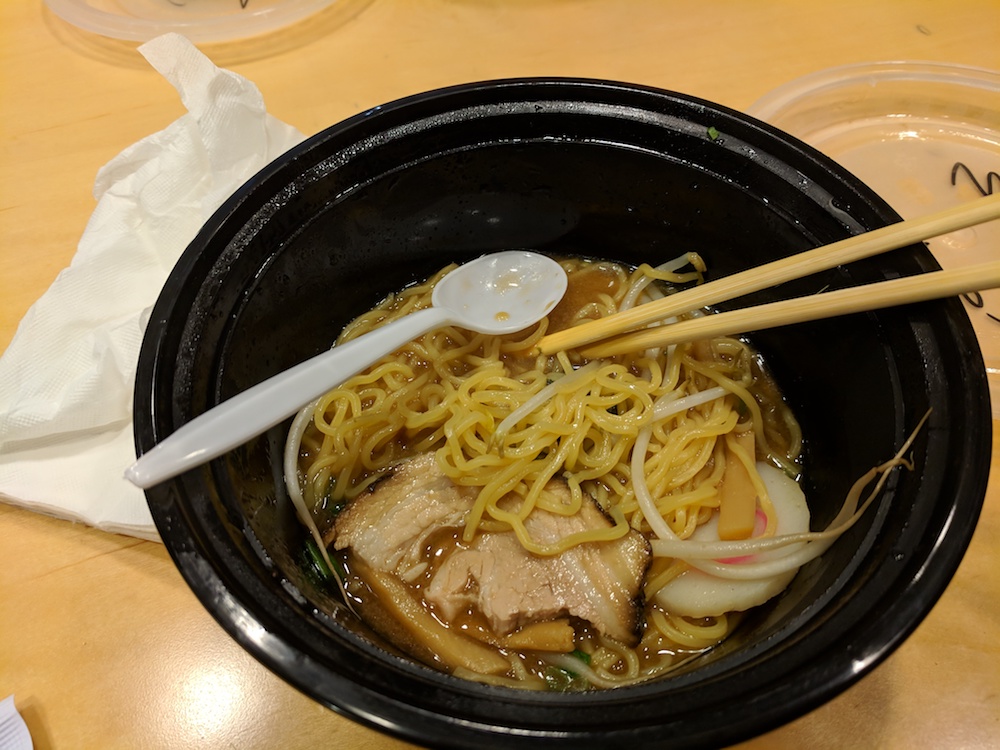
Eating out on Otakon weekend is always a potential hassle, given the amount of attendees. Because of the prospect of both protesters and counter-protesters, my friends and I avoided restaurants and decided to (for once) stick to supermarket and convention-center food. The latter was overpriced (as these things usually go), but the quality was surprisingly decent, and many of the food stands had Japanese cuisine to along with the general theme of Japanese culture. At the same time, $15 for not much food can hurt the wallet a bit. My advice is that if you can’t get out anywhere to eat, and you didn’t bring anything, the Caribbean food is only $12 a dish by comparison, and still plenty good. You can avoid the “anime fan” tax and still get a hot, delicious meal.

Events

Concert

Otakon attendees had the rare opportunity to attend a performance of the “Distant Worlds” Final Fantasy orchestral concert series. With legendary Final Fantasy composer Uematsu Nobuo in the audience, it was a pleasant experience that took the audience through songs from throughout the franchise. I definitely enjoyed the concert, though I felt there was a distinct lack of battle music. I was selfishly hoping for some personal favorites, like Zeromus theme from Final Fantasy IV and the Four Fiends theme from Final Fantasy I remakes, but alas.

Hi-Score Girl

Another special event was the US premiere of the Hi-Score Girl anime, which is adapted from a fantastic manga about romance and growing up in 1990s Japan arcade culture. The show is a pretty straightforward adaptation of the manga, albeit with CG that can feel awkward at times. It’s coming out on Netflix in the coming months, so I recommend everyone check it out when they have the time.

One odd thing about the Otakon showing was that it included a panel beforehand that kind of spoiled a lot of what the first episode was about—pointless if we were going to watch it right afterwards. Also, unfortunately, the interpreter didn’t seem well-versed in fighting games, so she ended up missing a few points here and there. One omission that stood out to me was that the producer mentioned the manga’s author, Oshikiri Rensuke, having participated in Vampire Savior tournaments, but the interpreter translated it as having experience with games in general. Because Vampire Savior holds a certain significance for the history of fighting games and the fighting game community, a bit was (as the cliché goes) lost in translation.

Overall

The final number put Otakon 2018 at over 29,000 attendees, but even so, moving around the Walter E. Washington Convention Center was never a burden—especially compared to some of the most sardine-esque years of Baltimore. Between the quality of the guests and the convenience of Washington, DC (aside from the notoriously terrible traffic), I solidly believe now that Otakon moving to DC was the right choice. There’s so much more room to grow! I’m looking forward to seeing how things will change in 2019 and beyond.

Won’t You Be My Neighbor?: Hashikko Ensemble, Chapter 7

Last chapter, a new girl showed up. I wondered if she was Akira’s sister, or maybe his very youthful-looking mother. Turns out the answer is “neither.”

Summary

After a bit of singing, a disheveled-looking girl has shown up at Akira’s door to tell the Chorus Club to pipe down. Akira explains that this is his next-door neighbor, Himari, who he’s known since childhood. Jin thinks she looks kind of familiar, and it turns out that she sits right behind Jin in homeroom—which means she’s been in Akira’s class all along without him even realizing it! Having not really spoken to her in a long time, Akira decides to see if she wants to walk to school with him, but when her dad answers the door instead (and tells him she’s still asleep), Akira walks away embarrassed.

At the Chorus Club “clubroom” (i.e. the corner of a stairwell), Jin teaches Akira about harmonizing, but only after a brief discussion about how the school’s been talking about Jin’s harmonizing push-ups from Chapter 5. During this time, they’re visited by two different classmates: Hasegawa, who walks away disappointed that Jin isn’t showing his muscles, and Orihara. The latter isn’t there to start trouble, but to tell Akira that he’ll be borrowing his earphones for a little while longer—noise-canceling earphones are expensive, and he needs to save up for it. Jin, however, has another idea: they’re at a school that specializing in engineering, so why not repair the things themselves? Orihara gives in, but then Akira says something that surprises everyone: “If we fix your earphones, you have to join the Chorus Club.

Sound Engineering

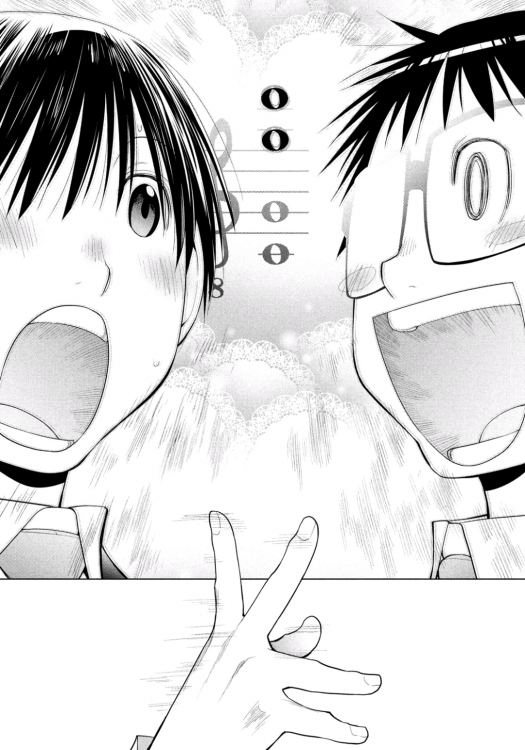
I’ve mentioned in previous reviews my interest in the combination of “art and science” in Hashikko Ensemble, and this chapter does a fantastic job of highlighting that aspect. It makes total sense that students of a school that specializes in engineering would try to repair earphones themselves! Combined with Jin’s generally scientific approach to singing, it means the two sides integrate more and more. His explanation of how many Western European churches are built to emphasize the “angel’s voice” phenomenon (as if Heaven itself is singing along) is fascinating.

Music and engineering are both a matter of physics, but that doesn’t take away from how impressive either one is.

New Steps for Akira

It was one thing seeing Akira singing in his room with his friends last chapter, but it’s another to see him overcome enough of his self-consciousness to actually hit a note in the stairwell. The harmonizing, even if it’s mostly thanks to Jin, feels like a major accomplishment for Akira. To then see him be assertive enough to ask Orihara to join the club, it’s as if he’s grown up immensely in the span of two chapters.

There’s also the clear parallel between how Jin got Akira to join and how Akira is trying to get Orihara to join (“If we help you with this problem, become one of us”), but we’ll see if it pans out similarly.

More Characters

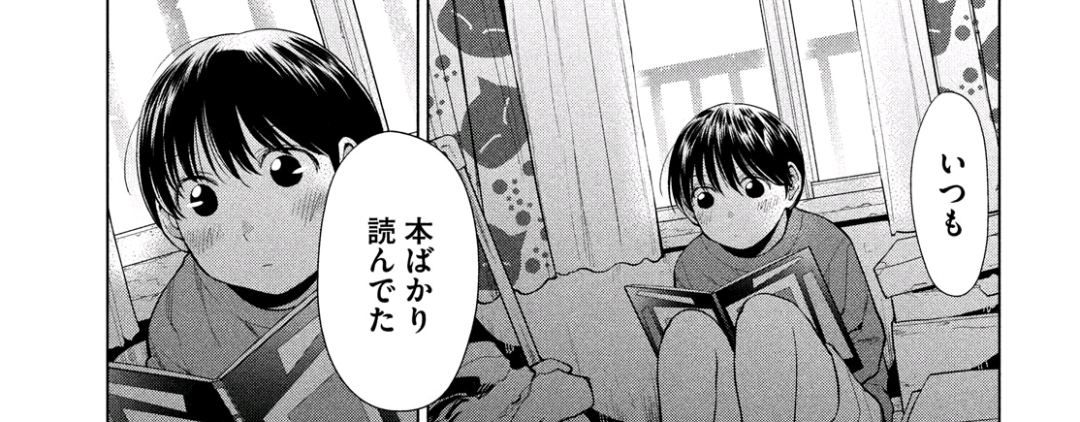
This chapter gives a lot of info about Koizumi Himari: her history with Akira (they used to read picture books together!), her generally surly disposition, the fact that she hasn’t attended class in a while. Is she having some trouble in school—perhaps some form of anxiety? Moreover, Akira’s mom seems to think there’s always been some sparks between the two, which seems to be reinforced by Akira’s profuse blushing when he tries to ask Himari to walk with him to school. Or is it because Akira just gets embarrassed easily in general? And between Himari and Hasegawa, I have to wonder if the prospect of romance is starting to emerge.

Speaking of Akira’s mom, she’s wonderful! Her first appearance in the manga is such a succinct yet effective introduction to her character. Previously established as a nurse and a single mother, she’s shown haggard from a tough day at work, but purposely puts on a more cheerful appearance for her son. That one moment says so much about her person and her way of being that I hope we see more of her in the future.

Songs

No songs this month. Just folks going, “AAAAAH.”

Final Thoughts

Chapter 7 is the first to have a full character introduction page at the beginning, no doubt because the first collected volume of Hashikko Ensemble just came out. The biggest reveal here is that Kurata (the super-intense, music-hating female student) is named Shion.

Actually, I call her “super-intense,” but all of the female students at Hashimoto Technical High School seem pretty powerful. I wonder what Kio’s thinking is, though it suits me just fine. It kind of feels like different degrees of Ogiue all in one series.

Kio Shimoku’s Kagerowic Diary and Its Influence on Genshiken and Spotted Flower

A special edition of Kio Shimoku’s Kagerowic Diary (aka Kagerou Nikki) just came out last month, which prompted me to read an ebook of it I purchased ages ago. Having now finished it, I find myself reevaluating certain aspects of Kio’s more recent titles in Genshiken and Spotted Flower.

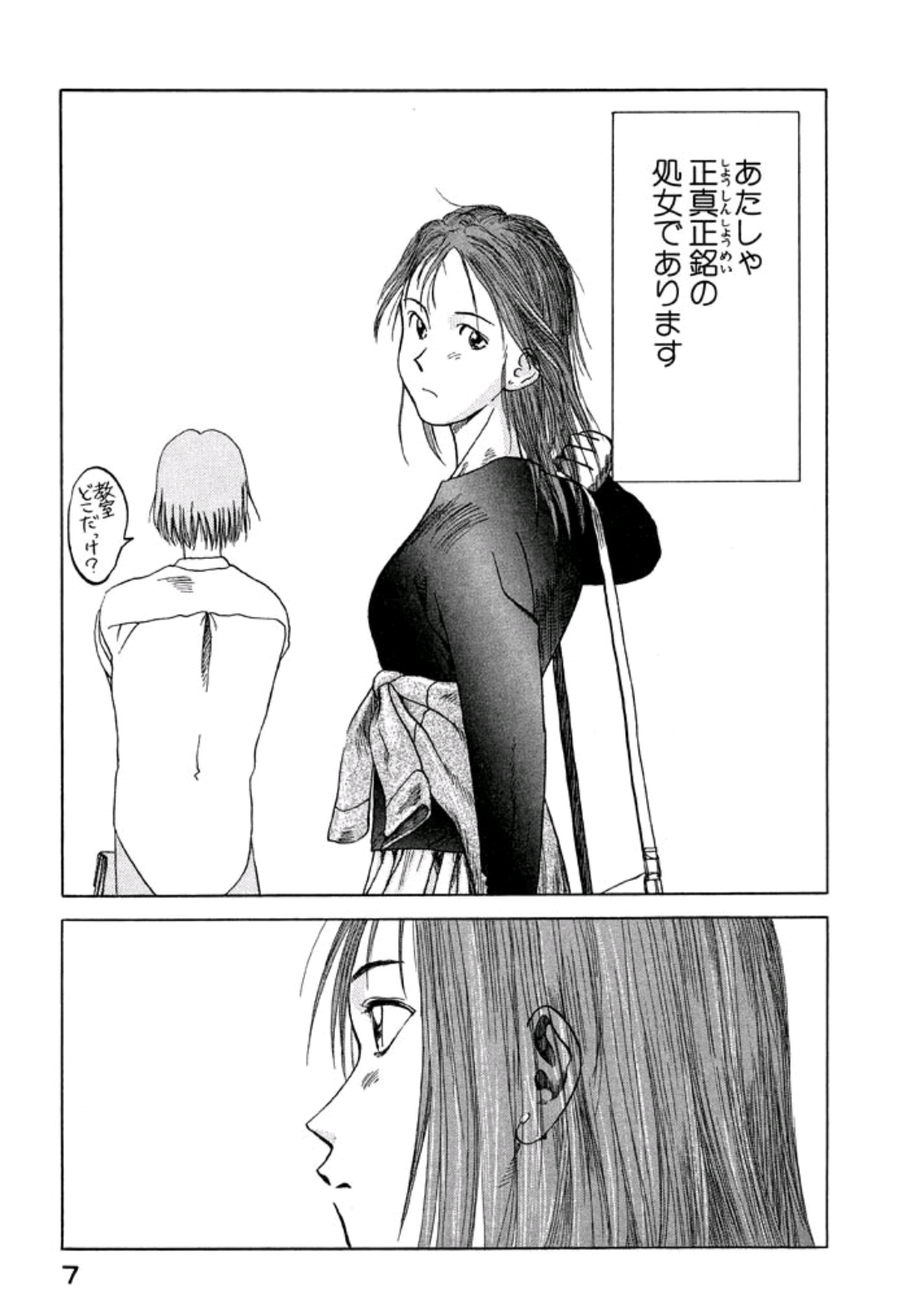
Kagerowic Diary is split into two parts. Part I concerns a female college student named Suzuki Touko (above) who seemingly has it all figured out but hides the fact that she’s a virgin from her friends. Part II follows a different woman in college, Tachihara Hatsuho (below), and the complicated web of sex, emotion, and deceit she finds herself in. To Genshiken fans, it can feel both comfortably familiar yet also exotic due to the strong emphasis on physical relationships.

Touko’s story shines new light on Genshiken, specifically the final volume of the first series. In the epilogue, the characters begin a discussion of how Saki, the sole non-otaku of the bunch and by far the most mature character, could be viewed through a moe lens. After some deliberation, Madarame says that she would have to be a virgin (Saki very clearly is not). When I previously read this scene, I thought the purpose was merely to show how Madarame’s mind works and to embarrass Saki. Now, I realize it’s actually a reference to Touko and Kagerowic Diary.

Hatsuho’s story, on the other hand, makes me feel that Spotted Flower and its adultery subplot are not as out-of-left-field as fans assumed. While it’s a far cry from Genshiken, the tangled web of love and lust in Spotted Flower is not unlike the plot of Part II in Kagerowic Diary, where Hatsuho sleeping with a male friend of pity and then discovering that her boyfriend cheated on her too (and probably has been for a while) It’s charged, it’s messy, it’s complicated. In other words, Spotted Flower is sort of a return to the old days for Kio, when writing realistic characters meant more than just realistic portrayals of awkward nerds.

In addition to Kagerowic Diary, there’s a special edition of Kio’s Yonensei (“4th-year Student”) out too. I intend to read through it and see how that other early work of his compares to his more famous material.

Gattai Girls 9: Darling in the Franxx and Zero Two

Introduction: “Gattai Girls” is a series of posts dedicated to looking at giant robot anime featuring prominent female characters due to their relative rarity within that genre.

Here, “prominent” is primarily defined by two traits. First, the female character has to be either a main character (as opposed to a sidekick or support character), or she has to be in a role which distinguishes her. Second, the female character has to actually pilot a giant robot, preferrably the main giant robot of the series she’s in.

For example, Aim for the Top! would qualify because of Noriko (main character, pilots the most important mecha of her show), while Vision of Escaflowne would not, because Hitomi does not engage in any combat despite being a main character, nor would Full Metal Panic! because the most prominent robot pilot, Melissa Mao, is not prominent enough.

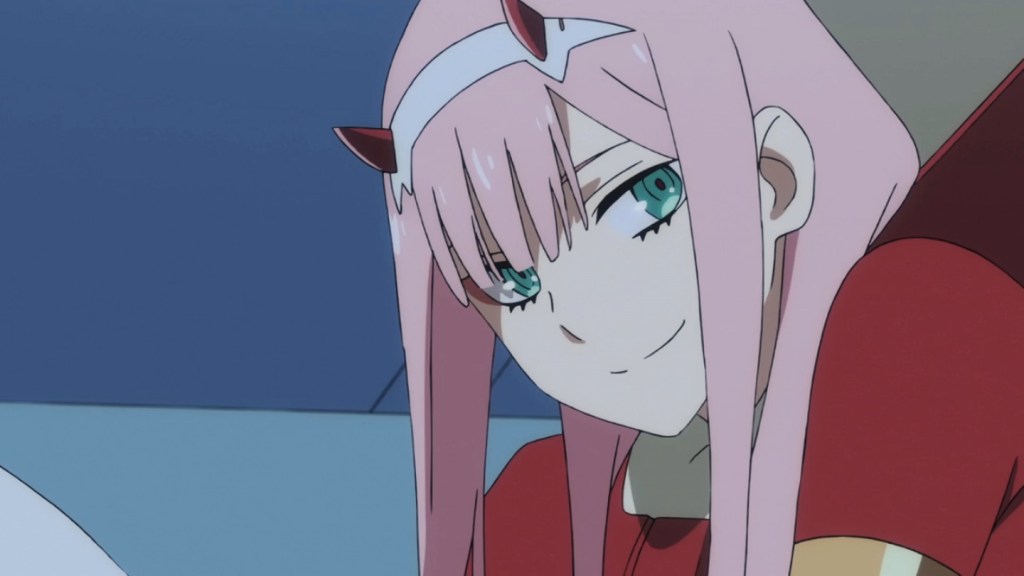
Darling in the Franxx is a mysteriously divisive anime, ripe for viewers of all stripes to interpret according to their personal values. Given a series whose messages appear to change depending on who you ask, it’s perhaps not so surprising that the main heroine of Darling in the Franxx, Zero Two, is just as much a whirlwind of contradictions.

Darling in the Franxx is a high-key sexually charged anime. If the doggy-style male-female combination cockpits weren’t enough, the series actively draws attention to the fact that the anime’s teen heroes live in a bizarre dystopia where their sexual energies are channeled into piloting giant mecha called Franxx. Covering subjects like love, sex, and marriage through both overt and relatively subtle metaphors, the anime is loved and hated in seemingly equal amounts in ways that contradict each other.

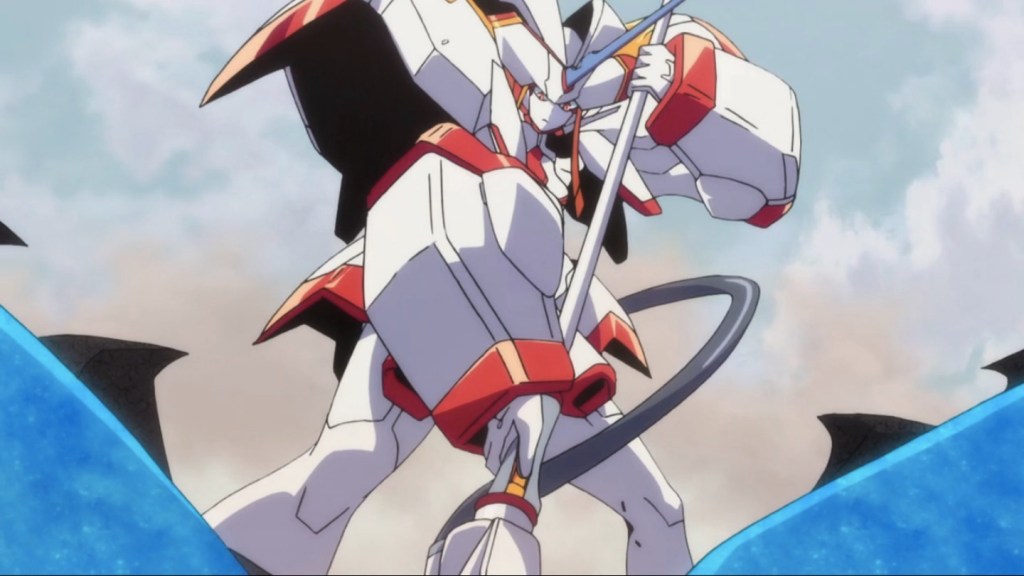
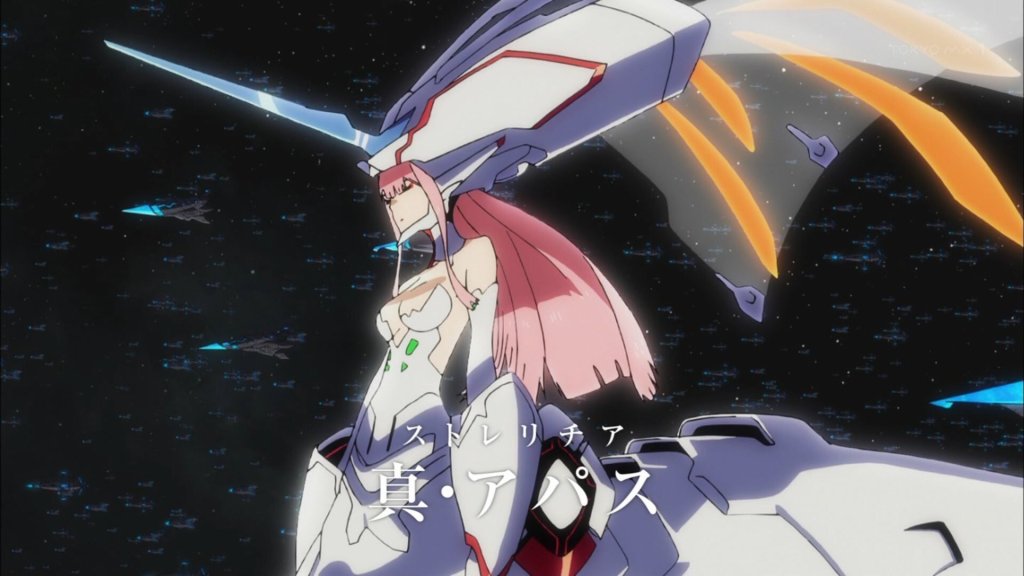
In Darling in the Franxx, Zero Two is the pilot of the robot Strelitzia. Far and away the most powerful weapon in humanity’s fight against the monstrous Klaxosaurs, Strelitzia would be their most reliable advantage if it didn’t come at a price: Any man who pilots with Zero Two inevitably ends up critically injured or dead. The protagonist, Hiro, ends up being the only guy who can survive Zero Two, and their combination becomes the key to turning the tide of battle. However, their connection ends up going back much further than either realize.

Is Zero Two an inspiring firebrand who lives by her own rules, or is she a fetishized sex object whose mere presence fulfills men’s fantasies? Is she an ideal girlfriend or a femme fatale? The answer is “yes.” She’s all these things and more, despite Zero Two being a difficult character to project one’s assumptions onto. She doesn’t have the appearance of an emotionless doll like an Ayanami Rei (Evangelion) or the “dishonest,” tsundere-esque feelings of a Souryuu/Shikinami Asuka Langley (Evangelion). She’s not an Asuna (Sword Art Online) either, whose kindness and strength make her practically “good wife, wise mother” personified.

Zero Two is rebellious towards rules and authority, loyal to those she loves, and willing to do whatever it takes to achieve her goals. She can’t be pegged down or held back, and the only times she’s willing to show weakness are around people whom she truly trusts. She’s more than willing to take matters into her own hands, and even rescues Hiro from being taken over by the enemy. Zero Two herself has never been damseled herself, and the only time Hiro had to reach out to bring her back was more in the metaphorical sense—diving deep into her mind and their shared past to keep Zero Two from going berserk.

Strelitzia itself is a fascinating piece of the puzzle that is Zero Two. The main mecha of Darling in the Franxx are feminine-looking, which goes against the tradition of primarily masculine designs. Those with a more feminine appearance tend to have attacks that draw attention to their “womanly” aesthetic as well, like how Aphrodite A in Mazinger Z shoots “Breast Missiles.” The Franxx are, aside from cute faces and a general feminine silhouette, not as overtly sexual on the outside. That being said, the workings of the cockpit mentioned above make it impossible to ignore sexual connotations, especially because the female pilots “become” their Franxx. Like the others, Zero Two’s facial expressions become Strelitzia’s, and when she talks to Hiro in fights, her display shows that robotic appearance instead of her own. Eventually, this integration of girl and machine gets taken further, driving home the theme of love in a way that both reinforces and defies the conventional cockpit setup.

Zero Two is strong and weak, cruel and compassionate, loving and spiteful. She’s a complete character in a certain sense, and a caricature in another. She is as much of what you want of her as you want, which means that on some level, she reflects the desires and/or anxieties of the viewer and their relationship with the world.

“You Just Kind of Talk-Singed”: Hashikko Ensemble, Chapter 6

Chapter 6 is much more subdued than the previous one, but the things we get to learn are just as potent. This time, it’s an Akira-focused story!

Also I’m rethinking whether I should call their club the ensemble club or the chorus club. The latter is easier to understand, so I might just go with that.

Summary

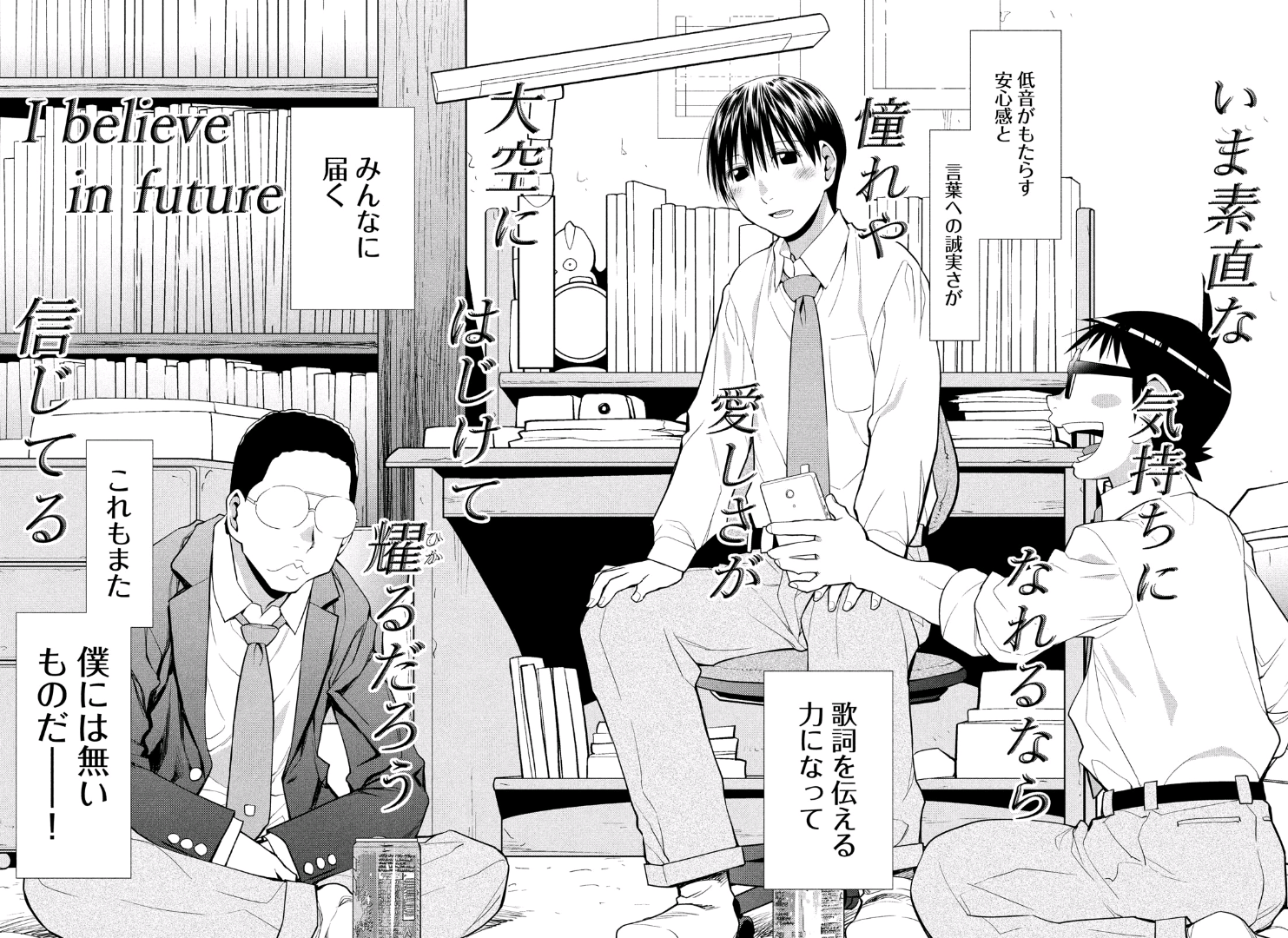
Akira, Jin, and Shinji go over to Akira’s place to celebrate him finally joining the club on a technicality. As the three shoot the breeze, Akira talks about his vast collection of children’s books (and general love of books), his lack of TV and other forms of media, as well as the fact that his widowed mom being the reason he enrolled in Hashimoto Technical High School. For his part, Jin explains his motivations, namely his love of chorus groups and his desire to do everything in his power to make singing buddies (of which Akira is the first).

When Jin decides to try another song with Akira, he makes a discovery: Akira can sing much more clearly if he’s reading the lyrics, as if the comfort he feels from books transfers over. Soon after, however, a new face shows up at Akira’s door: a disheveled lady of unknown identity.

Technicality

The requirement for Akira to join the chorus club was that he had to sing. Jin decides that Akira qualifies after reciting part of a song, but Shinji objects: Akira didn’t really “sing”—he just talked! Jin, however, replies that plenty of pop songs have spoken portions. If it’s part of a song, it’s singing!

There’s something very appealing about this technicality, in that it reminds me of discussions I’ve heard and read over the years as to whether something like rap counts as “music.” There’s a always a certain type who will dismiss things that don’t fit their definition of “song,” and to see Jin gave a wider criteria gives me hope that Hashikko Ensemble won’t be unnecessarily critical of certain genres or styles.

Akira’s Spotlight

This chapter reveals a lot about this soft-spoken fellow, fleshing out his background in simple but profound ways. That flashback of him singing in previous chapters finally has context, as we learn that he was part of a class vs. class competition in middle school, and regrets not being able to sing better. We learn about his family circumstances—including his mom being a nurse—and even his hobby too. I’m actually surprised that I didn’t even notice that the manga hadn’t revealed anything about his interests until know, and chalk it up to the characters being inherently interesting and charismatic. It feels a lot like Akira’s potential lies in taking the internal peace he can create while reading, and bringing it out into the world.

Non-Nuclear Families

When Akira mentions his family circumstances, the other two also mention that they also have “non-standard” families. Shinji’s parents are divorced, and he lives with his mom. Jin lives with his dad. While his parents aren’t divorced, they do have separate homes, and he seems to have some issues with his mom.

The fact that the main trio of Hashikko Ensemble all have families different from the typical “mom, dad, two kids” setup feels special. It’s one thing if only one of the characters is in one of these situations, but the fact that all three are “different” makes it seem like anything but. Their families have some influence on them, like how Akira wants to start working to support his mom, but no one comes across as the odd one out.

Songs

“Kanade” by Sukima Switch makes another appearance! It’s the song Akira’s class sang in middle school.

“Believe,” written and composed by Sugimoto Ryuuichi. It was used as the theme song for the NHK nature show Ikimono Chikyuu Kikou.

Final Thoughts

During a flashback, Akira is shown lending his earphones to Orihara. However, because they’re not noise-canceling, Akira accidentally hears some of the music. He doesn’t know what it is, but he definitely recognizes it. What could this song be, when Akira barely listens to music as is?

And who’s the girl at Akira’s door? I assume it’s either his mother or his sister, but it’s hard to tell from her appearance. She looks a bit on the young side, but she might just be youthful for her age.

Darling in the Franxx: Thoughts on a Divisive Anime

WARNING: Spoilers for Darling in the Franxx, Gurren-Lagann, Evangelion, and Daitarn 3 (yes, you read that right)

When I first wrote about Darling in the Franxx and its sexual dystopia, the series had just presented some major revelations, among them how Hiro and Zero Two first met, and the true identity of the Klaxosaurs. Seven concluding episodes later, it turns out those “bombshells” were only the tip of the iceberg.

But this show has been full of surprises, and fan reactions to all of these twists and turns has been just as fascinating to follow as the show itself. Darling in the Franxx is, in a word, divisive—perhaps more than any other anime I’ve seen in a long time. I believe the reason for this boils down to one thing: the show attracted a wider range of fan types than most anything else, and the conflicting takes are a product of these differences. My own take is tha the series only got better as it went along, but I’m well aware that many do not share my view to the extent that it seems as if we were all watching different anime. When I give my opinion and analysis of Darling in the Franxx, it’s with this caveat in mind.

Eye of the Beholder

Let’s get into some of the major reveals in the last quarter of the series.

  • Magma energy is revealed to be the energy source that has allowed humanity to achieve immortality.
  • The Klaxosaurs don’t consider humans their true enemy, because the actual problem is a non-corporeal alien race of conquerors called the VIRM, who all but destroyed Klaxosaur civilization both directly and indirectly thousands of years ago.
  • “Papa” is actually one of the VIRM. They infiltrated the human race and purposely pointed them towards magma energy as a way to weaken the Klaxosaurs. This is because the planet’s magma is actually made up of Klaxosaurs who purposely sacrificed themselves to become an energy source for the monster-form Klaxosaurs to fight off the VIRM.
  • The VIRM basically takes the minds of all of the adults because their goal is to integrate all species in the universe within themselves. This leaves only the non-adults (namely the Franxx pilots!) left to fight. The remaining humans join forces with the Klaxosaurs and go into space to fight the VIRM.
  • Ultimately, through the power of love and friendship, Hiro and Zero Two manage to truly become one (more on that later) and defeat the VIRM. Humanity has to rebuild without the use of magma energy, fully aware of the price they paid for draining the planet of such an important resource, and out of respect for the Klaxosaurs.

That’s quite a lot for a series where the initial main debate was “which girl is better, Zero Two or Ichigo?”, and for every fan who fell in love with the show from episode 1 only to be disappointed by where it went by episode 24, there seems to be another fan who thinks the opposite. Moreover, unlike series such as Dragon Ball Z, where the things that fans love about it are the very same things the haters scoff at, no one can actually seem to agree what Darling in the Franxx is about or what it’s saying, let alone which parts are good or bad.

The anime appears to have drawn in a larger variety of anime fans to it than is typical, combining a multitude of genre signals (mecha, science fiction, romance, love triangle) with provocative, often sexual imagery. As a result, the disparate values (both in terms of personal values and ideas as to what makes a show good) of the viewers meant that people came to the show with wildly different expectations from one another. In this environment, I’m not certain I can change anyone’s minds, but I can at least put my thoughts out there.

Defying and Affirming Conventional Humanity Through Romance

Take the subject of my previous post: whether or not the anime reinforced heteronormative values, extending to the rule of man and woman as father and mother. While Darling in the Franxx indeed ends with multiple characters having children in heterosexual relationships, it’s still notable that the main couple of the story cannot have children together. The ultimate expression of their union and happiness instead involves Zero Two becoming a literal giant robot version of herself, in a cross between a wedding dress and Mechagodzilla, while Hiro pilots her from within, carrying connotations of both penis and womb but also referencing the series’s own world. Hiro, in a way, acts like the magma energy that powers the Klaxosaurs, moving away from “conventional humanity” in order to be with the one he loves.

On a less dramatic scale, Ikuno (the only lesbian in the series) ultimately does not have children, but instead devotes her life to science and medicine. Without having any offspring of her own, she makes for herself a position that can help ensure humanity’s future. Hiro, Zero Two, and Ikuno all found ways to help humanity without having to be directly involved in pregnancy. And while not entirely clear, it might just be the case that Ikuno found someone who reciprocated her feelings as well. So I can’t see Darling in the Franxx as being all gung-ho about baby-making at the expense of other people’s life choices, though those more sensitive to the topic might see the degree to which the core cast decides to have children to be the stronger message.

Through the Lens of a Long-Time Mecha Fan

Another criticism of this series is that it’s shallow, schlock entertainment more interested in M. Night Shyamalan-esque swerves than any actual substance. What exactly this has meant in the context of Darling in the Franxx has changed over the course of the series, but one of the big sticking points is the VIRM reveal. Online discussion revolved around whether this was an unnecessary twist that betrayed the feel and purpose of the series, or if the show had cleverly set it up all along, and that it made perfect sense for Darling in the Franxx. I personally lean towards the latter, but I think this comes partly from being a long-time fan of the mecha.

Long before Gurren-Lagann took “go big or go home” to the most lovingly ridiculous degrees, sudden shifts to space or to larger-scale stakes were part and parcel of an anime genre founded in kids’ entertainment. The series Daitarn 3 (1978) literally goes immediately from Earth to space for the first time (barring flashbacks) in the final episode. In time, more creative and ambitious shows tried to incorporate that dramatic build-up more effectively, and I see the heavy emphasis on personal relationships and sexual tension of early Darling in the Franxx as an effective low-key cornerstone that sets up the eventual ramp-up in the long-term. Even the rapid pace of the last few episodes bothered me little for similar reasons, but fans who did not come into anime on shows that preferred such abrupt shifts could very well see it as clunky, headless-chicken writing. I understand, yet I still feel the progression to be appropriate and maybe even nostalgic.

Final Thoughts on the VIRM, and the Ending

It’s not uncommon to see Darling in the Franxx compared to either Evangelion or Gurren-Lagann for aesthetic and thematic reasons, but there’s another factor all three shows share: the idea that they in some way or form betrayed their audiences. Evangelion is probably the most famous example of an unexpected ending, with its compete stylistic departure and its abstract, introspection-heavy final episodes. Famously, the staff of Evangelion actually received death threats for it. Gurren-Lagann pulled the brakes on its do-anything, push-the-envelope mentality for its conclusion, which stung fans who watched it precisely to revel in that feeling of “doing the impossible.” Darling in the Franxx is capable of “betraying” large swathes of its diverse viewership, but I do not think the series actually crumbles when looked at with greater scrutiny.

While the opinion that the VIRM twist comes “out of nowhere” isn’t shared by all—some even accurately predicted the show’s move into space—I think an essential difference between detractors and supporters of the final episodes is that the finale comes with a tonal shift from being an anime that was focused heavily, at least on the surface, on the personal, intimate, and erotic. If that’s what you came to the show for, then it might feel like the two pieces don’t connect.

As mentioned previously, however, I don’t mind this change one bit. The reason? Because Darling in the Franxx has emphasized that something is terribly wrong with its world all along, and not just in terms of the Klaxosaur attacks. Whether it’s meeting other Franxx pilots and realizing how emotionally stunted they are, to the adult/child divide, to the sheer sterility of their cities, something has felt amiss from the start. Perhaps the VIRM being “the real enemy” can feel contrived, but taking a wide view of the series means seeing the depiction of a false Utopia that humankind bought into and that the children had to eventually make up for. Not enough people questioned the gradual consolidation of power around Papa and his organization, APE, or the exact nature of magma energy. Theirs was a society of ignorance, and it led to children like Hiro being punished for trying to fight that ignorance.

Even though Hiro and Zero Two manage to deal a crippling blow to the VIRM, the real challenge is trying to survive as a species without any magic bullets like magma energy. The libidinous energy that was once literally redirected into warfare goes to expressing love, whether that’s through making children, helping children, or just creating happiness. While personal perspective plays a significant role in how one interprets the series’s message, is it strange to see the main cast, poised to change the world since the first episode, end up doing so?