Capitalizing on a New Home: Otakon 2017

“Howatto?! Washington ni?!”

-Jack King, Shin Getter Robo vs. Neo Getter Robo

Introduction: To DC
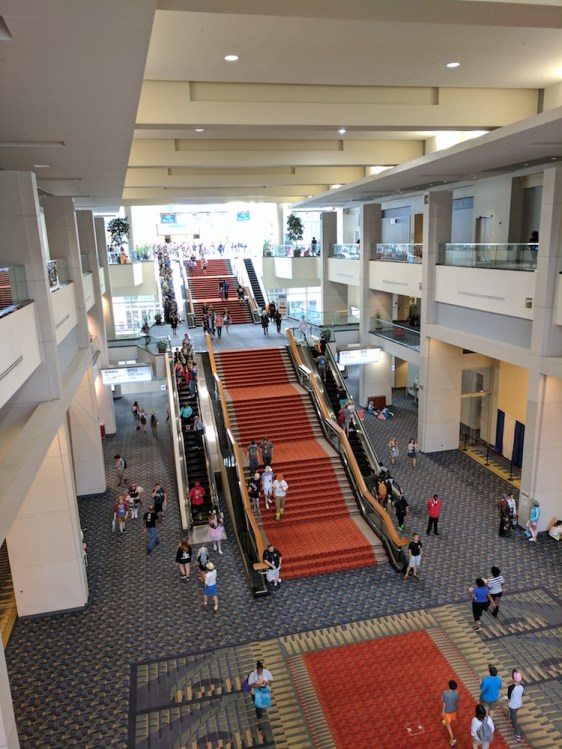
Otakon has always been my favorite anime convention. With its fan-oriented approach and variety of content, it always feels surprisingly intimate despite its sheer size (it’s generally the largest anime con on the east coast). This year marked a big change, as Otakon moved from its long-time home of Baltimore to Washington DC. It might not seem like that much of a difference—it’s only one extra stop on Amtrak—but for those of us who had grown fond of the previous venue, warts and all, Otakon was synonymous with Baltimore.

However, I will likely not be the only one to tell you that the new location is one of the best things to happen to Otakon. Subjectively, I still have an attachment to Baltimore. Objectively, outside of increased cost, pretty much everything is superior. The Walter E. Washington Convention Center is roughly double the size of the old Baltimore Convention Center, meaning less congestion. The adjacent hotel, the Marriott Marquis Washington DC, is bigger and more accommodating. The food choices are greater both inside and outside the convention center, and still fairly reasonably priced. For those who are especially cost-conscious, a Giant Foods supermarket within walking distance is an improvement over Baltimore’s 7-Elevens.

Thus, without even taking into account what happened at the con itself, this new setting certainly provided a more comfortable space for Otakon to put on a show. It was off to a good start right from the beginning.

Dealer’s Hall and Artist’s Alley

One of the best things about having such a large space for Otakon is that the Dealer’s Hall and the Artist’s Alley were easily navigable. Instead of having to wade through a sea of people in order to get anything done, actually going where I wanted to provided little challenge, aside from unfamiliarity with the new convention center. In terms of content, it’s pretty much what you can expect out of a large-sized con. In the Dealer’s Hall, large, official company booths acted as centerpieces with smaller booths on the sides selling figures, posters, manga, anime, and more. The Artist’s Alley had a wide variety of styles, with series such as Voltron, Yuri!!! on Ice, and Persona 5 being especially popular.

One of the hiccups in both areas was a lack of clear marking as to where you were. Booths had individual numbers, but sometimes they didn’t follow a consistent logic, and a lack of visible markings to tell you what row and column you were standing in made things worse. Fortunately, this was brought up at the Con Feedback panel at the end of Otakon, and it’s something they had intended but couldn’t get around to.

There are a couple of other challenges they’ll have to tackle for next year as well. First, the line to the Dealer’s Hall would occasionally get capped. This in itself isn’t unusual, but at one point a friend of mind mentioned that he couldn’t get in while I was already there. But when I looked around, the Dealer’s Hall was the opposite of congested. There was literally room to run around if I so choose. I later realized that it wasn’t the Dealer’s Hall itself that was the issue, it was the space leading to the Dealer’s Hall that was becoming a fire hazard. That’s something that should be addressed by 2018.

The Artist’s Alley also ran into an unfortunate bit of flooding due to a water main break on Saturday evening. A major factor in this was an enormous storm that hit DC. From what I saw, Otakon handled the situation fairly well, and there were no major injuries. This might just be a fluke accident for the first year, so I’ll give them the benefit of the doubt.

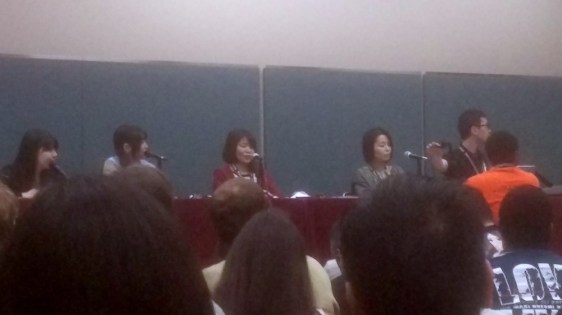
Concert: JAM Project/TM Revolution

This year, Otakon teamed up with the Anisong World Matsuri to bring a number of musical acts to DC. Because tickets cost money (unlike most anime cons), I could only see the Friday concert featuring JAM Project and TM Revolution. As a long-time fan of the former and someone who definitely enjoys the music of the latter, I can say with the utmost confidence that they did not disappoint. Both acts are known for creating not only songs that are good in and of themselves, but for embracing the anime they create music for and elevating them through their compositions. I first saw JAM Project at their US debut back at Otakon 2008, and it was a welcome return.

Both TM Revolution and JAM Project are really adept at making live performances special. Their voices ring out clearly, they get the audience involved, and by the time they’re done you end up feeling like you were part of something greater. Even a few technical hiccups during TM Revolution’s performance couldn’t dent the audience’s fervor.

Before the concert, I had bet on JAM Project and TM Revolution doing an encore together. Most likely, it would be JAM Project’s signature song, “SKILL.” They came through, and the collaboration was everything I hoped for.

For further thoughts on the concert, check out my post on Apartment 507.

The official set list for Otakon 2017 is as follows:

JAM PROJECT

1. Crest of “Z’s”
2. Hagane no Resistance
3. Garo ~Savior in the Dark~
4. The Brave
5. THE EXCEEDER
6. Hero
7. THE HERO!! ~Ikareru Kobushini Hiwo Tsukero~
8. Victory〜Gong
9. Rocks
10. Rescue Fire

T.M.Revolution
1. Inherit the Force
2. Invoke
3. ignited
4. Meteor
5. resonance
6. High Pressure
7. White Breath
8. Hot Limit
9. Flags
10. Sword Summit
11. Heart of Sword

ENCORE
1. SKILL (JAM Project x T.M.Revolution)

Panels
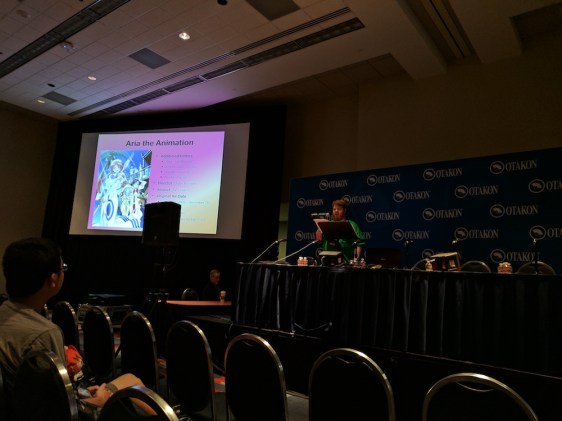
Due to a busy schedule this year and some mishaps on my part, I was unable to attend as many panels as I would have liked. However, this means I can talk about ones I did see in greater detail!

(I also didn’t have any panels this year. Better luck next time?)

The first was “Romance and Abuse in Shoujo Manga,” which looked at many of the bad boys of shoujo and how their behavior can reflect an often implicit hand-waving of abusive relationships. It looked at both works that ignore its characters’ abusive behavior towards their partners, as well as those that call the characters out on it. The presenter also took time to point out the difference between enjoying something as fiction vs. understanding how it would play out in reality, so it’s not as if it was an automatic admonishment of the audience’s tastes. I thought it was a strong panel overall, but it could be taken to the next level. Perhaps it could even go into understanding why the trope of the abusive boyfriend as lovable partner is so popular and occurs in so many well-received anime and manga.

I would also like to compliment the presenter on giving her stamp of approval to how the series Kiss Him, Not Me approaches the subject of abuse, because while the series is thoughtful in a lot of ways, its initially flippant handling of weight and beauty can really turn people away—even I was put off by it. The fact that the presenter used it as an example showed that she wasn’t trying to automatically write off certain series but was actively trying to figure out what messages these shoujo series send.

Another panel I attended was “Iyashikei: Animated Healing.” It focused on the so-called healing genre of anime and manga, explaining the emotionally therapeutic aspect of such works and why they garner such loyal fans. It was a very thorough panel that showed a wide variety of series that can be considered iyashikei, including both classics and genre-bending examples. One thing the panel didn’t get into but I would have liked to see was the tendency towards an assumed male viewership for healing anime. Still, it was well-presented and informative, and I’d look forward to checking it out again.

Screenings

I had the opportunity to see two films, one of which was a world premiere. I’ve written more extensive reviews for both.

In This Corner of the World

Eureka Seven Hi-Evolution 1

Interviews

I also interviewed a few of the illustrious guests at Otakon! This year, it was the dynamic seiyuu duo of Furukawa Toshio and Kakinuma Shino, as well as an interview with the director of Eureka Seven, Kyouda Tomoki.

Final Thoughts

The move to Washington DC is the best decision Otakon has made in years. There are very few drawbacks I can think of, outside of a sentimental attachment to Baltimore (and its delicious crab cake truck), but I know that my experience is not necessarily shared with everyone else.

Second, you want to hear other random thoughts about the con, I also appeared on a post-Otakon podcast over at Ani-Gamers. We recorded it right after the con closed on Sunday!

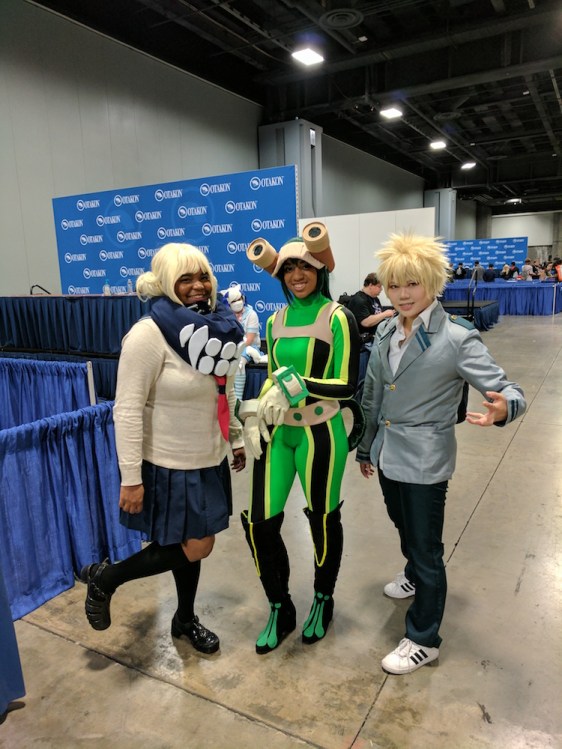
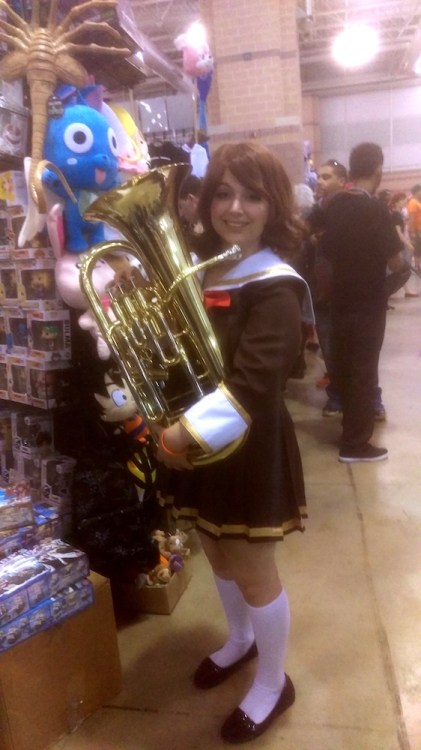
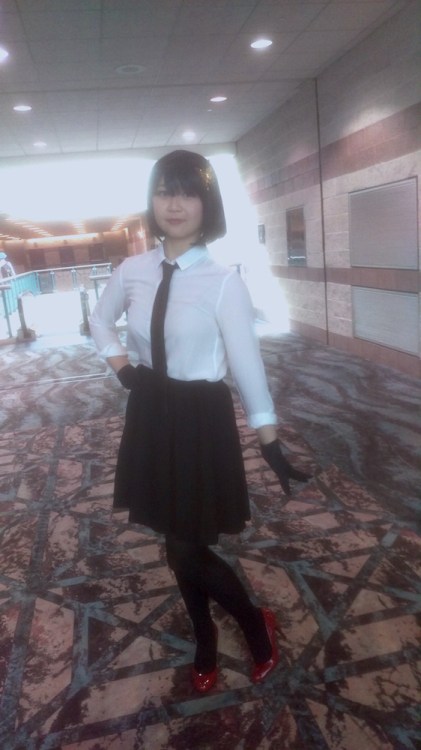
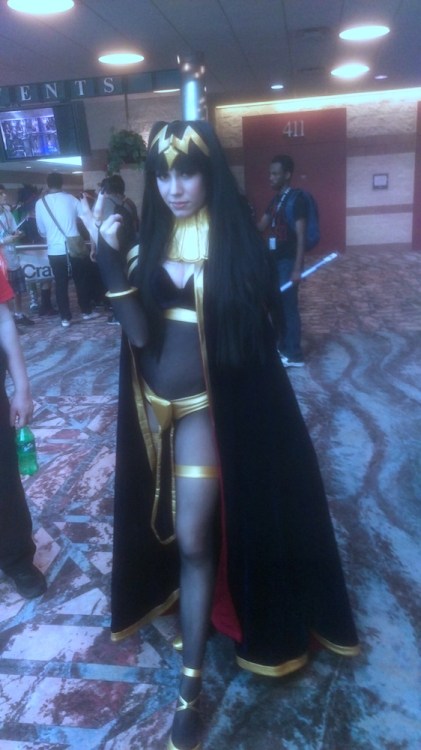
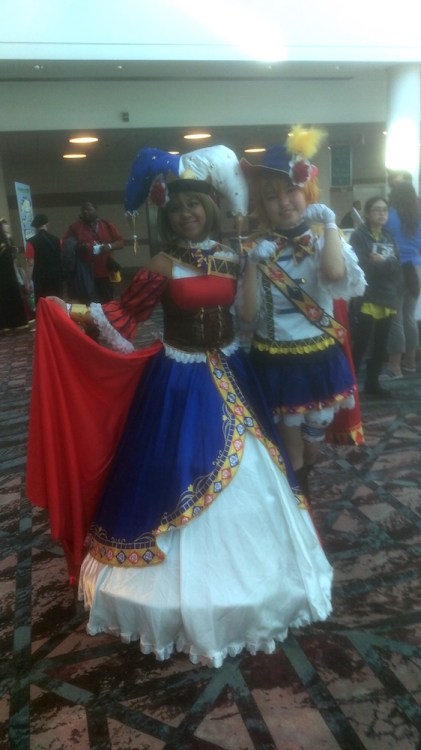
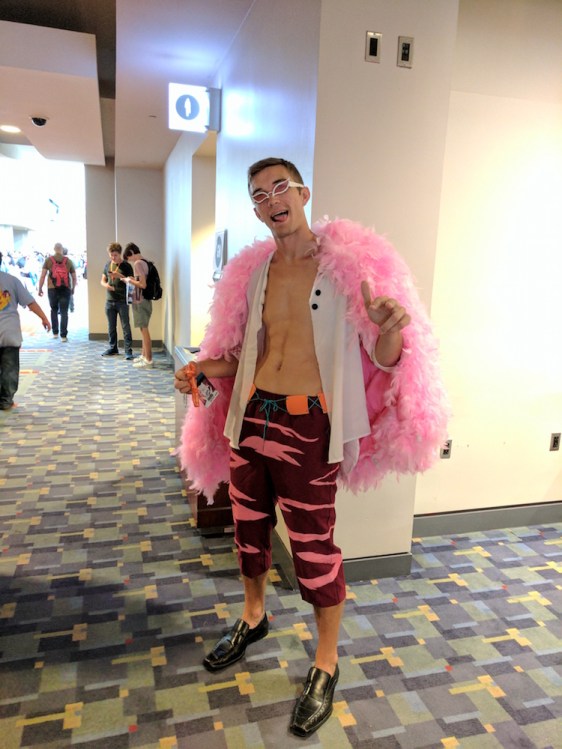
To end this report, here are some cosplay highlights, as is Ogiue Maniax tradition.
Save

Save

Save

Save

Save

The Star that Shines Brightest: Thoughts on the Aikatsu! Five-Year Anniversary Crossover

“Five years of Aikatsu! sounds strange. Sometimes, the series seems like it’s been around forever. Other times, I remember it as one of the many young upstarts nipping at Precure‘s “anime for young girls” throne. However my feelings sway, the reality is that the show is long enough now to have a mega crossover event.

In episodes 69 and 70 of Aikatsu Stars!, the characters if the latest series encounter their predecessors from seasons past. While there are plenty of interactions across the cast, the main focal point is how heroine Nijino Yume meets her protagonist senpai, Oozora Akari and Hoshimiya Ichigo.

One thing is crystal clear after these episodes: out if all three main characters, Ichigo is by far the most memorable and the most meme-able.

That’s not to say that Akari and Yume are bad characters or uninteresting. However, everything about Ichigo leaves an impression. Like in so many other franchises or enduring works, being the original confers a kind of aura of greatness. Whether it’s Amuro Ray from Gundam, Superman, or Cure Black and Cure White from Precure, there’s a sense of reverence for being the first.

But it’s not just being the inaugural protagonist that elevates Ichigo; it’s that she comes across as amusingly superhuman compared to the other two. Like Cure Black and Cure White in their own crossover specials, Ichigo is portrayed as the strongest. She scales cliffs with ease. Her skill with an axe is so notable that the crossover puts special emphasis on it. I’m fact, nowhere is the animation as lovingly handled as the tree-chopping scene, as the anime plays with dynamic angles, fluid animation, and perspective. Yume and Akari recede into the background in the face of Ichigo’s might.

If you look at the S.H. Figuarts figure for Ichigo, she actually comes with an axe. It’s an identifying element for fans. What would Akari and Yume come with? It’s less obvious. One might argue that they’re more subtle as characters, and that this is a strength, but even Cure Black and Cure White don’t overshadow their Precure successors this much.

It might sound like I’m being critical of the franchise for not developing its later heroines more, or of the crossover episodes for not doing a good enough job, but I’m not. I found the crossover episodes to be a fun celebration of all things Aikatsu! I especially enjoyed seeing the previous S4 (Yume’s senpai group before she got to the top of her school) and Soleil (Ichigo’s group) perform. It was also great to see my favorite, Ichinose Kaede. My thoughts on Ichigo are more of an observation.

On a final note, I thought the character designs for Aikatsu! and Aikatsu Stars! would clash more, but they really don’t. I think they made the original Aikatsu! girls’ faces a bit rounder to make the different casts more visually cohesive. This is generally the sign that a crossover knows what it’s doing.

This post was sponsored by Johnny Trovato. If you’re interested in submitting topics for the blog, or just like my writing and want to support Ogiue Maniax, check out my Patreon.

A Tale of Daily Loss: In This Corner of the World

This review is part of Ogiue Maniax’s coverage for Otakon 2017

Of the many Japanese creators who tackle the subject of Japan in World War II, manga artist Kouno Fumiyo has stood out perhaps more than any other over the past decade. Avoiding overt criticism of the war, she tells stories from intimate civilian perspectives instead of focusing directly on the horrors of war or the battles themselves. Her first notable work, Town of Evening Calm, Country of Cherry Blossoms, is about how Hiroshima coped with the aftermath of the atomic bomb from the ground-level. Her second major title, In This Corner of the World, has now been made into a feature film, and the transition from page to screen captures the pain, nostalgia, and conflicted emotions of the wartime period in subtle yet profound ways.

Directed by Katabuchi Sunao (Mai Mai Miracle), ITCotW follows a young girl named Suzu, an airhead with a talent for art who grows up in 1930s-1940s Hiroshima City. As she reaches adulthood and moves to nearby Kure, her everyday life slowly changes, chipped away by the surrounding reality and the ever-encroaching war. She and her family make the best of their situation, able to smile and laugh even in the most dire situations, but the war takes its toll and truly tests Suzu’s ability to go on living.

Avoiding clear-cut criticism of Japan’s actions during WWII carries an enormous risk. Suzu, who lacks of education and tends to just go along with whatever happens to her, can be seen as a lack of critical examination of the war, as well as an overly idyllic portrayal of Japan at the time. However, the film uses both the surrounding environment and Suzu’s portrayal to show how, underneath the facade of imperial prosperity, lies the gradual degradation of what it means for the world to be “normal.” A trip to a school includes young girls singing propaganda, unaware of how it is indoctrinating them. When Suzu witnesses an aerial battle, she is shown imagining it as splashes of paint, the aesthetic beauty of it peering out before the harsh image of destruction returns her to reality.

ITCotW risks being interpreted as celebrating Japan’s glorious past, or at the very least portraying Japan and its citizens as mere victims of war instead of being a major player. The film does not address the atrocities Japan committed, nor does it ever show anything but the fight on Japanese soil. Yet I do not find the decision to avoid confronting such topics head-on to be a crime by omission. I think that, within Suzu and the other characters’ lack of extensive examination is an exploration of how even those who tried to live ignoring or being unaware of Japan’s position are ultimately thrust into it, whether they liked it or not. Not everyone has the strength to risk themselves challenging the establishment, but even those who try to go with the flow can find themselves challenging the tides in small ways.

Another aspect of the film is that it does not utilize the typical images of World War II. When the atomic bomb hits Hiroshima, it does not show the infamous mushroom cloud we all know. Moments later, they look towards Hiroshima, and at the cloud that has begun to lose its shape. The fact that most of the movie takes place outside of Hiroshima is also a clear intent to examine life in wartime outside of the expected locales.

As the film progresses, it moves from beautiful to hauntingly so, a reflection of how the characters, their world, and their sense of normality wear away. A major tragedy in the middle of the film brings about in Suzu a struggle to hold onto the things that have allowed her to take everything in relative stride. How she emerges from that challenge becomes itself indicative of a nuanced message about the perils of patriotism.

Save

Save

Return to Genshiken: Volume 4 – Ogiue Descends


It’s finally here—the advent of Our Lady of Surly Shipping, the Angriest of Fujoshi, Ogiue Chika. To call this a major event in the series would be an understatement, but I’m getting ahead of myself.

What is Return to Genshiken?

Genshiken is an influential manga about otaku, as well as my favorite manga ever and the inspiration for this blog, but it’s been many years since I’ve read the series. I intend to re-read Genshiken with the benefit of hindsight and see how much, if at all, my thoughts on the manga have changed.

Note that, unlike my chapter reviews for the second series, Genshiken Nidaime, I’m going to be looking at this volume by volume. Starting with this volume, I’ll be using both English and Japanese versions of Genshiken! Also, I will be spoiling the entirety of Genshiken, both the first series and the sequel, so be warned.

Volume 4 Summary

Due to the fire accidentally started by Kasukabe, the Society for the Study of Modern Visual Culture has been temporarily suspended, with club room privileges revoked and its members assigned mandatory community service. Feeling incredibly guilty over causing all of this trouble, Kasukabe reluctantly volunteers to go to Comic Festival to buy doujinshi for the others and even participate in a cosplay contest. There, she not only punches out a guy trying to get some upskirt shots, but her striking appearance causes the embers in Madarame’s heart to ignite into a flame.

More revelations and events follow. Tanaka and Ohno have started dating. Madarame passes on the mantle of club president to Sasahara, who declares his intent for Genshiken to create a doujinshi to sell at ComiFes. The club even gains two new members: Kuchiki, a familiar face who was rejected from the Anime Society, and Ogiue, a standoffish otaku-hating girl who literally jumped out a second-story window to spite the other Manga Society girls. So Genshiken grows with two problematic additions.

Saki’s Remorse

The way Saki’s guilt slowly eats at her, culminating in that single tear rolling down her cheek, is quite subtle. Her stoic expression as they move from one member’s apartment to the next in lieu of a club room is easy to miss. Even more significant is why she feels so bad about the situation.

It’s not simply a matter of being responsible for the fire, it’s that she sees how lifeless the others have become. It’s as if her actions have robbed them of the very space where they can open up and just enjoy being who they really are. This is where I think Saki truly becomes one of them—even if she’ll never be an otaku, she at the very least can empathize with their energy.

Later in Nidaime, when Madarame finally confesses to Saki, his thoughts go back to this moment: “I always knew that Kasukabe-san cries easily.” It was her first true moment of vulnerability in the series, and may be what planted the seeds of “Kasukabe is moe” in his head.

The Ritsuko Kubel Kettengrad cosplay she does in this volume is, in some ways, merely the icing on the cake. But what an icing it is!

The Cosplay Heard ‘Round the World

Saki’s cosplay is the catalyst for many future threads in Genshiken. It’s the moment Madarame confirms his own feelings for her. It’s what prompts him to get those photos of her, which eventually are found by Hato. It’s what leads to Saki pressuring Ogiue to cosplay as Renko from Kujibiki Unbalance.

Speaking of those Saki photos, I’ve always been fascinated by how they’re made to look more…lustrous…than the actual characters themselves, including Saki. It gives those pictures a kind of aura, almost like this is how Madarame sees her. Comparing the photos to the actual depiction of Saki, the difference is that the photos use screentone shading for her outfit, and that she looks comfortable and poised in them (as opposed to nervously sweating like in the image earlier).

There’s actually another moment related to this cosplay that I think marks the beginning of something special, which is a clear sign that Kio Shimoku is paying more and more attention to page composition.

In the above scene, we see from Kasukabe’s point of view as she tries out her Ritsuko cosplay for Ohno. For each panel, Ohno is in a similar position on the page, creating a clear vertical column that unites the page from top to bottom. At the same time, the fact that Ohno’s size varies relative to each panel gives it some variety and keeps it from feeling repetitive. It’s simple yet highly effective, and captures well the concept of “flow” in manga.

Tanaka: Best Friend and Boyfriend

Model kit and cosplay-loving Tanaka ultimately gets fewer dedicated chapters than many of the other characters in Genshiken. It’s sort of a shame, as the brief spotlights he gets here (though shared), point towards an interesting fellow. Not only do we get the sense that he and Ohno have been developing their feelings not-so-under the surface all along, but let’s not forget that he was the first of the “total dork” otaku to get a girl. As the characters themselves mention, it only makes sense. It’s not just that their hobbies overlap, but that their respective passions for their hobbies run equally strong.

The anime Genshiken 2 actually saw it fit to devote an episode to exploring the sexual side of Tanaka and Ohno’s relationship. In the manga, we only get Ohno’s lament that he still hasn’t made a move, and then towards the end of Nidaime we find out that he gets to see Ohno “only” once a week. Talk about progress!

Tanaka’s connection with Ohno is not the only highlight here. When most of the club finds out about them dating, it turns out Kugayama knew already because Tanaka told him. Here, you get the idea that they’re really close friends, arguably closer than any other two characters in a platonic relationship in the entire manga. By being a little more in the background, I get the sense that they’re having these private conversations on the regular, and we the readers are only privy to the crumbs.

Sasahara’s Ambition

The reason behind Madarame giving Sasahara the presidency is the interesting one. Essentially, he says that Sasahara is the one most true to being an otaku. From the perspective of 2017, this brings to mind the notion of “real geeks” vs. “fake geeks,” but it’s worth noting that Sasahara is the most inexperienced otaku out of all potential prospects (and Saki doesn’t count by not having a single otaku bone in her body). Ohno is well-known cosplayer with years of experience, and Kousaka is basically Madarame-level, but the big difference is that both Ohno and Kousaka are able to fully function in the world of non-otaku. Part of it is simply due to looks, but there’s a sense that what lies at the core of Genshiken as a club is personal and social dysfunction. If you’re able to function and thrive that easily among “normal folks,” can you be true to the spirit of the classic otaku?

The assumption that otaku will always be society’s rejects is also very telling in hindsight. After all, the whole Densha Otoko boom was about a year or two away at this point in Japan, and eventually Ohno does become president after Sasahara. The image of otaku begins to transform from those whose passions prevent them from being able to succeed to those whose passions help them succeed. It’s why Yajima in Nidaime is so self-conscious about her role in Genshiken—everyone else is attractive and/or successful, and Yajima is, in her own mind, fat and ugly and untalented.

But perhaps Sasahara is himself emblematic of this change. As soon as he becomes president, he declares his desire to create a doujinshi for Comic Festival, something that the club has basically avoided because none of them have the drive or the active desire to put in the hard work. After all, they did reuse their club presentation materials so much that the paper has started to brown. They’re slowly going from a do-nothing club to a do-something club, and a certain paintbrush-haired fujoshi eventually becomes central to that.

Ogiue Time

I had almost forgotten that, when we first meet Ogiue, we don’t quite know that she’s a closet fujoshi yet. We know she’s an otaku who hates other otaku for whatever reason, but it’s not until the next chapter that we see her get tempted by the Genshiken honeypot pile. She just comes across as an incredibly troublesome character with very brief glimpses of vulnerability, especially when Saki comforts her after Kuchiki puts a hand on Ogiue.

Because Ogiue is introduced alongside Kuchiki’s re-introduction, they’re presented as contrasts. Ogiue, coming from the Manga Society, is reticent, grumpy, and unwilling to open up to others. Kuchiki, coming from the Anime Society, is loud, spastic, and a little too lacking in a filter. Perhaps I’m biased, but I can see why Ogiue got more of the spotlight as the series goes on.

I think there’s a bit lost in Ogiue’s introduction in English versus the original Japanese. “My name is Ogiue, and I hate otaku” is a perfectly good translation, and it’s how I’d translate it as well. It sounds good in English, and it’s how English speakers typically introduce themselves: I’m [name] and I [do/like/am something]. But in Japanese, she says, “Otaku ga kirai na Ogiue desu“—”I am the otaku-hating Ogiue.” The very first thing she blurts out is her dislike of otaku and, as we later learn, her self-loathing. Maybe something like “I hate otaku. Hi, I’m Ogiue” would work better?

It’s also notable that Ogiue’s design is somewhat different at this point. Her side hair antennae are a little more angled, and her face is sharper. The character designs as a whole get a bit rounder over the course of the manga in general, but this specific version of Ogiue really gives off a “dangerous, do not touch” vibe.

Another thing to point out is how, while Ogiue’s eyes change permanently after she starts to date Sasahara, you see glimmers of it in Saki’s interactions with Ogiue right from the beginning. Saki’s quite good at breaking down walls, after all.

Final Random Thoughts

I need to make a correction to something I said back in Volume 2, which is that the original president never shows up again. But he does, right here in Volume 4! He dispenses some advice for Saki, that flits off to wherever wizened old otaku leaders go.

Last thing: One of the club discussions that crops up in this volume is comparing the Kujibiki Unbalance manga to the anime, where the former is inevitably considered better than the latter by its members. The anime is noted as having many more jokes, and overall being a crazier experience. What’s funny to me about this comparison is that it’s clear the Kujibiki Unbalance OVAs we got with the first Genshiken anime are trying to be the anime spoken of in this volume. It’s a bit of meta-humor for Genshiken fans, and it won’t even be the last time this sort of referencing occurs.

Save

Save

Save

Save

Save

Save

Save

Save

Save

Save

Save

Save

Save

Ogiue Maniax Chats About Zambot 3 on The Cockpit Podcast

I was recently invited on The Cockpit, a mecha-themed podcast, to discuss one of my favorite anime ever: Muteki Choujin Zambot 3. We get into what makes the show interesting and pioneering, and why it still holds up today for the most part.

If you want to read my old review of Zambot 3, you can check it out here.

And if you want to hear my previous Cockpit appearances, I’ve also been on to talk about Brave Police J-Decker, King of Braves Gaogaigarand Pacific Rim.

[APT507] Mama Got Back: Ookumo-Chan Flashback Chapter 1 Review

I’ve written a review at Apartment 507 about the new manga by Mysterious Girlfriend X author Ueshiba Riichi. It’s kind of unexpected, to say the least.

Save

Less Slots, More Anime Plots: AnimeNEXT 2017

In 2016, New Jersey’s largest anime con left its long-time home of Somerset. Having already struggled with limited space for an ever-growing population of attendees, AnimeNEXT moved to Atlantic City and a nice, spacious convention center. I personally did not attend AnimeNEXT 2016, which is why my con experience this time around was as much a learning experience about Atlantic City itself as it was another opportunity to see what the con itself had to offer.

I found AnimeNEXT 2017 to be a success in spite of some pitfalls. Contributing to this overall positive yet mixed reaction is how Atlantic City both contributed to and hindered how welcoming the con felt.

Getting to AnimeNEXT

It all starts with the trip to Atlantic City itself. Having come from New York City (and having spoken to other attendees from New Jersey and elsewhere), the transportation options are rather limited. No trains go there—only buses. The ride itself is only two and a half hours on a good day, but buses in general can be unreliable compared to trains or planes. The closest airport is Philadelphia.

There’s a NJ PATH stop right at the Atlantic City Convention Center where AnimeNEXT is held, but few lines actually go to it. For many residents of New Jersey, their only choice is ground transportation, and even in that scenario the road leading into and out of Atlantic City encourages traffic congestion. In other words, be prepared.

Convention Center and Surrounding Area

In contrast to all that inconvenience, the Atlantic City Convention Center is great. Located within walking distance of multiple hotels, I never had any significant trouble getting where I needed to both heading towards the con and at the con itself. The convention space is a great size for the amount of attendees, and there are few bottlenecks to slow people down.

There were some logistics issues I noticed throughout the convention, like the different parts of the con crew’s chain of command didn’t quite communicate as it should. Because a lot of the staff is likely volunteers this is understandable, though I’d still like to see it improved upon in the years to come. It was also a step down from previous years in this regard, but this can always be corrected.

Food can be hit-or-miss. One issue is a lack of convenience stores, so getting quick snacks requires going well beyond the safety of the touristy areas. However, there are a number of restaurant establishments that provide a decent bang for your buck. Wingcraft has excellent burgers, Cavo Crepe Cafe features a variety of crepes, and White House Subs with its two-foot long sandwiches (pictured above) is an American institution that quickly became my favorite place to eat.

Atlantic City can feel like a sad place, as if joy has been gradually drained from it over the course of years. The hotel I stayed at, Bally’s Hotel/Casino, would emit this odd smell whenever I entered it. Aside from gambling, there isn’t all that much to do outside of the con, which can be both a blessing and a curse. While it limits the number of people who will go to AnimeNEXT as part of an overall sightseeing trip, it means the people there are much more active at the con itself. Fortunately, there’s plenty to do within that context.

I did play the slots a bit. I won four whole dollars, and made sure to shout, “HELLOOOOOO” every time.

Fan Panels

AnimeNEXT has always had a decent focus on panels, especially fan panels. Because it’s not as difficult to get a chance at AnimeNEXT compared to larger cons such as Otakon (while also being located on the panel-friendly east coast), aspiring newbies and veterans alike can try their hand at presenting in front of audiences. That was still the case this year, but there seemed to be an even greater desire to pack the panel schedule to the brim.

The result was plenty of interesting content, but with some hiccups along the way. The actual events schedule came incredibly late, making it difficult to plan in advance. Panel slots were shuffled almost to the last second. Some panelists actually had panels scheduled against themselves. The organization of previous years seemed to falter in 2017.

Nevertheless, the fan panels themselves generally overshadowed those issues. Not only that, but most audiences were decently sized from what I saw, which isn’t always the case with AnimeNEXT.

Gattai! Giant Robots of Yesteryear was a giant robot anime recommendation panel. Run by the crew over at the Cockpit, it was helpful even for a big mecha fan like myself with many shows under his belt. I’m intrigued by F.L.A.G., for one thing.

Let’s Dive! The History of Cyberpunk Anime was quite informative, including giving a good understanding of what “cyberpunk” means. There was an issue with his laptop partway through the presenter’s panel, but it was clear he knew the material well, as he kept rolling without any visual aids. My only complaints were that I didn’t recall a definition for “biopunk” (which the guy categorized as different from cyberpunk), and a lack of the anime Real Drive—a cyberpunk anime with an actual diving theme.

Anime Burger Time, from the mind of former Crunchycast host Evan Minto, is a celebration of all things burger in Japanese cartoons. As someone who loves food and also once ran an equally ridiculous panel about dogs in anime, I hold my respect and admiration for Evan’s endeavors. The most fun part of this was that attendees were encouraged to bring and eat burgers during the panel.

Criticism of Popular Anime was my least favorite panel I attended. The presenter’s intent seemed to be to take down those who flaunt their tastes as superior by saying everyone’s favorite anime are bad, but it mostly came across as a lesson in negativity. If anything, I’d like to see the opposite panel, one that can argue in favor of any show, no matter how dire.

I happened to run two fan panels myself, The Art of Stock Footage with Patz from the Cockpit, and Sports, Robots, and Romance: The Works of Tadao Nagahama. If you came to either of them, thank you very much. I’d like to give a shout-out to the two folks who came to the Nagahama panel half an hour early.


Industry Panels

If the fan panels are good at AnimeNEXT, then the industry panels are fantastic. The con brings some stellar guests and seems to encourage panels that go beyond the typical Q&A or simplistic presentation one might find at other conventions.

Studio Trigger, creators of Little Witch Academia, are no stranger to New Jersey. Returning for their fourth year, the sense of fun they bring to their panels, Trigger is arguably the staple highlight of AnimeNEXT. One of my favorite aspects of Trigger’s interactions with their American fans is their continued surprise over Inferno Cop‘s popularity, They even brought another exclusive episode of Inferno Cop to their panel, featuring a certain wall-loving president opposing our flaming-skull hero. The fact that they don’t show these outside of AnimeNEXT makes them feel that much more special, and it was of course the perfect place to announce a second season.

Due to scheduling conflicts of my own I was unable to attend their dedicated panel on Little Witch Academia. From what I was told, however, it was extremely informative and painted a surprisingly dark image of LWA lurking underneath its surface. Apparently, many of the girls in that series have tragic pasts that simply aren’t highlighted in the show itself.

As an aside, it’s funny how people think of Trigger as one of the premiere studios for animation quality (a reputation they well deserve), but that they’re also known for a work that is blatantly anti-animation in Inferno Cop.

Studio MAPPA, creators of Yuri!!! on ICE, gave a close look at what went into one of the biggest anime hits of 2017. The biggest takeaway from the panels was that the attention to detail among the staff bordered on the absurd. Whether it was hiring a professional figure skater clothing company to design the characters’ outfits, specifying which screws on their skates are present (real figure skaters adjust this based on personal preference), or animator Tatenaka Junpei showing a rough animation of the episode 1 performance from a different angle, it’s clear that no one slacked. While director Yamamoto Sayo was not present, it was clear from the staff that she was obsessed with figure skating.

They also showed a blu-ray bonus feature: an exhibition by character Yuri “Yurio” Plisetsky. Thanks to a scintillating appearance by Otabek during the special, the fangirls roared to life on a level almost akin to a Beatles live performance.

I’d also like to point out that their panels actually got substantial attendance, something that usually does not happen for Japanese guests who aren’t voice actors. I have hope that the fans’ love for the characters of Yuri!!! on ICE is so strong that they can branch into appreciating other aspects of anime and anime production.

TMS, the studio behind ReLIFE, held a panel similar to MAPPA’s focused on the animation process. One thing that was different from MAPPA was that they did have a voice actor: Ueda Reina. One thing I had not known prior to AnimeNEXT was that she’s also something of a popular idol. At the front of the panel room was a group of dedicated idol fans, adorned in merchandise from various idol franchises, hanging on to Ueda’s every word. While I thought it took a bit too much attention away from the TMS animators (who talked extensively on framing a certain scene in ReLIFE to emphasize its scandalous qualities), it did ultimately get more people to attend the panel.

I also had the opportunity to interview TMS, Trigger, and Mappa. Those transcripts will be showing up on the blog over the next few weeks.

Autograph Adventures

I actually did not learn of Ueda Reina’s popularity with idol fans at one of the TMS panels but rather while waiting in line for her autograph. I knew her as the voice of Mobuko, the Nurse Joy-esque background characters from the anime Tesagure! Bukatsumono. However, when I looked at my fellow attendees waiting for the TMS signing, I saw that most of them were obviously into idols. In fact, the three guys in front of me were cosplaying as Aikatsu! characters. Idol enthusiast supreme Omo informed me that Ueda has actually made appearances in The iDOLM@STER, Aikatsu Stars!, and is an idol in her own right. One fan even brought a life-sized cutout of Ueda’s iDOLM@STER character.

The rest of the TMS crew there, animators Kosaka Tomochi and Yamanaka Junko, were no slouch either, even if they did not have the drawing power of a voice actress/idol. Because both had a lot of experience working on Detective Conan, I brought something from the popular series for them to sign.

Overall, the TMS autograph session went off without a hitch. The same could not be said of Studio Trigger’s.

At this point, Trigger is pretty much a marquee guest for AnimeNEXT, and people will come to the con specifically to see them. As a result, while lines are not “supposed” to form until closer to the designated time, a loose mob began to form. The staff remarked that this was a fire hazard, so people were told to disperse. However, the staff continued to tell people not to line up even though it was actually getting close to the time on the schedule, and an argument ensued between the staff and some of the attendees.

In the end, due to the confusion over lining up, many people who had waited for two or more hours could not get autographs, and due to the fact that the Trigger staff likes to really take their time on sketches, only 30 people out of a significantly larger line managed to get their autographs. In comparison, twice as many got the opportunity with TMS. To me, the saddest thing was that some had clearly wasted their entire day trying to get a Trigger autograph only to fail. I managed to get some myself, but this was mostly due to good fortune and an understanding of how con lines and con staff work. This shouldn’t be necessary.

I’m considering not going to their signing at all the next time I attend AnimeNEXT, just so that others can get the opportunity. The bright side of all this is that the disappointed fans are proof that Japanese guests who aren’t voice actors can garner a sizable crowd. Often times, when it comes to Japanese staff at anime cons, their lines are short that you can practically stroll in and get one.

I should also point out that I did not even try for the Yuri!!! on ICE autographs, knowing the power and ferocity of its fanbase. I heard it ran into some problems, but I did not experience it firsthand.

Concerts, or Rather “Concert”

I attended only one musical performance this year, which was for the official Capcom Music Tour. It was decent, but also kind of underwhelming. It was clear that they only had a limited time to perform, but I was surprised that they only managed to fit in one Mega Man song, especially because that series is praised for its music. Moreover, a video preview at the beginning showed tunes from various old classics, such as BIonic Commando, which made the fact that those songs didn’t appear in the concert proper sting that much more.

In Conclusion, AnimeNEXT is Good, Atlantic City Ehhhh

The con is actually great. It’s spacious, there’s plenty to do, and they bring great guests. Atlantic City is not so exciting, and even a city like Baltimore (where Otakon used to take place) whose crime rate is kind of notorious makes the touristy area feel welcome. In Atlantic City, the tourism section is geared towards gambling, and that atmosphere definitely does not work for me. In spite of this, I think AnimeNEXT is definitely worth attending because it more than makes up for the faults of its location.

On a final aside, AnimeNEXT took place during a Hanayo event in Love Live: School Idol Festival, which meant that I could be found feverishly playing the game at random times during the convention. While there, I happened to photograph a couple of cosplayers of Hanayo and Rin, and one of them asked to exchange School Idol Festival info. It was the very first time anyone ever asked to friend me for LLSiF in real life, so to that Rin cosplayer, I’d like to say thanks.


Save

Save

Save

Save

Save

[APT507] Rokudou no Onna-tachi: A Follow-Up Review for the Delinquents-Only Harem Manga!

Some months ago, I wrote a quick review of an interesting new manga, Rokudou no Onna-tachi. Now, I’m back with a follow-up, looking at the direction this odd series (where all the girls are angry delinquents!) has gone, and my latest impressions. Check it out on Apartment 507!

Magic School Bus Meets Terminator: Cells at Work

 When I was a kid, I was fascinated by the human immune system. Just the idea of the body’s natural defense system warding off and destroying invaders was enough to fill pages of drawing books. I even imagined a video game where the player controlled cartoon white blood cells to fight disease! This is exactly why the manga Cells at Work feels like my childhood dream come true.
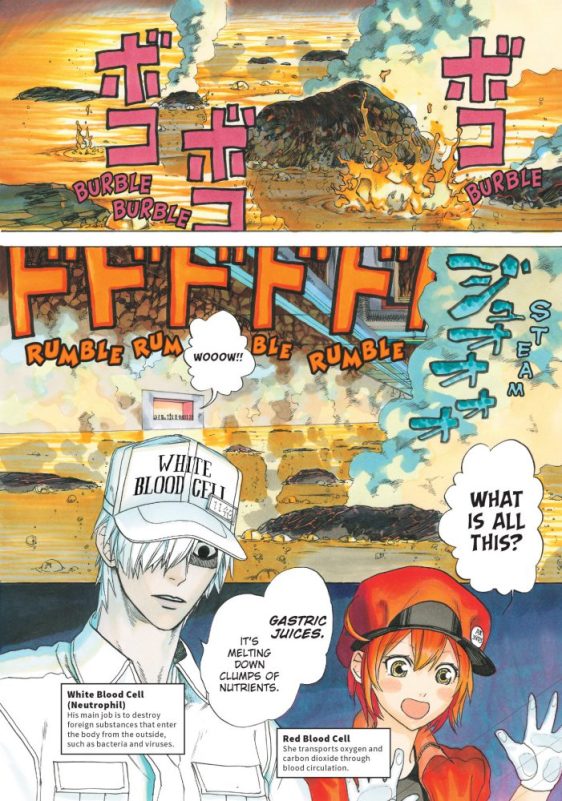
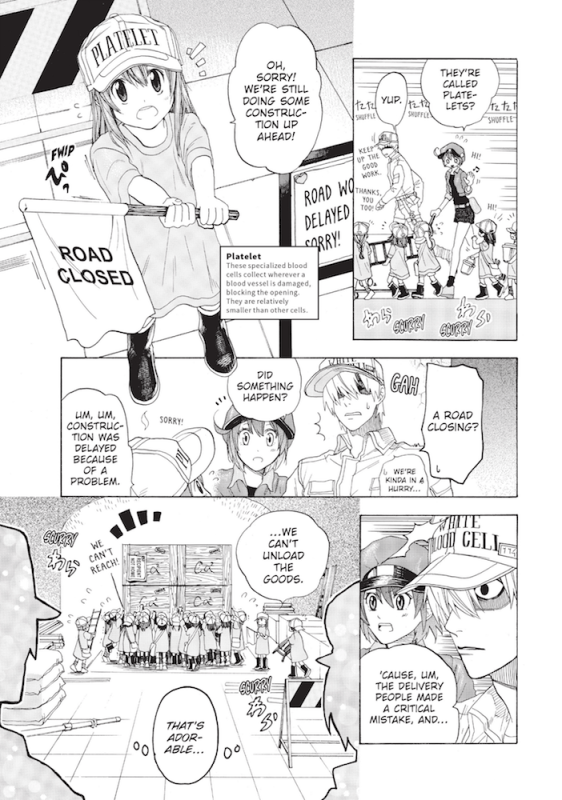
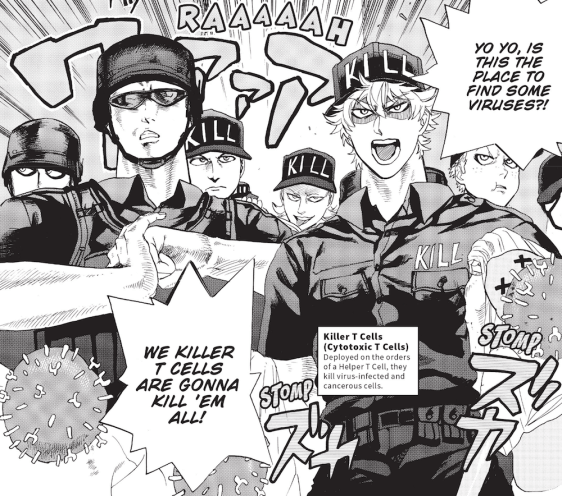
Cells at Work tells the story of the human body through its cells, personified into more typical-looking humanoid manga characters. From a hardworking red blood cell delivering nutrients to a stoic but diligent white blood cell fending off harmful bacteria, each representative cell is so entertaining to see that you almost don’t realize you’re learning.

While some series based on anthropomorphic characters prefer to keep their reality-based facts as subtext for character interaction, and others are essentially illustrated textbooks, Cells at Work strikes a more even balance. Each chapter involves the body having to deal with some crisis, such as allergies, the flu, and even cancer cells. The manga goes through the varied ways by which the immune system handles these threats, giving the cells highly entertaining personalities that encapsulate well their roles in defense. Platelets are adorable little children who act as construction workers. Killer T Cell is a lymphocyte with an appetite for destruction, and many of his fights are incredibly bloody (pun intended).

As long as there’s no worry about depictions of violence, I think this would be the perfect reading for a classroom biology class. Along the way, narration boxes explain their actual function in the body, with the actions of the characters making the information easier to remember.

I love this comic. The fact that it combines two of my favorite things ever (the immune system and manga) would be enough, but it’s also just very well written and drawn. The series is currently out in English both in print and digitally from Kodansha Comics, and I highly recommend it.

Now, time to watch Osmosis Jones.

Save

Save

Save

Save

Return to Genshiken: Volume 3 – Stimulation Simulation

What is Return to Genshiken?

Genshiken is an influential manga about otaku, as well as my favorite manga ever and the inspiration for this blog, but it’s been many years since I’ve read the series. I intend to re-read Genshiken with the benefit of hindsight and see how much, if at all, my thoughts on the manga have changed.

Note that, unlike my chapter reviews for the second series, Genshiken Nidaime, I’m going to be looking at this volume by volume. I’ll be using the English release of Genshiken as well, for my own convenience. Also, I will be spoiling the entirety of Genshiken, both the first series and the sequel, so be warned.

Volume 3 Summary

Love begins to claw its way into the awkward otaku world of Genshiken. Tanaka shows Ohno the wondrous world of Gundam models. Madarame finds himself alone with Kasukabe Saki in the clubroom, and the situation is too much for his poor nerd heart to handle. Keiko tries to put the moves on Kohsaka by trying to understand the otaku mind. Sasahara gets his first computer and his first private dating sim “experience”…

But trouble is on the horizon, as Saki accidentally sets a pile of old Genshiken garbage on fire. The volume ends with a lot of burnt paper and a frantic Saki.

Love, not Lust?

The “Madarame alone with Kasukabe” scene is, in my opinion, the most significant part of Volume 3. Madarame trying to use his dating sim knowledge IRL is of course quite humorous, but in hindsight, the repercussions of this moment are tremendous. It is essentially when Genshiken as a series began to transition its characters out of the cocoon of their otaku worlds. As we know from later volumes, they never stop being otaku, but this is where the chinks in Madarame’s armor begin to show.

When Madarame finally confesses to Saki in Nidaime, Madarame considers this the point when he first fell in love with her. Looking at the chapter, the symbolism is right there: he forgets his bag full of doujinshi, an item which he’d have treasured above all else. In that moment, 3D overwhelms 2D, and not even Madarame himself fully realizes it until much later in the series.

This first attraction on the part of Madarame is not based purely on the physical aspects of Saki. It wouldn’t make him nearly as nervous otherwise. In the same volume, when Ohno tries to get her to wear a cat ear-adorned frilly maid headband, the guys in the club are quick to fantasize about a cat-maid Saki slowly becoming more subservient. In the previous volume, more than one of the guys intends to use Saki as masturbation material. And when Ohno falls in the water at the beach and ends up showing her polka dot swimsuit, the guys are clearly aroused. With Madarame and Saki, it hits him deeper than where his desires typically lie.

The Impenetrable World of Otaku

Aside from the ratio of boys to girls, one of the major differences between the first Genshiken and Nidaime that really stands out to me is just how much the former tries to introduce the world of the otaku. There’s a chapter about building Gundam models, there’s another about buying a computer, and the use of “normal” folks like Keiko and Saki positions the manga as easing laymen in. At the same time, there’s something about the portrayal of otaku that renders their conversations as opaque, and it’s not just the knowledge itself that creates this sensation. As someone familiar with most of what the characters are talking about, the way they present information just sounds very exclusive, as if it were a kind of defense mechanism. When the girls of Nidaime chat about their favorite pairings, the space they create through conversation somehow feels more accessible.

Turning Points

While this volume features what is arguably the most important moment for Madarame in Genshiken (especially the first series), it’s also of great significance to Saki. Her panicking over accidentally starting that fire is the first time Saki comes across as vulnerable. While she’s usually able to handle everything, this makes it clearer that she’s invincible when it comes to social situations but not physical dangers. While her full transformation into a member of Genshiken (not just in letter but in spirit too) comes in Volume 4, this is the pivot, the point of evolution.

Keiko also begins the transition here, as she slowly begins to understand the otaku mind. This comes out full force in Nidaime when she tries to seduce Madarame, but by then it’s tempered by a slightly more forethought. This is only the beginning of the beginning, though. Her actual key moment, in my opinion, comes when she stops calling Sasahara “monkey.”

Ohno is still extremely shy at this point, and it reminds me that she almost becomes a completely different character as the series progreses. The change is to some extent gradual, but if I recally correctly, the actual moment that triggers her more drastic metamorphosis into open, motherly figure is when Ogiue is introduced as an antagonistic force of sorts. Naturally, I’m looking forward to that next volume!

Doujin Fighting Games

This volume’s Mebaetame (the Genshiken club doujinshi magazine) is a review of the various characters in a fictitious fighting game based on everyone’s favorite series, Kujibiki Unbalance. The portrayal of this game is a real throwback to the days when doujin fighters were all the rage. Nowadays, the qualities that defined doujin fighting games—long combos, air dashes, anime aesthetic, etc.—have all become features of official, professionally produced games. BlazBlue, Arcana Heart, Dengeki Bunko Fighting Climax, Aqua Pazza, and of course Melty Blood (which began as a doujin game before transitioning into something found in arcades and played in tournaments) are all of this lineage.

The Genshiken members talk about how the game is more faithful to the characters than trying to be a balanced (or good) fighting game. Personally speaking, it’s what one wants out of a doujin game: a love of the series takes priority over trying to be, to use a more recent term, “eSports now.” It reminds me of a doujin fighter I really enjoyed back in the day called Magical Chaser. It was themed around magical girls!

The English translations for these Mebaetame entries are rather awkward, and suggest someone who is unfamiliar with fighting games in general. I say this from the perspective of having many more online resources, as well as a long history interacting with fighting game enthusiasts, so I understand that it’s simply not easy trying to adapt that lingo. If you know fighting games at all, you’d probably have a fair idea as to what the characters are trying to say.

Final Random Thoughts

Two little details in this volume really date the series. The first is when the club is giving Sasahara advice on buying a new computer. The second is when Madarame talks about watching the episode of Kujibiki Unbalance he recorded.

As the other members guide Sasahaa, they talk about how 200gb is needlessly large for a hard drive—a sentiment that predictably would garner laughs today. Madarame also talks about how the US is obsessed with big hard drives, and to my American perspective I don’t quite understand what the big deal is. It’s not excessive if you use up all the space!

Later, when Madarame suggests they watch Kujibiki Unbalance again, he pulls out a VHS tape. I always wondered at what point I would see video cassettes as artifacts. I guess now’s the time…

Save

Save

Save

Save

Save

Save

Save

Save

Save