Dutch Starcraft League Cheerfuls

The past two years, I’ve attended the Dutch anime con, “Anime Con,” but this year I decided to mix it up a bit and go primarily to the Dutch Starcraft League Finals, which was happening as a part of the Anime Con. It was a fun event, and I got to meet such great personalities as Madals, Kaelaris, and even German champion Hasuobs, who was actually there not for the tournament but for the anime con. Also of course congratulations to the winner Harstem, who managed to upset in the finals with strong Dark Templar play.

One weird thing about the event was that the cameras broadcasting the event had a tendency to fixate on cute girls (especially if they were in cosplay), as if to say, “Hey, girls watch this too! Isn’t that amazing?!” The funniest thing to come out of this was the fact that the camera would focus on one female cosplayer so much that it failed to actually notice that the guy she was with was Hasuobs.

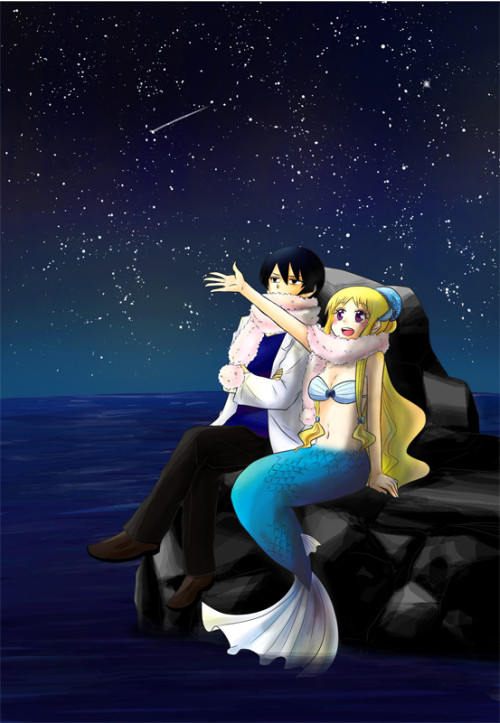
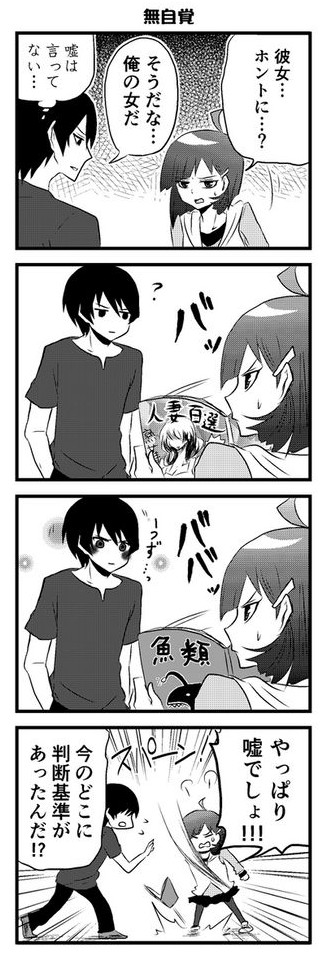
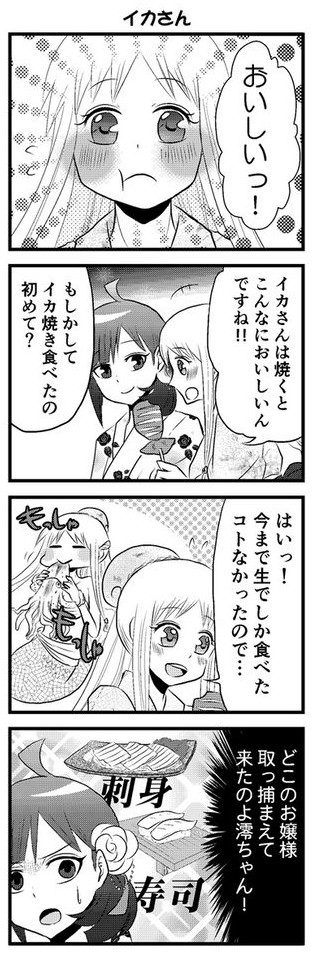
As it was a Starcraft tournament at an anime con, I thought it only appropriate that I quickly make some cheerfuls combining both hobbies together.

Watashi Rashiku: Genshiken II, Chapter 88

Genshiken II, Chapter 88 is Winter ComiFes! As always, the Comic Festival chapters are among the best or most interesting in Genshiken.

It’s Day 1 of ComiFes and Angela Burton the Athletic Bostonian has come back to Japan. Though she’s decided to tone it down she still ends up stirring the pot, especially by noticing that something funny’s going on with Madarame and Sue. During the event, as the others move about, Ogiue and Yabusaki sell the doujinshi they’ve been working on. They even manage to completely exhaust their 1000-book supply, which is a first for them. Hato, who is abstaining from BL, tries to act like a normal otaku and even perv out like a normal otaku, but it just doesn’t work for him, and he ends up not enjoying what is normally a highlight of his life. The chapter ends at the start of Day 2. Yajima plans to buy a yaoi doujinshi for Hato, which may be hinting at some more romantic feelings.

This chapter of Genshiken had the same energy as the old ComiFes chapters, and especially compared to the last one doesn’t have quite so much overt drama. Not that it doesn’t have any drama, of course, but it’s a little more low-key, and you can really feel the hustle and bustle of a event as huge and as crazy as not-Comiket (because it’s a fictional world, remember). At least, that’s how it is for Day 1. Who knows what Days 2 and 3 will bring?

I couldn’t recognize either cosplay this time around, but thankfully there’s at least one blogger who knows his stuff: The first cosplay (pictured above) is from a new series called Shuushokunan Zombie Tori Girl (“Employment Scarcity Zombie-Catching Girl”), and the other is from Hi Score Girl, which if I recall, won some kind of award recently? In any case, I want to check out both manga now. The image of a blue collar worker using a combination fishing pole and net is quite striking.

Just in general, I thought the fashion in this chapter was really nice. Clothing-wise, the two characters who stand out to me the most this chapter are Yoshitake and Angela, for different reasons. For Yoshitake, it’s because of the way she’s able to at times look like the coolest girl around and at other times like the biggest dork in history (or “history dork in history”), when probably both are true. For Angela, I feel like Kio expresses her character through her clothing especially well. Even when trying to hold herself back (another “be yourself, or not” moment?), she still exudes a confidence in herself, her body, and her actions that’s hard to find in even someone like Saki. I’d like to point out that she’s wearing shorts in the middle of winter, when Comic Market is known for sometimes for being blisteringly cold.

I actually like Angela more and more every time she shows up, possibly because of the way that she shakes up the current situation of the club no matter what it might be. Her attitude towards just about everything is a far cry from everyone else, best exemplified when she suspects there being a thing between Madarame and Sue. Angela has some romantic and physical interest in Madarame, and to see her react not with jealousy or anger but with the same excitement she displays when talking about her favorite character types really cuts through the more conventional sense of relationships you see elsewhere.

Ogiue gets a good amount of focus this time around because of the fact that she’s selling her collaborative doujinshi with Yabusaki. If you’re not sure why the two of them are freaking out from the get-go, it’s because they’ve been put in a spot that’s usually reserved for the most popular and highest-selling doujinshi circles. Their table is against the wall, and at a doujin event, the groups whose products will create the most traffic are put against the wall in order to reduce traffic congestion. Ogiue says it’s mainly because the title they chose to parody this time is extremely popular, and that it wasn’t all under their own power, but I think selling out of 1000 copies is amazing no matter the circumstances.

While I of coursed loved seeing Ogiue back when she was struggling with herself, it also brings me joy to see Ogiue this happy. Though she’s hardly what you’d call totally uninhibited now, it’s clear how much more relaxed and comfortable she is now, especially when her nervousness this time around has more to do with feeling like a little fish in a big pond, and not anger at herself. The pinnacle of this can be seen in the very last panel of the chapter, where she’s in the classic doujinshi-buying frenzy. The panel even references the line that something is opening up at the top of her head, the thing that happened to Sasahara at his first ComiFes. The last time we saw Ogiue do this, she was disguised and frustrated about having to disguise herself, but now Ogiue isn’t holding herself back, or trying to disguise herself, or anything. It’s Ogiue, who has allowed herself to be herself. I don’t think I’ve ever seen Ogiue with such a look of confidence and authority before.

Even her interactions with Yabusaki show this, and it’s possible to see how far their friendship has come from what was once a decidedly antagonistic relationship. Speaking of Yabusaki, or rather Asada, it’s interesting to see how a once-extremely minor character has been developed to the point that you can really get a sense of her friendship with Yabusaki, and how the two get along with each other. What once appeared to be Yabusaki as boisterous leader and Asada as quiet tag-along is actually more complex.

By the way, I think it’s telling that Nakajima did not show up, despite Ogiue being so much easier to find this time around.

“Being yourself,” as cliche as it sounds, seems to be the theme of this chapter, especially when taking into account Hato’s own situation. On this first day of ComiFes, the day with generally the most female-oriented and yaoi content, Hato decides that he will not buy any BL. The line towards the end of the chapter says it all, though. On Day 2, Hato has a revelation: “Everyone seems to be enjoying ComiFes, but I haven’t been enjoying it at all.”

In forcing himself to do the “right thing,” Hato suffers. ComiFes is supposed to be the space where otaku can let their otakudom loose, but he’s restrainined himself. Hato’s attempt to be a “normal” otaku brings up an important question: if you’re not having fun as an otaku, why are you trying to be one in the first place? Whether we’re using the older definition of otaku as a pathetic person lost in the delusion of his hobbies, or the more charitable one that emerged later on to just refer to someone passionate about his fandom, “otaku” is not something that’s supposed to cause you anguish because you can’t fulfill the proper behavior in being one. If anything, it’s traditionally the opposite such as with Ogiue.

Anyway, with everything happening, I am certainly looking forward to next month. Last time, I asked about the possibility of Sue x Hato. What about Hato x Yajima? I’m not one to pair couples typically, but there’s something about having the guy better looking than the girl which can create interesting stories and dynamics, particularly in terms of the issue of confidence.

Free Comic Book Day Netherlands 2013

fcbdnl2013-allcomics

May 4, 2013 marked the second anniverary of Free Comic Book Day in the Netherlands. An American institution which I’ve participated in for over a decade now, I was amazed last year to see it brought over to other countries as well.

This year the full selection of free comics was raised from 7 to 10, far less variety than what was offered in the US, but at the same time had many of the charms and stylistic tendencies associated with European comics (even if they may not have been made in Europe!). The comic book store owners I did talk to all seemed to make it a point to tell me that they lose money participating in Free Comic Book Day, and urged me to buy something alongside. In my opinion, this kind of goes against the spirit of Free Comic Book Day in the sense that it isn’t supposed to be a guilt trip, but it might just be a difference in population/costs/other factors which make it not as sustainable as the American FCBD.

Sadly I am mostly illiterate in Dutch so I can’t really talk about the quality of narrative, but I can at least talk about some of the comics which caught my eye, or which most likely would catch yours.

fcbdnl2013-gameofthrones

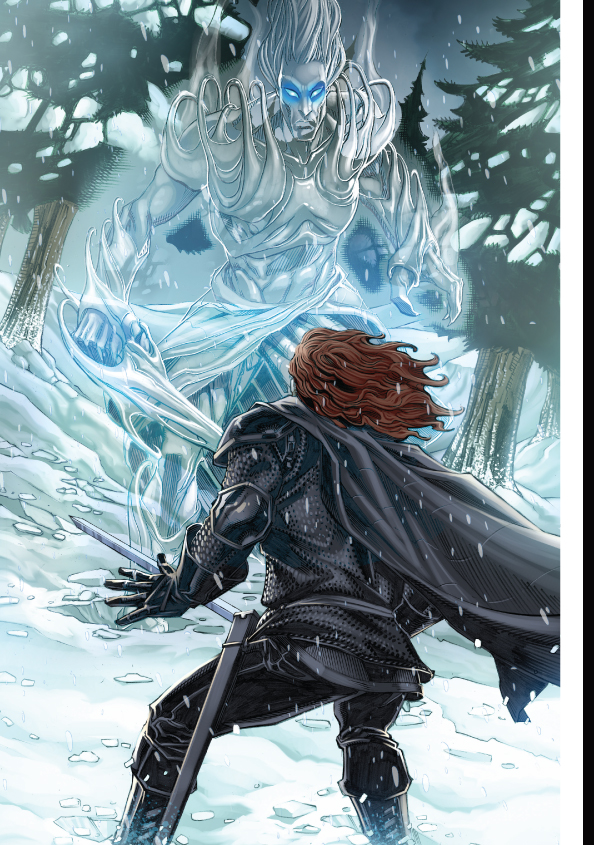
Probably of greatest interest to people would be the Game of Thrones comic, adapted by Tommy Patterson, and actually available in English. I have not read A Song of Ice and Fire, nor have I seen the HBO Game of Thrones, so in terms of accuracy or spirit I can’t really say anything. At the very least the art is vibrant, and I like it way more than Patterson’s previous work on series like Grimm’s Fairy Tales.

Next is Sienna, by Desberg, Filmore, and Chetville, about a female government agent. “Sexy women of action” as far as I’ve seen is quite a popular genre here, at least in terms of comics made, and this one takes a more mature and dramatic angle. The art is quite nice, and there’s plenty of violence and (I assume) conspiracy. You can see a small preview here.

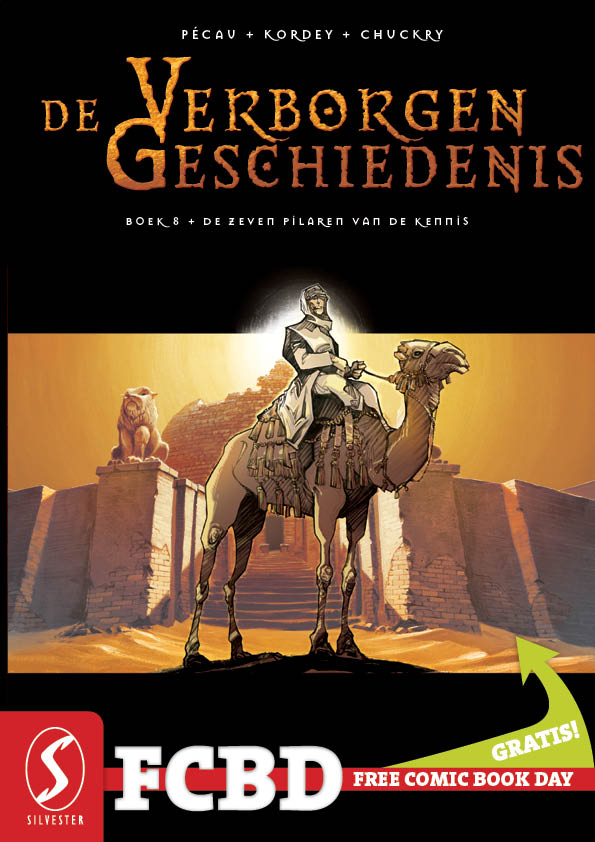
De Verborgen Geschiedenis (“The Hidden History”) by Pécau, Kordey, and Chuckry stands out immediately just because of the camel on the cover. As far as I can tell (and please correct me if I’m wrong), the comic appears to mainly be about what its title implies: some mix of conspiracy and secrecy spanning decades. Like both Sienna and even Game of Thrones, it goes for a more serious art style. There’s also a prominent English (?) female military officer in this issue whose name I can’t find. With a prominent scar on her face, she  toes the line between sexy and legitimately frightening (more the latter), as her expressions go from cold to menacing throughout the comic. Overall, she comes across as like a female Golgo 13, especially because one scene has her casually waking up surrounded by a pile of naked bodies both male and female.

fcbdnl2013-delegendariers

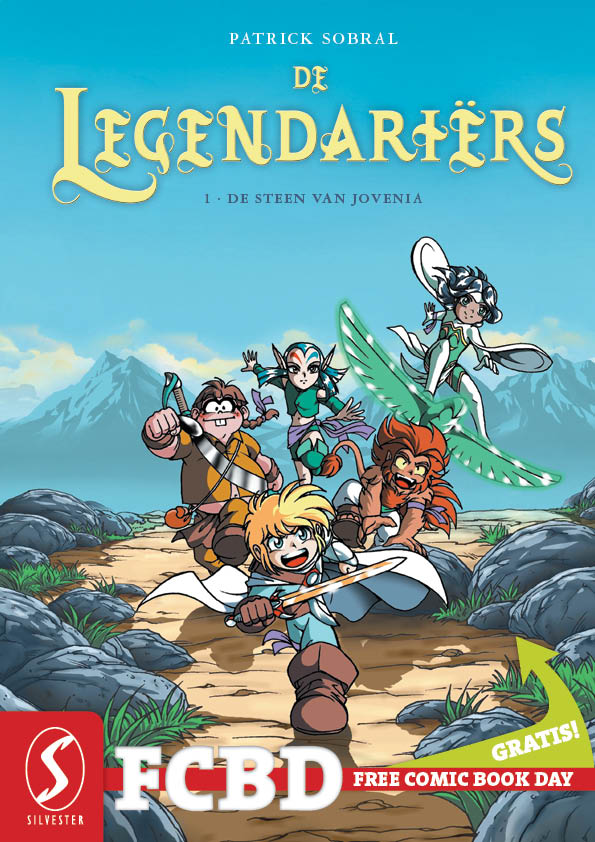
The last one I want to point is De Legendariërs by Patrick Sobral, due to its overt stylistic influence from anime and manga. Unlike the other three, this one has much more light-hearted feel. Its super-deformed characters and fantasy setting give me the impression of a pre-Playstation Japanese RPG. In fact, the characters look more like a late-80s/90s anime characters instead of current ones anyway, which really harkens back to that era. Anyway, the villain is named “Darkhell.”

So that’s a (very) cursory view of Free Comic Book Day 2013 in the Netherlands. Take my opinions with a grain of salt here, as I can’t give you a true impression of any of them.

And I must ask, for those of you who can read French or Dutch and picked some of these up, which ones impressed you the most?

Girls und Panzer is the Best Show of Its Kind

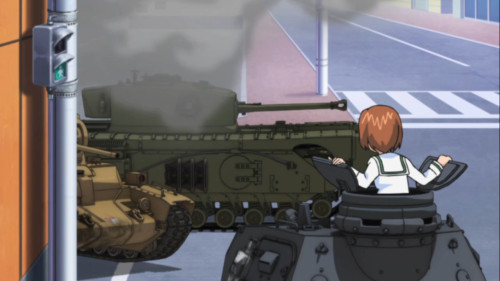
Girls und Panzer is one of the latest in a long line of anime and manga which mix a unique activity or concept with a cast of cute girls, in this case World War II-era tanks. I’ve enjoyed many such shows over the years, but I think Girls und Panzer is actually the strongest anime I’ve seen in this genre because it possesses qualities which give it the capacity to reach an audience beyond the fanbase one would normally expect. More than the spectacle and the juxtaposition of girls and tanks, Girls und Panzer delivers a good story.

In the world of Girls und Panzer, the act of piloting tanks is considered a traditional feminine martial art and widely revered sport, much like archery. Referred to as senshado, or “way of the tank,” in a fashion similar to how bushido is “way of the samurai” and judo “the gentle way,” and tankery in the official subtitles (invoking the similarity in reputation to archery), the main character Nishizumi Miho comes from a prestigious family and school of senshado. Because of an event in her past, Miho has deliberately transferred to a school without any tankery in order to escape it, but has the unfortunate timing of coming in right when the school decides to bring it back. As the only person in the entire school with experience in senshado, Miho gets roped into participating so that they can compete in a national tournament, and along the way rediscovers her passion for the art.

It’s a strange premise to be sure, though not that different from girls playing mahjong in a world where the game is enormously popular (Saki), or one where girls use magic to become half-human/half-airplane (Strike Witches). Also, while Girls und Panzer may not be as firm in establishing extremely distinct personalities and quirks for its characters as those other shows, it also goes beyond simply being a large cast of cute girls by doing three things especially well. First, it establishes a protagonist with a solid sense of purpose and desire in Miho, who becomes the moral, narrative, and strategic anchor for all of the other characters (of which there are many; it’s a cast of dozens). Second, it has well thought-out narrative arcs for its characters which give the story a clear sense of direction. Third, it knows how to create tension and anticipation to keep interest in both the characters and the premise of the show itself.

Compare Girls und Panzer to Saki, for instance. In both stories, the main heroines have the problem that, in spite of their talents in the specialty of their series, neither of them find it particularly enjoyable, and part of both Girls und Panzer and Saki is that they discover what it means to have fun doing either tankery or mahjong. What does it mean to have fun, though? What do they achieve by learning this? For Miyanaga Saki, it’s never really clear. She plays a lot of people who are as strong as she is, and learns that mahjong is fun, but the idea just seems to end there. For Nishizumi Miho, on the other hand, Girls und Panzer shows how moving to a different school, breaking from her family and their established methods of senshado, and discovering the fun of tanks all have a significant impact on her because Miho’s greatest strength as a commander—adaptability—is given room to grow in a way it wouldn’t be able to otherwise. In this way, Miho’s character becomes somewhat of a poster child for the philosophy of  Bruce Lee, particularly the following quote:

“In memory of a once fluid man, crammed and distorted by the classical mess.” 

It was a criticism of traditional martial arts schools for being too caught up in perpetuating restrictive rules which could prevent people from reaching their true potentials. Girls und Panzer as Jeet Kune Do analogy.

Even before all that, though, the very first episode works to establish the idea that Miho is something special, building up that sense of anticipation which pays off when you see her in action. In this regard, Girls und Panzer reminds me a lot of Initial D and how it would hint at its main character Takumi’s skill at racing, so that when he finally gets behind the wheel you’re already invested in him. The show also follows the Initial D school of stopping an episode right in the middle of action and never giving a good point to walk away, which makes it hard to watch just one episode at a time, unless you were delayed for the week, or even months as the case may be, as Girls und Panzer‘s final episodes aired after a long break.

As for the tanks themselves, I am not a tank fanatic or particularly knowledgeable about them, so I can’t comment in that regard, but what I can say is that the series does an excellent job of portraying the tank battles in terms of thrill and excitement. Each of the tanks are shown to have particular strengths and limitations, and seeing the utilization of these qualities in terms of strategy and tactics, especially positioning, invokes the same feel one can get from the battles in Banner of the Stars or even Legend of the Galactic Heroes, where the unorthodox strategist Yang Wenli is in some ways similar to Miho. The actual animation of the tank battles is also very impressive, and is probably the best integration of 3D and 2D animation that I’ve ever seen. Very rarely does the show make its use of 3D appear awkward, which makes it easier to stay focused on what’s happening and not how strange everything looks.

Another thing I want to say is that with a show like Girls und Panzer which glorifies a well-known and still relevant weapon of war, it is easy to criticize it as promoting militarism in a very direct manner. However, I think it isn’t so simple, as the transformation of tanks into a “martial art” resembles the origins of many sports, including judo, which was specifically modified from its combative origins to be a way for self-improvement and healthy competition. It’s possible to criticize all competitive sports for promoting aggressive tendencies in people, but I think  Girls und Panzer has the potential to separate the beauty of machinery from its function of war.

For some, the premise of Girls und Panzer sells itself, but for the skeptical, or those who avoid this type of show like the plague, I would dare say that this is your best bet for finding something you’ll actually want to watch. Either way, it has the potential to become the standard by which all shows of its kind will be judged.

Wacomplex: Genshiken II, Chapter 87

First thing first, Genshiken anime info dump! it’s been confirmed that the Genshiken II (or Nidaime) anime will be starting this summer, with a different studio but with a lot of old staff. I do find it kind of funny that Genshiken can’t seem to get a consistent animation studio or anime character designer, and given the sheer variation of work that the character designer Taniguchi Junichirou has worked on, it’s hard to predict how they’ll look exactly. Also, Uesaka Sumire will be singing the opening. Next month is the voice cast reveal, so let the speculation begin!

Anyway.

In Chapter 87, Hato continues to try to be one of the boys, but the fact that he is unable to draw properly for the sake of Ogiue’s ComiFes doujinshi when not in drag causes him to go back to it, at least in private. At the same time, Ogiue has decided to charge into the 21st century by buying a pen tablet monitor in order to save time and manpower, but the transition isn’t as simple as she hoped for. As ComiFes is drawing near, familiar faces appear as Angela makes her return to Japan and Keiko is looking to take another stab at the event.

I literally laughed out loud when I saw the pen tablet monitor. It was clearly introduced by Kio Shimoku as a metaphor for not only Hato’s current situation, but also the Genshiken club itself and even the manga as a whole. In this regard, I think it does an excellent job of representing the dimensions of a generational divide.

By showing Ogiue struggling with her tablet despite purchasing it to alleviate her work schedule, Genshiken touches upon the idea that transition can be a difficult thing because of how much we must acknowledge and rework our assumptions. The strengths and limitations of the zoom function, referenced during Ogiue’s little rant, is the perfect example. On the one hand, it lets you get up close and put detail into even the smallest part of a drawing, but on the other hand it can be stifling if one is obsessed with detail.  Ogiue’s plight somewhat mirrors the difficulty by which the manga itself has transitioned into its new cast and their very different values, not only in terms of the content of the manga, but also for a good portion of the manga’s readerbase which seems to see the new Genshiken as “not Genshiken.”

However, I think it would be a mistake to say that the ideas implied by the tablet transition are narrowly limited to Genshiken as a topic, as I really think it goes beyond this one manga. What really adds to the tablet metaphor is the conversation between Hato, Yajima, and Yoshitake where they mention the simple fact that, for some artists, digital drawing is all they’ve ever known.

Drafting, cleaning, paneling, for them, everything is done on the monitor, and it highlights this idea that, rather than this newer generation of artists being untrained in the old ways, that their “environment” is simply different and they have adapted to it in kind. Instead of the tablet being a facsimile of “real” drawing by mimicking pen on paper, for them the tablet is real drawing. That difference in mindset is so central to the changes between generations, whether it be music and art, dance, technology, or any other topic, and it shows how neither the old or new generation are “bad,” but that people are the product of their experiences.

I get the sense that, as the manga continues, Ogiue will continue to use the tablet, but that it will require her to adjust her current work habits to better fit it, or to make it more of a supplementary tool. In either case, if she does incorporate it, it means that her work may never be the same again. The impossibility of returning to the “old way” is also shown in the beginning of this chapter, when we see Madarame, Hato, and Kuchiki discussing anime much in the same way the club used to, with mentions of sakuga, seasons (cour), and the economic side. While definitely similar to the old Genshiken, something’s not quite right, especially in terms of how Yoshitake and Yajima appear a bit alienated by it because it’s not the atmosphere they’ve participated in and even helped to create. It feels a bit artifical and out of step with time, which also has implications in regards to Hato, who is trying to act like a “proper” male otaku.

If we look at the notion of the “proper” otaku (and perhaps even the whole debate over fake geeks), it’s kind of funny that people prescribe a certain set of behavior as “proper” for a group that has been traditionally stereotyped as behaving improperly by virtue of being otaku. I think Hato’s vain attempt to quit crossdressing and yaoi may be a sign of how ridiculous this can be, as if the manga is saying that it’s not as simple as getting rid of the girly stuff to bring back the “true” Genshiken, and that there has been a change in environment that the manga has been trying to address.

I may have gone a little too crazy with that analysis, but I honestly think that I haven’t completely or properly explained the intricacies of the tablet metaphor, though I’ll leave it as is for now. It’s been a while since we’ve had this much Ogiue in a chapter, so I’m pleased in that regard, and I’d been wondering when Angela would show up again a she’s a significant factor in the whole Madarame-Hato story. The fact that Keiko is planning to go to ComiFes out of her own free will may actually say everything about how much the world in and around Genshiken has changed.

(A bit of Ogiue Tohoku-ben inner dialogue teaching us that Ogiue is still not used to Kanto winters.)

Ogiue Maniax on The Veef Show’s AKB0048 Podcast

A new podcast is out where the Veef and myself discuss that most radical of idol-themed science fiction anime, AKB0048.

We cover personal opinions on the show, the influence of director Kawamori Shouji and writer Okada Mari, favorite characters, trends in current and old anime, and I make a remark about AKB0048‘s connection to neo-Marxist theory.

AKB0048 is available on Crunchyroll for free.

Tamako Market, the Never-Ending 12-Episode Anime

Over the course of Tamako Market‘s run I noticed that it had a mixed reception, especially among Kyoto Animation fans. I may be mistaken as to how many people really disliked it, but I’ve seen enough to want to say something about it. As for myself, I had considered it an interesting and welcome step forward for the popular studio, and wondered what could be the source of this difference in opinion. After some conversations with friends, I think I’ve figured it out.

To put it simply, for the most part the girls of Tamako Market do not have, in their presentations, visual designs, or their personalities, the sort of near-tangible qualities that have made people in the past fall in love with Kyoani characters. The girls are comparatively less “moe,” and they certainly aren’t tragic, which leaves the show with a different sort of appeal that may seem alien to fans of Kyoto Animation’s existing body of work. The main character Tamako herself is simply a smart and capable but naive girl who loves mochi and who, to a small degree, reminds me of Madoka from Rinne no Lagrange. Dera the talking bird is as far from “cutesy girl” as one can possibly get, and seems to have been particularly unpopular. The main exception seems to be the carpentry girl Kanna (pictured above, left) whose eccentric personality, to be fair, does kind of steal the show.

(I’m fond of Shiori, the girl on the right, myself).

The best way I can describe Tamako Market‘s appeal is that it’s not so much about showing off an ensemble cast consisting of various characters with easily identifiable quirks like how K-On! is, but about showing the residents of the Usagiyama shopping district as a small community of people. While many of the side characters are never really developed, they don’t really need to be, as they add to the feeling of an oxymoronic slow-paced hustle. Seeing the small developments that occur in the residents’ lives feels not so much like “slice of life,” but like a low key-yet-silly comedy.

Someone asked me what anime out there was similar to Tamako Market. After some thought, I realized the answer: Sazae-san, a popular comedy anime about a Japanese housewife and her family, and which 1969 has continued to run on Japanese TV making it the longest-running anime ever. That’s probably the furthest answer from Haruhi possible, so I think that might say it all about how Tamako Market is different, and why I think it’s the sort of show that could’ve gone on forever.

Chop Chop Chop, Judo Flip: Genshiken II, Chapter 86

Genshiken II, Chapter 86 looks to possibly be a turning point. We’ve had quite a few of those already though. Also, next month there might be more news about the upcoming anime! It’ll be a long 30 days or so.

Sue visits Hato’s place, using Janglish to ask if he likes Madarame. Hato denies, but is clearly hiding something. After a tussle pitting Hato’s judo training against Sue’s freestyle which ends in a win by submission for the American, Sue discovers Hato’s secret Mada x Hato (in drag) drawings. Hato, who is increasingly confused about his feelings for Madarame (he feels that at this rate he might actually start liking Madarame), decides to just stop crossdressing and go back to being “a normal otaku.” This clearly makes Yajima uncomfortable despite her previous objections to Hato’s crossdressing.

With this chapter, I think I finally understand one of the big overarcing themes of Genshiken II. Yes, there’s the generation gap and the otaku/fujoshi distinction, but even more fundamental to the manga is a concept I’d describe as “the complexities of personal perceptions.”

The foremost example is Hato. He is getting to the point where he likely feels something for Madarame. I want to point out, however, the fact that Hato had no problems showing his “Hato x Mada” art to Sue, declaring that it was just the realm of fiction, but for some reason he also felt it necessary to keep his “Mada x Hato” hidden. I think the distinction between the two pairings is extremely important because it indicates a denial of clear-cut narratives about sexuality in describing otaku.

“What’s fiction is fiction, and what’s real is real” is a clear and concise argument. So is “what you’re attracted to in fiction can influence your real life preferences (and vice versa).” The former argument is used by Hato, while the latter was suggested by Kaminaga. With Hato and his feeling towards Madarame, however, it might actually be the case that his yaoi delusions are separate from his real feelings, but he began developing feelings for Madarame anyway due to their growing friendship, and that this manifests as Hato x Mada vs. Mada x Hato. I wonder if this is the case just because Mada x Hato for some reason apparently has to involve Hato crossdressing, as if to say the idea does not “make sense” to him otherwise.

In anime and manga about (or including) fujoshi, often there is significant time spent explaining how important the orders of pairings are important. “It’s like saying ‘curry on rice.’ No one says ‘rice on curry!’ says a character from the 4-koma series Doroko. This is generally played for laughs while trying to introduce to the reader the “mysterious” mind of the fujoshi, to allow the reader to say, “Oh fujoshi, you’re so lovably wacky.” I think that with Genshiken, Kio is trying to discuss that mindset a little more seriously.

I predict Ogiue is going to start playing a bigger role in this, just because Hato looks like he’s trying to run away from his current situation at all costs. Ogiue is more than familiar with this situation, is aware of how much trying to deny oneself can generate a festering wound of self-loathing, and just how complicated the real/fiction distinction can get. I think, or perhaps I simply hope, that Ogiue will manage to be Hato’s mentor, like how Ohno was there for her. Also, Hato says he’s “going back” to being a normal otaku, but was he ever a normal otaku? He discovered yaoi in junior high, so it’s been with him for a long time, which makes me think that Hato is trying to simply act like how a “normal otaku” is supposed to without truly direct experience, somewhat like how Ogiue sometimes tried to approximate a “non-otaku.”

If the Hato example is a little too crazy, I think Yajima in this chapter also provides an interesting case of personal perception. Clearly the reason why Yajima blushes at the end is because she still associates male Hato with the time she accidentally saw him naked, in addition to just the fact that he’s a guy. She doesn’t react this way so much to Hato in her female guise, which means that the wig and dress is enough to “trick” Yajima psychologically so that the first thing she thinks about is Hato’s clean-shaven personal area. What Yajima thinks of Hato is of course its own puzzle having at its origin her own self-image and her lack of experience interacting with men.

I don’t know if Sue counts towards this as well, but I do find it interesting that Sue’s embarrassment over kissing Madarame has nothing to do with him and everything to do with the fact that Kasukabe saw her doing it. On some level, I feel like I can really understand that distinction. Somewhat like that famous scene in His and Her Circumstances when Miyazawa accidentally runs into Arima while out of her “perfect student” guise,” there are people you feel like you can be a fool around and people you don’t. I also continue to think that it’s kind of brave of Kio to give Sue a larger role, as semi-fluent foreigner is not the easiest thing to pull off without reverting to very basic stereotypes. Sue is many things, but “basic” isn’t one of them.

By the way, there’s something I find really impressive about Sue and Hato’s fight scene, particularly the panel where Hato drags her and sweeps the leg. It captures that one moment so incredibly well, while allowing it to transition into the next set of panels. It actually makes me want to see Kio draw an action series.

To end, I want to ask a simple question: Sue x Hato, what are your thoughts? If this were a more popular series, I’m sure that neck-licking thing would have people talking.

How Robotics;Notes Explores the Meanings of Giant Robots

(Warning: This post contains spoilers.)

There are many interesting aspects about the anime Robotics;Notes, but one thing that’s particularly noteworthy is that it is a show about giant robots. That might not sound so impressive on its own, but it’s actually quite rare for a show to be “about” giant robots. Certainly, there are anime which include giant robots, anime which place giant robots in the spotlight, and giant robot anime which are driven by strong themes, all of which can be strong in their own rights. Where Robotics;Notes differs, however, is that it concerns the very thematic concept of giant robots, particularly what they mean to the people who watch and follow them.

Senomiya Akiho, Robotics Club President

In episode 1, we’re introduced to the Central Tanegashima High School Robotics Club and its president, Senomiya Akiho. An energetic girl, Akiho is an avid fan of giant robot anime, particularly the highly influential and hot-blooded series Gunvarrel. Akiho’s primary goal as Robotics Club president is to complete a 1:1 scale functioning robot replica of Gunvarrel called the Guntsuku-1, a task she inherited from her sister Misaki. Akiho, we are shown, has nowhere near the genius of her sister who designed the blueprints for Guntsuku-1 in the first place, and the enormous task before her sets up a couple of important questions. First, is Robotics;Notes the sort of anime that would, after deliberately pointing out how unfeasible it would be to replicate the design of an in-story fictional robot while also providing examples of “realistic” robots in society, allow Guntsuku-1 to be completed? Second, whether it ends up being finished or not, how prominently will Guntsuku-1 figure into the narrative? More specifically, will it actually somehow fulfill the role of a giant robot even with its various setbacks? These two mysteries work together to create a slow-burning sense of anticipation in Robotics;Notes which center upon the idea of “giant robots,” or more specifically the “giant robots of anime.”


Legendary anime
Gunvarrel

The “high school kids in a club” setting is not new to anime, but because of its increasing prominence in recent years Robotics;Notes initially gives off the impression that it might stay primarily in the microcosm of the clubroom. Even when factoring in the fact that Robotics;Notes is from the same company which created Chaos;Head and Steins;Gate, two series with grander themes than K-On!, there still exists in the early episodes the possibility that the anime would focus on the everyday of the Robotics Club amidst this greater story, or at most show how small their world is by comparison. While the story of the Robotics Club does eventually begin to tie itself into a greater conspiracy and makes it clear that the show is not so limited in scope, even from the beginning Robotics;Notes creates a strong sense of connection between many of the characters and varying conceptions of robots. This in turn helps to establish that deeper thematic level of the meanings of giant robots.

Robotics Club members (left to right): Senomiya Akiho, Daitoku Junna, Koujiro Frau, Yashio Kaito, Hidaka Subaru

Going by just the club members, the male lead and childhood friend of Akiho, Yashio Kaito, is a slacker who primarily experiences giant robots through a fictional Virtual On-esque game called Kill-Ballad, which is itself inspired by Gunvarrel. The hikikomori fujoshi Koujiro Frau, turns out to be not only the creator of Kill-Ballad, but also the daughter of the producer of the original Gunvarrel anime, making Gunvarrel her tie to her missing mother. Hidaka Subaru, who initially refuses to join, is a champion of small-scale robot battle competitions who is forced to compete in secrecy because of his father’s disapproval. Daitoku Junna’s grandfather specializes in robotics, but an accident at a young age left her with a fear of robots. In each of these examples, Robotics;Notes in some way connects the theme of giant robots to other people.

The completed Guntsuku-1

There are two important developments about halfway through the series. First, the Robotics Club manages to complete Guntsuku-1, but it turns out to have accumulated over time so many compromises and shortcuts in its construction that the final product is a cumbersome and ugly-looking machine. Physically speaking, it is no more a robot than a golf cart with a head grafted on. Second, it is revealed that the final episode of Gunvarrel never aired because it was actually brainwashing propaganda (the broadcast of which was was stopped by Frau’s mother), which creates an extremely negative public opinion of Akiho’s beloved anime. Here, Akiho’s reactions to both events emphasizes the role of giant robots in her life, which in turn foregrounds how giant robots as a fictional concept can be interpreted.


The
Gunvarrel conspiracy

In regards to Guntsuku-1 and its lackluster debut, Akiho specifically mentions that they are not abandoning Guntsuku-1. Rather, they are setting it aside so that they can come back to it later, which is indicative of Akiho’s belief in the spirit of the giant robot concept. Even as the Robotics Club moves onto working on a more realistic robot (the Guntsuku-2) for a robotics expo, Akiho not only makes sure not to forget Guntsuku-1, but her influence encourages the other club members to create an augmented reality modification so that people using a technological interface can view Guntsuku-2 as if it actually were Gunvarrel. Similarly, even when the horrible truth of Gunvarrel becomes known and people view it with disdain, Akiho resolves to still love Gunvarrel because she believes that her positive experiences with it trump whatever diabolical authorial intent may have been at the heart of it. At this point, it becomes increasingly clear that what is important to Akiho (and Robotic;Notes) is not the physical component of giant robots as massive titans of power but as symbols and icons of inspiration, existing in the hearts of those who love what it could be, instead of what it was supposed to be.


Akiho’s persistent spirit along with Guntsuku-2

Akiho embodies this “giant robot spirit.” Late in the series, when the conspiracy which underpins the series is in full swing, Akiho falls into a panicked depression, which comes as a shock to Kaito. Throughout the series, Kaito acts like a reluctant accomplice to Akiho’s madness, someone who follows only because he must. In this situation, however, Kai reveals that he was only able to act the role of the slacker because Akiho was there as his beacon of light, with enough motivation to carry the both of them. Kaito always saw in Akiho what Akiho sees in giant robots: something (or someone) who is not the most logical or rational but is an enduring source of motivation.

Guntsuku-1, revived

By the end of the series, the Robotics Club must stop the leader of the conspiracy and prevent the death of millions. In order to do so, they (along with their friends and family) repurpose the Guntsuku-1 using parts of Guntsuku-2, giving it functional modifications that they were simply unable to the first time. Appearance-wise, it’s still more or less the cumbersome hunk of metal it was before, but at this point in the story it’s clear that what makes Guntsuku-1 into a valiant giant robot just like Gunvarrel is not how closely it matches the original design but rather the intent of the people who support it. This includes not just the current Robotics Club and the people they know, but the people who worked on it throughout the years such as Akiho’s sister. As if to reinforce this point, when the antagonists view Guntsuku-1 through the technological interface of their own robot, all they can see is the actual Gunvarrel (via the same augmented reality image used for Guntsuku-2), complete with signature attacks.

The virtual image of Guntsuku-1

In describing Robotics;Notes as an anime about giant robots unlike so many others, this distinction mainly has to do with the fact that Robotics;Notes incorporates into its story how giant robots as cultural artifacts are received and interpreted by the people who engage with them. It is not the only anime to address this on some level, with Martian Successor Nadesico and the 2004 Tetsujin 28 being a couple of examples, but Robotics;Notes does so while putting into question throughout its narrative the very existence of its signature robot. It is not until the conceptual processes for conceiving the effects of “giant robots” are in place that Guntsuku-1 truly takes center stage, which in turn creates a unique and interesting position for Robotics;Notes. If one were to categorize Robotics;Notes, would it be considered a “giant robot anime?” The fact that this can be argued both ways is, rather than being a weakness of Robotics;Notes, one of its greatest strengths.

Dyuhuhu

Why the Little Sister is an “Osaka Mama” is a Little Sister

Boku no Imouto wa “Osaka Okan”, or, My Little Sister is an “Osaka Mama” is an odd anime. Ostensibly about a younger sister who grew up in Osaka having to move back to Tokyo, this (sparsely animated) show is actually a way of showing various cultural differences between the two cities. It’s a funny little series, with the ever-changing ending theme based on the events of each episode being a highlight, but what I find especially funny about this anime is its origins.

Boku no Imouto wa Osaka Okan actually comes from a series of books designed to educate people about Osaka customs. The first book, Osaka Rules (as in “to live by,” not as in “Hulkamania”), is itself part of the Rules series for various parts of Japan. It was followed by Osaka Okan, which was designed to help people marrying into Osakan families to understand and deal with their in-laws better. What this means, then, is that the “little sister” component was added specifically for the anime, as if to try and capitalize on current otaku trends. I certainly can’t think of any other reason.

There’s something unbelievably shameless and perhaps even tongue-in-cheek about this that I can’t help but clap in admiration rather than hang my head in shame. Sure, little sister-focused stories are a dime a dozen in light novels, but what if the scope was widened in the way that Boku no Imouto wa “Osaka Okan” has shown us?

My Little Sister is a Forbes 100 CEO

My Little Sister is Doing a PhD on Molecular Biology

I Discovered My Little Sister is an Excellent Game Show Host

I Can’t Believe My Little Sister is the Catalyst for a Proletariat Uprising

The possibilities, as they say, are endless. I’m also aware that this sort of parody joke exists already, but I think the key difference is that the little sister component should appear deliberately grafted on, rather than being the axis upon which an anime revolves.


By the way, this show is from the gdgd Fairies people so you know it’s good.