Gattai Girls 13: “Mobile Suit Gundam: The Witch from Mercury” and Suletta Mercury

Introduction: “Gattai Girls” is a series of posts dedicated to looking at giant robot anime featuring prominent female characters due to their relative rarity within that genre.

Here, “prominent” is primarily defined by two traits. First, the female character has to be either a main character (as opposed to a sidekick or support character), or she has to be in a role which distinguishes her. Second, the female character has to actually pilot a giant robot, preferrably the main giant robot of the series she’s in.

For example, Aim for the Top! would qualify because of Noriko (main character, pilots the most important mecha of her show), while Vision of Escaflowne would not, because Hitomi does not engage in any combat despite being a main character, nor would Full Metal Panic! because the most prominent robot pilot, Melissa Mao, is not prominent enough.

— 
I truly believe that Mobile Suit Gundam: The Witch from Mercury will go down as a pivotal work in anime history. There are the surface reasons, of course: It has the honor of being the first mainline Gundam anime to feature a female protagonist with a same-sex primary romantic interest. It’s also the first main Gundam to be only 24 episodes when even the next shortest series still got 39. But the core of why I think Witch from Mercury is a game changer is that it ncludes many elements unfamiliar or in defiance of Gundam that manage to tell a compelling and thought-provoking story that carries both idealism and realism in its narrative.

Witch from Mercury takes place in a world where Gundams are forbidden, even though they were originally based on research to help people with disabilities. Years after the banning of Gundams and the seeming purge of all involved, a shy and awkward girl named Suletta Mercury arrives at Asticassia Academy, a mobile suit school for the elite where student matters are officially resolved through giant-robot duels. Suletta wins a match in her Definitely-Not-a-Gundam, Aerial, ends up engaged to the daughter of the school’s owner, Miorine Rembran, and in doing so inadvertently steps into the complex corporate, social, and political forces at play.

The anime starts off reminiscent of both Revolutionary Girl Utena and G Gundam, but ends its first half throwing the relatively isolated nature of Asticassia into stark relief with the world at large, whether it’s the crushing disparity between Earthians and Spacians, the specter of war and how the parents of all the kids have a hand in perpetuating military conflict, or the realization that Suletta’s naivete isn’t merely an innocent quirk but points to an unusual and possibly even disturbing past.

The second half seems to calm down, only to ramp up even harder and throw the established order into further disarray. Things that other series might have left linger for 10 episodes are brought to bear in a fraction of the time. The anime can actually feel pretty rushed as a result, but in certain ways, I think this actually works out in its favor. Gundam series often meander and plod as they get into the latter 25-ish episodes as they try to incorporate extraneous characters and merch-friendly elements, whereas this one cuts out a lot of the fat, albeit with some of the flesh as well. The outcome of all this is a Gundam where I would get genuinely surprised and shocked, especially in terms of character deaths)—feelings that were often missing from my viewings of Gundam anime that have come out in the past 15 years.

The characters, especially the women, are memorable and one the best parts of Witch from Mercury. Suletta is a unique protagonist, both in comparison to her Gundam predecessors and in general due to the way she has to grapple with her own upbringing and the way she ends up establishing her own identity. She takes the viewers on a rollercoaster of a personal journey that makes her position as first heroine much more than a cynical decision for the sake of diversity. Similarly, Miorine’s aggressiveness makes for a great companion and foil, and the way she navigates her privilege and her desire to do more for humanity is wonderful. And Suletta’s mom Prospera is not only the best Char Aznable in ages, but shows the quiet fury of a woman who will do anything for her child.

As for minor characters, there are plenty of examples regardless of genders. Chuatury “Chuchu” Panlunch is refreshingly no-nonsense in a way rarely seen in anime. Guel Jeturk, a rival/potential love interest of Suletta, goes from annoying dude to endearing guy—something that actually happens more often than not with the cast. A number of characters are on the larger side but are not treated as jokes. And while Secelia Dote only has seven minutes of screen time across the entire series, her snarkiness manages to steal the show every time. I could keep going.

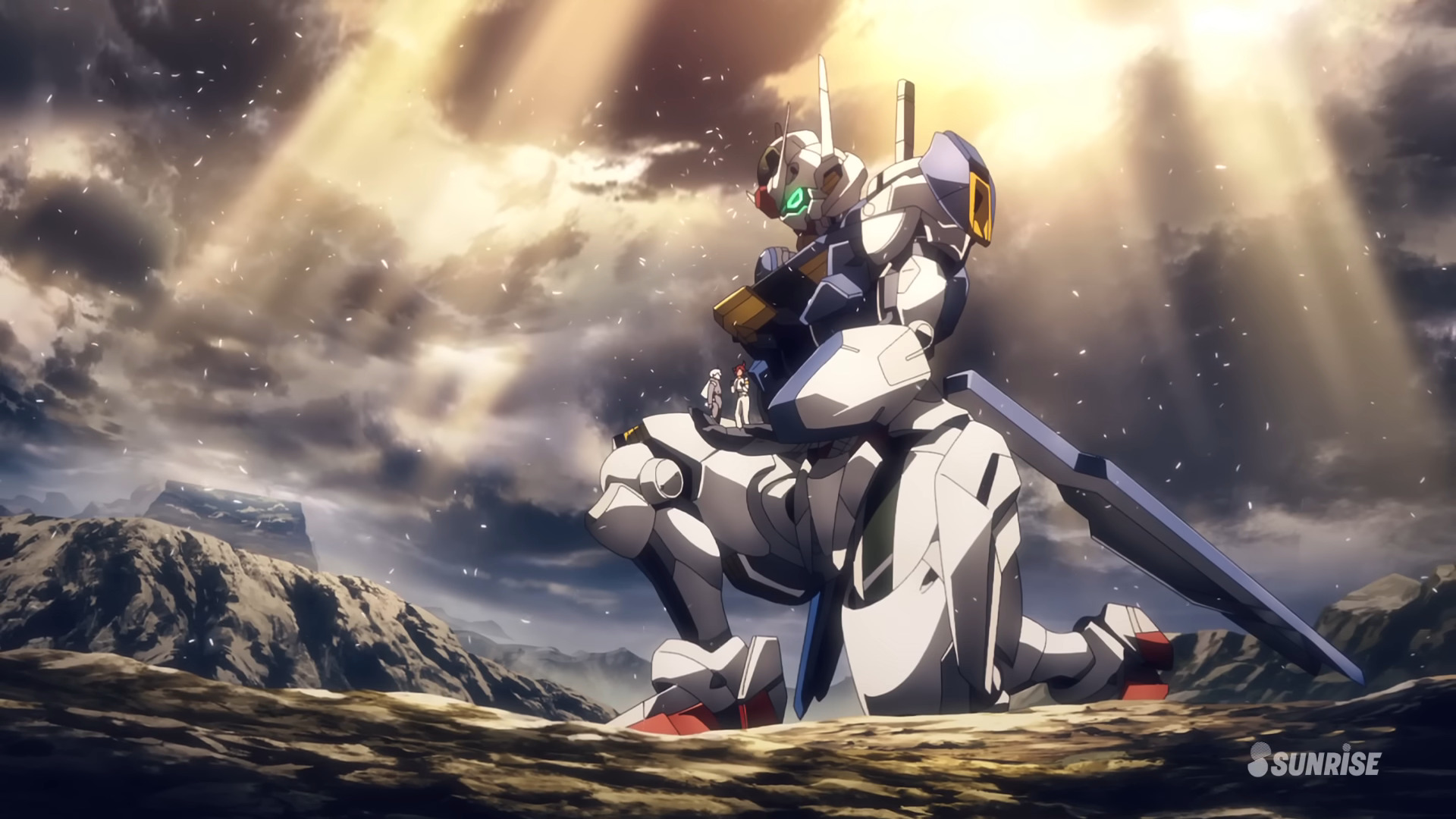
One of the more amazing things about Witch from Mercury is how well it strikes a balance between having ubiquitous mobile suits and incorporating them into the story and setting. They’re also very aesthetically pleasing, particularly the Aerial. It’s identifiably a Gundam, but its proportions and flourishes give a slight feminine feel without going straight into Nobel Gundam territory. I also enjoy the way it contrasts with other mecha, as it makes the Aerial come across more something that will disrupt the status quo. Moreover, Aerial is also a rare instance of a mobile suit basically being a character unto itself—something that has serious consequences as the series progresses.

A common criticism of Gundam as a whole is that while it generally contains anti-war messaging, the cool factor of the mobile suits can end up drowning it out. Although the designs in this particular series are indeed among the best ever, Witch from Mercury is also the first to establish that the technology did not begin as a military endeavor, and this helps throw the use of mobile suits as weapons into stark relief. It’s also part of a greater look at the inequalities and inequities suffered by those who lack the financial and familial might to make the world care—a world where even the children of those in power feel the burden of having to deal with their parents’ bullshit.

On that note, corporations play a major role in the series, and I’ve seen people get extremely confused with all the different alliances and factions. While I won’t say it’s simple to keep track of everything, one way to navigate that web is to understand that many adult decisions are the result of corporate greed, and trying to find positions to have the best profits with the least accountability. This is what makes Miorine’s ultimate decision all the more satisfying, as she throws that structure off kilter using the means available to her. Gundam series often feature politics because of how they take place on grander scales.

These two elements together help Witch from Mercury’s politics feel very contemporary and relevant to our times, instead of coming across as dated or tepid.

Witch from Mercury brings a new sense of what Gundam can be. It possesses many of the franchise’s well-worn tropes without being beholden to them. It breaks boundaries of all kinds, whether through its unique cast of characters, its central same-sex romance, or its perspectives on conflict and humanity. I truly feel that what we have is a turning point in Gundam and anime as a whole, and I’m hopeful it’ll be for the better. Suletta is the first main Gundam heroine, but she won’t be the last.
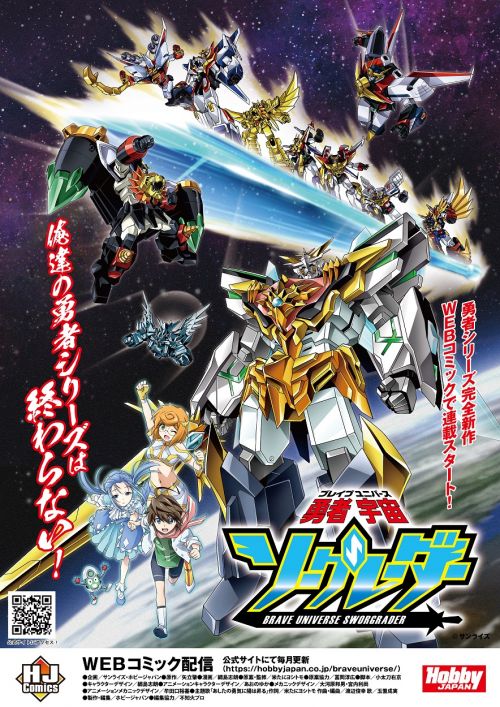
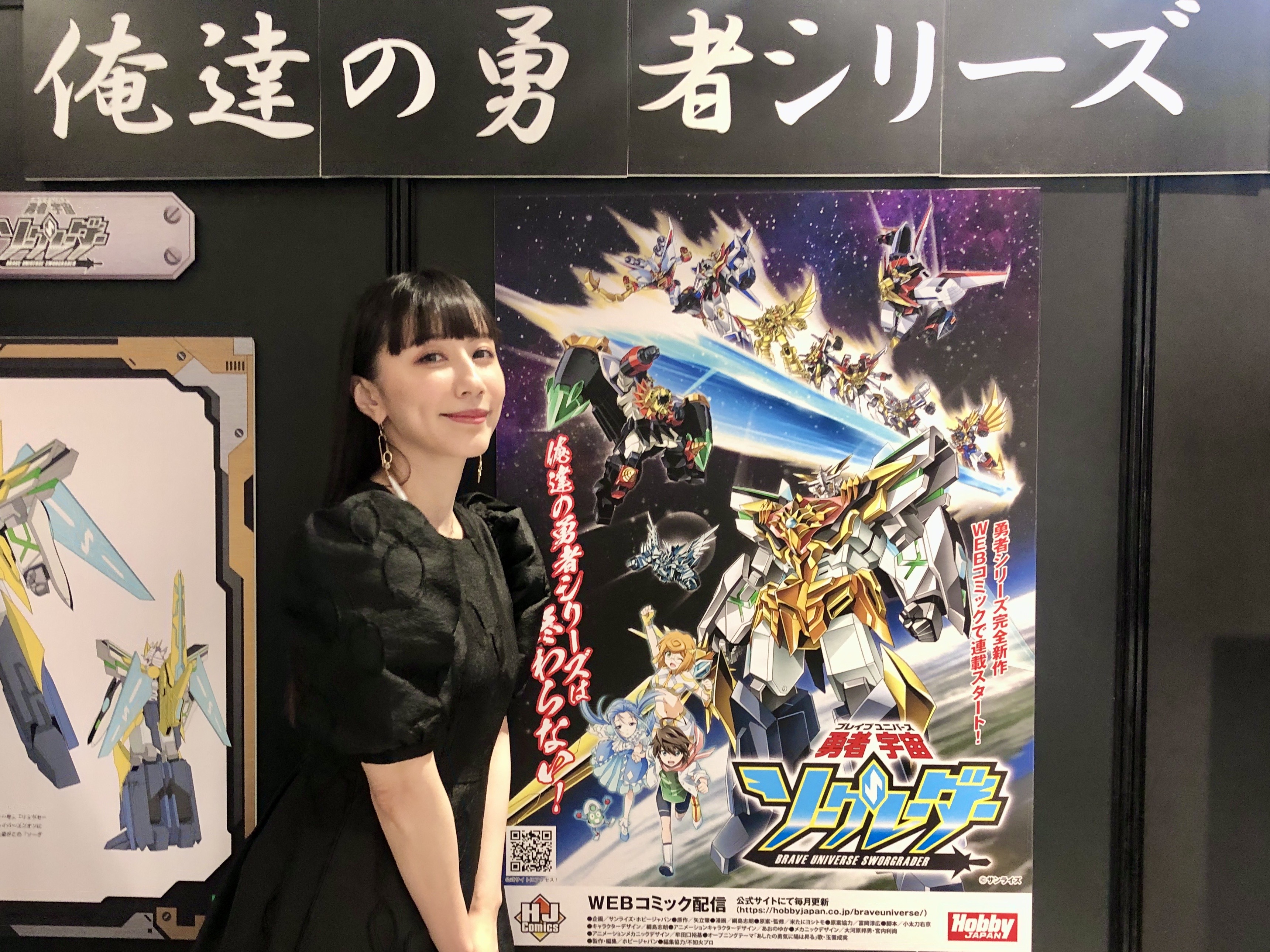
New Yuusha Robot Announced: Brave Universe Sworgrader

This past week, the Gaogaigar 25th Anniversary Exhibition in Japan featured a surprise announcement: A new entry in the Brave Series has been greenlit! Brave Universe Sworgrader is heading our way, albeit with a caveat. Unlike all its anime-based predecessors, it will debut as a web manga.

Sworgrader isn’t totally alone in regards to not coming out the gate as an anime. The sequel to Gaogaigar Final, King of Kings: Gaogaigar vs. Betterman, started off as a web novel series before being adapted into a manga. Other old anime have also received novel-only nostalgic sequels, such as Raijin-oh and even the magical girl title Ojamajo Doremi. One major difference is that Sworgrader is wholly original, though the teaser art and the whole “Brave Universe” thing seems to imply that the previous Brave Robots will somehow be involved—even the shelved sequel that only ever got a spotlight in video games, Baan Gaan.

I do feel a mix of joy and sorrow in all this: It’s great to see Brave franchise make something of a comeback, but also a shame to know how diminished it is compared to its heyday. I suspect that something like a 90s throwback robot toy franchise isn’t going to attract the massive kids market that was tuning into Exkaiser and such thirty years ago (otherwise this would at least be a mobile game). It’ll mostly be banking on the adults who had grown up with the old shows, and merch will probably be premium figures and model kits, as opposed to children’s toys. 

That all said, it’s worth pointing out that despite likely having more “Big Friend” appeal than anything else, the main characters are clearly cut from the traditional Brave cloth: They’re kid heroes through and through. So many retro-style series prefer to have characters who are at least in their late teens in order to be more relatable to that older audience, but I kind of admire the creators of Sworgrader for trying to be faithful to the Brave spirit. Gaogaigar really hit its stride once the shackles of toy advertisement were loosened, and Sworgrader is potentially going to be like that from Day One.

In addition to overseeing the entire project, Gaogaigar director Yonetani Yoshitomo is also the lyricist on the main theme for Sworgrader; something he’s had experience doing thanks to Gaogaigar and Betterman. In fact, similar to Sworgrader, Gaogaigar vs. Betterman has “opening” and “ending” themes despite there being no anime. The theme will be sung by Tamaki Nami, who got her debut in anime singing the fourth and final Gundam SEED opening, “Believe.” All this takes me back to my very first time in Japan in 2005: a year when Gaogaigar: Grand Glorious Gathering was on TV, and I could hear Tamaki’s SEED openings while in the supermarket.

And while I believe a Sworgrader anime will have some trouble coming to fruition, not all hope is lost: One of the credits on the project is Aono Yuka (Shinkalion Z, Brave Beats) as “Animation Character Designer” as distinct from “Character Designer” Tsunashima Shirou, the artist of the Jinki franchise (talk about another throwback). Similarly, there are separate credits for “Mechanical Design” (Ookawara Kunio, Miyauchi Toshinao) and “Animation Mechanical Design” (Mutaguchi Hiroki) Maybe we’ll see some cool shorts, at the very least?

Whatever form Sworgrader takes, I look forward to seeing its arrival. I will neither automatically love it or hate it, but I do hope it brings joy and excitement to all.

Kio Shimoku Twitter Highlights June 2023

This month, Kio talks a lot about Elden Ring and drawing smut.

Gundam manga artist Tokita Kouichi shares a photo of a first-era Gundam model kit. Kio reacts by saying that the instructions are from before they changed how joints work on Gunpla models.

Kio’s tortoise has been walking quickly around in their home, being hyper. Kio comments that outdoor spaces would be good for it, but the actual outdoor space available right now isn’t all that big, so this is the best he can do right now.

The reason it’s so hyper is because the warm summery weather is affected it as a cold-blooded creature.

Kio has started doing the rough manuscript for his next horny doujinshi.

Lazy tortoise.

Watching more How Do You Like Wednesday?

Kio visited actual sites from some How Do You Like Wednesday? Specials. The first tweet shows one of 12 bridges featured, and the second is Suigou Sawara Ayame Park.

Kio got to use a line from How Do You Like Wednesday? on someone who was unfamiliar with the show. 

Kio thanks a fan for sharing a Monthly Newtype video about manga in 2008, the height of one of the host’s teen years. Genshiken and Spotted Flower both get mentioned briefly. (See 23m45s in the video below.)

Kio later tweets about the video separately, commenting that he likes how writer and host Mafia Kajita says that Spotted Flower has had one hell of a development.

As Kio sees artists tweeting about whether they got into Comiket or not, he is working on his (unrelated) erotic doujinshi. He’s been drawing but also cutting content out, so even though he’s drawn 30 pages, it feels like only the beginning.

Art from the first anime’s DVD box set; this one is for Volume 2. Lots of comments about Kitagawa from fans.

Kio responds to a commenter pointing out Kitagawa approaching from the rear by saying that she would definitely not be walking lightly.

Kio also feels some sympathy for Kitagawa being called “Athlete’s Foot Senpai” by the fans.

“You! Genshiken!” is a common refrain in the Genshiken anime from Kitagawa.

Kio also comments to a person wishing for tons of Genshiken spin-offs that such a thing might’ve happened if Genshiken came out today.

A few comments about how good Ohno looks too.

Kio telling everyone who watched the Newtype special above that the newest Spotted Flower chapter is available in Rakuen magazine.

Kio says that the daughter in Spotted Flower being named Saki kind of solidifies it as being a different world from Genshiken.

Working on his new ero doujinshi seems to be an endless task. It includes things like fretting over which erotic sound effects to use, like “guchu” vs “gucho.”

The horny work has also gone from 50 pages to 100. (I sometimes think about how Ogiue’s workrate is probably a reference to Kio’s own.)

Kio also restored some pages that were previously cut, specifically about a mom getting embarrassed.

Kio’s tablet pen broke, and then when he got a new one, he realized it was the wrong kind.

While a new pen was in the mail, Kio broke out the PS5.

Kio has been playing Elden Ring and primarily sneaking around. He comments that despite appearances, he is in fact not playing the ninja game Tenchu.

Kio enjoyed Spider-Man: Across the Spider-Verse despite having not seen Into the Spider-Verse. He thanks a fan for sending a link to the prequel.

The new tablet pen arrived, but Kio is still playing Elden Ring.

Kio got picked for a live viewing of the newest How Do You Like Wednesday? DVD.

Tenchu is one of his favorite games from the PlayStation era, and the movement in Elden Ring reminds him a lot of it.

Kio, after getting his ass kicked by the boss Margit in Elden Ring, goes back to drawing ero manga. He likes how he can just skip bosses and explore elsewhere in an open world game.

Komaki from Kujibiki Unbalance on the back cover of Genshiken Volume 5.

Kio comments that his characters tend to have some plumpness to them.

Kio defeated Flying Dragon Agheel in Elden Ring with the help of a strategy site. He didn’t realize you had to fight it on horseback.

Kio got through 63 pages of his ero manga manuscript, but is setting it aside to get some of his professional work done. Apparently, the next part is the climax.

He also keeps adding hearts to the end of dialogue in his regular work out of habit due to spending all that time creating smut.

Larger than Life—Body Diversity in Gundam: The Witch from Mercury

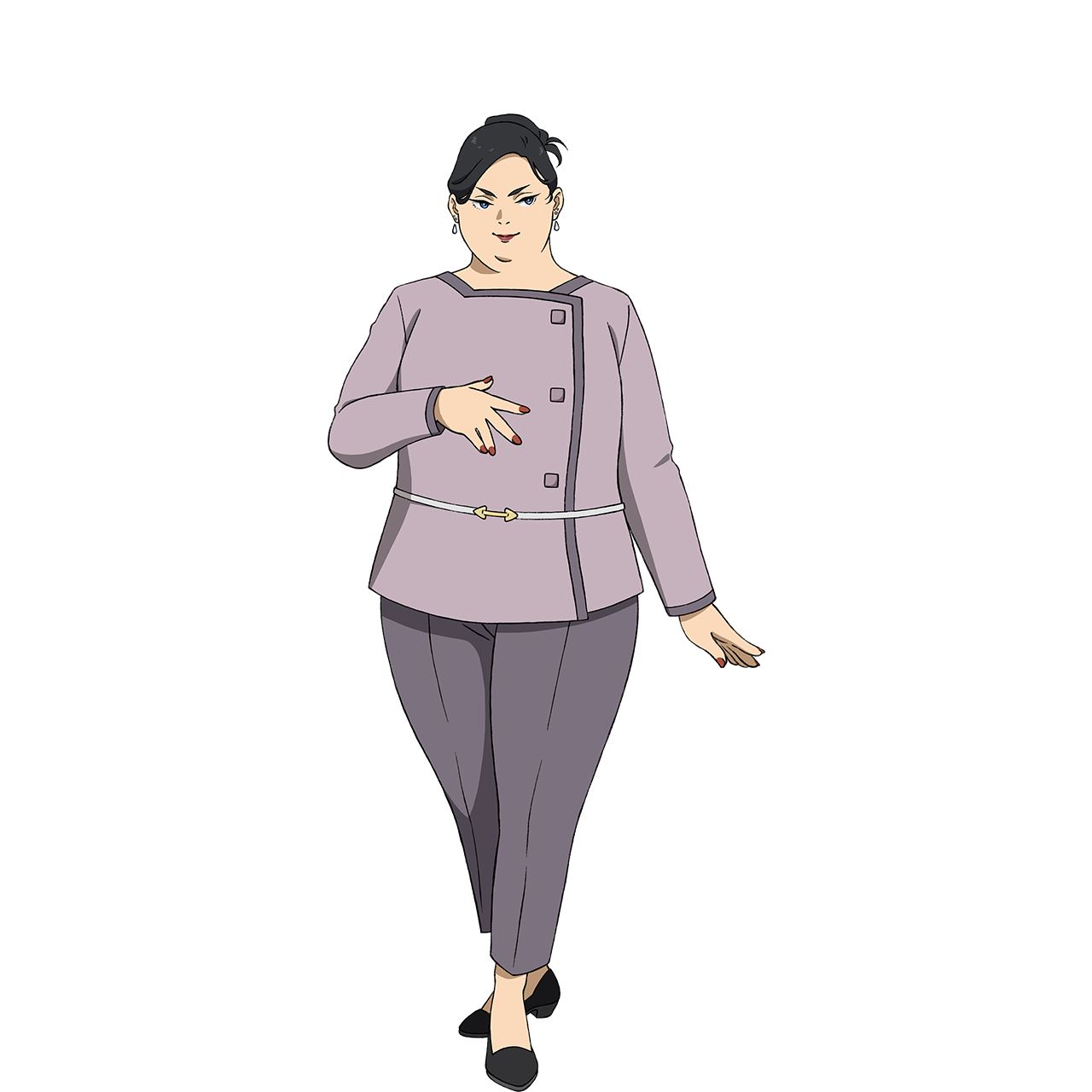
Fatphobia is still prevalent in Japanese culture. While there will be the occasional piece of media that pushes against it (sometimes in flawed, yet well-meaning ways), Japan is still predominantly a place where “thin” is in. That’s what makes the presence of fat characters in Gundam: The Witch from Mercury noteworthy; it features multiple characters who are portrayed not as comic relief or even fetishes, but as just cool and admirable in their own right.

The first is Feng Jun, a woman who on the surface is a smuggler but is in actuality an agent of the Space Assembly League, a governing organization in The Witch from Mercury. She’s cunning, savvy, and capable in a rather matter-of-fact way, and her body is never shown as a hindrance. As the show progresses, it becomes clear that she cannot be pigeonholed based on any expectations.

The second is Kennanji Avery, a veteran mobile suit pilot renowned for his skills in battle. Seen as a thinner fellow in the prologue, by the time of the main story, he’s put on some pounds. But while he doesn’t look the same as he did in his younger days, his subordinates all look up to and trust him, and he’s shown to possess a sharp mind and an athletic body even if it doesn’t appear to be the case. He fights against the notion that “fat” automatically means “physically unfit.”

The third is Lilique Kadoka Lipati, a first-year and fellow classmate of the heroine, Suletta Mercury. Defying conventional thinking about girls her size, Lilique is described in her official profile as being quite popular. One episode even has another girl start trouble with Lilique because her boyfriend tried to ask Lilique out. It is incredibly rare to have even a few characters have a thing for the “fat girl,” let alone giving her a popular reputation for making people fall left and right. 

What’s notable about the way The Witch from Mercury portrays these three is that their size is neither diminished nor put out as some kind of circus display. While there’s certainly nothing wrong with being really into larger people, what this anime does is push their attractiveness beyond the boundaries of fetish territory. They’re all charismatic in different ways, as if they’re all unique people with different personalities and histories, even if they have similar body types. It’s ultimately about respect, and I can truly sense that from how Feng, Kennanji, and Lilique make such powerful impressions.

Trigun Stampede, Cowboy Bebop, and Scrapbook Worlds

When Studio Orange announced that they were making Trigun Stampede, I was pleasantly surprised. Trigun is a title that a lot of anime and manga fans around the turn of the 21st century cut their teeth on—I myself remember seeing it thanks to my school’s anime club. However, aside from a singular film in the form of 2010’s Trigun: Badlands Rumble, it hasn’t gotten much love, and it also isn’t as enduring in the general fandom consciousness as Cowboy Bebop. To be fair to both, they’re only vaguely similar, but they did come out around the same time and were anime convention staples together for years.

But here was a new Trigun TV series, and what’s more, it was clear that Trigun Stampede was going for an updated aesthetic. Anyone who’s familiar with the manga or anime remembers the iconic look of hero Vash the Stampede in his signature red trench coat and ultra-spiky hair—and both have been significantly altered for this remake. As I watched it, one thing became clear: While a lot of elements are similar to the 1990s anime, the story had been rearranged in noticeable ways. Where the previous iteration has a 50/50 balance of slapstick comedy via larger-than-life personalities and twist-filled science-fiction drama, Stampede is a lot more focused on telling a serious story. That said, I didn’t mind the changes, and was able to take all the changes in stride and appreciate them on their own terms. 

But as I was going over how I feel about Stampede, a thought occurred to me. Why is it that I was able to easily accept a different Trigun, yet the very idea of a new anime remake of Cowboy Bebop feels wrong? I’m not even someone who reveres Cowboy Bebop as a sacred cow, though I think it’s excellent in many ways. (I know there’s the live-action Cowboy Bebop, but I consider adaptations like that their own separate topic regardless of quality, so I‘m setting that aside.)

What I think the difference comes down to is just the way each series generally approaches storytelling. Cowboy Bebop is like a finely tuned machine, intricate and delicately balanced to give a very specific experience. Removing even one or two gears can throw the entire thing off, and overhauling it entirely feels pointless. Trigun, on the other hand, comes across as more of a scrapbook. Narratives can still be formed, but the strengths of the individual elements are more important, and they can be rearranged in different ways.

This brings to mind an old favorite topic of mine: the contrast between “character” and “kyara” as written about by manga scholar Ito Go. Essentially, character is how a figure exists within their greater story, whereas kyara is how much of their identity can be maintained if divorced from their original context. I think neither Cowboy Bebop nor Trigun are severely lacking in either category, but the former has a relatively stronger  emphasis on character, while the latter focuses more on kyara. 

It’s why Trigun Stampede can be this more somber experience wholly lacking in things like a wacky black cat who makes cameos and meows a lot, yet still identifiably be Trigun. In fact, this new series can often feel like Trigun leaning in the direction of Cowboy Bebop without thoughtlessly aping it. So even though there’s a sequel to Stampede on the way that will actually incorporate more of the 1990s Trigun look, the new groundwork laid out makes me look forward to seeing both how similar and how different things get. And despite the fact that the franchise has its origins in the 1990s, I can’t help but wonder if the pacifist nature of Vash might actually resonate harder among fans today.

Memoriam-o-rama: Ogiue Maniax Status Update for April 2023

April is cherry blossoms in Japan, and their fleeting nature is associated with an aesthetic valuing of the ephemeral in Japanese culture. I normally don’t get all poetic about it, but recent events have me reminiscing and feeling the passage of time. One month after the death of Matsumoto Leiji, one of my favorite character designers, Kimura Takahiro, passed away. Ash Ketchum is being retired as the lead of the Pokemon after two decades. Not one but two VTubers are graduating: Heavenly King Mirai Akari and Pikamee Amano, one of the lights of the early COVID pandemic. And just today we learned that Sakamoto Ryuichi of Yellow Magic Orchestra passed on the 28th of March—the second member to go this year after Takahashi Yukihiro.

To my April Patreon subscribers, thank you:

General:

Ko Ransom

Diogo Prado

Alex

Dsy

Sue Hopkins fans:

Serxeid

Hato Kenjirou fans:

Elizabeth

Yajima Mirei fans:

Machi-Kurada

Blog highlights from March:

Farewell to One of Anime’s Great Character Designers: RIP Kimura Takahiro

I was devastated.

La+ Darknesss: Hololive’s Tiny Dancer Extraordinaire

My attempt to explain why I love La+’s dancing so much.

Pallet Cleanser: The End of Ash Ketchum as Pokemon Protagonist

Looking back on 20+ years of Pokemon anime, and Ash’s ride into the sunset.

Kio Shimoku

Kio tweeted a lot about Spotted Flower this past month because the latest volume came out on the 31st.

Apartment 507

My thoughts on Akiba Maid War.

Closing

Another new season of anime is upon us?! Already?! And it’s filled with a ridiculous amount of highly anticipated shows??!!

Farewell to One of Anime’s Great Character Designers: RIP Kimura Takahiro

I normally don’t write about the death of anime and manga figures that often, preferring to save it for people I feel have influenced me in major ways. But here we are again with animator and character designer Kimura Takahiro, who passed away on March 5 from amyloidosis. He was 58.

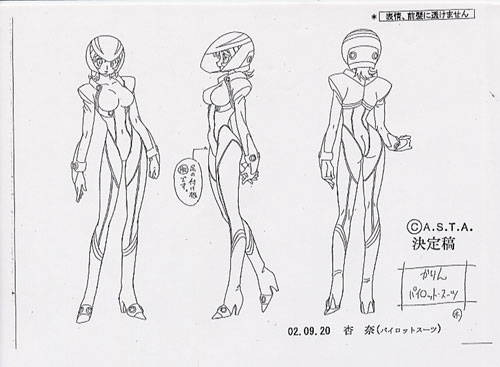
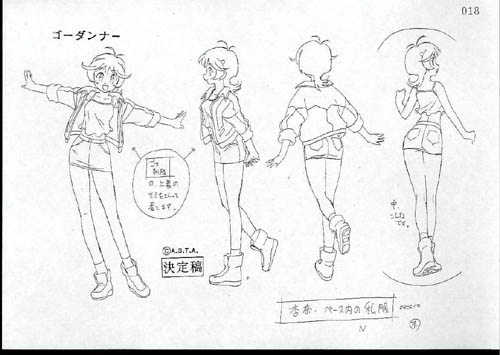
Kimura worked on series like Gaogaigar, Betterman, Godannar!!, Brigadoon: Marin & Melan, Gun x Sword, and Code Geass. As far as character designers go, he is one of my favorite ever. His style is distinct, and he would give his designs a real attractiveness and charisma. Are they drawn pretty horny? Certainly, but somehow that aesthetic feels both very grounded in the 90s but also timeless. His art touched so many of the series I love, and I still consider Aoi Anna from Godannar a Top 10 fave among female characters.

I never got to meet Kimura in person, and I think about this because of the fact that he was a guest at Sakura Con in 2006 and Anime NYC 2019. In both cases, circumstances made it impossible for me to see him, and now I wish I could have figured something out. 

I found out the news of Kimura’s death thanks to a tweet from his wife, the artist RICCA—I guess this is how I learned the guy was married. Also, Kimura apparently loved to search his own name, and RICCA mentions that he’s probably watching from heaven and loving the attention.

And here’s a message from the director of Gaogaigar, Yonetani Yoshitomo, recalling the cosplay wedding party Kimura had back in the day. Apparently, Yonetani and Kimura not only sat next to each other at work, but also lived right next door from each other.

Thank you, Kimura Takahiro. You were one of my heroes.

Rediscovering the Sea of Stars: Ogiue Maniax Status Update for March 2023

The end of last month hit with some tough news as the world learned that Matsumoto Leiji had passed away at the age of 85. I’m still thinking about what an end of an era that is, and I’ve been spending time with his works. In addition to finally watching more Space Battleship Yamato 2202, I decided to revisit my favorite anime of all time, 1979’s Galaxy Express 999. It’s as gorgeous as the day I first saw it.

Thanks to my March Patreon subscribers:

General:

Ko Ransom

Diogo Prado

Alex

Dsy

Naledi Ramphele

Sue Hopkins fans:

Serxeid

Hato Kenjirou fans:

Elizabeth

Yajima Mirei fans:

Machi-Kurada

Blog highlights from February:

I Almost Forgot the Power of Tsundere, or “Ogiue and Me”

Thinking about tsundere in 2023, and the long-term appeal of Ogiue.

Don’t Watch on an Empty Stomach: Delicious Party Precure

Great and inspiring show, but it’ll make you hungry as heck.

New Paths: Pokemon Violet

The most fun Pokemon game in a long time.

Kio Shimoku

Kio posted a ton of awesome Genshiken art this month.

Apartment 507

Hype for the Rokudo no Onna-tachi anime!

Closing

As stated last time, it’s the dawn of the final month for Love Live! School Idol Festival. The queen is dead; long live the queen.

Precure Can Drink in Japan: Ogiue Maniax Status Update for February 2023

February has arrived, and that means new Precure, of course. It’s this odd exception in that February debuts have been typical of the franchise, so I have it on my mind—especially because it’s the 20th anniversary [I’ve been informed that Precure is actually only 19, so oops.]. I still remember seeing the original Futari wa Pretty Cure being mentioned in an English-language anime magazine, and noticing the large combat boots and floppy socks they wore. It’s been a part of my fandom for two decades now, and while I don’t have plans to write a retrospective, I wonder if I should. At the very least, expect a review of Delicious Party Precure.

Moving on from a two-decade-old magical girl juggernaut, I’d like to thank my Patreon subscribers!

General:

Ko Ransom

Diogo Prado

Alex

Naledi Ramphele

Sue Hopkins fans:

Serxeid

Hato Kenjirou fans:

Elizabeth

Yajima Mirei fans:

Machi-Kurada

Blog highlights from January:

“Son Goku” vs. “Sun Wukong”: The Challenge of Translating Chinese Names in Japanese Media into English

If you’ve ever wondered why a Chinese character’s name in an anime sounds so unlike what the subtitles say, this might be hwy.

Mobile Suit Gundam: The Witch from Mercury Season 1—Bold New Steps

My review of Season 1.

The Elegant Design of Suntory’s Virtual Youtuber

Many VTubers have extremely busy designs, but one notable exception comes from a surprising source: a Japanese beverage company.

Kio Shimoku

Kio actually retweeted one of my posts this month!!!

Closing

I learned along with everyone else that Love Live! School Idol Festival is shutting down to make way for the sequel game. Given this information, it’s all too perfect that I finally managed to achieve my goal. Will I play the new game? I really don’t know—it depends on how much time I have and what the gameplay looks like.

A Dream Realized on Hanayo’s Birthday, or “Oops, All Hanayo”

It was almost 10 years ago when I discovered Love Live! and by extension the School Idol Festival mobile game. Koizumi Hanayo quickly became my favorite character, and so I set out with a simple goal: Make dedicated all-Hanayo teams while also avoiding whaling. It was both a way to show my fandom and to set a fairly concrete goal that I could dedicate my gacha pulls to. 

In 2015, I achieved the first step in a long road: a Hanayo Team consisting of all unique versions. Now, in 2023, I have crossed what I consider to be my final finish line: Three all-Hanayo teams with every member an idolized and legit Ultra-Rare (as opposed to free-giveaway URs that have less power as a result).

I have, in my own way, “beaten” Love Live! School Idol Festival, and can finally lay this game to rest—at least until the recently announced Love Live! School Idol Festival 2 shows up. Will I even play the sequel? And if I do, will I maybe dedicate myself to a different character, like Love Live! Superstar!!’s Wakana Shiki? Whatever the case, it’s the end of an era.

Happy Birthday, Hanayo. It’s been fun to cheer for such an intensely passionate character of contrasts, and it’ll continue to be amazing.