Nico Nico Douga, Natsuiro Matsuri, and Nostalgia for Asynchronous Chat

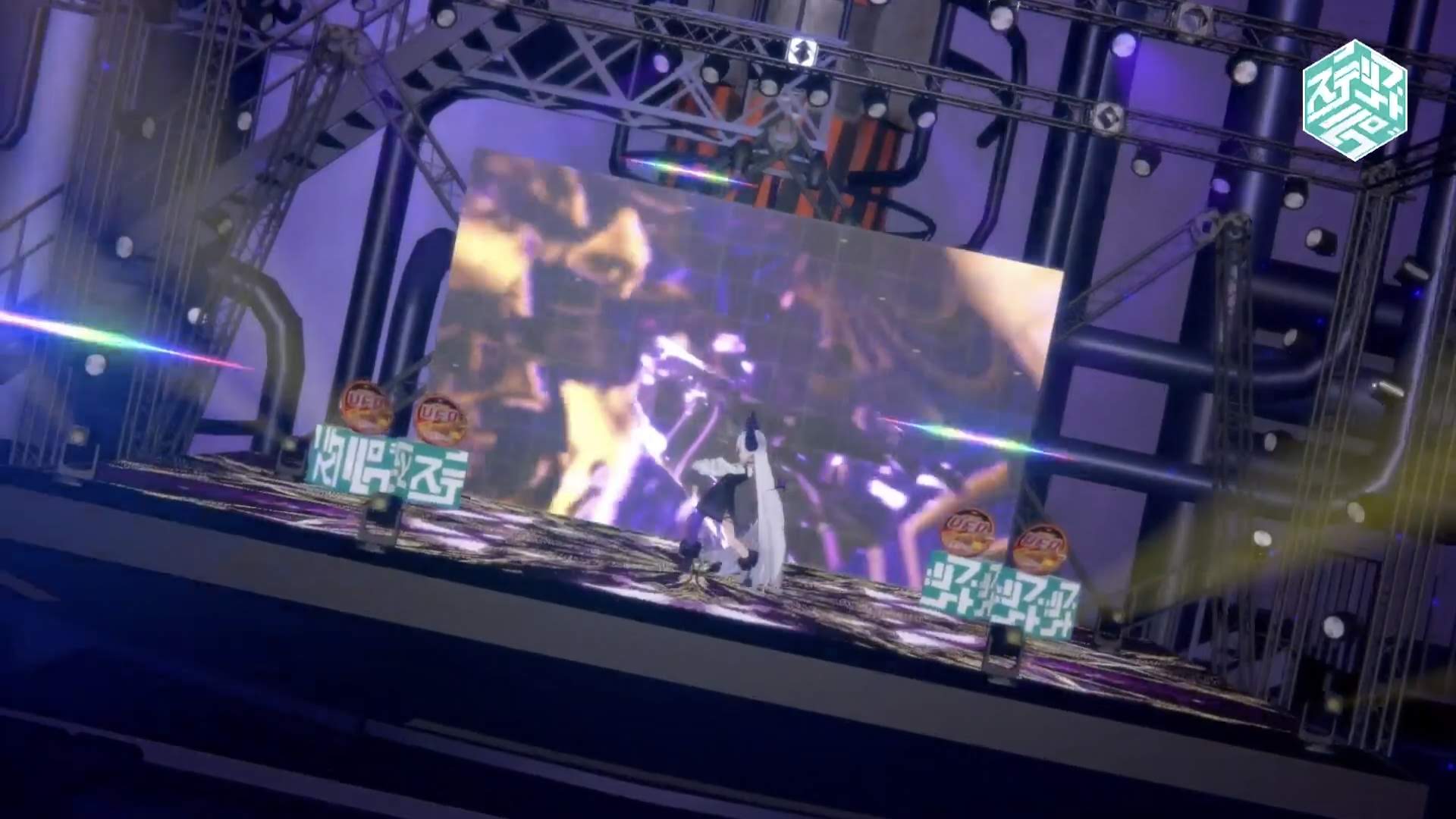
In November of 2023, Virtual Youtuber Natsuiro Matsuri celebrated her 5th anniversary by holding a concert themed after the premier Japanese video streaming site of the 2000s, Nico Nico Douga. The homages came in every form, from covers of Vocaloid songs popular in Nico Nico’s heyday (“Senbonzakura,” “Miku Miku ni Shite Ageru”), to jingles and error messages, and of course, the flurry of on-screen viewer comments that was and still is its signature feature. It wouldn’t be a real Nico Nico parody without that.

For those familiar with Nico Nico, it was most surely a nostalgia trip, but I did see some confusion from the uninitiated. They wondered how people could enjoy a chat that obscures the actual video. I mean, isn’t it distracting? 

In short: yes, it certainly is, but there are benefits as well. While not everyone likes the flying commentary (I know people who turn it off whenever possible), it also adds something to the viewing experience while also being a product of an older era of online video.

There are two important aspects of Nico Nico’s unique comment section that make it a boon more than a detriment. The first one is that because the text is on top of the video, it means you don’t have to constantly look away to see what people are saying. The second (and more crucial) one is that it fosters a pseudo-real-time communal experience without having to watch something live.

Similar to many other video platforms, Nico Nico allows for live streaming currently, but that wasn’t always the case. Like Youtube, it used to be purely pre-recorded material. While comment sections were nothing new even then, what Nico Nico allowed was the ability to have a user’s comment come up at a specific time in a video, so it’s clear what that person was reacting to. On top of that, anyone could post a message in this manner whether they saw a video the day it was uploaded or five years later, and they would show up all the same. This means you can feel like you’re watching with a group of people and quipping about what’s transpired despite not actually being together spatially or temporally. 

In other words, Nico Nico created an asynchronous form of fostering community through its chat, and this extends even to the present day when live streams are plentiful. In contrast, Twitch and Youtube constantly make viewers feel like they’re missing out if they don’t watch live. Twitch’s VOD service is an empty husk now, while Youtube only lets you participate in the chat if you watched something live or at least right when it premiered. There is a comment section, and it even lets you put timestamps, but it is considered its own separate space. On Nico Nico, however, chat and comments are one and the same. This approach, I believe, helps to prevent anxiety about FOMO to some degree.

That‘s not to say Nico Nico doesn’t have its flaws. Non-potato video quality, the ability to watch stream recordings after the fact, and even priority for who can even view something at all can be locked behind a premium membership. Youtube is also just more intuitive to browse and use in any language. But Nico Nico found a solution to the problem of not being able to provide a true simultaneous viewing experience, and I think an approach along those lines still has plenty of merit. 

I’m grateful to Matsuri for the reminder. Nico Nico is such a large piece of Japanese internet history, and for good reason. Maybe we can also be at a point where the flexibility displayed by Nico Nico can help people not be as beholden to rigid schedules and fear of missing out.

Emotional Continuity in Anime

What does it mean for a work of fiction to feel “realistic?” It’s a question I return to over and over because of how subjective the answer can be. The more I’ve thought about different possible takes, however, the more I’ve found that I resonate strongly with something I call “emotional continuity,” and it informs which series I view most positively.

Broadly speaking, there are many types of continuity in storytelling. There’s the simple that the events of the past should inform the events of the future. A character who loses an arm in episode 1 of a show shouldn’t get it back with no explanation in episode 10. Then there’s capital “C” continuity, like what American superhero comics often deal in, where all the individual parts ideally look together to form a consistent universe and timeline across multiple different series. “Emotional continuity” isn’t nearly so complex. Instead, I define it as simply when events that should affect a given character emotionally result in an appropriate response, and that this character remembers this feeling on some level. Those reactions and memories don’t have to be “sensible,” and they don’t have to result in a “character arc,” though both are possibilities. They simply have to feel consistent with the character and their way of being, and then leave a mark on that character.

One work I’ve debated with others about realism (and by extension show quality, though the two are not necessarily related) is the anime Mobile Suit Gundam: Iron-Blooded Orphans. Whereas others saw the character actions as making little sense and thus stunting the overall story, I felt the opposite. I came to strongly understand each character’s motivations, especially in the core cast, and to see how early events both happy and tragic would inform the general trajectory of their approaches to life.

Another anime that I’ve argued about is Kill la Kill, specifically in regards to the idea that the heroine, Ryuko, is a strong main character even though she didn’t receive much “character development.” The big sticking point for detractors is that she doesn’t really change significantly throughout the series or learn any personal lessons. However, I find that even if she doesn’t transform dramatically, she conveys a strong sense of “emotional continuity” based in her anger, her stubbornness, and her desire to right wrongs. Even if she’s still the same rage-filled Ryuko by the end, it’s impossible to say that the events of the series don’t affect her emotionally or inform her friendships, battles, and decisions.

I realized that “emotional continuity” also greatly informs my utter fondness for the series Heartcatch Precure! and might even explain why the series is often seen as the best of the Precure franchise or somewhat overrated. Years ago, a blogger named Scamp tried to watch through as much Precure as he could, but ended up dropping every show, including Heartcatch. His reason was that nothing ever seemed to happen for the most part, and that dramatic, story-changing moments came too abruptly. This surprised me, because I felt the total opposite—that the show built up to every significant plot point like a skilled architect oversaw the construction. I even wrote a response. In hindsight, while I used the phrase “emotional logic,” i.e. reasoning through feelings, to describe what I saw, what I was actually highlighting was emotional continuity.

Moonlight…in suffering loss…felt wracked with guilt, giving up her role as protector. The task to defend the world had been passed onto a new generation…and as they collected the Heart Seeds, they laid the groundwork for Moonlight to redeem herself, to learn from her mistakes while also forgiving herself…. Although Cure Moonlight’s return is telegraphed to a degree, for me it built anticipation … I felt satisfied that the show had reached a strong emotional point with a solid expression of how the feelings of each character, especially Moonlight, defined their actions.

Rarely in fiction is anything utterly devoid of emotional continuity, but the best series make you feel as if they care about what’s happened to their characters. Something that has had issues with maintaining this continuity in recent years was World Wrestling Entertainment, and that seems to be finally turned around in the past couple years. While there are general structural issues with how WWE presents itself that go beyond emotional continuity, it’s telling that fans had very little faith in their favorites wrestlers being recognizable beyond a basic template. Continuity is played fast and loose in general, and the highly physical nature of their format means injuries and other unpredictable elements can gum up the best laid plans, but there’s a persistent sense that what a given wrestler does or says one week should actually matter the next.

Do you find emotional continuity to be important? If so, how much is it a priority for you? I’m curious to see how others feel.

Frieren, Ikari Shinji, and Lost Love

Frieren: Beyond Journey’s End is simply one of the finest fantasy series I’ve ever seen, on par with Witch Hat Atelier. From its premise, to its intriguing world-building, to its endearing cast of characters, Frieren is like an oasis in a desert of flimsily conceived genre works. Among its many strengths, one thing that I find most compelling is the way it portrays how different races perceive time differently. This is especially the case with the titular heroine, Frieren.

A long-lived elf mage, Frieren was originally a member of the small party that managed to defeat the demon lord after a decade of adventure. Shortly after their victory, she and her allies are invited to live in the royal capital, but she leaves for a “short” while to continue her pursuit of weird and obscure spells. By the time she returns (50 years later), their young and handsome leader, the vaunted hero Himmel, is old and gray. At his funeral, Frieren deeply regrets having been his companion for “only” 10 years—what others would consider a long and life-defining era instead barely existed for her.

Later episodes reinforce just how much of a drop in the bucket the 10-year quest was for Frieren. Against Aura the Guillotine, a mighty and feared demon, all other adventurers would do everything in their power to eliminate her for the danger she posed. Yet, Frieren held back so that she could deceive Aura for 80 years before dropping the hammer in the modern day. This truly gives a sense of how differently Frieren sees everything as an elf many centuries old, but also just how impactful Himmel was to her.

In thinking about Himmel’s influence, another anime character came to mind: Ikari Shinji from Evangelion. Specifically, his relationship with Nagisa Kaworu at the end of the TV series holds some parallels.

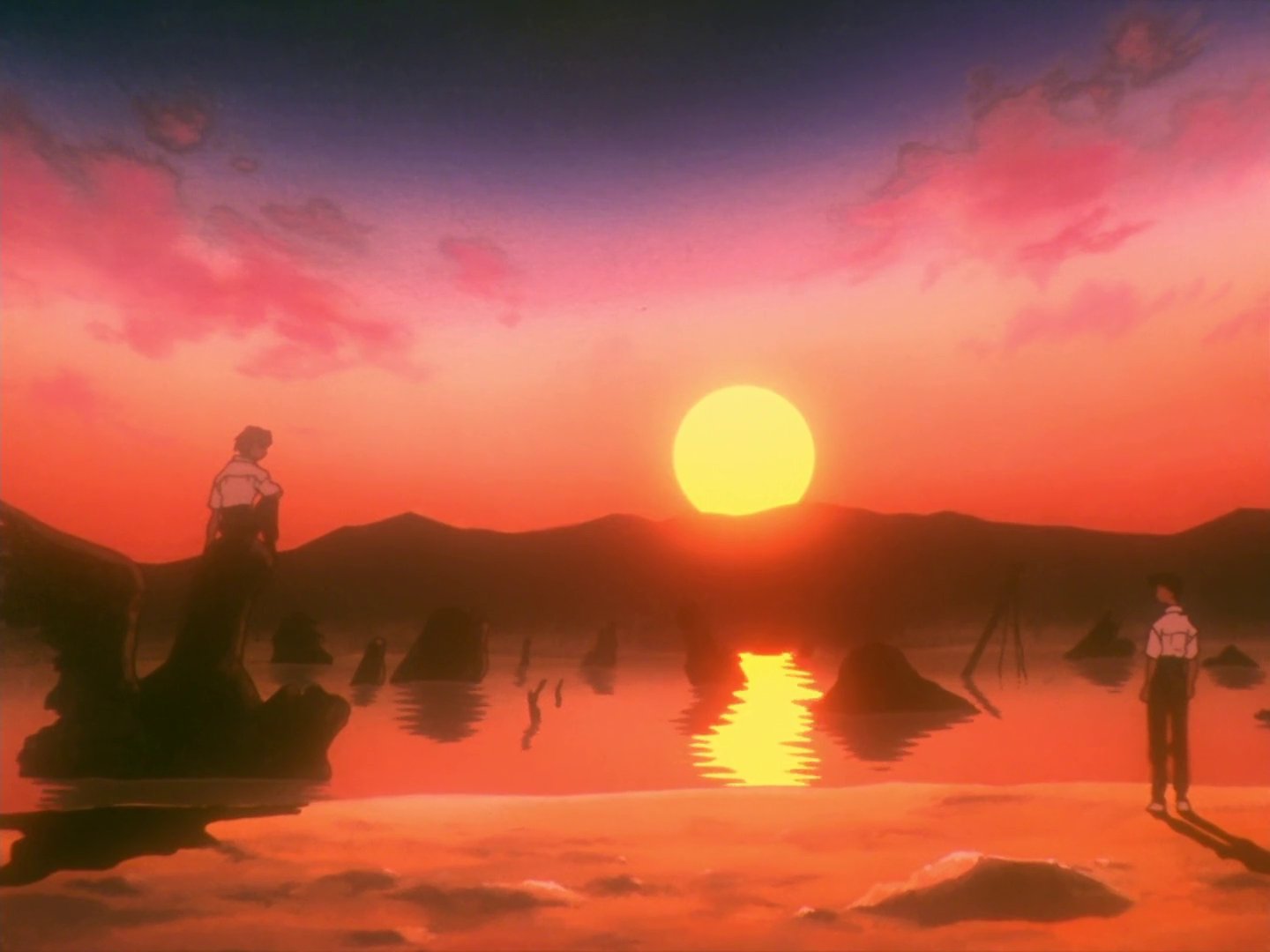
Kaworu shows up in Episode 24 of Neon Genesis Evangelion, and he makes an incredible impact on Shinji. Their immediate friendship is a salve for the emotionally wounded Shinji, who opens up to Kaworu. However, by the end of the episode, Kaworu is dead. This relationship lasted only half an hour of runtime, and less than a week in-story. Nevertheless, this brief love (be it platonic or romantic) is powerful indeed.

The way Frieren sees her time with Himmel is not unlike how Shinji views his few days with Kaworu. It was there, it was magical, and it was gone just like that. It’s beautiful yet heart-rending, and these couple of details really showcase how amazing Frieren the series is as a whole.

Best Anime Characters of 2023

BEST MALE CHARACTER

Pluto (Pluto)

In a series full of excellent characters who are each a master class in storytelling, the one who stands out to me the most is Pluto himself.

The main antagonistic force in his series, Pluto is presented in myriad ways over the course of the story. First, he’s known only by the aftermath of his destructive powers. Then, we see glimpses of him within mighty whirlwinds, like a monster straight out of a suspenseful horror film. But then more facets of Pluto are revealed that show him to be far more complex and conflicted than what we’re initially led to believe. 

He barely gets any screen time in the grand scheme of things, but by the time everything comes to a head, it’s amazing that what stands before us is the same being as the enigmatic harbinger of death from Episode 1. The most seemingly inhuman of robots turns out to be among the most human of all.

BEST FEMALE CHARACTER

Suletta Mercury (Mobile Suit Gundam: The Witch from Mercury)

After decades, we finally have our first true female Gundam protagonist. While there have been predecessors of sorts, like Fumina in Build Fighters TRY and Christina Mackenzie in War in the Pocket, Suletta is both the Gundam pilot and the heroine in a main Gundam anime. 

Being such a major milestone is a pretty big deal in itself. However, what we also have in Suletta is an incredibly interesting main character whose story and growth anchor her series—all while being incredibly unique among Gundam heroes. She begins the series as a sheltered girl whose anxiousness and constant second-guessing are endearing and hint at her eventual development. Thrust into unfamiliar environments and forced to confront difficult questions about who she is and where she came from, Suletta gradually grows into her own person, struggling and breaking free of the shackles imposed on her by others, including her own mother. 
Suletta might not even be my favorite character in Witch from Mercury, but her significance to Gundam and anime, combined with the brilliant job the creators and the actor have done to bring Suletta to life makes her the best in my eyes. She is so very human, and the way she is shaped by—and, in turn, shapes—her world resonates emotionally.

BEST MAGICAL BOY

Yuunagi Tsubasa (Soarin’ Sky Precure)

Precure is a magical girl franchise, so it generally makes sense that each series would feature girls as the heroes, with male characters occupying supporting roles. And over the years, there would be dalliances with the possibility that boys could be magical in their own ways, whether by utilizing different abilities (Black Pepper, Rio), through imagination and gags (Cure Fire, Cure Gorilla), or as one-offs (Cure Infini). But in Soarin’ Sky Precure, an anime that’s all about defying the trends off its predecessors, Yuunagi Tsubasa stands proud as the first true male Precure.

Tsubasa is a bird who cannot fly—his species, native to a magical fantasy land, sacrificed the natural ability for greater intelligence. But rather than give up on the possibility, he used his smarts to study and follow in the footsteps of the Wright Brothers. And when he gains the magic to travel the skies as a Precure, he utilizes his knowledge of physics and aerodynamics to aid in battle. The way Tsubasa takes advantage of his strengths and refuses to let his weaknesses limit him is inspirational.

I think a special shout-out has to be given to Cure Wing’s design, as it does a great job of feeling boyish while matching the general Precure aesthetic. It threads a very fine line indeed. 

FINAL THOUGHTS

This year’s characters represent long overdue achievements. Pluto is the antagonist of a work for an anime adaptation for a manga from 20 years ago. Suletta and Tsubasa, in turn, have shattered gender norms of their respective decades-old mega franchises. They’re also anything but one-dimensional—especially Pluto and Suletta, who come out of their respective works very different from how they began. The pioneering aspect of these characters indicate a slow but steady march of progress that I hope won’t be the high point, but the beginning of greater things.

Two Questions About Sludge Content

Multi-screen video shorts juxtaposing unrelated content have been a thing online in recent years. Known as “sludge content,” it seems to be an increasingly popular way for people to watch videos. Apparently, it’s also helpful for people with ADHD, who might have trouble with longer forms of media.

On top of not having ADHD (at least as far as I know), sludge content personally feels a bit bizarre. At the same time, I definitely don’t know enough to speak poorly of it, other than that it is unfamiliar to me. I do have a couple questions, though: one concerning the past and another the future.

First question: Given the format of sludge content and the way it provides different forms of stimulation, could a three-ring circus achieve a similar effect? 

The intent of a three-ring circus is to have multiple acts going on at once, so audience members can pay attention to the part they like most, or even switch focus if something catches their eyes. In times before film existed, let alone video apps, could this form of tripartite entertainment have provided a similar sense of satisfaction to people who had ADHD before it was even known?

Second question: Will we ever see sludge content created in such a way as to explore and push its boundaries as a style or medium?

It’s no secret that most media is made for the neurotypical majority. But what if people with ADHD (or anyone else with an affinity for sludge content) was assumed to be the default audience? What kinds of stories or creative experiences could be told by seeing sludge content not as a weird thing some people are into, but as an opportunity to create works that speak deeply to a particular group? 

I have no answers for either question, but at least I’d like to see attempts at the latter.

The Role of Unique Voices in VTubing, K-Pop, and More

“Is it more important to me for a group song to sound good or have distinct voices?”

This is something that’s been on my mind lately as I’ve been exploring my own feelings about music- and idol-adjacent worlds.

I have an odd relationship with K-Pop. I think it can be good, but it’s also definitely not my preference generally, and as someone who seeks to be open-minded, I keep resisting the urge to write off huge swathes of it. The last thing I want to be is dismissive, so I listen and listen, but it just never seems to fully click. Even with songs that I enjoy, something bothers me in the back of my head. Also confusing is that I seem to end up enjoying songs inspired by K-Pop more than K-Pop itself. Case in point: “Dark Breath” by hololive VTuber La+ Darknesss. That includes both the song itself and the accompanying dance (which I know is part of the appeal of K-Pop).

Speaking of, La+ has been crossing over in all sorts of places: notably performing with non-hololive VTubers, doing covers of songs by the League of Legends K-Pop-style group K/DA (alongside her fellow hololive members) for Riot Games One, and being one of two VTuber ambassadors for the very first The iDOLM@STER/Love Live joint concert. 

And here, despite the hololive performances of “POP/STARS” and “Baddest” being less polished, I also enjoy them more than the originals. I don’t think it’s merely because I know the VTubers, so I’ve been doing a good deal of listening to K/DA for the first time, and revisiting Love Live! in between VTuber songs.

Different franchises and media projects have their own priorities. Love Live! and The iDOLM@STER are both just as much about voice acting as they are music, and being able to easily distinguish between individuals based on how they sound is a big part of helping each character/performer to garner their own fandoms. 

For example, I don’t think you need to have any familiarity with Love Live! to notice that “Cutie Panther” features three very distinct voices. The differences can be exaggerated, but they’re present nevertheless.

Similarly, the start of ReGLOSS’s “Shunkan Heartbeat” has each of the five hololive members singing a part of the beginning by themselves, and it’s because the song is as much an introduction of them as five distinct entities (each with their own Youtube channel). That’s part of the VTuber business model. 

This is not to say that songs need distinct voices to be good, and there’s plenty of music with easily differentiated voices that is lacking in other ways, including within those voice-acting/VTuber/idol domain. But when I listen to Blackpink, for instance, I find it is nowhere near as easy to tell the singers apart. It might just be a lack of familiarity on my part, but I also feel that it might not even be the fault of the singers themselves. After all, if you picked three random people out of a room and told them to all sing, there’s a good chance they’d all sound different from one another, even if they weren’t good.

The culprit, I believe, could be how K-Pop is produced. That industry seems to be built on projecting images of perfection, and the result is that everyone sounds flawless. However, this has the drawback of also removing the quirks in people’s voices and by extension their individuality. And even with K/DA, I feel that their songs do a relatively better job of keeping these qualities, perhaps because the source material was a game with over 150 unique playable characters.

Which is to say: 1) While I don’t think distinct voices can be the only thing a song has, nor a lack of such a quality to be a deal breaker, I think it can add a lot to a song. 2) I think part of the reason K-Pop feels so overproduced to me is because of the way it seems to hone and chisel the music to such an extent as to wipe out those interestingly unique qualities that singers possess. 

And all this leads me down another rabbit hole, which is thinking about the different roles a singer can have when it comes to music. Does the song serve them, or do they serve the song? Are they the centerpiece, or part of a greater sound? With idols, is it that the quality of music is less important than its ability to emotionally connect the fans to the idols? I feel like there are endless possibilities, and perhaps that how much we as listeners and audiences prioritize certain elements is what shapes our tastes.

I Should Never Forget How Fortunate I Am

I’m in a pretty good spot in my life. I value the work I do, I love continuing to write this blog, and even my social life is as comfortable as I need it to be. While this might sound like I’m humble-bragging, that is most definitely not the intent. Nor am I setting up an example for others as to how to succeed. Rather, this is a reminder to myself to remember what it’s like to be a “nerd lost at sea.”

From a young age, I knew I didn’t quite live up to the expected masculine image presented to me in society. I didn’t want to watch sports, I was physically weaker than my friends, and had little desire to get stronger to make up for this. I would rather read a book or play a game. I spoke (and still speak) in a rapid mumble that is difficult for everyone but my closest friends to understand. I also remember all those times I was part of one internet community or another, and someone would come in after being gone for months, and all they could talk about is how life was so much better once they abandoned childish things. If it made them happier, then that’s for the best, but there was always a problematic assumption that the hobbies were at fault.

Things have worked out for me more or less, but I try to tell myself that while I’ve progressed a lot, there are fundamental aspects of me that haven’t changed, and they don’t necessarily need to change. Also, I’ve found my way to shore, but I don’t have some guaranteed winning formula. There are as many factors outside of myself as there are within, and remembering the doubts and struggles I’ve been through (and still experience) is my way of not forgetting where I came from.

Ogimani Blogemi 16: Ogiue Maniax 16th Anniversary

I occasionally picture myself old and gray and still writing Ogiue Maniax. You really never know what the future might hold, but tomorrow will be 16 years since I started, and it increasingly feels like that vision might come true. 

Blogging this year has been more of a challenge through reasons somewhat beyond my control. I’ve considered reducing my posting schedule further, but I do worry that it’ll put even more pressure on me to make every blog entry some kind of refined masterpiece. 

That said, I do think I might be imposing overly high standards on myself. Recently, I was recalling the earliest days of Ogiue Maniax, when I let just about anything escape my brain and end up in a post, and I’ve started to wonder if I should make at least a partial return to those days. I’ve positioned myself as someone with a degree of insight, but maybe I should be more comfortable having some mediocre opinions every now and then.

Funnily enough, what made me think about returning to the basics is the continued and active enshittification of Twitter. Over the past seven years or so, I decided to let my more off-the-cuff thoughts exist on Twitter while I devoted longer form things to the blog, but now that everything is on fire on Twitter, I might very well find myself spit balling right here. I’ve joined some alternatives like Bluesky, Mastodon, and Threads, but am still unsure of where I’ll land.

Ultimately, what Ogiue Maniax has become is not so much a career or even a life‘s calling, but something much simpler. It’s a place for me to question, be it myself, others, why I feel the way I do. It’s a place for me to anchor my passion. And sometimes it’s work, in a certain sense, but I’m really only beholden to myself and the notion that I can grow by writing. This is a home online I’ve been building for the last 16 years, and each post is another brick. Will I ever be done? Let’s see.

MF Ghost and the Passage of Time

One of the Fall 2023 anime I had been anticipating was MF Ghost, a sequel of sorts to the famous downhill street racing series Initial D. While I’ve never been a car person, I could never deny the excitement the series brought me, nor the clear influence Initial D has had on car culture in Japan and abroad. But MF Ghost takes place in a speculative(ish) future, and the differences between it and its predecessor remind me of just how much technology has changed in that time.

MF Ghost is set in a time when environmental concerns (including volcanic eruptions in Japan) have made it so that most motor vehicles are electric and self-driven, and the only traditional cars are used purely for sport—particularly a legalized version of street racing known as MFG. It has fans worldwide, who can watch thanks to drones streaming live feeds, and it features cars from around the world rather than just Japan.

The drones following the cars, and the fact that everyone watches remotely, highlights the fact that a very visible aspect of Initial D is not present in MF Ghost: the crowds of onlookers watching the races in person. While there might be technical reasons for this (perhaps the author just didn’t want to draw them), I think it also draws a huge contrast with Initial D because of the latter’s time frame. In other words, when Initial D debuted in 1995, cell phones were still a pretty rare sight, let alone phones that could display video (that wouldn’t come for another four of five years). Sure, one other big factor is that the racing in Initial D was technically illegal and would never have big broadcasts regardless of technology levels, but the in-universe gallery for these mountain races wouldn’t even have the opportunity to be a live audience in any reasonable way.

Plot-wise, Initial D starts in the 1990s and ends only a year or two after the start, so all the tech remains of that era despite the fact that the manga ended in 2013. As a result, the jump to MF Ghost represents over 20 years of change at the very least. It’s wild to think about.

I referred to MF Ghost as “speculative,” and I meant it in a fairly tongue-in-cheek way. “What if the future had cool races using known car brands like Toyota and Ferrari” isn’t exactly the height of creative imagination or science fiction. However, there is one aspect of MF Ghost as a story set in the future that warms my heart. In Initial D, the character Takahashi Ryosuke (adversary turned mentor to the protagonist, Fujiwara Takumi) loves street racing more than circuit racing because of how unpredictable it can be and how there are elements beyond the drivers’ control. Now, the same mountain racing that was relegated to a select few enthusiasts has become a household name. Isn’t that grand?

Hololive and the Year of Amazing Dancers

I once described La+ Darknesss as having a level of skill and confidence in dancing nearly unmatched all of Hololive. That was back in March, shortly before 4th fes (the latest of the annual live concert events), and at the time, I left a caveat that there were actually a number of members who had yet to debut in 3D, and things might change.

Well, things have changed.

At this point, every girl in Hololive outside of the most recent debuts have gotten full 3D models, and many have shown themselves to be noticeably amazing physical performers. Among these talents, there are three that stand out to me in particular.

Hakos Baelz of Hololive Promise.

Vestia Zeta of Indonesia Gen 3.

And Vestia’s genmate Kobo Kanaeru. 

I have zero technical or artistic knowledge of dancing (outside of reading Wandance!), so my praise of them is mostly based on vibes. From that limited perspective, I get the sense that they move better than the vast majority of their fellow Holomembers. On top of that, they all seem to approach dance in different ways compared to one another, to the extent that I start to feel like their personalities and quirks come through in their respective performances. 

To me, Bae moves as if her entire body from head to toe is equally super-charged, Zeta from the ground up (with her legs being a big focus), and Kobo like she’s acting just as much as she’s dancing. La+, in comparison, seems to dance from the core and then have her energy radiates outwards into the rest of her body. I don’t know if this is even accurate or makes sense, but I start to wonder if I might be able to recognize each of them through their dancing even if they shared the same 3D model. Either that, or I’m just overestimating myself.

We might be entering a new Renaissance period of VTuber dancing. The recently announced 5th fes, Hololive Island, is likely to feature all of them and be an incredible showcase. On top of that, an upcoming Riot Games event in Japan is going to have a performance by Murasaki Shion and three of the names I’ve mentioned above: La+, Bae, and Kobo. And with ReGLOSS’s Todoroki Hajime making dance a major part of her character, I can see things only getting more exciting in the near future.