Little Witch Academia Translation Trickery

Little Witch Academia has been out on Netflix since last year, and it’s a wonderful show worth everyone’s time. Having watched it with English subtitles, I’ve noticed a few hiccups here and there when it comes to the translation. These are not deal breakers, but it does speak to how translation is more art than science, and it’s worth looking into the fact that translating for anime and manga comes with its own share of unique pitfalls.

One unusual aspect of the translation that even non-Japanese speakers might notice is a tendency to avoid repetition despite it being present in the original Japanese. For example, a character might say, “Witches.” Then another character would ask “Witches?,” in response. In the subtitles, the first character would still say “Witches,” but the second might respond, “What are you talking about?”

This has partly to do with the fact that using the same word over and over again is not necessarily considered bad writing in Japanese, but in English (which is famous for its sheer amount of synonyms), this can make dialogue sound extremely awkward and unnatural. Changing up the vocabulary for English not in itself a bad idea, but it can run the risk of introducing ideas or words into a character’s speech that might not reflect who they are or what they would say. It creates room for inaccuracy even as it ends up sounding a little more natural, and it’s a tricky balance to maintain.

What’s worse is that sometimes the desire to make the English sound good can backfire. Anime and manga come out on a pretty constant schedule, with little lead time between chapters and episodes. Japanese as a language thrives on context to shape meaning, and terms or phrases are often left intentionally ambiguous, becoming clearer as the series goes on. Sometimes a phrase can be so awkwardly ambiguous when translated directly that a translator might feel compelled to massage it, only for it to bite them in the ass down the line. For example, a character whose gender is unknown can get away with never being referred to by gender in Japanese pretty naturally, but someone who doesn’t know this is an important plot point might assign a gender because gender-neutral pronouns in English are not entrenched into the language.

In Little Witch Academia, to a certain extent, one of the series is a quote from the character Shiny Chariot, which translates literally as “A believing heart is your magic.” It sometimes appears in the show itself, in English, so a simple solution would have been to use that directly, but it does sound a bit clumsy. The translator decided to go with “Believing in yourself is your magic.” Initially, this makes sense, as what exactly the heart believes in is unclear, and the heroine Akko uses it as a refrain to keep soldiering on. However, by the end of the series, this turns out to be somewhat inaccurate; it’s not necessarily that Akko believes in herself, but that she is able to believe in what’s possible.

Given that Little Witch Academia was released all at once on Netflix, there was the potential to go back and fix this, but I don’t blame the translator for not doing so. I don’t know what the schedule or system is like for subtitling on Netflix. It’s just a strong case of why translating is a tricky beast.

AnimeNEXT 2017 Interview: Yuri!!! on ICE Staff

This interview was conducted at AnimeNEXT with guests Tatenaka Junpei (co-lead figure skating animation supervisor), Ito Noriko (animator), Ogawa Takahiro (production desk manager), Hirose Izumi (color designer).

Creating animation, especially for television, is a very time-sensitive endeavor. You have to work hard to get things on time. So when you were working on Yuri!!! On ICE and you were running low on time, what did you prioritize? What is most important?

Tatenaka: When creating animation, the difficult thing is that you can’t skip any parts. You can’t skip the voice, you can’t skip the music, you can’t skip the art. You have to prioritize everything.

What about terms of style, say, going for better movement or more detailed artwork during figure skating scenes?

Tatenaka: I animated the figuring skating scenes. For the first episode with Victor’s free skating, we had three chances for trial and error to fix it up. And when time is sensitive, we do one check and send it out. Most of it is just, draw it and then it’s out for production.

Maruyama Masao has been a guest at cons in America for a number of years, so there have been plenty of opportunities to get his impression of animation. What is it like working under Maruyama-san, and does he resemble the character that’s based on in Shirobako [Marukawa Masato]?

Tatenaka: Maruyama is very unique. He gives us a lot of control. The most unique thing about him is that, instead of picking what’s going to be the winning formula, he picks unusual combinations and tries them out. It’s like the chemistry of two items, two characters, two of anything that might not work—he likes to experiment with that sort of thing. So it’s either a very big win or a very big loss.

Yuri!!! on ICE has received praise from a lot of pro figure skaters. Is there anything that went into animating Yuri!!! On ICE that differs from other sports series?

Tatenaka: The most difficult and challenging part of animating Yuri!!! is that there are no pauses in movements. In baseball, there’s usually a pause, but in figure skating the characters are constantly on the move, so you have to keep drawing each sequence. All of the poses and the movements are things I haven’t drawn before.

During the skating scenes, the characters have thoughts running through their heads. Did you do research into what real figure skaters are thinking about as they perform?

Ogawa: It’s probably something Director Yamamoto came up with. Because she loves figure skating.

Hirose: She actually did interview some real figure skaters to ask, “What do you think about while you’re skating?”

This next question is about the film In This Corner of the World. In between the chapters of the manga, there are a number of quirky little guides, like how to make your rice last as long as possible by adding as much water as possible and mashing it. Are these funny little moments also in the movie?

Ito: Not all of them because there are a lot of those handwritten notes, but for most of them the characters will have a line explaining why they’re doing something. In the movie, the animated sequence about cooking in the kitchen is done very meticulously. You can see what’s being done while she’s explaining.

This is a question for the female guests here: are there any unique challenges to being women in the animation industry?

Hirose: I have a child. Being a mom and doing production in a tight schedule is very hard for me.

Ito: Not being able to go home. Not being able to shower. I don’t take naps at work because I don’t want people to see me sleeping at the office. But a lot of the male workers don’t care. They’ll sleep on the chairs and on the floors. But I can’t.

Thank you for the interview. I wish you the best of luck on your future projects!

Save

Save

Save

When the Nakama Are Feeling FRUSTRATION: Translation and Use of Foreign Words

One of the big bugaboos of Japanese to English translation has been the use of untranslated words. Whether it’s senpai (“upperclassman”) nakama (“comrade”), or the utterly fictitious zankantou (“colossal blade”) the question of whether words should be left as is or fully adapted to English rages in arguments between fans, translators, and everything in between. Of course, there are no solid rules, and determining where in this spectrum your translation should fall is very much a case-by-case basis. However, what intrigues me about this debate is that, when you look at the Japanese language and how it’s used in anime, advertisements, and more, there is a very intentional sprinkling of foreign words with the clear idea that they are used for their exoticism.

The show that actually got me to think about it was, of all things, Show By Rock!! Here are the first lines of the opening:

Ren’ai inochi VERY VERY HAPPY!
Yuujou inochi hajikeru JUMPING!
Bouken inochi dokidoki OK?
Seishun ouka COM’ON READY? LET’S GO!

I’m leaving it untranslated just to show the clear use of English vs. Japanese. They didn’t have to use English words but they did. Similarly, let’s look at the popular One Punch Man opening:

ONE PUNCH!
(THREE! TWO! ONE! KILL SHOT)
Sanjou!   Hisshou!   Shijou saikyou
Nan dattenda?   FRUSTRATION   Ore wa tomaranai

One concession is that a lot of these words are very simple, like “HAPPY” and “JUMPING.” They’re not terribly complex and don’t carry a great deal of cultural baggage like senpai (though one might argue that ren’ai (romantic love) being originally a concept introduced from Europe to Japan falls into that range). However, I think where the actual big cultural difference comes from is that Japan has been open to receiving a lot of foreign words and maintaining them as emphatically foreign, as opposed to fully integrating them into the language. So while English has its fair share of Japanese loan words, from sushi to karaoke, they don’t maintain as much of their exoticism. It’s just a very different environment for sentences and words themselves.

What’s funny is that English wasn’t always this way, especially when it was not the lingua franca of the world. Prior to World War II, French was the most dominant language in diplomacy, and (correct me if I’m wrong!) throwing in French words with the expectation that only a few would understand it was not uncommon among the educated. Of course, this is different from the use of “HAPPY” and “JUMPING,” but I do think that the English language’s ubiquity leads to the sense in us users that it doesn’t have to bend to the will of others.

Translating to English often assumes that English is important. That sounds like a no-brainer, but what I mean specifically is that English speakers value their own native language so highly that it comes across to some extent as a rejection of foreign influence. France today for example is known for trying to keep foreign words out of its language, preferring to take existing French words and modify/combine them accordingly to eschew the need for new loan words.

I’m not saying translators who do not use senpai or whatever are imperialists anymore than I think that using nakama means someone is fetishizing Asian culture. Moreover, the exotic aspects of English usage in Japan come with their own sets of considerations and concerns. Rather, the seeming need for everything to be transformed into English might say something about how we as English speakers look at ourselves, and that this differs depending on how we individually approach that self-reflection.

JoJo’s Bizarre Adventure, Gone with the Wind, and Translation

1367560000

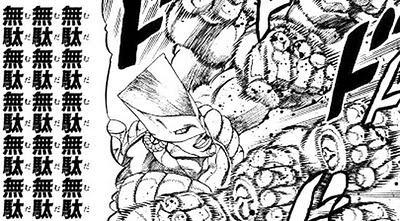
A few months ago on Twitter, a number of manga translators and readers threw their hats into the ring to discuss the persistent issue of “authenticity” vs. “localization.” The central point of argument was whether the fact that the English translation of the JoJo’s Bizarre Adventure manga kept antagonist Dio Brando’s signature catch phrase untranslated (MUDA MUDA MUDA MUDA / USELESS USELESS USELESS USELESS) is a sign of faithfulness, Japanophilia, or something else entirely.

There’s no real right side to all of this. As the Reverse Thieves explained well, there are many facets to consider, and translation is more an art than a science. For example, people who argue that translations should be as localized as possible so as to remove the sense that it comes from another language would assume that the primary audience is a broad, general readership. What if it isn’t, however? Academic translations for instance tend to be filled with footnotes and marks and other things because you’re supposed to be fully explaining the nuance of meaning through translation.

What’s even more fascinating, however, is seeing the problem of translation from the English to Japanese side, and the challenge that is posed to English translators in Japan. For example, let’s look at one of the on-going controversies within this greater Japanese to English translation debate: whether or not to include Japanese honorifics in English translations. After all, while “-san” might be already known to fans of Teenage Mutant Ninja Turtles and other similar works, for the most part it’s the realm of the manga fan, so to speak. When the decision is made to remove them, a translation either has to compensate for the loss of immediate information pertaining to how two characters relate to each other through a more liberal translation, or ignore that aspect entirely.

What about English to Japanese? From that perspective, the problem is completely flipped around. Suddenly you go from a language with no honorifics to one where they’re a part of everyday life. Let’s take a movie like Gone with the Wind. How would you translate Rhett Butler’s speech? The official translation has him use “Ore,” possibly to show that he’s both masculine and skirts standards of politeness and pomp. Is that the right decision?

If you were in charge of translating Gone with the Wind to Japanese, what honorifics would Rhett have to use when talking to other characters, if any? Would they change over the course of the movie? The change or removal of honorific usage to determine the progression of a relationship between two characters is a classic trope of manga and anime, and something English translators have to be constantly wary of (as is switching from last name to first name), but here with Gone with the Wind it’s potentially something that the translator has to build into the story where it once did not exist. The decision could be made to ignore honorifics specifically, but then a lot still has to be done to adapt characteristics and speech patterns to particular personalities. Rather than having to subtract, the English to Japanese translator has to consider additional components if they want to go for a “natural”-sounding language. Or do you just get rid of them all because it takes place in the US, or to show again that Rhett doesn’t have much use for politeness?

Of course, that’s not to say that Japanese to English translators also don’t have to create what ostensibly isn’t there to get the meaning of a line across. In both cases, there are things to be gained and lost in the decision to interpret lines in certain specific ways.

There are even multiple different translations of Gone with the Wind, each of them taking different liberties. Rhett’s famous “Frankly my dear, I don’t give a damn,” has been variously translated as 「俺には関係ない」(Ore ni wa kankei nai, “This has no relation to me”) and 「俺の知った事か」(Ore no shitta koto ka, “I have nothing to do with that”). Notably, both do not bother to preserve the cultural meaning of “damn,” nor the “Frankly my dear” part. The frankness is in the lack of formality and the general implied rudeness of the sentence construction.

Suffice it to say, translation isn’t easy, and the decision to keep or remove cultural elements is a unique challenge that perhaps few other fields have to contend with. Whether you’re a translator or just a reader, it might be helpful to express how you feel about the work that goes into translating.

—

If you liked this post, consider becoming a sponsor of Ogiue Maniax through Patreon. You can get rewards for higher pledges, including a chance to request topics for the blog.


Waku Waku +NYC Blog: Let Your Imagination Soar with Onigiri Rice Balls

I wrote a short post on onigiri over at the Waku Waku +NYC Blog. Why not take a look, and then think about what you’d like to put in a Japanese rice ball?

Waku Waku +NYC Blog – IPPUDO’s Ramen King on What It Takes to Run a Ramen Restaurant

I wrote a small post on the Waku Waku +NYC blog, translating a couple of choice quotes from the founder of the ramen restaurant chain IPPUDO.

IPPUDO is going to be at Waku Waku +NYC so if you want to enjoy anime, cosplay, and more while eating authentic Japanese ramen, tickets are on sale now.

Yo-Kai Watch: Amano Keita vs. Nathan Adams and the Meanings of Names

youkai

The Yo-Kai Watch video game series has been a smash hit in Japan, even managing to outsell Pokemon. Recently there has been news to start bringing the franchise and its accompanying merchandise to English-speaking audiences, and the main character of Yo-Kai Watch, Amano Keita (pictured above, right), has become Nathan Adams. This leads me to speculate on the specific choice made here, and to think about how it compares to the meaning inherent to the original name.

Video games are no stranger to changing characters’ names to make them more culturally accessible, but a question arises as to whether there is any meaning lost (or even gained) in localization of names. For example, a lot of Pokemon characters names gain become much more explicit in terms of wordplay though in a way that has less to do with the inherent meanings of names and more to do with how they sound or have built up associations through culture and history (Lance the Dragon Master, Brock the Rock Gym Leader).

In the case of Amano Keita (which sounds like a fairly typical Japanese name) in Japanese his name references very specific things, and because the name has official kanji it becomes easier to see what it could mean. Amano Keita is 天野景太, where 天 means “sky/heaven,” and 景 means “scenery/view.” The Ama in Amano is on a basic level associated with the Japanese goddess Amaterasu (EDIT: It also might very well refer to Amanojaku, a demon-like creature in Japanese folklore. Thanks to Zack Davisson for informing me!). Thus, Amano Keita’s name basically means “a view of the heavens,” which I think associates him with spirituality and mythology and thus the titular youkai in Yo-Kai Watch.

What about Nathan Adams? Initially, what can’t be ignored is the fact that “Amano” and “Adams” sound somewhat similar. I have little doubt about that.

In terms of basic meaning, a Google search reveals that both Nathan and Adam are Hebrew in origin (Adam being a little more obvious in that regard), so there might very well be a continued connection to heaven and spirituality through the name as well. At the same time it probably won’t earn the ire of those who don’t wish to associate Judeo-Christian beliefs with the Japanese occult, because even though Nathan means “gift from God,” Nathan Adams is also fairly generic-sounding and few truly associate names like “Christopher” with Christ anymore.

However, I’m not sure if this is the actual reasoning, because as explained above, I don’t know the degree to which a localization would actually pursue the deeper origins of names, especially because they don’t have the benefit of kanji to make things explicit. That said, sometimes names are selected because of how they sound, with different kanji used to transform it into a “real” name, similar to English. For example, the female character in Hurricane Polymar is Nanba Teru, or “Number Telephone.”

There is another way in which the English name can be associated with the spiritual and the occult, which is The Addams Family. This, I think is actually more of a likely origin, and while Yo-Kai Watch isn’t focused on the macabre the way The Addams Family is, there’s still that connection with the afterlife, ghosts, and monsters. As for Keita vs. Nathan, I wonder if Nathan was picked because it sounds close to “nature.”

While it’s difficult to draw firm conclusion, I believe that both names spirits and the occult/celestial, though due to cultural differences their exact meanings don’t exactly draw from quite the same concepts. I get the feeling little of this will actually matter in terms of how the character of “Nathan Adams” is perceived, but it was at least fun to explore the potential connotations of his name.

—

If you liked this post, consider becoming a sponsor of Ogiue Maniax through Patreon. You can get rewards for higher pledges, including a chance to request topics for the blog.

The Meaning Behind Ryuugamine Mikado’s Name in Durarara!!

ryuugaminemikado

Ryuugamine Mikado is the protagonist of the light novel turned anime, Durarara!! His story is that he decided to from a “gang” online on a whim called the Dollars, and due to its lax rules for membership (if there were truly ever any at all), it becomes a social phenomenon both on and off the internet. Mikado himself is not a very strong-willed individual, he rarely ever actually has to act upon his role as the anonymous founder of the Dollars, and even then he is not a leader in the traditional sense.

Ryuugamine (竜ヶ峰) is literally “dragon’s peak.” Mikado is more complicated.

The term “mikado,” generally written either as 御門 or 帝, refers to the Emperor of Japan or his estate, but is an extremely archaic and obsolete term. However, while Japan had long since dropped that particular term, probably since at least the 13th century, Western texts still continued to use it well into the 20th century. In other words, in current context, “mikado” has connotations of misunderstanding and mislabeling. Mikado the character’s name is written as 帝人, which literally means “emperor man” but is more a way to make “Mikado” look like an actual Japanese name.

In other words, “Ryuugamine Mikado” is very fitting when you think of the Dollars, with its enormous reach and influence, as the “dragon” and Mikado himself as its misunderstood and illusory “emperor.”

—

If you liked this post, consider becoming a sponsor of Ogiue Maniax through Patreon. You can get rewards for higher pledges, including a chance to request topics for the blog.

Thoughts on “Comic it,” the New Manga Magazine for Female Otaku, and Its Target Demographic

comicit-issue1-cover

Last month, the publisher Kadokawa Ascii Media Works announced a new manga magazine. Comic it advertises itself as a publication for “adult otaku girls” who “want more than just romance in their stories.” As if to emphasize its defiance of the common trope that manga for women revolve around love stories, its first issue came out on Valentine’s Day.

I find a few things fascinating about the premise behind Comic it. I’ve often seen readers, male and female, criticize shoujo and josei manga for being so focused on romance, that it seems to come at the exclusion of other possible and interesting narratives. However, it is quite intriguing that the demographic that is assumed to be most dissatisfied with the state of manga for female readers would be otaku, hardcore fans of manga. This also assumes that for many non-otaku readers, the state of manga, and romance in manga, is fine. Of course, the idea that there should be “more than just romance” also implies that the manga in this magazine will still feature love and relationships.

There’s another aspect of their advertising, however, that is less apparent. The term “adult otaku girls,” or onna otaku joshi, essentially indicates grown women who are otaku, but are still girls at heart. Though they continue to age, they’ve never let go of the thrill of being otaku. In a way, this seemingly feeds into the celebration of you that is common to Japanese culture and its portrayal in anime and manga, but I wonder if it’s also a jab at it, that youth is a product of the mind, rather than the body.

Below I’ve translated a chart included with the article on Natalie Comic linked above, which is designed to help readers figure out which stories in Comic it they’d enjoy. Note that all of the possible results emphasize the word “girl” instead of “woman” in the same manner as described above, and that there are some… interesting… yes/no questions on this chart.

comicit-chart-translation

According to the article, these categories indicate the following.

Kizuna Girl: You’re into families and brothers, and are moved by connections and bonds.

Mama Girl: You’re into helpless guys and the dramatic joy of seeing them change, as if you were a mother or older sister.

Fujoshi: You’re into buddy stories and past connections, and special relationships between guys

Subculture Girl: Though you appear to be just like everyone else, you’re actually a little peculiar, and you’re interested in philosophies of love that are a bit different.

I’ve yet to read Comic it, but I’m highly interested in doing so. I’ve already ordered a volume, and  plan to review it for Ogiue Maniax in the future.

—

If you liked this post, consider becoming a sponsor of Ogiue Maniax through Patreon. You can get rewards for higher pledges, including a chance to request topics for the blog.

Internet Culture, Fandom, and the Tendency to Offend

I’m someone who’s interested in anime and manga about “nerds,” be they otaku, fujoshi, geeks, or any number of labels. I’ve spent a lot of time looking at this stuff, and I’ve noticed that often when a character speaks using internet lingo in real life, the translation to English, whether it is official or fan-derived, often utilize some fairly offensive terms. A riajuu (someone who is content with their real life situation) becomes a “normalfag.” An otoko no ko (a boy who dresses rather convincingly as a girl) becomes a “trap.” On the one hand, it would be simply a matter of just not using those terms. On the other hand, I could see the argument that if a character is, say, someone who spends most of their time on internet messageboards, that the Japanese equivalent terms should be met with equally ubiquitous terms among English speakers. If term A comes from 2channel, why not look to 4chan for the English equivalent? However, the very fact that the vocabulary has this negative quality makes me feel that there is something buried deep within how internet anime fandom has structured itself that tends towards insults.

Obviously not all anime fans use these terms, but they pop up in a number of places that are not directly connected to the fandom that populates 4chan and similar sites. In this respect, one thing I’ve noticed is that when it comes to how these phrases are used, it’s not simply a matter of trying to offend or upset others. For example, just as often as someone will call another person a “normalfag” or something similar, internet posters will use these terms to refer to themselves. At the same time that such phrases are clearly derived from words being used as insults, they’re also embraced on some level, becoming what I see as self-deprecating badges of honor, somewhat like willingly calling oneself an otaku or a geek. That said, the –fag suffix is clearly meant to maintain its offensive qualities, and as much as attempts are made consciously or unconsciously to separate the purely insulting quality of the phrase from its origins deriding homosexuals, it is nevertheless still present.

In contrast, “trap” is  a term where the connections to homophobia cannot be denied. This is not to say that everyone who uses the word is trying to be insulting, and even I’ve thrown the term out in the past before later reconsidering my own vocabulary, but the origins of the term and the implicit meaning behind it is obvious. The basic etymology is that an extremely feminine male character excites a presumably straight guy, and when he finds out it’s really a boy it makes him feel “tricked.” The important thing to consider here is that this is not merely some imaignary scenario but that people have genuinely felt this way, and the term is on some level a way of maintaining a sense of heteronormativity. Just the same, however, is the fact that some of those guys who have been “fooled” into arousal eventually realize that they are especially sexually attracted to the concept of the crossdressing boy. Whether or not that makes them actually gay or not (Is attraction towards men somehow solely about the “penis” or is it something more holistic? For that matter, what about the Kinsey scale?), often I see the term “trap” then used willingly, from people asking for more. Again, as with “-fag,” there’s this sense of mild self-hatred with use of the term trap, because just as people announce their love for them there’s also the implicit idea that they are not normal because of their interest and do not consider themselves normal. In some cases, they might not even be realizing what they’re saying.

What I find is that these terms are turned against others, as if to maintain divisions (we’re this way, you’re that way), or they might turned inwards to be used as a defense mechanism to keep outsiders away. Can a person survive the barrage of insults they receive and still be there? Are they “one of us?” To share a common vocabulary, after all, is one of the easier ways to become “accepted” in a community. At the same time, the fact that these phrases are often used in a self-deprecating manner communicates the idea that they don’t necessarily feel as if they belong to the majority, be that the majority of society or the majority of an immediate online community. The easy thing to say would be that this all derives from “hate,” but the fact that it appears to be “hate” not only for others but also for oneself leads me to believe that the use of these terms is an attempt to carve out an identity while feeling somehow “abnormal.”

—

If you liked this post, consider becoming a sponsor of Ogiue Maniax through Patreon. You can get rewards for higher pledges, including a chance to request topics for the blog.