My First VR Concert: Code Geass x FLOW

I’m not big into VR. In fact, I can count on one hand the number of times I’ve done anything virtual reality–related. But this past summer, I interviewed the heads of Gugenka, a company dedicated to various forms of entertainment that blur the line between analog and digital. Thanks to that interaction, I recently received an invitation to participate in a Code Geass x FLOW virtual concert. It’s not a bad combo: I have generally fond memories of the Code Geass anime, and FLOW has done some of my favorite anime songs ever. So, even if my VR experience is limited to a demo booth in the 1990s and a Hololive Myth anniversary event, I decided to give it a shot.

Not only was it my first virtual concert, it was also my first time using VRChat—a program I only knew of through watching Virtual Youtubers. Getting things to work took a lot of coordinating, requiring me to link a variety of apps and accounts across various sites together. It might get easier with experience, but I was definitely confused, and I still doubt I fully grasped it all. 

Because I don’t own a VR headset, I used VRChat on my desktop PC, and the experience was more like a first-person shooter (or like  Incidentally, that’s also a form of entertainment that’s not really my cup of tea, but once I got the hang of it, I started to see the appeal of being able to navigate virtual spaces in a more naturalistic way. (It also let me understand how Gawr Gura navigated the aforementioned HoloMyth event.)

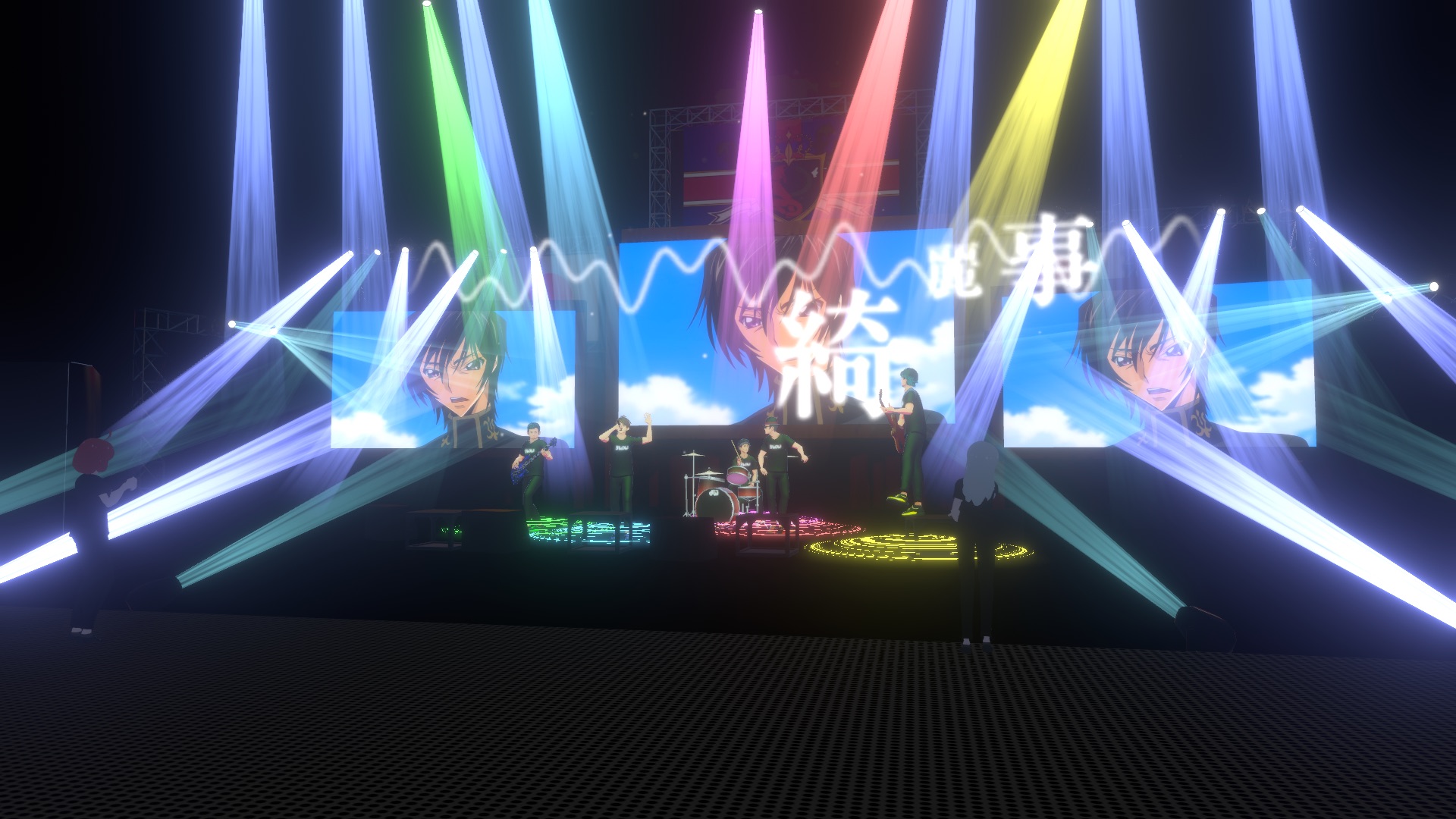
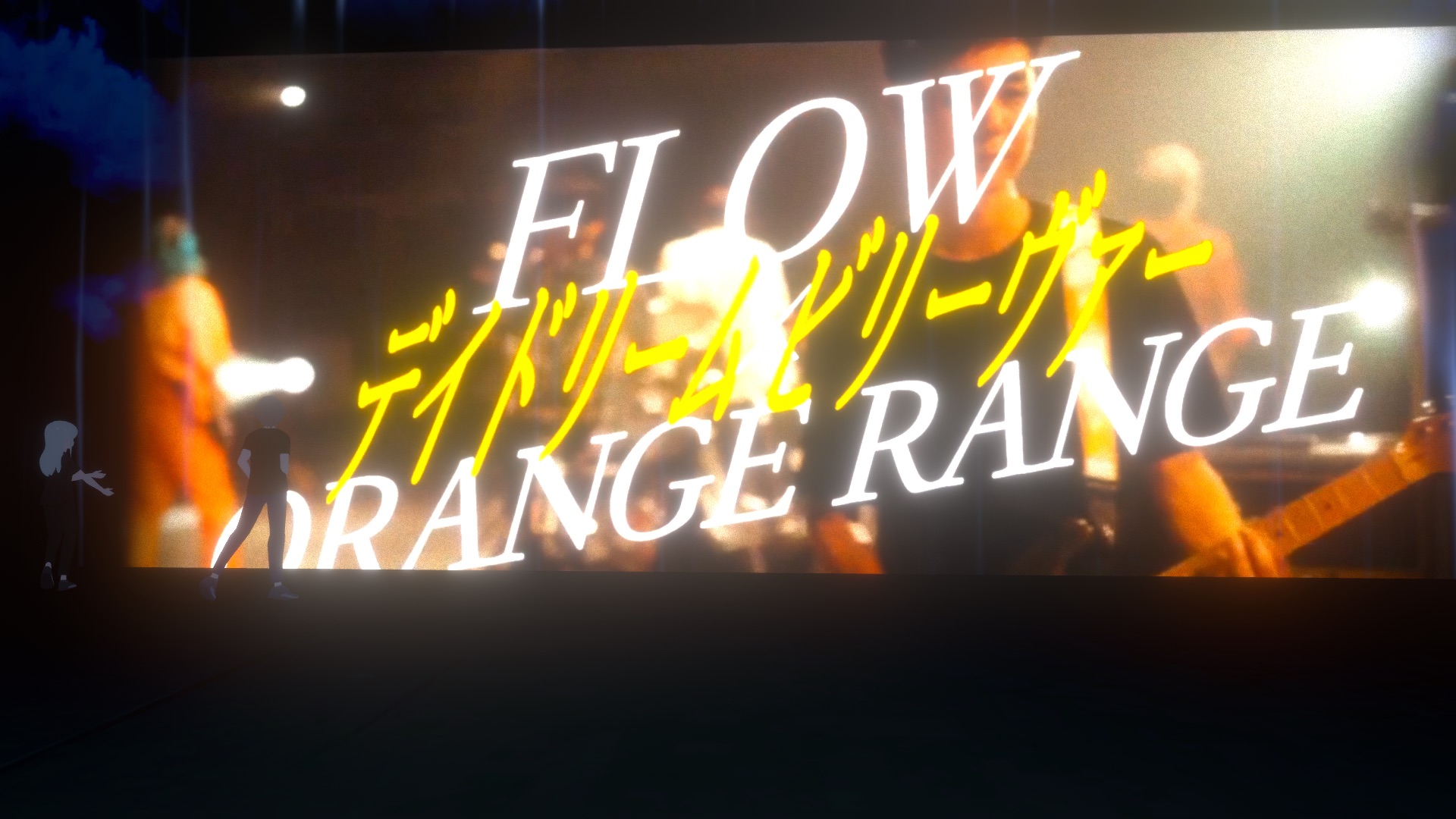
The actual concert consisted of five parts, each time starting with a speech from Lelouch (voiced by Fukuyama Jun), which was then followed by a song performance from FLOW. There were actually two ways to view the concert: VRChat and a Japanese streaming service called Showroom. Because of my own confusion, I actually watched the first song in Showroom, which acts more like Youtube or Twitch, but is aesthetically set up to resemble a simplistic movie theater. At first, I figured this was just the way the concert was, until I saw a bunch of 3D models run right in front of FLOW, clearly showing that Showroom wasn’t the only way to experience the event. That’s when I decided to switch and try VRChat after all, despite some earlier troubles.

One thing that complicated this process was that joining each part of the concert meant having to leave VRChat and click a link that would then send a message to VRChat with a special invite to the next “world.” The need to jump back and forth was a bit unintuitive, and I actually missed the 2nd part of the concert as a result before I figured out how the whole thing works. Once I got back on track, things finally fell into place.

This is when I finally understood exactly what Gugenka meant by having “instances” that allow their virtual events to have some flexibility for viewers. In the case of this Code Geass x FLOW concert, one could join in real time to mimic being part of a public concert, or one could join at a specific moment so that you can either coordinate with a smaller group or to make sure you didn’t miss anything. This isn’t permanent, however, as there were still specific overall time frames where the concert parts were available, and then they would go away. The difference is that if you missed something by, say, 10 minutes, you still had 45 minutes to watch from the beginning.
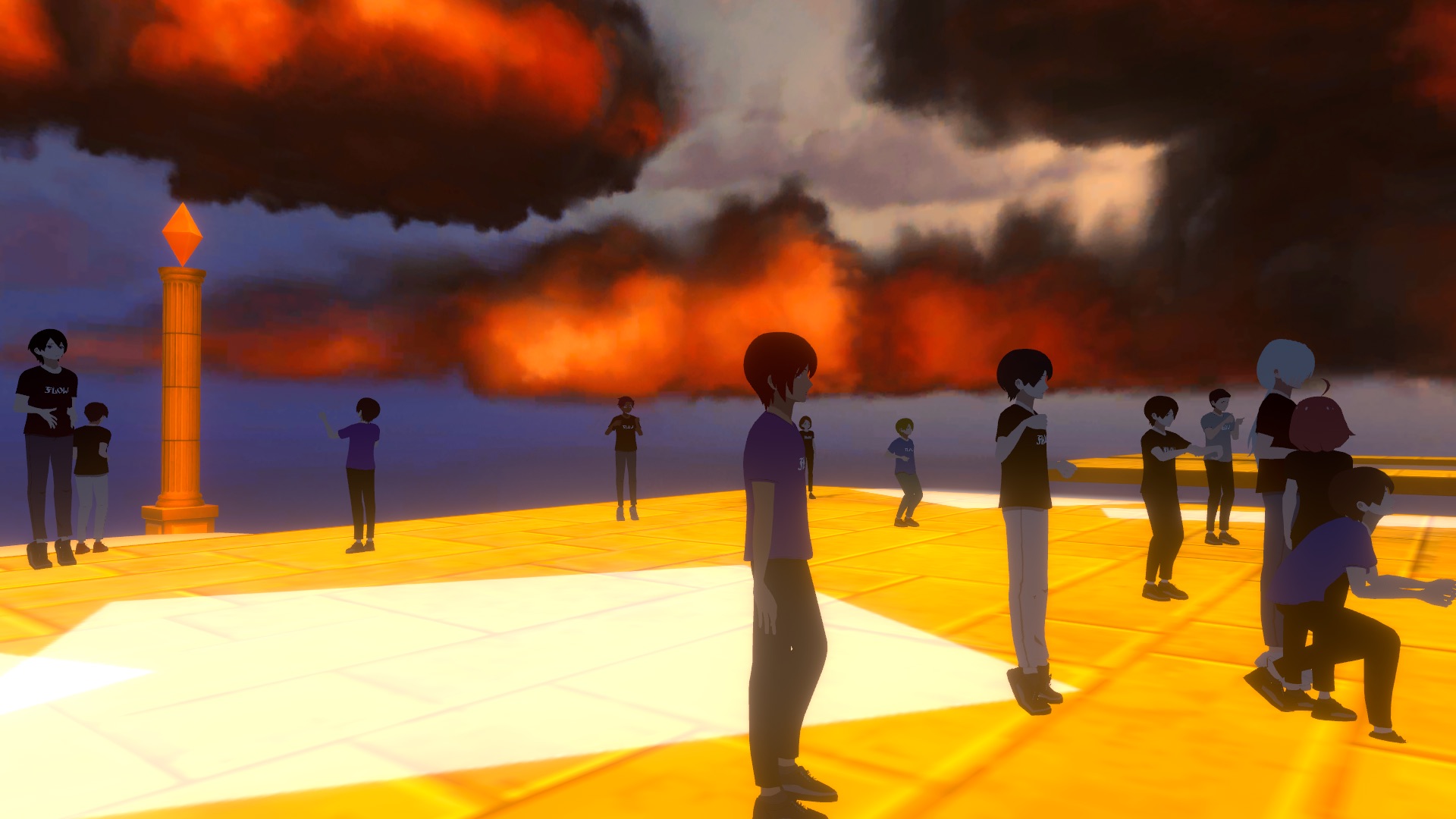
I don’t know if it’s because I started with Showroom and ended with VRChat, but in Part 1 of the concert, FLOW was being shown as video footage of the actual members, whereas after that, they were 3D models. In the VRChat experience, it was amusing to see people running up to the stage to get as close as they can to FLOW, while others would use the squat command to make viewing easier. The music was great (of course), but in some ways, the people-watching was better. I remember seeing one attendee in particular swaying and moving with a clear joy over getting to be there. 

Tickets were 6,600 yen minimum, with a deluxe package that costs a great deal more. I don’t regularly attend concerts, virtual or otherwise, so I thought it was kind of steep. That said, understanding the kind of experience it’s supposed to be, and knowing that other virtual events cost similarly, I think I would pay for the right event. It also costs a lot less than actually flying to Japan to see a band in the flesh. 
While the virtual experience can’t be a full replacement for a live performance, there’s a bit of joy in knowing you’re experiencing the same thing as people living in Japan. It also creates a great opportunity for those who don’t have the means to travel for concerts to do something more interactive. Especially in a time when COVID-19 is still affecting people around the world, it’s also a solid choice for those who are too afraid to travel to another country.

I want to end by talking about a funny incident that occurred. For one song, I hopped into the VRChat world, only to find myself somehow transported a great distance away from the waiting room. Confused, I tried getting closer and closer to the space, only to start hearing chatter from Japanese attendees who were discussing someone who looked to be stuck. Soon, I realized that the person they were talking about was me, and they were trying to help me get out of whatever weird glitch I was in. After resolving the issue, they asked if I was okay—to which I jumped up and down to show everything was fine. The way these random people looked out for me put a smile on my face, and it actually made the concert more enjoyable overall. 

I’m not going to say that this is a universal experience for virtual spaces, but it reinforced the interpersonal connections these sorts of events can provide.
Domon Kasshu, Tenjou Utena, and the Witch from Mercury

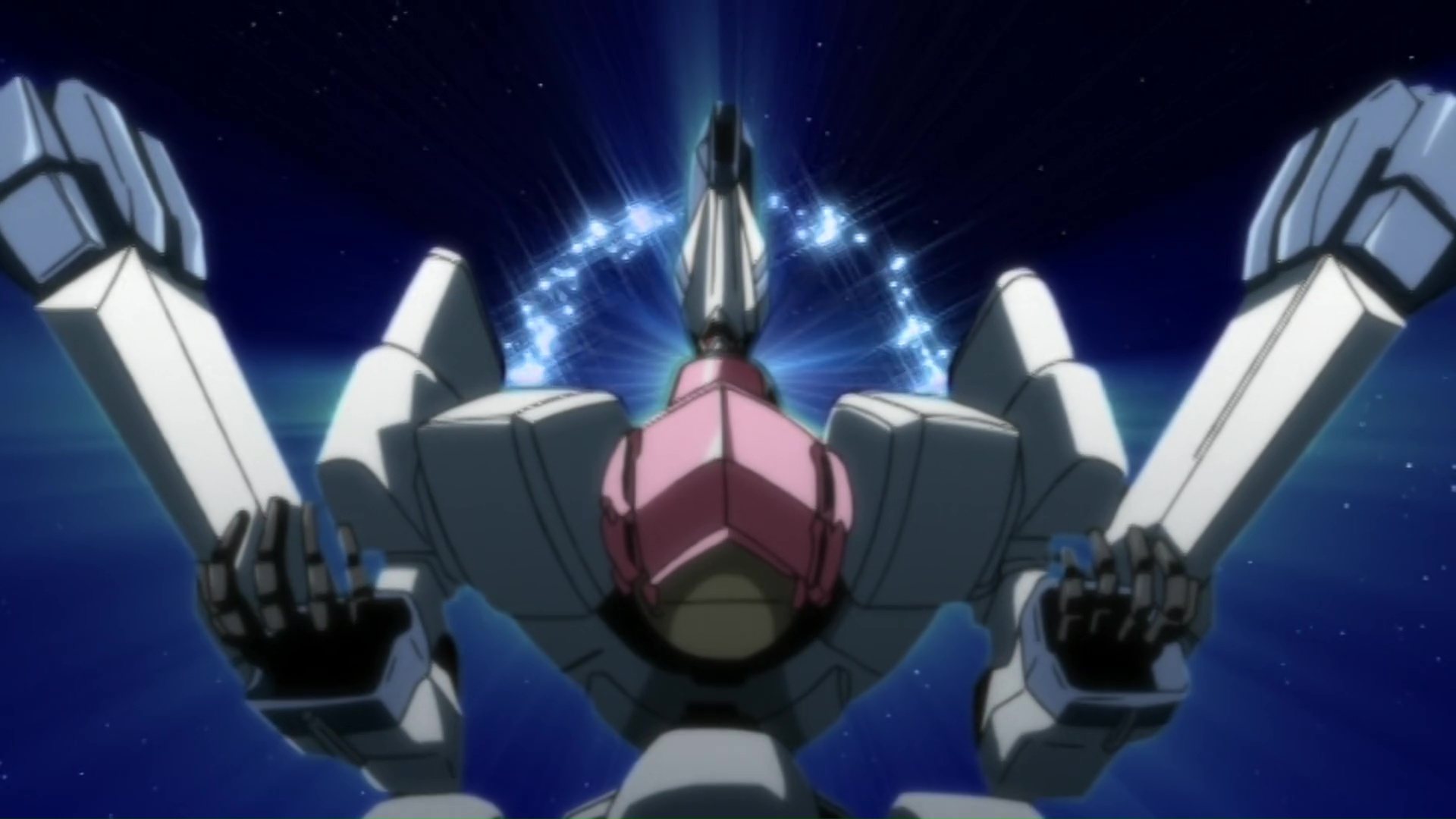
Many viewers have remarked on the similarities between The Witch from Mercury and another anime, Revolutionary Girl Utena. Both feature heroines having to protect a prized bride in ritualized duels that involve cutting off a symbol to win (an antenna and a rose, respectively). It’s hard not to make the comparison. But I think the fact that we are seeing “Utena Gundam” so readily embraced is a sign that the Gundam fandom has progressed in ways I couldn’t have seen years ago. This is especially the case when looking at a different spiritual predecessor to The Witch from Mercury, 1995’s Mobile Fighter G Gundam.

There was a time when G Gundam was the black sheep of the family. Eschewing the backdrop of war for a gigantic mechanized fighting tournament, many fans regarded it as antithetical to what Gundam was supposed to be. But as the decades have passed and new fans have come to the franchise and brought new perspectives, the notion of Gundams in formal duels isn’t viewed in such a negative light anymore. We even got a tournament anime about fighting with Gundam model kits! There might be an inherently ridiculous quality that seems to (double) harken back to 70s super robot shows like UFO Robo Grendizer, but that doesn’t mean such a series can’t be serious and insightful in its own way.

The larger setting of The Witch from Mercury, beyond the school, clearly sets up a world where the shady politics of militarism and capitalism shape events in ways worth analyzing that feels very current but connected to the past. When the duels are viewed in this context, they feel not so much separated from the outside as connected to the larger problems that exist. In this sense, it truly does feel like the child of G Gundam and Utena, but also the grandchild of Gundam itself.

I Started Reading the Saint Seiya Manga

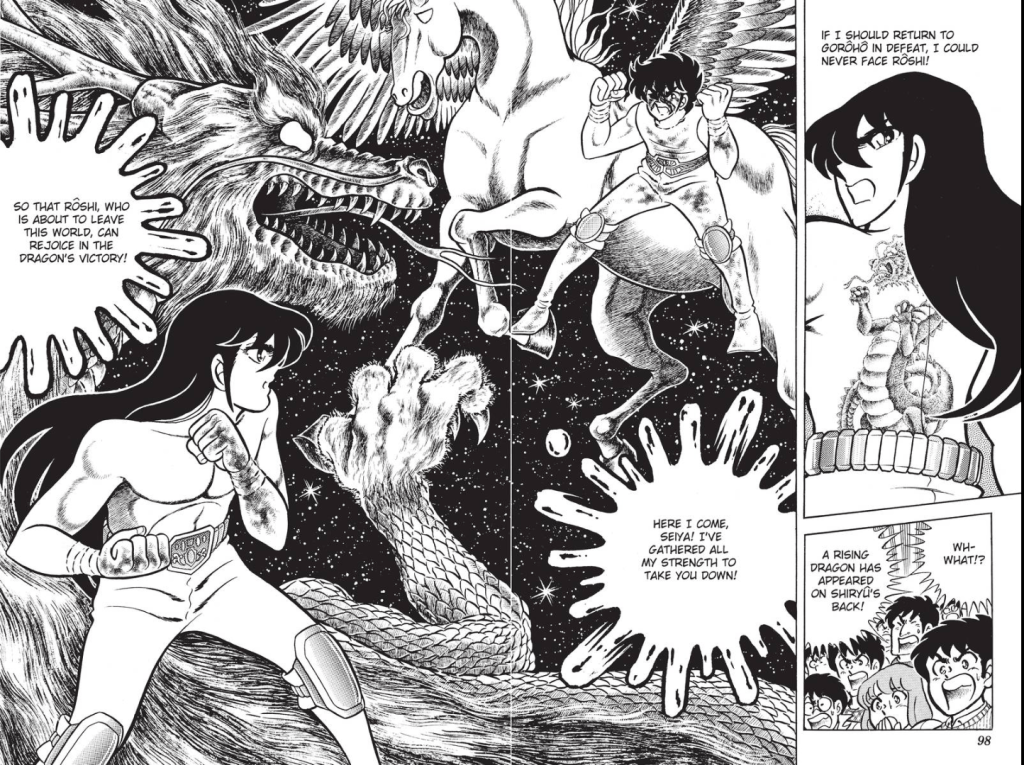
Pegas Seiya and Dragon Shiryu facing off with their armors shattered, their respective constellation animals prominently shown in the background

Saint Seiya is a series I’ve long known about, but one I’ve never really engaged with at its core. Sure, I loved Saint Seiya Omega. The opening theme and anthem of the franchise, “Pegasus Fantasy,” is always great at karaoke. When the characters came around on SaltyBet, things were bound to get interesting. And years before all that, I caught episodes of the English dub that committed the sin of replacing the aforementioned anthem with a middling cover of “I Ran.” Yet, I put off experiencing the original works—until now. I began to read the manga (available in English on the Shonen Jump app), and I certainly have Some Thoughts.

Because of subcultural exposure and the fact that I explore and research a lot about manga, I already have an image in my head of Saint Seiya as a work about guys teaming up to fight gods from Greek mythology using special celestial armors called “Cloth.” I know it is the pioneering work in the “boys in armor” subgenre from which spawned works like Samurai Troopers, Shurato, and Reideen the Superior. I’m fully aware that in terms of worldwide popularity, the US is the exception rather than the norm: the franchise is a beloved classic. And as for its reputation for featuring pretty boys engaging in passionate battles rife with blood and tears—a combination that has made it a hit with all genders—that really says it all. Intensity, thy name is Saint Seiya. What I wasn’t prepared for is just how different the manga feels at the beginning, and how many twists and turns it takes even in the first handful of chapters.

Nothing says a certain series or franchise has to stay the same forever. Consistency can be good, but it’s not the only path to greatness. When it comes to classic Jump manga especially, there’s more than a few examples of significant pivots. Kinnikuman starts as an Ultraman parody and ends up as a wrestling story. The card game that defines Yu-Gi-Oh! in pop culture was originally a one-off story. YuYu Hakusho goes from detective mysteries to tournament arcs galore. While Saint Seiya doesn’t stray quite that far from its early roots of armored boys fighting fiercely, there are definitely points at which it feels like the author, Kurumada, was playing it by ear. 

There’s a lot about different characters defying established order without readers having knowledge of what that order is, exemplified by the protagonist Seiya. He’s trying to find his sister, and in order to do so, he has to get this magical Greek armor, but then he refuses to play by the rules and instead escapes to Japan to…enter a tournament? But even that ends up being a pretense to meet the other “Bronze Knights,” who are adversaries turned eventual allies. And the incarnation of the goddess Athena, whom they’re apparently meant to fight for, begins the story as a snobby rich girl whose dad has adopted like a hundred orphans to be potential Cloth bearers. Well, okay.

Saint Seiya seems more built on spectacle than anything else, or perhaps its plot is just a pretense for putting on display these cool guys in hot fights. I say that not as a criticism but more as an observation, because I think that such an approach does make for a memorable work, as it’s more about the aura of excitement than trying to dot every “i” and cross every “t.” This early on, I know that Saint Seiya hasn’t reached the pinnacle of its power level yet, and I think I’m going to appreciate that journey. 

Right-Wing Scare Tactics, Midterm Elections, and the Attack on Fandom

Election Day in the United States is only days away, and it’s a midterm with major consequences. From my previous writings, I think it’s clear that I have fairly progressive and left-leaning politics, and in this case, I am concerned that Republican wins will harm the US in numerous ways. From the environmental crisis, to the right to abortion, to gun deaths, to bad economic policies, to public safety in the face of an ongoing pandemic, to the undermining of democracy itself through election denial. But another topic has concerned me lately, and while it’s a bit small potatoes compared to the above-mentioned subjects, I think it ties into the generally fascistic threats that are happening: the attack on fandom.

Recently, right-wing media has been spreading a false story about a student supposedly identifying as a cat and receiving a very public litter box at school. It plays on the fear that accommodating trans people will lead to a slippery slope of moral degradation, and this tactic also attacks teachers and public education. It also clearly puts a target on the backs of furries. To see such vitriolic rumor-mongering about that group on primetime cable TV in 2022 (instead of 2002 on Something Awful) is disconcerting because I think it‘s part of a larger effort to remove spaces for inner exploration through fandom.

Even for a cisgender, heterosexual person like myself, being in fandoms has helped me learn about myself and to broaden my perspectives on various topics, including but not limited to gender and sexuality. Using fandom to find out what you like and don’t like, and then deciding whether or not to interact with others through a shared media experience, can be a very rich and rewarding experience that helps one grow emotionally. Over the years, it’s become increasingly obvious that fandom can help people to realize their identities, be it LGBT+ or otherwise. My fear is that right-wing politics seeks to remove all spaces, online and offline, where people who do not conform to their narrow values can be themselves.

I’m well aware that the description of fandom I just gave is a bit rosy, and that there are toxic elements to fandom that don’t originate with right-wing politics. But I think the general threat of disinformation and using false morality as a tool to leverage power is far greater from the right wing.

Scaring parents by showing freaky fandoms goes hand-in-hand with banning gender-affirming care, and it altogether might drive enough ill-informed people to the polls who mistakenly believe they’re saving America. Trans people, furries, and so many other marginalized groups have been used as scapegoats to distract voters from bigger problems. It’s the Satanic Panic. It’s violent video games. It’s every other fear-mongering propaganda about hobbies meant to scare people into voting against their best interests. I hope we don’t let the same mistake happen.

The Results Matter: Ogiue Maniax Status Update for November 2022

The new anime season is in full swing, but while I’m enjoying the hell out of so many things (like Gundam: The Witch from Mercury!), my mind is on the upcoming US midterm election. I plan on (sort of) following up with my thoughts on this subject in a few days but for now, I’m using this time to encourage citizens to vote however they can: in person on Election Day, by mail, by early voting, anything.

I’d also like to thank my Patreon subscribers for this month of November 2022.

General:

Ko Ransom

Diogo Prado

Alex

Dsy

Naledi Ramphele

Sue Hopkins fans:

Serxeid

Hato Kenjirou fans:

Elizabeth

Yajima Mirei fans:

Machi-Kurada

Blog highlights from October:

Gattai Girls 12: “Idolmaster Xenoglossia” and Amami Haruka

After like two years, Gattai Girls is back with a new entry!

Evangelion + Beavis & Butt-Head = Chainsaw Man

Call it an epiphany?

Rock-Troll Remake: “Mobile Suit Gundam: Cucuruz Doan’s Island”

My review of the nostalgic Gundam movie.

Kio Shimoku

A sparse month of comments, but his tortoise is feeling better!

Apartment 507

Thinking about VTuber Gawr Gura’s recent animated short relative to other bonus animations.

Closing

Congratulations to Brazil for making the right choice and not re-electing an authoritarian nationalist who cares more about his self-image than the wellbeing of the people (sounds familiar).

How about I make some Saint Seiya posts to celebrate?

Kio Shimoku Twitter Highlights October 2022

More tortoise talk (and a COVID booster) for our beloved Genshiken creator this month!

Kio loves ICO, and is making jokes with others about treating September like the girl from the game.

After taking medicine, the pet tortoise is no longer having snot issues!

The tortoise relaxing. When asked if it ever hibernates, Kio mentions that he never tries to make it hibernate because it’s scary to do so.

Kio agrees with a commenter that the tortoise kind of looks like a croissant sandwich.

The legs coming out as they are is a sign that the tortoise is getting warm.

Kio got his fourth COVID vaccine shot! He took some Bufferin to deal with the side effects.

Kio had a dream where he was going to school again. As is typical of such dreams, he was late to school, he forgot his textbook, he couldn’t find his classroom, etc.

Kio responds with amazement that b the Hashikko Ensemble fan managed to find the reference for the hot spring location used in the manga.

Kio asks why his manuscripts have to emerge from his mind the way they do instead of making it easier on him.

Kio finds a livestream featuring manga artist Kuroi Midori, analyst Koizumi Yuu, manga artist Hayami Rasenjin, and editor Iida Takashi to be quite powerful.

Kio’s plan to set up a camera in his room to keep track of his tortoise has gone better than expected.

Kio is looking forward to the season premiere of How Do You Like Wednesdays? He’s talked about it in the past August and September as well.

Kio went to a batting center for the first time in about 30 years. The speed of the balls was scary. Though he did play in a softball club as a kid and was pretty good at it, it also has been almost 40 years. He did manage to hit a home run, though!

New York Comic Con 2022 and the Long-Lost Hand of New York Anime Festival

The story of New York Comic Con has long been a move increasingly towards mainstream nerd culture. But what happens when that culture changes into one where comics have ascended?

For years now, I’ve associated this convention with prestige TV shows and superhero movies above all else. Comics are still paid lip service and the Artist Alley still brings some of the biggest names you can imagine, but my attendance and attention have waned over time. Even this year, I only went one day when in the past it would have been three or four. But when I was there, I couldn’t help but notice the remnants of New York Anime Festival, once upon a time absorbed into its bigger and more popular brother we call NYCC, emerging with new life.

It would be inaccurate to treat NYCC like an anime con, but the industry presence in the Exhibition Hall was very noticeable. Big booths for Gundam, Yu-Gi-Oh!, and various anime and manga companies littered the space. And when it came to cosplay, the amount of Demon Slayer, Jujutsu Kaisen, etc. was hard to ignore. There were plenty of other things (including some very excited folks in Cobra Kai uniforms eager to meet John Kreese’s actor, Martin Kove), yet it felt like Cool Japan stepped one foot out of a casket.

I have to wonder if this stems from the big boost anime and manga have gotten during the pandemic. Ever since COVID-19 forced major changes on how people live, one consequence was that people’s entertainment habits changed. Among these shifts were a massive increase in book sales, and among them graphic novels blew up. But among the boom of graphic novels, manga had ascended even further. Anime and manga are almost undeniably mainstream now (at least when it comes to certain major titles), and perhaps it’s only natural for the mainstream-chasing New York Comic Con to follow suit to some degree.

Gattai Girls 12: “Idolmaster Xenoglossia” and Amami Haruka

Introduction: “Gattai Girls” is a series of posts dedicated to looking at giant robot anime featuring prominent female characters due to their relative rarity within that genre.

Here, “prominent” is primarily defined by two traits. First, the female character has to be either a main character (as opposed to a sidekick or support character), or she has to be in a role which distinguishes her. Second, the female character has to actually pilot a giant robot, preferrably the main giant robot of the series she’s in.

For example, Aim for the Top! would qualify because of Noriko (main character, pilots the most important mecha of her show), while Vision of Escaflowne would not, because Hitomi does not engage in any combat despite being a main character, nor would Full Metal Panic! because the most prominent robot pilot, Melissa Mao, is not prominent enough.

— 

At face value, Idolmaster: Xenoglossia is a perplexing title. Why in the world would the very first anime for The iDOLM@STER, a video game about managing Japanese idols, be a mecha series where the girls strive to save the Earth rather than give successful stage performances? When you get under the surface, though, it results in an even greater cognitive dissonance between the franchise’s origins as an idol sim franchise and this science fiction story ostensibly built on its foundation.

The confusion begins from the very basis of Xenoglossia. The premise is that high schooler Amami Haruka is unexpectedly recruited to potentially become one of the “Idolmasters,” pilots of world-defending robots called iDOLS. Outside of Xenoglossia, the name of the franchise refers to the player as an idol producer. That’s a simple enough change to accept given the story’s setting, but where the show throws the hardest curveballs is the portrayal of its characters.

Despite this being a franchise where fans support the actors who play their favorite idols, the entire voice cast was changed for Xenoglossia. It’s an extremely odd decision in hindsight, but what makes it all the more strange is that the changes don’t stop there: age, size, personality, and more are drastically altered to the point that many characters become almost unrecognizable. The best example is the character of Takatsuki Yayoi. In The iDOLM@STER proper, she’s a small and energetic girl in her early teens known for her high-pitched voice and signature squeal of excitement. In Xenoglossia, she’s noticeably taller and bustier, is the only actual conventional idol in the show, loves to wear mascot outfits), and is much more antagonistic towards Minase Iori. 

I’m not a huge The iDOLM@STER fan, but I’ve watched the anime and have a decent idea of the core cast and their personalities. On some level, it’s impossible for me to fully divorce my preconceived notions, but this level of change is beyond rare. The closest example I can think of is the first Comic Party anime, where a high schooler got aged up and a middle schooler got aged down for seemingly no reason. It’s as if the creators of Xenoglossia just looked at some preliminary character sketches and just went their own way without regard for the source material. 

Funnily enough, the only character who’s mostly like her original self is the franchise’s flagship heroine and Xenoglossia protagonist, Amami Haruka. Her personality remains optimistic and hard-working, though tinged here with a bit of self-doubt as to what she’s capable of. But when she’s surrounded by an endless parade of bizarre doppelgangers, something always feels a little off. If one can ignore that to a degree, the show gets more enjoyable.

In terms of Haruka or any other character’s portrayal as giant robot pilots, they’re never upstaged by any male characters swooping in to save the day; in fact, there aren’t any male pilots at all. Different characters struggle with different aspects of being Idolmasters, and much of the plot is built around striving to overcome those challenges. There’s also a great deal more nudity and sexual behavior (including possibly incest?!) than would be expected of something based on The iDOLM@STER—which might be a dealbreaker for those who strongly believe in the whole “idol purity” concept, but still feels kind of odd for even those of us who don’t.

The relationship between the Idolmasters and their iDOLS also arguably runs counter to “idol purity” because the way they talk about the robots makes them seem on some level like giant mechanical boyfriends—especially the main iDOL, Imber. The robots are shown to be sentient on some level, and the way some characters work to become worthy of and accepted by the mecha while others treat them like companions comes across more like romantic fiction at times. The entire setup of Xenoglossia is conducive to this, showing itself to be the kind of anime where the requisite to becoming Idolmasters has angst-filled drama baked in.

Idolmaster Xenoglossia we got could never be made today. It came out at a time when The iDOLM@STER was a much smaller deal, as evidenced by the fact that the girls are all based on their designs from the first game rather than the revised versions from The iDOLM@STER 2 that have since been codified. This early on, Xenoglossia followed in the fine (?) tradition of titles like Lunar Legend Tsukihime, where it was assumed that a fledgling idol manager franchise needed a boost in star power and storytelling from the anime industry. Now, the shoe’s on the other foot, and if they were to attempt this again, it’d be all but inevitable that the characters would adhere much more closely to their original selves. It’s a historical curiosity, indeed.

Kindness Is a Talent: Deaimon

When a prodigal son returns from a middling music career in Tokyo to the Japanese confectionery shop he called home, he meets his successor: an elementary school girl whose father left her behind. This is the story of Deiamon: Recipe for Happiness, an anime about human connections that manages to be a quiet and heartful yet pleasantly unpredictable story.

What I really enjoy about Deaimon is the unconventional nature of both its protagonist and his relationships. Irino Nagomu (the aforementioned musician son) is a goofy and scatterbrained sort, but his kindness towards others shines through in everything he does, from his strange folksy songs to the attention he pays to the shop’s customers. While the little girl, Yukihira Itsuka, often sees Nagomu as woefully unreliable, they form a bond that can be described as somewhere between “dad and daughter” and “big brother and little sister,” all without any suspicious elements that mar other similar works (*coughBunnyDropcough*).

Nagomu and Itsuka aren’t the only two characters. Nagomu’s parents provide a connection to the tradition of delicate wagashi-style sweets that make up the aesthetic basis of the show, and this bridge between past and present reminds me a bit of the series Hanasaku Iroha. Later, Nagomu’s ex-girlfriend shows up, and the way Deaimon gives attention and care to its portrayal of their history (as well as the complicated feelings that arise) gives further credence to what I said about seeing relationships uncommon in anime.

Deaimon isn’t filled with astonishing plot developments, but it isn’t an aimless slice-of-life work either. Rather, its low-key-drama vibe makes for a hearty dose of emotions that somehow both soothe the soul and excite the spirit. Deaimon heals, invigorates, and makes the world look like a better place, even through the darkness.

Paying It Forward: Love Live! Superstar!! 2nd Season

In 2021, the first season of Love Live! Superstar!! made a powerful impression on me. With its tightly written story centered around heroine Shibuya Kanon’s lifelong struggle with performance anxiety and stage fright, it stood out in a positively memorable way. One of the aspects that helped the storytelling was its relatively small cast of characters compared to the Love Live! franchise standard, so when it was announced that Season 2 of Superstar!! would nearly double the main group from five girls to nine, I worried that the series might lose what made it work so well.  Fortunately, my fears were unfounded, and Season 2 has turned out to be a solid follow-up that does a good job of playing off its predecessor—and also introduces my favorite member in the process.

Love Live! Superstar!! 2nd Season picks up from where the first left off. The elite Yuigaoka Girls’ High School has accepted the School Idol Club and their group, Liella! Kanon has managed to overcome her issues and can sing loudly and proudly on stage. There’s unfinished business in that Liella! couldn’t make it past the preliminaries of the Love Live! competition. The character arcs are mostly resolved, do the question becomes, what story do they tell given that fact?

The answer is to introduce new girls and place an emphasis on a senpaikouhai dynamic that isn’t really present in other Love Live! anime. While other series actively celebrate the lack of such hierarchical distinctions, Superstar!! 2nd Season puts it front and center. That’s not to say it’s big on seniority, but the perspectives provided by experience becomes a key factor in the narrative.

The senpai characters do receive episodes of their own (like a hilarious one about gamer addiction), but they seem to get less screen time overall, and even theirs will link back to the new girls in some way. This is likely by design, as it not only does this work to introduce all the first-years, but it provides a clear indicator of progress for the original five as seasoned school idols who must mentor the next generation. After all their hard work, Kanon and the other senpai have gotten so good that they accidentally scare off most of the new student body, who are too worried about not being able to live up to the standards set by Liella! Like the ongoing debates over fighting game design, Superstar!! 2nd Season asks what is the right balance between granting accessibility and rewarding ambition. 

Superstar!! 2nd Season idoes a good job of differentiating the new girls from their upperclassmen, though they can at times feel a little less three-dimensional. The big sticking point is that they seem to adhere more to anime character archetypes, but they’re developed well enough that it becomes less of an issue over time. Also, I have to admit that I myself can be a sucker when the tropes fall in my favor, such as in the case of my Liella! favorite, Wakana Shiki. She’s an aloof scientist with a secret soft side, and her similarities to Nunotaba Shinobu from A Certain Scientific Railgun (including liberal peppering of English phrases into her speech) is both noted and highly welcome.

As Superstar!! 2nd Season progresses, it gradually brings the focus back to the original girls of Liella!, reviving and adding new angles to some of the challenges from Season 1. For example, a rival antagonist shows up who reignites criticisms of school idols as being inherently mediocre artistically, adding a bit of Zhong Lanzhu–esque flair along the way. But the lessons Kanon has learned from her own challenges and the results of that mean her answers to the questions posed to her reflect the positive changes she’s made.

Overall, Love Live! Superstar 2nd Season manages to be a great continuation that builds on a solid foundation. While it risks getting bloated, its broader character dynamics help to mitigate that concern. What results is an anime that shows what Love Live! is capable of.