Kio Shimoku Twitter Highlights September 2021

Much of Kio’s tweeting this month has had to do with the fact that Hashikko Ensemble Volume 7 went on sale on the 22nd, and Spotted Flower Volume 5 is out on the 30th…on top of Chapter 44 of Hashikko! There are lots of inevitable scheduling woes, but he’s actually also been responding to and retweeting readers in a concerted fashion for the first time.

Even I got a retweet!

Hashikko Ensemble and Spotted Flower Releases

Hashikko Ensemble Volume 7 cover check. Kio seems fine with it.

All Spotted Flower volumes have a plastic cover jacket with characters in clothes that obscures a second paper cover jacket with the characters in underwear. Kio gives a sneak peek here.

Kio mentions that there are store-exclusive extras for Spotted Flower.

Kurotaki Mai in a bunny outfit, as a late celebration of Bunny Day, but also to promote the new release.

The next chapter of Hashikko Ensemble has a ridiculous amount of lyrics and musical effects, but while the work seemed to never end, it’s finally almost over.

With the work on both upcoming volume releases more or less over, Kio decides to do some cleaning.

Kio discusses with 18+ manga artist Ikuhana Niro (who also publishes in Rakuen: Le Paradis) about ways to abbreviate Hashikko Ensemble and Spotted Flower in Japanese. Ikuhana uses HashiAn and SupoHana, while Kio originally uses Hashikko and SupoFura, but also Spotted in hiragana or katakana. Supote is brought up, with the idea that it sounds like Ponite (ponytail).

The Rakuen: Le Paradis Twitter account chimes in that Supote is one sale 9/30.

Kio responds with thanks to those who tweeted about supporting the release of Hashikko Ensemble, Volume 7. He doesn’t quote tweet readers all that much, so it feels special. 

A fan mentions that they’ve always liked Genshiken and stuff, but only recently got into Hashikko Ensemble and wish they did so sooner. Kio tells them to enjoy it at their own pace.

Kio mentions that there are store-exclusive bonuses for Volume 5 of Spotted Flower. (I’ll be getting the Ogino-sensei ones from Melonbooks and Animate.)

A drawing used for promotional store displays for Volume 5.

Kio talks about how intense the Basso Masters from Hashikko Ensemble are.

Kio talks about how he couldn’t find any footage of a three-girl group singing “Zenryoku Shounen.”

Showing his drawing of the Chorus Appreciation Society performing “Etupirka” versus an actual performance.

Other Works

In response to a TSUTAYA bookstore showing its display bookshelf for manga artist panpanya, Kio responds that it’s sandwiched in one hell of a place, given the shelves on each side (Blue Lock, Demon Slayer).

Kio up until recently still was not a fan of Kurita Kan’ichi as the voice of Lupin III ever since he took over the role in the 1990s. However, he’s noticed that rather than sounding like an imitation, Kurita’s performances now have a weight and seriousness that has allowed Kio to finally accept his Lupin.

Fanart of Isako from Dennou Coil. (WATCH DENNOU COIL!)

Kio sees Five Star Stories models and reminisces about when he built his first resin-kit Akatsuki from that series.

Kio retweets an article talking about a journey with toy soldiers that began from a panpanya manga.

Unknown

Kio talks about the good work an “Akio-san” did on photos. What it means is still unclear.

Looking Ahead

This was a pretty tweet-heavy month for all the reasons above. I get the feeling we’ll be seeing less for October, but you never know.
I also posted these highlights right before the 9/30 release date of Spotted Flower Volume 5, so I’m sure I’ll be covering a lot just from that!

Orihara Kousei Has a Posse: Hashikko Ensemble, Chapter 44

All the members of the Chorus Appreciation Society singing together intensely.

Summary

The Christmas-themed concert at Kousei’s orphanage continues, with the two sides (Christmas crew vs. Namahage Tsuyamers) joining together to sing a couple of songs as one. Kozue (still dressed as God) announces them as the Hashimoto High Chorus Appreciation Society, or “Hashi-kou Ensemble” for short.

The kids in the audience enjoy their performance, while Rikurou (the delinquent kid) is especially surprised by Kousei’s impressive singing. The orphanage’s assistant director thinks back to when a young Kousei first listened to a chorus concert himself. Later, Kousei has a heart-to-heart with Rikurou, where he talks about his dream: to buy a relatively inexpensive plot of land in a rural area, and use the architecture skills he’s learning in high school to build a house of his own where he can invite people over to listen to music.

During the concert, Jin notices Akira’s continued improvement in his singing—even in relatively higher notes, as opposed to the low notes that are Akira’s especially. Afterward, Akira casually mentions wanting to study music, which takes Jin by surprise. The caption at the end wonders how Jin will handle Akira potentially doing what Jin felt he never could.

They Said the Thing

Kozue, dressed as God, announces the group as the "Hashi-kou Ensemble"(Hashi High Ensemble).

This is the first time that the title of the series is (more or less) mentioned by the characters themselves, and it feels like a real milestone. What I think about is the sheer size of the group at this point, going from just Akira and Jin to around a dozen members. They’re on the verge of transitioning from appreciation society to full-fledged club, and I get a real sense of growth looking back at what’s transpired. 

At this point, there’s only one girl among the actual singers, and I see that changing as the story progresses. 

A Dream of a Home

Rikurou and Minori, kids at orihara's orpanage, being impressed by the singing.

Kousei is a character with a lot of layers, and I really love the reveal as to what he’s been working towards all this time. It’s strong and sweet, and encapsulates both the pain and healing that Kousei has been through. 

There’s potentially a conversation about toxic masculinity to be had here, though I don’t know if it’s necessarily limited to perceptions of manhood. What I do see is Rikurou’s previous anger towards Kousei for doing something decidedly uncool and unmanly in his eyes, and then how Kousei manages to change Rikurou’s mind about everything. Kousei’s masculinity is complex, and even though he’s quick to get into a fight, he’s also kind and caring in his own way, and even a bit vulnerable—like his bashfulness over Shion. During his talk with Rikurou, asks if Shion is his girlfriend, which Kousei strongly denies. We know, though, that he’s held back by the belief that he’s from a world too different from hers.

Songs

“My Neighbor Totoro” from the Studio Ghibli film

“Let It Go” (Japanese) from Frozen

Niji” (“Rainbow”) from “Itsu kara No ni Tatsute” (“Standing in the Field, Lost in Time”)

Kamome” composed by Kinoshita Makiko

As always, I have an ever-growing Youtube playlist of most of the songs featured in Hashikko Ensemble.

Final Thoughts

This was a good spotlight on Kousei, though I think the manga’s going to focus on other characters after this.

The series keeps building to some kind of confrontation between Akira and Jin, and I have to wonder when things will come to a head. 

“Gotcha!” and Pokémon Nostalgia, One Year Later

It’s been almost one year since Nintendo released their gorgeously produced Pokémon music video “Gotcha!” Even now, I find myself thinking about how amazing and emotional the short video is.

The song in the video, “Acacia” by Bump of Chicken, communicates a sense of both nostalgia and discovery; even on its own, its gentle and soulful sound makes it linger in my mind. When combined with the accompanying animation, however, it becomes something magical to those of us who have grown alongside Pokémon

“Gotcha!” features virtually every major and minor character from across eight generations of games, but I think it’s not merely the sheer amount of familiar faces that make the music video so impactful Rather, what it pulls off (with a sense of both elegance and down-to-Earth grit) is a celebration of what it’s like to make your way through one or more of the games—to capture those memories of triumph, accomplishment, and exploration.

With a big franchise like Pokémon, content is often traditionally made to celebrate what’s to come, as opposed to what has passed. There will always be new players, and while Pikachu and Charizard would remain popular even if you gave all existing fans amnesia, there’s a general aim towards a presentation that doesn’t delve too deeply into the lore and history of its world. “Gotcha!” defies that throughout its short timespan.

At one point, silhouettes of virtually every legendary Pokémon can be seen moving around the background, i.e. elements of the Pokémon single-player late game that are meant to communicate how far you’ve come in an adventure. These images then recede, and in their place are shadows of all the major antagonists from throughout the series—again, characters who are indicative of not the beginning but the end of these stories. The video then transitions to a gorgeously animated showcase of most of the league champions, whereas normally such characters would not be displayed in such close succession in advertising or merchandising. 

Later in the video, the remaining champions appear. Blue, the rival from the first generation, summons his six Pokémon while standing in front of a door and a couple of statues—portraying the moment after you defeat the Elite Four’s Lance and have to defeat Blue to take the title away from him. The attention to detail is notable, as all of Blue’s Pokémon are exactly the ones he would have if you picked Charizard as your starter: Pigeot, Alakazam, Rhydon, Gyarados, Arcanine, and Venusaur. The video then transitions to showing the battle on Mt. Silver between the player character from the second generation and the final boss of those games: Red, the player character from generation 1. In other words, this shift from fighting Blue to fighting Red conveys the passage of time through Red’s growth from player insert to final boss.

For those who don’t know anything about Pokémon, “Gotcha!” is plenty impressive, but what astounds me about the whole thing is that it just does an unbelievably good job of communicating and celebrating the nostalgia of Pokémon. It’s as if the music video captures not so much what happens in the games, but rather the memories that have been created through our experiences as players. It’s the sort of thing that can only happen with a series that has such a robust history and connection to its audience. 

Let’s Talk Evangelion in Shinkalion Z

Shinkalion Z 500 Type EVA, a robot that's a combination of Shinkalion and EVA-01 from Evangelion

It’s incredibly strange to go from the finality of the fourth Rebuild of Evangelion movie to seeing Shinji and Gendo characters show up in Shinkansen Henkei Robo Shinkalion Z, the fun-filled sequel anime about kids piloting bullet-train robots. What’s even more bizarre is that there’s a kind of thematic resonance between the two. The portrayals of the Eva characters in 3.0+1.01: Thrice Upon a Time and their Shinkalion Z appearances actually feel like they fit together.

Possibly due to its transportation and tourism connections, Shinkalion is famous for its unexpected pop culture cameos. A version of Hatsune Miku is a recurring character in the original Shinkalion. The franchise also makes multiple explicit references to city pop legend Yamashita Tatsuro, has Godzilla in a feature film, and showcases a Hello Kitty Shinkalion. It even just had a tiny Maetel from Galaxy Express 999 show up. Evangelion is just one of many pop culture icons to appear, but the sheer tonal difference between it and Shinkalion makes its presence all the more jarring on paper.

Ikari Shinji turning to face the viewer/the Shinkalion pilot Arata Shin.

Shinkalion already had a crossover with Evangelion in the first series, but whereas the main character back then (Hayasugi Hayato) visited Tokyo-3, here we have Shinji showing up in the world of Shinkalion. What really stands out about Shinji here is how gentle and reassuring he is in this world. The Shinji we see greeting the new protagonist, Arata Shin, has a calming presence that feels closest to the version of him we see towards the end of 3.0+1.01, as if parallel Shinjis arrived at the same place, only one had to go through some of the most dire trauma possible. The next closest would be the Shinji often found in Super Robot Wars after the positive influence of hotblooded pilots has rubbed off on him.

Not only does Shinji come across as a mature ment figure to Shin with the aura of a mentor, but he specifically mentions that he’s met a Shinkalion E5 pilot before. In other words, not only does the series acknowledge the previous Evangelion cameos within the world of the story, but we’re also likely seeing a Shinji who’s a little older. In a previous episode, it’s revealed that Shinkalion Z takes place in the world of the original Shinkalion after its climactic final battle, and reuniting with a Shinji with memories of what has come before actually creates a kind of anticipation for Hayato to return at some point.

Gendo sitting on a train platform bench next to some Shinkalion Z characters. The background is red and eerie, and Gendo's signature glasses are reflecting light.

As for Gendo (featured in the image at the beginning), he’s mostly played for laughs in terms of how incongruous he is with the relatively lighthearted world of Shinkalion. He says all the things you expect (“Shin, get in the Shinkalion”), but delivers it all with such a straight deadpan that it veers straight into parody territory. At the same time, his presence and demeanor feel reminiscent of a key scene in 3.0+1.01 involving trains, which makes the aforementioned resonance between that film and Shinkalion Z all the more noticeable. 

Ultimately, both Shinji and Gendo seem to be in better places in Shinkalion Z. While there’s nothing concretely saying so, I like to believe that the Shinji and Gendo of Shinkalion are better people because they have robots that are also trains—the kind of thing both father and son would probably enjoy, given their personalities and histories. 

Rei from Evangelion points at something, encouraging Asuka to take a look. Both are in their school uniforms.

Episodes are up on the official Youtube only until the following Monday EST, so anyone who wants to check out Shinji and the Shinkalion Z 500 Type EVA should do so as soon as they can. Unlike the last series, this episode actually has “Cruel Angel’s Thesis” for the streaming version.

The Gamble Is Afoot: Greatest M ~Mahjong Tournament of Eminent Figures~ Volume 2

Greatest M ~Mahjong Tournament of Eminent Figures~ starts with a premise that sounds like something out of a Type-Moon Fate series parody: What if famous figures from history competed in mahjong to inherit God’s position? And while there actually is a Fate mahjong series as well, this one works from the headline-worthy premise of having a cute anime-girl depiction of Helen Keller as the protagonist.

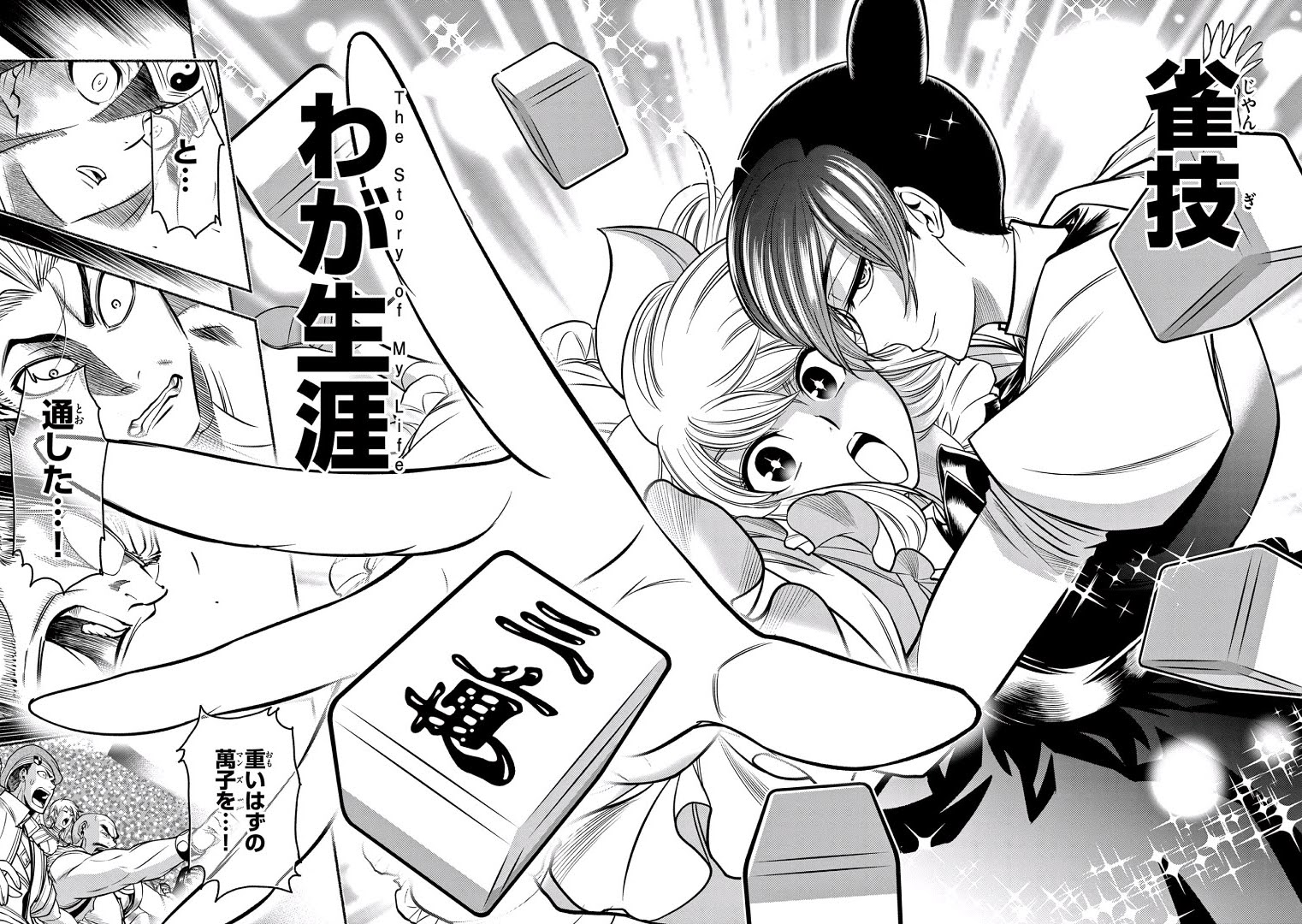
Volume 2 continues the story along largely expected lines: big hands being played by bigger personalities. Helen Keller’s “Miraculous Girl” title and ability are explained as her being able to stand up to even the greatest obstacles through her bond with Anne Sullivan—the moniker actually refers to both of them at once.

The results of the second match are decided off-panel, with a genderswap Toyotomi Hideyoshi emerging from a one-sided victory. While I’m not well versed in Japanese history, I’ve never seen the idea that Hideyoshi was really a woman, so I wonder where this might be going. In any case, the manga goes straight into the third match, which features three big names from France…and the world’s most famous detective.

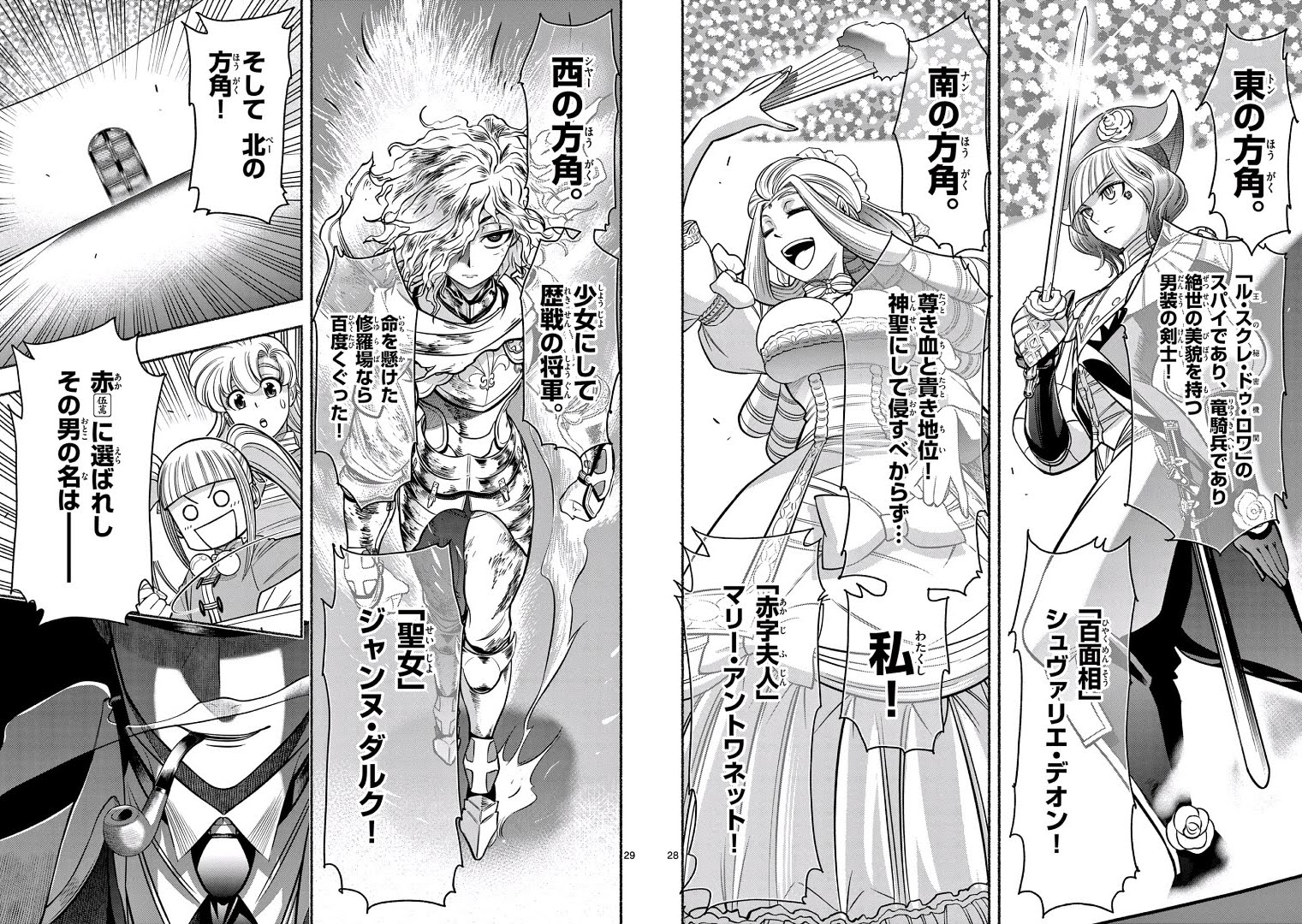
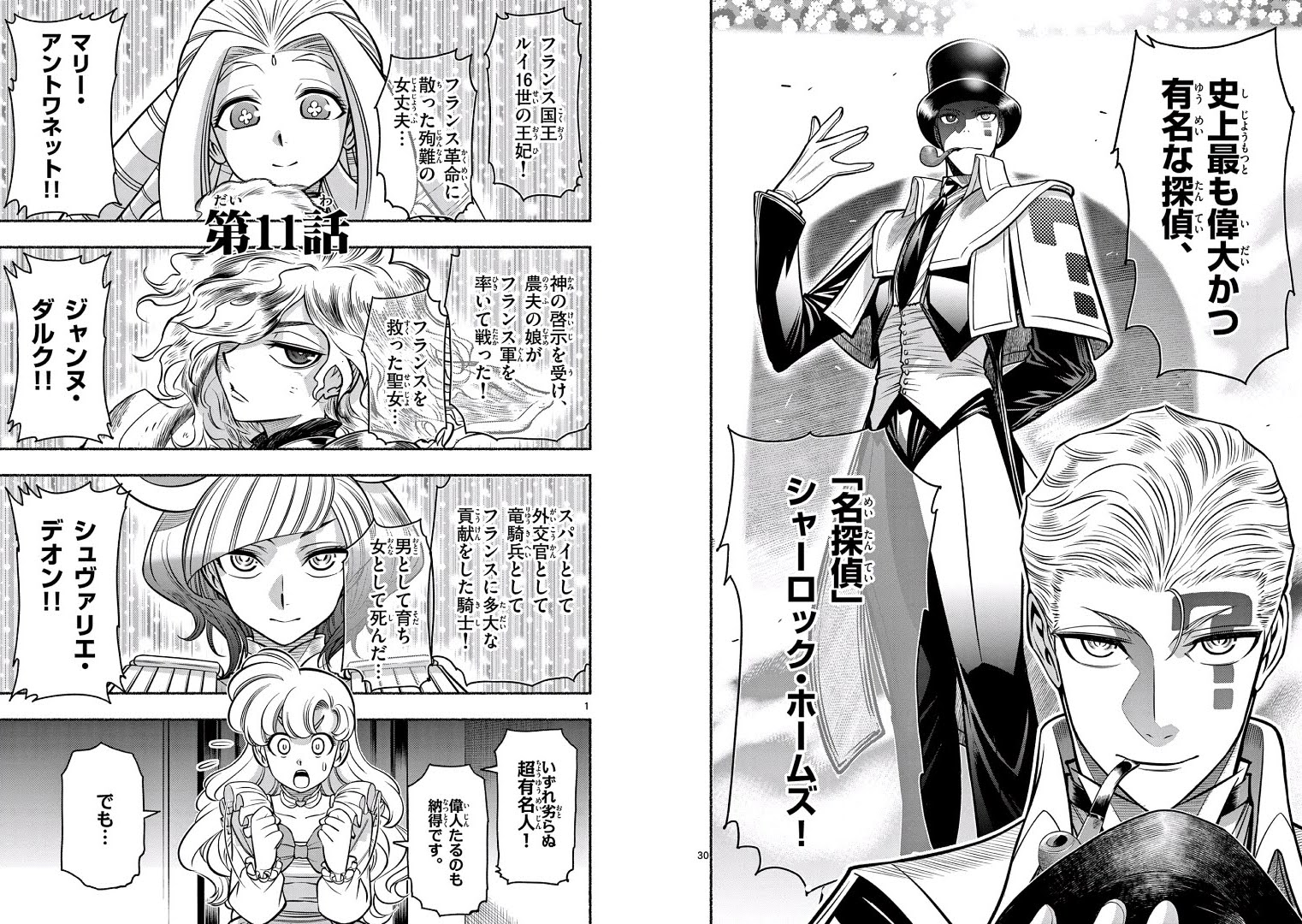
Le Chevalier D’eon, Marie Antoinette, and Jeanne D’arc are all famous figures (and all three have been characters in anime and manga already), so it’s no surprise that these three would end up in Greatest M. However, for all three to be at the same table is a curious move. Moreover, the fourth seat—Sherlock Holmes—opens up the realm of possible contestants to not just historical figures (embellished though they might be), but also fictional characters. The Fate comparisons stay strong. I’m fond of all the character designs here, especially Jeanne’s battle-weary look, but the depiction of Sherlock is downright theatrical.

This manga could easily wear itself thin, but the third round also introduces the idea of alternate rulesets that can potentially spice things up. In this case, you can give a “Jong Command” and order your opponent to either discard a specific tile, force them to call a discard and open up their hand, or make them reveal their wait. It’s sort of like Go Fish, only the penalty for guessing incorrectly is losing 10,000 points. Especially with Sherlock in the picture, I expect a lot of predicting opponents’ motivations and deceptive strategies. That said, I actually expect there to be a twist, and for Sherlock to not make it through—possibly due to the chaos of mahjong itself. 

At this point, part of the fun of Greatest M is seeing just who will compete. What are the odds of Jesus showing up…?

Smash Ultimate and the Shmup Life of Jigglypuff

I like watching Super Smash Bros. Ultimate tournaments, but it’s only over the past year that I’ve started watching individual streamers more—chalk it up to a pandemic. During this time, one player I’ve been enjoying is Super Smash Bros. Melee “god” Hungrybox try his hand at Ultimate as a Jigglypuff main. But while a part of the fun is in seeing a top Melee player use a heavily toned down version of his signature character to become a low-tier hero, I’d felt that there was also something inherently compelling about Jigglypuff itself. Then, realization hit me last year as I watched the Touhou game Shoot the Bullet during Summer Games Done Quick 2020: Jigglypuff in Ultimate is a lot like a ship in a shoot ‘em up boss fight.

Shmups are a genre where your character is besieged every level by an endless procession of enemy ships and projectiles, generally culminating against a boss character of some kind. Compounding the difficulty is the fact that your playable unit will typically die in one hit, so the ability to evade and barely make it out of harm’s way is key to success—especially if you’re playing for some kind of record or achievement. 

Jigglypuff in Ultimate is in a similar position. It excels in moving back and forth through the air thanks to a high air speed, multiple jumps, and a slow fall speed. Being the second lightest in the game means it can’t withstand many attacks, but its small size means being able to dodge things other characters can’t. The character also has short reach on its attacks, thus any opponent with projectiles or a long weapon like a sword presents a daunting wall that Jigglypuff must surmount through effective weaving. Like the heroine Aya in Shoot the Bullet, there is a clear edge that Jigglypuff’s foes have in the fight, in that their ability to threaten and cover space is something Jigglypuff cannot match.

This is somewhat different in Melee due to the strength of Jigglypuff’s back-air. In that environment, it’s a deceptively far-reaching attack that makes Jigglypuff the “wall” that players must deal with instead of the other way around. Jigglypuff’s ability to throw out repeated beefy back-airs while juking is even referred to as the “wall of pain.” Jigglypuff in Ultimate not only has less range, but the character automatically turns around after throwing a back-air out, preventing the ability to string multiple back-airs together. 

Instead, Jigglypuff must bob and dance, hoping to be in the right place at the right time to nickel and dime the opponent without overextending. While it has an ace in the hole in the form of Rest, it’s hard to hit and requires a lot of planning and game sense (and maybe even a bit of luck). Every mistake is a costly one, and the frail nature of the character means defeat is often snatched from the jaws of victory. 

Does this make for a particularly strong character? Probably not. But it sure makes for a tense and exciting viewing experience, and it’s why I keep watching Hungrybox, as well as other Puff mains like Bassmage. Also, when I think about it, this would also make a great template for a Touhou character…

PS: If I ever had the chance to rebalance Jigglypuff to be stronger, I’d give Jigglypuff a kill throw because being such an air-focused character means shielding is especially effective against it. Due to its floatiness, slow ground speed, and lack of range, Jigglypuff also has a harder time landing grabs—so I think it’d still be fair.

Digimon Tamers, Konaka, and Cancel Culture

In the latest episode of “Discovering Your Favorite Creators’ Alarming Beliefs,” the writer of Digimon Tamers, Chiaki J. Konaka, recently penned a new script for the show’s 20th anniversary that revealed him to be influenced by right-wing conspiracy theories. In his new entry (read by the original actors themselves), he positions the greatest threat to humanity to be “extreme political correctness” and “cancel culture,” going as far as to use these specific English terms. This naturally created a backlash from those rightly worried and support from those who share similar beliefs. I find myself extremely disappointed by this news, but I also know that right-wing politics and a tendency towards conspiracy theories are both fairly common among anime creators. Thus, I want to share my thoughts on the matter.

First: Yes, cancel culture does exist. No, neither it nor “extreme political correctness” are the greatest threats to humanity. And no, I don’t know if Konaka always held such beliefs, or if this is new.

I think the far right often tries to portray “cancel culture” as attempts to police and censor dissenting opinions, but that’s not the case. Rather, cancel culture—which is basically about calling someone or something out en masse—is a side effect of the need and desire to hold the powerful accountable. It comes from a fear that harmful or abusive behavior and beliefs are not properly kept in check by those with the power and influence to do so easily, so it’s up to regular people online.

Plenty of people have been canceled for the right reasons. You’ll also find people who were unjustly attacked due to a misunderstanding or because someone with that power and influence decided to lean into it—either out of innocence or malice. Cancel culture can be abused by the unscrupulous, but so can the fear of cancel culture. There’s a risk of mob mentality on either side.

But I think the biggest concern is less Konaka’s thoughts on cancel culture and more the notion that extreme political correctness is one of humanity’s greatest obstacles. While the threat of censorship has been a very real issue in Japan (down to book burnings and all), Konaka has seemingly failed to recognize how criticism of political correctness has been used as a Trojan Horse to sneak in more extreme-right beliefs. The right likes to portray their hatred of political correctness as a reaction to a looming threat, when it’s very much the opposite: cancel culture is the reactionary symptom of people who feel powerless.

While Konaka’s past works suggest a proclivity towards conspiracy theories, I think what it might boil down to is that he comes from a generation that fought against Draconian censorship and still has to keep up the battle even in recent times. The Tokyo Metropolitan Ordinance is less than a decade old, and before that, the spectre of Miyazaki Tsutomu cast a dark shadow on otaku culture. To those for whom the battle has always been censorship vs anti-censorship, the sides seem pretty cut-and-dry. But they belie the fact that the far right actively uses this simple dichotomy as camouflage to mask its true intentions: demonizing the other as a means to authoritarianism. Freedom of expression is a valuable concept, and one I personally highly value, but it has many fragile components that are easy to exploit—see the classic “conservative guy goes onto a college campus and demands that liberals debate him” scheme. It’s an ambush disguised as a fair exchange of ideas. Konaka, born in 1961, is also possibly susceptible to the kind of disinformation that has infected us all.

I sometimes feel that people are so eager to right wrongs that they end up jumping the gun and causing more damage than they intended—which is compounded all the more by social media and our current media environment. More needs to be done to keep people from going 0 to 100 on any subject. But the general desire to see the world be a better and more accepting place is central to much of this mess, and it behooves us to remember to be bigger than the immediate, to be the biggest dreamers we can.

The Unquenching Desire for Villains: 9/11, 20 Years Later

Trigger Warnings:  September 11, COVID-19, and all they entail—death, suicide, etc.

I still remember visiting the Twin Towers with friends after school. We would go semi-regularly, with the Japanese restaurant on the underground level being our favorite destination. Between the massive riceballs and the generous helpings of udon and soba, it was always something to look forward to. Then 9/11 happened, and I never even learned if the people running that place even survived. I still wonder. 

20 years is a long time, but there are still feelings and memories that stick with me to this day. No one among my friends and family were hurt or worse, so I have much to be thankful for, but I remember the panic of a friend whose dad worked in the World Trade Center. I remember the shudder of the school building as something happened—I think it was as the second plane hit. I remember the eerily calm evacuation, and me handing a half-full water bottle to a firefighter who was desperately gathering any water he could. I remember meeting up with my siblings in Manhattan—one of whom walked miles on foot, another who was close enough that day to see bodies falling. I remember having a dream that night in which the block where I lived was seeing invasion by futuristic caterpillar tanks, of all things. 

I also remember how naive I was at the time, and how much I wanted this to be a truly unifying moment for the United States of America. I didn’t understand why one classmate refused to rise for the Pledge of Allegiance. I wanted to believe that President George W. Bush would utilize all this good faith for the better. I was someone who didn’t really know or understand politics, and my greatest concern in that respect was trying to find a mental compromise that would reconcile the beliefs I’d been taught and the questions I’ve always had. 

Now here we are, those hopes long since dashed, and facing a new problem in COVID-19 that makes those lives lost on 9/11 seem horrifically quaint by comparison. Thousands of bodies have made way for hundreds of thousands and counting. But while that sense of unity in 2001 was fleeting and illusory, it was still more than what we’ve gotten out of fighting the coronavirus. Sure, some of that could be explained by the fact that the US is more divided now, driven to the brink in part by the poison of disinformation. However, I think there’s something else: in the aftermath of 9/11, we had in Osama Bin Laden an enemy we could hope would be on the receiving end of a bullet. In recent days, as I reflect on the events of the past year but also the past 20 years, I’ve come to realize that the US (and perhaps human beings as a whole) are more comfortable with a flesh-and-blood target we can attack through physical violence.

Columbine was just two years before 9/11, and started two generations of kids on their path of customary active shooter drills. What’s a common refrain when it comes to the epidemic of gun violence we see in the US? “The only thing that can stop a bad guy with a gun is a good guy with a gun.” We actually think the solution is to just have more, better guns and to shoot harder. I truly believe this is because the US (or at least a significant portion of it) has an incredibly hard time dealing with problems that don’t just involve overwhelming them with brute force. But COVID-19 can’t be defeated by guns, glaciers will not unmelt if we bomb them…and yet, part of the nation keeps desperately seeking that living, breathing entity to vilify. 

I recently read an article called “25 Essential Notes on Craft from Matthew Salesses,” which is an excerpt from a larger book by Salesses about the rules we construct around what makes good or bad fiction, and how this can differ between cultures. In it, he points out that Western critics often label Asian stories as “undramatic” or plotless” because of their lack of “conflict.” While I’m under no illusion that discrimination, intolerance, and scapegoating are somehow absent in Asian cultures (and in fact are often downright prevalent), I do think that this Western obsession with stories needing conflict also bleeds into how we as a culture approach so many other things. That includes the narratives that are built up in the news and in media—to create easily identifiable villains to vanquish. It’s the Chinese. It’s Dr. Fauci. It’s Joe Biden. It’s Greta Thunberg. It’s Alexandria Ocasio-Cortez. It’s Mexicans at the border. It’s a secret cabal run by Democrats who abduct children to create an immortality elixir. And I’ll even admit that Trump has made a hell of a foe to rally against because he is demonstrably a monster of the worst kind.

There’s a certain comfort in having physical, human obstacles to overcome instead of abstract ones. One of my favorite anime genres is giant robots, and that’s built on a basic premise of “big metal man punches monster to death and saves the day.” Sure, plenty might house anti-war or anti-racism messages (Tetsujin 28, Gundam, Voltes V), or even act as metaphors for the struggles of the human mind (Evangelion). But even those tend to depict physical struggles, even if they might be symbolic in nature. Superheroes are in a similar boat, more traditionally geared towards stopping an arch-nemesis than childhood malnutrition. It’s hard for stories like these to deal with systemic issues, especially those that would be better solved by policy and activism.

It’s okay to think weapons are cool. It’s okay to think fights are cool. Tanks, guns, lasers, planes, kicks and punches, mecha—I love seeing this stuff in fiction, and I think people do need some kind of outlet. However, in our actual societies, when we focus too much on punishing perceived evildoers instead of creating an environment that minimizes the likelihood of such people arising in the first place, we do ourselves greater harm still. An education system able to equip people with the skills to truly think critically and a healthcare system where people aren’t deathly afraid to find out what might be afflicting them would be a good place to start. While there are indeed always going to be bad people who need to be stopped, we have to understand that violence comes not just in the form of a terrorist with a bomb or a shooter with a gun; there’s also the harm caused by dehumanizing others, whether because of their race, culture, religion, sex, gender, sexual orientation, or any other aspect of our beings. The collateral damage of 9/11 was more than just the lives lost, and I hope we can learn that lesson before it’s too late.

It’s a Secret to Everybody: Giant Gorg

Tagami Yuu, a young boy in an explorer outfit and a beret, looks back at Giant Gorg, a large blue robot, in the background

In many ways, 1984’s Giant Gorg feels like an “anti–giant robot” anime. Sure, it has Yasuhiko “Yaz” Yoshikazu (one of the chief visionaries of Mobile Suit Gundam) as both director and character. And it’s indeed about a boy and his mecha guardian in the middle of a conflict that stands to change the entire world. But where most giant robot series before and after would aim for some combination of bombast, gritty science fictional realism, and/or gripping human melodrama, Giant Gorg often comes across as more concerned with atmosphere and conveying a sense of place in the world.

Giant Gorg follows 13-year-old Tagami Yuu, a Japanese boy who travels to New York City following clues about the death of his father. This takes him on a whirlwind adventure, all the way to the mysterious New Austral Island, where he learns about a mysterious organization named GAIL that seeks to discover the island’s secrets. There, he encounters a massive robot—Gorg—that seems to obey his every command. With a group of allies by his side, as well as the might of Gorg, Yuu works with the natives to push back GAIL, but he may have an even closer connection to the truths of New Austral Island than he realizes.

I enjoyed Giant Gorg for its moody feel, its excellent artwork and animation, and the fact that it feels more like you’re jumping into a specific time and place in world events. On the other hand, I would not call it “riveting.” While I had the ability to watch many episodes in one sitting, I rarely would watch more than two or three because the anime doesn’t really set itself up to compel viewers to keep going. Events that finish a given episode in Giant Gorg feel like the half-way point for an episode of Mobile Suit Gundam. Whereas the latter might leave you off with tears and shouting, the former more often hits the ending credits with the reveal of a hidden cave or something. 

Because of this, Giant Gorg feels unabashedly Yaz. Whether it’s a manga set in the dawn before the Russo-Japanese War or his retelling of the Gundam story in Gundam: The Origin, Yaz tends to focus on giving his stories the same feel as a fascinating but dense historical text. This makes it all the easier to see what he and Gundam director Tomino Yoshiyuki each brought to that franchise—Yaz’s attention to detail and physical realism contrasts with Tomino’s chaotic energy and far-reaching visions. It’s like Yaz is a master baker who can produce incredibly well-made cakes, but never quite got the hang of how to do amazing icing. Giant Gorg, in turn, can feel both like a distillation of one man’s style and half an anime.

As a final note, I want to end off by recounting a sort of “personal history of Giant Gorg”:

I was studying abroad in Japan in 2005 when I saw a commercial for the upcoming DVD release of Giant Gorg. I had heard of the series before, but was mostly struck by how fantastic the robot itself looked. It’s an aesthetic that stayed with me for a long time.

Ten years later, I found myself sitting near the front of the Sunrise anime studio panel at New York Comic Con 2015, alongside my friend Patz. The presenter was going through a list of Sunrise series available in the US, when Giant Gorg came on-screen. The series had been licensed for US release just months before, and as mecha nerds, both Patz and I began shouting with excitement. We were sitting close enough to the presenter that she noticed and, with a surprised look on her face, asked, “Really?” The two of us responded by shouting, “GOOORG!” in unison. We were just excited for the opportunity to own such an obscure and gorgeous piece of anime and mecha history. While Giant Gorg won’t go down as one of my all-time favorites, its flavor is unmistakable and appreciated.

PS: There’s an antagonistic group in the show called the Cougar Connection led by Lady Lynx. The jokes are silly and obvious, but I can’t help chuckling every time it comes up.

Standing in a Whirl of Confusion—Gundam Reconguista in G Part II: Bellri’s Fierce Charge

The G-Self in combat

Gundam Reconguista in G compilation films Part I and Part II are currently available on the official Gundam Youtube channel. Having previously seen the first film at Anime NYC 2019, I wondered if the smart changes that made Part I significantly better than the TV series would also carry into the sequel. I’m happy to say this is indeed the case.

Gundam Reconguista in G Part II: Bellri’s Fierce Charge continues where Part I: Go! Core Fighter left off. In this era of the classic Gundam‘s Universal Century timeline, the massive space wars of the past are ancient history and the nations of the Earth are managed by a central mediating body known as the Capital Tower, home to a space elevator that receives energy batteries from space and distributes them across the world. Bellri Zenam is the son of Capital Tower’s leader, but after the Tower’s defense force, the Capital Guard, starts to be supplanted by the more militaristic Capital Army, Bellri gets caught up in the middle of a new conflict. As the pilot of the mysterious G-Self, he ends up traveling with what is ostensibly a pirate crew as he tries to figure out his place in the world.

Bellri in tears while in combat

This film continues the trend of being far more understandable compared with its source material, though that’s not to say it’s easy to follow—merely easier. Director Tomino Yoshiyuki’s style can be famously obtuse and bombastic, and that’s the case here as well. However, Bellri’s Fierce Charge establishes the characters more solidly and allows them to act as a focal point for the story. So while the complex and sparsely explained politics of the G-Reco setting can still be a recipe for confusion, viewers can anchor themselves to the emotions of those characters who are often equally confused. If there’s anything viewers might get mixed up on that the characters take for granted, it’s the distinction between the Capital Guard and the Capital Army, which reflects an ongoing debate over the role of the Japan Self Defense Force and Japan’s constitutional anti-war stance.

This is especially the case with Bellri himself, who in the TV series could sometimes unintentionally come across as carefree at best and a sociopath at worst. Here, what should have been a major turning point in his life in the original version gets a proper amount of attention, and you can see the degree to which there is a clash between Bellri’s ideals, his frustration at adults for making the world a worse place, and the decisions he feels forced to make.

Barara Peor next to a wall

Other characters shine as well. Whether it’s Captain Mask, Aida Surugan, or even Bellri’s mom, the strong portrayals of their personalities—facilitated by great animation—give Part II an extra oomph that keeps it memorable and shows the complexity of their world. Yoshida Ken’ichi’s character designs are always excellent, with side character Barara Peor (above) being an especially strong design.

I think the Gundam Reconguista in G movies are well on their way to becoming the definitive version. The new edits and footage take what were excellent but obtuse ideas and criticisms about humanity’s current relationship with war, and convey these ideas much more solidly and emotionally. I would have watched the entirety of the tetralogy already, but now I’m really looking forward to seeing the end again.

One final note: The main theme of Bellri’s Fierce Charge is by the famous Japanese group Dreams Come True, arguably better known internationally as the composers of the first two Sonic the Hedgehog games. The theme, shown above, can be found on their official channel.

Speedwagon from JoJo's Bizarre Adventure shouting "Gaaaaah! Even Shakespeare is afraid!" in reference to lyrics from the Dreams Come True song, G.