There’s a 50/50 chance that saying “the Japanese beverage company Suntory has their own official Virtual Youtuber” would come as a surprise. But the blue-haired “Suntory Nomu” is real (in a sense), and I actually like her design quite a bit. What really stands out about Nomu’s appearance, relative to other VTubers, is how simple and subdued it is. A white dress with blue highlights stands in sharp contrast to the vast majority of Hololive and Nijisanji, who seem to be created with a maximalist philosophy. This latter approach brings to mind broader discussions about character design in media.
(Side note: I’m not sure I need to mention this, but in case it matters, I am not endorsing Suntory products in any way. I generally like their drinks well enough, but that’s about it.)
When looking at Nomu relative to the Hololive members she’s streamed with, the difference is clear. While both have attractive designs, Takane Lui and Aki Rosenthal have all these details, adornments, and colors, resulting in rather complex/complicated appearances. There are practical reasons to make them this way, of course: They need to be immediately distinct and visually appealing to prospective viewers. Rigging/modeling them for animation is a one-time thing, as opposed to needing to draw them anew every time in the vein of anime or manga. And the expectation is that people will stare at them for extended periods. VTubers need to communicate a good portion of who they are immediately, as viewers can’t be expected to dive into an extensive backstory—and often VTuber backstories are helpful suggestions, at best.
The decision to go maximalist reminds me of fan discussion surrounding fighting game characters. Fighting games, especially ones not based on an existing property, share a number of similarities with VTubing. There’s no prior context for people to get attached to (as they might with an animation or comic), so having characters catch the eye right away while also communicating how they play is important. There’s still quite a bit of range—Compare Ryu or Chun-li from Street Fighter to Sol Badguy or Dizzy from Guilty Gear (especially pre-STRIVE)—but criticizing a fighting game character for being “boring” is typically more about looks and presentation of attacks. That’s actually a big difference with Virtual Youtubers: It does ultimately come down to personality.
But it makes me wonder if significantly simplified designs like Suntory Nomu couldn’t thrive despite the general trends against them. Maybe it’s because so many designs take an “everything but the kitchen sink” approach that Nomu’s aesthetics stand out more. Could there be a trend back down to relatively more minimalist designs in VTubing, fighting games, and other similar areas? It’s something I’d like to see, if only because I’m curious how it would all play out among the fans themselves.
Yesterday, I watched the Hololive COUNTDOWN LIVE 2022▷2023. It involved 3D concert performances by a variety of members including two of my faves, the currently COVID-stricken Haachama and the on-hiatus La+ Darknesss. I highly recommend it, especially the crossover sections between the girls of Hololive and the boys of Holostars. This clearly takes some inspiration from Japan’s long-standing end-of-year musical event, Kohaku Uta Gassen, but I’ve never actually watched it.
Looking back, it didn’t hit me how long the past year felt until I saw Kio Shimoku mention that Hashikko Ensemble concluded back in January of 2022. At times, it’s like the days move by all too quickly, and other times, it’s like they slow to a crawl. I can’t tell at this point how much of it is the prolonged funk of the pandemic and how much is just me getting older.
But here we are at the start of 2023 and the Year of the Rabbit, at least if we’re going by the solar calendar. Whenever I think about it, I find myself remembering a certain old flash video from the 2000s. Thankfully, someone uploaded it to Youtube, so I can inflict it on a new generation.
January’s Patreon subscribers are looking good. Thank you, everyone, and here’s to another fine (?) year.
This is partly an analysis of how different fans have different expectations for their VTuber faves, and partly an excuse to post more videos of La+ Darkness’s amazing dancing skills.
At the start of the year, I feel myself wondering if I should be doing more both with Ogiue Maniax and outside of it. One thing I’ve thought about is starting a Substack, but I have no idea how I might divide my writing. In my head, there’s no real differentiation between “regular” posts and “premium” ones, and I’d probably have to figure out some way to make it worthwhile. One possibility is to break off the VTuber stuff into its own dedicated area in case it’s becoming too intrusive, but I don’t think it’s that bad currently.
I could also do premium posts on Patreon, but that sort of runs into the same issue. If anyone wants to see that sort of content (or if you even hate the idea), feel free to leave a comment. I think I care less about the money at this point and wonder more about how to promote Ogiue Maniax in 2023. All the old ways seem to be vanishing (and Twitter is constantly on the verge of collapse because of its moronic new boss), and I still haven’t caught up.
Whichever ways things go, though, I hope you’ll keep reading.
I’ve watched the recent anniversary streams of holoX, and in light of the announcement of the Hololive 4th Fes, I’ve been thinking about how holding 3D concerts can carry different types of significance depending on the individual member and what their fans are looking for. Hololive seems to celebrate their stars in a manner inclusive to every Hololive member’s diverse fanbase, and I’m all for it.
It’s no secret that Hololive members can vary tremendously in terms of where their talents lie. Some clearly establish themselves as great performers as soon as they have the chance, like Hoshimachi Suisei. Others don’t necessarily have the background but have worked hard and come into their own, such as Oozora Subaru. And then there are those who don’t reach the level of their fellow VTubers in terms of singing and dancing, but they might have engaging personalities that just make for a special experience.
However, when there are 3D concerts or other major events that bring Hololive members together, they potentially become places where all respective fans can come together and appreciate their favorites for their own particular reasons. Take the Hololive 3rd Fes concert, which was the 3D debut of Hololive English’s first generation. Gawr Gura showcased the singing talent that brought so many fans to her, along with a cute dance. Takanashi Kiara brought a more polished idol flair. Ina came with a soothing voice in a subdued performance. Amelia Watson is definitely not a strong singer, but her choice of music (a weird fictitious anime opening from the show Welcome to the NHK!) put her personality on full display. And Calliope Mori put her well-established rap skills (that have since led to a contract with Universal Music Group) to good use. Hololive Indonesia’s first generation also made their 3D concert appearances, with Moona’s diva-like poise, Iofi’s adorableness, and Risu’s ridiculous vocal range all on full display.
With holoX, there is a similar range of strengths and quirks on display in their anniversary concerts. La+ Darknesss (see above) is a ridiculous total package whose impressive vocals and unmatched dance skills both support and defy her “bratty alien demon lord” concept. Takane Lui doesn’t fit the typical image of an idol, but she’s very good at singing while also staying “in-character,” and her choice of songs conveys a sense of maturity. Hakui Koyori is a jack of all trades who also leans into her character the most by adding in puzzles and brain teasers to her concert. Sakamata Chloe is arguably the best singer in the group, with a voice that can seem unreal; she was also the only one to do exclusively solo performances, as if to prove a point. Kazama Iroha’s cuteness shines through in her energetic performances, and it’s clear that she put in a lot of effort to improve her dancing.
It all reminds me of an essay I once read about the differences in presentation between Japanese idols and Korean pop stars: part of the appeal of J-idols is seeing them grow into the role, whereas K-pop stars appear before fans already fully formed. In the context of Hololive, it’s like there’s a purposeful and perhaps even inevitable contrast. While you might have your “J-idol fan” types who want to see their favorites grow and your “K-pop fan” types who love to see perfection in action, a single banner like Hololive allows these groups (and many more) to all thrive in the same general space.
The power that comes from the variety Hololive has to offer is the way it encourages respect for diversity of talent. People can be fans of different members for different reasons. There are certainly talents whose appeal lies in their sheer skill, and the fans want to see their favorites put their abilities and/or progress on full display. However, there are also Hololive members who aren’t necessarily the greatest performers in one way or another, but their presence on stage makes for a kind of “we made it” moment for their fans. No matter the reason, it emphasizes the idea that there’s no one “right” way for a performance to be, and it encourages the different fanbases to coexist.
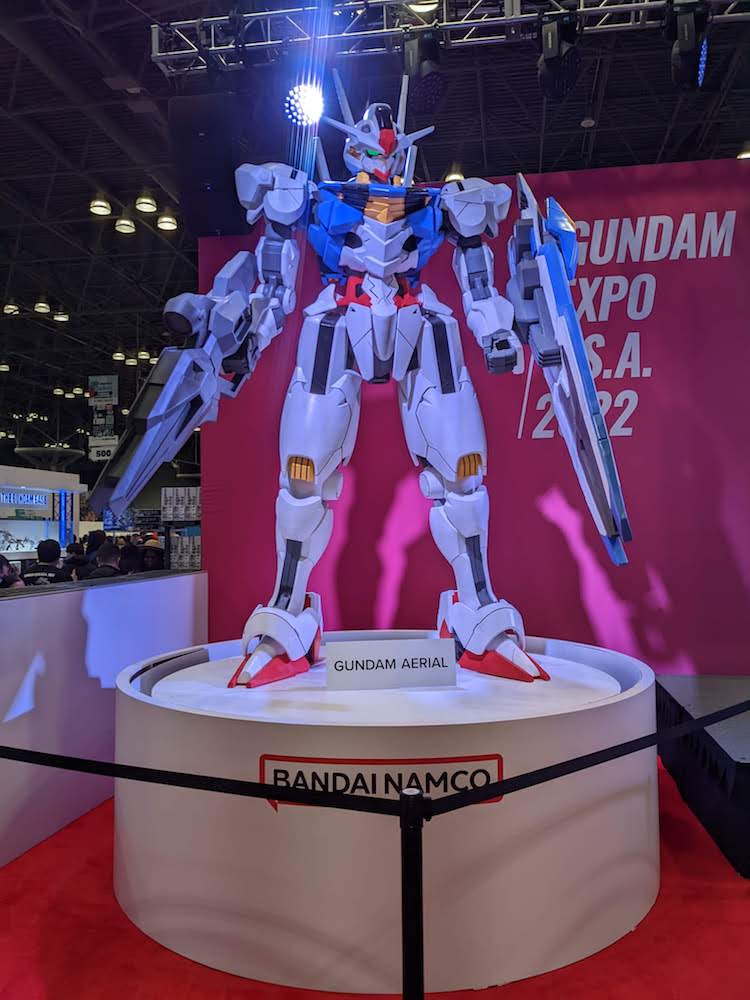
Anime NYC 2022 is the second year in the pandemic era for New York’s biggest anime convention. Last year, the event broke its own attendance records, likely owing to people eager to do something in-person after months and months of restrictions. In contrast, this year felt more like a return to something vaguely normal.
Badges and Registration
Although I had the benefit of obtaining a press pass, I do know there were issues with supply of general admission this year: both three-day badges and Saturday ones were in short supply. It’s difficult to tell if they’re following in New York Comic Con’s footsteps towards eliminating three-day tickets in general (a move that makes attending the con all weekend significantly more expensive at $65 per day) or if it has to do with COVID-19 precautions.
One thing Anime NYC definitely did seem to take a page from New York Comic Con is a lottery system for seats for major panels in addition to a similar lottery already in place for guest autographs. Attendees could enter online for a chance at these con activities without needing to devote themselves to waiting in lines, and the idea is that it’s also fairer for people coming in from farther away. I understand the overall benefits of this method, though the fact that you have to cancel your reservations in advance should you win (or else risk being ineligible for future lotteries) means that it’s harder to be flexible the day of. I believe being able to make impromptu decisions is part of the fun of conventions, and potentially losing that flexibility can feel like a bit of a burden. Again, though, it might be a net good, and what probably needs to be tweaked is that way fewer panels probably need this system in place.
COVID-19
Speaking of health, Anime NYC did require proof of vaccinations or a negative COVID test, and they enforced that aspect pretty stringently. The same could not be said of masks, however. In panels, staff did a good job of making sure everyone had masks, but everywhere else it was pretty much a coin toss. The city itself has relaxed rules around masking even on the subway, so it’s hard to fight against that kind of momentum, but I wish there was a way to re-emphasize the importance of masks especially in an environment like a convention center filled with tens of thousands of people.
Last year’s con turned out not to be an Omicron super spreader event, despite early reports. I really hope that remained the case for this year, but the relative lack of masking concerns me.
A Note on Attack on Titan
The biggest guest of 2022 had to be Isayama Hajime, author of Attack on Titan. I’m bringing him up first because I actually did not attend any of his events. I follow Attack on Titan through the anime, and I didn’t want to be spoiled. I don’t know if it would have been possible to wait for the anime to conclude before inviting Isayama, but I have to wonder if there were others like me, or perhaps even much bigger fans who were forced to hold back.
Hololive Meet NY
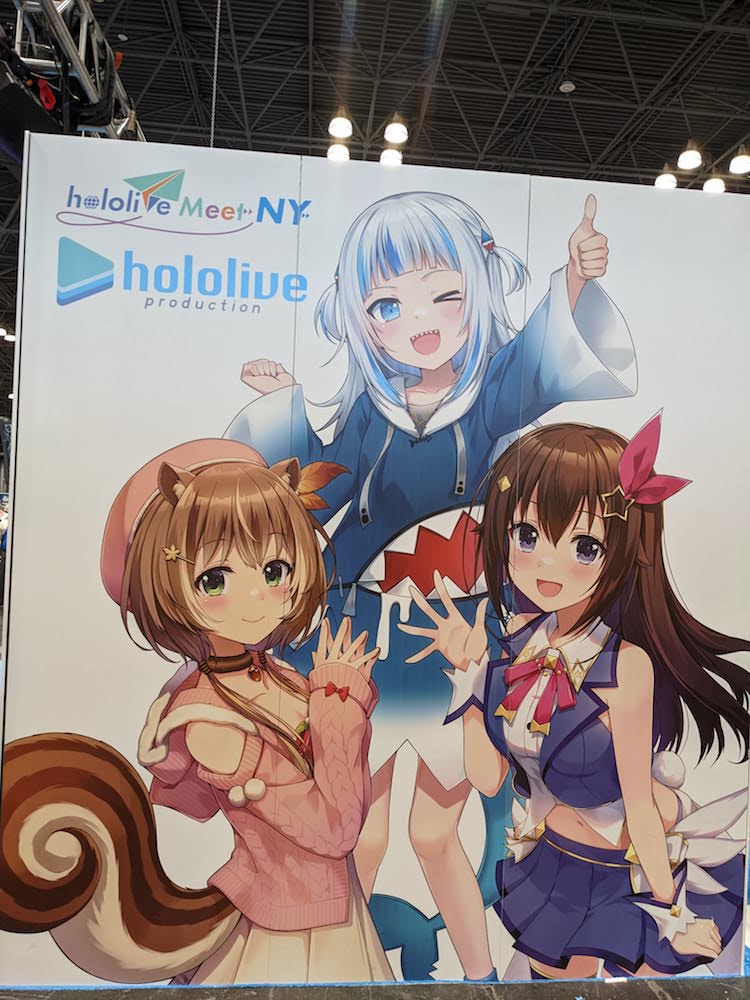
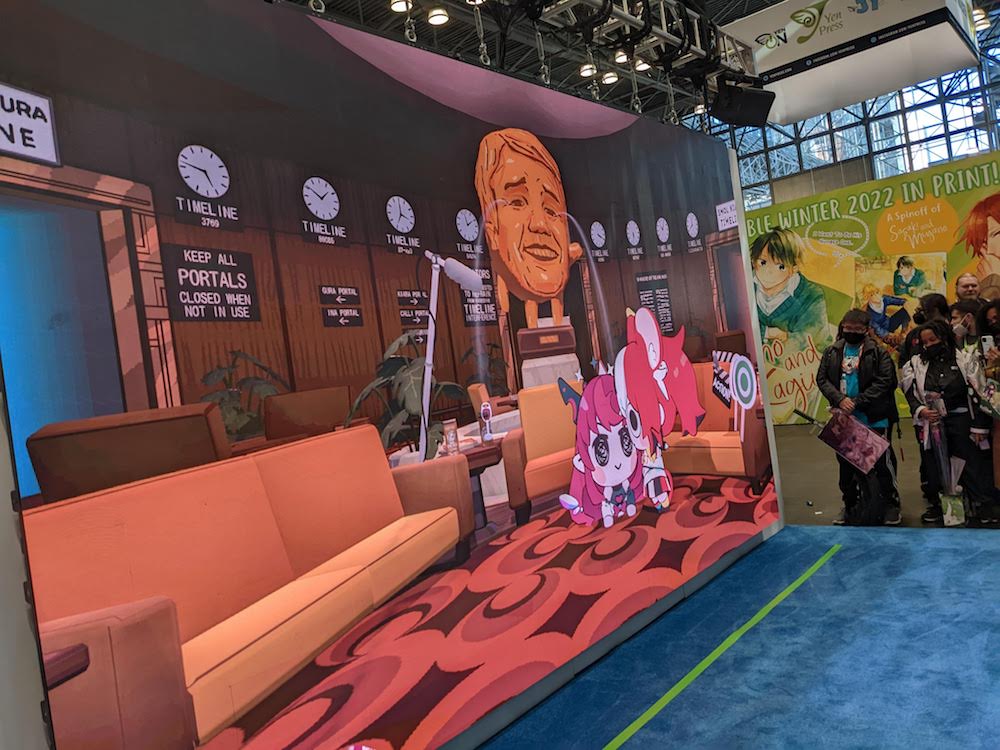
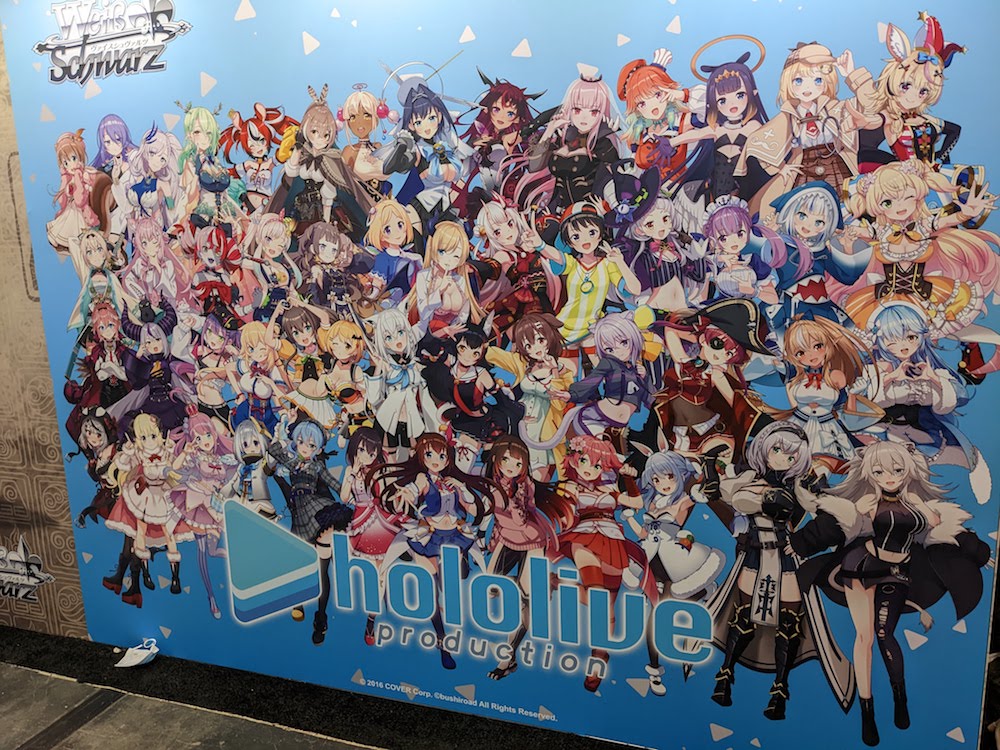
My personal must-see guests were technically not even there: the Virtual Youtubers of Hololive. I prioritized the VTuber stuff because this was my first time at a convention where they had a more significant presence; Anime NYC 2021 had a panel featuring Hololive Council’s five members, and it was a decent enough event that unfortunately had little to no interaction with the fans. For 2022, a more direct VTuber experience was provided through a dedicated booth in the Exhibit Hall in conjunction with VRChat, all as a part of the Hololive Meet series of international con appearances.
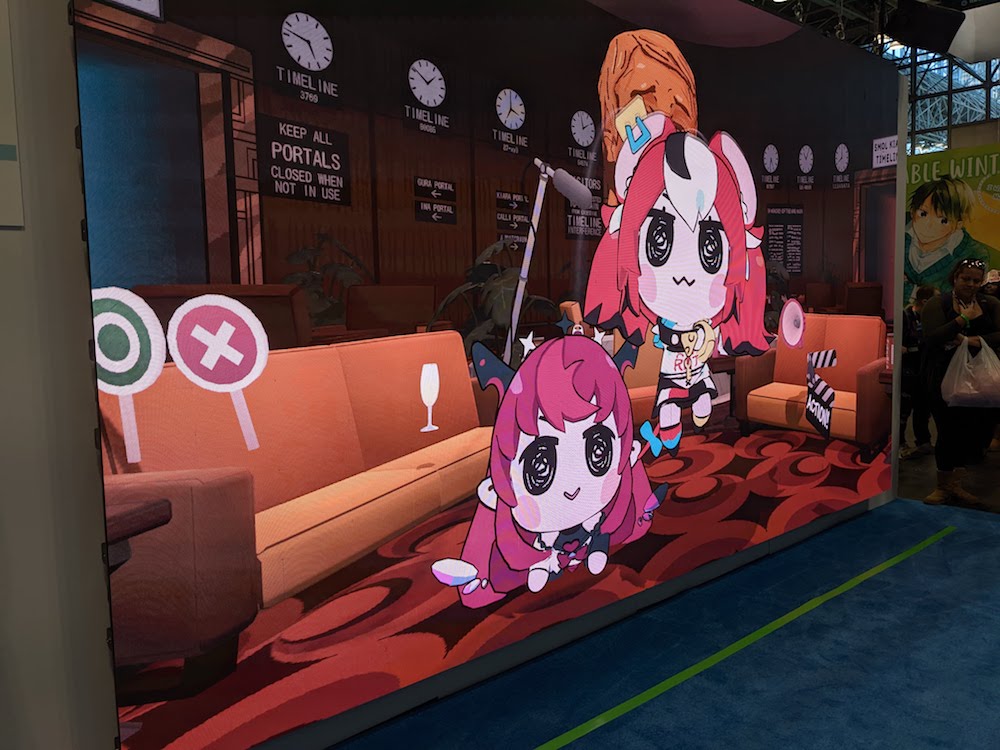
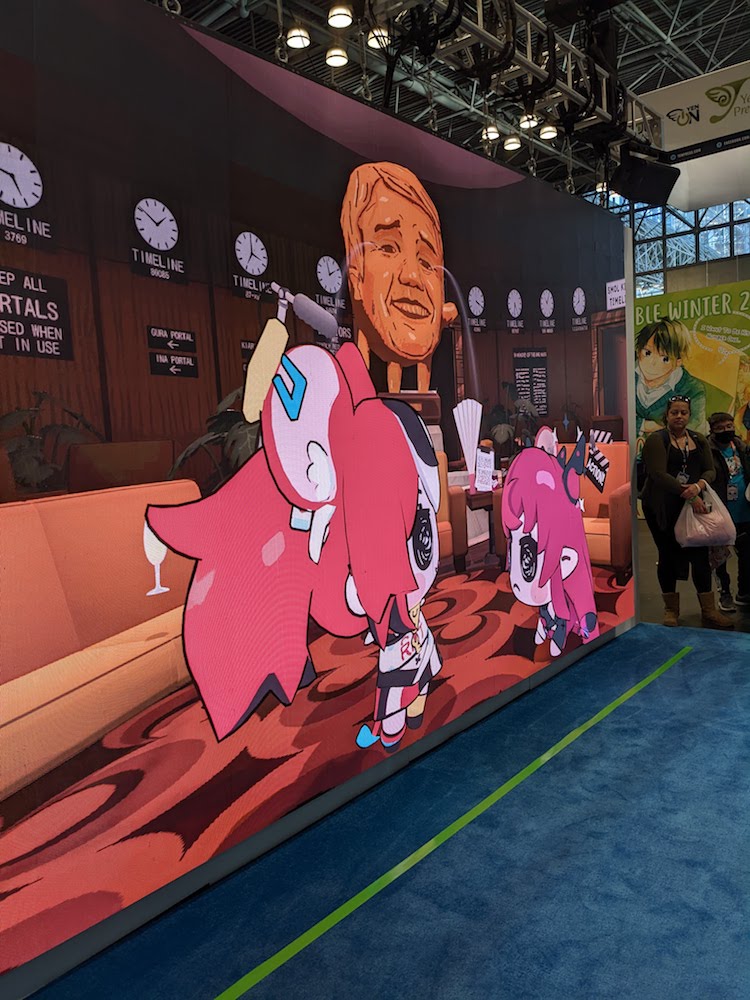
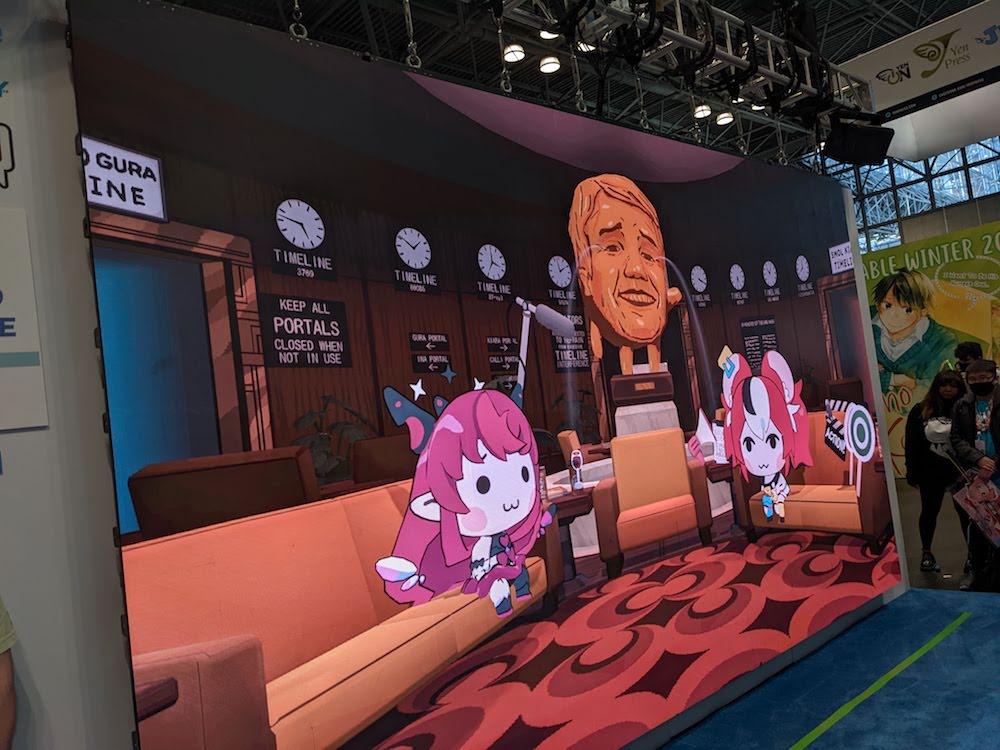
Throughout the weekend, different Hololive members (primarily the English ones) held hour-long live shows while streaming remotely. Due to what I assume are various limitations, they didn’t use any of their standard 3D models, instead opting for less complicated ones already familiar to fans: Smol models, BEEGSmol models, and also the VRDance ones.
For personal reasons (and because I didn’t want to make it an all-Hololive weekend), I was only able to see two shows in full. The first I saw was an enthusiastic morning exercise routine (though not in the radio taisou sense) by Mori Calliope that led to all sorts of 3D wackiness. The second, and one of the highlights of the entire event, was a special Anime NYC edition of the Chadcast that became something even more special due to technical mishaps.
The BaeRys Show
Normally, the Chadcast is a three-person monthly show on Youtube by Calliope along with Hakos Baelz and IRyS. None of them are among my absolute favorites as individuals, but as a trio, they’re practically a must-watch. I was looking forward to a convention-exclusive Chadcast, but as the crowd gathered for it, only Baelz and IRyS appeared. Jokingly announcing that this was actually the first episode of the “BaeRys” podcast, the two informed the crowd that Callie’s internet wasn’t working and so she likely couldn’t join in.
While unfortunate, this also meant getting a full 60 minutes of pure BaeRys, the official name for the pair. I’m not a dedicated shipper, but their interactions are among my favorites because they have such excellent chemistry together. The running joke in the fandom (that is also embraced by the VTubers themselves) is that they‘re constantly getting married and divorced, and so the two played various games meant to reveal “interesting” sides of each other. Questions included “Would you rather vomit on your idol or get vomited on by them?,” “Truth or Dare: Have you ever peed in a pool?,” and (with the help of a fan) “What are three things you like about each other?”
Watching their antics made me aware of what Callie adds to the Chadcast. Baelz and IRyS’s favorite drinks are coffee and soda, respectively, and BaeRys is very much like drinking coffee soda: a surprisingly refreshing combination, but one that can be overwhelming. Callie, then, is a savory (American) biscuit you eat in order to temper the intensity of coffee cola, and so one’s preference at any given time for Chadcast or BaeRys has to do with whether you want a balanced taste or to experience the extremes.
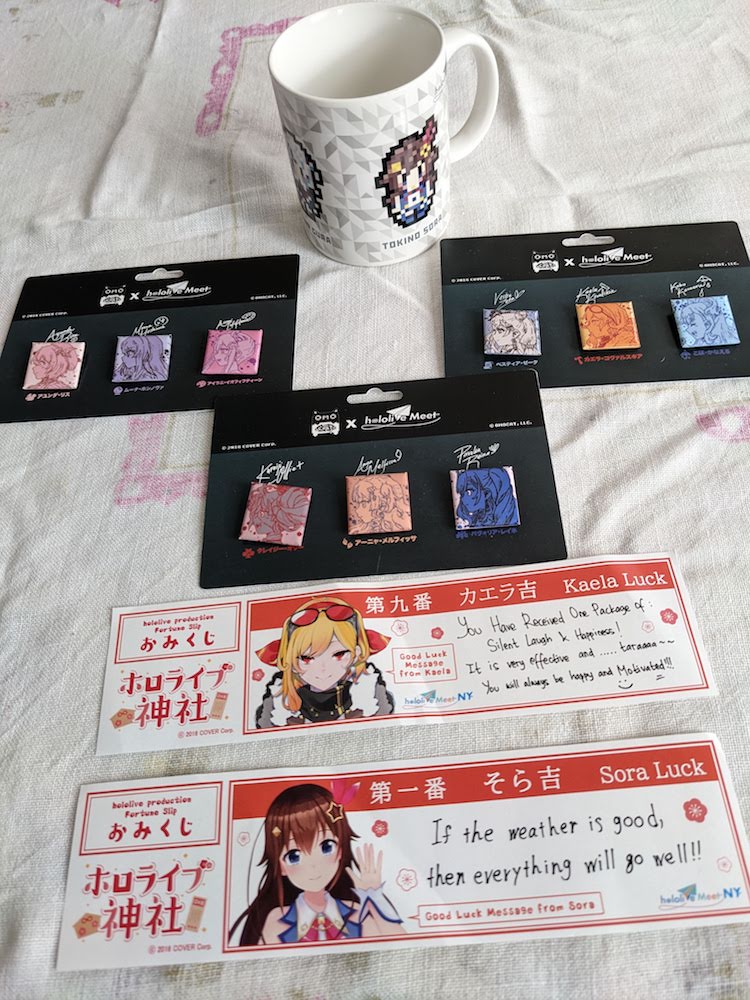
Along with the streams, there were three other booths offering official Hololive merchandise: Bushiroad (for items related to the Weiss Schwarz card game), Omocat (for exclusive crossover art), and Animate USA (for Hololive Meet–themed items). Buying $40 worth would get you a ticket you could exchange for a Hololive fortune, but attendees could also get a fortune for free if they have a VRChat account. I just so happened to create one because of the recent Code Geass x FLOW VR concert, so I managed to snag two fortunes, one for flagship Hololive Tokino Sora and one for Indonesian member Kaela Kovalskia.
I do have a couple complaints about how things were handled with Hololive Meet. First, the space provided meant everyone had to stand because sitting would create a fire hazard, and my feet still haven’t fully forgiven me. Second, you had to buy $40 of Hololive merch at one store in order to get the fortune ticket, so you couldn’t spread it across all three. Other than those issues, I’m glad I finally got to see what a “live” Hololive event is like. Next on the bucket list is getting to see my favorites, Haachama and holoX.
High Card
Among the anime premieres at Anime NYC was the first episode of a series called High Card, written by Kawamoto Homura (writer of Kakegurui) and his younger brother, Munoh Hikaru. It was actually the first screening anywhere, including Japan.
While there is a playing card motif to High Card, it’s not really a gambling anime so much as it is an action-oriented work that revels in absurdity and spectacle, exemplified by its tag line: “Are you ready? It’s showdown!” A special deck of cards has been scattered to the four corners of the Earth, and they have found owners of various types. The cards confer special powers that range from the powerful to the ridiculous (and sometimes both), and at the center of the story is a young thief trying to get money to save his orphanage. Like Kakegurui, the cast of characters is off-the-wall and full of dangerous and sensual individuals, though this time it’s mostly guys instead of girls. The creators said they were inspired by Kingsman, and it shows.
During the Q&A section, Munoh talked about how coming to New York City was amazing because he’d only ever seen it in images and on the screen. He then joked that he’d yet to see Spider-Man or the Ninja Turtles (the latter mention was omitted by the translator for some reason).
Wit Studio
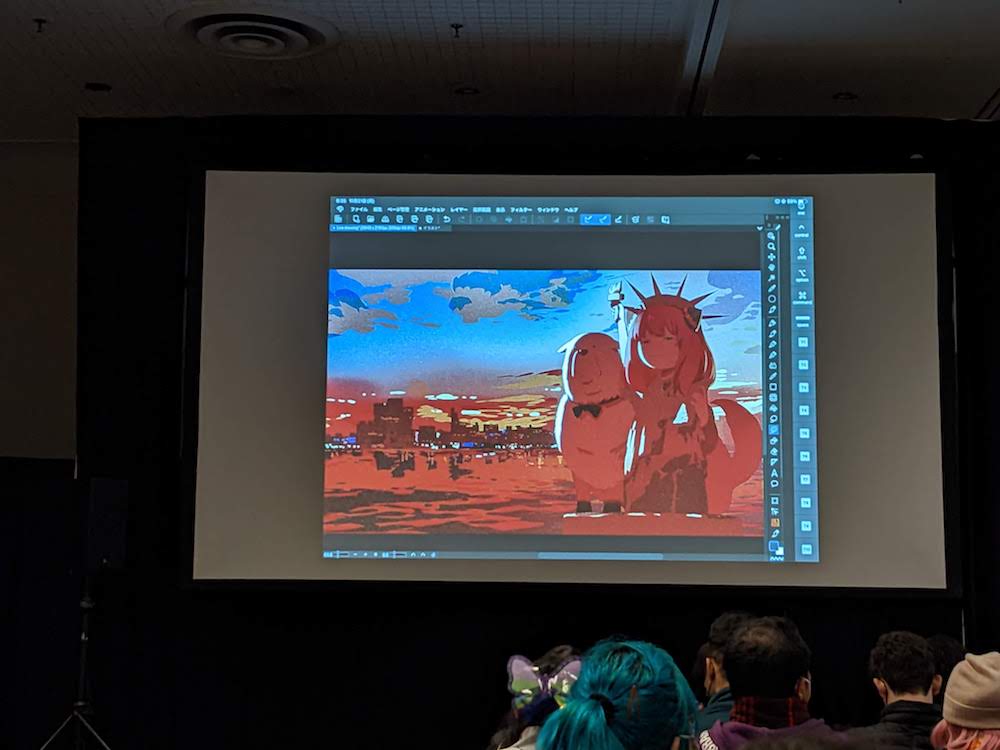
It’s rare to see a current anime studio with a pedigree as strong as Wit Studio: Attack on Titan, Great Pretender, Ranking of Kings, and most recently Spy x Family are among the works they’ve produced. At Anime NYC, multiple staff members for Spy x Family were invited as guests: President and CEO George Wada, as well as artist Syo5 (pronounced “Shogo.”) They held a panel that was a combination of Q&A, insight into the creative process, live-drawing session, and early preview of Spy x Family episode 8.
The live drawing was more a showcase of how Syo5 works on color palettes, taking an adorable line drawing of Anya Forger as the Statue of Liberty (with her dog, Bond) and adding a sunset to it. During the panel, Syo5 discussed how the color palettes in Great Pretender weren’t realistic, but were meant to have a different feel for each part of the world the characters travel to, and coloring the Anya of Liberty was a showcase of a process similar to what went into Great Pretender.
Ranking of Kings also got plenty of love from the Wit staff and audience alike. They mentioned that they’re trying to get the next season done in 2023, and Syo5 showed some of his conceptual drawings that established the general look of the anime.
Eating at the Javits
There were no onsite food trucks this year, so all nearby food options were basically in the Jacob Javits Center itself. Fortunately, between the stalls in the exhibit hall and the Javits dining area, there was actually a decent number of food options. Granted, they were all overpriced to hell and back, but that’s inevitable with con food.
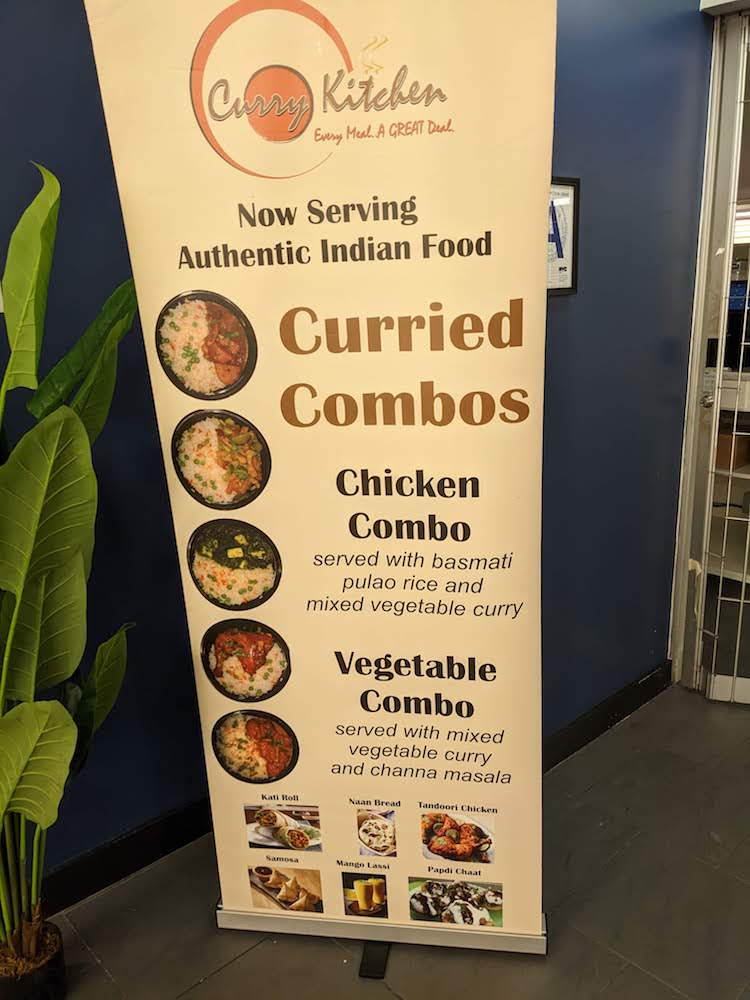
For those eager to relish in Japanese culture, the exhibit hall had Go Go Curry (a perennial favorite of mine), ramen, bento from BentOn, okonomiyaki from Okonomi, and a few others. I’ve tried pretty much all of them before (though not necessarily in the context of Anime NYC), and the quality is quite good, even if it costs too much. For those who didn’t want to pay the “weeb tax” (or wait in line for a long time), options included burgers and chicken, dumplings, empanadas (Nuchas) Korean food (Korilla), and even Indian food (Curry Kitchen). Overall, the variety was welcome, given the circumstances. I remember a time when you could barely get anything resembling good at the Javits, and I’m glad to see that has continued to change.
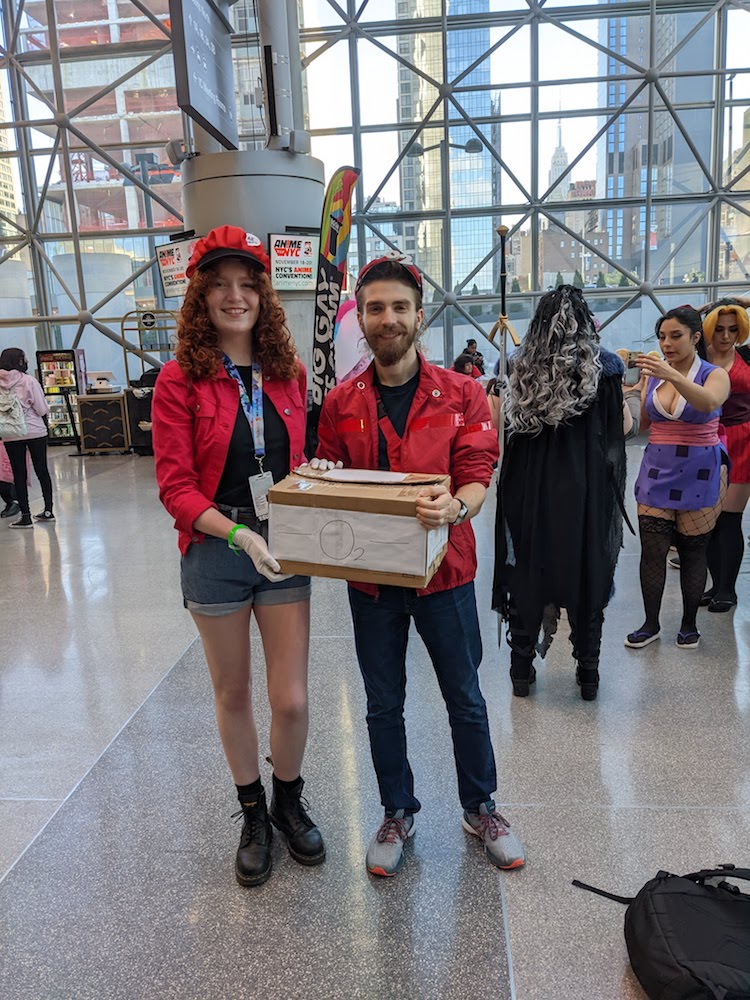
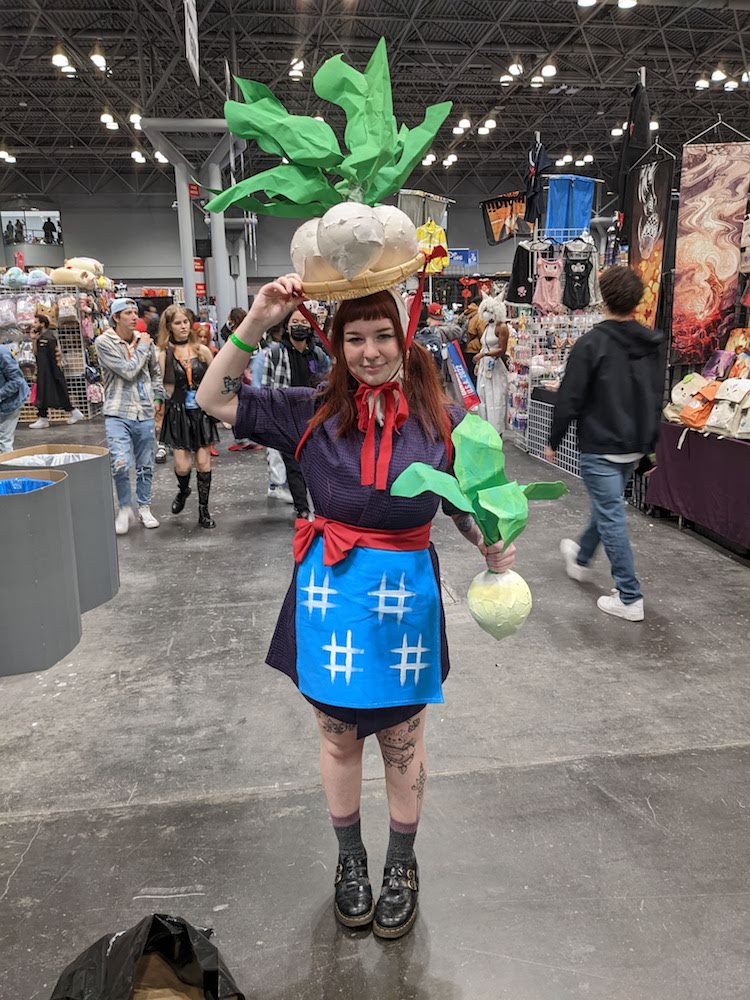
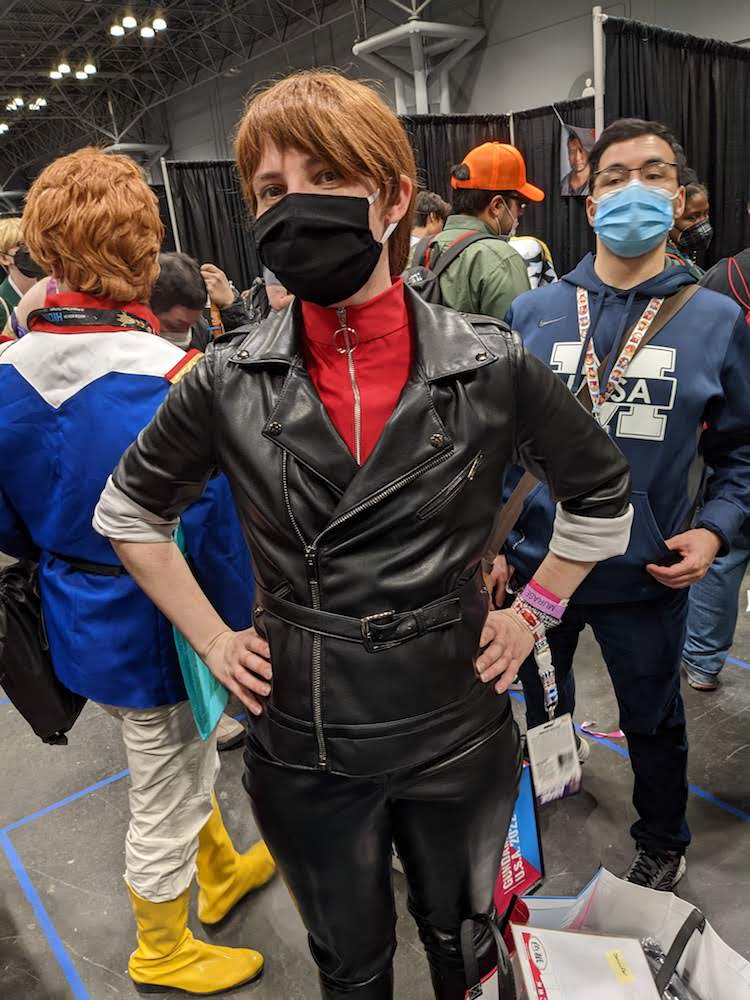
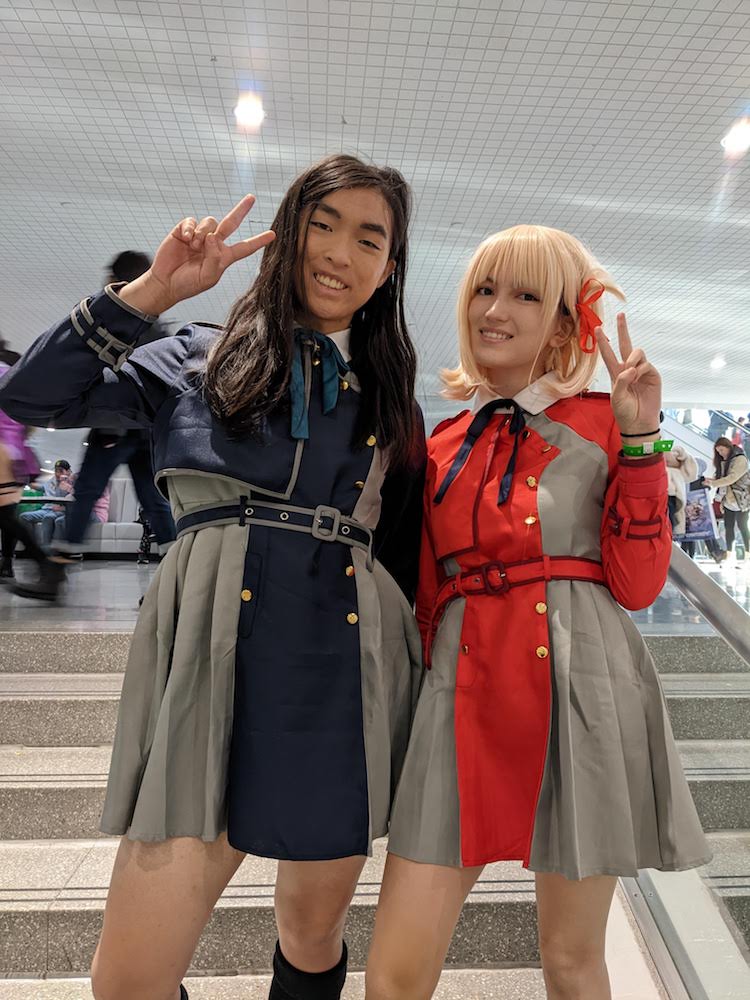
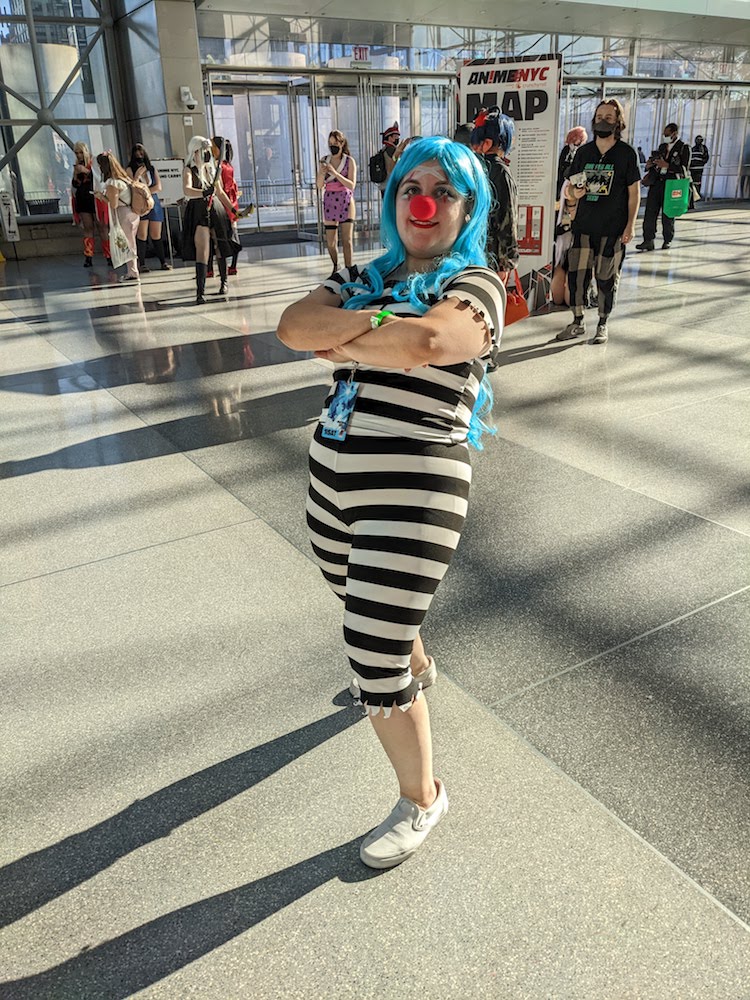
Cosplay, Etc.
Overall
Anime NYC 2022 had a few firsts for me, notably when it came to seeing Hololive Virtual Youtubers in a more direct fashion. In that respect, it was an unforgettable experience. While I prefer cons with a greater amount of fan panel programming, I also understand that this is not what Anime NYC is about. Attendees seemed generally to be in high spirits, but I do have concerns about it getting more expensive to attend, as a lot of anime fans are not rolling in dough. If they can keep bringing the guests people want to see while finding ways to make it affordable, I think things will be looking up for next year.
Cover Corporation and Nijisanji, the two heavyweight companies of the Virtual Youtuber world, both recently launched a new generation of English VTubers. TEMPUS and ILUNA respectively are new steps forward for their respective organizations, with HoloTempus being the first English-language Holostars (the “dudes” counterpart to the all-girl Hololive) and ILUNA being the first mixed-gender debut group for Nijisanji English. The initial announcements were made close to each other, inevitably leading to comparisons. Among the topics of debate were who has the better character designs, with people taking sides and criticizing the other for being uglier.
Normally, I really don’t care about this sort of petty, contentious arguing. And in terms of determining who’s “better” or “worse,” I still don’t give a damn. However, what interests me is that I find TEMPUS and ILUNA to have taken different approaches to portraying attractive men. The distinction can be roughly categorized as “hardcore bishounen” (TEMPUS) vs. “mainstream bishounen” (ILUNA).
It’s not a perfect analogy, especially because each individual VTuber has a unique artist behind them. But when you look at each group’s aesthetics, as well as the actual visual styles, the comparison only grows stronger. The TEMPUS designers include Kurahana Chinatsu (Uta no Prince-sama) and Komiya Kuniharu, and the VTubers have such sharp chins and body proportions that one expects more to find in BL or even CLAMP manga—the kind of look parodied by Gakuen Handsome. In contrast, ILUNA’s designers feature among them Arisaka Aco (Bestia) and Amaichi Esora, and their VTubers have a softer appearance that reminds me of something like Genshin Impact. Given that, it’s almost no wonder that fans have found this to be a topic of contention.
But Ultimately, while visuals do play a role in Virtual Youtuber popularity, personality is also vitally important. Picking favorites comes down to how each individual balances what they care about, though I think it would be best to not bash someone for liking one over the other, as long as the core reason isn’t some bizarre tribalism. As for me, I haven’t watched enough of them overall to pick a top guy, though finding out Vesper Noir has a thing for Carmen Sandiego makes me like him.
I’m back from Otakon in DC, and hopefully without catching COVID or the five million other diseases currently making life miserable for everyone. Did I make the right choice going to an anime convention? I guess my body will tell me soon. I’ll have a review of the event coming up this month, including my logic as to why I decided to attend despite the obvious risks involved (hint: taking steps to be cautious can go a long way).
By the way, the title of this month’s update is a reference to Jack King from Shin Getter Robo vs. Neo Getter Robo.
Thank you to my August 2022 Patreon subscribers, notably the following:
The summer heat has been harsh here and around the world. I hope everyone is doing what they can to stay cool, and that the people with the power to actually change things don’t just sit on their hands while they watch the world burn.
Since her debut, Hololive’s La+ (pronounced Laplus) Darknesss has become one of my favorite Virtual Youtubers. Her premise states that she’s both a mighty alien (?) demon (?) whose power has been sealed off—as well as the founder of Secret Society HoloX, an organization with designs for world domination. In practice, however, La+ comes across as a cheeky and overconfident brat. It’s within this context that the biggest surprise about her characters was revealed: the fact that she’s actually a fantastic dancer. I find myself re-watching her dancing clips, even though I normally don’t do that—not with VTubers, not with flesh-and-blood performers, and not even with the many anime dances over the years.
To those who are unfamiliar with Hololive and specifically the process by which its Vtubers go from “2D” to “3D,” most start off as flatly animated characters. In this “2DLive” format (named after the program used to rig their animations), La+ and others like her are able to move and tilt their bodies and heads to some degree, but it’s generally not meant to track the entirety of the performer’s physical movements. Over time, a Hololive member receives a 3D polygonal model, and can use more robust motion capturing to match the movement of their entire bodies. In other words, you generally can’t tell how comfortable a VTuber is with physical activity like dancing before they make their so-called 3D debut.
La+ was the last of HoloX to become 3D. Prior to that, she was primarily defined by two things. First, despite being the leader of her clandestine group, she’s actually the smallest; her oversized horns further emphasizing La+ as a relative pipsqueak. Second, she has an extreme amount of ego that swings wildly between being justified and unjustified. So when she started busting a move, I felt a degree of cognitive dissonance. “Wasn’t she supposed to be bad at this sort of thing?” In a later collaborative stream with the rest of HoloX, the sheer contrast in dancing ability between La+ and her subordinates (who are usually her betters in a variety of ways) hammered home that she’s a cut above the rest.
I think the reason this aspect of La+ works so well is that it ends up making her feel even more like a being of contrasts. She has that aforementioned “shortest but most important” quality, but in terms of competence, it’s like you never know if she’ll be a Hellmaster Fibrizo (Slayers) or a Katyusha (Girls und Panzer). If this really were an anime or something, La+’s dance reveal would be that moment where Yoda or Shifu from Kung Fu Panda gets serious. It’s a winning trope, generally speaking.
La+ Darknesss is neither fully an anime character or a fully flesh-and-blood performer, which is why the combination of her character background plus her strength as a dancer shine through. Like other VTubers, she lives in that transitional space between the real and fictional worlds. The fact that she’s so physically talented is inevitably to the credit of the performer, but it’s the surrounding setting that gives La+ the stark contrast to render her moves to be even more unforgettable.
I would love if the only thing on my mind was the summer anime season that’s just beginning. There are plenty of shows I’m looking forward to, but the news coming out the US Supreme Court is just too dire to ignore, especially this close to July 4. A lot of people are going to get hurt because of the family planning services denied to them, and the very fact that we’re seeing an established civil right being taken away is truly disheartening—though I choose not to give up hope.
Recently, I’d been watching old clips of George Carlin, and there’s a line that stuck with me that rings with the painful truth about the Conservative mindset in America: “If you’re pre-born, you’re fine. If you’re pre-school, you’re fucked.” It drives home the fact that we’re forcing babies into a world that doesn’t give a damn about them; otherwise, we’d have reliable healthcare and infrastructure that prioritizes bringing people out of poverty instead of acting like all the suffering the poor have to endure is somehow deserved.
Readers might be wondering if I’m going too far off track from the core focus of this anime blog. To that, I say: While there is no inherent political direction to anime, with works that go in every direction on the political spectrum, there is a strong and complex history of feminism through anime and manga that has helped to shape the lives of adults and children around the world. How many, including myself, were inspired to see the notion of women as heroes in a new light through shows like Sailor Moon? What about the fact that there was an episode of Hugtto Precure! dedicated to addressing the stigma towards C-sections in Japan, or how Delicious Party Precure has a non-cisgender character? Even something decidedly more horny and muddled in its politics like Darling in the Franxx portrays a world where pregnancy is controlled against people’s wills, and the main couple can’t actually have children.
Remember: You can be morally against abortion but still be in favor of bodily autonomy. It’s about leaving the choice up to the person whose body has fundamentally changed due to pregnancy.
As with every month, I’d like to thank my Patreon subscribers, particularly these fine folks below.
A post that talks about Virtual Youtubers, but also the way that information changes so quickly in that world.
Kio Shimoku
Kio Shimoku’s Twitter this past month was pretty light, but I definitely enjoyed finding out his thoughts on various movies, both anime and non-anime.
I also got to ask him about his participation in a Star Wars artbook.
Closing
I know many in the US are feeling like their votes don’t matter—otherwise, this stripping of civil rights would never have happened. And indeed, voting is very limited in what it can accomplish. It can be disappointing to see those with greater influence, especially politicians, not do enough to exert more lasting change. However, to not vote at all is to concede a very fundamental power. And while it may seem like a drop in the bucket, the consequences of its utter absence will be far deeper and suffocating. Please don’t give up.
Hololive Alternative is a 2d animation project depicting the Virtual Youtubers of Hololive as active characters within a world. Two “teasers” are out currently, and they’re a treat for fans and newcomers alike. But while watching the second, the depicted interaction between Takanashi Kiara and Mori Calliope made me hyper-aware of how internet culture and its memes evolve at lightning speeds.
Kiara the Phoenix and Calliope the grim reaper are both part of HoloMyth, the Hololive brand’s first foray into the English-speaking market. Early on in their careers, they were known for having a rather flirtatious and tsundere-esque relationship, which in turn spawned the ship known as TakaMori. It was a prominent part of both character identities—even making it into Can You Do the Hololive?, a song based on all the members’ signature greetings. In it, Kiara states, “Of course the two of us come together,” and Calli responds, “Shut your mouth, Kusotori [Stupid Chicken].”
Similarly, the second Hololive Alternative teaser shows the two eating together. Kiara eagerly takes photos of everything (Calli included), and the reaper responds by grabbing her scythe and taking swipes at Kiara. The whole interaction describes the original basis for TakaMori to a tee.
The only problem: the nature of the pairing has changed over time. It still has fans, of course, and the two even recently had an in-person stream together that was made all the more impressive by the fact that one had to travel from Japan to Austria. However, both Kiara and Calli have talked about the fact that they decided to emphasize their solo identities more. The fans in the Youtube comments for that collaboration have remarked even on how the duo’s dynamic has changed (and arguably for the better).
Granted, this isn’t quite the same as a meme naturally morphing into something unrecognizable. The fact is, one can point to a conscious decision as the reason TakaMori isn’t quite the same as it used to be: a purposeful shift in direction. Nevertheless, it feel indicative of the rapid pace at which VTuber in-jokes are formed feels indicative of the general speed of the current internet. In contrast, elaborate animations—even short ones like the teasers for Hololive Alternative—take time to be made. In that gap, the ground shifted underneath TakaMori, and its depiction in animated form can feel like a relic of the past. In reality, it’s only been a little over a year, but the fact that a year sounds like forever in VTuber time makes that difference all the more stark. Online empires rise and fall in less time, and I have to wonder what else might end up coming across as a “yesteryear meme” by the time the next teaser is done.
















 OGIUE MANIAX