Otakon 2017 Interview: Furukawa Toshio & Kakinuma Shino

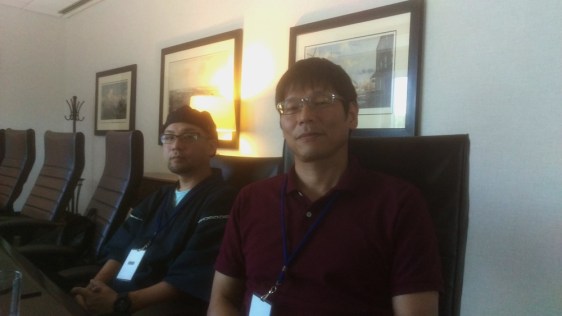
At Otakon 2017, I sat down with a husband-wife duo who are also two veteran voice actors of the anime industry. Furukawa Toshio is probably best known for playing Piccolo in Dragon Ball Z, while Kakinuma Shino was Naru in Sailor Moon (Molly to dub fans!).

I did not have enough time to ask any Piccolo questions, but if you love giant robots it’ll be worth your while.

Mr. Furukawa, Ms. Kakinuma, thank you for this interview.

My first question is to Mr. Furukawa. You played the role of Kenta in Mirai Robo Daltanias, so you had experiencing working with Nagahama Tadao. What was it like working with him? 

Furukawa: I actually worked with Mr. Nagahama before Daltanias, on The Rose of Versailles. But the time of Daltanias was during the super robot era, with the iconic huge robots in Japanese culture. He brought me in saying, “You know, we have a role for a prince for you. He’s a really good-looking character. Why don’t you come in?” So that’s how I came on the boat.

He was a very gentle person, and as a director he never stopped smiling. He was a very kind figure.

I’d also like to ask you about a different, maybe very different, director: Tomino Yoshiyuki. What was it like working with him as Kai Shiden in Mobile Suit Gundam?

Furukawa: Mr. Tomino is on the opposite spectrum, I’d like to say. He is relatively the stricter type. He’d give long lectures when we were young and starting off with First Gundam. He was known as the scary kind of director.

My next question is directed to Ms. Kakinuma. When it comes to anime based on manga, oftentimes anime-original stories are considered to be not as important or significant. But the romance between Naru and Nephrite is considered a fan favorite. What was it like voicing Naru for that story?

Kakinuma: When we were voicing for Sailor Moon, unlike some of the works now where there’s a manga established, we were doing it at the same time that the manga was going on. Some of the people who worked on the anime didn’t even know that romance doesn’t happen in the manga. So when we voiced it, we were doing it as if it were canon.

You’ve both been in the voice acting industry in Japan for a long time. How do you feel it’s changed over the course of your careers?

Furukawa: When I began, “voice actors” not really a thing. We were a subgenre of the bigger category of actors, where there were actors, stage actors, etc., and voice actors were part of the mix. During that time, we were not well recognized. If you look now, though, you have voice actors appearing on TV. I’ve even appeared on TV myself. I’d like to say that we’ve gained a kind of citizenship. We’re now more recognized.

Kakinuma: Recording has changed from when I began until now. For example, when I first started, we were voicing things that were on film, projected. When a part was over, we would have to reel in the film to record again if we needed to. Now, you don’t have that “reeling in the film” time; you can just click and go back to your previous scene. It saves a lot of time.

It’s normal now to see a kind of timeline on the bottom of the screen showing where you are in that span. By going to that, you don’t need a sense of timing anymore. But back then, since there were no timelines whatsoever, we needed a kind of specialized skillset.

Furukawa: TV equipment also changed. For example, nowadays we have multidirectional digital surround sound, which gives you the ability to hear all around you from all sorts of different channels. But back then, we didn’t have any of that, so we expected everyone to hear from the two speakers. Everyone speaking at the same time would be the same as mixing everything together. Now, if you did that, you might not get the same experience, so you need to split the channels in recording. So technology has advanced, but this has gotten us to take additional time in the recording process.

My last question is about Muteki Robo Daiohja, another giant robot series. What was it like working on it compared to Daltanias?

The biggest difference is that, while they’re both in the era of prolific super robots and space and everything, Daiohja is kind of a parody. Although they’re both similar—I got to play a prince in both anime—the biggest difference is that Prince Mito’s name derives from Mito Koumon, the very famous Japanese period drama about a prince taking out all the evils in his era. Daiohja had a lot of these elements. The characters Skad and Karcus came from Suke-san and Kaku-san from Mito Koumon. Everything about it was pretty much a parody of Mito Komon, so that’s the biggest difference I felt.

Thank you again for the interview. I look forward to your continued successes in your careers.

[APT507] One Punch! Part 2: JAM Project’s Rising Fame at Otakon 2017

My very first post as a writer on Apartment 507 was speculation that JAM Project would soar in popularity thanks to One Punch Man. Now, I’ve written a follow-up due to the group’s recent performance at Otakon 2017. Check it out!

Farewell Genshiken: Ogiue Maniax Status Update for September 2016

September is the start of a new, post-Genshiken world.

Though the loss is great, I know I have my patrons to back me up. Thanks to all of you who continue to support me on Patreon:

General:

Johnny Trovato

Ko Ransom

Alex

Diogo Prado

Sasahara Keiko fans:

Kristopher Hostead

Yoshitake Rika fans:

Elliot Page

Hato Kenjirou fans:

Elizabeth

Yajima Mirei fans:

Machi-Kurada

In terms of blog content from this past month, first and foremost is my final chapter review of Genshiken Nidaime. I hope it’s been a great ride for you.

According to last month’s poll, a lot of you would like me to go back and take a look at the original Genshiken as well. I’m eager to oblige, but I probably won’t start for a little while, at least a month or two. In the meantime, I guess I can get my Kio fix with some Spotted Flower.

Other post highlights include an Otakon 2016 convention report, as well as interviews with artist LeSean Thomas and anime studio P.A. Works. The LeSean Thomas interview has been doing extremely well for the blog, and it makes me very aware of how niche the anime audience in comparison to even other nerd subcultures in the US. The last time that happened was when I reported on the Nostalgia Critic and Angry Video Game Nerd appearing in an anime, which got me the most hits in a single day ever.

I also wrote about Yukitheater, sort of. Sadly I couldn’t get the program to work, but if you want a kind of trip back to early 2000s anime fandom but in a modern lens, this virtual theater program might be worth something to you.

The last post I want to mention is one that had been ruminating in my mind for a long time, which is about how characters are rendered attractive or charismatic. Basically, I think that, through visual design and personality and a bunch of other small factors, there are two primary ways by which people become drawn to characters: a magnetic “pull” and a forceful “push.” Am I on the right track? Tell me what you think.

Following up on another point from the previous status update, I’ve begun watching Super Dimensional Cavalry Southern Cross in order to finally update Gattai Girls. Are there any other series you’d like to see me tackle?

Until next time! The second Kizumonogatari movie is showing in October, which is also the month of New York Comic Con. Exciting times.

Baltimore’s Last Stand: Otakon 2016

Otakon, the east coast’s largest anime convention, has been a mainstay of Baltimore summers since 1999. With the 2017 move to Washington DC, however, 2016 may very well be the last Otakon Baltimore ever sees. The awareness of this turning point among attendees felt almost palpable, and not just because the blazing heat and heavy humidity made everything feel ten pounds heavier. Watching con-goers on Sunday discuss the end of Otakon in Baltimore with an air of finality made it feel like it really was the end, even if it’s more of a new beginning.

Music and the Matsuri
otakon2016-matsuri

Every year, I try to attend at least one Otakon concert, usually that of an artist I’m interested in from hearing their music in anime. This time, it was MICHI, who sang the opening to one of my favorite shows of the year, Dagashi Kashi. Unfortunately, both of the panels I was involved with ran during her concert time, so I unfortunately could not go. What’s more, her concert was the half-time show at the Masquerade, which is an event I generally avoid. The upside of all this is that I got to meet her in person at the autograph session.

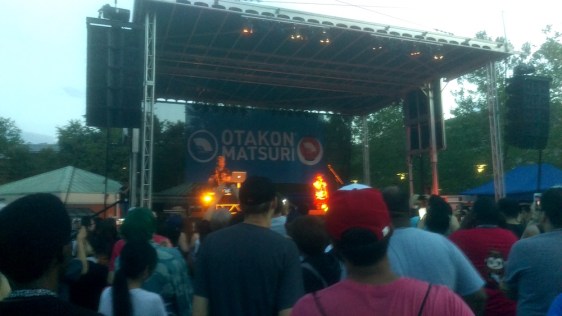
I did check out the Otakon Matsuri, a first for me. Taking place every year on the Thursdays before Otakon weekend, in the past I simply had neither the time nor the energy to go. This time, however, they had as music guests Lotus Juice and Hirata Shihoko from the Persona game series. Because a friend of mine loves Persona and made it a mission to attend their performance, I tagged along and was treated to a lively concert. Despite a number of technical difficulties likely owing to the severe heat not playing nice with Lotus Juice’s Macbook, they really made it a memorable experience. Lotus Juice, who was born in Japan but actually grew up in New Jersey, actually performed not only Persona and anime-related music, but even threw in a Japanese version of a Tupac song. Unfortunately, I don’t know Tupac well enough to recognize it, so if anyone in the comments knows, feel free to chime in!

Guests and Industry Panels

This year’s guest list was sparser compared to previous Otakons, possibly because of next year’s move to DC. Notably, Otakon mainstay Maruyama Masao (founder of anime studios MADHouse and MAPPA) was not able to appear, and it felt like Otakon was missing his insight. The guests that did come, however, were able to provide a great deal of insight into the anime industry and their creative processes.

Akane Kazuki and Escaflowne

Akane Kazuki, director of Escaflowne, Heat Guy J, and Code Geass: Akito the Exiled, was in attendance because of the new Blu-ray release of Escaflowne and the English premiere of Akito the Exiled. Akane is a Studio Sunrise man, so just like Takamatsu Shinji and Park Romi last year, so at a press conference I had to ask him what this experience was like working with Gundam creator Tomino Yoshiyuki. Akane mentioned that he actually went to Sunrise straight out of college because it was where Tomino was working. However, the very first time he arrived at Sunrise for work, he found Tomino was scolding his staff. Akane also described Tomino as someone who thought about anime from morning to night, and that he gave the impression that such a devotion was necessary to succeed in the world of Japanese animation.

He also talked about his work on Escaflowne, how it was his first work where he had full directorial control, and about the changes he made to the heroine, Kanzaki Hitomi. When Akane first came onto the project, Hitomi was going to be a quiet, long-haired girl, but he and character designer Teru Nobuyuki pushed to have her become the strong-willed, short-haired girl we know her as now. Later on in the conference, he described that period as one where a lot of female characters were the same, and he worked on Hitomi with the idea of, is this the kind of character that actual girls themselves can get behind?

Industry Panels

The Japanese industry panels I attended included P.A. Works of Shirobako and Hanasaku Iroha fame’s, as well as Under the Dog producer Morimoto Koji’s. At the P.A. Works panel, they didn’t really take questions from the audience, but they went through why they decided to make their new series, a robot anime called Kuromukuro, because it was uncharted territory for their studio. They also asked the audience themselves about the idea that Americans prefer action-oriented anime with strong heroes, but I found that an audience predisposed to coming to a P.A. Works industry panel likely wouldn’t have the same tastes.

As for Morimoto, I asked him questions related to his involvement with giant robot anime. First, I asked him about whether or not he has any input on how series are represented story-wise in the Super Robot Wars video games, to which he responded that they mostly leave it up to the game studio Banpresto. Second, I asked him about what goes into adapting or reviving old mecha franchises. Here, the answer was that it really depends on the series, and how much they’re trying to draw in the old, nostalgic audience, or create a new one.

As for the American side of things, I attended the Discotek panel and the tail end of the Vertical Inc panel. The main takeaways (at least for me) is that the glorious anime Charge Man Ken is now licensed by Discotek, and that two of Vertical’s best-selling titles are two of my favorites, Nichijou and Mysterious Girlfriend X. As someone who kept putting Mysterious Girlfriend X on their surveys every year, this fills me with pride and joy.

For more guest coverage, check out my interviews with  LeSean Thomas and the staff at P.A. Works.

Fan Panels

One of Otakon’s claims to fame is its strong collection of fan panels. Presenting a diverse range of topics, it’s one of my personal highlights every year. This time around, however, I felt that a lot of the panels I attended weren’t quite as strong, though I don’t think this is really the fault of the con itself or even the presenters. There will be some panelists who are stronger than others, and I, as someone who did a couple of panels, have plenty of areas where I need to improve.

It’s also good that Otakon occasionally goes for untested presenters, because if they stick with only the ones they know, it gives less of a chance for newer panelists to show what they’re capable of. In many cases, there appeared to be a lack of preparation and oversight on actually planning and researching the presentations. That doesn’t mean that any presenter who didn’t bring their A-game doesn’t deserve to come back, but I hope that we all look to the next time with the hopes of being even better.

Anime of Green Gables

Featured Panelist Viga’s panel all about the popularity of Anne of Green Gables in Japan was quite informative. As someone who’s watched both the 1970s Anne of Green Gables anime and the 2000s Before Green Gables prequel, I learned a lot, especially in regards to how it got to Japan. I didn’t know, for example, that Japanese fans take pilgrimages to Prince Edward Island fairly regularly. I thought the panel had a generally good structure, but felt a bit disorganized in places. While I at first wondered who the panel was for, I think it turned out to be existing fans of Anne of Green Gables who might not be as familiar with the anime.

Gen Urobuchi: Magical Girls, Riders, and Puppets, Oh My!

Because the title of this panel mentioned puppets, I was hoping to see some Thunderbolt Fantasy action. Unfortunately, it got cut out of the presentation, which I find a bit strange because plenty of episodes had been out by then. On top of that, there was an entire special about the making of the show, which would have given them plenty of material to work with.

The Bravest Robots: Sunrise’s Brave Series

An overview of the Yuusha giant robot franchise of the 1990s, this panel was run by Patz Prime from Space Opera Satellite, with whom I’d previously done a podcast review of Brave Police J-Decker. As someone who’s more familiar with Brave Robots than most, even I learned quite a bit from it. I was particularly fascinated by the transition by the sponsoring company Takara from Transformers to Brave Exkaiser, the first series, and how the panel wove a narrative of the continuous fight between the animators, Sunrise, and Takara. Maybe next time the panel might have time to mention Baan Gaan.

1999: The Otaku Time Machine

George from Land of Obscusion ran this panel, which went over some of the major and minor anime and video games to come out in the year 1999. For me, it was in many ways a review of my adolescence, but I’m also well aware that many anime fans in attendance likely would have been born before 1999. It’s still kind of crazy for me to think about. All I’ll say to this is thumbs up for showing the Japanese Medabots opening, thumbs down for not showing the Japanese Digimon opening.

My Panels

This year, I presented at two panels: “Such Dog. Much Anime. Wow” with Kate from Reverse Thieves, and “Greater Uglier Manga.” The former was a panel about dogs across anime, including popular series such as Naruto, genre legends such as Ginga Nagareboshi Gin, and old historical works such as Norakuro. If you came to the panel, I’d like to thank you for being such a great audience, and I hope to get better at communicating for next year.

Greater Uglier Manga was the sequel to last year’s Great Ugly Manga, with the twist that it was now 18+. The point wasn’t to fill the panel with pornography, but to extend the range of images that could be shown. Unfortunately, the panel began with a serious hiccup due to technical difficulties, and we spent the first 15 minutes troubleshooting. Ultimately, thanks to Daryl Surat from Anime World Order, we figured out that it had to do with the switchers they were using for the panel room and were able to start. Unfortunately, I ended up speeding through the presentation and finishing early, which means I have to work on my pacing better. My co-panelist had a better handle on time, I think. Lesson learned!

By the way, I really do like Kurosaki Rendou‘s work, and I hope that, if you attended the panel, that you might find them fascinating too.

Shopping and Sites

Dealer’s Room
otakon2016-dealersroom

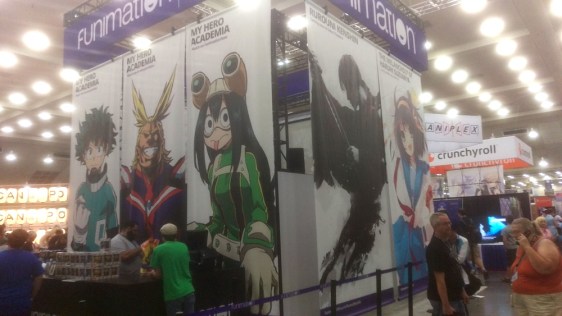
This will be the last time we see this incarnation of the Otakon Dealer’s Room for a long time. That being said, I do want to point out that they once again allowed attendees to travel between the buildings of the Baltimore Convention Center by cutting across Liberty Street. In recent years, this was restricted, and in my opinion it really hurt the accessibility of the Dealer’s Room and Artist’s Alley.

My two biggest purchases of the convention at the Dealer’s Room were finding all of Brigadoon: Marin & Melan (a great series that deserves more love) and getting the Nozomi from Rolling Girls Nendoroid. As shown in the photo below, I posed her the best way I know how: drinking [soda] and driving.

(Don’t try this at home, kids).

If you were wondering, the sidecar can hold another Nendoroid, and I have just the right riding partner in mind.

The real highlight of the Dealer’s Room for me this year, however, had to bee the Good Smile Booth. While I did not obtain the aforementioned Nendoroid there, I was pleasantly surprised to discover that they were selling blank Nendoroid faces for $1 each, along with tables where you could sit down to decorate them. Apparently those faces are a convention exclusive, so I bought a bunch and turned one into a potential Ogiue for the future.

Some day…some day….

Artist’s Alley

One of the strongest titles at Otakon 2016’s Artist’s Alley had to be Pokemon Go and Overwatch. While Pokemon in general tends to be pretty beloved among Otakon artists and attendees, the three factions of Pokemon Go, Team Valor, Team Mystic, and Team Instinct, made for easy ammo for creators. As for Overwatch, I believe its popularity among artists to be a testament to its highly appealing and charismatic character designs. However, overall the artwork was quite diverse, and hardly anything was truly dominant.

Relevant to me personally, I bought an amazing image of Rice Goddess Hanayo from Love Live! wearing glasses. The Demeter outfit or the specs alone would have been enough, but together the combination was unbeatable.
otakon2016-paworks-kissuisou

otakon2016-paworks-diesel

otakon2016-paworks-minko

otakon2016-paworks-kuromukuro

otakon2016-paworks2

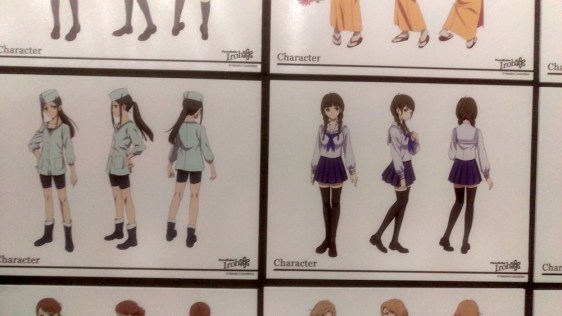
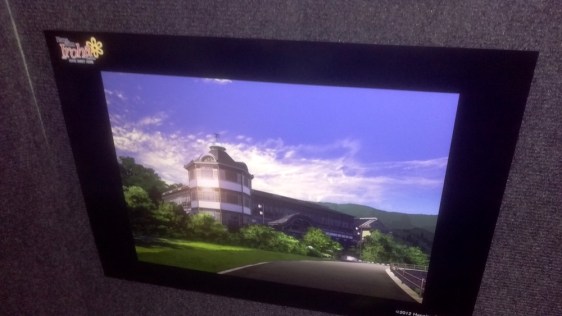
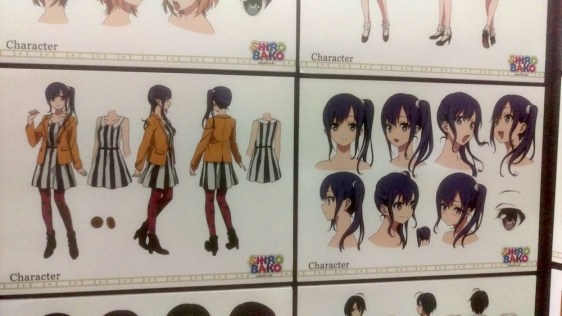
The real highlight of the Artist’s Alley, however, had to be the P.A. Works 15th Anniversary exhibit. Showing detailed character design sheets, background art, and more from P.A. Works shows, it made me even more conscious of the two arms of P.A. Works: the attractive girls who engage in adolescent drama and discovery, and the exploration of beautiful scenery and environments.

Food & Drink

otakon2016-nandos

Seeing as this was likely our last time in Baltimore for years to come, my friends and I decided to hit up many of our favorite places and turn Otakon weekend into a feeding frenzy. We went back to Abbey Burger Bistro, where I tried their Australian Red Deer burger. We stopped by Piedigrotta Bakery, the original home of tiramisu. We had to sample the luscious crab cakes from Flash Crab Cake Co. For the return trip home, fried chicken from Royal Farms was a must.

Two places I had never tried were Portuguese chicken chain Nando’s and a local Afghan restaurant Maiwand Grill. Though not exclusive to Baltimore, Nando’s was truly a highlight. Having sample a whole variety of their dishes, including their default chicken, chicken liver, macho peas, Portuguese rice, and natas (egg custards that were the predecessor to Hong Kong’s famous dan tahts), everything was a home run. Maiwand Grill had great portions at really affordable prices, and both their yogurt drink and Afghan ice cream were amazing. The yogurt drink was no-nonsense pure yogurt flavor, and the ice cream had both dates and figs in it (two of my favorite fruits).

Overall

Otakon 2016 was fairly low-key by the standards set by previous conventions, and for that reason it really did feel like a transition into something new and exciting. A part of me wants to come back to Baltimore someday, but another part of me looks forward to seeing what Washington DC has to offer.

Also, I hope no one pulls an Eden of the East near the White House.

As with every year, I leave off with a selection of cosplay photos.

If you liked this post, consider becoming a sponsor of Ogiue Maniax through Patreon. You can get rewards for higher pledges, including a chance to request topics for the blog.

Otakon 2016 Interview: P.A. Works

paworks

This interview is part of Ogiue Maniax’s coverage of Otakon 2016. While the interview was with multiple staff members at P.A. Works, only the producer, Horikawa Kenji, gave responses. I’ve reflected this in the answers.

It’s a pleasure to have this interview with you. My first question has to do with True Tears. It was your first work as a studio, and from what I’ve heard the anime is quite different from the visual novel. What led to you choosing to adapt this series for your first project, and what led to it changing from the source material?

Horikawa: So the producer at that time, Mr. Nagatani, had said, “Let’s work on a few projects together!” And out of those choices was True Tears. We thought that it was perfect for what we could do at that time. We also thought it granted us lots of freedom, too, because as long as the theme was “tears,” we could do what we wanted.

Hanasaku Iroha is a series that shows the charm of the countryside and Japanese tradition. It seems that more and more anime are focused on the promotion of tourism to regions of Japan. You created the Bonbori Festival in Hanasaku Iroha, but was the promotion of a region of Japan a part of production from the very beginning?

Horikawa: When we made Hanasaku Iroha at first, we didn’t intend for it to empower tourism, quite the opposite, actually. Recently, there are many cases where anime fans go to the locations where their favorite anime take place. Some people call it going to “holy sites” or “investigating the show.” But while it can be a good thing, the act of fans going to these sites might not always be positive. When the fans gather, they might take pictures of, say, average houses and it might be very troublesome and disruptive. When I make select a location for a work, I think about how to have it so that even if fans visit it’ll be okay.

So when we were making Hanasaku Iroha, it was part of our thoughts that we would base it in a hot spring city that would be okay with having some volumes of fans coming. We also took care that the residents of that city would be notified when a large number of fans would come.

In regards to the Bonbori Festival, it originally wasn’t there, but it came up during the making of Hanasaku Iroha. We thought that, if it was a festival that the people could continue—not in the anime sense but that of a legitimate festival—that would have a much bigger, long-lasting, and positive impact. While an anime might be forgotten in a few years, a festival is part of Japanese culture and won’t be forgotten.

In Hanasaku Iroha, the grandmother is a very important character. In Shirobako, most of the characters are career women or out of high school. Tari Tari has one of my favorite characters, which is Takakura Naoko. Do you feel that there is a better market for series starring older characters, perhaps similar to the series you make now, but with people in their 20s and 30s?

Horikawa: As much as I would like to make something centered around older characters, there is such a thing as monetary value associated with characters. In Hanasaku Iroha, the characters were supposed to be out of school already and working, but due to those complications they became high school girls.

Since Shirobako, however, we took that step towards making the characters people who are actually out of school and working. That was a great adventure for us. Since we found out that Shirobako was indeed a success, we have shown that the girls don’t have to be in high school for fans to be interested. So, it was great to find out that fans like mature women as much as high school.

There are a number of characters in Shirobako based on real creators, for example Maruayma Masao and Anno Hideaki. Did you consult them in your portrayals, and did they have anything to say afterwards?

In terms of the people connected with those characters, we did ask them for their acknowledgement. The director knew Maruyama-san, so he probably asked Maruyama-san, while I asked people I know. But some seem to say that they never received the requests for acknowledgement.

Thank you.

Horikawa: Thank you very much.

If you liked this post, consider becoming a sponsor of Ogiue Maniax through Patreon. You can get rewards for higher pledges, including a chance to request topics for the blog.

Ogiue Maniax on Ani-Gamers Post-Otakon 2016 Podcast

paworks-stands1

Right after Otakon, I joined in on an impromptu post-mortem podcast on Ani-Gamers along with the Reverse Thieves and Anime World Order. See what we had to say!

Actual con report coming soon.


Otakon 2016 Interview: LeSean Thomas

leseanthomas

I had the pleasure of interviewing LeSean Thomas at Otakon 2016, where he was debuting his new animated short, Cannon Busters. Though we didn’t talk much about Cannon Busters itself, I was pleased to find out about his life as an artist, his philosophy on art and anime, and even his family.

Ogiue Maniax: So you grew up in the Bronx, and I assume that you had some sort of arts education. Could you describe what it was like to grow up as an artist?

LeSean Thomas: It was fairly okay. I stayed indoors quite a lot. I used to sketch a lot, sketch in school. You know, I grew up when hip-hop was growing up, and so a lot of stuff happened in the 80s in New York City. I thought it was cool. I had a lot of colleagues, a lot of friends in my apartment building, who I’d sketch with from time to time. I had a lot of friends in class who I could sketch with. I was into video games and sketching.

I think I decided to make it a career when I became a teenager. I moved to upstate NY for a period of time, to Middletown, and when I came back to the Bronx I decided to become an illustrator. I enrolled in a school that focused on the arts.

OM: Which high school?

LT: Julia Richmond High School. It was in Midtown Manhattan.

That was sort of my circle, and by the time I got back after I graduated high school I decided I wanted to become a comic book artist. But it was tough because there was a lot of competition in New York City—Marvel and DC. But I was also really influenced by animation, Japanese animation.

I landed a couple of opportunities that led me to work in animation production, and one thing led to another. I got onto a couple of big shows, and I was able to use that to build up momentum to work on more shows and create opportunities for myself.

OM: More and more young kids, teenagers, college students, are embracing anime and manga as part of how they get into art. I also know there’s concern that anime and manga are teaching the wrong lessons.

LT: What kind of wrong lessons?

OM: Like it’s teaching people to draw the wrong way or look at art the wrong way. And I’m sure already from your question to me you probably don’t agree with that thinking.

LT: Yeah, I don’t.

OM: So I’m wondering, what would you think is the best way to use anime and manga in an arts education?

LT: I think you should do whatever you want. I haven’t ever heard anyone say to me that copying Picasso or Michelangelo, or Italian or French artists perfectly, is wrong. We get into this really weird, shaky territory where we start becoming ethnocentric towards specific countries and their art history. I think a lot of that is based off the fact that the US was a European colony, and our history is based off of European history, and our art history is European. What’s wrong with India? What’s wrong with Mumbai? What’s wrong with China. I think that, respectfully, it’s just the way it is, but I don’t think that a lot of thought is given into how we judge children who copy the styles of other countries, as opposed to what our curriculum forces us to teach, which is European art history.

I know a lot of graphic designers who are brilliant who don’t study European stuff, they study Japanese art. When you’re in a school, you’re programmed and taught to be an employee and not an auteur, and I think that plays a big role in how teachers choose to enforce their ideals onto students, who are very impressionable at a young age. I’ve also noticed, in my experience, that a lot of teachers are graduates who couldn’t find jobs themselves. You have this cyclical dynamic happening where teachers who don’t have a lot of experience are telling kids what they should and shouldn’t draw.

How did Murakami learn how to draw? When you’re telling kids how to draw, you’re telling them how to interpret art. It’s not right. When you’re telling them how to respond to art, you’re robbing them of the privilege of interpreting art themselves, and interpreting how they learn. So I respectfully disagree with the logic that a child shouldn’t learn how to draw anime because of the historic implications behind that.

OM: You worked on The Boondocks, and it’s clear from the comic strip that Aaron McGruder is also very influenced by anime and manga. Is your mutual interest in how you came onto the show?

LT: Certainly my drawing style played a big role in choosing me to help him develop the early designs with the crew.

OM: The Boondocks as a comic strip was pretty forward thinking, advanced, and progressive, but the comic strip medium is a pretty conservative place. So when moving the series over to Adult Swim and an animated setting, was it a very conscious decision on your part and the staff’s part to push the envelope much further?

LT: No, that was actually Aaron’s mandate. I may be wrong, but I remember a rumor from around 2004, 2005—from someone in our circle—that Mike Lazzo, the head of Adult Swim, played a role in having Aaron push the envelope. So when I came on board, that was already a demand that came from on high. I was pretty detached from that. I was more focused on the visuals. A lot of that envelope pushing was in the writing. That was the stat quo on the production; we knew what we were getting into.

But as far as the decision from Aaron going from the conservative comic strip to the extreme in the animated form, I’m not privy to that. But there is a rumor that Adult Swim was encouraging that as well.

OM: You worked on Cannon Busters, and you mentioned previously about your friendship with Thomas Romain. You come from different cultural backgrounds, but you seem to have a lot in common. So what’s it like working with him?

LT: Well, Thomas is a westerner, whether we want to admit it or not. He speaks English, and while there are some things he doesn’t get about American culture, he’s still a westerner. That’s part of our common bond, as is our need to collaborate internationally. I think we’re kindred spirits. I told him that that, because of him leaving France to go to Japan and me leaving America to go to Korea for pretty much the same reason.

I like to use Thomas’s phrase, “world animation.” It’s not anime, and it’s not American animation. It’s world animation because of the nature of how it’s put together. I really respect Thomas. I like him a lot. I think he’s one of the most talented guys. He’s an incredible draftsman, and one of the most incredible thinkers. I’m going to see him next month when I go to Tokyo. He’s one of my favorite people.

OM: You worked in Korea, you’ve worked with the Japanese studio Satelight [on Cannon Busters], and you’ve worked with American companies. What’s it like working with different studios in different countries?

LT: In America, it’s pre-production and post-production, and that’s it for most shows. There are a lot of shows that are being animated in Flash in America, but most daytime animated shows are done in Korea.

Korea doesn’t do pre-production or post-production, so they’re just main production, largely. And Japan does all of it. And that’s the difference, at least in my personal experience. I could be wrong, but that’s the gist of what I got.

OM: You spent time in South Korea in the animation business. I know that Korea doesn’t create a lot of animation in pre-production or post-production, but I know there is a desire by South Korea, by the government and the animation business, to be known as an animation powerhouse.

LT: It’s mostly service work.

OM: Do you think there is a strong potential for them to break out and become their own thing?

LT: I think so. I don’t know if the problems that were there when I was in Korea are the same as the ones now, but I know the trick is to find venture capitalists who are interested in and see value in animation production beyond government funding and subsidization. I’m not sure if that’s something they’re risk-averse towards. When I was there back in 2009, 2010, there was a massive aversion towards taking a risk on animation over video games. And I’m not sure if that’s still an issue, but I definitely think they have the potential to stand out. I mean, why not? They animate most of our shows, and I think a lot of it has to do with just finding alternative revenue streams to finance original properties and projects.

It seems like there’s a slow coming back at the feature level, but it seems like everything sort of fizzled out once Wonderful Days aka Sky Blue died. I think that scared the industry in general, made everyone say, “Well, we’re not going to take this risk anymore.” I’m just waiting for a resurgence.

There are a few animated feature films that have come out in the past one or two years, like King of Pigs. It’s like, wow, they’re doing features now. They’re in film festivals.

Overall, do I think they have the potential? Of course. If they can do Sky Blue, they can do anything. I just think they have to figure out internally within the industry, within their government and culture, how to create a platform for creating original content. And they also need to motivate young kids. A lot of kids are going into game design instead of animation because of work labor and pay and all that.

OM: My last question is this: Your little brother is Sanford Kelly, the fighting game pro. Growing up, did you notice that he had a talent for fighting games?

LT: Yeah, he learned all his gaming from me [laughs].

Me, him, my older brother Kelby, and my two sisters Valtvaia and Shavon, we all lived in the same apartment with my mom and my grandmother. So we all came up, and video gaming was one of our major bonding aspects. We gamed hard. We played everything, PlayStation, Dreamcast, Turbo Grafx-16, Super Nintendo. That’s all we did. So by the time Sanford turned 18, we were so hardcore into it, we would go to the local arcade shops—back before there was only Chinatown Fair, in the mid-90s—and hit the sticks.

He just got really good, and he built up a circle in Chinatown Fair, in that area. I kind of moved on to animation and left the city to move to LA. I used to get on him about it. “You need to focus on other stuff.” But then when I started seeing him winning money and awards and stuff like that…

Gaming culture’s still relatively brand new. Talking about the early 2000s, where there were legit funded tournaments, he came up in that circuit where the Justin Wong and Daigo era was pretty much coming up. Now it’s a big thing. It’s on ESPN.

When he was coming up, I was a bit nervous about it, but then when I saw how well he was doing, and how he was creating a name for himself, I embraced it.

I get that quite often. “Oh my god, you’re brothers with Sanford Kelly, that’s so cool.”

OM: It’s kind of unlikely—well maybe not unlikely, but it’s interesting to have two different, talented brothers in two very different fields.

I’ll be honest, I’ve been forced over the years respect the game circuit. Because, like many people, if it’s not sponsored or it’s not on TV, then it’s still a subculture. And now it’s a major thing, so now it’s common for kids that I run into to say that they love Street Fighter and that they know who Sanford Kelly is. It’s still kind of weird, but it’s still really cool.

If you liked this post, consider becoming a sponsor of Ogiue Maniax through Patreon. You can get rewards for higher pledges, including a chance to request topics for the blog.

Ogiue Maniax at Otakon 2016, August 12-14

It’s time for another year at the east coast’s largest anime convention! It’ll be Otakon’s final year in Baltimore for the foreseeable future, so I’m hoping to make it a memorable one.

I’ve also got a couple of panels this year, and I hope that you can attend.

CpNkuPQXYAAARWP.jpg_large

Saturday, August 11, 8:15 – 9:15pm

Panel Room 5

“Such Dog. Much Anime. Wow.”

It’s a panel celebrating dogs in anime! See your favorites, and some you’ve probably never even heard of! My co-presenter on this panel will be Kate from the Reverse Thieves.

5dc9679d

Saturday, August 11, 11:45pm – 12:45pm

Panel Room 1

“Greater Uglier Manga.” [18+]

The sequel to last year’s “Great Ugly Manga” panel. Once again, my co-presenter and I will be showing manga that’s great not in spite of how ugly they are, but because of how ugly they are. As a warning, this year’s iteration is 18+, but keep in mind that this is not just some pornography/hentai panel. Most of the content will still be all-ages.

See you there!

Quotable: Ogiue Maniax Status Update for August 2016

August is full of fun and surprises. For one thing, I have two panels at Otakon 2016: “Greater Uglier Manga” and “Such Dog, Much Anime, Wow.” The schedule isn’t available yet, but when it is I’ll be making a post.

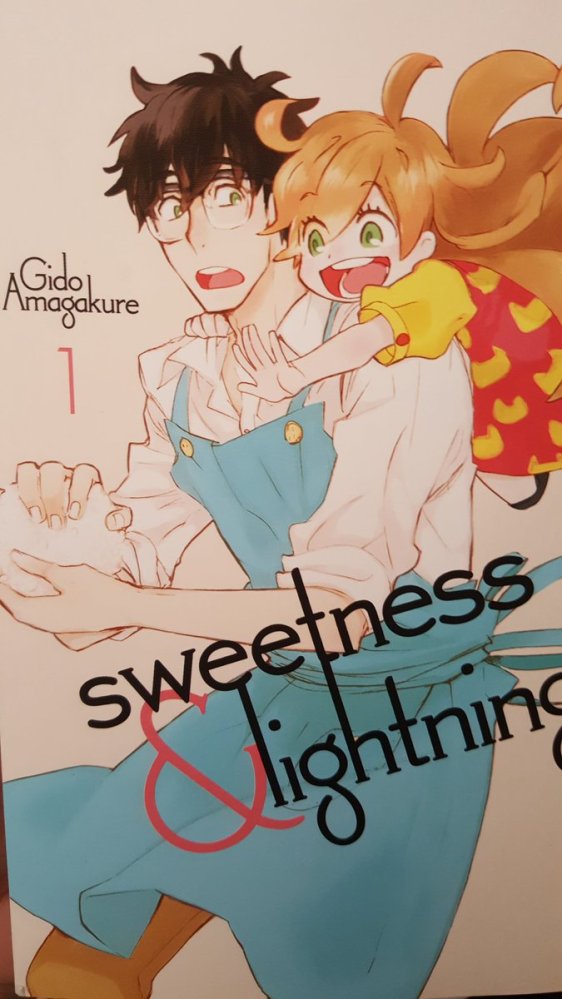
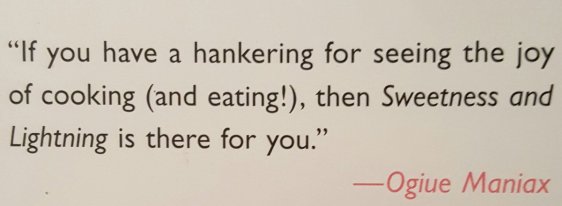
Another bit of news is that Ogiue Maniax has, for the first time ever, been quoted on the back of a manga! The title in question is Sweetness & Lightning:

sweetnesslightningquote2

sweetnesslightningquote

I consider this quite the milestone, and I’d like to thank my readers, but especially my Patreon sponsors in particular for supporting me:

General:

Johnny Trovato

Ko Ransom

Alex

Diogo Prado

Sasahara Keiko fans:

Kristopher Hostead

Yoshitake Rika fans:

Elliot Page

Hato Kenjirou fans:

Elizabeth

Yajima Mirei fans:

Machi-Kurada

I’d also like to congratulate Johnny for winning my Love Live! contest.

Perhaps the biggest news of all for the blog is that Genshiken is ending! I’ve written my review for the penultimate chapter, and I already have emotions welling up inside of me in anticipation for the final conclusion. You’ll be certain that I’ll have a lot to say at the end.

If nothing crazy happens (like a third Genshiken being announced soon after), I’m considering doing a series of nine posts to review the original series volume by volume. What do you think?

Other notable posts this month include my Patreon-sponsored article on Purity in Anime, my reviews of the Kyoto subway tourism light novel, Kyo Girls Days, and Girls und Panzer der Film, as well as a report on my visit to the university on which Genshiken is based.

It’s kind of a hectic month looking ahead, so I haven’t had time to think of any new projects for the blog. For now, I’m still watching and reading through quite a back catalog, with the intention of clearing up some time to finally review Super Dimensional Cavalry Southern Cross for Gattai Girls. Luckily, it’s now on Amazon, free for Prime users and 99 cents per episode for non-Primes. So, I have no excuses left!

Once again, I’ll be at Otakon, so if anyone wants to come up and say hi at a panel, feel free to do so! I’m actually a tad shy in real life, and it can come across as surliness, but don’t let that scare you.

Ogiue Maniax Talks Otakon on the Space Opera Satellite Podcast

goldran-hiddencell

I was recently on PatzPrime’s Space Opera Satellite podcast to recap and review the highlights of Otakon from the mecha fan’s perspective. Joining us were also Tom Aznable, Hazukari, and Ashe Blitzen.

Have a listen