Ganbalance de Desk Job: “Power of Hope: Precure Full Bloom”

With only a few exceptions, Precure has always been resistant to portraying its heroines when they’re older. If they’re middle schoolers, that’s all you’ll ever see them as; if they’re high schoolers, same deal. That’s why one of the 20th anniversary projects, which portrays some of them as adults, came as such a surprise. 

Power of Hope: Precure Full Bloom is a series that brings back the cast of 2007’s Yes! Pretty Cure 5 and 2006’s Futari wa Pretty Cure Splash Star in their 20s, clearly aimed at the original audience of young girls who have themselves grown up. Known as Kibou no Chikara: Adult Precure ’23 in Japan, the story centers on the eight former Precures as working adults. When mysterious shadow monsters start appearing all across town, they discover that they can age backwards to their old middle school selves and transform once again into combat-ready magical girls.

Thematically, one of the biggest things about Power of Hope is the way it portrays a messier and more complicated world than the actual main series of the franchise. In contrast to the generally rose-colored optimism of their youth, the girls are all running into challenges that can’t be solved by sunny dispositions alone. Even those who have basically achieved their childhood dreams see that joy crashing into reality. What’s worse, they are well aware of how little other adults care about their fellow human beings. Rather than concerning itself with girls who are trying to find themselves and what they want to do in life, the anime is more about confronting the cynicism of the “real world,” both locally in Japanese society and on a global scale. Among the topics brought up are overly conservative and sexist workplace bosses, climate change, fear that you peaked too early and that your life is all downhill now, unethical mining in Africa, rampant capitalism, and so on. 

It’s funny to me that this series would come out in the same season as Bullbuster, an anime also about working adults connected to a domain usually seen as kiddy (magical girls, mecha). Like Bullbuster, Power of Hope refuses to say that things will work out in the end—it just hopes we can reach that better outcome. 

The creators of the show clearly put a lot of thought and effort into aging up the girls. Where many series might just make them taller, change their hair a bit, and call it a day, Power of Hope really gives each of them a mature quality that is uniquely their own. In fact, I consider these adult designs to be some of the best I’ve ever seen. The only shame is that they decided not to give them grown-up versions of their magical girl forms. I suspect it was as much a time saver as anything else—it allows the anime to reuse stock footage from the original series they came from. Splash Star kind of gets shafted here just because it’s a digital-paint anime from before the transition to HD broadcasts in Japan, so it really shows its age. 

A number of characters make cameo appearances, and fans of those earliest Precure series are likely to get a kick out of their presence. Of particular interest are the hosts of the online video channel “Dark Night Light,” in which two familiar voices make for surprisingly hilarious comedians. My only real gripe about the guest characters is the fact that Masuko Mika—the old intrepid school journalist—is nowhere to be found.

While the mainline Precure titles touch on some serious topics, they also are not in the business of crushing children’s aspirations. The presence of adversity usually carries a message to not give up because things will look brighter on the other side. But now that those same kids are older, it wants to speak to them as adults. In Power of Hope, it’s more like “some people just suck, but you still gotta work for a better future for yourself and the world.”
Emotional Continuity in Anime

What does it mean for a work of fiction to feel “realistic?” It’s a question I return to over and over because of how subjective the answer can be. The more I’ve thought about different possible takes, however, the more I’ve found that I resonate strongly with something I call “emotional continuity,” and it informs which series I view most positively.

Broadly speaking, there are many types of continuity in storytelling. There’s the simple that the events of the past should inform the events of the future. A character who loses an arm in episode 1 of a show shouldn’t get it back with no explanation in episode 10. Then there’s capital “C” continuity, like what American superhero comics often deal in, where all the individual parts ideally look together to form a consistent universe and timeline across multiple different series. “Emotional continuity” isn’t nearly so complex. Instead, I define it as simply when events that should affect a given character emotionally result in an appropriate response, and that this character remembers this feeling on some level. Those reactions and memories don’t have to be “sensible,” and they don’t have to result in a “character arc,” though both are possibilities. They simply have to feel consistent with the character and their way of being, and then leave a mark on that character.

One work I’ve debated with others about realism (and by extension show quality, though the two are not necessarily related) is the anime Mobile Suit Gundam: Iron-Blooded Orphans. Whereas others saw the character actions as making little sense and thus stunting the overall story, I felt the opposite. I came to strongly understand each character’s motivations, especially in the core cast, and to see how early events both happy and tragic would inform the general trajectory of their approaches to life.

Another anime that I’ve argued about is Kill la Kill, specifically in regards to the idea that the heroine, Ryuko, is a strong main character even though she didn’t receive much “character development.” The big sticking point for detractors is that she doesn’t really change significantly throughout the series or learn any personal lessons. However, I find that even if she doesn’t transform dramatically, she conveys a strong sense of “emotional continuity” based in her anger, her stubbornness, and her desire to right wrongs. Even if she’s still the same rage-filled Ryuko by the end, it’s impossible to say that the events of the series don’t affect her emotionally or inform her friendships, battles, and decisions.

I realized that “emotional continuity” also greatly informs my utter fondness for the series Heartcatch Precure! and might even explain why the series is often seen as the best of the Precure franchise or somewhat overrated. Years ago, a blogger named Scamp tried to watch through as much Precure as he could, but ended up dropping every show, including Heartcatch. His reason was that nothing ever seemed to happen for the most part, and that dramatic, story-changing moments came too abruptly. This surprised me, because I felt the total opposite—that the show built up to every significant plot point like a skilled architect oversaw the construction. I even wrote a response. In hindsight, while I used the phrase “emotional logic,” i.e. reasoning through feelings, to describe what I saw, what I was actually highlighting was emotional continuity.

Moonlight…in suffering loss…felt wracked with guilt, giving up her role as protector. The task to defend the world had been passed onto a new generation…and as they collected the Heart Seeds, they laid the groundwork for Moonlight to redeem herself, to learn from her mistakes while also forgiving herself…. Although Cure Moonlight’s return is telegraphed to a degree, for me it built anticipation … I felt satisfied that the show had reached a strong emotional point with a solid expression of how the feelings of each character, especially Moonlight, defined their actions.

Rarely in fiction is anything utterly devoid of emotional continuity, but the best series make you feel as if they care about what’s happened to their characters. Something that has had issues with maintaining this continuity in recent years was World Wrestling Entertainment, and that seems to be finally turned around in the past couple years. While there are general structural issues with how WWE presents itself that go beyond emotional continuity, it’s telling that fans had very little faith in their favorites wrestlers being recognizable beyond a basic template. Continuity is played fast and loose in general, and the highly physical nature of their format means injuries and other unpredictable elements can gum up the best laid plans, but there’s a persistent sense that what a given wrestler does or says one week should actually matter the next.

Do you find emotional continuity to be important? If so, how much is it a priority for you? I’m curious to see how others feel.

Don’t Watch on an Empty Stomach: Delicious Party Precure

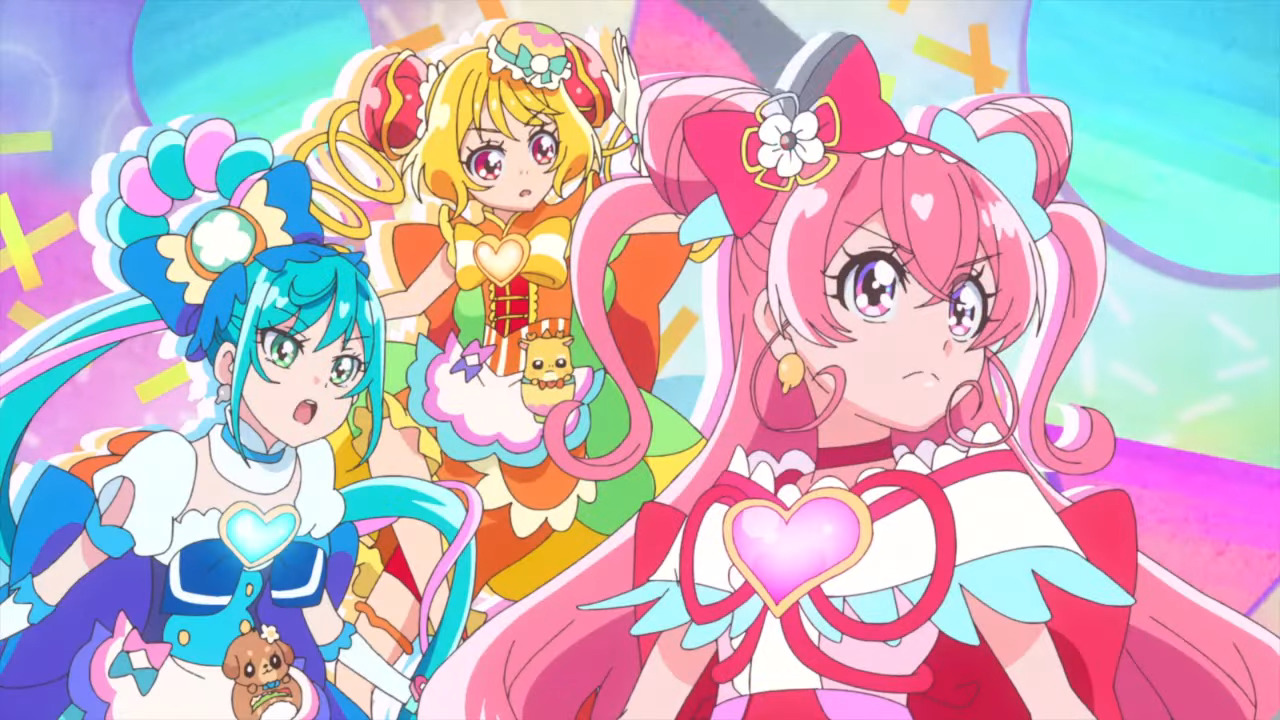
As someone who loves to eat (and seeing characters who love to eat), it was all but inevitable that I would enjoy Delicious Party Precure. But my appreciation goes beyond nailing its general food motif, as the series also successfully balances a number of different elements to make a fun and thrilling show. Whether it’s revisiting established tropes of the Precure franchise, reviving old ideas from magical girl anime of years past, or taking steps towards inclusivity, Delicious Party Precure is a pleasure to watch.

Strong Theming and Characters 

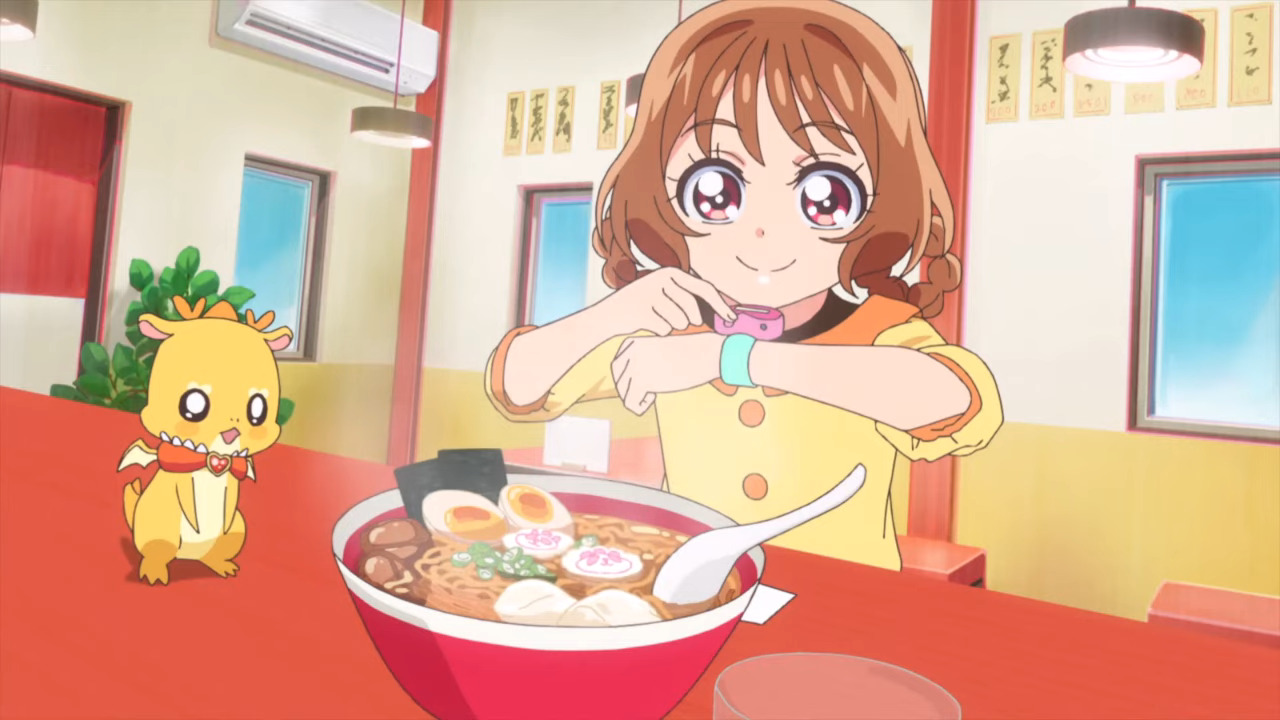
Sometimes, Precure series don’t fully commit to theming, which makes for incongruous mishmashes of various marketable elements. This issue largely does not apply to Delicious Party Precure. Its characters, from main heroines to supporting cast, are all about enjoying and cherishing food. Its story is about magical girls fighting food thieves who are literally trying to steal tastiness in the form of food spirits. Every episode watched while hungry is basically torture, as it makes every dish look like the best thing ever. The adorable mascots are food fairies from the CooKingdom, each of whom are based on a particular carb—there’s nothing quite like a chubby little ramen dragon who shouts, “Wontooon!” during transformation sequences.

That said, the series has a sub-theme if wearing makeup that’s carried over from Tropical-Rouge Precure, but it kind of falls flat here. There’s one aspect of Delicious Party that makes it work to some extent (more on that below), but even the show itself emphasizes it less and less over time.

Characterization here isn’t as deep or profound as Heartcatch Precure! or Hugtto! Precure, but it’s still quite good and never drags the show down. The basic idea of them all having different loving relationships with food is simple, yet robust. Their different relationships with food create opportunities for joyful expression, human connection, and personal growth. One missed opportunity is that it doesn’t embrace the international food theme with a more ethnically diverse cast—despite the heroines Cure Precious, Cute Spicy, and Cure Yum Yum representing Japanese, European, and Chinese food respectively, all three are Japanese. 

A Balanced Diet of Old and New

Delicious Party features a few tropes that would be familiar to fans of Precure and its genre progenitors, i.e. magical girls and sentai tokusatsu. There’s an eventual “sixth ranger” (in this case “fourth”). The series also revives the “Tuxedo Mask” along with an extra dash of romance—a relative rarity in Precure. But Delicious Party also pulls them off, integrating them into the overall story without ignoring their histories, making them useless, or having them hog the spotlight. These are known recipes, so to speak, given enough customization to taste pleasantly different.

Another part of the successful balancing act of Delicious Party is that it embraces both its kid appeal and its capacity for more mature messages. The series has some of the best villains ever, and much like Hugtto! Precure, they seem to provide more of a connection for parents and other grown-up viewers. Even with fairly sparse moments of characterization, you get a strong sense of who they are and why they turned to the dark side. Their concerns feel more adult, highlighted by the contrast between the Precures’ youthful enthusiasm and the bad guys’ jaded cynicism.

The team shot at the end of group transformation scenes encapsulates that older-younger dual appeal. Right after a collection of exciting and silly poses mimicking the shape of riceballs, sandwiches, and noodles, it finishes with a basic arms-on-waist stance viewed head on. The switch from dynamic and playful to very direct and straightforward gives what I think is broad appeal. Truly, this is a show for all ages.

Precure Says Trans Rights 

One area in which Delicious Party Precure deserves praise is the steps it takes towards inclusivity. Building off of Kira Kira Precure a la Mode’s romantic tension between two girls and Hugtto! Precure’s (unvoiced but heavily, heavily implied) gay male relationship, this series introduces Rosemary, a CooKingdom “Cook Fighter”/mentor for the Precure who is clearly trans or nonbinary. While the show is never specific, it slso goes out of its way to never gender them, and other characters don’t question Rosemary’s appearance or behavior—not even the villains! There are some hints that Rosemary has struggled with gender identity, and this is the one area where the makeup sub-theme has any legs. 

The heroines all admire Rosemary’s strength, wisdom, beauty, and heart—and in a time when trans people are unjustly labeled as predators, I think this is no small thing. I find it notable that as the author of one of the biggest fantasy series in history continues to descend into trans bigotry, that Precure progresses slowly but surely.

Following Through to the End

While Delicious Party Precure has its fair share of mostly self-contained episodes, the general food emphasis always makes them a pleasant experience. And when they tap into the larger plot being woven over the long term, they help to build towards a satisfying finish. While it doesn’t quite hit the tippity-top of my Precure rankings, I can find very few glaring flaws. It was one of the highlights of watching anime every week, and the overall story is full of mental and emotional goodness—providing a balanced media diet.

Rise of the Bread Dogs: Hololive, Precure, and Pokémon

There must have been something fermenting in the collective imagination of 2022. Last year gave us not one, not two, but three different forms of media featuring cute dogs combined with bread. And as many minds landed on this same idea of oven-baked canines, they all appeared to be guided by more than merchandising power alone.

Sanallites

The first bread dog of note is an embodiment of the Sanallites, the fanbase for the retired VTuber Tsukumo Sana from Hololive. The reason her fans are portrayed as bread is that Sana herself would express how much she loves bread, even going as far as doing a bread horoscope in an early stream. And because Sana herself is an experienced artist, she used her illustration chops to solidify the design as a whole loaf with an adorable flat face.

Sana’s bread dog comes from a warm and comforting relationship with her fandom—the kind of personal-feeling connection that you could only get from a streamer.

Pam-Pam

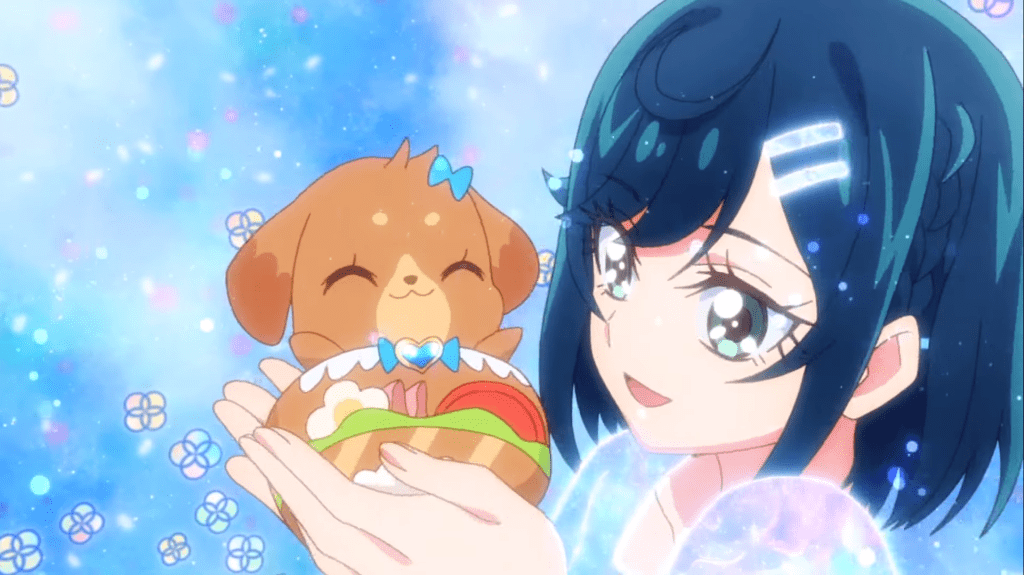
The second bread dog is Pam-Pam, a sandwich-themed dog fairy from the magical girl anime Delicious Party Precure. Here, Pam-Pam is the mascot sidekick of the bread-themed Cure Spicy, and contrasted with a rice mascot and a noodle mascot for a trio of staple carbs. This all plays into one of the themes of Delicious Party Precure, which is teaching kids to eat balanced meals and learn to appreciate all types of food. Pam-Pam transforms into a little sandwich with her dog head sticking out, meaning her bread elements come out primarily in battle.

Delicious Party Precure’s bread dog is a way to convey a theme of good nutrition. The decision to design Pam-Pam in this way is the result of trying to prepare children for the future.

Fidough and Dachsbun

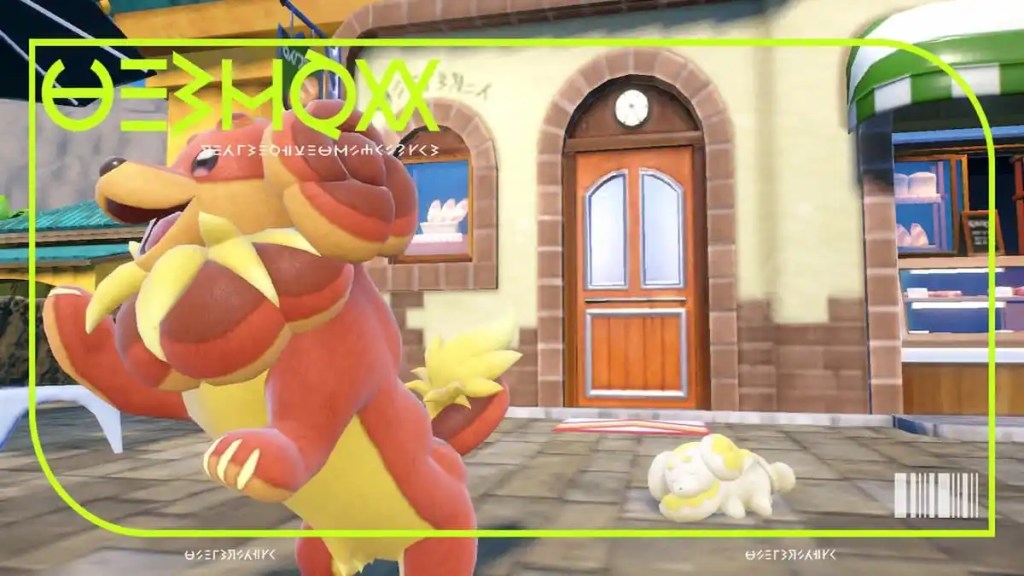
The last bread dogs are the new evolutionary line from Pokémon Scarlet and Violet. Fidough, which resembles unbaked bread, evolves into Dachsbun, whose Baked Body ability makes it actually immune to fire attacks. They have more of an active bread motif than Pamu Pamu but retain more dog features than the Sanallites.

These two are actually just a couple of the many new Paldean Pokémon with a food motif—others include hot pepper plants, olives, and more. The Paldea region is based on Spain, which has a rich and diverse food culture, and both bread dogs reflect that aspect.

The Yeast They Can Do

Combining fluffy bread with furry dogs seems like an obvious winner, and these examples are certainly not the first. But to see three big franchises implement the same idea within the same year feels like a tiny miracle. There’s a surprising amount of versatility to be found in the bread dog concept, and should there ever be a true bread-dog boom, I doubt anyone would mind.

Summer Cure Makes Me Feel Fine: Tropical-Rouge! Precure

Precure is not exactly what you would call a dark franchise. While it’s capable of addressing serious ideas and can communicate mature messages, the brightly colored heroines and generally upbeat tone bring a certain expected level of happy enthusiasm. Even within this context, 2021’s Tropical-Rouge! Precure is by far the most energetic Precure series to date. From its delightfully spastic opening to its ever-active and ever-cheerful protagonist, the show radiates positivity. But Tropical-Rouge! also proves itself to be capable of tackling tough subjects and giving hope to viewers that they can take steps towards their dreams, whatever those may be.

Premise, Motifs, and Themes

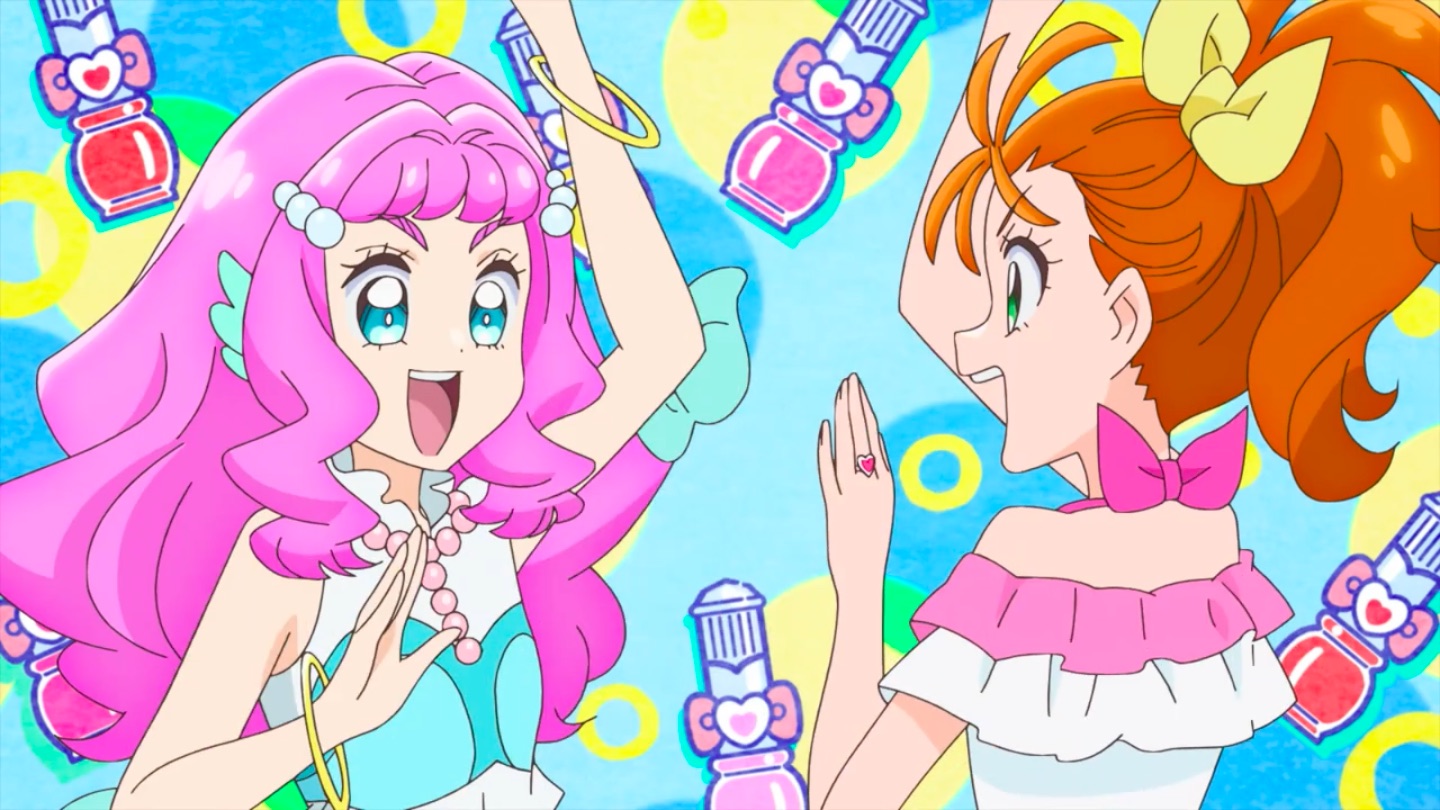
Middle schooler Natsuumi Manatsu has spent most of her life on a tropical island, but has recently moved to Aozora City to live with her mother. There, she encounters a real-live mermaid named Laura, who aims to become the next queen of her people by finding one of the legendary Precure: warriors who can stop the dreaded Witch of Delays from stealing people’s Motivation Power. Manatsu turns out to have what it takes to be a Precure, and transforms into Cure Summer to defeat the Witch’s Yaraneeda monsters. Full of pep like no one else, Manatsu has always wanted to do all that she can, and now that includes being a Precure. As she recruits others in school to become fellow Cures, they form the Tropical Club, a kind of “do anything and try everything” group that’s eager to help others.

Tropical-Rouge! Precure is mostly episodic, so the series operates mostly as a showcase for its cast’s distinct personalities with some occasional Big Plot or Character Development moments that give a bit of forward momentum to the narrative. The primary motifs are makeup and tropical imagery, while the main theme is the struggle between finding the inner will to go and just do “stuff” and feeling the desire to put things off in ways that prevent people from resolving issues in their lives. Not all of it meshes together neatly (the makeup aspect can often feel tacked on), but the way each character navigates the motivation/delay dichotomy makes for a robust cast with complex feelings who have more dimensions to them than their frenetic presentation in the opening might suggest. 

Characters and Motivations

Of the main cast, there are those who try to figure out what path they want to take but are having trouble figuring out what speaks to them, and there are those who know full well what their goals are but are prevented from moving forward.

The fashionable Suzumura Sango (Cure Coral) and Manatsu are examples of the former, with Sango gradually learning that not every dream needs to involve being in the spotlight. Manatsu, for her part, is one of the best executions of a “heroine without a concrete direction” I’ve seen in anime. It’s often easy for that kind of personality to feel flimsy or emphasize their generic “everyman” qualities, but the message conveyed by Manatsu is simple and profound: Even if you’re not sure what you want to be when you grow up, you should at least do what you want most in the moment. You remain motivated by staying true to yourself, and the learning process is a reward in itself.

Meanwhile, the athletic Takizawa Asuka (Cure Flamingo) and bookish Ichinose Minori (Cure Papaya) are great examples of those who feel their dreams may be last. As revealed later in the series, Asuka had a falling out with a friend that led her to stop pursuing tennis, and their soured relationship stems from a disagreement over how to react to an injustice done to you when your decision can affect others. Minori wants to be an author, but a bad experience with her old literature club has led her to put down her pen—and has her worried that she’s limited by her focus on reading about the world instead of experiencing it.

The stand-out character to me is Laura; I even picked her to be one of my best of 2021. Laura’s  charming-yet-abrasive personality regularly steals the show in more ways than one, and I love how her identity as a mermaid isn’t forgotten or minimized over time. At the same time, you really get the sense that not all mermaids are like her, and that her confidence and ambition are wholly her own. And unlike the others, she understands perfectly well what her dream is (becoming queen) and will do all that she can to achieve it, but the lessons she learns about ambition and sacrifice end up being surprisingly profound and defy the notion that you should be forced to choose the path that causes the fewest waves (no pun intended).

And amidst all these different dynamics, what’s impressive is how Tropical-Rouge! animates its characters such that their general roles are emphasized while avoiding having them fall too neatly into their designated archetypes. Manatsu’s a whirlwind of expressiveness, but she isn’t just blindly optimistic, and this comes across in the fact that her reactions, both happy and sad, are nevertheless big. Minori, in contrast, is often not as outwardly emotional as the others. However, one gets the sense that she has a rich inner world, and that she isn’t stoic—she merely doesn’t react as powerfully on the surface. In this way, the characters feel multifaceted but also easy to understand even for younger viewers.

Best Precure “Villains” Ever?

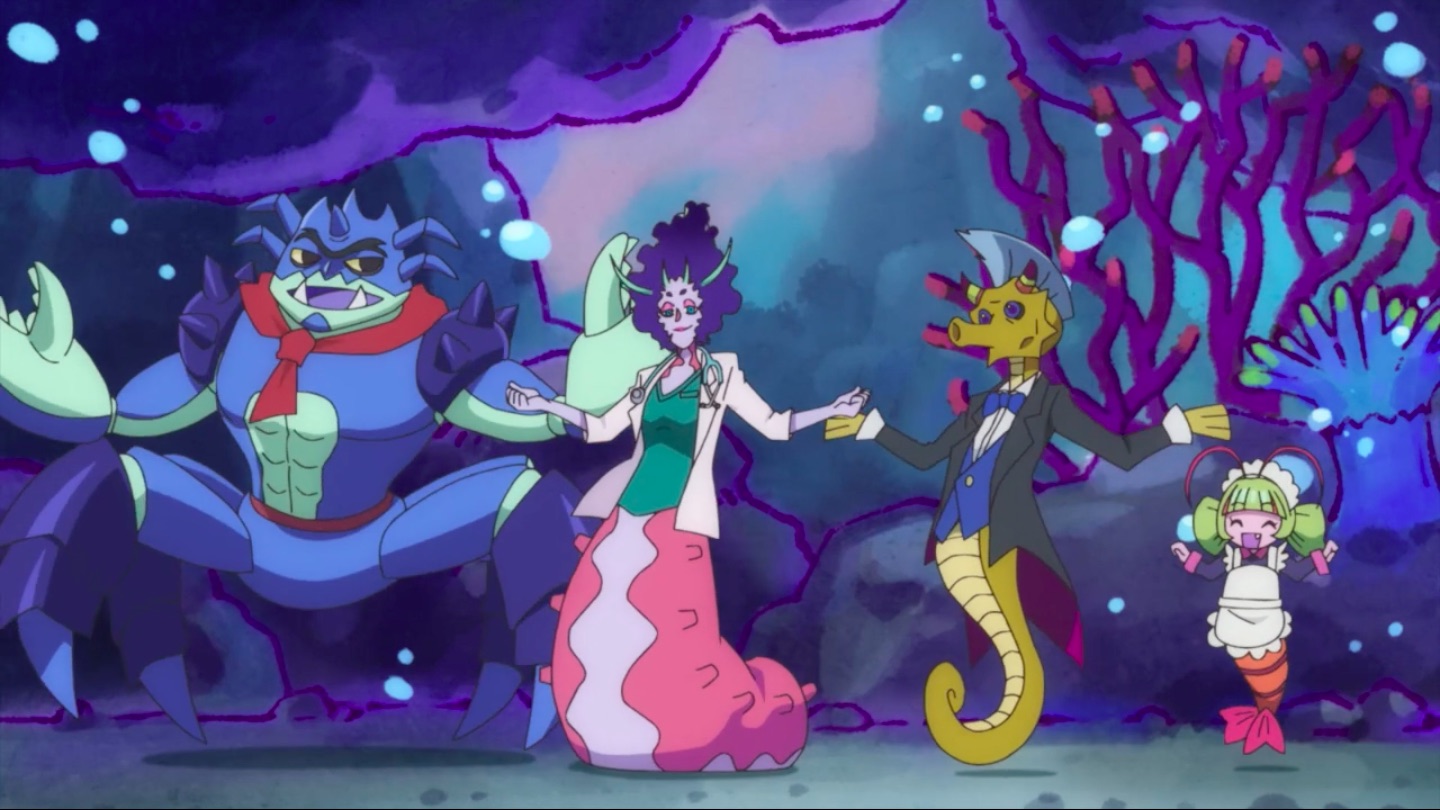
The strength of the cast even extends to the antagonists. The Witch of Delays’s henchmen—including Chongire the crab chef, Elda the (extremely adorable) shrimp maid, and Numeri the sea-cucumber doctor—are some of the most entertaining villains ever, and it’s mostly because they’re not that dedicated to their cause. 

All of them come across as stealing Motivation Power from people because that’s part of their conditions for serving the Witch, and they’d really rather be doing what they were originally hired for—or in the case of Elda, play with dolls because she isn’t that into being a maid either. Seeing Chongi-re stop a fight because he needs to go check on something cooking really says it all, and what I love about that is it gives the bad guys a bit of depth while contributing to the generally lighthearted nature of Tropical-Rouge.

Final Thoughts

Tropical-Rouge! Precure is the kind of series whose unbridled energy can be both empowering and exhausting, like having a friend who’s eager to contact you anytime to see if you’re up for going out. They have a million possible plans, and you’re not sure where they lead, but one thing becomes clear as you try to find your way. That is, there are many possible paths to take—gentle ones, steep ones, straight ones, winding ones—and none are necessarily wrong as long as they encourage continued movement. 

“Moving water never grows stale,” as the saying goes, but neither does the water need to be a rushing current. Between Manatsu, Laura, Sango, Akira, and Minori, viewers can witness a variety of different personalities and how they handle the unique challenges that face each of them—as well as how they can help one another along.

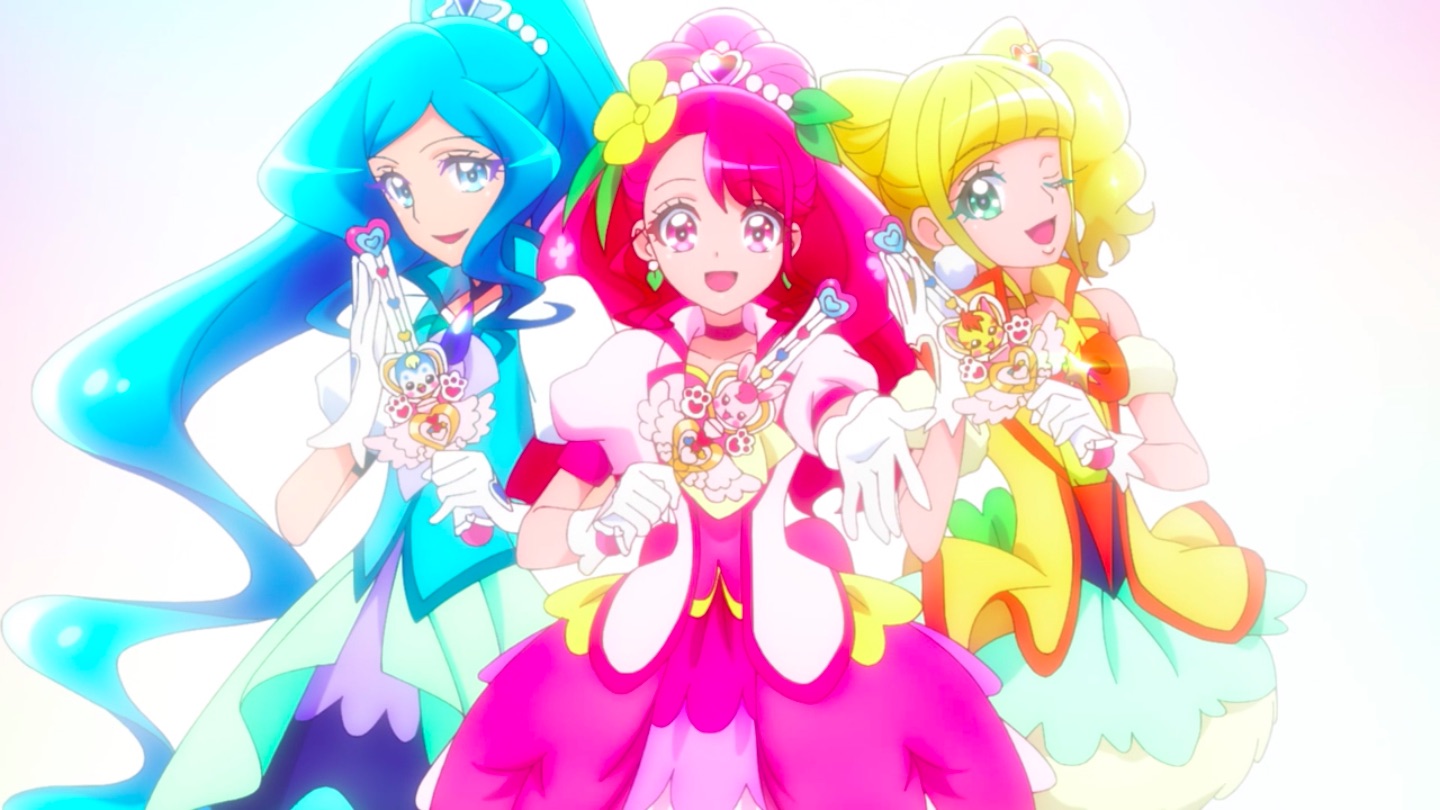
Wellness for the Self, Wellness for the World: Healin’ Good Precure

Healin’ Good Precure might be either one of the best-timed anime ever or one of the worst. With themes of environmentalism, medicine, and even personal wellbeing, the anime began in February 2020 right as the threat COVID-19 was starting to increase. As a result, the series lost about a month’s worth of episodes (ending at 45 instead of around 50), and the pandemic only further increased the importance of its message. As it came back from the production delay, I myself wondered if the series would change anything to directly address COVID-19, like facemask equipment or social distancing beams.

The answer, it turns out, is “not really.” In hindsight, however, this might not be such a bad thing. Although often fairly simplistic in its messaging, Healin’ Good Precure focuses less on harsh and gritty truths, and more on the idea of trying to take care of both people and the planet together, with a few surprisingly insightful gems along the way that I hope the kids watching take to heart.

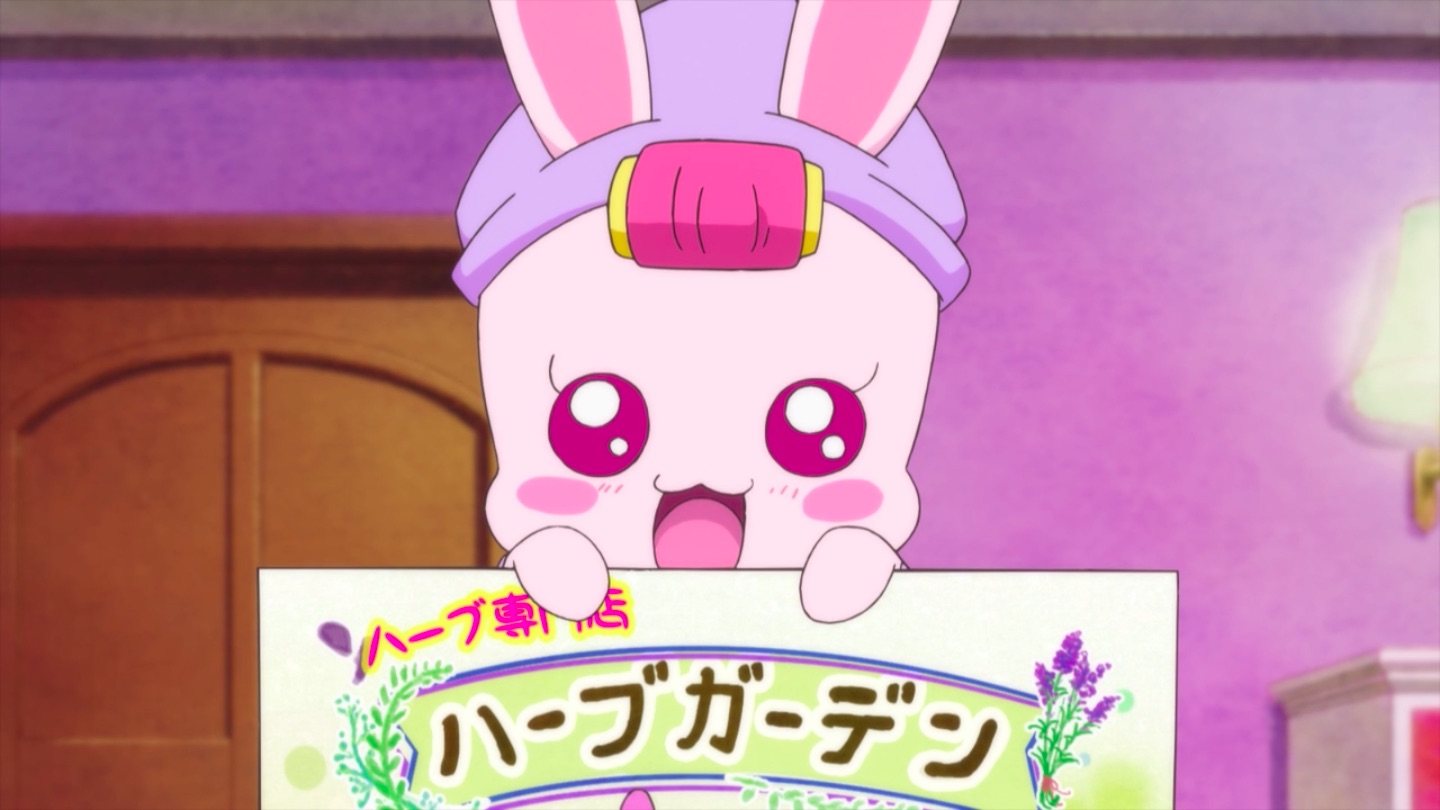
The premise: Hanadera Nodoka is a kind and gentle middle school girl who, not long ago, was hospitalized with an unknown illness. Having finally recovered and now moved to Sukoyaka City with her parents, she looks forward to doing all the things a healthy person does, but her life changes when she encounters a magical rabbit. The rabbit, named Rabirin, is one of three “healing animal” trainees who have escaped from the Byo-gens, virus-like invaders whose goal is to “undermine” everything they infect. Bonding with Rabirin to protect the healing animal princess Rate, Nodoka becomes Cure Grace, one of the legendary warriors known as Precure. Soon, she’s joined by other girls at her school who also bond with healing animals, and they fight to treat the Earth’s maladies.

In terms of overall cohesive storytelling, Healin’ Good is not one of the strongest Precure entries. It takes a mostly episodic approach with major narrative developments at mostly abrupt and expected intervals, and some of those developments are actually kind of bizarre if you think too hard about them—like something that could be read as a pregnancy metaphor but probably isn’t supposed to be. 

That said, the series sports some impressively expressive animation, and the fights often feel like the characters have some real heft to them—not always the case in Precure. The main cast of characters are also interesting, relatable, and inspiring enough to make the watching experience enjoyable overall. The contrasts between the three main Cures—Nodoka, Chiyu, and Hinata—mean that each girl has their own challenges they need to face and overcome, though the amount of attention paid to each of them can feel weirdly lopsided. More episodes seem to be devoted to Chiyu’s more ambitious goals of becoming a competition high-jumper and family innkeeper, though I don’t know if that’s just a result of losing those five or so episodes to the production delay.

Another factor to its credit is that I think Healin’ Good has not only some of the least annoying mascots ever, but they’re also some of the best support characters Precure has ever seen. Rabirin, along with her companions Pegitan and Nyatoran, act as both foils and complements to their human partners, and their desire to get stronger in order to keep the Earth from experiencing a fate similar to their own world feels genuine. Moreover, Rate gets a surprising amount of development that’s actually welcome rather than overshadowing the Cures.

While the series takes a fairly kid-gloves approach to the challenges it presents (not surprising from a kids’ show), there are aspects of Healin’ Good that I think are meant to teach the young viewers to face up to a world that’s increasingly headed towards multiple disasters both potential and real. When the Byo-gens infect an area of the city, failing to stop the infection only makes the monsters stronger. In this, I can see a metaphor for climate change and the need to slow it down as soon as possible, because while keeping the Earth from warming up to the point of substantial environmental change is a monumental task, it’s a lot easier than trying to bring the Earth back from that point. Additionally, all the doctor imagery strewn throughout Healin’ Good, from parents’ professions to the idea of “treating’ the planet to even the girls’ transformation lab coats might encourage more girls to go into pursuing careers in medicine and fight the sexism that pervades medical schools in Japan. In that sense, I think it builds on some of the positive messages found in its immediate predecessor, Hugtto! Precure.

It’s also notable that those very same kid gloves start to come off towards the end. There is a moment late in the anime where Nodoka is faced with the dilemma of trying to help an injured enemy who is responsible for much of her pain. But where many past stories would make its heroine some kind of saint, Healin’ Good emphasizes the need for self care, and that there is no requirement to lend a hand to someone who has harmed you, especially if you only end up feeling more hurt as a result. In other words, kindness is not a resource that should be exploited, and girls should not be expected to sacrifice their well-being because they’re supposed to be “caring.” Similarly, the environmental message calls out the complicity of humanity by the end, though is ultimately positive, as expected.

As much as I would have found it interesting, I realize now that Healin’ Good Precure did not need to tackle COVID-19 head-on. Face masks are already commonly accepted in Japan, so there’s no need to encourage people to wear them. The infection rate, although a real concern, is not nearly as bad in Japan as it is in other parts of the world (especially the good ol’ US of A). And as for not emphasizing social distancing, the series was probably created with the hope and expectation that we’ll eventually be able to return to some semblance of our former life, and that kids should be able to see what normal social interaction looks like.

Instead, we have a Precure anime that aimed to tackle some of the biggest issues facing the world through an approachable lens of the familiar magical girl tropes. Although the final product doesn’t have the riveting and finely tuned narratives of some of its predecessors, that’s not the only measure of an anime’s success—and no, I don’t mean toy sales. What Heain’ Good Precure has in spades is ambition to make improve society by encouraging a positive and humanitarian spirit in its audience. The world thirty years from now will hopefully be a better place.

A Beam Rifle in Precure?! Z Gundam’s Iconic Sound Effect

Mobile Suit Z Gundam is a classic anime series, a successful sequel and a template for other 80s robot anime. One aspect of it that really sticks in my mind but is less talked about is the sound design. In particular, the sound of beam rifles in Z Gundam is rather iconic, as it’s noticeably different compared to every Gundam anime before and after.

I basically never hear that distinct Z Gundam beam rifle sound anywhere else (that’s not just featuring the Z Gundam itself), with one big exception: the fighting magical girl franchise Precure.

I can’t recall exactly when I first heard the use of the Z Gundam beam rifle sound in Precure—I think it might have been in Kira Kira Precure a la Mode—but ever since then, I can’t help noticing it. In Episode 32 of Healin’ Good Precure, the monster of the week makes pretty much that exact sound when firing a blast of energy (see 17:43 in the link).

It’s so strange to me. Of all the places for the beam rifle to show up, why Precure? There’s no studio connection (as Gundam is from Sunrise and Precure is from Toei Animation), so they’re not necessarily working from the same stock library. You won’t even find the sound in other mecha series—though maybe hearing it in a giant robot anime would bring up too many comparisons? I wonder if the sheer genre distance between the two allows Precure to use the SFX? Or could there be some Gundam fans in charge of sound production at Toei who like to incorporate the beam rifle into episodes. For that matter, I think I’ve even heard the classic Newtype flash on occasion while watching Precure.

More broadly, this all makes me want to know why the Z Gundam beam rifle sound just never really went anywhere beyond that one series. Personally, I think it has a great tone that sounds like a powerful yet precise weapon. Perhaps it was too iconic for its own good, but I guess for now, it’ll live on in the battles of modern anime’s most prominent transforming heroines.

Healin’ Good Precure and the Age of Coronavirus

In recent weeks, many of the anime that were on hiatus due to COVID-19 have begun returning, and one question that arises is how these series might be affected by the delay going forward. Many, like Demon Slayer: Mugen Train and The Millionaire Detective, are adaptations, and so wouldn’t be affected content-wise. Similarly, historical fiction like Appare Ranman! can easily ignore current events. But there is one series I’m looking at as potentially being deeply impacted by coronavirus on a story level, and that’s Healin’ Good Precure.

The main motifs of Healin’ Good Precure are healthcare and the environment. The girls essentially act as doctors trying to heal different Earth spirits when they fall ill, their interactions with their fluffy mascots take a veterinary angle, and their magical dresses briefly resemble physician lab coats during transformation. It’s an incredible coincidence that this would be the Precure series we have in the middle of a global pandemic, but here we are.

The Precure franchise as a whole does not have any source material—the anime are the original works. Everything else, from manga to video games, are subordinate to it. What this means is that there’s no source material to reference or adhere to, so it likely has a degree of flexibility in terms of potentially changing its story. The fact that Precure shows are typically around 50 episodes also means there’s plenty of time to pivot and try to take into account current trends and real-world concerns. Also, while the series was on hiatus, the official Precure LINE channel actually had videos featuring Precure stuffed dolls talking (via the voice actors) to kids and playing games with them, so i think there is an awareness that children are feeling the effects of self-quarantine and the like.

While I don’t think Healin’ Good Precure is going to do anything as drastic as explicitly introduce coronavirus into the show, I do wonder if they’re going to try and incorporate some of the good behavior into the girls’ special moves or equipment. For example, what if one of the mid-series upgrades are special magical masks that give the Precures enhanced powers? What if the girls learn a special attack that requires them to stand six feet (or two meters) apart from one another? Of course, it’s also possible that the show will keep ignoring the environment created by COVID-19 in the hopes of giving young kids an image of how things are “supposed to be.”

Regardless of how far Healin’ Good goes to address current events, Precure’s general positivity and supportive messages are very welcome. I’m just waiting to see how far it goes.

Space Cases: Star Twinkle Precure

The Precure franchise always goes out of its way to convey a positive, inspiring message. 2018’s Hugtto! Precure is all about telling kids that they can do anything and be anything. 2007’s Yes! Pretty Cure 5 focuses on dreams and aspirations. The recently concluded Star Twinkle Precure, then, centers around curiosity about the cosmos and the creative power of imagination, and I think it does a splendid job of marrying its ideas together into an enjoyable and uplifting series.

When the twelve Star Princesses (greater beings based on the Zodiac who are responsible for maintaining the universe) are attacked by an intergalactic force known as the Notraiders, they turn themselves into Princess Star Color Pens and send themselves across the universe to prevent their power from being taken. Three aliens, a girl named Lala, a blob named Purunsu, and a fluffy fairy named Fuwa, are tasked with retrieving and restoring the princesses. They travel to Earth, where they encounter Hoshina Hikaru, a human girl who loves to draw and loves the stars. Hikaru and Lala soon discover that they can transform into warriors known as Precures to fight the Notraiders. Along the way, they make new friends and allies, among them Cure Soleil (Amamiya Elena) and Cure Selene (Kaguya Madoka), as they continue their fight to save the universe.

Star Twinkle Precure is one of the most consistently strong Precure anime I’ve ever seen, with my biggest criticism just being that it celebrates the quackery that is horoscopes. I know it’s popular, though.

The characters–whether or not they’re heroines or villains, stars of side characters–are generally compelling and develop in interesting ways over the course of the series while still maintaining the cores of their identities. This even includes Hikaru, Cure Star, when often times the main heroine in these team-based magical girl shows often end up feeling somewhat generic. The series is also paced well over its 49-episode run, with more self-contained episodes rarely wearing out their welcome, and more plot-oriented episodes successfully building on one another. The theme of space travel means a strong sense of wonder and discovery both internal and external, and as the series progresses, the concept of “imagination” is explored in interesting ways–especially in terms of the heroines’ more positive use of imagination vs. the villains’ “twisted” imaginations that prey upon fears and doubts. The animation also rarely falters, and the big fights during dramatic moments in the series are nothing to sneeze at.

One of the important messages woven into the anime is inclusivity. Not only is there the basic idea of discovering and appreciating aliens from outer space such as Lala, but Star Twinkle Precure is the first series to have a human, Earth-born Precure who is not fully Japanese. Elena is Half-Mexican, Half-Japanese, with darker skin than the rest of the main cast, and her biracial heritage is highlighted in multiple episodes. A few episodes are even dedicated to her or her family dealing with feeling different from other Japanese kids. The only downside is that the series doesn’t come out and say “racism” or “discrimination,” but the implication is there, and it is powerful. I hope Precure eventually finds the courage to bring controversial topics right to its viewers without being so vague, confident that kids are smart enough to understand.

Of the Precures themselves, I’m fond of Hikaru’s love of the unknown and her catchphrase, “Kirayaba…!” but I think my favorite might be Lala, aka Cure Milky. I think her transformed outfit is really great in the way it conveys the space alien motif (namely, the clear shoulder bubbles), but I also like her backstory, about how she comes from a planet where a lot of thinking and doing is done for its people by computers, and how she wants to overcome that. But really, all of the girls are great here, and there’s no wrong answer. I hardly wrote about Madoka, but her story about carrying the weight of her dad’s expectations of perfection is something a lot of kids could benefit from seeing.

Overall, Star Twinkle Precure is just an incredibly solid series that I think communicates its messages and themes extremely well. I think it’s great for both newcomers to Precure and longtime fans alike.

One last important note: the second ending is basically Precure vaporwave, and it is fantastic.

Cure Marine is Evergreen: Thoughts on NHK All-Precure Poll Results

The NHK All-Precure Poll announced its results on September 14th, and I’m happy to say that a lot of the things I voted for did quite well. My favorite show (Heartcatch Precure!) and one of my favorite songs (“Pretty Cure 5, Full Throttle GO GO!”) both got 2nd in their respective categories. But there’s one thing that stands out to me above all else, and that’s how Cure Marine, alias Kurumi Erika, aka my favorite Precure character, is the 3rd most popular Precure.

Last year, I made a post about some other Precure polls I found conducted through the website Naver. These polls weren’t as extensive or far-reaching as NHK’s, which ended up receiving over 600,000 votes, and some of the rankings were very different. For example, Cure Beauty was often at or near the top in Naver’s polls, but in NHK’s she’s at a somewhat less impressive 15th place. The OGs, Cure Black and Cure White, took the top 2 spots of the NHK poll but didn’t even get into the top 10 of the Naver ones. Yet, somehow, Cure Marine placed 2nd, 3rd, and 3rd on Naver and 3rd with NHK. While I’m no statistician, to me that consistency seems remarkable.

What appeals to me about Cure Marine is that her infectious energy, her humorous attitude towards life, and the fact that she’s anything but perfect. Her positivity doesn’t come from just being inherently optimistic all the time, and it’s something she clearly actively works at. Marine has a heart as big as her voice and attitude, and her sheer expressiveness seems to make her a hit with both kids and adults. Really, when you’re right behind the prototypical Precures in terms of popularity, I think it says a lot about how the character has affected fans of the franchise and how well she persists in the memories of those who’ve had the privilege to watch Heartcatch Precure! 

10 years later, Kurumi Erika is still unforgettable.