Super Robot Wars Y Is Here, and So Are My Predictions/Hopes

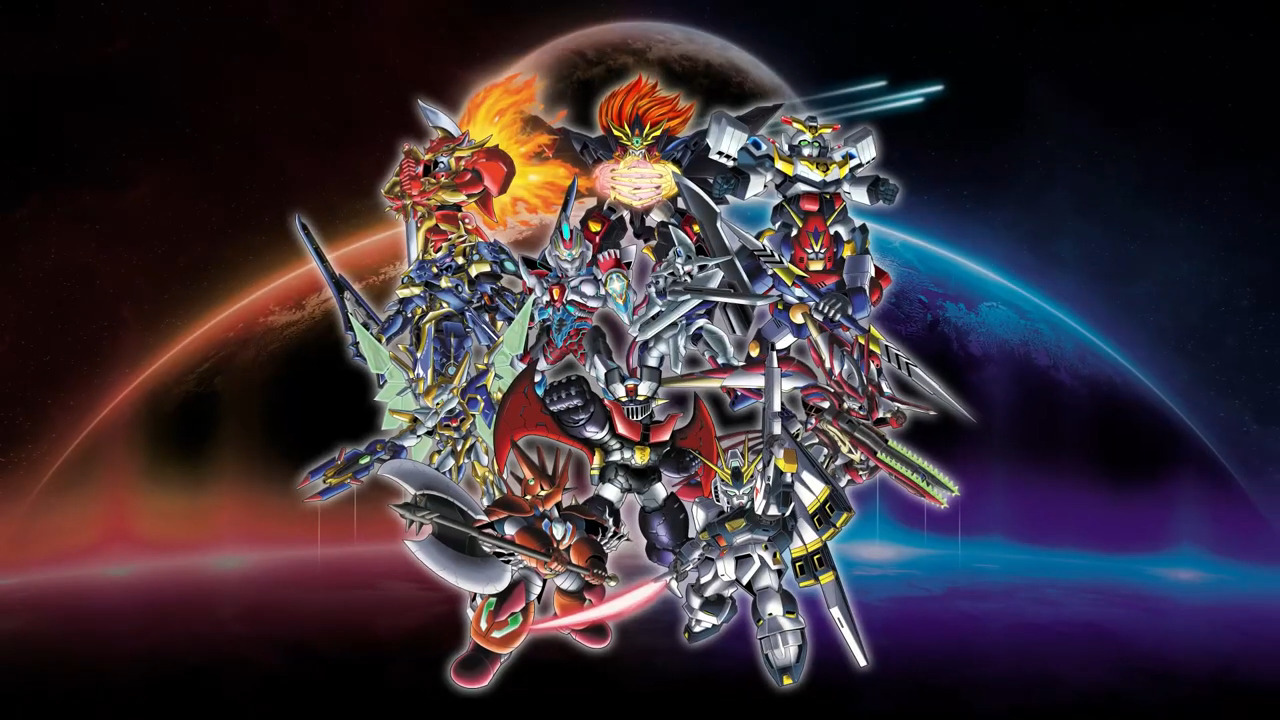
Super Robot Wars Y is official, which means we’re getting the first mainline game in the series since Super Robot Wars 30 in 2021. I once interviewed the (now former) producer of SRW, Terada Takenobu, and I came away with the impression that a lot of their resources were devoted to the Super Robot Wars DD mobile game. In light of this, I’m glad to see the console releases haven’t been abandoned.

One big difference this time is that they haven’t announced all the giant robot titles involved yet. I assume that they have come to understand the power of hype cycles in the current media landscape a la Smash Bros. This also means I have a bit of time to think about what titles I want to see in SRWY, and that’s what I fully intend to do. Some would be all new, some would be returning, and some would have only been introduced in SRWDD.

Bang Brave Bang Bravern

Just getting the theme song would be worthwhile, and I would love to see Bravern gushing over being surrounded by other cool robots. The way the series plays with time could also open the opportunity for more storylines to join together. This series also is one of the most overtly gay mecha anime ever, which would play well with Gundam: Witch from Mercury.

The Big O

I honestly just want tomato jokes involving Roger Smith and Suletta from Witch from Mercury. I even once made a drawing of the gag.

Gowapper 5 Godam or Gold Lightan

With Macross back, I want to see some other Tatsunoko series get a debut in SRW. The goofier, the better—hence these picks. Also, Youko from Godam is one of the coolest heroines ever. (Also, I know

Aquarion EVOL

If not Tatsunoko, what about Satelight, the current studio headed by Kawamori? The original Aquarion already had its time to shine, so I’d like to see Arata, MIX, and everyone get their chance.

Chousoku Henkei Gyrozetter

I know this franchise is basically dead with no support, but I’m fond of this mecha series from the early 2010s. The show just had a lot of excellent energy and great character designs.

Promare 

Promare is another series beloved for both its compelling SF mecha story and the very intense dynamic between its two male leads. Similar to Bravern, I would hope that the music and animation captures the beauty of the action sequences in the original film.

SSSS.Dynazenon/Gridman Universe

With or without SSSS.Gridman, this could have all sorts of awesome combinations and attacks. Plus, I want to see the adult Anosillus II as a playable character.

Danguard A

In a world without Matsumoto Leiji, maybe it’s time to see his giant robot (and not just his giant spaceship) join the battle. As a joke, they could introduce the characters, but make you wait like 13 missions to get the actual Danguard A—just like how it took 13 episodes for the robot to finally do something.

Darling in the Franxx

Controversial as it is, I’d like to see how they integrate this series with other ones. I’d also like to see them bond with the Getter Robo Arc cast about fighting dinosaurs, and it’d be funny to see others comment about the unusual cockpits. Or maybe Kallen from Code Geass would look at them and not think anything was amiss.

Atlanger

I’m continuously fascinated by this 1970s-era giant robot that mostly existed as toys. It technically has an anime and manga and thus qualifies for entry into SRW, so I’d like to see Atlanger, no matter what form it would take.

Let’s See If I’m Right or Wrong

It turns out that there’s a special video for Super Robot Wars Y Sunday, April 20 in Japan, so I’m embedding the stream in advance to see how I did.

If we somehow manage to get Bravern, Promare and Aquarion EVOl in there with Witch from Mercury, we could end up with the most overtly queer Super Robot Wars ever. Heck, let’s throw in Kannazuki no Miko for good measure.

The Roles of “Characters” in Mecha Anime

Sometimes, you’ll see a wild claim about mecha anime, like “Gurren-Lagann was the first giant robot series to be about characters instead of the robots,” and it inevitably results in a backlash—in this case, the counterargument that all giant robot shows are about characters. Whether the initial statement is made in jest or as a genuinely ignorant take by someone with only surface-level knowledge of mecha, it reflects certain assumptions about what the genre is like.

I got to thinking about the notion that giant robot anime are about characters because it’s both true and an oversimplification. Moreover, the extent to which the giant robots truly “matter,” as in they’re inexorable from the world being portrayed and can’t be substituted with some other form of weaponry, varies tremendously. But regardless of the true “necessity” of either characters or robots, I feel there is more to it than just one side mattering more than the other. Then a thought occurred to me, and I have a kind of nascent “universal theory of giant robot anime”:

Giant robot anime are about characters, but more specifically, the main character reflects some vital or fundamental aspect of the world and story around them. The giant robot, in turn, is reflective of the connection between the hero and that aspect.

If it seems nebulous, that’s because it is. I’m thinking less about trying to justify every mecha anime and more about how the giant robots end up being the avatar through which so many of these protagonists interact with their environment and their histories, and thus reveal more about the anime themselves. There’s also no denying the close ties between giant robots and merchandising, but this also ebbs and flows over the decades.

So let’s start with some of the big ones. 

Tetsujin 28 is about Shoutarou trying to make a difference in a post-WWII environment by being a boy detective who fights crime. Tetsujin 28 the robot was created to fight the Allies, but is now being used for an alternate purpose: as a guardian of peace instead of a weapon of war. 

Mazinger Z draws a direct lineage to this sort of thinking. While the power fantasy and toyetic appeal of the robot itself is undeniable, Kouji is presented with a question about human potential from the very beginning: If you had great power, would you be a god or a devil? The robot Mazinger Z is Kouji’s way of making a difference, and he chooses to use it as a protective guardian.

Mobile Suit Gundam, the first “real robot” anime that emphasized the robots as weapons of war over superhero-like entities, is about its hero Amuro’s repeated exposure to the trauma of war. It’s through the Gundam that he experiences physical and emotional scars alike, and the very fact that his piloting experience molds him into a capable soldier also contributes to the overall “horror of war” message that girders Gundam and its many sequels.

Superdimensional Fortress Macross has three main components: romance, music, and robot battles. Here, the titular robot is literally a flying city traveling through space, and it functions as both an urban cosmopolitan center and a massive superweapon. In other words, it is the very space in which all three pieces of Macross take place.

Neon Genesis Evangelion centers around Shinji and his fear of human connection, be it with his family, his peers, his friends, or anyone else. It is the anime of extreme introspection. Not only is the EVA-01 the means by which he tries (and fails) to find self-worth, but the EVA itself is revealed to house the soul of his dead mother. He is contained in a womb-like structure inside of his giant mom.

Tengen Toppa Gurren-Lagann is about Simon and the limitless potential of humanity to overcome all obstacles slowly but surely—and ultimately whether there should be limits on that power. Gurren-Lagann manifests this through numerous transformations fueled by human spirit that bring on exponential power growth.

The above examples are all heavy hitters, but what I also want to emphasize is that this applies to “lesser” titles as well.

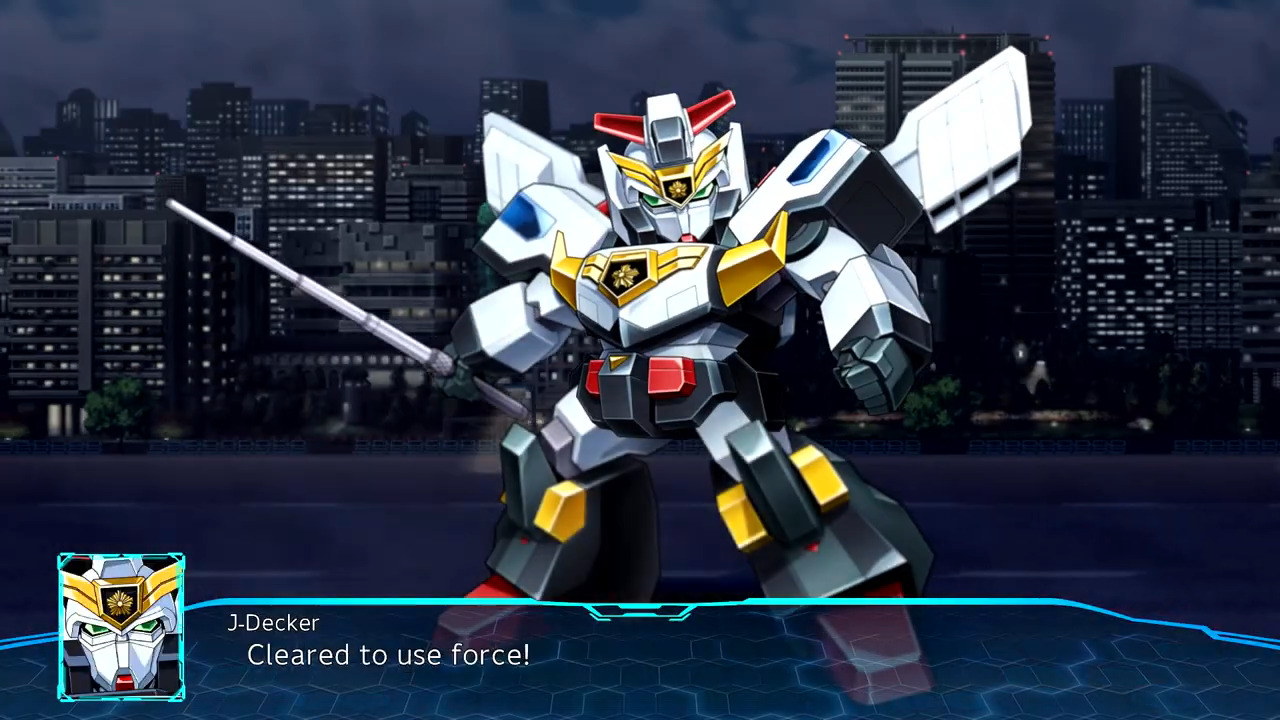
Brave Police J-Decker is maybe the most on-the-nose example of the relationship between a boy and his giant robot, as the story is about how Yuuta’s friendship with the giant police robot Deckard is what teaches the latter to develop true emotions and a proper sense of justice and humanity. 

Shinkon Gattai Godannar is about the relationship between Gou and Anna as husband and wife and how their love affects both their personal and professional lives as co-pilots. Godannar Twin Drive is literally a combination of both robots.

Robotics;Notes focuses on Kaito and his relationship with Akiho’s giant robot club, and the blurring of augmented reality with actual reality. The creation of the Guntsuku-1 is basically an untenable goal that, through the events of the series, becomes effectively “real” through how Kaito and Akiho view and utilize it.

Trider G7 is about Watta, who’s both a little kid and the CEO of his own company, utilizing both the image of Japanese corporate culture of the early 1980s and the classic child desire of wanting to do what the adults do. The Trider G7 robot literally flies out of a playground, and has tons of cool and wacky weapons, but the fact that it’s Watta’s robot and the main way he gets his job done means it’s the conduit through which that “grown-up” fantasy takes place. 

Shinkansen Henkei Robo Shinkalion the Animation is literally a commercial for bullet train toys that are, in turn, advertising for the Shinkansen trains in Japan. Its main character, Hayato, is basically a Shinkansen fanatic who sees them as not only the coolest things ever but as reflecting a philosophy of unwavering service to the people of Japan. The Shinkalion robots, by extension, portray a more action-packed version of this concept.

Giant robot anime embody many values, from crass commercialism to dreams of being brave and strong, from anti-war sentiments to deep looks inward at the psychological scars of society. The mecha themselves are often not “characters” in and of themselves (with a number of notable exceptions), but they are symbolic of how the protagonists of these stories relate to what they experience. The hurdle for those who think that these anime are “more about robots” is that this particular way of communicating the characters’ stories requires an acceptance of giant robots as a storytelling device.

A Deluge of Riches: Super Robot Wars 30

When I first began playing Super Robot Wars 30, I wanted to write a review immediately, but I decided against it because I wanted to complete one run of the game to get a fuller impression. Now, nearly 200 hours of playtime later, I have the opposite problem. There’s so much in here that I feel like I have more I’ve forgotten than I’ve remembered. I’ve already given my thoughts on certain specific elements of the series, including DLC packs 1 and 2, the way the game handles the Gaogaigar storyline, and the attack aesthetics of the Ultimate Dancouga unit, but here, I just want to lay out my broader impressions.

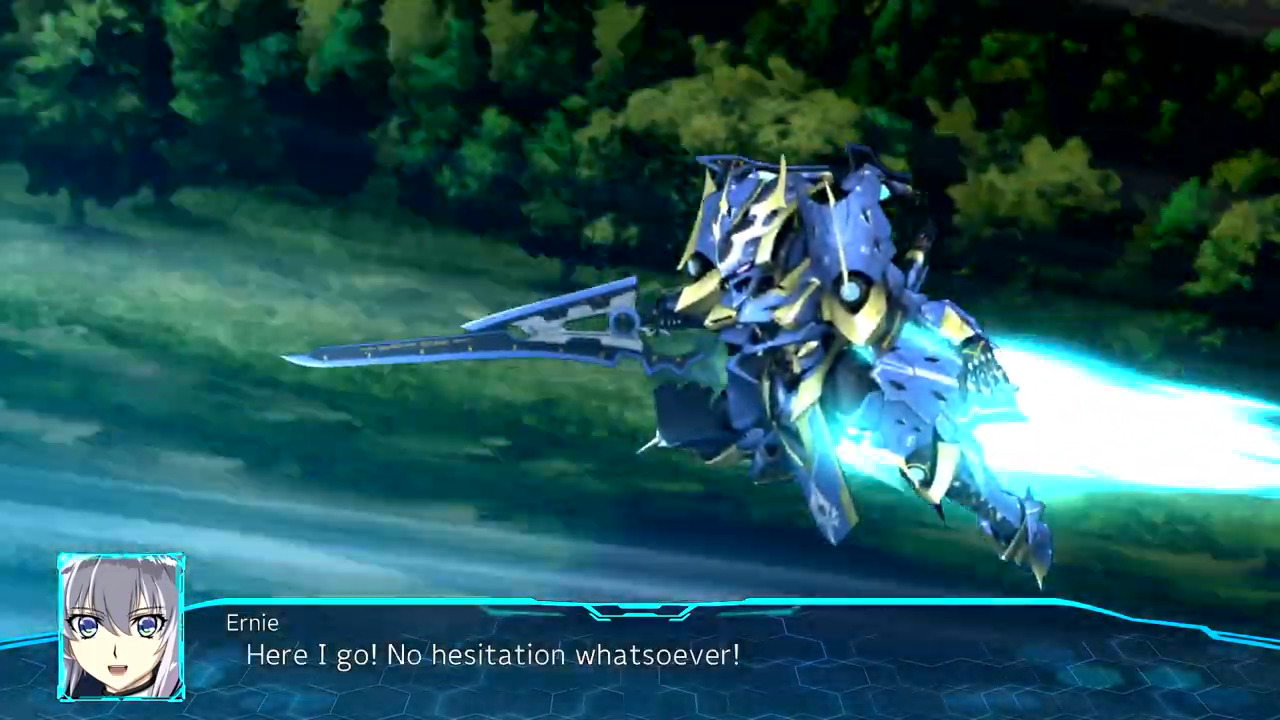
Super Robot Wars 30 is named as such not because it’s the 30th game but because it’s to celebrate the 30th anniversary of the franchise. To that end, there are a number of callbacks to its roots, from the fact that you can use the original RX-78-2 Gundam to specific guest characters making appearances. The roster is no mere nostalgia dive, though, as it consists of plenty of series old and new—both in terms of the release date of the source material from which these mecha come from and when they first appeared in SRW in general. L-Gaim and Victory Gundam are two franchise veterans making long awaited reappearances, while J-Decker, SSSS.Gridman, and Knights & Magic make their mainline debuts here.

Having lots of series is always an overall good thing for SRW, but I got decision paralysis when thinking about which units to deploy on multiple occasions. I’d want to bring out anyone who might be plot-relevant for a stage or at least have interesting dialogue with boss characters, but that didn’t always narrow it down. I’d waffle between doing what’s beneficial strategically and what’s cool thematically, and this might have made an already long game take even longer. It’s to some degree a curse that I accept with the blessing of a robust roster.

There is so much content in SRW30 that it can be overwhelming. While many missions are optional and a lot can be played out of order, I was struck by a sense of FOMO many times. What funny stories are on this stage? How did these characters get together? As someone who wants to revel in that fanfiction-esque lore, skipping felt wrong. 

One problem with that, however, is that every so often, I’d trigger a compulsory mission, whereby the intermission screen flashed red and locked me into a specific next plot-relevant stage. I don’t mind their presence so much as that the game itself never really explains what trips them off. I specifically remember playing some EXP-farming missions (called “Fronts” in the menu), not realizing that doing so meant I didn’t get to see how the sixth member of Team Rabbits from Majestic Prince joins. 

The game feels like it was designed to be fairly lenient, as if it was assuming that SRW30 would be a lot of people’s first Super Robot Wars. This wouldn’t be surprising, given that it’s the first officially translated SRW game to show up internationally on Steam. Even at the hardest difficulty (at least originally), it was possible to upgrade and improve your units to brute force your way through. They would later add a “super expert” mode that put it closer in line to a classic SRW experience, but having a really tough game isn’t necessarily what I want or expect, and the initial absence of a hardcore mode isn’t really an issue to me. 

Rather, if there’s any major criticism I have of the gameplay, it’s the lack of stage variety. There are a number of levels that have specific win conditions, but they felt too few and far between, and even they felt like they came from a general template. On top of that, for whatever reason, SRW30 refuses to take advantage of a classic system that is literally built into the game: terrain differences. In many SRW entries, there are stages with bases or areas where units can recover HP while on top of them (usually 30%). They usually exist in missions where you have to defend an area, or perhaps they’re being used by a stubborn boss that you have to dislodge. However, not a single stage I played had any such spots, even when it would make sense both gameplay- and story-wise.

A Final Dynamic Special—usually a combination attack with Mazinger and Getter robots, would have been nice too. Given the anniversary theme of the game, I’m surprised it didn’t include one.

I think this review may come across as more negative than I actually feel about the game. I think that’s simply because the game is so long that it took me months and months to complete, and my view is tinged by a patina of fatigue. SRW30 has a lot to offer, especially from a mecha fanservice perspective, and it feels satisfying to successfully utilize your units’ strengths and mitigate their weaknesses through smart play. I just wish there were more opportunities to do that.

Super Robot Wars 30, Shinkalion, and Pioneering DLC

The developers of Super Robot Wars 30 have announced a final expansion pack that brings many surprises, the biggest of which are new DLC units.

  • Scopedog, Scopedog TC LRS (Armored Trooper Votoms)
  • Ultimate Dancouga (Super Beast Machine God Dancouga)
  • Red 5+ (Majestic Prince: Genetic Awakening)
  • Getter 1, Getter 2, Getter 3 (Getter Robo Devolution: The Last 3 Minutes of the Universe)
  • Shinkalion E5 Hayabusa Mk. II, Shinkalion E5 Mk. II Over Cross ALFA-X (Shinkansen Henkei Robo Shinkalion the Movie)
  • Dygenguar with Aussenseiter (Super Robot Wars Alpha 3)

Gan Gan Zudandan

The big news on this list in my opinion is Shinkalion, not because it’s one of my long-desired franchises for SRW or anything, but because it has ties to a major company like Japan Railway. In hindsight, however, it was ridiculous to think that could be a barrier: Shinkalion did already appear in the mobile game Super Robot Wars X-Ω, and the series itself is crossover central. Seeing the series debut is nice, and I enjoy how the originally-3DCG units in this game have a different look and feel to them (see also ULTRAMAN). I’ll also be hoping for DLC missions where train otaku Hayato gets to geek out with all other mega nerds in the cast. Too bad Evangelion isn’t in SRW30 for some truly fun references.

I’m Seeing Double: Four Ryomas!

The other new main-series debut is Getter Robo Devolution, and I’m surprised at its inclusion. While other SRW have taken references from multiple Getter Robo series at the same time (mostly in terms of how Shin Getter Robo presents itself), this is the first time we’re seeing variations of the same characters crossing over—and no, I’m not counting Sanger and evil Sanger in Alpha Garden. Interestingly, they announced voice actors for these characters (and big ones too!), which makes the decision to omit a lot of the Gaogaigar vs. Betterman mecha all the more mysterious.

Incidentally, the manga is actually out in English from Seven Seas, so I plan on picking it up to see what this one’s all about. It’s also from the creators of Linebarrels of Iron.

30th Anniversary Versions

The Scopedog TC LRS and Ultimate Dancouga stand out because the idea of making special versions of robots specifically for SRW is very rare, with Mazinkaiser being the #1 example. Sometimes there are units taken from unused production materials (like Final Dancouga), but this is a step beyond. Moreover, both anniversary robots are from their original mechanical designers—Ookawara Kunio and Obari Masami, respectively—contributing to the epic feel of this collaboration. I’ll be curious to see what animations the Scopedog has, as I do miss Chirico’s amazing final attack from the SRWZ games.

When Will I Use Them?

I’m in a strange position where I’m pretty much at the final stages of SRW30, and I’m trying to figure out if I should just get all the DLC units before proceeding or if I should focus on them in a possible New Game+. Either way, I can’t wait to try them out.

Epoch Epoxy: Mobile Suit Gundam Narrative

Every so often, I’ll come across a specific type of retcon in a long-running series that essentially says a certain important character or thing was unseen in the background all along, and that the audience just wasn’t aware of this. It’s a kind of shortcut to make new information not feel shoehorned in, and it’s not necessarily a bad thing—just evidence that things weren’t planned from the outset, for better or for worse.

The Gundam franchise has sort of always been this way, whether it’s the Mobile Suit Variations line that talked about all the other aces fighting in the One Year War offscreen or anime such as 08th MS Team showing events from a different perspective. But the film Gundam Narrative takes it to a whole other level, being what is essentially spackle for a specific period in the Universal Century timeline.

Early Gundam series were not made to overly adhere to a finely tuned canon, as they were usually set years apart chronologically to emphasize the idea that “things have changed.” But as the timeline has become more dense with sequels, prequels, sidequels, and spin-offs, there developed a certain unexplained plot element that had no real answers: why did the crowning technology from the film Char’s Counterattack, the Psycho-Frame, stop being used in later UC works like Gundam F-91 and Victory Gundam? It’s the kind of thing that can be explained by simply saying, “Stuff happened,” but the space-opera minutiae fairly present in Gundam potentially makes that an unsatisfying answer.

The result is a movie about three kids—Jona Basta, Michele Luio, and Rita Bernal—whose lives are tied to major events throughout the Universal Century series. They were there when a space colony fell on Australia before the start of First Gundam, but burgeoning Newtype powers resulted in them being able to evacuate their town to safety. They were involved in the Cyber-Newtype experiments that were a major element in Zeta Gundam. And now their story takes them to being directly involved with the aftermath of the events of Gundam Unicorn and the hunt for the third Unicorn-class mobile suit, known as Phenex. 

Gundam Narrative basically tries to act as a bridge between two eras, and while the story is decent on its own, the focus with reconciling that incongruity results in an unusually jargon-heavy work (even by Gundam standards!), and a bit of weakness when it comes to the social and political themes that usually come part and parcel with the franchise as a whole. I’m not sure if it’ll end up being anyone’s favorite Gundam, but it’s also not a hot mess. Gundam Narrative serves a function, and it’s fairly entertaining while doing so, but I tend to prefer something with more meat on its bones.

Power and Truth: Mobile Suit Gundam Unicorn

The Universal Century’s fight between the forces of the Earth Federation and the space-dwelling Zeon is both the foundation of Gundam and also, at times, the albatross around its neck. After 1988’s Char’s Counterattack closed the book on the central rivalry between Amuro Ray and Char Aznable, future Gundam anime would for decades do everything but provide a direct sequel. Gundam F91 and Victory Gundam set their stories decades after the events of Char’s Counterattack, other works like 0080: War in the Pocket and Gundam: 08th MS Team are side stories adjacent to Amuro’s story, and G Gundam launched the concept of alternative-universe Gundam—titles that take the name and basic aesthetics but are worlds unto themselves. This all changed with 2010’s Gundam Unicorn, also known as Gundam UC.

As a sequel to Char’s Counterattack,  can get pretty deep into the weeds. For example, to understand the power of the Unicorn Gundam and its heavy incorporation of Psycho Frames and its NT-D system (short for Newtype Destroyer) is to be invested in the lore of the Universal Century timeline. Newtypes are people who have gained extrasensory abilities in response to humankind’s expansion into space, and their subsequent weaponization of leads to the development of both aforementioned technologies; the former is a way to fully utilize their mental and emotional power (and which was once the key to saving the Earth), while the latter is a counter to such abilities. However, while these world-building elements can get complicated, they also provide a rich backdrop for Banagher and Audrey’s stories of confronting the crimes of their forefathers.

SPOILERS BEGIN HERE

Much like the later Mobile Suit Gundam: Hathaway, Gundam Unicorn is based on a novel, but it’s also the first franchise novel to be adapted into a part of the main canon. Taking place shortly after the Earth narrowly avoided having the Luna II asteroid base dropped on it, Gundam Unicorn tells the story of Banagher Links, a student living in a space colony who gets wrapped up in a strange conspiracy after encountering a girl calling herself Audrey Burne. The head of Banagher’s school and head of the Vist Foundation, Cardeas Vist, is the most powerful man in Banagher’s colony, and his immense influence over the Federation has to do with the latter’s fear of something known as “Laplace’s Box.” When a mobile suit battle breaks out in the colony, Banagher’s psychic desire to protect Audrey leads him directly to Vist and the mysterious Unicorn Gundam, a weapon that serves as the “key” to Laplace’s Box. Why the box has such a hold on the Federation and how characters reconcile with their family histories and ties to the history of the founding of the Universal Century are central to the story of Gundam Unicorn.

By the end of the first episode, Banagher discovers that he’s actually the estranged son of Cardeas Vist, and shortly after sees his dad die before Vist gives him exclusive access to the Unicorn Gundam—and with it, a bridge to a secret that terrifies the Federation top brass. In the next episode, Audrey reveals her true identity: She is Mineva Lao Zabi, the last surviving member of Zeon’s original royal family whose leaders steered a fight for independence into a militaristic fascist regime. These central characters, both with deep roots in the two respective warring sides, are continuously challenged to look long and hard at the privileges they’ve received on the backs of the fallen. Their situations are contrasted with another character, Riddhe Marcenas (the son of a Federation politician), who desperately tries to maintain the status quo in order to avoid disrupting the familiar world he’s known.

Banagher is the protagonist, but Mineva is the stand-out character in so many ways. For those already familiar with the history, Mineva is familiar as the innocent baby daughter of Dozle Zabi, who perished fighting the original Gundam in the first anime. The monstrous-looking Dozle was ironically the most righteous and pure-hearted of the Zabis (albeit while still being guilty by association of Zeon’s atrocities), and his selflessness and loyalty are what allowed Mineva to escape with her mother. As the last Zabi, she is revered by the remnant Zeon forces, and she has a regal bearing that speaks to her status. Now on the verge of adulthood, however, Mineva sees her mission as atoning for the sins of the Zabis.

The ultimate direction taken by Banagher, Mineva, and eventually even Riddhe is what I would summarize as “Do good with the advantages you have.” None of the power they possess, whether physical or political, is bloodless, but they decide to reveal the truth that lies behind Laplace’s Box despite the fact that its contents could potentially flip everything upside down. Laplace’s Box turns out to be a monument containing the very first Universal Century charter, previously thought to be lost in a terrorist attack. While something so ceremonial should not be so revelatory, it turns out that this original charter contains a clause surreptitiously removed in later versions: 

“In the future, should the emergence of a new space-adapted human race be confirmed, the Earth Federation shall give priority to involving them in the administration of the government.”

In other words, the Federation government was supposed to have enshrined the equal treatment and political representation of the space-born, but purposely revoked it in secret in order to rule over the Spacenoids. This action is revealed by Mineva to all as a  successful move to consolidate power, its obfuscation of the truth arguably being the first catalyst that would lead to the One Year War and the continued bloodshed between Federation and Zeon. I have to wonder if this is also meant to be the catalyst that leads to the decline of the Federation that we see in later sequels like F91 and Victory.

The series does not absolve Zeon of their crimes through this, and Mineva outright states that her family is guilty of much tragedy, but that this is about spreading the real history of what transpired and to open the path for a better future. I can’t help but think of the current situation in the US and the attempts to ban the teaching of its racist past and present in an attempt to indoctrinate children into a blind patriotism. I understand that both the novel and anime predate this current unfortunate phenomenon, but nevertheless it feels more relevant than ever. Perhaps it ties into Japan’s own ongoing struggle with rewriting its history books to hide the things its wartime government inflated on its own people and those throughout Asia.

There’s a lot of meat I didn’t even touch upon, and all of it has a lot to say about war, peace, society, and justice. While Gundam Unicorn is really dedicated to trying to fit neatly in the canon of Gundam, it’s also a solid and compelling science fiction anime in its own right. Somehow, its lessons feel more relevant than ever.

The Ongoing Dream of a Truly International Super Robot Wars

In recent years, the Super Robot Wars franchise has been looking hard at international fans, and that has been reflected in part by the mecha that show up in it. In interviews for Super Robot Wars T and Super Robot Wars 30, the game’s director mentions that titles like Gun x Sword and J-Decker were, in part, nods to fans outside Japan. It reminds me of how different Japanese giant robot series became the spark of inspiration in different parts of the world, as well as how I once had my own half-formed idea for an American-fandom-centric SRW. Together, all of this makes me want to entertain the notion of a truly international SRW that puts the entire spotlight on those anime and manga that introduced countries to mecha and maintain that enthusiasm.

Shows like Golion, Grendizer, Transformers, Groizer X, etc. Furthermore, I’d like to see the roster be even broader than that. In that respect, limiting it to things that can connect to anime might even be too narrow. Ideally, a game like this would include Robot Taekwon V and The Iron Giant.

One question that arose as I engaged in this thought exercise is whether series that were heavily localized should come in their original Japanese forms or their adaptations. Should Golion and Dairugger be two separate titles, or should they be joined under the Voltron banner? Then it hit me that Super Robot Wars is all about modifying plot details to make crossovers work. Thus, you could split the difference between the Japanese and the American versions, and just find a way to make Golion and Dairugger connected within the new storyline.

There are giant robot fandoms around the world with their own idiosyncrasies, and I’m actually a bit sad that I don’t know them all. I wish I was an experienced polyglot so I could explore these communities and memories in greater depth. I think the real reason I’d love to see an international SRW is because I want something that celebrates these histories.

Sakura Wars, Super Robot Wars 30, and the DLC Hype Train

Sakura Wars is in Super Robot Wars 30. That means, for the second time in history, a Sega giant robot video game series is debuting in Super Robot Wars as a newcomer—16 years after Virtual On broke new ground in Super Robot Wars Alpha 3. I find this to be an important moment in SRW history, and not only because Sakura Wars has been long anticipated by fans. The other big factor is that Sakura Wars is the first new series to come in as DLC, and the concept of continued hype via shocking entries reminds me a lot of one of my other favorite game franchises: Super Smash Bros.

Super Robot Wars as a whole predates Super Smash Bros. by almost a decade, but they’re built from a similar concept in terms of promotion: Show all the varying franchises that are in each game, and have players freak out over the fact that what was thought to be impossible is, in fact, real. Even on Youtube, Super Robot Wars 30 has been getting the reaction videos common to Smash, albeit on a smaller scale. But SRW has long done it in one giant cannon fire, releasing one massive preview video, as opposed to the drip-drop approach that Smash has utilized since the Brawl website days. While there are only two batches of DLC for Super Robot Wars 30, I like the idea that there are still surprises on the table after we thought things were done. I don’t necessarily feel this way about DLC in general, and the difference is that SRW and Smash alike are generally already filled to the gills with content.

It’s also funny to think about how the series that go into SRW are collectively older than what shows up in Smash. The oldest mecha manga dates all the way back to the 1960s (namely Tetsujin 28), while the Duck Hunt light shooter game (before video games even really existed) came out in 1968. While Nintendo and video games in general are bigger business these days, one could argue that the resources that make up Super Robot Wars are bigger and more legacy-defining in their own way.

Super Robot Wars 30 comes out in a couple of weeks, and I already have my Ultimate Edition pre-order. Unlike previous games, this one is officially available in English in an easy-to-obtain way via Steam, which is where I’ve purchased it. I’ll be eager to try out the Sakura Wars units, and everything else the game has to offer. Most importantly, we’re gonna get some sweet-ass Sakura Wars music.

It might be about time for me to work on another Gattai Girls post too…

The Fight Against Oneself: Mobile Suit Gundam Hathaway

In my earliest days of online Gundam fandom back in the late 1990s, the vast amount of information available was like a treasure trove of juicy morsels about what was out there. Among them was mention of a certain novel—“Did you know there’s a sequel to Char’s Counterattack? It’s called Hathaway’s Flash, and it stars Hathaway Noah [sic], who pilots something called the Xi Gundam!”

Though I don’t recall ever asking questions out loud, chief among them were: “Would I ever get to experience this story myself?” and “Why the hell would they make a sequel about Hathaway?” 

Now, in 2021, we have Gundam Hathaway, a film (presumably the first of a series) that adapts the novel into animation. Story-wise, it follows Hathaway Noa, now in his 20s and a decade-and-change removed from the events of Char’s Counterattack. Leaders of the Earth Federation have been under attack by a mysterious terrorist named Mafty Navue Erin, and Hathaway’s own history leads to him being in the epicenter of this situation. 

The action is impressive and the character animation is gorgeous, though the lack of 2D animation for the robot fights is kind of disappointing even if the 3DCG looks good overall. When the Xi Gundam shows up, you get a real sense of the sheer size of the thing. Compared to even the oversized Nu Gundam and Sazabi from Char’s Counterattack, the long distance from cockpit door to seat sells how much things have scaled up. 

But the story of Hathaway, and his internal struggle, is where this first film shines most.

I don’t know how the young me back in 1998 would have reacted to the characters and narrative of Gundam Hathaway, but I think it would have been quite different. A couple years ago, I watched a theatrical screening of Char’s Counterattack, and coming at it as an adult instead of a teen gave me a whole new perspective. The young side characters, Hathaway and the Newtype prodigy Quess Paraya, weren’t irritating fools but simply kids who are failed by adults at every turn.

In this light, an adult Hathaway makes for a compelling protagonist. While he’s portrayed as being far more skilled in combat both in and out of mobile suits compared to his child self, he never comes across as inherently exceptional the way previous main characters like Amuro Ray and Kamille Bidan were. What you have in Hathaway is a child traumatized by war, and who’s trying to prevent his past mistakes from reoccurring as an adult, but who doesn’t necessarily know what the right answer is. Within him are the dueling philosophies of Amuro and Char, clashing and contradicting. He wants to be the everyman and the charismatic leader, the hero who saves the people from both corruption at the top and themselves. 

Nowhere is this clearer than his interactions with the female lead, Gigi Andalusia. She’s an eccentric empath who’s probably a Newtype or something similar, Hathaway sees the late Quess in her, and while she can be a thorn in his side, Gigi’s exactly the kind of person Hathaway fights for. If he can prevent more tragic deaths like Quess’s from happening, he’ll do whatever it takes.

I’m looking forward to seeing where Hathaway’s decisions take him, though I know this is Gundam and the chances of tragedy are markedly high—especially because the original novels were written by the original series director Tomino Yoshiyuki during one of his more fiery periods. Whatever the result, Hathaway Noa is a worthy Gundam protagonist.

Super Robot Wars 30 Thoughts, or “I MUST GET THIS GAME”

Super Robot Wars 30, the latest full game in the famed crossover video game franchise, has revealed its full lineup.

  • Super Electromagnetic Robot Combattler V
  • Mobile Suit Gundam (mecha only)
  • Mobile Suit Z Gundam
  • Z-MSV (mecha only)
  • Mobile Suit Gundam: Char’s Counterattack
  • M-MSV (mecha only)
  • Mobile Suit V Gundam
  • Mobile Suit Gundam NT
  • Heavy Metal L-Gaim
  • The Brave Police J-Decker (New)
  • The King of Braves Gaogaigar Final (mecha only)
  • The King of Kings: Gaogaigar vs. Betterman (New)
  • Code Geass: Lelouch of the Re;surrection
  • Code Geass: Lelouch of the Rebellion III – Glorification (New) (mecha only)
  • Shin Getter Robo Armageddon
  • Mazinger Z: Infinity
  • Mazinkaiser Infinitism (New) (mecha only)
  • Magic Knight Rayearth
  • Gun x Sword
  • Majestic Prince
  • Knight’s & Magic (New)
  • SSSS.GRIDMAN (New)

There are some welcome surprises among the returning veterans such as L-Gaim, but the real shockers are in the newest series.

Hell and Heaven!!!

The entry that sent a bolt of lightning through me is Hakai-oh: Gaogaigar vs. Betterman, which is the novel-only sequel to Gaogaigar Final that continues and concludes the story that began all the way back in 1997. I’ve been following the story, even having reviewed the first and second novels, but I wonder if fans might be better off not reading the spoilers in them so that they can experience this amazing sequel through the lens of SRW first. This’ll be the first time that Gaogaigo and its allies will be animated, and already it looks incredible. I await the SRW rendition of Gaogaigo’s Hell and Heaven with great anticipation, I hope we get to see and use a certain massive Betterman, and I’m guessing we’ll get the new opening and ending (that currently exist only in audio form) as BGM.

I also want to compliment the English localization team because I think “Hakai-oh” is such a difficult term to translate. Literally, it means “World-Conquering King,” and I think King of Kings captures that feeling nice and succinctly.

Burning Heart to Heart

Speaking of Braves, I honestly didn’t think J-Decker would ever make it in. Out of the entire franchise, I think J-Decker is one of the genuinely best shows, and I’m very happy to see Deckard, Shadowmaru, and the boys get their due. My dream is that there are some combination attacks involving Shadowmaru and Volfogg, but I’ll be content even without that. And If you want to know more of my thoughts on J-Decker as an anime, I appeared on an old podcast review.

Toku Time

Arguably the biggest appearance from out of left field is SSSS.Gridman. While it’ll fit nicely within SRW, the fact that it has its origins as an anime sequel to a tokusatsu series means there are just a lot of odd quirks to consider. In particular, Gridman is basically an Ultraman, and the closest we’ve had to mecha in SRW that move similar to Gridman are the EVAs from Evangelion—a show that is itself inspired by Ultraman. Given how this series ends, I also have to wonder how it’ll fit into the Super Robot Wars 30’s story, but what always comes first is making things look awesome.

X-TREME RADICAL Mazinkaiser 

As far as I can tell, Mazinkaiser Infinitism appears to have its origins as just an action figure of Mazinkaiser with a Mazinger Z: Infinity aesthetic. What’s funny about this version of Kaiser is that while the Mazinger Z in the Infinity film is a nice retro-modern update to a timeless design, even this Infinitism version of Mazinkaiser feels like it’s perpetually stuck in the 1990s—a Rob Liefeldian super robot that screams hypermasculinity. That was the case for its debut appearance (in a Super Robot Wars game!), the Mazinkaiser OVAs, Mazinkaiser SKL, and now this.

…And the Rest

I haven’t seen the recent Code Geass film, but I have fond memories of the near–train wreck that was Code Geass R2. I don’t know if there’s much for me to say here. As for Knight’s & Magic, I don’t know anything about it other than that it’s a mecha-themed isekai light novel. While it’s not the first SRW series with an isekai light novel origin (that honor goes to Aura Battler Dunbine), it’s still the first to be from a modern, post–Sword Art Online light novel. For that reason, I’m rather curious as to how it’ll be, and I might even be tempted to watch the anime.

See You in October

You damn well better believe I’m reviewing this game.