Trying to Reconcile a Western Super Robot Wars Crossover Universe

One of the ideas I keep revisiting over the years (and decades!) is a Super Robot Wars game focused away from Japan. It’s a thought exercise that actually predates this blog!

With the release of Super Robot Wars Y, I’ve once again started devoting actual mental and creative energy towards this idea. What titles would appear in, say, an SRW focused around the history of the mecha genre in the US? And how would the different plots and settings be reconciled into a (relatively) cohesive universe?

I asked on Bluesky if people were actually interested in seeing this bit of fan wankery from me, and more than a few people actually said “Yes,” to my surprise. So here we go.

Also, I was inspired by some ideas for others, such as the cool fanart by Chase Burns below:

I drew this a while back, and I will forever regret not adding the Mighty Orbots or Robot God Akamatsu.How many can you recognize? The tags will name three of them, but I'll leave the rest up to you.#superrobotwars #srw #pacificrim #megasxlr #lancer

Chase (@chaseburns.art) 2025-06-18T21:00:36.279Z

In terms of criteria for titles, I wanted mainly to have works that either originated outside of Japan and was available in the West…or anime that were significantly altered to be their own thing, and became hugely influential in the process. So while anime is increasingly part of mainstream culture, things that reached North America relatively untouched don’t count for this sort of thing.

Working from this, I think the biggest title to focus the overall setting would have to be Voltron. In combining the two anime Golion and Dairugger XIV into Voltron, World Events Productions created the notion of a Voltron stationed far from Earth and close to Earth respectively, and this creates a good opportunity to divide the titles involved into “Far Universe” and “Near Universe” plotlines to kick things off. The idea would be that you would follow each side separately, and then the two would merge together down the road when the stakes are higher. 

A lot of series take place in the future (albeit with different ideas of what the “future” looks like), so it’s not too much of a stretch to set them all in a vaguely advanced era of humanity. However, there are a few series I’d want to include that are specifically tied explicitly to certain periods—namely prehistoric times and the mid-20th century. For that reason, I’d place those works under “Time Displacement.” 

And I’m leaving out Robotech because eh.

So here’s how I’d break down the above three categories.

Far Universe

Lion Voltron: The Galaxy Alliance is the main governing body in this SRW. The Lion Voltron is sent to protect from threats on the other side of the galaxy, and focuses on Planet Arus. This Voltron is special because of the fact that the enemy Robeasts are magical, which is actually pretty uncommon in this universe.

Transformers: This has to be G1 Transformers, and the appearance would focus on the series around Unicron and the animated movie and through to the return of Optimus Prime (because you gotta have the Autobot Matrix of Leadership as an ultimate attack, right?) Cybertron is under Decepticon control and so it cannot be part of the Galaxy Alliance, but the Autobots do help the Alliance out. Optimus doesn’t necessarily die, and Megatron doesn’t necessarily turn into Galvatron, depending on how the missions go.

Challenge of the GoBots: Unlike Cybertron, Planet GoBotron is part of the Galaxy Alliance. The Gobots are actually cyborgs—humans who converted their bodies to transforming machines—and they were inspired to take this path by the robots of Cybertron. In this setting, the Transformers have been fighting for a long time, while the GoBots are just now leaving for Earth.

Bionicle: I will admit that I don’t know much about this series, and would need help making sense of it. What I have so far is: Some (but not all) planets in the Sol Magnis System are part of the Galaxy Alliance. However, they tend not to interact very heavily with others. The legend of Mata Nui either directly or indirectly inspired a lot of other worlds to create giant robots.

Super Robot Monkey Team Hyperforce Go!: Planet Shuggazoom is also part of the Galaxy Alliance. However, various factors keep the other mecha from intervening in its battles normally. The monkeys do eventually become very fond of Optimus Primal from Beast Wars, however.

Mighty Orbots: The Galactic Patrol is one of the peacekeeping forces of the Galaxy Alliance, and Mighty Orbots was made to deal with threats that the Voltrons can’t get to. While based on Earth, they’re currently in the Far Universe to mount an offensive against Umbra. Unicron tried to devour Umbra but was actually repelled; the two don’t get along. 

Near Universe

Vehicle Voltron: Defends Galaxy Alliance HQ on Earth. “Entrusted with the secret of how to form Voltron.”

The Bots Master: Ziv Zulander is a brilliant robot AI developer, and this attracts nefarious forces, including the Decepticons. Jungle Fiver is made because Blitzy is inspired by Mighty Orbots and Devastator, and Blitzy becomes friends with Daniel from Transformers. Characters from other series are very fascinated by the boost the BOYZZ get from “Laser Time.”

Sym-Bionic Titan: Actually not part of the Galaxy Alliance, and comes from even further away. However, their planet was visited in the past by Mata Nui, and helped inspire the combination of heart, mind, and body to combine as one (the technology is different from what Voltron uses.)

Megas XLR: Coop built Megas XLR in New Jersey, like usual. He is actually friends with Spike Witwicky as some blue-collar dudes. Thinks Ziv is a super genius, but doesn’t know him very well. He’s always getting inspired to put new weapons into Mega thanks to all the robot shenanigans going on, and this only grows when Near and Far universe plotlines merge. Evil Coop has to appear at some point, especially with the time displacement/time travel parts of the story.

Big Guy and Rusty: Big Guy was a hero who helped the fight against aliens and the Decepticons in the past. He fought for the US as part of the Earth Galaxy Alliance HQ. Ziv Zulander is very well informed about Rusty, but doesn’t know the secret of Big Guy. Rob Simmons from Mighty Orbots and Dwayne Hunter strongly suspect each other of being the Orbots Commander and Big Guy respectively, but haven’t explicitly confirmed it. 

Pacific Rim: Jaegers were developed purely by humans back when other technology hadn’t been discovered, and they needed two people to pilot. The passing of the secret of how to form Voltron helped alleviate this and lead to other less dangerous possibilities, but Jaegers still remain the best defense against Kaiju in particular. 

Gen:Lock: I admittedly don’t know anything about this series, other than that it has a lot of big names for voice actors and that it ended up disappointing pretty much everyone. However, I’d like to see it get the SRW plot fix treatment. While the series takes place on a dystopian Earth, I could see a world where it doesn’t get quite that bad because of all the other things going on. Here, the setting of Gen:Lock would take place on a part of the planet rather than the entire thing.

Time-Displaced

Dino-Riders: Yes, I am counting dinosaurs wearing armor as essentially giant robots. Originally, the Valorians were working together with the Maximals in the far future, but were flung back in time by a joint attack from the Rulons and Predacons. At some point in the story, they manage to fix the Step Crystal, but the interactions with the dormant Transformers in prehistoric times causes them to jump forward. Inadvertently, their effects on the past inspire the creation of the Dinobots.

Beast Wars: Because of their nature as Transformers, they don’t need to commandeer the local dinosaurs and other animals to fight. However, they’re still inspired by those forms. Maximals and Valorians work together on prehistoric Earth, and they form a real bond before they’re all brought forward into the future to meet Gigantor and the Iron Giant.

Gigantor: While Tetsujin 28 explicitly takes place in Post-WWII Japan, Gigantor is originally set in the “future year 2000.” However, for the purpose of this SRW, Gigantor still takes place in the relative past as an early attempt at building giant robots on Earth, and it still retains the plot element of being a weapon meant for destruction that instead becomes a protector of the peace. Big Guy is essentially a government project meant to replicate the success of Gigantor. The time travel vortex drags Jimmy Sparks and Gigantor along.

Frankenstein Jr: Frankenstein Jr. and Gigantor were built around the same time. Professor Conroy was familiar with Jimmy Sparks’s father, and began his work on Frankenstein Jr. to counter Gigantor. Jimmy and Buzz Conroy are glad they’re on the same side. The Impossibles are included, and are part of a specific attack that Frankenstein Jr. can use. They are not swept up by the time displacement, but build a time machine to actively chase after Gigantor, knowing that trouble is afoot.

The Iron Giant: When flying away as Superman, the warping of the space-time continuum causes the Iron Giant to sense a similar mechanical being in Gigantor (a robot made to be a weapon), and another sentient robot in Frankenstein Jr. This causes the Iron Giant to warp forward in time as well. 

I’m Open to Other Ideas

Obviously this is all just a bit of fandom thought exercise, and nothing about this really matters. I’m also less familiar with some series, so any sort of feedback is A-OK by me. Heck, anyone who wants to use this as a base for their own ideas—or tear it to shreds and do something they find better—is welcome to take a swing.

Super Robot Wars Y Is Here, and So Are My Predictions/Hopes

Super Robot Wars Y is official, which means we’re getting the first mainline game in the series since Super Robot Wars 30 in 2021. I once interviewed the (now former) producer of SRW, Terada Takenobu, and I came away with the impression that a lot of their resources were devoted to the Super Robot Wars DD mobile game. In light of this, I’m glad to see the console releases haven’t been abandoned.

One big difference this time is that they haven’t announced all the giant robot titles involved yet. I assume that they have come to understand the power of hype cycles in the current media landscape a la Smash Bros. This also means I have a bit of time to think about what titles I want to see in SRWY, and that’s what I fully intend to do. Some would be all new, some would be returning, and some would have only been introduced in SRWDD.

Bang Brave Bang Bravern

Just getting the theme song would be worthwhile, and I would love to see Bravern gushing over being surrounded by other cool robots. The way the series plays with time could also open the opportunity for more storylines to join together. This series also is one of the most overtly gay mecha anime ever, which would play well with Gundam: Witch from Mercury.

The Big O

I honestly just want tomato jokes involving Roger Smith and Suletta from Witch from Mercury. I even once made a drawing of the gag.

Gowapper 5 Godam or Gold Lightan

With Macross back, I want to see some other Tatsunoko series get a debut in SRW. The goofier, the better—hence these picks. Also, Youko from Godam is one of the coolest heroines ever. (Also, I know

Aquarion EVOL

If not Tatsunoko, what about Satelight, the current studio headed by Kawamori? The original Aquarion already had its time to shine, so I’d like to see Arata, MIX, and everyone get their chance.

Chousoku Henkei Gyrozetter

I know this franchise is basically dead with no support, but I’m fond of this mecha series from the early 2010s. The show just had a lot of excellent energy and great character designs.

Promare 

Promare is another series beloved for both its compelling SF mecha story and the very intense dynamic between its two male leads. Similar to Bravern, I would hope that the music and animation captures the beauty of the action sequences in the original film.

SSSS.Dynazenon/Gridman Universe

With or without SSSS.Gridman, this could have all sorts of awesome combinations and attacks. Plus, I want to see the adult Anosillus II as a playable character.

Danguard A

In a world without Matsumoto Leiji, maybe it’s time to see his giant robot (and not just his giant spaceship) join the battle. As a joke, they could introduce the characters, but make you wait like 13 missions to get the actual Danguard A—just like how it took 13 episodes for the robot to finally do something.

Darling in the Franxx

Controversial as it is, I’d like to see how they integrate this series with other ones. I’d also like to see them bond with the Getter Robo Arc cast about fighting dinosaurs, and it’d be funny to see others comment about the unusual cockpits. Or maybe Kallen from Code Geass would look at them and not think anything was amiss.

Atlanger

I’m continuously fascinated by this 1970s-era giant robot that mostly existed as toys. It technically has an anime and manga and thus qualifies for entry into SRW, so I’d like to see Atlanger, no matter what form it would take.

Let’s See If I’m Right or Wrong

It turns out that there’s a special video for Super Robot Wars Y Sunday, April 20 in Japan, so I’m embedding the stream in advance to see how I did.

If we somehow manage to get Bravern, Promare and Aquarion EVOl in there with Witch from Mercury, we could end up with the most overtly queer Super Robot Wars ever. Heck, let’s throw in Kannazuki no Miko for good measure.

Interview: Super Robot Wars’ Terada Takanobu (Otakon 2023)

Terada Takanobu is a veteran game producer, and has been involved with the Super Robot Wars franchise since the 1990s. This interview as conducted at Otakon 2023 in Washington, DC.

Hello, it’s great to meet you. I’ve been a long-time fan of the Super Robot Wars series, and I’m very glad that is finally easy for people to play around the world.

My first question: You recently announced that you were becoming a freelancer. How has that change been for you? Have there been any particular advantages or challenges that come with it?

There were lots of interests I wanted to pursue, so I decided to step down from the producer role to become a supervisor, and use that time to do the things I’d like to do.

I want to make toys and plastic models, and original robot animations—ones that are not Super Robot Wars OG.

Do you have any all-time favorite anime or even tokusatsu works?

My favorite super robot is Mazinger Z. As for tokusatsu, Ultraman and also Masked Rider. And more and more. 

Original Kamen Rider, or…?

It would have to be the first Masked Rider, fundamentally.

One signature element of SRW is the continued use of very creative 2D attack animations. What are the reasons you have stuck with this style even though so much has changed about video games over time?

In Super Robot Wars DD, we’re doing 2D animations and something between 2D and 3D too, so we’re diversifying. 

In SRW DD, the idea behind going for 3D animation is to better capture the original. But more than when I was a producer, I can now better create the content I make compared to before 

What has it been like developing mobile games, as well as having multiple games out there? Is it part of a broader strategy?

With regard to the overall strategy of creating mobile games, that lies with the publisher, Bandai Namco, so I can’t really speak to it. However, as for challenges in mobile games specifically, I’d say one that having a deadline every month is a bit challenging. For example, before, if it was for a console, you had three years to get the battle animations and the scenarios and put everything into one package. But now, with the mobile games, you have everything packaged every month.

You started at Banpresto in the 90s. Are there any staff from that era still at [its successor] BBSoft?

There are some.

Do you have any specific series or character units that you thought turned out especially well in terms of their presence in SRW? Or do you think there were any storylines that were executed very well?

It’s a bit difficult, because all of them are a lot of work, and I’m mainly putting effort into making what’s there. It’s a cyclic process of making and releasing and making. More than myself, it’s ultimately the users who decide what’s good.

Are there any titles you are especially proud of being able to obtain for SRW or thought you’d never get for the series?

Space Battle Yamato, aka Star Blazers. As for recently, too many. Hmm…recently, Gridman, Mobile Suit Victory Gundam, and Gun x Sword. In SRW DD, Devilman and Koutetsu Jeeg. What’s it called in English?

Translator: [Steel] Jeeg. 

Oh, just that directly.

Ogiue Maniax: There isn’t much of a Jeeg presence in America.

Ah, I see. Oh, and there are two Jeegs now: [Steel] Jeeg and [Steel God] Jeeg

The impression I have about SRW is that there are the “main” games—Alpha, F, F Final, V, X, T, 30, etc.—and then there are smaller ones that tend to be a little more daring with game mechanics and what series they include. One title I think of is SRW Neo, with Jushin Liger. Is there any truth to the idea that you see the smaller games as more experimental?

Before, yes, there was a difference with the more experimental ones. But now, SRW DD is the only one out, and in there, we try all sorts of things like Jushin Liger and Granzort. SRW DD does embrace the style of SRW, such as the game stages and the scenarios and everything.

I know that you cannot reveal any unannounced information, but has there ever been any consideration to include giant robots from non-Japanese media?

I’m not allowed to say what it was, but there were past attempts. There’s lots I would like to license, but it didn’t work out.

Do you receive feedback from the directors and other staff involved with the titles included in SRW? For example, have you ever had to interact with directors Tomino or Anno?

Yes, there has been some feedback—and actually, there have been some ideas that came from Tomino-san and Anno-san. And actually, I came across some suggestions that Kawamori-san of Macross had earlier. But I had to tell him that’s not something I have control over.

One last question: Over the years, you’ve worked with many voice actors, and unfortunately, some have passed away. Sometimes, they are replaced by new actors, and other times, you re-use existing voice clips. Do you have any say in who gets recast in SRW, or is it outside your control?

If it’s stated by the original source material, I will do as the source material requests. Otherwise, I have the freedom to choose.

Thank you very much!

A Personal Look Back at Matsumoto Leiji

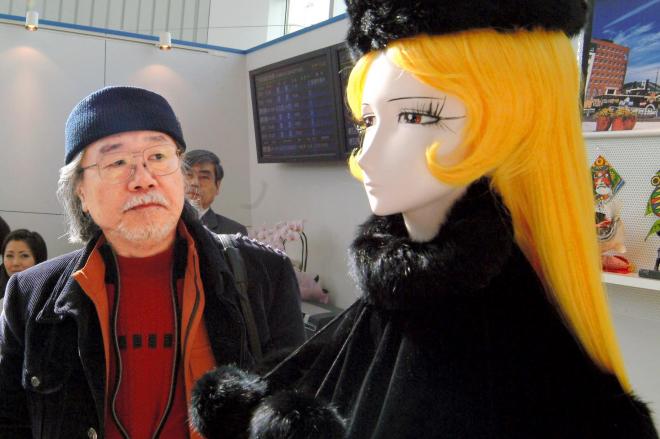
The news of Matsumoto Leiji’s death shocked me. While the passing of an 85-year-old shouldn’t be too surprising, it still makes me contemplate so many things. The number of creators who can trace their careers back to those early decades of the postwar manga industry is now vanishingly few. Matsumoto’s influence was monumental, with great works like Galaxy Express 999, Captain Harlock, and Space Battleship Yamato all under his belt. He was also instrumental in so much of what we now call the anime fandom, as his work on Space Battleship Yamato was the catalyst for fandoms in Japan, the United States, and elsewhere.

More than his broader artistic and historical significance, though, I feel Matsumoto’s legacy supporting me, as I might not have gone down my particular path of anime and manga fandom if I had never discovered his works. His messages of humanity and compassion sparked my curiosity, and helped me to look both forward and backwards.

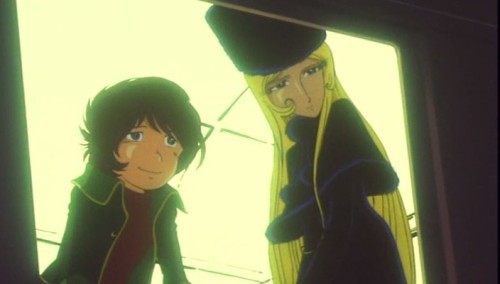
The 1979 Galaxy Express 999 film is, bar none, my favorite anime ever. I reviewed it in the early days of Ogiue Maniax, but as I explained there, my history with it goes back further. I first watched it as part of a local film festival, at a time when my exposure to much older works was more limited. I can’t recall when exactly I saw it relative to other 70s anime, but I still remember to this day the sense of awe I felt coming out of the theater. Maetel remains one of my top 3 favorite female anime characters of all time, a figure whose presence in the story speaks to the beauty and soul of Galaxy Express 999. Nothing has toppled it in my heart even decades later.

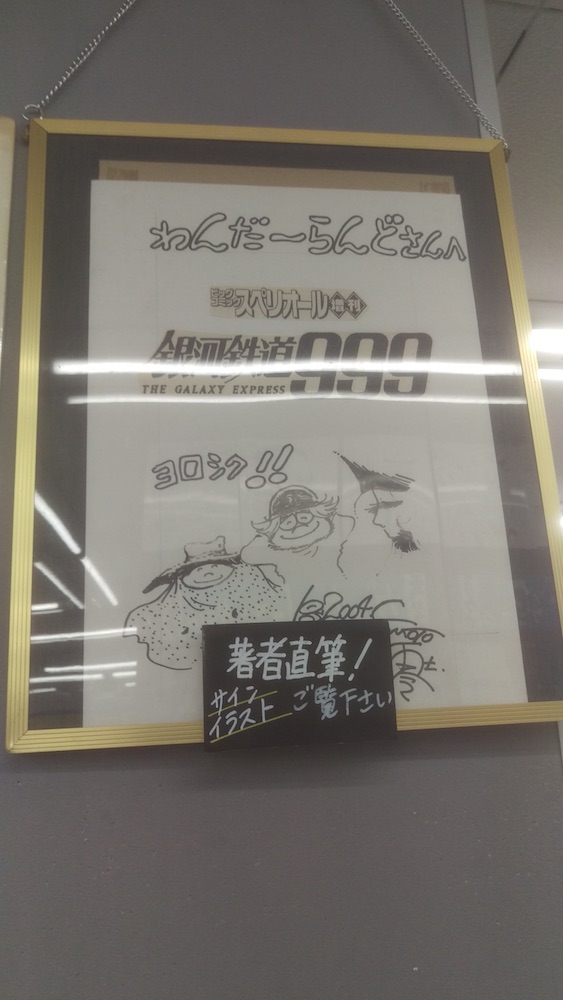
An illustration by Matsumoto Leiji found at Comic Store Wonderland in Osaka

After seeing the film, I naturally began to notice more Matsumoto Leiji material, and since then, the worlds of his creations have been part of my world too. I bought a single volume of the Galaxy Express 999 manga in English in high school, and I would read it over and over. I would repeatedly consult Frederik Schodt’s Manga! Manga!, which included not only a biography of him but also a sample of one of his more obscure manga. Among my first figure purchases was a large Maetel, and I remember my excitement over finding the Queen Emeraldas OVAs and discovering Daft Punk through Interstella 5555.

I’ve reviewed Danguard A to celebrate the 50th anniversary of anime on television, sent Harlock to show “the pirate’s way” in Super Robot Wars T, and made lasting bonds thanks to The Galaxy Railways. I’ve also purchased that 1979 Galaxy Express 999 film over and over, whether it was happening upon a used Region 2 DVD at a Bookoff, getting the US DVD to show my support, or upgrading to the blu-ray so I could experience it in better quality than I ever thought possible. Actually, in that regard, the film festival I attended all those years ago showed a VHS version, so it really is like night and day.

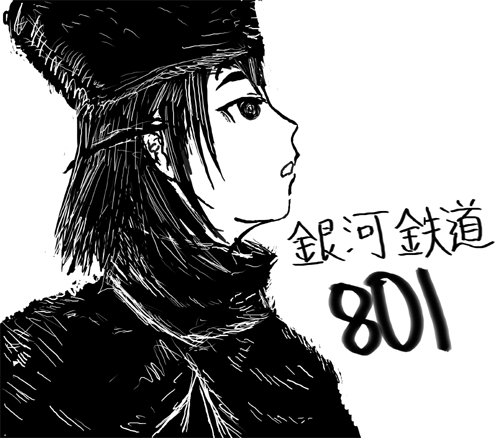
An old drawing I made of Ogiue cosplaying as Maetel

In the long run, I think I would have still come to take a broader view of anime and manga. But as I currently am, Matsumoto Leiji’s art contributes no small part to the enthusiast I am today. As he leaves us, I wish his messages about the importance of remembering and cherishing our humanity continue to resonate in the years to come.

The Galaxy Express 999 will take you on a journey, a never-ending journey. A journey to the stars!

Ikura NanDemo: Ogiue Maniax Status Update for July 2022

I would love if the only thing on my mind was the summer anime season that’s just beginning. There are plenty of shows I’m looking forward to, but the news coming out the US Supreme Court is just too dire to ignore, especially this close to July 4. A lot of people are going to get hurt because of the family planning services denied to them, and the very fact that we’re seeing an established civil right being taken away is truly disheartening—though I choose not to give up hope.

Recently, I’d been watching old clips of George Carlin, and there’s a line that stuck with me that rings with the painful truth about the Conservative mindset in America: “If you’re pre-born, you’re fine. If you’re pre-school, you’re fucked.” It drives home the fact that we’re forcing babies into a world that doesn’t give a damn about them; otherwise, we’d have reliable healthcare and infrastructure that prioritizes bringing people out of poverty instead of acting like all the suffering the poor have to endure is somehow deserved.

Readers might be wondering if I’m going too far off track from the core focus of this anime blog. To that, I say: While there is no inherent political direction to anime, with works that go in every direction on the political spectrum, there is a strong and complex history of feminism through anime and manga that has helped to shape the lives of adults and children around the world. How many, including myself, were inspired to see the notion of women as heroes in a new light through shows like Sailor Moon? What about the fact that there was an episode of Hugtto Precure! dedicated to addressing the stigma towards C-sections in Japan, or how Delicious Party Precure has a non-cisgender character? Even something decidedly more horny and muddled in its politics like Darling in the Franxx portrays a world where pregnancy is controlled against people’s wills, and the main couple can’t actually have children.

Remember: You can be morally against abortion but still be in favor of bodily autonomy. It’s about leaving the choice up to the person whose body has fundamentally changed due to pregnancy.

As with every month, I’d like to thank my Patreon subscribers, particularly these fine folks below.

General:

Ko Ransom

Diogo Prado

Alex

Sue Hopkins fans:

Serxeid

Hato Kenjirou fans:

Elizabeth

Yajima Mirei fans:

Machi-Kurada

Blog highlights from June:

If You Love Literature and Violence, Gimme a Hell Yeah—Hibiki: How to Become a Novelist

I finally got around to reviewing a really great manga about Japanese literature, and it’s one that comes with no shortage of pleasant surprises.

A Deluge of Riches: Super Robot Wars 30

At long last, my actual review of Super Robot Wars 30.

Hololive Alternative, TakaMori, and the Speed of Memes

A post that talks about Virtual Youtubers, but also the way that information changes so quickly in that world.

Kio Shimoku

Kio Shimoku’s Twitter this past month was pretty light, but I definitely enjoyed finding out his thoughts on various movies, both anime and non-anime.

I also got to ask him about his participation in a Star Wars artbook.

Closing

I know many in the US are feeling like their votes don’t matter—otherwise, this stripping of civil rights would never have happened. And indeed, voting is very limited in what it can accomplish. It can be disappointing to see those with greater influence, especially politicians, not do enough to exert more lasting change. However, to not vote at all is to concede a very fundamental power. And while it may seem like a drop in the bucket, the consequences of its utter absence will be far deeper and suffocating. Please don’t give up.

A Deluge of Riches: Super Robot Wars 30

When I first began playing Super Robot Wars 30, I wanted to write a review immediately, but I decided against it because I wanted to complete one run of the game to get a fuller impression. Now, nearly 200 hours of playtime later, I have the opposite problem. There’s so much in here that I feel like I have more I’ve forgotten than I’ve remembered. I’ve already given my thoughts on certain specific elements of the series, including DLC packs 1 and 2, the way the game handles the Gaogaigar storyline, and the attack aesthetics of the Ultimate Dancouga unit, but here, I just want to lay out my broader impressions.

Super Robot Wars 30 is named as such not because it’s the 30th game but because it’s to celebrate the 30th anniversary of the franchise. To that end, there are a number of callbacks to its roots, from the fact that you can use the original RX-78-2 Gundam to specific guest characters making appearances. The roster is no mere nostalgia dive, though, as it consists of plenty of series old and new—both in terms of the release date of the source material from which these mecha come from and when they first appeared in SRW in general. L-Gaim and Victory Gundam are two franchise veterans making long awaited reappearances, while J-Decker, SSSS.Gridman, and Knights & Magic make their mainline debuts here.

Having lots of series is always an overall good thing for SRW, but I got decision paralysis when thinking about which units to deploy on multiple occasions. I’d want to bring out anyone who might be plot-relevant for a stage or at least have interesting dialogue with boss characters, but that didn’t always narrow it down. I’d waffle between doing what’s beneficial strategically and what’s cool thematically, and this might have made an already long game take even longer. It’s to some degree a curse that I accept with the blessing of a robust roster.

There is so much content in SRW30 that it can be overwhelming. While many missions are optional and a lot can be played out of order, I was struck by a sense of FOMO many times. What funny stories are on this stage? How did these characters get together? As someone who wants to revel in that fanfiction-esque lore, skipping felt wrong. 

One problem with that, however, is that every so often, I’d trigger a compulsory mission, whereby the intermission screen flashed red and locked me into a specific next plot-relevant stage. I don’t mind their presence so much as that the game itself never really explains what trips them off. I specifically remember playing some EXP-farming missions (called “Fronts” in the menu), not realizing that doing so meant I didn’t get to see how the sixth member of Team Rabbits from Majestic Prince joins. 

The game feels like it was designed to be fairly lenient, as if it was assuming that SRW30 would be a lot of people’s first Super Robot Wars. This wouldn’t be surprising, given that it’s the first officially translated SRW game to show up internationally on Steam. Even at the hardest difficulty (at least originally), it was possible to upgrade and improve your units to brute force your way through. They would later add a “super expert” mode that put it closer in line to a classic SRW experience, but having a really tough game isn’t necessarily what I want or expect, and the initial absence of a hardcore mode isn’t really an issue to me. 

Rather, if there’s any major criticism I have of the gameplay, it’s the lack of stage variety. There are a number of levels that have specific win conditions, but they felt too few and far between, and even they felt like they came from a general template. On top of that, for whatever reason, SRW30 refuses to take advantage of a classic system that is literally built into the game: terrain differences. In many SRW entries, there are stages with bases or areas where units can recover HP while on top of them (usually 30%). They usually exist in missions where you have to defend an area, or perhaps they’re being used by a stubborn boss that you have to dislodge. However, not a single stage I played had any such spots, even when it would make sense both gameplay- and story-wise.

A Final Dynamic Special—usually a combination attack with Mazinger and Getter robots, would have been nice too. Given the anniversary theme of the game, I’m surprised it didn’t include one.

I think this review may come across as more negative than I actually feel about the game. I think that’s simply because the game is so long that it took me months and months to complete, and my view is tinged by a patina of fatigue. SRW30 has a lot to offer, especially from a mecha fanservice perspective, and it feels satisfying to successfully utilize your units’ strengths and mitigate their weaknesses through smart play. I just wish there were more opportunities to do that.

Against the Barrel: Ogiue Maniax Status Update for June 2022

I have to admit that the world feels overwhelming. If it’s not COVID rates ticking up, it’s deadly shootings and war and racism and the fact that these things are all tied together. As an anime blogger, I also think about these things in relation to entertainment, and in light of recent events, we’re seeing old boogeymen like “violent video games” being brought up. I remember those conversations from two decades ago, and though my perspective has changed from childhood to adulthood, I’m not so naive as to think that the root cause is violent entertainment. Rather, it’s at best a symptom of a deeper problem—that power is conflated with self worth, and that gun lobbyists want men to feel that threat of emasculation so badly that they’re willing to go to extremes.

I’m not someone who believes that glorifying violence in entertainment is inherently a problem. I like my action series plenty, and even if something like sports can be argued to be a conduit for aggression, I don’t think that it’s automatically going to lead to the kind of mind-poisoning we’re seeing from cultures that refuse to confront their own pasts. As long as media can be media and not propaganda, even the most depraved depictions of human behavior can have a place. If fiction is the only alternative for someone to find themselves comfort, that’s not the fault of the fiction.

On a less somber note, I’d like to thank the following Patreon subscribers:

General:

Ko Ransom

Diogo Prado

Alex

Dsy

Sue Hopkins fans:

Serxeid

Hato Kenjirou fans:

Elizabeth

Yajima Mirei fans:

Machi-Kurada

Blog highlights from May:

Lots of Brain with a Bit of Heart: Combat in Girls und Panzer das Finale

A review of sorts for GIrls und Panzer das Finale, especially Part 2, but more of an analysis of how combat is portrayed in the series.

Ultimate Dancouga in Super Robot Wars 30 Is Quintessential Obari Masami

How this particular SRW30 DLC captures the essence of its original creator.

The Tools to Express Yourself: Blue Period

Thoughts on the moving story of a guy who’s suddenly inspired to become an artist.

Apartment 507

Why Zhong Lanzhu makes Love Live! better by being a heel.

Looking at the way the English translation of Spy x Family adapts Anya’s kid speech.

Kio Shimoku

Kio Shimoku’s Twitter was full of design drawings for Hashkko Ensemble. There’s a lot of insight into his early decisions for the manga.

Closing

I’m going to leave off on a nicer and more personal not: I finally beat Super Robot Wars 30! It only took…200 hours. I want to write an overall review of it, but part of me wonders if all the existing posts might be enough.

Ultimate Dancouga in Super Robot Wars 30 is Quintessential Obari Masami

One of the highlights of any Super Robot Wars game is seeing how awesome mecha look in their attack animations. So when Ultimate Dancouga first performed its ultimate attack in Super Robot Wars 30, I expected the kind of spectacle associated with its designer, Obari Masami. After all, he personally designed this exclusive version of Dancouga for the game, and his penchant for flashy action poses is unmistakable. When I first saw Ultimate Dancouga strike the characteristic warped-perspective sword pose seen above during its Dancou Shinken technique, I could only think “Yep, there it is!”

But then a few other thoughts immediately followed. “Why didn’t I associate this Obari Pose with Dancouga’s finishing moves in SRW?” “Did it even strike the Obari Pose in older titles?” “Did it ever Obari Pose in the original anime?!”

That’s when I remembered: The 1980s anime Super Beast Machine God Dancouga predates the Obari Pose, which emerged in the 1990s with the Brave franchise! In fact it’s sometimes more commonly known as the Brave Perspective and Sunrise Stance, among other things.

Sure, recent toy releases make reference to the Pose, but it’s not the same as having it in the show itself. And while there’s been plenty of creative license with attacks throughout SRW, their desire to capture the flavor of the source material is likely why the Pose never made it in. On top of that, the Dancouga TV anime was Obari’s first credit as mecha designer, so the series holds a special place in his massive body of work.

So Ultimate Dancouga ends up being a kind of “combination” of two aspects of Obari’s legacy: It’s his first professional mecha design striking his signature pose. It’s not technically going full circle, but there’s a wholeness to Dancou Shinken that makes it satisfying.

Super Robot Wars 30, Shinkalion, and Pioneering DLC

The developers of Super Robot Wars 30 have announced a final expansion pack that brings many surprises, the biggest of which are new DLC units.

  • Scopedog, Scopedog TC LRS (Armored Trooper Votoms)
  • Ultimate Dancouga (Super Beast Machine God Dancouga)
  • Red 5+ (Majestic Prince: Genetic Awakening)
  • Getter 1, Getter 2, Getter 3 (Getter Robo Devolution: The Last 3 Minutes of the Universe)
  • Shinkalion E5 Hayabusa Mk. II, Shinkalion E5 Mk. II Over Cross ALFA-X (Shinkansen Henkei Robo Shinkalion the Movie)
  • Dygenguar with Aussenseiter (Super Robot Wars Alpha 3)

Gan Gan Zudandan

The big news on this list in my opinion is Shinkalion, not because it’s one of my long-desired franchises for SRW or anything, but because it has ties to a major company like Japan Railway. In hindsight, however, it was ridiculous to think that could be a barrier: Shinkalion did already appear in the mobile game Super Robot Wars X-Ω, and the series itself is crossover central. Seeing the series debut is nice, and I enjoy how the originally-3DCG units in this game have a different look and feel to them (see also ULTRAMAN). I’ll also be hoping for DLC missions where train otaku Hayato gets to geek out with all other mega nerds in the cast. Too bad Evangelion isn’t in SRW30 for some truly fun references.

I’m Seeing Double: Four Ryomas!

The other new main-series debut is Getter Robo Devolution, and I’m surprised at its inclusion. While other SRW have taken references from multiple Getter Robo series at the same time (mostly in terms of how Shin Getter Robo presents itself), this is the first time we’re seeing variations of the same characters crossing over—and no, I’m not counting Sanger and evil Sanger in Alpha Garden. Interestingly, they announced voice actors for these characters (and big ones too!), which makes the decision to omit a lot of the Gaogaigar vs. Betterman mecha all the more mysterious.

Incidentally, the manga is actually out in English from Seven Seas, so I plan on picking it up to see what this one’s all about. It’s also from the creators of Linebarrels of Iron.

30th Anniversary Versions

The Scopedog TC LRS and Ultimate Dancouga stand out because the idea of making special versions of robots specifically for SRW is very rare, with Mazinkaiser being the #1 example. Sometimes there are units taken from unused production materials (like Final Dancouga), but this is a step beyond. Moreover, both anniversary robots are from their original mechanical designers—Ookawara Kunio and Obari Masami, respectively—contributing to the epic feel of this collaboration. I’ll be curious to see what animations the Scopedog has, as I do miss Chirico’s amazing final attack from the SRWZ games.

When Will I Use Them?

I’m in a strange position where I’m pretty much at the final stages of SRW30, and I’m trying to figure out if I should just get all the DLC units before proceeding or if I should focus on them in a possible New Game+. Either way, I can’t wait to try them out.

Super Robot Wars 30, Gaogaigar, and J-Decker: The Compromises of a Composite Narrative

Brave Police J-Decker has made its debut appearance in Super Robot Wars, joining its fellow Brave franchise series King of Braves Gaogaigar. However, J-Decker effectively replaces in Super Robot Wars 30 a huge portion of the Gaogaigar cast of characters—specifically the Brave Robots introduced in the novel sequel King of Kings: Gaogaigar vs. Betterman—and in doing so merges their two plotlines together in a way that defies SRW precedent. It’s something I can appreciate, but I also feel that it comes at the expense of the “everything and the kitchen sink” approach the game franchise is famous for.

While J-Decker precedes Gaogaigar in terms of their air dates (1994 vs. 1997), Super Robot Wars 30 flips things around. The story specifically has the events of the latter take place first, and makes the Brave Police the first Brave Robots since the events of Gaogaigar Final. I find this to be a pretty clever way to tie the two plots together, especially in order to reconcile having an adult Mamoru (the kid character in Gaogaigar) with a young Yuuta from J-Decker

However, the idea that the Brave Police are the latest generation of units doesn’t square with what takes place in the Gaogaigar vs. Betterman novels where a new Brave Robot Corps is formed with the likes of NichiRyu, GetsuRyu, ShoRyu, and Porc-Auto. Those robots aren’t even included in Super Robot Wars 30, meaning that their role in the story has been supplanted by the robots of J-Decker. This is highly unusual, if only because SRW games are often about “more is better.” While the franchise over the past decade-and-change has been trying to streamline a lot of the bloat inherent to it (so no excessively redundant attacks, for example), it’s rare to have them omit entire groups of potentially playable units that are an important factor in the source material.

I suspect that there are a number of extenuating circumstances that resulted in this compromise. It wasn’t that long after the conclusion of Gaogaigar vs. Betterman that SRW30 was announced. There are elements of the story, regardless of the mecha, that are skipped over. In addition, most of the new robots introduced in the novels don’t already have voice actors, so it’s not like calling up Hiyama Nobuyuki and telling him to reprise his role as Guy. While there have been cases of SRW assigning voices where there weren’t any before (see the Virtual On units in Alpha 3), that was also over 15 years ago. 

Incidentally, that’s also a case where only a handful of reps are included (as opposed to every Virtuaroid).

So while having Gaogaigar vs. Betterman is one of my favorite parts of SRW30, the changes made mean we still don’t have the might of the full cast of characters from it. Maybe we’ll see it happen in the future. 

And maybe what could make it easier is having an actual anime version…