I love the way the Super Robot Wars series combines plots together, and one example is the “connection” between the two Chizurus featured in Super Robot Wars 30.
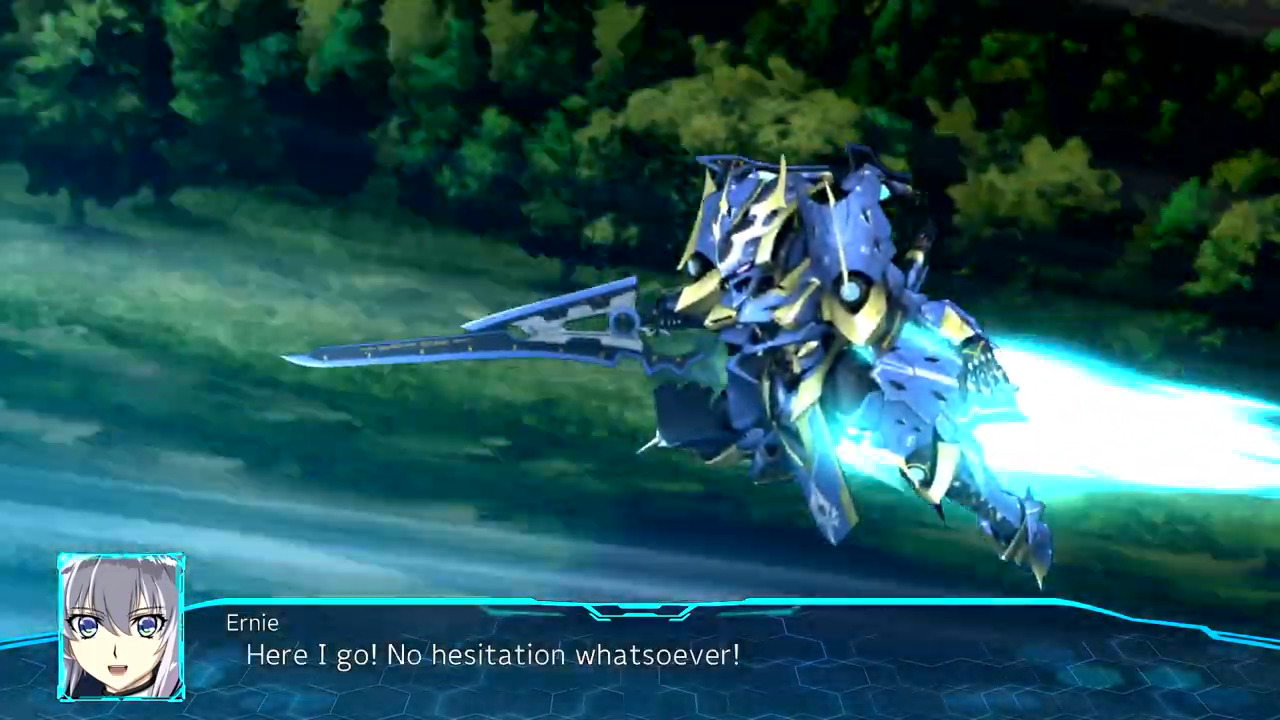
One of the anime series in Super Robot Wars 30 is the 2000s-era anime Gun x Sword, and among the cast is a veteran robot crew called El Dora Team, who are portrayed as old-fashioned relics of a bygone era who find the spirit to fight again instead of sitting on the sidelines and waxing nostalgic. They’re essentially meant to be 1970s robot anime characters (with a bit of Mexican and spaghetti-Western flair) thrust into a modern context.
One of those 70s elements is they once had a female teammate named Chizuru, possibly as a nod to Nanbara Chizuru, the girl member from Super Electromagnetic Robo Combattler V. However, both Gun x Sword and Combattler V are in Super Robot Wars 30, and the setting is such that El Dora Team are still the old timers and the Battle Team are the upstarts. As a result, they flipped the script and made the Combattler V Chizuru the younger one who reminds the grandpas about their dearly departed friend.
This swapping of ages and influences is a clever maneuver to allow both sets of characters to retain their identities and physical ages within the story. But it also reminds me of someone: Elvis Presley.
Elvis famously wore flashy jumpsuits with collars and sometimes capes, and there’s speculation that he didn’t do it out of the blue. Growing up, he was a big fan of the Fawcett superhero Captain Marvel Jr., and the similarities between the character and Elvis has led to fans of both wondering if Elvis took elements of his famous aesthetic from the comic character. The story doesn’t end there, though.
Over the years, DC had acquired the license to the Captain Marvel (aka Shazam) characters. In one of their many later reboots, they placed Captain Marvel Jr. into their setting as a modern teenager, so rather than being a child of the 1930s, he was now a product of the 1990s. But in a similar twist to how the two Chizurus are connected in SRW30, it was now Captain Marvel Jr. who was the Elvis fan.
It’s a funny kind of geekery that I appreciate, and it reminds me why it’s fun to be a fan.
In recent years, the Super Robot Wars franchise has been looking hard at international fans, and that has been reflected in part by the mecha that show up in it. In interviews for Super Robot Wars T and Super Robot Wars 30, the game’s director mentions that titles like Gun x Sword and J-Decker were, in part, nods to fans outside Japan. It reminds me of how different Japanese giant robot series became the spark of inspiration in different parts of the world, as well as how I once had my own half-formed idea for an American-fandom-centric SRW. Together, all of this makes me want to entertain the notion of a truly international SRW that puts the entire spotlight on those anime and manga that introduced countries to mecha and maintain that enthusiasm.
Shows like Golion, Grendizer, Transformers, Groizer X, etc. Furthermore, I’d like to see the roster be even broader than that. In that respect, limiting it to things that can connect to anime might even be too narrow. Ideally, a game like this would include Robot Taekwon V and The Iron Giant.
One question that arose as I engaged in this thought exercise is whether series that were heavily localized should come in their original Japanese forms or their adaptations. Should Golion and Dairugger be two separate titles, or should they be joined under the Voltron banner? Then it hit me that Super Robot Wars is all about modifying plot details to make crossovers work. Thus, you could split the difference between the Japanese and the American versions, and just find a way to make Golion and Dairugger connected within the new storyline.
There are giant robot fandoms around the world with their own idiosyncrasies, and I’m actually a bit sad that I don’t know them all. I wish I was an experienced polyglot so I could explore these communities and memories in greater depth. I think the real reason I’d love to see an international SRW is because I want something that celebrates these histories.
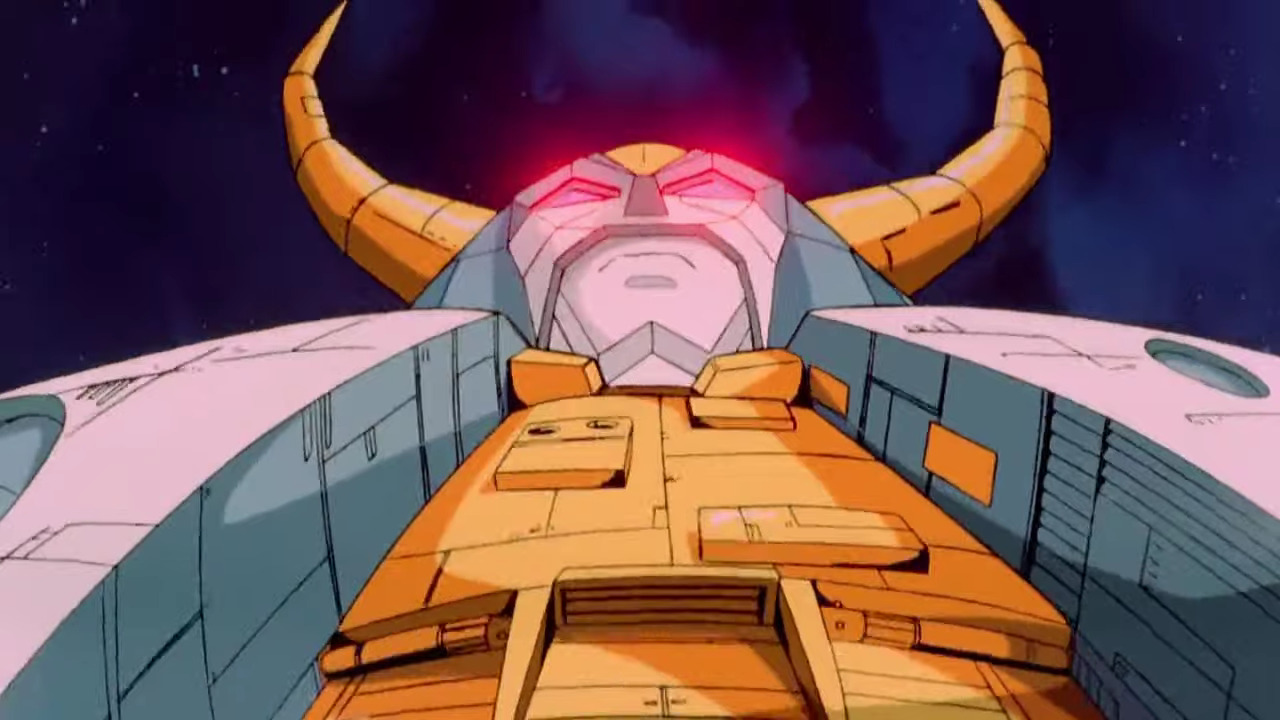
The end-of-the-year holidays are rolling around, and I feel like I’m in a strange place mentally and emotionally. I think it’s tied to the assumption that this year’s Christmas would be a far cry from the feelings of hesitation and dread that came with COVID-19 and hot off of the 2020 US elections, and how history might potentially be repeating itself. Virtually everyone I know is vaccinated, including many kids, but reports of the new Omicron variant make me wonder if I need to temper my expectations. And inevitably, it just makes me think of a certain planet-sized Transformer.
(Speaking of which, I got the new blu-ray recently. I don’t know for sure when I’ll re-watch the movie, but it never fails to disappoint.)
On a lighter note, I haven’t been looking at as much anime and manga lately, but there’s a very good reason for that: Super Robot Wars 30. It’s supposed to be over 100 hours, and I haven’t even scratched the surface. I am enjoying the hell out of getting to use Gaogaigo and the J-Decker squad, though.
I also attended Anime NYC 2021, but due to my blog schedule, my coverage of it will be in December. Look forward to a review of Pompo the Cinephile!
I wish for safe and soul-comforting holidays for everyone, and I’d like to thank my patrons for the month:
An anniversary post turned into a reflection on the site Something Awful in light of its founder’s death.
Hashikko Ensemble
Chapter 46 is more serious than silly, and it provides a window into Jin’s inner turmoil.
Kio Shimoku’s Twitter involves sharing his thoughts on erotic manga artists.
Apartment 507
Six giant robot anime came out in Fall 2021. Here are my basic impressions of all of them.
Closing
The world is ever unpredictable, and I hope we do what we can as people to watch out and care for one another. Get vaccinated if you can, look out for your fellow humans, and understand that no one is free until we’re all free.
Readers may have noticed something different this month: Ogiue Maniax is now ad-free! And right in time for this blog’s anniversary!
I felt that the ads were getting more and more intrusive on the blog if you don’t use any sort of ad block, so I’ve been wanting to do something for a while now.
I’ve also had my Patreon going for more than a few years now, and I wanted the money to go more directly to giving my readers a better experience when reading my posts. I’m thankful to my patrons for allowing me to talk about the new anime season or giant robots or whatever, with special gratitude to the following this month:
My personal take on the style and potential of the final DLC character.
Hashikko Ensemble
Chapter 45 might just be my favorite chapter to date. Things are coming to a head between Akira and Jin!
Kio Shimoku’s Twitter has been buzzing with preparation for both his collected-volume releases in September. In a rare treat, he’s actually been retweeting fans who are supporting both Spotted Flower and Hashikko Ensemble, which is how I got retweeted by the man himself!
Apartment 507
A look at the farewell episode for Jigen Daisuke’s retiring veteran voice actor in Lupin III.
Closing
The two things that have my attention as of late are the final Hakai-oh: Gaogaigar vs. Betterman novel and Super Robot Wars 30, which features that very same story. I’m in a constant internal struggle as to which I prioritize. Do I spoil the novel or the game?
This month is also Anime NYC, and I’ll likely end up going. It’s smaller than New York Comic Con, so I predict it’ll be safer, but it’ll still be important to exercise best COVID-19 prevention practices. Remember, vaccinations will be required!
Sakura Wars is in Super Robot Wars 30. That means, for the second time in history, a Sega giant robot video game series is debuting in Super Robot Wars as a newcomer—16 years after Virtual On broke new ground in Super Robot Wars Alpha 3. I find this to be an important moment in SRW history, and not only because Sakura Wars has been long anticipated by fans. The other big factor is that Sakura Wars is the first new series to come in as DLC, and the concept of continued hype via shocking entries reminds me a lot of one of my other favorite game franchises: Super Smash Bros.
Super Robot Wars as a whole predates Super Smash Bros. by almost a decade, but they’re built from a similar concept in terms of promotion: Show all the varying franchises that are in each game, and have players freak out over the fact that what was thought to be impossible is, in fact, real. Even on Youtube, Super Robot Wars 30 has been getting the reaction videos common to Smash, albeit on a smaller scale. But SRW has long done it in one giant cannon fire, releasing one massive preview video, as opposed to the drip-drop approach that Smash has utilized since the Brawl website days. While there are only two batches of DLC for Super Robot Wars 30, I like the idea that there are still surprises on the table after we thought things were done. I don’t necessarily feel this way about DLC in general, and the difference is that SRW and Smash alike are generally already filled to the gills with content.
It’s also funny to think about how the series that go into SRW are collectively older than what shows up in Smash. The oldest mecha manga dates all the way back to the 1960s (namely Tetsujin 28), while the Duck Hunt light shooter game (before video games even really existed) came out in 1968. While Nintendo and video games in general are bigger business these days, one could argue that the resources that make up Super Robot Wars are bigger and more legacy-defining in their own way.
Super Robot Wars 30 comes out in a couple of weeks, and I already have my Ultimate Edition pre-order. Unlike previous games, this one is officially available in English in an easy-to-obtain way via Steam, which is where I’ve purchased it. I’ll be eager to try out the Sakura Wars units, and everything else the game has to offer. Most importantly, we’re gonna get some sweet-ass Sakura Wars music.
It might be about time for me to work on another Gattai Girls post too…
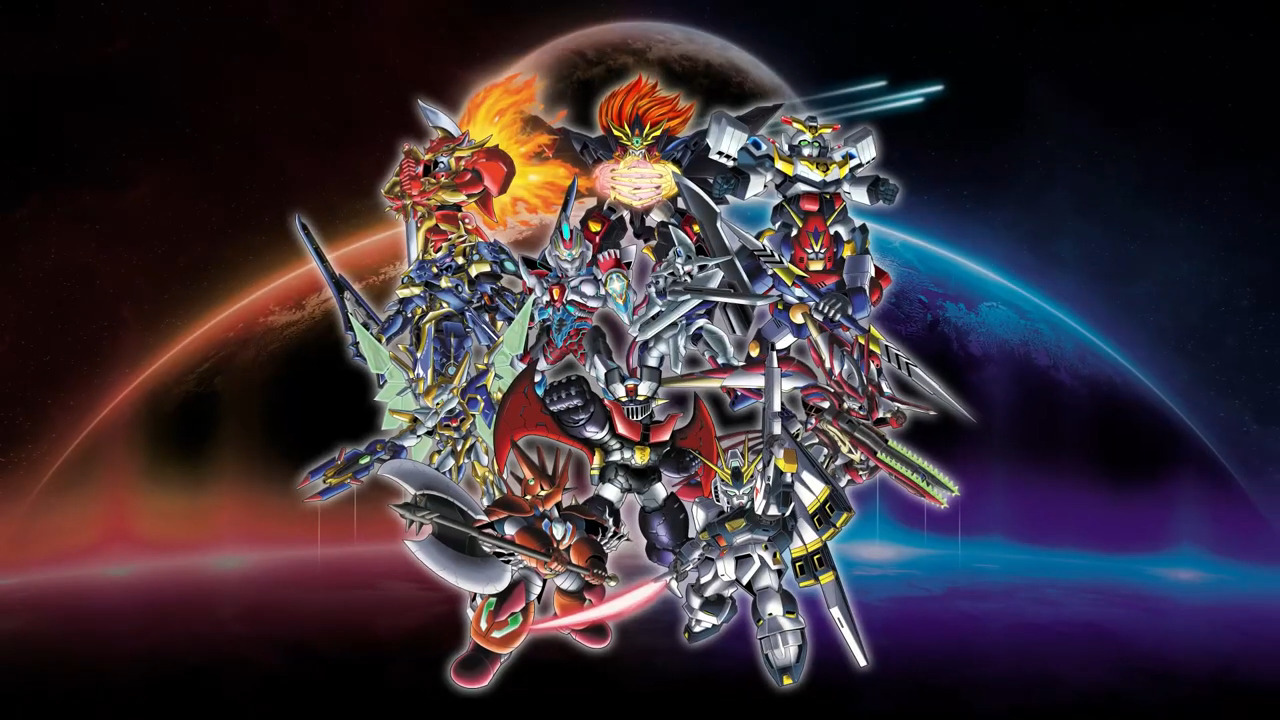
Super Robot Wars 30, the latest full game in the famed crossover video game franchise, has revealed its full lineup.
Super Electromagnetic Robot Combattler V
Mobile Suit Gundam (mecha only)
Mobile Suit Z Gundam
Z-MSV (mecha only)
Mobile Suit Gundam: Char’s Counterattack
M-MSV (mecha only)
Mobile Suit V Gundam
Mobile Suit Gundam NT
Heavy Metal L-Gaim
The Brave Police J-Decker(New)
The King of Braves Gaogaigar Final (mecha only)
The King of Kings: Gaogaigar vs. Betterman(New)
Code Geass: Lelouch of the Re;surrection
Code Geass: Lelouch of the Rebellion III – Glorification(New) (mecha only)
Shin Getter Robo Armageddon
Mazinger Z: Infinity
Mazinkaiser Infinitism(New) (mecha only)
Magic Knight Rayearth
Gun x Sword
Majestic Prince
Knight’s & Magic(New)
SSSS.GRIDMAN(New)
There are some welcome surprises among the returning veterans such as L-Gaim, but the real shockers are in the newest series.
Hell and Heaven!!!
The entry that sent a bolt of lightning through me is Hakai-oh: Gaogaigar vs. Betterman, which is the novel-only sequel to Gaogaigar Final that continues and concludes the story that began all the way back in 1997. I’ve been following the story, even having reviewed the first and second novels, but I wonder if fans might be better off not reading the spoilers in them so that they can experience this amazing sequel through the lens of SRW first. This’ll be the first time that Gaogaigo and its allies will be animated, and already it looks incredible. I await the SRW rendition of Gaogaigo’s Hell and Heaven with great anticipation, I hope we get to see and use a certain massive Betterman, and I’m guessing we’ll get the new opening and ending (that currently exist only in audio form) as BGM.
I also want to compliment the English localization team because I think “Hakai-oh” is such a difficult term to translate. Literally, it means “World-Conquering King,” and I think King of Kings captures that feeling nice and succinctly.
Burning Heart to Heart
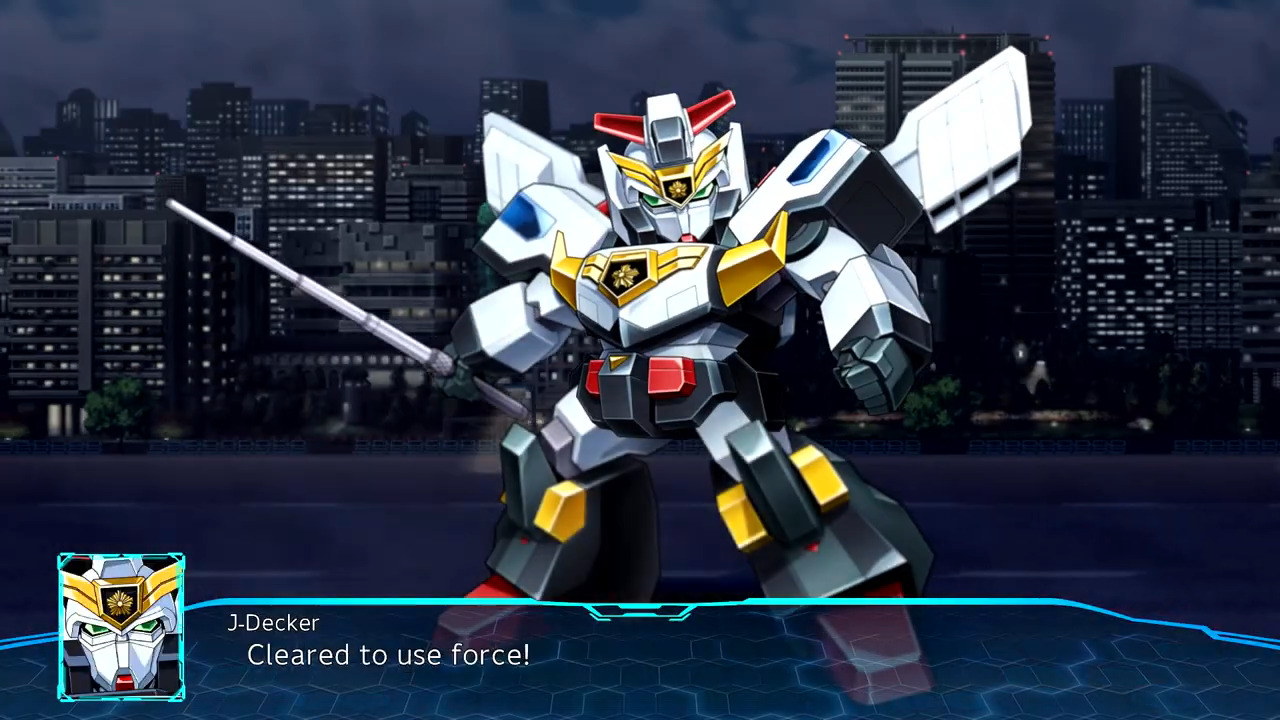
Speaking of Braves, I honestly didn’t think J-Decker would ever make it in. Out of the entire franchise, I think J-Decker is one of the genuinely best shows, and I’m very happy to see Deckard, Shadowmaru, and the boys get their due. My dream is that there are some combination attacks involving Shadowmaru and Volfogg, but I’ll be content even without that. And If you want to know more of my thoughts on J-Decker as an anime, I appeared on an old podcast review.
Toku Time
Arguably the biggest appearance from out of left field is SSSS.Gridman. While it’ll fit nicely within SRW, the fact that it has its origins as an anime sequel to a tokusatsu series means there are just a lot of odd quirks to consider. In particular, Gridman is basically an Ultraman, and the closest we’ve had to mecha in SRW that move similar to Gridman are the EVAs from Evangelion—a show that is itself inspired by Ultraman. Given how this series ends, I also have to wonder how it’ll fit into the Super Robot Wars 30’s story, but what always comes first is making things look awesome.
X-TREME RADICAL Mazinkaiser
As far as I can tell, Mazinkaiser Infinitism appears to have its origins as just an action figure of Mazinkaiser with a Mazinger Z: Infinity aesthetic. What’s funny about this version of Kaiser is that while the Mazinger Z in the Infinity film is a nice retro-modern update to a timeless design, even this Infinitism version of Mazinkaiser feels like it’s perpetually stuck in the 1990s—a Rob Liefeldian super robot that screams hypermasculinity. That was the case for its debut appearance (in a Super Robot Wars game!), the Mazinkaiser OVAs, Mazinkaiser SKL, and now this.
…And the Rest
I haven’t seen the recent Code Geass film, but I have fond memories of the near–train wreck that was Code Geass R2. I don’t know if there’s much for me to say here. As for Knight’s & Magic, I don’t know anything about it other than that it’s a mecha-themed isekai light novel. While it’s not the first SRW series with an isekai light novel origin (that honor goes to Aura Battler Dunbine), it’s still the first to be from a modern, post–Sword Art Online light novel. For that reason, I’m rather curious as to how it’ll be, and I might even be tempted to watch the anime.
See You in October
You damn well better believe I’m reviewing this game.
Whether it’s me getting older or my priorities shifting, I don’t play quite as many video games as I used to. So when I’m asked by Johnny, a Patreon sponsor, about what my favorite Nintendo Switch games are, I actually don’t have a lot to choose from. The other side of this is that I’ve played the few games I do own fairly extensively, speaking to their longevity.
The first game I have to mention is Super Smash Bros. Ultimate. The single-player story mode, World of Light, drags a little at the start, but by the time I reached the endgame, I fell in love with it. The multiplayer successfully finds a balance between the pace of Melee and the desire to make even more complex areas of the game accessible. With all of the new characters announced and the clear love and care that goes into them, Smash in a way transcends the act of gaming itself and enters a realm of shared memory, interacting with nostalgia and the thrill of discovery (learning about new characters you never knew about) to become a phenomenon.
Splatoon 2 is pretty much what I expected—a refinement of the first Splatoon—and it makes for a fun and diverse game where I’m eager to try out whatever the game tosses at me. The simple idea of weapons that both attack and claim territory makes Splatoon as a whole always refreshing, and the weakening of the special moves to put more emphasis on the basics is smart. I recently beat the single-player mode as well as the Octo Expansion DLC, and it provided some of the most engaging (but also frustrating) boss battles ever.
The last game I want to mention is Super Robot Wars T, the first SRW game for the Switch. It’s not especially different from previous entries that I’ve played, but the thrill of seeing my favorite characters from anime working together, as well as the challenge provided as the story grows on a cosmic scale, makes it hard to get tired of. Having Magic Knight Rayearth in an SRW game is like a dream come true, and I’m hyped that they’re actually bringing SRW V and SRW X to the Switch as well. Who knows? I might end up liking this more.
I’ve been thinking that it’s time for me to play more Switch games, and this might be the impetus for me to do so. I wonder if this list would change in any major way in a year’s time.
When a series gets into a Super Robot Wars game, for the first time, it’s a momentous occasion, especially when the game in question is one of the “mainline” iterations. The mecha (or even spaceships these days!) can be from old and obscure works, cult favorites, and even the new hotness. When playing through the recent Super Robot Wars T, however, I noticed that there’s a significant dearth of recent series, and I’m using that term loosely—out of every anime included, only two are from the past 13 years.
Even that number doesn’t tell the whole story. One of the anime referred to above is 2018’s Mazinger Z: Infinity, a film sequel to the original Mazinger Z anime franchise. While technically “modern,” it’s meant to be a nostalgia work. That leaves only Expelled from Paradise, a 2014 film. The next one after that is Gun x Sword from 2005. It’s not inherently a bad thing, and there are a number of welcome surprises in SRWT like Magic Knight Rayearth, Cowboy Bebop, and Captain Harlock. In a Famitsu interview, the director, Terada Takanobu, mentioned that one of their decisions for including new titles was a desire to have something for every age group. So in the sense of newcomers alone, it’s a pretty even split. However, the heavy lean towards the old is still noticeable, and I think a number of factors go into this.
First, as the years go by, what is considered an “old” title vs. a “new” one widens. Second, mecha anime just isn’t the bustling industry it once was, at least not in the same way. Third, I think that, as much as they tried to pull in fans of all ages, their core demographic seems to be working adults somewhere around 25-39, given both the themes of the game and the title selection itself.
For many younger anime fans, a span of five years might very well cover their entire fandom, let alone the now five decades that have elapsed since the original Mazinger Z anime debuted. For Super Robot Wars, this goes double, as it often takes quite a few years for a hot new mecha title to get the spotlight. Back in the early 2000s, Gaogaigar (1997) and Shin Getter Robo Armageddon (1998) were considered fairly young upstarts when they appeared. Now, in Super Robot Wars T, they’re grizzled old veterans. Outside of Super Robot Wars specifically, it’s always fascinating to see a title like Cowboy Bebop (1997 debut but aired on Adult Swim in 2001) go from being the hot new thing in the US to being a virtually canonized masterpiece that’s sometimes more discussed than viewed.
The relative oldness of the entries in SRWT is in part a consequence of how giant robots are simply not the industry juggernaut that they once were. Long gone are the endless number of children’s mecha shows, and the robot anime that do remain know that their audience will often skew older. Super Robot Wars, given its nature as a crossover celebration of what is increasingly a niche genre, is sort of tailor-made for nostalgia, compounding the sense that its appeal does not lie in attracting newer, younger anime fans, but those with a lot of experience watching and loving mecha anime. There are newer titles to pull in, but will they have the same draw as these assumed childhood/youth favorites?
In that sense, it’s interesting to note just where the nostalgia hits hardest for SRWT. Many of the titles are squarely in the 1990s without being made as sequels or reimaginings—Cowboy Bebop, Magic Knight Rayearth, Nadesico, G Gundam, Gaogaigar, and Might Gaine—while plenty of other titles are late 80s or early 2000s. Director Terada mentioned that international fandom was a consideration for which titles to include, and while not the case with every country, I think that the 90s is an especially strong time for fan nostalgia now—or at least the 90s anime they may have seen years later because anime distribution wasn’t nearly as speedy back in the days of VHS tapes and Real Media Player.
It’s also telling that the gimmick of the main heroes is that they’re salarymen, i.e. full-time working adults around ages 25 to 39, instead of teenagers. In some sense, it works as a gimmick, but when past original characters have been decidedly less mundane in their basic premises, the idea of “loyal company employee” stands out. There’s something to be said about how the notion of the salaryman as the default position for adults in Japan has been shattered for many years now, but I won’t go much into it except to say that while a heroine who just really likes a steady paycheck might have seemed like the most milquetoast thing once upon a time, in our current global economy, that idea almost borders on escapist fantasy.
Or maybe the teamjust really wanted to do a story with Jupiter as a focal point. Between Shin Getter Robo Armageddon, Nadesico, Crossbone Gundam, Aim for the Top!, Gaogaigar, and Cowboy Bebop, the fifth planet from the sun gets major play.
There’s one last possible reason the series is lacking anime titles from recent years: they’re saving them for a direct sequel. While there’s no news yet of a true follow-up to Super Robot Wars T (as opposed to just another game with a completely different cast and universe), there are enough loose threads in this game that a continuation would not be surprising.
I’ve been playing the heck out of Super Robot Wars T (available via import in English for the Nintendo Switch and PlayStation 4), and as always, I’m into the loving fanfictional goodness that the franchise always entails. When you have all of these different giant robot heroes in the same universe, the interactions are an endless source of amusement and head-nodding affirmation.
Of the many crossover moments little and big, however, there is what I believe to be an unspoken story element that significantly alters the course of one particular series: King of Braves Gaogaigar. This might be mere fan speculation on my part, but I think it also makes total sense.
In the original 1997 Gaogaigar TV series, the main character Shishioh Guy uses an attack called Hell and Heaven to finish off monsters. A little into the series, however, he discovers that using the attack too much does severe damage to his cyborg body, and that overusing it could lead to death. In response to this, his team (known as GGG) creates a new, alternative finisher called the Goldion Hammer, which becomes his default decisive blow through most of the series. It’s only in desperate times when the Goldion Hammer isn’t available that Guy will resort back to Hell and Heaven.
But in Super Robot Wars T, when you meet Guy, the Goldion Hammer is nowhere in sight, despite the story being well past the point in the anime where he was supposed to get the Goldion Hammer. And yet, Guy shows no signs of excessive use of Hell and Heaven. On one level, this is likely a gameplay pacing decision, to keep Gaogaigar from having its strongest attack early on, but I think there’s also an in-story explanation: he simply didn’t have to use it as much in the SRWT universe.
Whereas Gaogaigar and GGG alone fought against EI-01 and the Zonders in the anime, in the game, they occasionally received help from Watta and Tryder G7 (from Muteki Robo Tryder G7), as well as Maito and Mightgaine (from The Brave Express Mightgaine). In other words, in SRWT, Guy had enough assistance in his many battles that, by the time we meet him in-game, he isn’t anywhere near as overburdened as he is in the anime.
It’s considerations like the above which make Super Robot Wars T (and Super Robot Wars in general) such a treat. I’m looking forward to seeing whatever other crazy moments are in store.
To celebrate its 25th anniversary, a new Super Robot Wars game is coming out in 2017. As is tradition, a number of new series are debuting, including Brave Express Might Gaine, Cross Ange, and what looks to be more Full Metal Panic! now based on either the new upcoming anime or its light novel source material. However, the biggest surprise of all has to be the debut of Space Battleship Yamato into the storied giant robot crossover video game series.
The main surprise, of course, is that Space Battleship Yamato 2199 isn’t a giant robot series. While other entries have in the past stretched the definition of giant robots, from Heroman to Juushin Liger, and others have source material in games other other media (notably the Hatsune Miku Fei-Yen), Yamato is the first to just flat out not be a robot series.
While this is the sort of exception that can get fans in a tizzy (“Is nothing sacred?!”), I think Yamato more or less gets a free pass as one of the most influential science fiction anime of all time. Its original staff was comprised of some of the luminaries of mecha anime (Yasuhiko Yoshikazu, Ishiguro Noboru, and more), and the idea of the “space opera” has had a long reach throughout Japanese pop culture history.
With this news, a new hashtag has appeared on Japanese Twitter:
The other big surprise is that Super Robot Wars V will come with subtitles in Chinese, Korean, and English. However, due to licensing, the chance of a true English release is kind of slim.
What do you think should be in Super Robot Wars? How far can the definition of mecha be stretched?
—
If you liked this post, consider becoming a sponsor of Ogiue Maniax through Patreon. You can get rewards for higher pledges, including a chance to request topics for the blog.







 OGIUE MANIAX