Boyz II Men: Genshiken II, Chapter 125

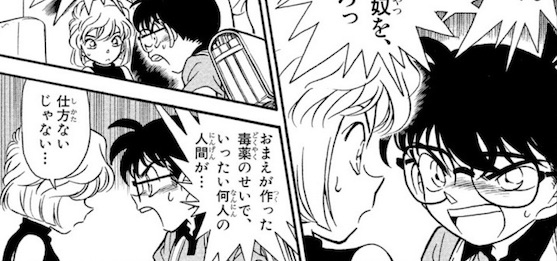
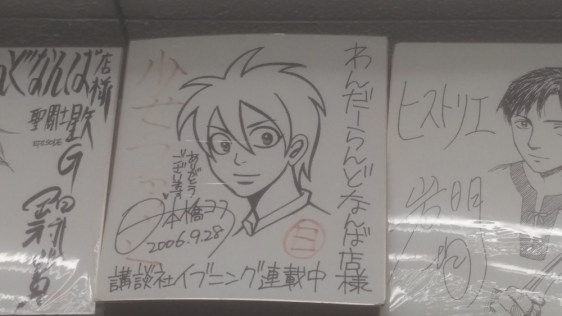
In this month’s chapter of Genshiken Nidaime, the old boys are back.

Chapter Summary

Madarame, Tanaka, and Kugayama meet up for drinks. While they start talking about how things have changed now that Madarame’s finally not going back to the old university, the conversation eventually shifts to girls. As Madarame realizes how the boys of Genshiken have at some point started talking about girls instead of anime, he swears to bring himself back to his original mega otaku self. However, just as he successfully tempts the rest of the guys to pull out some 18+ doujinshi, Kohsaka shows up with Saki, who seems unfazed by Madarame’s attempts to creep her out. Not long after, they reveal to the guys that Saki is pregnant.

This causes Madarame to flip and exclaim that he should’ve just picked someone and ended his virginity, but then Saki reveals that it was all a lie orchestrated by her and Kohsaka to get Madarame to confront his true feelings. She then tells Madarame straight up that he should go out with Sue on account of his reasoning for rejecting her being total BS, and even gets Sasahara to call Ogiue and get Sue on the phone. Saki says to Madarame that, if Sue’s not interested anymore then it’s fine, but otherwise…

Straight Shooter Saki

Ah, Kasukabe Saki. While Keiko kind of fulfills her role as the no-nonsense outsider, she doesn’t quite capture Kasukabe’s ability to just cut straight to the point. Quite a few of the readers on this blog have commented that Madarame’s reasoning for rejecting Sue was incredibly weak, and I find it interesting that Kio Shimoku would purposely set that up as a sticking point. While I do still think that Madarame’s reasoning wasn’t solely to run away from the situation, it was pretty flimsy on the surface.

It’s also revealed that Saki set her ploy up because Kohsaka and her suspected that Madarame’s real reason for not choosing a girl was that he was still pining after he deep down inside. While I think this was pretty clear, especially given his reason for rejecting Keiko (she reminds Madarame too much of Kasukabe), this really shows just how much that’s actually the case. Somewhere in all of this is the idea that the other girls are maybe too otaku to get to the heart of the matter. Ogiue might be blunt and Yoshitake might be a schemer, but their anime and manga-oriented minds inadverently allowed the harem to flourish, and thus allowed Madarame to remain wishy-washy about the whole thing. Saki really is amazing.

As for the fake pregnancy, before Saki revealed the truth my immediate reaction was that this basically would have marked off Spotted Flower as a possibility. Now, it’s back to being in this nebulous space of pseudo-canon/alternate universe, and it’s a very intentional move by Kio to mess with his readership. Maybe, somehow, we’re all Madarame. What this also means, based on all of the talk of girls and sex (or in some cases lack thereof), is that the thematic gap between Genshiken and Spotted Flower is ever-shrinking.

By the way, the named of the chapter is “High-Slope Flower,” which is a parody of Spotted Flower, only with a reference to Kohsaka instead of Madarame; the saka in Kohsaka means “hill.”

Kio you troll.

Sex Talk

Though it’s one of the main jokes of the chapter, it really is crazy that the boys of Genshiken have been having varying degrees of success with the ladies, not least of which is Madarame’s recent harem adventures.

It’s unclear if Rino the Cabaret girl is actually interested in Kugayama or is basically doing her job and manipulating her client for more pay (remember, Cabaret Clubs are all about talking with girls as opposed to being a sex service), but it’s very likely that the latter is a factor. Kugayama himself acknowledges this, but just the fact that he is making some kind of vague move towards fulfilling his desire for real-life women, and that he’s gone from visiting Cabaret ladies to just one in particular, is itself a kind of change or progression.

One of the more notable aspects of this chapter is that Tanaka and Sasahara reveal quite a few details about their sex lives. Tanaka mentions that he “only” gets to have sex with Ohno about once a week, while Sasahara says that his rate is about once a month, much to Madarame’s consternation. Tanaka even mentions to Kugayama about how asking for a girl’s three sizes in order to get a cosplay outfit made for her (Kugayama’s current plan for a gift to Rino) can turn into dirty talk.

References to the characters having sex is nothing new to Genshiken. Way back, Saki talked about her and Kohsaka doing it doggy-style. Ogiue started drawing more realistic penises in her doujinshi after she began her relationship with Sasahara. I think this situation might feel different because it’s the guys, the ones who are supposed to be the “losers,” doing it, and so the dissonance in Madarame is understandable. I also believe that this dissonance was a huge factor when it came to Madarame’s decision to abstain from choosing a partner. This candidness contrasts with the younger characters that comprise the main cast now as well, because they are for the most part are still very shy about this sort of thing.

It’s easy to tell that the conversations are causing Madarame’s imagination to go wild, and that too is understandable.

They Just Keep Pulling Me Back In!

If Madarame does indeed end up with Sue after all, does it matter that it happens after the harem arc concluded rather than it being a direct result of Madarame’s decision? After all, choosing a partner would have, by definition, ended the arc anyway.

This is all speculation at this point, but I do think there is a difference between having Sue the winner of a competition versus her and Madarame potentially building something up together on their own. I think the harem itself put a lot of pressure on Madarame that a simpler one-to-one relationship wouldn’t carry, even if it doesn’t work out.

As for Sue essentially being Madarame’s 2D complex ideal given flesh and how this might mean that Madarame loses the last vestiges of his realistic otaku self, there are two points to take into consideration. First, guys can have many different ideals to the point that arguably any of the other partners could be considered an “ideal,” but the way the story has portrayed them shows a lot of interesting facets to their characters. Sue still seems a bit otherworldly, but this might be the start to opening her up more. Second, Sue really is the only one at Madarame’s otaku power level.

No Ogiue Image This Month

They do mention her, though.

Sasahara: Basically, Sue’s at Ogiue’s apartment, which means I can’t visit. Do something about it, please.
Madarame: Wha? What do ya mean? Wait… You just want to have sex with her!
Sasahara: ……That’s right! What’s wrong with that?!

If you liked this post, consider becoming a sponsor of Ogiue Maniax through Patreon. You can get rewards for higher pledges, including a chance to request topics for the blog.



The Fujoshi Files 156: Mayu

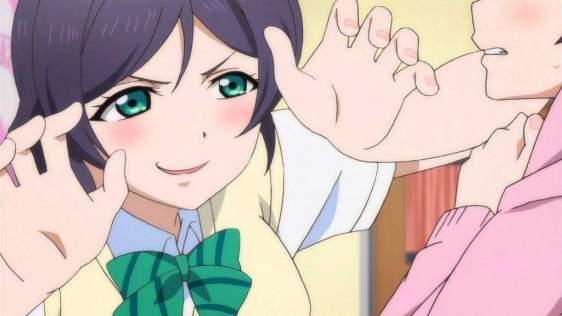
Name: Mayu (マユ)
Alias: N/A
Relationship Status: N/A
Origin: Happy Fujoshi: Fujoshi no After 5

Information:
Mayu is an office worker and who devotes most of her time and money to her fujoshi hobbies. She is particularly into the Randy x Gerdt pairing from an unnamed anime, and is invited to a karaoke party after a doujin event.

Fujoshi Level:
Mayu has a very busy life juggling both her work and her otaku life, but keeps herself motivated by thinking about Randy x Gerdt, even at work.

[Apartment 507] Love Live! Character Spotlight: Nozomi Tojo’s Spirit of Friendship

washiwashi

Nozomi makes number 8 in my Love Live! Character Spotlight series at Apartment 507. I hope you enjoy her kansai-ben and attitude as much as I do.

Now only one remains…

whiterice

Soremachi Creator Ishiguro and His Two Biggest Influences

soremachi-8-9-14

In the June 2016 issue of Monthly Afternoon released in April (it’s confusing, I know), there’s an interview with two previous winners of the Afternoon Four Seasons Award, which is a manga competition run by the magazine. One of the winners is Ishiguro Masakazu, creator of And Yet the Town Moves (Soredemo Machi wa Mawatteiru). When talking about his influences, Ishiguro mentions a number of manga artists, but two in particular are especially important to him and his style. Those would be Otomo Katsuhiro of Akira fame, and Fujiko F. Fujio, creator of Doraemon.

akira2_0 doraemon-sticker

Although it isn’t terribly surprising that these two titans of manga would influence other manga artists, in the case of Ishiguro this is a really big deal. That’s because, if you think about what Soremachi is, how it’s drawn in terms of environment and character expressions, and how the stories range from the dramatic to the silly, from the everyday to the alien, Soremachi is pretty much an even fusion between Akira and Doraemon. There was even a story about time travel that revolves around some super delicious snack cake!

Quite a few years ago my friend, translator Ko Ransom, mentioned to me that he felt Ishiguro’s art style reminded him a lot of Akira. As it turns out, he was right on the nose with that one. When you think about it, it’s not like it’s immediately obvious given how different those two stories are, which makes me all the more impressed by his keen eye.

If you liked this post, consider becoming a sponsor of Ogiue Maniax through Patreon. You can get rewards for higher pledges, including a chance to request topics for the blog.

Mystic Archives of Dantalian and that Chuunibyou Feel

dantalian

The existence of the term chuunibyou is fascinating to me. Most famously used in the series Chuunibyou Demo Koi ga Shitai, it basically means someone who has the aesthetic sensibilities of a middle school student. What this translates to is a desire to feel special, to believe that there is more to one’s life than its simple and mundane surface, and this is most frequently portrayed in Japanese media as characters who claim (or like to pretend) that they have magic powers, cursed body parts, and have access to the “Akashic Records.” What is maybe less talked about, at least on the English-speaking side of the things, are the works that spawn this kind of sensibility in the first place. What an American anime fan might label as “anime as hell” can often also be called “chuunibyou,” and it’s from this perspective that I’d like to talk about Mystic Archives of Dantalaon.

Originally a light novel series, Mystic Archives of Dantalian takes place post-World War I. Hugh Anthony Disward receives a key and instructions from his dead grandfather to become the new Keykeeper of the “Bibliotheca Mystica De Dantalian.” There, he meets a young girl in gothic lolita clothing named Dalian, and discovers that the Mystic Archives are a collection of “Phantom Books,” each of which possess fantastic, supernatural abilities. As Keykeeper, Hugh (along with Dalian) must pursue cases of Phantom Books run amok, using the power of the Archives.

Just from the basic premise alone, there’s just a lot of “this world is not as it seems” sensibility, but it doesn’t stop there. The anime’s visual presentation, akin to Gosick or Croisée in the Foreign Labyrinth, emphasizes a dark and moody atmosphere. The fact that Hugh accesses his powers by plunging his hand through a large, transforming keyhole in Dalian’s chest, as well as the fact that use of those powers comes from reading mystical books with flowery prose aloud, pushes the series into clear “chuunibyou” territory.

However, one thing that stands out to me about the series is actually how Hugh is presented as a character. Although Hugh has these supernatural abilities, he himself seems like a normal fellow. This isn’t to say that he’s bland or generic, but rather that he presents himself as calm and fairly level-headed without going into “perfect stoic badass” territory or “generic everyman.” The result is that Hugh, while having access to chuunibyou qualities, doesn’t encourage chuunibyou behavior through his demeanor. Even when reading from the Bibliotheca Mystica de Dantalian, he comes across as a regular guy. If one were to pattern themselves after him, it would come not with an overwrought sense of self, but more like “just a dude who happens to have powers.”

That’s not quite true for Dalian. Not only is it hinted strongly that she’s older than she looks, but she combines many of the qualities that can inspire others (specifically chuunibyou) the desire to be her. Her words typically imply that she’s much older than she looks. She is the gateway to these magical archives that house the most forbidden knowledge of the universe. Even her gothic lolita aesthetic works in this direction. Dalian exudes mysteriousness, and I think you can easily find the kinds of characters that are indirectly parodies of her type: Kuroneko in My Little Sister Can’t Be This Cute, Kobato in Haganai, and so on.

As an aside, I wonder why so many Gothic Lolita characters end up being similar in Japanese media. In terms of actual real-life wearers of Gothic Lolita fashion, I’ve come to learn that a lot of it has to do with wanting to defy or push back against the expectations placed upon people in terms of appearance, sexuality, age, and other related areas. In anime and manga, the Gothic Lolita often combines a recurring mix of qualities that contrast innocence and maturity. Dalian speaks with an air of authority, but perks up like a kid at a candy shop when the prospect of eating delicious sweets shows up. Victorique from Gosick behaves the same way, as does Shinku from Rozen Maiden. The idea of the Gothic Lolita character carries with it not just a visual personality but also behavioral elements as well, and I wonder to what extent the two sides inform each other to perpetuate this character type further.

My discussion of Mystic Archives of Dantalian isn’t a criticism against the series for being chuunibyou, or that only those who are interested in works like that could possibly enjoy it. The anime has a lot going for it, from its atmosphere to its mysteries, and it overall makes for an involving and entertaining work. What the chuunibyou elements grant Mystic Archives of Dantalian is a kind of self-seriousness that can be overwhelming at times, but can also be welcome when one wants to enjoy a story that revels in the idea of the unknown.

This post was sponsored by Johnny Trovato. If you’re interested in submitting topics for the blog, or just like my writing and want to support Ogiue Maniax, check out my Patreon.


First Train Home: Pat Metheny’s Been with Me All Along

For most of my life, I’ve had a theme stuck in my head. It’s a haunting, yet relaxing tune that I only knew as the “Community Calendar theme for Channel 9 in New York City.”

Eventually, YouTube became a thing. I decided to search for it, but at the time nothing came up. Being a song without words, I couldn’t exactly search for it by lyrics. Years later, around 2012 I looked again, and finally found it:

Have a listen, it’s really good. Much better than any “Community Calendar” music has any right to be.

I looked up the song’s name and artists, listened to the original a few times, and then promptly forgot it (and the name+band) again for a few years.

Recently, the song popped back into my head one morning, and I went back to YouTube. Again, I looked to the comments to find the names of both the song and the band, but this time around I knew I could never forget them.

The tune is called “It’s for You.” The musicians responsible are Pat Metheny and Lyle Mays.

Does that first name sound familiar? That’s the same Pat Metheny responsible for “Last Train Home,” which I know as the second ending theme for JoJo’s Bizarre Adventure: Stardust Crusaders. If it wasn’t for JoJo, I would have never committed this tune to memory, and it would have just been “that song on TV from when I was a kid.”

Thanks, JoJo’s Bizarre Adventure. Thanks, Pat Metheny. Also, I found out that there’s this vocal version by Japanese musician Yano Akiko:

By the way, did you know that Pat Metheny has his own official Q&A board? I keep hoping to see it filled with JoJo fans.


[Apartment 507] Japanese Manga App Review: Detective Conan

detectiveconanapp-featuredimage

I’ve recently begun a new article series over at Apartment 507 where I review Japan-only manga apps. This time I’m looking at the Detective Conan app, which (surprise!) is dedicated to Detective Conan manga.

If you’re a fan of Detective Conan, check it out. You can buy Japanese iTunes cards at Apartment 507, which will help you make purchases through the app.

The Triangle Forms: Kimi xxxru Koto Nakare, Chapter 3

kiminakare3-natsumi

I realized that I’ve been giving the wrong name for the main guy. It’s Hayato, not Shuuto, and I somehow missed that despite it being written clearly in the very beginning of Chapter 1. Sorry about that.

I’ve since gone back and changed the previous chapter review. I hope this hasn’t impacted your enjoyment of this series or my reviews!

Also, a better translation of this title might be Thou Shalt Not xxx. It’s the same structure used in Yosano Akiko’s “Thou Shalt Not Die” power in Bungou Stray Dogs. Maybe I’ll call it that from now on, maybe not. What do you think?

Summary

In Chapter 1 we got to see the world from Hayato’s point of view, and Chapter 2 was a Nobuko’s-eye view. This time, it’s primarily from their other close friend that we’ve seen in previous chapters, Natsumi.

Chapter 3 mainly takes place in the past, when Hayato and Natsumi were classmates in elementary school. They’re putting on a play about a prince (Hayato) and multiple princesses, but Natsumi gets picked on by the other girls for being poor and not very “princess-like.” Hayato, being the naturally good guy, defends Natsumi, including being wiling to not participate in the play. Natsumi develops a crush on Hayato, and is inspired to start acting thanks to him, but learns the painful truth from day 1 that his heart belongs to Nobuko.

kiminakare3-natsumihayato

Back in the present of the main narrative, it’s revealed that this chapter takes place between Chapters 1 and 2, after Hayato first confessed to Nobuko. Natsumi quietly asks if Hayato’s feelings could possibly be love, given how young he was at the time. However, Natsumi senses her younger self telling her something important: Natsumi was only a kid when she first noticed Hayato, and she knows those emotions are genuine.

A Slowly Expanding Cast

I wondered last month to what extent Kimi Nakare would begin to fill in its side characters, and the process has already begun. What I perhaps didn’t expect (though in hindsight maybe I should have) is that there would be a love triangle. I guess it’s maybe technically not a triangle depending on how you define it (Hayato only has eyes for Nobuko), though it’s also looking not to be as much about the exclusive world between Hayato and Nobuko as I first thought. I am a little apprehensive because I know how heavy and meandering love triangle manga can get, but I have faith in the creator Ohachimachi Hato’s ability to weave an interesting tale with endearing characters.

Who Will You Kiss? Me or That Girl?

Nevertheless, the chain of emotions is established, but one interesting wrinkle to this tried-and-true formula is that Natsumi is clearly the more attractive of the two girls. Whether she’s supposed to be relatively plain in the mold of the typical shoujo protagonist, or she’s supposed to be extremely beautiful isn’t entirely clear (were the girls who picked on her jealous or just snotty brats?), but she has all the features typically desired in a girl in manga. Natsumi is quiet, has a good heart, and just comes across as “better girlfriend” material. And yet, she’s the one on the backfoot, because Hayato is just enraptured with Nobuko.

kiminakare3-nobuko

It’s not unusual for the third girl in the love triangle to be at a disadvantage because of personality or because there’s some kind of charisma that the main girl possesses, but it’s also usually not to this extent. There might be some similarities to Kimi ni Todoke, but Natsumi is no Kurumizawa Ume, and Nobuko is two steps beyond the eccentricities of Kuronouma Sawako. Just the fact that Nobuko’s only appearance in this chapter is in the form of a comical rendering just pushes home the idea that Natsumi is competing with a force perhaps unlike any other in romance manga.

Last Thoughts

This is definitely not the Chapter 3 I was expecting. While I worry about love triangles a bit, I’m also looking forward to where the manga goes from here.

If you liked this post, consider becoming a sponsor of Ogiue Maniax through Patreon. You can get rewards for higher pledges, including a chance to request topics for the blog.

Awesome Manga Artist Autographs: Comic Store Wonderland in Osaka

wonderland-shoujofight

In many big anime/manga stores in Japan, there are signed images from notable manga authors. Often times, you’re not allowed to photograph them, so they can’t really be shared with the rest of the world. One notable exception is Wonderland in Osaka’s Den Den Town (sort of the Kansai equivalent of Akihabara), where employees gave me free rein.

This gallery includes a number of highlights from Wonderland, so see if you can spot your favorites. However, it doesn’t show all of the ones at the store. If you have the chance, go there in person to see the rest!

By the way, the image above is by Nihonbashi Yoko, who I recently discovered through the manga Shoujo Fight. What a coincidence!

If you liked this post, consider becoming a sponsor of Ogiue Maniax through Patreon. You can get rewards for higher pledges, including a chance to request topics for the blog.
[Apartment 507] 5 Tips for Growing Your Love of Anime and Manga

5tips-genshiken

I’m trying to do lists my way! My latest post on Apartment 507 features five pieces of seemingly generic but I think useful advice for those who want to get more into anime/manga (or want to revive their lost interest) but feel lost doing so. Tell me what you think, and even throw in some tips yourself because this certainly isn’t a closed list.