I’ve been reading up on Lolita Fashion as part of my general responsibilities and even a bit of curiosity. While fashion isn’t my forte, I do have experience with the Rozen Maiden franchise, which made me realize that the different dolls of that series correspond on some level to the five primary styles of Lolita Fashion.
Check out the post if you’re curious, and if you’re actually into gothic lolita and all that jazz, Waku Waku +NYC has a number of guests, including Baby, the Stars Shine Bright designer Kano Masumi and Putumayo designer Hasegawa Shunsuke.
A new Super Robot Wars game is coming to the Nintendo 3DS, and at this point people know the drill. A bunch of old favorites come back, a few new series make their debut, and because it’s not on a “main” system they can be a little more daring with their choices in terms of which new anime to bring along.
Returning Series
-Aura Battler Dunbine
-Story of Aura Battler Dunbine
-Zettai Muteki Raijin-Oh
-King of Braves Gaogaigar
-Mobile Suit Gundam Unicorn
-Mobile Suit Gundam 00 the Movie
-Macross Frontier Movies
-Shin Mazinger (Mazinger Edition Z: The Impact!)
-Mazinkaiser SKL
-Martian Successor Nadesico
New Series
-Panzer World Galient
-SD Gundam Gaiden
-Mobile Suit Gundam AGE
-Giant Gorg
-Macross 30
While the new series at a glance might not seem that unusual, I think a second look actually brings home how bizarre the newcomers are. In some cases, it’s because they lend themselves well to the crossover nature of Super Robot Wars. Panzer World Galient and Giant Gorg are two series fans probably thought would never join SRW, yet it’s odd that this would be the case because both of their settings involve disparate levels of technology and a greater dedication to an almost more philosophical sense of science fiction that potentially lets them connect various generations together. Gundam AGE is at this point one of the black sheep of the Gundam franchise, yet its generational story can be the glue that holds similar yet different series together (Shin Mazinger and Mazinkaiser SKL, for example).
On a personal note, I’m looking forward to hearing the instrumental version of the Galient opening.
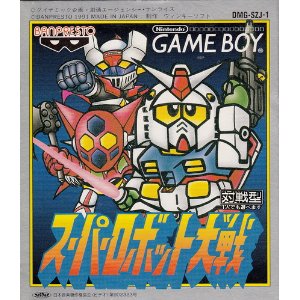
Then you have SD Gundam Gaiden, and I think to appreciate its inclusion we have to go back to the beginnings of Super Robot Wars.
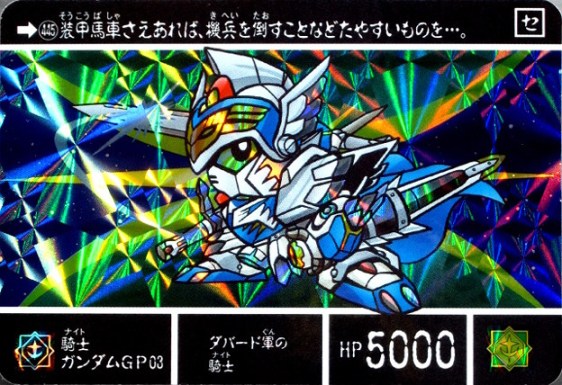
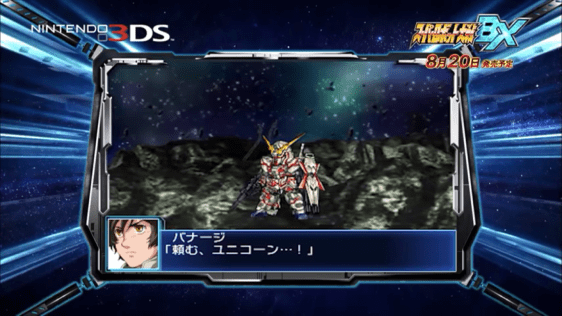
In the early iterations of SRW, the Gundam units took their designs and aesthetics from the popular SD Gundam franchise. This meant mobile suits looked extra cutesy, with large expressive eyes that future pupils. As SRW progressed this changed: pupils disappeared, robots became not quite as squat, and the old-fashioned SD look became a relic of the past. By having a series that actively celebrates that more cartoonish look, it’s almost like a piece of SRW history is returning. It’s all the more notable then that the Unicorn Gundam from Gundam UC is probably the least chibi-looking Gundam in SRW history; its proportions are practically realistic.
As for Macross, that franchise is fairly common in Super Robot Wars, but Macross 30 is actually a Playstation 3 game devoted to celebrating the Macross metaseries as a whole. So, in a game dedicated to bringing together multiple giant robot anime, one of their inclusions is a video game all about celebrating decades of one series in particular. Does this mean that all of the Macross characters across history will show up, or is the intention more to focus on the original characters of Macross 30?
So, while it’s not as wild as throwing in Jushin Liger or Iron Leaguer, Super Robot Wars BX might have just enough twists to the formula to make things interesting.
—
If you liked this post, consider becoming a sponsor of Ogiue Maniax through Patreon. You can get rewards for higher pledges, including a chance to request topics for the blog.
I’ve written a new post at the Waku Waku +NYC blog, about how ketchup is treated as a versatile ingredient in Japanese food in contrast to its reputation in the US as a one-note, non-exciting condiment.
What do you think of ketchup? Is it worthy of respect, or another example of people having no taste?
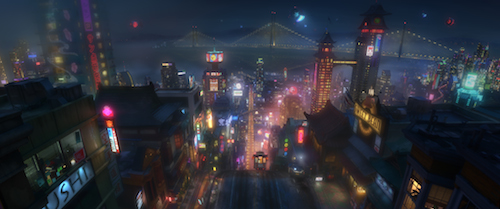
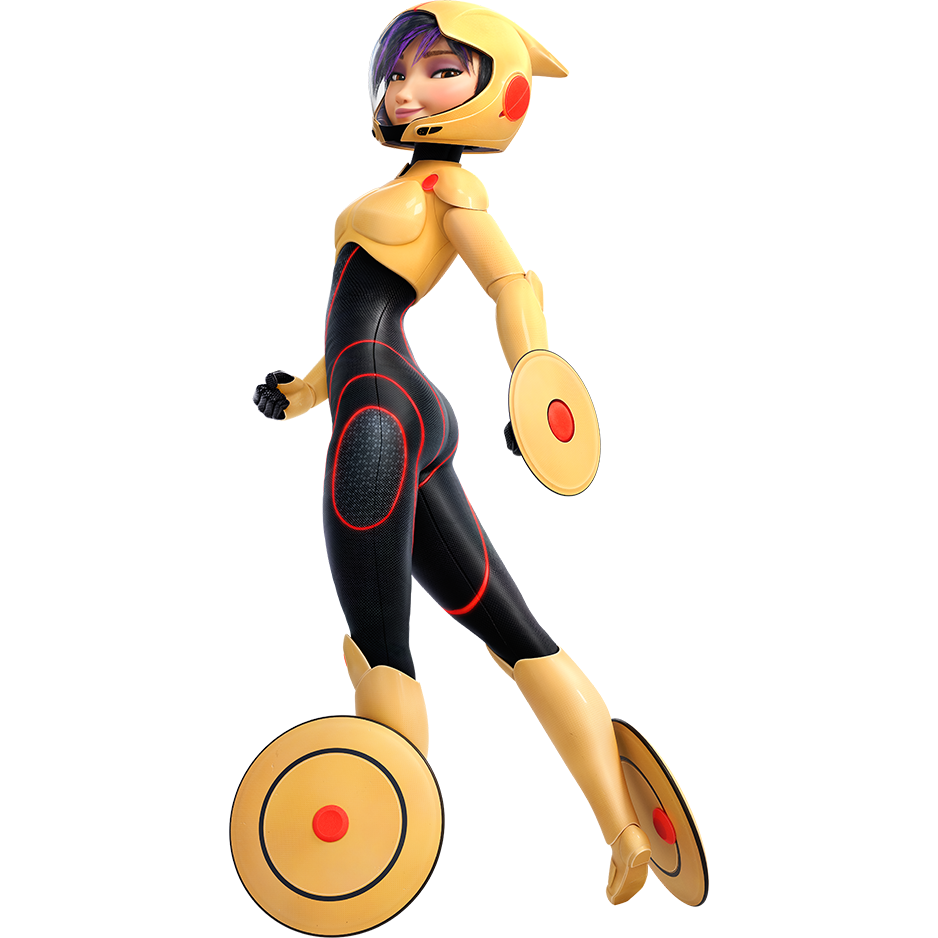
When watching the Disney animated film Big Hero 6, one of the first things that stands out is the city in which the characters live: the portmanteau of “San Fransokyo.” How it relates to either San Francisco or Tokyo remains a mystery, but it’s probably meant to pay tribute to both Disney’s own American origins and the inspiration Big Hero 6 takes from Japanese media.
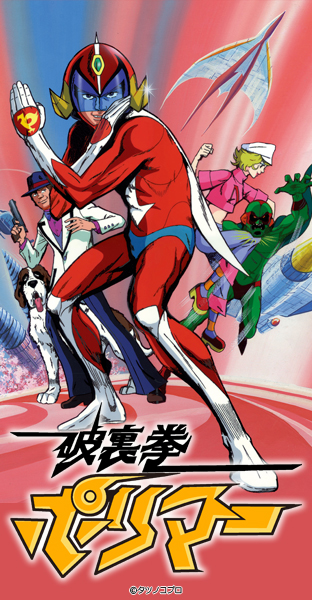
However, Big Hero 6 hasn’t been the only work of fiction to combine American and Japanese cities. One such work is an anime that dates back to the 1970s: Hurricane Polymar.
A series by Tatsunoko Production, the same studio responsible for classics such as Gatchaman and Casshern, Hurricane Polymar comes from that same era and young Amano Yoshitaka-derived aesthetic sense. A mix of Inspector Gadget, Bruce Lee, and Superman, the series takes place not only in the capital of “Washinkyo” (Washington DC + Tokyo), but in the country of “Amehon” (America + Nihon [Japan]).
I think it’s fun to imagine what an actual “Amehon” would be like, or where it would come from. Would it literally be the US and Japan deciding to be one nation? Would it be some strange alternative universe where they were the same land mass all along? Would anime fans who despise American culture and love Japanese culture be more at home, or would the appealing “foreignness” of Japan be lost in the process? Going back to anime itself, could Hurricane Polymar himself be considered a blend of American and Japanese superhero tropes and qualities, similar to how the characters of Big Hero 6 occupy a similar category?
—
If you liked this post, consider becoming a sponsor of Ogiue Maniax through Patreon. You can get rewards for higher pledges, including a chance to request topics for the blog.
I’ve written a post on Waku Waku +NYC blog on the interesting life of ex-Megadeth lead guitarist Marty Friedman, particularly how he began studying Japanese and how he eventually even contributed to anime music.
Also I recommend watching the video above, because.
This is a sponsored post. If you’re interested in submitting topics for the blog, or just like my writing and want to be a patron of Ogiue Maniax, check out my Patreon.
—
A comedy/adventure anime about a phantom thief named Joker and his bumbling ninja sidekick, Mysterious Joker (also known simply as Joker) is one of many anime derived from the Arsene Lupin-inspired archetype. In fact, this anime began the same season as a similar show, Magic Kaito 1412, and in that respect Mysterious Joker initially seems pretty unremarkable. Having watched the first 4 episodes, however, I noticed a couple of interesting qualities about the series. First, is that the visual designs of its characters are really indicative of a comics lineage that gets somewhat less attention from English-speaking audiences. Second, is that each episode has been better than the last.
In regards to the first point, I’m referring to the fact that Mysterious Joker was originally a children’s manga. However, when people talk about a category like “shounen,” they probably think of series like Dragon Ball or Naruto. Though titles like those are indeed meant for children, what some might be unaware of is that there are also manga magazines dedicated to very young kids, and chief among them is CorocoroComics. This is where Mysterious Joker (created by Takahashi Hideyasu) comes from, and while the anime cleans up the look of the characters for consistency (generally a must when it comes to commercial animation), their appearances remain colorful and bombastic, with large facial features beyond even what people typically expect out of anime.
The reason why I bring all of this up is that I think it can make Mysterious Joker feel somewhat odd even for those who are accustomed to most other anime that are targeted towards children, as many of them, even if they do not expect an additional older readership, have qualities that almost inherently appeal to a roughly 15-21 demographic. This is not to say that Mysterious Joker is a show that can only be enjoyed by kids, as it can be quite clever in how its mysteries and puzzles play out, and the humor is delightfully crass at times without being crude, but it requires on some level an acknowledgement that it is indeed a kids’ show and that older viewers may not even be taken into consideration. I think this can be a sticking point for a lot of anime fans, particularly teenagers, and so enjoying Mysterious Joker, even on a basic level, requires something of an open mind.
As for the second point, which is about how the show seems to improve with every episode, it’s as if each episode adds a bit more to the story and the world of its characters, and motivates viewers to keep watching. I originally planned on stopping at Episode 3, but then saw the reveal of a female rival phantom thief, which compelled me to see how that turns out. Episode 4 doesn’t feature her in any way, but it explores the friendly rivalry between the main character and another established in the previous episode, and in doing so gives even more reason to keep watching.
I looked up the staff for Mysterious Joker and was surprised to see that Satou Dai of all people is responsible for series composition. While I can’t say how much of the story’s quality comes from the original manga and how much Satou himself is a factor, from my experience with his work I think you get a true sense of what it means to be responsible for series composition. Eureka Seven, another show of his, builds upon itself beautifully. Satou wasn’t around for the sequel, Eureka Seven AO, and it really shows. A more relevant work of his Battle Spirits: Shounen Toppa Bashin, which took the humble card game anime and made it into something more substantial and mature, yet still very attuned to its young audience. While I’ve not seen all of Mysterious Joker, I would not be surprised if it ends up developing in a similar way.
I’ve written about a bit off recent news involving an anti-foreigner demonstration in Japan, and the way that otaku mobilized to counter it. You can check it out at the Waku Waku +NYC blog.
Name: Tohno, Maria (遠野まりあ) Alias: N/A Relationship Status: Single Origin: Cyber Yaoi Girl
Information: A fellow student at the same school as Tanaka Mitsuki, Maria is also a fan of yaoi and the manga Ai no Doronuma. Unlike Mitsuki who is a closet fujoshi, however, Maria wears her fandom on her sleeve, showing no restraint in expressing her interest in BL and related topics. In addition to being an avid reader of yaoi, Maria also draws doujinshi as part of a circle.
Fujoshi Level:
Lacking any sort of inhibition, Maria is even willing to ask her teacher in the middle of class if he’s gay.
This post was sponsored by Johnny Trovato. If you’re interested in submitting topics for the blog, or just like my writing and want to be a patron of Ogiue Maniax, check out my Patreon.
—
As part of my Patreon rewards, I was recently asked to write about “Voca Nico Night,” a series of concerts celebrating Vocaloid music broadcasted over the Japanese streaming site Nico Nico Douga. This topic is somewhat outside of my normal purview, as I will admit to not being especially knowledgeable about Vocaloids or the scene surrounding them (I enjoy the music and recognize the characters but would not call myself a devoted Vocaloid fan), but as I watched recordings of Voca Nico Night I found that the performances seen at Voca Nico Night can be viewed as a reminder that, at the end of the day, talented human creators are an integral part of the success of Vocaloids and the music that is created using them.
The story of how virtual idol Hatsune Miku became an international sensation is the kind of tale that can cause some to proclaim the green-haired, leek-twirling, robot-voiced “singer” as the sign of a glorious future, and others to describe her as the death of music. For years the music company Yamaha had put out a voice synthesis program, but with some improvements to the software and the use of a cute girl in chic, futuristic clothing, things changed. Suddenly it was embraced by composers, musicians, music enthusiasts, artists, and writers both amateur and professional, and you can find countless examples of Vocaloid music, art, and more on sites such as Youtube, Pixiv, and Nico Nico Douga.
All of this has culminated in Vocaloid live concerts, where holographic projections of the Vocaloids sing and dance as live crowds cheer them on. This presents a fascinating contrast in the “life” of the Vocaloid. At the same time that Miku and the others become more “real”, their artificiality becomes even more pronounced. After all, even if she were to be brought into reality, Miku still has the appearance of an anime character, and that stylization and abstraction cannot be divorced from her even they’re re-drawn and individualized by various creators.
This can be viewed as a strength, as Miku’s self, constructed from the effort and desires of millions, makes no illusions about the synthesized elements of her music (as opposed to the auto-tuning that regularly occurs in popular music these days), but for those who believe that music comes from the soul, that way of thinking is certainly difficult to swallow. While I’m more of the former opinion, the latter I think is something worth keeping in mind.
This is where I think Voca Nico Night really shines, because without the expensive holograms, without the explicit desire to see Hatsune Miku or Megurine Luka or the Kagamine Twins, what’s left are the DJs, the musicians, the performers at center-stage, engaging with their audience both online and in the flesh. You can still hear the distinctly robotic tones of the Vocaloids, but their images are not taking all of the attention. Instead, the Vocaloids’ role as tools for producing music comes to the forefront, and while talking about the “functionality” of an actual musician would be crass and unfair, the origins of the Vocaloids means that they can be as “useful” or as “soulful” as one needs them to be. Voca Nico Night exists somewhat opposite the live concerts that get all of the attention, and while I hesitate to use a “yin-yang metaphor,” I do think that having both is for the better.
In many ways it reminded me of the times I’ve attended chiptunes concerts (another scene where I have interest but cannot call myself a true fan). Like the Vocaloid scene, chiptunes creators and fans embrace a type of music often associated historically with a visual component that arguably puts less emphasis on the music or the musicians (video games in the case of chiptunes), but people who love chiptunes use concerts to show their appreciation and their talents outside of what is typically expected out of a “performance.” I have to wonder if Vocaloid concerts and the like are at an intersection between the rock concert where band members are sometimes viewed as gods, the orchestra where the relative significance of the individual musicians versus the composers’ original scores can be argued, and the club where a DJ combines beats and melodies together to form something new.
Check out the list on the Waku Waku +NYC Blog. And no, the answer isn’t “Ogiue in that Cardcaptor Sakura cosplay that one time.”
Top 10 rankings are surprisingly difficult for me, because I think I dwell on them longer than you’re supposed to. Still, I understand that they’re accessible and easily digestible content and a great way to introduce anime and manga fans to series they may not have heard of, so you’ll see my try them every so often.
Of course, feel free to leave comments, either here or at the link above.