They’re Better Than You: Dokidoki! Precure

If there’s one thing about Dokidoki! Precure that really stands out, it’s the characters.

You might be thinking, “But isn’t that true for just about every other Precure you’ve reviewed?” It’s certainly true that the characters tend to be a substantial part of Precure, and with its “enemy transforms people’s selfish desires into monsters whom the heroines must fight with the power of magic sparkles and martial arts action” premise Dokidoki! Precure is pretty typical for the franchise. However, with respect to its heroines, Dokidoki! Precure differentiates itself from its predecessors in that it really pushes the concept of its main cast as role models and targets of wish fulfillment. The girls of Dokidoki! Precure are larger than life even before they transform into magical girls.

Take Hishikawa Rikka, Cure Diamond. She’s a level-headed student council vice president, the best friend of main character Aida Mana, and the top student at their school. Her dream is to become a doctor, and the fact that she’s already studying medicine in middle school is pretty amazing. In terms of ambition and power, she’s already at a level higher than most previous Precure characters, who are usually just the ace of their athletic teams or club heads or whatever. She’s also in a way the least impressive of the Dokidoki girls.

Left to right: Kenzaki Makoto, Yotsuba Alice, Aida Mana, Hishikawa Rikka

Mana, Cure Heart, is student council president. She also gets high grades (though not as high as Rikka), and is sought after by all of the sports clubs because of her all-around amazing athletic skills. On top of that, Mana is relentlessly energetic yet cool under pressure, able to handle the work of ten people without breaking a sweat. Mana is perhaps the most effective leader in Precure history, and yet even she’s no match for Yotsuba Alice (aka Cure Rosetta), who is the kind-hearted heiress of a powerful business conglomerate, well-versed in a variety of martial arts, and is basically what you’d get if Daidouji Tomoyo mega-evolved into Batman (complete with badass butler). And even that arguably pales in comparison to Cure Sword, the last surviving warrior of a kingdom destroyed by evil and greed, who has escaped to the human world in the guise of Kenzaki Makoto, pop idol sensation, while bearing the burden of having to restore her fallen homeland.

All of the central characters in Dokidoki! Precure are outstanding beings, and the degree to which the anime is able to live up to that standard is essentially what dictates the strengths and weaknesses of the series. Dokidoki! Precure follows a pretty typical children’s anime pacing, where there’s a lot of episodic content and then a swell of story during the end of each approximately 13-episode chunk, and although there are plenty of episodes which explore the characters’ impressive qualities, there’s a sense that they could have done more. Alice is  the biggest example of this, as every episode about her ends up being amazing but are also few and far between. Similarly, I thought Makoto’s reverse-identity (her real name is Cure Sword) wasn’t portrayed with as much consistency as the concept could have handled.

Also I really wished they kept using the awesome bows from the middle of the series, perhaps the most impressive Precure toys ever in terms of giving young viewers the chance to wield things that look like actual weapons. …Maybe that’s why they went away.

I’ve seen some people be critical of Mana, saying that she overshadows the other characters, but I never found this to be the case. The issue isn’t that Dokidoki! Precure devotes too much to Mana, or that Mana is somehow too perfect to be a protagonist, but that many episodes are designed to be formulaic and self-contained to a fault. If you look at the episodes which are devoted to the greater narrative, they do an excellent job of pushing things forward, and by the end the story wraps up nicely with a conclusion unprecedented in Precure.

While I enjoyed watching every week, Dokidoki! Precure ends up being one of those shows which benefits from having a list of “important episodes,” especially because the show concludes very well in spite of some large plodding spaces in the middle of its run. At the same time, if you’re comfortable with kids’ show pacing, it’s not much of an issue. Dokidoki! Precure is reliable as an introduction to the franchise as a whole, while its different take on characterization can be refreshing for those already familiar with Precure.

PS: The first ending of Dokidoki! Precure is actually now my favorite Precure ED ever. Maybe it’ll be yours too.

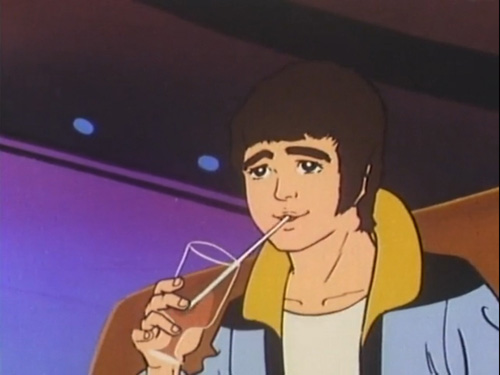
Step 1) Kung Fu, Step 2) Transform into Submarine: Hurricane Polymar

There are about three weeks left in the Hurricane Polymar DVD crowdfund project and out of all the anime on Anime Sols, I think it’s a show especially deserving of attention. It’s fun, it’s wild, and somehow despite the clearly older animation doesn’t feel all that dated.

Some people might be more familiar with the Hurricane Polymar OVA from the 90s, and though I’ve never seen it myself I’ve been told that it is kind of a drab affair. This original 70s Hurricane Polymar TV series however is anything but mundane. In fact, although it’s called Hurricane Polymar, the Japanese used to write “Hurricane” actually means “Shattering Backfist,” while the opening is so vibrant and energetic that I think its style alone is reason enough to at least check out the first episode.

The actual premise is fairly silly but in a delightful way which still leaves plenty of room for action. The main character is Yoroi Takeshi, an assistant for a bumbling yet cocky detective named Kuruma Joe who proclaims himself to be the “Next Sherlock Holmes.” Every episode they fight a different animal-themed criminal organization, and Takeshi, under the guise of a simple yet loyal apprentice, secretly helps the detective’s investigations more than the detective himself realizes.

When things call for some martial arts violence, however, Takeshi can transform into the mighty Hurricane Polymar, who chops and kicks and creates illusions while somehow fitting the word “hurricane” into Bruce Lee-style WATAAAAAAs.

Rounding out the cast are the narrator (a dog), and Nanba Teru, who is perhaps the most stylish female character ever. Actually, like many old Tatsunoko Pro shows, the character designs are by Amano Yoshitaka, best known for his work on Final Fantasy.

Hurricane Polymar essentially acts as a mix of the comedy of Inspector Gadget, the secret identity shenanigans of Superman, and a Hong Kong kung fu flick. It’s not the kind of anime that has a really dramatic impact or a fantastic ongoing story, but it doesn’t really need it either. What Hurricane Polymar excels at is being supercharged entertainment, the kind of thing where you watch an episode just to get invigorated and ready to tackle the world. In fact, it might not be good to watch too many episodes in a row, as you might get too hype.

If you decide that you are so capable of handling Hurricane Polymar that you actually want a physical copy of it (and live in the United States or Canada), you can contribute to the Anime Sols crowdfund.

A Tale of One Bishounen’s Love of Large Ladies: Pochamani

Thanks to one Mr. Ed Chavez I was recently informed of an unusual shoujo manga called Pochamani. It’s short for “Pocchari Mania,” which translates into something like “Chubby Chaser.” It’s a pretty rare concept in manga but especially shoujo manga where characters are generally known for being thin wisps, be they male or female. The series also earned a mention in the annual These Manga Are Great! (Kono Manga ga Sugoi!) 2014 edition, while the author Hirama Kaname mentions that her own preference for chubbier folks was the impetus for this series.

The main character of Pochamani is a chubby girl named Tsumugi who begins to date a handsome classmate who has a thing for larger ladies. While on some level wish fulfillment, the manga does a number of notable things. First, is that Tsumugi is not “fat” in the way Yomi from Azumanga Daioh or Hiro from Hidamari Sketch are “fat” (meaning visually indistinguishable from other characters in terms of weight and relying solely on text and speech to make this point), but is drawn differently from other characters. Though the art is inconsistent with how big she’s supposed to be (perhaps due to the artist being unfamiliar with how to draw such a body type?), it generally gets the point across that she’s small and round.

Second, while the manga, at least from the first volume I read, is not super progressive or tactful in every way (one of the most common scenes is the boyfriend rubbing her underarm flab with excitement), it does point out that the boyfriend is into her not simply because she’s chubby. Instead, it has a lot to do with her personality and demeanor, namely that whereas the girls he’s dated in the past have been depressed about their weight, Tsumugi is comfortable with how she looks.

Third, it covers those moments where they’re walking down the street and getting stares because people simply can’t believe that a guy like him is with a girl like her. Tsumugi is confident but not unshakable, and seeing her strength even through this is admirable.

Probably the strangest thing to come out of Pochamani is its official website, which is designed to be a fan club for people who like their partners on the large side. It has a list denoting the “charms of chubby people” and even an interview with a handsome male voice actor (seen above) about how he likes chubby girls (and also the manga of course). They also have a female Osakan comedian named Babazono Azusa as their somewhat corpulent spokesmodel. I’m not 100% behind the site because it seems to veer more towards a more simplistic fat fetishism compared to the actual manga, but I know Japan of all places is not known for its acceptance of fat as a type of beauty, so I see it as a kind of marketing decision within this context.

The Perfect Nickname for Saki’s Anetai Toyone

The new season of the Saki anime is here, and with it comes a whole slew of new characters. I’m quite fond of a number of them, but perhaps none more than Anetai Toyone. At 197 cm tall (over 6’5″) she’s not just “anime girl” tall, but actually a dark and imposing figure (at least physically).

I mentally refer to her as “the Undertaker” because on her resemblance to the WWE wrestler, particularly his early-to-mid 90s look, and I’m encouraging everyone else to do the same. It’ll make the actual experience of watching the show that much richer, and I want you to think of that signature gong every time you see Toyone.

Perhaps Kakura Kurumi (the small one) could be her Paul Bearer.

Shounen Sports and Girl Appeal

I’ve been watching two shounen anime adaptations as of late, Yowamushi Pedal and Kuroko’s Basketball. The former runs in Weekly Shounen Champion, the latter in Weekly Shounen Jump. When you look the contents of each series, it’s almost obvious, as if they embody the general direction each magazine has taken, but not in a way which denies either their contemporary nature or their shounen-ness.

In this age where the definition of shounen manga has been in flux, Shounen Champion is the most primary source of classic, old-fashioned shounen manga where a boy does his best to fight and improve. It fits the basic goal of that magazine quite well, which is to be a boys’ magazine for boys, though Yowamushi Pedal isn’t without its modern flairs, including having a more handsome rival for the main character.

Shounen Jump on the other hand is arguably the mainstream boys’ magazine which has embraced its female audience the most, outside of Jump variations which specifically target that audience. Kuroko’s Basketball, like Prince of Tennis before it, is filled with good-looking guys handsomely showing their best. Even if they’re not fujoshi, there’s a clear appeal to girls in it, though overall the series still has in common with Yowamushi Pedal the thrill of sports and competition.

One thing that both series share is the female manager archetype, who more broadly fits into the “knowledgeable supporter” role as well. The idea is that, while they’re not participants in the main activity of each series, they bring an enthusiasm and a set of knowledge that helps the reader understand the sport better while also acting as a cheerleader for the main character and maybe providing a bit of eye candy, though I don’t think either Miki from Yowamushi Pedal or Riko from Kuroko’s Basketball are quite the characters you’d go to for cheesecake. At the same time, I think there’s a certain substantial difference between Miki and Riko, which is that Miki is clearly a love interest for the main character, whereas Riko if she has any romantic involvement at all is with a side character in the series.

I think the fact that Riko is not a love interest, and arguably that Kuroko’s Basketball has no main female love interest for its main character at all (Momo is ostensibly one but her connection to Aomine seems stronger) speaks a lot to the difference in their magazines.  I don’t think this just has to do with Kuroko’s Basketball having a fujoshi fanbase which prefers pairing the guys together, either. If anything, I get an almost shoujo manga-esque impression of Riko’s relationship with Hyuuga and Teppei due to their interactions, not in the sense of hearts and sparkles in the background, but from its use of Riko as a character in her own right.

Spring 2013 Mecha Anime Retrospective (Majestic Prince, Gargantia, Valvrave)

Last spring marked an unusually robot-heavy season of anime where three mecha shows, Gargantia on the Verdurous Planet, Ginga Kikoutai Majestic Prince, and Valvrave the Liberator, took three different angles each of which had their own unique appeal. I originally wrote about them as a package, so now with all three shows finished (aside from the fact that Gargantia has another series on the horizon) I figure it’s best to look back on them all at once.

Ginga Kikoutai Majestic Prince, which had a strong tokusatsu or even 90s anime feel to it, ended up progressing almost as expected, but without it being tedious or losing something in the process. In shows like Majestic Prince, there’s usually some sort of humble beginnings, in this case the main heroes being the “losers” of their class, and comedy gives way to a more serious story as the narrative progresses until it ends up in a giant space battle. It’s par for the course, but while I can’t say Majestic Prince will change the way we think about giant robot anime, I do find that the show is a little bit of everything, nothing in particular that screams, “Wow, this is amazing!” but lots of minor things done well which make for an overall satisfying experience, and a more consistently forward-moving story compared to Gyrozetter. It’s a popcorn anime, something you might show to an anime club or a group of friends to relax, where you find yourself gradually more invested by the final string of episodes. Because of this, Majestic Prince is the show I simply have least to say about, though I do want to point out that it has one of the most memorable death lines ever. You’ll know it when you hear it.

Although Majestic Prince isn’t a show I can talk about too extensively in terms of conceptual or thematic depth (it skims the surface of topics like genetic engineering and human behavior at the very mosy), Gargantia on the Verdurous Planet is the strongest of the three shows in terms of both its ideas and how it presents them. Its initial format, where Ledo, a boy from another galaxy who knows only war, is exposed to the everyday lives of the Earth characters and their concept of family, acts as a part of the science fictional exploration of its world and which become the backdrop for the show to reveal its secrets was somewhat of a source of disagreement and controversy. As people wondered how the story would turn out, there were both complaints that Gargantia spent too much time focusing on the daily lives of characters and that it too much time on its narrative drama. Personally, I think it ended up striking a very nice balance, as we got to learn about the culture of Earth away from the galactic war which they were ignorant of (perhaps for the better), but when it came time to get “serious,” the show effectively used the context it established to make the circumstances and solution directly connected to the characters’ “everyday.”

Significantly, the series did not do the predictable thing and “bring the war to the people.” Instead, it brought the philosophy and ideas which came out of the eternal state of war in which mankind out there in space had become accustomed to, and challenged the people of the Earth (as well as the lead Ledo) to confront and address them. The everyday lives of the characters became the very “weapon” by which they could defy the way of thinking imposed by the world Ledo comes from, and I think there’s a lot to think about in that regard.

Out of the three anime, however, I suspect Valvrave the Liberator will, if not be the most memorable show, stick around the longest in the overall consciousness of anime fandom, though not necessarily for the best reasons. The rape scene in Valvrave is going to remain infamous, and it’s something which is impossible to ignore but also shouldn’t define the entire show. I really think the creators of the show wanted to use it for dramatic purposes but didn’t quite understand what they were getting themselves into, evidenced by the fact that they eventually just drop the subject after some questionable followups. Whether that’s better or worse than keeping at it, I’ll leave you to decide that, but one thing I will say is that having the victim still be in love with her attacker doesn’t inherently make for a bad or “harmful” story, as Watchmen manages to deftly incorporate something similar into its narrative and point out the difficulties associated with such a circumstance.

I was once asked why I kept up with Valvrave even though the show has a lot of odd and nonsensical twists to it, and I explained that the appeal of the show for me was about seeing if Valvrave was trying to celebrate the power of youth or criticize it. Even within the same episode it became difficult to tell if the show was saying, “Kids are the future, a source of new ideas and ideals,” or, “Kids are so damn stupid! Man, I can’t believe we let them touch anything!” I think by Season 2 it leaned more towards the former, but never entirely, and to its credit I think the second season was a huge improvement on the first, as its ridiculous qualities were focused down into a clearer direction while still remaining just as strange. Overall, I think the show turned out okay in the end even with the issues mentioned, if only because it managed to use its social media aspect to great effect, and shows a kind of tempered idealism. It also has a more satisfying conclusion than the Gundam 00 movie despite being fairly similar, but I’m not really sure why I feel that way.

It’s difficult to judge the effect of having so many mecha shows close together has had on anime, if any at all, but it is true that a number of new giant robot shows premiering in 2014, from Captain Earth to the bizarrely named Buddy Complex. I think what I liked most about having each of these shows is that even through their ups and downs, Majestic Prince, Gargantia, and Valvrave all manage to maintain their identities as shows, with developments, characters, endings, and themes which keep the mecha genre from feeling like “more of the same.” None of them are really similar in any way, and I hope this trend continues.

The Fujoshi Files 89: shrshr

Name: shrshr (シルシル)
Alias:
shr-chan (シルちゃん)
Relationship Status:
Single
Origin:
gdgd Fairies

Information:
shrshr is a fairy who lives in the Fairy Forest alongside her friends, pkpk and krkr. Energetic and cheerful, shrshr frequently brings up topics of conversation with pkpk and krkr, usually questioning some everyday assumptions, though the discussion typically spirals out of control. In addition to chatting with her friends, shrshr also practices (usually out of control) magic with them in the ”Room of Mental and Time” and peers into other worlds using the “Magic Spring Dubbing Lake,” where they fill in the voices for the people/things they see.

shrshr seems strangely familiar with a number of human anime, at one point wearing a scouter to detect power levels, and making multiple references to “Seiya” and “Cloths.” She also once transformed a gator-whacking game into a naked muscley men-whacking game.

Fujoshi Level:
Upon using the Magic Spring Dubbing Lake and seeing two men kiss in front of a gorilla, shrshr instantly identified one of them as an “uke” and pointed out that she loves this sort of thing. Afterwards, she even suggested doing a doujinshi about this, though for some strange reason spoke of a context “outside of gdgd Fairies.”

Future News: Cure Heart Restores Pulse of Japanese Economy


precuredreams

A trailer for the new Precure crossover is out, and it reveals that they visit the Dream World where you get to live out your dreams. The above screenshot shows a bunch of the main heroines and their aspirations, and they’re mostly in line with what we know about them already.

  • Saki wants to be a baker, like her parents.
  • Nozomi wants to be a teacher, just like mascot sidekick/love interest Coco.
  • Love wants to be a dancer, which we see her work on throughout her series.
  • Tsubomi, who loves flowers, wants to be a florist.
  • Hibiki wants to be a concert pianist, which is part of her general character arc in her series.
  • Miyuki wants to create picture books, which is one of her defining features.
  • And last but not least, Mana wants to be PRIME MINISTER OF JAPAN.

I know everyone else’s dream jobs are cool and all, and full of effort and wonder and something we assume they’d be amazing at given their never-give-up attitudes, but I feel like Mana’s is on another scale. Of course, just like the others it’s an extension of her identity in her own series (Mana is class president in Dokidoki! Precure), but even so that is some serious ambition for a girl in middle school, or a boy for that matter. She’s even able to imagine being selected by the National Diet.

precuredreams-mana-small

The more I watch Dokidoki! Precure, the more I think Mana is probably the best true “leader” character out of all the protagonists in Precure. She’s not my favorite in her series or in Precure as a whole, but just from this trailer she impresses me even more. On some level, I wouldn’t be surprised if they actually end her series 30 years in the future and she actually is Prime Minister.

A Message from Another Time: Genshiken Nidaime OAD

Volume 15 of the Genshiken II manga came out in Japan recently, and with it a limited edition featuring an OVA (or OAD as they call it) where they animate a couple of chapters from the original Genshiken. Covering Sue’s stay over at Ogiue’s apartment and the group’s new year’s shrine visit, it’s a part of the story that should be completely familiar territory to Genshiken fans, and watching it has made me want to both consider its role or purpose as the first Nidaime OAD and think a little about the story itself.

When you think about it, this OAD didn’t have to be the new year’s shrine visit, but it is in many ways the most appropriate given Nidaime. Ogiue’s trauma and the trip to Karuizawa would have been too long and arguably too heavy for this. The graduation in the last chapter of the original Genshiken would have been nice but is of course more of a finale than anything else. The no-dialogue chapter would have been an interesting part to adapt, but that would negate the entire new set of voice actors they’ve brought in. With the new year’s shrine visit, however, you get various threads which lead directly into Nidaime, particularly what’s been covered by the anime. Ogiue shows her softer side, which plays into her role in the second series. Sue expresses her desire to study in Japan, thus setting the stage for her increased prominence. The forlorn romance of Madarame is in full swing here, expressed almost painfully in its silence. Though Genshiken is in a sense full of turning points, this is a pretty major one in hindsight.

In terms of adaptation from manga to anime, I find it interesting that the characters were made to look like in the original series. It seems like a no-brainer but they had to do things like switch to older hairstyles and even styles of dress in order to capture the visual sense of how different the club was back then. In fact the entire mellowness of the OAD really stands out, and I imagine for anyone who watches it after having only experienced Nidaime, they would notice first and foremost the relative lack of bombastic energy. Even the references are from a different period of otakudom (“Sit, Nekoyasha!”).

One minor but noticeable change has to do with the fact that Ogiue has her default Series 1 hairstyle in the OAD, which is subtly different from the hair she wore to the shrine in the manga. There, instead of having the horizontal “antennae” on the sides of her head, Ogiue has more pronounced tufts of hair over her ears, and most likely creating another set of character design sheet just for this one-off Ogiue hair would have been too difficult or time-consuming. What’s important is that this specific hairstyle was not a fluke or a shift in judgment in the manga, as Kio Shimoku specifically drew Ogiue with that hair on the the limited edition cover of Genshiken Volume 15. Given her dress-up for Sasahara’s graduation a few chapters later, I feel like the purpose of this hairstyle was to show Ogiue trying to pretty herself up a bit (which in turn extends from a longer trend of her getting more fashionable after talking to Kasukabe).

If there’s one thing I really took away from  watching this, however, it would be a case of self-reflection, so I hope you’ll forgive me as I indulge in some introspection.

When Ogiue is drying Sue’s hair, she talks about how she’d like to be more like Sue, who isn’t afraid to be an otaku and to just be herself, which Ogiue has been trying to learn. This process Ogiue undergoes in the series is part of why she’s my favorite character, and it’s something I’ve tried to live by as well, to my benefite even, but as I get older I increasingly feel this pressure to not display my otaku-ness so openly. It’s not something I try to hide, but I realize that it’s important to know that sometimes other people won’t quite understand, and explaining who you are and why you love the things you do requires a certain sociability and deftness with words which often escape me. On some level, I worry that the essential advice of “be yourself” is something I’ve begun to creep away from even though it’s been so important to me.

Also, because I’ve managed to become more social and more comfortable over the years, I think what I basically am afraid of is becoming the very person I swore I never would, that person who passes judgment on others for being weird or socially awkward, not because I want to but because I might have lost touch with that feeling. That said, if I’m actively concerned about this, then that’s maybe for the best because it means I haven’t forgotten that idealism even if it doesn’t work out, well, ideally.

Best Anime Characters of 2013

For this year I’ve introduced an extra category to make things fair for the rest of the competition.

OGIUE CHIKA SPECIAL AWARD

This year marked the return of Genshiken to anime, and with it the re-introduction of the character whose very passion and turmoil became the cornerstone of this blog. Ogiue Chika has changed much since I deemed her the best female character of 2007, and Ogiue we see in Genshiken Second Season is not the same as the one which struggled with accepting her fandom. However, it is this very transformation within her which continues to inspire me, knowing that, as her eyes and her expression have softened over time, they increasingly reflect the growth and maturation of otaku culture, and of the positive influence of Genshiken. As Ogiue thrives, so does the club which changed her life, and it fills my heart with joy and discovery to continue to be witness to it. I would write more, but I think that I’ve already said more than enough.

BEST MALE CHARACTER

Armin Arlert (Attack on Titan)

Some of my favorite male characters are guys who are ones willing to take the supporting role, guys who defy the macho stereotypes which continue to haunt characterizations of men in media. Armin reflects this in spades, but I find that he is also great at contributing to how we perceive ideas like power, intelligence, passion, independence, and cooperation. Of the core group in Attack on Titan, Armin is clearly the “brains,” but it’s a specific type of brilliance which allows him to think on a more deeply conceptual and abstract level, and what impresses me most about Armin is this strength in combination with his weaknesses, and how he and his comrades  make up for each others’ weaknesses. Armin is highly observant, a clever strategist, and open to new ideas, but can be extremely hesitant, and to see him embrace his talents in the midst of despair and to take inspiration from Eren and Mikasa is one of my favorite qualities of his character. In a way, this is actually an award for the character interaction for Attack on Titan.

BEST FEMALE CHARACTER

Ichinose Hajime (Gatchaman Crowds)

I don’t think I’ve ever dwelled as long on a pick for best female character as I did this year, but in the end I feel there is no character more deserving than Hajime. To describe her is to engage in contradiction, a character who seems to defy all standards of anime characterization while adhering closely to them.  To talk about her role as the lead of Gatchaman Crowds is to realize that there are few who so utterly represent the concept of a main character as Hajime does, because Hajime is Gatchaman Crowds. Somehow Hajime is a protagonist who’s also a scene stealer, a presence which seemingly warps space around her and embodies all of the quirks which make the show special. Hajime shows that being positive doesn’t mean being naive, that conflict resolution through dialogue and and open mind can be just as thrilling as watching someone throw a punch, and that you can be stubborn about being open-minded. Hajime is simply a force of nature.

Final Thoughts

I find that as much as we like to think that anime is over and done, and continue to repeat that sentiment every year, that innovation (or something like it) continues to happen even in the areas most conventional. To hear that Gatchaman Crowds is ostensibly a remake of a 1970s anime classic is to bring to mind nostalgia grabs and numerous references to the old, or perhaps even a meeting of old and new generations, but Gatchaman Crowds largely defies all of those expectations. Attack on Titan is the big hit to the extent that it feels as if it has surpassed Naruto in its heyday, but even though both are of the ultra mainstream shounen battle manga demographic, Attack on Titan defies numerous trends through its bleak setting and the decidedly unglamorous position even its most important characters find themselves in, yet somehow this is also the source of its popularity. For both Attack on Titan and Gatchaman Crowds, I find that Armin and Hajime truly reflect how different and special each of their series are. Both are not the type to solve problems through violence first, but neither are they characters who are immobilized by the weight of responsibility or ones to abandon society physically or emotionally. They truly feel like characters who are a part of contemporary culture, yet will probably remain timeless.