Game of Undeath – Kizumonogatari Part II: Nekketsu

kizumonogatari2

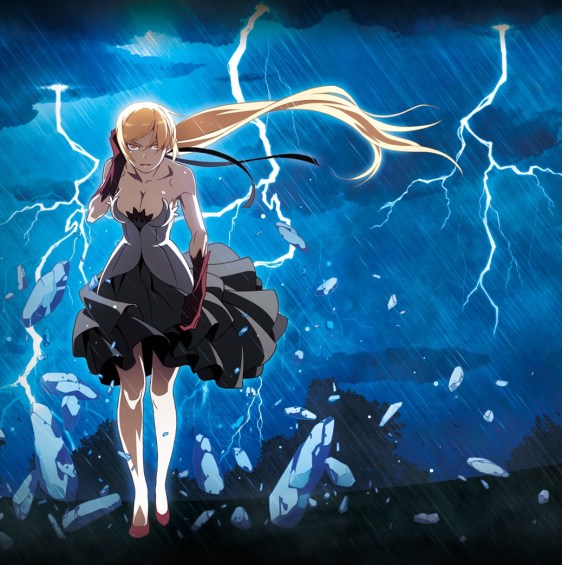
One of the many purposes a prequel can fulfill is to show how the characters we’re already familiar with came to be who they are. This is the story of light novel author Nisio Isin’s Kizumonogatari, which recounts how Araragi Koyomi, protagonist of the Monogatari series, would become embroiled in the world of the supernatural, and how his friendship with his beautiful classmate Hanekawa Tsubasa would form. In its adaptation to film, Kizumonogatari has been split into a trilogy, with the first being an introduction to the cast, and now the second covering Araragi’s realization of his newfound vampire power. Suffice it to say, this film is not meant for people to watch it without having seen Part I.

While the first film was quite violent, as we see images such as a limbless Shinobu bleeding all over the ground, Araragi writhing in agony as the sun sets him aflame, Kizumonogatari Part II: Nekketsu is much more violent in terms of the ubiquity of action scenes. Presented much like a series of video game bosses or Bruce Lee’s Game of Death progression, Araragi (with his new vampire abilities) must fight three increasingly strong opponents who have taken the limbs of his master, Shinobu. During these fights, we begin to see the origins of Araragi’s favored game plan: sacrifice his own body because its regenerative power allows him to take a lot of abuse. In Bakemonogatari, he’s much less of a vampire than he is here, so this is the strategy at its most powerful, even if Araragi’s lack of experience means he isn’t using it as well as he could. One of the other interesting aspects of Araragi’s battles is that he initially assumes himself to be the underdog, which is very much in line with this personality.

In terms of the action scenes but also many of the “slower” parts of Kizumonogatari Part II, this film is unmistakably SHAFT-esque. Ever since director Shinbo Akiyuki brought his signature visual style of sudden cuts, fragmented imagery, and head tilts to the world of Monogatari, it’s created a certain expectation for how these anime should look. With a clearly larger budget than what they get for their TV series, the fight scenes get elaborate and intense beyond what one might even expect simply reading the light novel, and even the endlessly large rooms where battles take place in the TV series feel somehow less infinite than the sets of Part II. Unlike Part I, which I found to be a good deal more amenable to those unfamiliar with or jarred by the Monogatari style, this middle part of the trilogy pretty much goes in full force. Due to how much both Nisio Isin and Shinbo love to indulge in metatextual elements, it often feels like a match made in anime, but at times I wonder if there’s a breakdown somewhere between the two creators’ approaches.

One aspect of the film that still leaves me puzzled is the way that Araragi and Hanekawa would eventually end up the way they are. While Araragi is clearly always attracted to Hanekawa and vice versa in later parts of the series, in Kizumonogatari their mutual interest is almost animal at times. By the time of Bakemonogatari, it’s still there, but somehow also a lot more cordial. Not only that, the two of them also just feel fairly different personality-wise and somewhat disconnected with the images of them I’m more familiar with. This is probably intentional, in order to show their growth. Also, while the disconnect seems jarring, Part II lays some of the foundations for what we see from Araragi and Hanekawa later on in terms of secrets and revelations.

Kizumonogatari Part II: Nekketsu suffers a fair amount from being the second part of the trilogy because the context can feel lacking and the end of the film leaves things a bit unsatisfying so that it can lead directly to the third film. However, it still ends up being a very thrilling and visceral experience in terms of both action and sexual tension. In a way, this film is mainly a transitional state, the point where everything begins to really change, but the outcome of which is still a mystery.

If you liked this post, consider becoming a sponsor of Ogiue Maniax through Patreon. You can get rewards for higher pledges, including a chance to request topics for the blog.

Days of Future Past: Star Ocean EX

staroceanex-01

Star Ocean is one of those longstanding RPG game series that I know next to nothing about. I’m aware that it’s been around a while, and that it just got a new iteration this past year. So, when I was requested through Patreon to write about the 2001 anime Star Ocean EX, I had to come at it as a total novice. I didn’t know where it fit into the franchise, if it was a prequel, sequel, alternate universe, or whatever. However, because of when it came out, I find Star Ocean EX to be a historical artifact of sorts, a slice of anime and Japanese pop culture history at the time. Thus far, I’ve only watched five episodes, so my view of the show isn’t complete, but I still have some thoughts I want to share.

Overview and Basic Thoughts

Star Ocean EX is the story of Claude C. Kenny (the blond above), a young space officer and son of his ship’s captain. Self-conscious about the possibility of being viewed as being there only because of nepotism, Claude constantly tries to prove that he’s his own man. While investigating some ruins, he’s transported to another world where magic, rather than science, rules the day.

While the show looks pretty dire in terms of animation in budget, I can get behind the story. Its basic premise of a boy from a futuristic world ending up on a more fantasy-style planet has instant appeal in terms of setting the stage for interesting contrasts. The initial conflict between Claude and his father is also understandable on both sides. Claude wants to leave no doubts, especially from himself, that he’s his own man. His father is stoic and stern, but cares for his son deeply. I do wonder whether I would have picked up on both characters’ feelings had I watched this 15 years ago, or if I would have found both aggravating.

An Anime of Older Tropes

The character designs are straight out of the late 1990s/early 2000s aesthetics, but even if you ignore that element the characters’ personalities also shout “turn of the 21st century,” similar to many of the original characters in Super Robot Wars such as Ryune. While fathers being distant (both figuratively and literally) is a tradition in Japanese pop culture media like anime and games, there’s something about Claude in particular that rings especially true in a post-Evangelion period. While it’s clear that his relationship with his father is nothing like Shinji and Gendou’s combines aura of dysfunction, the chip Claude carries on his shoulder, as well as his dad’s inability to communicate his love and concern for Claude speak to that in a rough way.

staroceanex-03

With the other two important characters Claude meets early on, I get a similar vibe of “archetypes from a past era.” Celina Jules is a seductive-looking treasure hunter who visually seems like a mix of Belldandy and Urd from Oh My Goddess! Rena Lanford (the other character in the first screenshot) is a young blue-haired healer who exists somewhere in the vein of Azmaria from Chrono Crusade (manga: 1998-2004), and Index from A Certain Magical Index (light novel: 2004-2010). Those characters aren’t that far off time-wise from Rena and Star Ocean EX, but her particular brand of gentle demeanor crossed with spunk fades away with every passing year.

The Frontier of Digital

staroceanex-02

The other aspect of Star Ocean EX that really caught my attention was its animation style. The series came out right when full digital animation in Japan was becoming a thing, and it shows. It’s often really rough, with characters behaving like cardboard cutouts sliding about a little too smoothly. There’s also a feeling of clunkiness in terms of getting used to digital tools, which often means that the art itself looks unrefined. That all being said, I can forgive many of these gaffes, because being smack dab in the middle of a transitional period isn’t easy. A lot of what has defined anime aesthetic in days past is how creators make the most out of low budgets, and seeing the staff try to make the most of what they have is rather intriguing. For example, when Celina uses her fire spells, they apply a digital blur effect that’s meant to be the haze created by the heat of flames, but it sort of just ends up making things hard to see.

Overall

The old reputation of anime and manga based on video games is that it’s a pantheon of terribleness, but Star Ocean EX holds up fairly well. It’s not exactly a lost gem, but it is a product of its time, and at the very least a fun show to observe in that respect in addition to its actual narrative.

This post was sponsored by Johnny Trovato. If you’re interested in submitting topics for the blog, or just like my writing and want to support Ogiue Maniax, check out my Patreon.

The Limits of the Fujoshi Files

mio-ugghh

In 2008, I had an idea: archive every fujoshi character I could possibly find. At the time, it seemed like an achievable task. Fujoshi characters were around but fairly rare, especially compared to the “girl otaku” that tended to share the same interests as the guys. However, a lot can change in eight years, and over this period the position of the “fujoshi character” has changed tremendously, leading me to think about all of the limitations imposed on the Fujoshi Files as they currently exist.

First, while the 2007-2009 period featured a kind of “fujoshi boom” as the term came into prominence, if you look at the fujoshi character today she’s basically been kneaded into anime and manga as a whole. The archetype doesn’t exist in its own universe, and she’ll appear in works more disconnected from the realm of hardcore fandoms. I mean, a yuri school detective comedy? A weird political satire light novel?

Where once the Izumi Konata-style female otaku was taken as the standard, now the de facto girl fan in anime and manga is the fujoshi. They’re basically everywhere, and it can be hard to keep up with all of them, which is why I’ve slowed down the pace a bit. Perhaps this means I should be doing more for the Fujoshi Files than ever before (and believe me, I’m still on the look-out), but I also want to make sure that the blog remains diverse thematically, as I think that’s one of its strengths. In other words, I don’t have the time to tackle every single work with fujoshi characters, but I wish I did.

Of course, if you find any fujoshi not currently on the list, by all means please leave a comment.

fudanshikoukouseikatsu-keyimage

Second, the number of fudanshi (rotten boy) characters steadily increases. Back when Genshiken Nidaime first came out, I was faced with a decision: do I include Hato in the Fujoshi Files? Ultimately, my decision was to not give him an entry because he identifies as male, and the list is for female characters. Then I found out about the series Fudanshism. A brand new series, Fudanshi Koukou Seikatsufeatured prominently in the summer season. Now the fudanshi is in the position the fujoshi once was, and to ignore them seems something of an issue.

Third, these Fujoshi File profiles I’ve written are very basic, and tend to be in-universe, but there are are often interesting aspects to these characters, like how they’re utilized in terms of narrative, elements of their designs, etc. Not including these factors leaves the Fujoshi Files without any real analytical teeth, though I’m not sure if that should change.

So I’m left with a few questions.

Should the Fujoshi Files branch off into a “Fudanshi Files?”

Should the Fujoshi Files go from being a series of small blog posts here to an entire Wikia?

Has the Fujoshi Files served its purpose already, in that it’s already over 150 characters strong?

If you liked this post, consider becoming a sponsor of Ogiue Maniax through Patreon. You can get rewards for higher pledges, including a chance to request topics for the blog.

The Strength and Creativity of a Woman: Miss Hokusai Film Review

misshokusai

When it comes to the history of Japanese art, no name stands out more than Hokusai. Most famously known for works such as his amusing sketches known as Hokusai Manga, as well as The Great Wave Over Kanagawa, his prints and paintings are the definition of iconic. One lesser known fact, at least to folks such as myself, is that he had a daughter who was a renowned painter and printmaker in her own right. Her life is the central focus of the film Miss Hokusai (known in Japanese as Sarusuberi), a highly appealing movie directed by Hara Keiichi (Summer Days with Coo) whose meandering path from beginning to end makes it all the more engaging.

What stands out about the film above all else is the main character herself, Katsushika O-Ei. “Miss Hokusai” exudes a strong charisma that gives her story weight and carries the film forward despite the fact that she doesn’t have any sort of singular ambition or goal she’s trying to fulfill. Instead, the focus is broader, showing her personal challenges as an individual, and how she handles them from one day to the next. For example, she works as an assistant to her father, and her awareness of both his general disheveled nature and his brilliance makes it so that the sheen of celebrity that he possesses is simultaneously both dulled and refined. The most notable aspect of her design visually is her big, bushy eyebrows (inherited from her dad), which gives her a memorable appearance.

Though the film presents in some ways an idealized image of Edo (currently Tokyo), it takes great steps to reflect the realities of the times it’s portraying. None of the characters speak in the style of Japanese one would hear today in modern Tokyo, and instead everyone has an Edo accent. Though this is not explicitly stated in Miss Hokusai, one of the main reasons the “Edo dialect” became more widespread was that it was how the women in the brothels spoke. The commonality of prostitution, and the fact that it wasn’t considered an especially big deal, sets the kind of environment that O-Ei lives in, all without admonishing it.

Related to this, one of the more interesting aspects of the film is the full acknowledgement that ukiyo-e and other forms of printing were not especially glamorous worlds. Its makers toed the line between artists and artisans, and the fact that pornographic and erotic art was a staple of the market is both well-established and incorporated into O-Ei’s own narrative. Her inexperience with love has an effect on both her business (she’s known for her unrivaled talent in drawing beautiful women but isn’t as good at depicting sex), as well as her personal life (she’s constantly flustered when speaking to the man she’s smitten with).

There’s also a spiritual/occult element to the film that I don’t want to spoil too much, but it reflects a kind of deep emotional and spiritual connection to art as expressed by both O-Ei and her father. It really makes me think about the idea that, even since the time of prehistoric cavemen, the ability to recreate worlds both familiar and alien assumed a kind of power bordering on the divine. The way Miss Hokusai depicts the act of creating art portrays it as a magical experience that visits different creators in different ways.

Another visual quality that gave me much to chew on mentally was the act of seeing these anime characters drawing in this older style. Though ukiyo-e and such are sometimes argued to be the precursors to manga and anime as we know it today, the connection is actually rather tenuous. However, seeing the same characters depicted in both anime form and in that woodblock print style connects these two different aesthetics together. As a result, I began to consider the idea that, even if they aren’t related all that much historically, there is a kind of spiritual succession at work between “Hokusai manga” and “manga,” so to speak.

Overall, I highly recommend Miss Hokusai to anyone who enjoys a kind of circuitous storytelling where the important pieces slowly come into view, and to anyone who wants to see an inspirational and uplifting woman who is certainly not without her own flaws. It’s visually rich, full of characters who need only moments to draw you into their world, and a clever portrayal of what it’s like to be a creator.

If you liked this post, consider becoming a sponsor of Ogiue Maniax through Patreon. You can get rewards for higher pledges, including a chance to request topics for the blog.


New York Comic Con 2016 Essay #1: Voltron, Megazord, and the American Soul of Chogokin

For this year’s New York Comic Con, I’m doing something a bit different with my coverage. Instead of doing a standard con report, with overviews and opinions on panels, artist alley, etc., I’m going to be writing a series of essays based on things I saw at NYCC 2016. Think of it like extended thought exercises and musings inspired by the con.

soc-voltron

As someone who loves giant robots, one of the highlights of New York Comic Con 2016 had to be the dual displays of Soul of Chogokin Voltron and Megazord. Created as high-end poseable figures with plenty of metal, show-accurate proportions and transformations, and as much articulation as their designs can allow, when something joins the Soul of Chogokin line it is like a rite of passage. It’s the pinnacle of mecha toys, and any fans of either robot likely already has them on their radars. Seeing them together, however, made me think about their significance to both American fans and the people responsible for the Soul of Chogokin line. These figures represent not only the fulfillment of childhood dreams, but are indicative of the complex interactions between nostalgia and specific cultural contexts.

Although I personally do not view Voltron or Megazord with the kind of near-religious fervor that grips so many other fans (granted Voltron was the show that introduced me to giant robots), I couldn’t help but be impressed by their designs. They’re both large, clearly very hefty, and capture well the particular quirks of both robots, perhaps even to the point that it would be jarring. For example, Voltron can look a little too squat, until you realize that it actually reflects the original design well, and the main reason we see it as being perhaps slightly lankier in proportions is because the iconic images of Voltron tend to be upward perspective shots.

Above each of the displays was a painting of the robot below, with a little information card on the side to provide some extra insight on the artist who provided them, Nonaka Tsuyoshi. Reading these, what caught my attention was that not only was Nonaka responsible for the original Megazord design, but he was also the man responsible for starting the Soul of Chogokin line in the first place! In a way, the birth of the Soul of Chogokin Megazord can be viewed as Nonaka’s homecoming.

soc-megazord

There was another detail that I found even more notable. When describing Nonaka’s founding of the Soul of Chogokin line, the card stated that the toys were born out of his desire to celebrate the giant robots of his own youth, such as Mazinger Z. They were what inspired him, and so he in turn has given them the star treatment. Extending this line of thought, one can view Voltron and the Megazord as essentially the “Mazinger Z’s of America.” Many countries are introduced to super robots differently, and in the case of the US these two in particular are deeply woven into the fabric of pop culture. Remember, the original Japanese version of VoltronKing of Beasts Golion, isn’t a particularly notable show. Zyuranger, the show that would become Mighty Morphin’ Power Rangers, is beloved among Super Sentai fans, but is considered one of many good iterations. In the United States, however, these robots are integral to introducing generations of kids to the wide world of mecha. Thus, the Soul of Chogokin line is doing what it was originally meant to, only in another cultural context.

Thinking further about the iconic aspect of Voltron and the Megazord, it’s fascinating just how lasting their presence is relative to the shows they came from. For example, because Voltron has that cool look and that place in American broadcast history, it can be remade again and again, most notably in the surprise hit Voltron: Legendary Defender. What’s even more striking about its presence, however, is that Vehicle Voltron is as absent from pop culture memory as Lion Voltron is enduring. In fact, notice how I’ve only said “Voltron” throughout this essay. I bet that, for many readers, they didn’t even notice that something was odd. There are a number of possible reasons why Lion Voltron is remembered whereas Vehicle Voltron largely is not: Lion Voltron came first, it aired on TV more often, and its colorful characters and overall design are more memorable (mouths for hands and feet!). Whatever the reason, what stands out to me is how fickle and unforgiving mass-nostalgia can be, even if there’s no real “blame” to go around.

Soul of Chogokin Voltron and Megazord are squarely aimed at the US market in a way that I’m not sure previous internationally beloved robots such as Grendizer (for much of Europe) and Voltes V (for the Philippines) previously were. In that respect, I predict this to be the start of a new relationship between Bandai and its potential consumers around the world. Given this potential, I’m rather curious as to what might come next. Perhaps we might someday see Soul of Chogokin representation for a robot that doesn’t even have its origins in Japan.

If you liked this post, consider becoming a sponsor of Ogiue Maniax through Patreon. You can get rewards for higher pledges, including a chance to request topics for the blog.

Time for New York Comic Con!: Ogiue Maniax Status Update for October 2016

Every year I’m amazed that the people who run New York Comic Con manage to make it work. New York City is a notoriously difficult place to hold a convention, but it keeps growing. I hope that the recently announced Anime NYC will have similar success.

I’ll be heading to New York Comic Con this year for a couple of days, though given how gigantic the crowd is it’s likely I’ll end up never bumping into anyone I know. In terms of what I plan to attend I’m playing it sort of by ear this time around, but you’re likely to catch me at some European comics panels.

As mentioned last month, I’ll be seeing Kizumonogatari Part II in theaters! I happened to pick up the book recently, but I’m going to wait until the movies finish before I read it. I also updated Love Live! School Idol Festival to the newest version which its fancy overhaul and Aqours additions. One thing I like about it is that I can use my stickers to Idolize, instead of hoping in vain for duplicates. I finally got around to upgrading one of my Hanayo cards. Did you know that I’m quite fond of argyle patterns?

hanayo_pure_sr248_t

As always, I’d like to thank to all those who support me via Patreon:

General:

Johnny Trovato

Ko Ransom

Alex

Diogo Prado

Sasahara Keiko fans:

Kristopher Hostead

Yoshitake Rika fans:

Elliot Page

Hato Kenjirou fans:

Elizabeth

Yajima Mirei fans:

Machi-Kurada

It’s been a review-heavy month for me, partially because a number of series are ending, but also because I’ve finally gotten around to finishing a bunch of shows I had on the back burner. I’m aware that series which are more than a season or two old tend to fade from people’s memories, but I think it’s important to not get too distracted trying to keep up with the Anime Joneses, as it were.

Love Live! Sunshine!!

Thunderbolt Fantasy

Kiznaiver

Yona of the Dawn

Ojamajo Doremi (final season + retrospective)

Kimi Nakare didn’t get a new chapter in August, which is why there was no review. It’s back, though, so expect to see something for October.

I also want to draw attention to this month’s sponsored Patreon post, where I discuss my favorite RPGs of all time. As someone who is fairly familiar but not neck-deep in the world of Role Playing Games, the list might seem a bit sparse. If you want to see me write about a particular topic, consider sponsoring me on Patreon. I have a reward tier specifically for guaranteed requests.I want to end off on a question for my readers: What do you think of the balance between talking about older series and newer series? What about manga vs. anime? I was mostly anime-heavy this month, and I’m curious as to how many of my readers are more on the anime side, and who favors manga more.So with that, a poll!

I don’t know how much this’ll change things, but I wanted to see for myself what is favorite among readers of Ogiue Maniax.

Media vs. Mix: A Journey Through Love Live! Sunshine!!

aqours_dengeki_gs_magazine_june_2016_bonus_poster_main_slider

NOTE: Spoilers for Love Live!, Love Live! The School Idol Movie, and Love Live! Sunshine!!

When I first watched the original Love Live! anime, I approached it with a healthy dose of skepticism. I may have enjoyed certain idol anime, but I’m not terribly fond of the concept of idols itself, and so premise alone isn’t enough. In the end, though, Love Live! won me over with a surprisingly solid presentation that emphasized both characters and narrative, along with what I found to be rather clever humor. Many months later, I now walk around with a Love Live! phone case.

So when Love Live! Sunshine!! was announced, and with it a set of new primary characters in the form of school idol group “Aqours,” it presented me with something of a conundrum. I’m now a fan of Love Live!, but I didn’t want to give the sequel a free pass. On the other hand, I also didn’t want to judge the series too harshly, scrutinizing it unfairly for not living up to the lofty heights of its predecessor. I still don’t know if I hit the right balance, but it was a situation I was consciously aware of.

Because the main way I experienced the first Love Live! was through its anime, I decided that this would be my entry point into Love Live! Sunshine!! as well. However, the Love Live! Sunshine!! itself didn’t make it easy. Character profiles came out months prior, each with detailed information and self-introductions. A trip to Japan and its otaku goods stores made it even clearer: pick your favorite, and devote yourself to her greatness. But I couldn’t! Descriptions alone are not enough to endear me to any character. I need to experience them interacting with each other. Otherwise, they become flat entities floating in a space of simple desire. That’s all well and good, but not how I decide who to root for.

Nevertheless, from what little I gleaned (and with a nudge from fate thanks to a random shikishi signboard), I went into the show curious about two characters. The first was Kurosawa Dia, the student council president and someone who, according to her profile, revels in the idea of competition and achieving total domination in any endeavor. In a way, she has a very fighting game community-esque “play to win” mentality. The second was Ohara Mari, by virtue of being half-Italian American (thus making me imagine her talking like people I meet on the streets of New York City), and because she enjoys industrial metal.

Then the anime debuted. It was finally time to see how these characters behave when fleshed out and moving. But as the characters and their world opened up, and I got to see things like Watanabe You’s cute-but-odd obsession with uniforms and chuunibyou Tsushima (Yohane) Yoshiko’s antics, I noticed something. For both Dia and Mari, elements of their stated personalities existed, but the show only hinted at bits and pieces of it. Their “true selves” were, to a certain extent, hidden behind the plot. For example, while early on Dia shows that she secretly loves μ’s (the original girls of Love Live!) by basically acting as a fandom gatekeeper against main heroine Takami Chika, that love of victory doesn’t really shine through. There was no trace of Mari’s fondness for industrial metal, either.

lovelivesunshine-kananscrubs

What I found was a disconnect between the initial profiles provided and the characters as they were presented in the anime, partially because the anime focuses on how the group came together in the first place, instead of having them already assembled as the official character descriptions assume. Granted, it was possible to see how that gap might get bridged, and it also created the opportunity to find new favorites within the anime (like athletic third-year and diver Matsuura Kanan!), but I had to wonder if I had sabotaged myself by just getting too much information, instead of sitting back and waiting for the anime.

lovelivesunshine-musemerchandise

Another minor problem came with the fact that μ’s are essentially considered legends of the school idol world by the time of Love Live! Sunshine!! Their status is almost divine to many of the characters in the show, and while the story develops to show how the girls of Aqours embrace and then move forward from their love of μ’s, it also made me aware that, even as I am the biggest fan of Love Live! whole thing among my own circle of friends, my experience with Love Live! is not to the degree of its most ardent supporters. When I appeared on a podcast about Love Live! The School Idol Movie, my fellow guest Bamboo Dong talked about how she and others in the theater cried as the film reached its conclusion. People like them, the fans who are literally moved to tears, at seeing μ’s ride off into the sunset, are the ones who the girls of Love Live! Sunshine!! resemble. That isn’t me.

One of the results of these conflicts was that it became a bit more difficult to view the characters as being charmingly realistic, which is one of the qualities that drew me into Love Live! in the first place. At first, I thought their appeal lied in their being a little more extreme and bombastic. A lot of this feeling was extremely subjective, of course. You could ask anyone who’s watched both to say which characters they think feel more “real,” and you’d surely get disagreements even within a single franchise iteration. For me, it has to do with how characters resonate and reflect the life I see around me. Koizumi Hanayo is still the best, in part due to the fact that her enormous appetite and the way she can go from shy to intense when on the subject of her passions (rice and idols) is something I empathize with immensely. The divisive nature of Yazawa Nico comes from her being a little too real. I know someone who’s just like Sonoda Umi.

lovelivesunshine-you-jpg

In spite of that mildly rocky start, and the fact that it is lacking in Hanayo, Love Live! Sunshine!! can count me as a fan. As the show progresses, you get to see Chika face the hurdle that is the dedication of competing school idols. You learn about the past that ties the third-year characters of Dia, Mari, and Kanan together. Friendships are challenged and made stronger, fun is had all around, and they for the most part end up as well-conceived characters who are each sure to attract people who love them to death. A cynical side of me could point to this being the franchise itself playing people like a fiddle, but I think the series makes a convincing enough presentation that even a discerning eye can become a fan of, say, Hanamaru’s speech quirks and “man out of a cave” experience with technology.

What perhaps impresses me the most about Love Live! Sunshine!! is how it handles the inevitable comparisons to the first series. In this regard, the ending of the first season of Love Live! Sunshine!! says it best. Much of the show is about Aqours trying to find its identity, its reason for being. While μ’s was conceived from Day 1 as a way to save their own school, and this eventually becomes a plot point in Love Live! Sunshine!! too, Chika is at first just all about being a μ’s fan. It’s not until the last concert in the final episode that the primary distinguishing feature of Aqours becomes clear, and it’s best to describe it in comparison to both μ’s and the original “boss characters” of the first Love Live! anime, A-RISE.

A-RISE was the #1 school idol group, and by the second season the reigning champions. They were dedicated to being the best they could possibly be, striving for the top and whatever heights lie beyond that. Saint Snow, Aqours’ own rivals, are of a similar mindset. μ’s was all about capturing the spirit of the zeitgeist of their time in high school as school idols, and letting such passion remain fleeting and thus all the stronger. Aqours, in contrast, is about showing love for their community, school idols as a means to share how great it is to live in a city with a fairly small population that is nevertheless full of good people.

lovelivesunshine-episode13concert

Honoka and the other original Love Live! girls worked to save their school, but there was no need to show the appeal of the already-famous Akihabara. When Chika calls all of her classmates and everyone’s families to get near the stage and cheer for their climactic performance on-stage, it comes with the knowledge that doing so is against the rules. She literally sabotages her chances to progress in the Love Live! preliminaries because it is less important than getting the audience to see the great people who go to Uranohoshi High School and live in Numazu. Ironically, the actual “Love Live!” competition in Love Live! Sunshine!! takes a backseat.

My time with Love Live! Sunshine!! has been, while perhaps not an unusual one broadly speaking, somewhat strange compared to my other experiences with other anime and media franchises. Nevertheless, it’s definitely been worthwhile. Now that the pieces are in place and the girls of Love Live! Sunshine!! are all together, I’m looking forward to seeing Dia wreck some scrubs.

If you liked this post, consider becoming a sponsor of Ogiue Maniax through Patreon. You can get rewards for higher pledges, including a chance to request topics for the blog.

Yona of the Dawn: 20 Episodes to Become a Badass

yona-eyes

WARNING: SPOILERS FOR THE ANIME

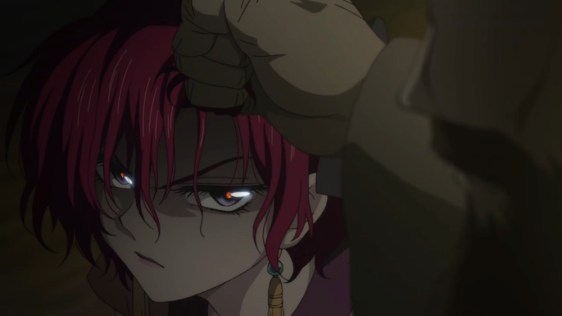
At the very beginning of the Yona of the Dawn anime, we’re shown an image of Yona, a confident female archer leading her band of warriors, before showing the same girl as a naive princess. The implication presented by this contrast is that this example of sheltered royalty will eventually become a great leader who does not shy away from conflict or hardship. Over the course of its early episodes, as Yona witnesses the death of her father and must escape her castle home with her bodyguard Dak, additional flash-forwards give brief glimpses as if to say, “Keep watching, she’s going to become a real badass! You’ll see!” The feeling early on is that it’ll take two, maybe three episodes to see how Yona transforms.

It actually takes 20 episodes.

Certainly Yona makes small steps towards growing stronger prior to that (such as tackling an attacker off a cliff), but much more attention is paid to a mysterious bond she has with the legendary dragons who will help her save the kingdom, all of whom are handsome men. The transformation only happens eventually in episode 20 when Yona decides to board a ship disguised as a girl trying to sell herself into sexual slavery in order to take down a corrupt government official. Here, she takes a major step towards showing sustained courage and conviction (rather than brief flashes of those qualities).

yona-arrow

In the following episodes, Yona does something that changes her character forever. Confronted with the official they were pursuing, she shoots an arrow straight into his chest, killing him. This is significant not only because it shows her conviction towards reclaiming what she lost and righting all of the wrongs that plague her kingdom, but because her father was a staunch pacifist who went to great lengths to keep Yona from following a path of violence, and Yona ironically has betrayed her father’s wishes in order to grow. It’s her defining character moment that, again, comes almost towards the end of the series.

The issue here is that, for those who were looking for Yona to become this amazingly spirited leader, 20 episodes might be too much. While I believe the pay-off is actually very satisfying, I do think the series runs the risk of turning people off because of just how long it takes to get to that point. It also depends on who you ask, but while a show that meanders in the middle but hits a good climax is generally better regarded than a series with a strong middle that sputters out at the end, having to maintain that audience is tough. I’m also not saying that it took Yona actually fighting with a weapon to make her an interesting character. Rather, the anime itself set her up to carry that expectation.

It makes me consider the following: if Yona of the Dawn gets a second season, would I recommend, depending on the person, to just skip the first season entirely (or at least watch a select number of episodes)? I’m not entirely sure myself.

One last question, just because it’s been in the back of my mind ever since I started watching this anime. Is the setting meant to be a mix/potpourri of various Asian (and perhaps non-Asian cultures)? Characters such as Yona, her dad King Il, and Dak all have Korean-sounding names, but they come from Hiryuu Castle, which is Japanese. They meet a dragon whose name is pronounced Shinya but is spelled Sinha, which reminds me of Portuguese. Given that the Portuguese were involved in Asia because of colonialism, maybe that’s the reason. Does anyone know anything about this?

If you liked this post, consider becoming a sponsor of Ogiue Maniax through Patreon. You can get rewards for higher pledges, including a chance to request topics for the blog.

Love Live!, A-RISE, and the Music of Antagonists

As much as I love μ’s, the main group from the original Love Live!, I dig their anime rivals A-RISE (especiallyt their leader Kira Tsubasa) just as much. The reigning champions of the Love Live! school idol tournament, they represent the top of the pyramid, and their music in contrast to μ’s is techno/dance-heavy, with a high-budget sense of professionalism.

In episode 6 and 7 of Love Live! Sunshine!!, we’re introduced to Saint Snow, a duo whose slick dance moves and techno-style music are the first sign that the girls of Aqours have a lot of catching up to do. Given their similarities to A-RISE, I’ve come to wonder if that style of music has come to represent the “adversary” in the franchise.

It’s clear why A-RISE was placed in that position. Initially, μ’s are the underdogs, and A-RISE with their super ritzy high school and position as top idols are there to contrast with the homegrown, down-to-earth feel of the heroines of the story. Saint Snow, though they also hit some stumbling blocks, carry a similar contrast to the rural Numazu area that Aqours comes from.

There’s also a contrast in motivation that seems to come with this style of music. In episode 12, when Saint Snow meets up with Aqours once more, it’s clear that Saint Snow see being school idols as a competition. They want to stand on top and see what the view is like from the summit. This is presented not as a wrong way to approach being school idols, but exists in contrast to Aqours who are in it more for the experience, even if ostensibly they’re doing it to save their school. Similarly, in The School Idol Movie, Tsubasa from A-RISE expresses her ambition to continue being an idol even after she graduates, whereas Honoka is implied to not quite follow that path.

Is there any possibility that the “rival” sound will become associated with the central characters of Love Live!? Or will it at best always be relegated to subgroups within the main cast, such as BiBi and songs such as Cutie Panther?

If you liked this post, consider becoming a sponsor of Ogiue Maniax through Patreon. You can get rewards for higher pledges, including a chance to request topics for the blog.

Kiznaiver vs. M3: The Dark Metal – Review and Comparison

kiznaiver-spread

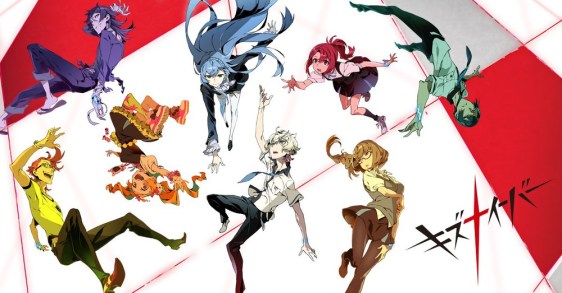
Human communication and the overt expression of emotion/trauma: when it comes to anime writer Okada Mari, many of her works explore these two thmes. Just this past spring, two of her shows—Kiznaiver and The Lost Village—did so in spades, but I found myself comparing the former to another, lesser-known title of Okada’s, titled M3: The Dark Metal.

m3mainvisual

In a previous discussion of M3: The Dark Metal as a guest on the Veef Show podcast, I mentioned that the show felt like two conflicting forces were at work, the more down-to-earth directorial style of Satou Jun’ichi clashing with the high melodrama of Okada. The ultimate message of M3: The Dark Metal is that being able to see straight into people’s minds won’t necessarily solve problems of communication (and might even create new ones), and that we as people should do our best to connect with each other using the tools and senses we have already. It thus provides a counterargument to a notion most famously found in Neon Genesis Evangelion.

Kiznaiver takes a similar angle, forcibly connecting its characters through a bond of pain; when one gets hurt, it gets evenly distributed to the rest of them. Ostensibly a way to help people learn to empathize, the story reveals that it ironically did the opposite in early cases. Like M3: The Dark Metal, the characters realize that they need to learn to communicate as they are, though in the case of Kiznaiver the bonding mechanism ultimately helps more than hurts. Another similarity exists between the characters Heita (M3) and Hisomu (Kiznaiver), the sadisme of the former contrastng with the masochism of the latter.

The big difference between the two series is visual flair. M3 is plainly animated, and takes place in a world of monsters and giant robots. Most of it is dark and brooding. Kiznaiver is bright and colorful, and filled to the brim with the dynamic facial expressions, sleek character designs, and overall frenetic aesthetic of Studio Trigger. In this respect, Kiznaiver does a much better job of meshing with Okada’s writing style, though I do hope to see her try and write another giant robot anime.

If you liked this post, consider becoming a sponsor of Ogiue Maniax through Patreon. You can get rewards for higher pledges, including a chance to request topics for the blog.