[Apartment 507] Showa Nostalgia in Anime: What’s the Deal?

goods_358_main

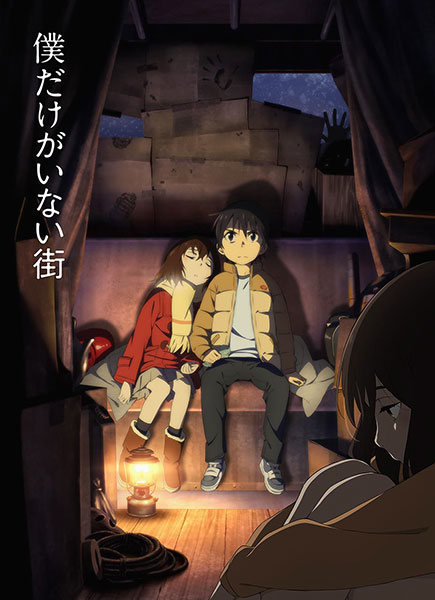
I wrote a post over at Apartment 507 looking at the nostalgia for the Showa period that seems to be cropping up in anime. Leave a comment either here or there and tell me what you think!

Royally Good: Go! Princess Precure

vlcsnap-2016-02-04-11h58m04s696

After Happiness Charge Precure! failed to live up to its potential, I had hoped that the next series in the long-running Precure anime franchise would fare better. Fortunately, Go! Princess Precure wildly exceeded my expectations to become one of my favorite iterations of the popular magical girl anime. From the serious to the silly, Go! Princess Precure hits a homerun.

vlcsnap-2016-02-04-11h55m40s363

Go! Princess Precure follows Haruno Haruka, a teenage girl who dreams of becoming a princess. As a small child, she met a handsome young prince named Kanata who inspired her to hold onto her love of princesses, in spite of discouragement by others. In the present day, as Haruka comes to the prestigious “Noble Academy” with the goal of learning what it means to be a “true princess,” she finds out that monsters have begun to attack the school, preying on everyone’s hopes and aspirations. Haruka becomes a “Precure,” a magical warrior with the power to defend against the forces of Dysdark, and is soon joined by two other girls, Kaido Minami and Amanogawa Kirara, who also use their dreams to fight back.

Princess fever has taken over amidst the enormous popularity of Frozen in Japan, and Go! Princess Precure asks, “What is a princess?” While this question (as well as the thematic flourish of the series) can potentially be criticized on a surface level as sexist and regressive, a closer look shows that Go! Princess Precure aims to claim the concept of the princess as a symbol of hard work and kindness towards others. To this point, a major villain of the series, the powerful Princess Twilight (no relation) even confronts Haruka (Cure Flora) with the idea that one can only be born a princess, and while she’s technically more correct than Haruka in terms of how it works in real life, Go! Princess Precure shows how Haruka, Minami (Cure Mermaid), and Kirara (Cure Twinkle) strive to embrace the idea of a “princess” as being the product of one’s effort. In other words, according to Go! Princess Precure, being a princess doesn’t make you a better person. Rather, being a better person who strives for their dreams and helps others is the key that allows any girl to become a princess all on their own.

vlcsnap-2016-02-04-11h56m55s919

Not only is Go! Princess Precure strong thematically, it’s just an incredibly solid show in general. In terms of animation, it has some of the finest fight sequences in all of Precure as early as episode 1, and while it rises and dips in quality as is typical of a year-long anime, its overall consistency as well as its high points are notable. The outfits and character designs are all on point (In terms of narrative, the series benefits from an entertaining main cast with well thought out character development. Flora’s story at the half-way point connects to that greater theme of “princess” self actualization. Kirara as the donut-loving fashion model eager to speak her mind is one of the most unique Precure characters ever (I voted her as my favorite among the Princess Precures for this reason). The supporting characters, though not quite on the level of Heartcatch Precure!, grow admirably throughout the series as well.

Perhaps most notably, when the anime introduces a fourth Precure late into its run, she does not overshadow the rest of the cast. It’s a common problem for shows like Precure or Super Sentai, where in an effort to push the new character and her toys she ends up practically taking over the show. Honestly, I can’t recall a single bad episode.

Go! Princess Precure might be quite the hard act to follow. Whether it’s in comparison to the rest of Precure or as an anime all on its own, Go! Princess Precure is simply an outstanding work that embodies a lot of what is best in children’s shows and the magical girl anime genre. I highly recommend anyone, even those skeptical of mahou shoujo, to take a look.

vlcsnap-2016-02-04-11h57m26s047

If you liked this post, consider becoming a sponsor of Ogiue Maniax through Patreon. You can get rewards for higher pledges, including a chance to request topics for the blog.

Getting Along: Ogiue Maniax Status Update for February 2016

With Go Princess! Precure finally over, I feel like this is when the winter anime season truly begins. I hope that you’ll enjoy coming along the ride with me.

I’d like to thank the following Patreon supporters this month.

General:

Johnny Trovato

Ko Ransom

Alex

Diogo Prado

Yoshitake Rika fans:

Elliot Page

Hato Kenjirou fans:

Elizabeth

Yajima Mirei fans:

Machi-Kurada

In particular, I’d like to welcome back Johnny Trovato. He was the source for many past topics through Patreon, including posts on the Tokyo Olympics and CensorshipTouhou vs. Kantai Collection, and the rise and fall of Saimoe. If you’d like me to write about a specific topic on Ogiue Maniax, it’s a perk you can get for the highest reward tier on Patreon.

This past month has brought a lot of interesting changes for me. Outside of Ogiue Maniax, I recently started contributing articles to a site called Apartment 507. They were looking for someone who communicate with the hardcore Japanese pop culture fans that comprise their audience, and I’ve been happy to oblige. The main reason I got this gig was because of my efforts on Ogiue Maniax, so I am grateful to my readers here for reminding me of the value of writing and that, simply put, anime and manga are awesome.

I decided not to include those posts on the Patreon page itself because they’re not technically being supported by my patrons, but I have been linking to them on the blog itself. Just look for the [Apartment 507] tag in the title if you’re wonder which posts are which.

As for the blog proper, I think I’ve written some of my best work this past month. I wrote a response to another blogger where I talk about some of the problems that come with evangelizing sakuga, a review of the powerful new film The Anthem of the Heart, and of course the latest Genshiken chapter review. If you haven’t been keeping up with Genshiken, or even if you have, this chapter is a big deal, so I recommend you check it out! By the way, I’ve noticed that my Genshiken reviews are some of my most popular posts. I guess that shouldn’t come as a surprise but I’m actually really happy that I’ve established myself as a source for interesting insight into Genshiken.

January also marked the return of the Fujoshi Files with a historic Fujoshi #150. I have to confess that these might get more sporadic as I don’t have as much time to research fujoshi-themed anime and manga as much as I used to, but I do strongly believe that we’ll hit #200.

In addition, I decided to do something a little different and interview a Super Smash Bros. for Wii U competitive player. Earth, the world’s best Pit, is actually also a mahjong and The iDOLM@STER fan, so I had to ask him a few questions.

The last thing I want to say is that I’ll be traveling to Japan in May! I’ll be releasing posts the whole way through, and when I get back I’ll have plenty more to talk about. And yes, I will be getting all of the dagashi (have you been watching Dagashi Kashi? I highly recommend it).

How Evangelion References Ideon

This post is dedicated to Anime World Order‘s Daryl Surat, who over 10 years has pointed out repeatedly that people will bring up the relationship between the anime Neon Genesis Evangelion and Space Runaway Ideon without knowing exactly how they connect.

Love it or hate it, Neon Genesis Evangelion, is one of the most influential and well-known anime ever. The story of youths with crippling psychological problems who must fight to save the Earth resonated with many, and anime came to copy, challenge, and rethink Evangelion in the years since. However, Evangelion itself carries its own influences from shows of yesteryear. For this post, I’m going to be writing about one of the major progenitors of Evangelion, Space Runaway Ideon, because it’s often brought up as evidence against Evangelion‘s originality and innovation, without thorough understanding as to what Ideon did and did not do relative to Evangelion.

Evangelion is just a rehash of Ideon,” the argument goes, but structurally they don’t have very many things in common. The city structure, otherworldly invaders, time limits, and the sense of scale when the titanic EVAs fight the similarly enormous Angels all come from Ultraman. In fact, if you want to see just how much Ultraman influenced director Anno Hideaki, check out the manga Insufficient Direction, drawn by his mangaka wife, Anno Moyoco (Hataraki Man, Sugar Sugar Rune). The escalation of trauma and the mistrust between humans comes from DevilmanIdeon, while bearing a few minor similarities to these series, brings something else to the table.

To understand Ideon, it’s useful to start at the beginning. Its story takes place in an era of space exploration and colonization. A group of archaeologists discover three ancient vehicles, which they find out can be brought together to form a giant robot called Ideon. During this time, they also encounter an alien race of conquerors called the Buff Clan, who possess legends about Ideon as a mighty god of ancient times. Though they take a number of casualties, the humans escape with Ideon, and spend the rest of the series fending off attacks from the Buff Clan with the help of the Ideon.

This sounds pretty par for the course for the time in which it was airing (early 1980s), but one thing made Ideon, as a mecha, different: it didn’t like to behave. The pilots from the very beginning are even unsure as to how to rouse Ideon from its dormancy. It powers up and powers down seemingly with a mind of its own, as indicated by a mysterious display called the Ide Gauge. If there’s a pattern as to how strong Ideon will be in any given fight, it is utterly unclear to the humans responsible for it. It is ancient alien technology that they are unable to fully grasp.

Then, deep into the series they find themselves cornered and at the brink of death. Suddenly, the Ideon achieves a power greater than anything seen before, and wipes out the enemy in an instant. Though they’re happy to have escaped with their lives, one important detail looms over their thoughts: it was not by the humans’ actions that they were rescued. Rather, they were at the seemingly serendipitous whims of the Ideon itself. As they continue on their journey, and as they continue to fight the Buff Clan, the heroes are made increasingly aware of the fact that the Ideon is powerful enough to destroy entire worlds, rend galaxies into nothingness, and wipe out civilizations… and they have absolutely no control over it. In the Super Robot Wars games, the power of the Ideon’s strongest attacks, Ideon Sword and Ideon Gun, are labeled as having infinite range as a reference to this, though the mechanics are gamified into something manageable).

If you’ve seen Neon Genesis Evangelion, you probably know where this is going. Some of the most iconic scenes in Evangelion are when the EVA-01, the protagonist Shinji’s mecha, goes berserk. During these pivotal moments, Shinji somehow falls unconscious or is unable to fight, and the EVA roars to life with a mind of its own. It fights like a beast, clawing, biting, and tearing. Its chilling cry becomes a wake-up call to the human characters who believed that they could control all of this technology and power. In the cases of both Ideon and Evangelion, the power granted to the heroes ironically creates a sense of helplessness because of the loss of control. Unlike older giant robot anime, such as Mazinger Z or even Reideen the Brave which featured a similarly sentient super robot, the spirit of the hero, or indeed all of humanity, is made to feel small and insignificant in Ideon and Evangelion. Where Evangelion differs is in its deeply introspective focus, of characters and the deep, torturous labyrinths of their psyches, and so it would be incorrect to say that Evangelion simply copied Ideon.

The Ideon TV series ends more abruptly than almost any other anime you will ever see, and a proper finale would be provided in the form of two movies, one recap and one conclusion. In the movies, the secrets of the Ideon are explored, and it’s through those secrets that further connections to Evangelion can be seen. The second movie, Be Invoked, reveals what causes Ideon to awaken and gain power: life energy. The Ideon throughout the series appears to respond better to children than to adults, and even better to babies. Though there is nothing explicitly written as to why this is the case, and I’m inserting my own interpretation into this to an extent, I believe that it has to do with the fact that children are both more full of life, and are not as warped by their experiences as the cold, cynical adults.

As the fight between the humans and the Buff Clan rages on, it turns out that meteors have been raining down on both planets, wiping out their homes. The implication behind these mutual apocalypses is that the Ideon itself and its Id energy have been testing the two sides to see if they can reach some sort of peace. Because the two sides refused to understand each other and just kept on fighting, the Ideon basically decided that both civilizations are not worth saving as they are. Hence, meteors. Ultimately, even as this is all happening, the Ideon fights the Buff Clan’s ultimate weapon, the Ganda Rowa. The two destroy each other, triggering a massive explosion that wipes out life on the surrounding planets. The spirits of those who died, both human and Buff, gather together as if all is behind them.

A few similarities to Evangelion appear here. First, the effectiveness of children as a source of “power” for the Ideon is similar to how the Evangelions appear to only function when piloted by 14-year-olds. Second, the protective element of the Ideon towards those children resembles how the EVAs have souls within them that (for the most part) are the mothers of the pilots themselves, who go berserk to save their children. Third, the Ideon’s desire to bring these two warring civilizations, and the final moments of Ideon itself, resemble the Human Instrumentality Project at the center of Evangelion. The Human Instrumentality Project is the idea that, by having all of humanity merge together, we will be free from the problems caused by people being unable to properly communicate their feelings. When we are all as one, there will be no suffering. Again, however, even if you factor out the newer works (the Rebuild of Evangelion movies, the manga’s alternative ending), Evangelion does not say the same things because of the greater focus on individual characters and their personal emotions. Ideon thinks on more of a macro scale than Evangelion‘s micro approach, despite the fact that both series involve the death of humanity.

Overall, the influence of Ideon on Evangelion can be summarized as the exploration of humans having to deal with powers beyond their control, and the apocalyptic consequences of those who continue to make mistakes even with this knowledge in mind. I hope this has been useful to you, and if there is anyone who would like to add new points, expand upon the existing ones above, or even argue against them, I welcome you to make a response.

If you liked this post, consider becoming a sponsor of Ogiue Maniax through Patreon. You can get rewards for higher pledges, including a chance to request topics for the blog.


The Joy and Pain of Communication: The Anthem of the Heart Anime Review

anthemoftheheartbanner

The Anthem of the Heart: Beautiful Word Beautiful World is a story about communication. Directed by Nagai Tatsuyuki (Toradora!, Gundam: Iron-Blooded Orphans) and  known in Japanese as Kokoro ga Sakebitagatterunda (“The Heart Wants to Cry Out”), The Anthem of the Heart is a powerful movie that strikes a delicate balance between powerful emotional drama and subtlety. It tugs at the heart strings without yanking them to the floor, and is a stronger film for it.

Naruse Jun is a child with a powerful imagination who loves to talk. However, a pivotal event in her life ends up transforming her from a cheerful young “chatterbox” to a quiet high schooler who finds it excruciatingly painful to utter even a few words. Unable to make friends and at odds with her mother, Jun gets assigned to a community outreach committee at her school despite her protests. However, the unlikely act of putting on a musical seems to be the key to helping not only Jun but her other classmates as well.

The Anthem of the Heart is filled with interesting characters whose small yet significant journeys reflect the complexities of communication. A seemingly boring “normal guy” named Sakagami Takumi, a responsible model student named Nitou Natsuki, and a fierce but injured star baseball player named Tazaki Daiki round out the core cast of characters. The unique challenges each of them face when it comes to speaking their minds fills the film with a pleasant and varied emotionally resonance, a kind of tapestry of different minds, feelings, and words. Though the story takes place in high school, I had no trouble connecting to the characters and their respective plights. I find that the challenges the characters face apply to audiences young and old.

The writer of The Anthem of the Heart, Okada Mari, has a reputation for creating very melodramatic stories that are seen variously as wildly unrealistic and hokey and as powerful expressions of emotional weight and power. The Anthem of the Heart is in many ways no exception. However, when it comes to achieving both a sense of subtlety in its characters’ stories and the near-cathartic nature of Okada’s emotionally-charged scenes, I believe that The Anthem of the Heart hits a near-perfect balance.

In particular, as the characters get to know each other over the course of the story, their growing bonds are shown to develop through their personal unique characteristics interacting with each other. The ways in which the characters speak to each other convey their individual strengths and flaws, and the gradual overcoming of these issues comes across not as contrived but as natural (though not necessarily predictable) developments. Jun’s inability to speak might come across as a vague “anime disease,” but it’s clearly implied to be psychosomatic, and given the circumstances behind why it happens, it’s not unreasonable even if it’s all in Jun’s head.

When the story finally reaches its climax and we get the signature Okada Mari “characters open up and express everything that’s on their minds” scenes, they build off of and encapsulate the themes of The Anthem of the Heart. Rather than coming “out of nowhere,” the seemingly melodramatic exposition of the characters’ feelings makes perfect sense within the context of its story. There’s a particular moment at the end of the film with Jun’s mother that had me on the verge of tears, but it was not about me feeling for the characters. Rather, what hit me so hard was seeing and empathizing with her realization in that instant.

Anthem of the Heart actually has me wondering if the importance of communication is one of the recurring ideas of Okada’s writing. When I think about it, this message can be seen in works including Ano Hana, Aquarion EVOL, Wixoss, and even M3: The Dark Metal. Those scenes when characters just talk about their feelings that are criticized for being unrealistic might just be purposefully so, not because Okada only knows how to bludgeon the viewers with her ideas but because the unabashed expression of how one truly feels might just be what her vision of a better world looks like. Gradually peel away the fears and the awkwardness, and learn to connect without ambiguity or ego. Would it be going too far to say that there’s an interesting idealism to be found here?

If you have the opportunity to watch The Anthem of the Heart, I recommend going out of your way to check it out. That said, don’t be crazy like me: my friends and I braved the worst blizzard in the past 10 years just to get our anime movie. I’m glad the movie turned out to be good because we would have been quite angry otherwise!

If you liked this post, consider becoming a sponsor of Ogiue Maniax through Patreon. You can get rewards for higher pledges, including a chance to request topics for the blog.


Sakuga Fans Need More Carl Sagans

In a recent blog article on the site Wave Motion Cannon, blogger tamerlane laments two aspects of how we talk about anime. First, he discusses lack of appreciation (one might even say disdain) that many American fans and experts of animation have towards anime. Second, he argues that sakuga fans (essentially fans of especially expressive, dynamic, and powerful Japanese animation) aren’t doing enough to help spread appreciation of the animation in anime. On these general points, I completely agree. Whether it’s anime or manga, the technical skills of Japanese creators are often unfairly get derided, labeled as being full of shortcuts and cop-outs. Anime defies the rule books of animation that people take as gospel, so critics prefer to point a finger at anime rather than the rules themselves. Similarly, I also find that sakuga fans can often sabotage themselves, but one thing that tamerlane might not realize is that in his very post are those risky elements, that which makes sakuga fans, perhaps unfairly, seen as an insular group.

To start off, I want to highlight a couple of  lines from the article:

That is, strip away all those aspects of animation that have superior alternatives elsewhere – story, music, draftsmanship – and look at what’s left. That is animation.

Animation shouldn’t exist for its own sake, certainly, and there’s no shortage of animated films that are as vacuous as they are pretty, but without any way of meaningfully differentiating itself from other forms of art it might as well not exist at all.

In other words, animation should do what is uniquely suited to it, otherwise there’s no point. It’s simple… or not.

The problem with such a sentiment is that, while it might seem like the proper way to view animation, there are serious limitations to pinning a medium down to what is unique to it. Granted, it’s not a bad way of viewing things. An artist might want to push the boundaries of the medium, and in doing so create something great. However, it leads to what philosopher and scholar Noël Carroll refers to as an over-reliance on “medium essentialism,” where in trying to emphasize the qualities of animation that cannot be replicated elsewhere one ends up ignoring the “common” aspects that can also empower a form of artistic expression. Comics scholar Thierry Groenstein describes comics in general similarly, that it is because comics are a mixture of elements found elsewhere that it can create interesting outcomes. Try telling someone who plays visual novels that they should either read a book or play a real game. Try telling someone that they shouldn’t enjoy Inferno Cop because of its intentionally terrible animation (though I have to acknowledge the possibility that one only begins to appreciate Inferno Cop if they are a fan of the act of animating itself).

jSkwpZp

I don’t believe tamerlane means to come across as so completely essentialist, and at the very least he points out that the two schools of thought discussed in his article about animation (anime vs. Disney-esque animation) are equally valid. However, I think it’s still important to focus on the idea that to be a fan of animation (or anime) is to be a fan of the construction of animation, that it is of the highest priority for anyone who calls themselves a fan of animation. In response to this, I would argue that, while it might be impossible to just ignore the act of animating outright, one’s interest in animation can rightfully be defined by elements outside of appreciate of technical or expressive skill.

I’m going to use myself as an example. I am not the average anime fan, and I have what I would call a fairly passable understanding of sakuga and animation. I can’t necessarily recognize an animator’s work just by seeing a cut in isolation, but I appreciate Kanada, Umakoshi, Itano, and so on. However, appreciation of animation is but one facet of my interest in anime, which I would more generally describe as a fascination with the interaction of ideas and emotions across Japanese animated cartoons and their narratives, and given limited time I do not prioritize it above all else. I leave that up to the experts, whether certified or self-proclaimed, because even if they’re the latter their passion leads them further.

In fact, the reason I started looking into animators is because of Ben Ettinger, the guy behind the blog Anipages. Based on his writings, he is very clearly a fan of animation in the same sense that tamerlane and other sakuga fans are. He knows the names of the animators. He can recognize their work. He looks into the most obscure and even uninteresting shows to find strong animation. However, most crucially, I don’t sense hostility from his writing, or the idea that his way of viewing things is the right way or the only way.

kamuisenketsu-small

The problem comes when sakuga fans, as ambassadors of quality animation, deride the uninitiated for not “getting it,” or not understand the values of others. This can only serve to push their potential audience and potential comrades further away. If there is not an actual inability to relate to non-sakuga fans, it can appear to be the case.

It’s not my first time reading what tamerlane has to say about anime or animation. A couple of years ago, he commented on some Kill la Kill posts of mine, and expressed that one of the issues was that the characters weren’t fun to watch, tying this into his passion for the act of animation, while also stating that those who enjoyed the series only had weak reasons to do so. I disagreed on the simple basis that, while I could recognize some of the weaknesses he mentioned, they weren’t a deal breaker for me, and what I valued in Kill la Kill was still very present and very strong. However, this also gave an image of tamerlane as someone with a very specific and at times contentious point of view, so much so that I almost chose not to read his post.

I want to emphasize two things based on what I just said. The first is that, if I had ignored his article based on past interactions, I would have been the stupid one. It would have been an example of me judging someone purely through some brief internet talk where communication was marred by a number of factors that weren’t just on his side. I think it’s more than possible to see both sides, or to disagree about one thing while agreeing on another, but most importantly I believe it’s possible to respect the other side.

The second point is that not everybody can ignore their initial impressions, and how one communicate to others as fellow human beings can be just as important as what you have to say. I know, because I struggle with this to. I understand what it’s like to be frustrated that others don’t share my point of view, or to not be able to express myself well. However, at the end of the day, positioning one’s own reasons for liking a show as just inherently better will always rub people the wrong way.

Even if accusations against sakuga fans are unfounded, the impression one gives when communicating can plant that idea in the reader or listener’s head, and whether you’re talking to hostile skeptics or people eager to know more about animation, driving them away by telling them to get on your level is only going to convince a few. Sakuga fans have to speak to other fans on their own terms and empathize with them. And if not, they have to at least let their passion come across in a way that is not confrontational. Sakuga fans need more Carl Sagans, and if not him, then at least some Neil deGrasse Tysons, who can be both snarky and personable.

I’m going to leave off with some screencaps from Episode 3 of Aoi Honoo, a J-drama about the school where many future luminaries of the anime industry came from. Though obviously different from real life interactions and conversations, I think it’s worth nothing how Anno Hideaki (or rather the actor who plays him) is shown to express his love for animation, in spite (or perhaps because) of his lack of social skills.

aoihonoo-annosakuga1

aoihonoo-annosakuga2

aoihonoo-annosakuga3

aoihonoo-annosakuga4

aoihonoo-annosakuga5

aoihonoo-annosakuga6

[Apartment 507] In Defense of Yazawa Nico from Love Live!

lovelive-nicoapartment507

I’ve written a post about why Yazawa Nico is one of my favorite Love Live! characters over at Apartment 507. Whether you’re a Nico fan or a hater, why not check it out?

Happy Birthday, Koizumi Hanayo!

Today, January 17th is the birthday of Koizumi Hanayo, the rice-loving, school idol-adoring best character from Love Live! So, what better way to celebrate than with the Hanayo Nendoroid I recently acquired?

nendoroidhanayo-outside

See Hanayo.

nendoroidhanayo-rice

See Hanayo with rice.

Hanayo is one of the nine original Love Live! Nendoroids, based on their outfits from the first anime opening. In order to facilitate any fans’ desires to collect them all, they come with fewer accessories as well as a lower price tag to match. I did not buy the other members, but if they’re as good as Hanayo’s Nendoroid then I think they’re a worthy investment, especially if you have a favorite Love Live.

There’s an even better Hanayo Nendoroid that comes with a rice cooker and glasses, but it has yet to be released. I do wish I had it for this occasion, but maybe next year.

If you liked this post, consider becoming a sponsor of Ogiue Maniax through Patreon. You can get rewards for higher pledges, including a chance to request topics for the blog.

Realism: Gundam Thunderbolt vs. Gundam Iron-Blooded Orphans

As the progenitor of the “real robot genre,” every time a new Gundam series comes out the question of its realism comes up. Even though its robots tend to be brightly colored and increasingly full of weird weapons, the simple formula of mecha as tool of war endures. Just this past year, we’ve had both Mobile Suit Gundam: Iron-Blooded Orphans, which follows a group of child soldiers, and Gundam Thunderbolt, which combines a gritty feel with a more hard science fiction feel. Which is more realistic? Does it matter?

I don’t intend to actually answer these questions. Rather, I’m bringing them up to try and start a discussion about the ways in which we try to position the idea of realism in something like Gundam. It’s not the first time I‘ve talked about it on this blog, either. With the first episode of Gundam Thunderbolt available, however, I can’t help but feel that it’s probably the Gundam a lot of the fans who revel in a certain image of realism have been looking for. One might call it the Macross Plus of the Gundam franchise in this respect. Its hard SF aspects, both in terms of presentation of technology and its expected character types, provide an interesting contrast to Iron-Blooded Orphans, which has a more contemporary “anime” look, cute girls and handsome boys and all. One can almost detect a generation gap in Thunderbolt vs. Iron-Blooded Orphans in terms of anime fandom; Thunderbolt feels like it came out of the science fiction conventions from which anime cons originally grew from.

In turn, Iron-Blooded Orphans seems more divisive in terms of what it tries to do with its realism, its young boys trying to carve a place in the world because of their circumstances as child soldiers. Of course, child soldiers aren’t new to Gundam. One could argue that the earliest protagonists of Gundam were child soldiers, but in this case it’s more the young guerilla archetype, seen also in Gundam 00. I do see Iron-Blooded Orphans get a bit more flack, and though my sample might be skewed by the fellow fans I interact with and observe, I think it has to do with how Iron-Blooded Orphans, unlike Thunderbolt, carries a kind of more “feminine” aesthetic that does not jive with more traditional images of realism as gritty.

Of course, grittiness does not automatically equal realism, but I think we’re trained to believe it. It’s one of the biggest trends of modern video games, and while there are plenty of games that push against it, many kids are growing up being taught by games and media that this is what “real” looks like. That said, Gundam Thunderbolt still has elements of the fantastic, and perhaps in the space between it and Iron-Blooded Orphans we can find versions of “realism” to satisfy all of those looking for it.

If you liked this post, consider becoming a sponsor of Ogiue Maniax through Patreon. You can get rewards for higher pledges, including a chance to request topics for the blog.

[Apartment 507] How Monster Musume Attracts Hardcore Fans

monstermusume-crunchyroll

I wrote another post over at the site Apartment 507 about Monster Musume. This time, I go over what I think makes Monster Musume a special series. Warning, the post might be NSFW.

And yes, I am planning on making a Fujoshi File for Zombina.