Discussing Hulu’s Anime Eradication on the Speakeasy Podcast

showbyrock-plasmagica

Hulu is removing hundreds of anime from its catalogue on June 1st, and I hopped onto the Speakeasy Podcast with Alain to talk about it and to speculate about what it might mean for anime streaming in the future.

If your favorite show is on Hulu, there’s a good chance it’s also on other legitimate streaming services, but it’s still notable because of how big Hulu is.

Sadly, this means Hulu viewers might no longer be able to experience the excellent Show by Rock!!


For Their Sake: Genshiken II, Chapter 124

This chapter of Genshiken calls back to one of the earliest moments in Nidaime. Is the story getting back on track, or was it never derailed in the first place?

Synopsis

Under the pretense of celebrating both Risa’s acceptance to Shiiou University and surviving an eventful year, Yoshitake gets together with Yajima and Hato for a night of drinking and laughter. In actuality, now that Madarame’s harem has been resolved, Yoshitake aims to bring Yajima and Hato closer together.

However, Yoshitake’s plan to position Yajima as a hero of sorts backfires. While Yoshitake recalls the time Yajima prevented her from lifting up Hato’s skirt, Yajima (under the influence of alcohol) confesses that she was on the verge of doing the same, and that she saw Hato’s goods.

Wanting to prevent any more awkwardness, Yajima tells the others to go home, especially because Hato’s short skirt is a recipe for disaster. Hato offers a suggestion, but it turns out to be arguably worse: Earlier in the day, Risa had given Hato a pair of short pants to wear in order to feed her fantasies, which causes elder sister Rika to worry about Risa’s future.

Meta-Genshiken

There are a number of things I’d like to elaborate on in regards to this chapter, but the first is a nod and wink by author Kio Shimoku to the animated Genshiken Nidaime, aka Genshiken Second Season aka Genshiken Second Generation.

In Chapter 124, Yoshitake, Yajima, and Hato bring up how minors aren’t allowed to drink in anime adaptations even when it happens in the original manga. Yoshitake then remarks that they will keep drinking because nothing’s stopping them from doing so. This is actually a reference to episode 2 of the anime, where scenes of Yajima and Hato drinking from Chapter 58 were cut.

This isn’t the first time that the Genshiken manga has referenced the anime. The idea that Angela wants to sleep with Madarame comes from the second series, Genshiken 2. Moreover, in a particular 4-panel extra, the manga alludes to the fact that the final episode of the Nidaime anime has a bath scene that didn’t exist in the comic.

Tracks Laid Out

Chapter 124 calls back to one of the original tensions of the new Genshiken, which is the awkwardness between Hato, the club’s very first fudanshi and very first otoko no ko, and Yajima, who for a long time disliked Hato because his very presence made her feel inadequate. Things have changed significantly since then, namely because of Yajima’s gradual acceptance of Hato and the realization of her own feelings for him, but there’s this sense that perhaps this is where the narrative of Nidaime was supposed to go all along. In this sense, it reminds me of the manga Coppelion, where it ended up taking years to reach Shibuya despite the fact that it was mentioned as an early goal.

The Madarame Harem story took up a huge portion of Genshiken Nidaime, and this means it can be seen as both a major narrative of the manga thus far, and as an excessively long detour. In a way, however, both are true. The story of Nidaime is in many ways the story of Hato, and I have to wonder if Hato and Yajima could have developed to the extent it has without all of those tribulations, and without Hato’s affections for Madarame prompting realization in Yajima herself?

The answer is likely neither a full yes or no, mainly because Kio tends to write stories without planning how they’ll turn out. He’s more of a “let the characters move the story forward” kind of author. If you’re more of a beliver that the “author is dead” this doesn’t matter too much, but it can’t be ignored that where the story seems to be heading now is built partly upon the foundation of the Madarame Harem arc, and I think it’ll continue to exert an influence even as the manga goes back to being a little more like how it started.

Death to Misunderstandings

Yajima’s confessions, and the way they finally bring to an end some of the unspoken tensions between the characters, kind of reminds me of the beginning of Kimi ni Todoke. In that series, many potential misunderstandings between characters common to shoujo romance series are squashed before they can fester and it made that particular work refreshing. While Genshiken is nowhere close to this, given that this particular resolution took a few years, it has a similar feeling of release.

Actually, when it comes to Genshiken, I find the resolution of romance tends to be very cathartic. Sasahara and Ogiue consummate their relationship after an intense sharing of secrets. Saki’s rejection of Madarame features a wave of emotion hitting the both of them. Hato’s comment that Madarame will be the first and last man he ever loves comes with a tinge of melancholy that still somehow feels like a huge weight has been lifted.

Yajima’s Secret to Success

While Yajima is discussing why a relationship with Hato isn’t popular at the moment (his feelings lie elsewhere), she mentions that she knows the way to instantly get Hato’s attention. The hint is that she saw it in an instant upon arriving at Hato’s place, which leads me to believe that it has to do with not just comics, but 4-panel gag manga.

If you look at the rough comics pages Hato has left around, they’re all arranged in two sets of 4-panel vertical columns, similar to works like Azumanga Daioh and Hidamari Sketch. Yajima, who turns out to possess a hidden talent for comedic manga, and who basically won the “duel” last time they both drew their own works, could leverage that to her advantage. The reason why she refuses to act on it is likely because of the swirl of emotions and relationships that have entangled the Society for the Study of Modern Visual Culture. Yajima prefers to make things simpler, not more complicated.

Hato and Risa and Clothing

Hato at one point remarks that having his penis seen while dressed as a girl is somehow more embarrassing than being seen stark naked as a boy (which also happened). While a “cute Hato” moment if ever there was one, this particular reveal speaks to a side of Hato’s psychology that has been somewhat unexplored even if it makes total sense.

Hato-as-girl is still very much a performance even if that performance is ingrained in his being. He has taken great efforts to look like a girl without drawing too much attention, has practiced raising the pitch of his voice to sound more feminine, and is just overall very convincing as a woman. This means that perhaps the penis has different meanings when he’s presenting as a man vs. a woman. As a guy, he was embarrassed because he was showing his privates, but as a girl it’s like his secret was revealed.

This is where Risa’s minor obsession with Hato becomes interesting. While most of the fascination with Hato has come from his appearance as a woman, Risa is different because her interest in Hato comes from him being a man, or rather a man with a boyish appearance. Madarame and Kuchiki see Hato’s female appearance in relation to the crossdressing eroge and doujinshi they’ve experienced, and Risa perhaps draws a similar connection between her own interests and super smooth Hato in short shorts. Like Yoshitake, I too am concerned with the potentially dangerous path Risa might be heading down, but I also am intrigued by a new love triangle of Yajima, Hato, and Risa. The question remaining is, can Risa’s view of Hato be considered romantic in the first place?

If you liked this post, consider becoming a sponsor of Ogiue Maniax through Patreon. You can get rewards for higher pledges, including a chance to request topics for the blog.


Thoughts on Steven Universe and Anime Influence

Though not always at the forefront of mainstream entertainment around the world, anime and manga have had a significant influence on a lot of artists’ and creators’ work. Some aim to create “anime” or “manga,” while others are show the impact of Japanese popular media in subtler ways, Prominent series such as Avatar: The Last Airbender and the more recent Steven Universe tend to be at the center of these discussions, and all of this leads to questions such as how one defines anime, or whether or not something “counts” as manga.

When thinking about whether or not Steven Universe or Megatokyo can be defined as anime or manga, what I find important isn’t the semantics of definition or how close to a certain truth we need to get, nor is it necessary to have to strictly categorize anime or manga. Instead, it reminds me of something that a classic anime dirctor, the late Ishiguro Noboru (Macross, Legend of the Galactic Heroes, Space Battleship Yamato) had to say about what influenced his own work in Japanese animation. At Otakon 2011, Ishiguro cited as some of his influences Czech puppet shows and animator Norm McLaren, both of which are visually extremely different from Japanese animation both old and new.

While Ishiguro did not state that he was creating Japanese Czech Puppet Theater (OJP Animation instead of OEL Manga?), what I think is more important is understanding that how art influences art does not always result in something visually familiar. How it’s processed from its presentation to the creator who sees it, who then incorporates it in their own work, is unpredictable, and it might end up looking new and different. So, while Avatar: The Last Airbender looks closer to what people think of when they hear the term “anime” and Steven Universe looks a lot closer to an “American cartoon,” both are examples of series that draw influence from Japanese animation, and on some level it should be expected that there would be a transformative process when anime crosses, time, space, cultures, and different artists.

If you liked this post, consider becoming a sponsor of Ogiue Maniax through Patreon. You can get rewards for higher pledges, including a chance to request topics for the blog.

Attack of the Imoutos – BlazBlue: Alter Memory

blazblue-altermemory

Fighting game anime do not have the best reputation. While we’re not at the absolute depths of the 90s and such wonderful stinkers as Tekken and Battle Arena Toshinden, most of the time the individual stories you experience by playing each character one at a time in fighting games are all mashed together into a paste. The result is that characters do not even have enough screen time to properly showcase their already flimsy narratives, and what carries a fighting game anime to any kind of success is enough flair for the characters’ personalities to shine through in their limited actions.

BlazBlue: Alter Memory is not the worst anime in this respect. Based on the popular BlazBlue fighting game series, the fighters themselves are designed to be as bombastic as possible, and while the story is convoluted to no end it seems very intentional. The narrative and presentation of BlazBlue: Alter Memory revels in its anime aesthetic to the point that it ironically suffers from not being as beautiful in the animation department as its source material because they can’t be as meticulous compared with the intricate sprite animations used in the games. I have to admit that I’ve barely played the games, but from what I can read the anime successfully captures the fact that the story involves alternate timelines, powers that are ridiculously vague in their function, and a seemingly endless stream of little sisters.

blazblue-imoutos

Ragna the Bloodedge is our white-haired, Sugita Tomokazu-voiced protagonist with a beefy sword. His little sister Saya was killed in the past, and he swears revenge against the man who did it. However, he keeps coming across girls that appear similar or even identical to Saya. There’s military police officer Noel Vermillion, who is arguably the series’ secondary heroine. There are robots that come possibly from the future (or something?) who have her face. Even one of the main villains turns out to have connections to Ragna’s little sister. I had a passing idea of the narrative of BlazBlue before watching, that time travel was involved, and that it is basically the Guilty Gear series with the anime dial cranked up to 13, but I didn’t realize that the story is basically Super Kyon (from Suzumiya Haruhi) and his deluge of imoutos.

When people use the term “anime fighter,” they’re referring to games like BlazBlue, and while it’s often associated with certain game mechanics such as air dashing and elaborate combos, the aesthetic is also important. BlazBlue, and by extension Alter Memory, takes all of the popular little trends in hardcore anime of the past seven years or so and throws them together to make something gloriously confusing. You have Catgirls and actual cats. There’s a 12-year-old looking vampire girl who’s a fan favorite. Yandere are seemingly everywhere. Angst and ninjas and flourishes of power are presented in such obtuse yet highly cinematic ways that Bleach creator Kubo Tite would blush. The sheer importance of little sisters in BlazBlue is not surprising, then, given just how increasingly prominent they have been in anime, manga, and light novels.

I think if there’s any major flaw of BlazBlue: Alter Memory, it’s from the fact that it’s an anime in the first place. This doesn’t seem like the kind of story you’re meant to experience by just watching. Rather, I think it’s supposed to kind of wash over you as you back in the aesthetic environment of the world and its dynamic characters. Maybe I should play the games more.

You can watch BlazBlue: Alter Memory on Hulu.

This post was sponsored by Johnny Trovato. If you’re interested in submitting topics for the blog, or just like my writing and want to sponsor Ogiue Maniax, check out my Patreon.

[Apartment 507] From Russia with Love Live!: What Makes Ayase Eli Amazing

elifeaturedimage

As we get closer to the premiere of Love Live! Sunshine!! I’ve been trying to get my analyses of the original μ’s girls out for you to check out. This time, I’ve written about Ayase Eli and the way the series utilizes her “Russian-Ness.”

Harasho!

[Apartment 507] 3 Guest Anime Appearances in Apartment 507

granbluefantasy-lina

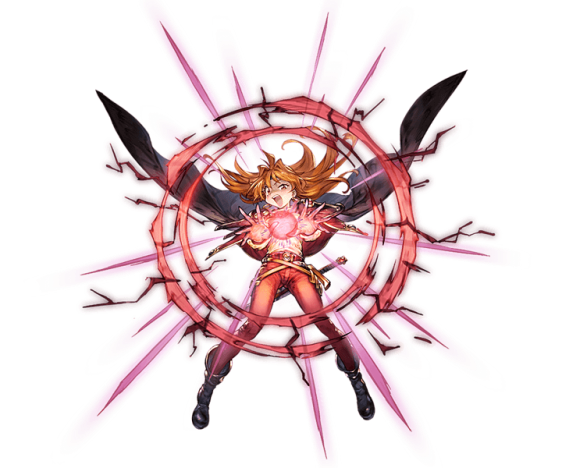
Granblue Fantasy is a Japanese mobile game that’s got tons of fans, and it’s so popular that it ends up crossing over with other franchises. Check out this small list of series that make guest appearances. As someone who got into anime in the 90s, I’m especially fond of the Slayers cameos.

The Many Levels of Fanservice in Food Wars!: Shokugeki no Soma

food-wars!-vol-4-9781421572574_hr

Mito Ikumi, Food Wars! Character

Within the first few minutes of the Food Wars!:  Shokugeki no Soma anime, viewers are made well aware of the extent of its fanservice. If the flavor of peanut butter squid being visually likened to being violated by a large squid wasn’t enough, as the episode progresses characters basically have reactions that are downright orgasmic. It’s the kind of reaction that can really turn people away, but I also am aware of how the seeming need to fully animate a manga can lead to a rather different (and more gratuitous) experience, even when faithfulness to the source material is considered important. This is what I believe happened with another series, Mysterious Girlfriend X, and so when I got the chance to read the manga for Food Wars, I went in curious about two things: the depiction of competition in the Yakitate!! Japan “food battle” sense, and how the fanservice compares to the anime.

Food Wars! portrays both the act of master chefs locked in fierce cooking combat and the sexually charged tasting reactions with equal care and attention to detail. The manga is certainly not a cleaner alternative to the anime, but there are a couple of points I noticed about it. First, the manga’s imagery is a noticeably different experience due to the lack of need to fully animate all of the more gratuitous scenes. Second, Food Wars! actually takes a kind of multi-level approach to its fanservice.

godannar-dvd

Shinkon Gattai Godannar!!

I think it’s fair to judge a series by the most extreme examples of fanservice found in it, and so this isn’t really a defense of Food Wars! as sticking it to the prudes or anything. However, when it comes to anime and manga, they tend to maintain to a fairly consistent level of the kind of fanservice they want to use. Love Hina and Chobits go for mildly risque bath scenes, Aim for the Top! goes for the subdued-by-today’s-standards jiggle and “creative” camera angles, and Godannar!! and Ikkitousen are all about in-your-face shots and revealing clothing (or lack thereof). Food Wars!, in contrast to all of those, encompasses virtually the entire spectrum.

At the far end, you have the scenes described above: images that, in and out of context, look like something you’d find in a naughty magazine. However, there are also plenty of food reaction moments that are more about showing off the girls’ (and in some cases even guys’) bodies in the buff, without that added layer of sexual innuendo. There are images of girls spilling out of their outfits, but there are also relatively more conservative examples. So, while you have a character like Mito Ikumi (pictured at the beginning of this post), who wears bikinis and is based around a rather blatant “meat” theme, you also have characters like Tadakoro Megumi and Mizuhara Fuyumi, who are less voluptuous but are still involved in their own fanservice scenes relative to their designs. In those instances, the manga will decide to show for one panel the way that Megumi’s pants hug against her hips, or that Fuyumi has subtle but noticeable curves.

tadokoromegumi-pants

Tadokoro Megumi

In terms of how men are portrayed (their clothes burst off as they salivate over a five-star meal just as much as the girls do), but I’d actually like an opinion from any readers interested in men as to whether Food Wars! hits any of their buttons in the right way. I get the feeling Takumi Aldini is popular, but I haven’t looked into it extensively.

Given all this talk of gratuitous imagery, I find it all the more interesting that the more I read Food Wars!, the less I think of it as a fanservice series, even though it can be so elaborate and perverted in its character depictions. It certainly is still that sort of manga and anime, but the cooking really takes center stage, and in certain ways the ever-present fanservice is actually subordinate to the food. There’s just something about the intensity and the amount of attention that goes into presenting the culinary masterpieces of the manga’s characters that shines the spotlight on their cooking above all else.

If you liked this post, consider becoming a sponsor of Ogiue Maniax through Patreon. You can get rewards for higher pledges, including a chance to request topics for the blog.

Future History is Awesome: Legend of the Galactic Heroes Novel Volume 1

legend-galactic-heroes-1-e

Depending on your definition of good science fiction, Legend of the Galactic Heroes is one of the finest SF stories ever. Leaning more towards space opera, LoGH combines political intrigue with a genuine look at how people and societies can change (or even regress) as they expand out into the universe. I mentioned the anime on Ogiue Maniax many years ago but never really got into great detail about the series, but now that it’s being released in English in both anime and original novel form I thought that it’s about as good a time as any to talk about what makes LoGH such a strong series by reviewing the first volume of the novel.

Legend of the Galactic Heroes is the story of a corrupt democracy versus a stagnant empire in a far-flung future where humankind has ventured deep into space. Two figures, the unassuming Yang Wen-Li on the side of the Free Planets Alliance and the righteous Reinhard von Lohengramm on the Galactic Empire, act as both heroes and rogues within their respective systems, and their actions change the fates of their societies in unforeseen ways.

As I have seen the entirety of the Legend of the Galactic Heroes anime most of the story is not new to me. It’s been quite a few year so I may have forgotten some details, but the major notes are still pretty fresh in my memory because of how much impact this series has. The prologue of the first volume is actually a short history of how the Galactic Empire and Free Planets Alliance came to be, and how they each try to erase the presence of the other for political reasons. Something as simple as the fact that the Free Planets Alliance (which came after the Galactic Empire was formed from a Hitler-esque powergrab in its predecessor the Galactic Republic) reverted to an older calendar system instead of the Empire’s standard shows just how complex political philosophies and their manifestations in everyday life can be. A similar example exists in the real world: Taiwan’s official name is still to this day the Republic of China because it denies the idea that the People’s Republic of China is the legitimate government of China (and the PRC does the same to Taiwan). Even in the first volume, it encourages thought about how governments and even people’s everyday actions can maintain hegemony.

For some, such as myself, it’s a fascinating read that provides the perfect context for what happens in the main narrative as Yang goes about questioning the blind fervor by which people toss around the term democracy, and Reinhard similarly tries to chip away at the ossified core of incompetency in the Empire. Their personalities, but also many of the characters around them, are so well-portrayed and so effectively invite readers to pursue connections and thematic similarities among the gigantic cast of LoGH that it makes the book a pretty easy read overall. The character of Paul von Oberstein is especially notable for creating more questions than answers, and to this day you’ll have debates over what his true motives are.

Reading the first volume of the novel, one thing that stood out to me that had actually never occurred as I was watching the anime were the parallels between Reinhard and Rudolph I, the original founder of the Galactic Empire many centuries ago. Both believe that their government is suffering from stagnation and corruption, and that the best way to deal with these issues is to seize power from within. While Reinhard believes that people should be judged by their merits and Rudolph I was a staunch proponent of eugenics, the conviction by which they have sought change are strikingly similar.

Similarly, though this isn’t nearly as strong a connection, Yang is portrayed as being a brilliant but lazy man who despite all of his talents and keen insight wishes to live a quiet life. The current Galactic Emperor is initially shown to be a somewhat lost and even incompetent man, but he seems to display sudden flashes of intelligence that imply he might know more than what people expect. However, just like Yang, he prefers a more idle life.

The translation for Legend of the Galactic Heroes is overall very solid. I have not read the original Japanese, so I can’t make so direct a comparison, but the language flows well, never gets too dense or overwhelming even in the most dry of sections, and characters’ personalities are conveyed in a matter of moments. If I have any criticism of the translation, it’s less of a language issue and more of a copy editing complaint. At various times throughout the story, the spelling of Reinhard’s best friend Siegfried Kircheis changes, from Siegfried to Sigfried and then back into Siegfried. It doesn’t impact the quality of the story by any means, but that’s the kind of mistake that shouldn’t be happening.

I don’t think I can recommend LoGH enough, but then again I know pretty much the whole story. That being said, while both the overarching movements of the narrative, as well as the small details that connect with each other, build into something much greater, the first volume does a tremendously good job of setting it all up.

Flying Witch x Smash Bros

[Apartment 507] My Hero Academia and the Spirit of Captain America

myheroacademia-captainamerica-featuredimage

Just in time for the release of Captain America: Civil War, I decided to write a short article about the similarities between My Hero Academia and Captain America.

I think there might be some additional parallels with the new movie as well, but I’m going to have to wait until I actually see the thing before I make that decision.