[Apartment 507] Thai Songs in Anime: Anyamaru Tantei Kiruminzoo

KIBA1717_DVD-daisi_CS-OTF

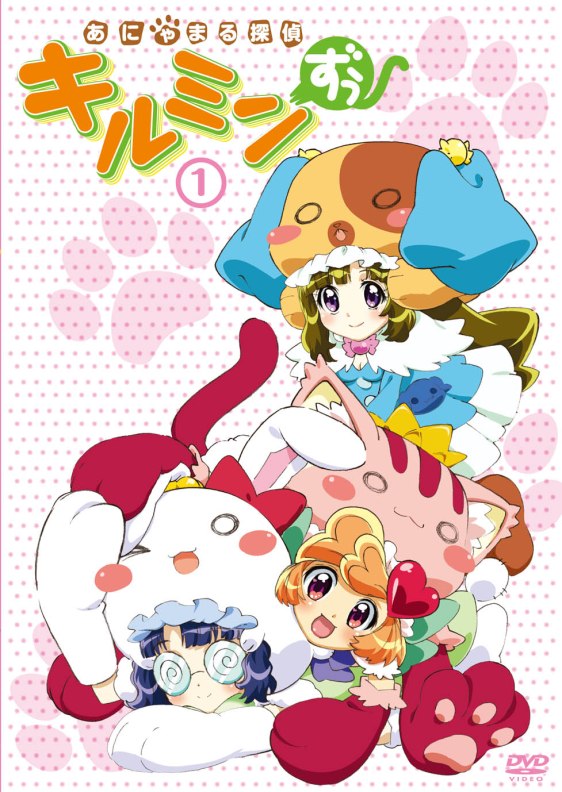
I wrote a post about everyone’s favorite Kawamori Shouji animal detective anime, Anyamaru Tantei Kiruminzoo, over at Apartment 507. What did you think of the Thai music in the show?

Pervert Rising – Kizumonogatari Part I: Tekketsu

kizumonogatariposter

The transformation of the Japanese animation studio SHAFT from b-player to cult sensation is, at this point, old history for anime fans. Ever since director Shinbou Akiyuki became the face of the now 40-year-old studio back in the mid-2000s, it’s come to garner a loyal following and a reputation for highly eccentric aesthetics that revel in both character design and visual design.

Among the shows that carry the SHAFT name, the Monogatari series might be considered its flagship title: based on the light novels by author Nisio Isin, his signature twisting of expectations, eclectic cast of characters including a variety of attractive (fantasy) girls and love for verbose dialogue combined with elaborate wordplay seems almost a perfect fit for Shinbou and SHAFT. And so, the Monogatari anime have continued to come out, most recently with the release of the film Kizumonogatari Part I: Tekketsu.

Kizumonogatari is based on the light novel by the same name. The third work in the series, its story is a prequel that explores how main character Araragi Koyomi became a vampire, and how he first meets both the vampire who the audience would eventually know as Shinobu, as well as his mentor, Oshino Meme. This first film presents Araragi as someone unaccustomed to the occult, and in a way also unaccustomed to the pervert he would become. While he would eventually become a righteous horndog, here he’s only begun to awaken to his true self.

After so many iterations, many of the Monogarari anime’s visual flourishes are familiar territory, such as the use of live footage for backgrounds or sudden changes in visual style. That being said, there is one aspect of Kizumonogatari Part I that I found surprising, which is the relative lack of dialogue in the film. The Monogatari anime is known for mostly being back-and-forth conversations between characters, or inner monologues that get into every little detail possible in Araragi’s head, but here it’s mostly presented in a “show, don’t tell” way that defies the series’ typical behavior. Even when characters speak, the conversations aren’t as laden with Japanese puns or small twists in pronunciation that change the meanings of sentences entirely.

Perhaps the most notable example is an early scene where the character Hanekawa Tsubasa accidentally flashes her underwear at Araragi. In the TV series, there would have been a detailed inner monologue about the exact specs of her panties. In the light novel, the description goes on for three pages. In the film, however, hardly a word is given in reference to that moment, and the degree to which Araragi is so completely turned on by his memory of their encounter is expressed in his sweaty, panicked expressions, heavy breath, and his eventual trip to the convenience store to buy a dirty magazine that happens to feature a girl who resembles Tsubasa. Which is to say, if not for the loving detail they put into this theatrical release, it could be seen as kind of tame for Monogatari.

The film isn’t only about Araragi being horny, of course, but it pretty much sets the stage for what’s to come. I also want to point out that the impressive visuals aren’t limited to just showing off girls. The first few minutes of the film feature a man on fire, and the way he writhes about and the way the flames themselves are animated as they engulf his body is nothing short of impressive.

As of Kizumonogatari Part I, I think the film is capable of standing on its own without prior knowledge, as what we would later learn about the characters has yet to be relevant. Meme is just a mysterious stranger. “Kiss-Shot” the vampire has no other name. Tsubasa is a potential love interest. I doubt that those who never enjoyed Monogatari would change their minds here, but it is worth mentioning that the film is both the least verbose yet most vampire-tastic of all the different Monogatari works.

Two final notes:

First, it’s a shame this film was released after the end of Owarimonogatari, because many of the small details here clearly set up moments in that series.

Second, there’s a Tetsujin 28 reference in Kizumonogtari Part I. Just watch the opening, and keep it in mind when you see the movie:

If you liked this post, consider becoming a sponsor of Ogiue Maniax through Patreon. You can get rewards for higher pledges, including a chance to request topics for the blog.

Death, Rebirth, and the End of Coppelion

coppelion-finalchapter-small

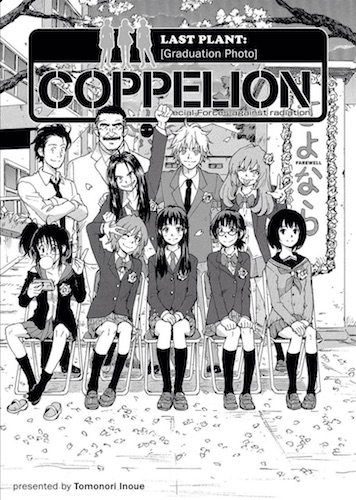
Coppelion, the science fiction manga about genetically engineered clones tasked with finding any remaining survivors in a radioactive Tokyo, finally wrapped up last month on February 20, 2016.

Running since 2008 for over 20 volumes, Coppelion has had a rather turbulent history. Its story about an earthquake that triggers a nuclear meltdown in Japan and changes the course of many lives went from “what if” to “what now” with the Fukushima Triple Disaster on March 11, 2016. Its animated adaptation was canceled, then revived with heavy censorship and a strange modification to its aesthetics. Coppelion has seen multiple tonal shifts over the course of the series that had people wondering if it was a manga about radiation or an excuse to see high school girls fighting.

For all its ups and downs, I believe that its author Inoue Tomonori had the best intentions in mind throughout Coppelion‘s run. Elements that one might assume were there merely to cater to manga readers actually carried with them a great deal of subtlety, and the subject of nuclear power never truly disappeared from the manga. In fact, I suspect that the decision to conclude Coppelion at this point is very deliberate and designed to make a statement.

Not only was the final chapter of Coppelion published in Monthly Young Magazine right before today, the fifth anniversary of 3.11, but the initial disaster that sets the story of Coppelion is supposed to take place this year, in 2016. What better place could there be to bring this narrative to a close?

Though I have no evidence as such, I think it is very likely that this final chapter was planned to land in this time frame, as a symbolic reminder of the potential dangers of nuclear radiation, as well as the problems created when both people and the governing bodies responsible for its regulation become negligent towards nuclear safety.

You can read the Coppelion manga online at Crunchyroll.

If you liked this post, consider becoming a sponsor of Ogiue Maniax through Patreon. You can get rewards for higher pledges, including a chance to request topics for the blog.

[Apartment 507] Beautiful Tomboy Idol: Love Live! Hoshizora Rin Analysis

Rin_smile_sr93_t

As part of my ongoing Love Live! character analysis series on Apartment 507, here’s Hoshizora Rin. What do you think of her?

Don’t Fight Alone: The Boy and the Beast Review

the-boy-and-the-beast

Over his past two films, “family” has been a hallmark theme of director Hosoda Mamoru. Whether it’s Summer Wars uniting generations together or a single mother raising two very unusual kids in Wolf Children, Hosoda explores the strength of familial bonds. This trend continues with The Boy and the Beast, but it’s certainly no rehash. Rather, this newest film addresses “family” by delving into the complex dynamics between the individual and the group, and does so in a way that somehow feels both immensely satisfying and a bit under-explored.

Ren is a young boy whose mother has passed away, and whose father is living elsewhere after a divorce. Understanding that his mother’s family sees him less as the child of his parents and more as their heir, he runs away from home only to encounter a large and gruff beastman. This half-human, half-bear fighter, Kumatetsu, is one of two candidates vying to become the next lord of his otherworldly home of Jotengai, and he’s desperate for a pupil because all others couldn’t handle his terrible temperament. He then decides to make Ren his disciple and gives him the name “Kyuta” (because Ren is 9 years old). Kumatetsu’s impatience and Ren’s anger means both have a lot to learn, but they gradually form a father-son relationship that thrives off of their mutually hostile yet well-meaning personalities.

What does it mean to be a family, or father and son? What do we do for those who feel like they don’t belong? What influences do we take from those around us, and in turn how do we influence others? These are all questions that The Boy and the Beast touches upon to varying degrees. Ren feels no connection to his mother’s family, and there is a clear conflict in values when they tell Ren that he will never want for anything, as if what’s most important to him on a fundamental level is material safety rather than the warmth of family. Kumatetsu is revealed to have grown up alone, learning how to fight and be strong all by himself, and this is what makes him such a terrible teacher. Throughout the film, Ren meets other characters whose specific circumstances are different but still feel lonely even when surrounded by others, or are confused about their identity relative to their family. In a way, there might be too many facets that The Boy and the Beast tries to explore, but I’m still on the fence about that.

The growing bond between “Kyuta” and Kumatetsu is one of my favorite parts of the film, because it becomes a showcase for how much the two characters truly need each other. At one point, Ren begins to copy Kumatetsu’s movements, to learn from him without Kumatetsu having to try and teach. Eventually, after the two come to an understanding, Ren even begins to unconsciously pick up Kumatetsu’s mannerisms: he growls when angry, talks in an extremely unrefined way, and seems more and more like the “child of a beast,” which incidentally is the Japanese name of the film.

If there’s one thing that I believe might throw viewers off about The Boy and the Beast, it’s that the film has a closer connection to reality than one might initially expect given its look and feel. I don’t want to go into too many details for the sake of those who have yet to see the movie, but I think this aspect of The Boy and the Beast contributes to that individual/group/family cluster of themes that the film explores, and grounds it the question of how people themselves, especially Japanese people, view their families and those close to them within the context of their society.

The Boy and the Beast does not have the flash and splendor of Summer Wars or the deep, moody atmosphere of Wolf Children, but it strikes a nice balance of light darkness and populates its world with colorful characters. Jotengai in particular is a vibrant, rural throwback to an earlier era of Japan (roughly Edo period?), and the beastmen who call it home are varied and full of personality. The lord of Jotengai, an adorable elderly rabbit man, is a highlight of the film, and I would honestly consider owning a figure of him. The animation often has a kind of pleasantly minimalist feel to it, even though there’s so much to look at, and the CG, while still noticeable in how it differs from the 2D work, is a step up from Wolf Children.

Out of all of Hosoda’s films, I think The Boy and the Beast might be my least favorite, but that is certainly no knock against it. I still think very highly of the movie, and I am impressed by the way it tries to tackle so many elements of the theme of “family.” Perhaps it’s stretched a little too thin, but I believe it was worth trying, and it’s gotten me thinking about the idea of the “sword within your heart”—a simple part of the movie that carries a lot of potential meanings. As for breaking down those meanings, I will save that for a future post.

If you liked this post, consider becoming a sponsor of Ogiue Maniax through Patreon. You can get rewards for higher pledges, including a chance to request topics for the blog.

“White Rice is Amazing! I Wonder How it Gets so White…”

hanayorice-1000“Insert rice comment here”

Fighting for Inspiration: Ogiue Maniax Status Update for March 2016

This month I’d like to thank the following Patreon supporters, as well as my unnamed patrons as well. You’re all awesome and I’d like to talk with you all someday (and many of you I have!):

General:

Johnny Trovato

Ko Ransom

Alex

Diogo Prado

Yoshitake Rika fans:

Elliot Page

Hato Kenjirou fans:

Elizabeth

Yajima Mirei fans:

Machi-Kurada

One thing that I’ve noticed is that my patrons come from all over the world, and I know that support for anime can be hard to come by in some places. It’s why I’m thankful for living in a major metropolitan area. Between the New York International Children’s Film Festival, and screenings of both The Boy and the Beast and Kizumonogatari, March is going to be kind of a crazy month for anime here. What’s your situation like?

Nothing’s really out of the ordinary for Ogiue Maniax this month from a content perspective. There’s the new Genshiken review (what an intense chapter!), the return of Patreon-sponsored posts in my review of Garakowa -Restore the World-, and a post that I’ve been wanting to write for a long time: an overview of the thematic relationship between Space Runaway Ideon and Neon Genesis Evangelion.

Lately I haven’t been trying to broaden my horizons in terms of writing, and I wonder if it’s causing me to stagnate some. Sometimes I wonder if I’m not developing or changing or taking risks with my writing enough, and at times I struggle to come up with new topics to write about as a result. This is actually why I’m grateful for patron Johnny Trovato, because getting outside topics to write about can spark some inspiration. Just as a teaser, this month’s requested topic is an anime I’ve been wanting to delve into more after dipping my toe in many months ago, so this is the perfect opportunity.

Though maybe it’s because I’m playing more video games, things like Fire Emblem Awakening (I know I’m a game behind!), Splatoon (in my first Splatfest ever!), and of course Super Smash Bros. for Wii U. I attended a local tournament this past weekend and did okay, getting 13th out of 35 players. It’s not much, but I enjoy just checking things out and seeing where my Mewtwo stands. I don’t think that it’s bad to play games, of course, but perhaps I need to redirect my attention back to anime and manga a bit more.

To end off, I do want to mention something I’m doing over at Apartment 507, where I also blog. After the success of my analysis of Yazawa Nico from Love Live!, I’ve decided to tackle all nine main girls (and maybe a few more!) over the next few months in the leadup to Love Live! Sunshine. For February I’ve written about Sonoda Umi, so check it out if you’re all about the Umidaaaa!


[Apartment 507] Shidare Hotaru from Dagashi Kashi Fascinates Me

shidarehotaru-fakedrunk

I wrote a post about the eccentric heroine of Dagashi Kashi over at Apartment 507. You can find out why Hotaru might be my character of the year, and why her role as a sheltered dagashi heiress is so interesting to me.

[Apartment 507] The Big/Little Sister of Love Live!: Sonoda Umi Analysis

0fae08d9-playing-cards-with-younger-siblings-be-like

To follow up my post on Yazawa Nico, I’ve written an analysis of Sonoda Umi for Apartment 507.

She really is a wonderful character.

When the Nakama Are Feeling FRUSTRATION: Translation and Use of Foreign Words

One of the big bugaboos of Japanese to English translation has been the use of untranslated words. Whether it’s senpai (“upperclassman”) nakama (“comrade”), or the utterly fictitious zankantou (“colossal blade”) the question of whether words should be left as is or fully adapted to English rages in arguments between fans, translators, and everything in between. Of course, there are no solid rules, and determining where in this spectrum your translation should fall is very much a case-by-case basis. However, what intrigues me about this debate is that, when you look at the Japanese language and how it’s used in anime, advertisements, and more, there is a very intentional sprinkling of foreign words with the clear idea that they are used for their exoticism.

The show that actually got me to think about it was, of all things, Show By Rock!! Here are the first lines of the opening:

Ren’ai inochi VERY VERY HAPPY!
Yuujou inochi hajikeru JUMPING!
Bouken inochi dokidoki OK?
Seishun ouka COM’ON READY? LET’S GO!

I’m leaving it untranslated just to show the clear use of English vs. Japanese. They didn’t have to use English words but they did. Similarly, let’s look at the popular One Punch Man opening:

ONE PUNCH!
(THREE! TWO! ONE! KILL SHOT)
Sanjou!   Hisshou!   Shijou saikyou
Nan dattenda?   FRUSTRATION   Ore wa tomaranai

One concession is that a lot of these words are very simple, like “HAPPY” and “JUMPING.” They’re not terribly complex and don’t carry a great deal of cultural baggage like senpai (though one might argue that ren’ai (romantic love) being originally a concept introduced from Europe to Japan falls into that range). However, I think where the actual big cultural difference comes from is that Japan has been open to receiving a lot of foreign words and maintaining them as emphatically foreign, as opposed to fully integrating them into the language. So while English has its fair share of Japanese loan words, from sushi to karaoke, they don’t maintain as much of their exoticism. It’s just a very different environment for sentences and words themselves.

What’s funny is that English wasn’t always this way, especially when it was not the lingua franca of the world. Prior to World War II, French was the most dominant language in diplomacy, and (correct me if I’m wrong!) throwing in French words with the expectation that only a few would understand it was not uncommon among the educated. Of course, this is different from the use of “HAPPY” and “JUMPING,” but I do think that the English language’s ubiquity leads to the sense in us users that it doesn’t have to bend to the will of others.

Translating to English often assumes that English is important. That sounds like a no-brainer, but what I mean specifically is that English speakers value their own native language so highly that it comes across to some extent as a rejection of foreign influence. France today for example is known for trying to keep foreign words out of its language, preferring to take existing French words and modify/combine them accordingly to eschew the need for new loan words.

I’m not saying translators who do not use senpai or whatever are imperialists anymore than I think that using nakama means someone is fetishizing Asian culture. Moreover, the exotic aspects of English usage in Japan come with their own sets of considerations and concerns. Rather, the seeming need for everything to be transformed into English might say something about how we as English speakers look at ourselves, and that this differs depending on how we individually approach that self-reflection.