Teikoku State of Mind: Anime NYC 2017

When a brand-new convention decides to call itself “Anime NYC,” it’s practically asking to have the deck stacked against it. Running a first-year convention is no small task, doubly so if it’s in the heart of Manhattan. And with no reputation to go by, potential attendees may feel reluctant to try things out. Small attendance numbers can mean a lack of overall interest and the inability to justify the high costs of NYC, while large numbers means a greater chance of disaster striking if mismanaged. As a longtime resident of New York City, I’ve seen cons come and go, but somehow, someway, Anime NYC went so swimmingly that I almost can’t believe it was real.

General Impressions and Exhibitor’s Hall

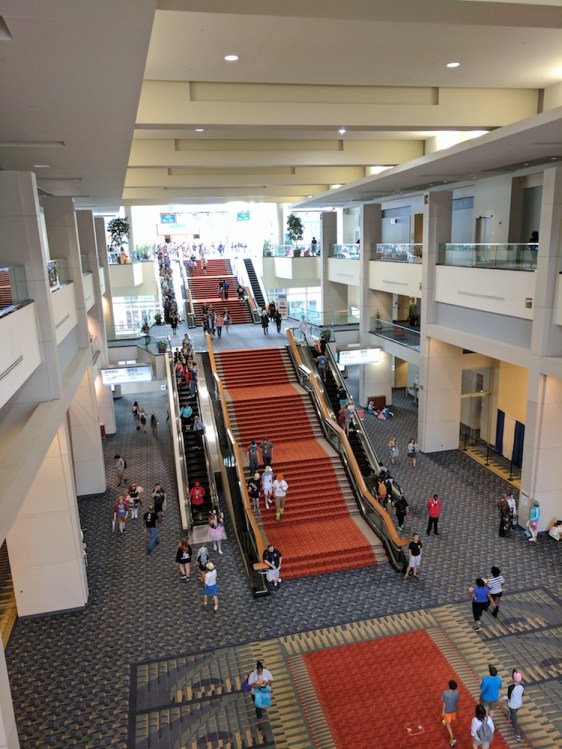
Those who attended New York Anime Festival and the first few New York Comic Cons might recall what it was like to go through the Jacob Javits Center without feeling like sardines. Walking through Anime NYC felt reminiscent of that environment, as the con was fairly heavily populated but with plenty of elbow room to spare. Panel rooms were right next to the Exhibitor’s Hall, making transitions between checking out the goods and listening in on industry and fan talks. Special events were held in a Main Event Hall that was a fair distance away, though nowhere near as disorienting as, say, the Baltimore Convention Center where Otakon used to take place.

Because it was so easy to navigate (without the space feeling overly empty), I came out of the three-day con feeling satisfied yet unstressed. Usually one comes with the other due to the hustle and bustle of trying to get everything done, or because there’s so little to do at the event itself that boredom and lethargy set in. Anime NYC struck a Goldilocks-type balance with a schedule that thrilled but did not overwhelm body and mind.

A major contrast between Anime NYC and NYCC is that the latter is focused on being a general comics pop culture event, with a film and television presence that all but overshadows the “comic” in comic con. Anime NYC, on the other hand, is first and foremost concerned with anime and manga. A few features branched out from that core, such as the presence of Overwatch voice actors who were there to meet the fans and sell autographs, but this was certainly no “anime ghetto,” as fans took to calling New York Anime Fest when it began to be dissolved into NYCC.  For those who love anime and love a big convention feel but think New York Comic Con’s a bit too much, Anime NYC has potential to be a gathering point for anime fans in the tri-state area.

Concerts

Anime NYC featured two concerts that shone in different ways. The first was Anime Diva Night, while the second was the Gundam Thunderbolt Concert.

At Anime Diva Night, three Japanese musical guests performed as part of the Anisong World Matsuri. Two of the singers, Ishida Yoko and TRUE, are amazing vocalists in their own right, but the third, Yonekura Chihiro, was the reason I wanted to attend. She’s the voice of so many amazing anime themes over the years that it almost doesn’t compare. Notably, she sang the opening and ending themes to Mobile Suit Gundam 08th MS Team.

While having Yonekura alone would’ve sufficed in my case, all three did a wonderful job. Some singers sound significantly better in the recording booth than they do onstage, but this was not the case for the Anime Diva trio, who sounded incredible even though the makeshift Main Events Hall did not have ideal acoustics.

The concert had a somewhat unusual format. Rather than move from one act to the next, each performer would do a few songs, perform a duet with another, and then the newer singer would take over before the next duet. There were two rotations in total, with all three singers performing together at the start and end of the show. All of the group performances were cover songs of popular anime themes—”Cruel Angel’s Thesis,” “Moonlight Densetsu,” “God Knows,” etc.—while the solo acts were their signature songs. Yonekura did indeed sing the Gundam 08th MS Team opening, but also an old favorite of mine in “Will” from the anime Hoshin Engi (aka Soul Hunter). Highlights from the other two singers included TRUE performing the first Sound!! Euphonium opening and Ishida doing arguably her most famous song, “Otome no Policy” from Sailor Moon R.

There were a couple of songs that didn’t make the concert that I was hoping for: Yonekura’s “Yakusoku no Basho e” from Kaleido Star and Ishida’s “White Destiny” from Pretear, but it was a small loss for an otherwise amazing concert.

The Gundam Thunderbolt Concert was highly unusual compared to what typically happens at an anime con performances. Generally, they’re closer to Anime Diva Night, sounding like the j-pop or j-rock one expects out of anime. To have the Gundam Thunderbolt composer Kikuchi Naruyoshi lead a jazz band himself on saxophone was a truly rare treat, and it’s one of the most unique experiences I’ve had at an anime con. The closest equivalent I could think of was Kanno Yoko’s concert at Otakon 2013.

I am no jazz aficionado, but thanks to the concert, I felt as if I began to understand the almost primal appeal that jazz holds for listeners. As I listened, an analogy popped into my head: jazz is like constructing a human being from music. They can be loud one moment and quiet the next. They can be a mess of contradictions, yet still function. I’m unsure if this will send me towards checking out more jazz in the future, but my curiosity is definitely piqued.

I’ve been more or less referring to the Gundam Thunderbolt Concert as a “jazz performance,” but that’s not entirely accurate. To everyone’s surprise, the concert also included performances by the singers of some of the 50s/60s-style pop songs from the Gundam Thunderbolt anime. In the context of the series, the two main characters, Io and Daryl, are two soldiers on opposite sides of a war who each listen to music as they battle. Io is an intense man who loves equally powerful jazz, while the handicapped Daryl prefers softer ballads.

At the Gundam Thunderbolt panel, Kikuchi mentioned that these are basically his two favorite genres of music, and he thought both fit the characters well. Interestingly, while the Gundam Thunderbolt manga included jazz already, Kikuchi composed entirely new songs that he felt fit Io’s character better.

One funny coincidence of sorts when it comes to Kikuchi’s choice to add a golden oldies aspect to the Gundam Thunderbolt score is that one of the biggest names in classic mid-20th-century American pop, Neil Sedaka, once composed the theme songs to Mobile Suit Z Gundam in the 1980s. I’d be curious to know what Kikuchi would think about this.

Artist Alley

More than Exhibitors’ Halls, Artist Alleys at cons can be affected heavily by the space they occupy. Regardless of the artists’ skills, or the amount of people in the alley, a bad space can make an attendee want to leave as quickly as possible, while a good space encourages more browsing and exploring.

Anime NYC’s is probably the best I’ve ever seen. Held on the top floor of the Jacob Javits Center, natural light shined down on the entire Artist Alley from an entirely windowed roof. At times, it almost felt like an outdoor European boutique, which made it just a pleasant place to peruse.

I purchased a few items at the Artist Alley, mainly from Japanese artists (something of a rarity even at anime cons). One booth was ran by the wife and assistant (pictured above) of manga artist Ohno Junji, creator behind the manga for obscure titles Mobile Suit Gundam: Missing Link and Mobile Suit Gundam The Origin MSD: Cucuruz Doan’s Island. Unfortunately, the artist couldn’t attend himself. They were selling art packages from Ohno himself and his assistant, Ally Suwabe:

Ohno Junji

Ally Suwabe

Axel Rex is Ohno’s original web comic he drew for Kodanasha/Yahoo!! Comics from 2008 to 2009.

The other Japanese artist attending was Tatsuyuki “Mikey” Maeda, who’s worked for the past 10 years as a manga assistant. In a way, while manga artists themselves only attend cons sparingly, their assistants are even rarer. Maeda was selling a short guide called “Secrets of Manga: Basics of the Tools & Trade.” In it, he gives various technical tips to aspiring manga creators, the kinds of things that often get glossed over in favor of “character design” and “how to draw mecha.” The guide talks about differences in pen nibs (such as what you should use if you have a light touch vs. a heavy hand), how to effectively use white-out, and more. I highly recommend it.

Panels

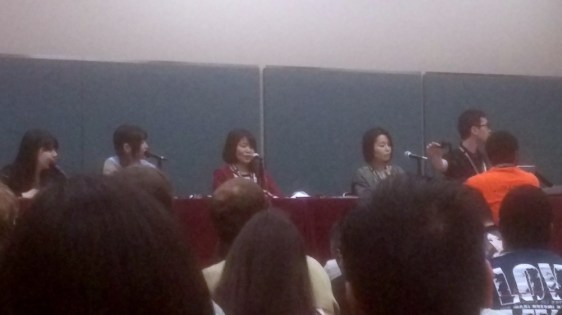
Gundam Thunderbolt Panel

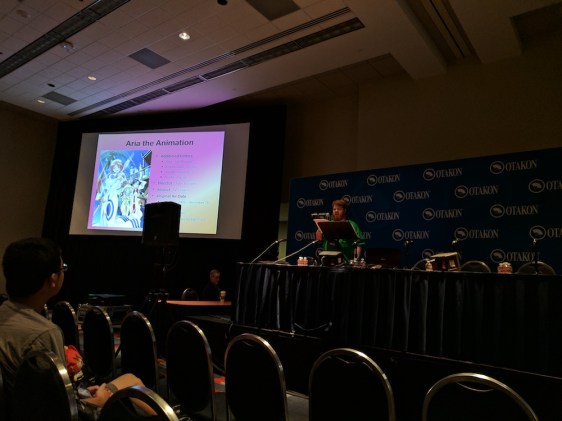
Panels are an important part of the con experience for me, though due to my schedule I could not attend as many as I would have liked. Still, the Gundam Thunderbolt panel was highly informative, as were the Inifini-T Force and LeSean Thomas panels.

Infini-T Force is a current 3DCG anime series crossing over the classic heroes of Tatsunoko Production—Gatchaman, Casshan/Casshern, Hurricane Polymar, and Tekkaman. The fact that Tatsunoko, one of the most influential anime studios ever, had a con presence at all was the main reason I decided to attend their panel. Overall, it was a fairly basic introduction to Tatsunoko, but I like that they conveyed a bit of the studio’s historical significance. They’re one of the most influential studios ever, pushing the limits of animation in Japan since their inception in the 1960s. They were also willing to discuss a bit of the reception Infini-T Force has received in Japan, such as the fact that the primary female character is a little contentious to Japanese audiences. This is also somewhat unusual for Japanese companies, and was somewhat refreshing.

The LeSean Thomas panel was a general Q&A, but was one of the highlights of Anime NYC. It was inspiring to see attendee after attendee express how Thomas inspired them to keep working at their art, and how his success as a creator of color gave them the courage to never give up. I previously interviewed him at Otakon 2016, and he does make for an excellent role model.

Cosplay

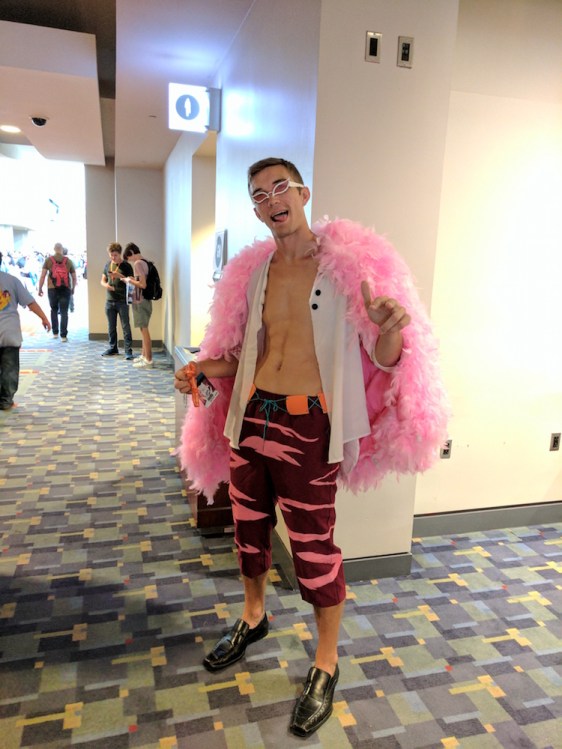
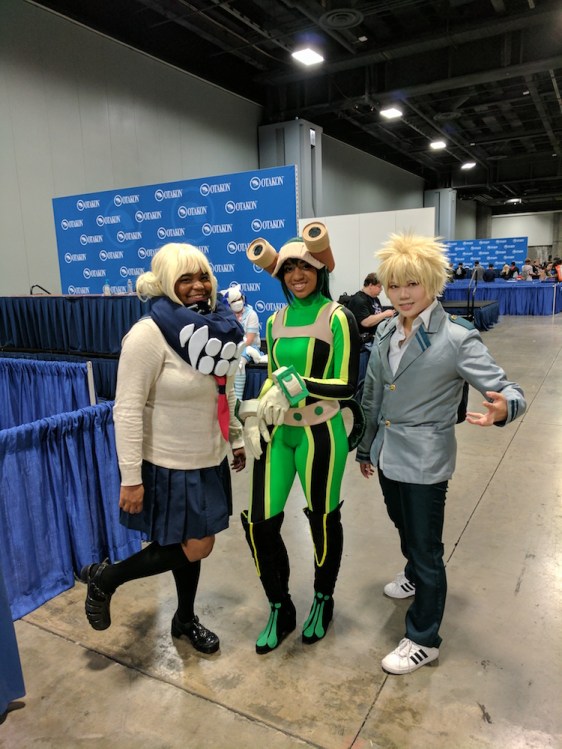
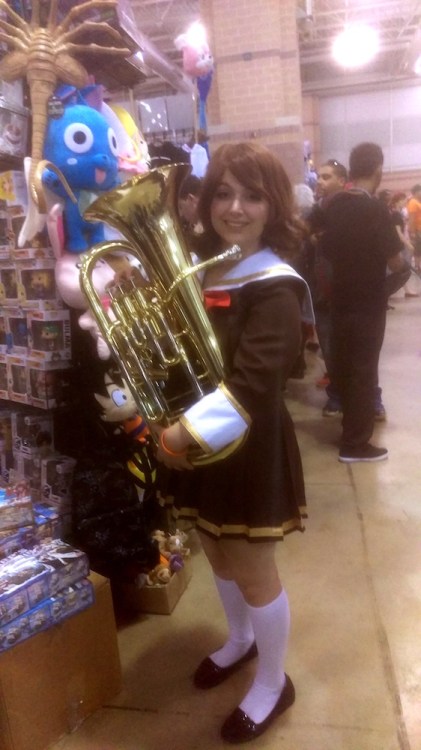
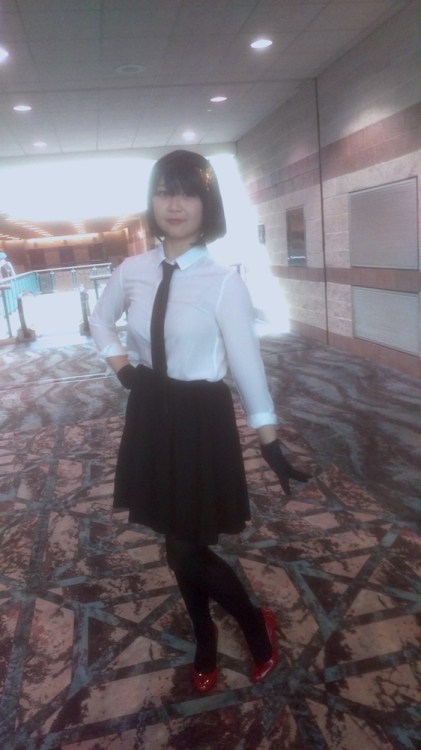
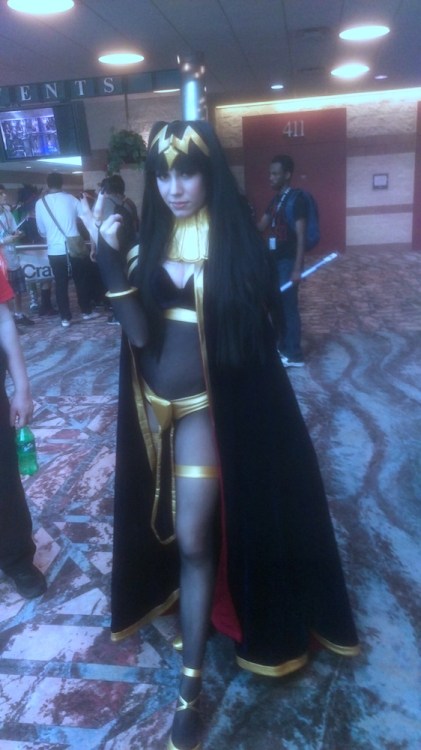
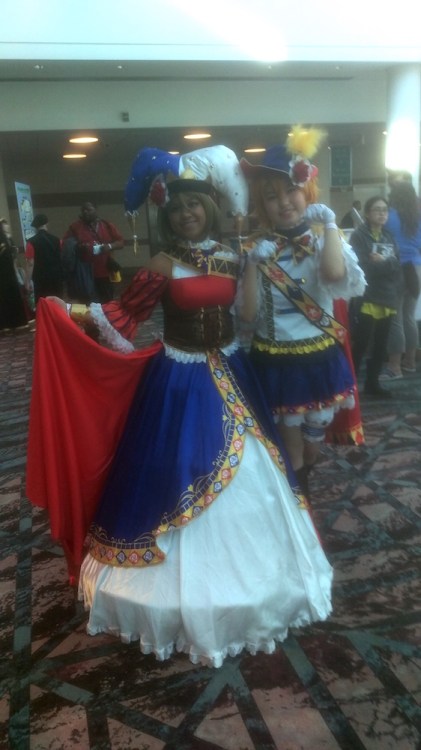
In this case, I’ll let the pictures speak for themselves:

In Conclusion

Given how much I’ve praised Anime NYC, it might seem like I’m a paid shill, but I assure my readers that this is not the case. The con was actually executed so smoothly that there’s little I can complain about that would be the fault of the convention itself. While I attended for free as press, even the weekend ticket was affordable, especially compared to New York Comic Con ($60 vs. over $200 to buy four 1-day NYCC passes).

At approximately 20,000 attendees, Anime NYC has already become one of the larger anime cons in the US. The convention appears to have done a sound job of attracting locals, and I’m curious to see how much more it can grow. If the convention keeps up this level of quality, I’d be happy and proud to call Anime NYC “home.”

 

Otakon 2017 Interview: Tomoki Kyoda (EUREKA SEVEN)

At Otakon 2017, I had the opportunity to interview Tomoki Kyoda—director of one of my favorite anime series ever, Eureka Seven. He was at the convention to promote the world premiere of the film EUREKA SEVEN HI-EVOLUTION, and I spoke to him the day before the showing.

Eureka Seven was originally created as a media mix project with video games and manga telling side stories or different, alternative narratives from the anime. How much of a say did you have in the spin offs?

With the spin offs, we would say, “We want so-and-so” for a concept. The various directors and mangaka we were working with would present their spin offs to us, and we would check over them.

My next question concerns Eureka herself. Her appearance changes throughout the series, especially when she gets covered in scars. It’s a very bold decision, I think—especially for anime. What was the thinking behind changing her appearance?

When we were doing the original story, Mr. Kenichi Yoshida and I were talking about what we could do to provide lots of inspiration and different paths the story could take. One of the inspirations that someone came up with was, “What about drastically changing her appearance?” So we actually took that and went with it.

What is it like working with creators Dai Sato, Shoji Kawamori, and Kenichi Yoshida? Do you have any interesting production stories to tell?

With regards to Mr. Sato and Mr. Yoshida, we were actually all born in the same year, so we all have an understanding of our pros and cons; what each of us do well and what each of us do not so well. But with regards to Mr. Kawamori, he is a person we look up to. He is a very interesting person, and his works are also very interesting. But then if you meet him in person… whoa. You’re going to notice that he’s more interesting than anything he’s actually done. So, if we start talking about Mr. Kawamori, we’re going to go past two hours like it was nothing, so let’s just leave it at that.

In revisiting Eureka Seven with the new movies, what feelings are you hoping to evoke in old fans and those who have never seen the series?

First of all, I’d like to say that, for old fans coming back to us, thank you very much. I hope they will actually be very accepting of this, since, even if we use some old footage, it doesn’t mean that we could do something just like the old version. In that sense, it’s in many ways a new movie. I hope they will be very accepting of it. With that being said, for new fans I hope they take it for what it is, and accept it for what it is, and that they will see what Renton and Eureka and Anemone have to do in order to live through that world. So the greater idea I have for everyone is acceptance, really. I hope everyone will accept EUREKA SEVEN HI-EVOLUTION for what it is.

Thank you very much!

Capitalizing on a New Home: Otakon 2017

“Howatto?! Washington ni?!”

-Jack King, Shin Getter Robo vs. Neo Getter Robo

Introduction: To DC

Otakon has always been my favorite anime convention. With its fan-oriented approach and variety of content, it always feels surprisingly intimate despite its sheer size (it’s generally the largest anime con on the east coast). This year marked a big change, as Otakon moved from its long-time home of Baltimore to Washington DC. It might not seem like that much of a difference—it’s only one extra stop on Amtrak—but for those of us who had grown fond of the previous venue, warts and all, Otakon was synonymous with Baltimore.

However, I will likely not be the only one to tell you that the new location is one of the best things to happen to Otakon. Subjectively, I still have an attachment to Baltimore. Objectively, outside of increased cost, pretty much everything is superior. The Walter E. Washington Convention Center is roughly double the size of the old Baltimore Convention Center, meaning less congestion. The adjacent hotel, the Marriott Marquis Washington DC, is bigger and more accommodating. The food choices are greater both inside and outside the convention center, and still fairly reasonably priced. For those who are especially cost-conscious, a Giant Foods supermarket within walking distance is an improvement over Baltimore’s 7-Elevens.

Thus, without even taking into account what happened at the con itself, this new setting certainly provided a more comfortable space for Otakon to put on a show. It was off to a good start right from the beginning.

Dealer’s Hall and Artist’s Alley

One of the best things about having such a large space for Otakon is that the Dealer’s Hall and the Artist’s Alley were easily navigable. Instead of having to wade through a sea of people in order to get anything done, actually going where I wanted to provided little challenge, aside from unfamiliarity with the new convention center. In terms of content, it’s pretty much what you can expect out of a large-sized con. In the Dealer’s Hall, large, official company booths acted as centerpieces with smaller booths on the sides selling figures, posters, manga, anime, and more. The Artist’s Alley had a wide variety of styles, with series such as Voltron, Yuri!!! on Ice, and Persona 5 being especially popular.

One of the hiccups in both areas was a lack of clear marking as to where you were. Booths had individual numbers, but sometimes they didn’t follow a consistent logic, and a lack of visible markings to tell you what row and column you were standing in made things worse. Fortunately, this was brought up at the Con Feedback panel at the end of Otakon, and it’s something they had intended but couldn’t get around to.

There are a couple of other challenges they’ll have to tackle for next year as well. First, the line to the Dealer’s Hall would occasionally get capped. This in itself isn’t unusual, but at one point a friend of mind mentioned that he couldn’t get in while I was already there. But when I looked around, the Dealer’s Hall was the opposite of congested. There was literally room to run around if I so choose. I later realized that it wasn’t the Dealer’s Hall itself that was the issue, it was the space leading to the Dealer’s Hall that was becoming a fire hazard. That’s something that should be addressed by 2018.

The Artist’s Alley also ran into an unfortunate bit of flooding due to a water main break on Saturday evening. A major factor in this was an enormous storm that hit DC. From what I saw, Otakon handled the situation fairly well, and there were no major injuries. This might just be a fluke accident for the first year, so I’ll give them the benefit of the doubt.

Concert: JAM Project/TM Revolution

This year, Otakon teamed up with the Anisong World Matsuri to bring a number of musical acts to DC. Because tickets cost money (unlike most anime cons), I could only see the Friday concert featuring JAM Project and TM Revolution. As a long-time fan of the former and someone who definitely enjoys the music of the latter, I can say with the utmost confidence that they did not disappoint. Both acts are known for creating not only songs that are good in and of themselves, but for embracing the anime they create music for and elevating them through their compositions. I first saw JAM Project at their US debut back at Otakon 2008, and it was a welcome return.

Both TM Revolution and JAM Project are really adept at making live performances special. Their voices ring out clearly, they get the audience involved, and by the time they’re done you end up feeling like you were part of something greater. Even a few technical hiccups during TM Revolution’s performance couldn’t dent the audience’s fervor.

Before the concert, I had bet on JAM Project and TM Revolution doing an encore together. Most likely, it would be JAM Project’s signature song, “SKILL.” They came through, and the collaboration was everything I hoped for.

For further thoughts on the concert, check out my post on Apartment 507.

The official set list for Otakon 2017 is as follows:

JAM PROJECT

1. Crest of “Z’s”
2. Hagane no Resistance
3. Garo ~Savior in the Dark~
4. The Brave
5. THE EXCEEDER
6. Hero
7. THE HERO!! ~Ikareru Kobushini Hiwo Tsukero~
8. Victory〜Gong
9. Rocks
10. Rescue Fire

T.M.Revolution
1. Inherit the Force
2. Invoke
3. ignited
4. Meteor
5. resonance
6. High Pressure
7. White Breath
8. Hot Limit
9. Flags
10. Sword Summit
11. Heart of Sword

ENCORE
1. SKILL (JAM Project x T.M.Revolution)

Panels

Due to a busy schedule this year and some mishaps on my part, I was unable to attend as many panels as I would have liked. However, this means I can talk about ones I did see in greater detail!

(I also didn’t have any panels this year. Better luck next time?)

The first was “Romance and Abuse in Shoujo Manga,” which looked at many of the bad boys of shoujo and how their behavior can reflect an often implicit hand-waving of abusive relationships. It looked at both works that ignore its characters’ abusive behavior towards their partners, as well as those that call the characters out on it. The presenter also took time to point out the difference between enjoying something as fiction vs. understanding how it would play out in reality, so it’s not as if it was an automatic admonishment of the audience’s tastes. I thought it was a strong panel overall, but it could be taken to the next level. Perhaps it could even go into understanding why the trope of the abusive boyfriend as lovable partner is so popular and occurs in so many well-received anime and manga.

I would also like to compliment the presenter on giving her stamp of approval to how the series Kiss Him, Not Me approaches the subject of abuse, because while the series is thoughtful in a lot of ways, its initially flippant handling of weight and beauty can really turn people away—even I was put off by it. The fact that the presenter used it as an example showed that she wasn’t trying to automatically write off certain series but was actively trying to figure out what messages these shoujo series send.

Another panel I attended was “Iyashikei: Animated Healing.” It focused on the so-called healing genre of anime and manga, explaining the emotionally therapeutic aspect of such works and why they garner such loyal fans. It was a very thorough panel that showed a wide variety of series that can be considered iyashikei, including both classics and genre-bending examples. One thing the panel didn’t get into but I would have liked to see was the tendency towards an assumed male viewership for healing anime. Still, it was well-presented and informative, and I’d look forward to checking it out again.

Screenings

I had the opportunity to see two films, one of which was a world premiere. I’ve written more extensive reviews for both.

In This Corner of the World

Eureka Seven Hi-Evolution 1

Interviews

I also interviewed a few of the illustrious guests at Otakon! This year, it was the dynamic seiyuu duo of Furukawa Toshio and Kakinuma Shino, as well as an interview with the director of Eureka Seven, Kyouda Tomoki.

Final Thoughts

The move to Washington DC is the best decision Otakon has made in years. There are very few drawbacks I can think of, outside of a sentimental attachment to Baltimore (and its delicious crab cake truck), but I know that my experience is not necessarily shared with everyone else.

Second, you want to hear other random thoughts about the con, I also appeared on a post-Otakon podcast over at Ani-Gamers. We recorded it right after the con closed on Sunday!

To end this report, here are some cosplay highlights, as is Ogiue Maniax tradition.

Save

Save

Save

Save

Save

Otakon 2017 Interview: Furukawa Toshio & Kakinuma Shino

At Otakon 2017, I sat down with a husband-wife duo who are also two veteran voice actors of the anime industry. Furukawa Toshio is probably best known for playing Piccolo in Dragon Ball Z, while Kakinuma Shino was Naru in Sailor Moon (Molly to dub fans!).

I did not have enough time to ask any Piccolo questions, but if you love giant robots it’ll be worth your while.

Mr. Furukawa, Ms. Kakinuma, thank you for this interview.

My first question is to Mr. Furukawa. You played the role of Kenta in Mirai Robo Daltanias, so you had experiencing working with Nagahama Tadao. What was it like working with him? 

Furukawa: I actually worked with Mr. Nagahama before Daltanias, on The Rose of Versailles. But the time of Daltanias was during the super robot era, with the iconic huge robots in Japanese culture. He brought me in saying, “You know, we have a role for a prince for you. He’s a really good-looking character. Why don’t you come in?” So that’s how I came on the boat.

He was a very gentle person, and as a director he never stopped smiling. He was a very kind figure.

I’d also like to ask you about a different, maybe very different, director: Tomino Yoshiyuki. What was it like working with him as Kai Shiden in Mobile Suit Gundam?

Furukawa: Mr. Tomino is on the opposite spectrum, I’d like to say. He is relatively the stricter type. He’d give long lectures when we were young and starting off with First Gundam. He was known as the scary kind of director.

My next question is directed to Ms. Kakinuma. When it comes to anime based on manga, oftentimes anime-original stories are considered to be not as important or significant. But the romance between Naru and Nephrite is considered a fan favorite. What was it like voicing Naru for that story?

Kakinuma: When we were voicing for Sailor Moon, unlike some of the works now where there’s a manga established, we were doing it at the same time that the manga was going on. Some of the people who worked on the anime didn’t even know that romance doesn’t happen in the manga. So when we voiced it, we were doing it as if it were canon.

You’ve both been in the voice acting industry in Japan for a long time. How do you feel it’s changed over the course of your careers?

Furukawa: When I began, “voice actors” not really a thing. We were a subgenre of the bigger category of actors, where there were actors, stage actors, etc., and voice actors were part of the mix. During that time, we were not well recognized. If you look now, though, you have voice actors appearing on TV. I’ve even appeared on TV myself. I’d like to say that we’ve gained a kind of citizenship. We’re now more recognized.

Kakinuma: Recording has changed from when I began until now. For example, when I first started, we were voicing things that were on film, projected. When a part was over, we would have to reel in the film to record again if we needed to. Now, you don’t have that “reeling in the film” time; you can just click and go back to your previous scene. It saves a lot of time.

It’s normal now to see a kind of timeline on the bottom of the screen showing where you are in that span. By going to that, you don’t need a sense of timing anymore. But back then, since there were no timelines whatsoever, we needed a kind of specialized skillset.

Furukawa: TV equipment also changed. For example, nowadays we have multidirectional digital surround sound, which gives you the ability to hear all around you from all sorts of different channels. But back then, we didn’t have any of that, so we expected everyone to hear from the two speakers. Everyone speaking at the same time would be the same as mixing everything together. Now, if you did that, you might not get the same experience, so you need to split the channels in recording. So technology has advanced, but this has gotten us to take additional time in the recording process.

My last question is about Muteki Robo Daiohja, another giant robot series. What was it like working on it compared to Daltanias?

The biggest difference is that, while they’re both in the era of prolific super robots and space and everything, Daiohja is kind of a parody. Although they’re both similar—I got to play a prince in both anime—the biggest difference is that Prince Mito’s name derives from Mito Koumon, the very famous Japanese period drama about a prince taking out all the evils in his era. Daiohja had a lot of these elements. The characters Skad and Karcus came from Suke-san and Kaku-san from Mito Koumon. Everything about it was pretty much a parody of Mito Komon, so that’s the biggest difference I felt.

Thank you again for the interview. I look forward to your continued successes in your careers.

[APT507] One Punch! Part 2: JAM Project’s Rising Fame at Otakon 2017

My very first post as a writer on Apartment 507 was speculation that JAM Project would soar in popularity thanks to One Punch Man. Now, I’ve written a follow-up due to the group’s recent performance at Otakon 2017. Check it out!

[AnimeNEXT 2017] TMS/Re:Life Interview

At AnimeNext 2017 back in June, I got to speak to the staff of the anime Re:Life. It was a short but informative interview that also went into other shows they’ve worked on, including an anime from the same studio as Kemono Friends.

Re:Life is about a man who gets the chance to relive his high school days. When creating and animating the show, is there anything you had to consider in terms of body language, such as how an older man would act or move that a younger man would not?

Yamanaka Junko: So in terms of body language, by the time you’re 17 you’re pretty much grown as a male. So in terms of the body itself, nothing really changes between 17 and 27. If anything, it’s more the voice actors and actresses who have to portray the 10 years of change, of mental instability.

My next question is for Ueda-san. You worked on a very humorous anime called Tesagure! Bukatsumono. What was it like? It seems like a very unique and interesting experience.

Ueda Reina: Pertaining to this particular series, what we would do is record three minutes of airtime for one hour. There was no dialogue written out. The beginning and ending were set but everything in the middle was all ad-lib. So for the next fifteen minutes, we would do three-minute segments of ad-libbing the entire time, and then we would take multiple episodes in one day. During the set, the actual recording process, there was so much laughing because everyone was laughing at each other’s ad-libbing. It was really fun to work on.

Yamanaka-san, you’ve worked on Detective Conan for many years, on multiple movies and the TV series. When working on the series, are there any golden rules that you must adhere to, like things you must do to make it feel like Conan?

Yamanaka: Someone has to die (ha ha).

The dart hitting Kogoro is an iconic moment.

Because it’s a story about detectives, the actual solving part is where we spend the most energy.

Because Re:Life is about NEETS and redoing your past, do you think this is a more universal or timeless theme, or is it specifically relevant to modern times?

Yamanaka: This is a very difficult question because it’s hard to assume things, but the perspective of the NEET has been around for a while, and the creation of the word is further back. Maybe it’ll still be timeless, but it’d be better for Japan if this is not timeless, and no one remembers what a NEET is anymore.

Thank you for the interview!

[AnimeNEXT 2017] Studio Trigger Interview

Last time, I asked the illustrious Studio Trigger about the origins of Turning Girls. This time I only had the chance for one question to Yoshinari Yoh (director of Little Witch Academia), but the answer was quite informative.

When you were a lowly footman in the anime industry, what did you swear you’d do when you got further? Like, “If I ever become director, I will definitely do this.”

Yoshinari Yoh: When I just entered Gainax, it was right when Sailor Moon was airing, and I was reading an article in a magazine. I remember commenting, “I would never want to do something about magical girls.” But then once I entered Gainax, the executives (such as Anno) loved Sailor Moon, so I ended up working on it.

Thank you for the interview!

AnimeNEXT 2017 Interview: Yuri!!! on ICE Staff

This interview was conducted at AnimeNEXT with guests Tatenaka Junpei (co-lead figure skating animation supervisor), Ito Noriko (animator), Ogawa Takahiro (production desk manager), Hirose Izumi (color designer).

Creating animation, especially for television, is a very time-sensitive endeavor. You have to work hard to get things on time. So when you were working on Yuri!!! On ICE and you were running low on time, what did you prioritize? What is most important?

Tatenaka: When creating animation, the difficult thing is that you can’t skip any parts. You can’t skip the voice, you can’t skip the music, you can’t skip the art. You have to prioritize everything.

What about terms of style, say, going for better movement or more detailed artwork during figure skating scenes?

Tatenaka: I animated the figuring skating scenes. For the first episode with Victor’s free skating, we had three chances for trial and error to fix it up. And when time is sensitive, we do one check and send it out. Most of it is just, draw it and then it’s out for production.

Maruyama Masao has been a guest at cons in America for a number of years, so there have been plenty of opportunities to get his impression of animation. What is it like working under Maruyama-san, and does he resemble the character that’s based on in Shirobako [Marukawa Masato]?

Tatenaka: Maruyama is very unique. He gives us a lot of control. The most unique thing about him is that, instead of picking what’s going to be the winning formula, he picks unusual combinations and tries them out. It’s like the chemistry of two items, two characters, two of anything that might not work—he likes to experiment with that sort of thing. So it’s either a very big win or a very big loss.

Yuri!!! on ICE has received praise from a lot of pro figure skaters. Is there anything that went into animating Yuri!!! On ICE that differs from other sports series?

Tatenaka: The most difficult and challenging part of animating Yuri!!! is that there are no pauses in movements. In baseball, there’s usually a pause, but in figure skating the characters are constantly on the move, so you have to keep drawing each sequence. All of the poses and the movements are things I haven’t drawn before.

During the skating scenes, the characters have thoughts running through their heads. Did you do research into what real figure skaters are thinking about as they perform?

Ogawa: It’s probably something Director Yamamoto came up with. Because she loves figure skating.

Hirose: She actually did interview some real figure skaters to ask, “What do you think about while you’re skating?”

This next question is about the film In This Corner of the World. In between the chapters of the manga, there are a number of quirky little guides, like how to make your rice last as long as possible by adding as much water as possible and mashing it. Are these funny little moments also in the movie?

Ito: Not all of them because there are a lot of those handwritten notes, but for most of them the characters will have a line explaining why they’re doing something. In the movie, the animated sequence about cooking in the kitchen is done very meticulously. You can see what’s being done while she’s explaining.

This is a question for the female guests here: are there any unique challenges to being women in the animation industry?

Hirose: I have a child. Being a mom and doing production in a tight schedule is very hard for me.

Ito: Not being able to go home. Not being able to shower. I don’t take naps at work because I don’t want people to see me sleeping at the office. But a lot of the male workers don’t care. They’ll sleep on the chairs and on the floors. But I can’t.

Thank you for the interview. I wish you the best of luck on your future projects!

Save

Save

Save

Less Slots, More Anime Plots: AnimeNEXT 2017

In 2016, New Jersey’s largest anime con left its long-time home of Somerset. Having already struggled with limited space for an ever-growing population of attendees, AnimeNEXT moved to Atlantic City and a nice, spacious convention center. I personally did not attend AnimeNEXT 2016, which is why my con experience this time around was as much a learning experience about Atlantic City itself as it was another opportunity to see what the con itself had to offer.

I found AnimeNEXT 2017 to be a success in spite of some pitfalls. Contributing to this overall positive yet mixed reaction is how Atlantic City both contributed to and hindered how welcoming the con felt.

Getting to AnimeNEXT

It all starts with the trip to Atlantic City itself. Having come from New York City (and having spoken to other attendees from New Jersey and elsewhere), the transportation options are rather limited. No trains go there—only buses. The ride itself is only two and a half hours on a good day, but buses in general can be unreliable compared to trains or planes. The closest airport is Philadelphia.

There’s a NJ PATH stop right at the Atlantic City Convention Center where AnimeNEXT is held, but few lines actually go to it. For many residents of New Jersey, their only choice is ground transportation, and even in that scenario the road leading into and out of Atlantic City encourages traffic congestion. In other words, be prepared.

Convention Center and Surrounding Area

In contrast to all that inconvenience, the Atlantic City Convention Center is great. Located within walking distance of multiple hotels, I never had any significant trouble getting where I needed to both heading towards the con and at the con itself. The convention space is a great size for the amount of attendees, and there are few bottlenecks to slow people down.

There were some logistics issues I noticed throughout the convention, like the different parts of the con crew’s chain of command didn’t quite communicate as it should. Because a lot of the staff is likely volunteers this is understandable, though I’d still like to see it improved upon in the years to come. It was also a step down from previous years in this regard, but this can always be corrected.

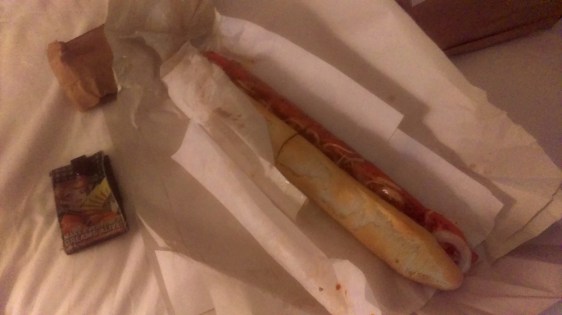
Food can be hit-or-miss. One issue is a lack of convenience stores, so getting quick snacks requires going well beyond the safety of the touristy areas. However, there are a number of restaurant establishments that provide a decent bang for your buck. Wingcraft has excellent burgers, Cavo Crepe Cafe features a variety of crepes, and White House Subs with its two-foot long sandwiches (pictured above) is an American institution that quickly became my favorite place to eat.

Atlantic City can feel like a sad place, as if joy has been gradually drained from it over the course of years. The hotel I stayed at, Bally’s Hotel/Casino, would emit this odd smell whenever I entered it. Aside from gambling, there isn’t all that much to do outside of the con, which can be both a blessing and a curse. While it limits the number of people who will go to AnimeNEXT as part of an overall sightseeing trip, it means the people there are much more active at the con itself. Fortunately, there’s plenty to do within that context.

I did play the slots a bit. I won four whole dollars, and made sure to shout, “HELLOOOOOO” every time.

Fan Panels

AnimeNEXT has always had a decent focus on panels, especially fan panels. Because it’s not as difficult to get a chance at AnimeNEXT compared to larger cons such as Otakon (while also being located on the panel-friendly east coast), aspiring newbies and veterans alike can try their hand at presenting in front of audiences. That was still the case this year, but there seemed to be an even greater desire to pack the panel schedule to the brim.

The result was plenty of interesting content, but with some hiccups along the way. The actual events schedule came incredibly late, making it difficult to plan in advance. Panel slots were shuffled almost to the last second. Some panelists actually had panels scheduled against themselves. The organization of previous years seemed to falter in 2017.

Nevertheless, the fan panels themselves generally overshadowed those issues. Not only that, but most audiences were decently sized from what I saw, which isn’t always the case with AnimeNEXT.

Gattai! Giant Robots of Yesteryear was a giant robot anime recommendation panel. Run by the crew over at the Cockpit, it was helpful even for a big mecha fan like myself with many shows under his belt. I’m intrigued by F.L.A.G., for one thing.

Let’s Dive! The History of Cyberpunk Anime was quite informative, including giving a good understanding of what “cyberpunk” means. There was an issue with his laptop partway through the presenter’s panel, but it was clear he knew the material well, as he kept rolling without any visual aids. My only complaints were that I didn’t recall a definition for “biopunk” (which the guy categorized as different from cyberpunk), and a lack of the anime Real Drive—a cyberpunk anime with an actual diving theme.

Anime Burger Time, from the mind of former Crunchycast host Evan Minto, is a celebration of all things burger in Japanese cartoons. As someone who loves food and also once ran an equally ridiculous panel about dogs in anime, I hold my respect and admiration for Evan’s endeavors. The most fun part of this was that attendees were encouraged to bring and eat burgers during the panel.

Criticism of Popular Anime was my least favorite panel I attended. The presenter’s intent seemed to be to take down those who flaunt their tastes as superior by saying everyone’s favorite anime are bad, but it mostly came across as a lesson in negativity. If anything, I’d like to see the opposite panel, one that can argue in favor of any show, no matter how dire.

I happened to run two fan panels myself, The Art of Stock Footage with Patz from the Cockpit, and Sports, Robots, and Romance: The Works of Tadao Nagahama. If you came to either of them, thank you very much. I’d like to give a shout-out to the two folks who came to the Nagahama panel half an hour early.


Industry Panels

If the fan panels are good at AnimeNEXT, then the industry panels are fantastic. The con brings some stellar guests and seems to encourage panels that go beyond the typical Q&A or simplistic presentation one might find at other conventions.

Studio Trigger, creators of Little Witch Academia, are no stranger to New Jersey. Returning for their fourth year, the sense of fun they bring to their panels, Trigger is arguably the staple highlight of AnimeNEXT. One of my favorite aspects of Trigger’s interactions with their American fans is their continued surprise over Inferno Cop‘s popularity, They even brought another exclusive episode of Inferno Cop to their panel, featuring a certain wall-loving president opposing our flaming-skull hero. The fact that they don’t show these outside of AnimeNEXT makes them feel that much more special, and it was of course the perfect place to announce a second season.

Due to scheduling conflicts of my own I was unable to attend their dedicated panel on Little Witch Academia. From what I was told, however, it was extremely informative and painted a surprisingly dark image of LWA lurking underneath its surface. Apparently, many of the girls in that series have tragic pasts that simply aren’t highlighted in the show itself.

As an aside, it’s funny how people think of Trigger as one of the premiere studios for animation quality (a reputation they well deserve), but that they’re also known for a work that is blatantly anti-animation in Inferno Cop.

Studio MAPPA, creators of Yuri!!! on ICE, gave a close look at what went into one of the biggest anime hits of 2017. The biggest takeaway from the panels was that the attention to detail among the staff bordered on the absurd. Whether it was hiring a professional figure skater clothing company to design the characters’ outfits, specifying which screws on their skates are present (real figure skaters adjust this based on personal preference), or animator Tatenaka Junpei showing a rough animation of the episode 1 performance from a different angle, it’s clear that no one slacked. While director Yamamoto Sayo was not present, it was clear from the staff that she was obsessed with figure skating.

They also showed a blu-ray bonus feature: an exhibition by character Yuri “Yurio” Plisetsky. Thanks to a scintillating appearance by Otabek during the special, the fangirls roared to life on a level almost akin to a Beatles live performance.

I’d also like to point out that their panels actually got substantial attendance, something that usually does not happen for Japanese guests who aren’t voice actors. I have hope that the fans’ love for the characters of Yuri!!! on ICE is so strong that they can branch into appreciating other aspects of anime and anime production.

TMS, the studio behind ReLIFE, held a panel similar to MAPPA’s focused on the animation process. One thing that was different from MAPPA was that they did have a voice actor: Ueda Reina. One thing I had not known prior to AnimeNEXT was that she’s also something of a popular idol. At the front of the panel room was a group of dedicated idol fans, adorned in merchandise from various idol franchises, hanging on to Ueda’s every word. While I thought it took a bit too much attention away from the TMS animators (who talked extensively on framing a certain scene in ReLIFE to emphasize its scandalous qualities), it did ultimately get more people to attend the panel.

I also had the opportunity to interview TMS, Trigger, and Mappa. Those transcripts will be showing up on the blog over the next few weeks.

Autograph Adventures

I actually did not learn of Ueda Reina’s popularity with idol fans at one of the TMS panels but rather while waiting in line for her autograph. I knew her as the voice of Mobuko, the Nurse Joy-esque background characters from the anime Tesagure! Bukatsumono. However, when I looked at my fellow attendees waiting for the TMS signing, I saw that most of them were obviously into idols. In fact, the three guys in front of me were cosplaying as Aikatsu! characters. Idol enthusiast supreme Omo informed me that Ueda has actually made appearances in The iDOLM@STER, Aikatsu Stars!, and is an idol in her own right. One fan even brought a life-sized cutout of Ueda’s iDOLM@STER character.

The rest of the TMS crew there, animators Kosaka Tomochi and Yamanaka Junko, were no slouch either, even if they did not have the drawing power of a voice actress/idol. Because both had a lot of experience working on Detective Conan, I brought something from the popular series for them to sign.

Overall, the TMS autograph session went off without a hitch. The same could not be said of Studio Trigger’s.

At this point, Trigger is pretty much a marquee guest for AnimeNEXT, and people will come to the con specifically to see them. As a result, while lines are not “supposed” to form until closer to the designated time, a loose mob began to form. The staff remarked that this was a fire hazard, so people were told to disperse. However, the staff continued to tell people not to line up even though it was actually getting close to the time on the schedule, and an argument ensued between the staff and some of the attendees.

In the end, due to the confusion over lining up, many people who had waited for two or more hours could not get autographs, and due to the fact that the Trigger staff likes to really take their time on sketches, only 30 people out of a significantly larger line managed to get their autographs. In comparison, twice as many got the opportunity with TMS. To me, the saddest thing was that some had clearly wasted their entire day trying to get a Trigger autograph only to fail. I managed to get some myself, but this was mostly due to good fortune and an understanding of how con lines and con staff work. This shouldn’t be necessary.

I’m considering not going to their signing at all the next time I attend AnimeNEXT, just so that others can get the opportunity. The bright side of all this is that the disappointed fans are proof that Japanese guests who aren’t voice actors can garner a sizable crowd. Often times, when it comes to Japanese staff at anime cons, their lines are short that you can practically stroll in and get one.

I should also point out that I did not even try for the Yuri!!! on ICE autographs, knowing the power and ferocity of its fanbase. I heard it ran into some problems, but I did not experience it firsthand.

Concerts, or Rather “Concert”

I attended only one musical performance this year, which was for the official Capcom Music Tour. It was decent, but also kind of underwhelming. It was clear that they only had a limited time to perform, but I was surprised that they only managed to fit in one Mega Man song, especially because that series is praised for its music. Moreover, a video preview at the beginning showed tunes from various old classics, such as BIonic Commando, which made the fact that those songs didn’t appear in the concert proper sting that much more.

In Conclusion, AnimeNEXT is Good, Atlantic City Ehhhh

The con is actually great. It’s spacious, there’s plenty to do, and they bring great guests. Atlantic City is not so exciting, and even a city like Baltimore (where Otakon used to take place) whose crime rate is kind of notorious makes the touristy area feel welcome. In Atlantic City, the tourism section is geared towards gambling, and that atmosphere definitely does not work for me. In spite of this, I think AnimeNEXT is definitely worth attending because it more than makes up for the faults of its location.

On a final aside, AnimeNEXT took place during a Hanayo event in Love Live: School Idol Festival, which meant that I could be found feverishly playing the game at random times during the convention. While there, I happened to photograph a couple of cosplayers of Hanayo and Rin, and one of them asked to exchange School Idol Festival info. It was the very first time anyone ever asked to friend me for LLSiF in real life, so to that Rin cosplayer, I’d like to say thanks.


Save

Save

Save

Save

Save

Ogiue Maniax Panels at AnimeNext 2017!

*Panel info has changed from the original post! Check out the new times!

I’ll be returning to AnimeNext this year as a panelist! It’ll be my first Atlantic City AnimeNext as well.

So if you’re interested in learning a thing or two about anime, check me out at the following panels:

The Art of Stock Footage
Friday, 3:00 PM – 4:00 PM
Panel 301

This panel is all about checking out how animation is used and reused in anime! See magical girls, giant robots, and check out some of the best stock sequences Japanese animation has to offer.

Sports, Robots, and Romance: The Works of Tadao Nagahama
Saturday, 2:00 PM – 3:00 PM
Panel 320

Tadao Nagahama is a revered anime director, but a lot of fans in the US have no idea who he is! Come see what makes him one of the greatest

I hope to see you at AnimeNext!

Save