OGIUE MANIAX

Anime & Manga Blog | 50% Anime Analysis, 50% Ogi

Halloween Means Precure!

I’ve come to realize that my favorite Halloween-themed episodes in anime come from the Precure franchise. This might be because it runs all year long (thus making holiday celebrations a common part of the shows), but I also think the mix of magic (in the form of magical girls) on a night associated with the occult works in its favor. Out of the many Halloween-themed instances of Precure, three stand out in particular: an episode of Suite Precure, another from Maho Girls Precure, and the movie Go! Princesss Precure: Go! Go!! Gorgeous Triple Feature

Before I proceed, here’s the requisite SPOILER WARNING.

Suite Pretty Cure

One of my main criticisms of Suite Precure is that, once a major character development moment passes, the show acts as if the new status quo is the way it’s always been. The key example of this is when the character Siren goes from antagonistic cat character to fellow human Precure. All of her history as a villain is seemingly forgotten after a couple episodes. The one major exception comes in the Halloween episode, where the now-Kurokawa Ellen dresses up as a cat girl. When a classmate asks about her costume, Ellen (without missing a beat) casually begins to mention that she used to be a cat, which prompts the other Precures to jump in and brush it off as a joke. It’s a clever bit of continuity in a show which often put it on the back burner.

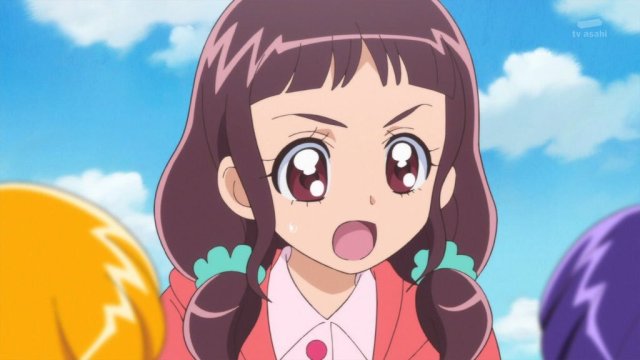
The character Atarashi Ako is herself dressed as a princess, which is also a joke based on her true identity. Amusement all around!

Maho Girls Precure

The Harry Potter-esque world of Maho Girls Precure lends itself perfectly to a Halloween episode. One of the running jokes of the series is the way that visitors from the Magical World will sometimes forget that they’re supposed to be hiding their identity and will just casually mention things that the Muggles (so to speak) shouldn’t know. Halloween is presented as a major exception, because in the festive, costumed environment, magicians can come as they are because people will think they’re dressed for the occasion. Even then, the Maho Girls find a way to push the limits. The star of the show in this instance is probably Haa-chan, the third Precure and by far the most powerful of the trio in terms of magic. She appears throughout the episode in bizarre costumes, like a mummy complete with sarcophagus, and an alien being taken away by Men in Black.

It’s just a fine episode of nudges and winks and fulfilling the expectations one might have for a Halloween episode in a show about wizarding magical girls.

Go! Princess Precure

Go! Princess Precure: Go! Go!! Gorgeous Triple Feature is actually an entire Halloween-themed movie, consisting of two shorts and one longer standard Precure movie. It was (appropriately) released on October 31, 2015. Go! Princess is already one of the strongest entries in the franchise, and many of its strengths—animation, charismatic characters, strong and positive themes—can be seen in the movie. Interestingly, the main thing the film seems to take from Halloween is the prominence of pumpkins. Whether they’re jack o’ lanterns or pumpkin desserts, the iconic Halloween vegetable seems to overshadow the costume and trick or treat aspects of the holiday. In a way, it’s probably the best of the three story-wise, but the weakest in terms of Halloween hijinks.

I do need to make a special mention in regards to the movie-exclusive transformation, though. The Cures here have a special Halloween-themed power-up that is appropriately flashy.

So those are some of my favorite Halloween anime. In the 90s, the holiday wasn’t a big deal in Japan, but has grown in prominence over the past couple of decades. If we were to move away from Halloween the holiday and more towards “monster”-themed anime, then Kore wa Zombie Desuka? would rank much higher. If you have your own special Halloween shows, feel free to leave a comment.

This post was sponsored by Johnny Trovato. If you’re interested in submitting topics for the blog, or just like my writing and want to support Ogiue Maniax, check out my Patreon.

Save

Fighting Evil By Moonlight – Heartcatch Precure!: The Novel

Heartcatch Precure! is, to date, the strongest entry in the Precure magical girl franchise. It’s a series that works incredibly well in an episode-by-episode basis but also in terms of long-term narrative. This success comes from successfully building upon itself, and one of the anime’s high points in this regard is the story of Tsukikage Yuri, aka Cure Moonlight, a veteran Precure whose defeat triggers the start of Heartcatch Precure! A recurring character, Yuri’s arc of forgiveness and redemption is one of the most satisfying and inspiring moments of the series.

Yuri is more of a strong supporting character than a main protagonist in the anime, which leaves a lot of questions to be answered. For example, how did she become a Precure? Fortunately, Yuri is actually the star of the Heartcatch Precure! novel spinoff, which retells the story of the TV series from her perspective. Simply titled Heartcatch Precure!: The Novel, this book adaptation takes a somewhat more mature alternative view of the story already familiar to fans.

The novel is divided into four large chapters: how Yuri first became Cure Moonlight and how she lost her powers, the arrival of Tsubomi and Erika (the heroines of the anime), Yuri’s return, and the finale. By far the most “new” content is in the first. Here, we get to see a younger Yuri in junior high, her friendship with Erika’s sister Momoka, how she meets her fairy Cologne, and her interactions with Tsubomi’s grandmother Kaoruko, the former Cure Flower who ends up training Yuri. One of the main focuses of Yuri’s path to becoming a Precure is the way in which Kaoruko tries to drill into Yuri that she needs to be at the top of her game. There’s also a great amount of attention spent on Dark Precure and her thoughts and feelings. As Yuri’s “shadow,” it’s only appropriate that the novel delve into her story as well.

The other three chapters don’t hold up quite as well. While they still do a fine job of telling the story of Heartcatch Precure!, they have this problem of rushing to the Yuri-centric scenes so as to refocus the narrative back on her. The consequence of this pace is that huge swathes of the novel feel like recaps, such as quickly introducing Cure Sunshine without much fanfare. At other points, however, because the core narrative is still about Tsubomi, the retelling of the anime’s events still draw much more attention to her than Yuri. The actual material is still quite satisfying, and the major moments resonate emotionally, but at many points it starts to feel less like a true Cure Moonlight novel. The points at which the novel does emphasize Yuri usually come from her conversations with Kaoruko, as well as any moment where she’s trying to use her experiences to teach or warn the new Precures.

It’s unclear if this novel is meant to be read by people who have already seen the anime, but there is a recurring trend where it quickly and nonchalantly drops information that was gradually revealed in the TV series, such as the true identities of certain characters. This isn’t even about “retelling” parts of the anime; one of the late spoilers in the series (the identity of a Tuxedo Mask-esque figure) is revealed in the first chapter, before Tsubomi ever shows up.

The story also occasionally deviates from the anime’s events in small ways, making it uncertain whether or not the novel is canon. For example, in the final battle against the main villain, Dune, he explains his origins and why he carries such hatred in his heart. This didn’t happen in the anime at all, and the lack of development for Dune is one of the anime’s few weak points. The climactic punch is replaced by an embrace because the running gag throughout the series, where Tsubomi uses a hip attack and calls it a “butt punch,” never occurs in the novel. It also expands on the epilogue of the anime, refocusing back on Yuri at the very end.

Given its length (over 300 pages in Japanese), the lack of furigana to help younger readers, and the complete absence of images aside from the cover, Heartcatch Precure!: The Novel skews older than the target young elementary school audience of the anime. While it’s an open secret that teenagers and adults watch Precure too, this book appears to be a specific targeting of that more mature audience. While the novel might feel a bit much like supplementary material, it’s still an enjoyable read that carries all of the strengths of Heartcatch Precure!, particularly its thoughtfulness in characterization and character development.

A New Way to Look at Precure Character Archetypes

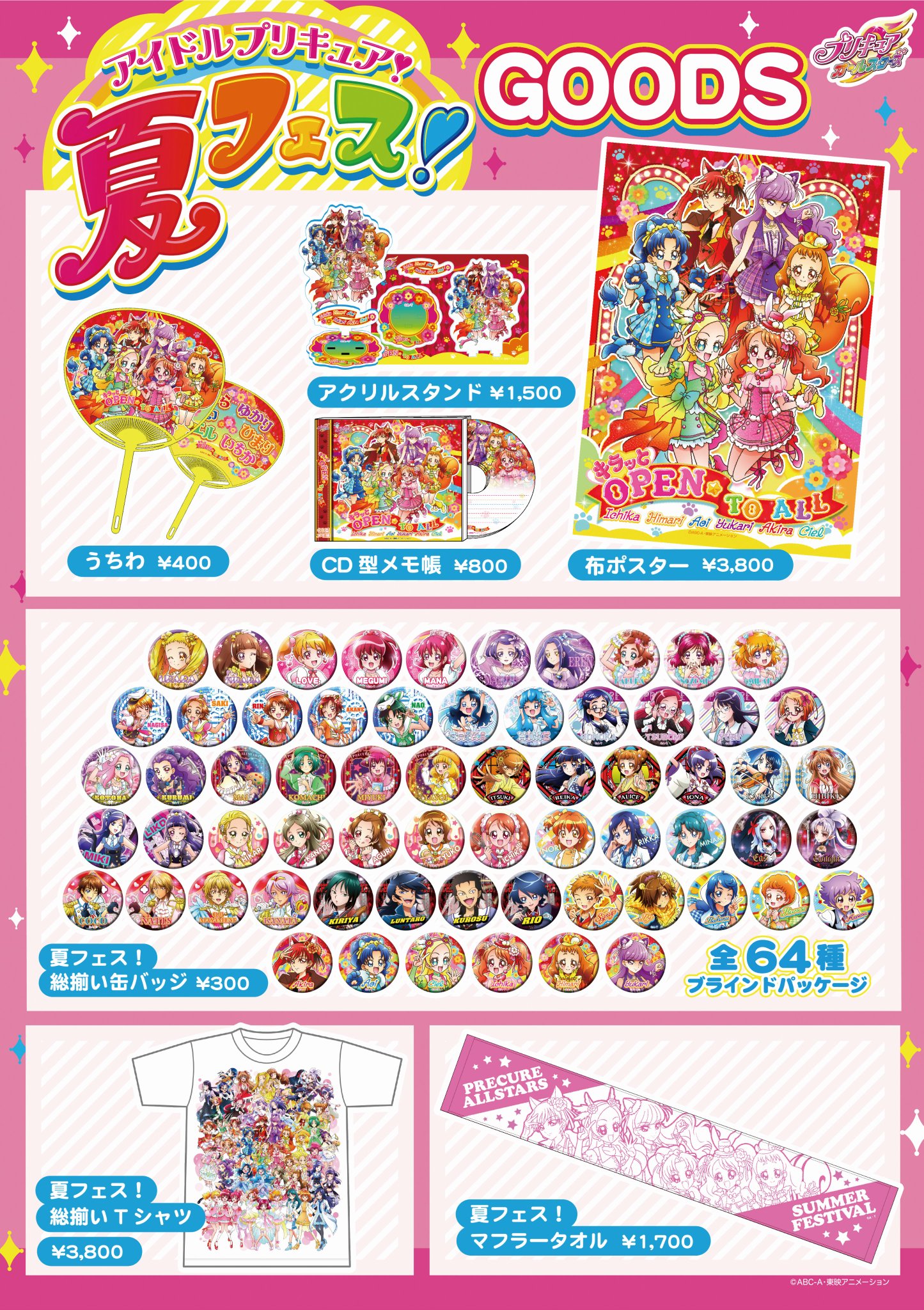
The Precure Pretty Store in Tokyo has a new batch of idol-style merchandise around the theme of “summer festival.” For it, each of the girls are wearing special outfits and have been separated into different groups around a common theme.

While that’s not unusual in itself, what I find fascinating is that the groups for the most part are not along traditional lines, like “show origin” or “color.” In fact, there doesn’t seem to be any real consistency from one theme to the next. Even so, I think it provides a new perspective on shared values between individual characters, so I’ve decided to lay out the categories below.

Pro Celebrities: Kasugano Urara, Amanogawa Kirara

Love: Momozono Love, Aino Megumi, Aida Mana

Otherworld Singers: Kenzaki Makoto, Kurokawa Eren

Fantastic Dreamers: Haruno Haruka, Yumehara Nozomi, Asahina Mirai

Athletes: Misumi Nagisa, Hyuuga Saki, Natsuki Rin, Hino Akane, Midorikawa Nao

Wildly Expressive: Kurumi Erika, Shirayuki Hime

Bookish Glasses Girls: Yukishiro Honoka, Hanasaki Tsubomi, Tsukikage Yuri, Shirabe Ako

Fairies-turned-Precure: Hanami Kotoha, Mimino Kurumi

Creators: Mishou Mai, Akimoto Komachi, Hoshizora Miyuki, Kise Yayoi

Martial Artists: Myoudouin Itsuki, Aoki Reika, Yotsuba Alice, Hikawa Iona

Musicians: Minazuki Karen, Houjou Hibiki

Secret Hard Workers: Aono Miki, Izayoi Liko

Chefs: Kujou Hikari, Minamimo Kaede, Madoka Aguri, Oomori Yuko, Usami Ichika

Aspiring Doctors: Yamabuki Inori, Hishikawa Rikka, Kaidou Minami

White-Haired (Former) Villains: Eas (Higashi Setsuna), Twilight (Akagi Towa)

Princes: Coco, Natts, Masame Oji, Kanata

Villains Disguised as Schoolboys: Kiriya, Luntaro (Wolflun), Kurosu (Close), Rio (Julio)

Young Mascot Fairy Boys: Syrup, Pop, Rakeru, Rance, Aroma

(The One Exception) Kira Kira Precure a la Mode: Kenjou Akira, Tategami Aoi, Kirahoshi Ciel, Usami Ichika, Arisugawa Himari, Kotozume Yukari

So what do you think of these categories? Do you like thinking of Precures along these lines? The one category that still perplexes me a bit is “Secret Hard Workers,” because Liko and Miki have very little in common. Is there something else they have in common that I’m missing?

And where would the a la Mode girls fit if they had to be divided into them? Would they all go into “chefs,” or would that only work for some of them? For example, would Aoi fit better in “Musicians?”

Save

Save

Save

[APT 507] How the Precure Age Experiment Set the Stage for Yuri in Kira Kira Precure a la Mode

Yuri fans have long been into Precure, but a recent episode of the newest series placed yuri front and center into a world that normally shies away from such a direct presentation. See my thoughts on how character age has paved the way for yuri in Precure at Apartment 507.

Wizards Are Among Us!: Maho Girls Precure

mahogirls

Witches were the original magical girls in anime, so it’s somewhat surprising that the now nearly-15-year mahou shoujo franchise Precure would take so long to make a series where magic in the conventional sense is front and center. That’s what Maho Girls Precure brings to the table, and the result is a series that, while not terribly ambitious, is a still a good deal of fun.

Maho Girls Precure follows Asahina Mirai, a normal Japanese girl who one day runs into a witch in training named Liko. Searching for a magical item called a Linkle Stone, the two run afoul of a villain searching for the same item. Despite the fact that Mirai knows nothing of magic and Liko’s own skills aren’t the best, they’re able to summon the legendary power of Precure, transforming into magical girls named Cure Miracle and Cure Magical, fighting off the enemy with their new-found abilities. From there, the two become fast friends, even traveling between the magical and non-magical worlds to attend school, have fun, and protect both from malevolent forces.

Given the presence of a magic school, comparisons with Harry Potter are practically invited. There’s even a wise old headmaster (though considerably younger-looking) and a stern female teacher. You might even call Mirai and Liko “chosen ones.” However, unlike J.K. Rowling’s famed series, Maho Girls Precure isn’t a detective story with the elaborate trappings of a magical world, and in terms of seriousness vs. levity remains roughly in the territory of the early, prepubescent Harry Potter stories. That being said, it’ll occasionally raise the stakes at climactic moments and pull it off well. When it comes time to finish, Maho Girls Precure pulls out all the stops in terms of dramatic flair and animation, which is customary for the franchise but always welcome nevertheless. By the end, it’s even the first to really acknowledge the world beyond junior high since my beloved Heartcatch Precure!

curemagical-topaz curemiracle-topaz

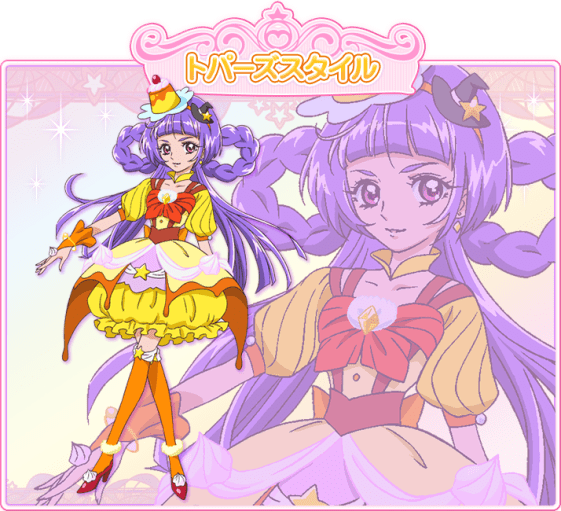
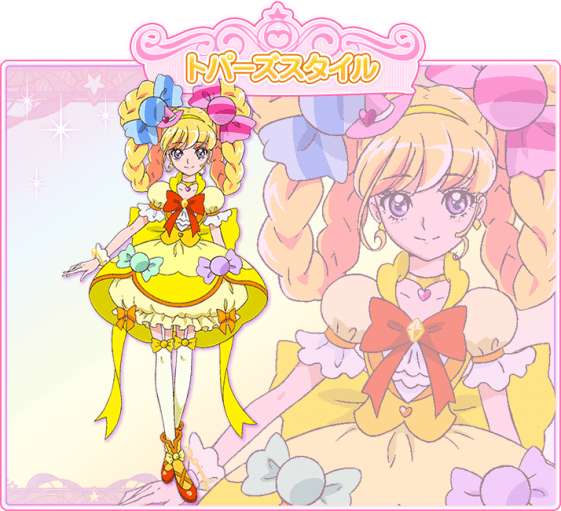
The series is not a terribly bold or daring work, but it also never promises more than it can live up to, which was the issue with the earlier HappinessCharge Precure!—a series that introduced the idea of Precures from all over the world, but never elaborated on it to a satisfying degree. Speaking of HappinessCharge, one aspect from that series utilized to greater effect here is the ability for the Precure to transform into different costumes with different abilities. While it’s not always clear why they use one over the other, they’re all stylish enough in appearance and unique enough in application to not wear out their welcome. My favorites are the topaz outfits, which carry dessert themes and also Green Lantern powers.

mahogirls-sleepingbags

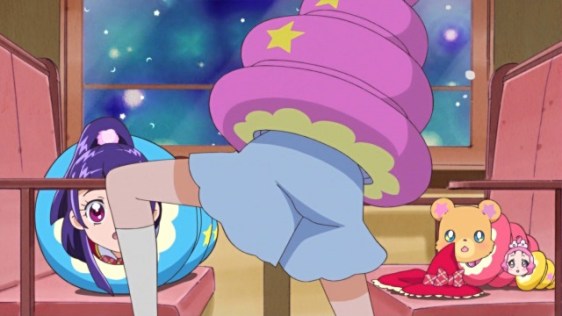
The aspects of the magical world I enjoyed most were the silly little quirks of a different society accustomed to spells and physics-defying elements. From the default incantation of “Cure-up! Rapapa!” to the bizarre shell-shaped sleeping bags found on the snail trains (sort of the Maho Girls equivalent of the Hogwarts Express) to the wizard versions of fairy tales (the fairy godmother is the main heroine!), I looked forward to seeing what simple yet amusing elements of magic would pop up next.

mahogirls-kana

However, the most telling thing about how I view Maho Girls Precure is that my favorite part of the anime is not the heroines or their fight against the forces of chaos, but a side character, Katsuki Kana. A fan of the paranormal, Kana is quick to notice that some unusual things are going on in their town, except no one else seems to notice, and the Precures themselves actively deny it. When she first encounters Liko’s witch friends, they nonchalantly blurt out about how things are so different in “their world,” prompting a frantic expression from Kana in response. In addition to her panicked reactions towards any hint of magic, her ongoing desire to learn the truth, carry shades of one of my other favorite supporting characters in Precure, school newspaper journalist Masuko Mika of Yes! Pretty Cure 5.

Speaking of characters, I’d also like to mention that Liko is pretty much the anime version of Twilight Sparkle from My Little Pony: Friendship is Magic in both appearance and personality. Any fans of Twilight would probably enjoy her antics.

 Maho Girls Precure only rarely ever had me dying to see what happens next, but its simple yet expansive relationship between its characters and their worlds made sure I never tired of it. It’s a series you can take your time with, and it’ll entertain and move, at least one step at a time.

The Transformation of Time from Manga to Anime

jotarovssheerheartattack

How much does time pass when the mighty Star Platinum punches an enemy Stand in JoJo’s Bizarre Adventure? There are many factors to consider, such as how much time has passed in the show itself, as well as how time is being manipulated within the series’ universe itself. Another important element is the fact that the anime is an adaptation of a manga, where the flow of time is abstracted by manga’s existence as a 2-D paper medium.

As far back as Tetsuwan Atom, adaptations of manga have been a common mode of anime production. Manga act as a spring of new stories to present, and the jump from the comic book format to animation opens up many opportunities. An anime can try to forget its own path through interpretation or divergence from the manga (such as both the Ghost in the Shell films and Stand Alone Complex), or they can faithfully attempt to recreate what exists in the original. However, while the latter cases might often appear to be “direct transplants” of the manga to the screen, the act of having to take a physical and spatial image such as a panel and assign to it a finite amount of time can greatly change the impact of a given scene in spite of the desire for faithfulness to the source material.

In a general sense, having to time dramatic beats for an anime often requires playing around with the contents of the manga. For example, in an episode of Dragon Ball Z, filler sequences (such as the infamous minutes-long powering up spots) not only save budget, but can also be a way to make sure the episode ends on a cliffhanger. On a broader multi-episode scale, Initial D: Fourth Stage does something similar by reversing the order of the final two opponents. Originally, the manga has protagonist Takumi race against a man known as “God Hand,” while his teammate Keisuke races against “God Foot” afterward. In order to make sure the series ends with a climactic battle for its hero, the show has God Foot go first instead.

One consequence of this is that there can be moments when a series feels as if it’s dragging. Sometimes it’s successfully padded out or rearranged so that nothing feels particularly off, but in other instances it is possible to sense an uneven rhythm or pacing.

This notion also extends to the transform of panels into time. Consider that there is generally no specific amount of time that is said to pass in a given panel in manga, or indeed comics in general. What makes a panel feel “fast” or “slow” is partially about how long one’s eyes linger on a panel, and it’s dependent on the amount of content there and the flow of the page. But because time exists differently in manga, things that seemingly pass quickly on the page take much longer on the screen.

shoujofight-hit-small

A common example of this would be the frantic explanations of special moves in an action or sports series. Because we tend to read more quickly than we speak, it is possible to believe that an elaborate speech or thought is being made within the span of a ball being passed from one player to the next. However, commit that to concrete time in an anime, and suddenly you begin to wonder why no one is doing anything as they talk for 30 seconds. To appreciate those moments, it requires a viewer to understand that time portrayed is not literal. This is the case even with series not adapted from anime. It does not “really” take Voltes V two or three minutes to combine together, or for Erika to become Cure Marine.

So when what is a single, snappy panel in manga gets stretched out into an extended scene in an anime, it can dramatically effect how a person can feel about a particular title. I find this to especially be the case with comedy series. Take Azumanga Daioh, a four-panel series. In the manga, there will be a comedic moment that lasts for only one or two panels, such as Sakaki rolling on the floor while holding a wild Iriomote cat. In the anime, this becomes a full-on extended display of non-stop rolling with musical accompaniment. A small moment becomes a big one thanks to time. A more recent title would be Nichijou, where the staccato presentation of the manga’s gags are the equivalent of sharp, quick jabs. In anime form, however, the characters’ movements are exquisitely animated and exaggerated, and the result is a series that is in a way much more physical and almost “luscious” in a sense. While the Nichijou anime pretty much takes things directly from the manga, the two turn out to be pretty different experiences.

My belief is that the unusual handling of the (broadly speaking) space-to-time transition of manga to anime is a likely culprit of why someone might love a manga but hate its anime (or vice versa!) even if the adaptation process is largely faithful. It’s kind of like when an actor is cast in a movie based on a book; what was once a nebulous image reliant upon visual/mental interpretation becomes a little more solid and finite.

Save

Save

Save

Save

Here Are My Hopes for Kira Kira Precure A La Mode

precurealamode

I’ve written an article over at Apartment 507 talking about the latest Precure. There aren’t any major details yet, but if you want a quick rundown of Precure as a whole, and want to know how I’d like the series to go, head on over.

Save

Precure is Not a Lesser Sailor Moon

curemoonlight

A few months ago at Otakon, I was talking with Alain from the Reverse Thieves, who had attended a panel about magical girls and feminism. He had described how the presenter went through the various series she’d be discussing, but made specific mention that she’d be omitting Precure from the discussion, citing the fact that she wasn’t particularly impressed. Although I did not attend the panel myself, I found that to be unfortunate, not because of the dismissal of Precure by the presenter in isolation, but because this stance on the long-running magical girl franchise is not that uncommon. Among many fans, presenters, and even scholars, Precure is assumed to be bland and generic and not worth discussion.

In my opinion, that kind of thinking is a mistake. Precure is not only the biggest and most popular magical girl property of the past ten years, eclipsing even Sailor Moon in certain ways (sales, longevity on TV, etc.) and therefore worth observing for its cultural footprint, but it is also a fount of positive imagery for girls. While there are certain elements that can remain issues, such as the increasing ubiquity of pink as the only possible color for the main heroine and the fact that a lot of the magical girl outfits have high heels, Precure utilizes strong female characters by default, rather than making a big deal out of their existence. What’s more, because the series refreshes itself every year or two, its variety results in different approaches to characterization of female characters and themes pertaining to feminism. You have weak girls who become strong over time (as well as a nuanced exploration of what it means to grow), heroines who are more ideals of human potential, and even characters who try to reclaim the term “princess” to mean something more than “demure.” Even the very first series is significant due to its portrayal of girls having aggressive, hand to hand fights (in a show for young girls, no less), and the fact that its two main characters are more about their life goals than pining at the boys around them.

I have my suspicions as to why Precure has ended up with this reputation, and a lot of it has to do with Sailor Moon. It was the first of its kind, the sentai-inspired battling magical girl genre of which Precure is a part. In terms of cultural influence around the world, Sailor Moon has crossed the barrier from niche interest for anime fans only to seminal work, and is frequently cited as a pivotal show in the development of many young artists. Just the fact that it portrays these mature-looking girls who fight and win is on a basic level empowering and inspiring, and so any similar series gets compared not only to Sailor Moon but also its presence as a kind of nostalgic defining moment where any weaknesses it possesses as a series are forgiven. It’s also very important to point out that, especially in the US, Precure is just plain hard to come by. As a result, for English speakers it has much less potential of becoming part of the fabric of one’s upbringing, with the possible exception of Smile Precure!, which has been loosely adapted to become Glitter Force on Netflix.

I get the feeling that, when the Sailor Moon generation typically sees Precure, a common process occurs. First, they see that Precure is similar, and that its story (depending on which version they watch) is often more lighthearted initially. Second, they see that the character designs are younger-looking, and so it seems less mature as well. Third, they might do a bit of research and become aware that the franchise is also popular with adult men, lending a sort of “creepy pervert” vibe to their impressions. Finally, they fill in the blanks, and without watching much more, jump to the conclusion that the franchise can’t possibly do things so differently from Sailor Moon that it’d be worth looking into more, or that it’s only for sad otaku (unaware that Sailor Moon was the show for doujinshi in its heyday). Moreover, because Precure doesn’t have the more immediately apparent dark appeal of a Revolutionary Girl Utena or a Madoka Magica, it’s further assumed to be generic kiddie fare. That’s not to say that the series isn’t for children, but that the type of maturity it carries is more in how it approaches the task of trying to show strong images for a female audience. As discussed above, I believe Precure does this to great success, and to see it brushed aside saddens and angers me.

I like Sailor Moon, and I don’t mean to paint fans of that series with the same brush. However, because it is a defining magical girl show for a lot of people, it gets written about as if it is the be-all, end-all of its particular brand of mahou shoujo. The reputation of Sailor Moon surpasses what is actually in the series in a certain way, and it casts an unfair shadow on Precure when Precure does many things that I would argue are improvements or directions that Sailor Moon never goes. This is especially the case with its feminist qualities. My hope is that, when people think about progressive portrayals in anime and the magical girl genre, they not only remember that Precure exists, but are aware of all that it offers.


If you liked this post, consider becoming a sponsor of Ogiue Maniax through Patreon. You can get rewards for higher pledges, including a chance to request topics for the blog.

Save

The Open-Ended Nature of Aikatsu’s “Idol Activities”

This post was sponsored by Johnny Trovato. If you’re interested in submitting topics for the blog, or just like my writing and want to sponsor Ogiue Maniax, check out my Patreon.

aikatsu-group

There have been many attempts over the years to dethrone the Japanese children’s entertainment juggernaut that is Precure, but while Precure is squarely in the realm of the “fighting magical girl,” most of its challengers are themed around mahou shoujo’s sister genre: pop idols. This includes Pretty Rhythm, PriPara, Lil Pri, and the subject of today’s post, Aikatsu!

Aikatsu! began in 2012 as a multimedia franchise consisting of games, manga, and anime. The animated television series, created by Sunrise (of Gundam fame), follows Hoshimiya Ichigo, a girl who enters the idol training school Starlight Academy after being inspired by its top star, Kanzaki Mizuki. Together with her best friend and idol fan, Kiriya Aoi, and others she meets along the way, they engage in idol katsudou, or “idol activities.”

aikatsu-obaripose

Sunrise at this point is well known for another popular idol anime, Love Live!, and despite the fact that they don’t share that much staff, the two shows are similar in feel. Both have an overall lighthearted sense of fun and engaging character interactions combined with learning and personal development. Both feature bizarrely comedic moments (the episode where Ichigo gets into an “Obari Pose” and chops down a christmas tree is famous). Both series are also so entertaining in these respects that the actual “idol performance” moments are comparatively less interesting.

aikatsu-helpmeobiwan

However, one curious aspect of Aikatsu! that differentiates it from Love Live! (and many other anime) in terms of narrative is that Ichigo and the other idols don’t seem to have a concrete goal to aim for. The girls in Love Live! want to save their school and then win the Love Live. Naruto wants to become Hokage. Ichigo’s motivation is this vague sense of “becoming an idol,” but by the first few episodes she already is one more or less, and there just seems to be this general sense of forward progress. This is also what differentiates it from other more episodic works, or series such as Hidamari Sketch.

Aikatsu! has just enough on-going threads in the background and pays attention to its characters’ growth that the series carries a nice sense of continuity. Aoi becomes the mascot for a crepe company in an early episode, and after that you can always see a copy of the advertisement poster featuring her in Aoi and Ichigo’s room. The show also drops hints that Ichigo’s mom is a former idol, and as I continue to watch the series I’m just anticipating that moment where Ichigo discovers the truth. Every time her mom appears on screen, I think, “Will this be it?!” That desire to see Ichigo’s realization is actually one of my main motivations for continuing to watch.

dokidokiprecure-phones

There’s one last element of Aikatsu! I want to discuss. More specifically, it’s a theory pertaining to Aikatsu!‘s relationship with Precure. When watching Aikatsu!‘s core cast, I could not help but be reminded of the cast of Doki Doki Precure!, which came out in 2013. While the characters are different enough to not feel like copies of each other, Mana’s blonde hair and pink color scheme in her transformed state resembles Ichigo’s, Rikka (blue) plays the role of the more level-headed and smarter best friend just like Aoi, Alice resembles Arisugawa Otome (orange) not only in name but also in appearance, and Makoto’s occupation as an idol (as well as her serious personality) feels akin to Mizuki. I suspect that Doki Doki Precure! may have taken some inspiration from Aikatsu! but I can’t be certain of this. That said, I recently checked out some of the character design notes for Doki Doki Precure! and noticed that Cure Sword (Makoto)’s design originally had longer hair, which would make her more stylistically similar to Mizuki from Aikatsu!

Aikatsu! has been a series on my radar for a while, that I had only briefly engaged with, but given just how entertained I’ve been by it I definitely want to watch more and talk more about it. Expect future posts, maybe?

Royally Good: Go! Princess Precure

vlcsnap-2016-02-04-11h58m04s696

After Happiness Charge Precure! failed to live up to its potential, I had hoped that the next series in the long-running Precure anime franchise would fare better. Fortunately, Go! Princess Precure wildly exceeded my expectations to become one of my favorite iterations of the popular magical girl anime. From the serious to the silly, Go! Princess Precure hits a homerun.

vlcsnap-2016-02-04-11h55m40s363

Go! Princess Precure follows Haruno Haruka, a teenage girl who dreams of becoming a princess. As a small child, she met a handsome young prince named Kanata who inspired her to hold onto her love of princesses, in spite of discouragement by others. In the present day, as Haruka comes to the prestigious “Noble Academy” with the goal of learning what it means to be a “true princess,” she finds out that monsters have begun to attack the school, preying on everyone’s hopes and aspirations. Haruka becomes a “Precure,” a magical warrior with the power to defend against the forces of Dysdark, and is soon joined by two other girls, Kaido Minami and Amanogawa Kirara, who also use their dreams to fight back.

Princess fever has taken over amidst the enormous popularity of Frozen in Japan, and Go! Princess Precure asks, “What is a princess?” While this question (as well as the thematic flourish of the series) can potentially be criticized on a surface level as sexist and regressive, a closer look shows that Go! Princess Precure aims to claim the concept of the princess as a symbol of hard work and kindness towards others. To this point, a major villain of the series, the powerful Princess Twilight (no relation) even confronts Haruka (Cure Flora) with the idea that one can only be born a princess, and while she’s technically more correct than Haruka in terms of how it works in real life, Go! Princess Precure shows how Haruka, Minami (Cure Mermaid), and Kirara (Cure Twinkle) strive to embrace the idea of a “princess” as being the product of one’s effort. In other words, according to Go! Princess Precure, being a princess doesn’t make you a better person. Rather, being a better person who strives for their dreams and helps others is the key that allows any girl to become a princess all on their own.

vlcsnap-2016-02-04-11h56m55s919

Not only is Go! Princess Precure strong thematically, it’s just an incredibly solid show in general. In terms of animation, it has some of the finest fight sequences in all of Precure as early as episode 1, and while it rises and dips in quality as is typical of a year-long anime, its overall consistency as well as its high points are notable. The outfits and character designs are all on point (In terms of narrative, the series benefits from an entertaining main cast with well thought out character development. Flora’s story at the half-way point connects to that greater theme of “princess” self actualization. Kirara as the donut-loving fashion model eager to speak her mind is one of the most unique Precure characters ever (I voted her as my favorite among the Princess Precures for this reason). The supporting characters, though not quite on the level of Heartcatch Precure!, grow admirably throughout the series as well.

Perhaps most notably, when the anime introduces a fourth Precure late into its run, she does not overshadow the rest of the cast. It’s a common problem for shows like Precure or Super Sentai, where in an effort to push the new character and her toys she ends up practically taking over the show. Honestly, I can’t recall a single bad episode.

Go! Princess Precure might be quite the hard act to follow. Whether it’s in comparison to the rest of Precure or as an anime all on its own, Go! Princess Precure is simply an outstanding work that embodies a lot of what is best in children’s shows and the magical girl anime genre. I highly recommend anyone, even those skeptical of mahou shoujo, to take a look.

vlcsnap-2016-02-04-11h57m26s047

If you liked this post, consider becoming a sponsor of Ogiue Maniax through Patreon. You can get rewards for higher pledges, including a chance to request topics for the blog.