Shoujo Fight by Nihonbashi Yoko (released in English as Shojo Fight) is my favorite volleyball manga. Yes, even more than Haikyu!!, and even more than Attack No. 1. The series is great in so many different ways, but I think the key is how it manages to succeed at being both a story about volleyball and a story with volleyball in it. The drama is compelling on- and off-court, and the characters’ continued growth in both arenas feels both organic and satisfying.
This isn’t the first time I’ve written about this manga, but after 16 volumes released in English digitally by Kodansha, I realized I’ve ever written a proper review to talk about why I love Shoujo Fight so damn much. Now I’m here to correct that oversight.
Shoujo Fight is the story of Oishi Neri, who we first meet as a second-stringer on the prestigious Hakuunzan Middle School Girls’ Volleyball Team. Although she may seem unfit for the sport, it’s soon revealed that she’s on the bench not for a lack of talent, but because she voluntarily chooses to hold herself back for fear of alienating her teammates. Volleyball has been her way to cope with major trauma in her life, but the intensity with which she plays drives others away. After Neri is mistakenly kicked off the team due to a supposed sex scandal, she is unable to join Hakuunzan’s high school division and instead ends up at Kokuyoudani High: a school infamous for its heelish misfits. However, it’s only by joining their volleyball team that Neri begins to find teammates who will accept her flaws, help her overcome them, and even recognize when they’re actually strengths.
Neri alone would be enough to carry the series and keep me hooked, but I can’t emphasize enough that the entire cast of characters is incredibly strong and memorable, from major to minor figures. Not only do they have outstanding personalities that rarely come across as one-note, but they develop in interesting ways too. As players, their strengths and weaknesses on the court give hints as to how they approach the game and how they function within teams, but Shoujo Fight also explores how these qualities within the context of volleyball are but fragments of whole human beings with thoughts, feelings, fears, and dreams.
Aside from Neri, the best example of character growth in Shoujo Fight is Odagiri Manabu, a nerdy girl who starts off as an old classmate of Neri’s more interested in drawing manga in class, and who looks up to Neri for her inner strength. She eventually joins Kokuyoudani’s team just to try it out, and though an absolute novice in every way possible, the senior members of the team see something in Manabu. Her personal traits of kindness, thoughtfulness, and sense of imagination gradually translate into volleyball and take her on the path to becoming a great setter.
My favorite character by far, though, is captain Inugami Kyouko. As Kokuyodani’s premier setter and master strategist, her coming onto the court spells trouble for the other team every time. However, her lack of stamina (due to being asthmatic) means she can only provide a temporary boost. Not only does this make for exciting moments, but she is shown to purposely based her play styler around being a shot in the arm. More importantly, though, she is a practical jokester par excellence whose masterful trolling is also a result of skills honed due to the limitations of her physical condition. Her mischievous personality combined with her keen game sense means that she can swing from serious to silly and back, and it never feels out of place. Though, that’s not actually something exclusive to Kyouko—Shoujo Fight as a whole does a great job of expressing both the dramatic and comedic at once.
When I say that it manages to somehow both be about volleyball and simply include it, what I mean is that the sport can act both as background and foreground depending on which storyline is involved. When it’s about team rivalries or maybe animosity between two players, then the game of volleyball and all its quirks are front and center. When familial political maneuvering is happening and characters are caught up in it, then volleyball becomes the backdrop through which the drama plays out. They’re two sides of the same coin, and often it’s hard to tell what’s heads and what’s tails. For example, while Shoujo Fight doesn’t really have “antagonists” per se, one character introduced later is basically a woman with deep pockets and a lot of clout whose desire to build stronger national volleyball teams sees her going as far as to manipulate families into arranged marriages for both political convenience and to create super athletes. Shoujo Fight never feels like merely an ad for volleyball or the power of friendship in volleyball, but it’s also not above celebrating these concepts.
Shoujo Fight is, in essence, a manga where a variety of dueling contradictions come together to make something greater than the sum of its parts. Its energy is pure and innocent, yet also down and dirty. Its storylines and characters can be filled with ennui yet lighthearted as it gets. High school feels like Neri and the others’ entire world but also just a temporary stop in life. Shoujo Fight is all things, and it’s a world that’s both amazingly accessible and remarkably deep.
Much of Kio’s tweeting this month has had to do with the fact that Hashikko Ensemble Volume 7 went on sale on the 22nd, and Spotted Flower Volume 5 is out on the 30th…on top of Chapter 44 of Hashikko! There are lots of inevitable scheduling woes, but he’s actually also been responding to and retweeting readers in a concerted fashion for the first time.
All Spotted Flower volumes have a plastic cover jacket with characters in clothes that obscures a second paper cover jacket with the characters in underwear. Kio gives a sneak peek here.
The next chapter of Hashikko Ensemble has a ridiculous amount of lyrics and musical effects, but while the work seemed to never end, it’s finally almost over.
Kio discusses with 18+ manga artist Ikuhana Niro (who also publishes in Rakuen: Le Paradis) about ways to abbreviate Hashikko Ensemble and Spotted Flower in Japanese. Ikuhana uses HashiAn and SupoHana, while Kio originally uses Hashikko and SupoFura, but also Spotted in hiragana or katakana. Supote is brought up, with the idea that it sounds like Ponite (ponytail).
The Rakuen: Le Paradis Twitter account chimes in that Supote is one sale 9/30.
Kio responds with thanks to those who tweeted about supporting the release of Hashikko Ensemble, Volume 7. He doesn’t quote tweet readers all that much, so it feels special.
A fan mentions that they’ve always liked Genshiken and stuff, but only recently got into Hashikko Ensemble and wish they did so sooner. Kio tells them to enjoy it at their own pace.
Kio mentions that there are store-exclusive bonuses for Volume 5 of Spotted Flower. (I’ll be getting the Ogino-sensei ones from Melonbooks and Animate.)
In response to a TSUTAYA bookstore showing its display bookshelf for manga artist panpanya, Kio responds that it’s sandwiched in one hell of a place, given the shelves on each side (Blue Lock, Demon Slayer).
Kio up until recently still was not a fan of Kurita Kan’ichi as the voice of Lupin III ever since he took over the role in the 1990s. However, he’s noticed that rather than sounding like an imitation, Kurita’s performances now have a weight and seriousness that has allowed Kio to finally accept his Lupin.
Kio talks about the good work an “Akio-san” did on photos. What it means is still unclear.
Looking Ahead
This was a pretty tweet-heavy month for all the reasons above. I get the feeling we’ll be seeing less for October, but you never know. I also posted these highlights right before the 9/30 release date of Spotted Flower Volume 5, so I’m sure I’ll be covering a lot just from that!
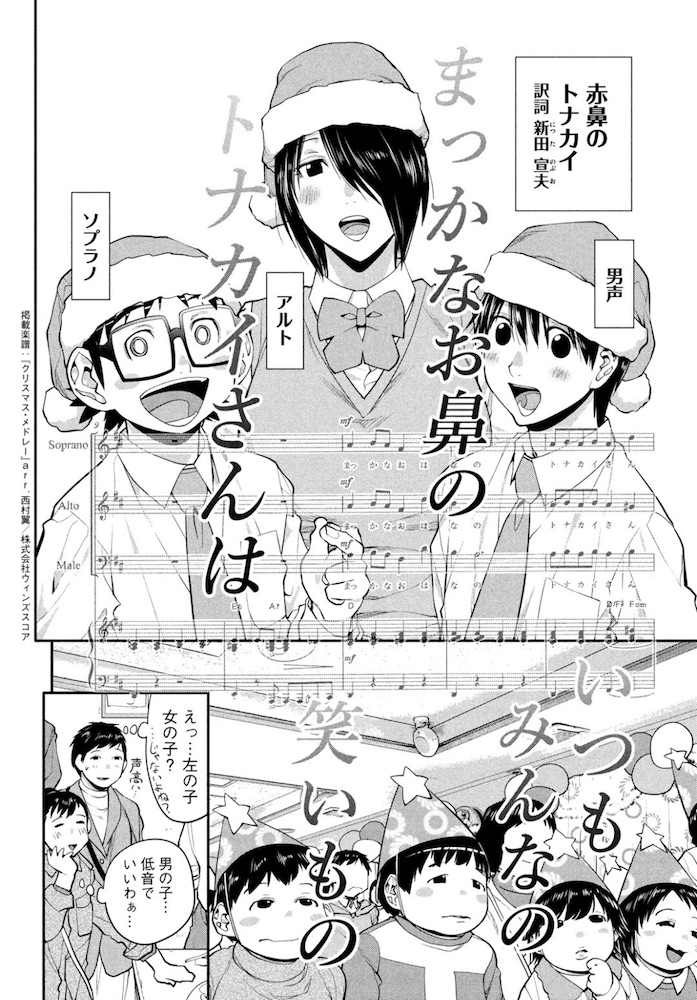
The Christmas-themed concert at Kousei’s orphanage continues, with the two sides (Christmas crew vs. Namahage Tsuyamers) joining together to sing a couple of songs as one. Kozue (still dressed as God) announces them as the Hashimoto High Chorus Appreciation Society, or “Hashi-kou Ensemble” for short.
The kids in the audience enjoy their performance, while Rikurou (the delinquent kid) is especially surprised by Kousei’s impressive singing. The orphanage’s assistant director thinks back to when a young Kousei first listened to a chorus concert himself. Later, Kousei has a heart-to-heart with Rikurou, where he talks about his dream: to buy a relatively inexpensive plot of land in a rural area, and use the architecture skills he’s learning in high school to build a house of his own where he can invite people over to listen to music.
During the concert, Jin notices Akira’s continued improvement in his singing—even in relatively higher notes, as opposed to the low notes that are Akira’s especially. Afterward, Akira casually mentions wanting to study music, which takes Jin by surprise. The caption at the end wonders how Jin will handle Akira potentially doing what Jin felt he never could.
They Said the Thing
This is the first time that the title of the series is (more or less) mentioned by the characters themselves, and it feels like a real milestone. What I think about is the sheer size of the group at this point, going from just Akira and Jin to around a dozen members. They’re on the verge of transitioning from appreciation society to full-fledged club, and I get a real sense of growth looking back at what’s transpired.
At this point, there’s only one girl among the actual singers, and I see that changing as the story progresses.
A Dream of a Home
Kousei is a character with a lot of layers, and I really love the reveal as to what he’s been working towards all this time. It’s strong and sweet, and encapsulates both the pain and healing that Kousei has been through.
There’s potentially a conversation about toxic masculinity to be had here, though I don’t know if it’s necessarily limited to perceptions of manhood. What I do see is Rikurou’s previous anger towards Kousei for doing something decidedly uncool and unmanly in his eyes, and then how Kousei manages to change Rikurou’s mind about everything. Kousei’s masculinity is complex, and even though he’s quick to get into a fight, he’s also kind and caring in his own way, and even a bit vulnerable—like his bashfulness over Shion. During his talk with Rikurou, asks if Shion is his girlfriend, which Kousei strongly denies. We know, though, that he’s held back by the belief that he’s from a world too different from hers.
Songs
“My Neighbor Totoro” from the Studio Ghibli film
“Let It Go” (Japanese) from Frozen
“Niji” (“Rainbow”) from “Itsu kara No ni Tatsute” (“Standing in the Field, Lost in Time”)
“Kamome” composed by Kinoshita Makiko
As always, I have an ever-growing Youtube playlist of most of the songs featured in Hashikko Ensemble.
Final Thoughts
This was a good spotlight on Kousei, though I think the manga’s going to focus on other characters after this.
The series keeps building to some kind of confrontation between Akira and Jin, and I have to wonder when things will come to a head.
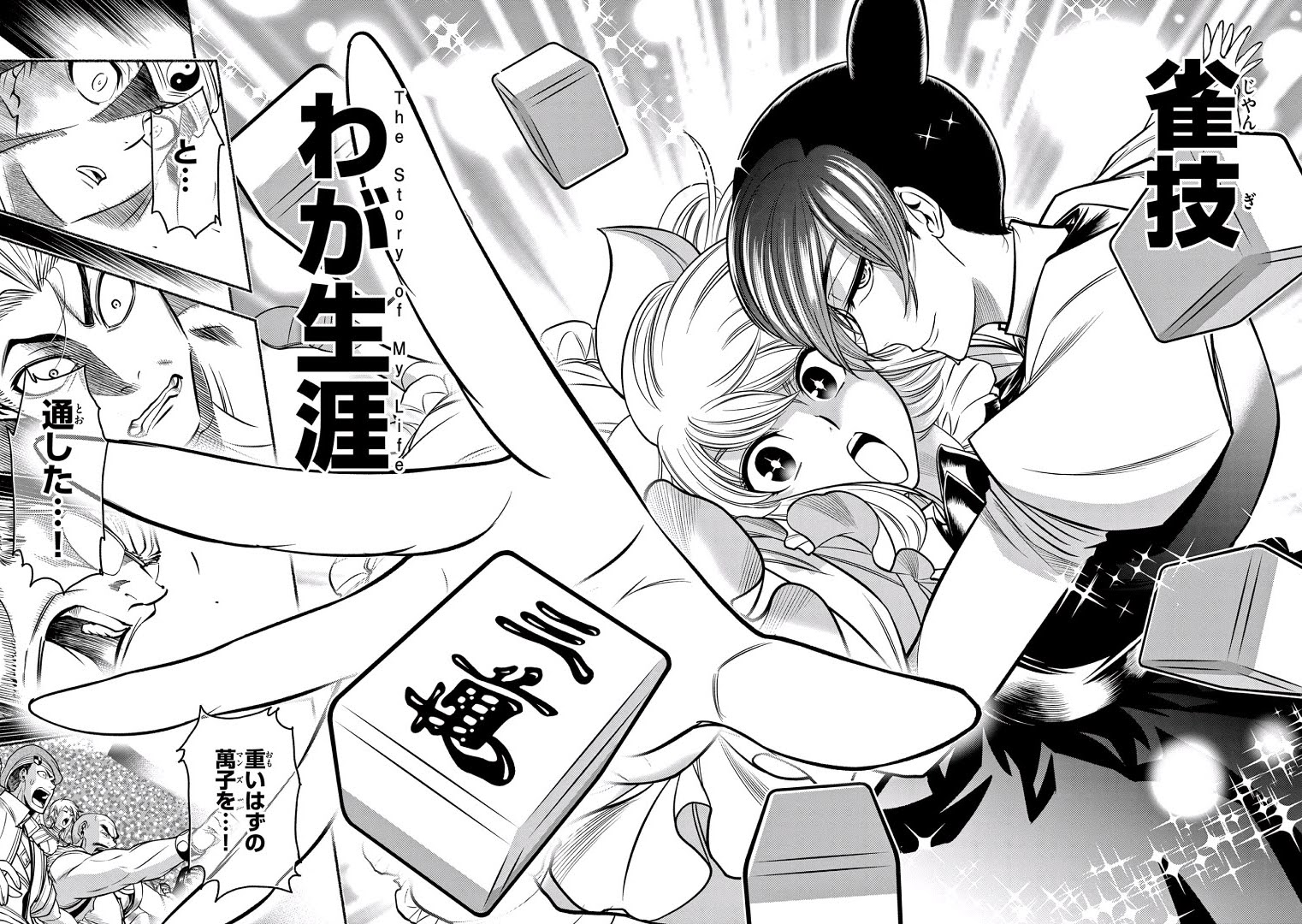
Greatest M~Mahjong Tournament of Eminent Figures~starts with a premise that sounds like something out of a Type-Moon Fate series parody: What if famous figures from history competed in mahjong to inherit God’s position? And while there actually is a Fate mahjong series as well, this one works from the headline-worthy premise of having a cute anime-girl depiction of Helen Keller as the protagonist.
Volume 2 continues the story along largely expected lines: big hands being played by bigger personalities. Helen Keller’s “Miraculous Girl” title and ability are explained as her being able to stand up to even the greatest obstacles through her bond with Anne Sullivan—the moniker actually refers to both of them at once.
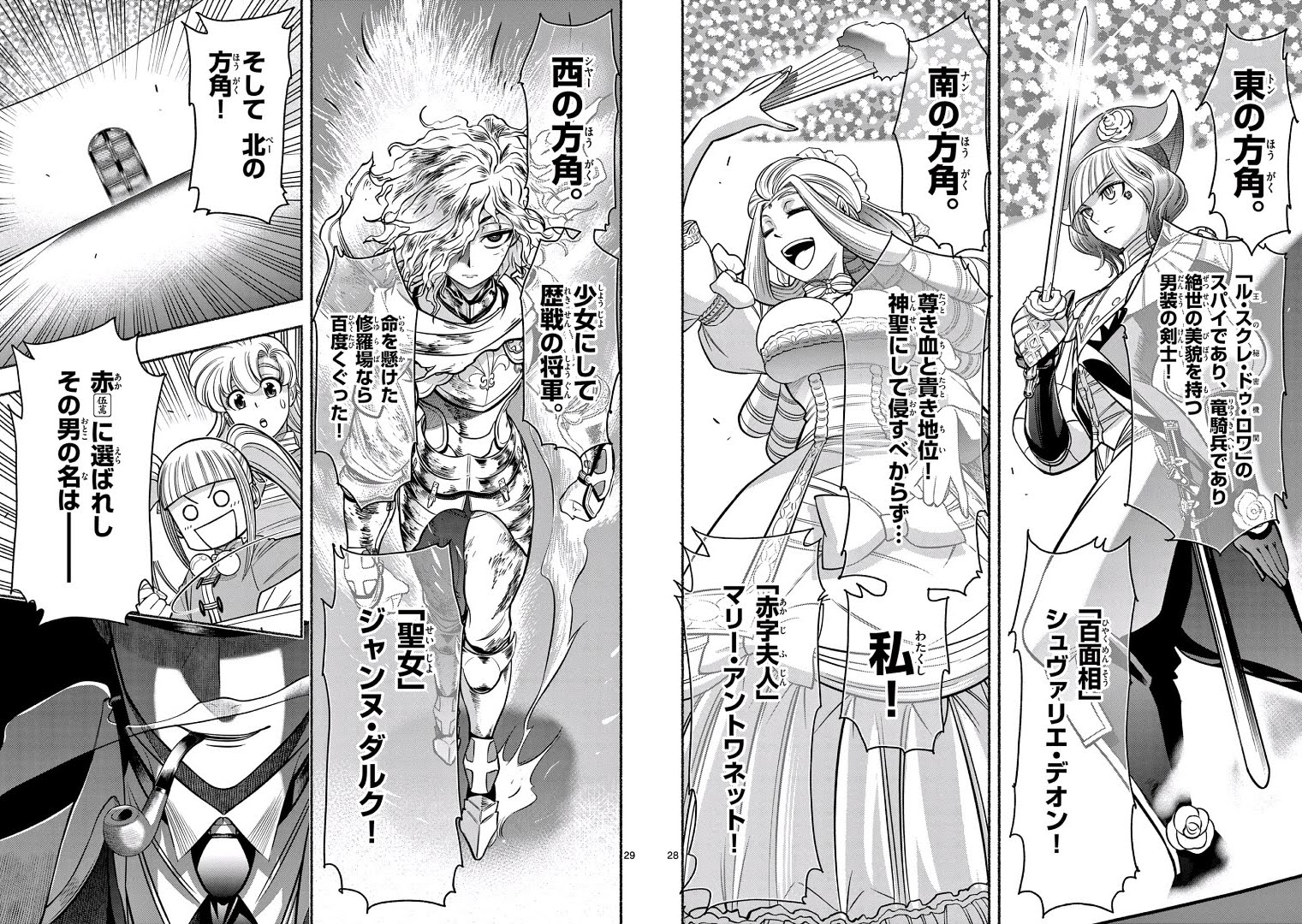
The results of the second match are decided off-panel, with a genderswap Toyotomi Hideyoshi emerging from a one-sided victory. While I’m not well versed in Japanese history, I’ve never seen the idea that Hideyoshi was really a woman, so I wonder where this might be going. In any case, the manga goes straight into the third match, which features three big names from France…and the world’s most famous detective.
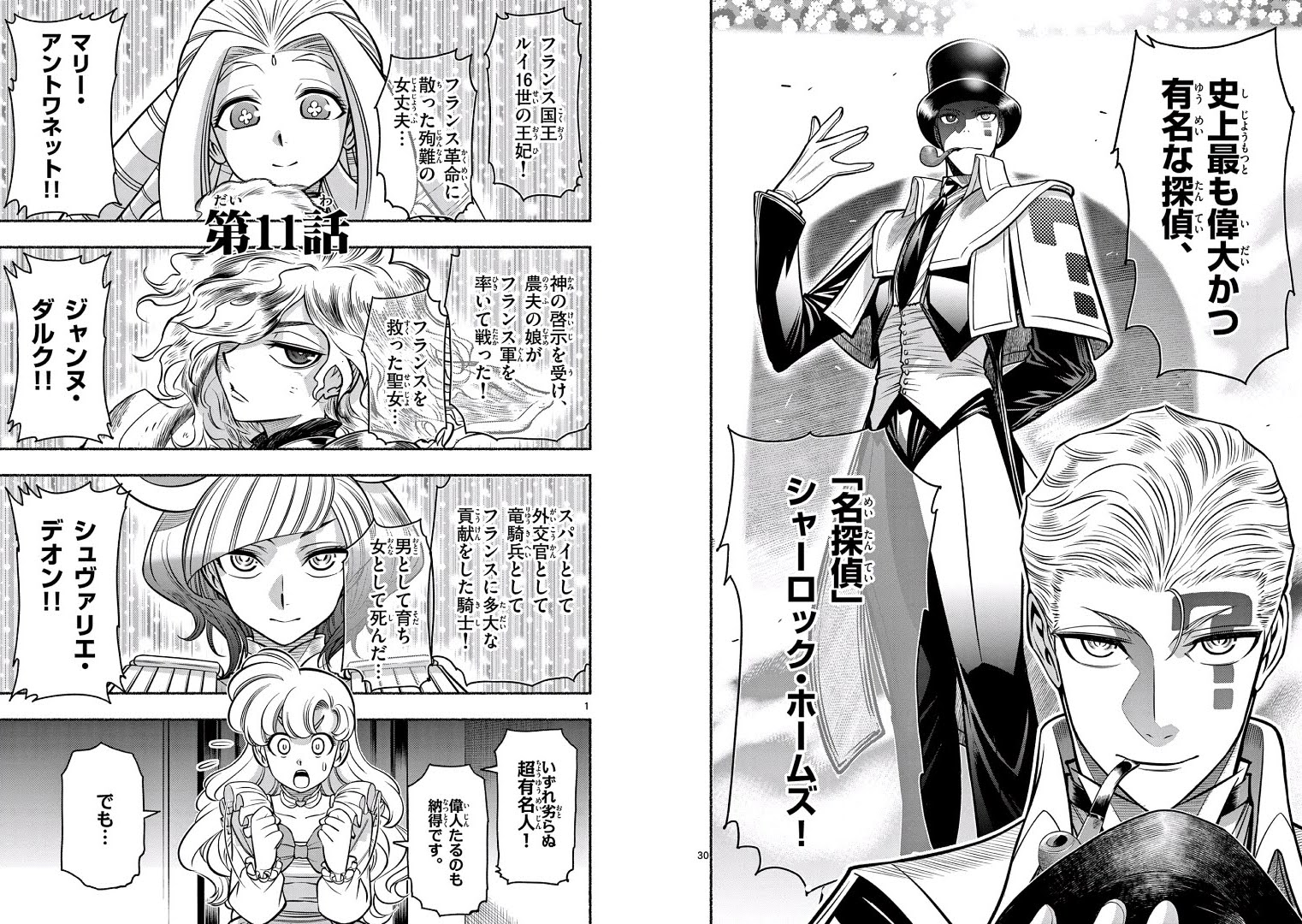
Le Chevalier D’eon, Marie Antoinette, and Jeanne D’arc are all famous figures (and all three have been characters in anime and manga already), so it’s no surprise that these three would end up in Greatest M. However, for all three to be at the same table is a curious move. Moreover, the fourth seat—Sherlock Holmes—opens up the realm of possible contestants to not just historical figures (embellished though they might be), but also fictional characters. The Fate comparisons stay strong. I’m fond of all the character designs here, especially Jeanne’s battle-weary look, but the depiction of Sherlock is downright theatrical.
This manga could easily wear itself thin, but the third round also introduces the idea of alternate rulesets that can potentially spice things up. In this case, you can give a “Jong Command” and order your opponent to either discard a specific tile, force them to call a discard and open up their hand, or make them reveal their wait. It’s sort of like Go Fish, only the penalty for guessing incorrectly is losing 10,000 points. Especially with Sherlock in the picture, I expect a lot of predicting opponents’ motivations and deceptive strategies. That said, I actually expect there to be a twist, and for Sherlock to not make it through—possibly due to the chaos of mahjong itself.
At this point, part of the fun of Greatest M is seeing just who will compete. What are the odds of Jesus showing up…?
The past month has been quite a ride for me as an anime fan. I attended my first live convention in ages, I watched the finale of one of my favorite franchises ever, and I stumbled into my most popular tweet in a very, very long time.
I’ll definitely be watching the second G-Reco movie next month, so watch out for that review!
Meanwhile, I’d also like to thank the following Patreon sponsors for their continued support:
General:
Ko Ransom
Diogo Prado
Alex
Sue Hopkins fans:
Serxeid
Hato Kenjirou fans:
Elizabeth
Yajima Mirei fans:
Machi-Kurada
Blog highlights from August:
I actually think I posted some of my best work in a while, so I recommend readers check out everything this month, but if you only have a little time, these are probably the best.
My extensive analysis and personal send-off of the final Eva film. Clocking in at over 5,000 words, it’s one of the longest pieces I’ve ever written for the blog.
Like Shin Evangelion, another look at the past and then the future—this time, in the form of my review of the latest Gundam movie.
Hashikko Ensemble
Chapter 43 is the first time we’re Kousei’s orphanage—a significant development for the character, in my opinion.
Kio Shimoku’s Twitter account has some interesting Eva tidbits in August.
Apartment 507
In terms of setup and interesting storytelling, I thinkLove Live! Superstar!! might be the best the franchise has to offer.
Closing
Over the course of the pandemic, I’ve noticed a funny thing with my blog stats.
Throughout 2020, I received many more hits than I have over recent years. This trend started to subside around spring this year (when the vaccine rollout started getting some steam), but now over the past couple months as the delta variant ravages the US (where most of my visitors come from), I’m seeing an uptick in blog views again. As much as I like having more people read my stuff, I’d rather everyone be alive.
Go get vaccinated and wear a mask in public and when around others. Stay safe, and I wish you all good health.
Not a ton of tweets this month, but if you’re interested in Kio’s thoughts about Rebuild of Evangelion (as well as his bout with work exhaustion and illness), here they are!
During a sale on the Kujibiki Unbalance manga, Kio talks about how this came before Jigopuriand Nidaime. “In a sense, it’s an original work closest to being a Genshiken spinoff.”
Kio has two volumes coming out in September (Spotted Flower v5 and Hashikko Ensemble v7), and he expressed that the amount of work he needs to put in to draw all the extra stuff was a challenge. However, he eventually managed to finish more recently.
Kio makes a joke about his LCD tablet being really “hot,” except he means literally high-temperature. He realizes that he’s always used the tablet in air-conditioned environments, so he never really noticed it until now. He then decides the next day to use the AC after all.
Kio was all prepared to hold a “lavish party” (which might just be “getting more work done”), but between his schedule and the side effects of this medicine (vaccine side effects?), he wanted to cancel. As he went back and forth between at least trying to work, he realized it wasn’t possible.
Last month, I left this tweet untranslated because I hadn’t seen Evangelion 3.01+1.01 yet. Now I have, and it’s time to delve into it. WARNING: SPOILERS
Kio was apparently a fan of the theory that Asuka and the other characters in Evangelion 3.33 were all from the old The End of Evangelion timeline, and the Rebuild characters were all imprisoned. He also came into the final film ready to not be surprising by anything, but it was the gentleness of the movie that got to him.
Kio was too busy to go see Evangelion 3.0+1.01 in theaters again, so he listened to the soundtrack while working, and mentally recalled scenes from the film.
Kio reacting to this month’s Five Star Stories. According to him, the designs can be disappointing in some ways, but the contents of the story are so rich. He seems to really feel the Shinnomaru and the Akatsuki. He had originally gotten some of Volks’s “Mighty Series” model kits, but didn’t build them. When someone he knew gave him the Akatsuki, though, he ended up finishing that one.
A recounting of his experiences at the Secondary Culture Choir Festival, previously mentioned in the July tweet roundup. He’s not super knowledgeable about music still, but he enjoyed the sense of freedom with which they sang, and is grateful for the experience. He was announced as a “manga creator,” which he’s flattered by.
Akira, Jin, and Mai singing “Rudolph the Red-Nosed Reindeer” to little kids
We get a glimpse of Kousei’s home life (and a Christmas concert!) in Hashikko Ensemble, Chapter 43.
Summary
The Chorus Appreciation Society is visiting the orphanage where Kousei’s been raised, and they plan to hold a Christmas concert for the kids there. ItThere, Akira and the others meet three people in particular: Zenba Yoshimi, the assistant director of the orphanage; Hayase Minori, a 6th grader; and Sawamura Rikurou, a middle school delinquent. Rikurou clearly looks up to Kousei, and he doesn’t understand why Kousei would hang out with the Chorus Appreciation Society or take up singing.
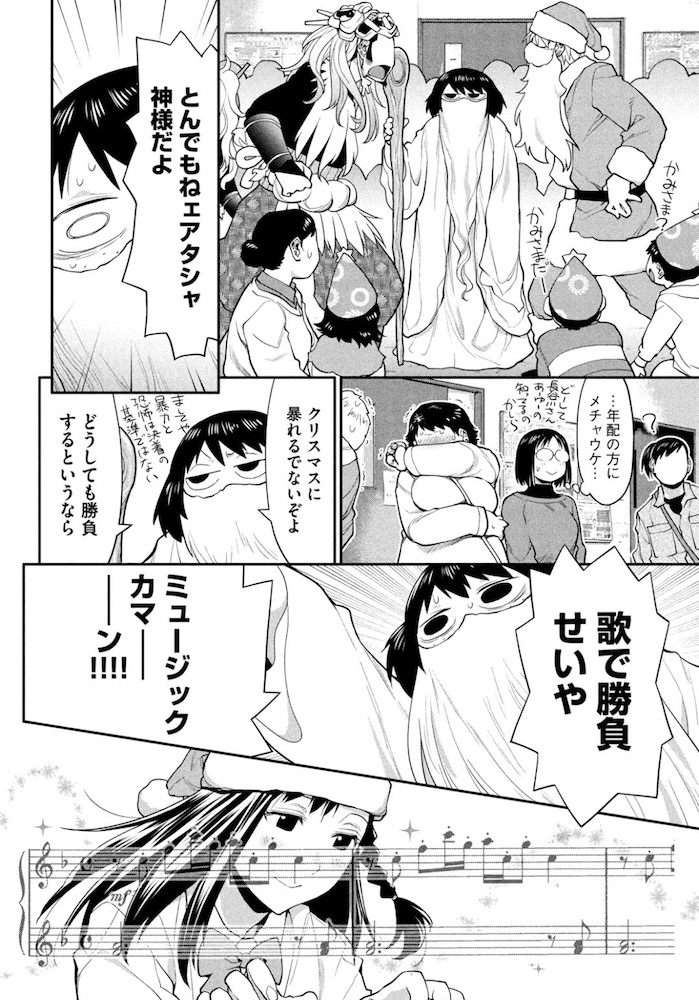
The day of the concert, members of the Appreciation Society are dressed for the occasion, with Kousei taking on the role of Santa Claus himself. The Tsuyamers then come in as namahage(New Year’s demons) to “scare” the children, only for a fight between Santa Kousei and Hage Tsuyama to be interrupted by Kozue dressed as God. Though part of the show, the tension between Kousei and Tsuyama is all too real.
God Kozue proposes a singing competition instead. Tsuyamers go with “My Neighbor Totoro,” while Akira’s group sings “Let It Go.”
Happy Holidays
Kozue, dressed as God, declares a sing-off between Santa Kousei and Namahage Tsuyama
I appreciate the particular blend of cultures we see around Christmas and New Year’s in Japan, between the Santa stuff, the namahage, and Kozue as the Judeo-Christian God with stereotypical white beard and all. The fact that they didn’t go with Jesus probably says a lot.
Imagination Station
I find it noteworthy how this chapter is how it starts, which is right at the orphanage. There was no scene in the previous chapter showing Kousei explaining his past to the other characters, nor was there any discussion regarding singing at his orphanage. And yet, because the characters have such strong and rich portrayals, it’s easy to imagine how this ended up happening. In particular, because Kousei has opened up over time, one gets the sense that he barely okayed this because he’s easily embarrassed but would like to give back to the place where he grew up.
It’s also through the new characters we meet that we can get a glimpse of what Kousei’s life has been like since he was rescued from his abusive mother.
The People in Kousei’s Life
Yoshimi, the assistant director of the orphanage, mentions that Kousei used to cry into her chest at night
Yoshimi, Minori, and Rikurou each make quite strong first impressions, and it’s easy to see how they’ve affected and been affected by having Kousei in their lives.
At the start of the chapter, Kozue asks Yoshimi what Kousei was like as a kid, and despite Kousei angrily telling Yoshimi to keep shut, she nonchalantly mentions him often crying at night. She seems like a tough lady who takes no shit from anyone, and someone who’s accustomed to handling children like Kousei and Rikurou. I can also easily see her attitude rubbing off on Kousei. The orphanage itself also seems well run.
Minori tries to act mature, explaining that she’s not like the other little kids there. Yoshimi explains to the group that she’s smart, but she’s also in a hurry to grow up. From the little we see of her, she does come across as actively trying to have a good head on her shoulders, even dispensing advice to the older Rikurou. Minori is the one who points out that Kousei established the rule about not hitting anyone younger than you at the orphanage, and calls out Rikurou’s anger as jealousy over possibly losing Kousei.
Rikurou is the closest in demeanor to Kousei, to the point that much of it is probably him trying to emulate his role model. The kid clearly thinks the world of Kousei, and he’s threatened by the Chorus Appreciation Society the way an only child might feel about a new sibling. There’s fear and pain there, and Rikurou likely tries to compensate for it with his tough-guy persona.
Speaking of Jealousy…
There are a few moments concerning the ever-so-slightly icier relationship between Jin and Akira. Jin mentally notes how much Akira has improved, while Akira realizes he kind of likes the change in attitude from Jin towards him. While not explained why Akira sees an upside to this, it’s probably because Jin has always been this larger-than-life figure when it comes to singing. For Jin to look at Akira with any kind of envy is, in a certain sense, a sign of Akira’s own progress.
Songs
Because they’re singing for an orphanage, all the tunes this month are for kids.
(Note that Youtube doesn’t let you add children-oriented videos to playlists, so many of these won’t be included on the big Hashikko Ensemble playlist).
“Rudolph the Red-Nosed Reindeer” (Japanese)
“Awatenbou no Santa Claus” (Hasty Santa Claus) is a Christmas song of Japanese origins.
“Jingle Bells (Japanese)”
“My Neighbor Totoro” from the Studio Ghibli film
“Let It Go” (or “Ari no Mama de” in Japanese) from Frozen
Final Thoughts
It’s interesting that the three characters we meet at the orphanage are all different age groups compared to Kousei. Their interactions show less of a peer dynamic and more of a somewhat intergenerational one. Because these three aren’t high school age, I don’t think we’ll be seeing a whole lot of them, but I’m sure they’re going to pop up from time to time even after this specific story ends.
Harry Potter is synonymous with magical school fantasy, defining the genre for an entire generation. However, one criticism I increasingly see is that it’s more about maintaining/restoring the status quo rather than trying to effect a real and lasting positive societal change that goes beyond defeating evil. While it’s a bit unfair to pigeonhole the books in this way, it’s also hard to deny that Harry Potter eschews structural issues about the world it presents, and that this is not especially uncommon in similar fiction.
That’s why the last place I expected to see a more boldly progressive take on the inequities of a wizarding society would come in the form of a comedic shounen manga called Mashle: Magic & Muscles.
I want to be clear that Mashle is not some leftist manifesto that proudly announces its overthrowing of capitalist oppressors. Jack London’s The Iron Heel this most certainly is not. But when you compare how Mashle and Harry Potter tackle the same premise, the differences stand out.
Both protagonists, Harry Potter and Mash Burnedead, enroll in a magic school where they must deal with being outsiders while also being under the benevolent watch of the school’s wise, old leader. However, whereas Harry Potter at the start is simply inexperienced with wizardry but has potential for greatness, Mash is completely incapable of magic. In order to get through his classes and achieve his goal of becoming Divine Visionary (a motivation from the beginning unlike Harry’s initial uncertainty), Mash has to overcome his disadvantage through sheer physical power.
The contest between Mash’s muscles and the occult abilities he faces is generally played for laughs, but there’s another layer to that contrast. Sure, it’s funny to see his “magic” be activating different muscle groups and his “spells” amount to suplexes and punches to the face. Yet, because he is doing this purely through his human physiology, his victories over other students both read differently from Harry’s accomplishments and are received differently by the very mages he bests. By beating them without magic, Mash makes his opponents realize on some level that they are themselves victims because of how they’ve been drawn into society’s incessant and blinding obsession with hierarchy and power. The problem is not exclusive to any specific group of rogue ne’er-do-wells, it’s systemic.
Mash himself is not a sharp mind capable of bold leadership. He’s from that Goku/Luffy/Saitama lineage where thinking is not their strong suit. He merely wants to live a comfortable life with his grandfather, but he’s forced to attempt the impossible and become the top of a magical school because his world despises the weak. Mash defies his society in multiple ways: upending what strength means, as well as rejecting the notion that those with less deserve less.
Around Chapter 65, the “Voldemort” of the series is revealed, as are Mash’s true origins. While not quite the same as the concept of horcruxes relative to Harry and Voldemort, Mash and the main villain share a similar connection. Mash turns out not to be the everyman he assumed himself to be, but that doesn’t change the fact that he uses his particular skills to upend people’s preconceived notions. The difference between Harry discovering the magic within and Mash working to overcome the magic he lacks remains stark.
That all said, it’s hard to think of Mashle as being in the same league as Harry Potter when it comes to the ability to capture people’s imaginations. It simply doesn’t have that sense of wonder that makes Harry Potter so enduring; instead, it goes for lots of comedy, absurdity, and the occasional cool fight. Spiritually, it’s cut from the same cloth as Kinnikuman and early Dragon Ball, during the kid Goku era. I have trouble seeing children running around pretending to be Mash because Mashle doesn’t really provide for that.
Mashle and Harry Potter both operate under the idea that the power of love is in a category of its own. But where Harry Potter’s is either abstract in its sentimentality or all too literal, Mashle’s manifests in a grandfather taught the value of human life, and a grandson who strives to live up to that ideal through both word and deed.
2021 was the first year where I questioned whether going to Otakon was a good idea. It’s long been my favorite anime convention, but the ongoing threat of the COVID-19 pandemic and the frightening rise of the delta variant in the United States made me anxious about attending an event that regularly brings close to 30,000 people into a single indoor venue. Ultimately, I decided to make the trip to Washington DC—partly because I wanted to support the fan-run con that has provided so many excellent moments. But it was also because I wanted to try to do something “normal” while taking every precaution I possibly could in order to avoid straight-up tempting fate.
Personal COVID-19 Precautions
I traveled to DC fully vaccinated and wearing the best facemasks I could obtain. I decided not to do any interviews with guests this year (though the lack of Japanese industry guests helped that). I largely steered clear of the dealer room and gaming room. And I greatly reduced my normal frantic pace of checking out every panel imaginable to eat and take respite in my hotel room, where everyone else was a familiar face who was fully vaccinated.
Otakon COVID-19 Precautions
Prior to Otakon weekend, attendees would receive emails about the numerous precautions being taken to try to ensure everyone’s safety. Masks would be mandated, the convention center would be well ventilated, and temperature checks would be included. Vaccinations were not required, which I hope can change for next year.
In terms of masks, the vast majority of people I saw wore masks and wore them properly, and even those whose mask etiquette was questionable would at least try to fix it eventually. This was only my limited perspective, so I can’t say if there were pockets of people resistant to doing so, but it gave me at least a bit of faith that most attendees wanted this event to work. However, trying to enforce a mask mandate on 23,000 people is no easy feat, and I’m not sure if a greater amount of staff/security would do the trick.
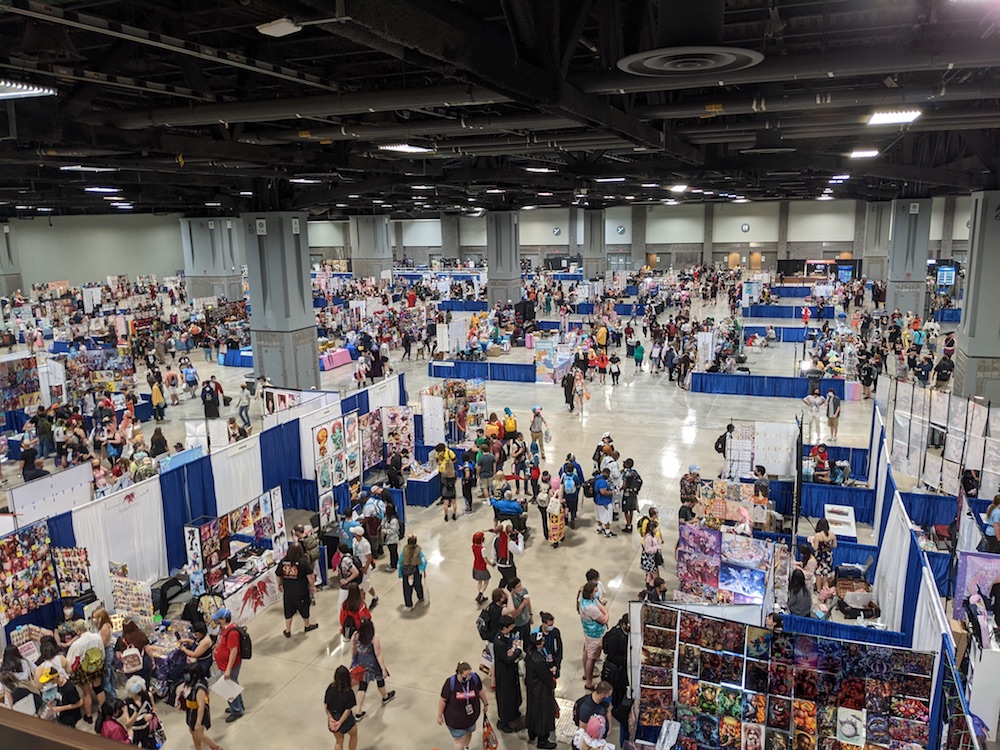
The Walter E. Washington Convention Center is a very spacious venue with high ceilings, and was even used as a temporary hospital for COVID-19 patients in previous months. In a more cramped space, I would have been much more alarmed, but walking past people on the way to a panel felt no busier than a New York City sidewalk, albeit indoors—at least on Friday and Sunday. Saturday had more attendees (an inevitability for any weekend convention), and that had me feeling more apprehensive. I took particular care not to remove my mask for any reason on Saturday.
The panel rooms themselves could have used better social distancing, as there was no incentive presented to steer clear of others outside of one’s own desire to do so. In some cases, volunteers encouraged us to pack in for the more heavily attended panels, and I found myself (perhaps against better judgment) staying and hoping my mask and vaccinations (as well as the masks of those around me) would be enough. I feel there should have been more done to encourage social distancing in rooms, even though I understand the disappointment it would inevitably cause for those who wouldn’t be able to enter a panel or event they could have in previous years. I myself presented a panel this year with the best attendance I’ve ever seen for one of my presentations, and I feel conflicted about it because of these circumstances.
As for the temperature checks, I did not see any, and I’m not sure how they were supposed to work or if anyone was indeed caught having a fever. If anyone spotted the temperature checks in action or have more information, I would like to know more.
Fan Panels
As mentioned in the introduction, there’s a lot I typically look forward to at Otakon—interviews with Japanese guests, especially—that simply didn’t happen this year. The ability to get interesting industry guests who are willing to share greater insight into the world of anime and manga beyond just pitching their latest projects has been one of the most valuable parts of the Otakon experience up to now. In their absence, I had to wonder if the other appealing aspects of the con could carry the event.
While guests are great, I think the real lifeblood of Otakon is the robust fan panel programming, and I was happy to see it out in full force. A combination of veteran presenters and (I assume) new blood kept things entertaining and informative. While not every panel was an absolute winner, the energy that comes from seeing people onstage sharing topics they find fascinating or encouraging others to expand their scopes is always encouraging.
Thirty Years Ago: Anime in 1991
Daryl Surat from Anime World Order is always a solid presenter. He picked a nice and diverse set of works and made good cases for why they’re still memorable today. As I expected, he made reference to Brave of the Sun Fighbird, the super robot anime that gave birth to the “Is this a pigeon?” meme.
The Best Openings for Shows You (Probably) Didn’t See
This had the Anime World Order crew in full force. As advertised, there were some I didn’t see, and I liked that it had a real mix of genres. The fact that it started off with the opening to Goshogun earns it plenty of points.
Japonisme: A History of the First Japanese Culture Craze in the 19th Century
This panel looked at the weebs of the 1800s, particularly in terms of the great artists of the century. The presenter (an art history teacher) did a solid job of showing how names like Cezanne, Van Gogh, Gauguin, and more were influenced by the woodblock prints and other forms of art coming out of Japan—as well as the problematic Orientalism surrounding the whole thing.
Manga Masters: Kentaro Miura
Patrick (The Cockpit) and manga expert Ed Chavez did a retrospective on the life and career of the late, great Miura Kentaro. Some of the big takeaways were that 1) Miura was not just a skilled artist, he was a nurturing and supportive figure to his friends and fellow artists 2) he single handedly put seinen on the map for the predominantly shoujo-oriented publisher Hakusensha 3) he changed the landscape when it came to manga and fantasy titles. Overall, it was an informative and insightful panel.
Samus vs. Ridley: A Metroid Historia
Not just a video game history panel, this one looked at how the disparate scraps of lore and storytelling gradually came together to form the Metroid we know today. It was fascinating how seemingly everything, even the Nintendo Power comic from the 1990s, somehow has found its way into the mythos in part or in whole.
Bad Anime, Bad…The 20th Anniversary!!
One of the enduring highlights of Otakon is back to celebrate twenty years of awful animation, and I think it’s important to note how much this panel acts as a predecessor of sorts for the current Youtube anime review scene. Not just limited to Japanese animation, it was good to see this still going strong—and Dracula: Sovereign of the Damned is evergreen terrible.
The Wonderful World of Yas
Another creator retrospective, this time it was for Yoshikazu Yasuhiko, the character designer of Gundam and one of the finest artists to ever grace the industry. Finding out that he was dissatisfied with his work in the 1980s makes a lot of things click together in terms of my understanding of him. I wish this panel was better attended, as I think plenty of fans would love seeing not just Yaz’s mecha stuff but also his love of history. However, it was literally up against a different Gundam-related panel.
When Anime Companies Knew Nothing About ANIME FAN WANTS
Run by George Horvath, this panel was a series of painful lessons in industry hubris. However, perhaps it had the opposite effect on me, and I kind of want to start my own anime company…
Ogiue Maniax Presents: Saturday Morning MILFs
A few years ago, I decided to turn an idle observation about anime into a panel where I introduce fans to the surprisingly wide variety of interesting and attractive mom characters cropping up in works for kids. Amid the perennial love of high school characters in anime, I thought MILFs was a worthwhile subject. Unfortunately, my initial attempts to present it were met with rejections and waitlists.
But this year, I decided to swing for the fences and apply for it as my sole panel submission…and actually got the okay! While I was out of practice when it came to public speaking, I actually had most of the panel prepared from previous years’ attempts, and felt comfortable that I could deliver something at least decent.
What I didn’t expect was to be in Panel 1 (one of the two biggest panel rooms at Otakon), and for my silly little project to have the largest convention audience I’ve ever dealt with on a personal basis. It was packed (though that was perhaps not a good thing, given COVID and all).
The funny thing about me is that I often feel a lot more pressure presenting in a vacuum than I do to an actual audience. In front of a gathering of otaku eager to see some MILFs, I worked to educate and inform, while also throwing some red meat out there (because at the end of the day, it was an 18+ panel). Afterwards, a few longtime friends complimented me on the panel, saying I successfully threaded the needle and balanced learning with pleasing the horny audience.
Despite a lack of Japanese guests, the industry panels I did attend were all worthwhile in their own way. The DENPA panel was run by Ed Chavez, and he’s always your best bet for getting an inside look at the manga industry. AnimEigo has the benefit of CEO Robert Woodhead’s many decades in the industry, and I was impressed by his company’s dedication to preserving art and design material for anime projects. Discotek panels are always a blast, but the announcement of blu-ray releases for both Aim for the Top! Gunbusterand Machine Robo: Revenge of Chronos practically stole the whole show at Otakon. I’d been waiting years for the former, and the latter never got a full release—it was actually licensed by accident!
I also decided to check one off the bucket list and finally watched Project A-ko, or rather, Discotek’s remastered blu-ray edition.
In addition, there was a screening for a 3DCG short called HOME! by the animation studio Orange. It was a brief but sweet story about an astronaut and a ghost inhabiting a space colony, and it showed why Orange’s CG work is a cut above its competitors in Japan. A short panel afterwards elaborated on Orange’s approach to 3D work, and it’s easy to see the care that goes into shows like Beastars and Land of the Lustrous.
Artist Alley
Artist Alley is usually not one of my priorities, but it sort of took the place of the Dealers Room for me this year. Below are all my purchases at Otakon. It’s not much, but I think it all looks great.
Food
The places I went to this year for finer eating were Farmers & Distillers, SUNdeVICH, and Bantam King. There was also a newly opened Ben’s ChilI Bowl in the convention center (and the old dining area near the underground entrance to the Marriott was closed for renovations).
Farmers & Distillers’ claim to fame is that they get everything directly from local farms. It’s more expensive than your standard restaurants and requires a reservation, but the food is amazing. I got the Yankee pot roast and the vanilla bean cheesecake with strawberries and cream—a combination that was as delicious as I’d hoped but left me regretting the heaviness of the overall dinnerl. the next day. Take a lesson from me and try to balance your meal out better.
SUNdeVICH is a sandwich shop with a variety of solid choices with an international flair. I tried the Shiraz (Persian beef tongue) over salad and the Rome (Italian cold-cut combo) on a sandwich, and both were top notch.
Bantam King I’d been to on my first trip to DC for Otakon, but this time I went for the curry snow fried chicken plate instead of the chilled ramen. The onions and white sauce on top reminded me a lot of coleslaw and fried chicken, and the flavor profile worked well. However, the simplicity and sheer deliciousness of the chicken drippings over white rice was the real winner.
Ben’s Chili Bowl at the convention center suffered from being short staffed (a common problem caused by the pandemic), but once I got my chili half-smoke (chili over a beef-and-pork sausage on a bun), it was amazingly solid.
Cosplay
This year’s cosplay had the inevitable addition of masks. Some of the cosplayers would temporarily remove their masks for photos but kept them on otherwise.
Final Thoughts
The overall Otakon 2021 experience, for better or worse, was surprisingly normal. In any other year, it would’ve felt par for the course, but the surrounding circumstances at times made things awkward. There were moments where it was easy to almost lose myself in the moment, but had to get snapped back to the reality of an escalating pandemic. I’m still not sure if going was the right idea, and as the delta variant escalates, I worry about 2022. In the meantime, though, I made it back with plenty of good memories. I hope everyone else can say the same thing.
For better or worse, I’ve decided to attend Otakon 2021 this year. And barring an even more devastating report about COVID-19 and the delta variant than what’s already out, it looks like I’ll be on track. I’ll be vaccinated and masked, and while it’s basically impossible to ask anyone to be the former just one week out from Otakon, there’s also a mask mandate for the event itself. Stay safe, everyone!
I have a single Otakon panel this year, and it’s actually one I’d been trying to get into the con for a while now. Come see:
Saturday Morning MILFs (18+)
Friday, 10:45pm–11:45pm
Panel 1
Did you know that kids’ anime has a long history of spotlighting hot moms?! They’re here to teach kids important lessons…and keep the parents from changing the channel! Explore the legacy of attractive mothers in Japanese animation and their continuing influence on the fandom.
Yes, I made an educational panel about anime MILFs. I looked at the schedule, and I’m the only 18+ panel on Friday, so it feels rather…daunting.
Anyway, I’d like to thank the following Patreon sponsors for supporting the blog and allowing me to indirectly research topics like attractive anime moms:
If I see you at Otakon, I’ll be glad to give a solid thumbs-up from a safe distance. And remember: Wash your hands, don’t touch your face, wear a mask. Let’s make this a memorable convention where no one catches COVID-19.
And one last thing: I’m really, really looking forward to seeing Gaogaigo in Super Robot Wars 30. I hope I can finish the last novel before the game comes out.









 OGIUE MANIAX