The Fujoshi Files 182: Koyanagi Hanako

Name: Koyanagi, Hanako (小柳花子)
Alias: N/A
Relationship Status: Dating
Origin: Wotaku ni Koi wa Muzukashii!

Information:
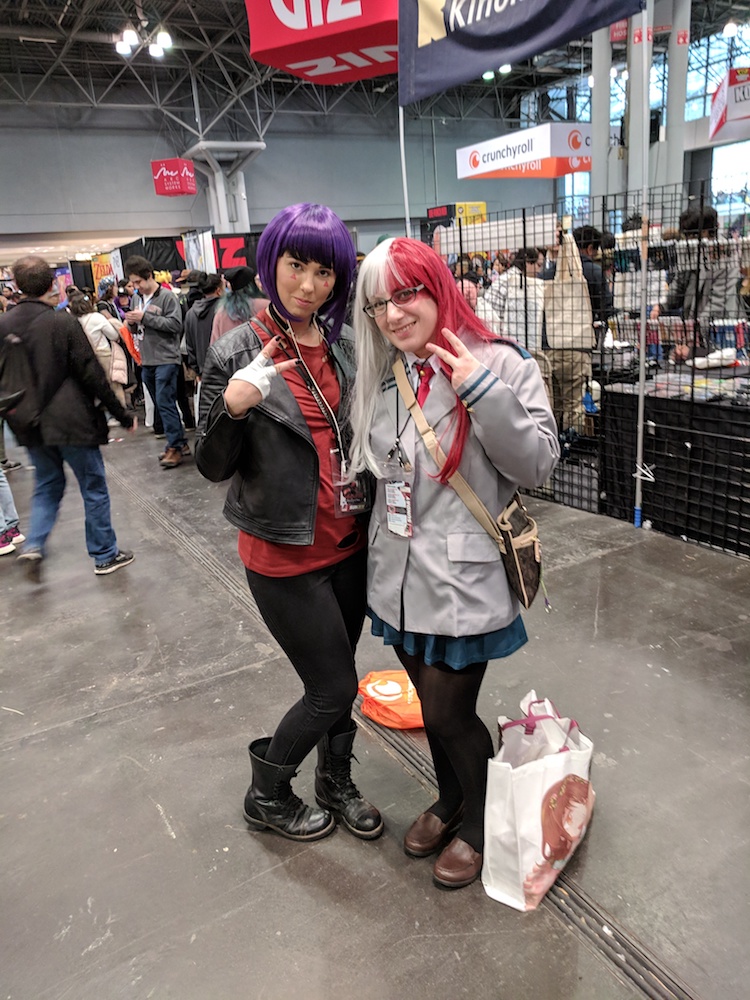
Koyanagi Hanako is a 27-year-old OL (office lady) who cosplays in her free time. In and out of the office, Hanako is generally cool and collected, though she often butts heads with her co-worker and boyfriend, Kabakura Tarou. An avid cosplayer (especially of male characters) and a fan of Takarazuka, she’s also friends with her fellow fujoshi, Momose Narumi, and her boyfriend, Nifuji Hirotaka.

Fujoshi Level:
Koyanagi will often read BL right in front of her boyfriend, partly to tease him, partly because she aggressively doesn’t care.

Harsh Lessons in Teamwork: Eyeshield 21‘s Kongo Agon

One of my favorite characters to think about is Kongo Agon from the football manga Eyeshield 21. He’s not a favorite in the sense that I would put him on a top 10 or even top 100 best characters list, but what he does provide is an entertaining and exciting role as an antagonist whose presence allows a more complicated story about what it means to be a successful teammate.

In Eyeshield 21, Kongo Agon is the undisputed best high school American-football player in Japan. His reaction time is unmatched. While others might be stronger or faster, no one has the optimized combination of both like him. Anything you can do, he can probably do better. Agon isn’t even one of those characters who is strong individually but is especially bad at teamwork. He knows how to work within a group, at least to a certain extent. The fact that he’s so superior to everyone else, however, lands him into a classic trap for someone of such extraordinary talent: he finds less worth in those who can’t keep up with him.

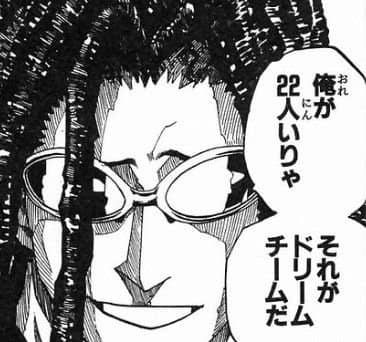
When mentioning what his ideal team would be, Agon describes a hypothetical team that’s 21 of himself + one teammate who has a few unique skills. And in a way, he’s right. An All-Star All-Agon team would probably beat every other team around. However, that team fundamentally cannot exist (Eyeshield 21 is not a science fiction series), and this is where Agon begins to falter. He may be perfect, but no one else is, and his inability to truly accept that is what opens up the cracks in his armor and leads him on the road to defeat.

One of the most famous athletes in history, Michael Jordan, ran into a similar problem. Jordan in his rookie days was a once-in-a-generation talent, but felt he couldn’t trust his teammates. What turned it around was his coach, Phil Jackson, who pushed Jordan to assume the role of a true leader, and to motivate his teammates into believing that Jordan trusted them. No small part of this was Scottie Pippen, who could mediate between Jordan and the rest of the bulls and lead by example in the process.

A lot of what made Jordan able to overcome his over-reliance on himself are the very things that Agon ends up failing to learn for a long time. Agon, despite being the best player around, is not an effective leader for a team; he’s closer to a tyrant than a captain. Moreover, the man who could be his Pippen, his brother Kongo Unsui, is shown little if any respect by Agon. Because he views everyone else as so beneath him in talent, he can’t even fathom the relatively minuscule accomplishments of opposing teams as matter at all—only for such an “insignificant” change to hand him a devastating, skin-of-his-teeth loss. Agon is decent at teamwork, but if only he respected his teammates and his opponents more, he could have been invincible.

Perhaps the biggest character development moment for Agon in Eyeshield 21 is the day that he finally bothers to train. Much like Frieza in Dragon Ball: Resurrection F, Agon is begrudgingly pushed to the point that he has to actually try, only Agon’s storyline predates Frieza’s in this particular sense. That realization by Agon, that he has to work at maintaining his dominance, is the ultimate blow to his being. He’s forever transformed, unable to ever go back to thinking that he, by simple virtue of being himself, is enough to defeat everyone.

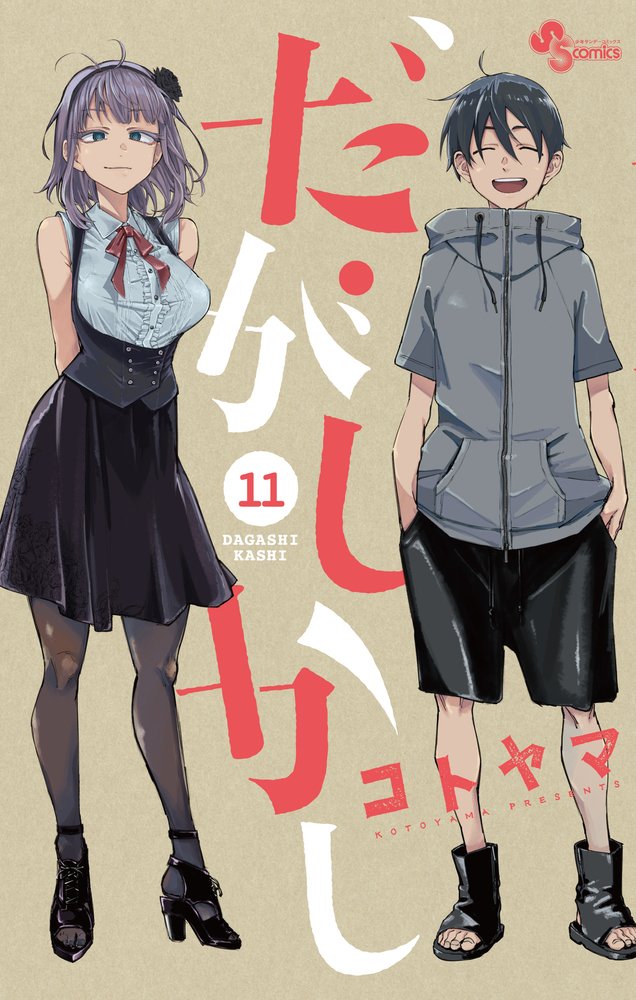
Can-do Candy: Dagashi Kashi Full Manga Review

Two years after I declared Shidare Hotaru the best female anime character of 2016, I’ve finally read all 11 volumes of her manga, Dagashi Kashi. Now, it’s time for a full review of this eccentric and wonderful series about Japanese snack nostalgia and the thirstiness of youth

Shikada Kokonotsu is a small-town high school boy who dreams of drawing manga professionally, but his dad wants him to take over the family business—a shop that sells dagashi, a category of Japanese snacks that are made to be cheap so that kids can afford them with their small allowances. One day, the vivacious heiress to the Shidare snack company, Shidare Hotaru, arrives at their store with a mission: to recruit Kononotsu’s dad to her family’s company. However, in order to do that, Kokonotsu needs to take over their shop. Thus, Hotaru takes it upon herself to convince Kokonotsu to embrace the dagashi passion in his blood by making daily visits and challenging Kokonotsu in various snack-related ways.

I love reading reactions to Dagashi Kashi because of how it seems to frustrate many anime and manga fans. At first, it seems to be a fanservice-heavy rom-com/harem work with a veneer of Japanese snack nostalgia, only to quickly reveal itself as the opposite. Sure, Dagashi Kashi is filled with attractive and powerfully charismatic girls, but it’s their passionate and humorous interactions over the snacks themselves (as well as the history lessons provided) that are the true backbone to this series. This might not be what others want out of Dagashi Kashi, but it’s exactly what won me over.

One can hardly call Dagashi Kashi an ultra-complex manga, but it’s endlessly entertaining, and its characters memorable and fully realized. Hotaru is the lynchpin of the series, a whirling dervish of intensity, passion, and mild misfortune, but every character carries their weight in making it a delightful comedy. For example, Endou Saya, a childhood friend who harbors a secret crush on Kokonotsu, is a perfect “normie” character—someone who only has a casual connection to dagashi but rounds out the main cast as a result. Every time a new character is introduced, they also quickly endear themselves. The key example is an employment-challenged character named Owari Hajime, who shows up when Hotaru vanishes for a brief period. While the hole Hotaru creates in her absence can’t be filled by anyonese (a plot point in the series), Hajime differentiates herself by being this adult who’s both more mature than the kids around her yet ill-equipped for the real world.

The humor comes across to me as a kind of manzai battle royal. While manzai comedy classically involves one boke (buffoon) and one tsukkomi (straight man), the classifications are modular within the context of Dagashi Kashi. Most of the time, Kokonotsu is the one who’s reacting to characters’ shenanigans, be it Hotaru, his best friend Tou, or even his dad. But sometimes, Kokonotsu lets himself be carried away by Hotaru’s dagashi antics, and it’s up to Saya or even Hajime to call him out on it. However, Kokonotsu’s casual reactions can be completely disarming to her, which puts her out of the driver’s seat, so to speak. The humor is sort of like a cross between Lucky Star and Sayonara Zetsubou-sensei, and if that doesn’t quite make sense, it’s because Dagashi Kashi is kind of its own thing in the end.

Another interesting aspect of the series is that it’s a very different experience reading it compared to a Japanese audience. For many who grew up in Japan, dagashi are just a part of life, and part of the appeal of Dagashi Kashi is that it’s a trip down memory lane. For foreigners like me, however, it’s more about discovering a little-explored aspect of Japanese culture. In that regard, I love learning all this dagashi trivia, and there’s plenty to go around. In fact, the series can be so information-dense that it’s sometimes hard to believe that Dagashi Kashi chapters are generally only eight pages.

It’s hard to decide which chapters are my personal favorites, but a few stand out upon reflection. First, there are a couple that are meant to celebrate the announcement of the anime (seasons 1 and 2), and they’re intentionally drawn to be dynamic and action-packed, as if to challenge the animators to do something about it. Second, there’s a chapter that features Snickers, of all things. It lets a non-Japanese reader like me sort of get the nostalgic experience that’s expected from Dagashi Kashi. (As an aside, Hotaru actually presents Snickers as an ideal emergency survival food due to its high sugar, fat, and calorie content.) Third, there’s one about red bean ice cream bars. Hotaru, for some reason, essentially asks which would win in a fight: a red bean bar in the summer or a red bean bar in the winter? The question is as nonsensical in the story as it is in this paragraph, and that’s what makes it great.

With a series like Dagashi Kashi, it can be difficult to see how the series ends or whether it’s satisfying. I will say that I enjoy the conclusion, but it more or less resolves in an open-ended fashion. While it’s not entirely ambiguous, be it in romance or the pursuit of dreams, it feel as if the message of Dagashi Kashi is that these characters are still young and have their entire lives ahead of them. In other words, even as the manga finishes, the characters are capable of doing so much more. It’s a nice message to end on, and an appropriate way to send Hotaru, Kokonotsu, and the rest of the crew off.


Good Harems vs. Bad Harems: Morality in Polyamorous Manga

The term “harem” gets thrown around often in anime and manga, but series considered to be part of the harem genre rarely feature actual polyamorous or polygamous relationships. Instead, the purpose of many of these series is pure, carnal power fantasy. However, I’ve noticed that a few series make a distinction being “good harems” and “bad harems.”

Case 1: Tales of Wedding Rings

For the most part, Tales of Wedding Rings is a fairly orthodox harem fantasy series about a boy who gets transported to another world and must wed powerful princesses across the land to defeat an evil entity revived. The girls are all beautiful in different ways, and unlike those works which tend towards having the hero choose a true partner, the implication is that none of the heroines mind a polygamous relationship. It’s no strings attached. Or is it?

More recent chapters have revealed an interesting wrinkle. The hero, Satou, is the new “Ring King,” and for most of the series, his predecessor has been spoken of as a legend savior. But one of his former wives reveals a dark secret: as he continued in his role as the first Ring King, his thirst for for power grew in more than one sense. Knowing that his might relied on his physical and emotional bonds with his wives, he began to abuse and even rape them. The wives endured all they could, but ultimately they worked together to take revenge and kill the Ring King.

Suddenly, a manga about an ideal male power fantasy, the harem of hot and powerful babes, carries a lesson that there’s a difference between genuine love and the desire for control and power that leads to abusive relationships. It’s not enough to have all the women, but to treat them with respect as well. Otherwise, the fate that the first Ring King brought upon himself through his violent behavior might very well befall Satou as well.

Case 2: Mobile Suit Gundam: Iron-Blooded Orphans

The Gundam franchise traditionally doesn’t stray too far from heteronormative relationships, at best teasing about the prospect of other types of attraction and love through its characters. Mobile Suit Gundam: Iron-Blooded Orphans is a major exception to this rule. Its romances feature homosexuality, major age gaps, and yes, actual harems.

The character Naze Turbine commands a ship piloted by his many wives. But while he might appear to be a dubious personality at first, his real goal in marrying so many women is to take them out of dangerous, dead-end situations. He makes them his wives so as to afford them the protection of his yakuza-esque organization, Teiwaz, and he provides training and education for them so they have the skills to survive in their own. He doesn’t even require his wives to actually sleep with him, so some are spouses in name only. Of course, he won’t refuse a physical relationship either, and has fathered many offspring as a result.

Like first Ring King in Tales of Wedding Rings, there is a character who represents the “bad harem” in Iron-Blooded Orphans: Jasley Donomikols. Another member of Teiwaz, he constantly tries to bribe Naze’s wives to his side with gifts of money and power with no success, failing to realize that what they value most in Naze is not riches but love and caring. Eventually, Jasley is murdered out of revenge by Naze’s wives.

Naze’s approach to love ends up influencing even the main love triangle of Iron-Blooded Orphans. At one point, Amida (Naze’s #1) says to a young Atra Mixta that a true man has enough love to go around, a lesson Atra takes to heart.

So What’s the Difference?

In both Tales of Wedding Rings and Iron-Blooded Orphans, a clear distinction is made between a healthy harem and an unhealthy one. The former is based on caring and generosity, while the latter is founded in greed, selfish desire, and the treatment of women like objects. Both the first Ring King and Jasley make this mistake, and end up paying the price for it.

This notion of the “selfless harem” is fairly idealistic and at odds with how harems are generally envisioned. Normally, they are wish fulfillment fantasy for boys and men filled with lust and eyes for many, or for those who don’t want to choose. Institutionalized polygamy (like the kind found among Fundamentalist Mormons) can become a dangerous source of power imbalances in communities, harming both men and women. The irony is that according to the series which champion selfless harems, they can only be truly obtained when one does not greedily desire for them, like some kind of Zen or Taoist riddle.

Darling in the NYCCs: Ogiue Maniax Status Update for October 2018

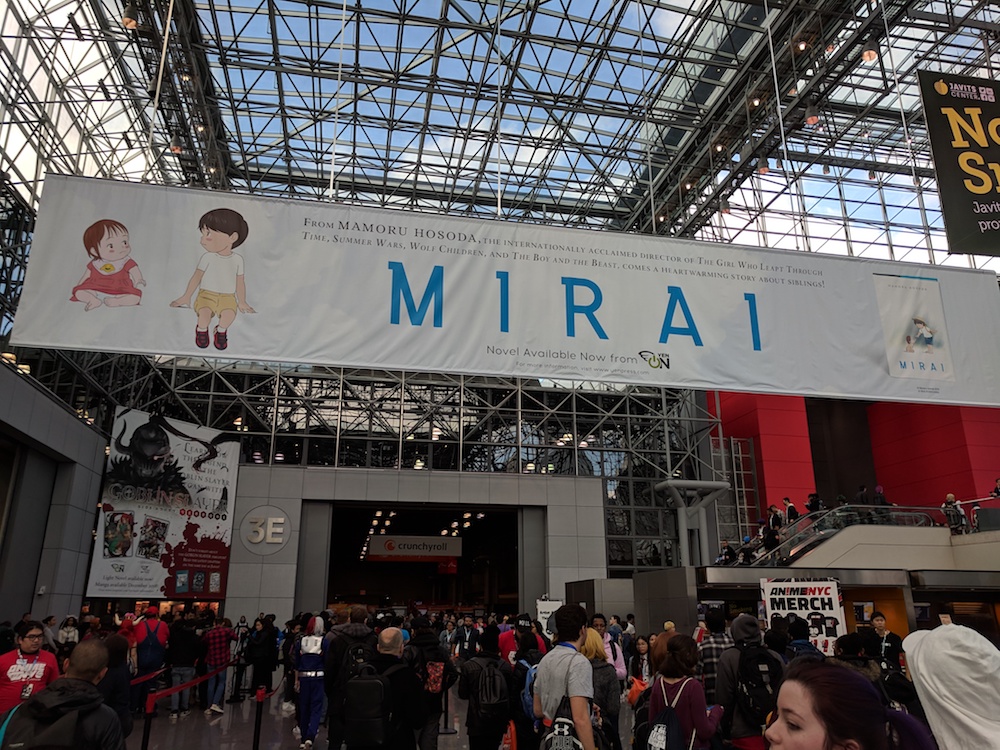
New York Comic Con is this week. I’m hoping to see Nozawa Masako (the legendary voice of Goku) at the Dragon Ball Super: Broly film showing. I wish she had a signing—she plays Tetsurou in my favorite anime ever, Galaxy Express 999—but alas.

Thank you as always to my supporters on Patreon and Ko-fi, especially the following!

General:

Johnny Trovato

Ko Ransom

Diogo Prado

Sue Hopkins fans:

Serxeid

Hato Kenjirou fans:

Elizabeth

Yajima Mirei fans:

Machi-Kurada

My favorite posts from September:

On Loli Vampires, Fiction, and Morality

A complicated topic I’d been wanting to write about for a while: the complexities of morality when it comes to large age gaps in fiction.

Akira Yuki (Virtua Fighter) for Super Smash Bros.

My interpretation of how Akira would work in Smash!

Please Tell Me! Galko-chan and Portrayals of the Nerd/Bombshell Romance

How does the uniquely insightful, uniquely horny Galko-chan handle one of the classic romance tropes?

Hashikko Ensemble

Chapter 8 puts the spotlight on Koizumi Himari, a childhood friend who’s more than meets the eye.

Patreon-Sponsored

Aikatsu Friends! Choreography Has Won Me Over

The dancing has improved in Aikatsu! and notably so.

Closing

This month is actually my first ever wedding anniversary! It’s crazy to think that I’ll have been married for one whole year. Here’s to love.

Sticky-Fingered: Hashikko Ensemble, Chapter 8

Love is in the air! …Or wait, that feeling might actually be “guilt.” It’s a chance to learn about Koizumi Himari in Hashikko Ensemble!

Summary

Having heard Akira’s deal—if we repair your earphones, you’ll have to join the Chorus Club—Orihara responds with disgust and tries to take a swing. Jin blocks Orihara’s fist, inadvertently breaking his finger (but not seeming terribly bothered by it). Jin wants to fix the earphones regardless of any deal, but he can’t find anyone in class who’s up to the task.

Some days later, however, Himari (Akira’s next-door neighbor) is actually in school for the first time in a while, and she turns out to be (for reasons unknown) a deft hand at soldering. Jin, who’s in the same class as Himari, tries to convince her to help repair the earphones, but she hesitates. After some conversation, mostly revolving around how she hates Akira’s puberty-induced ultra-bass voice, Jin convinces Himari to a deal: if he can show the appeal of Akira’s new voice through song, she’ll help them out.

Shinji sees this scenario as many might: a path to romance between Akira and Himari, but Himari’s initial response to Akira and Jin’s duet is to pull out an old picture book from Akira’s collection instead and apologize. Apparently, she stole it when they were young, and it’s the reason she avoided him for so long. In fact, it turns out that Himari’s really, really good at swiping things in general, which she reveals by showing off the resistors she took from class. She agrees to help, all while showing subtle hints that she might not be so unmoved by Akira’s singing after all…

The Himari Show

As the latest character to join the main cast, Himari is a major part of Chapter 8. Frankly, I think she’s fantastic, but awkward, surly girls drawn by Kio Shimoku are my aesthetic. I find that she bounces off all of the other characters quite well, and it makes me look forward to future interactions involving her.

Himari blushes a lot, but it can be hard to tell what exactly it means at any given moment. Because she seems to have a non-stop chip on her shoulder on top of being socially standoffish, her red face seems to shift from displaying embarrassment towards herself, embarrassment towards others, and maybe some feelings for Akira himself. Based on the brief glimpses of her memories, she appears to treasure her childhood with Akira—though she appears at first glance to not be especially different personality-wise back then.

One aspect of her that intrigues me is her proclivity for five-fingered discounts. It’s such an expected personality trait that she’s instantly memorable in my eyes. Also, I get the feeling that her talents in this area are related to her adeptness with a soldering iron. Something she does outside of class might make her a dexterous girl in more ways than one.

Akira’s First “Concert”

While it’s in a stairwell instead of a hall, and the audience is one childhood friend instead of an audience of many, this chapter’s performance is a huge step for Akira. We may not be seeing every single step of Akira’s development, but it’s clear that Jin’s training has been paying off. The pacing of his progress feels right.

Songs

Two previous songs are mentioned this month, specifically because Himari forbade Jin and Akira from singing them: “Believe” and “Kanade.” The song they do pick is1982’s “Tooi Hi no Uta” [Song of a Far-Off Day] by Iwasawa Chihaya. The song is actually based on Johann Pachelbel’s Canon, with Japanese lyrics added.

Final Thoughts

This is more a personal note, but when Himari pulls out the resistors she swiped, I recognized them from a digital engineering class I took back in high school. Their authenticity makes me feel that Kio is putting his best foot forward researching all aspects for Hashikko Ensemble.

Next chapter is going to focus on the school sports festival, and I’m curious to see how this shakes out at a technical high school. How much of mechanics and engineering is brain and how much of it is brawn? Whatever the case may be, it’s implied that something crazy is going to happen.

Please Tell Me! Galko-chan and Portrayals of the Nerd/Bombshell Romance

When the anime for 3D Kanojo (aka Real Girl) first started airing, my review of the manga by Nanami Mao would see an influx of hits. The story of an otaku boy who ends up in a relationship with a girl with a reputation for dating around, it’s a charming romance where two people genuinely connect on a deeper level. However, in response to that review, I’ve been getting the same question over and over again: “Is the girl, Iroha, a virgin or not?!” The answer is “most probably not,” but the fact that viewers feel so strongly about Iroha’s virginity saddens me a little. Part of the appeal of 3D Kanojo in the first place is that it eschews that whole obsession with virginal purity and the girl having to be someone’s “first,” something that permeates not just Japanese society but much of the world too. The message that audiences of 3D Kanojo should be taking away is “it doesn’t really matter if Iroha’s a virgin or not if they love and care for each other.”

It’s my hope that the idea gets across to viewers and readers, especially to those who judge a woman’s worth by their sexual behavior. But if it isn’t clear that virginity isn’t the be-all, end-all, a different (and perhaps unexpected) manga provides an interesting perspective on this type of virgin nerd/experienced babe relationship: Please Tell Me! Galko-chan by Suzuki Kenya.

Galko-chan is primarily known for its attractive female characters talking frankly about sexual topics which they actually have no idea about, but there’s at least one character who’s extremely, unabashedly sexually active: Galko’s big sister. College-aged unlike the teenage Galko, the big sister isn’t afraid of getting down and dirty, to the extent that she’ll even “borrow” Galko’s school uniform for some guy she’s dating. However, while she’s comfortable sleeping with lots of guys, the most recent storyline in the manga concerns a burgeoning romance between Galko’s sister and the otaku brother of Galko’s best friend Otako.

What starts out as Galko’s sister wanting to rock some nerdy virgin’s world for kicks turns into something greater. Galko’s sister agrees to go on a date with Otako’s brother, and during it makes her intentions crystal clear. She directly brings up the topic of sex and even nibbles on his ears during dinner. But as much as Otako’s brother wants to sleep with her so very badly, he doesn’t want to be treated like a mere conquest. Instead, he wants their relationship to be something special, and if he’s just another tally for the “virginities taken” box, then he wants no part of it.

This hits Galko’s sister harder than she expects, because she genuinely began to fall for him, and realizes she took the absolutely wrong approach. Which is to say, lust and love certainly overlap, but they’re not the same thing.

And then Galko’s sister tries to show her feelings for Otako’s brother by letting him in on a secret—that she has athlete’s foot—which in turn causes him to get visibly turned on. Romance successful! That’s Please Tell Me! Galko-chan for you. I said it provided an interesting perspective, not that it’s ultra-classy.

I think the big takeaway here is that the struggles between Otako’s brother and Galko’s sister on their date don’t come from the idea that Galko’s sister should have been a virgin, or that virginity should matter all that much for men or women. Instead, it’s about what sex means to each of them, and coming to a mutual understanding of what it takes to make their relationship potentially work. It’s sweet, it’s hot, and it displays something unique for this classic nerd/beauty trope.

The Fujoshi Files 181: Momose Narumi

Name: Momose, Narumi (桃瀬成海)
Alias: N/A
Relationship Status: Dating
Origin: Wotaku ni Koi wa Muzukashii!

Information:
Momose Narumi is a 26-year-old OL (office lady) who comes to date her childhood friend and co-worker, Nifuji Hirotaka. Cheerful and hardworking, she supports and is supported by Hirotaka through their mutual understanding and love of otaku subculture (Hirotaka is a gamer while Narumi is a fujoshi). Narumi is also friends with her co-workers Kabakura Tarou and Koyanagi Hanako, the latter being a fellow fujoshi.

Fujoshi Level:
A closet fujoshi at the workplace, Narumi was once so visibly shaken by the fact that her favorite manga character had died unexpectedly that it affected her ability to concentrate on her job.

Gangplank Galleon All Day Every Day: Ogiue Maniax Status Update for September 2018

The summer is coming to an end, but here I am still feeling jitters from the August Super Smash Bros. Ultimate Nintendo Direct. I was stoked when they announced King K. Rool, especially because the official version matches my fan concept version pretty closely!

As for my Patreon and Ko-fi, I’m thankful to all those who continue to support Ogiue Maniax. Thanks to the following!

Thank you to…

General:

Johnny Trovato

Ko Ransom

Alex

Diogo Prado

Sue Hopkins fans:

Serxeid

Hato Kenjirou fans:

Elizabeth

Yajima Mirei fans:

Machi-Kurada

The past month has been quite comfortable overall for Ogiue Maniax; even the strange Patreon non-payment issue didn’t affect me too much. Instead, what I’m struggling with (though “struggle” is a bit over-exaggerating) is trying to strike the right balance between how much I write about anime and manga and how much I actually engage with the stuff. I’ve been spending a lot of time recently watching and reading more than blogging, and it’s helped to refresh my mind and inspire new ideas. However, if I write less than I usually do in a given week, I can feel myself getting a bit lazier, and wanting to put things off more and more. It’s as if there’s a groove that I can ride to putting out lots of good content, but staying with it for too long can wear me down.

That said, here are my favorite posts from August.

Kio Shimoku’s Kagerowic Diary and Its Influence on Genshiken and Spotted Flower

Some of Kio’s old manga is getting new special-edition releases! Here’s a look at an early work of his, and the footprints it has in his more recent titles.

Otakon 2018 Interview: Kawamori Shoji

My one-on-one interview with the creator of Macross, Aquarion, and more!

Tatanga for Super Smash Bros.

After about a two-year hiatus, I’ve gotten back to drawing Smash Bros. character concepts in celebration of Super Smash Bros. Ultimate! So far, I’ve done Tatanga and Turrican.

Hashikko Ensemble

Chapter 7 of Kio’s new manga has some introducing new characters. Among them, one awesome mom. 

Patreon-Sponsored

The Big O and Loving Robots

A look at artificial intelligence, love, and agency.

Closing

I of course am also stoked for Castlevania being in Smash. Let us celebrate with some fine tunes:

Mecca of Mecha: Otakon 2018

2018 marked the second year of Otakon in Washington, DC, as well as a year that posed some unique challenges. Scheduled for the same weekend as a nearby white nationalist ally, the potential danger cast an uneasy cloud over both a multicultural city and an anime con that typically attracts people from a wide variety of ethnic backgrounds. Fortunately, the rally amounted to nothing more than a fart in the wind, totaling around 30 people and far outnumbered by counter-protesters. What was left was an enjoyable Otakon that accomplished what the convention is meant for: celebrating Japanese culture and the people who make, enjoy, and are inspired by it.

Panels

Where there might have been three to five panels on giant robots in a typical Otakon, this year’s programming was rife with robot content thanks to the theme of Otakon 2018 being “mecha and science fiction.” As a huge fan of all things anime and robotic, this was right up my alley. I made it something of a mission to check out as many panels as I could, whether they were by fans, companies, or special guests.

I was even on a panel myself! “Mecha Fight Club” with Patz, Tom Aznable, Doug, and myself was an hour of debate and discussion on various topics concerning giant robots and giant robot fandom. If you came to our panel, thanks for waking up at 9am on a Saturday. I hope we gave you some food for thought.

Fan Panels

Transformers: The Birds and the Bumblebees

This panel, from the group “Manly Battleships,” looked at the early history of the Transformers. Impressively, it started not at the release of the toys in the US or even the Japanese Diaclone toys from which Transformers took many designs, but with the advent of GI Joe in America and is exporting over to Japan. It was quite an informative panel, and while I thought the “nerd humor” fell flat at times, it was a solid presentation overall.

NoS Anime

I attended two panels from a group called NoS Anime: one a Gundam Wing retrospective, and the other a look at mecha in the 1960s and 70s. Both panels were well researched, and made efforts to explain the social and economic climates of their times. I had only a few criticisms, and even those are more about what I’d prioritize, rather than what I think would make the panels absolutely better.

First, for the Gundam Wing panel, I would have preferred a greater look into the Japanese fandom, as it was mostly a nostalgia panel from the US side. Also, the comments about the first opening theme, “Just Communication,” having odd lyrics seemed off to me, as plenty of robot shows and Gundam anime feature similar music.

Second, for the 60s and 70s panel, I think more explicit mention of Nagahama Tadao and Tomino Yoshiyuki being directors on Reideen before working on the Robot Romance Trilogy and Gundam respectively should have been explicitly emphasized.

Overall, NoS Anime showed they were a deft hand in presenting.

Outsourced Anime

I try to attend at least one Anime World Order panel at conventions because they’re usually quite entertaining. This panel focused on American cartoons which actually had as lot of the animation work done in Japan. One of the major points of their talk was the impressive flourish that Japan would give these shows—and that their best efforts became the most memorable parts of these cartoons for young minds.

Gattai! Giant Robots from 198X

Essentially a 1980s robot anime recommendation panel, the hosts Patz, Tom Aznable, and Hazukari went over why their favorite mecha shows of the era deserve a look. While there was some trouble with keeping on time, and I feel like they didn’t sell certain shows as well as they probably intended, what worked for me is that each of the presenters clearly valued different things and you could get a more balanced view as a result.

Industry/Guest Panels

Kawamori Shoji

Out of all the guests at Otakon this year, Kawamori was arguably the most significant. Because there’s so much content from him, I’ve spun it off into two separate posts: a recap of his “History of Macross” panel, and my personal interview with him.

Ebikawa Kanetake

A mecha designer on series such as Full Metal Panic!, Gundam 00, and Gundam Build Fighters, Ebikawa’s panel was fairly restrained, and his answers short. One of the main things I learned is that while fans mostly remember the glamorous parts of being a “mechanical designer,” it also includes more mundane items such as coffee mugs and utensils.

Nagai Tatsuyuki

The director of The Anthem of the Heart, Anohana, Toradora!, Iron-Blooded Orphans, and more went over his history in the anime industry. We learned that he first found an anime production assistant job while unemployed and needing work. It was a position that required driving around to pick up and deliver things, and when he lost his license, it forced him to try his hand at other roles such as storyboarding. This eventually took him on his path to episode director and director.

I had the opportunity to present him a question, so I asked about the reasoning behind the unorthodox romances in Mobile Suit Gundam: Iron-Blooded Orphans, which includes an actual harem. Nagai responded that it was to show that many different forms of love exist in the world, and that he did indeed meet resistance at first from the staff when he told he wanted to put this in. I also told him the true story of my friends and I walking through a blizzard just to see The Anthem of the Heart. By the way, everyone should go see that film.

Another person asked how he feels that Okada Mari (writer on Iron-Blooded OrphansAnohana, and Anthem of the Heart) seems to get all the attention and credit. It felt like a question tinged with bitterness toward Okada, but I might have been mistaken. Nagai answered that he actually liked it because it meant he could sort of hide in secret, perhaps a defense of Okada without getting too aggressive.

One interesting takeaway came when Nagai talked about how he often worked with the same core staff, and that because they’re around the same age, they can talk to each other more candidly when working. Kyoda Tomoki expressed something similar in my interview with him at Otakon 2017, which makes me wonder if studio hierarchy is often a thorn in young creators’ sides in the anime industry.

Discotek Media

During the weekend, friends and acquaintances informed me of one anime company planning a licensing bonanza: whereas most publishers tend to announce maybe five or six new titles, Discotek was going to reveal new shows totaling in the double digits! I had waffled on going to their panel, but now I had to attend. And as it turns out, for fans like me, their announcements pretty much won Otakon.

  • Area 88
  • Message from Space: Galactic Wars
  • Space Wolf Juspion
  • Space Warrior Baldios TV
  • Voltes V
  • God Mars
  • Psycho Armor Govarian
  • Galaxy Express 999 TV
  • Bobobo-bo Bo-bobo
  • Lupin III: Blood Seal of the Eternal Mermaid
  • Kimagure Orange Road
  • Giant Robo: The Day the Earth Stood Still

To say I am overwhelmed is an understatement. Voltes V is one of the greatest mecha anime ever to not get a proper US release, and is one third of the famed Nagahama Robot Romance Trilogy (which means I hope Discotek is looking at Combattler V and Daimos next). Baldios and God Mars are classic 80s robot action, with the latter actually being a fujoshi favorite of its time. Giant Robo is one of director Imagawa Yasuhiro’s finest works. Psycho Armor Govarian is an obscure Nagai Go robot series animated that is said to be Studio Knack’s best work—faint praise, perhaps, for the studio behind Chargeman Ken. Kimagure Orange Road is one of those 80s classics I’ve always wanted to watch but never did. Galaxy Express 999 holds a special place in my heart, and the additional update on the 999 films getting a Blu-ray box set makes me want to pump my fist in the air and high-five the clouds.

Hiccups and Missteps

Not all was smooth sailing. One of the more significant problems I ran into was subpar management of the autograph line on Friday.

To start off, the autographs section was in the Dealers’ Hall, so that anyone who wanted to get anything signed had to wait on the same massive line as those wishing to make purchases. This in itself would not be so bad, except that there were autograph sessions close to the opening time, and having both aforementioned groups plus those waiting for the nearby Artist Alley to open meant that the line size inevitably became a fire hazard. This issue was compounded with the fact that telling people to go away and come back later never works because it punishes those who decide to follow the rules, and rewards those who skirt/defy them. This would become a recurring theme with the autograph area.

Upon getting in line for the actual autographs, I ran into another problem. The way the area was set up, the idea was that a small group at the front of the line would break off and go into a section where all the guests were waiting. From there, attendees would get their autographs, and then the next group would have their turn. In practice, however, only the first group ever got the chance to get autographs and the rest of the line was stuck waiting the entire time, with not even a single person having an opportunity to move from that second line. In other words, even accounting for the fact that not everyone who wants an autograph is going to get one, many people were denied autographs when they shouldn’t have been.

In my eyes, the underlying issue was that the volunteers in charge of the main autograph area did not communicate properly with the volunteers managing the line, and so the former never seemed to realize there were additional attendees waiting in the first place. Those who went first, or had guests with smaller lines, could easily ping pong between all the guests, while those who (again) followed the rules and waited patiently were done a disservice. My hope is that this changes for next year, including finding a better place for autographs. While Otakon in Baltimore had its own issues with signings, this never happened as far as I can remember.

Another non-autograph-related problem was that at one point on Saturday, the tunnel between the Marriott and the convention center was closed off, forcing everyone to go in through the convention center’s main entrance in the sweltering, 90+ degree heat. This was apparently another miscommunication, but the fact that the weather played a role was a concern.

Con Food

Eating out on Otakon weekend is always a potential hassle, given the amount of attendees. Because of the prospect of both protesters and counter-protesters, my friends and I avoided restaurants and decided to (for once) stick to supermarket and convention-center food. The latter was overpriced (as these things usually go), but the quality was surprisingly decent, and many of the food stands had Japanese cuisine to along with the general theme of Japanese culture. At the same time, $15 for not much food can hurt the wallet a bit. My advice is that if you can’t get out anywhere to eat, and you didn’t bring anything, the Caribbean food is only $12 a dish by comparison, and still plenty good. You can avoid the “anime fan” tax and still get a hot, delicious meal.

Events

Concert

Otakon attendees had the rare opportunity to attend a performance of the “Distant Worlds” Final Fantasy orchestral concert series. With legendary Final Fantasy composer Uematsu Nobuo in the audience, it was a pleasant experience that took the audience through songs from throughout the franchise. I definitely enjoyed the concert, though I felt there was a distinct lack of battle music. I was selfishly hoping for some personal favorites, like Zeromus theme from Final Fantasy IV and the Four Fiends theme from Final Fantasy I remakes, but alas.

Hi-Score Girl

Another special event was the US premiere of the Hi-Score Girl anime, which is adapted from a fantastic manga about romance and growing up in 1990s Japan arcade culture. The show is a pretty straightforward adaptation of the manga, albeit with CG that can feel awkward at times. It’s coming out on Netflix in the coming months, so I recommend everyone check it out when they have the time.

One odd thing about the Otakon showing was that it included a panel beforehand that kind of spoiled a lot of what the first episode was about—pointless if we were going to watch it right afterwards. Also, unfortunately, the interpreter didn’t seem well-versed in fighting games, so she ended up missing a few points here and there. One omission that stood out to me was that the producer mentioned the manga’s author, Oshikiri Rensuke, having participated in Vampire Savior tournaments, but the interpreter translated it as having experience with games in general. Because Vampire Savior holds a certain significance for the history of fighting games and the fighting game community, a bit was (as the cliché goes) lost in translation.

Overall

The final number put Otakon 2018 at over 29,000 attendees, but even so, moving around the Walter E. Washington Convention Center was never a burden—especially compared to some of the most sardine-esque years of Baltimore. Between the quality of the guests and the convenience of Washington, DC (aside from the notoriously terrible traffic), I solidly believe now that Otakon moving to DC was the right choice. There’s so much more room to grow! I’m looking forward to seeing how things will change in 2019 and beyond.