FInal Fantasy: Genshiken II, Chapter 120

This month’s chapter of Genshiken Nidaime is about anal sex. No, I’m not kidding. Yes, my title for this post is awful.

Last chapter, after an emotional discussion between Hato and Madarame, Hato runs away. At the advice of Ogiue (who knows a thing or two about a situation like this), Madarame goes after him. As the two talk once more, Madarame explains that he does feel something for Hato (especially after that incident at the hotel), but as he goes into detail about the idea of being with a fudanshi, Hato brings up an important question. Is Madarame truly ready for what “Hato x Mada” really means? After discovering that the rest of the club was eavesdropping (a Genshiken tradition!), Madarame decides that he’ll have to “think about it,” and their date continues.

You can see my immediate reaction to this chapter in the tweet above. While Genshiken has gone many places, I never quite expected it to arrive at this point. Suffice it to say, I’m both surprised and impressed in a multitude of ways. I have to compliment Kio for being willing to take the story this far, and to do so in a way that makes sense for the characters of Genshiken. What also stands out to me about Chapter 120 is the way in which clarifies the conversation between Madarame and Hato in Chapter 119, whereby Madarame finally and much more clearly understands Hato’s concerns. In Hato’s own words, being with Hato consists of having to encounter a series of “landmines.”

Last chapter, Hato expressed the idea that Madarame doesn’t seem to understand what it means to be in a homosexual relationship. This chapter, Hato lays it out. First, Madarame mentions how he’d have to get used to the idea of being seen as a “sou-uke,” a total bottom, as is the trend among Genshiken’s BL fans. Second, Hato reminds Madarame that Hato is not like Ogiue: he’s not a fujoshi but a fudanshi, a guy. Third, he brings up the idea of Mada x Hato, and how he’s prepared for the possibility, which fazes Madarame a bit. Then, finally, he brings up “Hato x Mada.” As realization slowly dawns upon Madarame, the impact of that epiphany on Madarame is, in my opinion, a prime example of what I love about Kio’s storytelling through manga.

Madarame confesses that he hadn’t even thought about “Hato x Mada.” Right there, it becomes clear that Madarame hasn’t actually contemplated the prospect of being with Hato all the way through. Not only that, but it makes perfect sense given just how Madarame has approached the idea. In Chapter 72, Madarame mentions having played games with “girl-boy” characters, and that, because of the censorship and the effeminate appearances of the characters in those games, it’s not that different from heterosexual fare. In other words, Madarame has always seen himself in the “man’s role” so to speak, and the sticky, naked realities of having a mutually satisfying relationship with Hato was just completely outside his realm of imagination until now.

I don’t read very much BL or gay manga, but I get the feeling that these sorts of nitty-gritty details aren’t so common in stories unless they’re particularly explicit or raunchy. Not only that, but given the purpose of those stories, I believe the end result is usually what is expected. In contrast, it’s not clear where Madarame will end up. Of course, correct me if I’m wrong.

The fact that Madarame doesn’t just completely shut down and break away from Hato might say just as much in favor of Hato’s chances, as does Madarame asking the question of whether Hato x Mada would involve Hato in women’s clothes. However, I suspect that the story might actually be heading in a direction where, although the two have a kind of emotional or spiritual connection, Madarame might ultimately not want a physical one. Keiko even brings this up at the end, saying that the body itself will ultimately be the deciding factor (which she believes is in her favor, even with Angela around). In a way, this might be even more ideal for the fujoshi of Genshiken, just because it could be interpreted as a love beyond the trappings of flesh.

I have two more things to say about this chapter. First, we finally learned just what happened when Hato’s other selves, the BL fangirl floating in the sky as well as the Kaminaga version, “merged” with Hato. Obviously he didn’t really have magic ghosts with him. Rather, it was symbolic of him accepting all of his passions, that he can be into both “Mada x Hato” and “Hato x Mada.”

Second, at the beginning of the chapter when Ogiue is talking to Madarame, she mentions how Sasahara accepted everything about her. Just that one gag panel where she ends her sentence in a heart as she blushes profusely is actually one of Ogiue’s most adorable moments ever. As an Ogiue fan, it is quite satisfying.

If you liked this post, consider becoming a sponsor of Ogiue Maniax through Patreon. You can get rewards for higher pledges, including a chance to request topics for the blog.

The Fujoshi Files 150: Tomoe

Name: Tomoe (十萌)
Alias: N/A
Relationship Status: Single
Origin: Moehime

Information:
Tomoe is a voracious reader and highly imaginative writer living during the Heian Period. Having an interest in BL (before the term existed as such), she not only regularly creates works of guy on guy pairings, but befriends a group of youkai who are also mostly into yaoi. In addition to creating works of that specific genre, Tomoe also writes regular fiction, notably “Collection of Rice Water.” She loves stories of men in adverse circumstances.

Tomoe’s tastes in BL vary, but she is especially interested in pairings where the older or senior individual is on the bottom. This can be seen in her pairing of the younger scissor merchant x older paper merchant, as well as writing stories where the Emperor is an uke. However, at one point, in order to enter the inner circle of Chuuguu, the Emperor’s wife, and gain access to her group’s collection of BL fiction, she writes a story about the Emperor and a pirate boy.

Fujoshi Level:
At times, Tomoe becomes so devoted to her pairings of real people that she will arrange for them to meet by “coincidence,” such as ordering scissors and paper from their respective merchants and timing it so that they run into each other.

Eat! Eat!: Sweetness and Lightning

sweetnessandlightning

Over the years, I’ve talked about some interesting manga about food and drink, but a good number of them haven’t been available in English. Fortunately, if you have a hankering for seeing the joy of cooking (and eating!), then Sweetness and Lightning is there for you.

Sweetness and Lightning follows a high school teacher and single dad, Inuzuka Kouhei, who is too busy to cook meals for his daughter Tsumugi. This has transformed into a daily habit of buying bento for her as an easy way to provide delicious meals, but when Tsumugi starts to miss eating as a family, Kouhei looks for a way to make up for his lack of culinary skills. With the help of one of his students, Iida Kotori he begins to learn about preparing homemade meals and experience the wonder of watching his little girl’s eyes light up after tasting a delicious dish.

Thus far, the series follows the same formula, but a lot of care is put into the characters’ facial expressions as they both work through the trouble of cooking and the satisfaction of enjoying the fruits of their efforts. The series isn’t as over-the-top as Yakitate!! Japan in that Sweetness and Lightning lacks those extreme reaction shot moments, but the two food manga share a similar sense of all-encompassing excitement. It also comes with a recipe at the end of each chapter.

CSUtMRIUYAQ6MDJ.jpg_large

My favorite character is probably Kotori. I think it mostly has to do with her intense eyes and her constant desire to eat, two of my favorite traits.

Sweetness and Lighting is available on Crunchyroll Manga with a premium subscription.

If you liked this post, consider becoming a sponsor of Ogiue Maniax through Patreon. You can get rewards for higher pledges, including a chance to request topics for the blog.

[Apartment 507] How Monster Musume Attracts Hardcore Fans

monstermusume-crunchyroll

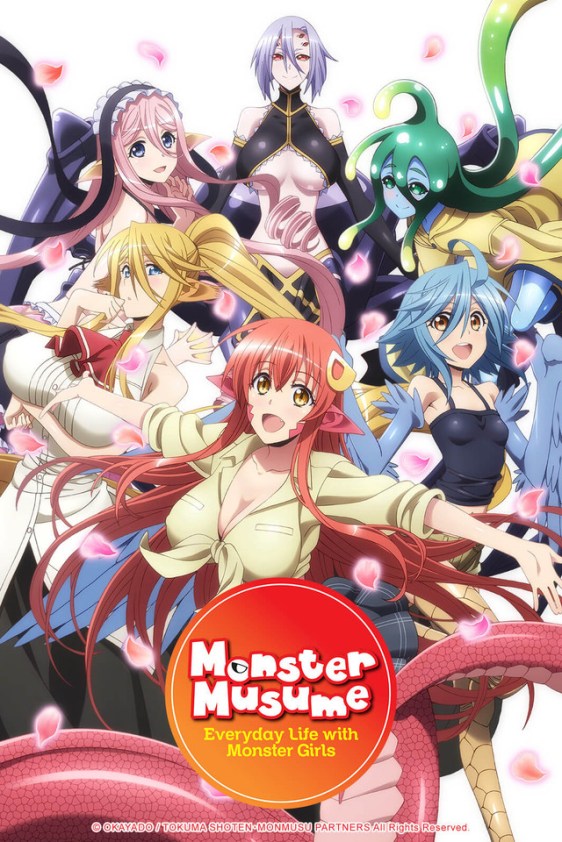
I wrote another post over at the site Apartment 507 about Monster Musume. This time, I go over what I think makes Monster Musume a special series. Warning, the post might be NSFW.

And yes, I am planning on making a Fujoshi File for Zombina.

JoJo’s Bizarre Adventure, Gone with the Wind, and Translation

1367560000

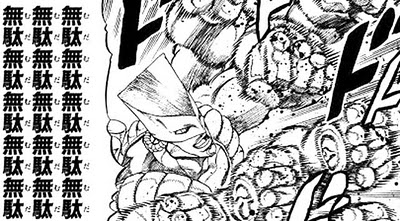
A few months ago on Twitter, a number of manga translators and readers threw their hats into the ring to discuss the persistent issue of “authenticity” vs. “localization.” The central point of argument was whether the fact that the English translation of the JoJo’s Bizarre Adventure manga kept antagonist Dio Brando’s signature catch phrase untranslated (MUDA MUDA MUDA MUDA / USELESS USELESS USELESS USELESS) is a sign of faithfulness, Japanophilia, or something else entirely.

There’s no real right side to all of this. As the Reverse Thieves explained well, there are many facets to consider, and translation is more an art than a science. For example, people who argue that translations should be as localized as possible so as to remove the sense that it comes from another language would assume that the primary audience is a broad, general readership. What if it isn’t, however? Academic translations for instance tend to be filled with footnotes and marks and other things because you’re supposed to be fully explaining the nuance of meaning through translation.

What’s even more fascinating, however, is seeing the problem of translation from the English to Japanese side, and the challenge that is posed to English translators in Japan. For example, let’s look at one of the on-going controversies within this greater Japanese to English translation debate: whether or not to include Japanese honorifics in English translations. After all, while “-san” might be already known to fans of Teenage Mutant Ninja Turtles and other similar works, for the most part it’s the realm of the manga fan, so to speak. When the decision is made to remove them, a translation either has to compensate for the loss of immediate information pertaining to how two characters relate to each other through a more liberal translation, or ignore that aspect entirely.

What about English to Japanese? From that perspective, the problem is completely flipped around. Suddenly you go from a language with no honorifics to one where they’re a part of everyday life. Let’s take a movie like Gone with the Wind. How would you translate Rhett Butler’s speech? The official translation has him use “Ore,” possibly to show that he’s both masculine and skirts standards of politeness and pomp. Is that the right decision?

If you were in charge of translating Gone with the Wind to Japanese, what honorifics would Rhett have to use when talking to other characters, if any? Would they change over the course of the movie? The change or removal of honorific usage to determine the progression of a relationship between two characters is a classic trope of manga and anime, and something English translators have to be constantly wary of (as is switching from last name to first name), but here with Gone with the Wind it’s potentially something that the translator has to build into the story where it once did not exist. The decision could be made to ignore honorifics specifically, but then a lot still has to be done to adapt characteristics and speech patterns to particular personalities. Rather than having to subtract, the English to Japanese translator has to consider additional components if they want to go for a “natural”-sounding language. Or do you just get rid of them all because it takes place in the US, or to show again that Rhett doesn’t have much use for politeness?

Of course, that’s not to say that Japanese to English translators also don’t have to create what ostensibly isn’t there to get the meaning of a line across. In both cases, there are things to be gained and lost in the decision to interpret lines in certain specific ways.

There are even multiple different translations of Gone with the Wind, each of them taking different liberties. Rhett’s famous “Frankly my dear, I don’t give a damn,” has been variously translated as 「俺には関係ない」(Ore ni wa kankei nai, “This has no relation to me”) and 「俺の知った事か」(Ore no shitta koto ka, “I have nothing to do with that”). Notably, both do not bother to preserve the cultural meaning of “damn,” nor the “Frankly my dear” part. The frankness is in the lack of formality and the general implied rudeness of the sentence construction.

Suffice it to say, translation isn’t easy, and the decision to keep or remove cultural elements is a unique challenge that perhaps few other fields have to contend with. Whether you’re a translator or just a reader, it might be helpful to express how you feel about the work that goes into translating.

If you liked this post, consider becoming a sponsor of Ogiue Maniax through Patreon. You can get rewards for higher pledges, including a chance to request topics for the blog.
 

Hato Kenjirou Fans, This Is for You: Hatozine

tumblr_o0fmz8gw4r1uccop6o1_1280

A few months back, I mentioned the fact that Hatozine, a fanzine dedicated to the Genshiken character Hato Kenjirou, was accepting submissions. Now it’s been released, and I think it’s worth taking a look at to see the myriad expressions of interest for a character as dynamic and intriguing as Hato. Also it’s free!

Hatozine features fanfiction, fanart, comics, and even some essays, including one by yours truly. What I think is especially awesome about Hatozine is that it has work from both fans of Hato/Madarame and Hato/Yajima.

Check it out if you’re a Genshiken fan, a Hato fan, or even just fascinated by an otaku character with a very complex gender and sexuality identity. If you’re not interested in those things, it might just be an interesting window into the minds and feelings of those that are.

UPDATE (July 13, 2024): The link below is defunct, but I managed to find it and upload it to Ogiue Maniax. You can find both the print and web versions below.

Print:

Web:

[Apartment 507] One Punch! JAM Project’s Gateway to Western Success?

I’ve written a blog about the potential influence of One Punch Man‘s popularity on the anime super band, JAM Project. You can find it on Apartment 507.

Apartment 507 also sells point cards for Japanese services such as iTunes, Playstation, and Wii U, so if you’re someone who likes to play Japanese games digitally it might be worth your while to look at the rest of the site.

Future Boy: Genshiken II, Chapter 119

At long last, it’s the final date! Hato gets his turn with Madarame, but while their time together starts off with some comedy, it quickly turns into a very serious conversation that brings Genshiken back to a core theme: 2D characters vs. 3D relationships.

Actually, to be more accurate, the clash between “fantasy” and “reality” emerges from the very beginning. Just calling it a “date event” betrays the entire club’s otaku orientation; among regular people it would just be a “date.” From there, Hato starts to clearly delineate the differences between a biological woman and he himself who only dresses as a woman, namely that a crossdresser tends not to want people to get too close, otherwise they might recognize the truth. Though it ends with a funny moment where Madarame and Hato try out holding hands (did you know that Madarame has cold hands?), only to pull them apart after being spotted by the rest of the group, the tension is already set.

Though the dirty looks from Sue and Keiko (and Kuchiki) are magnificent.

Throughout the chapter you see Madarame use certain words that associate Hato with the the characters in the boy-girl (otoko no ko) games Madarame plays. He uses terms like “spice,” or “forbidden,” which eventually causes Hato to directly confront Madarame about what it would take to be in a homosexual relationship. Hato outright says to Madarame, “I’m a guy!” (pairing an effeminate “watashi” with a masculine “otoko”) and essentially asks if Madarame has really thought about what that means. If he actually starts something with Hato, then in the long term it won’t be a crazy alternative, or a thrilling experiment. Dating a man, even one that dresses convincingly like a woman, won’t be like seeing it in an anime or a visual novel, where no real consequences can occur. If he chooses Angela, Sue, or Keiko, then he won’t have to deal with these hardships.

I don’t know if I’m reading too much into this, but I think that implicit in Hato’s words is the awareness that gays are stereotyped and discriminated against in Japanese society. Picking Hato comes with it a future of tribulations, and the question is if Madarame is really prepared to take this seriously, or if it’s just a fetish at the end of the day that can’t move beyond fantasy.

Madarame’s response in turn, “Sorry,” then signals two things. Hato’s devastated reaction indicates that he’s not so much taken aback by Madarame’s apology, but the very nature of it. That’s because the “sorry” comes across as noncommittal, another case of Madarame vacillating because he still desires for the pieces to fall into place without him having to make any hard choices. Madarame has the potential to start a real relationship with Hato or any of the others, but he’s still afraid to make a decision. It calls back to the Madarame who originally decided to let his crush on Kasukabe slide by unrequited, and was willing to let it eat away at him for the rest of his life.

What I also find fascinating about this entire situation is that it not only subverts that harem aspect of the series, but that it’s a strong reminder that the qualities that have made Madarame somehow charming to these prospective partners are also the very things that can aggravate them. He’s both his own best friend and his own worst enemy, and I believe it keeps the series from truly entering actual “harem” territory.

The question of how Madarame will engage with the reality of having a flesh and blood partner is what I think makes Ogiue’s appearance at the end so interesting. As stated in the chapter itself by Ogiue, Hato’s running away from Madarame mirrors Ogiue trying to reject Sasahara out of fear of both hurting others and being hurt. However, I also feel it’s not really the same situation.

Sasahara hesitated because he was a naive dork who couldn’t read between the lines. Even though he recognized his own feelings for her at that point, when Ogiue told him that she couldn’t date guys, Sasahara took it at face value and almost gave up as a result. Madarame, on the other hand, has to decide whether his feelings are for Hato the person or Hato the image, and whether he’s willing to take a much more difficult road in the process when he clearly has three less troubling options moving forward that he also seems to have feelings for.

Writing all of this out, it makes me realize that Madarame’s hesitation can also be interpreted as wanting to make certain that he makes the right decision. He’s been raised to believe that romance is a special thing, a world of childhood friends and deep bonds that are anything but frivolous (though at the same time sex is raunchy and powerful). It might be another angle worth exploring.

Angela believes that Madarame clearly has eyes for Hato. We’ll see if she’s right.

If you liked this post, consider becoming a sponsor of Ogiue Maniax through Patreon. You can get rewards for higher pledges, including a chance to request topics for the blog.
One Punch Man’s Japanese and American Superhero Lineage

One Punch Man has been a hit, both with the people who have long championed the manga, and with those discovering it through its animated adaptation. The story of Saitama, an invincible superhero who literally finishes most of his fights with “one punch,” the series puts a great deal of emphasis on humanizing its Superman figure. It handily deflects the classic criticism of invulnerable protagonists as “boring” while also drawing from both Japanese and American superhero traditions, and I think it’s worth exploring what it does to make Saitama a sympathetic figure.

To talk about a Superman-type character is to also naturally bring up the Man of Steel himself. Originally conceived with incredible strength and speed and gradually transformed into a being that could move planets and reverse time, much of the past three decades’ stories concerning Superman have been finding ways to make him human. Zack Snyder’s Man of Steel film focused on the psychological and emotional struggle of having to hold back all the time, something shared with select episodes of the Justice League cartoon. Superman has been reduced to the point of being not quite so omnipotent, and also turned into a brooding teenager for Smallville. Numerous “what-if” scenarios have made him Soviet, nearing death, old and out of touch with the youth, and alternative takes on Superman-esque figures have dealt with mental problems, become amoral, and more. Even other superhero-themed series such as Tiger & Bunny and My Hero Academia will build in flaws into their Supermen, though the fact that they’re in the distance means that it’s more about how their image and reality compare.

One Punch Man ties Saitama’s ongoing turmoil to the fact that his astronomical power levels have made him unable to fulfill his heart’s desire, which is to be pushed by a powerful foe and go beyond his upper limits. He wants to feel like Son Goku being brought to the brink by Frieza. He wants to be Ryu from Street Fighter, constantly pursuing the next challenge. He draws from that popular tradition in manga and other Japanese media about the thrill of the journey, and yet while Akagi brushes with death before defying it, even that is denied when it comes to Saitama. Even if we’ll never as powerful as that, I think it’s easy to understand why this would be so painful.

Perhaps the more important element is that Saitama is kind of an idiot. The fact that Saitama doesn’t quite think through his position in the world (or perhaps choose to actively ignore it) brings a certain quality that reminds me of the earliest Superman comics and stories, back when he could only leap tall buildings in a single bound. If you look at the very first Action Comics, Superman spends a lot of it bullying the bullies. There’s a certain satisfaction in the fact that Superman’s personality and character aren’t so elaborate, that there isn’t almost a century of material exploring his psyche. One Punch Man achieves something similar by just having Saitama’s morality have good intentions but generally be kind of vague. He hasn’t thought too much about his role as a superhero other than that it’s “fun” (or at least should be), though at the same time it puts a twist on that basic desire to be so powerful that no one can stand in your way.

If you liked this post, consider becoming a sponsor of Ogiue Maniax through Patreon. You can get rewards for higher pledges, including a chance to request topics for the blog.

Love, Shogi, and World Domination: 81 Diver

greatuglymanga-81diver-020001-small

At long last, after many years and 35 volumes of manga, I have finished the exhilarating, hilarious, ugly, and beautiful shogi manga known as 81 Diver. Its bizarre narrative and even stranger art work captivated me from the very beginning, and now that I have seen this series to its end (one of the three series I followed intently that have concluded recently), I want to write to confirm that 81 Diver not only ends strong but in many ways either matched or exceeded my expectations.

81 Diver is the story of Sugata Kontarou, a failed shogi [Japanese chess] player who has taken up gambling through shogi to make ends meet and to fulfill his love of the board game. One day, he decides to order a maid service to clean up his apartment, and discovers at his doorstep an absolutely voluptuous redhead as if out of a fantasy. However, this maid has another identity as Akihabara’s strongest shougi player and a gambler just like Sugata. Known as “Ukeshi,” what translates loosely to “master of defense,” Nakashizu Soyo (as we later learn her name) has her own mission in life: to avenge her brother and father who were both killed by shogi.

As the series progresses, the characters wind up not only challenging and befriending a variety of powerful shogi players and for some reason martial arts experts (actually it’s because the author Shibata also wrote Air Master), but end up in a tournament to save the world from the Kishoukai, the “Demonic Shogi Organization.” The amounts of ridiculous twists and turns this series goes through are almost too many to count. As crazy and as strangely epic as this sounds, however, what really makes 81 Diver special is that the art looks like this:

When discussing the character Kiryuuin Satsuki in Kill la Kill, I once wrote that she has so much presence and so much inner strength that it is the very first thing you notice even as she’s wearing the most ridiculous and revealing outfit possible. I find 81 Diver‘s portrayal of Soyo to be of a similar vein. Sometimes there will be pages of her character where half of it is occupied by a shogi board and the other half is taken up by her enormous chest. At the climax of the manga, her breasts become one of the central points of conflict. And yet, her raw shogi power level is what stand out most about her.

The difference is that, while Kill la Kill achieves this through incredibly well-rendered, stylized, and intense artwork, I ended up including 81 Diver as one of the many titles at my Otakon 2015 panel, “Great Ugly Manga.” On some level, this is clearly on purpose, but it’s also clear, especially given Shibata’s guest essay manga in Gundam: The Origin, that he’s making the best out of what he has, and what he has is a lot of spirit and not a lot of conventional drawing talent.

greatuglymanga-81diver-02-small

I would not call 81 Diver an intentionally feminist or progressive work, especially given all of the attention given to girls’ bodies, but it is notably diverse in its cast. There’s an admirable homosexual character who isn’t stereotypically flamboyant, who also dresses like a tokusatsu character and shoots rocket punches. There are also numerous romances between unlikely individuals, and what stands out most is the strange romance between Kontarou and Soyo that portrays them as equals above all else.

When you look at many shounen and seinen manga, there is often something of a lopsided relationship where love interests aren’t allowed to be as prominent in the particular subject focus of the manga (be it sports, fighting, or whatever). Not so with 81 Diver. Though Soyo is dressed in maid outfits throughout the series, and though she will sometimes playfully call him “master” as a callback to how they originally met, at the end of the day they are bonded by their mutual skill and passion for shogi. In fact, when the series begins Soyo is clearly Kontarou’s superior, and when they are able to play again much later in the series, it is one of the most satisfying duels I’ve ever seen in manga.

As mentioned by the characters, the characters fight as if they’re communicating their love through the game of shogi itself. When you see the two of them play, you genuinely don’t know who’s going to win because, even if you set aside the idea of skill in favor of narrative progress, both characters have convincing reasons why they need to win. Ultimately, I love the way they resolve all of this, but I won’t say more so that it remains a surprise for readers.

I could probably write a whole series of posts on 81 Diver, and in fact I’m quite tempted to do so. Suffice it to say, 81 Diver comes highly, highly recommended from me. If you can get past or even embrace the terrible (or perhaps terribly endeaering) artwork and style, it becomes one of the funniest, surprising, and involving manga you’ll ever read.

If you liked this post, consider becoming a sponsor of Ogiue Maniax through Patreon. You can get rewards for higher pledges, including a chance to request topics for the blog.