The Fight Against Oneself: Mobile Suit Gundam Hathaway

In my earliest days of online Gundam fandom back in the late 1990s, the vast amount of information available was like a treasure trove of juicy morsels about what was out there. Among them was mention of a certain novel—“Did you know there’s a sequel to Char’s Counterattack? It’s called Hathaway’s Flash, and it stars Hathaway Noah [sic], who pilots something called the Xi Gundam!”

Though I don’t recall ever asking questions out loud, chief among them were: “Would I ever get to experience this story myself?” and “Why the hell would they make a sequel about Hathaway?” 

Now, in 2021, we have Gundam Hathaway, a film (presumably the first of a series) that adapts the novel into animation. Story-wise, it follows Hathaway Noa, now in his 20s and a decade-and-change removed from the events of Char’s Counterattack. Leaders of the Earth Federation have been under attack by a mysterious terrorist named Mafty Navue Erin, and Hathaway’s own history leads to him being in the epicenter of this situation. 

The action is impressive and the character animation is gorgeous, though the lack of 2D animation for the robot fights is kind of disappointing even if the 3DCG looks good overall. When the Xi Gundam shows up, you get a real sense of the sheer size of the thing. Compared to even the oversized Nu Gundam and Sazabi from Char’s Counterattack, the long distance from cockpit door to seat sells how much things have scaled up. 

But the story of Hathaway, and his internal struggle, is where this first film shines most.

I don’t know how the young me back in 1998 would have reacted to the characters and narrative of Gundam Hathaway, but I think it would have been quite different. A couple years ago, I watched a theatrical screening of Char’s Counterattack, and coming at it as an adult instead of a teen gave me a whole new perspective. The young side characters, Hathaway and the Newtype prodigy Quess Paraya, weren’t irritating fools but simply kids who are failed by adults at every turn.

In this light, an adult Hathaway makes for a compelling protagonist. While he’s portrayed as being far more skilled in combat both in and out of mobile suits compared to his child self, he never comes across as inherently exceptional the way previous main characters like Amuro Ray and Kamille Bidan were. What you have in Hathaway is a child traumatized by war, and who’s trying to prevent his past mistakes from reoccurring as an adult, but who doesn’t necessarily know what the right answer is. Within him are the dueling philosophies of Amuro and Char, clashing and contradicting. He wants to be the everyman and the charismatic leader, the hero who saves the people from both corruption at the top and themselves. 

Nowhere is this clearer than his interactions with the female lead, Gigi Andalusia. She’s an eccentric empath who’s probably a Newtype or something similar, Hathaway sees the late Quess in her, and while she can be a thorn in his side, Gigi’s exactly the kind of person Hathaway fights for. If he can prevent more tragic deaths like Quess’s from happening, he’ll do whatever it takes.

I’m looking forward to seeing where Hathaway’s decisions take him, though I know this is Gundam and the chances of tragedy are markedly high—especially because the original novels were written by the original series director Tomino Yoshiyuki during one of his more fiery periods. Whatever the result, Hathaway Noa is a worthy Gundam protagonist.

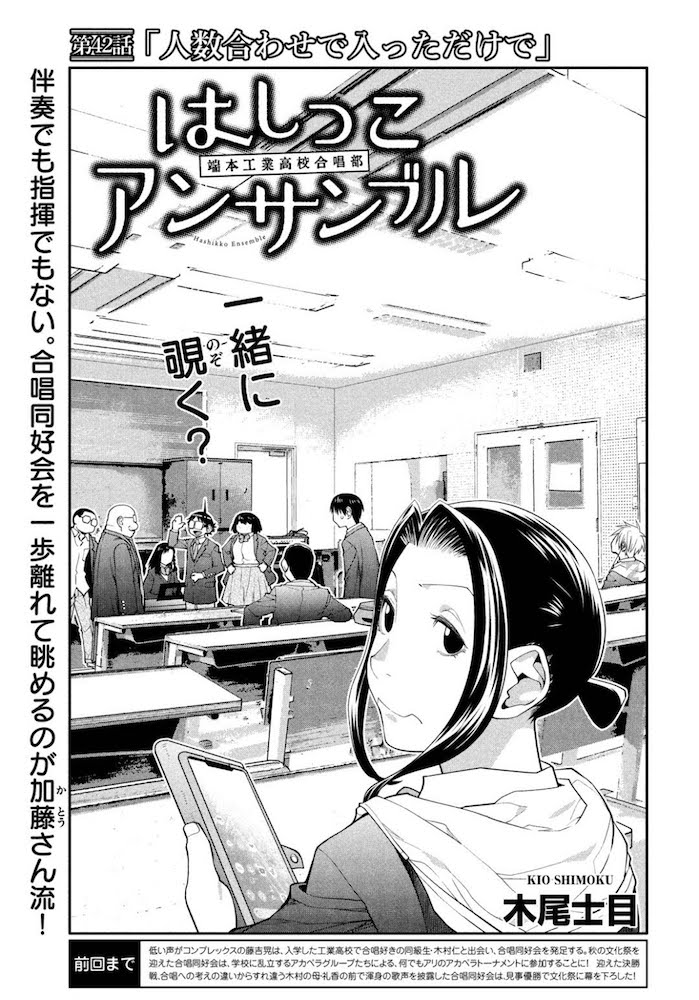
Kanon Indeed: Hashikko Ensemble, Chapter 42

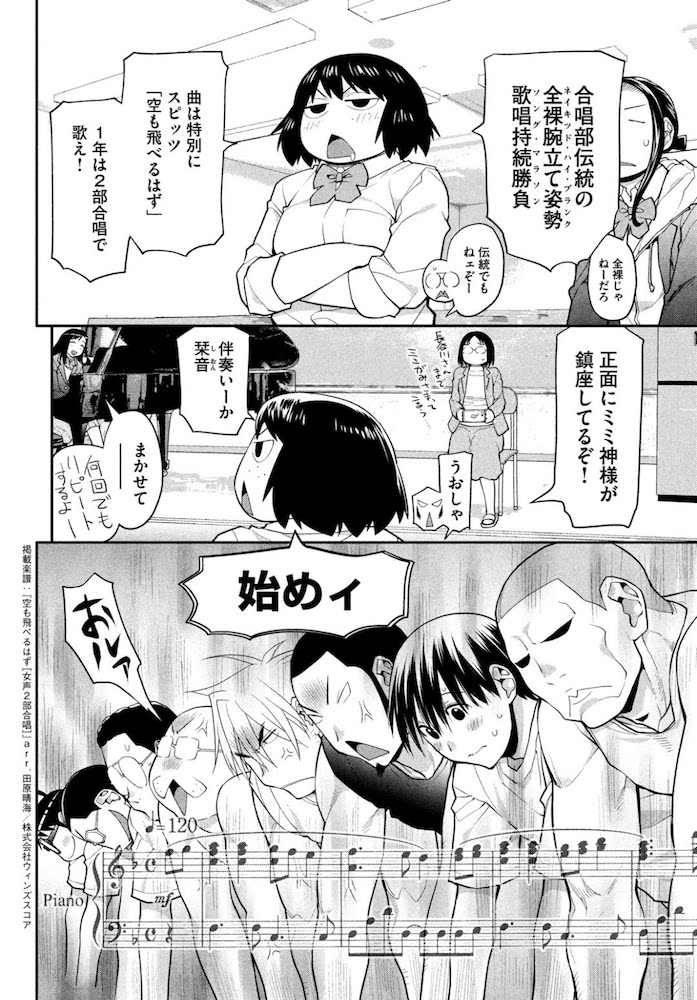
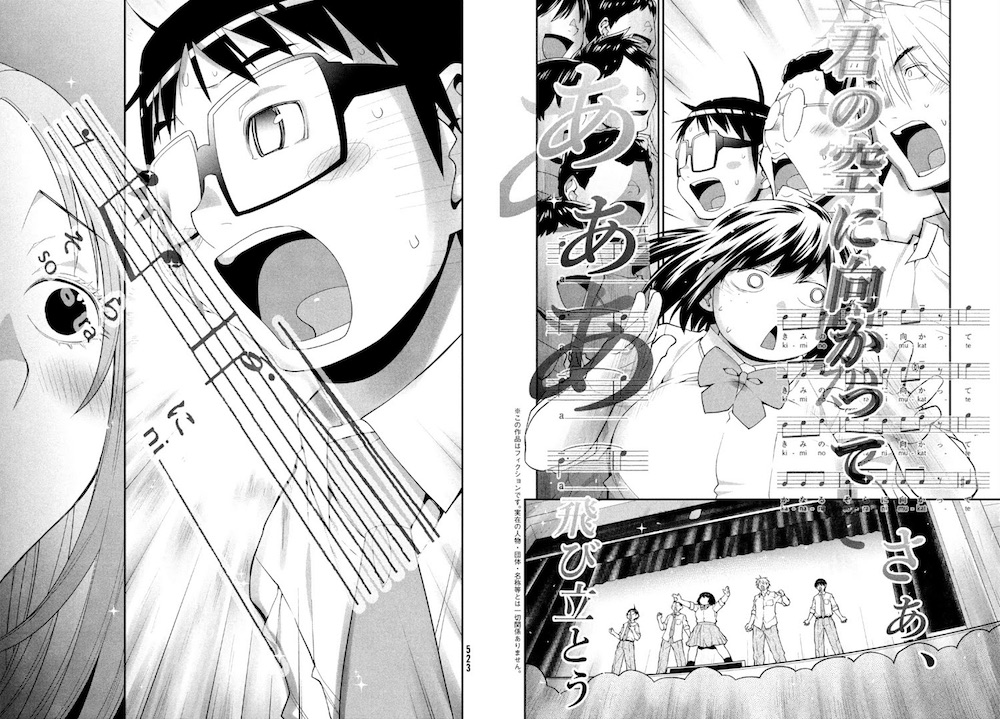
Kozue commences a competition among the boys to do push-ups while singing

The Chorus Appreciation Society bolsters its ranks, but not all is smooth sailing.

Summary

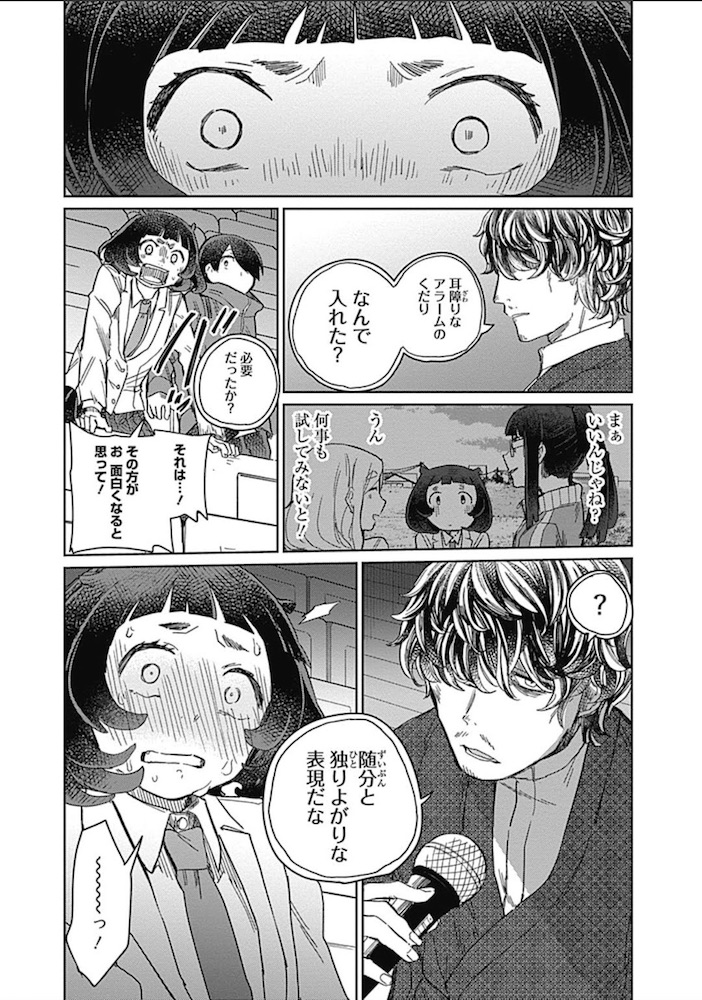
In a small change of pace, this chapter is largely from the point of view of Kanon. Despite the big win and Kozue’s fiery speech, the only students who have decided to join the Chorus Appreciation Society are Tsuyama’s crew (aka the Tsuyamars) because Mimi-sensei is their advisor. And right as Kanon is resigned to not participating more actively because this Appreciation Society is guy-focused, Kurotaki Mai shows up both asking to join and clearly having her eyes on Akira. 

After some exercise (during which Kozue explains that theirs is basically an athletics club in terms of physical conditioning), things escalate into a competition between the current guys and the Tsuyamars to see who will be part leaders. In particular, Tsuyama and Kousei have a particularly fiery rivalry, on account of their both being baritones and delinquents quick to violence. Thanks to the conditioning of the veteran members, they all retain their spots, but within the little conversations happening, Kanon senses an increased awkwardness from Jin to Akira.

Kanonical Perspective

Kanon looks back toward the reader while sitting in the back of the clubroom

I’m appreciative of the fact that Kio was willing to switch things up and give Kanon a spotlight of sorts. So far, she’s largely been the relatively normal friend of Shion and Kozue, and one might uncharitably call her “boring.” But in addition to the manga emphasizing that she’s feeling a greater desire to participate more actively in some way, Kanon is also shown to have the keenest eye when it comes to social dynamics. She immediately recognizes Mai as the girl with a huge crush on Akira. She notices a greater closeness between Shion and Kousei, as well as Jin and Kozue. And, as mentioned, she can tell that Jin’s viewing Akira differently—though it’s not certain if she’s making the connection to Jin’s mom publicly recognizing Akira’s talent in front of her son.

I’ve compared Kozue a bit to Kasukabe Saki from Genshiken because of their no-nonsense attitudes, but because of Kanon’s ability to recognize shifting relationships, I think she might fit that role better in certain respects. The fact that Kozue is kind of an oddball in her own right also means that she can’t play the straight man the way Saki would. Perhaps Kanon is more like a less abrasive Sasahara Keiko? In any case, I’d like to see at least a few more Kanon-centric chapters in the future—perhaps even one where she’s the actual center instead of just the POV character.

Mai Joins the Party!

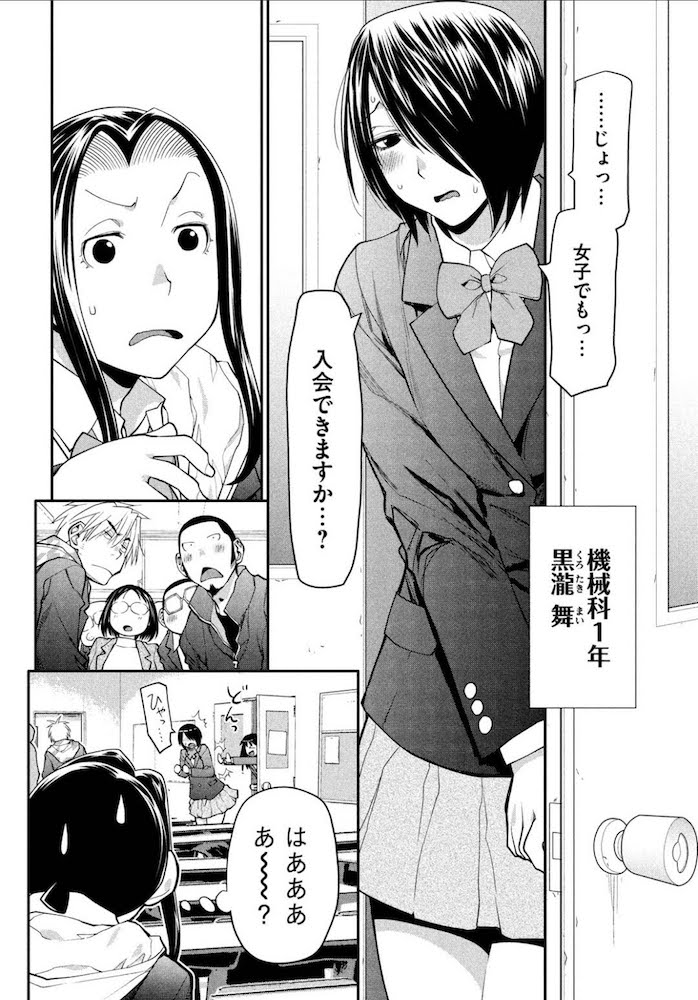
Kurotaki Mai asks if they’re accepting female members

Ever since her introduction, I have been hoping and predicting that Kurotaki Mai would eventually join the club, and now it’s finally happened. But while she’s been a potential love interest for Akira from the get-go, I really did not expect her to be waging an active campaign for his affections! As Kanon notices, not only does Mai enter the clubroom with a clear intent and purpose (even making a beeline straight for Akira), but she went as far as shortening her skirt. I think a part of me might be a little too used to a certain greater level of old-fashioned indirectness in these story situations, but I welcome whatever this is.

Kanon is surprised to see Akira react so casually and obliviously to Mai turning up the charm, to which she begins to wonder if Akira is into “bratty” girls like Shion and Himari. Kanon is portrayed as being especially observant, but I’m not certain she has an accurate peg on him, and I still believe Mai has a chance. Also, I like how right towards the end of the chapter, we get a little glimpse into more of Mai’s personality when she urges Akira and Ogawa to keep competing. While Ogawa is willing to forfeit because he has no particular desire to be the part leader for the bass section, Mai responds with, “Huh…? But there’s no point if this isn’t a serious competition?” It’s as if she wants Akira to live up to her lofty and romantic expectations of him. In other words, we’ve got another weirdo in the group, and that means my fondness for Mai only grows stronger.

Songs

This month’s sole song is “Sora mo Toberu hazu” by Spitz. It’s only natural, because of Mimi-sensei’s love of the band and, in turn, the Tsuyamars’ worship of Mimi-sensei.

Final Thoughts

First, I think this manga is going to get even better now that we’ll be seeing more Mai. I might be biased, though.


Second, while it barely got mentioned in this chapter, I’m really expecting a greater exploration of Jin’s new tension when it comes to Akira. The idea of intra-club volatility is new to Hashikko Ensemble—not only with Jin and Akira or Tsuyama and Kousei, but also Mai and Shion—and I’m looking forward to seeing what kinds of drama and silliness arise. 

The Slow and the Furriest: ODDTAXI

The anime ODDTAXI begins with a subdued and moody opening that feels mysterious and haunting upon first viewing. As the story progresses, it becomes increasingly clear that it’s the perfect encapsulation of the series: a mystery and drama whose complexity and maturity belies its furry aesthetic. But unlike other popular anthropomorphic titles in recent years (Beastars, Zootopia), ODDTAXI is less an allegory or thought exercise into a society of civilized animals, and more a noir tale that peers into the people’s relationships with modern-day vices.

When a girl is reported missing, a middle-aged walrus taxi driver named Odokawa Hiroshi is one of the last people seen with her. Brusk, awkward, and largely unremarkable, Odokawa has an unusually keen eye for human observation and his own sense of right and wrong—which reluctantly draws him into the seedy underbelly of Tokyo. 

While figuring out the truth behind the missing girl (as well as myriad other enigmas) is one of the main driving forces of the series, ODDTAXI is also a collection of character studies that spotlight the particular kinds of darkness that regular people face in the 21st century. While the cultural image of the noir genre is often rooted in an older era (think Sam Spade and The Maltese Falcon), here we have characters who are obsessed with the idol industry, exploitative collectible mobile games, social media clout, and more. The characters who fall victim to these addictions feel current, yet rhyming with a history of similar dangers in past eras. 

What’s more, these vices all tie directly into the main plot, meaning that the keen observations seen in these situations also provide a narrative function. 

Odokawa also makes for an interesting protagonist precisely because he often seems so ill-suited for the role. Noir protagonists tend to be flawed characters, but Odokawa’s deficiencies aren’t those of a grittier and more masculine type that one might expect from the genre, making him potentially more relatable to contemporary viewers. The fact that he’s fairly eccentric himself means there are plenty of questions surrounding Odokawa, and having the protagonist himself be surrounded with unknowns provides an additional layer of fascination. Fortunately, ODDTAXI delivers here as well. 

ODDTAXI is not a straightforward story, with many different threads running and getting intertwined into a web of relationships and motives. However, rather than feeling wholly disconnected, the anime turns out to be an excellent mystery with many seemingly disparate moving parts slowly fitting into a larger puzzle. The outcome is a series that treads ground in a way that feels familiar yet unique, and makes for both a really solid mystery and an interesting psychological look at how we try to mentally survive in society.

Play Therapy: SSSS.Dynazenon

The first thing to know about SSSS.Dynazenon is that you don’t need to have watched any of the prequels to get into SSSS.Dynazenon. Sure, its name implies a connection to 2018’s SSSS.Gridman, which is itself a sequel of sorts to the 1993 live-action Gridman the Hyper Agent. Even so, SSSS.Dynazenon is an insightful anime that stands on its own merits. 

The story of SSSS.Dynazenon follows a teenage boy named Asanaka Yomogi. After encountering an eccentric guy named Gauma claiming to be a kaiju user, his city is attacked by actual kaiju. Gauma is able to call upon a giant robot named Dynazenon, and Yomogi (as well as a few others) end up becoming Gauma’s copilots. With a different part of Dynazenon in each of their hands in the form of toys, they battle a group known as the Kaiju Eugenicists, who have the ability to control kaiju by bending them to their will. 

One question to ask when looking at many tokusatsu and mecha series is how much the characters’ primary motivations tie into the larger overarching plot and setting. In Gundam, for example, the connection is usually extremely strong—protagonists like Amuro Ray are thrust into the middle of long and painful wars whose physical and mental scars are the primary driving force of these narratives. Evangelion takes a different approach, forefronting the existing psychologies of its characters and using its science fictional setting as a means to explore their traumas. With respect to that dynamic, SSSS.Dynazenon falls a little more towards the Eva side, but goes its own direction.

SSSS.Dynazenon has a grounded feel that highlights both its characters’ personal histories and how their current circumstances as impromptu heroes impacts their views.  As Yomogi and the others battle, they’re forced to confront their own unique fears and values. Yomogi is trying to cope with his parents’ divorce and his mom’s new boyfriend. Minami Yume, one of Yomogi’s classmates, is emotionally distant ever since the mysterious death of her sister. Yamanaka Koyomi is a NEET in his 30s who constantly regrets not making certain decisions in his life (particularly a romantic one) that could have brought him down a different path. Koyomi’s younger cousin, Asukagawa Chise, refuses to attend school. Gauma searches for his past, explaining to the others that he’s actually thousands of years old.

While it can seem as if the fantastical elements are just a flimsy backdrop to the human drama at play, that’s not the case. Rather, one of the key strengths of SSSS.Dynazenon is the way that feeling both the added responsibility and thrill of fighting kaiju reshapes or reinforces their priorities and core beliefs. The fact that they carry around their respective vehicles like toys before growing them to giant size also makes me feel that there’s a link between the childish notion of “playing with toys” as a way to engage with the world and connect with others. In that respect, the antagonists of SSSS.Dynazenon, the Kaiju Eugenicists, seem to also have their own hang-ups but engage with them in less healthy ways.

SSSS.Dynazenon is also different enough from its predecessors that those who didn’t enjoy Gridman the Hyper Agent or SSSS.Gridman might resonate with this series. In particular, its characters are portrayed in a more subdued manner than SSSS.Gridman, where the central female characters, Rikka and Akane, cast a long shadow and often stole the spotlight through their sensual portrayals and powerful yuri energy.

Though I say that knowing the prequels is unnecessary to gain something from SSSS.Dynazenon, that doesn’t mean it’s pointless to have been a fan. Using my personal experience as an example, I came to the series cognizant of the fact that “Dyna” and “Zenon” are references to support robots from the original Gridman due to having watched Superhuman Samurai Syber-Squad (the Power Rangers-esque adaptation of Gridman the Hyper Agent), and later found myself excited over some mid-series character arrivals that call back to SSSS.Gridman. The key is that while the series does reward those with prior knowledge, it doesn’t punish those who are new and unfamiliar. 

SSSS.Dynazenon hints at ties to the prior series in everything from the title of the show to the character Gauma himself. However, unlike with SSSS.Gridman, the mystery of what exactly is going on is less of a core element and more an added bonus for existing fans of either one or both previous series. The core story—one of friendship and growth—remains.

Oh, What Could Have Been: Maku Musubi Final Review

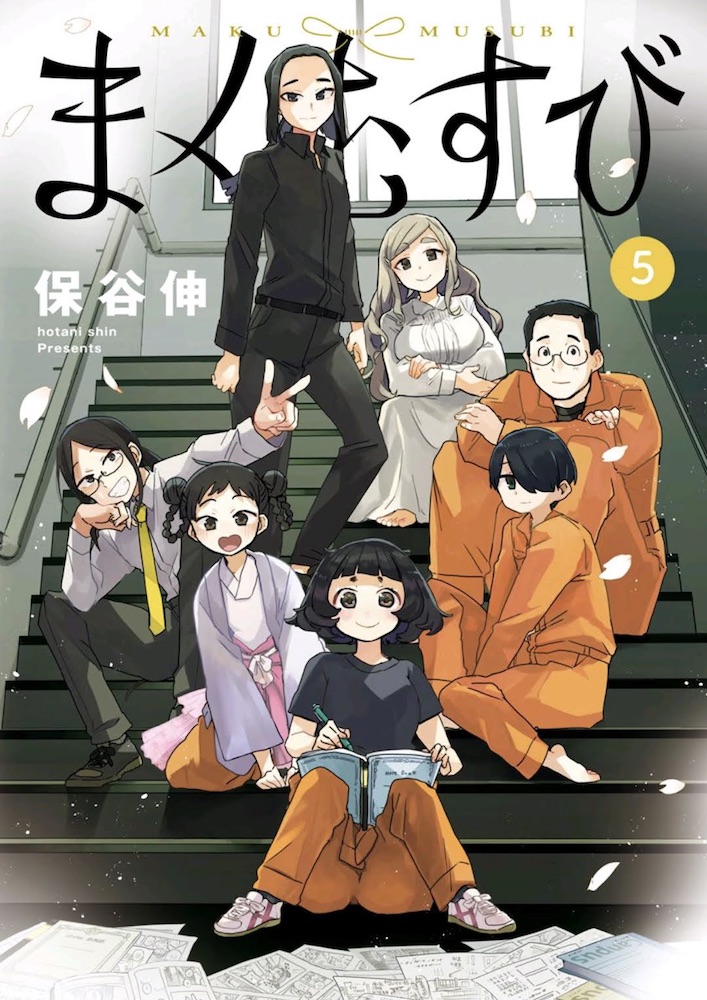
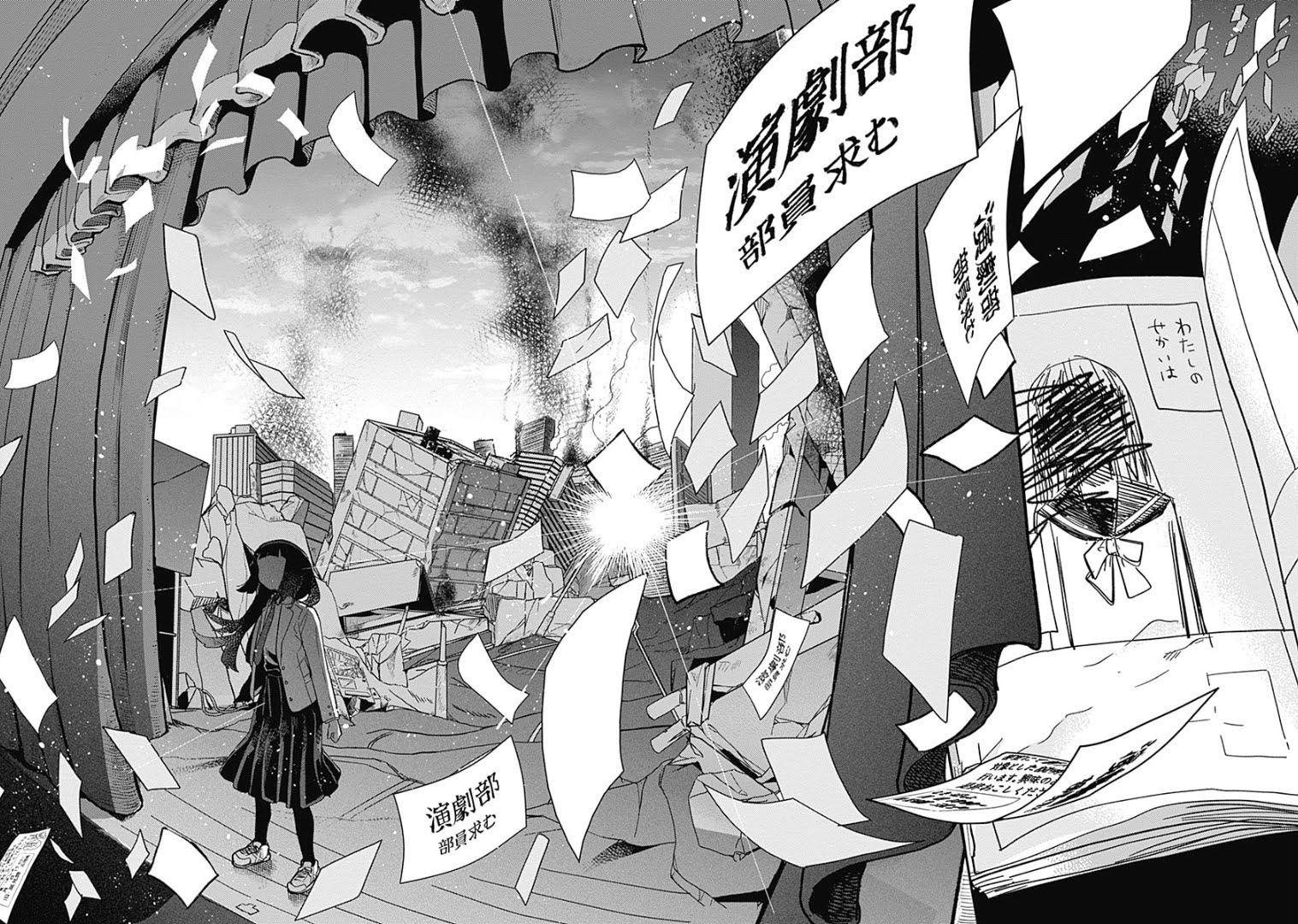
Maku Musubi by Hotani Shin is a manga that hooked me instantly. Its story—that of a high school girl who abandoned her dreams of becoming a comic artist but finds new life creating scenarios for theater—resonated with me because of its exploration of its protagonist’s creative process, and it made me want to read more. 

The series ended up being five volumes total, and my takeaway is that the series is great fun from start to finish, but feels like it was cut short and prevented from reaching its true potential.

In Maku Musubi, heroine Tsuchikure “Musubi” Sakura and her clubmates are working towards competing in competitions against other schools. They even attend a joint-school event where different drama clubs gather for what is essentially a practice run with professional critique. This little arc is great: it emphasizes the eccentric yet compelling nature of Sakura’s scripts, and also introduces an extremely harsh judge whose cold-blooded reviews of every performance provide a “villain” of sorts that challenges everyone to rise to the occasion. The judge clearly recognizes Sakura’s potential, her inability to meet his high standards makes her screenplay a “disappointment” in his eyes. But then they never truly get to any competitions, and so we never see them get to the first true step of their main goal. 

The manga has plenty going for it despite this lack of resolution, and its main focus in the final chapters on the club president’s unpleasant past with the former members who left prior to the first chapter brings out all of the things that make Maku Musubi interesting to read: character introspection, depictions of club-life camaraderie, and a flair for the dramatic (literally). Still, it feels like Musubi’s story could have gone so much further. Her creative struggle could have grown into something even more impactful if given the chance.

Manga isn’t an easy area to succeed in. I’m reminded of another title I reviewed years ago called Haru Polish which, like Maku Musubi, clearly stops earlier than was intended. But when  you look at manga about acting, it’s hard to end things at the right time. Glass Mask is notoriously long—around five decades old with no finish in sight. Now Playing finishes at four volumes when it felt like it had more left in the tank. Act-Age was doing great until the author’s sex crimes forced that series to be canceled. I don’t know if the theatre genre in manga is cursed or what.

I hope Hotani Shin ends up doing another manga, and that they’re able to make as big and beautiful a series as they hope. In the meantime, Maku Musubi was a great ride.

Back Arrow Never Asks for Too Much

In today’s media landscape, it can feel like everything is about having an obsessive audience. Mobile games incentivize you to try to get every ultra rare and keep following a neverending story. Superhero movies, like their comic counterparts, want you to watch every single sequel and spin-off leading to the next mega film. Manga and anime want you to look into every character’s backstory and all the convoluted history that connects them together. These aren’t necessarily bad things, but they can be exhausting.

Under these circumstances, the anime Back Arrow is like a breath of fresh air because it doesn’t expect your total time and attention. Every episode, I would be entertained and intrigued; I might even have speculated what would happen next. But in a time when my mental space is being bombarded by world-changing events on the regular on top of all the aforementioned fan-forward storytelling, I like having an anime that’s just trying to be a sandwich instead of a 10-course meal.

The premise: Lingalind is a world of constant strife, with countries big and small vying for supremacy. Surrounded by a divine Wall that cannot be crossed, mysterious drop pods called rakuho fall from the sky and provide mysterious armbands known as Bind Warpers. These devices allow people to manifest their convictions and form giant robots called Briheights, and are the primary weapon of war. One day, a group from the tiny village of Edger finds a rather unusual rakuho containing a man with no memory—other than the seemingly insane notion that he comes from beyond the Wall. This man, who comes to take the name Back Arrow, is not only able to manifest a Briheight without having any conviction of his own, but is also able to defeat other Briheights without killing them, which was thought to be impossible. 

Back Arrow is like a cross between Gun x Sword, Star Driver, and Code Geass (even sharing the same director in this last case), only a whole lot less subtle. And given what those three series are like, this means watching Back Arrow is like getting hit over the head by two ham fists. The two major world powers are the Republic of Rekka, a hyper-exaggerated Dynastic China with Three Kingdoms elements, and the Supremacy of Lutoh, essentially pre-Revolution France with a seedy underbelly. Back Arrow and the residents of Edger Village all look like poorly dressed cowboys. But somehow, the anime ends up being really entertaining with endearing characters, lots of twists and turns, and some pretty solid action scenes—all without being bogged down or burdened with an excess of unrealistic ambition.

That’s not to say Back Arrow phones it in. The series’ narrative developments aren’t that surprising, but it’s never boring. In many ways, Back Arrow reminds me of really good pro wrestling. It’s ridiculous if you step back, but it’s easy to suspend disbelief thanks to the charisma of its presentation. Moreover, predictability isn’t a four-letter word, and in fact can be the foundation of some of the best stories because they have satisfying payoffs. 

Finishing Strong: Hashikko Ensemble, Chapter 41

Akira singing as the audience (including his mom) stares on while impressed

The end of the current arc paves the way for the next!

Summary

As the Chorus Appreciation Society’s finals’ performance continues, the boys pour everything they have into their singing, Kozue has actually begun conducting the audience more than the singers on stage. With a strong finish, the Chorus Appreciation Society is declared the winner of the Culture Festival’s singing competition.

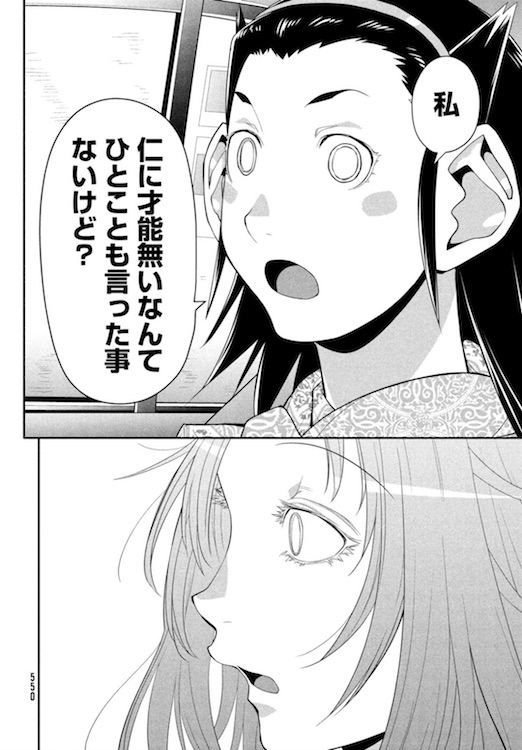
Soon after, Jin and the other members confront his mom, Reika. After a brief pause, Reika goes up to the group…only to focus on Akira, rather than her son. She remarks that Akira has talent, and that he should contact her because she knows a good music teacher for him. Jin is stunned into silence.

Later, as Reika and Yumerun are leaving by car, Yumerun comments that she thinks Jin has actually improved a lot. She asks why Reika thinks Jin has no talent, to which Reika responds that she never said any such thing. Rather, what she has meant to say is, why would someone with his talent join a chorus or choir, where people go to hide their lack of ability? When asked why she’s never said this outright, Reika answers that calling your own kid talented is embarrassing.

“Relative” Talent

Reika: “But I’ve never once said Jin has no talent.”

The way Jin’s mom really feels about him is something of a revelation, and like the characters themselves, I completely misinterpreted the situation. But I had also previously wondered about whether Jin truly is “untalented” or if he’s just holding himself to a ridiculously high benchmark in Reika, and I believe we have our answer here. Simply because Jin has to study and learn what comes intuitively to his mom, he perceives himself as needing to make up for some deficiency. 

On some level, Jin might be what you call a Larry Hemsworth—an exceptional individual who assumes they’re unexceptional because he constantly compares himself to others close to him who arguably shine even more. But also like Larry, who believes his being a pediatric surgeon pales in comparison to his three brothers’ acting skills, the question of who’s more talented between Jin and Reika is subjective. Jin’s ability to break music down, analyze it scientifically, and put it into practice is amazing in its own right, but he seems to be unable to see it from that perspective.

It remains to be seen whether Reika’s glowing words about Akira create a rift between him and Jin, but I doubt that it’s going to result in any sort of high drama. Perhaps like his mom, though, Jin might be surprisingly indirect in specific situations—as in her conversation with Yumerun in the car.

Yumerun and Jin

The audience getting into the song, and Yumerun seemingly being captivated by Jin’s singing

The chapter has a moment where Yumerun is looking at Jin perform, and she seems to be quite taken by him. They’re childhood friends, and she seems to have some sort of unusual fondness for the guy, but given that everyone is blushing all the time in Hashikko Ensemble, it can be kind of hard to tell what’s romance and what’s not. However, given their history, I feel like something may develop…or at least turn into some Boa Hancock and Monkey D. Luffy situation like in One Piece: a comedically one-sided love where the lack of reciprocation is more due to empty-headedness than incompatibility.

To the Next Story

The image of Akira wowing the audience with his powerful bass feels like a turning point of some kind. His classmates already knew he had a deep voice, and he’s sung in public on multiple occasions at this point, but I predict that he’s gonna gain a whole new reputation after this.

The likely thing is that we’re going to see enough new members join them for the Chorus Appreciation Society to gain proper Chorus Club status, and I expect there to be familiar and unfamiliar faces alike. In my view, Mai is the most likely one, but I think there are probably going to be some real curveballs in there. Might there be any unnamed audience members from this even who will end up as recurring characters?

Songs

“The Wings of Mind” continues and concludes from the previous chapter.

Final Thoughts

Great artwork in this chapter. I continue to enjoy the fact that the portrayals of singing feel intense but don’t go deep into the realm of exaggeration. Not that I mind it in general, but I think it works well for the relatively subdued quality of Hashikko Ensemble.

Also, I don’t think I recall this event being called the “Hashi High Acapella King/Anything-Goes Decisive-Battle Tournament,” but maybe I just glossed over it. In any case, I give props to Kio Shimoku’s first-ever tournament arc. 

Little Lady, Big Meals: Kozuma no Kobito no Kenshin Recipe

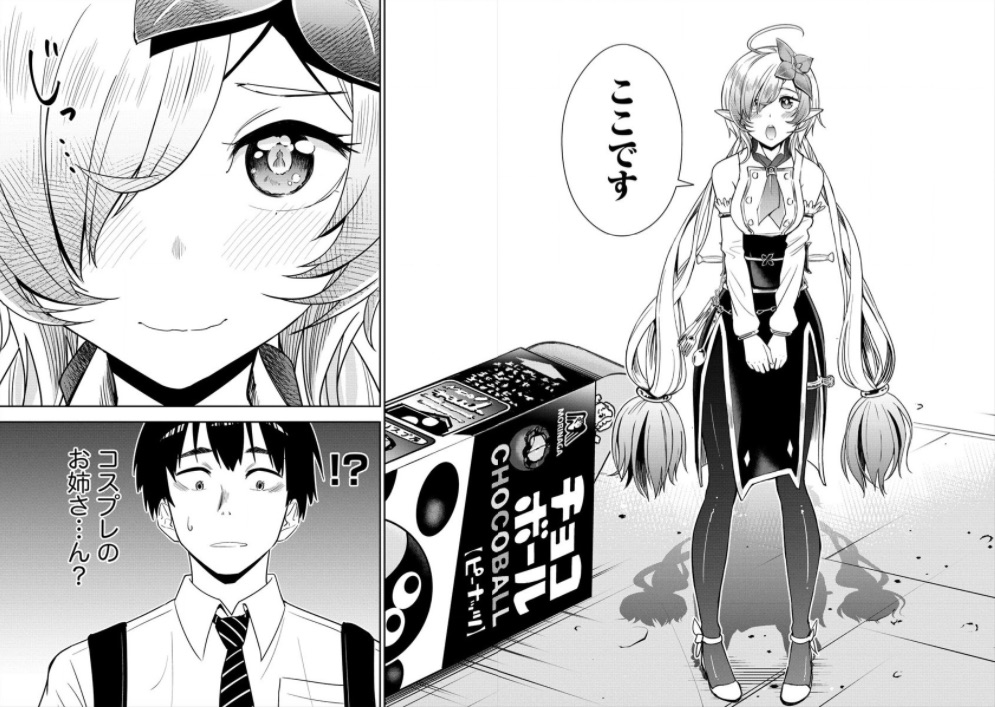
The author of Mogusa-san, one of my favorite manga in recent memory, has a new series out. Kozuma no Kobito no Kenshin Recipe by Ootake Toshitomo tells the story of a down-on-his-luck salaryman named Oomori Shizuru and a 15-cm tall pixie named Mint, who shows up with the intent of becoming Shizuru’s wife and cooking him delicious meals. The series, whose title translates roughly to My Pixie Wife’s Recipes of Devotion, combines two things Ootake has focused on in his relatively short manga career: exquisitely drawn food and oddball romances.

One big change from Ootake’s other manga—Mogusa-san, Mogusa-san Fights Against Appetite, and Teasobi—is that Kenshin Recipe isn’t published under Shueisha’s Young Jump label. Instead, it’s serialized in the web-only Comic Gamma Plus, which is under Takeshobo: a publisher arguably most famous for its mahjong magazines and manga. Essentially, the Takeshobo audience tends to skew older, and this is evident just from Shizuru being 27 years old instead of a high school or college student. However, Kenshin Recipe’s focus on cuteness means it’s not nearly as horny as many of its Comic Gamma Plus peers.

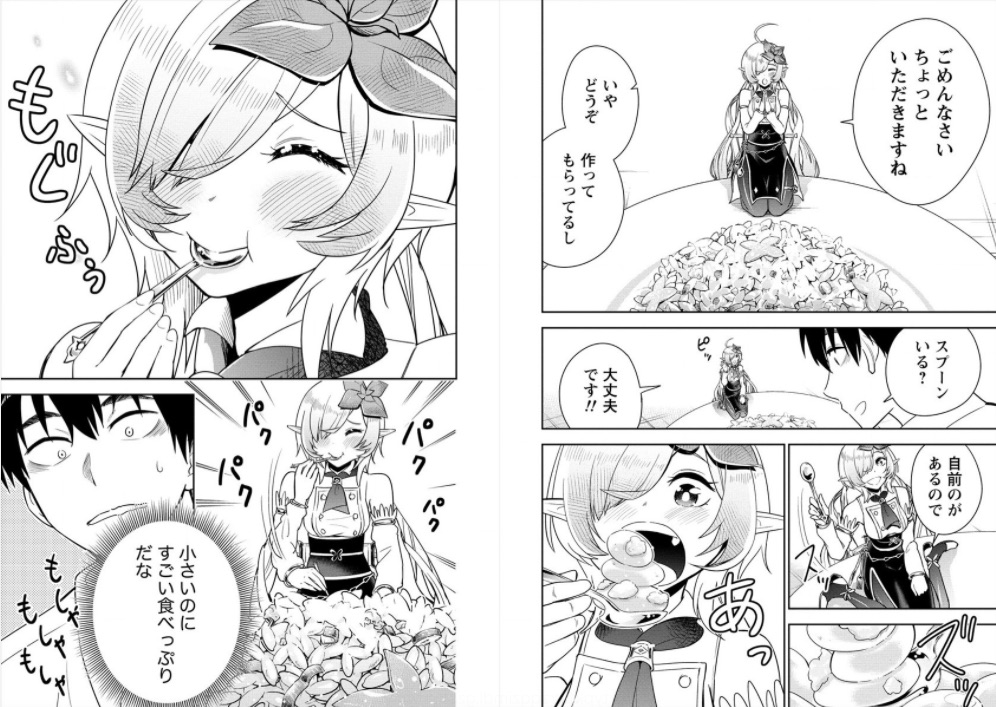
The highlight of the series thus far has to be the cooking scenes. Mint is around six inches tall, yet she has to use Shizuru’s human-sized cookware. Kenshin Recipe shows the way she gets around this: by casting a disinfectant spell on herself and doing everything from headbutting eggs to utilizing fire-resistant clothing to climb inside a frying pan. Ootake knows how to draw food and make it look good, and this provides a perspective on dish preparation that’s both fun and different.

Mint is the linchpin of the series, and while she’s no Minori Mogusa, she has her own unique charms. Putting aside those who are really into fairies and/or wives making home-cooked meals, one thing that stood out to me was Mint’s reasons for wanting to marry Shizuru in the first place. Having long observed him from afar as he left work every day, his sad figure at dusk made her want to protect him. It’s simple and silly, and even has a bit of wish fulfillment thrown in, but I rather enjoy the bit of agency given to the pixie.

There are plenty more opportunities for absurdity, and I’m eager to read more of Kozuma no Kobito no Kenshin Recipe. Based on Ootake’s past works, though, the truly entertaining parts are going to come when he introduces an expanded cast. It’s his strength with ensembles that brings his work from good to great.

BNA: Brand New Animal, Assimilationism, and the Myth of the Model Minority

There are anime where, if you really sit down and try to read deep underneath the surface for messages, you’ll find some surprisingly political messages. Then there’s BNA: Brand New Animal, which says to hell with subtlety—we are going to talk about racial politics, and we’re going to juuuust barely disguise it with furry characters. BNA is a story featuring stark looks at the act of othering, the specter of assimilationism, and the way society and government create negative stereotypes of minorities to then use those fabrications to push racist policy.

BNA takes place in a world where humans share the world with part-animal beastmen. Kagemori Michiru is a human girl who one day finds herself as a tanuki, and must deal with anti-beastman prejudice. She travels to Anima City, a city built and run by beastmen, in order to find answers. There, she meets a wolf beastman named Ogami Shirou who considers it his mission to protect his fellow beastmen. Michiru soon finds herself further embroiled in the complicated politics of both Anima City itself and its relationship with the human world. 

One of the major points of conflict in the series is how humans perceive beastmen. Some are well-meaning but prone to exoticizing, others believe beastmen are inherently inferior. Even Michiru, once human and now beastman in appearance, has a perspective that is both insightful and limited due to her unique situation. She knows what it’s like to face prejudice but does not have the lived experience of those who are born that way. 

Also important is that the very purpose of Anima City is to provide a safe haven for beastmen, but its astounding success and prosperity are seen as a nuisance by powerful forces—including those that ostensibly support Anima City. Though I do not know if this is a direct reference, the city has parallels to Greenwood in Tulsa, Oklahoma—aka “Black Wall Street.” A predominantly black space where residents thrived commercially and financially, Greenwood was burned to the ground in a racist massacre in 1921 due to the absolute fear and resentment from white people towards the notion of black success. 

As BNA moves towards its climax, events similar to Tulsa begin to emerge, particularly by outside attempts to frame beastmen as being inherently one step away from violence and chaos. Michiru and Shirou, as well as their allies, must fight against the racist idea that the beastmen must be “saved from themselves,” presenting an argument against what Ibram X. Kendi (author of How to Be an Anti-Racist) calls “assimilationism”: the flawed belief that a race can improve itself by behaving more like a “superior” race. The climax of the series even includes something about constructed notions of racial purity, and how flimsy they are when scrutinized to any real degree. 

Due to some muddling of metaphors, BNA’s approach isn’t perfect. A racist viewing this series could potentially use it to reinforce their own beliefs because of the human/beastman distinction, and allegory often gets lost on those who ignore it, even when it’s this on-the-nose. However, the series ultimately rests on the notion that those who are disingenuous about equity and equality will constantly move the goalposts in order to maintain their oppression, rendering the notion of achieving success as a model minority is inherently limited.

While there’s the possibility that I’m reading too into a show about a tanuki girl and wolf guy, Studio Trigger’s previous works show an awareness of politics in the US and elsewhere. Promare features a thinly veiled reference to ICE (Immigrations and Custom Enforcement) known as Freeze Force. A very special episode of Inferno Cop has a fat and obnoxious parody of Donald Trump. Because of the content of the anime itself and this history, I think BNA can only really be interpreted through the lens of racism, both in its effects on society and its perpetuation by the powerful.

20th Century Boys: Pandemics, Conspiracies, and Cults of Personality

I never read 20th Century Boys until this year, but in some ways, I’m glad I waited this long.

Warning: SPOILERS

20th Century Boys in 2021

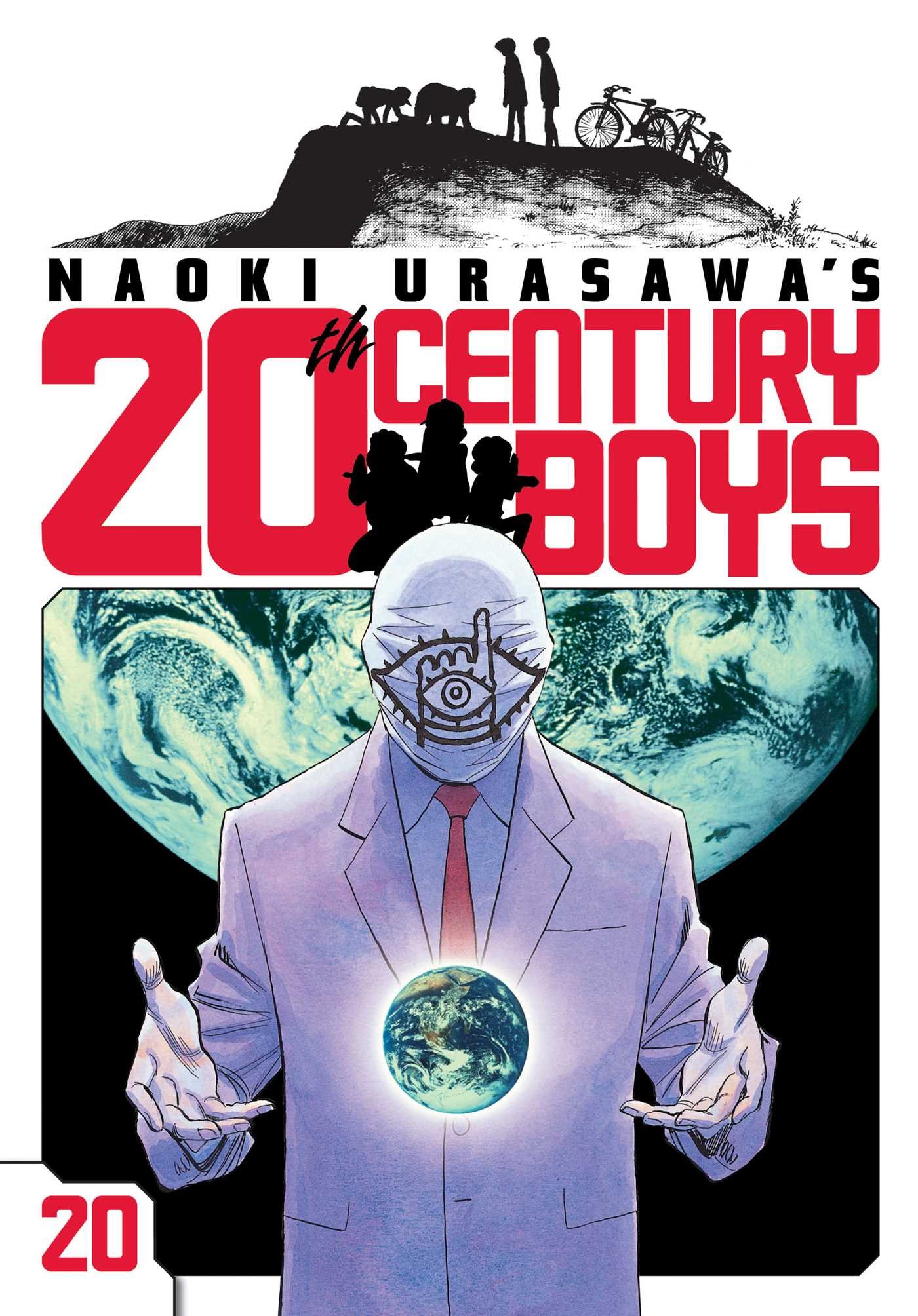
A manga by the award-winning author Urasawa Naoki, 20th Century Boys (published from 1999 to 2006) is a decades-spanning mystery about a man named Endo Kenji and his childhood friends, whose innocent elementary school antics are resurfacing in bizarre and dangerous ways. A Book of Prophecy they wrote around 1970 with far-fetched doomsday predictions about plagues that seem to be coming true, and at the heart of this conspiracy is an enigmatic and politically powerful cult leader known as the Friend. But while the Friend’s identity is unknown to all, there’s a hint that Kenji should know who he is: the Friend’s symbol is exactly the same as one Kenji and his friends came up with when they were kids.

Although conspiracies, cults of personality, and apocalyptic disease are not that unusual in fiction, these elements resonate particularly strongly in 2021. Between QAnon, authoritarians such as Bolsonaro and Trump, and then COVID-19, there are a lot of parallels between what happens in 20th Century Boys and what has transpired in reality. There’s a certain poetic element to a series revolving around The Book of Prophecy seeming to tell the future in itself, but whatever farseeing power it might have possessed are less interesting to reflect on than its portrayals of human behavior. What struck at my core from reading 20th Century Boys was not merely the presence of all these current dangers, but the all-too-real psychological reactions we’ve seen actually take place in the world.

QAnon vs. the Friendship and Democracy Party

One vital difference between QAnon and The Book of Prophecy is that the former has not been substantiated in any way, whereas the latter’s predictions are actively made true through the machinations of the Friendship and Democracy Party led by the Friend. Regardless of actual success rate, however, the two bear some fundamental similarities. In one scene in 20th Century Boys, the character Manjome Inshu recalls how he came to know and support the Friend. Manjome, who has a history of being a snake-oil salesman, is one of the people responsible for giving the Friend his messiah-like aura to his followers. At one point, they use a rope and pulley to make the Friend seem like he’s levitating—a flimsy trick that could have been undone by a bit of swaying. However, not only does the audience buy it hook, line, and sinker; even one of the assistants who literally helped hoist the Friend up by rope starts to believe the man can fly. Manjome, thinking to himself, comes to a realization: the people are just looking for something to believe in. Like QAnon, the Friend’s following is not about logic, rationality, or even trying to understand the world through one’s emotions. It’s working backwards from a conclusion because of a particular desire to see the world a certain way, and to feel like one has a part in its transformation. 

Donald Trump vs. the Friend

When it comes to the Friend’s authoritarian nature and god complex, the commonalities between him and Trump stood out to me from the very beginning. However, when the Friend’s identity is finally revealed, their resemblance only gets stronger. The Friend, as suspected, was part of Kenji’s childhood circle, but one who viewed Kenji with utter disdain. The Friend—a boy obsessed with anime, manga, and other children’s entertainment of the time—accrued knowledge, things, and experiences as a way to impress his classmates. Yet, it was Kenji who seemed to capture the attention of the other kids. The Friend was so hellbent on one-upping Kenji that, when a planned trip to the 1970 World Expo in Osaka fell through, he decided to just lie and fabricate journal entries for school as if he had actually attended the event. The wounds of failure remain so open and painful to the Friend that even in the mythos provided to his followers, it’s canon that the Friend Definitely 100% Attended the Osaka Expo and It Was Amazing.

Other clues point to a man with the mind and maturity of a little boy as the mastermind. Many of the hints about who he really is require knowledge of his childhood hobbies because they inevitably reflect what the Friend values. In this sense, 20th Century Boys is somewhat like Ready Player One, which also plays on the idea of pop culture trivia being key to everything, though in the case of 20th Century Boys there’s no Gary Stu power-fantasy protagonist. Also, prior to the big identity reveal, one character manages to get a close look at the Friend and is able to sketch his appearance from memory. When drawing the Friend, the character remarks that even though the Friend is clearly not a child, his face looks as if the man has never aged emotionally—a description that also seems to get ascribed to Trump.

In Too Much and Never Enough: How My Family Created the World’s Dangerous Man, the author Mary L. Trump (a psychologist who’s also the niece of the former US president) explains that Trump is unable to let go of grievances. Every slight he’s ever felt sticks with him forever—as shown by an anecdote of how Donald’s older sister recalling a story of him getting a bowl of mashed potatoes dumped onto his head for being a bully still seems to hurt the man well into adulthood. He has spent a lifetime constantly trying to get others to believe that he’s the richest, the smartest, the handsomest, and the best person in the world, and even becoming the leader of the strongest nation on Earth wasn’t enough to placate that selfish desire. With the Friend, his being overshadowed by Kenji became a deep psychological scar, and he uses that motivation to reach a similar place. If you erased my memory of the publication history of 20th Century Boys and told me that the Friend is a reference to Trump, I would believe you. But that’s not the case, and what we’re left with, in retrospect, is a very accurate portrayal of how someone with the most vile qualities could win the hearts and minds of others and remain just as terrible. 

COVID-19 vs. Bloody New Year’s Eve and Beyond

The spread of deadly disease is a recurring horror in 20th Century Boys, though in the manga’s case, it is a biological weapon utilized by the Friend to achieve his goals. I’m not going to get into much detail here, but I think the example I give is going to make it clear why 20th Century Boys ends up being a curiously ominous work when it comes to human psychology. In one scene, a scientist character is trying to make a colleague of hers—one who is responsible for developing new viruses for the Friend—understand at heart just how many people died from the virus they spread on “Bloody New Year’s Eve,” the name for the traumatic events of December 31, 2000. So what are these overwhelming casualties brought on by the virus? What is this horrifying statistic that defies human understanding? 

150,000. 

That number was meant to shock and horrify when it was written. But COVID-19 has killed nearly 600,000 people in the United States, and it has taken the lives of nearly 4 million people worldwide. “150,000 deaths” was a pie-in-the-sky notion dreamed up by a manga author, and we in the real world now see that as the “early days,” when the infection rate hadn’t gotten so out of hand. 

The trauma of the coronavirus is going to stick with us for a long time. 

A Compelling Warning

There’s much more to 20th Century Boys than simply being prophetic, and it’s a superb manga in terms of art and storytelling. Nevertheless, the way its narrative relates to these difficult times makes it all the more powerful. What should have been a suspenseful piece of fiction with an examination of humanity now feels closer to a documentary with a foreboding warning of how easily the human mind can be warped by a diet of bad information. I hope we’re able to heed its messages.