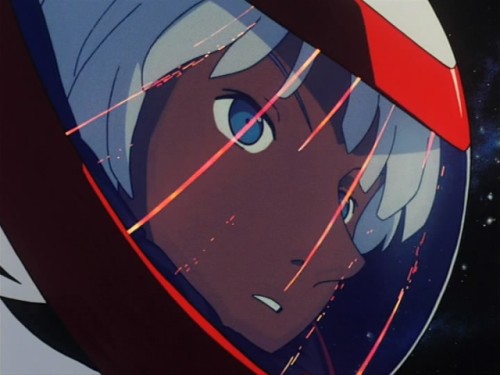
A Boy and His Universe: Turn A Gundam

Gundam is one of the most well-known, influential, and highly regarded franchises in anime history. At this point over three decades old, many changes have occurred in Gundam, but none may be as interesting or so able to fulfill its potential as 1999’s Turn A Gundam. Created to celebrate the 20th anniversary of Gundam and directed by the creator of Gundam himself, Tomino Yoshiyuki, it differs in many ways from other iterations, notably in its setting and aesthetics, but at the same time does wonders with everything it has. It shores up many traditional weaknesses of Gundam and Tomino’s work, and brings a variety of interesting twists to Gundam that don’t just come across as differences merely for the sake of them, resulting in just an all-around strong, engaging, and multifaceted story.

In stark contrast to every other Gundam series in current existence, Turn A Gundam takes place on an Earth with roughly World War I-level technology and social standards. In an age of biplanes and debutantes, the world is flipped upside down when lost descendants of humanity from the moon return to the planet with intentions to emigrate. Because the humans on Earth see this “Moonrace” as alien invaders taking away the land of their ancestors and the Moonrace sees the Earthlings as backwards barbarians prone to violence, tensions rise.

The only things keeping the scenario from boiling over and the Moonrace from wiping out the opposition with superior technology are the fact that the political scenario is not as simple as “Us vs. Them,” and the discovery of ancient and seemingly anachronistic “mechanical dolls” (what the people of the Moon call mobile suits) in the mountains, particularly the powerful and mysterious “White Doll.” Caught in the middle of this conflict is a Moonrace boy living on Earth named Loran Cehack, whose love for both his original and adopted homes pushes him to pilot the White Doll in an effort to prevent all-out war from breaking out.

There are certain phrases thrown about when reviewing anime, such as “character-based,” “theme-based,” “story-based,” and “world-based,” as if these categories are mutually exclusive or even contradictory, but Turn A Gundam is a series which strongly delivers on all these levels and more because of the way all of those components reciprocate with one another. The history of the world shapes the thoughts and backgrounds of the characters, who act within that world to create a grand story with many intricate elements, and it ultimately results in the delivery of certain themes, such as “the strengths and weaknesses of technological progress” and “awareness of history,” by taking a large-scale, global perspective and focusing it through smaller and more intimate character struggles.

This can be seen in the way the series portrays the constant clash of values and beliefs at various levels and between different people, consistently showing how many of the people involved are intelligent or enlightened or even kind-hearted in their own way, but are prone to mistakes due to the limits of their experiences. An archaeologist who cares little for religion and ceremony is so intent on digging for the sake of knowledge that he ends up exacerbating the conflict between the two sides by uncovering powerful military technology. Politician characters possess the negotiation skills and long-term thinking necessary to balance out their followers’ shortsighted and hotheaded reactions to the deaths of their comrades, but their high ambitions blind them to their own misdeeds. Qualities praised in soldiers, such as valor and daring, become problematic in the face of dangers well beyond their comprehension. As such, when these characters and many more sabotage themselves it comes across as perfectly understandable.

The cast of Turn A Gundam is absolutely gigantic, but it never comes across as too unwieldy for the show. Civilians and soldiers alike are given proper time and elaboration, and it really makes Turn A Gundam feel like a comprehensive world populated by real people. Loran is a gentle soul, but not one whose desire for peace prevents him from taking action, and over the course of the series is simultaneously built up and torn down by events both within and out of his control. Dianna Soreil, the leader of the Moonrace, is beloved by her people, but must deal with not only the difficulties of being opposed by Earth militias but also political infighting on her side. Her personal bodyguard, Harry Ord, is a loyal and admirable man, but one who over the course of the series shows how he is not blind to deception or his own feelings. Neither of Loran’s companions from the moon, Keith Leijie and Fran Doll, are soldiers or anything close to it, yet their stories about trying to start new lives on Earth are just as strong.

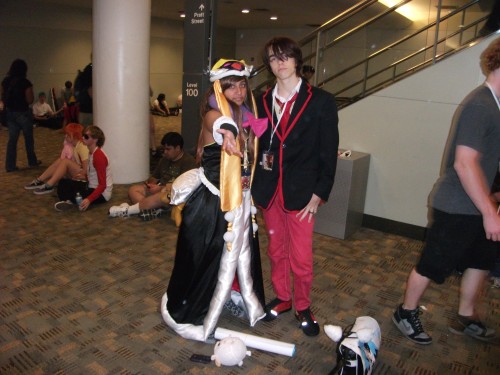
The Heim sisters, the adopted family of Loran (pictured in the middle below), or more accurately, the masters he works for as a servant, probably grow the most in the series. The tomboyish Sochie (left) must deal with her prejudice and anger against the Moonrace, while Kihel (right) and her uncanny resemblance to Dianna puts her in a situation central to the story, where she must push her already clever mind to its limits. Even extremely minor characters exude a sense of place in their world, and in some cases a lack of sense of place actually winds up becoming a strong defining trait in and of itself.

Also contributing to the strength of the show’s cast is the fact that the romance is actually extremely well done. Traditionally this has been a weakness of Tomino’s anime, particularly in the Gundam franchise because it is often ran through at an accelerated rate so that it can be a plot point or cause for tragedy, but Turn A Gundam manages to provide relationships which grow organically over time, particularly the two most prominent ones in the series. In these cases, the characters don’t so much have a moment where they Fall in Love, but rather as you watch them you see how they grow closer. Even the relationships which are a little more fast-paced are given reason in the series itself: in a situation like war, people start to think about their own mortality and regrets.

Possibly one of the reasons why the romance comes across so well is that many episodes are devoted primarily to showing people living out their lives amidst the backdrop of war, what might be deemed sillier episodes but which work to build the characters further. For Loran in particular, he is able to show how the White Doll, the titular “Turn A Gundam” as is revealed later, can function as more than just a weapon of destruction, and even the instances where he ends up having to crossdress (apparently an enduring legacy of Turn A if fanart is any indication) becomes both a plot point and a hint for later character development. War is shown as both the forefront and the background depending on the episode, and it creates a more robust setting as a result.

One topic that is difficult to avoid when discussing Turn A Gundam is the aesthetics of the show because of how the series visually sticks out among its fellow Gundam anime. Central to this is the fact that the Turn A itself is a far cry from the traditional Gundam design, and I remember that back when the series and its visuals was first announced there was a backlash against it. Designed by American Syd Mead (Blade Runner, Tron), the style of the Turn A, with its signature white mustache and strange angles, seemed to go against the image of Gundam that had been cultivated over the years. Even over a decade ago I jokingly photoshopped the Devil Gundam from G Gundam onto a Turn A Gundam head and called it “The Ugliest Gundam Ever.” But now, my opinion of the Turn A Gundam is that it not only looks good, but that it fits the role of a Gundam far-removed from those that have come before it. Over the course of the anime, the “White Doll” plays many roles and carries with it the question of to what degree can we break from the past, and this break in design says a lot in and of itself.

What’s even more impressive to me, however, is that each of the robot designs in Turn A are strikingly different from one another in a clear manner even, I would argue, when the person watching doesn’t have a particularly keen eye for mecha. The ostrich-like WaDOM looks nothing like the “muscular” Sumo, and even when it shares the same color scheme as the WaD their sheer difference in size makes it plainly obvious which is which. At the same time, the mobile suits of the Moonrace share a certain similar aesthetic quality which unites them thematically.

Compare this with the mobile suits of Zeon in the original Mobile Suit Gundam, where even though there is a clear direction for enemy design, it can potentially be difficult to tell a Gelgoog from a Zaku from a Dom, or from a later series like Gundam W or Gundam 00, where the “Gundam design rules” mean the differences are primarily in little details like weapon types or color schemes or what sits on their backs. With Turn A Gundam, even the retro Mobile Suits found over the course of the series by the people on Earth are so different from each other and everything around them that they gain individual identities all over again.

Like the mobile suits, the characters have a particularly strong pedigree somewhat outside of traditional mecha anime, as the character designer for Turn A Gundam is Yasuda “Akiman” Akira, a man known for his work on the Street Fighter franchise, particularly the creation of Chun-Li. Also like the mecha, the characters and animation for the series don’t seem to carry the best reputation, often times regarded as “okay” or “serviceable” due to the simplicity of the designs, but in my opinion the character designs are excellent.

The designs are deceptively elegant, and that “simplicity” gives me an impression similar to Yasuhiko Yoshikazu’s original designs from the first Gundam. Careful attention is paid to details such as clothing and hair without going overboard, and even the sparse shading contributes to a more refined and subdued look. Much like the mecha, the characters all stand out uniquely at a glance, with one notable (and intentional) exception in Kihel and Dianna.

If I had to describe Turn A Gundam using other anime titles, I would say it has the thematic elements of Panzer World Galient, half the grandeur of Legend of the Galactic Heroes (which keep in mind is still a vast amount), and characterization on the level of Eureka Seven. The show is amazing. It’s gripping in a way that shows Tomino at his finest, with its balance of heavy elements with a sort of lighthearted whimsy which also manages to enrich every aspect of the story, its characters, and its ideas. As I finished Turn A Gundam, I could feel it taking over my thoughts and emotions. It’s amazing, and I can’t get it out of my head.
Gattai Girls 2: Shishunki Bishoujo Gattai Robo Z-Mind and Ayame

Introduction: “Gattai Girls” is a series of posts dedicated to looking at giant robot anime featuring prominent female characters due to their relative rarity within that genre.

Here, “prominent” is primarily defined by two traits. First, the female character has to be either a main character (as opposed to a sidekick or support character), or she has to be in a role which distinguishes her. Second, the female character has to actually pilot a giant robot, preferrably the main giant robot of the series she’s in.

For example, Aim for the Top! would qualify because of Noriko (main character, pilots the most important mecha of her show), while Vision of Escaflowne would not, because Hitomi does not engage in any combat despite being a main character, nor would Full Metal Panic! because the most prominent robot pilot, Melissa Mao, is not prominent enough.

When you look at the full title of the 1990s OVA Shishunki Bishoujo Gattai Robo Z-Mind: The Battling Days of the “Shitamachi” Virgins, which is a mouthful to say the least, you get a pretty good indication of what’s in store for the 6-episode OVA. Shishunki Bishoujo Gattai Robo” literally means “Beautiful Girls in Puberty Combining Robot,” so in other words, expect pretty teenage girls piloting a big beefy robot, that peanut butter-and-chocolate combination which is at this point something of a staple in anime. And if it isn’t clear that this OVA is targeting robot fans, then note that 1) the vast majority of the robot attacks reference other anime (“Z-Boomerang” and “Z-Tomahawk” for instance), and 2) they even managed to insert a small Reideen cameo of sorts, as shown below.

Z-Mind centers around three Japanese sisters, Ayame, Renge, and Sumire, who pilot a giant robot named Z-Mind created through collaboration between the Japanese and American militaries. Together, they fight the Orgapiens, aliens with advanced technology who all look like creepy oversized babies. As the main heroine and leader, Ayame differentiates herself from her younger sisters by having a yamato nadeshiko-esque quality to her in contrast to her sisters’ more Western looks and fashion sense, making Ayame a character somewhere in the vein of Shinguuji Sakura from Sakura Wars.

The girls all exhibit strength and courage, and are also responsible for beating back the monsters at the end of the day, but the overall flat characterization in the series means that there isn’t much to discuss about them, other than that the desire to make Ayame more of a traditional beauty than her feistier sisters may say something about the kind of face the series wanted. Ayame is pretty inoffensive in any direction, but she suffers from the same lack of depth as the anime she’s in. Even Ayame’s love interest, a mysterious man from the future in a stylish red jacket named Kouji, is just kind of there until their relationship decides to grow abruptly, so it’s hard to say how much it affects her character.

When I finished each episode of Z-Mind, I would find myself regarding it as decent, but when I asked myself if I wanted to keep watching immediately after, the answer was definitely “no.” While this may have something to do with the fact that each episode exists somewhat independent of the others, in the end there was nothing so thrilling or compelling that I had to see the girls of Z-Mind again as soon as possible.

If I were being a little harsher, I would call the series mediocre, and if I were being a little kinder, I would say that it had potential, but I think the best way to describe Z-Mind is that if it had been properly released back in the 1990s in the US, I think it would have been a big hit. It’s short, it’s pretty, and while it’s sparse on characterization and development, it has enough in those categories to spark the imaginations of fans hungry to explore a fantastic world, one which sparks their imaginations and makes them thirsty for possible areas to elaborate. In this sense, I feel it would have garnered a reputation similar to Bubblegum Crisis, though one advantage it has over Bubblegum Crisis is that it actually has a conclusion instead of ending abruptly on a self-contained episode.

For Z-Mind, the character types, art style, and and overall feel of the series all come across as very much a product of their time, and Ayame too is a naturally both a part and a result of that combination. As such, Ayame winds up being a girl full of admirable qualities, but hard to categorize as anything more than a basic outline of a strong, ideal girl. Her character, and her anime, exist as one stop along the path of female heroines in robot shows.

The Night Before the Battle: Genshiken II, Chapter 79

Chapter 79 of Genshiken II is either the chapter everyone’s been waiting for, or the prelude to the chapter everyone’s been waiting for.

After denying to everyone the possibility of having anything to hide in his apartment, Madarame is made aware of the fact Hato already knows about his secret stash of Saki cosplay photos. Hato, in turn, accidentally tells Keiko about it, misinterpreting her awareness of Madarame’s crush on Kasukabe as knowledge of the photos as well. Keiko hatches a plan to finally get Madarame and Kasukabe together and to resolve that whole mess, stringing Hato along as well. Although they run into some trouble, they succeed in their goal of getting the two into the same room.

This chapter is full of something that I associate with many manga but especially Genshiken, which is this dire feeling of awkwardness and embarrassment. It’s practically what Genshiken is built on. Sasahara and doujinshi, Kasukabe and cat ears, Ogiue and the Scram Dunk event, the nose hair incident, here we have a string of moments right along those lines, and the interesting thing is always seeing what happens in the aftermath.

One of the major dangling plot threads of the original Genshiken was Madarame’s feelings for Saki, and at the time the first series finished, I had assumed that Madarame’s case would just be one of those where a guy never confesses his feelings because of fear that things can never be the same again after the fact. It’s certainly not an unheard-of scenario, particularly when it comes to awkward nerds, and I figured that it was just another instance of realism in Genshiken. In this respect, I was totally fine with this sort of non-conclusion for Madarame: it was the other side of the romance coin. Given that Genshiken did end up continuing though, I realize it would be much worse to have that hanging overhead and to have it simply never get resolved.

While Kio Shimoku could still pull a fast one and have Madarame say nothing and solve nothing, it looks like Madarame is finally going to have to say what’s been on his mind for years now. What’s clear, despite the hopes of Mada x Saki fans out there, is that Madarame has a less than 1% chance of success because Kohsaka and her are so comfortable together. You can see this even in the interaction between them towards the end of the chapter, when Kasukabe sees Kohsaka in his crossplay, and their conversation flows in such a way that obviously she finds that to be completely bizarre but accepts it and even congratulates him on his victory at the fighting game tournament. For those of you lamenting, just remember that Spotted Flower exists.

The funniest moment for me in this chapter has to be the panel where mostly oblivious Kohsaka slowly realizes what’s going on. Something about the way he says, “Ah- …Ahhh. Ahhh…..” before asking Sasahara to leave with him had me cracking up. We don’t see very much of Kohsaka anymore, and I feel like this one scene (and remember that he’s cosplaying as the trap character based on himself at the same time) encapsulates his character almost perfectly. It’s also obvious that Kohsaka has known about Madarame’s crush on his girlfriend for a long time, though it may have taken Saki herself to explain it to him.

The second funniest moment, then, is definitely Sue’s “GETS” pose, shown here. If you’re not aware of the reference, just watch this. Sue’s graduated from referencing just anime and internet memes to bad Japanese pop culture in general.

And if we’re talking references, I find it interesting that the next chapter preview for the past two chapters have referenced older series (Getter Robo Go and Wedding Peach), when the trend has been newer shows. I wonder if this has to do with the focus on Madarame, older anime for an older character.

Going back to people’s awareness of Madarame’s feelings, I realize from this chapter just how much Hato has drawn his own conclusions in regards to Madarame’s whole situation.  After all, the reason he even knew about Madarame’s interest in Saki is because he accidentally discovered those cosplay photos. When I think about it, it’s interesting that he’s never spoken with anyone else about this, not the new members of Genshiken nor the old ones, not because it doesn’t make sense (why would he share what he believes to be Madarame’s deepest, darkest secret), but because his understanding of the whole situation has been mainly his own (mostly accurate) inference. It’s just that his fear of betraying Madarame is what generates those moments of rambling outbursts, whether it’s at Comic Festival in front of Angela or this chapter in front of the crew.

I don’t know if I could call her a “counterpart,” but I like the Keiko-Hato dynamic quite a bit, I realize. Hato’s attempts to pave things over and the consequences of that interact interestingly with Keiko’s frustration at Madarame’s inaction. It’s also in a character like Keiko that I think Genshiken shows its strengths, because she’s not a main character by any stretch of the imagination, but has her development all the same. When you look at where she came from (shallow “gal” type) and where she is now, while she hasn’t changed significantly it’s still a different place from where she was. You might not call her “mature,” but at least she’s more mature.

Also, I’m under the impression that Ohno was aware of the photos (or something like them) all along. Back when Ohno finally got Saki to take some cosplay photos with her (it was the chapter with absolutely zero word bubbles in it), she brought some photos in secret to share with Madarame. Not only does this mean she knew about his feelings, but that he was on some level willing to have photos of Saki. All Ohno does this chapter is sweat nervously, but I have to interpret that as someone who has some idea of the very thing Madarame is trying to deny.

There was one Ogiue moment in this chapter, involving her in a discussion with Saki having to do with how the club has changed (answer: more fujoshi). Really, though, the main point of that conversation was to highlight the fact that Madarame comes around less often now, and to note how Kasukabe reacts to this fact. The way I see it, her surprise at the fact links to the general idea of Madarame “growing up” in general, though I am extremely curious as to whether or not they’ll end up talking about this in addition to the main topic in the next chapter.

The Slow March of Mawaru Penguindrum

Mawaru Penguindrum was probably the best anime I watched in 2011, and yet at the time it aired I didn’t write anything about it on the blog. This was intentional, as from the beginning I had a rough idea of what the show would be like, one where the surface didn’t quite match what was lurking underneath, the type of anime that would slowly feeding both legitimate clues and red herrings in such conjunction that it would become difficult to distinguish which is which. I didn’t want to jump the gun. On top of that, a lot of the “clues” weren’t there as if you could piece them out and form a conclusion. Instead, they acted as ways to expand some of the concepts and ideas being tossed about by the series, to further clarify information throughout the series. I didn’t want to blog about it too soon after because I felt like I would’ve been too caught up in processing Penguindrum like any other show. That is not a knock on other anime, as straightforward narratives and convention produce great work all the time, it’s just not what Penguindrum did and not what made it so great.

In finally writing about Mawaru Penguindrum, I’m choosing to do so without having rewatched the series since my first time through. Though it’s clear from even that first viewing that the show has a lot of meat to it that you can pick up by rewatching (a trait it shares with its older sister Revolutionary Girl Utena), I didn’t want my thoughts to be based too much on knowledge after the fact. So, I’m not going to blow your mind with any crazy close reading where I reveal all of the little hints in the series. Instead, I mainly want to talk about my own experience watching, and where I think the show went right.

Penguindrum centers around the Takakura family: brothers Kanba and Shouma,  and their sister Himari, whose life-threatening medical condition which requires a great deal of money to keep at bay. When she finally succumbs to her ilness, their lives change forever, but not in the way they expect. Moreover, as the show progresses, it’s clear that the present and the future aren’t the only mysteries. The siblings are introduced in Episode 1 as just being a slightly odd family, but they’re shown to have a past riddled with big questions. So what is the show about? Why, penguins, fate, and terrorism.

When it comes to introducing people to Penguindrum, “penguins, fate, and terrorism” is my go-to summary. The seeming non-sequiturs will often get them to ask more, but then that’s all I can say. It’s not so much that anything else would be too much of a spoiler, but that the way I would want to present that information wouldn’t quite do the show justice. I just want to give people that taste, as Penguindrum is an anime which, as I tried to make clear in the intro, does odd things with the information it does provide you.

Notably, the first half of the series appeared to be comprised of more wacky, self-contained episodes, with the character Ringo trying to fulfill her own bizarre mission of re-enacting the events of her deceased sister’s diary and the Takakura brothers trying (and failing) to get it for themselves. On the surface it could seem like the series was simply spinning its wheels, but while watching each instance of penguin comedy or stalker antics there was a constant, unsettling feeling permeating each scene, whether that was in the characters’ actions, or the mood of the story, or the little facts we learn about everyone and everything.

For example, though at first we assume that Ringo is just crazy and trying to re-enact her sister’s diary so that she can take her place in her family, when she accidentally crashes into Himari in exactly the way the diary specifies, it becomes unclear as to whether Ringo is in control of if it’s the diary. Just about every episode of the Ringo arc carries with it similar reveals concerning one or more characters, and so while the status quo is seemingly kept, we also continue to learn more and more about the characters, and in doing so sets up the second half, which I feel delivers on everything it promised in terms of resolving the core of the story and many of its details. In general, I am a fan of what I call “false filler,” or seemingly self-contained or repetitive episodes which slowly advance the story forward by filling in other details.

The twists in Mawaru Penguindrum are definitely surprising and hard to predict, partly because they’re not necessarily meant to be treated as the clues in a mystery novel, but that also doesn’t mean they come out of left field, or that their outcomes change the dimension of the story. I think it would be more accurate to say that Penguindrum had a consistent idea of what its nature was like, and it ended up revealing the truth about itself little by little, so gradually in some ways that often the information would seemingly contradict itself. But ultimately, it all comes together well.

That is, until Penguinbear.

Taking Up Personal Space: Excellent Model Cure Marine Figure Review

It’s no secret that I’m a big fan of Heartcatch Precure!‘s Kurumi Erika, so when I saw that the Megahouse “Excellent Model Cure Marine” had come out some time ago, I considered purchasing it, only to be held back by the fear that the figure might not be worth it. However, when I happened to see this figure in the Dealer’s Room at Otakon, I found myself immediately drawn to it. Debating the purchase, I took the advice of my good friend and mahjong comrade, Astro Toy columnist Dave, and went for it anyway.

If you’re not familiar with the character, watch this.

The figure cost me about $110, more than I’ve ever had to pay for one, but I have to say it looks really, really good. I mean, I’m no figure reviewer (despite the Hato Kenjirou review from last week), but pretty much all of my fears were assuaged. I didn’t just take photos of her at all of these angles just to have a variety of images to show, I wanted to actually make a point that the figure looks really good from all angles.

The hair alone is quite remarkable, gradually getting more translucent as it reaches the tips, and even giving it a nice silhouette, as can be seen from the shadows above.

What originally caused me to hesitate getting this Cure Marine figure was actually the promotional image used, which revealed a prominent shadow on the figure’s jawline and caused her face to look rather flat and awkward. Another problem I had with it was that the pose felt uncharacteristic of her.

They seemed like rather glaring flaws, enough that I felt it better to hold out and wait for a possibly better figure, but when I actually looked at the figure in person I realized that these weren’t issues at all.  Chalk one up for actually seeing the product instead of ordering it online, I guess! This is also why I think the cost was justifiable, as even if I had found a cheaper method online, it would’ve only been about $5.00, maybe $10.00 savings, and I wouldn’t have been able to really make sure that the figure looks good.

The way even intense shadows are cast on Marine’s face don’t end up flattening her face, and the pose itself looks a lot better when not displayed at that very specific angle with that specific lighting. Instead, I feel like it really captures the character’s spirit, though if I were being selfish I might actually ask for a show-specific pose, and possibly even the ability to switch out her face for some of her sillier expressions, a hallmark of the character.

In fact, when you look at Cure Marine up-close, the details really come through. Everything from the bow on her chest to the little pouch where she stores her transformation device (the “heart perfume”) to the straps on her back are painted carefully and clearly, with no real bleeding compromising the look of the figure.

If there’s anything I’m worried about when it comes to this figure, it’s the fact that the whole thing is pretty much balanced on one leg. Granted, it’s more accurate to say that it’s balanced by the large platform that Cure Marine’s one leg is attached to, but I’ve seen medium-to-large PVC figures such as this one get warped over time to the point that the figures start to practically fall over. Obviously I can’t tell at this point, but I’m going to be keeping an eye on it to see if the plastic starts to fail.

Cure Marine doesn’t come with much in terms of extras, but one thing worth pointing out is that the figure includes her animal sidekick, Coffret. It doesn’t really pose, and it seems to be made of a cheaper or at least less smooth plastic than Cure Marine herself, but it’s not much of an issue. All you do is stick Coffret on that clear stick and pose him at any angle.

The “Excellent Model Cure Marine” is my first real figure purchase in a long, long time, and I feel that it was quite worth it in the end. It’s a figure I can look at it over and over and find something good to talk about. The only question left is, will I get other Heartcatch or even other Precure figures? It’s not in the cards at the moment, but who knows? I didn’t think I’d buy this one either.

Mahjong Deals and Magical Contracts: Otakon 2012

Otakon is an event I look forward to every year, and to give you an idea of just how much, I actually plan my time in the US to coincide with it. I went in with the intent of getting some autographs (but not too many as I felt a bit autographed-out from my Anime Expo experience), but ironically I pretty much got everyone but the three I was looking to get the most: Hirano Aya, Nanri Yuuka, and Kakihara Tetsuya. Though a bit disappointed as a result, I realized that this is Otakon and it’s always impossible to accomplish everything you want to do. The scheduling is so jam-packed with events that time is always against you, but then you look back and see all of the fun you had.

This year, as seems to be the case over the past few Otakons, Baltimore was hot. Given that most of it is spent inside an air-conditioned space this isn’t so bad, but there always came a time where people had to brave the heat. Taking Megabus to Baltimore, for example, requires one to walk quite a distance to catch the local city bus. It’s a trek I’m accustomed to at this point, but still one I have to brace for. As for the people in elaborate cosplay, you have my pity to an extent, but seriously you guys must have been dying, especially the full-on fur suit wearers.

Industry Panels

Urobuchi Gen

When it comes to industry guests, my main priority is generally the Q&A sessions followed by autographs, and the reason is that I love to see people pick their brains, especially the creators. I always try to think of a good, solid question or two to ask them, and over time I think I’ve become pretty good at it, because the responses I receive are generally great, though actual credit for the answers of course goes to the guests themselves.

The first industry panel I attended was that of Urobuchi Gen, writer of Fate/Zero and Puella Magi Madoka Magica, two shows which are the new hotness, and by extension make the man himself the new hotness as well. Surprisingly, there was only one question nitpicking continuity, and the rest were about his work, and even some “what if” questions. From it, we learned that Urobuchi is inherently suspicious and so would never sign a magical girl contract, considers Itano Ichirou (of Itano Circus fame) to be his mentor, that he would never pick Gilgamesh as his servant, that the main reason Kajiura Yuki did the music was because of SHAFT Producer Iwakami’s magic, and that working with both UFO Table and Shaft is like being aboard the USS Enterprise and meeting different alien species. In addition, it turns out that Madoka Magica wasn’t influenced by any magical girl series in particular, and the closest lineage it has is with Magical Girl Lyrical Nanoha (atypical magical girl show with striking and violent imagery) and Le Portrait de Petit Cossette (a gothic-style show by Shinbo). Given my recent post about this topic, I have a few words in response to that, but I’ll save it for another post.

As for my question, I asked Urobuchi how he felt about influencing such an enormous industry veteran in Koike Kazuo (who is in the middle of creating his own magical girl series), to which he answered that he considers it something he’s most proud of. Though the two have not talked since that interview, he still follows Koike on Twitter. Later, I would get a Madoka poster signed by him.

Satelight

I also attended the Satelight (Aquarion, Macross Frontier) panel, attended by Tenjin Hidetaka (who technically isn’t a Satelight employee), which was just a fun introduction to their studio. They explored their history, from making the first full-CG television anime (Bit the Cupid), the creation of some of their less-regarded shows (KissDum, Basquash!), and into the modern age. Given the small attendance it actually felt a bit personal, and in this time we had some pretty interesting facts dropped on us. A studio which prefers to do original animation instead of adapations, we learned that they sometimes just like to animate things because they can. Case in point, they showed us Basquash! footage they animated just because they liked the characters and world so much, with no additional TV series planned for it. About director and mecha designer Kawamori Shouji, we learned that he likes to work on 3-5 projects simultaneously despite his somewhat old age (52), that Kawamori is devoted to making anime look good, sometimes at the expense of his budget.

They also showed us some CG-animated clips of concerts by Ranka Lee and Sheryl Nome from Macross Frontier, which were really nice and elaborate. Originally they were meant to be used in commercials for a Macross Frontier pachinko machine, but the 3/11 earthquake prevented the commercial from going on air. Another Satelight anime they showed was the anime AKB0048, which actually looks amazing, and from all reports by even the most cynical of reviewers, actually is. Kawamori even graced us with his recorded presence, giving an interview where he briefly discussed topics such as attending Otakon years ago and making the second season of AKB0048.

Given the flow of conversation, when it came to the Q&A portion there was one question I just had to ask: Why did Kawamori end up directing a show like Anyamaru Detectives Kiruminzoo, a show about girls who turn into animal mascot characters and solve mysteries, an anime seemingly far-removed from his usual mecha and idol work? The Satelight representative’s response was, Kawamori is known for working on anime with transforming robots, and when you think about it, transforming animals are not that different from transforming robots. Hearing this, I actually had to hold back my laughter.

One last thing to mention about the Satelight panel was that the laptop they were using was on battery power, and when it started to run out of steam, rather than finding an AC adapter to plug into a wall, they actually just gave the industry speaker another laptop entirely, also on battery power. An amusing hiccup in an otherwise great panel.

Maruyama Masao

Maruyama Masao is a frequent guest of Otakon. One of the founders of Studio Madhouse, he’s been to Baltimore for many, many Otakons, and it had gotten to the point where I began to feel that I could skip his panels to see other guests. This year was different, though. First, with the unfortunate death of Ishiguro Noboru, the director of Macross and Legend of the Galactic Heroes who had died just this past year, it made me realize that the 70+ Maruyama won’t be around forever. Second, this year Maruyama actually left Madhouse to form a new studio, MAPPA, an unthinkable move for someone in as good a position as he was. The studio was created in order to obtain funding for Kon Satoshi’s final project, The Dream Machine, but in the mean-time it also released its first television anime, Kids on the Slope. Even if Hirano Aya’s autograph session was originally scheduled for that time (it got moved), I felt I had to attend Maruyama’s Q&A. In fact, if you are ever at Otakon, I highly suggest anyone, even people who think they might not be interested in the creative side of anime, to attend one of his panels. His answers are always so rich with detail and history given his 40-year experience that you’re bound to learn something and then thirst for more knowledge.

Some of the highlights include the fact that he’d very much like to make an anime based on Urasawa Naoki’s Pluto but thinks the right format, eight hour-long episodes, would be difficult to fund (the manga itself is eight volumes), that half of the animation budget of Kids on the Slope went to animating the music performances, and that he is looking to try and get funding for Kon’s film in the next five years. I find it personally amazing that he would think of the format best-suited for Pluto first, instead of thinking how the series would fit the typical half-hour TV format. In addition, Maruyama pointed out that a lot of work was done in Kids on the Slope to blend and hide the CG, and I think it shows.

In any case, while I would normally be content to just give a summary of the panel, I’m going to link to a transcript just so that you can read the entire thing. The question I asked is as follows:

How did director Watanabe Shinichirou (director of Cowboy Bebop and Samurai Champloo) become involved with Kids on the Slope?

“I was working with Watanabe from back in the MADHOUSE days. Unfortunately there were about three years where nobody got to see his work — his projects always got stopped at the planning stages. So when I got Kids on the Slope, I handed him the manga and said, ‘here. You’re doing this.’ At MADHOUSE we had developed a feature — it was already scripted and ready to go, but then I left the company and the project fell through, so I gave him this as something to do. I really think he’s one of the top directors in Japan, one of the top 5. That’s why I wanted to create a theatrical animation with him. Up until this project, he’d only worked on original projects, so this was his first adaptation from a manga, and as a result, he didn’t really know how faithful he had to be, or if he had room to adapt, so he put up a lot of resistance at first.

“Mr. Watanabe loves music, and has a lot of deep thoughts on the music. So I told him that it was a jazz anime, and that he was likely the only director that could pull it off. That convinced him. Then Yoko Kanno said, ‘if Watanabe is working on this, I’d like to work on it too,’ and so that’s how that show came to be.”

Also note that in the photo above, Maruyama is wearing a shirt drawn by CLAMP to celebrate his 70th birthday, showing him to be a wise hermit.

Hirano Aya Concert

Partly because of scheduling conflicts, I attended the Hirano Aya concert knowing that it would be my only experience getting to see her. As expected, it was quite a good concert, and I had to get up despite my con fatigue for “God Knows,” but there wasn’t quite this process where I felt won over like I had with LiSA at Anime Expo. Thinking about it, it’s probably because I’m already familiar with Hirano Aya’s work.

I did wonder if her cute outfit was designed to kind of draw some of the controversy away from her, the large bow tie on her head possibly trying to restore her image in the eyes of certain fans. At the same time, given her songs and given her vocal range, I had to wonder if she would benefit from being presented as less of an “idol” and more of a “singer.”

Getting to the concert 15 minutes late on account of 1) the Baltimore Convention Center not being entirely clear as to what can lead to where, and 2) my own forgetfulness from not having done this for a year, I sadly missed the announcement that she would be signing autographs at the end, and ducked out after the encore was over. Alas, I’ll have to wait a while before I get the chance to have my volume of Zettai Karen Children signed.

Other

Apparently Opening ceremonies was ushered in by the Ice Cold Water Guy. Unfortunately I wasn’t there, but I heard it got quite a reaction.

I also attended (the last half of) the Vertical Inc. panel, whose big, big license is Gundam: The Origin. Honestly, I’d never expected to actually see it released in the US, seeing as Gundam is practically seen as poisonous in the States, and I doubly didn’t expect it from Vertical. In addition, though I didn’t attend, some friends went to the Kodansha Comics panel and got me a Genshiken poster! Would you believe that I’ve never owned a Genshiken poster? This one even has Ogiue on it! Granted, I can’t put it up just yet, but it’s basically a copy of the English cover to Volume 10.

Also, while I didn’t attend some of the guest Q&As, I did conduct personal interviews with some of them.

Hidetaka Tenjin

Nonaka Ai

Tetsuya Kakihara

Fan Panels

New Anime for Older Fans

A panel run by the Reverse Thieves, I was happy to see that the room was so packed that people were starting to get turned away at the door. The goal of the panel is exactly in the name: the two panelists pointed out anime that have come out within the past five years that they felt older anime watchers, even the kind who have children of their own, could enjoy. By far the most popular show was The Daily Lives of High School Boys, which just got endless laughs. What I found to be really interesting though is that I could tell the panel was working because I heard more than one baby crying throughout the whole thing. Assuming that the babies did not magically crawl in on there own, I could only assume one or more parent was there with them, also learning about New Anime. I even had a couple of old college friends attending Otakon tell me how much they wanted to watch some of these shows.

Genshiken: The Next Generation

If anyone thought this was my panel, my apologies! It was actually run by my old Ogiue co-panelist, Viga, and offered an introduction for existing fans of Genshiken to its sequel, Genshiken Nidaime aka Genshiken: Second Season. Overall, I thought it was a fine panel, though at points I felt like Viga couldn’t quite decide who the panel should be for, explaining some things while omitting other details entirely. Should it assume that people had read the current chapters or not? If the panel could have a tighter focus with a clearer idea of where it wants to go, I think it would be much better.

Fandom & Criticism

This panel was dedicated to introducing and exploring the concept of “active viewing” to a convention audience, which is to say the idea of distancing oneself from one’s own emotions while watching something in order to more accurately gauge what the work is saying. Hosted by Clarissa from Anime World Order, as well as Evan and Andrew from Ani-Gamers, I took interest in the panel partly because I know the panelists, but also because as an academic myself the concept comes into play with my own studies. The discussion was quite fruitful I think, though one thing I do want to say is that I feel the concept of distancing and dividing between the rational mind and how one’s emotions operate while consuming media can make it difficult to see how other people might view a certain show, and that it is important, I feel, to consider emotions and “passive feelings” while watching a show, as they can shape one’s experience in a way that “active viewing” may tend to break down like a puzzle.

Anime’s Craziest Deaths

It was my second time seeing Daryl Surat’s violence smorgasboard of a panel, and probably what impressed me the most wasn’t any single clip, but the fact that the footage was (as far as I remember) 100% new compared to last year’s Otakon, and that a lot of it came from newer shows. The panel is a treat to watch, and that the craziness of a death doesn’t necessarily have to do with its violence level, but it certainly helps. The panel was a full two hours, so the middle felt like it started to drag, but I think it has to do with the basic idea that people’s attentions will slowly fade over time, so it’s somewhat necessary to up the ante as it goes along. I’ll finish this part by letting Daryl himself offer some sage advice.

The Art of Fanservice

The last fan panel I attended was hosted by the third host of Anime World Order, Gerald, and it was a brief look through the history of fanservice, as well as some of the general differences between fanservice for men and fanservice for women. Defining the art of fanservice as titillation which is not just outright pornography, Gerald’s theory, which seemed confirmed by the audience’s reaction, was that fanservice for guys is typically very visual, very isolated, while women usually require some kind of context. A pair of bare breasts, no matter what situation the woman is in, can be enough for a guy, but a girl usually wants some backstory. Possibly for this reason, the clips of women’s fanservice tended to be a little longer. Also of interest was the Cutie Honey Flash opening, which was a Cutie Honey show targeted towards girls, and though Honey is still leggy and busty, I noted that the way the shots are framed is a far cry from its most immediate predecessor, New Cutie Honey.

I think the idea of “context” does definitely ring true to an extent, but I have to wonder about the degree to which people, especially otaku, defy those gendered conventions. For example, there is definitely “context-less” fanservice in Saki, but there are also moments which are meant to thrill based on the exact circumstances of the characters’ relationships, like when Yumi tries to recruit Stealth Momo for the mahjong club and shouts, “I need you!

Speaking of Saki, why I had a panel to present this year as well.

Mahjong

It was likely thanks to Saki: Episode of Side A that Dave and I got the chance to once again present”Riichi! Mahjong, Anime, and You.” The format was essentially the same as our panel from 2010, where we try to help the attendees learn not so much how to play mahjong (an endeavor which requires hours and hours of workshop time), but how to watch mahjong anime. New to 2012 though were the fact that we had two years of additional playing experience, which meant we knew what we were talking about a bit more, as well as a number of new video clips to thrill the audience, including one that Dave was so excited about he was almost willing to skip the order of presentation just to reveal it).

It was held in a larger room than last time, and though there were still some empty seats, the fact that we were able to mostly fill a room at 10 in the morning on Friday pleased me so.

After the panel, I was waiting on line for the Urobuchi panel, when the people in front of me not only recognized me from the panel, but also let me join in a game of card-based mahjong, where instead of tiles playing cards with the images of tiles are used. From this I learned that mahjong cards don’t work terribly well because it becomes extremely difficult to see your entire hand, but I have to thank those folks anyway for giving me the chance to play, and though the cards are less than ideal, they’re still handy in a pinch, especially because carrying tiles takes so much more effort.

Thanks to Dave’s effort, however, we actually brought tiles with us to play, and on Friday and Saturday, Dave and I managed to find time to sit down and play for a few hours against not only opponents we already knew but also  people we’d never seen before. The tables at the conference weren’t particularly suited for this, and we had to find a table edge and play the game with the mahjong mat angled diagonally. I ended up doing pretty well overall, including an amazing game where I never won or lost a hand and maintained a default score of 25,000, but what really stood out to me is the realization that we had all improved since we started playing mahjong. I know I said it before in discussing the panel part, but playing live against other people made it so that even my mistakes were the mistakes of a more experienced person who could learn from them.

Apparently we weren’t the only ones doing this, as we saw a second mahjong group as well. I couldn’t stay long enough to assess their ability, but as long as they were having fun it’s all good.

Other Photos (mostly cosplay)

Despite a number of good costumes out there, I actually didn’t take too many photos this year. I blame the amount of times I had to hurry to get to the next thing on the schedule. Also, I saw absolutely no Eureka Seven AO cosplay. Promise me for next year!

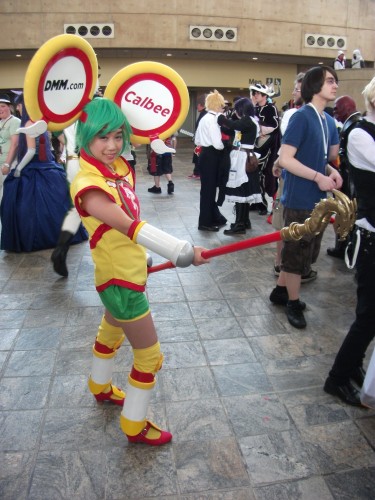
This was actually the first Fuura Kafuka cosplayer I had ever seen, and I’m amazed (and grateful) that someone would remember her. A funny story came out of this, as the cosplayer had not been aware that Nonaka Ai (Kafuka’s voice actor) was at the event. I told her about the autograph-signing on Sunday, and I hoped she was able to make it. Now, onto the next.

Overall

While at the convention I would notice little things here and there that I thought could use some improvement, the sheer amount of content at Otakon means that with even a few days of post-con recovery the bad mostly recedes away and all that I’m left with is fond memories. One complaint I do have, however, is that because the convention is set up to have some entrances and pathways usable and some off-limits, it is extremely difficult to tell just based on the map given in the con guide how to get from location to location. As an Otakon veteran at this point, I mostly have no issue with it, but even I ran into problems while trying to find the Hirano Aya concert. A combination of better signage to point people to the right locations alongside a clearer map would do wonders.

Even though Otakon had a “cooking” theme this year, I didn’t really feel it, pretty much because I didn’t attend any of those related events. At this point, every Otakon is starting to feel similar, but I can never hold that against it. After all, with a convention this big and with this much to do, I feel that we as fans of anime and manga make of the convention what we want. This isn’t to say that the way the convention is run doesn’t matter, of course, but that it is run smoothly enough that it becomes almost unnoticeable.

Truth be told, I used to take the sheer variety of panel programming and activities at Otakon for granted, but when I attended AX for the first time this year, I realized how limited that event is by comparison. Not only are there a good amount of industry panels with all of the guests they’ve flown over from Japan (or elsewhere), but the fan panels are a nice combination of workshops, introductions, and even philosophical explorations of topics concerning fans. Seeing Otakon once more in person, I knew this was indeed the con I waited for all year.

You Might Feel a Little…Attracted: Hato Kenjirou Figures Review

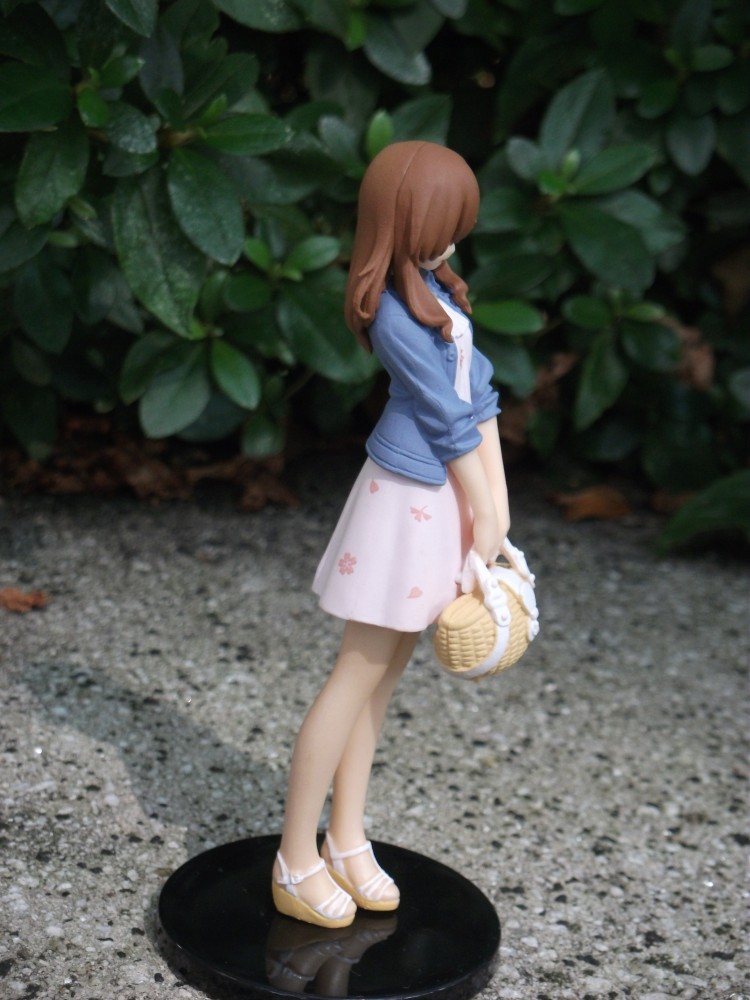
While Genshiken-related merchandise remains relatively sparse in the grand scheme of figure collecting, Kodansha recently collaborated with Kaiyodo to bring two Hato Kenjirou figures to loyal readers.

The first figure comes from an issue of Monthly Afternoon and features a standing Hato, while the second one comes from a limited edition Japanese release of Genshiken Volume 11.

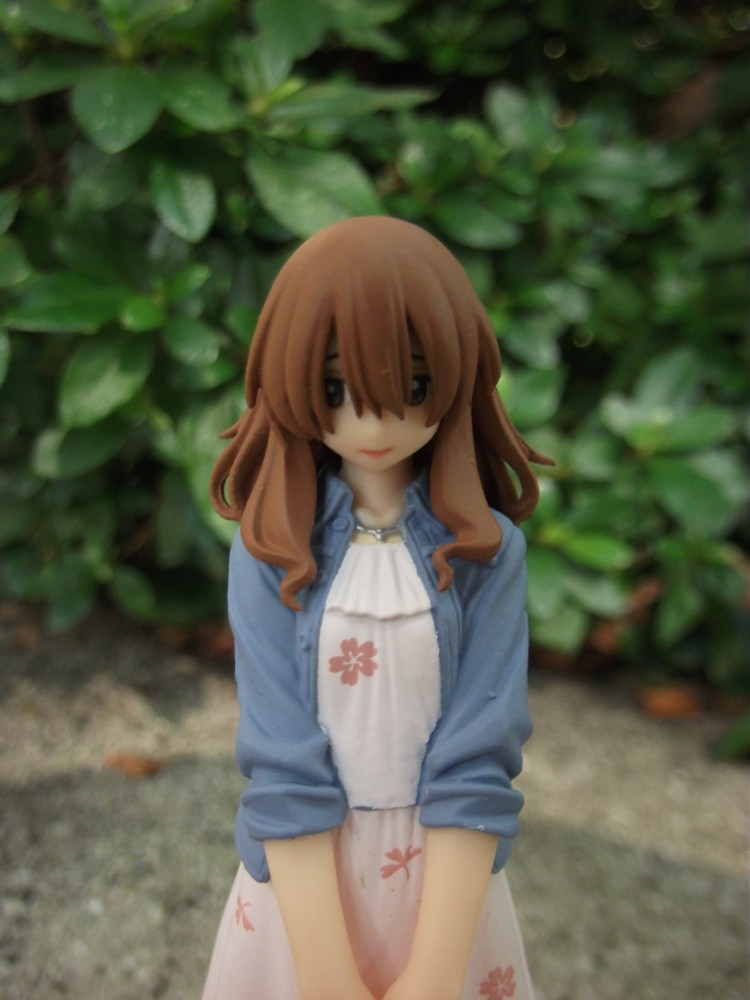
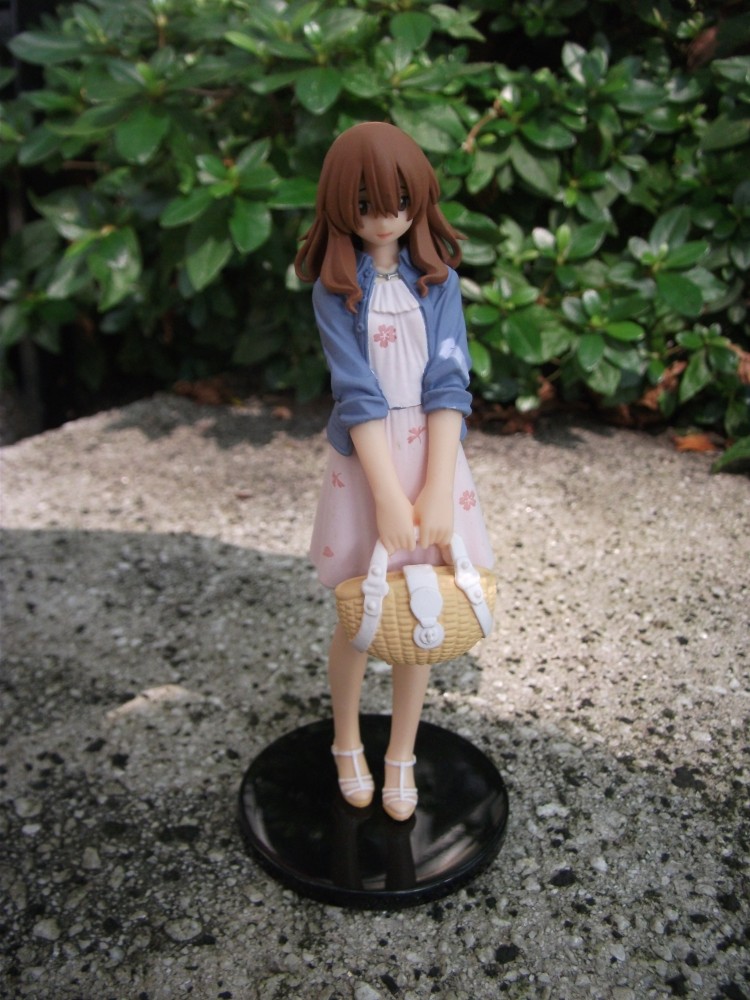
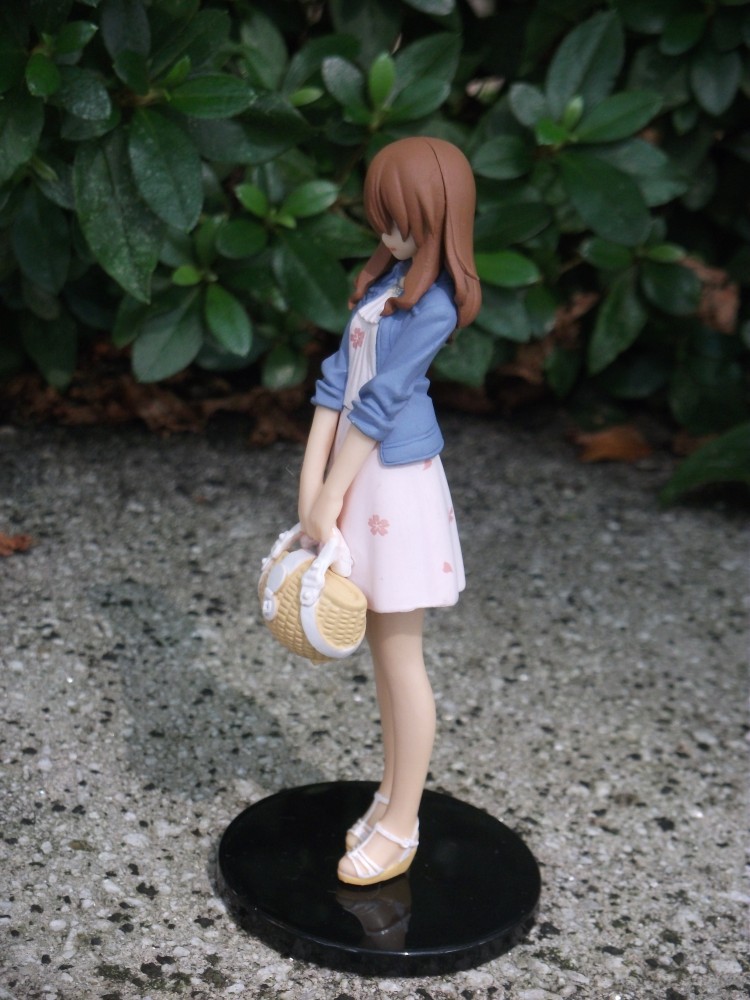
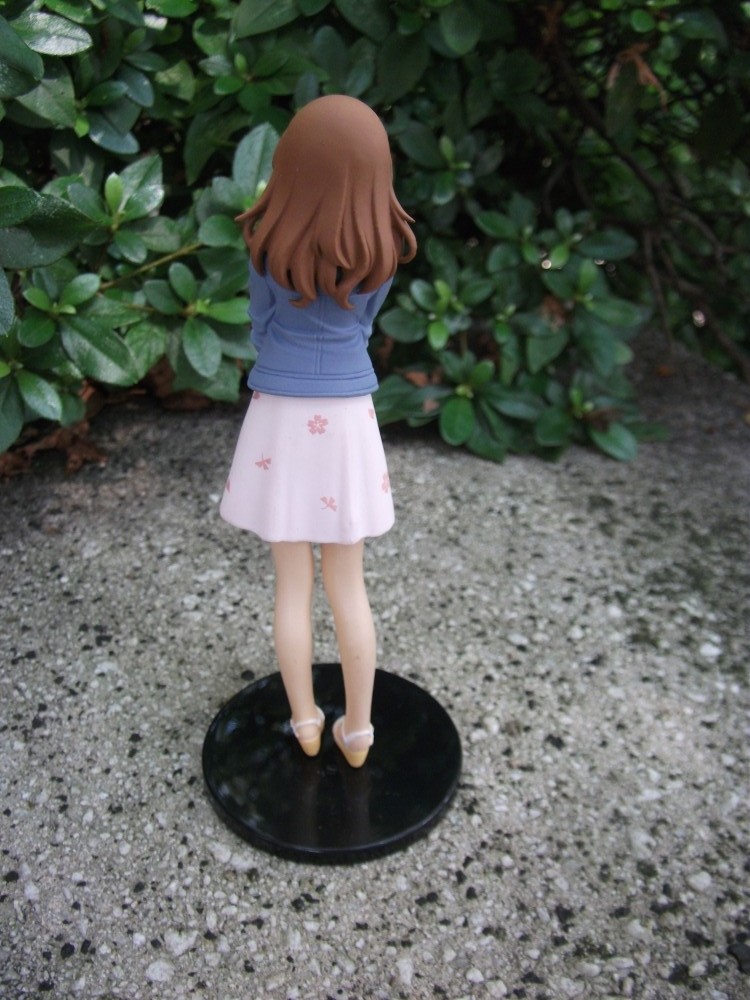
Featured here is Standing Hato. As can be seen from the photos, the quality of the figures is trading-figure-level, so it won’t match up to a really good model, but as far as trading figures and gashapon figures go, it’s actually fairly impressive. There doesn’t seem to be any significant bleeding in the paint job, and even the details on the purse hold up to a certain amount of scrutiny.

Aside from the seams separating the pieces which make up Hato’s hair, there aren’t any really noticeable flaws, and even that is just part and parcel for the level of figure we’re getting here. The flower pattern on the dress and the details on the denim jacket also look good.

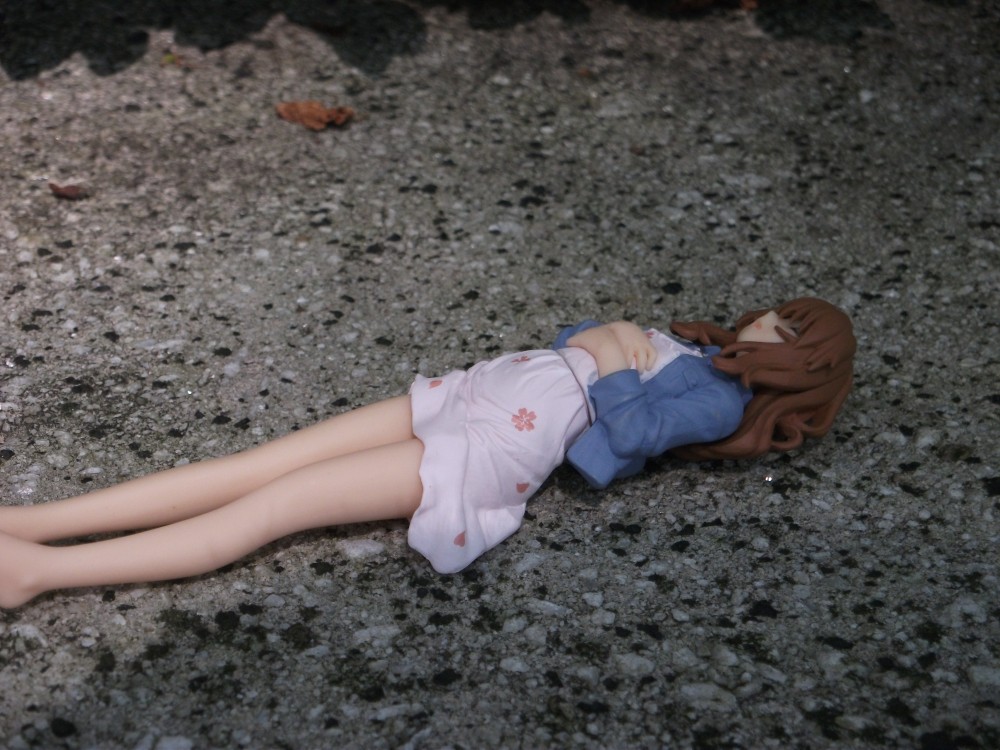
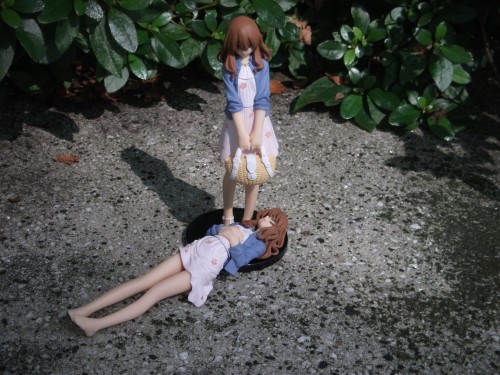
Next up is Sleeping Hato, otherwise known as Unconscious Drunken Hato.

Aside from some minor flaws, the second figure is just as solid as the first. They even did a good job on the toes, which I get the feeling would be enormously easy to mess up on a figure this small and relatively inexpensive (it came packaged with the volume for a bit extra, though I can’t remember exactly how much).

Because Sleeping Hato has to be constructed from more parts than Standing Hato, the seam in the dress between the torso and the legs is much more noticeable, though I don’t find it to be the biggest deal in the world. Again, given the typical quality of these figures, this one does a good job. You’ll note that they sculpted his hair to match the fact that he’s supposed to be lying down.

Actually, Sleeping Hato comes with one additional feature that most other figures lack: It’s a refrigerator magnet!

There’s a small magnet sticking out of Hato’s back which I’ve chosen not to photograph, but it’s pretty much what you might think it is. Are your to-do lists for grocery shopping feeling a bit lonely? Do you wish you had company for your magnet souvenirs from Japan? This crossdressing fudanshi figure successfully accompanies all fridge doodads! What’s more, 9 out of 10 people can’t tell that it’s a man!

So there we go. Both figures at this point will be pretty difficult to find, especially because they were both packaged as extras. I’m certainly not the biggest fan of Hato Kenjirou, but I have to say that both of them look good if you judge them by overall figure standards, and great if you judge them among their peers.

Rinshan Kaihou: Genshiken II, Chapter 78

Kasukabe Saki visits Genshiken, bringing pangs of nostalgia to readers everywhere! As Hato puts it, “Is this what Genshiken used to be like?”

As Hato exchanges contact information with his old classmates, Kasukabe attends Shiiou University’s school festival, she catches up with her old friends, showing the degree of wit and perceptiveness she’s always been known for, the conversation turns towards the future, career paths, and even romance. Watching Saki work her magic, Hato can’t help but notice that the club somehow seems more lively when she’s around. Inevitably the topic of conversation turns towards Madarame, whom Saki caught receiving a kiss on the cheek from Sue in the previous chapter. Having heard about Madarame’s full-scale defense against the charms of Angela on top of that, Saki jokes that Madarame must be a lolicon, to which Hato comes to his defense in a rather awkward way.

As Sasahara’s sister discovers the truth of Hato, Saki silently considers that Madarame is finally hitting the point at which a guy like him becomes attractive to the opposite sex. Encouraging him to try out dating, the conversation ends on the kinds of porn that Madarame watches, which apparently is “everything.” We already knew that, though.

The new crew doesn’t get much exposure this chapter, but the hints towards Yajima possibly having feelings for Hato are definitely there. This is evident from the way her old friend Mimasaka, who thinks the world of her, reacts to Hato. Even if Mimasaka is being paranoid, it seems like she knows Yajima well enough to see when something is up. I actually expect them to be the focus in the next chapter or the one after that, especially because Hato’s story is “wrapping up” in certain respects, the mysteries of his existence now being a little less mysterious.

I have to wonder if showing Kasukabe again is a little cruel to the people who really miss the old Genshiken. While I know plenty of people who are fine with the new series, I also know people who much prefer the original style, presentation, and character dynamics of the first series. Giving them a glimpse of that environment once more might be equivalent to saying, “I could have continued Genshiken like how it used to be, but I didn’t!” In this respect it really does make the new club seem like a second generation.

That said, Kasukabe has always been that extra bit of spice which pushed Genshiken into interesting directions, the sole non-otaku in the club full of hapless dorks, as opposed to the current state where awkward isn’t quite what it used to be but no one is so firmly out of that sphere as Saki was. Just the way her statement about being okay with gay relationships getting misinterpreted by the fujoshi minds of Ogiue and Ohno (Saki’s response is that she’s referring to actual gay couples she knows in real life) shows that the rift still exists, albeit a rift that has had a solid bridge of friendship and understanding erected across it for years.

I realize that one of the limits of my analyses every month is that I don’t spend a significant amount of time on Hato, who seems to be getting more and more time in the story. At the same time, personally speaking I don’t think predicting whether or not he’ll end up with someone, be that Madarame or otherwise is particularly fruitful. I think Hato’s sexuality is not meant to be clear cut, whether that’s “he’s gay but denying it” or, as so many have mentioned both within the story and outside of it, that “2D and 3D are different,” and though I don’t have quite so much of a vested interest in the turn-out, I do find the degree to which the manga tackles the ambiguity of the topic to be particularly good. Hato destroys the lines which divide.

To what degree is otaku culture, especially male otaku culture, receptive to concepts like homosexuality or even sexuality in general? I’ve viewed it, both within Japan and outside of Japan, as being somewhat similar to geek culture in general in this regard, which is to say liberal in certain ways but can be quite conservative in others, which is why, as Kio Shimoku continues to bring the topic up through Hato and his potential feeling towards Madarame every chapter, I have to step back and think, “is this okay in a seinen magazine?” Granted, it is a seinen magazine which also runs Ookiku Furikabutte! (Big Windup), but I feel like there’s definitely a risk involved, especially when the potential target of homosexual affection is the most geeky of the otaku in Genshiken. Then again, if the guy was willing to make a detailed and in some ways harshly realistic manga about raising a newborn, then I guess nothing can stop him anymore (aside from lack of sales).

Saki views Madarame now as the late bloomer who’s apparently finally showing his petals. I’ve seen other manga talk about how there are simply times in a guy’s life when he’s more attractive to the opposite sex (and in the context of harem manga this means having it all concentrated into the present), but I don’t think Genshiken is quite going for that. Rather, I think it’s a complex interplay of elements that gives us the Madarame of today. When you actually look at him, although he’s similar to the Madarame we saw back in Chapter 1, he has in fact changed quite a bit. First, he’s not nearly as “aggressively otaku,” touting the lifestyle as a badge of sad pride, and second, he’s nowhere near as uncomfortable around girls as he used to be, probably from interacting with them so much in Genshiken.

Call it whatever you want, maturity, a betrayal of moe values, but I could easily see the how tempering of his passions to still be evident but not quite so extreme, as well as his overall understanding attitude (the result of being otaku in certain ways) could combine at this current point to make a fairly attractive guy. It doesn’t hurt that he dresses better now too. Madarame is seemingly no longer held back romantically by just being too much of an otaku, but by a combination of being unable to accept the possibility that he himself might be attractive, and that he has an unrequited love which he’s afraid to lose or to move away from. That said, I have to wonder if having to constantly interact with the girl he loves while hiding the fact (or at least trying to) also ironically helped him to develop more socially.

I noticed that there’s discussion as to whether or not Kasukabe is actually pregnant, given her choice of clothing, or if that’s just some fashion faux pas on the part of Kio. I can’t decide for myself, but I will say that because he’s tackled the topic of pregnancy and childbirth in his work, it wouldn’t be that surprising. It also might be me just making silly associations, but the way she looks reminds me of that moment in His and Her Circumstances where Yukino is pregnant and her mom, not knowing the truth initially, comments that she somehow looks more mature.

Again, though, I can’t say but it would lend meaning to Saki’s remark that Ohno’s wedding must be getting close. I have no idea whether she’s just joking or not, though Most of the relationship developments in the manga for Ohno and Tanaka have been off-panel (though the anime Genshiken 2 had its own steamy interpretation of things), so I can’t count out the possibility that this is actually for real.

Last thing I’ll say is, the reference for the next chapter is of Getter Robo Go, a decidedly older series compared to what’s been used lately. Curious.

81 Diver is Amazing

Sometimes I can’t believe how much I enjoy the ugly, ugly, ugly art of 81 Diver. Just look at this page for a moment.

I don’t know about you, but when I first saw that kick I simply couldn’t hold my composure. This scene, among many others, actually gets me to burst out laughing.

81 Diver is the work of Shibata Yokusaru, the same man who created Airmaster. It is a manga about Sugata Kentarou, a gambling shougi player, and the woman he loves, “Ukeshi,” an excessively well-endowed maid who is also known as a legendary shougi player renowned for her defensive and reactionary play. I have never played a game of shougi in my life, so much of the terminology goes straight over my head, but the terseness of the dialogue and the sparseness of text in the word bubbles combined with the frenetic line work makes each match extremely tense and exciting, especially given how absurd the characters are.

Let me tell you about what I believe is one of the defining moments in 81 Diver. Sugata is playing a hobo/shougi hermit. Money is on the line. Sugata’s stipulation is that if he wins, he gets the shougi hermit’s money (he’s a hobo but he isn’t poor). The hermit agrees, but in exchange, he demands that his prize be to get a handful of Ukeshi’s breasts. The hero, hearing this stipulation, demands that this be a serious match, but rather than forcing the hobo to change his prize, he takes the reward of touching Ukeshi’s chest as his own incentive, even foregoing the money to do so. As the two of them play an incredibly intense game of shougi full of blood, sweat, and tears, both of them have one thought on their mind: “I’M GONNA GRAB EM!” Spoilers, I guess, but in the end neither gets to grab them. That’s the kind of manga 81 Diver is.

I know there’s a J-drama based on 81 Diver, but I’ve yet to take a look. I do worry that the basic veneer of attractiveness that all live action Japanese manga and anime adaptations undergo with its actors would take away from the appeal of the manga. Related to that point, I honestly think that if the art were prettier or sexier or even had a more solid grasp of anatomy, then it would fundamentally change 81 Diver for the worse. The premise, a shougi-playing maid with gigantic breasts, could easily become another Ikkitousen or Queen’s Blade where the content of the manga practically bends and warps to the will of the women’s curves. And certainly there are plenty of cleavage shots of Ukeshi and the like, but the artist’s style instead manages to shift emphasis away from her attractiveness despite how much time is spent on describing her as a voluptuous woman. It’s ugly and outrageous, and the result is that when I think of Ukeshi I think of her unbelievable shougi skills first. It also doesn’t hurt that she’s shown to be in most ways Sugata’s superior in their chosen game, which makes their absurd romance all the more fun to read.

It Doesn’t Take a Madoka Magica

I was recently asked about why I don’t seem to like Puella Magi Madoka Magica nearly as much as other anime fans, bearing in mind the degree to which the show seems to garner an extremely devoted, I might even say evangelical fanbase. “Have you not seen Madoka Magica?” they ask.

While I think it’s quite a good show, even excellent in a number of respects, my opinion is that unlike so many others Madoka Magica did not open the world to me. It is not the greatest magical girl anime I’ve ever seen, let alone the greatest anime, and rather than showing me that it’s possible for such a genre to be full of rich depth and interesting ideas it just reinforced my already existing beliefs in that regard. So, yes, an excellent show and a fascinating twist, but something I always knew was possible (in a good way).

What I’ve kind of noticed is that the people who seem to be the most awestruck by Madoka Magica are the fans with little experience actually watching magical girl anime, and so when they discuss what makes the darkness of the series so special, it always feels less like people are talking from actual experience with the genre and more with just their idea of the genre from watching some Sailor Moon. Or if not Sailor Moon, their experience is comprised primarily of watching the genre exceptions, such as Revolutionary Girl Utena and Magical Girl Lyrical Nanoha.

This is not to deny the legitimacy of other people’s watching experiences, as telling someone that they don’t have the right to enjoy a show without x or y prerequisites is pretty ridiculous. However, I feel as if many people who think the world of that show and have an opinion on how it’s done so much with the magical girl genre, while in some ways right, have only experienced the “darkness” of mahou shoujo without being familiar with the “light,” in other words the shows which manage to achieve genre highs without falling into themes like subversion or dark parody. Even in the past decade or so you’ve had shows like Heartcatch Precure!, Ojamajo Doremi, and Cosmic Baton Girl Comet-san which are able to achieve a lot without flipping conventions all the way upside down.

It doesn’t take a Madoka Magica to realize the potential of the magical girl genre, which is something I hope more and more people come to learn.