Emotional Continuity in Anime

What does it mean for a work of fiction to feel “realistic?” It’s a question I return to over and over because of how subjective the answer can be. The more I’ve thought about different possible takes, however, the more I’ve found that I resonate strongly with something I call “emotional continuity,” and it informs which series I view most positively.

Broadly speaking, there are many types of continuity in storytelling. There’s the simple that the events of the past should inform the events of the future. A character who loses an arm in episode 1 of a show shouldn’t get it back with no explanation in episode 10. Then there’s capital “C” continuity, like what American superhero comics often deal in, where all the individual parts ideally look together to form a consistent universe and timeline across multiple different series. “Emotional continuity” isn’t nearly so complex. Instead, I define it as simply when events that should affect a given character emotionally result in an appropriate response, and that this character remembers this feeling on some level. Those reactions and memories don’t have to be “sensible,” and they don’t have to result in a “character arc,” though both are possibilities. They simply have to feel consistent with the character and their way of being, and then leave a mark on that character.

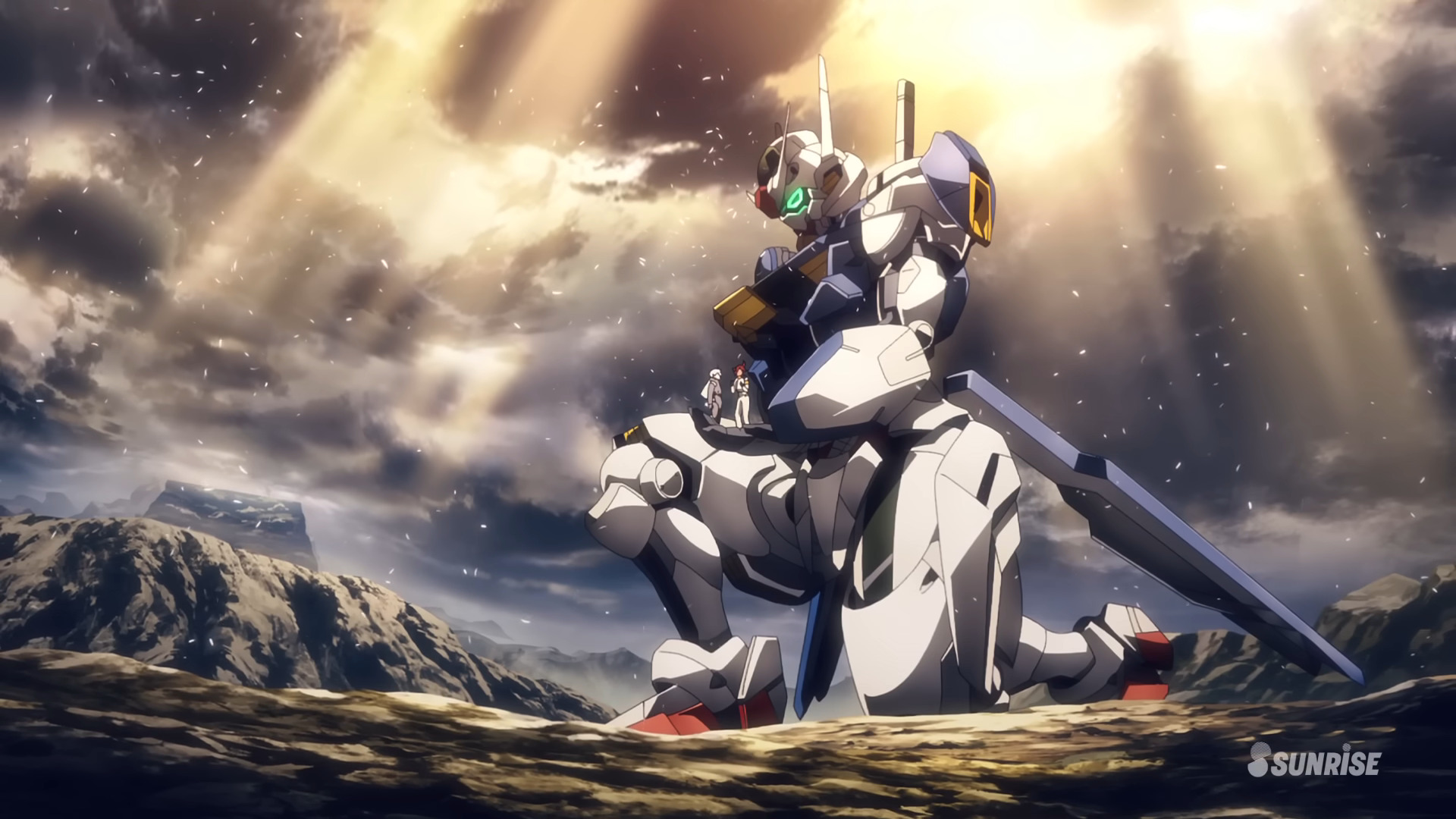
One work I’ve debated with others about realism (and by extension show quality, though the two are not necessarily related) is the anime Mobile Suit Gundam: Iron-Blooded Orphans. Whereas others saw the character actions as making little sense and thus stunting the overall story, I felt the opposite. I came to strongly understand each character’s motivations, especially in the core cast, and to see how early events both happy and tragic would inform the general trajectory of their approaches to life.

Another anime that I’ve argued about is Kill la Kill, specifically in regards to the idea that the heroine, Ryuko, is a strong main character even though she didn’t receive much “character development.” The big sticking point for detractors is that she doesn’t really change significantly throughout the series or learn any personal lessons. However, I find that even if she doesn’t transform dramatically, she conveys a strong sense of “emotional continuity” based in her anger, her stubbornness, and her desire to right wrongs. Even if she’s still the same rage-filled Ryuko by the end, it’s impossible to say that the events of the series don’t affect her emotionally or inform her friendships, battles, and decisions.

I realized that “emotional continuity” also greatly informs my utter fondness for the series Heartcatch Precure! and might even explain why the series is often seen as the best of the Precure franchise or somewhat overrated. Years ago, a blogger named Scamp tried to watch through as much Precure as he could, but ended up dropping every show, including Heartcatch. His reason was that nothing ever seemed to happen for the most part, and that dramatic, story-changing moments came too abruptly. This surprised me, because I felt the total opposite—that the show built up to every significant plot point like a skilled architect oversaw the construction. I even wrote a response. In hindsight, while I used the phrase “emotional logic,” i.e. reasoning through feelings, to describe what I saw, what I was actually highlighting was emotional continuity.

Moonlight…in suffering loss…felt wracked with guilt, giving up her role as protector. The task to defend the world had been passed onto a new generation…and as they collected the Heart Seeds, they laid the groundwork for Moonlight to redeem herself, to learn from her mistakes while also forgiving herself…. Although Cure Moonlight’s return is telegraphed to a degree, for me it built anticipation … I felt satisfied that the show had reached a strong emotional point with a solid expression of how the feelings of each character, especially Moonlight, defined their actions.

Rarely in fiction is anything utterly devoid of emotional continuity, but the best series make you feel as if they care about what’s happened to their characters. Something that has had issues with maintaining this continuity in recent years was World Wrestling Entertainment, and that seems to be finally turned around in the past couple years. While there are general structural issues with how WWE presents itself that go beyond emotional continuity, it’s telling that fans had very little faith in their favorites wrestlers being recognizable beyond a basic template. Continuity is played fast and loose in general, and the highly physical nature of their format means injuries and other unpredictable elements can gum up the best laid plans, but there’s a persistent sense that what a given wrestler does or says one week should actually matter the next.

Do you find emotional continuity to be important? If so, how much is it a priority for you? I’m curious to see how others feel.

Anime NYC 2023 Miscellaneous

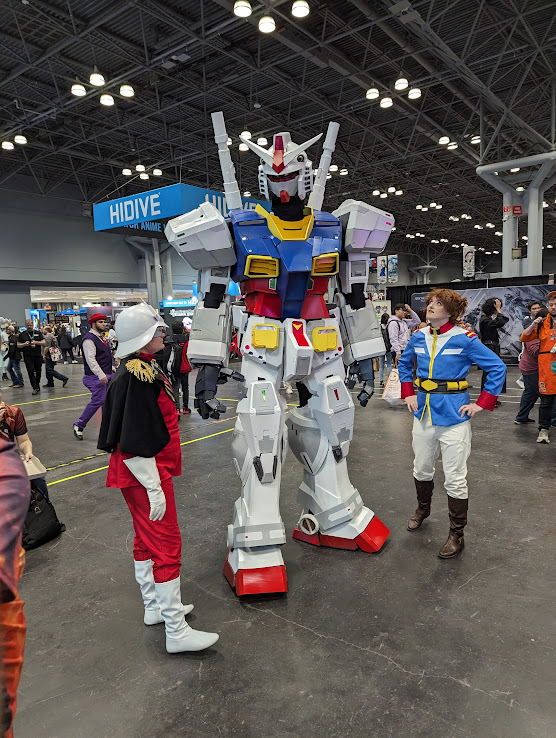
While I spent the majority of Anime NYC checking out the plethora of events related to hololive, I also want to broadcast my thoughts on various other topics.

Getting In

In previous years, Anime NYC would often run into issues with getting attendees into the Jacob Javits Center. This year, I did not hear any major rumblings, though I don’t know to what extent that was the result of improved planning and how much it was because the weekend was blessed by nice weather.

Crowds

As Anime NYC has grown and the COVID-19 pandemic still lingers, foot traffic and crowd size are topics of concern for me. That said, I found the convention center relatively easy to navigate this year. While bottlenecks did happen on occasion, I never really felt like a canned sardine, even in places where it could get very cramped last year, like the Artist Alley. 

In terms of masking, at his point, it’s become increasingly uncommon in New York City as a whole, which is unfortunate. I still hold out a modicum of hope that convention runners here and elsewhere might be willing to get more stringent with a mask policy if things get more dire again, but for now, I can only recommend doing so for your own safety.

The Witch from Mercury Panel 

Surprise—I actually did something that wasn’t hololive-related this year.

Upon arriving at Anime NYC to attend the Gundam: The Witch from Mercury panel, I was pleased to see how big the turn-out was. The line extended from essentially one end of the convention space to the other, and had people of all ages and genders. It’s only natural, given the pioneering nature of G-Witch both in Gundam and anime as a whole, but it was still a pleasant sight to behold.

WARNING: GUNDAM WITCH FROM MERCURY SPOILERS

The main takeaway from the panel is just how much everyone involved with the series sought to do something different with Gundam and to make it clear that G-Witch would chart its own direction. Production had already begun in 2019, and they had wanted to differentiate it from Iron-Blooded Orphans, even working with the technical director to give the series a different look. A lot of changes happened behind the scenes before the new show even aired.

The producer of G-Witch was there along with the two main actors, Ichinose Kana (Suletta Mercury) and Lynn (Miorine Rembran). I had actually interviewed Ichinose a few months ago at Anime Central, but at the time was not allowed to ask questions pertaining to Gundam. Though I was only an audience member here, I was glad to at least get some of her perspective, as well as the others’.

When asked what they liked about the series, Ichinose and Lynn both expressed a fondness for all the different relationships between characters, and just how even the same types of relationships were unique depending on who was involved. The example they gave was parents and children, and how they all lead to their own interesting conclusions.

Ichinose got the call about passing the audition after waking up, only to fall back asleep after. Because of this, she thought she might have dreamt it. Lynn is a long-time fan of Gundam even before voice acting, and actually found out about landing the role on her birthday.

Evoking Suletta’s sense of difficulty with interacting with people her age was something Ichinose worked hard on. As an introvert who gets anxiety herself, she empathized with Suletta. Lynn was aware Miorine would go through changes, that she would start off bored and prickly but would meet Suletta, get her own company, and so on, and become more of her own person in the process.

Ichinose had a tough time deciding a favorite scene, but chose one from Episode 21, where Suletta takes her mom’s mantra “Run, gain one. Move forward, gain two” and rethinks it to be about doing what you can even in hard circumstances. For Suletta, who always followed her mom and wasn’t her own person, her time with Miorine and the other students allowed her to form her own opinions and have her own life and destiny.

Lynn’s favorite is the climax in Episode 24, when Suletta brings the Gundams together and stops Quiet Zero, due to the sheer Gundam-ness of it all: characters, music, and mecha all on full display. The fact that Suletta truly shows herself as the main character also contributes to why Lynn likes it.

Towards the end, the two actors did a live reading of a scene from the episode “The Witches from Earth,” which was excellent. Following that was a video about how Gundam is sponsoring an F-1 racer, which just made me want to make Gundam F-91 jokes

Anime NYC 2024 in the Summer 

I want to end by talking about what’s maybe the biggest news of the con: Anime NYC 2024 will be in August instead of November. I already gave a few thoughts in a previous post, but would like to elaborate on my opinion here.

It is uncommon for conventions to move dates so drastically from one year to the next. Sure, a week or even a month isn’t out of the question, but three months is a hell of a difference. The fact that they have a lot of advance warning is helpful, but I do feel for the people who plan longer-term and might have arranged things with the assumption that Anime NYC would be in the fall.

I do not have any insider knowledge about why LeftField Media made this decision, but I can imagine a number of reasons. First, Anime NYC has previously been the week before Thanksgiving, a holiday when people tend to travel. Second, the (typically) cold weather can be unpredictable: While this year was pleasant, we’ve also seen snowstorms in the past.

August means avoiding such issues. The summer is the time for vacations that don’t necessarily involve seeing family. It makes Anime NYC part of the packed summer convention circuit, which includes notably Anime Expo and Otakon. Also, Anime NYC has mentioned that the entire Javits will be open for the con in 2024, so I suspect that there is something preventing them from having full access in November.

One problem: While blizzards won’t be a concern, New York summers are very hot and humid, especially in recent years due to climate change. I worry that we’re trading shivering in the cold to passing out in the sun, and if Anime NYC isn’t on the ball, this can become a real issue.

I also have concerns about Anime NYC trying to compete with Otakon, despite the fact that they’re actually quite different from each other as anime cons: Anime NYC is a very slick product, while Otakon is more grassroots. That said, this date change might be mutually beneficial for them, as DC and NYC aren’t far from each other. I really hope this is a net positive overall.

I will likely attend Anime NYC 2024 regardless, and I really won’t know if it ends up being better or worse until it happens. But I will miss having a fall con season in New York City. 

Kio Shimoku Twitter Highlights July 2023

Kio watched a bunch of movies this month.

Kio attended a live screening of the newest How Do You Like Wednesday?, which included people from the cast. It was a fun and unusual experience. He did not attend in Ikebukuro.

The raunchy gag manga Enomoto had an anime announced last year, and Kio only found out about it this past month.

Kio made this Ohno samurai drawing as the basis for a paper relief sculpture. One fan of his showed off their version.

Kio made these Madarame drawings as part of a special collaboration with the series Love-yan, which features a protagonist who resembles Madarame. Kio also vaguely denies knowing about the Rocking Spark attack from Ultraman and how similar it looks to Madarame’s pose.

16 more finished pages of Sister Wars, Kio’s Star Wars parody.

Kio recalls how tough it was to live on the top floor (6th) of a building because of how hot it got in the summer. He tells fellow manga creator Kusada to take care of himself amid some very high temperatures.

Bikini drawings of Ohno and Saki for an old Afternoon calendar.

Kio remarks that the new Miyazaki film, The Boy and the Heron (aka How Do You Live?) Is a whopping 124 minutes long.

The first tweet states that really good artists can draw Image B, where the frame is mostly taken up by the left leg. Kio says that he tries to draw B but can only really do A.

Kio is going to see the Chinese animated film I Am What I Am, and then The Boy and the Heron. He’s also been exhausted by having so much.

Kio reacts to a Genshiken fan’s shrine, saying that the fan has posters even Kio doesn’t.

Kio missed his chance to see Akira in 4K.

Kio advertising a 50% off sale on his erotic doujinshi, It’s All Your Fault, Sensei.

Kio watched The Pope’s Exorcist and Indiana Jones and the Dial of Destiny on the same day, and being in the theater for so long chilled his body.

Kio has played Elden Ring for over 50 hours and is over Level 50, but only just reached Limgrave.

He can’t get the timing for rolling and such down, and while he played King’s Field, he hasn’t played later FromSoftware games aside from Shadow Tower and Dark Souls.

Kio put his unused winter futon back into vacuum-sealed storage.

Anime Central 2023 Interview: Tanaka Rie

Tanaka Rie is a veteran voice actor with over two decades’ experience in anime.

How would you describe the voice acting industry back when you first started versus what it’s like today?

I feel like I’ve only been in the industry for 25 years, so there are other people who are much more senpai than I am. But back when I first started out, voice actors wouldn’t show their faces in the media a lot. Now, though, you see voice actors doing media, movies, TV shows, photo books, and such. So you start to see that it’s much more out there in the media. There are a lot of young kids nowadays who are really excited about the prospect of being voice actors, so in that sense it’s changed quite a bit.

You graduated from the famous Yoyogi Animation School. Are there any particular things you learned there that you feel have helped you greatly in your career?

I feel very fortunate and very blessed that I was able to attend Yoyogi Animation School. I only went for one year’s curriculum there, but I was able to gather a lot of experience. That’s because it’s very different when you’re a voice actor because in order to be a pro, you have to gather experience. And so even if you go to school, even if you go through a curriculum, and even if you graduate, you still have to get that experience at doing that job. But I do find that one thing that was really great was being able to be around other people who were also looking to be voice actors—that friendly competition, that rivalry. We also had auditions at school. 

When I originally went to the school, though, I debuted as a singer and not as a voice actor. I was with Sony for three years as a singer, and then went from there to being a voice actor. I feel that it was a very good experience. I’m glad I went to a vocational school.

When I think “Tanaka Rie,” the first character that comes to mind is Lacus Clyne from Gundam SEED. How did you approach playing the character, as well as Meer Campbell in SEED Destiny?

Lacus Clyne is the most difficult character I’ve ever played. She’s not a regular human, but rather one of a variation called Coordinators. They’re like a third era of humanity who are born having been adjusted and “coordinated,” and so Lacus’s emotional expressions were extremely challenging. Even through the full range of emotions, not much changes. She’s a human being, but she doesn’t emote in a very human way. In times of sadness or in times of joy, I had to portray her intense emotions in a calm and reserved manner. Whether she’s happy or crying, she doesn’t falter. 

Her name means “lake” [in Latin], and the director told me that the image of her is that of a tranquil lake that calms. Having to keep that image in mind was incredibly hard.

Lacus was a character in both SEED and SEED Destiny, whereas Meer Campbell debuted in SEED Destiny. People who’ve never seen these shows might be wondering who the heck Meer is, but she’s a copy of Lacus Clyne—a fan of Lacus who was surgically altered to look and sound like Lacus because Meer wanted to become her. She was a fake Lacus who was deceived by the villain of the series, Durandal, into believing she could become the real deal. 

Meer is actually a powerless and utterly normal human being, and so she has this very human quality to her. I found that it made her an incredibly easy character to play—Meer’s so human that it hurt. As a girl, she has a certain way of being and a strong personality. This comes out when she says, “I am Lacus!,” due to her brainwashing, and even when she’s confronted by the real Lacus Clyne, she still thinks, “I was Lacus, wasn’t I?” I loved Meer.

As I played her, I thought, the character of Meer really is a complicated girl. While Lacus was difficult to play, Meer was the opposite: a woman who was all too human. I could really empathize with her as a normal person. I approached her as a character one could easily empathize with. That’s what made Lacus so much more difficult, whereas when playing Meer, I could use the emotions I had going into the studio that day and put them into the character because she’s such a human character.

You were involved with the Precure franchise very early on in the role of Shiny Luminous. Do you have any memorable stories from working on Max Heart, and how does it feel to see Precure going for this long?

Luminous is not technically a Precure, and she’s actually a queen in that world. When I got the part, I thought she was a Precure, but in actuality she wasn’t. It was tricky in the sense that she’s a character who can transform like a Precure but isn’t actually one and doesn’t refer to herself as one. 

She transforms with a shout of “Luminous Shining Stream!” using her mascot Porun as a compact, but that doesn’t mean that she’s powerful. Precures fight using martial arts, throwing punches and kicks—that’s how they show their strength. Luminous can’t fight physically, though. She’s a character who runs away and guards using barriers, and thinks, “I’m going to protect everyone!” after she’s transformed. Luminous really tries her hardest, and because she can’t fight directly, she strives to safeguard Nagisa and Honoka, Cure Black and Cure White. However, when the time comes, all three are within her barrier to perform the attack Extreme Luminario. When that happens, all three are truly united.

When she’s Kujou Hikari, however, she’s just a normal schoolgirl who works part-time as an apprentice at a takoyaki cafe, and is rather shy. Playing her ended up requiring a lot of effort.

You play many “big sister–like” characters, such as Suigintou in Rozen Maiden, Maria in Hayate, Akira in Yamato 2199, and Maho in Girls und Panzer, yet you’re able to make them sound so different from one another. Do you have any advice for newer voice actors who would like to be able to diversify their style?

I’ve done so many roles, and when it comes to being a voice actor, we do a lot of solo recording these days. But before COVID-19, it was common to do voice recording as a group, and for like 23 people to share three mics.

When it comes to differentiating roles, well, there’s only 24 hours in a day. For example, you might have one project that goes from 10am to 3pm, and then another 4pm to 9pm, and you have to try your best to do well in both roles during those 24 hours. In that hour between, I make that “switch” inside me, like when I’m eating. While it’s tough to do so, being able to just go “I’m triggering that switch” is what being a professional voice actor is about. 

When I think about it, though, I don’t know for sure how I accomplish that. It’s true that my normal speaking voice isn’t the one I use for my characters, so perhaps it’s like putting on one mask and then switching to another. So it’ll be like: “Today I’m Nishizumi Maho.” “Today I’m Luminous.” “Today I’m Lacus Clyne.” I might be doing it unconsciously. But being able to “switch” like that is very important.

Those aiming to be voice actors shouldn’t just focus on voice acting but should learn from many things and observe more broadly. You often hear it said that you need to start your voice acting career in your teens, and if you wait until you graduate, it’ll be too late. They’ll even say that in the voice acting schools. But you’ll have some who start voice acting in high school, while others might go to college first or switch to becoming voice actors from a different career. It’s really about your own life, and the timing with which you decide, “I want to do this thing!” becomes important in terms of how you study and learn about the world and society. Between a voice actor who knows nothing of the world and one who has all kinds of experience, I find the latter more impressive. That’s what my senpai have always said as well, and it makes one want to try to have many different experiences.

Mobile games have become a major part of the entertainment industry, and you have worked on a great many. Do you do anything differently when voicing characters for mobile games versus anime or more traditional video games?

When it comes to mobile games, anime, and more traditional video games, the approach doesn’t really change. However, what is different is dubbing foreign media—dramas, movies, and such. That’s because they don’t want me to use “anime character voices” but rather something closer to my real voice. So the approach to voice acting for a TV show from abroad is different compared to doing something for a work that’s originally Japanese. 

In recent years, you started your own YouTube channel, playing games, releasing music, and showing your cosplay. What made you want to start streaming yourself?

During the coronavius pandemic, I thought, “Why not try?” but actually, the suggestion to make a YouTube channel began before COVID-19. I’d never done YouTube before, and between my main job as a voice actor and having to provide deliverables and content, I wasn’t sure if I had the capacity to handle doing it all. But I’ve always loved video games, and so when COVID-19 happened and things couldn’t continue as they had, I thought, “Well, guess I’m doing this.” But also, I thought about how I couldn’t interact with the fans—the tens of thousands of subscribers—and how hard it was for them, as well as how sad it made me as well as Vega-chan, who’s been working with me all this time. In terms of the scope of what we could do, we started with streaming from my home, and as things have opened back up, I can do more and even find sponsors. That said, things didn’t totally open back up, meaning it’s still a bit hard. So this is a kind of fanservice so I can connect to the fans through my voice, and I can give them joy through my broadcasts, where I deliver content twice a week. I love video games, and the fans like seeing me play them, so that makes me happy.

You are known for having a love of Indian curry. Do you have a favorite type of Indian curry?

Cashew curry! It has cashew and chicken. I always make sure to have cashews in my curry, and I love the spices. Indian food in Japan is amazing! I love it.

Would you like to give a message to your fans reading this interview?

I really cherish all my fans. Even if there are times you can’t hear my voice in anime or video games, I’ve been working hard with Vega-chan on my YouTube channel for a long while now, and fans can interact with me there. Also, there will be a lot of big projects coming up where you’ll be able to hear me again, and so to my fans not just in Japan but all over the world as well, please continue to support me. I look forward to seeing you all soon.

Gattai Girls 13: “Mobile Suit Gundam: The Witch from Mercury” and Suletta Mercury

Introduction: “Gattai Girls” is a series of posts dedicated to looking at giant robot anime featuring prominent female characters due to their relative rarity within that genre.

Here, “prominent” is primarily defined by two traits. First, the female character has to be either a main character (as opposed to a sidekick or support character), or she has to be in a role which distinguishes her. Second, the female character has to actually pilot a giant robot, preferrably the main giant robot of the series she’s in.

For example, Aim for the Top! would qualify because of Noriko (main character, pilots the most important mecha of her show), while Vision of Escaflowne would not, because Hitomi does not engage in any combat despite being a main character, nor would Full Metal Panic! because the most prominent robot pilot, Melissa Mao, is not prominent enough.

— 

I truly believe that Mobile Suit Gundam: The Witch from Mercury will go down as a pivotal work in anime history. There are the surface reasons, of course: It has the honor of being the first mainline Gundam anime to feature a female protagonist with a same-sex primary romantic interest. It’s also the first main Gundam to be only 24 episodes when even the next shortest series still got 39. But the core of why I think Witch from Mercury is a game changer is that it ncludes many elements unfamiliar or in defiance of Gundam that manage to tell a compelling and thought-provoking story that carries both idealism and realism in its narrative.

Witch from Mercury takes place in a world where Gundams are forbidden, even though they were originally based on research to help people with disabilities. Years after the banning of Gundams and the seeming purge of all involved, a shy and awkward girl named Suletta Mercury arrives at Asticassia Academy, a mobile suit school for the elite where student matters are officially resolved through giant-robot duels. Suletta wins a match in her Definitely-Not-a-Gundam, Aerial, ends up engaged to the daughter of the school’s owner, Miorine Rembran, and in doing so inadvertently steps into the complex corporate, social, and political forces at play.

The anime starts off reminiscent of both Revolutionary Girl Utena and G Gundam, but ends its first half throwing the relatively isolated nature of Asticassia into stark relief with the world at large, whether it’s the crushing disparity between Earthians and Spacians, the specter of war and how the parents of all the kids have a hand in perpetuating military conflict, or the realization that Suletta’s naivete isn’t merely an innocent quirk but points to an unusual and possibly even disturbing past.

The second half seems to calm down, only to ramp up even harder and throw the established order into further disarray. Things that other series might have left linger for 10 episodes are brought to bear in a fraction of the time. The anime can actually feel pretty rushed as a result, but in certain ways, I think this actually works out in its favor. Gundam series often meander and plod as they get into the latter 25-ish episodes as they try to incorporate extraneous characters and merch-friendly elements, whereas this one cuts out a lot of the fat, albeit with some of the flesh as well. The outcome of all this is a Gundam where I would get genuinely surprised and shocked, especially in terms of character deaths)—feelings that were often missing from my viewings of Gundam anime that have come out in the past 15 years.

The characters, especially the women, are memorable and one the best parts of Witch from Mercury. Suletta is a unique protagonist, both in comparison to her Gundam predecessors and in general due to the way she has to grapple with her own upbringing and the way she ends up establishing her own identity. She takes the viewers on a rollercoaster of a personal journey that makes her position as first heroine much more than a cynical decision for the sake of diversity. Similarly, Miorine’s aggressiveness makes for a great companion and foil, and the way she navigates her privilege and her desire to do more for humanity is wonderful. And Suletta’s mom Prospera is not only the best Char Aznable in ages, but shows the quiet fury of a woman who will do anything for her child.

As for minor characters, there are plenty of examples regardless of genders. Chuatury “Chuchu” Panlunch is refreshingly no-nonsense in a way rarely seen in anime. Guel Jeturk, a rival/potential love interest of Suletta, goes from annoying dude to endearing guy—something that actually happens more often than not with the cast. A number of characters are on the larger side but are not treated as jokes. And while Secelia Dote only has seven minutes of screen time across the entire series, her snarkiness manages to steal the show every time. I could keep going.

One of the more amazing things about Witch from Mercury is how well it strikes a balance between having ubiquitous mobile suits and incorporating them into the story and setting. They’re also very aesthetically pleasing, particularly the Aerial. It’s identifiably a Gundam, but its proportions and flourishes give a slight feminine feel without going straight into Nobel Gundam territory. I also enjoy the way it contrasts with other mecha, as it makes the Aerial come across more something that will disrupt the status quo. Moreover, Aerial is also a rare instance of a mobile suit basically being a character unto itself—something that has serious consequences as the series progresses.

A common criticism of Gundam as a whole is that while it generally contains anti-war messaging, the cool factor of the mobile suits can end up drowning it out. Although the designs in this particular series are indeed among the best ever, Witch from Mercury is also the first to establish that the technology did not begin as a military endeavor, and this helps throw the use of mobile suits as weapons into stark relief. It’s also part of a greater look at the inequalities and inequities suffered by those who lack the financial and familial might to make the world care—a world where even the children of those in power feel the burden of having to deal with their parents’ bullshit.

On that note, corporations play a major role in the series, and I’ve seen people get extremely confused with all the different alliances and factions. While I won’t say it’s simple to keep track of everything, one way to navigate that web is to understand that many adult decisions are the result of corporate greed, and trying to find positions to have the best profits with the least accountability. This is what makes Miorine’s ultimate decision all the more satisfying, as she throws that structure off kilter using the means available to her. Gundam series often feature politics because of how they take place on grander scales.

These two elements together help Witch from Mercury’s politics feel very contemporary and relevant to our times, instead of coming across as dated or tepid.

Witch from Mercury brings a new sense of what Gundam can be. It possesses many of the franchise’s well-worn tropes without being beholden to them. It breaks boundaries of all kinds, whether through its unique cast of characters, its central same-sex romance, or its perspectives on conflict and humanity. I truly feel that what we have is a turning point in Gundam and anime as a whole, and I’m hopeful it’ll be for the better. Suletta is the first main Gundam heroine, but she won’t be the last.

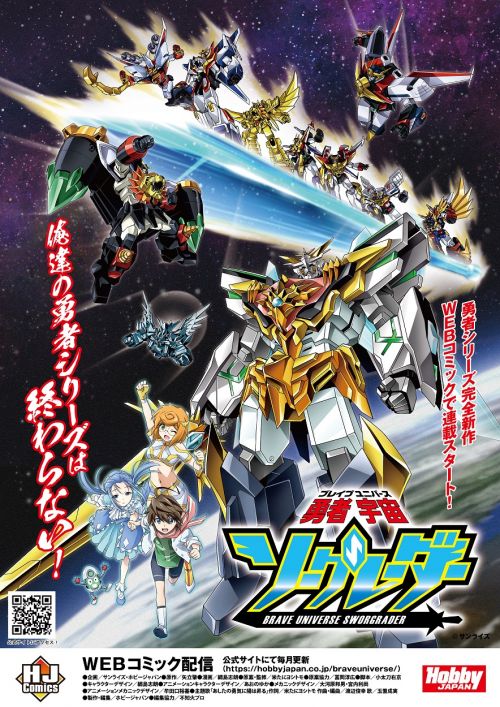
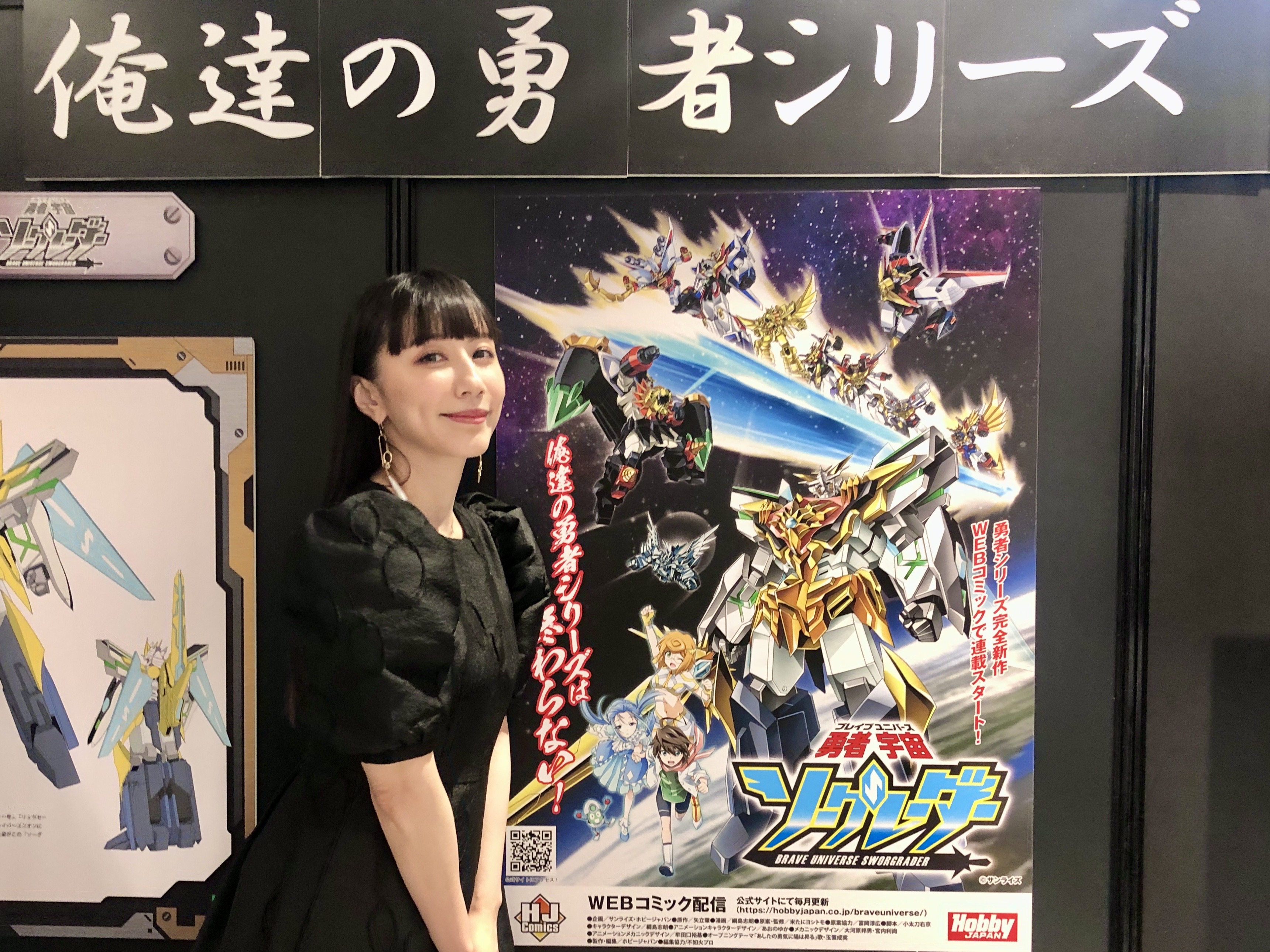
New Yuusha Robot Announced: Brave Universe Sworgrader

This past week, the Gaogaigar 25th Anniversary Exhibition in Japan featured a surprise announcement: A new entry in the Brave Series has been greenlit! Brave Universe Sworgrader is heading our way, albeit with a caveat. Unlike all its anime-based predecessors, it will debut as a web manga.

Sworgrader isn’t totally alone in regards to not coming out the gate as an anime. The sequel to Gaogaigar Final, King of Kings: Gaogaigar vs. Betterman, started off as a web novel series before being adapted into a manga. Other old anime have also received novel-only nostalgic sequels, such as Raijin-oh and even the magical girl title Ojamajo Doremi. One major difference is that Sworgrader is wholly original, though the teaser art and the whole “Brave Universe” thing seems to imply that the previous Brave Robots will somehow be involved—even the shelved sequel that only ever got a spotlight in video games, Baan Gaan.

I do feel a mix of joy and sorrow in all this: It’s great to see Brave franchise make something of a comeback, but also a shame to know how diminished it is compared to its heyday. I suspect that something like a 90s throwback robot toy franchise isn’t going to attract the massive kids market that was tuning into Exkaiser and such thirty years ago (otherwise this would at least be a mobile game). It’ll mostly be banking on the adults who had grown up with the old shows, and merch will probably be premium figures and model kits, as opposed to children’s toys. 

That all said, it’s worth pointing out that despite likely having more “Big Friend” appeal than anything else, the main characters are clearly cut from the traditional Brave cloth: They’re kid heroes through and through. So many retro-style series prefer to have characters who are at least in their late teens in order to be more relatable to that older audience, but I kind of admire the creators of Sworgrader for trying to be faithful to the Brave spirit. Gaogaigar really hit its stride once the shackles of toy advertisement were loosened, and Sworgrader is potentially going to be like that from Day One.

In addition to overseeing the entire project, Gaogaigar director Yonetani Yoshitomo is also the lyricist on the main theme for Sworgrader; something he’s had experience doing thanks to Gaogaigar and Betterman. In fact, similar to Sworgrader, Gaogaigar vs. Betterman has “opening” and “ending” themes despite there being no anime. The theme will be sung by Tamaki Nami, who got her debut in anime singing the fourth and final Gundam SEED opening, “Believe.” All this takes me back to my very first time in Japan in 2005: a year when Gaogaigar: Grand Glorious Gathering was on TV, and I could hear Tamaki’s SEED openings while in the supermarket.

And while I believe a Sworgrader anime will have some trouble coming to fruition, not all hope is lost: One of the credits on the project is Aono Yuka (Shinkalion Z, Brave Beats) as “Animation Character Designer” as distinct from “Character Designer” Tsunashima Shirou, the artist of the Jinki franchise (talk about another throwback). Similarly, there are separate credits for “Mechanical Design” (Ookawara Kunio, Miyauchi Toshinao) and “Animation Mechanical Design” (Mutaguchi Hiroki) Maybe we’ll see some cool shorts, at the very least?

Whatever form Sworgrader takes, I look forward to seeing its arrival. I will neither automatically love it or hate it, but I do hope it brings joy and excitement to all.

Kio Shimoku Twitter Highlights June 2023

This month, Kio talks a lot about Elden Ring and drawing smut.

Gundam manga artist Tokita Kouichi shares a photo of a first-era Gundam model kit. Kio reacts by saying that the instructions are from before they changed how joints work on Gunpla models.

Kio’s tortoise has been walking quickly around in their home, being hyper. Kio comments that outdoor spaces would be good for it, but the actual outdoor space available right now isn’t all that big, so this is the best he can do right now.

The reason it’s so hyper is because the warm summery weather is affected it as a cold-blooded creature.

Kio has started doing the rough manuscript for his next horny doujinshi.

Lazy tortoise.

Watching more How Do You Like Wednesday?

Kio visited actual sites from some How Do You Like Wednesday? Specials. The first tweet shows one of 12 bridges featured, and the second is Suigou Sawara Ayame Park.

Kio got to use a line from How Do You Like Wednesday? on someone who was unfamiliar with the show. 

Kio thanks a fan for sharing a Monthly Newtype video about manga in 2008, the height of one of the host’s teen years. Genshiken and Spotted Flower both get mentioned briefly. (See 23m45s in the video below.)

Kio later tweets about the video separately, commenting that he likes how writer and host Mafia Kajita says that Spotted Flower has had one hell of a development.

As Kio sees artists tweeting about whether they got into Comiket or not, he is working on his (unrelated) erotic doujinshi. He’s been drawing but also cutting content out, so even though he’s drawn 30 pages, it feels like only the beginning.

Art from the first anime’s DVD box set; this one is for Volume 2. Lots of comments about Kitagawa from fans.

Kio responds to a commenter pointing out Kitagawa approaching from the rear by saying that she would definitely not be walking lightly.

Kio also feels some sympathy for Kitagawa being called “Athlete’s Foot Senpai” by the fans.

“You! Genshiken!” is a common refrain in the Genshiken anime from Kitagawa.

Kio also comments to a person wishing for tons of Genshiken spin-offs that such a thing might’ve happened if Genshiken came out today.

A few comments about how good Ohno looks too.

Kio telling everyone who watched the Newtype special above that the newest Spotted Flower chapter is available in Rakuen magazine.

Kio says that the daughter in Spotted Flower being named Saki kind of solidifies it as being a different world from Genshiken.

Working on his new ero doujinshi seems to be an endless task. It includes things like fretting over which erotic sound effects to use, like “guchu” vs “gucho.”

The horny work has also gone from 50 pages to 100. (I sometimes think about how Ogiue’s workrate is probably a reference to Kio’s own.)

Kio also restored some pages that were previously cut, specifically about a mom getting embarrassed.

Kio’s tablet pen broke, and then when he got a new one, he realized it was the wrong kind.

While a new pen was in the mail, Kio broke out the PS5.

Kio has been playing Elden Ring and primarily sneaking around. He comments that despite appearances, he is in fact not playing the ninja game Tenchu.

Kio enjoyed Spider-Man: Across the Spider-Verse despite having not seen Into the Spider-Verse. He thanks a fan for sending a link to the prequel.

The new tablet pen arrived, but Kio is still playing Elden Ring.

Kio got picked for a live viewing of the newest How Do You Like Wednesday? DVD.

Tenchu is one of his favorite games from the PlayStation era, and the movement in Elden Ring reminds him a lot of it.

Kio, after getting his ass kicked by the boss Margit in Elden Ring, goes back to drawing ero manga. He likes how he can just skip bosses and explore elsewhere in an open world game.

Komaki from Kujibiki Unbalance on the back cover of Genshiken Volume 5.

Kio comments that his characters tend to have some plumpness to them.

Kio defeated Flying Dragon Agheel in Elden Ring with the help of a strategy site. He didn’t realize you had to fight it on horseback.

Kio got through 63 pages of his ero manga manuscript, but is setting it aside to get some of his professional work done. Apparently, the next part is the climax.

He also keeps adding hearts to the end of dialogue in his regular work out of habit due to spending all that time creating smut.

Larger than Life—Body Diversity in Gundam: The Witch from Mercury

Fatphobia is still prevalent in Japanese culture. While there will be the occasional piece of media that pushes against it (sometimes in flawed, yet well-meaning ways), Japan is still predominantly a place where “thin” is in. That’s what makes the presence of fat characters in Gundam: The Witch from Mercury noteworthy; it features multiple characters who are portrayed not as comic relief or even fetishes, but as just cool and admirable in their own right.

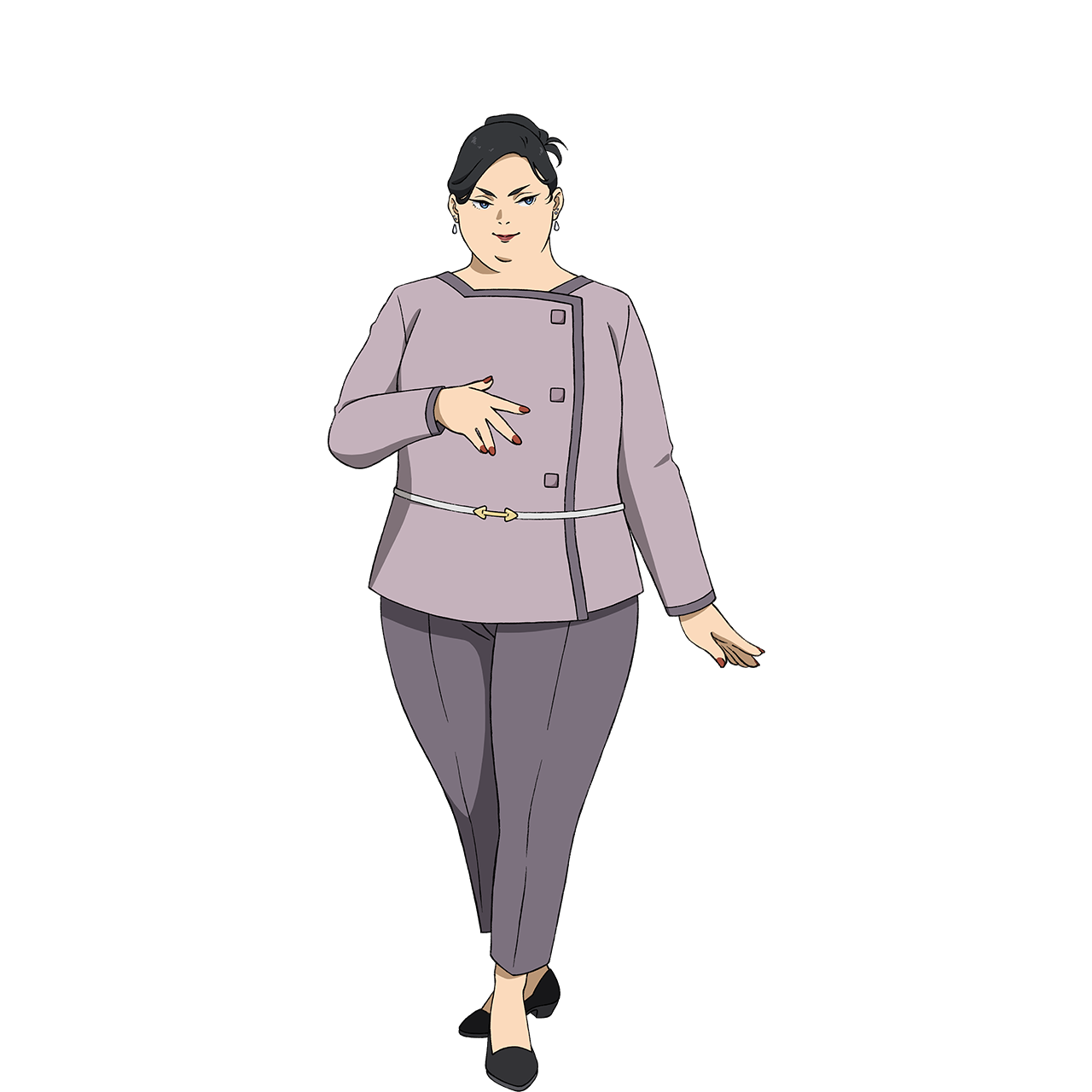
The first is Feng Jun, a woman who on the surface is a smuggler but is in actuality an agent of the Space Assembly League, a governing organization in The Witch from Mercury. She’s cunning, savvy, and capable in a rather matter-of-fact way, and her body is never shown as a hindrance. As the show progresses, it becomes clear that she cannot be pigeonholed based on any expectations.

The second is Kennanji Avery, a veteran mobile suit pilot renowned for his skills in battle. Seen as a thinner fellow in the prologue, by the time of the main story, he’s put on some pounds. But while he doesn’t look the same as he did in his younger days, his subordinates all look up to and trust him, and he’s shown to possess a sharp mind and an athletic body even if it doesn’t appear to be the case. He fights against the notion that “fat” automatically means “physically unfit.”

The third is Lilique Kadoka Lipati, a first-year and fellow classmate of the heroine, Suletta Mercury. Defying conventional thinking about girls her size, Lilique is described in her official profile as being quite popular. One episode even has another girl start trouble with Lilique because her boyfriend tried to ask Lilique out. It is incredibly rare to have even a few characters have a thing for the “fat girl,” let alone giving her a popular reputation for making people fall left and right. 

What’s notable about the way The Witch from Mercury portrays these three is that their size is neither diminished nor put out as some kind of circus display. While there’s certainly nothing wrong with being really into larger people, what this anime does is push their attractiveness beyond the boundaries of fetish territory. They’re all charismatic in different ways, as if they’re all unique people with different personalities and histories, even if they have similar body types. It’s ultimately about respect, and I can truly sense that from how Feng, Kennanji, and Lilique make such powerful impressions.

Trigun Stampede, Cowboy Bebop, and Scrapbook Worlds

When Studio Orange announced that they were making Trigun Stampede, I was pleasantly surprised. Trigun is a title that a lot of anime and manga fans around the turn of the 21st century cut their teeth on—I myself remember seeing it thanks to my school’s anime club. However, aside from a singular film in the form of 2010’s Trigun: Badlands Rumble, it hasn’t gotten much love, and it also isn’t as enduring in the general fandom consciousness as Cowboy Bebop. To be fair to both, they’re only vaguely similar, but they did come out around the same time and were anime convention staples together for years.

But here was a new Trigun TV series, and what’s more, it was clear that Trigun Stampede was going for an updated aesthetic. Anyone who’s familiar with the manga or anime remembers the iconic look of hero Vash the Stampede in his signature red trench coat and ultra-spiky hair—and both have been significantly altered for this remake. As I watched it, one thing became clear: While a lot of elements are similar to the 1990s anime, the story had been rearranged in noticeable ways. Where the previous iteration has a 50/50 balance of slapstick comedy via larger-than-life personalities and twist-filled science-fiction drama, Stampede is a lot more focused on telling a serious story. That said, I didn’t mind the changes, and was able to take all the changes in stride and appreciate them on their own terms. 

But as I was going over how I feel about Stampede, a thought occurred to me. Why is it that I was able to easily accept a different Trigun, yet the very idea of a new anime remake of Cowboy Bebop feels wrong? I’m not even someone who reveres Cowboy Bebop as a sacred cow, though I think it’s excellent in many ways. (I know there’s the live-action Cowboy Bebop, but I consider adaptations like that their own separate topic regardless of quality, so I‘m setting that aside.)

What I think the difference comes down to is just the way each series generally approaches storytelling. Cowboy Bebop is like a finely tuned machine, intricate and delicately balanced to give a very specific experience. Removing even one or two gears can throw the entire thing off, and overhauling it entirely feels pointless. Trigun, on the other hand, comes across as more of a scrapbook. Narratives can still be formed, but the strengths of the individual elements are more important, and they can be rearranged in different ways.

This brings to mind an old favorite topic of mine: the contrast between “character” and kyaraas written about by manga scholar Ito Go. Essentially, character is how a figure exists within their greater story, whereas kyara is how much of their identity can be maintained if divorced from their original context. I think neither Cowboy Bebop nor Trigun are severely lacking in either category, but the former has a relatively stronger  emphasis on character, while the latter focuses more on kyara

It’s why Trigun Stampede can be this more somber experience wholly lacking in things like a wacky black cat who makes cameos and meows a lot, yet still identifiably be Trigun. In fact, this new series can often feel like Trigun leaning in the direction of Cowboy Bebop without thoughtlessly aping it. So even though there’s a sequel to Stampede on the way that will actually incorporate more of the 1990s Trigun look, the new groundwork laid out makes me look forward to seeing both how similar and how different things get. And despite the fact that the franchise has its origins in the 1990s, I can’t help but wonder if the pacifist nature of Vash might actually resonate harder among fans today.

Memoriam-o-rama: Ogiue Maniax Status Update for April 2023

April is cherry blossoms in Japan, and their fleeting nature is associated with an aesthetic valuing of the ephemeral in Japanese culture. I normally don’t get all poetic about it, but recent events have me reminiscing and feeling the passage of time. One month after the death of Matsumoto Leiji, one of my favorite character designers, Kimura Takahiro, passed away. Ash Ketchum is being retired as the lead of the Pokemon after two decades. Not one but two VTubers are graduating: Heavenly King Mirai Akari and Pikamee Amano, one of the lights of the early COVID pandemic. And just today we learned that Sakamoto Ryuichi of Yellow Magic Orchestra passed on the 28th of March—the second member to go this year after Takahashi Yukihiro.

To my April Patreon subscribers, thank you:

General:

Ko Ransom

Diogo Prado

Alex

Dsy

Sue Hopkins fans:

Serxeid

Hato Kenjirou fans:

Elizabeth

Yajima Mirei fans:

Machi-Kurada

Blog highlights from March:

Farewell to One of Anime’s Great Character Designers: RIP Kimura Takahiro

I was devastated.

La+ Darknesss: Hololive’s Tiny Dancer Extraordinaire

My attempt to explain why I love La+’s dancing so much.

Pallet Cleanser: The End of Ash Ketchum as Pokemon Protagonist

Looking back on 20+ years of Pokemon anime, and Ash’s ride into the sunset.

Kio Shimoku

Kio tweeted a lot about Spotted Flower this past month because the latest volume came out on the 31st.

Apartment 507

My thoughts on Akiba Maid War.

Closing

Another new season of anime is upon us?! Already?! And it’s filled with a ridiculous amount of highly anticipated shows??!!