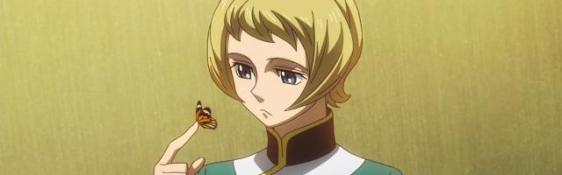
It’s another go at Mobile Suit Gundam: Iron-Blooded Orphans on the Veef Show! Following our season 1 podcast, we discuss the finale to this newest series. I’m warmer on the series while Veef is colder, but it’s interesting discussion overall.

It’s another go at Mobile Suit Gundam: Iron-Blooded Orphans on the Veef Show! Following our season 1 podcast, we discuss the finale to this newest series. I’m warmer on the series while Veef is colder, but it’s interesting discussion overall.
Gundam is a massive and unwieldy franchise. With a history spanning over four decades of anime, sequels, spin-offs, alternate universes, and more, after a while the distinctions between each Gundam series starts to blur. Each time there’s supposed to be a “unique” take on Gundam, they will often carry enough of the common tropes to be familiar, or will slowly jettison the new elements in favor of going with the tried and true. This is the perpetual challenge that Gundam faces, so it is to my surprise that not only did I enjoy the recent Mobile Suit Gundam: Iron-Blooded Orphans TV series (which is not the shocking part; I love Gundam in general), but that I felt it maintained its identity and its high quality despite it being just the kind of series set up to derail itself.
Iron-Blooded Orphan (IBO) takes place in a futuristic world where battles are waged using giant robots called mobile suits. The story centers around the characters Mikazuki Augus and Orga Itsuka, two boys who belong to the bottom-most rung of society, uncharitably called “human debris,” and who at the start of the series are essentially indentured child soldiers for a mercenary group. Early on, they and their fellow human debris rebel against their masters, create their own mercenary group called “Tekkadan,” and fight to try and find a place in a world that literally calls them garbage. Along the way, they meet a number of allies, notably Kudelia Aina Bernstein, a young aristocrat from Mars with lofty ideals of justice and equality, an encounter which changes their lives.
On the surface, Mikazuki as the pilot of the Gundam Barbatos appears to be cut from a certain cloth of Gundam protagonist. As a highly skilled pilot who has fought from a very young age and whose lack of expressiveness makes him appear emotionless, Mikazuki is descended from previous characters such as Heero Yuy from Gundam W and Setsuna F. Seiei from Gundam 00. Where Mikazuki differs from the other two is how IBO highlights his connections with Orga.
Mikazuki is cold and merciless to his enemies, but within his friendship with Orga (it’s perhaps better to call them “brothers”), there’s a very unique connection. Mikazuki is not an empty shell, but he sees in Orga a strong ambition, and he essentially acts as a right arm for the sake of his long-time companion. Similar relationships exist between Mikazuki and Kudelia, as well as between Mikazuki and a long-time female friend named Atra Mixta. Other notable characters are Naze Turbine, a man who literally has a harem of women as his ship’s crew but is actually more about empowering women by giving them skills and educations, and McGillis Fareed, a high-ranking officer who shows what happens when friendship and ambition collide. These characters and relationships are among the many that collectively create a narrative where camaraderie and family persist in the face of harsh odds. IBO never abandons that sense of family, and it is crucial to understanding the role of Tekkadan in all of the conflicts that occur as the series moves towards its conclusions.
One notable aspect of IBO relative to past Gundam series is that, in spite of the series being subjected to the dreaded “split-season” approach, it remains remarkably consistent. One of the major pitfalls of many mecha anime from Studio Sunrise over the past 10 years or so is a tendency to try and improve aspects of the series based on marketing and merchandising feedback. Often times, the series end up losing much of what made them special in the process, but this never really happens with IBO.
In terms of emphasizing toy sales over story, IBO actually shows a great deal of restraint. According to series lore, Gundam Barbatos is just one of 72 different Gundams used in a previous conflict known as the “Calamity War.” In another series, especially one more focused on profits from merchandise, it’s likely we would have seen all 72 show up onscreen. However, even at the conclusion of IBO, only a handful appear. The Barbatos itself is also supposed to have a feature that allows it to integrate the weapons and abilities of other mobile suits, but the anime never really puts this front and center. Changes that occur in the Barbatos more reflect the changes and traumas that Mikazuki goes through as the series progresses.
Because IBO keeps its feet firmly planted and doesn’t fly off-track in a desperate attempt to cater to market research, Tekkadan never stops feeling like Tekkadan. No matter how powerful Mikazuki becomes, and no matter how much Tekkadan’s forces are bolstered, they never stop feeling like an underdog. The steps they take to get further are microscopic compared to the vastness of what surrounds them, especially when it comes to the realm of human society. One of the recurring aspects of IBO highlights this well. While Tekkadan gains military power, their approach to life, which is to treat themselves as a family first and a mercenary group second, often leaves them lacking and inexperienced in terms of diplomacy. On multiple occasions, success on the battlefield is contrasted with failure politically.
The story told in Mobile Suit Gundam: Iron-Blooded Orphans feels like just a small slice of a vast world and history. Whether this is the end of the IBO universe or the start of something more, I come away immensely satisfied.

Astute fans of giant robots might have noticed a reference to a certain lion-chested titan in the final episode of Keijo!!!!!!!! For those who didn’t know about the connection, I’ve written a post on Apartment 507.
For this year’s New York Comic Con (which is now months ago, whoops!), I’m doing something a bit different with my coverage. Instead of doing a standard con report, with overviews and opinions on panels, artist alley, etc., I’m going to be writing a series of essays based on things I saw at NYCC 2016. Think of it like extended thought exercises and musings inspired by the con.
–
While manga is closest to my heart, I love comics in general. Even if individual titles aren’t my cup of tea at times, and even if I find myself going back to Japanese comics more often than not (for reasons both rational and irrational), I never want to stop giving different types of comics a chance. This is one of the reasons I’m generally eager to visit the Artist’s Alley at New York Comic Con. Though it’s been years since I looked forward to Wednesdays (the day when new comics in America come out), I still opened myself up to the artists of NYCC 2016 with a simple desire: I wanted to be wowed, to be drawn to them and convinced to read more.
Perhaps I set too unfair a standard for myself and for the artists there.
I want to emphasize that I think the New York Comic Con Artist’s Alley is full of incredible talent. These are hard-working artists, each of whom have their own stories when it comes to how they came to comics. Also, given that NYCC is built on American comics culture, a lot of it would be the things you’d expect: superheroes, graphic novels, and certain approaches to cartooning and anatomy that have grown out of the American tradition. I think all of these things are great and have their own unique strengths worth exploring, but when it came time to find something that, pardon the cliché, spoke to me, I just wasn’t able to.
I feel that the decision-making process I went through as I looked from booth to booth was vague, even to myself. It’s not that I had any specific criteria. For example, I enjoy seeing comics about cool girls doing cool things, but I’d find that the particular arrangements that existed in the Artist’s Alley fell into recurring categories that made them all blend together to a certain extent. If they weren’t female superheroes, they were girls who wanted to show how much they defy gender expectations. These are both very good things, but it’s as if, in the rush to seize these ideas and the momentum they carry (whether for profit, social consciousness, desire to create interesting stories, or something else entirely), they ended up collectively dulling the product in my eyes.
I believe that a lot of the problem lies with me. When you distance yourself from something as I have, you tend to look at it in broader strokes. The opposite is often true if you get too deep into something. For example, when it comes to anime I’m a long-time Gundam fan. I’ve seen nearly every series, and I appreciate the subtle nuances and varying approaches that they bring, for better or worse. To someone outside of Gundam fandom, it just all looks like robots fighting wars and characters giving speeches. Thus, when I looked at Artist’s Alley as this well of potential to bring me back into the fold, I think I was expecting it to have much more of a gravitational pull than it had any right to. After all, if you’re at an Artist’s Alley at New York Comic Con, it’s natural to assume that you should already be into the stuff. It’s not the responsibility of the artists there to “convince me” to give American comics more of a chance, only to convince me to check out their work.
I still plan on taking a similar approach to Artist’s Alley next year with some adjustments. Instead of hoping for something to call out to me and speak directly to my soul, I’ll drift towards anything that catches my fancy. I shouldn’t expect a revolution, but I should at the very least leave the door open for minor reforms.
As much as I love μ’s, the main group from the original Love Live!, I dig their anime rivals A-RISE (especiallyt their leader Kira Tsubasa) just as much. The reigning champions of the Love Live! school idol tournament, they represent the top of the pyramid, and their music in contrast to μ’s is techno/dance-heavy, with a high-budget sense of professionalism.
In episode 6 and 7 of Love Live! Sunshine!!, we’re introduced to Saint Snow, a duo whose slick dance moves and techno-style music are the first sign that the girls of Aqours have a lot of catching up to do. Given their similarities to A-RISE, I’ve come to wonder if that style of music has come to represent the “adversary” in the franchise.
It’s clear why A-RISE was placed in that position. Initially, μ’s are the underdogs, and A-RISE with their super ritzy high school and position as top idols are there to contrast with the homegrown, down-to-earth feel of the heroines of the story. Saint Snow, though they also hit some stumbling blocks, carry a similar contrast to the rural Numazu area that Aqours comes from.
There’s also a contrast in motivation that seems to come with this style of music. In episode 12, when Saint Snow meets up with Aqours once more, it’s clear that Saint Snow see being school idols as a competition. They want to stand on top and see what the view is like from the summit. This is presented not as a wrong way to approach being school idols, but exists in contrast to Aqours who are in it more for the experience, even if ostensibly they’re doing it to save their school. Similarly, in The School Idol Movie, Tsubasa from A-RISE expresses her ambition to continue being an idol even after she graduates, whereas Honoka is implied to not quite follow that path.
Is there any possibility that the “rival” sound will become associated with the central characters of Love Live!? Or will it at best always be relegated to subgroups within the main cast, such as BiBi and songs such as Cutie Panther?
—
If you liked this post, consider becoming a sponsor of Ogiue Maniax through Patreon. You can get rewards for higher pledges, including a chance to request topics for the blog.

What does it mean to create a follow-up act to a multimedia franchise as successful as Love Live!? That’s the challenge facing Love Live! Sunshine!! To fans, each of the original girls is something special, something unique, and renewing that fervor can be like catching lightning in a bottle. Of course, a franchise like Love Live! is designed to do just that, across different characters and different iterations of the concept, but it’s still not necessarily an easy task. Though I might be jumping the gun with what I’m about to say, I think the people in charge of Love Live! might now have a much clearer idea of what is most effective, and this potentially manifests in the physical appearances of the characters themselves.
 I decided recently to see how the physical characteristics of the μ’s girls stack up to those of Love Live Sunshine!!‘s Aqours. Thanks to Reddit, I found a convenient chart comparing all of their heights and bust sizes. What’s noticeable is that the Aqours members are all closer to each other physically. Toujou Nozomi and Yazawa Nico are at the extremes in terms of bust size (to no one’s surprise), but a character like Hanayo who is above average compared to the rest of μ’s is decidedly normal in the world of Love Live! Sunshine!! Similarly, while half-Italian American Ohara Mari is the tallest, the other girls are also relatively close to her. Keep in mind that the disparity is not especially large, especially when it comes to height. The difference between “tiny” Kunikida Hanamaru and “towering” Mari is a mere 4 inches (or 10 centimeters). Already, there’s a certain narrow range median that reminds me of something anime voice actress Nonaka Ai once mentioned when I interviewed her: she wanted to be an actress but was considered too tall. Similarly, Hanayo’s voice actress Kubo Yurika is the tallest of the μ’s cast. Like Mari, she is 5’4″ or 163 cm.
I think it’s worth entertaining the thought that the success of Love Live! School Idol Project, which grew gradually from a modest success to a cultural phenomenon, has informed the current version in terms of what is the best median to take, at least in terms of physical traits. Moreover, given the seaside venue of Love Live! Sunshine!!, I believe that there is a greater push for sex appeal, though I’m sure they’re aware that keeping the fanservice from going too overboard is important for maintaining Love Live!‘s large female fanbase.
That being said, while they’re more similar in size, I’m not sure the same applies to the characters’ personalities. In many ways, they feel more extreme and more adhered to certain archetypes, such as Yohane’s chuunibyou identity, Kurosawa Dia’s “Kanzuki Karin” levels of haughtiness, or her sister Ruby’s ultra moe shyness. The closest we have to Ruby in in the original was Hanayo, and at this point we’re aware that Hanayo is kind of a maniac. That doesn’t mean the Aqours characters are bad, however. In a way, perhaps it helps to distinguish them further from each other.
—
If you liked this post, consider becoming a sponsor of Ogiue Maniax through Patreon. You can get rewards for higher pledges, including a chance to request topics for the blog.
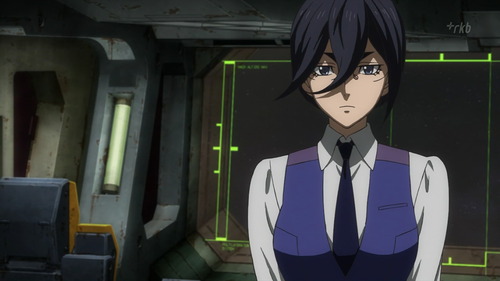
I stopped by the Veef Show to discuss the latest Mobile Suit Gundam series, Iron-Blooded Orphans. Have a listen, as we have fairly different perspectives on the show, and I’d love to know what you think of the series as well.
For reference, the post I mentioned about McGillis can be found here, and the series I mention at the end of the podcast that I have begun chapter reviewing is here.
So in conclusion, Fumitan Admoss is the best.
I wrote a post looking at Voltron: Legendary Defender and its transformation sequence compared to that of King of Braves Gaogaigar. You can check it out at Apartment 507.
 Ever since Char Aznable became one of anime’s most memorable characters, many Gundam series have included similar rivals for their heroes. In general, they’re enemy pilots of roughly equal power who wear masks or something similar to hide their faces, and who often have their own ulterior, if noble, motives. Most recently joining the likes of Zechs Merquise, Harry Ord, and more is McGillis Fareed from Mobile Suit Gundam: Iron-Blooded Orphans, and his approach to being “a Char” is probably the most well-realized out of all of them.
Gundam: Iron-Blooded Orphans spoilers below.
Throughout the original Gundam, Char Aznable is willing to (and has!) back-stabbed even his closest friends because his true goal, to get vengeance for the death of his father, overrides any sort of sentiment he might possess. McGillis is incredibly similar. He’s willing to sacrificing childhood friends for the sake of accomplishing his motives, but in a way he might also be even more scheming and cut-throat than Char himself. While Char might sabotage some of his own side for personal reasons, he never actively leaked information to the enemy or tried to orchestrate both sides to fall in his favor.
McGillis has gone from being a fairly interesting character to being one of the reasons I’m looking forward to the next season of Gundam: Iron-Blooded Orphans. Given the overall quality of the show, I really, really hope the series doesn’t suffer from Sunrise “half-way point syndrome” like so many of their mecha anime, where in an attempt to become more successful a show loses what made it special in the first place.
—
If you liked this post, consider becoming a sponsor of Ogiue Maniax through Patreon. You can get rewards for higher pledges, including a chance to request topics for the blog.
This post is dedicated to Anime World Order‘s Daryl Surat, who over 10 years has pointed out repeatedly that people will bring up the relationship between the anime Neon Genesis Evangelion and Space Runaway Ideon without knowing exactly how they connect.
Love it or hate it, Neon Genesis Evangelion, is one of the most influential and well-known anime ever. The story of youths with crippling psychological problems who must fight to save the Earth resonated with many, and anime came to copy, challenge, and rethink Evangelion in the years since. However, Evangelion itself carries its own influences from shows of yesteryear. For this post, I’m going to be writing about one of the major progenitors of Evangelion, Space Runaway Ideon, because it’s often brought up as evidence against Evangelion‘s originality and innovation, without thorough understanding as to what Ideon did and did not do relative to Evangelion.
“Evangelion is just a rehash of Ideon,” the argument goes, but structurally they don’t have very many things in common. The city structure, otherworldly invaders, time limits, and the sense of scale when the titanic EVAs fight the similarly enormous Angels all come from Ultraman. In fact, if you want to see just how much Ultraman influenced director Anno Hideaki, check out the manga Insufficient Direction, drawn by his mangaka wife, Anno Moyoco (Hataraki Man, Sugar Sugar Rune). The escalation of trauma and the mistrust between humans comes from Devilman. Ideon, while bearing a few minor similarities to these series, brings something else to the table.
To understand Ideon, it’s useful to start at the beginning. Its story takes place in an era of space exploration and colonization. A group of archaeologists discover three ancient vehicles, which they find out can be brought together to form a giant robot called Ideon. During this time, they also encounter an alien race of conquerors called the Buff Clan, who possess legends about Ideon as a mighty god of ancient times. Though they take a number of casualties, the humans escape with Ideon, and spend the rest of the series fending off attacks from the Buff Clan with the help of the Ideon.
This sounds pretty par for the course for the time in which it was airing (early 1980s), but one thing made Ideon, as a mecha, different: it didn’t like to behave. The pilots from the very beginning are even unsure as to how to rouse Ideon from its dormancy. It powers up and powers down seemingly with a mind of its own, as indicated by a mysterious display called the Ide Gauge. If there’s a pattern as to how strong Ideon will be in any given fight, it is utterly unclear to the humans responsible for it. It is ancient alien technology that they are unable to fully grasp.
Then, deep into the series they find themselves cornered and at the brink of death. Suddenly, the Ideon achieves a power greater than anything seen before, and wipes out the enemy in an instant. Though they’re happy to have escaped with their lives, one important detail looms over their thoughts: it was not by the humans’ actions that they were rescued. Rather, they were at the seemingly serendipitous whims of the Ideon itself. As they continue on their journey, and as they continue to fight the Buff Clan, the heroes are made increasingly aware of the fact that the Ideon is powerful enough to destroy entire worlds, rend galaxies into nothingness, and wipe out civilizations… and they have absolutely no control over it. In the Super Robot Wars games, the power of the Ideon’s strongest attacks, Ideon Sword and Ideon Gun, are labeled as having infinite range as a reference to this, though the mechanics are gamified into something manageable).
If you’ve seen Neon Genesis Evangelion, you probably know where this is going. Some of the most iconic scenes in Evangelion are when the EVA-01, the protagonist Shinji’s mecha, goes berserk. During these pivotal moments, Shinji somehow falls unconscious or is unable to fight, and the EVA roars to life with a mind of its own. It fights like a beast, clawing, biting, and tearing. Its chilling cry becomes a wake-up call to the human characters who believed that they could control all of this technology and power. In the cases of both Ideon and Evangelion, the power granted to the heroes ironically creates a sense of helplessness because of the loss of control. Unlike older giant robot anime, such as Mazinger Z or even Reideen the Brave which featured a similarly sentient super robot, the spirit of the hero, or indeed all of humanity, is made to feel small and insignificant in Ideon and Evangelion. Where Evangelion differs is in its deeply introspective focus, of characters and the deep, torturous labyrinths of their psyches, and so it would be incorrect to say that Evangelion simply copied Ideon.
The Ideon TV series ends more abruptly than almost any other anime you will ever see, and a proper finale would be provided in the form of two movies, one recap and one conclusion. In the movies, the secrets of the Ideon are explored, and it’s through those secrets that further connections to Evangelion can be seen. The second movie, Be Invoked, reveals what causes Ideon to awaken and gain power: life energy. The Ideon throughout the series appears to respond better to children than to adults, and even better to babies. Though there is nothing explicitly written as to why this is the case, and I’m inserting my own interpretation into this to an extent, I believe that it has to do with the fact that children are both more full of life, and are not as warped by their experiences as the cold, cynical adults.
As the fight between the humans and the Buff Clan rages on, it turns out that meteors have been raining down on both planets, wiping out their homes. The implication behind these mutual apocalypses is that the Ideon itself and its Id energy have been testing the two sides to see if they can reach some sort of peace. Because the two sides refused to understand each other and just kept on fighting, the Ideon basically decided that both civilizations are not worth saving as they are. Hence, meteors. Ultimately, even as this is all happening, the Ideon fights the Buff Clan’s ultimate weapon, the Ganda Rowa. The two destroy each other, triggering a massive explosion that wipes out life on the surrounding planets. The spirits of those who died, both human and Buff, gather together as if all is behind them.
A few similarities to Evangelion appear here. First, the effectiveness of children as a source of “power” for the Ideon is similar to how the Evangelions appear to only function when piloted by 14-year-olds. Second, the protective element of the Ideon towards those children resembles how the EVAs have souls within them that (for the most part) are the mothers of the pilots themselves, who go berserk to save their children. Third, the Ideon’s desire to bring these two warring civilizations, and the final moments of Ideon itself, resemble the Human Instrumentality Project at the center of Evangelion. The Human Instrumentality Project is the idea that, by having all of humanity merge together, we will be free from the problems caused by people being unable to properly communicate their feelings. When we are all as one, there will be no suffering. Again, however, even if you factor out the newer works (the Rebuild of Evangelion movies, the manga’s alternative ending), Evangelion does not say the same things because of the greater focus on individual characters and their personal emotions. Ideon thinks on more of a macro scale than Evangelion‘s micro approach, despite the fact that both series involve the death of humanity.
Overall, the influence of Ideon on Evangelion can be summarized as the exploration of humans having to deal with powers beyond their control, and the apocalyptic consequences of those who continue to make mistakes even with this knowledge in mind. I hope this has been useful to you, and if there is anyone who would like to add new points, expand upon the existing ones above, or even argue against them, I welcome you to make a response.
—
If you liked this post, consider becoming a sponsor of Ogiue Maniax through Patreon. You can get rewards for higher pledges, including a chance to request topics for the blog.

