Being “True to Oneself” and the Necessity of Criticism

Ever since my teenage years, I’ve believed it important for nerds and geeks, otaku and gamers, to be proud of who they are. Back then, from seeing my own experience as well as that of others both online and off, it hurt me to witness people continuously talk about how they have to hide their hobbies. You’d find posts on forums of people talking about how they had to abandon their nerdy interests in order to make friends and get a significant other. And while I’m sure there are more than a few who found greater happiness this way, I could also see plenty who basically lived as frail shadows. As frivolous something like a love of RPGs or an attraction to anime girls could be, I saw it doing subtle psychological damage to those who forced themselves to abandon their passions, and I didn’t want to see people like me be hurt.

A lot of things have changed in the years since. Gaming is undoubtedly mainstream. Shows like The Big Bang Theory have, for better or worse, made the lives of nerds “hip” to watch. People needlessly worry about “fake geek girls.” One of the consequences of the prominence of geek culture is that, where once the main issue for many nerds was trying to get their voices out there, now the latent misogyny of gamer culture has become a real problem. Given this current environment, is it okay to just say, “Be confident and declare to the world that you’re proud to be who you are!” if it means that people are incentivized to harass others?

I understand that there are some generalizations I’m putting forward that are inevitably full of exceptions. Geek culture and fandoms are many-armed and camaraderie across different interests can be fractured. One does not even need to be a “social outcast” anymore to be considered an avid player of video games. Perhaps most importantly, it’s not like asking people to have confidence automatically leads to influencing people to attack others. Nevertheless, I think there is a potential path from self confidence and pride to anger towards and mistreatment of others, one that is dimly lit yet still visible upon closer observation.

To some extent, I think this wraps into the idea of variety of expression as a strength, be it in fiction or in, say, speech and dialogue. Much like freedom of speech, the difficult thing about supporting and celebrating it is that you have to accept that you can’t agree with every opinion or belief, even if you swear that it’s wrong with every fiber of your being. It is the constant potential for change that gives both art and speech strength, and for every poorly conceived anime that might exist there can also exist a work of endless wonder, broadly speaking.

That being said, criticism is necessary, and dissent towards ideas believed to be harmful should not be silenced just for the sake of variety. And I think this is where I find myself when it comes to people found in fandoms who continue to espouse racist, misogynistic ideas. I disagree vehemently with those ideas, but they are beliefs legitimately held by people, and to silence them is to build resentment. At the same time, giving them license to run their mouths and spread hate and harassment isn’t the right thing to do either. Ideally, conversations on matters such as the portrayal of male and female characters in games should happen in the open, rather than as rocks volleyed from across a chasm, but that might be wishful thinking.

I’ve increasingly thought about how wanting to make the world a better place and embracing all the beauty and ugliness of the world requires living a contradiction. However, I don’t believe that this is inherently a problem. Perhaps we try too hard to make every aspect of our life consistent, or to expect our thoughts and beliefs to line up perfectly with each other. If that’s the case, then I can continue to cheer for those who are able to express themselves, while putting more effort to guide those who I believe need it.
A Look at Precure Popularity

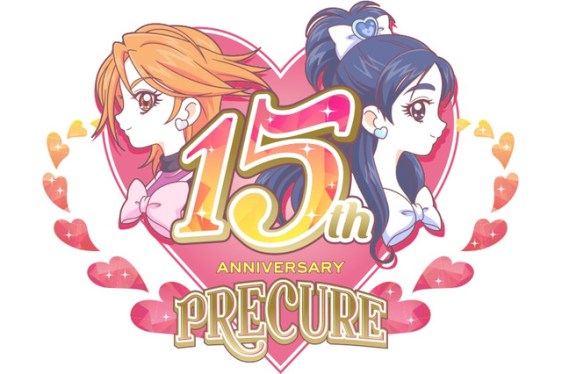
I’ve been looking at various Precure polls lately, in part due to a desire to see how a franchise that’s 15 years old is remembered. The polls I consulted were Japanese character rankings from 2015, 2016, and 2017 as compiled by user insight_led, as well as a more recent one from the Japanese-language anime news site Anime! Anime! Being a decade and a half old means opinions can change over time (or according to the age of the voters), which is what I normally would expect, but there are some surprises.

Character Popularity

Looking at the Naver rankings, here are the top 10 characters from each year, along with the tallies each one accrued, based on comments on social networking sites like Twitter and Facebook. Also, kids were not included in the votes; if that core audience was allowed to vote, there’d likely be a significant difference.

2015 (Go! Princess Precure airs)

  1. Cure Beauty (1,541)
  2. Cure Marine (1,224)
  3. Cure Passion (1,107)
  4. Cure Twinkle (750)
  5. Cure Pine (624)
  6. Cure Happy (580)
  7. Cure Ace (575)
  8. Cure Lovely (489)
  9. Cure Peace (440)
  10. Cure Heart (432)

2016 (Maho Girls Precure airs)

  1. Cure Beauty (20,041)
  2. Cure Happy (15,580)
  3. Cure Marine (12,824)
  4. Cure Peace (12,682)
  5. Cure Passion (8,107)
  6. Cure Twinkle (7,750)
  7. Cure Heart (7,432)
  8. Cure Lovely (6,999)
  9. Cure Scarlet (6,890)
  10. Cure Miracle (6,619)

2017 (Kira Kira Precure a la Mode airs)

  1. Cure Happy (12,450)
  2. Cure Beauty (11,394)
  3. Cure Marine (8,924)
  4. Cure Peace (8,804)
  5. Cure Passion (6,409)
  6. Cure Flora (6,102)
  7. Cure Lovely (5,877)
  8. Cure Heart (5,322)
  9. Cure Blossom (5,285)
  10. Cure Chocolat (5,180)

Based on these three rankings, what surprises me is how little recency bias actually seems to influence results. Cure Beauty and Cure Marine are consistently top 3, even as the total counts fluctuate. There appears to be something enduring about both of those characters, which is all the more interesting because they’re 1) in unrelated series 2) almost polar opposites in personality.

For Cure Beauty, the reasons generally given for her popularity are that she’s an ideal combination of strength, intelligence, and beauty. Out of all Precures, Beauty most closely matches the yamato nadeshiko (traditional ideal Japanese woman) in both looks and demeanor, so I wonder how much that’s a factor.

When it comes to Cure Marine, however, the queen of comedic intensity defies expectations for why fans come to love Precure characters in the first place. As mentioned in those rankings, while pretty every other character generally gets comments like “I want to be her” and “I want to be with her,” Marine’s are mostly “I wish she were my best friend.” Seeing as Marine is my favorite Precure character, I’d like to think the Japanese fans also just have incredibly good taste.

Show Popularity

According to the Anime! Anime! poll, the top 3 most beloved Precure series are as follows:

  1. Go! Princess Precure
  2. Futari wa Pretty Cure
  3. Heartcatch Precure!
  4. Kira Kira Precure a la Mode
  5. Smile Precure!
  6. Maho Girls Precure!
  7. Fresh Pretty Cure!!
  8. Yes! Pretty Cure 5 Go Go!
  9. Yes! Pretty Cure 5
  10. Futari wa Precure Max Heart
  11. DokiDoki! Precure
  12. Suite Precure
  13. Futari wa Pretty Cure Splash Star
  14. Happiness Charge Precure!

It should be noted that given the purpose of the site, the general audience for Anime! Anime! would skew towards older and more interested in anime as an industry. One goes there to read essays about and interviews with creators, as well as following general anime news. That’s why I think it’s no coincidence that the most popular iterations of Precure are 1) the original pioneer 2) the series with (in my opinion) the strongest narratives and overall messages. What I’m more surprised about is how well this top 3 aligns with my personal tastes. I consider Heartcatch and Go! Princess to be #1 and #2, respectively, and the unrefined, yet innovative quality of the first Pretty Cure to be a big part of its charm.

While the character rankings and the series rankings are from two different sources, I find it remarkable that character popularity and series popularity don’t really line up. Based on my personal experience, this isn’t a complete shock, but I think it really goes to show that memorable characters can exist almost apart from their sources. Cure Heart is a top 10 (out of 51) character, but Doki Doki! Precure is a bottom 5 (out of 14) show, according to the above sources. It’s also interestingt to me that Cure Marine comes out ahead here. She’s considered a top 3 character, and Heartcatch Precure! is seen as a top 3 show.

Go! Princess Precure is considered the best Precure anime, but interestingly enough, it also has among the worst toy sales out of the entire franchise.

Go! Princess Precure is third from bottom

One might assume that a greater focus on quality storytelling might conflict with how one of the purposes of Precure is to sell toys, but this is not necessarily the case. According to the chart above, the most successful Precure in terms of merchandise sales is actually Heartcatch Precure! There’s perhaps a challenge in being able to achieve high marks in both, but it’s not impossible. The fact that one doesn’t seem to have any bearing on the other is simultaneously reassuring and daunting.

Conclusion (or lack thereof)

I’m not a statistician and I don’t pretend to be. I’m also unsure if there are any truths deeper than what I observed, like how Cure Marine is the Nintendo Switch of Precure (doesn’t compete directly with other Precures and is the better for it), and that toy sales and show quality almost exist on separate planes.

So in closing, Heartcatch Precure! and Cure Marine are the best. Fight me.

Liked what you read? Why not take a look at my Patreon or Ko-fi?


Aikatsu! and Idol Franchise “Experiences”

As Aikatsu Friends! inches ever closer, I find myself thinking about the longevity of Aikatsu! as a franchise. By this October, it’ll be a whopping six years old—a lifetime when it comes to children’s anime. Where other similar series have tried to compete, few have managed to hang on as Aikatsu! has. One of its closest competitors, Pretty Rhythm, eventually pivoted towards the male-idol-centric King of Prism series. Either by outlasting or outmaneuvering other idol series, Aikatsu! feels as if it’s conquered its own niche—though the exact nature of that niche is what I’m trying to figure out.

There are, of course, key differences between Aikatsu! and other idol character franchises. Series like King of Prism and Idolish 7 utilize male idols in a desire to capture a different market. Love Live! and The iDOLM@STER feel like they skew older. Macross Delta and Symphogear have idols as thematic flourishes as part of a greater science-fiction story. They cover various demographics, as well as various degrees of idol presence. Yet I feel there’s another element of difference that isn’t accounted for, as if Aikatsu! and Love Live! occupy different compartments of mental space, at least personally.

While this is only a tentative thought exercise for the sake of categorization, if I had to describe that difference it would be as the following: With Love Live! or The iDOLM@STER, I’m most interested in how the idols will react, but with Aikatsu! I’m most interested in the actions they’ll take. The way I phrased it makes it seem as if it’s a contrast between more passive characters and more active ones, but that’s not quite right. Instead, it’s more that the girls of Love Live! seem to draw their appeal from the way they behave and influence each other, while the girls in Aikatsu! feel as if they influence the environment around them.

Perhaps the reason I see Aikatsu! different is because of the fans and how they express their love for the series on social media compared to other idol anime lovers. Other series appear to celebrate cuteness and style. Fans of Aikatsu! revel in an aura of power and excitement. At the heart of this fan output remains the indelible images of Ichigo, that very first Aikatsu! heroine, as she climbs those cliffs and wields that axe. It’s as if Ichigo and her successors reshape and navigate the land while other idols move through it.

This post was sponsored by Johnny Trovato. If you’re interested in submitting topics for the blog, or just like my writing and want to support Ogiue Maniax, check out my Patreon.

The Unreality of Virtual Youtubers

If you haven’t heard of virtual youtubers, they’re a recent phenomenon that might be the ultimate intersection between anime fandom’s love of cute girls and the ever-rising prominence and allure of youtuber as identity/occupation in Japan. Virtual youtubers are quite similar to regular old youtubers in that they’re online video hosts who use charismatic and often energetic performances to entertain fans, but their difference is most easily understood by watching:

While a number of the virtual youtubers out there play up the idea that they’re robots, AI, or some kind of existence outside of normal reality, one thing I find noteworthy is that they don’t have quite the same sense of appeal through artificiality as a Vocaloid. Hatsune Miku and Megurine Luka don’t sound like anything like a normal human being, but that is precisely what makes them memorable.

With virtual youtubers, there’s still a very human component behind the voice and video filters that you can feel come through to varying degrees; at the very least, there’s a sense of human-esque imperfection conveyed, as opposed to the uncanny valley of Vocaloids. Kizuna AI has a very smug, almost Yazawa Nico-like attitude that can come back to bite her in the ass. Kaguya Luna sounds like she’s always on edge, and the fact that she sounds like she’s being recorded in a garage hints at the reality behind her. Ojisan’s youtuber persona is a cute, small fox girl, but he doesn’t even try to hide his identity as an older man.

The conveying of “humanity” even comes across in small, subtle elements. You’ll see Kizuna AI videos featuring lots of clear cuts—a common style for youtubers, especially for the more bombastic types. At the same time, she constantly has this windswept appearance that doesn’t make sense (see her ribbon fluttering constantly!), but it makes her appear more active and lively.

Perhaps the biggest thing about the virtual youtuber concept is that it’s simply not meant to cater to the same audience as idols, virtual or otherwise. They can be good singers, but they don’t have to be. They convey a sense of closeness, but they inevitably keep a greater distance because the performative aspect of the virtual youtuber is more obvious. Toeing the line between natural and unnatural is part of why anime characters in general capture so much attention, and virtual youtubers also take advantage of this.

This post was sponsored by Johnny Trovato. If you’re interested in submitting topics for the blog, or just like my writing and want to support Ogiue Maniax, check out my Patreon.

Dagashi Kashi Confuses Anime Fans: Pre-Season 2 Hype (?) Post

With the new season of Dagashi Kashi starting up, I wanted to tell my readers about one of my favorite activities as of late: reading reviews of the first Dagashi Kashi anime on MyAnimeList.

The reason is that I take an odd pleasure in seeing innocent anime fans grapple with Dagashi Kashi. While the show has its fair share of positive comments, it also sports around a 6.7 rating—pretty low for the site. Many of the reactions from MAL users involve a combination of puzzlement and frustration over what Dagashi Kashi is. These reviews are typically along the lines of, “I thought this was going to be some epic fanservice romance but all they do is talk about snacks for 25 minutes!!” Those viewers wanted 90% rom-com, 10% snacks. Instead, they got the opposite.

Dagashi Kashi is clearly not a show for everyone, given its odd premise and eccentric cast of characters. But as the new season coming in the next few days, I’m looking forward to more flabbergasted expressions from people who decide to jump in for the hell of it.

As for me, I can wax poetic endlessly about the show, and I voted Shidare Hotaru “Best Female Anime Character of 2016.” To say I’m looking forward to Dagashi Kashi S2 is an understatement.

Love Live! Sunshine!! and Improved CG

Animating nine girls dancing onstage is hard work. It’s why the Love Live! anime usually reserves 2D animation for moments with three girls or less, and has 3DCG do the grunt work when showing the entire ensemble. One consequence of this is that, throughout the original Love Live! anime’s run (as well as the music videos made prior to the anime), the transition to 2D and 3D would look fairly awkward. However, what I’ve noticed from the first and especially the second season Love Live! Sunshine!! is that its CG portions are a lot better at removing the kind of “plastic” feel from the characters.

While I think the CG has just generally gotten higher in quality, making the models just look better overall, one major change I noticed that I think goes an extra long way in smoothing the switch between 2D and 3D is how the eyes are portrayed. In the 2D sequences, the girls’ eyes have a kind of soft glow that gives them an appearance of liveliness, of soul and depth. In the two Love Live! openings, when the CG switches occur, their expressions just look much blander, as if they’re puppets in the shape of the characters. With Love Live! Sunshine!!, the girls of Aqours have very pronounced and bright eyes even in the CG portions of their performances. In the second Sunshine!! season, the performance scenes keep the angles of backgrounds more consistent to make the transitions much less jarring.

This reminds me of a talk I went to at Japan Society in New York City, where anime writer Sato Dai (Eureka Seven, Battle Spirits) was giving a presentation on 3DCG in anime. One of the things he mentioned was that capturing “kawaii” in 3DCG was a major step in its implementation in Japanese animation, and I think we’re seeing the fruits of it. If the appeal of characters approaches appealing to the inner feelings of its viewers, then having eyes that appear to reciprocate emotionally would serve that direction quite well.

Spirit vs. Letter in Social Media Harassment Policies

Social media platforms have been under fire by critics recently due to the way they’ve let radical groups take advantage of their platforms to attack and discredit others. People on Twitter are harassed, receiving death threats and worse, yet their harassers remain unbanned. Facebook has suffered from the inundation of fake news created by Russian propagandists, as well as racist advertising using their own ad system. A recent article by Sarah Wachter-Boettcher, titled “Facebook treats its ethical failures like software bugs, and that’s why they keep happening,” argues that Facebooks’s approach lacks a true human dimension, and fails to account for the subtle and nuanced ways that people end up using social media. In other words, using a wack-a-mole method to deal with this ignores, unintentionally or otherwise, the underlying issue of people being attacked online.

I concur with this sentiment, but would like to add something. It’s not just that treating problems like racist ad targeting as bugs or glitches is the wrong way to go, but that trying to govern social media platforms with hard and fast rules creates a rigid system that inevitably lends itself to loopholes that can be exploited.

I recently had a few discussions with friends and acquaintances, all programmers and software engineers. In one discussion, I had a small debate with a friend, who argued that laws should not be open to interpretation—what says, goes, ideally. Having “wiggle room” makes things messy. In another, the subject of self-driving cars came up. Among many of the programmers (but not all, mind), there was a shared stance that giving humans more control than self-driving cars would be to open up the efficient and organized traffic of the future to the unpredictable and poor decision-making of the average driver. Additionally, any problems that occur due to the incompleteness of the self-driving AI could be solved after they arise.

I don’t mean to stereotype programmers as all having a certain way of thinking or a certain set of beliefs (you’ll find them on all sides of the political spectrum, for example), but there’s a certain desire for the human-created mechanics of the world to make consistent, logical sense that I find common to programmers—i.e. the main people driving social media platforms such as Facebook and Twitter behind the scenes. A faith (or perhaps desire) in these systems, and the idea that they can just increase the granularity of their rules, instead of trying to take a more humanistic direction, leads to holes that can be exploited.

No matter what parameters Twitter puts in for defining harassment, people will always find ways to attack others without “technically” breaking the rules. This, I believe, is the reason so many people appear to be unjustly banned while other accounts that spew hate and encourage online attacks can manage to stay active. One side is likely ignorant of rules X, Y, and Z, while the other deftly skirts them. Intent, something that requires a closer analysis, is left by the wayside.

Krang T. Nelson, a Twitter user named after a certain cartoon warlord from Dimension X, recently tested these limits. In a Vice article, Nelson describes how he decided to troll white supremacists by crafting the most intentionally absurd tweet possible, about “antifa supersoldiers” planning on beheading white parents and small business owners. Not only was it a clearly tongue-in-cheek call-out of alt-right talking points, it was also loaded with buzzwords that white nationalists actively look for. Nelson then discusses how the white nationalist movement understands the ways to take advantage of Twitter’s policies, and that they used this knowledge to get him (temporarily) banned over a facetious remark. Here, we see clear evidence that the groups known for Twitter harassment also know how to exploit its technicalities and parameters for their own ends.

Adhering to the letter and not the spirit of policies and laws is what fuels the abuse of online social platforms. Having actual people at all levels checking to see how Twitter, Facebook, etc. are being used, and relying not on hard and fast rules, is where things need to change. Granted, having “wiggle room” in rules means they can be exploited in a different way, but overly strict interpretations are also clearly not working.


“Lagrange: The Flower of Rin-ne” and the Transformation of Lies into Truth

One of my favorite moments in the anime Lagrange: The Flower of Rin-ne is when we find out the truth about the Jersey Club, the seemingly do-anything, help-anyone group that the main character Kyouno Madoka leads. What we find out is that, whether or not Madoka realizes it, the club was created from a lie. In a time when a young Madoka was suffering from a traumatic event in her life, a local high schooler who happened to be jogging at the time created the idea of the Jersey Club on the spot, facetiously claiming that her exercise sweats were some kind of uniform in order to cheer Madoka up. The story of the Jersey Club, then, is one about how lies became truth, as Madoka took the kindness and altruism shown to her, and actually transformed it into a life philosophy. By the end of the series, it’s become almost literally a universal philosophy.

This idea of lies transforming into the truth through honesty and determination feels to me like a recurring theme in Japanese visual media. Fate/Stay Night‘s “Unlimited Blade Works” arc famously makes the claim that there’s no reason a copy has to be inferior to the original. Even knowing the origins of something, even when aware that something is a sham, it’s as if sincerity is the key ingredient to bend reality and perception.

It reminds me also of something I heard recently, which is that a sequel to Harper Lee’s To Kill a Mockingbird was published, which reveals Atticus Finch, the noble lawyer who defends a black man in a racist town, is actually revealed to be quite racist himself. The main character of the original book, Scout, turns out to have been looking at her father from the perspective of a child, only to realize his limitation as she grows into adulthood. It’s a controversial sequel, which was actually the prototype for To Kill a Mockingbird, but here we see too a “lie” becoming beneficial. Scout takes the ideals she sees from Atticus’s message and way of life, and transforms it into something even greater than the person himself.

Granted, this “bending” of reality is not necessarily without its problems. This is evidenced by the manipulation created by “fake news,” and the skewing of television news audiences, where viewers will gravitate towards the channels that cater to their beliefs almost regardless of the veracity of their reporting. The vital factor in determining whether an action is “good” or “bad” comes from what we’re seeing as “reality.” Is reality a construction of assumed cultural standards that resist change because of inertia? Or is it the foundation of truth that risks being chipped away by inaccuracies meant to exploit biases? The transformation of lies into truth can be heartfelt or diabolical, a risky double-edged sword that needs conscious tempering by both audiences and creators alike.

Love Live! Sunshine!! and the Complexities of Anime Tourism

Love Live! Sunshine!! Real Escape Game in Numazu

Love Live! Sunshine!! is a media-mix property whose purpose, apart from pushing its stars and profiting from a match of anime fandom and idol fandom, is to promote tourism to the region around the city of Numazu in Japan. What I find fascinating about its approach, however, is that it not only encourages people to visit Numazu, but also reflects and tries to address many of the problems facing Japan in terms of the link between sustaining population, community, and business.

There are three main issues brought up in terms of population in Japan in recent years. First, and the one that gets the most attention, is declining birth rates. Whether it’s “herbivore males” or the difficult choice many women have to make between starting a family and having a career, theories abound as to why fewer Japanese people are having children. Second is the post-3.11 decline in tourism; a nuclear meltdown scares off not just international visitors, but those from within Japan as well. Third, and perhaps the most familiar to people around the world, is people moving out of rural areas into urban ones, leaving the old towns a shadow of their former selves with little new blood coming in.

Flying Witch

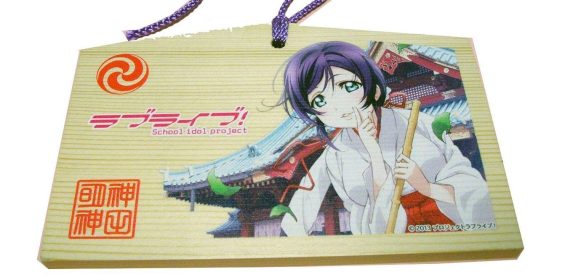
The ways in which anime have been used in response to these problems are myriad. Famously, the popularity of the anime Lucky Star led to people visiting the very shrine featured in the show, Washinomiya Shrine. The first Love Live! School Idol Project anime had a similar effect on Kanda Myoujin Shrine in Akihabara, where the character Nozomi works. But there are also anime which try to show the splendor of Japan whether directly or not. I don’t think it’s a coincidence that Flying Witch was made into an anime a few years after 3.11 when Japan was trying to revive tourism to the affected Tohoku region. Taking place in Aomori (a prefecture in Tokyo), Flying Witch features lovingly crafted shots of picturesque landscapes as if to say, “This area is lush with life.” The studio P.A. Works used the series Hanasaku Iroha to create the fictional “Bonbori Festival” and then bring it into the real world. Their more recent work, Sakura Quest, is an anime explicitly about trying to deal with a declining population in a small town through tourism and promotion.

Official Love Live! Wish Board from Kanda Myoujin Shrine

Love Live! Sunshine!! takes place in the small town of Uchiura, near Numazu. Much like the first franchise, the main characters’ school is threatened with closure due to declining attendance rates. The girls, inspired by the group known as μ’s (from the original Love Live!) attempt to replicate the latter group’s success in saving their own school, and form their own idol group called “Aqours.” Already, it’s clear how Love Live! Sunshine!! touches upon issues of population movement and tourism, but it’s especially notable when comparing the series to its predecessor.

Consider where the two properties take place. The μ’s girls of the original Love Live! are centered around Akihabara, which is both the spiritual center of otaku in Japan and, as a result, already a popular tourist destination. The Aqours girls of Love Live! Sunshine!!, on the other hand, are situated near Numazu, which has a population of under 200,000 as well as a recent history of absorbing nearby towns—a major plot point in Sakura Quest and a potential future for Uchiura. Unlike Akihabara, Numazu is hardly world-famous. And yet, if Love Live! had started differently—if it had decided to go with Numazu from the start—then I don’t think it would’ve reached its original success. Much like AKB48, it relied on the notoriety of Akihabara to build itself up, and is now paying it forward, in a certain sense. Love Live! used tourism, and now tourism is using Love Live!

Love Live! Sunshine!! can be seen as another arm of the “Cool Japan” concept, which uses Japan’s fame as a symbol of cultures both traditional and popular to promote itself at home and abroad. It appears to be succeeding, at least in the short term. In fact, over at Apartment 507 where I also write, one of the most popular posts is a guide to visiting Numazu. But as Gundam director and Anime Tourism Association chairperson Tomino Yoshiyuki has warned, short term success is not enough; permanent change is necessary, even if it’s to come from anime. The fact that Love Live! went from being supported by pop culture to being a pop cultural influence that can potentially make a change is a big deal, and I’m curious to see if this experiment has any long-term impact that goes beyond the cute idols of Aqours.

Save

Save

Anno, Evangelion, and the Fleeting Intersection of Creators and Trends

The story of Neon Genesis Evangelion is partly one of a creator who tapped into the zeitgeist of his viewers, who then began to travel along a path divergent from the very people that called themselves his fans. Anno Hideaki is not an isolated incident. Any time a creator makes a sequel and it’s considered to do more harm to the series than good by some (J.K. Rowling and Harry Potter, Tomino Yoshiyuki and Gundam), there’s a sense that ideas and sensibilities did not align as well as they could have.

Of course, fans are individuals too. What one might call the general fan reaction to something is akin to an aggregate or a median of all of the different values that exist, and one might even argue that there’s no such thing as a singular “audience” or “fandom.” However, I think that’s a significant contributing factor to why it’s so hard for so many characters to achieve great success more than once, why there are so many flashes in the pan. Even when they’re attempting to chase their audience and please them, it doesn’t necessarily work out as they might hope. How likely is it for one person to tap into the collective feelings of a group, and do so consistently over a period of years?

Love ’em or hate ’em, this I think this situation is why production by committee/audience testing exists. If you want lightning to strike twice, why not try to find out as much information as possible? Why not try to approach the group mindset with a smaller group of your own? It’s safer and arguably more reliable.

The issue with this approach is that it’s more likely to discourage risk and experimentation. This doesn’t mean it can’t ever result in strong works, but the Mr. Plinkett review of the current state of the Star Wars franchise explains it well. Disney knows exactly what the fans love about their beloved far, far away galaxy, and will keep tapping that well for as long as they find if feasible. These can be favorite characters, changing trends in how people perceive media (gender and racial diversity), or something else, but rarely would a work like this try to challenge or anger its audience.

This, I believe, is the danger zone that Anno saw all those years ago as fan response to Evangelion became one that encouraged an objectification and consumption of its characters. That conversation is more complex than this post is going to get into (and keep in mind that I’m not necessarily against either side), but it keeps me thinking about the divergence of creators and fans.