OGIUE MANIAX

Anime & Manga Blog | 50% Anime Analysis, 50% Ogi

I Have a Choco: Ogiue Maniax Status Update for February 2017

February might be Valentine’s Day Month, but how much I’ll actually discuss romance on the blog remains a mystery even to me!

Whatever the situation, I know that if I were in Japan, I’d be giving giri choco to my Patreon sponsors.

General:

Johnny Trovato

Ko Ransom

Alex

Diogo Prado

Viga

Yoshitake Rika fans:

Elliot Page

Hato Kenjirou fans:

Elizabeth

Yajima Mirei fans:

Machi-Kurada

Given that this will be the tenth year of Ogiue Maniax, I decided last November to do a Genshiken series 1 re-read. I’ve started with Volume 1, and you should expect to see them come out every other month. (I would have said bi-monthly but that phrase can also mean “twice a month,” so…) I’ve already felt like I’m stepping back into a different world, so I’m looking forward to the next article too.

Speaking of Genshiken, I also wrote a little post comparing Kasukabe Saki to Love Live‘s Nishikino Maki. The latter’s cooldere attitude reminded me of Madarame’s fantasy version of the former.

Perhaps the most important post I’ve written this month is on the subject of butts in anime. In it, I detail increasing presence of large rears in Japanese animation, and put forth my own hypothesis on why this has occurred. The seeds of this post have been germinating in my head for a very long time, even before Ogiue Maniax ever began. If you want to see more content like this, let me know. I just hope it doesn’t take me another 10 years to write one!\

I was also sad to see the end of Soredemo Machi ga Mawatteiru aka And Yet the Town Moves. It’s a very unique series in a lot of ways, and I look forward to seeing what the artist does next.

On the video game side, I’ve written a couple of posts thinking about what how players view competitive games, and what they can potentially do to both bring in a bigger audience and keep them from running away in fear.

As for this month’s Patreon-sponsored post, I looked at the subject of babies in anime and manga. My rating of babies is based on how much they make their parents suffer, I guess. If you have a subject you really, really want me to write about, it’s just a one-time $30 pledge.

If you’re wondering why I have it at that price, it’s just because I don’t necessarily want the blog to consist primarily of requests as opposed to my own ideas. That being said, I am considering maybe offering a poll with three or four topics that can be voted on with Patreon pledges. Is this an idea readers would be on board for?

Overall, I think this was a pretty solid month. I don’t have a wholly solid idea of what’s going to come next, but it might be a bit less review-heavy compared to this one.



From Cutie Honey to Keijo!!!!!!!!: The Rise of Big Butts in Anime History

NOTE: This post is NOT SAFE FOR WORK

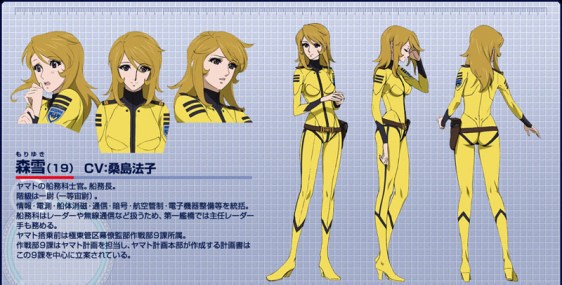
yamato2199-moriyuki-characterlineart

Introduction

For as long as there has been fanservice in anime, there has been an emphasis on rear ends. Few things are more associated with anime (for better or worse) than the panty shot, and the form-fitting suits in works such as Neon Genesis Evangelion and Ghost in the Shell have helped to bring posteriors to prominence. However, I believe that buttocks have not remained static over the course of anime’s history and that, over the past 10-15 years, we have reached a point where big butts are “in.” The purpose of this post is to show this gradual change in tastes while also positing some possible reasons that this change has taken place.

Continue reading

Love Live School Idol Festival and Ten Fes: Rise of the Normal Girls?

tenfes

Recently, the Love Live! School Idol Festival rhythm game began featuring a new comics series within the English-language app itself: a 4-panel comic series called Ten Fes: Transfer Student Fesival. Its premise is that, rather than focusing on the expected stars of Love Live!, these manga put the spotlight on the lesser-known girls exclusive to the game. Whereas once these characters’ stories were told in only the briefest vignettes, they might now have the chance to really show off their charms.

llsifgirls-small

I once expressed a desire to see these “Normal Card” characters fleshed out more than they currently are, and I feel that Tenfes, while not an absolute game changer, is significant in this respect. To understand the potential impact it can have, it’s important to look at a rival fictional idol franchise: The iDOLM@STER.

The iDOLM@STER is devoted to having every one of its idols, be they the original ensemble from the first game or new ones created for their mobile apps, feel like a star. Love Live!, on the other hand, went as far as to create a new set of core girls to focus on, while the lower tier from School Idol Festival remain as essentially “fodder,” cards sacrificed to level up the ones that “matter.” Although being featured in short gag manga isn’t quite the same as getting to star in a full-fledged show like what happened with The iDOLM@STER Cinderella Girls, it still gives a chance for these “lesser” Love Live! characters to be characterized in more than just brief vignettes you earn within the game.

I’m not the kind of person who can thrive off of just sparse character descriptions. Even when it came to the main stars of Love Live!, I needed the anime. I could not feel any particular attachment to them when they were merely faces with semi-long descriptions. Also, while properties like Touhou and Kantai Collection can get away with it because all of its characters are equally barebones, the fact that this massive rift exists between the central casts of Love Live! and the School Idol Festival-exclusive girls makes that much more difficult.

Ten Fes allows for greater opportunities to portray interactions and relationships between the “common” characters. In isolation, these girls can only provide so much interest, but if they’re reacting to each other, playing off of each other, and maybe even butting heads with each other, then it gives them the chance to establish a lasting presence and build fan bases of their own.

Save

Save

Ichigo x Rukia: The Victim of Soap Opera Tactics?

Warning: Bleach Ending Spoilers

I’ll be upfront: I shipped Ichigo x Rukia.

From the very start of Bleach I loved their dynamic. The continuously growing friendship, the humorous arguments, and both the establishment and reinforcement that their bond was something special made me feel that, if anything was true about Bleach, it was that they would end up loving each other and being closer than anyone could possibly imagine.

While romantic love is not the only kind out there, it’s clear from the ending of Bleach that creator Kubo Tite had a different idea in mind. As seen in the final chapter, Ichigo ends up with childhood friend Orihime, and Rukia ends up with a childhood friend of her own, Renji. While those two relationship paths were certainly developed throughout the series, it still seemed jarring to me because I still found the connection between Ichigo and Rukia to be so much stronger and more profound. Because I wasn’t deeply invested in Bleach by the end, these canon pairings didn’t jar me into any sort of indignant fervor, but they nevertheless left me a bit puzzled.

In a conversation with Kate from the Reverse Thieves anime blog about when fans and creators disagree in terms of romance in particular fictional titles, she pointed towards the soap opera community. As love triangles and changing relationships are hallmarks of soap operas, they inevitably create strong groups of shippers for any and all combinations. However, when there is a particularly fervent fanbase that the creators disagree with greatly, one common tactic is to separate the two characters so that they are not allowed any on-screen time together. The hope (though often a futile one) is that it will quash the support base for that particular pairing and promote the ones that are being shown.

Upon first hearing about this, I laughed at it as an amusing quirk of soap operas, but the more I thought about it the more it started to sound like exactly what happened with Bleach. If you look at early chapters of the manga, Ichigo and Rukia are around each other often, and their interaction is the core of what what makes the series endearing. When Rukia gets taken to Soul Society and Ichigo follows to rescue her, there’s a sense that something has been kindled between them, even if it might not necessarily be romantic feelings. It’s no wonder so many fans (including myself) latched onto this idea.

However, when looking at later developments in Bleach, Ichigo and Rukia are rarely seen together. I might be mistaken, but I think the last time that they spent any significant time together is after Soul Society when Rukia is supposedly gone but shows up at Ichigo’s high school once more, new and improved. While seeing Ichigo’s reaction to Rukia’s return is another “evidence” moment, what’s more important here is that, in just about every arc after this, Ichigo and Rukia are usually fighting separately. More often than not, Ichigo is with Orihime, and Rukia is with Renji. While Rukia had her own arc of being taken away to another world, Orihime gets the same treatment in Hueco Mundo. Even in the final battle against the ultimate villain of the series, Yhwach, these combinations are perpetuated.

Of course, I don’t actually know what went into Kubo’s thinking, but it just plain stands out to me that Ichigo and Rukia have so little page time together after a certain point in Bleach. Although ultimately how a relationship develops in fiction is the product of how creators write the characters, it’s as if Kubo had ended up smothering any additional opportunities for fans to enjoy and revel in the Ichigo/Rukia dynamic which made the series so strong initially. It feels like the only time we see them together again is in that final chapter when the two are already happily married to others and with kids of their own. The other remnant of their bond is when their respective children meet, but that is only a fragment of a new potential beginning between two similar-yet-different characters.

If you liked this post, consider becoming a sponsor of Ogiue Maniax through Patreon. You can get rewards for higher pledges, including a chance to request topics for the blog.

Love Live!, A-RISE, and the Music of Antagonists

As much as I love μ’s, the main group from the original Love Live!, I dig their anime rivals A-RISE (especiallyt their leader Kira Tsubasa) just as much. The reigning champions of the Love Live! school idol tournament, they represent the top of the pyramid, and their music in contrast to μ’s is techno/dance-heavy, with a high-budget sense of professionalism.

In episode 6 and 7 of Love Live! Sunshine!!, we’re introduced to Saint Snow, a duo whose slick dance moves and techno-style music are the first sign that the girls of Aqours have a lot of catching up to do. Given their similarities to A-RISE, I’ve come to wonder if that style of music has come to represent the “adversary” in the franchise.

It’s clear why A-RISE was placed in that position. Initially, μ’s are the underdogs, and A-RISE with their super ritzy high school and position as top idols are there to contrast with the homegrown, down-to-earth feel of the heroines of the story. Saint Snow, though they also hit some stumbling blocks, carry a similar contrast to the rural Numazu area that Aqours comes from.

There’s also a contrast in motivation that seems to come with this style of music. In episode 12, when Saint Snow meets up with Aqours once more, it’s clear that Saint Snow see being school idols as a competition. They want to stand on top and see what the view is like from the summit. This is presented not as a wrong way to approach being school idols, but exists in contrast to Aqours who are in it more for the experience, even if ostensibly they’re doing it to save their school. Similarly, in The School Idol Movie, Tsubasa from A-RISE expresses her ambition to continue being an idol even after she graduates, whereas Honoka is implied to not quite follow that path.

Is there any possibility that the “rival” sound will become associated with the central characters of Love Live!? Or will it at best always be relegated to subgroups within the main cast, such as BiBi and songs such as Cutie Panther?

If you liked this post, consider becoming a sponsor of Ogiue Maniax through Patreon. You can get rewards for higher pledges, including a chance to request topics for the blog.

Love Live! Sunshine!! and the School Idol Median

655727d93534472ea61a375fdc72d344

What does it mean to create a follow-up act to a multimedia franchise as successful as Love Live!? That’s the challenge facing  Love Live! Sunshine!! To fans, each of the original girls is something special, something unique, and renewing that fervor can be like catching lightning in a bottle. Of course, a franchise like Love Live! is designed to do just that, across different characters and different iterations of the concept, but it’s still not necessarily an easy task. Though I might be jumping the gun with what I’m about to say, I think the people in charge of Love Live! might now have a much clearer idea of what is most effective, and this potentially manifests in the physical appearances of the characters themselves.
I decided recently to see how the physical characteristics of the μ’s girls stack up to those of Love Live Sunshine!!‘s Aqours. Thanks to Reddit, I found a convenient chart comparing all of their heights and bust sizes. What’s noticeable is that the Aqours members are all closer to each other physically. Toujou Nozomi and Yazawa Nico are at the extremes in terms of bust size (to no one’s surprise), but a character like Hanayo who is above average compared to the rest of μ’s is decidedly normal in the world of Love Live! Sunshine!! Similarly, while half-Italian American Ohara Mari is the tallest, the other girls are also relatively close to her. Keep in mind that the disparity is not especially large, especially when it comes to height. The difference between “tiny” Kunikida Hanamaru and “towering” Mari is a mere 4 inches (or 10 centimeters). Already, there’s a certain narrow range median that reminds me of something anime voice actress Nonaka Ai once mentioned when I interviewed her: she wanted to be an actress but was considered too tall. Similarly, Hanayo’s voice actress Kubo Yurika is the tallest of the μ’s cast. Like Mari, she is 5’4″ or 163 cm.

I think it’s worth entertaining the thought that the success of Love Live! School Idol Project, which grew gradually from a modest success to a cultural phenomenon, has informed the current version in terms of what is the best median to take, at least in terms of physical traits. Moreover, given the seaside venue of Love Live! Sunshine!!, I believe that there is a greater push for sex appeal, though I’m sure they’re aware that keeping the fanservice from going too overboard is important for maintaining Love Live!‘s large female fanbase.

That being said, while they’re more similar in size, I’m not sure the same applies to the characters’ personalities. In many ways, they feel more extreme and more adhered to certain archetypes, such as Yohane’s chuunibyou identity, Kurosawa Dia’s “Kanzuki Karin” levels of haughtiness, or her sister Ruby’s ultra moe shyness. The closest we have to Ruby in in the original was Hanayo, and at this point we’re aware that Hanayo is kind of a maniac. That doesn’t mean the Aqours characters are bad, however. In a way, perhaps it helps to distinguish them further from each other.

If you liked this post, consider becoming a sponsor of Ogiue Maniax through Patreon. You can get rewards for higher pledges, including a chance to request topics for the blog.

Trinity Tempo: The Idol Franchise Where Money Literally Equals Success

tritem_index_3Anime-style idols (and of course idols in general) have been of the most enduring trends in current Japanese pop culture. Between franchises like The iDOLM@STER, Love Live!Ensemble Stars, and King of Prism by Rhythm, more and more pop up seemingly every week. Trinity Tempo is one such franchise, but what makes it unique is the degree to which it takes the AKB48 “vote with your money” concept to the next level. That’s because Trinity Tempo exists almost purely in terms of merchandise, with nothing else to anchor it.
Ever since AKB48 and their annual elections, the idea of idols competing against each other with fan support has been prominent within that world. Fans vote by getting CDs because one purchase equals one ballot, and the idea is that the more you love your favorite idol the more you will buy buy buy. Currently a little over a year old, Trinity Tempo‘s premise is that different schools compete against each other in idol competitions, and you get to determine who wins by buying merchandise for your favorite team. You literally get to influence how the overall story progresses by spending cash on character-specific goods, with certain items giving you more “votes” than others.

“Where does Trinity Tempo come from?” you might be asking. The iDOLM@STER began as a game with visual novel elements. Love Live! got its start as a series of songs. All of these properties aim for the media mix, with anime and manga adaptations, coverage in magazines, and more, but they tend to have at least one or two initial starting points. After all, how would you know who your favorite characters or what your favorite songs are?

The answer is… there is nothing. No CDs. No anime or manga or games. Trinity Tempo exists almost purely in “merch space,” where potential fans are supposed to be drawn into it based primarily on their attraction to the concept and the characters themselves. Since release there has been at least one Drama CD, but that’s about it.

I think this speaks to the idea presented by Azuma Hiroki that fans take bits and pieces of characters, worlds, and stories and merge them together in what are known as “database narratives.” I’m oversimplifying the idea, but I think it can be argued that Trinity Tempo aims to commercialize the otaku desire to gather these fragments together on a level even beyond something like Kantai Collection. Whether or not they’ll succeed in the end remains to be seen.

If you liked this post, consider becoming a sponsor of Ogiue Maniax through Patreon. You can get rewards for higher pledges, including a chance to request topics for the blog.

The Long Arm of Anime History

Anime: A History by Jonathan Clements is a good book that tries its best to call out the rewriting of past events by both the victors and the defeated. While this can detract from the magical aura that surrounds anime and the joy of experiencing anime as more than just a struggle between industry, profit, and glory, it does highlight one recurring trend that shouldn’t be forgotten—many times, when we think of some trend or change as emerging fully formed during a given period of interest, its threads can be traced back much earlier.

One thing that always comes to mind is something that Gundam director Tomino Yoshiyuki mentioned back at New York Anime Festival 2009, which was that while Gundam started courting female fans much more actively in later years (notably with Gundam Wing), it was the girls who were the biggest fans of the original 1970s work. While things have certainly changed since then, Gundam Wing also did not emerge as some kind of “sudden” targeting of a female audience.

Similarly, when it comes to Clements’ book, one example he gives has to do with the idea that the video game industry is a significant contributor of “brain drain,” that is to say a unidirectional flow of talent from anime to games. While this is often viewed as a symptom of the last decade or so, a product of the mainstream lucrativeness of the contemporary video game industry, Clements points out (on page 194) that this was already occurring in 1992, which would be during the age of the Sega Mega Drive and the Super Famicom. Thus, the battle to keep newer and more rapidly expanding entertainment sectors from drawing away the best of the best is not a relatively new phenomenon, but an ongoing quest.

One last thing I’d like mention is the fact that this brain drain is partially attributed not just to video games’ international mainstream success, but the fact that Tezuka Osamu himself undercut the cost of animation in Japan decades prior in order to get it onto Japanese television. This undervaluing of anime, known as the “Curse of Tezuka,” is what necessitates projects such as the Animator Dormitory Project, an annual fund to provide housing for animators in an industry that pays very little (by the way, that Indiegogo ends today!). To see anime change in the future is perhaps to understand the long reach of past decisions.

If you liked this post, consider becoming a sponsor of Ogiue Maniax through Patreon. You can get rewards for higher pledges, including a chance to request topics for the blog.

The Popularity of Plushies

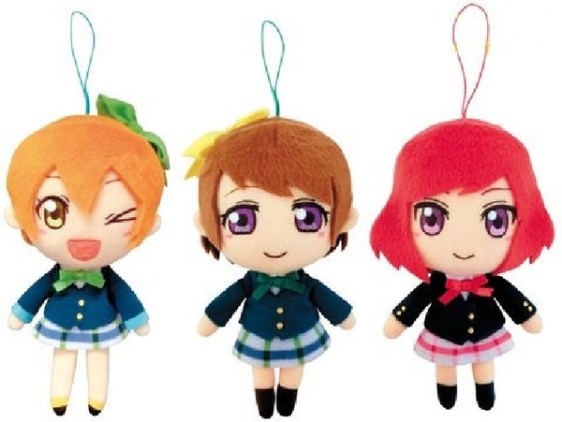
41bDBec3-LL_grande

Why are plushies popular with anime fans?

When I got into anime, the internet was a very different place. While I was never part of the old Usenet groups (and in fact I never learned how to use them), I would talk with my fellow fans about whatever was hot at the time. Part of the fan experience was a kind of lighthearted role playing (no, not that kind, and no, not that kind), and one thing I notice was the virtual exchange of “plushies.” These dolls didn’t actually exist, but they were playful gestures to show friendship and support, or to present oneself as cute and fun and lovable. When I think of “anime fans and plushies,” I think of an era of the Anime Web Turnpike and Kisekae (KiSS) dolls, both relics of late 90s, early 2000s internet fandom.

However, that’s not really the case, is it? Plush dolls, whether specifically anime themed or otherwise, still hold the attention of many fans at conventions, online, and (I assume) with each other in other more personal settings. Also, the dolls have become more prominent, whether in artist alleys or through official channels. They might be a chibi Sasuke from Naruto or an alpaca, but they’re out there being sold and traded and loved. There’s something kind of timeless about the idea of owning a cute doll, and it’s not like this is limited to anime fans at all, but anime fans will embrace and hold onto them even after they’re supposed to have outgrown collecting dolls.

shikigamiplush

There can’t be only one reason that anime fans gravitate towards plushies. Even with the common interest of Japanese cartoons, people are too diverse for a singular cause. I could see some enjoying them because they just like dolls in general. Others might just want to collect their favorite characters. That being said, I do think that the trope of the chibi or super deformed character has no small influence on the popularity of dolls with anime fans. They appear in official parody spinoffs, in the middle of scenes, and in fanart since the earliest days. Anime fans embrace what is cute, Japanese culture has made an entire industry off of “kawaii,” and in certain ways it’s almost defiant of macho expectations given to both men and women. Frederik L. Schodt wrote in his seminal book on Japanese comics, Manga! Manga!, that part of the reason manga became so sophisticated is that the fans of manga in Japan grew up and refused to let go of their stories. Perhaps plushies are connected to this sentiment, maybe not directly but in terms of a similar mindset and desire to keep the joys of childhood.

rayearth-chibi

Maybe the association between SD character renditions and plushies are why I consider plushies to be very much anchored in that 90s anime fandom. After all, the 90s were the peak of chibi character content. Though I don’t really see it anymore, super deformed characters were considered such a staple of anime fandom that they were viewed as a defining characteristic that helped to differentiate anime from other forms of animation, right along with big eyes and small mouths. While we’ve since been introduced to a much wider variety of styles, and the trends have changed over time, the anime plush doll still retains the features of a chibi character.

I personally don’t engage with anime or anime fans the way I did 15 to 20 years ago, so I don’t know to what extent the old ways of interaction still remain. Do fans still give each other imaginary plushies, or do they now take the form of digital renderings, emojis, or Line stickers? Does this further emphasize the physical aspect of actually owning plush dolls? For the anime fans who carry them through conventions and meetups and such, do they also display them in their everyday lives, or is there still a fear of being judged for being into dolls? This is a line of inquiry I’d be interested in finding out more about. If you have insights of your own, feel free to share them!

I know that, by mentioning dolls, I’m also bringing up associations with the ball-jointed (and often very expensive) kind. I think that fandom might share some qualities with the enthusiasts of plushies, but they’re quite a different group overall. Perhaps I’ll discuss that one while reminiscing about Rozen Maiden and its very passionate followers another time.

This post was sponsored by Johnny Trovato. If you’re interested in submitting topics for the blog, or just like my writing and want to sponsor Ogiue Maniax, check out my Patreon.


Plain 90s Anime Beauties

I’ve been on an “90s anime theme” kick recently, watching various live concert performances and animated intros/outros on YouTube. When you look through them, there’s a recurring tendency in shows of the time to have ending animations highlight the token female character as she existed in the 90s. What stands out to me in particular is that a lot of these girls are designed to be fairly pretty but not excessively beautiful, talented but not too talented.

Frequently, the 90s girl is the protagonist’s love interest, especially in series with heavily male-dominated casts, and in shounen works also works as either an everyman or expositional character to get the reader up to speed on the rules of the story. She’s the ideal support for him and his passionate pursuit of whatever goal or motivation he possesses, and it’s this sideline cheerleader that has more recently fallen by the wayside in favor of a new breed of heroine, who still might not be in the spotlight but possesses some sort of “other” talent. The example that immediately comes to mind is Akagi Haruko from Slam Dunk, who knows a bit about basketball and is the target of affection for the hero, in contrast to Aida Riko and Momoi Satsuki from Kuroko’s Basketball, who have support “powers” for their teams and whose roles as possible love interests are not as prominent (perhaps influenced by the greater fujoshi influence of Kuroko). None of them are stars of their stories, but I think there’s a clear difference between then and now.

If the main character’s love interest is supposed to be an ideal, I have to wonder why they’re so frequently designed to not be quite so ideal in the first place. This could be chalked up to “good characterization” in some cases, and a “boring” or “plain” female character to a potential viewer outside of Japan might be seen as a “yamato nadeshiko” type perfect woman in Japanese culture (e.g. Shinguji Sakura from Sakura Wars). However, I can’t help thinking that there’s something else, like a desire to promote the plain girl as the one young readers of shounen should be aiming for. Pining for the hottest girl around might somehow have been viewed as impractical or even wrongheaded, and that the childhood friend, the girl next door, would be the far better choice. Was anime and manga trying to teach its audience what kind of love would be the more realistic choice, or is it just that having these girls be fairly plain is simply about pushing the heroes further to the forefront?