AnimeNEXT 2017 Interview: Yuri!!! on ICE Staff

This interview was conducted at AnimeNEXT with guests Tatenaka Junpei (co-lead figure skating animation supervisor), Ito Noriko (animator), Ogawa Takahiro (production desk manager), Hirose Izumi (color designer).

Creating animation, especially for television, is a very time-sensitive endeavor. You have to work hard to get things on time. So when you were working on Yuri!!! On ICE and you were running low on time, what did you prioritize? What is most important?

Tatenaka: When creating animation, the difficult thing is that you can’t skip any parts. You can’t skip the voice, you can’t skip the music, you can’t skip the art. You have to prioritize everything.

What about terms of style, say, going for better movement or more detailed artwork during figure skating scenes?

Tatenaka: I animated the figuring skating scenes. For the first episode with Victor’s free skating, we had three chances for trial and error to fix it up. And when time is sensitive, we do one check and send it out. Most of it is just, draw it and then it’s out for production.

Maruyama Masao has been a guest at cons in America for a number of years, so there have been plenty of opportunities to get his impression of animation. What is it like working under Maruyama-san, and does he resemble the character that’s based on in Shirobako [Marukawa Masato]?

Tatenaka: Maruyama is very unique. He gives us a lot of control. The most unique thing about him is that, instead of picking what’s going to be the winning formula, he picks unusual combinations and tries them out. It’s like the chemistry of two items, two characters, two of anything that might not work—he likes to experiment with that sort of thing. So it’s either a very big win or a very big loss.

Yuri!!! on ICE has received praise from a lot of pro figure skaters. Is there anything that went into animating Yuri!!! On ICE that differs from other sports series?

Tatenaka: The most difficult and challenging part of animating Yuri!!! is that there are no pauses in movements. In baseball, there’s usually a pause, but in figure skating the characters are constantly on the move, so you have to keep drawing each sequence. All of the poses and the movements are things I haven’t drawn before.

During the skating scenes, the characters have thoughts running through their heads. Did you do research into what real figure skaters are thinking about as they perform?

Ogawa: It’s probably something Director Yamamoto came up with. Because she loves figure skating.

Hirose: She actually did interview some real figure skaters to ask, “What do you think about while you’re skating?”

This next question is about the film In This Corner of the World. In between the chapters of the manga, there are a number of quirky little guides, like how to make your rice last as long as possible by adding as much water as possible and mashing it. Are these funny little moments also in the movie?

Ito: Not all of them because there are a lot of those handwritten notes, but for most of them the characters will have a line explaining why they’re doing something. In the movie, the animated sequence about cooking in the kitchen is done very meticulously. You can see what’s being done while she’s explaining.

This is a question for the female guests here: are there any unique challenges to being women in the animation industry?

Hirose: I have a child. Being a mom and doing production in a tight schedule is very hard for me.

Ito: Not being able to go home. Not being able to shower. I don’t take naps at work because I don’t want people to see me sleeping at the office. But a lot of the male workers don’t care. They’ll sleep on the chairs and on the floors. But I can’t.

Thank you for the interview. I wish you the best of luck on your future projects!

Save

Save

Save

[APT507] The Legacy of All Might: Pieces of the Symbol of Peace

My Hero Academia continues to impress, and I thought I’d write an article over at Apartment 507 concerning how different characters interpret and emulate All Might. If you have any thoughts on All Might as a character, let me know!

Tiger Mask W and the Lack of Friendship Redemption Arcs in Pro Wrestling

WARNING: Tiger Mask W spoilers

My decision to watch the anime Tiger Mask W came during a time that I’ve been watching more pro wrestling than I have in more than a decade. As I’ve re-acclimated myself to that world of holds, slams, betrayals, and glory, it only makes sense that a wrestling anime would hook me. The fact that it’s a sequel to a beloved classic that tries to capture the feel of the original but projected through the lens of today made that doubly possible. Watching Tiger Mask W and its story of revenge and redemption, however, made me extremely aware of the fact that real pro wrestling has plenty of the former but little of the latter.

One of the main plot points of Tiger Mask W is the rivalry between Tiger Mask and Tiger the Dark, two friends seeking vengeance on a common foe yet who aren’t aware of each other’s true identity. Eventually, they make amends and they grow stronger for it. This sort of narrative is incredibly common in anime and manga—think Naruto and Sasuke. In comparison, pro wrestling has backstabbing and teams imploding galore, but I can only think of very few cases where the reforging of bonds once broken actually seems planned in advance.

For example, over the past year, numerous duos in the world of the WWE have come apart when one character turns traitor. Kevin Owens attacked Chris Jericho during a celebration of their friendship. Tommaso Ciampa assaulted Johnny Gargano, ending the tag team DIY. Goldust hit R-Truth from behind, breaking up their alliance. Big Cass booted Enzo Amore in the face with disdain. All were and are meant to lead to feuds between former allies, the aftertaste of betrayal making them that much more bitter. Wrestling seems to be very much about building up teams only to tear them down and start an intense battle between the two, but actually bringing them back together is never part of the plan, at least not at first.

There’s always the chance that wrestlers will make amends. Perhaps one day Enzo will be fighting against the odds, when Cass runs out and saves him. After all, face turns (switches from evil to good) are part and parcel with the industry. But they’re not woven into the narrative from the start so much as something that’s done once a rivalry has run its course. They’re treated as two separate stories: the betrayal that occurs, and then later (if they really need it) the redemption and reunion.

But I want my “anime as hell” stories about a hero trying over and over to rescue a former friend from the darkness. I want face turns to come from realizing the errors of one’s ways. I want more Tiger Mask and Tiger the Dark narratives. I don’t want the restoration of friendship to be an afterthought, but something actually planned as part of a greater arc.

Mori Summer: Ogiue Maniax Status Update for July 2017

AnimeExpo is over, and the all-new Otakon in DC is on the horizon. Meanwhile, EVO 2017 is less than two weeks away. With a new season of anime upon us again, it’s time to get back into the swing of seeing how the new crop holds up.

I’m happy to see that my Patreon supporters are still with me. A special thank you to…

General:

Johnny Trovato

Ko Ransom

Alex

Diogo Prado

Viga

Yoshitake Rika fans:

Elliot Page

Hato Kenjirou fans:

Elizabeth

Yajima Mirei fans:

Machi-Kurada

Unfortunately, I wasn’t able to finish the latest Gattai Girls in June, but I’m getting close! I’m going to make myself get this danged thing out even if it drives me mad. It’s about time I got back around to talking more about giant robots anyway.

Even though a strong season just ended and there are plenty of shows in it that I enjoyed, I’m not sure how many of them I want to write full reviews for. So why not have a poll?

I might end up doing the other ones anyway, but I’d like to see what people would be most keen on.

Here are the monthly blog highlights:

Nerds in the Mist: Katou Megumi and the Role of the Non-Otaku

The “Boring Girlfriend” is anything but. Find out why Megumi is one of the most interesting characters around.

Does the Japanese “Vegeta” Voice Not Translate to English?

This post of mine was the biggest success of the month in terms of views! Read my thoughts on voice acting in Dragon Ball Z!

Magic School Bus Meets Terminator: Cells at Work

I love this manga so much. It’s everything I’ve ever wanted. The human body is a wondrous thing.ß

Patreon-Sponsored

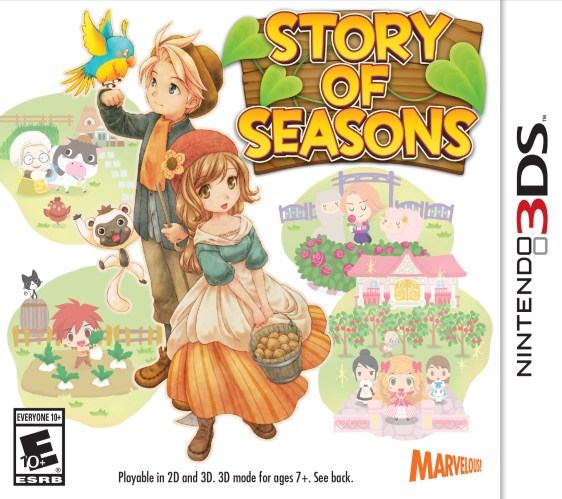
The Fun of Farming Games (Except Farmville)
I never really played farming simulators before. Then I tried Story of Seasons. See my thoughts on the genre and where I think the appeal and satisfaction lies.

Closing

I feel strangely inspired to write some new posts after being in a small rut. I hope that what I bring to the table continues to be enjoyable and thought-provoking!

Save

Save

Normal Girls Ascend to the Throne: School Idol Festival Perfect DREAM Project

In the world of Love Live! and its “school idol” setting, there have traditionally been stars that shine brighter than others. This is by design—in the Love Live! School Idol Festival mobile game, for example, a sharp distinction is made between “rare” characters, i.e. those based on the main eighteen characters of the franchise, and “normal” characters used to level up your stronger cards. Over time, however, the “normal girls” have increasingly encroached on that hierarchical barrier. Their artwork on the cards has improved. They’ve received special gag comics dedicated solely to them. Now, thanks to Love Live! Perfect DREAM Project, a new School Idol Festival endeavor, three of the “Normals” have crossed over to become part of an actual school idol group.

The trio in question are Osaka Shizuku (a yamato nadeshiko type in the drama club, sixth from left), Emma (a Swiss exchange student, first from left), and Konoe Kanata (a perpetual sleepyhead, second from left). Along with six brand new characters, they’re receiving the star treatment: distinct profiles with blood types and ages, more extensive details on their backgrounds, and even voice actresses to play them. They even have a school to call their own, Nijigasaki Academy, instead of just being “students at your school!” in LLSiF. It’s a major step up for characters who started off as experience fodder.

A comparison to The iDOLM@STER Cinderella Girls is inevitable. Cinderella GIrls originally began as a mobile game that expanded the number of idols dramatically, but restricting their format to something more simplistic. Over time, certain characters gained popularity, and when the Cinderella Girls anime was made, a lot of them gained voices and more firm identities. However, a major difference is that all of the later iDOLM@STER characters that began in Cinderella Girls and on were designed to be someone’s favorite, instead of having the sharp distinction between “rare” and “normal.”

Perfect Dream Project seems to be a middle point between the older Love Live! philosophy and The iDOLM@STER‘s. It’s not as if all of the Normal Girls are getting upgraded immediately, after all. This could change over time (as is implied in the phrase “and more…”), but for now only three have reached the other side, as far we know. I have to wonder if they’ll end up in a similar position as the three main girls of the Cinderella Girls anime—aspiring idols who are being thrust into a new and exciting world.

One question I have is why Shizuku, Emma, and Kanata were chosen. I have nothing against them or any particularly strong opinion, but it’s just curious that these would be the first. My initial assumption is that they’re the most popular, but that’s not necessarily guaranteed either. Do they hit upon various elements that have not yet been emphasized in Love Live!? Perhaps the unqiue appeal of Emma that, while she’s of European descent like Eri and Mari, she isn’t half-Japanese and she isn’t blonde. Or maybe they’re directly trying to compete with Cinderella Girls. Kanata’s state of constant tiredness brings to mind the master of sloth, Anzu Futaba.

I find the potential future of Love Live! to be quite intriguing. At the same time, I wonder if going too far off their original formula might lead the franchise to lose its core appeal. Having a smaller core roster to work with has its benefits. As long as Love Live! doesn’t lose sight of itself, I think this will turn into a net positive.

Save

Ogiue Maniax Chats About Zambot 3 on The Cockpit Podcast

I was recently invited on The Cockpit, a mecha-themed podcast, to discuss one of my favorite anime ever: Muteki Choujin Zambot 3. We get into what makes the show interesting and pioneering, and why it still holds up today for the most part.

If you want to read my old review of Zambot 3, you can check it out here.

And if you want to hear my previous Cockpit appearances, I’ve also been on to talk about Brave Police J-Decker, King of Braves Gaogaigarand Pacific Rim.

The Fujoshi Files 170: Andou Tsubaki

Name: Andou, Tsubaki (安藤つばき)
Alias: N/A
Relationship Status: Single
Origin: SHIROBAKO

Information:
An employee at Musashino Animation, Andou Tsubaki’s first assignment is as a production assistant under Miyamori Aoi for the animated adaptation of the manga The Third Aerial Girls Squad. Unlike her fellow newbie recruit Satou Sara, Andou is a hardcore otaku who is already familiar with the work of the director and other industry professionals. When asked why she likes working in animation (despite being only there briefly), she states that fan works are a mix of understanding both characters and story, implying that she plans to use her experience in actual anime production for her own amateur endeavors.

Fujoshi Level:
Other than that she’s into BL, nothing else is known specifically about Andou Tsubaki as a fujoshi.

Save

Nerds in the Mist: Katou Megumi and the Role of the Non-Otaku

With a series title like How to Raise a Boring Girlfriend, a certain image comes to mind. Given the existence of Japanese dating sims, the success of “raising sims” such as Gainax’s famous Princess Maker series, as well as the tendency towards popular otaku tropes such as nerd protagonists in harem situations, it’s easy to assume that the series is about creating a bland, milquetoast love interest. Is this an attempt to revive the old-style dating sim heroines such as Kamigishi Akari from To Heart, that childhood friend who once stood at the top of the harem totem pole? Is Katou Megumi, the titular “boring girlfriend”—more accurately “boring heroine” in Japanese—one man’s “ideal waifu” the way Asuna from Sword Art Online is, or something else entirely?

To my surprise, Megumi’s aggressive mediocrity actually turns out to be a subversion of her seeming purpose as a no-personality love interest or another character in the yamato nadeshiko mold. While the fact that the other characters keep talking about how aggressively mediocre she is might point in those directions, her role in Boring Girlfriend is closer to that of Kasukabe Saki from Genshiken—the “normal” one who contributes by being an outsider.

In works about groups of otaku there is often a non-otaku, though their purposes can differ. In Otaku no Video, the main character Ken is the “commoner” who gradually falls in love with the otaku lifestyle, while his girlfriend, Yoshiko, becomes increasing disgusted. The dating sim Comic Party (as well as its anime adaptations) follows a similar pattern, with protagonist Kazuki becoming more involved with doujinshi as his sporty childhood friend (and canon love interest) Mizuki just can’t seem to fathom what these nerds are jabbering about.

Owing to the fact that Genshiken gradually pushes its characters from the relative safety of a college environment into the real world, Saki as the non-otaku becomes a kind of guiding force. While she begins the series antagonizing the otaku and begrudging the fact that her boyfriend is an otaku, she eventually becomes a close friend whose understanding of human social interactions (notoriously lacking in otaku) provide answers that the others could not arrive at by themselves. While she isn’t as aggressive and outspoken as Saki, Megumi in Boring Girlfriend accomplishes the same things by being more observant than the perpetually self-centered and inward-looking otaku characters she has befriended.

Because Saki begins from a place similar to Yoshiko in Otaku no Video and Mizuki in Comic Party, Megumi doesn’t quite have the same development as her. Instead of that period of conflict with the otaku, the changing dynamic comes from the gradual reveal that Megumi indeed has a mind of her own, and that her seemingly mundane nature throws a wrench in the assumptions of the others. Moreover, her “boring” status provides a sharp contrast to the other girls in the series, who fall more in line with familiar tropes: a tsundere, an adorable underclassman, a cooldere, a tomboy cousin.

While those other characters have their origins in the same era that spawned Akari from To Heart and Mizuki from Comic Party, taste in otaku consumption has changed over time such that characters with more extreme and pronounced character traits tend to be more popular. The shape of “moe” has changed, and everyone but Megumi falls into that line. However, because Megumi is present, and because the series is named after her, it’s as if Boring Girlfriend is setting up and knocking down its own pieces to say, “Subtlety has its place.”

In this sense, How to Raise a Boring Girlfriend and Megumi remind me of two other series. The first is My Youth Romantic Comedy is Wrong, as I Expected aka My Teen Romantic Comedy SNAFU. It’s a series that also goes against what its title implies and plays around with its characters supposed archetypes to create a greater sense of depth. The other is The World God Only Knows, which features the character Kosaka Chihiro. Though she has a different personality compared to Megumi, and that series has only one real otaku character, Chihiro fulfills the role of being defiantly “normal.” Her behavior runs against everything that Katsuragi Keima believes in as someone who bases his life entirely on dating sims, and Megumi by virtue of her supposed blandness accomplishes much the same.


[APT507] Mama Got Back: Ookumo-Chan Flashback Chapter 1 Review

I’ve written a review at Apartment 507 about the new manga by Mysterious Girlfriend X author Ueshiba Riichi. It’s kind of unexpected, to say the least.

Save

The Fun of Farming Games (Except Farmville)

Until recently, I never played farming-themed video games. The closest I ever came to it was basically growing berries in Pokemon. Ever since I began to play the 2014 Story of Seasons for the 3DS (previously known as Harvest Moon), however, I think I’ve come to understand the appeal of farming simulators, and to whom they hold the greatest attraction.

The first thing I noticed is how much there is to keep track of. You’re quickly told about different plants, traders arriving on certain dates, certain items being more valuable in different seasons, birthdays, all while trying to make sure you’re watering your crops and feeding your livestock. Thankfully, the game is not based on a real clock and therefore does not require you to perform chores based on time in the real world—something that was a pain in some Pokemon entries. What’s more, balancing the crops you eat to survive vs. the crops you sell seems tricky, and makes me wonder how actual farmers find that sweet spot.

Being as successful as possible requires not only intimate knowledge of the game’s farming mechanics, but also diligence and the ability to plan far in advance. In other words, farming as a game is ideal for people who thrive on creating and maintaining a schedule, and excel in efficiency. While the farming setting is fairly laid back and I’m not sure it’s possible to squeeze every last second for all it’s worth, proper planning is the domain of virtual agriculture.

The topic of farming games brings to mind the deadly specter that is the dubious “king” of the genre, Farmville. As once the most notorious of the Facebook social games out there, Farmville has been criticized harshly for basically exploiting its player base by both getting them addicted to the constant need to pay attention to the game, and for bilking them of their money by making the experience one that relies on negative reinforcement. However, I think that this does not necessarily apply to all farming-themed games, and a comparison to Story of Seasons shows the difference between a game where managing the ins and outs of a farm can be a positive and enriching experience, and one that leads down a long, dark path.

In Story of Seasons, as you get better at the game, you are not only able to do more, but there’s a greater sense of efficiency. By playing as best as you can, you spend the least amount of time necessary on a given task. Alternatively, you spend as much time as is enjoyable for you. In Farmville, however, the main function of the gameplay is to be a “time waster,” not just in the sense that it’s something you do in your free time, but that the game keeps its players glued to the screen for as many hours as possible. One rewards you for playing more by allowing you to do more, the other punishes you for not putting in as many hours as everyone else.

The Farmvilles of the world can go to hell, for they show how the fun of a genre can be corrupted, but perhaps they can lead people back to less exploitative examples. I get the charm of farming games as a kind of stress relief by way of meticulous micromanagement. I feel a simple joy in seeing my turnips fully grown and ready to be picked, and thinking about how to best use them is its own interesting strategy. There are elements that I wish were more automated, but even that brings its own strange catharsis. It’s as if stress and relaxation are balanced on a knife’s edge, a feeling I imagine might also come from a real farm.

This post was sponsored by Johnny Trovato. If you’re interested in submitting topics for the blog, or just like my writing and want to support Ogiue Maniax, check out my Patreon.