Future History is Awesome: Legend of the Galactic Heroes Novel Volume 1

legend-galactic-heroes-1-e

Depending on your definition of good science fiction, Legend of the Galactic Heroes is one of the finest SF stories ever. Leaning more towards space opera, LoGH combines political intrigue with a genuine look at how people and societies can change (or even regress) as they expand out into the universe. I mentioned the anime on Ogiue Maniax many years ago but never really got into great detail about the series, but now that it’s being released in English in both anime and original novel form I thought that it’s about as good a time as any to talk about what makes LoGH such a strong series by reviewing the first volume of the novel.

Legend of the Galactic Heroes is the story of a corrupt democracy versus a stagnant empire in a far-flung future where humankind has ventured deep into space. Two figures, the unassuming Yang Wen-Li on the side of the Free Planets Alliance and the righteous Reinhard von Lohengramm on the Galactic Empire, act as both heroes and rogues within their respective systems, and their actions change the fates of their societies in unforeseen ways.

As I have seen the entirety of the Legend of the Galactic Heroes anime most of the story is not new to me. It’s been quite a few year so I may have forgotten some details, but the major notes are still pretty fresh in my memory because of how much impact this series has. The prologue of the first volume is actually a short history of how the Galactic Empire and Free Planets Alliance came to be, and how they each try to erase the presence of the other for political reasons. Something as simple as the fact that the Free Planets Alliance (which came after the Galactic Empire was formed from a Hitler-esque powergrab in its predecessor the Galactic Republic) reverted to an older calendar system instead of the Empire’s standard shows just how complex political philosophies and their manifestations in everyday life can be. A similar example exists in the real world: Taiwan’s official name is still to this day the Republic of China because it denies the idea that the People’s Republic of China is the legitimate government of China (and the PRC does the same to Taiwan). Even in the first volume, it encourages thought about how governments and even people’s everyday actions can maintain hegemony.

For some, such as myself, it’s a fascinating read that provides the perfect context for what happens in the main narrative as Yang goes about questioning the blind fervor by which people toss around the term democracy, and Reinhard similarly tries to chip away at the ossified core of incompetency in the Empire. Their personalities, but also many of the characters around them, are so well-portrayed and so effectively invite readers to pursue connections and thematic similarities among the gigantic cast of LoGH that it makes the book a pretty easy read overall. The character of Paul von Oberstein is especially notable for creating more questions than answers, and to this day you’ll have debates over what his true motives are.

Reading the first volume of the novel, one thing that stood out to me that had actually never occurred as I was watching the anime were the parallels between Reinhard and Rudolph I, the original founder of the Galactic Empire many centuries ago. Both believe that their government is suffering from stagnation and corruption, and that the best way to deal with these issues is to seize power from within. While Reinhard believes that people should be judged by their merits and Rudolph I was a staunch proponent of eugenics, the conviction by which they have sought change are strikingly similar.

Similarly, though this isn’t nearly as strong a connection, Yang is portrayed as being a brilliant but lazy man who despite all of his talents and keen insight wishes to live a quiet life. The current Galactic Emperor is initially shown to be a somewhat lost and even incompetent man, but he seems to display sudden flashes of intelligence that imply he might know more than what people expect. However, just like Yang, he prefers a more idle life.

The translation for Legend of the Galactic Heroes is overall very solid. I have not read the original Japanese, so I can’t make so direct a comparison, but the language flows well, never gets too dense or overwhelming even in the most dry of sections, and characters’ personalities are conveyed in a matter of moments. If I have any criticism of the translation, it’s less of a language issue and more of a copy editing complaint. At various times throughout the story, the spelling of Reinhard’s best friend Siegfried Kircheis changes, from Siegfried to Sigfried and then back into Siegfried. It doesn’t impact the quality of the story by any means, but that’s the kind of mistake that shouldn’t be happening.

I don’t think I can recommend LoGH enough, but then again I know pretty much the whole story. That being said, while both the overarching movements of the narrative, as well as the small details that connect with each other, build into something much greater, the first volume does a tremendously good job of setting it all up.

Flying Witch x Smash Bros

The Fujoshi Files 155: Yuzu

Name: Yuzu (ユズ)
Alias: N/A
Relationship Status: N/A
Origin: Happy Fujoshi: Fujoshi no After 5

Information:
Yuzu is a fujoshi who’s into the “Randy x Gerdt” pairing from an unnamed anime. She arranges a karaoke party for her fellow fujoshi friends after a doujin event. She also likes to crossplay as Gerdt.

Fujoshi Level:
Yuzu gets moe over even songs without lyrics if they remind her of Randy x Gerdt.

[Apartment 507] My Hero Academia and the Spirit of Captain America

myheroacademia-captainamerica-featuredimage

Just in time for the release of Captain America: Civil War, I decided to write a short article about the similarities between My Hero Academia and Captain America.

I think there might be some additional parallels with the new movie as well, but I’m going to have to wait until I actually see the thing before I make that decision.

To Japan! Ogiue Maniax Status Update for May 2016

This month I will be flying to Japan to do some sightseeing and meet with some old friends! I actually haven’t been to Japan in 11 years, so I’m curious as to how it’s changed. It’s also an opportunity to see how my Japanese has improved (or degraded) in the time since I’ve been gone!

I have posts planned for the weeks that I’m gone, so you’ll still be able to enjoy my posts in the meantime.

As for this month’s special Patreon sponsors:

General:

Johnny Trovato

Ko Ransom

Alex

Diogo Prado

Sasahara Keiko fans:

Kristopher Hostead

Yoshitake Rika fans:

Elliot Page

Hato Kenjirou fans:

Elizabeth

Yajima Mirei fans:

Machi-Kurada

Following up on last month’s poll about reviewing the new manga series Kimi xxxru Koto Nakare (or Kimi nakare for short), I decided to go with the good ol’ fashioned blog format. It’s where my strengths lie, and while I’m open to challenging myself by making YouTube videos and such, I’m just the kind of person who best expresses himself in writing. You can read the first chapter review here, but if you can either read Japanese or at least want to follow along visually the manga is actually free.

That being said, I’ve considered making videos just to help me practice and get better at speaking, which is more of a holistic quality of life change than anything else. I made a couple a while back but I just haven’t kept up. Though, I did just recently appear on the Veef Show podcast to talk about Gundam: Iron-Blooded Orphans.

This month’s Genshiken review is the first after the conclusion of the Madarame Harem story, and it’s basically a prelude to a new school year. I loved this chapter because of all of the fantastic Ogiue presence in there, but I might be a tad biased.

Other articles that I think readers should check out are my look at the volleyball manga Shoujo Fight and its stylistic similarities to what is sometimes call “OEL manga,” as well as a sponsored post discussing the Popularity of Plushies among anime fans. Actually, Shoujo Fight reminds me that I never finished The V Sign, which is a classic volleyball title, and I really should get back to it.

I’ve also begun participating in a site called senpai.co as a reviewer. While Ogiue Maniax is my main focus, and Apartment 507 is my opportunity to try and reach a different audience, senpai.co is a convenient place to give some quick thoughts about recent anime that has a greater sense of permanence than Twitter.

Last topics for this month:

  1. I’ve been considering changing my blog design to something that doesn’t look quite so outdated. What do you think?
  2. I want to revive Gattai Girls. Is there any series people really want to see discussed?


Is Rob Liefeld “Heta-Uma?”

Comic artist Rob Liefeld has carried two reputations throughout his career, both of which can be considered two sides of the same coin. To many, Liefeld is the 90s comics artist, with his creation of various “extreme” characters, a move away from simple, minimalist superhero designs to ones loaded with details and accoutrements. At the same time, he has also become the poster child for “bad comic art,” mostly because those same qualities that exemplify both 90s comics and Liefeld himself are viewed as a move away from technical skill, visual clarity, and overall good character design. In looking at Liefeld’s work, though, I recently began to ask myself if he might be considered what is known in Japanese as heta-uma, literally “bad-good.”

bloodstrike-covers-123871

Last year at Otakon, I debuted a new panel called “Great Ugly Manga.” The purpose of the panel was to show how bad artwork in manga wasn’t necessarily a demerit against that manga, but that “ugliness” could be utilized in interesting ways. Ugly manga can play with expectations, carry a kind of strong emotional energy, and even change the meaning of moments compared to if they were rendered beautifully. This idea is not new, and in fact at the panel we mentioned the essential philosophy behind heta-uma. The idea, originating from Japanese artist King Terry, is that art has a technical aspect and a kind of “soulful” aspect, and that while being good in both categories is the ideal, it’s better to be bad at the technique and good at the soul, rather than good at technique at the expense of expressiveness. In fact, it was while we were gathering images for Great Ugly Manga that my co-panelist I briefly discussed the idea that Rob Liefeld might be heta-uma.

Both the notion of bad-good and good art in general are highly subjective, and the line between technical expertise and expert expressiveness is actually pretty nebulous. When I talk about Liefeld’s art being “bad,” I’m more using the idea of bad that has been presented online across various forums and articles, that his tendency to use the same poses, to ignore feet, and that his overall frenetic line work is less impressive than artists with similar yet more highly refined artists such as Jim Lee.

What I find is that Rob Liefeld’s work can’t be called bad-good in the common sense of the term, nor can it be called any of the others: it’s not good-bad, good-good, or even bad-bad. I would argue that bad-good is perhaps the closest category to fit Liefeld, but doesn’t quite fully describe his art.

greatuglymanga-81diver-birds-small

There are two characteristics of heta-uma that I think is vitally important under normal circumstances. First is the idea that the ugliness of the art has to be eminently obvious. When looking at an image from an ugly manga, there is an immediate realization that something is “wrong.” Second is the idea that this ugliness in term gives power to the page, that it creates a strong sense of energy or awkwardness that draws the reader in. Take the page above from the manga 81 Diver, which is one of the series we mentioned in “Great Ugly Manga,” where the mishmash of large word balloons, bizarrely drawn characters, and unusual situation make the scene stand out. What’s also notable about its artists, Shibata Yokusaru, is that he falls outside of the category of artists who can draw beautifully but choose not to. He has a lack of technique, but more importantly he doesn’t let that flaw get in the way of his attempts to draw complex scenes. By challenging himself, the ugliness of his art stands out even more, which is his charm.

I think that Rob Liefeld’s artwork is definitely expressive, and that its energy comes out of the particular manner in which Liefeld draws. What keeps me from calling it clearly heta-uma, however, is that often times his art seemingly masks its own ugliness. At first glance, there’s often nothing especially strange about Liefeld’s drawings, and it’s only after you start to examine them in detail that they tend to “fall apart.” While a more discerning eye can catch these aspects from the beginning, I believe that for the average reader it is not so obvious. Liefeld’s artwork is not “clearly ugly.”

xf3

And yet, once one gets past that point, and after getting over just how awkward his drawings can be, I find that Liefeld is not so different from Shibata, in the sense that he does a lot of things around his particular style that lend it a significant impact. While in some cases Liefeld is known for “playing it safe,” using the same poses repeatedly for example, he also pushes himself to draw elaborate situations designed for readers to in fact examine and re-examine them, such as large fight scenes. It’s in drawings such as those that the heta-uma of his work really shows itself, as while one can criticize the lack of realism in his characters’ musculature, or the fact that perspective doesn’t work that way, ultimately the intensity of the fight shines through. While a more skilled artist could perhaps do a better job and even keep a similar level of intensity, what I find interesting about Liefeld is that the very flaws in his work contribute to the image’s impression of strength and fury.

Overall, I think Rob Liefeld is loosely in the category of bad-good, but that he doesn’t quite fit the mold created by other heta-uma artists. However, because the term doesn’t have a rigid definition of qualifying characteristics, and because the idea of good and bad art are so personal, calling him bad-good less a solid criticism or praise of his works and more trying to get into the realm of what Liefeld art is. What I find in the end is that his style creates flimsy yet powerful illusions, and that this is definitely a place where heta-uma can thrive.

If you liked this post, consider becoming a sponsor of Ogiue Maniax through Patreon. You can get rewards for higher pledges, including a chance to request topics for the blog.

Reading is FUNdamental: Genshiken II, Chapter 123

Genshiken 123 marks a new era in the manga, away from the trials and tribulations of Madarame and his sudden popularity with girls and back to the club room and otaku life. However, far from a reset, things are looking to change more than ever.

Chapter Summary

A summary of this chapter’s events won’t quite do it justice, but I still want to lay out the basic framework for this month before delving into the little details:

As the members gather in the club room, Hato decides to show everyone the manuscript for his new manga, which is BL. Uncharacteristically, Yoshitake seems to be especially flustered by how “vulgar” it is, when Kuchiki makes an unwelcome appearance. Supposedly showing up just to pick up some belongings, Ogiue realizes that Kuchiki is actually just pilfering erotic doujinshi from the club room and even gets him to admit that he’d been stealing them for a while. Accusing Kuchiki of stealing the very doujinshi that Sasahara was looking for at his own graduation, it turns out that Madarame had just forgotten to return it. Kuchiki, upon seeing the doujinshi, begs to have it for a quick “bathroom break,” which causes Ogiue to call him vulgar. Sasahara (who is texting with Ogiue) allows Kuchiki to borrow it before graduating, much to Ogiue’s consternation.

Doujinshi, an Essential

While I most certainly enjoyed and was intrigued by the Madarame Harem arc of Genshiken, this chapter made me aware of a significant shift that happened during the past couple of years. The manga has spent so much time on real relationships that it’s almost easy to forget that this is a story not just about otaku but about many of the awkward aspects of life that are embraced by otaku as well. One of these is a very close connection with doujinshi, particularly of the pornographic kind, and this chapter is a reminder that the characters of Genshiken past and present have such a personal connection to doujinshi that they will think about it even as they graduate. We saw the otaku mind when confronted with romance and sexual identity, and now we’re once again privy to the otaku in their “natural habitat.”

But what a natural habitat it is! The otaku clubroom possesses a kind of public/private duality because the bond is founded in mutual interests, and one of those shared passions is for sexy 2D characters. At times, we like to talk about otaku as possessing a kind of strange nobility, whether that’s through fanciful Densha Otoko-esque stories or through the advent of stylish otaku and fujoshi, but still that 2D complex remains. It’s not something to be ashamed about, but it’s there, and it’s only appropriate that it have an incredibly baudy yet stylish cover.

It’s also amusing that it’s basically going to be Ogiue’s job to return a doujinshi about a large-breasted heroine (from Kujibiki Unbalance, of course) to her boyfriend. Sasahara and Ogiue’s relationship is built on a foundation of full otaku romance, and part of that is both a general awareness and acceptance of each others’ preferences.

Ogiue the Sexual Veteran

Speaking of Ogiue and Sasahara, the main gag of this chapter hinges on the use of the term “vulgar,” or more specifically in Japanese, namanamashii (生々しい), which means “raw.” Yoshitake, who is normally all about encouraging perversion, is suddenly taken aback by Hato’s BL manga. Ogiue, in contrast, seems unfazed. I believe that contrast is a reference to the difference in Ogiue and Yoshitake’s sexual experience. Ogiue is in a physical relationship, and as Ohno once put it, her having sex with Sasahara has made her own BL doujinshi that much more realistic. Yoshitake experiences sex only through media, and the fact that she points out being the same age as Ogiue implies a kind of jealousy.

While we don’t see the contents of Hato’s manga, I think that its “rawness” is basically a product of Hato reconciling his feelings, learning not to fight who he is, and actually being a man. Even if Hato hasn’t had a homosexual relationship, he can perhaps get closer to reality by being a guy.

New School Year!

As much as the manga seems to be returning to club antics, however, there is the definite sense that time continues to move forward, and the events of the past are still creating ripples. Hato and Yajima now have a kind of cute awkwardness towards each other, remembering their conversation at Nikkou where Yajima basically admitted her feelings and Hato mentioned having thought of being with her. Hato’s face lights up when he sees Madarame, but it’s turned into a kind of very close friendship.

And then there’s the moment I’ve been anticipating for a long time: Ogiue is finally in her senior year of college! She wants to get serialized in a manga magazine, which Yoshitake remarks is Ogiue’s version of “finding employment.” Ohno makes a joke that she’s in her “fourth year” as well, but Ogiue calls her out on it. I think this is actually Ohno’s sixth or seventh year, but I’ve lost track at this point. What would a Genshiken without even Ogiue or Ohno in its core cast be like?! For that matter, a new school year means the potential for new members!

That’s what Kio is enticing the readers with for the next chapter preview, which says, “That girl is showing up!” The most likely candidate (and I’m 99% confident about it) is Risa, Yoshitake’s younger sister. As a reminder, Risa is tall, likes to dress like a guy, and is a complete shotacon who also has a mix of respect and potential attraction towards Hato. Risa is welcome, but I’d really like to see some fresh blood as well. I understand that the cast of Genshiken is so large at this point, however, that it might not be practical.

Ogiue Expression Extravaganza

One of my traditions with these Genshiken chapter reviews is to end off with a picture of Ogiue. However, with Chapter 123, there’s probably more choice Ogiue content here than in the last 50 or so chapters combined. There are silly faces, awkward moments with Sue, and even some choice expressions of anger and disdain, which is how we Ogiue fans got to originally know her all those years ago. I’m not afraid to admit that seeing her scowl again invigorates me, and in a way I have to wonder if Kuchiki’s presence in Genshiken serves a useful purpose in this respect.

Seriously, I can’t choose just one!

If you liked this post, consider becoming a sponsor of Ogiue Maniax through Patreon. You can get rewards for higher pledges, including a chance to request topics for the blog.

[Apartment 507] Cool and Hot!: Love Live! Nishikino Maki Analysis

426px-Maki_cool_sr595_t

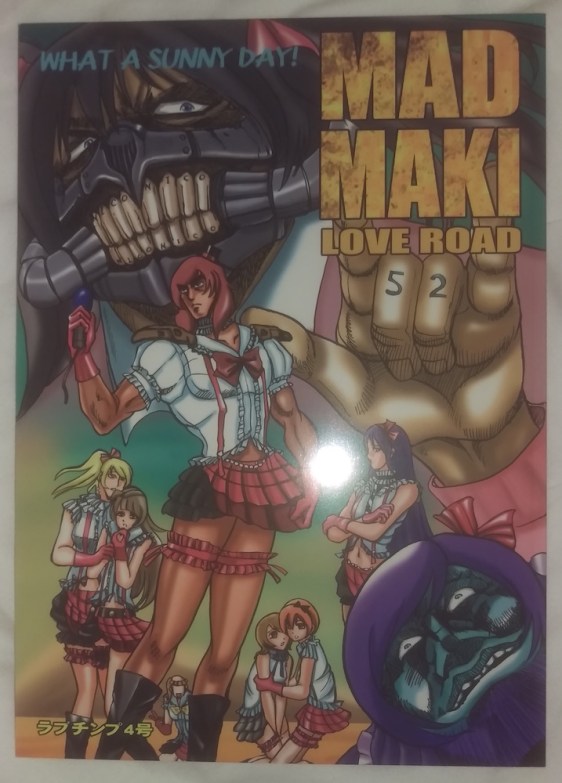
In my continuing quest to write small articles on all of the μ’s girls of Love Live!, I’ve written something on Nishikino Maki. I know she’s a popular one, so I hope I do you Maki fans justice.

privatewars

In related news, the English version of Love Live! School Idol Festival just added songs from both Aqours (the stars of Love Live! Sunshine!!) and A-RISE. I’ve been eagerly anticipating A-RISE’s arrival (Kira Tsubasa is a favorite character of mine), so I’m hoping to get her for my account.

Ogiue Maniax Talking Gundam: Iron-Blooded Orphans on the Veef Show Podcast

fumitan

I stopped by the Veef Show to discuss the latest Mobile Suit Gundam series, Iron-Blooded Orphans. Have a listen, as we have fairly different perspectives on the show, and I’d love to know what you think of the series as well.

For reference, the post I mentioned about McGillis can be found here, and the series I mention at the end of the podcast that I have begun chapter reviewing is here.

So in conclusion, Fumitan Admoss is the best.

Life Goes On – Digimon Adventure tri. 2: Determination

wadakoujiwebsite

What was originally supposed to be a review of the second Digimon Adventure tri. movie has now taken on a different context with the passing of Digimon singer Wada Kouji at the age of 42 after a long battle with cancer. While his voice was absent in the English dub of Digimon, many fans around the world came to know his distinct, powerful voice across multiple works, and in many ways his songs have defined and encapsulated the swirl of emotions and memories that Digimon brings. In listening to Wada’s tri. renditions of “Butter-fly” and now “Seven,” the softness in his voice comes across not simply as the melancholy of growing up, but also Wada’s last push to make his voice heard, similar to Freddie Mercury in “These Are the Days of Our Lives” before succumbing to AIDS.

Although Wada’s unfortunate passing does not any direct impact on the story of Digimon Adventure tri. 2: Determination, it does cast an interesting light given the primary focus of the second film. What do we as people do with our lives? What does it mean to be an adult? How do we handle the challenges that life throws at us? How can we continue to be the Biggest Dreamer?

digimontri2-mimi

Determination, like Reunion, places great emphasis on character exploration, with greater attention on how difficult it can be to both aim for and avoid conformity as we get older. In particular, the film puts the spotlight on worrywart Kido Joe and Tachikawa Mimi. Just like in the last film, Joe has been actively ignoring the call of the Digimon because he’s more concerned with trying to get into a good college. Mimi has to deal with the fact that her aggressive attitude and individuality (implied to be a product of both her personality and her time spent in the US) rubs her classmates the wrong way.

Though overall decent, I find this second film to be weaker than the first one, mostly because the pacing feels stiff and that not quite enough was done to explore Joe and Mimi’s conflicts. The comedy, including seeing Gomamon cook instant ramen for Joe, and even the bath house hijinks (including a brief steamy moment between Takeru and Hikari) are all wecome and keep the film just light-hearted enough, but the story’s progression still feels quite uneven. However, one potential point against the film, namely that it focuses on boring ol’ Joe, is something I see as a point of contention. I think that Joe’s story is something that can be hard for some to relate to while others will connect more immediately to his plight, and that the extent to which Determination resonates with viewers can therefore vary tremendously.

Given that Joe’s choices are between studying for college entrance exams or helping to save the world the choice should be “obvious,” but it’s clear that Joe is trying his hardest to become a responsible adult. After all, he’s supposed to be the responsible one, and the fact that this pressure seems to come not so much from his parents but from society as a whole and his own expectations for doing what’s best makes his inability to improve his test scores despite all of the work he’s put into it feel that much more devastating. Joe is essentially struggling between doing the right thing and doing the right thing, and the fact that he cares so much about both is what makes it a conflict in the first place.

digimontri2-joe

By comparison, I think Mimi’s troubles are easier to understand, but both her and Joe have to confront what it means to live and exist among others, when one is increasingly expected to fall into line. Mimi also pushes through her problems with greater determination than Joe, but that also comes down to their differences in personality. That’s not to say Mimi doesn’t struggle in this film herself, or that her concerns are any less important or difficult to deal with, but if there’s one thing Mimi doesn’t lack, it’s confidence.

I think what made Digimon and Wada Kouji such powerful presences in many children’s lives is the sense of discovery and (of course) adventure that they conveyed. Determination plays with these feelings, asking whether or not they should be left in the past or should be carried into the future even as we become adults. It’s a simple yet profound fight that many must go through, and I’m confident that the next film will deliver hope to all those who believe their childhoods have long since disappeared beyond memory.

You can watch Digimon Adventure tri. on Crunchyroll.

If you liked this post, consider becoming a sponsor of Ogiue Maniax through Patreon. You can get rewards for higher pledges, including a chance to request topics for the blog.